
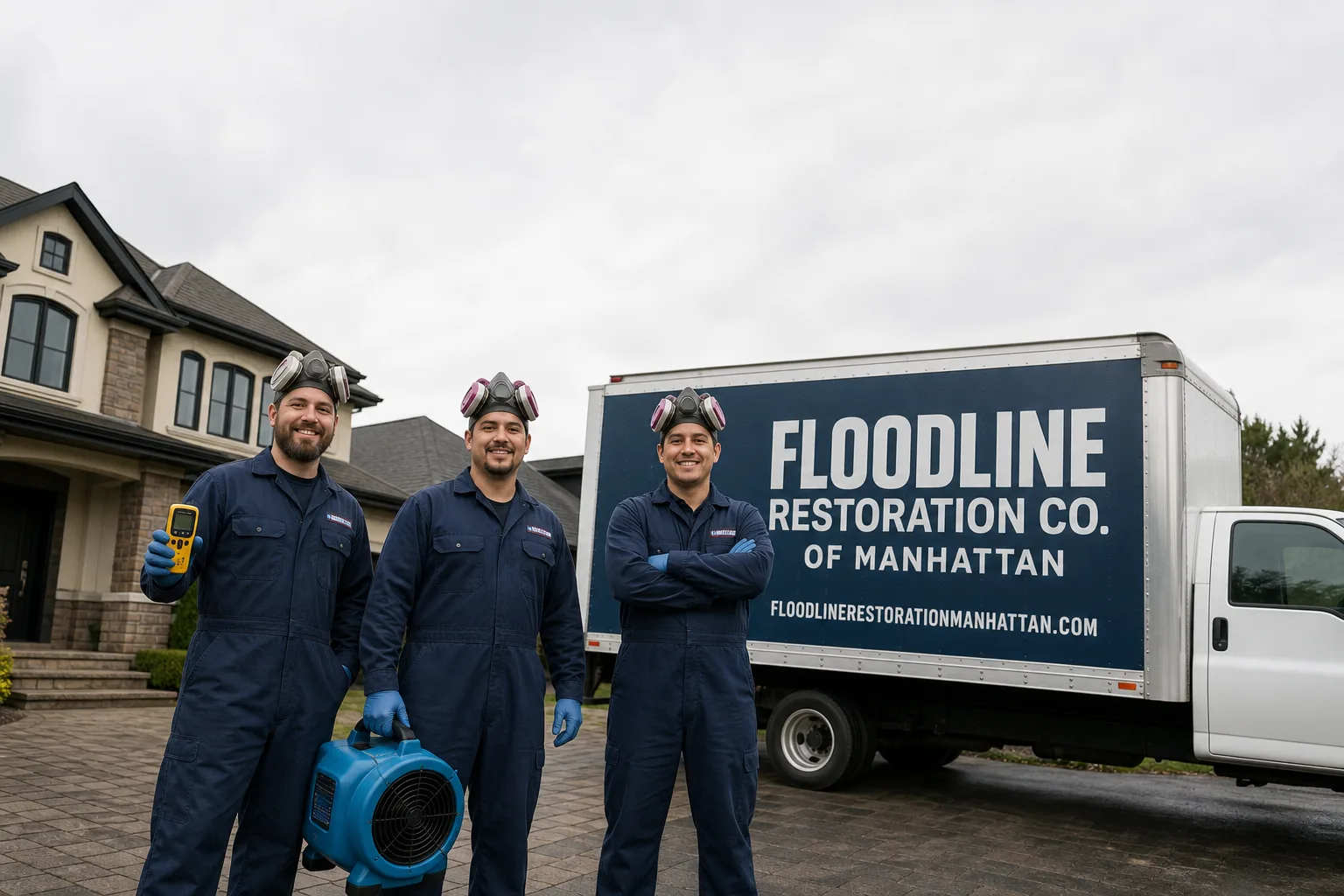
Free visual inspection and a written scope of work before any mitigation begins - photos, moisture readings, and drying logs go in your claim file
The scope we write is the scope we bill. Anything new gets shown to you, in writing, before we touch it.






 Before
 After
After Before
 After
After Before
 After
After24/7 Emergency Storm & Disaster Restoration in Elmsford
Storm flooding in Elmsford moves fast because the Saw Mill River has nowhere to go. When I-287 and the Saw Mill River Parkway pin the river against the Route 119 corridor, water rises in hours, not days. Our crews answer live at (917) 924-4221 around the clock and dispatch into Elmsford immediately. The first hour determines whether you’re dealing with extraction or a full gut-and-rebuild. Free visual inspection, same-visit extraction, and a written scope before any work begins.
Understanding Storm & Disaster Restoration Severity in Elmsford Properties
Most Elmsford flood losses are Category 3 water, and that changes everything. When the Saw Mill River overflows, it carries sewage, road runoff from I-287, and whatever the parkway washed into the channel. That water is contaminated, not just wet. On the post-WWII ranches and Cape Cods that dominate Elmsford’s side streets, slab-on-grade construction means water doesn’t just pool on the surface; it wicks upward through the concrete for weeks. Without moisture mapping, thermal imaging, and daily hygrometer readings, a slab can look dry while concealed moisture feeds mold inside wall cavities. The 1950s-1970s shallow basements that take on river water need containment, antimicrobial treatment, and structural drying to the dry standard, not just a wet vac and a fan. Storm damage here is rarely a single event. It’s the start of a cycle.
Why Elmsford Property Owners Choose Floodline Restoration Co. of Manhattan
- 45-minute response commitment: We’re already staged for Elmsford. When you call (917) 924-4221, a certified crew is dispatched immediately, not after a callback.
- 24/7 live answer, no recordings: A real dispatcher picks up at 2 a.m. during a nor’easter. You’ll never leave a voicemail and wait for morning.
- IICRC-certified crews, WRT and ASD: Our technicians carry Water Damage Restoration and Applied Structural Drying certifications. They know what a 1950s Elmsford slab does after a flood.
- Free visual inspection: We assess the damage, map the moisture, and give you a plainspoken scope before any equipment runs. No obligation.
- Direct insurance billing: We bill your carrier directly and talk to the adjuster ourselves. You don’t play messenger.
- One team, start to finish: The same Storm & Disaster Restoration crew that extracts the water dries the structure and rebuilds what needs rebuilding.
Our Storm & Disaster Restoration Process
Inspection & Assessment
We walk the property inside and out, mark the water line, and run moisture mapping with thermal imaging. On an Elmsford slab-on-grade ranch, we check readings 12 to 15 feet from the foundation, not just at the visible water line.
Extraction / Stabilization
Standing water comes out first with truck-mounted extraction units. If a nor’easter blew out windows or a tree branch breached the roof, we board up and tarp immediately to stop further water entry. Category 3 water gets removed with the protocols that contamination demands.
Drying & Dehumidification
Dri-Eaz dehumidifiers and XPOWER air movers go in the same visit. We take daily hygrometer readings and log them. In Elmsford’s low-lying slab homes, drying is measured in days and verified with data, not guesswork.
Cleaning & Sanitization
River water leaves more than mud. We clean, disinfect, and apply antimicrobial treatment where the Saw Mill River’s overflow reached. Wall cavities get checked for concealed contamination behind the drywall.
Containment & Specialty Treatment
If mold is present or conditions suggest it will develop, we set up containment with HEPA air scrubbers and treat affected materials. The recurring water cycles in the Route 119 corridor make this a standard step, not an add-on.
Repairs & Restoration
Trim, drywall, flooring, and paint come after the structure meets the dry standard. The same crew that extracted the water rebuilds the room. You get one point of accountability.
Need Emergency Storm & Disaster Restoration in Elmsford Now?
Crews minutes away, answering live 24 hours a day. The sooner we start, the less it costs.
Working With Your Insurance Company
Insurance claims in Elmsford are easier when the documentation starts in the first hour. We photograph every room, log moisture readings daily, and write a line-item scope your adjuster can read without a translator. We talk to your carrier directly so you don’t spend your days on hold. The goal is a settlement that covers the actual work, not a lowball number based on a generic estimate. If your adjuster has questions about why a 1950s slab needs 72 hours of structural drying instead of 24, we can explain it with data.
What We Provide Your Insurer
- Thorough documentation of the loss
- Photos of all damage, room by room
- Moisture readings and drying logs
- A detailed, line-item scope of work
- Direct coordination with your carrier
Built for Elmsford’s Loss Calendar
Elmsford’s storm losses follow a pattern, and it’s not subtle. January and February bring deep freezes that burst supply lines in shallow-slab ranches along streets like Winthrop and Payne. March and April turn the thaw loose; the Saw Mill River swells and basement seepage starts in the 10523 zip code. Summer thunderstorms hit the Route 119 corridor hard because the highway and parkway infrastructure concentrate runoff at grade level. Late summer and early fall bring tropical storm remnants like the 2021 Hurricane Ida bands, which pushed the river over its banks and flooded dozens of Elmsford properties. Fall nor’easters close the year with wind damage, roof leaks, and another round of river flooding. Homeowners who’ve lived here twenty years know the rhythm. We plan for it. Call (917) 924-4221 before the next cycle starts, or the moment it begins.
Storm & Disaster Restoration Across Elmsford’s Neighborhoods
Elmsford isn’t one flood zone. The neighborhoods along the Saw Mill River near Route 119 and the I-287 underpass see the worst of it when the river jumps its banks. These are the post-war ranch homes with slab foundations that wick moisture for weeks. We respond along Winthrop Avenue and Payne Road regularly after heavy rain, not just after named storms. Up the hill toward Hillside Avenue, the houses sit slightly higher but the clay-heavy soil still pushes water into basements during sustained nor’easters. The commercial and light-industrial buildings along Route 119 and around the Elmsford Square area have their own problem: large concrete slabs that look dry on top but hold water underneath for months. Restoration in Elmsford means knowing which part of the village you’re working in and how the water behaves there.
Specialized Storm & Disaster Restoration Services We Offer in Elmsford
Storm Damage Cleanup
Wind-blown debris, fallen tree limbs, and roof damage from nor’easters leave Elmsford properties with hazards that need immediate attention. We clear the debris, secure the openings, and assess what the storm actually did to the structure. Our trucks are equipped with heavy-duty tarps and board-up materials for same-visit stabilization.
Flood Damage Restoration
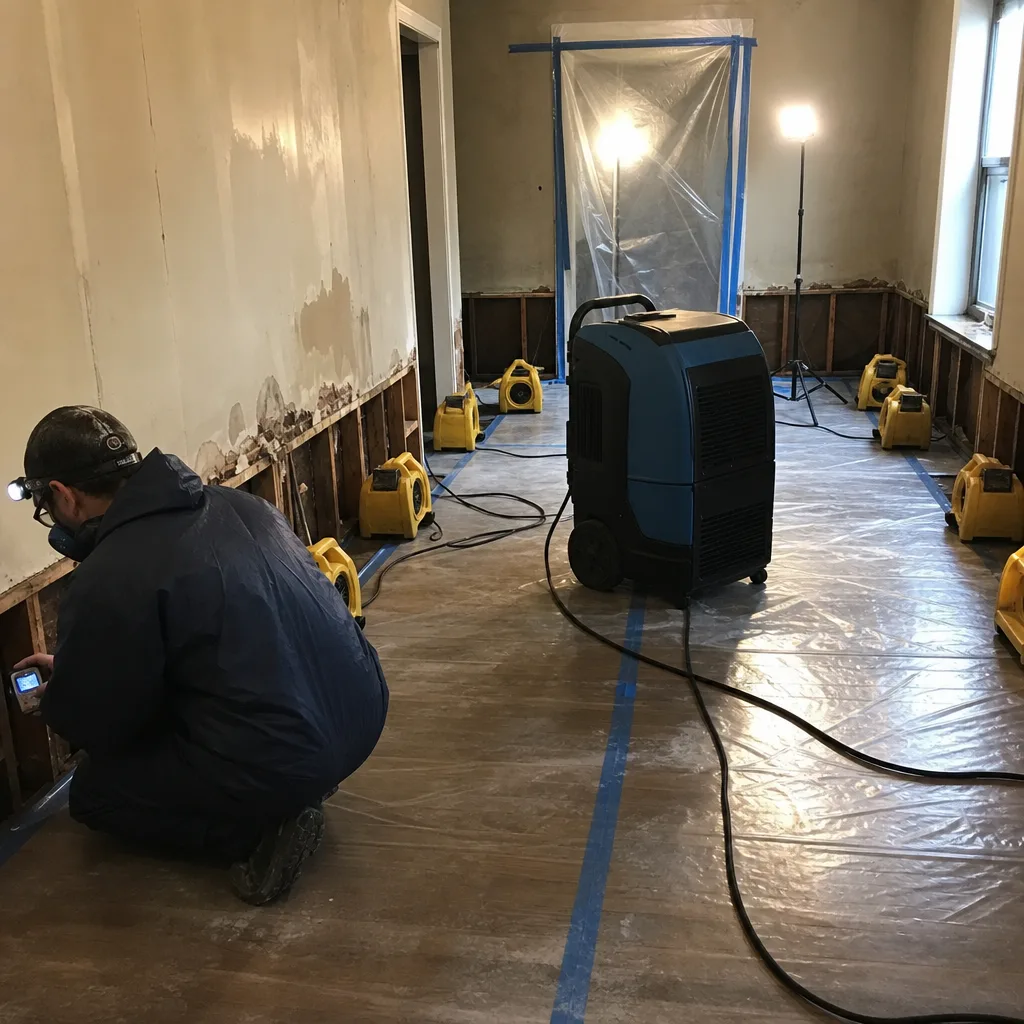
This is the service Elmsford calls us for most. When the Saw Mill River overflows and Category 3 water enters a home, extraction is only the first step. We handle structural drying, antimicrobial treatment, and the 60-90 day follow-up inspection that a 1950s slab foundation requires. Cutting that follow-up short is how concealed mold failures happen.
Emergency Board-Up
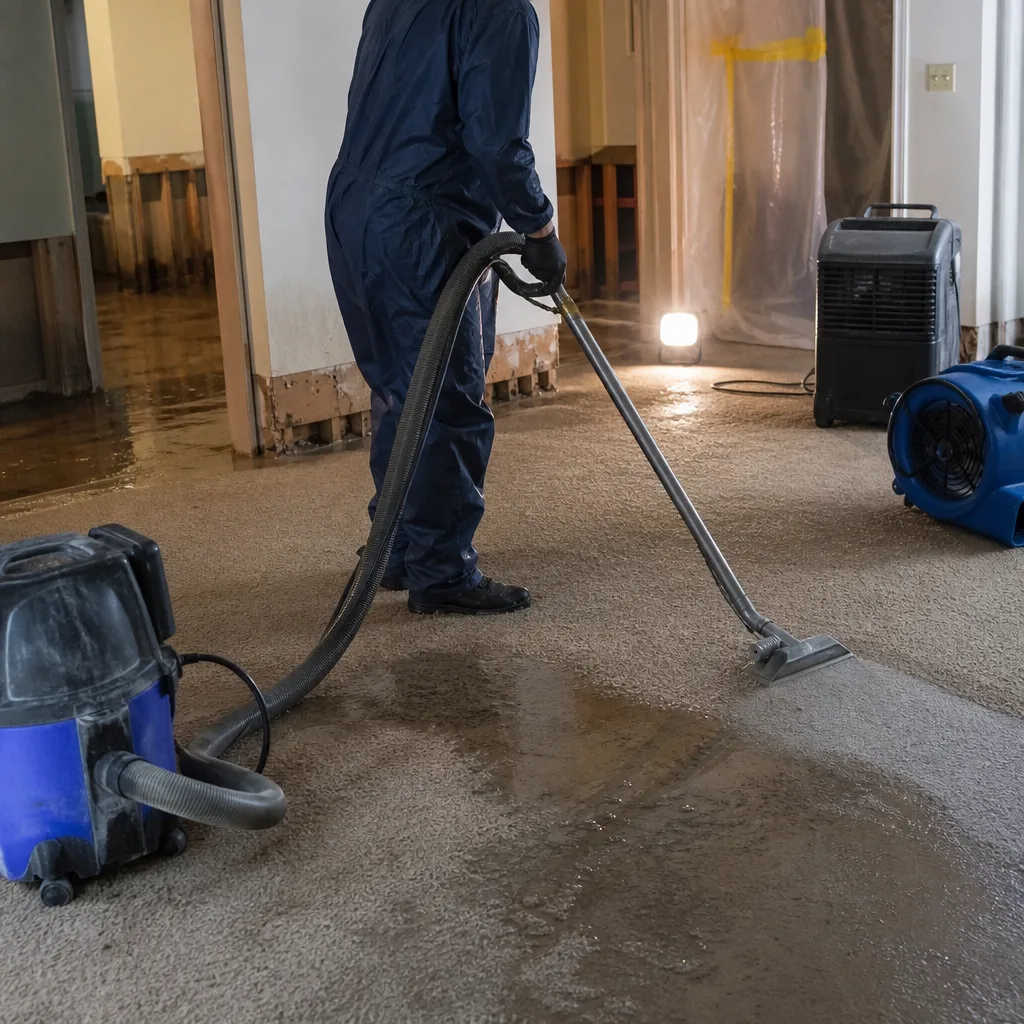
A broken window or breached wall after a storm is an open invitation for more damage and unwanted visitors. Our crews board up and secure the property the same day, usually within hours of your call. We use plywood and fasteners appropriate for the structure, not whatever’s in the truck.
Roof Tarping
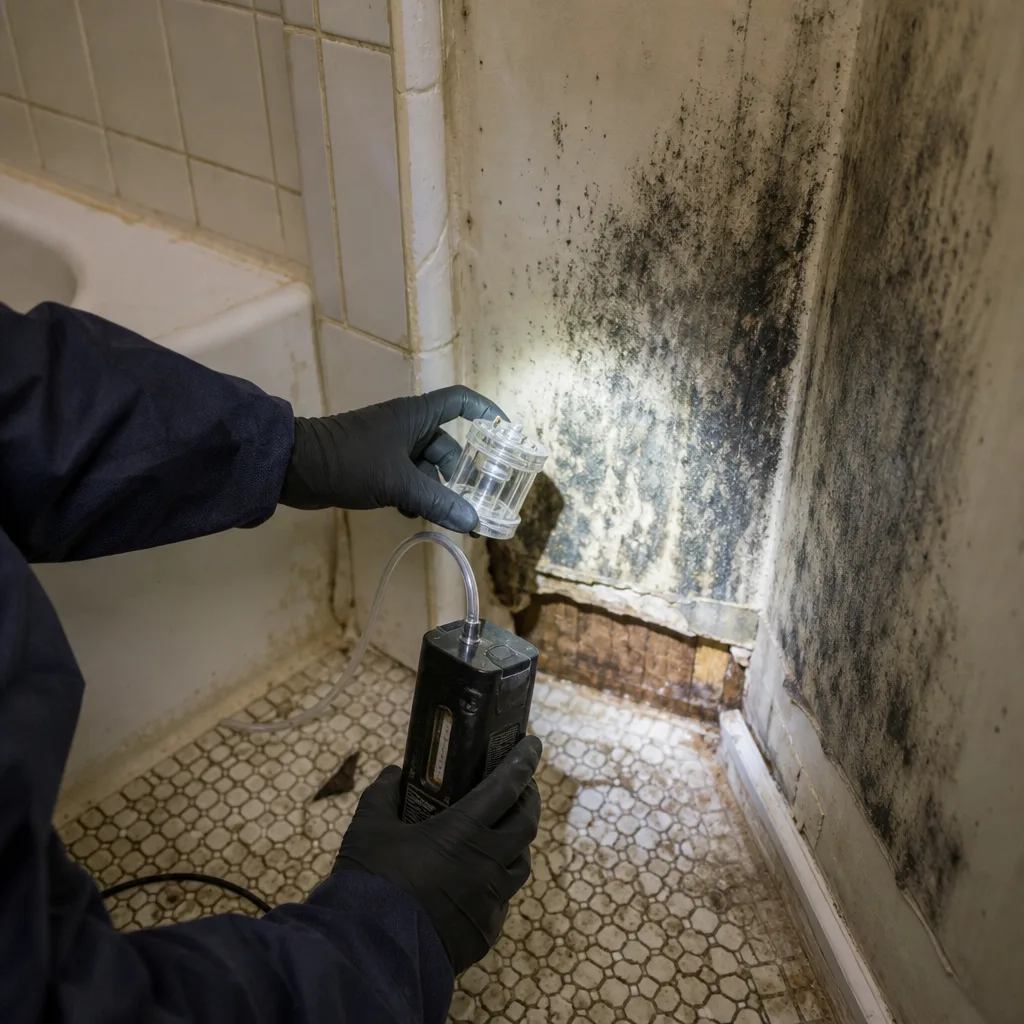
Nor’easter winds peel shingles and drop tree limbs through roof decks. We tarp the damaged area tightly to stop rain from turning a roof repair into a ceiling replacement. Tarps go up the same visit, with anchors designed to hold through the next storm.
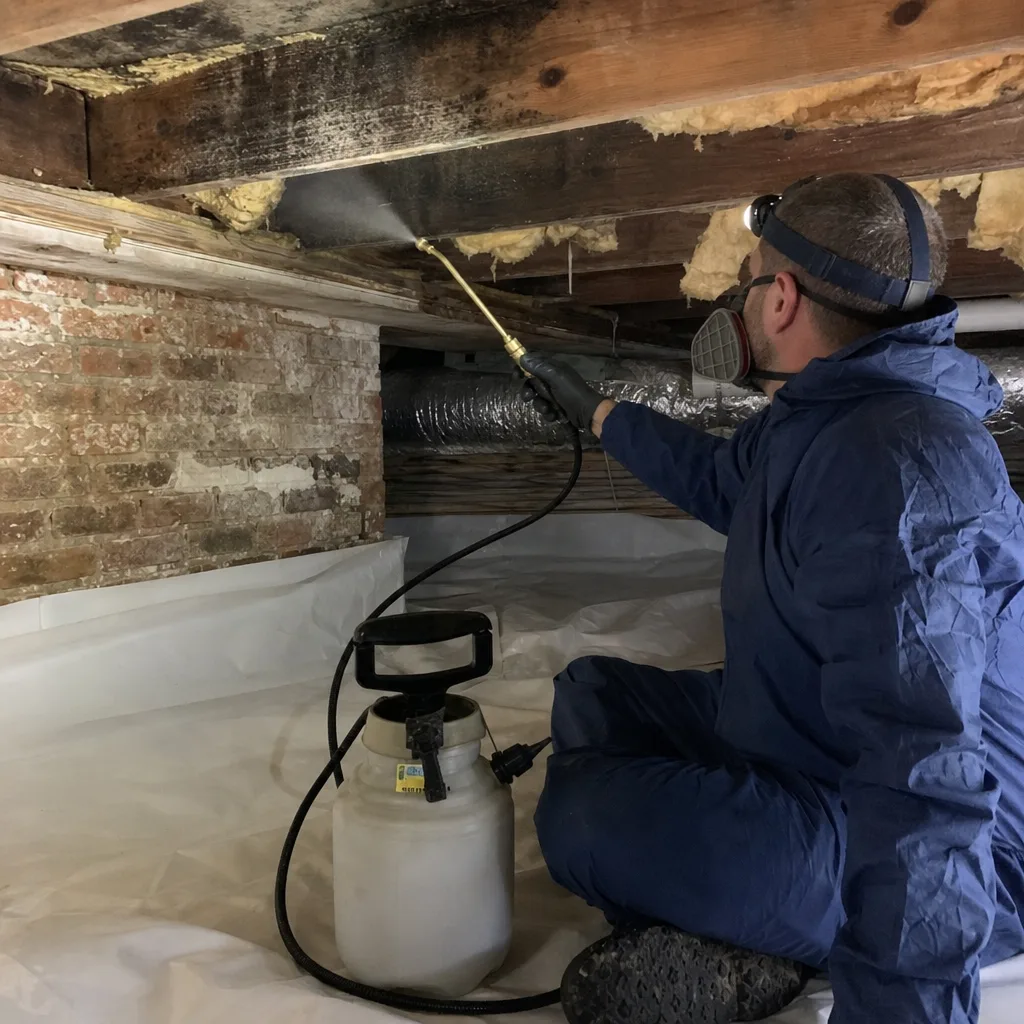
Debris Removal
Storm cleanup means dealing with what the wind and water left behind. We remove fallen branches, damaged building materials, and contaminated debris from the property, then set up for the next restoration step. Debris from Category 3 water gets handled with the same protocols as the water itself.
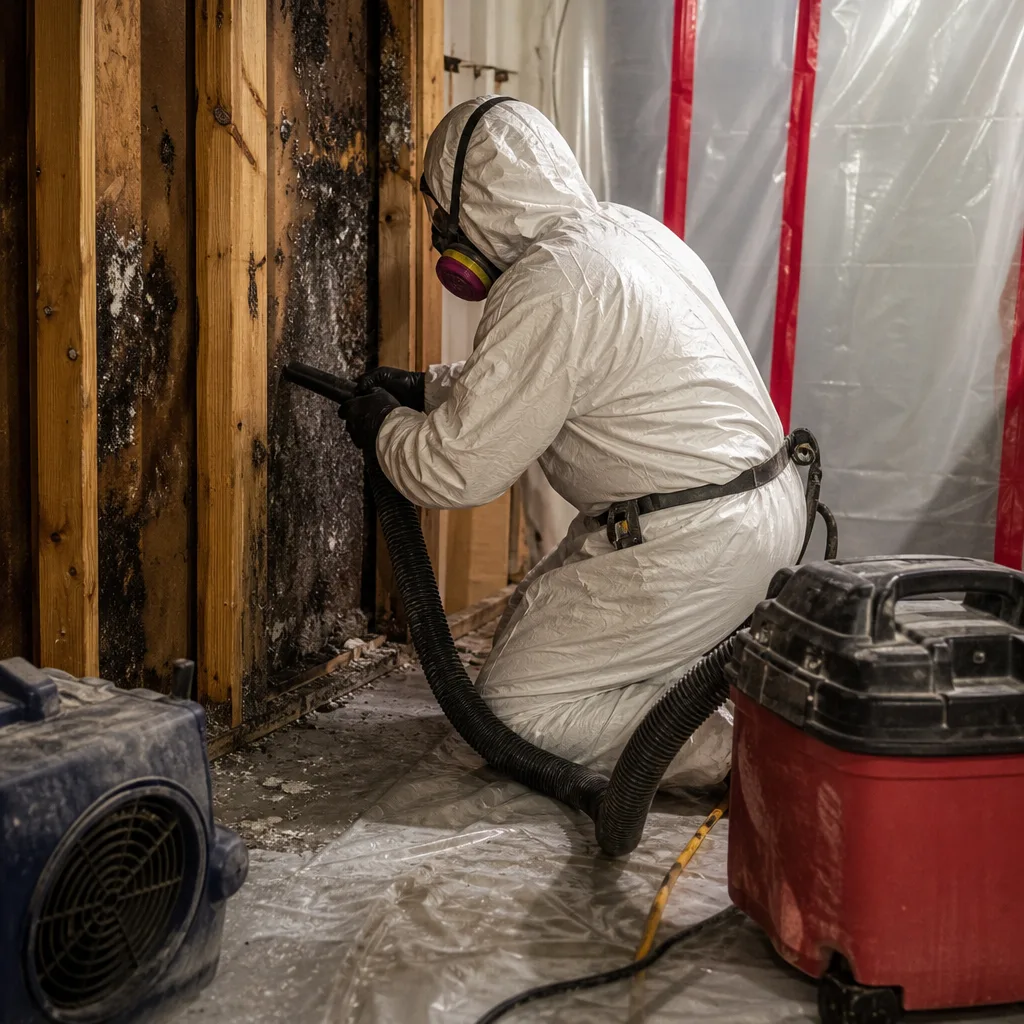
What happens when you call
- 1
A real person answersNo phone trees - you reach a local pro.
- 2
You get an upfront price rangeHonest numbers before anyone is dispatched.
- 3
A background-checked tech heads outLicensed & insured, dispatched right away.
- 4
You approve before work beginsNothing starts until you say go.
Storm & Disaster Restoration Costs in Elmsford, NY
A typical storm damage cleanup in Elmsford runs $1,200-$3,800 depending on the extent of debris and water entry. Flood damage restoration on a slab-on-grade ranch home usually lands between $4,500 and $18,000 when structural drying, antimicrobial treatment, and drywall replacement are included. Emergency board-up and roof tarping are the most urgent and the least expensive, generally $400-$1,100 for the first visit. What moves the price is not the water you can see. It’s the water that got into the slab and the wall cavities. Insurance covers most storm and flood restoration when the damage is sudden and accidental, and we bill your carrier directly. For a firm number, call (917) 924-4221 and we’ll come out for a free visual inspection before any work begins.
We Also Serve Cities Near Elmsford
Floodline Restoration Co. of Manhattan serves the communities around Elmsford as well, including Hartsdale, Valhalla, Irvington, and Tarrytown. The flood dynamics change from village to village. What works for an Elmsford slab won’t work for a Tarrytown hillside home, and we adjust the drying plan accordingly. Wherever you are in the Saw Mill River valley, the same live dispatcher answers and the same certified crew responds.
Serving Elmsford, NY - Our Local Coverage Area
We’re based in the Elmsford area and know this community well. Use the map below to see our service coverage - if you’re nearby, we can almost certainly help.
Elmsford Storm & Disaster Restoration Questions, Answered
Why does storm flooding in Elmsford require a different drying approach than nearby Ardsley or Hartsdale?
Elmsford sits in a low-lying bowl where the Saw Mill River is constricted by I-287 and the Saw Mill River Parkway, so floodwater pools and lingers rather than draining away. The slab-on-grade foundations common to Elmsford’s 1950s-1970s ranch homes wick that water upward for weeks. Ardsley and Hartsdale sit higher with better drainage and more full-basement homes. Our drying plans for Elmsford include longer structural drying timelines and 60-90 day follow-up inspections that aren’t typically needed up the hill. Call (917) 924-4221 to have us map your specific property’s moisture.
How do I know if the floodwater in my Elmsford basement is category 3 and what that means for restoration?
If the water came from the Saw Mill River overflowing, it’s Category 3. The river carries sewage, road runoff from I-287, and contaminants from the parkway. Category 3 water means full antimicrobial treatment, not just drying. Materials like drywall and carpet that absorbed Category 3 water typically need removal, and anything that stays needs disinfection. If stormwater from the street entered through a window well without river overflow, it may be Category 2, but the safest assessment comes from a certified eye. Call (917) 924-4221 for a free inspection and a straight answer.
What are the warning signs that my Route 119-area ranch home needs a follow-up moisture inspection after a major storm?
If your slab-on-grade ranch took floodwater, the warning signs are subtle: musty odor that returns after cleaning, baseboards that swell or separate from the wall, condensation on the slab in warm weather, or elevated humidity readings on a home hygrometer. These indicate the concrete is still releasing moisture into the living space. In Elmsford’s Route 119 corridor, we schedule a 60-90 day inspection as standard practice because the 1950s slabs keep wicking long after surface drying. If you skipped that step after a previous flood, call (917) 924-4221 and we’ll re-inspect.
Can my light-industrial building on Route 119 be fully dried without tearing out the concrete slab?
Yes, in most cases. A concrete slab can be dried with low-grain-refrigerant dehumidifiers and targeted air movement, but it takes longer than surface drying and must be verified with moisture meters. The slab doesn’t usually need removal unless it’s structurally compromised or severely contaminated. What matters is confirming the slab reached the dry standard before you put flooring back down. We log those readings and give them to you. For a Route 119 commercial property, call (917) 924-4221 and we’ll assess the slab’s condition.
How quickly should I start water extraction after a nor’easter floods my Elmsford home before mold becomes a bigger problem?
Within 24 hours, but sooner is always better. Mold colonization on wet drywall and organic materials begins in 24-48 hours in Elmsford’s warm, humid seasons. In winter, the clock runs a little slower, but the damage doesn’t stop. Extraction on the same visit, structural drying started immediately, and antimicrobial treatment where Category 3 water was present are the steps that keep a flooded ranch from becoming a mold remediation job. Call (917) 924-4221 and we’ll have a crew on the way.
Will my homeowner’s insurance cover storm and flood damage in Elmsford?
Storm damage from wind, rain entering through storm-created openings, and fallen trees is typically covered under standard homeowner’s policies. River flooding from the Saw Mill River is a separate issue that may require flood insurance through the National Flood Insurance Program. Elmsford’s location in the flood-prone valley means homeowners should check their policy carefully. We document everything from the first hour and bill your carrier directly, and our documentation often helps claims get paid. Call (917) 924-4221 to discuss your specific situation.
Do I really need full restoration or can I just clean it up myself after a flood?
If the water was clean and the area is small, a homeowner can often handle it with a wet vac and fans. If the water came from the Saw Mill River or pooled around an Elmsford slab foundation, you’re dealing with Category 3 contamination and concealed moisture that household equipment cannot reach. A shop vacuum doesn’t pull water out of a concrete slab or a wall cavity. Skipping proper restoration is how a $2,000 flood becomes a $15,000 mold job six months later. We give you a straight answer on what actually needs doing. Call (917) 924-4221 for a free inspection.
What certifications do your crews hold for storm and flood restoration in Elmsford?
Our technicians are certified to IICRC standards in Water Damage Restoration (WRT) and Applied Structural Drying (ASD), with additional training in Applied Microbial Remediation (AMRT) for the mold work that Elmsford’s recurring flood cycles produce. The same crew carries RIA and IFA certifications and works with professional-grade Dri-Eaz, Phoenix, XPOWER, and B-Air equipment. Background-checked and uniformed on every job. Call (917) 924-4221 for service from a team that can show its credentials.
When the Saw Mill River rises, the water reaches Elmsford homes through a bottleneck that no other village in Westchester shares. We know these streets, these slabs, and these recurring flood cycles. We’re the Storm & Disaster Restoration in Elmsford team that stays through the drying log, the follow-up inspection, and the rebuild. Call (917) 924-4221 any hour, any day. A live person answers.
Written by Curt Bowman, Owner at Floodline Restoration Co. of Manhattan, serving Elmsford since 2010.