
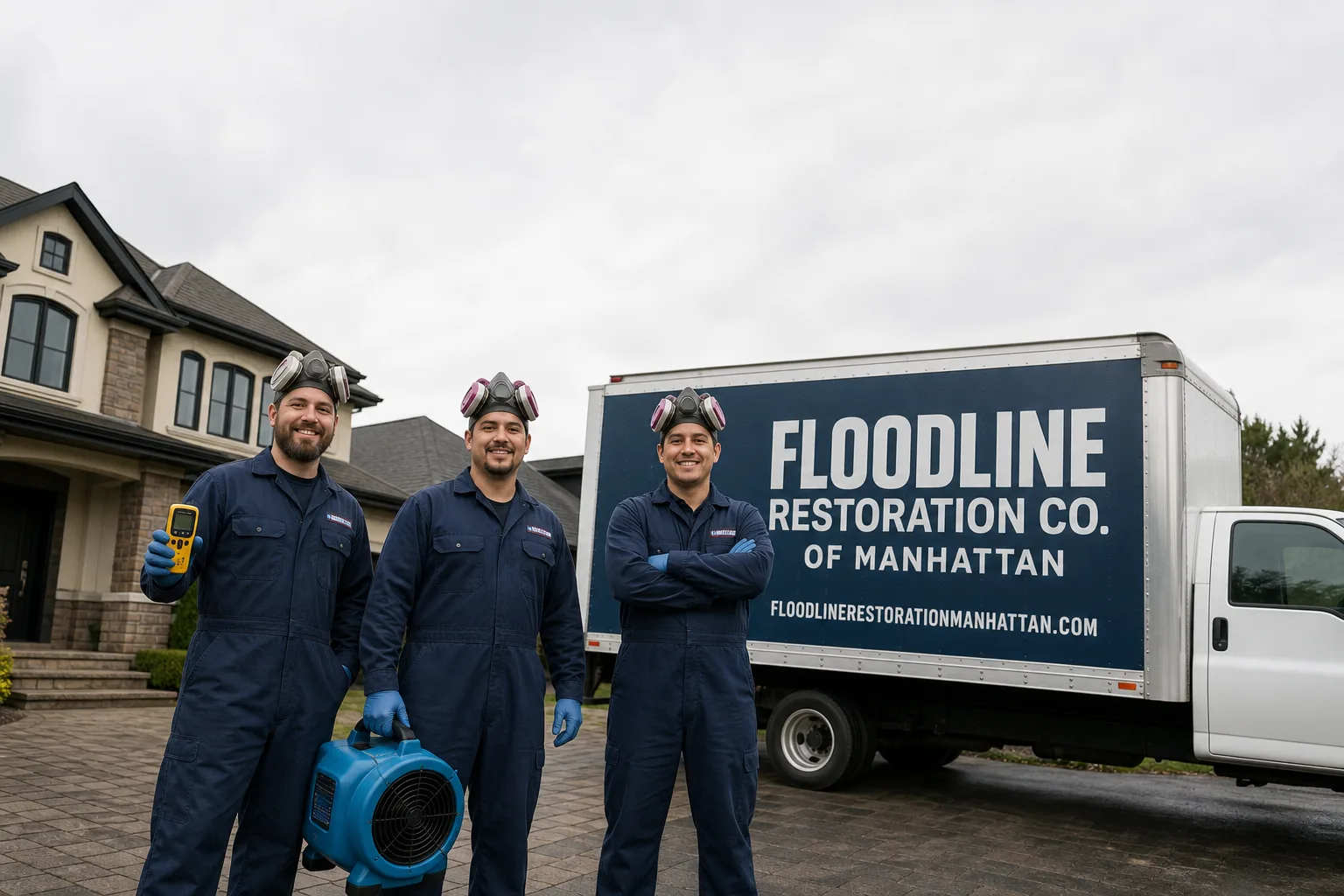
Free visual inspection and a written scope of work before any mitigation begins - photos, moisture readings, and drying logs go in your claim file
The scope we write is the scope we bill. Anything new gets shown to you, in writing, before we touch it.






 Before
 After
After Before
 After
After Before
 After
After24/7 Emergency Storm & Disaster Restoration in Garfield
Storm and disaster restoration in Garfield starts the moment you call. Our live dispatchers answer 24 hours a day and can have a certified crew at your door the same visit, because water that sits for even a few hours in an older wood-frame house starts wicking into drywall, subfloor, and wall cavities. Call (917) 924-4221 now for a free visual inspection, extraction, and an honest first read on what you’re facing. The first hour after a storm breach is when you either contain the damage or let it spread.
Understanding Storm & Disaster Restoration Severity in Garfield Properties
Garfield’s housing stock turns most storm damage into a water event before it’s anything else. When wind tears shingles off a post-war cape cod or a nor’easter drives rain under the eaves, water penetrates walls and ceilings within minutes. We classify the water by source: Category 1 is clean supply water, Category 2 carries contaminants, and Category 3 is grossly unsanitary, usually from sewage or outside floodwater that’s picked up whatever was on the ground. The category determines how aggressively we tear out drywall, insulation, and flooring. In Garfield’s mid-century wood-frame colonials, the wall cavities are tight and unventilated, so Category 2 water turns moldy faster than it would in a newer built house. That’s why we use moisture mapping on the first visit, not a visual guess. Our crews run thermal imaging and hygrometers to find water that’s moved behind paneling or under the sill plate before it shows itself as a stain.
Why Garfield Property Owners Choose Floodline Restoration Co. of Manhattan
- 45-minute response commitment. We dispatch locally so a certified crew reaches Garfield homes fast, usually under an hour from your call.
- A live person answers, day or night. No automated system, no call center script. A dispatcher picks up at 2 a.m. and stays on the line with you until help is moving.
- IICRC-certified crew members, trained to WRT and ASD standards. Background-checked, uniformed technicians who work with Dri-Eaz, Phoenix, and XPOWER equipment on every job.
- Free visual inspection. We assess the damage, explain what must happen and what can wait, and give you a square deal in writing before any work begins.
- Direct insurance billing. We bill your carrier, coordinate with the adjuster, and keep the paperwork off your kitchen table.
- One team from extraction to reconstruction. The same Floodline Restoration Co. crew that extracts and dries also rebuilds. No mid-job handoff to a stranger.
Our Storm & Disaster Restoration Process
Inspection & Assessment
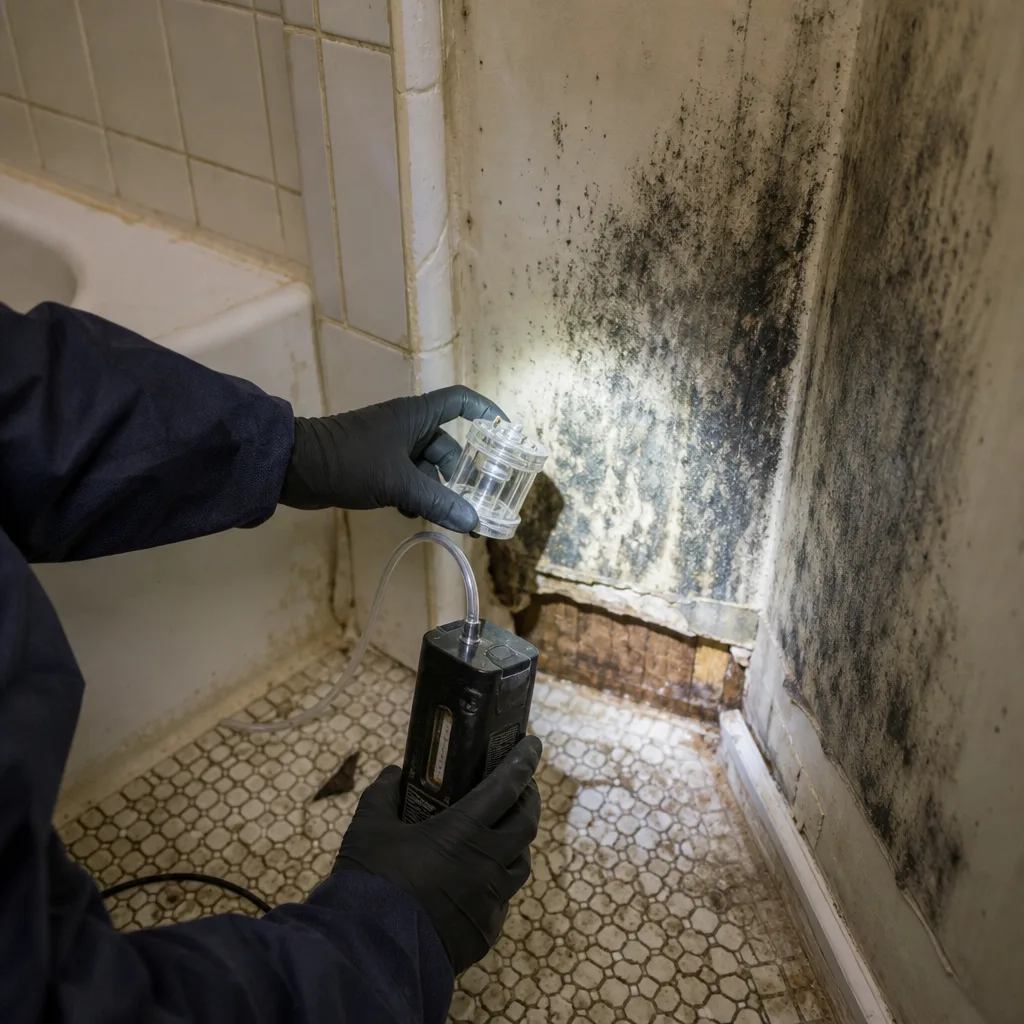
We map every affected area with thermal imaging and moisture meters. In Garfield’s older homes, we specifically check sill plates, rim joists, and stone-and-mortar foundation walls, because that’s where hidden water travels. You receive a written scope before work begins.
Extraction & Stabilization
Standing water is pumped out immediately using truck-mounted extraction and XPOWER submersible pumps. We then stabilize the structure with emergency board-up or roof tarping if the envelope is open to the weather.
Drying & Dehumidification
Dri-Eaz and Phoenix dehumidifiers and high-velocity air movers are placed based on the moisture map, not guesswork. Daily readings are logged and shared with you and your insurer until the dry standard is met.
Cleaning & Sanitization
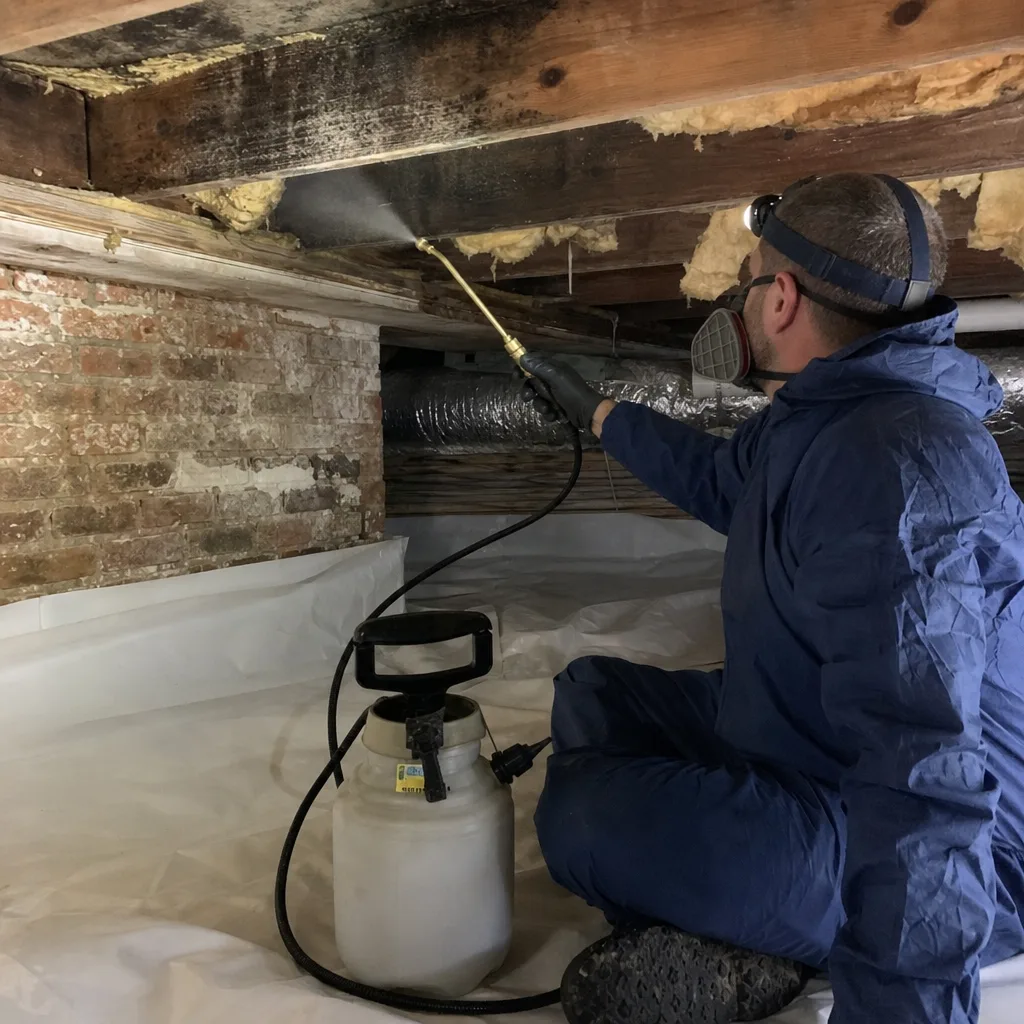
All affected surfaces are cleaned and treated with antimicrobials. HEPA air scrubbers run throughout the process to control what’s already airborne, especially when mold spores are present inside wall cavities or behind paneling.
Specialty Treatment
For foundation seepage and clay-soil hydrostatic pressure issues common in Garfield, we seal cracks, improve perimeter grading where feasible, and treat stone-and-mortar walls to prevent re-infiltration before the next freeze-thaw cycle.
Repairs & Restoration
We rebuild what the water ruined: sill plates, drywall, subfloor, insulation, trim, paint. The same technicians who extracted and dried handle the reconstruction. You end up with one accountable team and one written guarantee.
Need Emergency Storm & Disaster Restoration in Garfield Now?
Crews minutes away, answering live 24 hours a day. The sooner we start, the less it costs.
Working With Your Insurance Company
Most storm damage inside a Garfield home is covered by homeowners insurance, but the claim lives or dies on documentation. We start that documentation from the first hour: photos of the damage room by room, moisture readings at the time of inspection, drying logs updated daily, and a detailed line-item scope of work that matches industry-standard estimating software. Our team communicates directly with your adjuster and billing goes straight to the carrier, so you are not the messenger between two parties. When the claim involves groundwater seepage through a foundation, the coverage question often turns on the cause of the water entering the home. We document that distinction with photos and moisture data that make the origin clear, whether it was a burst supply line, storm-driven rain, or rising groundwater.
What We Provide Your Insurer
- Thorough documentation of the loss
- Photos of all damage, room by room
- Moisture readings and drying logs
- A detailed, line-item scope of work
- Direct coordination with your carrier
Built for Garfield’s Loss Calendar
Garfield’s restoration losses follow a seasonal rhythm that’s specific to the Hudson Valley corridor. January and February bring deep freezes that burst supply lines in uninsulated crawl spaces and exterior walls. The freeze-thaw cycles then crack stone-and-mortar foundation joints, so when March snowmelt saturates the clay-heavy soils, water finds those newly opened cracks and pushes inward under hydrostatic pressure. The result is a spring flood in the basement that the homeowner can not explain, because no pipe broke. April rain adds to the load, and by late spring we are routinely pulling saturated insulation and mold-stained drywall out of basements that have been quietly seeping since February. Summer thunderstorms are a different animal: heavy rains in a short window overwhelm older perimeter drains designed decades ago for far less runoff, sending water over the sill plate. By late summer, it’s the roofs. Ice-dam damage from the prior winter shows up as hidden dry rot in attic rafters, discovered when the next heavy snow doubles the load. Garfield homeowners who understand this calendar know that the spring seepage you ignore in April becomes the mold remediation you pay for in August.
Storm & Disaster Restoration Across Garfield’s Neighborhoods
Garfield’s oldest homes sit along River Drive and the blocks near Passaic Street, where stone-and-mortar foundations date to the early 20th century and are the most vulnerable to freeze-thaw cracking. Crews responding to those streets check hydrostatic pressure issues as a matter of routine, because that clay-heavy soil pushes water in whether a storm pounds the house or not. The residential blocks south of Outwater Lane and around Garfield High School were built mostly in the 1950s and 1960s, and they carry the classic post-war cape cod profile with tight wall cavities and inadequate attic ventilation. Ice dams form on those roofs during thaw-refreeze cycles, and the runoff saturates insulation before it ever makes a ceiling stain. Homes near the Saddle River, along the western edge of the city, sit on looser alluvial soil but face the opposite problem: when the river rises during heavy spring rain, the water table follows, and basements fill from below. Homeowners in the areas around Columbus Park and the blocks east of Midland Avenue often report sump pump failures during flash thunderstorms, when the pumps simply can not keep up with the volume of runoff pouring into older perimeter drains. Each neighborhood has its own failure signature, and we read those signatures on site, every time.
Specialized Storm & Disaster Restoration Services We Offer in Garfield
Flood Damage Restoration
Clay-heavy soils and a high water table mean Garfield floods rarely come through a broken window. Water rises from below, through cracked stone foundations and over sill plates. We extract fast with XPOWER pumps, then dry to the standard with Dri-Eaz dehumidifiers placed according to a moisture map, not a guess. In finished basements, we remove saturated drywall and insulation only where necessary, leaving untouched materials in place.

Storm Damage Cleanup
After a nor’easter or summer thunderstorm, Garfield homeowners deal with downed branches, clogged gutters, and water that found its way through damaged roofs or siding. We clear debris, document storm-related damage for insurance, and begin water extraction the same visit. The goal is to stop the storm from having a second act inside the walls.

Roof Tarping
A torn-off shingle section or an ice-dam breach leaves a 1940s cape cod’s attic open to every raindrop. We tarp the affected area with heavy-gauge material, secured against wind. This buys the time needed for a proper roof repair without letting more water saturate insulation and rafters, which is where hidden dry rot starts.

Emergency Board-Up
When wind blows out a window or drives debris through a wall, the opening must be secured before anything else. We board up broken openings, tarp roofs, and lock down the envelope so you’re not exposed to weather, animals, or anyone else while restoration work proceeds.
Debris Removal
Storm debris in a yard is more than an eyesore; it often hides damage to the foundation or siding. We remove branches, leaves, and blown-in material as part of the initial assessment, so the actual extent of the loss is visible and documented accurately for your insurer.
What happens when you call
- 1
A real person answersNo phone trees - you reach a local pro.
- 2
You get an upfront price rangeHonest numbers before anyone is dispatched.
- 3
A background-checked tech heads outLicensed & insured, dispatched right away.
- 4
You approve before work beginsNothing starts until you say go.
Storm & Disaster Restoration Costs in Garfield, NJ
Garfield pricing for storm and disaster work depends on how much water got in and how long it sat. A straightforward basement flood from a failed sump pump, with extraction and drying but no major tear-out, typically runs $1,800 to $4,200. When saturated drywall and insulation need removal in a finished basement, expect $5,000 to $9,500 because of the labor involved in cutting, hauling, and disposing of contaminated material. Roof tarping after storm damage runs $350 to $700 for a standard single-family cape cod, depending on the roof pitch and how much ladder work is needed. Foundation crack sealing for Garfield’s stone-and-mortar walls falls between $800 and $2,400 when done as part of a larger water mitigation job. What moves the number most is time. Water that sat for 48 hours before extraction means more demolition and more drying days, every time. Call (917) 924-4221 for an exact quote after a free visual inspection, estimates are free and there’s no pressure to start work that day.
We Also Serve Cities Near Garfield
Floodline Restoration Co. provides 24/7 storm and disaster restoration to homeowners in Garfield and the surrounding Bergen County towns, including Lodi, Passaic, Wallington, and Saddle Brook. If you’re in any of these communities and water is rising or a storm has opened your roof, the same live dispatchers and certified crews respond.
Serving Garfield, NJ - Our Local Coverage Area
We’re based in the Garfield area and know this community well. Use the map below to see our service coverage - if you’re nearby, we can almost certainly help.
Garfield Storm & Disaster Restoration Questions, Answered
How do I know if my Garfield stone foundation is leaking from the spring thaw or from a broken pipe?
A broken pipe usually shows itself fast, with water pooling near a specific wall or appliance, while spring thaw seepage tends to appear slowly and evenly along the cove joint where the floor meets the wall. We test the water with a moisture meter and trace the pattern across the foundation slab. Once we know the source, we know whether insurance covers the loss and what the repair scope looks like.
Can you dry out my Garfield basement in winter when the ground is frozen?
Yes. The ground being frozen doesn’t stop the drying process inside; we control the interior environment with Dri-Eaz dehumidifiers and air movement, and the indoor temperature is often enough to drive moisture out of wood and concrete. The bigger challenge is infiltrating water through frozen soils, which we address by sealing the interior entry points and monitoring the foundation walls for additional seepage during the thaw.
My roof leaked during an ice dam last February, how soon do I need to act to prevent mold in the attic?
Mold can begin inside saturated attic insulation within 48 to 72 hours, especially in a warm attic space above a heated home. If you noticed the leak during the winter and it’s now spring, you should have the insulation and rafter cavities assessed immediately. Delaying into summer usually means mold growth has already spread, and the repair cost climbs with it.
How do you handle water damage in a Garfield house with a dirt crawl space?
Dirt crawl spaces are common in the older homes around Garfield, and they’re a different animal from a concrete slab. Groundwater evaporates up from the soil, raising humidity and encouraging mold on floor joists above. We lay vapor barriers, dry the joists and subfloor, and run dehumidification specific to the crawl space volume until readings stabilize. The key is addressing the moisture source, not just the symptom.
Does my homeowners insurance cover a Garfield basement flood from groundwater seepage?
Groundwater seepage through a foundation is typically not covered by standard homeowners insurance, unless you have a separate flood or water backup endorsement. Storm-driven rain entering through a roof breach or wind-damaged opening is usually covered. We document the entry point and cause carefully, because that distinction is exactly what your adjuster will ask about.
How fast can a crew actually get to my Garfield home?
Our response commitment is 45 minutes from dispatch for emergency calls in the Garfield area. Live dispatchers coordinate crews locally, and we often arrive while the water is still rising. The faster we extract and start drying, the less you pay in demolition and the less damage reaches your framing.
What should I do in the first 30 minutes after storm water gets inside my Garfield house?
Shut off the electricity to affected areas if it is safe to do so, move valuables out of the water, and call us. Do not enter standing water if you can not see the floor, especially if it may be in contact with electrical outlets. Then leave the water alone until a professional with the right equipment arrives, because the wrong cleanup can drive water deeper into walls.
Are your technicians actually certified, or is that just marketing?
Every technician on our storm and water teams carries IICRC certification, many to WRT and ASD standards, and continues training through IFA and RIA programs. We background-check and uniform every crew member. When we say a certified technician will arrive, that’s a defined credential you can verify, not a slogan.
Written by Curt Bowman, Owner at Floodline Restoration Co. of Manhattan, serving Garfield and the surrounding Bergen County communities with 24/7 storm and disaster restoration.
Storm damage in Garfield waits for no one. The line the water left is where we start. Call (917) 924-4221 any hour for a free estimate, and we’ll be there when we say.