
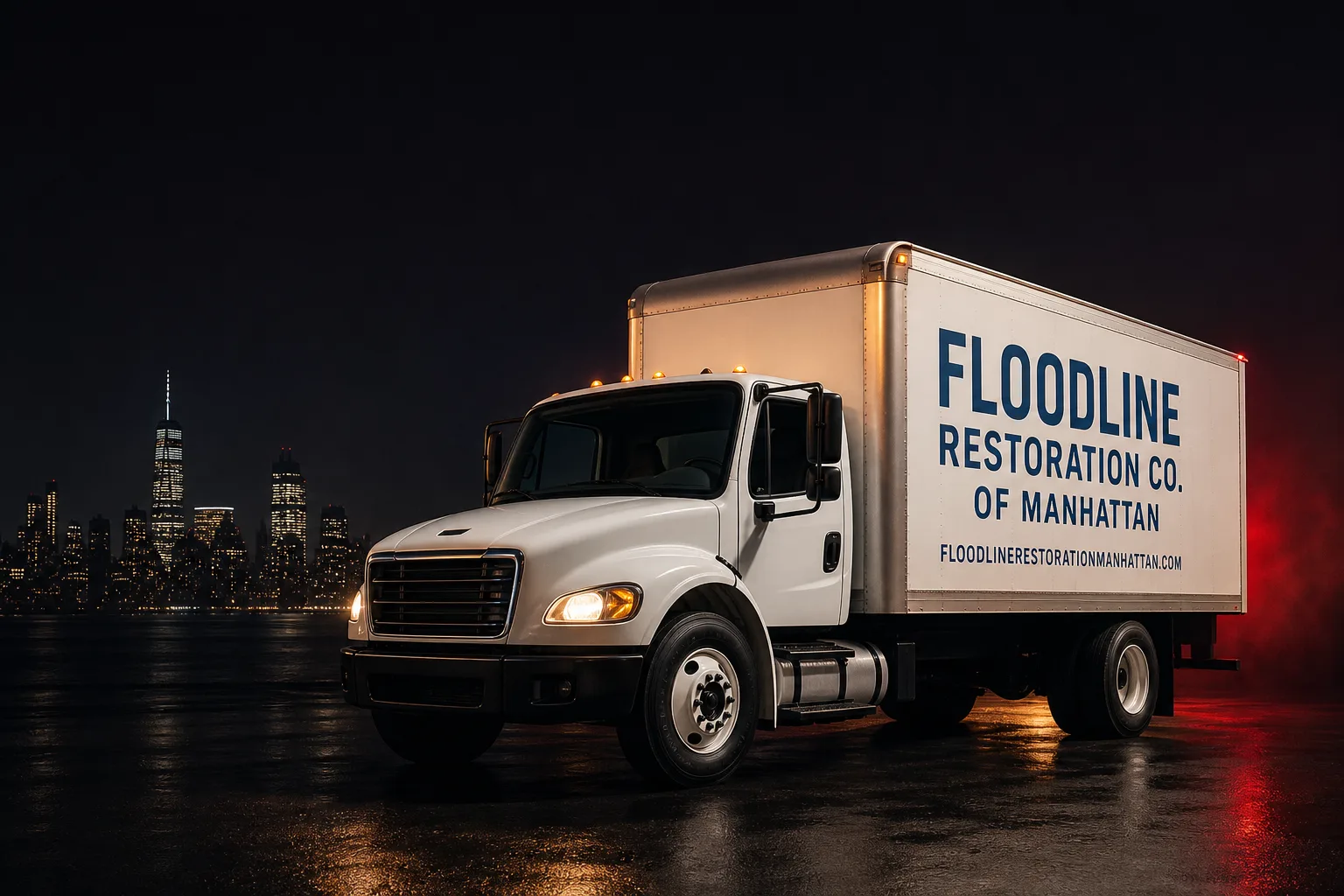
Free visual inspection and a written scope of work before any mitigation begins - photos, moisture readings, and drying logs go in your claim file
The scope we write is the scope we bill. Anything new gets shown to you, in writing, before we touch it.






 Before
 After
After Before
 After
After Before
 After
After24/7 Emergency Storm & Disaster Restoration in Garment District
Storm and disaster restoration in the Garment District typically runs $1,800-$9,500 for water extraction and structural drying, with full rebuilds reaching $25,000-$80,000 depending on how many floors are involved and what inventory needs salvage. A live dispatcher answers at (917) 924-4221 around the clock, every day of the year, and our first crew usually reaches a Garment District address within 45 minutes. The first hour after a pipe burst or storm breach is when most of the preventable damage happens: water migrating through open loft plates, steam rising into stacked showrooms, untreated moisture finding its way into elevator shafts and stairwells. We do the visual inspection free, document everything with photos and moisture readings from the first visit, and start extraction the same trip. If you’re standing in a wet showroom on West 37th Street right now, call. A real person picks up.
Understanding Storm & Disaster Restoration Severity in Garment District Properties
Storm damage in the Garment District rarely stays on one floor. The neighborhood’s 10-to-20-story pre-war loft buildings were built between 1910 and 1940 for light manufacturing, not for the climate-controlled fashion showrooms now stacked floor over floor. Water classification matters here more than in most of Manhattan. Category 1 water from a broken supply line is clean when it leaves the pipe, but in a Garment District loft with decades of accumulated dust and fabric fiber in the air and on the floors, it degrades to Category 2 or 3 within 24 to 48 hours. Category 3 water, the kind carrying sewage or street runoff from a storm backup, demands full containment, HEPA air scrubbing, and antimicrobial treatment before drying even starts.
Moisture mapping is not optional in these buildings. The open floor plates, high ceilings, and shared wet-wall plumbing mean water travels horizontally across an entire floor before it shows up as a ceiling stain one level down. We use thermal imaging and hygrometers to catch water inside wall cavities, under finished concrete subfloors, and behind the original cast-iron risers before it feeds mold. Structural drying in the Garment District also fights the neighborhood’s own density: buildings hard up against each other restrict natural airflow, so professional dehumidification has to work harder and longer than in a freestanding house. We plan for that.
Why Garment District Property Owners Choose Floodline Restoration Co. of Manhattan
- 45-minute response commitment in the Garment District. Dispatch is coordinated from our New York City office, and crews are staged to reach Midtown addresses fast, including the blocks around Seventh and Eighth Avenues and the side streets off Broadway.
- A live person answers at 2 a.m. No answering service, no chatbot, no “leave a message.” A trained dispatcher picks up, asks the right questions, and gets the right crew rolling.
- IICRC-certified crews on every job. Our water damage restoration technicians carry WRT and ASD certifications; our fire and smoke crews hold FSRT. We also train to RIA and IFA standards, so the documentation we hand your carrier is accepted industry-wide.
- Free visual inspection before any work begins. We look, we measure, we explain what we found, and you get a written scope before we pull equipment off the truck.
- Direct insurance billing. We coordinate with your adjuster, send the photos and drying logs ourselves, and bill the carrier directly whenever your policy allows. That means you’re not playing messenger between us and your insurer.
- One team from first extraction to finished rebuild. The same Floodline Restoration Co. crew that reads the moisture map on day one handles the daily readings, documents the drying curve, and rebuilds what needs rebuilding. No mid-job handoff to another contractor you didn’t hire.
Our Storm & Disaster Restoration Process
Inspection & Assessment
We walk the loss site with a thermal imaging camera and moisture meters, mapping where the water went, not just where it’s visible. In a Garment District loft, that means checking the floor below, the ceiling above, and the shared wall cavities. You get a written scope and a straight answer on what needs to happen and what can wait.
Extraction & Stabilization
Truck-mounted extraction and commercial-grade pumps come out first. In pre-war lofts with cast-iron plumbing, we also stabilize the source, whether that’s capping a standpipe, shutting a riser, or isolating a failed sprinkler head before we do anything else. Emergency board-up and roof tarping happen in this phase if the storm opened the building envelope.
Drying & Dehumidification
Professional-grade Dri-Eaz, Phoenix, XPOWER, and B-Air air movers and dehumidifiers get placed according to the moisture map, not evenly around the room. Daily readings continue until the dry standard is met, and we hand the log to both you and your carrier. Garment District buildings take longer to dry because the density between structures blocks natural ventilation.
Cleaning & Sanitization
Category 3 water or storm sewage means full antimicrobial treatment and HEPA air scrubbing. We contain the work area, protect open stairwells and elevator shafts, and treat surfaces before drying finishes, not after. Fabric and paper salvage gets documented and packed out under controlled conditions when inventory is involved.
Specialty Salvage & Content Processing
In the Garment District, this step is often the difference between a business surviving a loss and closing up. Fabric rolls, pattern archives, sample books, and finished garments get triaged, photographed, dried, and stored according to material type. We work to IICRC content-processing standards and document everything for your carrier.
Repairs & Restoration
Once the structure reads dry, we rebuild. Drywall, flooring, paint, trim, and any structural repairs go back under the same crew that did the drying. The 90-Day Done Right Promise is given to you in writing before the job closes, no fine-print games.
Need Emergency Storm & Disaster Restoration in Garment District Now?
Crews minutes away, answering live 24 hours a day. The sooner we start, the less it costs.
Working With Your Insurance Company
We have handled storm and flood claims in pre-war Garment District buildings long enough to know what carriers ask for and when they ask for it. From the first hour on site, we photograph every affected area room by room, log moisture readings daily, and build a line-item scope of work your adjuster can review without a hundred follow-up questions. Our office talks directly with your carrier so you’re not stuck relaying calls between a desk adjuster and a field crew. If the loss involves fashion inventory or sample archives, we document the condition of those materials before and during salvage, because proving pre-loss condition is the difference between getting paid and getting three months of arguments. We are the Storm & Disaster Restoration team that stays in the room with your adjuster until the claim is understood.
What We Provide Your Insurer
- Thorough documentation of the loss
- Photos of all damage, room by room
- Moisture readings and drying logs
- A detailed, line-item scope of work
- Direct coordination with your carrier
Built for Garment District’s Loss Calendar
The Garment District’s disaster calendar has a rhythm, and we plan crews around it. January and February bring deep-freeze events that shatter the aging supply lines and steam-heat pipes running through exterior-facing walls in pre-war lofts. A frozen pipe on the 14th floor of a showroom building on Seventh Avenue doesn’t just flood one office; it cascades down through twelve floors before valving stops it. March through May brings thaw-cycle pressure swings in the old standpipe systems, plus the first heavy spring rains that test aging roofing and parapet flashing on flat-roofed loft buildings.
Summer thunderstorms in Manhattan drop water faster than the older interior roof drains and scuppers can carry it away, so we regularly see roof-drain backups pushing storm water into top-floor showrooms. Autumn brings nor’easter wind-driven rain, which finds every loose window, every cracked roof membrane, and every compromised caulk joint in the older facade work. And the week before each New York Fashion Week, any water loss becomes an emergency even if the structural damage looks minor, because a showroom that can’t receive buyers loses a season’s orders. We staff accordingly.
Storm & Disaster Restoration in the Garment District, Block by Block
Garment District showroom buildings cluster thickest from West 35th to West 40th between Sixth and Ninth Avenues, and each corridor has its own profile. The blocks along West 38th Street near Seventh Avenue hold some of the densest showroom stacking in the district, with multiple fashion tenants per floor and shared wet columns rising through every level. One standpipe failure there hits more businesses per event than anywhere else we work, which changes the salvage priority: the textile and paper archives come first, structural drying second.
Over on West 36th Street between Eighth and Ninth Avenues, the buildings trend slightly younger, more 1930s construction with updated electrical but original plumbing. We see fewer total-pipe failures there and more slow leaks from compression fittings and old supply risers that have been patched a dozen times over eighty years. The side streets off Broadway between 35th and 39th carry a mix of wholesale showrooms, design studios, and ground-floor retail, and their rear service entrances often share drainage lines that back up during heavy storms. On the far west blocks toward Ninth Avenue, the buildings sit closer to the Hudson River side of the island, where wind-driven rain hits facades harder during nor’easters and roof tarping calls spike in late fall. The zip codes we work most often are 10018 and 10001.
The Local Angle: One Failed Sprinkler Head Becomes an Emergency Textile Salvage Operation
In the Garment District, a storm response is never just about drying a building. The neighborhood’s stacked commercial loft buildings house dozens of fashion showrooms per building, each holding pre-season samples, designer inventory, fabric rolls, and pattern archives that cannot be reordered or reproduced. Many of those materials are irreplaceable. When a sprinkler head lets go on a high floor, the water doesn’t just soak drywall and flooring; it pours through open floor plates and into the showrooms below, where $60,000 worth of silk samples and pattern paper can be destroyed in fifteen minutes. Damage restoration here is as much emergency textile and materials salvage as it is structural drying, a dynamic that does not exist in the same way anywhere else in the country.
We learned to work this way on a frozen-pipe burst on the 11th floor of a pre-war loft on West 38th Street last winter, just as a designer showroom was preparing for New York Fashion Week. Our crew ran 24-hour water extraction and structural drying with Dri-Eaz dehumidifiers while a separate pack-out team documented and preserved soaked fabric rolls and pattern archives under IICRC protocols. The showroom reopened in time for buyer appointments. The real win was the moisture mapping that caught water migrating into the elevator shaft before it reached the 10th-floor archives below. In this neighborhood, that kind of detection is the difference between a bad week and a dead business.
Specialized Storm & Disaster Restoration Services We Offer in Garment District
Flood Damage Restoration
Water from storm flooding, failed standpipes, or frozen supply lines moves fast through open loft plates. We extract, dry, sanitize, and rebuild in one continuous operation, with the moisture map updated daily. The same crew that starts the pump handles the final paint.
Storm Damage Cleanup
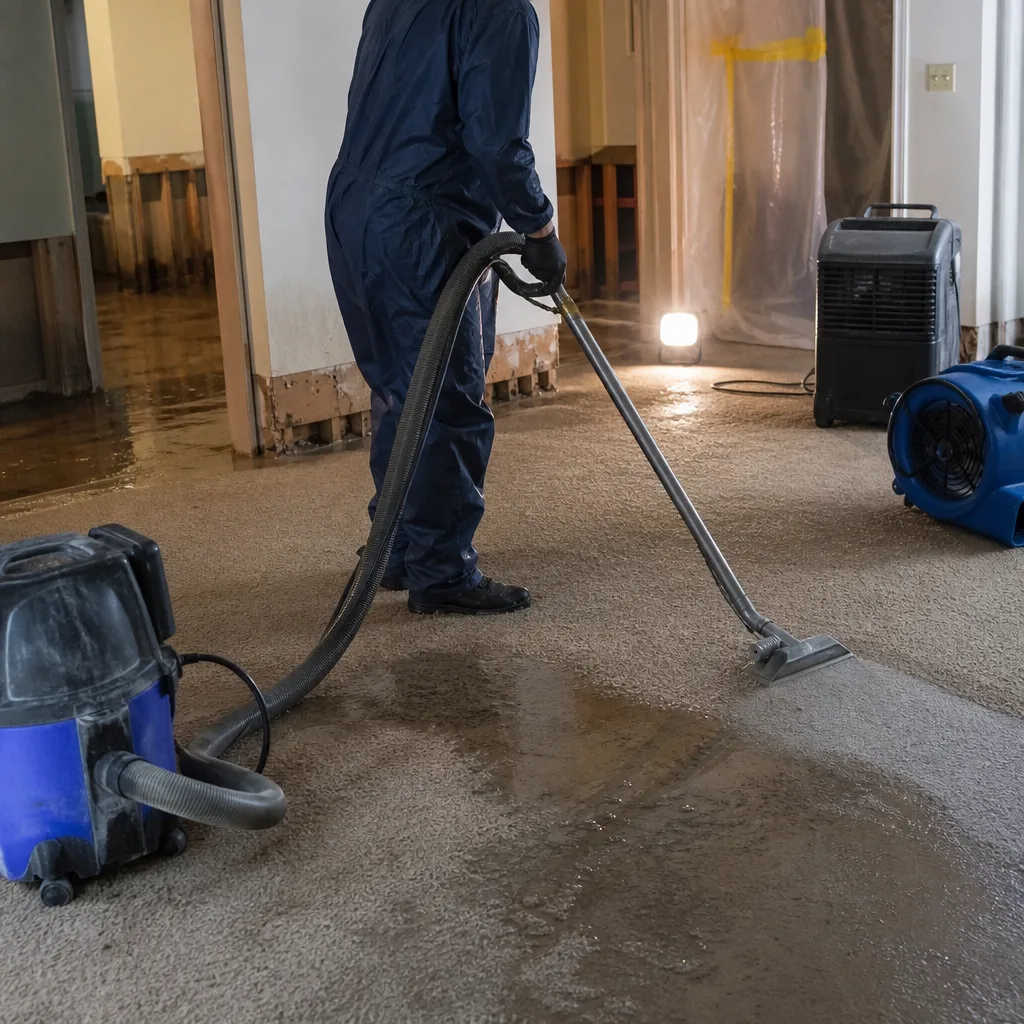
After a nor’easter or a summer cloudburst, Garment District buildings need more than mops. We remove water-damaged materials, clean Category 2 and 3 contamination, dry the structure, and clear debris from roof drains, stairwells, and service entrances so the building can reopen.
Emergency Board-Up
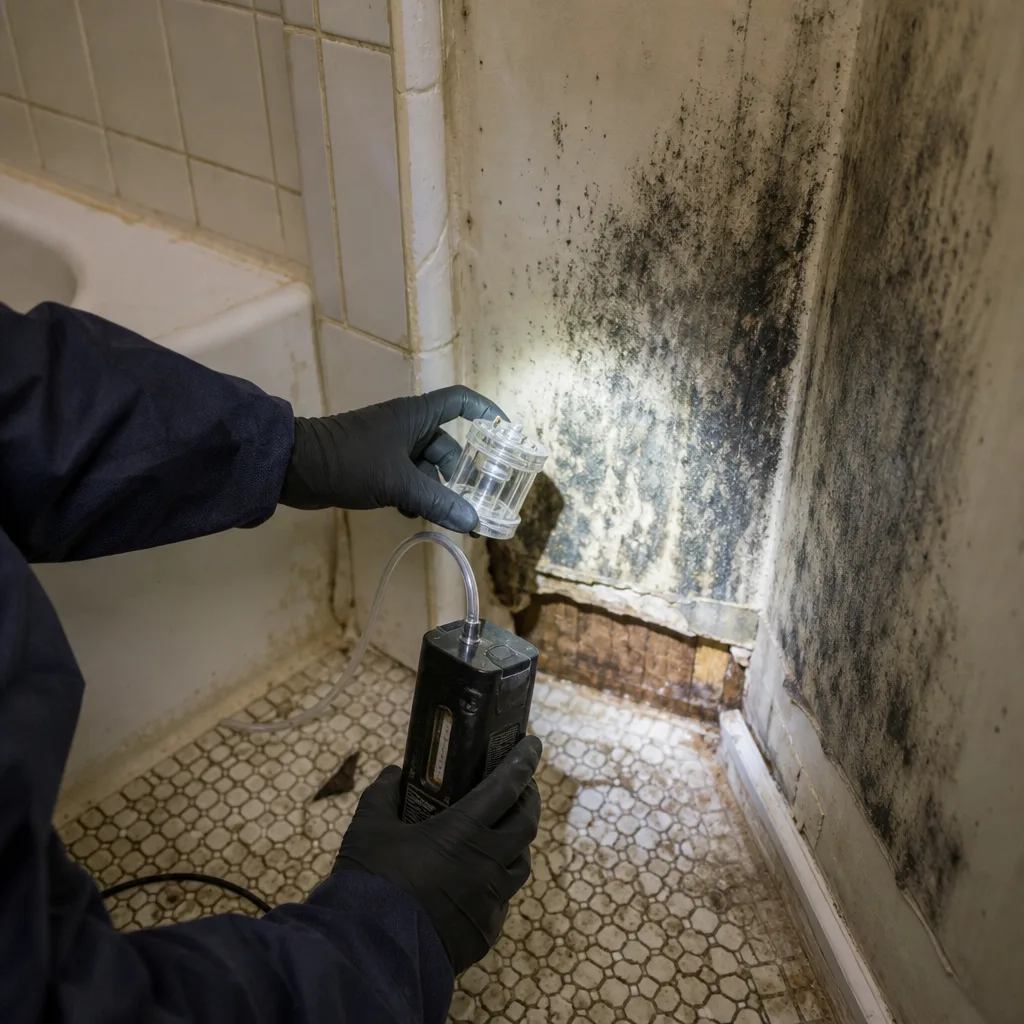
When a storm blows out a window or a water event compromises a facade, we board up the opening fast, using materials that keep the weather out and keep the building secure. In showroom buildings with ground-floor retail on side streets off Broadway, that first board-up also prevents a secondary loss from theft or further rain.
Roof Tarping
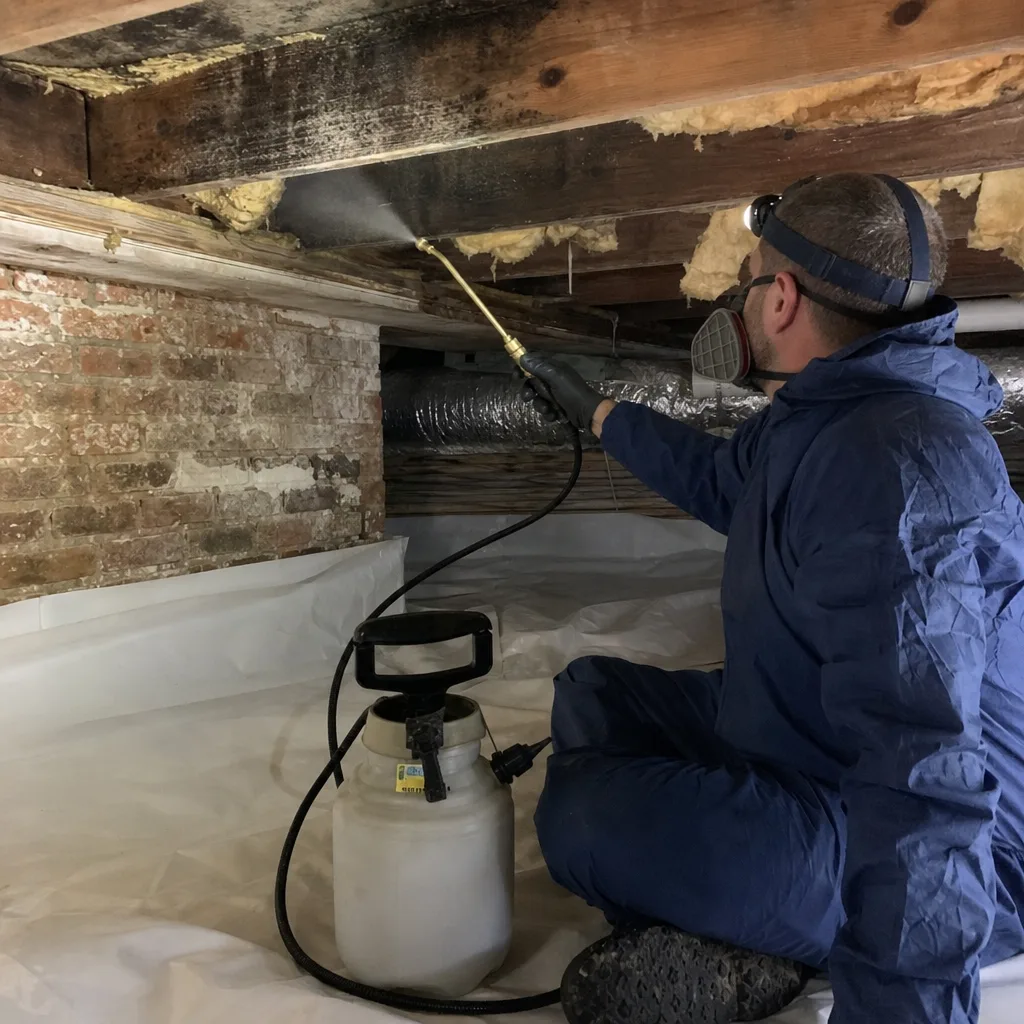
Flat-roofed pre-war lofts in the Garment District fail at the seams and the parapet flashing when wind-driven rain keeps coming. We tarp roofs after storm breaches to stop water from entering the top-floor showrooms while a permanent repair scope is worked out. The tarp buys time; the repair plan is always written out in full before work starts.
What happens when you call
- 1
A real person answersNo phone trees - you reach a local pro.
- 2
You get an upfront price rangeHonest numbers before anyone is dispatched.
- 3
A background-checked tech heads outLicensed & insured, dispatched right away.
- 4
You approve before work beginsNothing starts until you say go.
Storm & Disaster Restoration Costs in Garment District, NY
A typical storm water extraction and drying job in a single Garment District showroom loft runs $1,800-$4,500, depending on square footage, water category, and drying time. Multi-floor flooding from a standpipe or sprinkler failure typically lands between $6,000 and $15,000 for extraction, dehumidification, and sanitization before any rebuild. Full structural repairs and showroom restoration after a major storm or pipe burst run $25,000-$80,000 or more, especially when textile and sample salvage is involved, because content handling, documentation, and controlled storage add labor hours fast. Emergency board-up in the Garment District usually runs $450-$1,200 per opening, and roof tarping for a typical loft building runs $1,500-$4,000 depending on access and roof condition. Insurance covers most storm-related losses, but we give you the line-item scope before we start, always. Call (917) 924-4221 for a free inspection and a firm written estimate.
We Also Serve Cities Near Garment District
Our crews answer calls across the surrounding area, including Fairview, Harrison, East Bronx, and Hunts Point. If you’re close enough to the district that a 45-minute response sounds like what you need, we’ll be there.
Garment District Storm & Disaster Restoration Questions, Answered
How do you handle water damage in a Garment District building with multiple fashion showrooms stacked above each other?
We treat the building as one connected system. We map moisture on every affected floor, including the ceiling below and the walls around every shared riser, then run extraction and drying across all affected levels simultaneously. Showroom inventory, fabric rolls, and pattern archives get documented and salvaged under IICRC content-processing protocols while structural drying continues. Call (917) 924-4221 and we’ll be walking the building within the hour.
Are the older standpipe and wet-column systems in Garment District loft buildings more prone to winter pipe bursts?
Yes. The original standpipe and wet-column systems in 1910-to-1940 Garment District loft buildings were built for light manufacturing, not the current demand, and the exterior-facing runs freeze faster than anything in a modern building. Manhattan’s January and February deep freezes put repeated stress on those old iron risers. We see burst pipes in these systems every winter, and the cascading flooding through stacked showrooms makes fast response essential.
What happens to fabric samples and inventory after a sprinkler discharge in a Garment District showroom?
It depends on how quickly the salvage process starts. Fabric rolls and samples that are still wet get triaged by material type, photographed, dried under controlled conditions, and stored properly. Pattern paper that has dried solid can often be restored with professional document drying. The key is getting a crew on site before mold sets into the fibers, usually within 48 to 72 hours. We run this as a parallel workstream to the structural drying.
How quickly can you start water extraction before New York Fashion Week?
We staff extra crews in the weeks before Fashion Week because we know any water loss right then is an all-hands event. A crew can typically reach your Garment District building within 45 minutes, and extraction starts the same visit. Last winter we ran 24-hour extraction and drying on a West 38th Street showroom before a buyer appointment cycle and had the space open on schedule. Call (917) 924-4221 when the pipe breaks, not when the schedule does.
Do you document everything for insurance claims on pre-war Garment District buildings?
Every claim gets photos from the first hour, daily moisture logs, thermal imaging records, and a line-item scope that matches industry-standard estimating formats. We communicate directly with your adjuster and bill the carrier directly when your policy allows. You get copies of everything we send.
Can I stay in my showroom or loft while you’re drying and restoring?
It depends on the water category and the extent of the damage. Category 1 clean water with limited spread often allows you to stay in unaffected areas. Category 2 or 3 water, or any job with sewage, storm runoff, or potential mold, usually means you should be out of the affected space until containment and air scrubbing are running and clearance readings are documented. We’ll give you a straight answer in the first hour.
What certifications do your storm and disaster restoration crews hold?
Our technicians are certified to IICRC standards in water damage restoration and applied structural drying, with additional training to RIA and IFA standards. The crew is background-checked and uniformed, and they carry professional-grade Dri-Eaz, Phoenix, XPOWER, and B-Air equipment on every truck.
What should I do in the first 30 minutes after a pipe burst or storm breach in my Garment District loft?
Call a live dispatcher first at (917) 924-4221. Then, if it’s safe, shut off the water at the nearest shutoff valve, kill power to any wet electrical, and move small items up off the floor. Don’t attempt to open walls or run household fans on soaked structure. The water you can’t see is doing the most damage, and the clock is running on whether your inventory survives.
Serving Garment District, NY - Our Local Coverage Area
We’re based in the Garment District area and know this community well. Use the map below to see our service coverage - if you’re nearby, we can almost certainly help.
Done Right, Backed in Writing
When the storm passes, the water gets extracted, the fabric gets dried, and the showroom reopens, you should have more than a contractor’s word that the job was done right. You should have paper. The 90-Day Done Right Promise, the Keystone Standard, goes into every Garment District job before we finish. If something isn’t right, we make it right. No arguing, no fine print. That’s how Floodline Restoration Co. of Manhattan has handled storm and disaster restoration since 2010, and it’s how we’ll handle your building.
For a free visual inspection and a straight answer, call (917) 924-4221 now. A live person answers, day or night, and a uniformed crew can be at your Garment District address fast.
Written by Curt Bowman, Owner at Floodline Restoration Co. of Manhattan.