
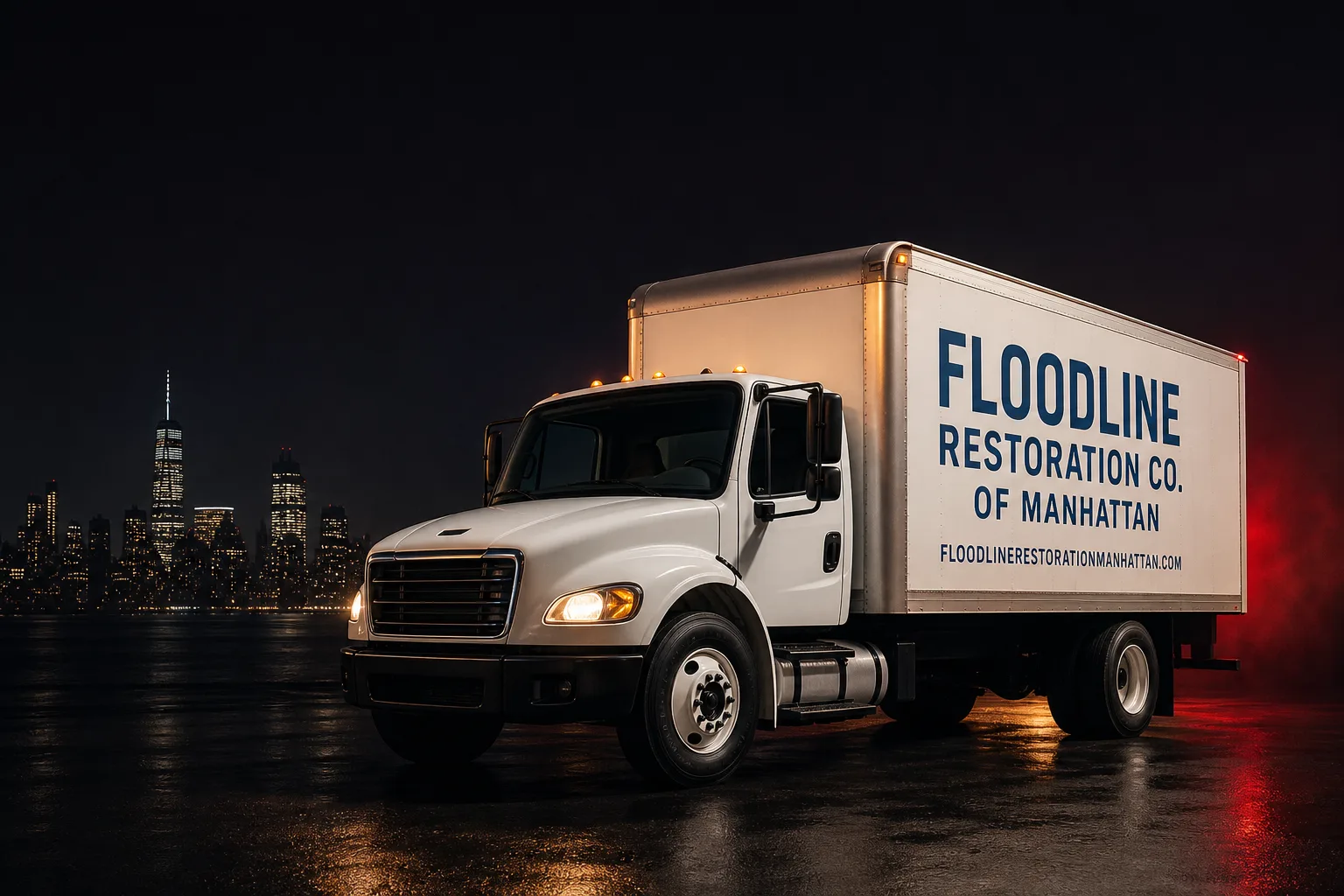
Free visual inspection and a written scope of work before any mitigation begins - photos, moisture readings, and drying logs go in your claim file
The scope we write is the scope we bill. Anything new gets shown to you, in writing, before we touch it.






 Before
 After
After Before
 After
After Before
 After
After24/7 Emergency Storm & Disaster Restoration in Ho-Ho-Kus
Storm and disaster restoration in Ho-Ho-Kus means responding to the Hohokus Brook when it overtops its banks, along with the nor’easters and freeze-thaw damage that hit the borough’s older homes. Our crews are dispatched from a live-answer line at all hours, every day of the year. If standing water is rising in a finished basement off Hollywood Avenue or floodwater has pushed through a walk-out on Sheridan Terrace, call (917) 924-4221 right now. A live person picks up. We start extraction the same visit, because the first hour determines whether plaster walls get dried or get gutted.
Understanding Storm & Disaster Restoration Severity in Ho-Ho-Kus Properties
Ho-Ho-Kus housing stock runs to 1920s-1950s Colonials, Tudors, and Craftsman bungalows with plaster-and-lath interior walls, rubble-stone or block foundations, and finished basements. That construction matters because water behaves differently here than in newer drywall houses. Plaster wicks moisture upward well past the visible water line. Rubble foundations keep pulling groundwater in for weeks after surface flooding recedes. We classify floodwater as Category 1, 2, or 3, and brook overflow is Category 3: contaminated water carrying silt, bacteria, and whatever the Hohokus Brook picked up upstream. Restoration requires full extraction, controlled demolition of saturated finishes, structural drying with moisture-mapped readings, and antimicrobial treatment, not just fans running for a few days. Plaster that dries too slowly grows mold inside the wall cavity. Basements without proper vapor barriers, which we see constantly near the lower brook sections, hide colonies left from earlier recoveries.
Why Ho-Ho-Kus Property Owners Choose Floodline Restoration Co. of Manhattan
- 45-minute response commitment: when water is rising or a tarp has torn loose, we dispatch a crew toward Ho-Ho-Kus immediately and tell you exactly when we’ll arrive.
- 24/7 live answer: a real dispatcher, never an automated menu, picks up at 2 a.m. and can route a crew to Ho-Ho-Kus the same call.
- IICRC-certified crews: our technicians hold WRT, FSRT, and AMRT certifications; they’re trained to IICRC, RIA, and IFA standards and arrive in uniform, background-checked.
- Free visual inspection: we assess the loss in person, run moisture readings where needed, and tell you straight what needs doing and what doesn’t.
- Direct insurance billing: we bill your carrier directly and handle adjuster communication, so you’re not mediating between two parties.
- One team, start to finish: extraction, drying, and rebuild are handled by the same certified crew. No mid-job handoff, no inherited subcontractors.
Our Storm & Disaster Restoration Process
Inspection & Assessment
We walk the property with thermal imaging and moisture meters, map the water migration through plaster and foundation stone, and identify whether this is a fresh loss or one compounded by older damage. The written scope we agree on before work starts tells you what we found and what we’ll do.
Extraction & Stabilization
We pull standing water with truck-mounted and portable extraction units, remove flood-cut drywall or paneling if present, and set up emergency board-up or roof tarping if storm damage opened the envelope. The goal is to stop further damage immediately.
Drying & Dehumidification
Professional-grade Dri-Eaz, Phoenix, and XPOWER air movers and dehumidifiers run on a drying plan calculated from hygrometer and moisture-probe readings. In Ho-Ho-Kus plaster homes, drying logs must reflect wall-cavity readings, not just surface numbers.
Cleaning & Sanitization
Category 3 floodwater requires antimicrobial treatment and HEPA air scrubbing. We clean and sanitize all affected surfaces, and run containment where mold from a prior owners’s DIY fix is discovered.
Flood-Specific Specialty Treatment
For brook flooding, specialty work includes foundation drying checks on rubble stone, vapor-barrier installation in rebuilt basement assemblies, and plaster-wall drying techniques that prevent trapped moisture. We log every reading daily until the dry standard is met.
Repairs & Restoration
We rebuild to a written scope, from studs and insulation to trim and paint. Reconstructed basement walls get vapor barriers and flood-resistant assemblies, so the next event costs less to recover from.
Need Emergency Storm & Disaster Restoration in Ho-Ho-Kus Now?
Crews minutes away, answering live 24 hours a day. The sooner we start, the less it costs.
Working With Your Insurance Company
Most Ho-Ho-Kus storm and flood losses have an insurance claim attached, and the claim goes smoother when documentation starts in the first hour. We photograph every room, log moisture readings daily, and write a line-item scope in the format carriers expect. Our team communicates with your adjuster directly, so you’re not chasing paperwork while your basement is open to the studs. We bill the carrier directly where coverage applies. If a question comes up about pre-existing mold from a prior Irene or Sandy recovery, our documentation shows what was new versus what was inherited.
What We Provide Your Insurer
- Thorough documentation of the loss
- Photos of all damage, room by room
- Moisture readings and drying logs
- A detailed, line-item scope of work
- Direct coordination with your carrier
Built for Ho-Ho-Kus’s Loss Calendar
Ho-Ho-Kus sees storm and disaster losses in two distinct seasons. Late winter through early spring brings freeze-thaw cycles that crack foundations and ice-damming on the steep-pitched roofs of the borough’s Tudors and Colonials, sending meltwater into attics and exterior walls. Then comes nor’easter season, which is when the Hohokus Brook does its real damage. Prolonged saturating rain on already-wet ground sends the brook over its banks fast, and the lower sections of the borough flood first. Hurricane Ida in 2021 and Irene in 2011 both put finished basements under feet of Category 3 water. Summer thunderstorms can flash-flood the same brook-adjacent streets in an afternoon. Homeowners in the active floodplain often cycle through professional restoration every few years, which is why we keep crews familiar with Ho-Ho-Kus on rotation.
Storm & Disaster Restoration Across Ho-Ho-Kus’s Neighborhoods
Our crews route through Ho-Ho-Kus on a regular basis and know which blocks flood first. Homes along Hollywood Avenue and the lower sections near the Hohokus Brook sit in or just outside the active floodplain, and these are the repeat-loss properties. Sheridan Terrace and the streets climbing toward the Saddle River border have older Colonials with finished basements that flood when the brook backs up storm drains during heavy rain. Up on the hillier streets near Braeburn Road and the Ho-Ho-Kus border with Waldwick, wind damage and roof failures are more common than brook flooding, but those same steep-pitched roofs ice-dam in winter. The borough’s 07423 zip lines up with an older housing stock that means almost every loss involves plaster, rubble foundations, or both. When we respond to a call in Ho-Ho-Kus, we’re not feeling out the territory. We know the house types, the drainage patterns, and the right approach before we pull up.
Specialized Storm & Disaster Restoration Services We Offer in Ho-Ho-Kus
Storm Damage Cleanup
When a nor’easter tears through Ho-Ho-Kus, cleanup means more than hauling branches. We remove water-damaged materials, clear debris from window wells and basement entries, and set drying equipment where wind-driven rain pushed water into walls and floors. Cleanup moves fast so structural drying can start.
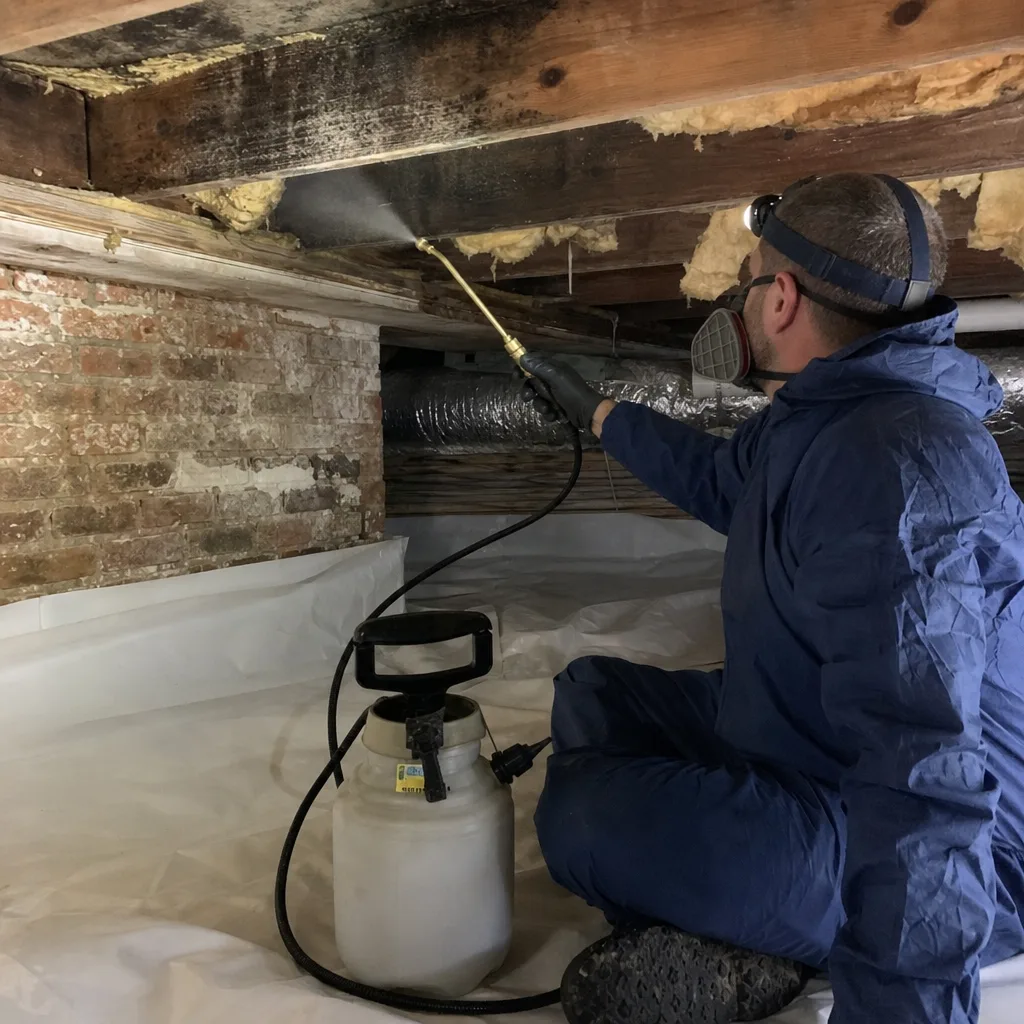
Flood Damage Restoration
Brook flooding is the core of storm work in Ho-Ho-Kus. We extract Category 3 water, open saturated plaster and paneling, dry the structure with moisture-mapped readings, and treat for microbial contamination. In pre-1930s homes, we check foundation moisture separately because rubble stone keeps wicking long after the floor looks dry.
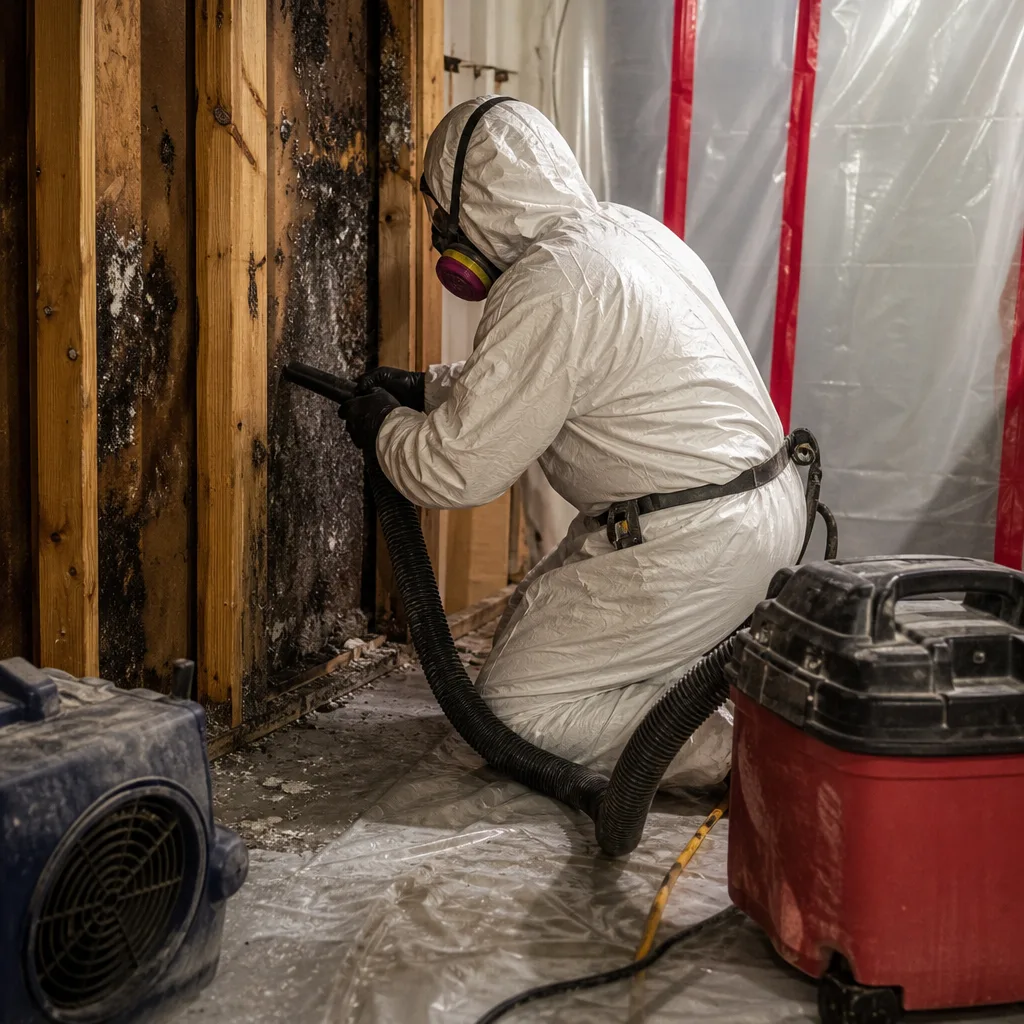
Emergency Board-Up
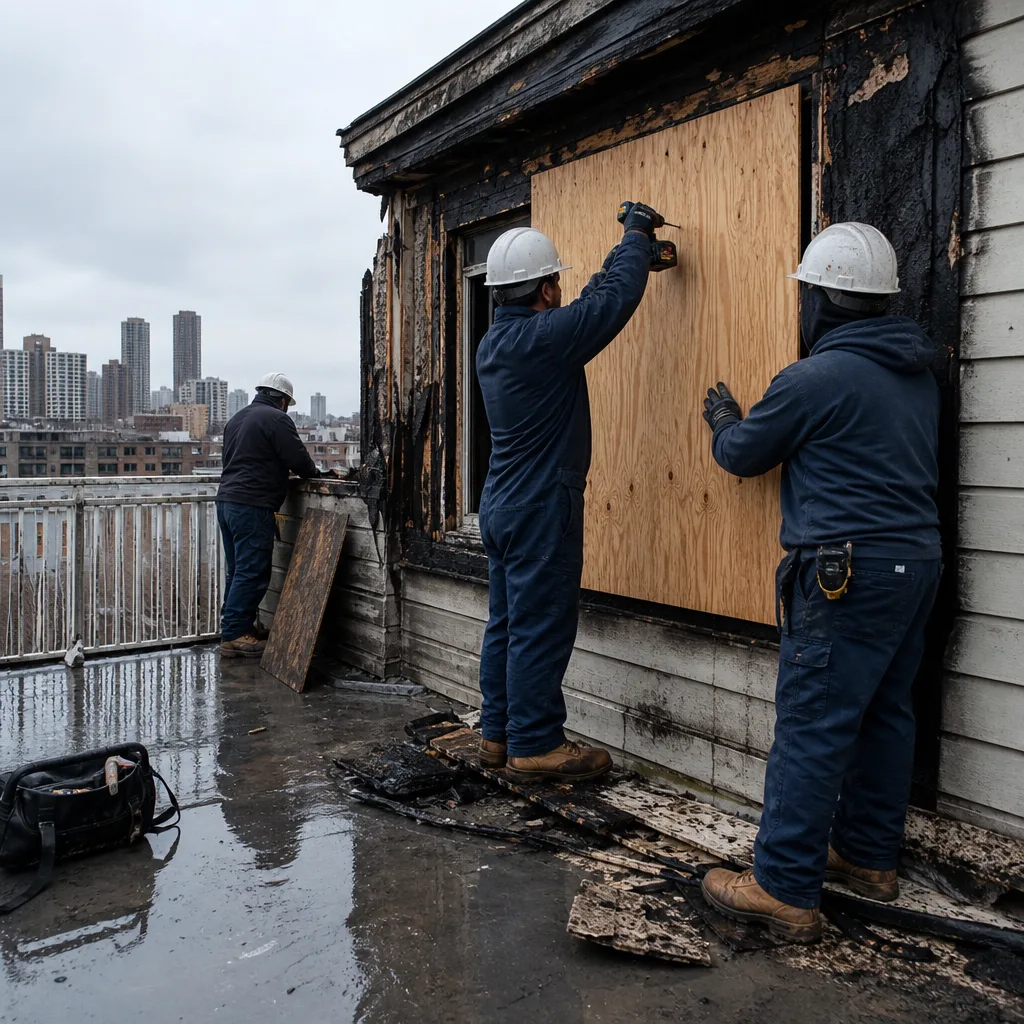
A tree limb through a Ho-Ho-Kus picture window or storm-blown door leaves the house open to weather and trespass. We board up with plywood cut to the opening, secured properly, and we do it day or night. Board-up holds until replacements are ordered and installed.
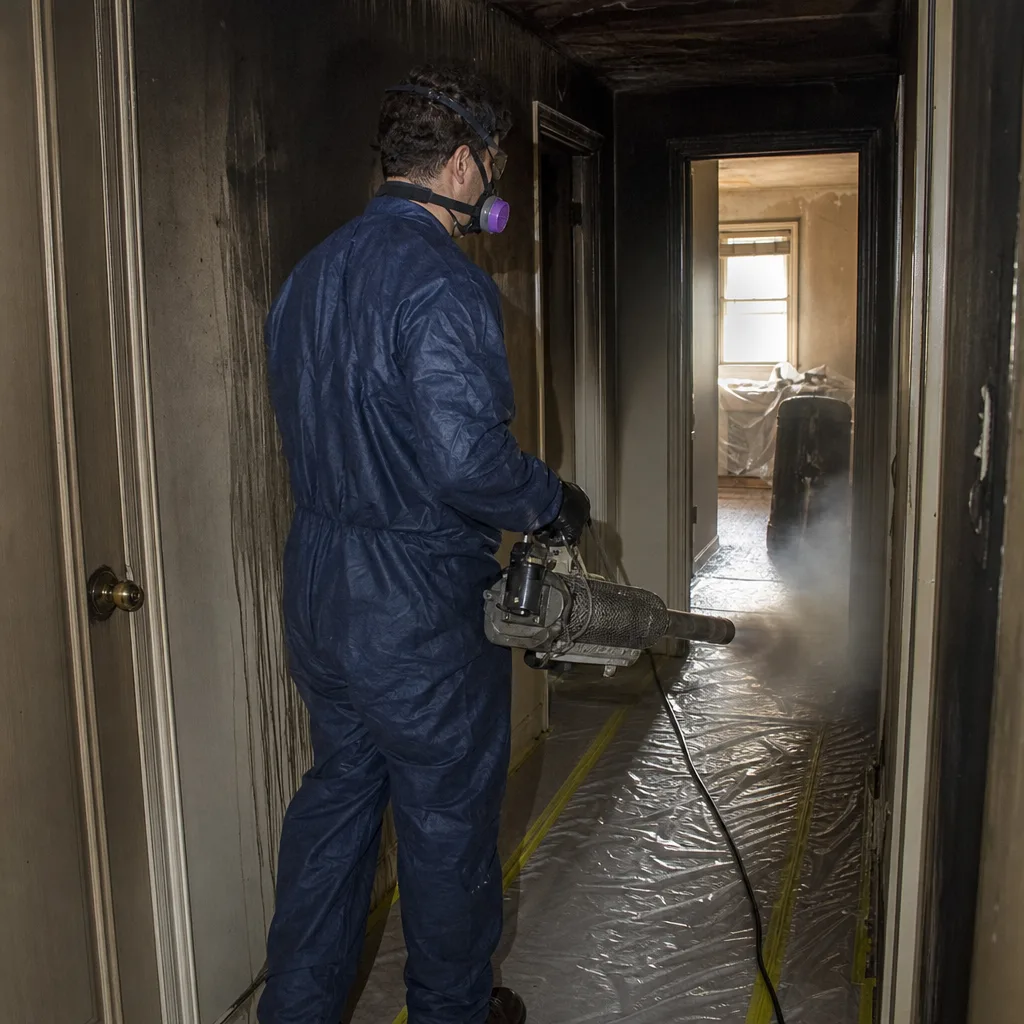
Roof Tarping
Steep-pitched Ho-Ho-Kus roofs with cedar shingles make tarping a job that rewards proper anchoring. Short nails and loose tarp edges fail in the next nor’easter. We anchor tarps into solid sheathing and seal the edges so the tarp holds until the roofer arrives. This matters most on Tudors where the roofline is complex and wind gets under loose edges.
Debris Removal
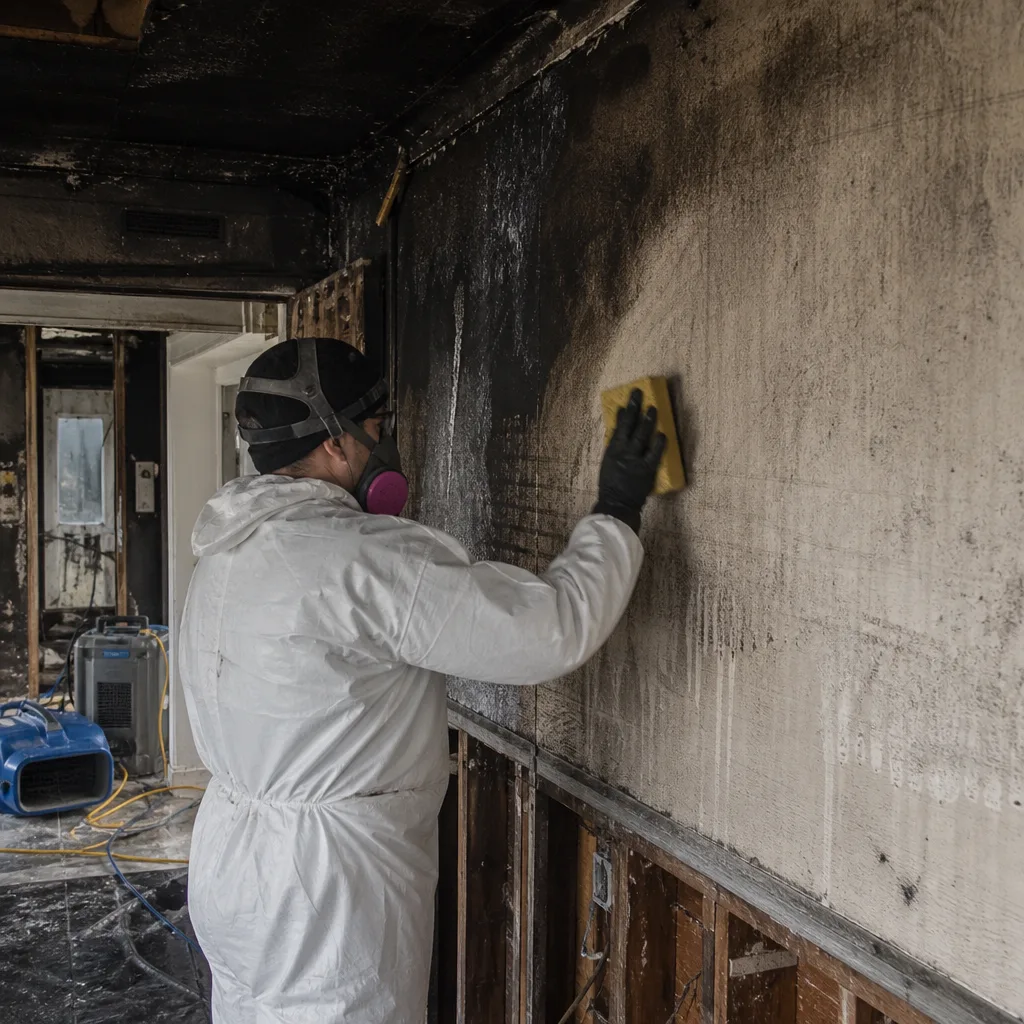
Storm debris in Ho-Ho-Kus includes saturated drywall, ruined carpet, damaged furniture, and yard debris that blocks access or drainage. We remove it fast, document everything for the carrier, and leave the property ready for the next phase.
What happens when you call
- 1
A real person answersNo phone trees - you reach a local pro.
- 2
You get an upfront price rangeHonest numbers before anyone is dispatched.
- 3
A background-checked tech heads outLicensed & insured, dispatched right away.
- 4
You approve before work beginsNothing starts until you say go.
Storm & Disaster Restoration Costs in Ho-Ho-Kus, NJ
Cost depends on what the Hohokus Brook or the storm put in your house. A straight water extraction and drying job in a Ho-Ho-Kus basement with moderate flooding typically runs $2,800 to $6,500. When plaster-and-lath walls need opening and controlled demolition, the range moves to $6,000 to $14,000. Full flood restoration of a finished basement with pack-out, drying, antimicrobial treatment, and rebuild commonly lands between $12,000 and $35,000, depending on square footage and finishes. Emergency board-up runs $350 to $900 per opening. Roof tarping runs $500 to $1,400 for most Ho-Ho-Kus roofs. The difference between a clean claim and a fight often comes down to early documentation, which is why our free visual inspection includes readings and photos from the first visit. Call (917) 924-4221 for an exact quote.
We Also Serve Cities Near Ho-Ho-Kus
Our crews cover Ho-Ho-Kus and the surrounding Bergen County communities, including Alpine, Bergenfield, Bogota, and Carlstadt. When a storm tracks across the region, we respond to the whole area, not just one borough.
Serving Ho-Ho-Kus, NJ - Our Local Coverage Area
We’re based in the Ho-Ho-Kus area and know this community well. Use the map below to see our service coverage - if you’re nearby, we can almost certainly help.
Ho-Ho-Kus Storm & Disaster Restoration Questions, Answered
How soon do you need to start water mitigation after the Hohokus Brook floods a Ho-Ho-Kus basement before mold becomes a problem?
Mold growth in a warm, wet basement can begin within 24 to 48 hours, and plaster-and-lath walls in Ho-Ho-Kus homes wick moisture upward fast, so we recommend extraction and drying equipment running within the first day. Call (917) 924-4221 as soon as the water recedes enough for a crew to enter.
How do you dry plaster-and-lath walls after Hohokus Brook floodwater soaks a 1920s Ho-Ho-Kus basement?
We run moisture mapping across the full wall surface and into wall cavities with penetrating probes, because plaster wicks water well above the visible line. We open the lower wall sections, run Dri-Eaz and Phoenix air movers and dehumidifiers on a calculated drying plan, and log daily readings until the dry standard is met. Drying plaster too fast cracks it; too slow, and mold grows. The readings tell us when we’re done.
Why do the same Ho-Ho-Kus homes near the brook keep flooding every time there’s a major storm?
The Hohokus Brook has a defined floodplain, and many homes off Hollywood Avenue and the lower borough streets sit within it or just outside it. When nor’easters drop prolonged rain on saturated ground, the brook overtops its banks and water follows the same paths every time. Some basements also sit below the water table during high-water events, so groundwater pushes in through rubble-stone foundations even when the brook stays in its channel.
Can you restore a finished basement that already has mold from a previous Hurricane Irene or Sandy flood in Ho-Ho-Kus?
Yes. This is common in older Ho-Ho-Kus basements where a prior owner did a DIY repair. We contain the affected area, run HEPA air scrubbing, remove the mold-damaged materials, and treat the structure with antimicrobials before rebuilding. The old mold doesn’t disqualify the new claim; our documentation separates what was pre-existing from what’s new.
What does a flood damage restoration scope of work actually include for a Ho-Ho-Kus Tudor with a finished basement?
The scope includes water extraction, controlled demolition of saturated finishes, structural drying with moisture readings, antimicrobial treatment, and rebuild of the affected rooms to dry standard, including vapor barriers on rebuilt basement walls. We write the scope before work starts and review it with you line by line. No surprises on the bill.
How fast can someone actually get to my Ho-Ho-Kus house during a storm?
Our commitment is a 45-minute response from the call. During active nor’easters, crews are already staged around Bergen County, and a live dispatcher can tell you exactly when we’ll be there. Call (917) 924-4221.
Will insurance cover storm and flood restoration in Ho-Ho-Kus?
Most homeowners policies cover storm damage from wind, fallen trees, and roof leaks. Brook flooding is covered only if you have a separate flood insurance policy through NFIP or a private carrier. We photograph everything from the first hour and work directly with your adjuster either way, so the claim reflects what actually happened.
Do I really need full restoration or just a cleaning after a Ho-Ho-Kus flood?
If the water came from the Hohokus Brook, it’s Category 3 contaminated water, and a cleaning alone won’t address what’s inside the plaster and behind paneling. Free moisture readings on our visual inspection will tell us whether the drying boundary is manageable or the walls need opening. We’ll show you the numbers and let you decide with the full picture.
Written by the team at Floodline Restoration Co., led by Curt Bowman, serving Ho-Ho-Kus and Bergen County. Our crews answer live 24/7 at (917) 924-4221.