
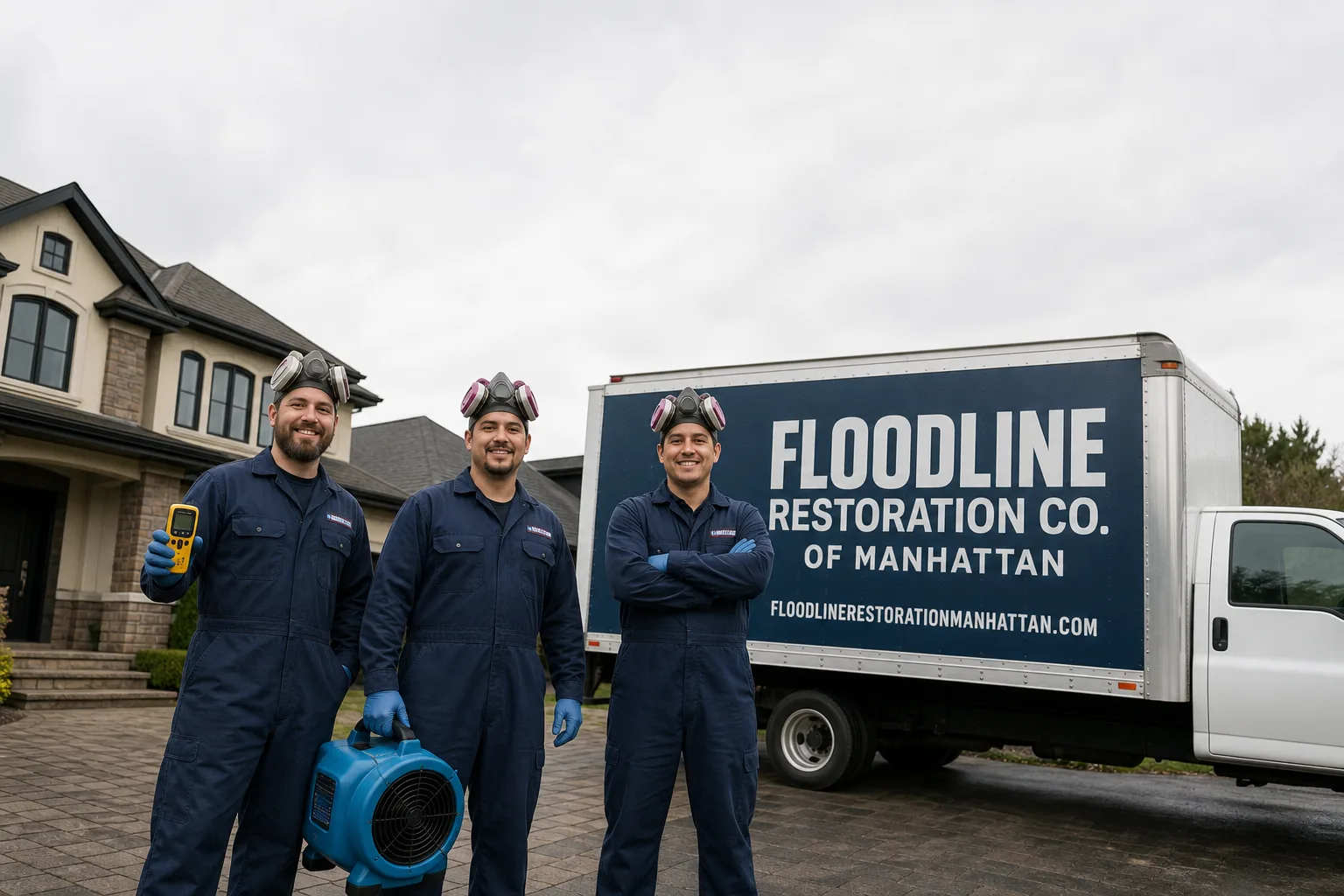
Free visual inspection and a written scope of work before any mitigation begins - photos, moisture readings, and drying logs go in your claim file
The scope we write is the scope we bill. Anything new gets shown to you, in writing, before we touch it.






 Before
 After
After Before
 After
After Before
 After
After24/7 Emergency Storm & Disaster Restoration in Hollis
When a nor’easter tears through Hollis or a summer thunderstorm floods your basement, you need a crew that answers the phone and moves fast. Storm and disaster restoration in Hollis typically starts with emergency board-up or tarping, followed by water extraction and structural drying, with most emergency visits dispatched within 45 minutes. Call (917) 924-4221 any hour, any day. A live dispatcher picks up, not a recording, and a certified crew heads to your block on Hillside Avenue, Jamaica Avenue, or anywhere else in Hollis right away.
The first hour matters more than most homeowners realize. Water from a failed sump pit or wind-driven rain keeps moving through brick, plaster, and framing long after the storm passes. Every hour it sits, the Category 2 or Category 3 contamination spreads further into finished basement walls and under floor assemblies. We arrive, assess the damage, and start extraction on the same visit. The line the water left is where we start.
Understanding Storm & Disaster Restoration Severity in Hollis Properties
Hollis’s housing stock is dominated by 1920s-1940s brick semi-detached Capes and Colonials with full basements. These homes were built with true dimensional lumber, lime-based plaster, and masonry party walls that behave differently than modern construction when wet. Storm water entering a Hollis basement is rarely clean. Category 1 water from a burst supply line becomes Category 2 within 48 hours as it picks up contaminants from old floor assemblies and wall cavities. Category 3 water, the kind that backs up from southeastern Queens’ aging combined sewer system during heavy rain, carries sewage, bacteria, and pathogens that require full containment, antimicrobial treatment, and often removal of saturated finishes rather than simple drying.
The heavy clay subsoil under Hollis holds hydrostatic pressure against basement walls for days after a storm event. That means moisture mapping at the standard 48-hour mark will read dry on the surface while the wall assembly behind it is still saturated. Experienced local crews add moisture-mapping checks at 72 and 96 hours before closing a job. Skipping those extended readings is exactly how mold takes hold in a Hollis basement three weeks after the storm. We don’t close jobs early. The 90-Day Done Right Promise is in writing, and it means what it says.
Why Hollis Property Owners Choose Floodline Restoration Co. of Manhattan
- 45-minute response commitment: When you call from Hollis, a crew is dispatched immediately and typically arrives within 45 minutes. The sooner extraction starts, the less damage spreads through those shared brick walls.
- 24/7 live answer, never an automated system: A real dispatcher picks up at 2 a.m. during a nor’easter. Not a phone tree. Not a callback service. A person who knows what questions to ask and can move a crew.
- IICRC-certified crews: Our technicians hold WRT (Water Damage Restoration Technician) and FSRT (Fire & Smoke Restoration Technician) certifications, with AMRT (Applied Microbial Remediation Technician) on mold and sewage jobs. They’re background-checked and uniformed.
- Free visual inspection: Before any work begins, we walk the property with you, show you what we’re seeing, and explain what needs to happen and why. No pressure, no scare tactics.
- Direct insurance billing: We document from the first hour, bill your carrier directly, and talk to the adjuster ourselves. You never play messenger between us and the insurance company.
- One team from extraction to reconstruction: The same crew that reads the moisture map on day one handles daily readings, hands the log to you and your carrier, and rebuilds what needs rebuilding. No mid-job handoff, no inherited crew.
Our Storm & Disaster Restoration Process
Inspection & Assessment
We arrive, walk every room, and document the damage. Thermal imaging and hygrometers help us map moisture behind walls and under floors, including along party walls that connect your home to your neighbor’s. You get a clear picture of what happened and what comes next.
Extraction / Stabilization
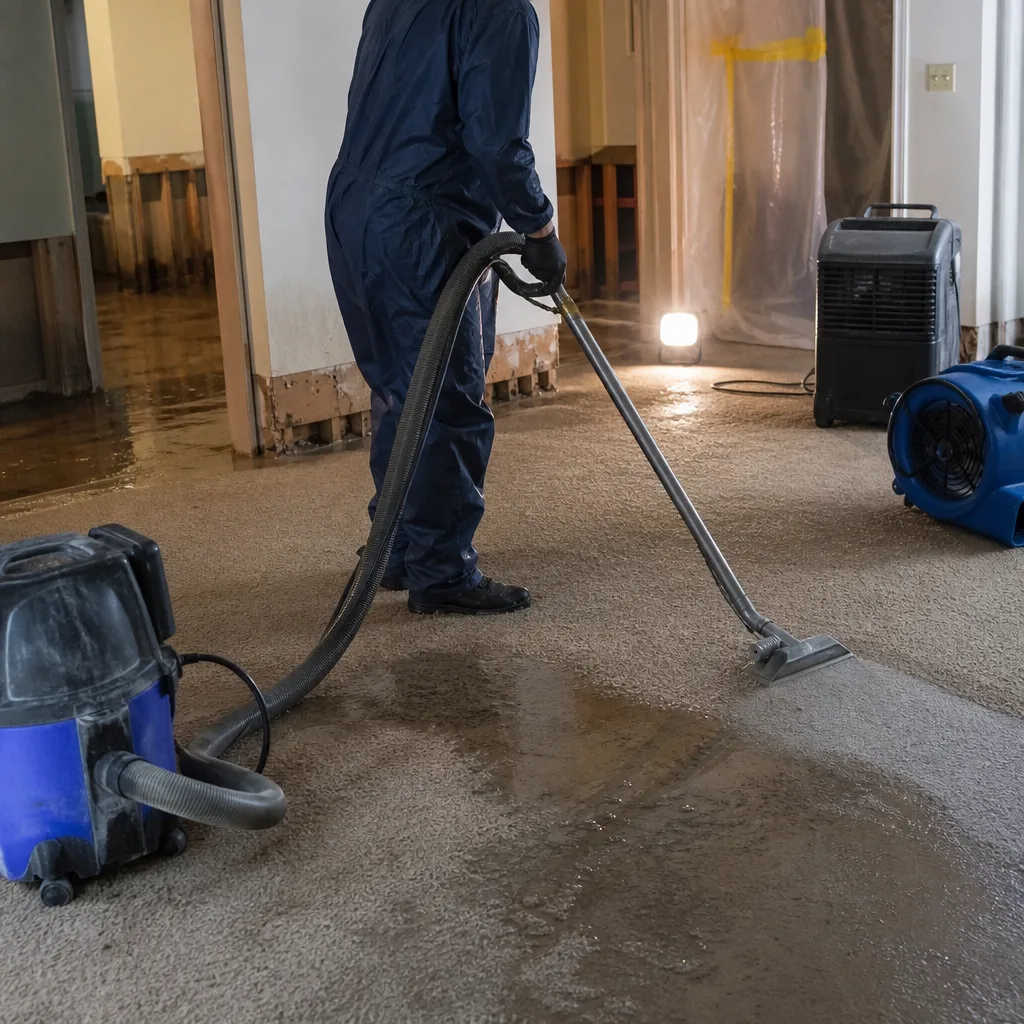
Standing water is extracted with truck-mounted and portable extraction units. If windows or the entry door are blown out, we board up and tarp first so no more water gets in while we work. Stabilization starts on the first visit.
Drying & Dehumidification
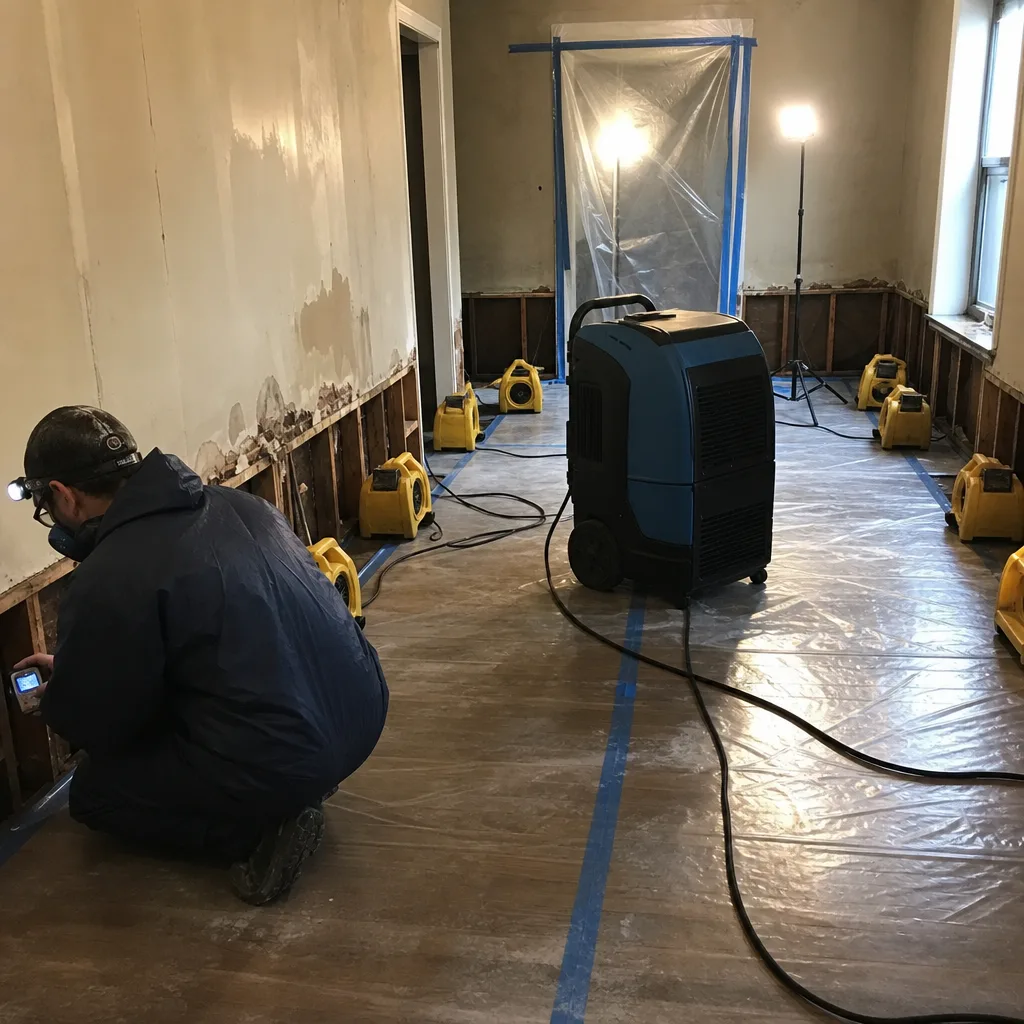
Dri-Eaz air movers and Phoenix dehumidifiers are placed to create airflow across wet surfaces and pull moisture from wall cavities. In Hollis, we run extended monitoring at 72 and 96 hours because the clay subsoil keeps feeding moisture into basement walls long after surface readings look dry.
Cleaning & Sanitization
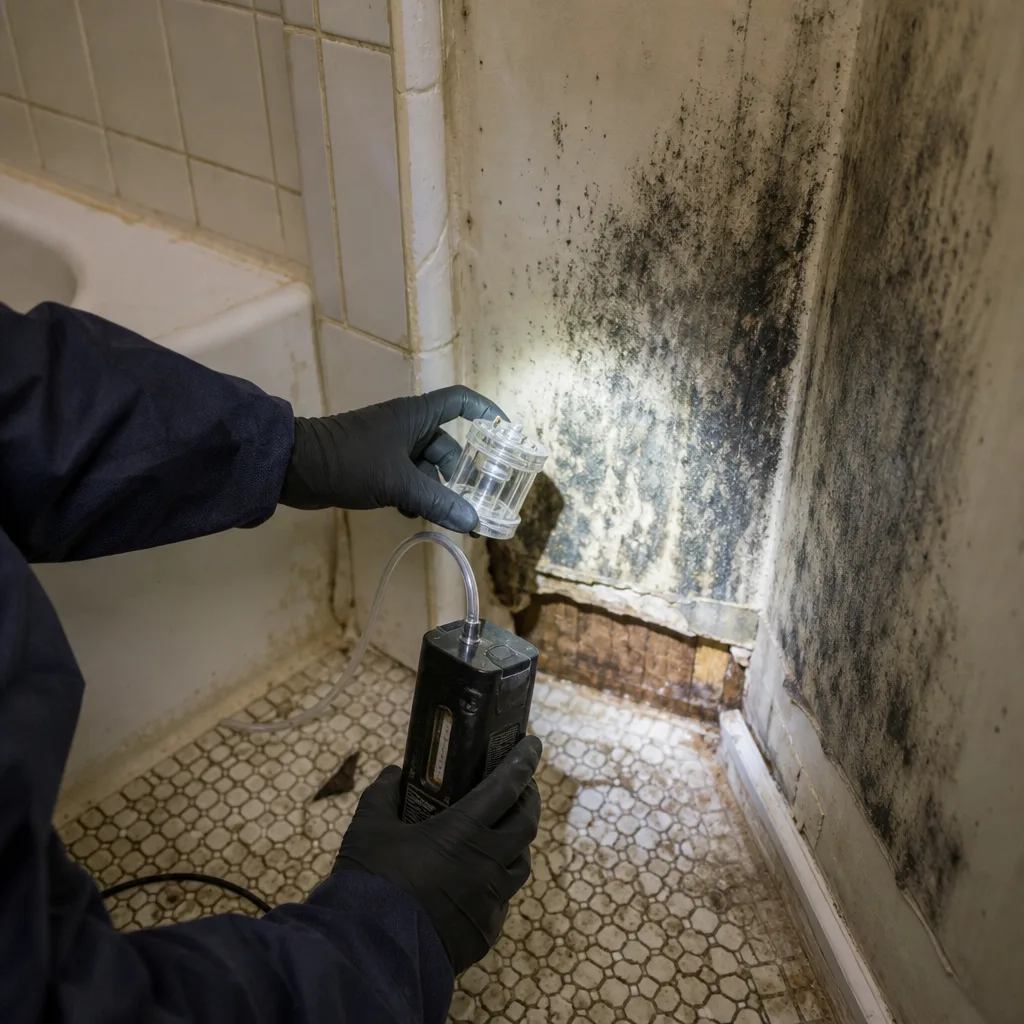
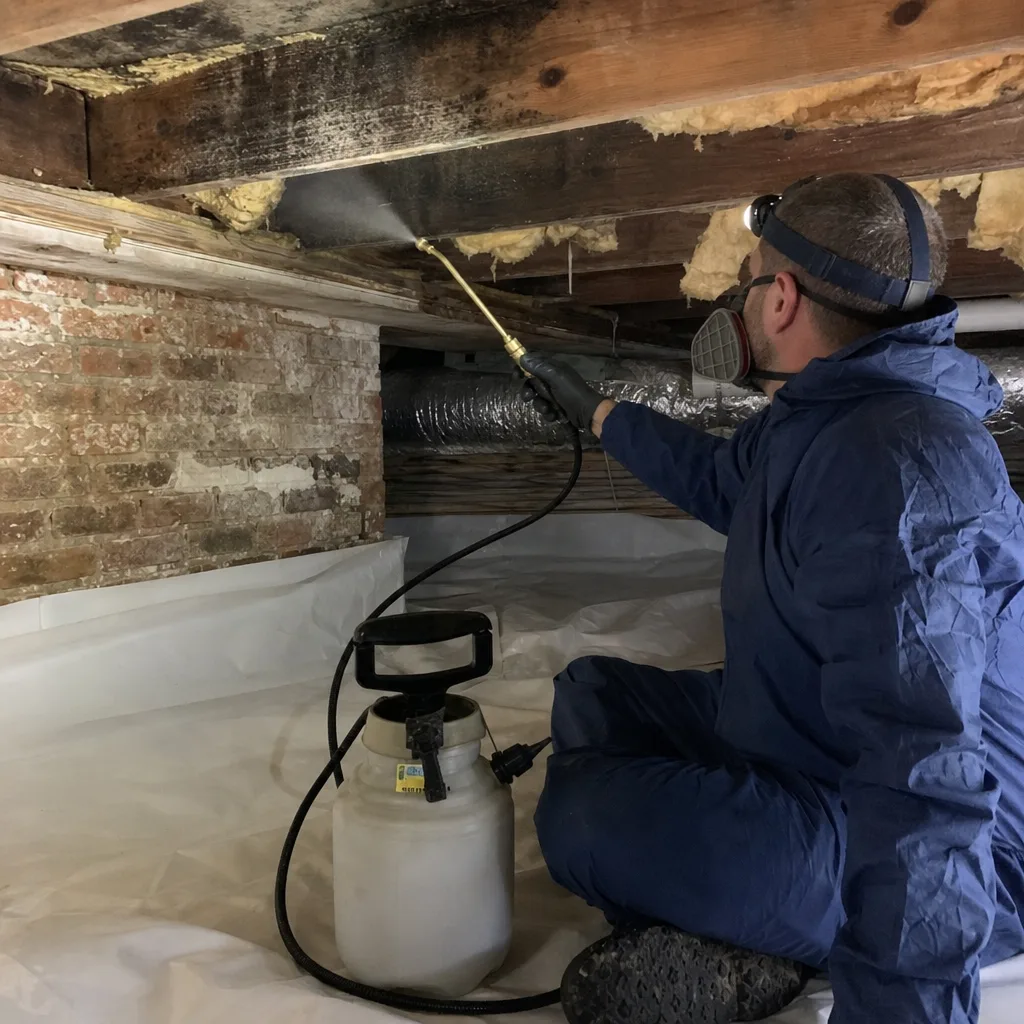
Floodwater from combined sewer backups carries pathogens. We apply EPA-registered antimicrobials, clean salvageable contents, and remove materials that cannot be safely dried. HEPA filtration runs where needed to protect the rest of the house.
Specialty Storm Treatment
This is where Hollis’s older homes need specific work: reinforcing storm-damaged entries with impact-rated doors, checking wind-load anchors, sealing party wall penetrations, and treating concealed cavities where water migrated from attached neighbors.
Repairs & Restoration
Drywall, flooring, trim, and paint go back in. If the storm damaged your entry door, we install one rated for Queens wind load, with proper frame anchors. The same crew that did the extraction does the rebuild. You get one name to hold accountable, from first pump-out to final coat.
Need Emergency Storm & Disaster Restoration in Hollis Now?
Crews minutes away, answering live 24 hours a day. The sooner we start, the less it costs.
Working With Your Insurance Company
Storm and flood claims in Hollis can get complicated fast, especially when a neighbor’s failed sump pit sent water through a shared party wall into your basement. We handle the documentation from the first hour. Photos of every room, moisture readings, equipment logs, line-item scopes. We send it to your adjuster, talk to them directly, and bill the carrier ourselves. You get a copy of everything. A square deal means you see every number, every reading, every recommendation before it goes to the insurer.
What We Provide Your Insurer
- Thorough documentation of the loss
- Photos of all damage, room by room
- Moisture readings and drying logs
- A detailed, line-item scope of work
- Direct coordination with your carrier
Built for Hollis’s Loss Calendar
Hollis sees storm damage on a schedule, and homeowners who’ve lived here twenty years know it. January deep freezes split supply lines in unheated basement utility areas, sending Category 1 water across finished floors. March and April bring thaw cycles and spring rains that push groundwater up against those old brick foundations. July and August thunderstorms drop two inches an hour onto flat, low-lying southeastern Queens streets, overwhelming the combined sewer system and sending Category 3 sewage backup into finished basements. September through November brings nor’easters with the wind damage that tears porch awnings, blows out windows, and tests every entry door on the block. Storm & Disaster Restoration work here follows that calendar. Board-up and tarping in the fall, extraction and drying in the spring, sewer backup mitigation in the summer. We plan our crew scheduling around it, and we’re already on the roads of Hollis when the first calls come in.
Storm & Disaster Restoration Across Hollis’s Neighborhoods
Hollis stretches from the Long Island Rail Road tracks near Jamaica Avenue down through the residential blocks toward Murdock Avenue and up to the hills near Hollis Avenue. Each pocket sees different failure patterns. Around 104th Avenue near Jamaica Avenue, the semi-detached brick Capes sit close together, and party wall water migration is common after a neighbor’s sump failure. Near Hillside Avenue, the larger Colonials with deeper basements hold water longer because the clay subsoil underneath resists drainage. Over by the commercial corridor along Jamaica Avenue, flat roofs and older storefront assemblies shed water onto adjacent residential walls. And in the blocks near Hollis Playground, the 1920s rowhouses with shared downspout lines often experience water intrusion through foundation penetrations during heavy rain. Knowing these blocks by their construction, not just their street names, means our crews arrive with the right equipment and the right expectations for how long drying will actually take.
On 104th Avenue near Jamaica Avenue, our crew stabilized a wind-damaged semi-detached brick Cape after a nor’easter tore the porch awning and blew out two front windows. We set containment around the living room before extracting Category 2 water that had wicked through the party wall from the attached neighbor’s failed sump pit. Using Dri-Eaz air movers and Phoenix dehumidifiers, we monitored moisture mapping at 72 and 96 hours because the clay subsoil kept pushing hydrostatic pressure into the shared foundation wall. Post-storm, we reinforced the entry with an impact-rated door and new frame anchors to meet Queens wind-load code, leaving drying logs with the owner for insurance.
Specialized Storm & Disaster Restoration Services We Offer in Hollis
Emergency Board-Up
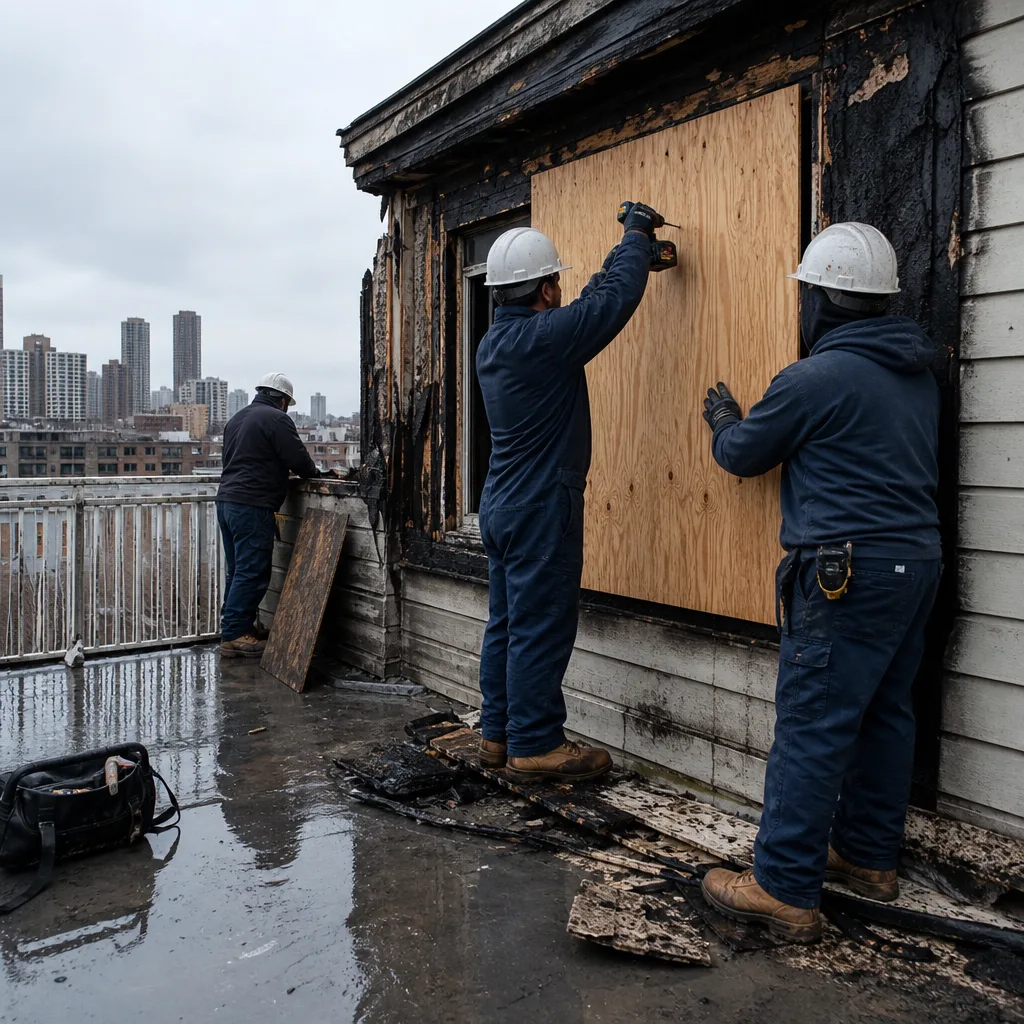
When a tree limb or wind gust blows out a Hollis window, water and pests get inside within hours. We board up openings with plywood and weather barrier, secured to the existing frame, so the interior stays protected until permanent repairs are made. Board-up is a stabilization measure, not a finish. We remove it when the new window or door is installed.
Roof Tarping
Storm-damaged roofs on Hollis’s older Capes and Colonials leak fast, and the water finds its way into top-floor ceilings and down through wall cavities. We tarp the damaged section with anchored, reinforced tarp material that holds through wind and rain until a roofer can make permanent repairs. Tarping bought you time. Drying the interior still needs to happen on schedule.
Storm Damage Cleanup
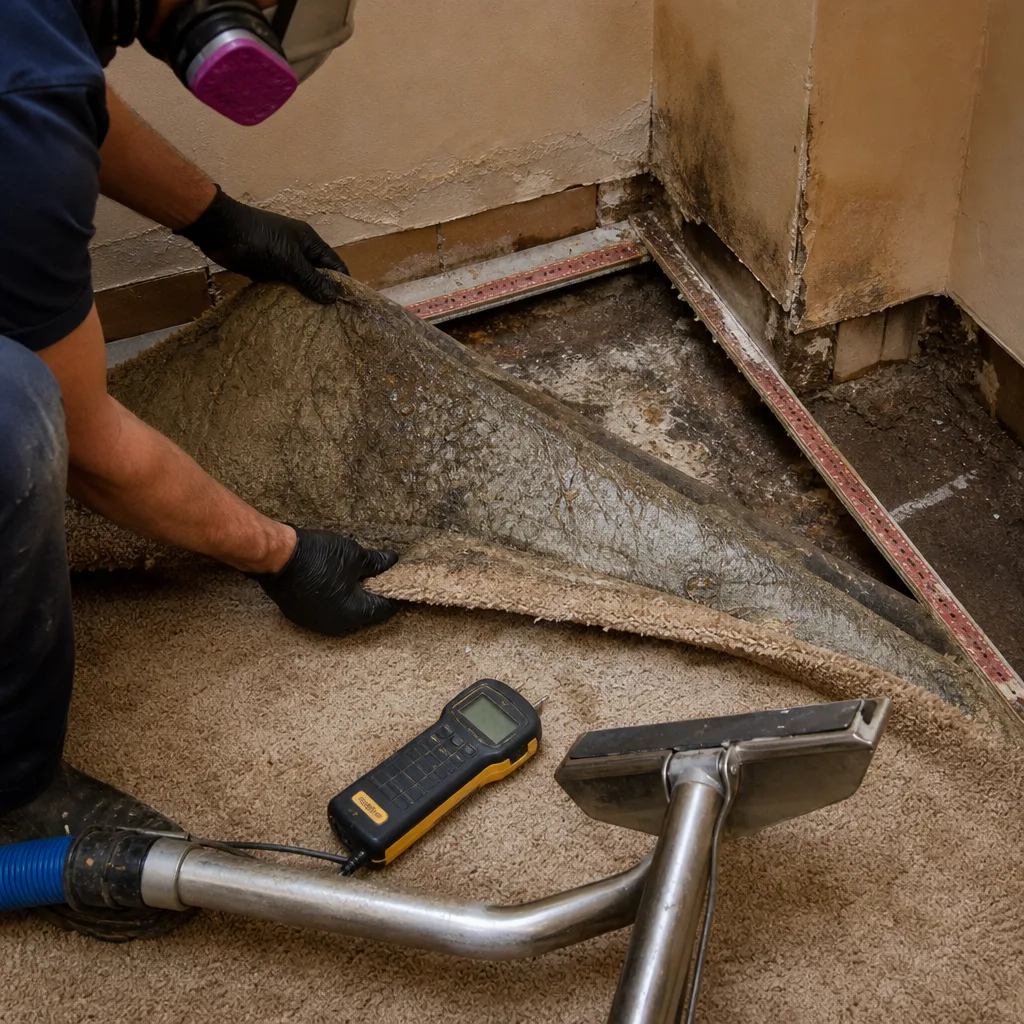
Debris, broken glass, saturated drywall, soaked insulation. Storm damage cleanup in Hollis means removing what can’t be saved, extracting what can, and getting the house to a dry, stable condition. We handle the full scope, including Category 3 sewage contamination from combined sewer backups during heavy rain events.
Flood Damage Restoration
Hollis’s flat terrain and aging combined sewer system make basement flooding a regular event on certain blocks. Flood damage restoration here means extracting quickly, treating the contamination, and drying wall assemblies that the clay subsoil keeps feeding with moisture. The same crew that extracts does the rebuild, and you get a moisture log showing every reading from day one to day done.
Debris Removal
Fallen branches, torn roofing material, broken porch railings. After a storm, the debris itself is a hazard and an open invitation to more damage. We remove it, photograph it for your insurer, and dispose of it properly. You shouldn’t be hauling storm debris to the curb yourself a week after the event.
Wind Damage Repair
Hollis wind damage usually shows up at the entry: storm doors torn from frames, front doors jammed, porch awnings mangled, window casings separated. We repair or replace storm-damaged entries with impact-rated doors and proper frame anchors that meet Queens wind-load code. An unrated door fails inspection and can blow out again in the next nor’easter. We install it once and stand behind it in writing.
What happens when you call
- 1
A real person answersNo phone trees - you reach a local pro.
- 2
You get an upfront price rangeHonest numbers before anyone is dispatched.
- 3
A background-checked tech heads outLicensed & insured, dispatched right away.
- 4
You approve before work beginsNothing starts until you say go.
Storm & Disaster Restoration Costs in Hollis, NY
Storm damage restoration in Hollis runs on a range, and the number depends on what actually got wet and how long it sat. Emergency board-up typically runs $350-$700 for a single window or door opening. Roof tarping for a storm-damaged section runs $400-$900 depending on roof pitch and access. Water extraction and drying for a finished Hollis basement starts around $2,800-$5,500 and climbs if Category 3 sewage backup requires removal of drywall, flooring, and insulation. Full storm restoration including extraction, drying, sanitization, and rebuild of a finished basement often lands between $8,000 and $22,000 in this market. Wind-damaged entry door replacement with an impact-rated unit and new frame anchors runs $1,800-$4,200 installed, depending on size and finish. Most storm claims are covered under homeowner policies, less your deductible. We bill the carrier directly. You’ll know the scope and the numbers before any work starts. Call (917) 924-4221 for a free inspection, and we’ll put it in writing.
We Also Serve Cities Near Hollis
Floodline Restoration Co. crews reach Hollis and the surrounding communities across Queens. We serve homes in Queens Village, Oakland Gardens, Cambria Heights, and Fresh Meadows with the same 45-minute response commitment and the same written 90-Day Done Right Promise. One team, one standard, no matter which block you live on.
Serving Hollis, NY - Our Local Coverage Area
We’re based in the Hollis area and know this community well. Use the map below to see our service coverage - if you’re nearby, we can almost certainly help.
Hollis Storm & Disaster Restoration Questions, Answered
How does Hollis’s shared party wall affect how you handle storm flood damage?
Your party wall means water from a neighbor’s flooded basement can migrate laterally into your home, so we treat every Hollis storm flood job as a shared-wall situation until proven otherwise. We run moisture mapping on both sides of the wall, not just the side that shows visible damage, and we extend drying times until the wall assembly reads dry at the core, not just the surface.
Do you need a specific wind rating for a new entry door in Hollis after a storm?
Yes. Queens building code requires entry doors to meet specific wind-load and impact resistance standards, and a storm-damaged door that gets replaced with an unrated unit will fail inspection and can blow out again in the next nor’easter. We install impact-rated doors with proper frame anchors and provide documentation for your permit file.
Why does a Hollis basement stay wet longer after a heavy rain than other Queens areas?
The heavy clay subsoil under Hollis holds water against foundation walls for days, so surface moisture readings can look dry at 48 hours while the wall assembly is still saturated behind the plaster. We add moisture-mapping checks at 72 and 96 hours before we close a job. It’s not a delay tactic; it’s how you prevent mold three weeks later.
My neighbor’s basement flooded from the sewer backup, but my basement looks dry. Should I worry?
You should at least have the party wall checked. Category 3 sewage water can travel through shared brick and wick into your finished basement without showing visible staining for days. A free visual inspection with thermal imaging can tell you whether moisture is already moving through the wall. Call (917) 924-4221 and we’ll check it.
How do you handle old asbestos tiles or vermiculite in a storm-damaged Hollis basement?
Many Hollis basements finished decades ago contain 9×9 asbestos floor tiles, asbestos-backed sheet vinyl, or vermiculite insulation. Before we remove any storm-damaged material, we test suspect materials. If they come back positive, we follow state asbestos abatement protocols, including containment and proper disposal. We don’t disturb it and we don’t cut corners.
How fast can you actually get to a Hollis address in an emergency?
We commit to a 45-minute response in Hollis, and we answer the phone live at any hour. A real dispatcher takes your call, confirms your address, and moves a crew immediately. Extraction starts on the same visit, not the next day.
Will my insurance cover storm damage restoration in Hollis?
Most homeowner policies cover storm damage from wind, falling trees, and rain, subject to your deductible. Sewer backup from the combined system often requires a specific endorsement, so that varies by policy. We photograph everything, document the loss from the first hour, and bill your carrier directly. You get copies of every document we send them.
What should I do in the first 30 minutes after storm damage?
Get everyone to safety first, then call (917) 924-4221. Don’t walk through standing water if it may be from a sewer backup. Don’t run electrical devices in wet areas. If windows are blown out, close interior doors to contain the wind and rain. We’ll handle the rest from the moment we arrive.
Written by Curt Bowman, Owner at Floodline Restoration Co. of Manhattan, serving Queens and the wider New York City metro. Founded in 2010, built around a dispatch board, not a sales desk.