

Free visual inspection and a written scope of work before any mitigation begins - photos, moisture readings, and drying logs go in your claim file
The scope we write is the scope we bill. Anything new gets shown to you, in writing, before we touch it.






 Before
 After
After Before
 After
After Before
 After
After24/7 Emergency Storm & Disaster Restoration in Kew Gardens Hills
Storm damage in Kew Gardens Hills moves fast, and so do we. When a nor’easter tears through central Queens or a summer cloudburst backs raw sewage into your finished basement, you need a crew that answers the phone at two in the morning and gets extraction running the same visit. Call (917) 924-4221 and a live dispatcher picks up, not a recording. We dispatch certified crews into Kew Gardens Hills within 45 minutes of your call, every day of the year.
Our Storm & Disaster Restoration team knows this neighborhood’s housing stock better than any franchise operation ever could. Attached brick row houses from the 1950s, plaster-over-lath walls, slab-on-grade basements with aging cast-iron drains. These aren’t abstractions to us, they’re the buildings we work in every week. The first hour after a storm matters because Category 2 and 3 water migrates through shared party walls faster than most homeowners realize. We start with a free visual inspection, then get to work before the damage spreads into a neighbor’s unit or hides behind original plaster finishes.
Understanding Storm & Disaster Restoration Severity in Kew Gardens Hills Properties
Water damage falls into three categories, and Kew Gardens Hills sees more Category 3 than almost anywhere else in Queens. Category 1 is clean water from a burst supply line. Category 2 carries contaminants: sump pump failures, washing machine overflows. Category 3 is black water, and that’s what the combined sewer on 72nd Road delivers into finished basements when the system backs up. Raw sewage, pathogens, bacteria. It requires full containment, disinfectant, and often gutting of affected materials, not just drying.
The building stock here complicates every category. Plaster-over-lath walls in homes built between 1945 and 1965 hold moisture far longer than modern drywall, sometimes weeks longer. Moisture mapping with thermal imaging and hygrometers tells us what’s actually wet behind those original finishes, because what looks dry on the surface usually isn’t. Slab-on-grade basements mean water has nowhere to drain but up through floor drains or cracks in the slab. And attached row houses mean a single water loss on one property routinely migrates through shared masonry walls into the unit next door, turning a one-claim restoration into a multi-insurer event before the homeowner even realizes it’s happening.
Why Kew Gardens Hills Property Owners Choose Floodline Restoration Co. of Manhattan
- 45-minute response commitment: We run live dispatch from our New York City office, and crews serving Kew Gardens Hills are staged locally. When you call, we’re already on the way.
- A real person answers, 24/7: No automated system, no “press 2 for emergencies.” A live dispatcher picks up at 2 a.m. and stays on the line until a crew is confirmed.
- IICRC-certified crews: Our technicians hold WRT, FSRT, and AMRT certifications and train to RIA and IFA standards. Background-checked and uniformed, every job.
- Free visual inspection: We assess the damage, explain what we found in plain language, and give you a written scope before any work starts.
- Direct insurance billing: We document everything, bill your carrier directly, and coordinate with your adjuster so you never play messenger.
- One team from extraction to rebuild: The same crew that reads the moisture map on day one handles daily readings, hands you the log, and rebuilds what needs rebuilding. No mid-job handoff, no inherited strangers.
Our Storm & Disaster Restoration Process
Inspection & Assessment
We start with thermal imaging and moisture meters to map the full extent of the damage, including what’s hiding in plaster walls and under slab floors. You get a written scope and a straight answer before any equipment comes off the truck.
Extraction & Stabilization
Category 3 water from a sewer backup gets extracted first, then contained. We set up containment zones across party walls so contamination doesn’t migrate into attached units.
Drying & Dehumidification
Professional-grade Dri-Eaz and Phoenix air movers and dehumidifiers run around the clock, with Injectidry systems for hard-to-reach wall cavities. Plaster-over-lath gets daily moisture readings until we hit the dry standard, not a guess.
Cleaning & Sanitization
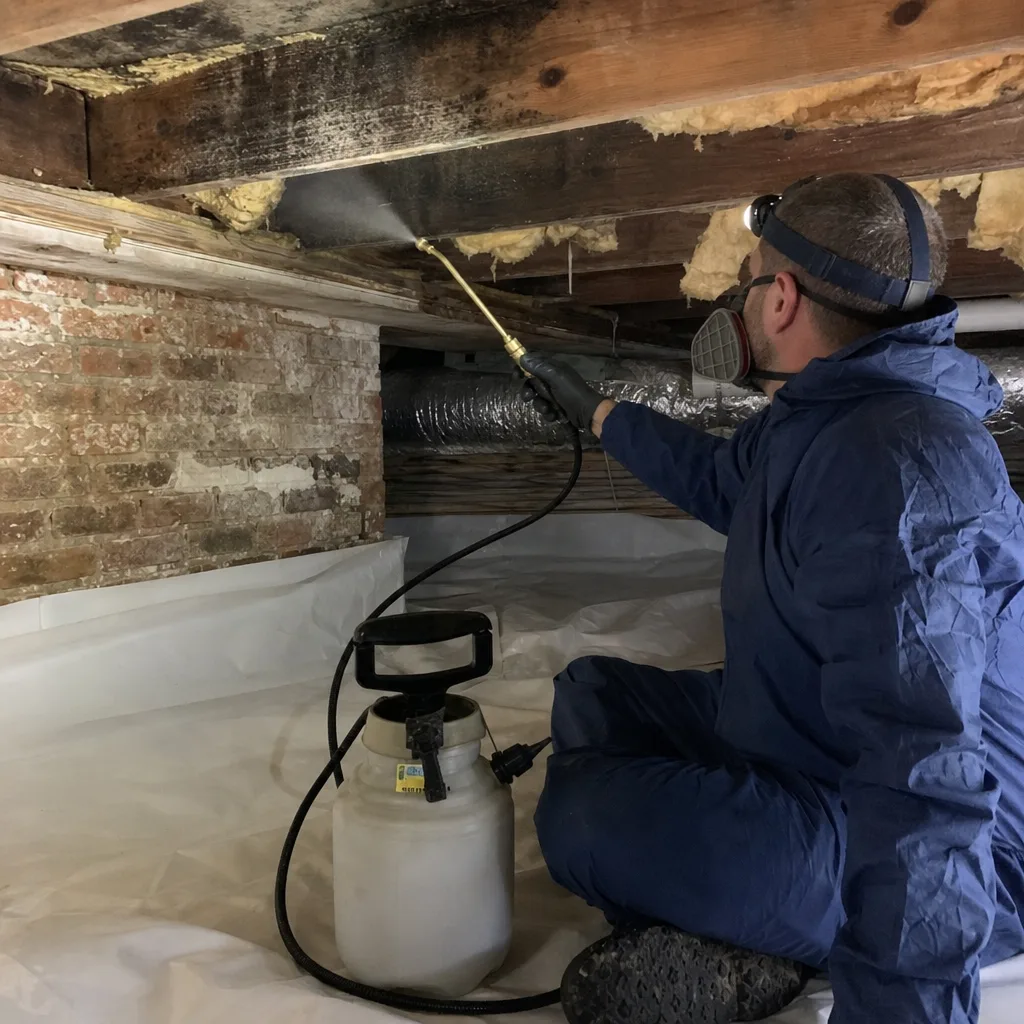
Antimicrobial treatments and HEPA air scrubbing clear contaminants from both air and surfaces. For Category 3 losses, affected porous materials get removed and properly disposed.
Storm-Specific Treatment
Emergency board-up and roof tarping secure the building envelope. We address the source: cracked cast-iron laterals, failed sump pumps, foundation seepage, whatever let the water in.
Repairs & Restoration
The same crew handles reconstruction: drywall, flooring, trim, paint. No subcontractor roulette. You get a finished space and a moisture log in hand, backed by the 90-Day Done Right Promise.
Need Emergency Storm & Disaster Restoration in Kew Gardens Hills Now?
Crews minutes away, answering live 24 hours a day. The sooner we start, the less it costs.
Working With Your Insurance Company
Storm damage claims in Kew Gardens Hills get complicated fast, especially when sewage backup is involved. Some policies exclude sewer backup coverage unless you’ve purchased a specific rider. We document everything from the first hour so your claim has the evidence it needs: photos of the loss, moisture readings, drying logs, and a line-item scope of work that your adjuster can verify against industry standards. We communicate directly with your carrier and bill them directly, which means you’re not stuck translating between a restoration crew and an insurance desk.
What We Provide Your Insurer
- Thorough documentation of the loss
- Photos of all damage, room by room
- Moisture readings and drying logs
- A detailed, line-item scope of work
- Direct coordination with your carrier
Built for Kew Gardens Hills’s Loss Calendar
Kew Gardens Hills doesn’t have a storm season so much as a storm calendar, and each season brings its own damage pattern. January deep freezes burst supply lines in uninsulated exterior walls of 1950s row houses, sending clean water through plaster ceilings before anyone notices. March and April thaw cycles push groundwater against slab-on-grade foundations, and freeze-thaw damage opens mortar joints in aging brick facades, creating slow leaks that accumulate behind original finishes for months. Summer cloudbursts overwhelm the combined sewer system, and that’s when we get the cluster calls: three or four basements on the same block, all backing up raw sewage within the same hour. October nor’easters bring wind damage that tears off roof shingles and siding, requiring emergency board-up and tarping before the next rain system arrives.
Central Queens’ flat drainage basin gives Kew Gardens Hills very little natural stormwater infiltration. Impervious surface density means even a moderate rainfall event overwhelms local catch basins and pushes water back through basement floor drains. That’s not a once-a-decade event here. It’s a recurring condition of the neighborhood’s geography, built into the 1950s infrastructure that was never sized for today’s rainfall intensity.
Storm & Disaster Restoration Across Kew Gardens Hills’s Neighborhoods
The blocks around Main Street and 72nd Road carry the heaviest combined-sewer load, and our crews know those laterals by their failure patterns. When one basement backs up, we expect callbacks from two or three addresses within a two-block radius before the storm ends. The garden apartment complexes near Vleigh Place and 141st Street present a different challenge: multiple units in a single building mean containment and coordination with building management, not just a single homeowner. Along Kissena Boulevard and the Queens College perimeter, the mix of attached brick row houses and mid-century colonials means party-wall water migration is the rule, not the exception, whenever a Category 2 or 3 loss occurs. And the semi-detached colonials off 150th Street have their own failure mode: aging cast-iron drains under slab-on-grade basements that crack and re-flood within days if mitigation doesn’t include a drain repair scope.
Specialized Storm & Disaster Restoration Services We Offer in Kew Gardens Hills
Storm Damage Cleanup
After a heavy storm, Kew Gardens Hills basements fill with contaminated water, debris, and whatever the combined sewer pushed back through the floor drains. We remove the water, the silt, and the damaged materials, then sanitize the affected areas before drying begins. Cleanup without proper containment just spreads the problem through shared walls.
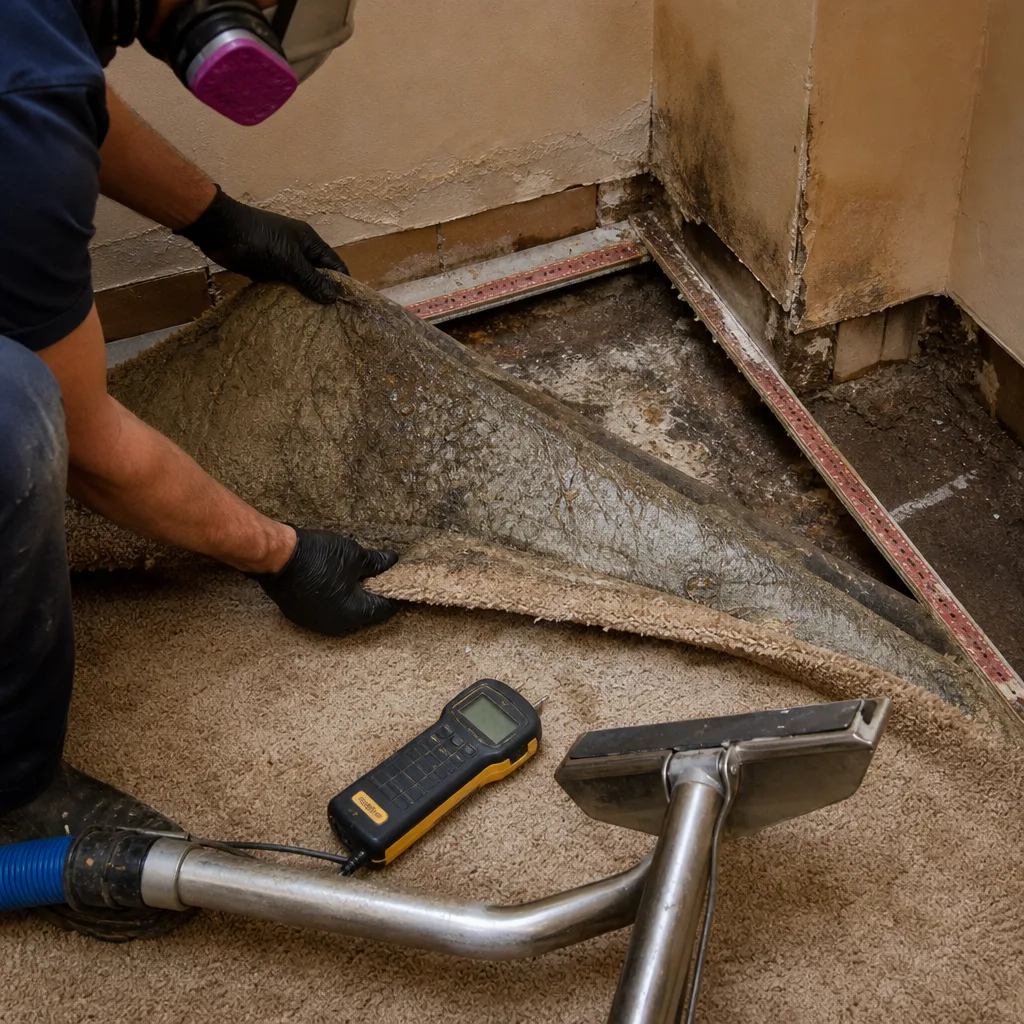
Flood Damage Restoration
Flooding here isn’t a simple mop-up. Plaster-over-lath walls hold groundwater for weeks after surface materials look dry, and slab floors hide moisture that will wick up into framing. We map the moisture with thermal imaging, run professional-grade drying equipment, and log readings daily until pre-loss condition is documented. Then we rebuild what the water destroyed.
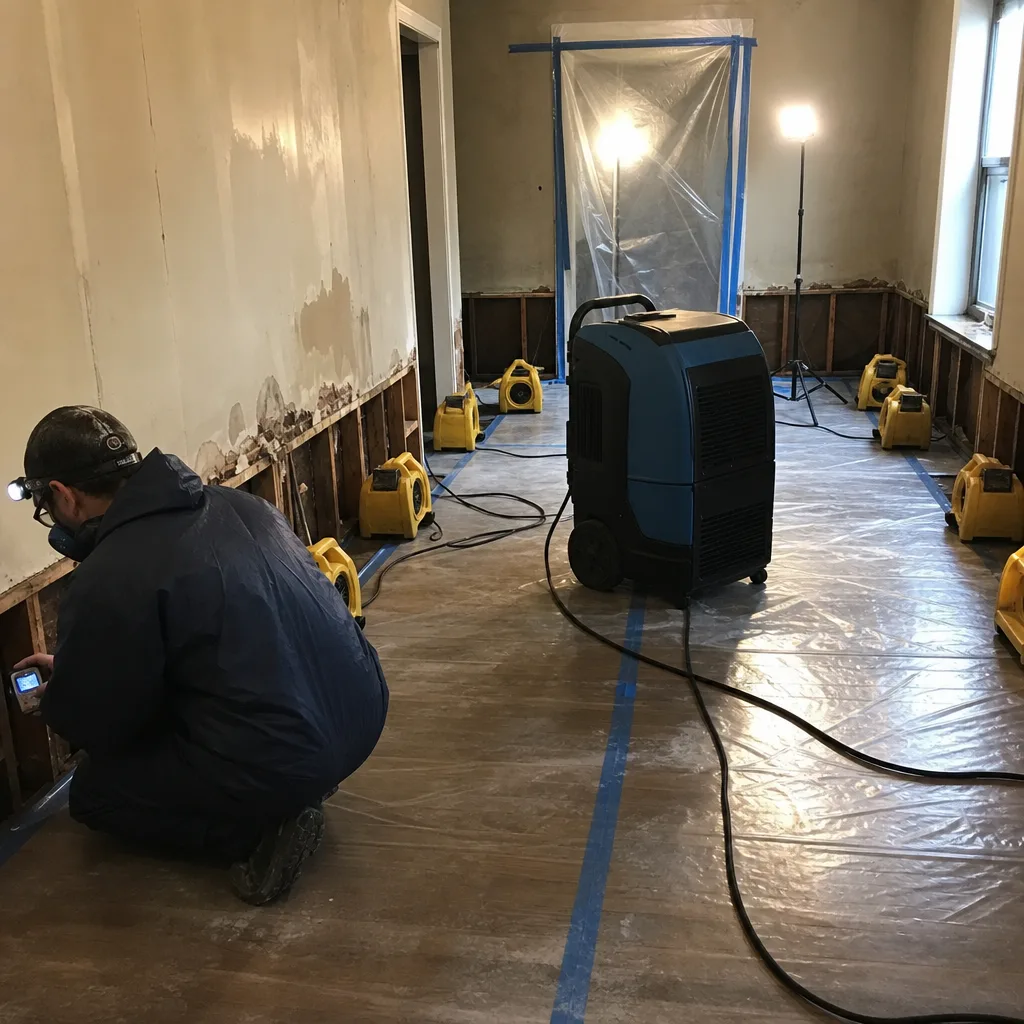
Emergency Board-Up
Storm winds tear off siding, shatter windows, and sometimes peel back sections of roof decking on these 1950s structures. We board up openings within hours of the damage, securing the building against both weather and intrusion. Board-up is temporary by design; it buys you time to work the claim and plan the repair without further water entering the structure.
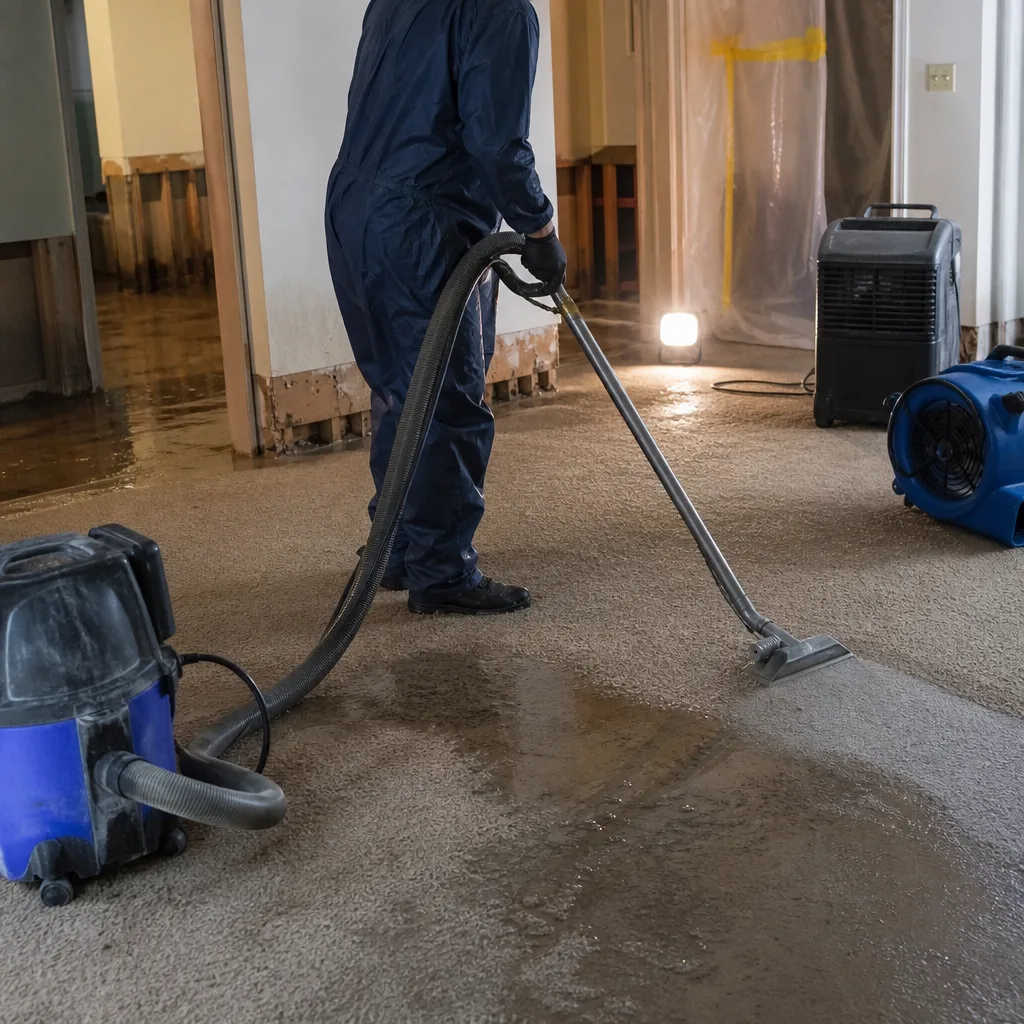
Roof Tarping
Nor’easter wind damage on aging asphalt shingle roofs is common in Kew Gardens Hills, where many homes still carry their second or third roof layer. We tarp damaged sections immediately, using the proper fastening patterns so the tarp holds through the next storm system, not just the next afternoon.
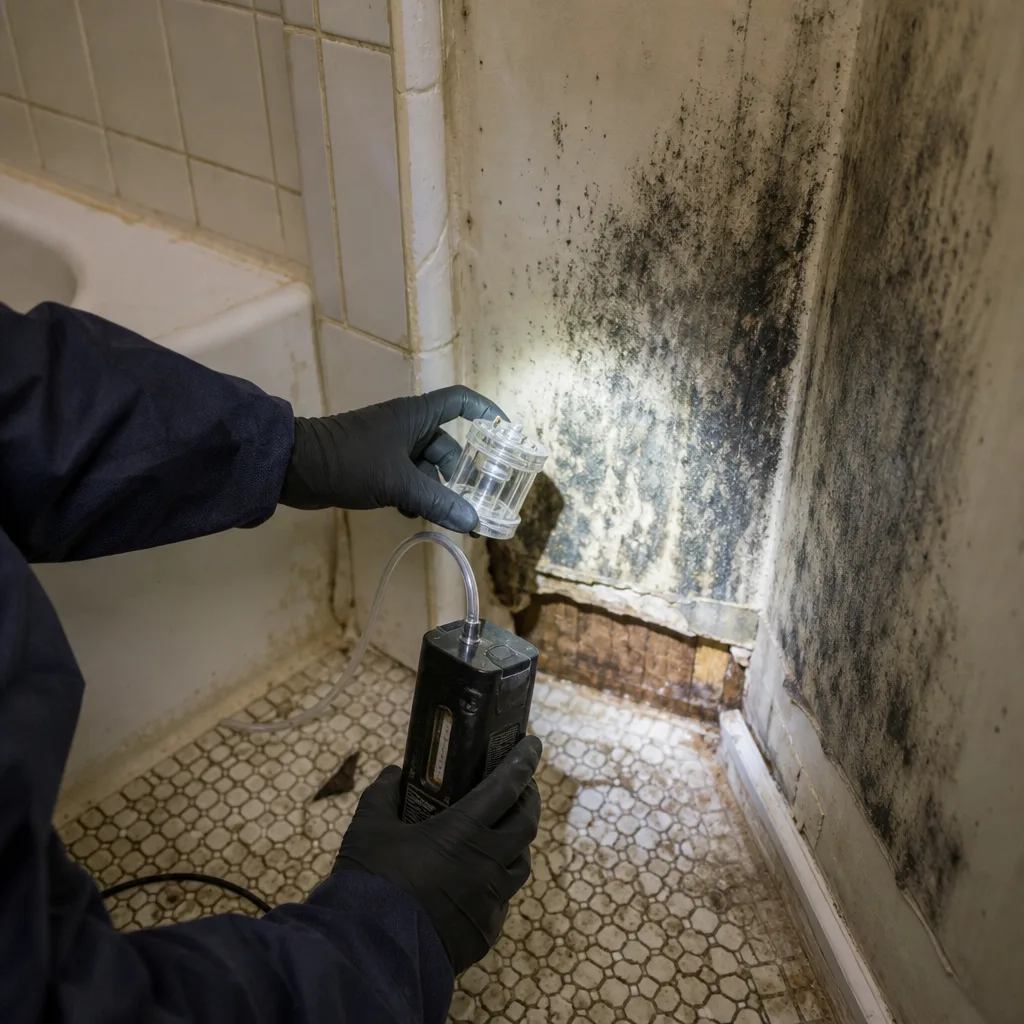
Debris Removal
Storm debris in a densely packed neighborhood doesn’t just sit there: it blocks drains, damages fencing, and becomes a hazard for the adjacent properties. We clear fallen branches, damaged building materials, and contaminated debris from the property, then document everything for your carrier.
What happens when you call
- 1
A real person answersNo phone trees - you reach a local pro.
- 2
You get an upfront price rangeHonest numbers before anyone is dispatched.
- 3
A background-checked tech heads outLicensed & insured, dispatched right away.
- 4
You approve before work beginsNothing starts until you say go.
Storm & Disaster Restoration Costs in Kew Gardens Hills, NY
A typical flood damage restoration in Kew Gardens Hills runs $3,200 to $7,800, depending on the water category, how much plaster wall needs to be opened, and whether containment across party walls is required. Category 3 sewage backup jobs run higher, usually $5,500 to $14,000, because of the sanitation protocols, porous material removal, and the extended drying times plaster demands. Emergency board-up typically costs $450 to $1,200, and roof tarping runs $600 to $1,800, depending on roof pitch and access.
What moves the price: the age of your plumbing, whether the water sat overnight, and whether a neighbor’s unit got involved through a shared wall. Insurance covers most storm damage claims, but sewer backup coverage often requires a specific rider. We offer free visual inspections in Kew Gardens Hills, so you get a firm written scope before any work starts, not a vague estimate that balloons later. Call (917) 924-4221 and we’ll walk you through exactly what your situation requires. Current offers: $50 off any repair over $250, and a Senior & Veteran 5% discount, always.
We Also Serve Cities Near Kew Gardens Hills
Our Storm & Disaster Restoration crews cover Kew Gardens Hills and the surrounding communities: Fairview, Harrison, East Bronx, and Hunts Point. Same 45-minute response commitment, same live 24/7 dispatch, same written guarantee. If you’re in a neighboring area and the storm hit, call us. We answer around the clock.
Kew Gardens Hills Storm & Disaster Restoration Questions, Answered
Why do sewage backups cluster on the same Kew Gardens Hills block during one storm?
The combined sewer laterals serving the tightly-packed 1950s streets in Kew Gardens Hills were never sized for today’s rainfall intensity, so one heavy storm can push raw sewage up through floor drains in multiple basements within a two-block radius simultaneously. We stage multiple containment and extraction teams at once when this happens, which is exactly what our crews did on 72nd Road near Main Street recently.
How long does plaster-over-lath from a 1950s Kew Gardens Hills home take to dry after a flood?
Plaster-over-lath holds moisture far longer than modern drywall, often requiring two to four weeks of active drying with professional equipment before the dry standard is met, compared to five to ten days for drywall. We log moisture readings daily and don’t stop the dehumidifiers until the numbers prove the walls are dry, not until the surface feels dry to the touch. Call (917) 924-4221 for specifics on your home’s construction.
Do I need containment if my Kew Gardens Hills basement floods but my neighbor’s unit stays dry?
Yes. Attached brick row houses share party walls, and Category 2 or 3 water migrates through masonry and mortar joints into the adjacent unit even when the neighbor’s side looks untouched. Containment set across the shared wall prevents cross-unit migration and keeps one property’s claim from becoming a multi-insurer dispute. This is standard practice on every attached-home job we run in Kew Gardens Hills.
What category of water is a basement backup from the combined sewer in Kew Gardens Hills?
Category 3, black water. Raw sewage carries bacteria, viruses, and parasites that require full containment, antimicrobial treatment, and removal of affected porous materials like carpeting, drywall, and insulation. This isn’t a mop-and-fan situation; it’s a sanitization and controlled demolition job. Call (917) 924-4221 and we’ll tell you straight what needs to come out.
Why does my Kew Gardens Hills basement flood even during a moderate rain, not just a heavy storm?
Central Queens’ flat topography and dense impervious surfaces give rainwater very little natural infiltration, so local catch basins and combined sewer lines overload quickly. On top of that, many Kew Gardens Hills homes still run original cast-iron or galvanized drains under slab-on-grade basements, and cracks in those old pipes or in the slab itself let groundwater in during conditions that wouldn’t bother a newer home. We identify the actual entry point during our free inspection, then write a scope that fixes the cause, not just the symptom.
How fast can you actually get to a Kew Gardens Hills address?
We commit to a 45-minute response time for emergency calls in Kew Gardens Hills, and a live dispatcher confirms a crew is on the way while you’re still on the phone. We answer 24/7, every day, with a real person, not a recording. When a storm cluster hits multiple homes on one block, we stage additional crews from our New York City dispatch office.
Will insurance cover storm and sewer backup damage in Kew Gardens Hills?
Standard homeowners policies generally cover wind and rain damage, but sewer backup coverage usually requires a specific rider that many Kew Gardens Hills homeowners don’t realize they need until the combined sewer backs up. We document everything from the first hour, provide photos and moisture logs to your carrier, and bill directly, so the claim process doesn’t fall on your shoulders. Call (917) 924-4221 and we’ll help you understand what your policy covers before you file.
What should I do in the first 30 minutes after a storm floods my Kew Gardens Hills basement?
Shut off electricity to the affected area if you can reach the panel safely, don’t wade into standing water if there’s any chance it came from the sewer, and call us at (917) 924-4221. Don’t run a shop vac on Category 3 water, don’t turn on fans (they aerosolize contaminants), and don’t start tearing out materials yourself. The faster we start extraction and containment, the less damage spreads through those plaster walls and across the slab. Kurt Bowman and the Floodline Restoration Co. of Manhattan team have been answering calls like this for years.
Serving Kew Gardens Hills, NY - Our Local Coverage Area
We’re based in the Kew Gardens Hills area and know this community well. Use the map below to see our service coverage - if you’re nearby, we can almost certainly help.
Call Floodline Restoration Co. for Storm & Disaster Restoration in Kew Gardens Hills
When the storm passes and your basement is full of what the combined sewer left behind, you want a name you can hold accountable. Floodline Restoration Co. of Manhattan serves Kew Gardens Hills with certified, background-checked crews, a 90-Day Done Right Promise in writing, and a live person on the phone at any hour. We start at the line the water left and stay through the rebuild, same crew, same company, no handoffs. Call (917) 924-4221 for a free estimate. Done right, and backed in writing.
Written by Curt Bowman, Owner at Floodline Restoration Co., serving Kew Gardens Hills and the surrounding communities.