

Free visual inspection and a written scope of work before any mitigation begins - photos, moisture readings, and drying logs go in your claim file
The scope we write is the scope we bill. Anything new gets shown to you, in writing, before we touch it.






 Before
 After
After Before
 After
After Before
 After
After24/7 Emergency Storm & Disaster Restoration in Manor Heights
Storm damage in Manor Heights moves fast, and so do we. When a nor’easter tears shingles off a cape on a tree-lined block or a summer thunderstorm sends water through a split-level’s roofline, you need a crew that answers the phone at 2 a.m. and arrives with the right equipment. Call (917) 924-4221 any hour, any day. A live dispatcher in our New York City office picks up, not a recording, and a certified crew reaches Manor Heights within 45 minutes. The first hour after water intrusion decides whether you’re facing a dry-out or a full mold remediation. We start extraction the same visit.
Our Storm & Disaster Restoration team handles the whole job, from emergency board-up and roof tarping to structural drying and rebuild. One crew, one scope, one written guarantee. No mid-job handoff to a subcontractor you’ve never met.
Understanding Storm & Disaster Restoration Severity in Manor Heights Properties
Most Manor Heights homes were built between the late 1940s and the 1970s. That means concrete block foundations without exterior drainage boards, original felt-and-tar paper underlayment on roofs, and finished basements that sit against saturated clay soil. Water intrusion here rarely announces itself as standing floodwater. It presents as damp drywall, musty air, curling tile, and a slow bloom of mold behind walls that never quite dry out. By the time you see staining, the water has usually been inside the wall cavity for days.
We classify water damage as Category 1 (clean supply water), Category 2 (gray water with contamination potential), or Category 3 (black water from sewage or exterior floodwater). A storm-driven roof leak in Manor Heights starts as Category 1 but becomes Category 2 inside 24 to 48 hours as it picks up dust, insulation fibers, and drywall paper. That’s why we moisture-map every wall, floor, and ceiling cavity with thermal imaging and hygrometers before we ever place an air mover. In brick ranches and capes with original plaster over rock lath, moisture hides differently than in drywall cavities. You need a tech who knows which material they’re reading.
Why Manor Heights Property Owners Choose Floodline Restoration Co. of Manhattan
- 45-minute response commitment. When you call, we commit to having a crew in Manor Heights within 45 minutes. We’ll be there when we say.
- 24/7 live answer, always a person. Not a phone tree. A dispatcher who knows the difference between a burst supply line and storm-driven seepage.
- IICRC-certified crews. Our techs carry WRT (Water Damage Restoration Technician), FSRT (Fire & Smoke Restoration Technician), and AMRT (Applied Microbial Remediation Technician) certifications, and they’re uniformed and background-checked.
- Free visual inspection. We assess the loss, explain what we’re seeing in plain language, and hand you a written scope before any work begins.
- Direct insurance billing. We document everything from hour one and bill your carrier directly. You never play messenger between us and the adjuster.
- One team, extraction to reconstruction. The same certified crew that dries the block walls rebuilds the drywall. No inherited crews, no finger-pointing.
Our Storm & Disaster Restoration Process
Inspection & Assessment
We arrive, walk the property with you, and map every affected surface. Thermal imaging cameras read moisture behind walls and under floors. Hygrometers give us exact moisture content in wood, drywall, and concrete block. You get a written scope and a straight answer about what needs to happen.
Extraction & Stabilization
Standing water comes out first with truck-mounted extraction units and Dri-Eaz or XPOWER submersibles. If the roof is compromised, we tarp it the same visit. If windows or doors are breached, we board up before nightfall.
Drying & Dehumidification
We place air movers and low-grain refrigerant dehumidifiers based on a calculated drying chamber, not guesswork. In Manor Heights, concrete block walls often need Injectidry panels or specialty drying mats to pull water from the block cores. Daily readings go into a log you can see.
Cleaning & Sanitization
Surfaces get HEPA-vacuumed and treated with EPA-registered antimicrobials. We run HEPA air scrubbers to capture mold spores and particulates that went airborne during the event.
Specialty Treatment for Storm Damage
This is where Manor Heights homes need attention most: block wall drying, asbestos testing before opening walls in pre-1980s construction, and containment for mold that has already colonized behind finishes.
Repairs & Restoration
Once the drying logs hit the dry standard, we rebuild. Drywall, insulation, flooring, paint. Same crew, same guarantee. The Keystone Standard is in your hands before we leave.
Need Emergency Storm & Disaster Restoration in Manor Heights Now?
Crews minutes away, answering live 24 hours a day. The sooner we start, the less it costs.
Working With Your Insurance Company
Storm damage claims are usually covered, but only if the documentation is complete from the first hour. We photograph every room before we move anything, log moisture readings daily, and write a line-item scope of work that your adjuster can actually read. Our team communicates directly with the carrier, so you’re not forwarding emails at midnight. If your claim requires asbestos testing before demolition, we document that too and include it in the scope. The line the water left is where we start, and the paper trail follows every step.
What We Provide Your Insurer
- Thorough documentation of the loss
- Photos of all damage, room by room
- Moisture readings and drying logs
- A detailed, line-item scope of work
- Direct coordination with your carrier
Built for Manor Heights’s Loss Calendar
Manor Heights sees a different storm calendar than the rest of Staten Island, and the difference matters. January and February bring deep freezes that split copper supply lines in uninsulated crawlspaces under post-war capes. March and April bring thaw cycles: frozen clay soil releases water that pushes against concrete block foundations and finds every tiny crack. July and August thunderstorms drop an inch of rain in an hour, overwhelming gutters on split-levels and sending water down interior wall cavities. September through November is nor’easter season, with wind-driven rain that finds gaps in original roof flashing on brick ranches.
But the biggest danger in Manor Heights is not any single storm. It’s the slow, recurring moisture that never dries because the house sits on clay-heavy glacial till with a naturally high water table. A minor roof leak that would dry out on the South Shore lingers here, behind the drywall, until it becomes Category 2 water damage and a mold colony. That’s why we tell Manor Heights homeowners to call us at (917) 924-4221 the day they see a water stain, not the day the drywall starts crumbling. Estimates are free, and the earlier we map the moisture, the smaller the job stays.
Storm & Disaster Restoration Across Manor Heights’s Neighborhoods
Manor Heights is not one housing type. The blocks around Richmond Avenue and Forest Hill Road hold brick ranches from the 1960s, where roof lines are simple and water intrusion usually starts at the chimney flashing or the flat-roofed porch overhang. Over near Willowbrook Road and the border with Westerleigh, you’ll find Cape Cods with knee-wall attic spaces that trap humid air and hide roof leaks until water appears on the living room ceiling. The split-levels along the side streets off Victory Boulevard are the most vulnerable to the block-wall issue: finished basement family rooms that sit below grade against saturated clay, water wicking in from the foundation cores upward.
We know the response routes: up Richmond Avenue from the south, or cutting through from Forest Hill Road toward the mid-island interior. A crew dispatched to Manor Heights from our New York City office can be on-site inside 45 minutes in normal traffic, faster at night when the roads are clear. And because our techs have worked hundreds of losses here, they already know what they’ll find when you open the door: block walls, original framing, and water that has been hiding longer than the homeowner realizes.
Manor Heights sits on Staten Island’s clay-heavy glacial till interior, where poor soil drainage and a naturally high water table push chronic basement seepage into mid-century split-levels and capes that were never built with adequate waterproofing membranes. Unlike the South Shore coastal communities devastated by Sandy’s storm surge, Manor Heights damage restoration work is dominated by slow, recurring moisture intrusion rather than acute flood events. That makes thorough mold remediation and structural drying the core service here, not emergency flood extraction. Any company that treats a Manor Heights basement water loss like a standard drywall cavity dry-out is going to leave saturated block cores behind, and the mold will be back within six months.
Specialized Storm & Disaster Restoration Services We Offer in Manor Heights
Storm Damage Cleanup
Wind and rain push water through compromised roofs, broken windows, and failed flashing on Manor Heights homes. We remove wet debris, extract standing water, and stabilize the structure so secondary damage stops. The same visit, we’ll map moisture in walls and floors so you know exactly what got wet, even if you can’t see it yet.
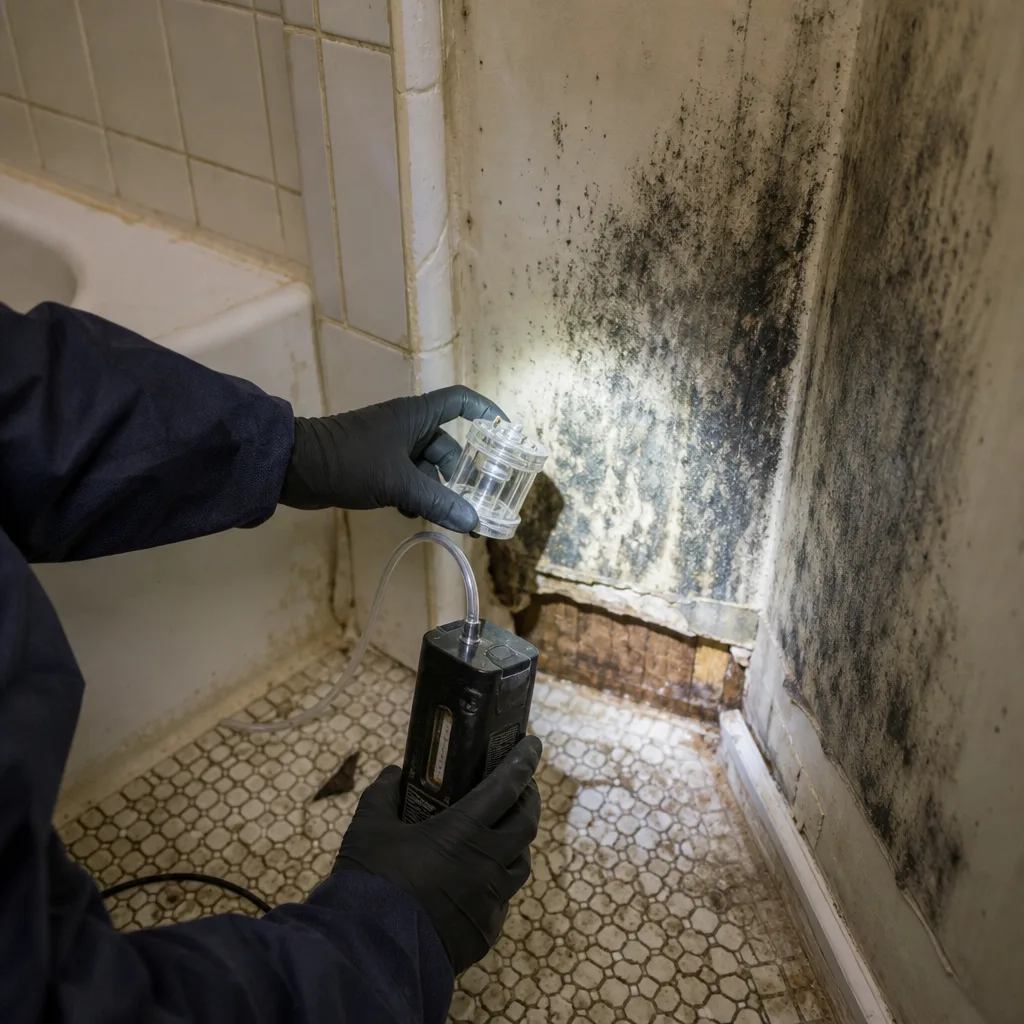
Flood Damage Restoration
When water gets into a Manor Heights basement from a blocked storm drain or a saturated yard, the block foundations do something drywall homes don’t: they wick. We run Injectidry panels and specialty drying mats directly against the block, pulling moisture from the cores until readings drop below 15%. A standard drying approach would never touch that water.
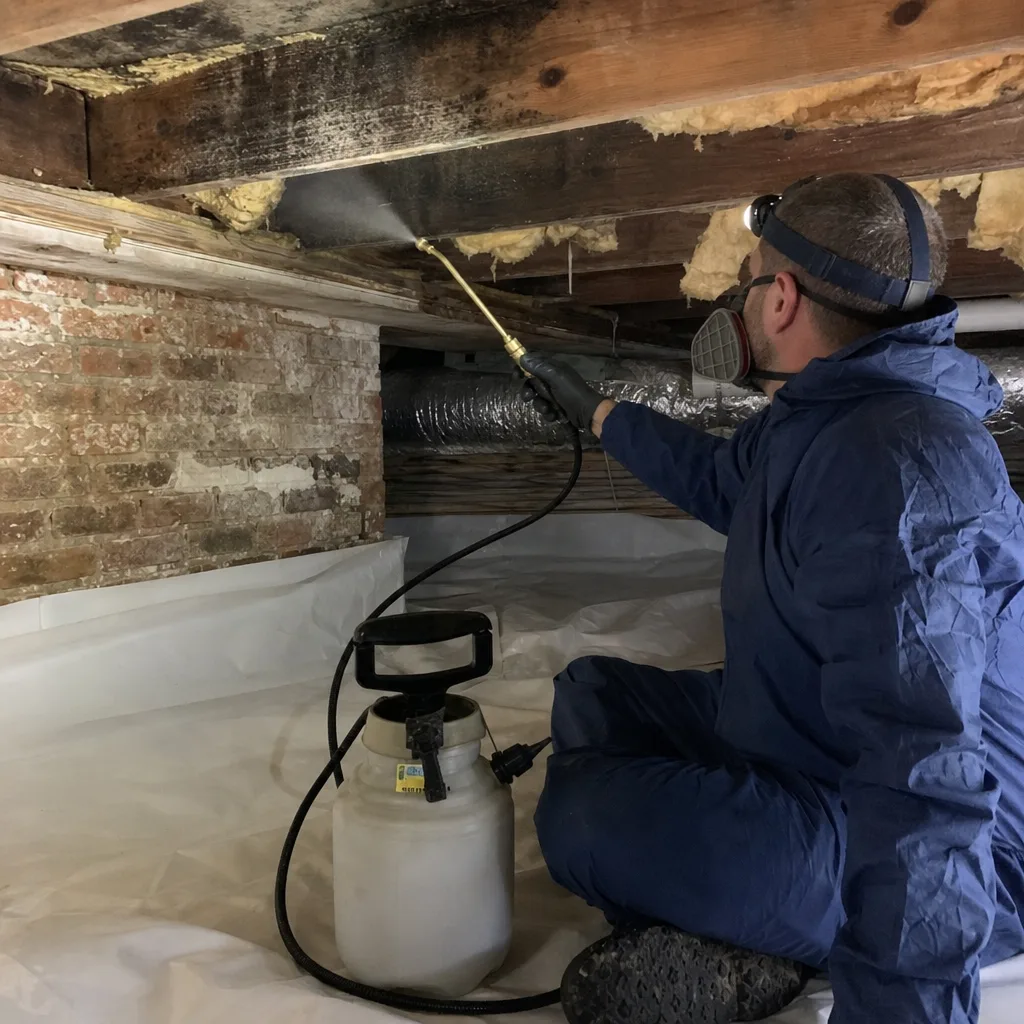
Roof Tarping
A wind-damaged roof on a Manor Heights ranch or cape needs a tarp the same day, before the next rain gets inside. We use heavy-duty poly tarps with furring strip attachments that hold in 60 mph gusts. It’s a temporary fix, but it buys you time to file a claim and schedule permanent repairs without the water running through your kitchen ceiling.
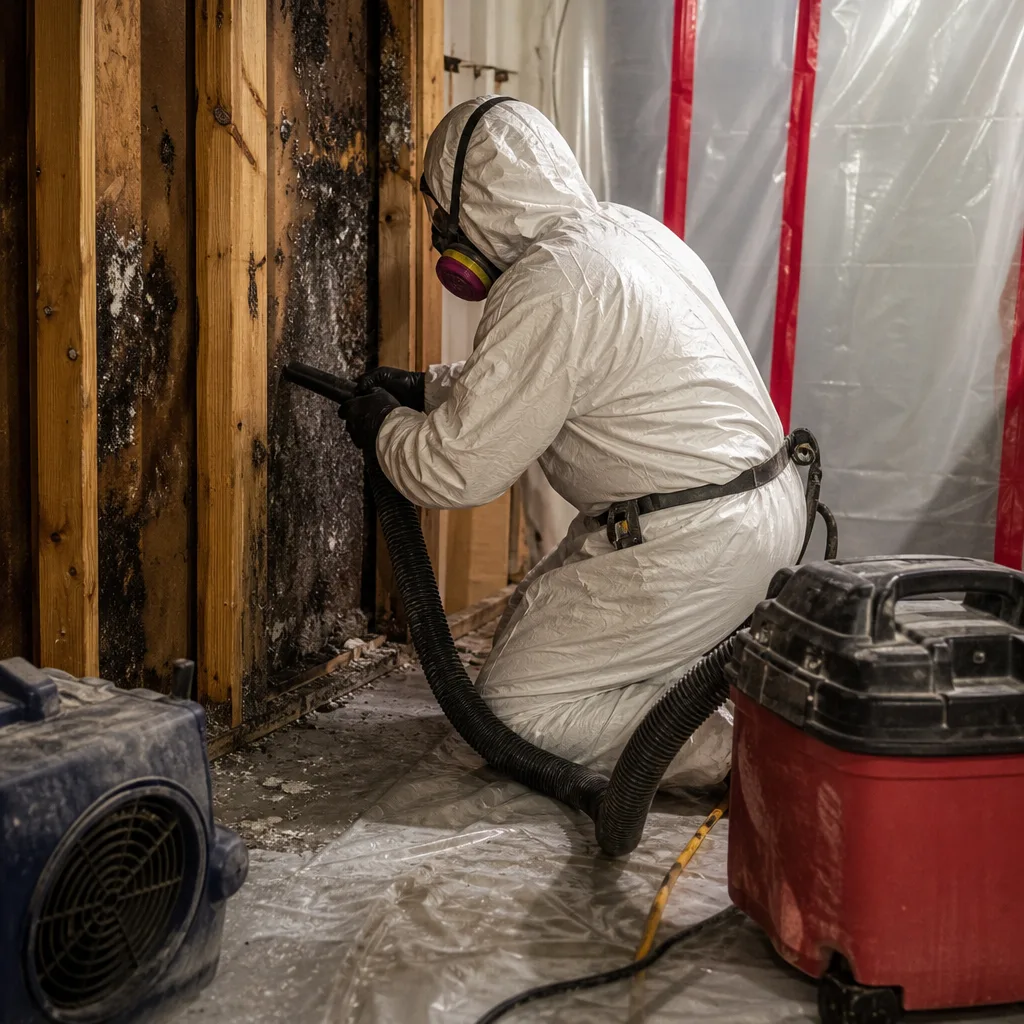
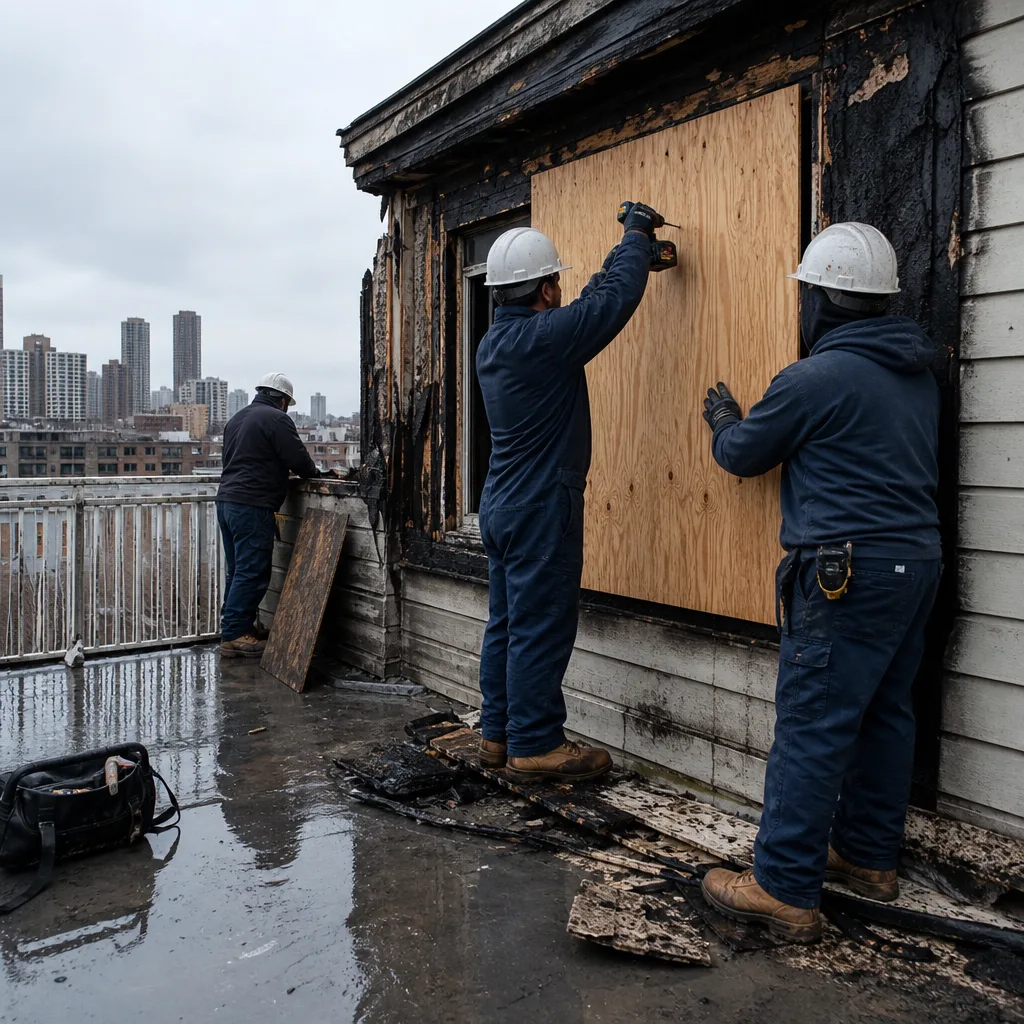
Emergency Board-Up
Broken windows and torn-off doors leave a Manor Heights home open to weather, animals, and intruders. We board up with plywood cut to fit, secured against the wind, and documented with photos for your insurer. Done right, and done before dark.
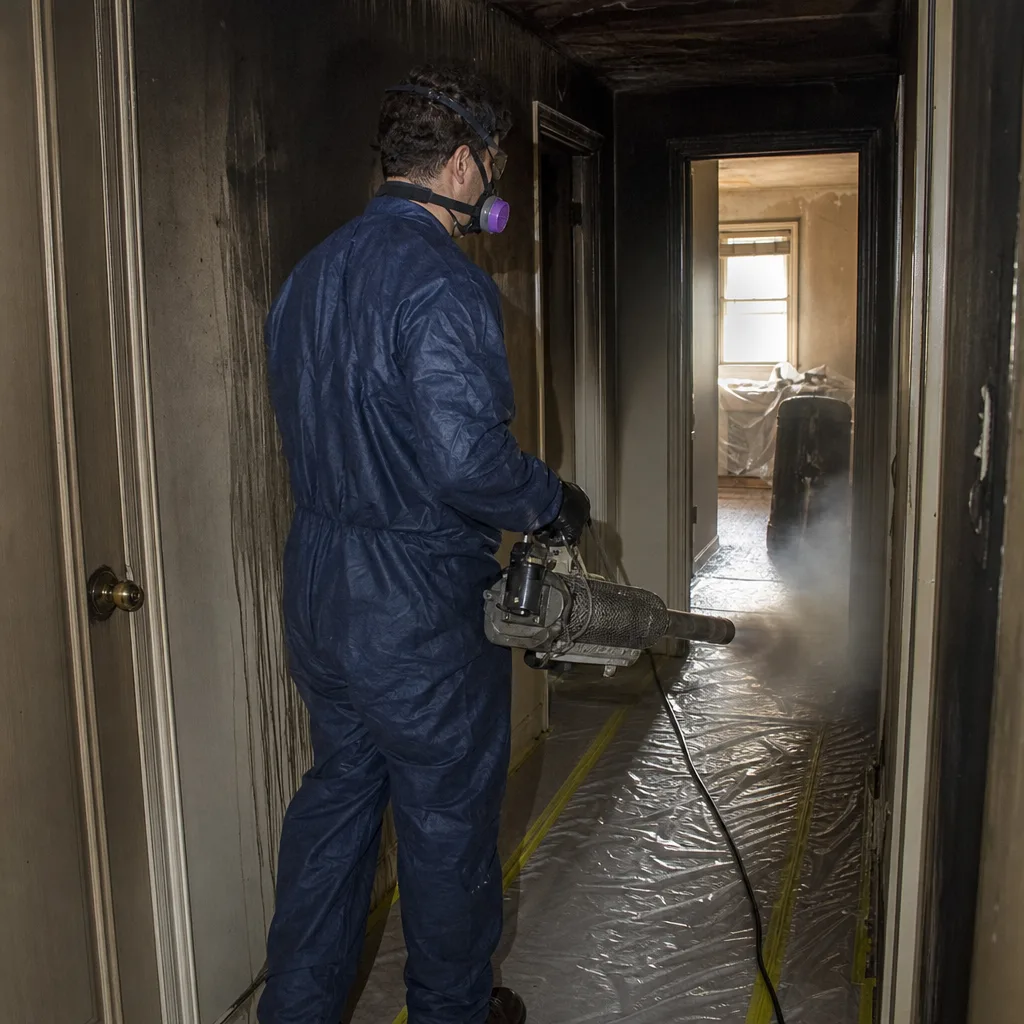
Debris Removal
Fallen branches, torn shingles, soaked insulation, and ruined drywall all have to go before drying can start. We haul the debris, dispose of it, and document what we removed so your claim reflects the full scope of the loss.
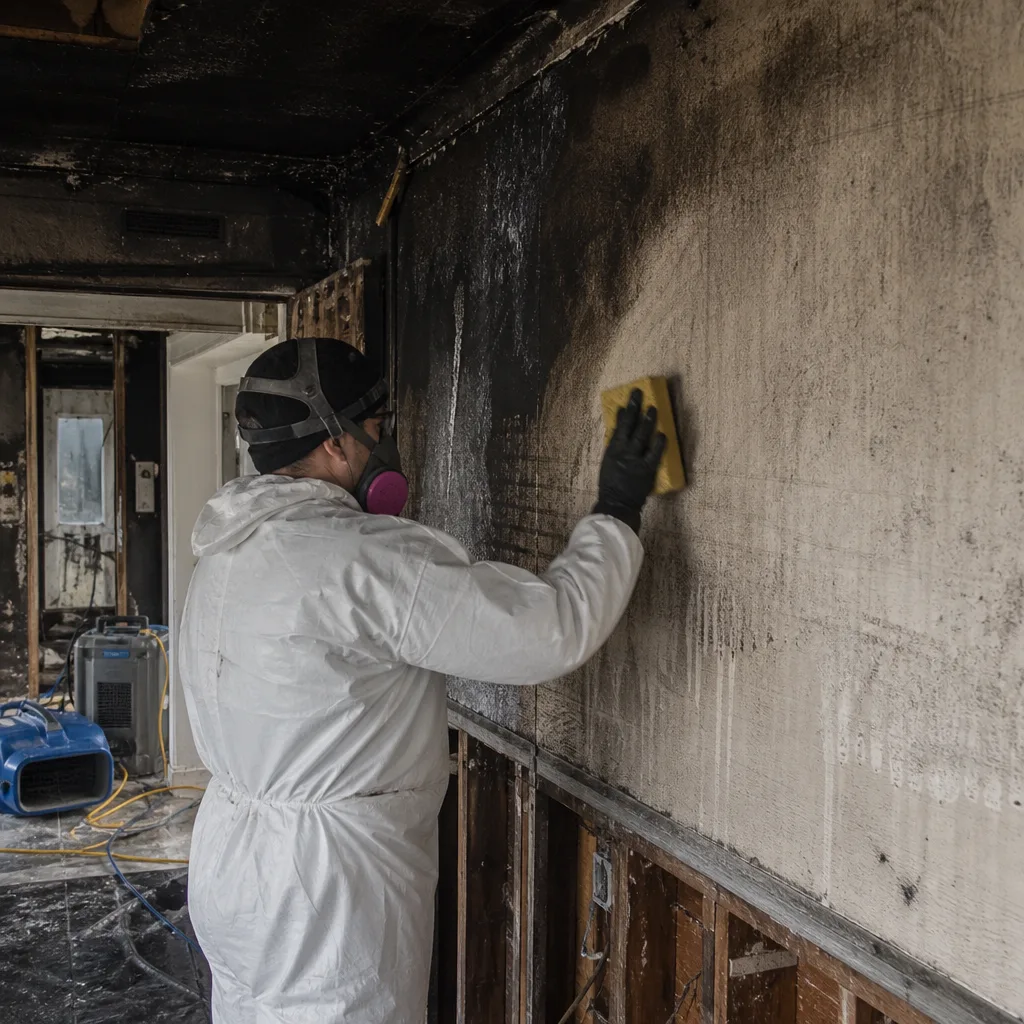
Wind Damage Repair
Nor’easter winds lift roof edges, tear siding, and pull gutters off their mounting. We assess the structural damage, tarp or board what’s exposed, and write a repair scope that gets your Manor Heights home weather-tight again. The rebuild is done by the same crew, not a different company.
What happens when you call
- 1
A real person answersNo phone trees - you reach a local pro.
- 2
You get an upfront price rangeHonest numbers before anyone is dispatched.
- 3
A background-checked tech heads outLicensed & insured, dispatched right away.
- 4
You approve before work beginsNothing starts until you say go.
Storm & Disaster Restoration Costs in Manor Heights, NY
Storm restoration pricing in Manor Heights reflects the age of the housing stock and the block-wall reality. A roof tarping runs $400 to $750, including the tarp and furring strip installation. Emergency board-up runs $150 to $350 per opening, depending on size and access. Full water extraction and structural drying of a finished basement in a split-level typically lands between $2,500 and $5,500, with the block-wall drying rig adding $800 to $1,200 over the standard drywall cavity approach. Mold remediation after a slow roof leak in a cape runs $1,800 to $4,000, with containment and clearance testing included.
What moves the price? How long the water has been in the walls, whether asbestos-containing materials are present in original floor tiles or pipe insulation, and how much of the finished space has to be demoed to reach the wet block. Insurance covers most storm-related losses in Manor Heights, and we bill your carrier directly. The free visual inspection gives you a firm scope before anything is signed. Call (917) 924-4221 for an exact quote, no pressure and no surprises.
Current standing offers on any storm restoration work: $50 Off Any Repair Over $250, the $89 Seasonal Tune-Up for a pre-season inspection of your basement waterproofing and roof flashing, and a Senior & Veteran 5% Discount, always.
We Also Serve Cities Near Manor Heights
Floodline Restoration Co. of Manhattan dispatches certified crews throughout the Staten Island interior and the surrounding metro. In addition to Storm & Disaster Restoration in Manor Heights, we serve homeowners in Fairview, Harrison, East Bronx, and Hunts Point. Same 45-minute response commitment, same written guarantee, same live dispatcher at 2 a.m.
Serving Manor Heights, NY - Our Local Coverage Area
We’re based in the Manor Heights area and know this community well. Use the map below to see our service coverage - if you’re nearby, we can almost certainly help.
Manor Heights Storm & Disaster Restoration Questions, Answered
Why is structural drying on concrete block walls so critical in Manor Heights after a storm?
Concrete block walls on Manor Heights homes sit against clay-heavy glacial till that releases water for weeks after a storm. The block cores wick that water upward, saturating finished drywall and feeding mold colonies behind the wall. A drying plan that only treats the drywall cavity leaves the block saturated. The water keeps wicking in, and the mold returns. We run Injectidry panels and specialty mats directly against the block until the drying logs show moisture content below 15%. That’s the only way to finish the job.
Does every storm damage job in Manor Heights need asbestos testing before water extraction begins?
Not every job, but most pre-1980s Manor Heights homes should assume asbestos is present somewhere. Original vinyl floor tiles, pipe insulation on heating runs, and joint compound on walls were commonly made with asbestos. If your storm loss requires removing those materials, we test first. Opening walls or pulling up tile without testing is an abatement violation, and it can shut down your project and your claim. We include testing in the scope when the damage reaches those layers.
How do I know if a roof leak in my Manor Heights cape has turned into a Category 2 water loss?
Category 2 water, or gray water, is water that has been contaminated by contact with building materials. If the water ran through insulation, drywall paper, or accumulated dust before it reached your ceiling, it’s likely Category 2 within 24 to 48 hours. Signs to look for: a musty odor, staining that darkens over a day, peeling paint or bubbling plaster, and a damp feeling that doesn’t go away. If the leak happened more than 48 hours before you noticed it, assume Category 2 and call (917) 924-4221 for a free inspection.
What is the difference between storm restoration in Manor Heights versus the South Shore after Sandy?
The South Shore dealt with acute storm surge: standing saltwater, destroyed ground floors, and fast-moving flood damage. Manor Heights sits on higher ground, but the clay soil holds water longer, and the block foundations wick it upward for weeks. Our restoration work here is about structural drying and mold prevention, not emergency flood extraction. A Manor Heights home can look dry two days after a storm and still have saturated block cores feeding a hidden mold colony behind finished basement walls.
During a big storm, how quickly can your crew put a roof tarp on a Manor Heights ranch before water infiltration gets worse?
We commit to a 45-minute response to Manor Heights in normal conditions, and in a declared storm sequence we prioritize roof compromises because water entry compounds by the hour. A tarp installation itself takes 45 minutes to two hours, depending on roof pitch and access. We use furring strips rated for 60 mph wind and heavy-duty poly that holds until permanent repairs are scheduled. Call (917) 924-4221 the moment you see shingles in the yard or water on the ceiling.
How fast can you actually get here? Is 45 minutes realistic?
Yes. Our New York City dispatch office is staffed around the clock, and we keep crews scheduled across the Staten Island service area. Manor Heights is a regular route for us, up Richmond Avenue or through from Forest Hill Road. At night, response is often faster. The 45-minute commitment is our standard, not a sales line. We’ll be there when we say.
Will my insurance cover storm damage restoration in Manor Heights?
Most homeowners policies cover storm-related water damage and the resulting restoration, but the documentation has to be complete from the first hour. We photograph everything before we move anything, log moisture readings daily, and write scopes that match the adjuster’s format. We bill your carrier directly and talk to your adjuster so you don’t have to. If your claim is denied or underpaid, the written documentation gives you something to fight with.
What should I do in the first 30 minutes after a storm damages my Manor Heights home?
Call us at (917) 924-4221. Then, if safe, move valuables out of the water path, shut off electricity to affected areas, and take photos of the damage with your phone. Do not open walls or pull up wet carpet until we’ve mapped the moisture. Asbestos and mold are the two hidden risks in Manor Heights homes, and neither should be disturbed by someone without the right training and containment equipment. We’ll be there within 45 minutes to assess the full scope.
We responded to a water loss on a 1960s split-level in Manor Heights after a storm-driven leak. Our techs set up containment and ran air movers and dehumidifiers, but the moisture readings on the concrete block foundation stayed high. We switched to a full block-wall drying rig with Injectidry panels, and after three days of structural drying, the drying logs showed the wall cores were finally below 15% moisture content. That’s what let us avoid a full pack-out of the finished basement. This is the difference between a company that reads a moisture map and one that guesses. We read the map, every day, until the dry standard is met.
Floodline Restoration Co. is led by Curt Bowman, who founded the company in 2010 around a dispatch board, not a sales desk. We’ve proudly served local communities for over 42 years between our leadership and our senior techs, and we plan to be here in thirty more. Every job we do in Manor Heights comes with the 90-Day Done Right Promise: if it’s not done right, we make it right, in writing. No paperwork battles, no arguing. That’s the Keystone Standard.
Call (917) 924-4221 for a free estimate. A live person answers, day or night, and the crew that shows up is the crew that finishes the job.
Written by Curt Bowman, Owner at Floodline Restoration Co. of Manhattan, serving Manor Heights and the surrounding Staten Island communities.