
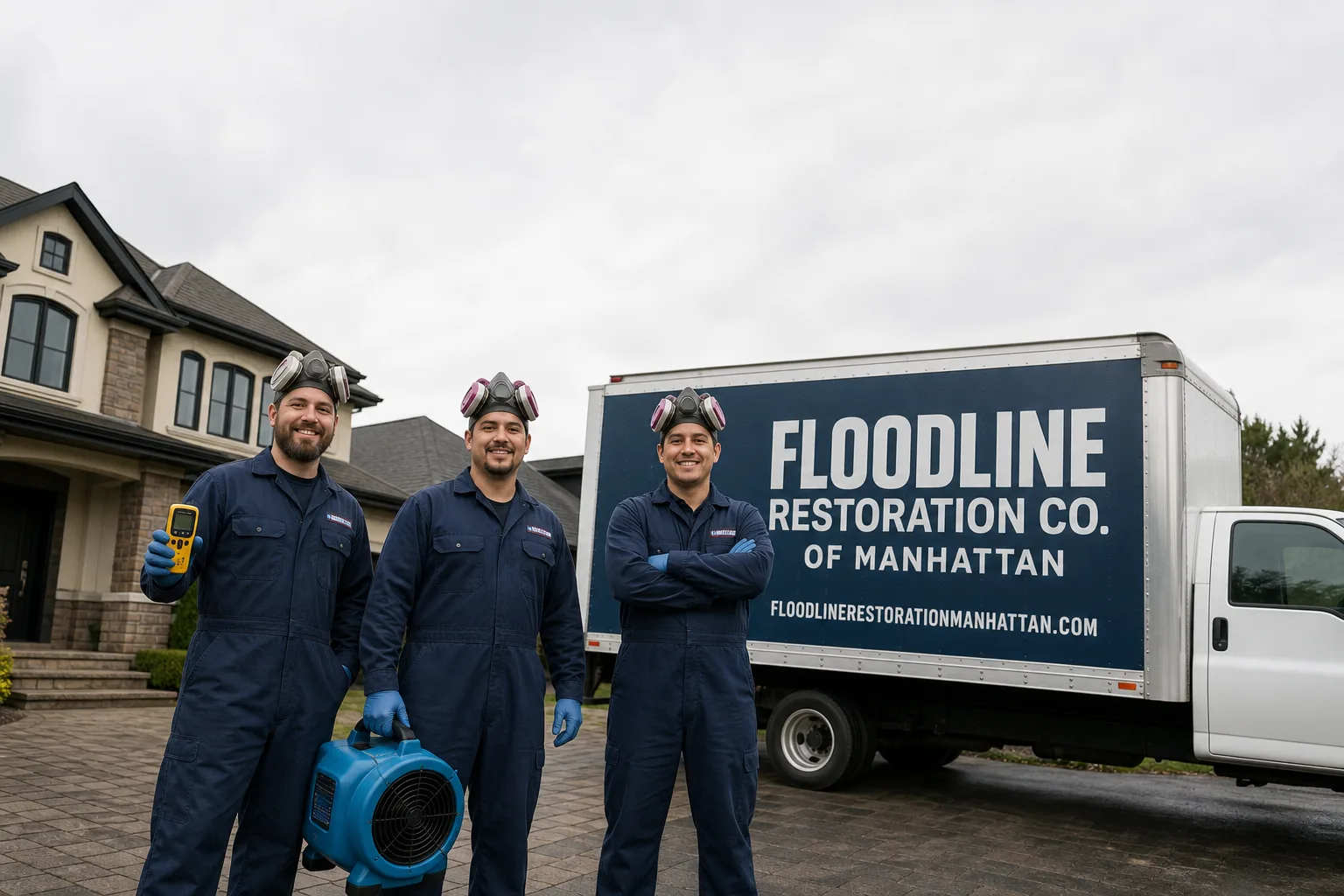
Free visual inspection and a written scope of work before any mitigation begins - photos, moisture readings, and drying logs go in your claim file
The scope we write is the scope we bill. Anything new gets shown to you, in writing, before we touch it.






 Before
 After
After Before
 After
After Before
 After
After24/7 Emergency Storm & Disaster Restoration in Mid Island
Storm damage in Mid Island doesn’t wait for business hours, and neither do we. Floodline Restoration Co. answers the phone with a live dispatcher at 2 a.m., every day of the year. Call (917) 924-4221 and a certified crew is dispatched to your Mid Island home immediately, usually arriving within 45 minutes. The first hour after a storm breach matters because water from a nor’easter or tropical system is already wicking up drywall, settling into carpet padding, and finding its way into the finished basement living spaces that define this island’s housing stock. We start with a free visual inspection, tell you exactly what we’re dealing with, and get extraction running the same visit.
Understanding Storm & Disaster Restoration Severity in Mid Island Properties
Not all storm water is equal, and Mid Island’s geography makes the distinction critical. Floodwater from a rising water table or storm surge carries whatever it crossed to reach your basement: lawn chemicals, fuel residue, sewage from overwhelmed municipal lines. We classify it by IICRC standards. Category 1 is clean water from a broken supply line. Category 2 carries significant contamination. Category 3, the notorious “black water,” contains sewage, seawater, or ground runoff and requires full containment, antimicrobial treatment, and disposal of porous materials rather than cleaning. In Mid Island, where the shallow glacial outwash aquifer rises during nor’easters and both the Atlantic and Long Island Sound push water from opposite directions, Category 3 basement floods are common. Your post-WWII Cape Cod or split-level with a finished basement was built before modern waterproofing standards existed. Original cast-iron supply lines, 50-year-old drainage tile, and finished drywall over concrete slab all respond differently to sustained hydrostatic pressure. Restoration here means reading the moisture map, not guessing.
Why Mid Island Property Owners Choose Floodline Restoration Co. of Manhattan
- 45-minute response commitment. We dispatch crews from the metro office directly into Mid Island the moment you call. A live person coordinates the route; you’re not waiting on a callback from a national call center.
- 24/7 live answer, always a real person. No automated prompts, no “leave a message.” A dispatcher picks up at 2 a.m. and knows which crews are closest to your Mid Island neighborhood.
- IICRC-certified crews. Our technicians hold WRT (Water Damage Restoration), FSRT (Fire & Smoke), and ASD (Applied Structural Drying) certifications. They train to RIA and IFA standards too, because storm restoration on this island demands more than a shop vac.
- Free visual inspection, no obligation. We assess the damage, explain the severity category, and give you a straight answer about what needs to happen. You decide from there.
- Direct insurance billing. We document everything, build a line-item scope, and talk to your adjuster directly. You don’t play messenger with the carrier.
- One team from extraction to reconstruction. The same crew that pulls the water and runs the drying logs also rebuilds the wall. No mid-job handoff, no inherited crew you’ve never met.
Our Storm & Disaster Restoration Process
Inspection & Assessment
We arrive, walk the property, and identify every affected area using thermal imaging and moisture meters. On a Mid Island finished basement, that means checking wall cavities, carpet backing, and the drainage tile that may have failed.
Extraction & Stabilization
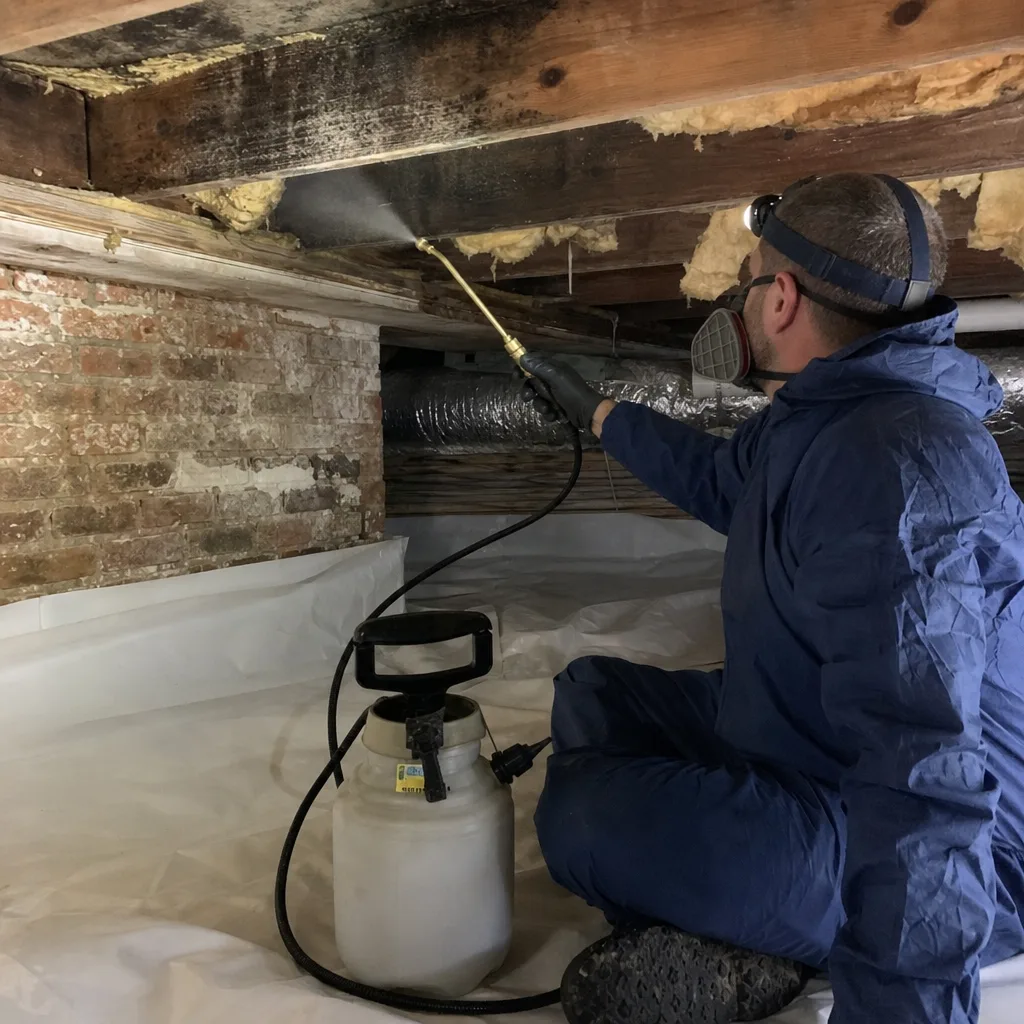
Standing water comes out first. We run truck-mounted and portable extraction units, then place containment if Category 3 water or mold is present. If a window, door, or roof section is breached, we board up or tarp immediately to stop further intrusion.
Drying & Dehumidification
Professional-grade Dri-Eaz, Phoenix, and XPOWER air movers and dehumidifiers run continuously. We take daily moisture readings and log them until the structure reaches the dry standard. In Mid Island’s saturated soils, that can add days compared to inland jobs.
Cleaning & Sanitization
All affected surfaces get antimicrobial treatment. Contents are packed out, cleaned, and stored. Porous materials that can’t be salvaged are documented and disposed of properly.
Storm-Specific Treatment
Wind-driven rain opens the envelope in ways a simple pipe burst doesn’t. We repair roof deck penetrations, failed flashing, and wind-damaged door frames before interior drying finishes, so the water doesn’t come right back.
Repairs & Restoration
The same crew rebuilds what the storm tore out: drywall, insulation, flooring, trim, door hardware, and any structural framing that needs it. You get a finished space, not a shell, and the 90-Day Done Right Promise in writing.
Need Emergency Storm & Disaster Restoration in Mid Island Now?
Crews minutes away, answering live 24 hours a day. The sooner we start, the less it costs.
Working With Your Insurance Company
Storm damage claims in Mid Island have their own rhythm. Wind damage is typically covered; flood damage from rising groundwater usually requires a separate flood policy. Either way, documentation from the first hour determines how the claim resolves. We photograph every affected room before we move anything, log moisture readings daily, and build a line-item scope your adjuster can actually read. Then we talk to the carrier directly. You get a written estimate, not a phone game. If the adjuster has questions, they call us, not you. Our crews have worked post-Sandy claims throughout the island and know how NY carriers evaluate basement restoration on this specific housing stock.
What We Provide Your Insurer
- Thorough documentation of the loss
- Photos of all damage, room by room
- Moisture readings and drying logs
- A detailed, line-item scope of work
- Direct coordination with your carrier
Built for Mid Island’s Loss Calendar
Mid Island takes weather from two directions, and the loss calendar shows it. Late summer and early fall bring tropical systems up the Atlantic that funnel storm surge through Long Island Sound, saturating soils and lifting the water table under your finished basement. October through April, nor’easters track up the coast, driving wind and rain against the same homes while the ground is already holding water from the last system. January and February freeze supply lines in unheated crawlspaces and garages; the thaw that follows finds the leak the freeze created. Spring rain compounds the problem, because the glacial outwash aquifer beneath Mid Island has no place to shed the water quickly. Every season has a failure mode here. The homes, built between 1945 and 1970, predate modern sump pump discharge capacities and often still run on the original drainage tile. When that tile fails under hydrostatic pressure, water enters the finished basement from below, out of sight, until the drywall wicks it up and the mold clock starts.
Storm & Disaster Restoration Across Mid Island’s Neighborhoods
We run these streets often enough to know how each part of Mid Island fails differently. Around Hempstead Turnpike, the 1950s split-levels and Capes sit slightly higher but take the full force of wind-driven rain against their east-facing gables; we see torn flashing and roof deck breaches that send water straight down interior wall cavities into finished basements. Over near the Wantagh State Parkway corridor, ranch houses with finished basement family rooms deal with rising groundwater first, long before any wind damage shows upstairs. Blocks around Jerusalem Avenue hold the original cast-iron supply lines still in service from the postwar build-out; when the water table rises and the ground shifts, those lines crack, and a basement flood follows. And throughout the residential streets between the Southern State and the bay, the story repeats: a sump pump that worked fine in August gets overwhelmed by a nor’easter in November, because the discharge pipe was sized for a lower water table. Each area has a signature failure. Knowing which one we’re walking into changes how fast we can stop the damage.
Specialized Storm & Disaster Restoration Services We Offer in Mid Island
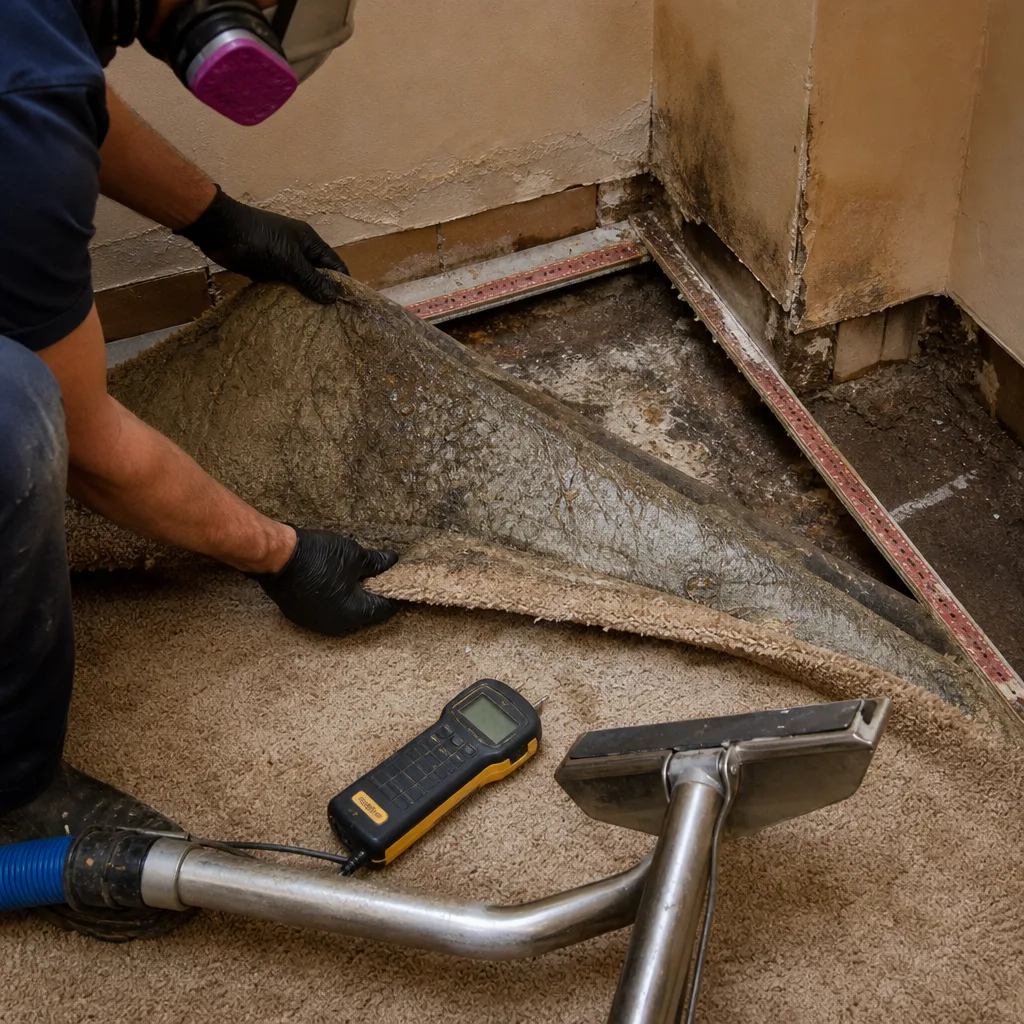
Wind Damage Repair
A storm that tears shingles or opens a roof seam doesn’t always show itself immediately. Water travels down rafter bays and wall cavities, pooling in the finished basement while the upstairs looks dry. In Mid Island, where wind loads from both coastal directions hit every elevation, we inspect the full envelope after any serious storm, not just the obvious spot. Repairs address the roof deck, flashing, and structural framing so the interior drying actually holds.
Emergency Board-Up
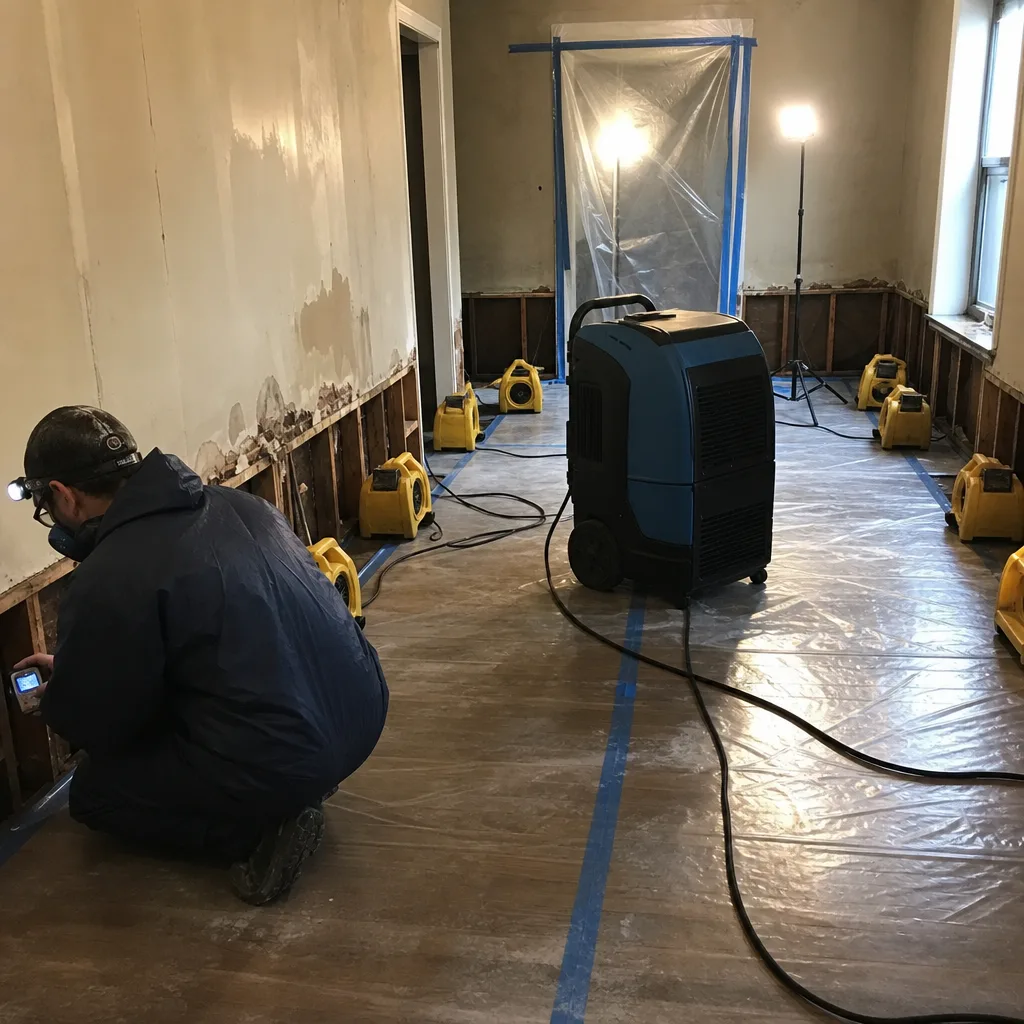
When a window blows out or a door gets blown in, the house is open to weather, animals, and anyone walking past. We arrive with plywood, fasteners, and the right tools to secure the opening the same visit. In Mid Island, where post-storm looting follows the same patterns as any dense suburban area, boarding up isn’t optional. It’s the first thing we do after assessing safety.
Flood Damage Restoration
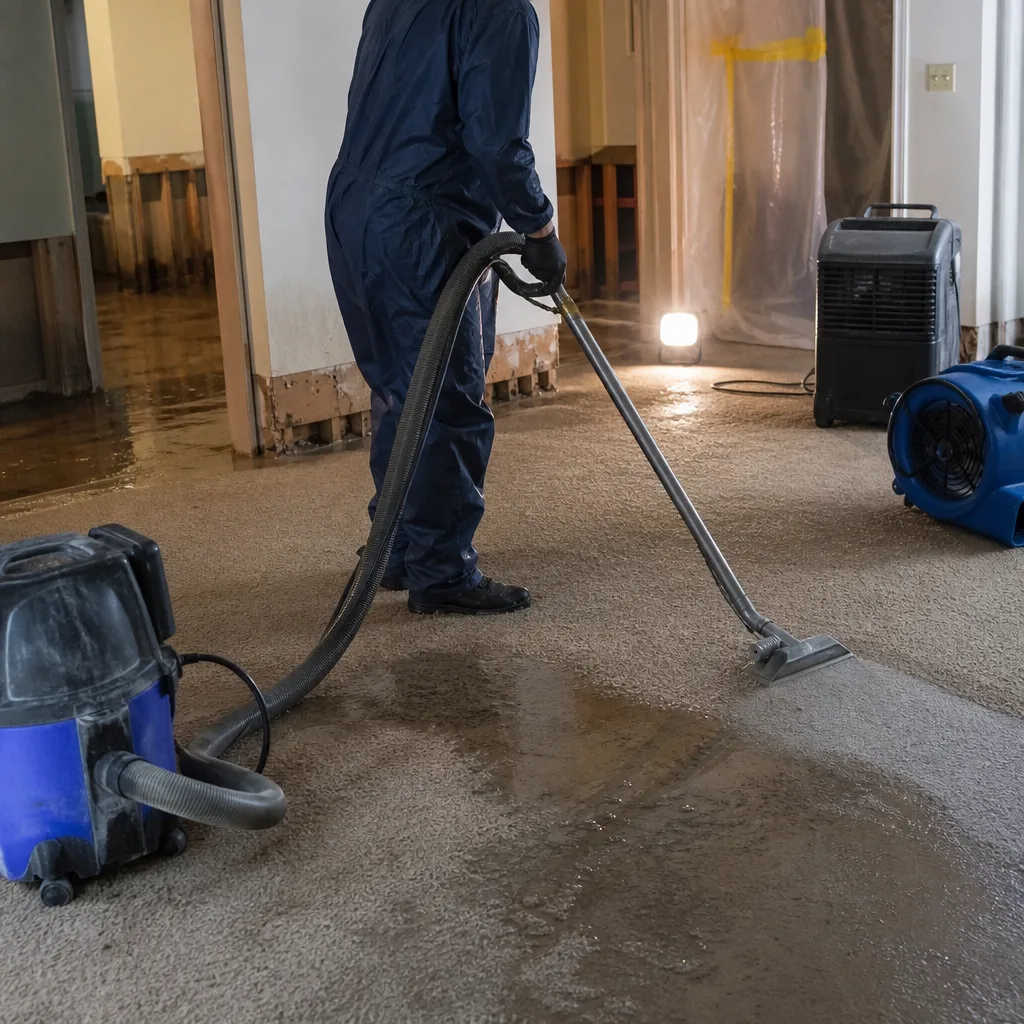
Finished basements over a rising aquifer don’t dry on their own. We extract, contain, treat, and dry using professional-grade Dri-Eaz, Phoenix, and XPOWER equipment with daily moisture logging. The goal is a dry standard that holds, not a surface that looks dry for a week and then grows mold on the back side of the drywall. Post-Sandy residual mold hidden behind improperly remediated basement walls is a known problem throughout Mid Island; we check for it as part of every flood restoration scope.
Roof Tarping
A tarp buys time, but only if it’s anchored correctly. We see plenty of tarps from other companies flapping loose after the first real wind, because they weren’t secured to the roof deck. We tarp to hold through the next nor’easter, using the right anchoring pattern for the pitch and material of your Mid Island roof.
Debris Removal
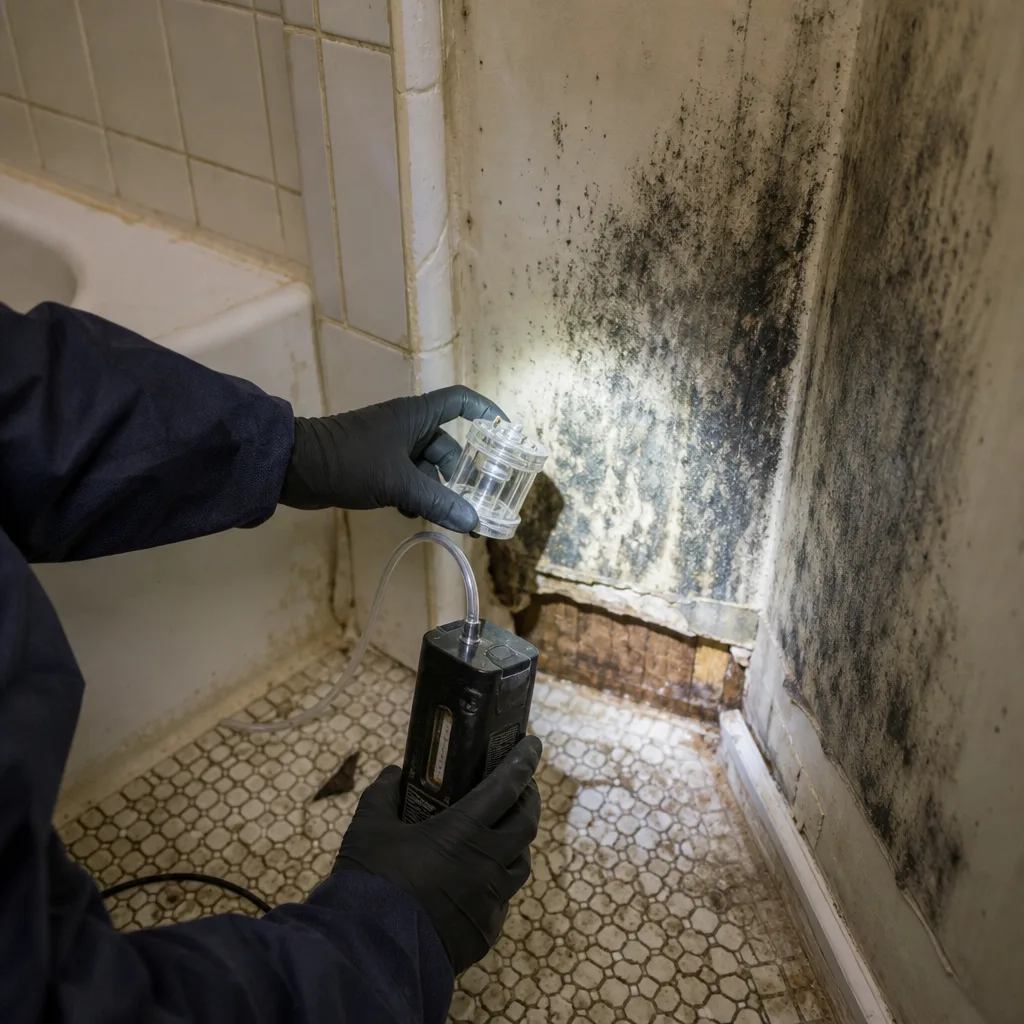
Storms leave trees, branches, shingles, and sometimes entire roof sections scattered across yards and driveways. We remove structural debris that’s tied to the restoration scope, documenting everything for the insurance claim as we go. If a limb came through a window, that’s part of the same loss, and it gets handled by the same crew.
What happens when you call
- 1
A real person answersNo phone trees - you reach a local pro.
- 2
You get an upfront price rangeHonest numbers before anyone is dispatched.
- 3
A background-checked tech heads outLicensed & insured, dispatched right away.
- 4
You approve before work beginsNothing starts until you say go.
Storm & Disaster Restoration Costs in Mid Island, NY
What you’ll pay depends on what the storm did and what your policy covers. A basic wind-damage repair to a door frame or section of flashing in Mid Island typically runs $450 to $900. Roof tarping and emergency board-up usually land between $300 and $600, and that’s often reimbursable under your policy’s emergency mitigation coverage. Finished basement flood restoration is the big-ticket item: a full Category 3 extraction, containment, drying, and rebuild of a typical 800-square-foot Mid Island finished basement runs $8,000 to $18,000, sometimes more when original cast-iron lines or drainage tile need replacement. The NY DEC fuel-oil spill reporting requirement adds another layer if an in-ground tank was breached. No surprises on the bill: we give you a written scope before work starts. Call (917) 924-4221 for a free estimate, and we’ll put firm numbers on paper.
We Also Serve Cities Near Mid Island
Our crews regularly run restoration work in Storm & Disaster Restoration in Mid Island and the surrounding communities: Fairview, Harrison, East Bronx, and Hunts Point. Same 45-minute response commitment, same live dispatch, same written guarantee.
Serving Mid Island, NY - Our Local Coverage Area
We’re based in the Mid Island area and know this community well. Use the map below to see our service coverage - if you’re nearby, we can almost certainly help.
Mid Island Storm & Disaster Restoration Questions, Answered
How does Mid Island’s dual coastal exposure change the storm damage restoration timeline?
Dual coastal exposure makes drying take longer here than inland. When the Atlantic and Long Island Sound both push moisture into the island, soils stay saturated for weeks, and the shallow glacial outwash aquifer keeps feeding water up through the slab and drainage tile. A standard drying job that might close in three days inland can run five to seven days in Mid Island, because the structure keeps pulling moisture from the saturated ground around it.
What should I do if a nor’easter floods my finished basement in Mid Island and I have an in-ground fuel-oil tank?
Call us immediately at (917) 924-4221, and do not pump or disturb the water around the tank. A breached in-ground oil tank triggers mandatory NY DEC spill reporting, and moving the water before it’s assessed can complicate both the environmental cleanup and your insurance claim. Our crews coordinate the spill reporting alongside the water extraction, pack-out, and antimicrobial treatment. This is a Mid Island-specific layer most restoration contractors never deal with, and we handle it as routine.
Why do Mid Island homes need wind-rated doors and reinforcement before hurricane season?
Mid Island takes wind from both the Atlantic and Long Island Sound, so every door and window faces a direct wind load from at least one direction during a major storm. A standard pre-hung door from the 1960s was never rated for the gusts a nor’easter throws at this island. Wind-rated doors and reinforced frames stop the breach before it starts, keeping the envelope closed so your finished basement stays dry. We inspect existing door frames and hardware as part of storm preparation work.
How do you dry a finished basement in Mid Island after a storm without demolishing the whole space?
We don’t demolish first; we map first. Thermal imaging and moisture meters tell us exactly which wall cavities, floor assemblies, and ceiling bays are wet. We drill small access points for air movers and dehumidifiers, run Dri-Eaz, Phoenix, and XPOWER equipment continuously, and take daily readings until the dry standard is met. Drywall that won’t dry gets cut out; drywall that will dry stays. The goal is saving as much of the finished space as possible, not swinging a hammer at everything the water touched.
What’s the difference between Category 1, 2, and 3 water in a Mid Island storm flood?
Category 1 is clean water from a broken supply line or melted ice. Category 2 carries significant contamination from things like dishwasher overflow or sump pump failure that sat. Category 3 is grossly contaminated: seawater, sewage, or ground runoff that has picked up whatever was in the soil. In Mid Island, rising groundwater from a nor’easter or tropical storm is almost always Category 3, and that means full containment, antimicrobial treatment, and removal of porous materials rather than cleaning. We classify every job before we touch anything.
How fast can someone actually get to my Mid Island home?
We commit to 45 minutes from your call to a crew at your door, 24 hours a day. A live dispatcher answers immediately, knows which crews are closest to your Mid Island neighborhood, and sends the right equipment for the job. You’ll never wait on a callback. Call (917) 924-4221 and we’re rolling.
Will my insurance cover storm damage and basement flooding in Mid Island?
Wind damage to the roof, door frames, and windows is typically covered under a standard homeowners policy. Basement flooding from rising groundwater or storm surge usually requires a separate flood policy. Our team documents everything from the first hour, handles the adjuster communication, and builds the claim file so the carrier sees exactly what happened. If you’re not sure what your policy covers, we’ll walk you through it before any work begins.
Can we stay in our Mid Island home during storm restoration?
It depends on the severity and category of water. A Category 1 pipe burst in a contained area usually allows you to stay upstairs while we work in the basement. Category 3 floodwater, especially with sewage or fuel contamination, often requires relocation during containment and antimicrobial treatment. We give you a straight answer at the free inspection, before any work starts, so you can plan accordingly.
Written by Curt Bowman, Owner at Floodline Restoration Co. of Manhattan, serving Mid Island and surrounding communities with a live phone answer since the company was founded.