
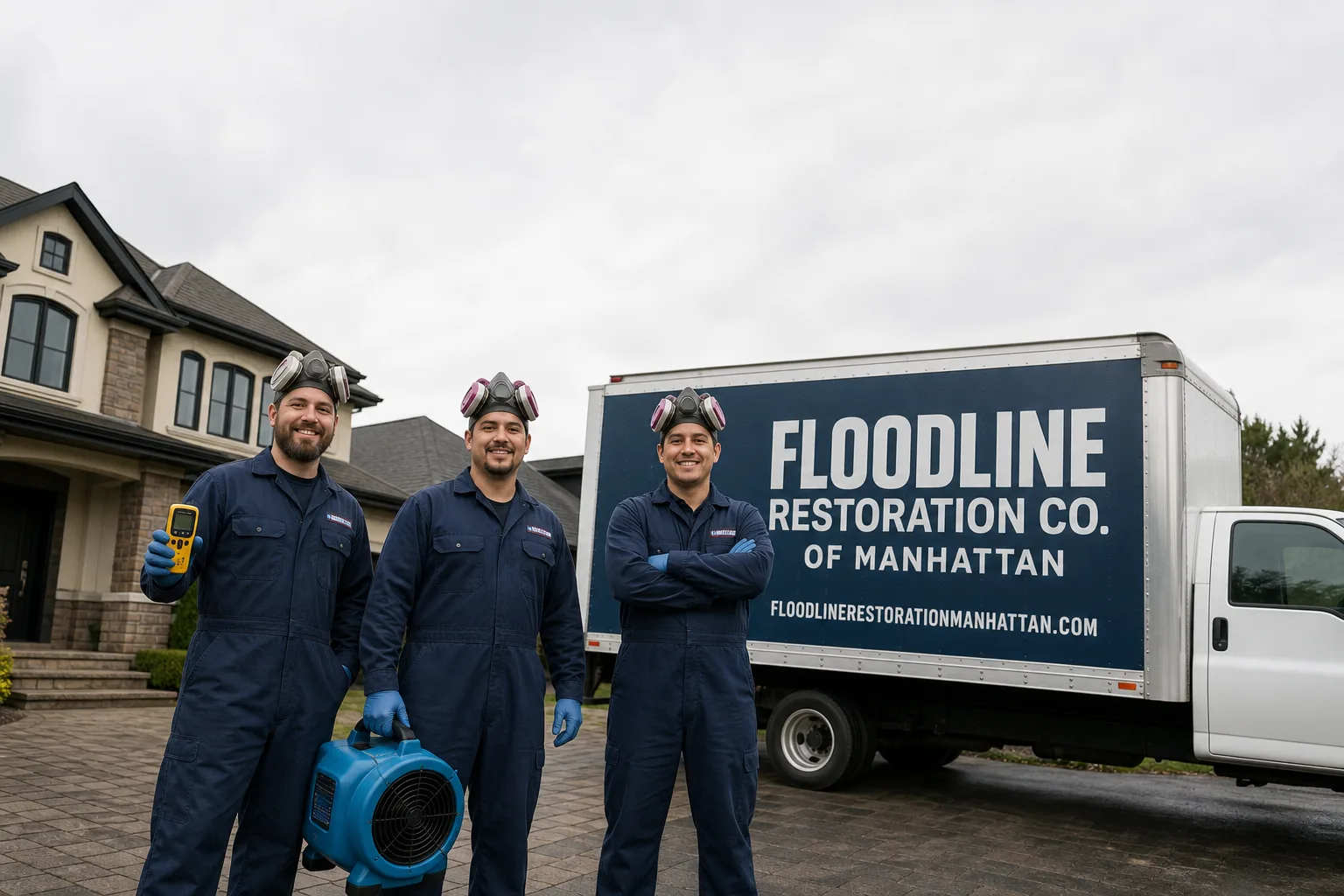
Free visual inspection and a written scope of work before any mitigation begins - photos, moisture readings, and drying logs go in your claim file
The scope we write is the scope we bill. Anything new gets shown to you, in writing, before we touch it.






 Before
 After
After Before
 After
After Before
 After
After24/7 Emergency Storm & Disaster Restoration in Middle Village
Storm damage in Middle Village moves fast, and so do we. Call (917) 924-4221 any hour, any day, and a live dispatcher answers. Not a recording. Not a callback queue. A person who knows Queens and can have a certified crew rolling toward your block within the hour. The first 60 minutes after storm water enters a finished basement or wind tears open a roof deck determine how much of your home we can save. Every minute of delay lets water wick deeper into brick, drywall, and subfloor. One call starts extraction, board-up, or tarping the same visit. We serve all of Middle Village, from Juniper Valley Park down to Metropolitan Avenue, with free visual inspections and a written scope before any work begins.
Understanding Storm & Disaster Restoration Severity in Middle Village Properties
Storm losses in Middle Village break into three categories, and the category dictates the response. Category 1 water is clean, like a roof leak from a wind-driven rain. Category 2 carries contamination from sump pits, appliance overflows, or soil. Category 3 is black water: sewage from combined-sewer backups, which is the defining storm hazard for this neighborhood. Middle Village sits inland, away from the coastal surge that batters Rockaway, but its 1940s and 1950s combined sewer lines regularly back up during July and August convective storms. That pushes sewage-laden water into finished basements through floor drains and toilets. Category 3 requires containment, antimicrobial treatment, and disposal of porous materials. We moisture-map every affected surface with hygrometers and thermal imaging, establish the dry standard, and log daily readings until the structure meets it. For homes with original cast-iron drain stacks and galvanized supply lines, hidden damage behind finished walls is common. A storm may be the trigger, but the failure was decades in the making. We find both.
Why Middle Village Property Owners Choose Floodline Restoration Co. of Manhattan
- Live answer, every call, every hour. A dispatcher picks up at 2 a.m. on a Sunday during a nor’easter. We never route you to voicemail when water is rising.
- 45-minute response commitment. For active water intrusion, a crew is dispatched immediately and typically reaches Middle Village addresses in under an hour, traffic and storm conditions permitting.
- IICRC-certified crews. Our technicians hold WRT, FSRT, and AMRT certifications. They read moisture maps the same way a doctor reads an X-ray.
- Free visual inspection. We walk the property, explain what we’re seeing in plain English, and hand you a written scope before any equipment comes off the truck.
- Direct insurance billing. We bill your carrier directly and handle adjuster communication. You never play messenger between us and the insurance company.
- One team from extraction to reconstruction. The same certified crew that extracts water on day one handles drying, mold remediation, and the rebuild. No mid-job handoff to a subcontractor you’ve never met.
Our Storm & Disaster Restoration Process
Inspection & Assessment
We arrive, walk the property, and map the damage. Thermal imaging finds water hidden inside walls and under floors. We identify the water category and document everything for you and your insurer.
Extraction & Stabilization
Standing water comes out with truck-mounted and portable extraction units. We board up broken windows, tarp roof openings, and stop further water entry before drying begins.
Drying & Dehumidification
Professional-grade Dri-Eaz and Phoenix air movers and dehumidifiers go in, positioned by moisture readings, not guesswork. We take daily readings and adjust equipment until the structure hits the dry standard.
Cleaning & Sanitization
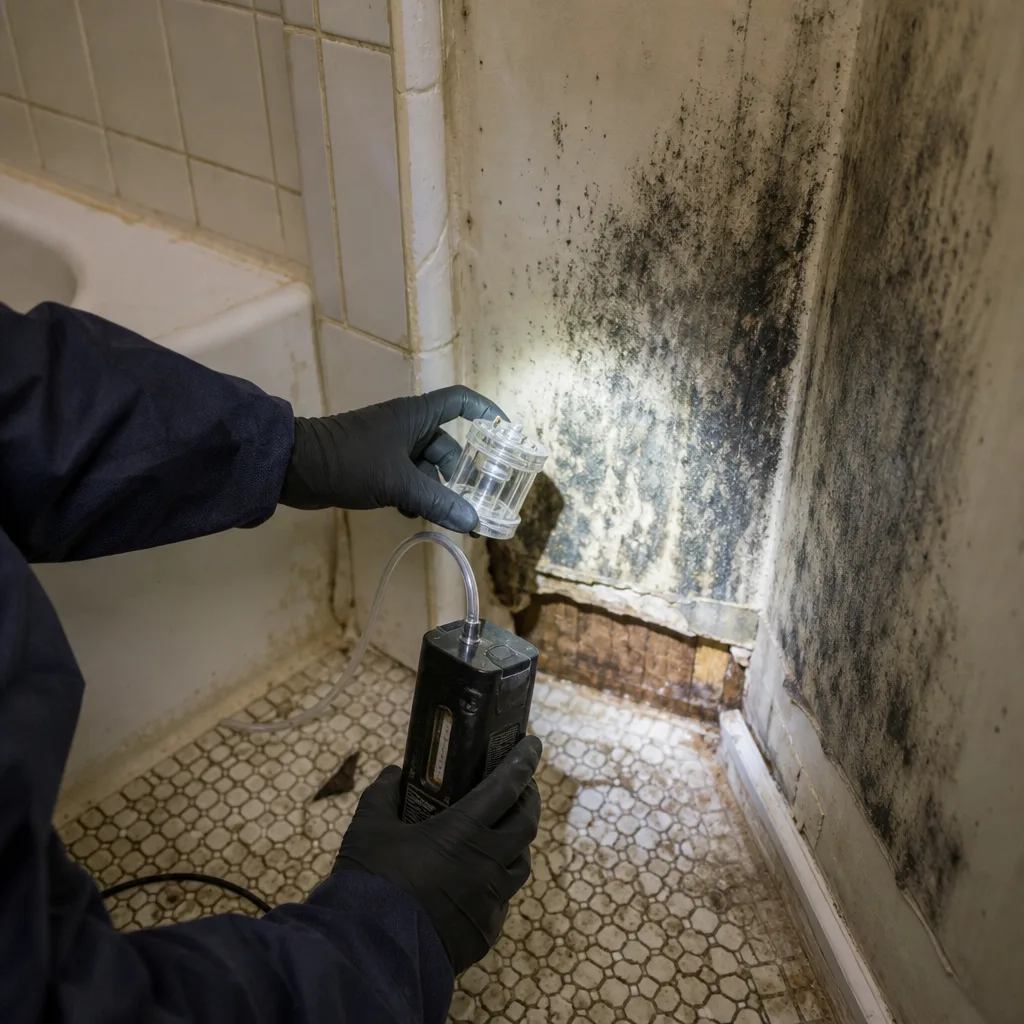
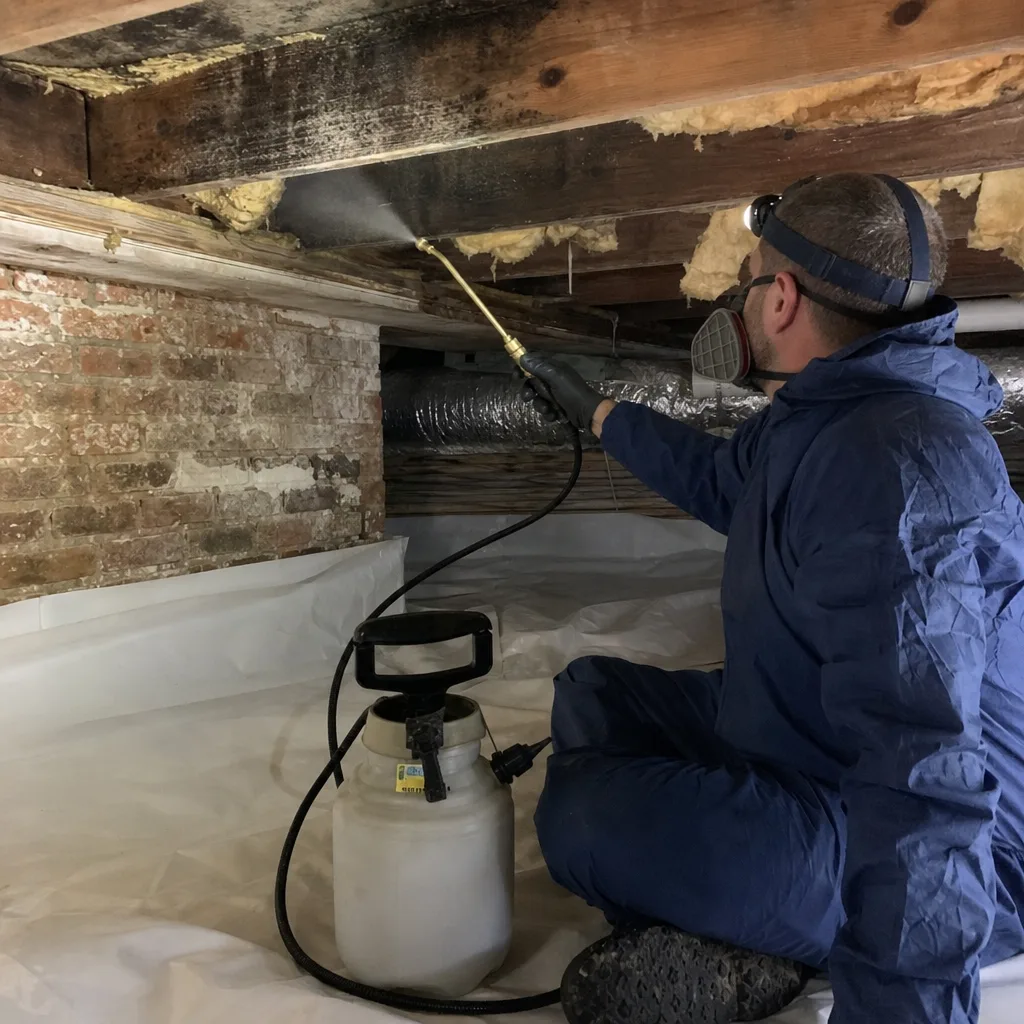
Category 3 water means full antimicrobial treatment on affected surfaces. We remove contaminated drywall, insulation, and carpet. HEPA air scrubbers run during the entire process to control airborne particulates.
Mold Remediation
Where water sat longer than 48 hours, mold is likely. We contain the affected area, remove contaminated materials, and run clearance testing before rebuilding. No shortcuts on this step.
Repairs & Restoration
Rebuild to pre-loss condition: drywall, flooring, paint, trim, and any structural repairs. The same crew that started the job finishes it, backed by the 90-Day Done Right Promise in writing.
Need Emergency Storm & Disaster Restoration in Middle Village Now?
Crews minutes away, answering live 24 hours a day. The sooner we start, the less it costs.
Working With Your Insurance Company
Most storm and disaster restoration in Middle Village is covered under standard homeowners policies, but the claim lives or dies on documentation. We start building your file from the first hour: photos of every affected room before anything moves, moisture readings with date and time stamps, and a line-item scope of work that matches the format your carrier expects. Our team communicates directly with your adjuster, so you are not translating technical findings between us and the insurance desk. We have handled thousands of storm claims in Queens and know what adjusters require for approval. When the carrier needs a second opinion or an on-site review, we walk it with them. The goal is a clean, fully documented claim paid at a fair value. Below is exactly what your insurer receives from us.
What We Provide Your Insurer
- Thorough documentation of the loss
- Photos of all damage, room by room
- Moisture readings and drying logs
- A detailed, line-item scope of work
- Direct coordination with your carrier
Built for Middle Village’s Loss Calendar
Storm damage in Middle Village follows a rhythm, and we plan our dispatch around it. January and February bring deep freezes that burst original galvanized supply lines in 1950s semi-detached frames. The break often stays hidden behind a finished basement wall until thaw reveals the damage. Spring brings roof leaks as snowmelt finds old flashing and worn shingles on steep-pitch roofs. Summer is the season of combined-sewer backups: heavy convective storms overload 1940s-era drainage, and sewage finds the path of least resistance, which is usually a basement floor drain in a two-family off Eliot Avenue. Fall brings nor’easters with wind damage to older roofs and siding. The common thread across all of it is age. Middle Village’s housing stock was built between 1940 and 1965, and the original plumbing, roofing, and drainage systems are now past their design life. We know which failure modes are likely on which streets because we have been answering these calls across Middle Village for years.
Storm & Disaster Restoration Across Middle Village’s Neighborhoods
Middle Village is not one uniform grid. The blocks around Juniper Valley Park hold larger detached homes with more roof surface and longer side walls facing prevailing winds. A nor’easter that strips shingles here often means roof tarping and interior water extraction upstairs. The attached and semi-attached brick two-families concentrated along 69th Street, 74th Street, Penelope Avenue, and Metropolitan Avenue present a different challenge: shared party walls and shared risers mean a loss on one side becomes a loss on both. We routinely set containment and drying on two units at once. The homes near Lutheran Cemetery and down toward the freight rail cut sit on older fill that drains unevenly, making basement seepage after heavy rain more common. And the garden apartments toward the western edge of the neighborhood have their own pattern: long interior corridors and shared utility rooms where water travels quickly across open plans. We run routes through Middle Village daily and know the traffic choke points, the one-way pairs, and the fastest access to every block. That matters when a basement is filling.
Specialized Storm & Disaster Restoration Services We Offer in Middle Village
Storm Damage Cleanup
Wind, rain, and falling limbs create chaos: broken glass, soaked insulation, downed drywall, and debris spread across floors and yards. We remove the damaged materials, control dust and airborne particles, and stabilize the structure. This is the step that stops a storm from becoming a mold problem.
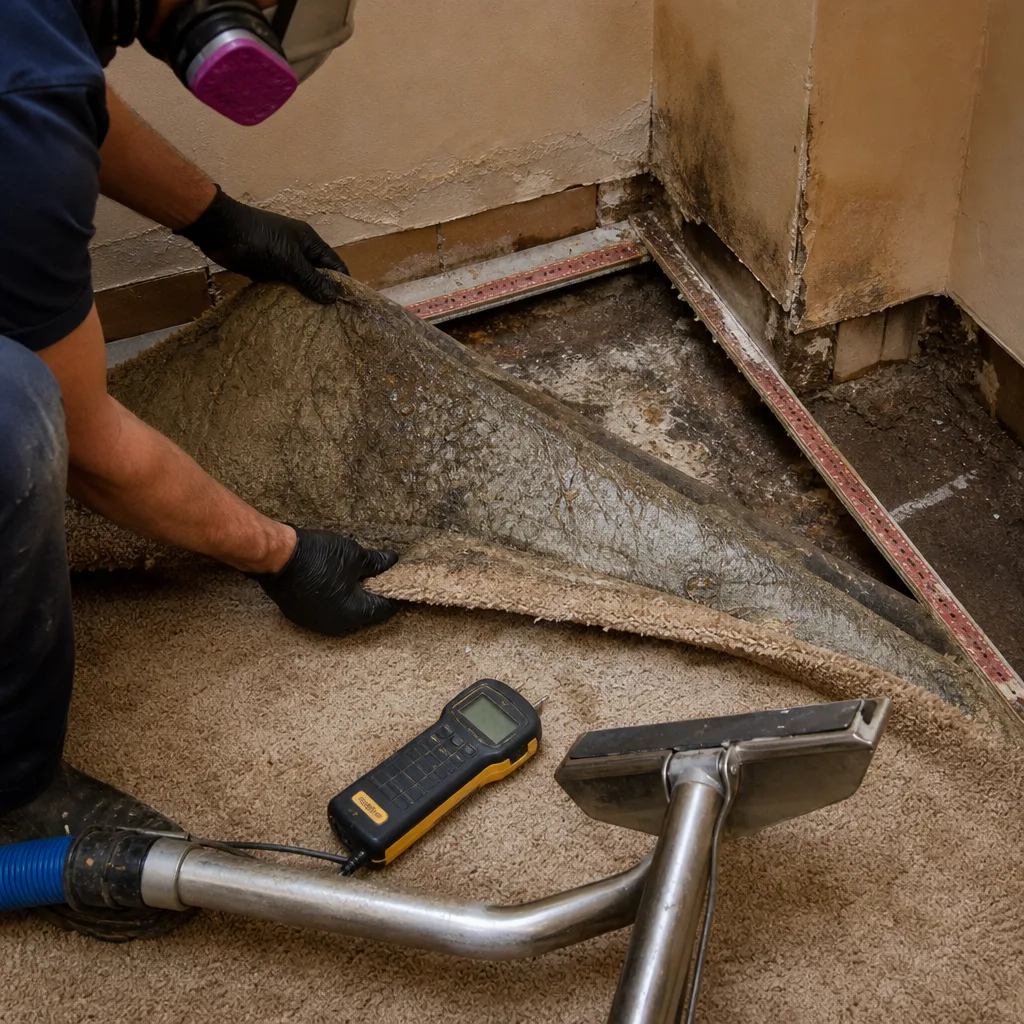
Flood Damage Restoration
Whether it is a combined-sewer backup, a sump pump failure, or surface water finding a low doorway, we extract, dry, treat, and rebuild. In Middle Village’s finished basements, this often means removing carpet and pad, cutting drywall at the floodline, and running commercial dehumidification for three to five days.
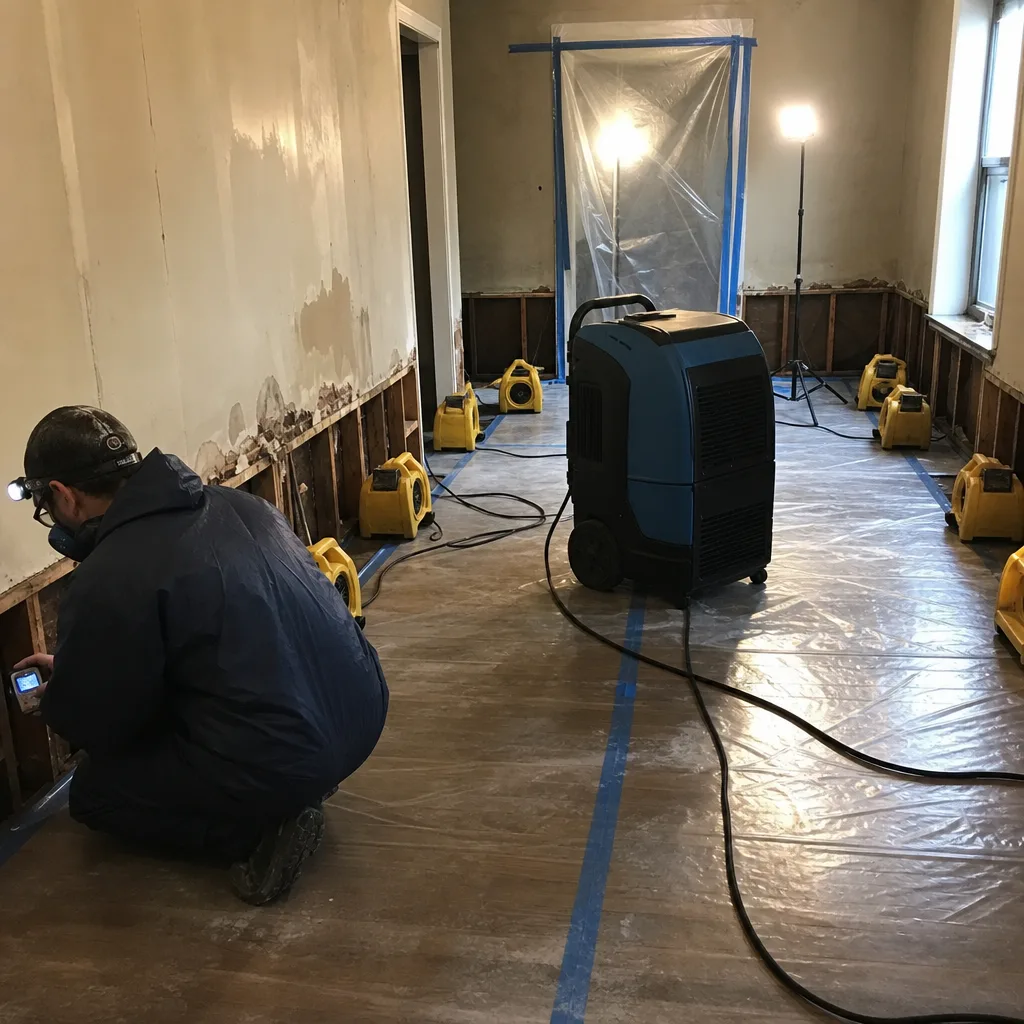
Emergency Board-Up
A broken window or a blown-out door on a storm night leaves your home open to weather, animals, and intruders. We board and secure openings with plywood cut to fit the opening, same visit. In attached two-families, we secure shared entryways and communicate with the adjoining owner before we finish.
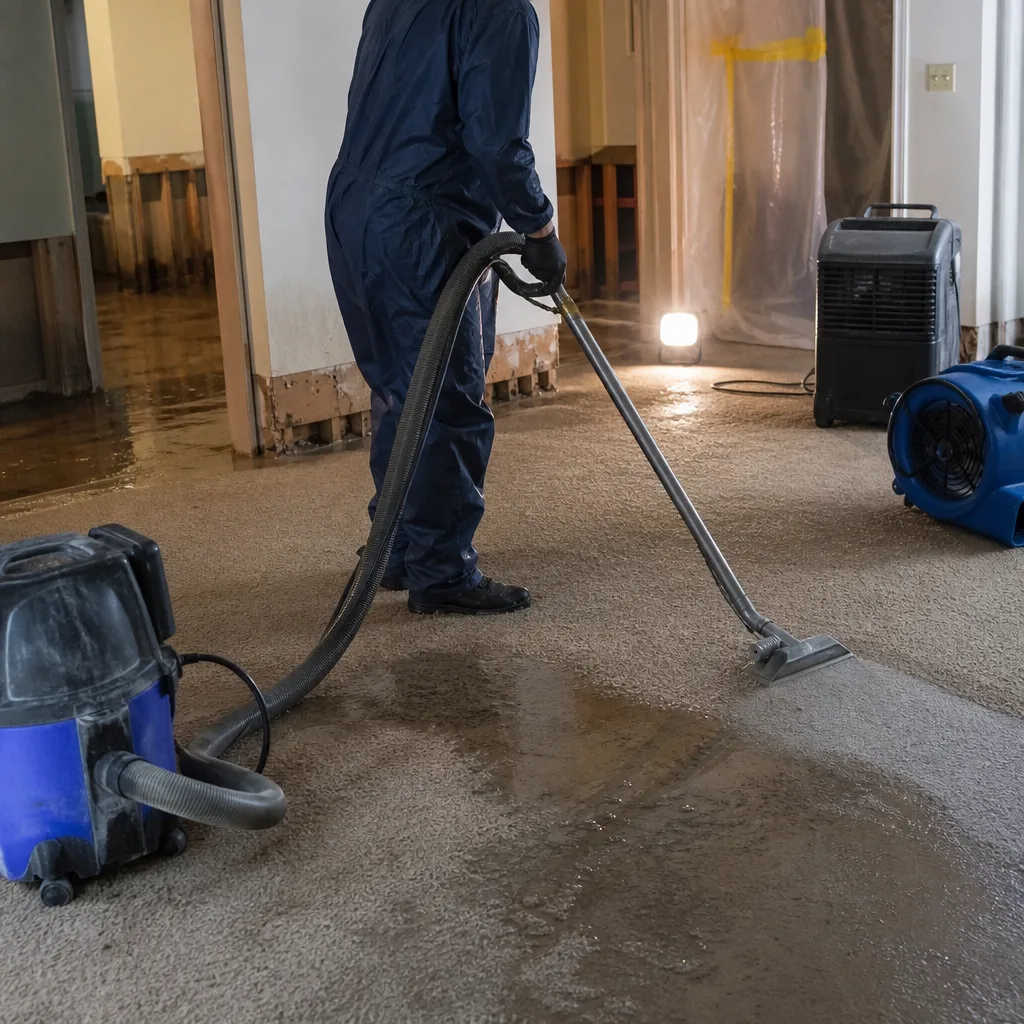
Roof Tarping
When wind tears shingles or a tree limb punctures the roof deck, water enters within minutes. We tarp the damaged section with heavy-duty, tied-down coverings that hold through wind and rain until permanent roofing work is scheduled. This is emergency mitigation, not a roof replacement.
Debris Removal
Storm debris, fallen branches, soaked drywall, and ruined contents all need to go before drying can work. We haul and dispose of it properly, including any materials contaminated with category 3 water. You get a clear, clean work area and a documented debris list for your insurer.
What happens when you call
- 1
A real person answersNo phone trees - you reach a local pro.
- 2
You get an upfront price rangeHonest numbers before anyone is dispatched.
- 3
A background-checked tech heads outLicensed & insured, dispatched right away.
- 4
You approve before work beginsNothing starts until you say go.
Storm & Disaster Restoration Costs in Middle Village, NY
Storm restoration costs in Middle Village depend on the water category, the square footage affected, and whether structural materials need removal. Water extraction alone typically runs $3 to $7 per square foot of affected area. A modest basement flood in a one-family across 1,200 square feet often lands between $2,800 and $5,500 for extraction, drying, and minor material removal. When category 3 sewage backup is involved, add containment, antimicrobial treatment, and porous-material disposal: those jobs commonly range from $6,000 to $14,000 in Middle Village’s finished basements. A full two-family party-wall drying across both units, with drywall removal and rebuild on both sides, typically runs $12,000 to $28,000 depending on finishes. Roof tarping runs $350 to $800 for most Middle Village roofs. Emergency board-up is usually $250 to $600 per opening. Most of these costs are covered by homeowners insurance after your deductible. Senior and veteran homeowners receive a 5% discount, always. The free visual inspection gives you a firm, written scope before any work begins, so there are no surprises on the bill.
We Also Serve Cities Near Middle Village
Our crews run daily through Middle Village and the surrounding Queens neighborhoods, including Maspeth, Rego Park, Elmhurst, and Ridgewood. The same certified technicians, the same 45-minute response commitment, and the same 90-Day Done Right Promise.
Serving Middle Village, NY - Our Local Coverage Area
We’re based in the Middle Village area and know this community well. Use the map below to see our service coverage - if you’re nearby, we can almost certainly help.
Middle Village Storm & Disaster Restoration Questions, Answered
How do you handle water damage that crosses the party wall into my neighbor’s unit?
We treat both units simultaneously. The shared brick party wall in your semi-detached wicks moisture and transfers damage in both directions, so drying only one side leaves the other vulnerable. We open a separate scope of work for each owner, bill each insurance carrier separately, and run drying equipment on both sides until both units meet the dry standard. We knock on the neighbor’s door on the first visit. This is standard practice for us in Middle Village.
What happens when a summer storm backs up the combined sewer into my basement?
That water is category 3: sewage-laden and hazardous. We extract it, contain the affected area, remove contaminated drywall and carpet, apply antimicrobial treatment, and run HEPA air scrubbers until the space tests clean. The neighborhood’s 1940s combined sewers overflow during heavy convective storms, and finished basements take the hit. Call (917) 924-4221 the moment you see water at a floor drain.
Can old galvanized pipes in my 1950s semi-detached cause storm-related damage without visible leaks?
Yes. Galvanized supply lines from the 1950s are near the end of their service life, and a freeze-thaw cycle after heavy rain can crack them behind finished walls. The leak is invisible until water stains appear or a floor buckles. Our thermal imaging finds these hidden leaks, and our crews know exactly where they hide in Middle Village’s attached two-family frames.
Do I need to worry about mold if water sat overnight after a storm?
Mold begins growing in 24 to 48 hours on wet drywall, carpet, and insulation. If water sat overnight, the materials are already in the danger window. We can often save the structure if we respond early, but porous materials that stay wet past 48 hours should come out. The free visual inspection tells you what can be dried and what needs removal.
What’s different about restoring a two-family home where both units share a brick wall?
Two owners, two policies, one structure. Moisture and char damage travel through the brick party wall, so the restoration has to account for both sides from the first reading. We scope each unit separately, bill each carrier directly, and coordinate work with both homeowners. Skipping the neighbor’s side is how mold comes back in six months.
How fast can you actually get to my Middle Village address?
We commit to a 45-minute response for active water intrusion, and our crews are running through Middle Village daily. Traffic and storm conditions can add time, but a live dispatcher gives you a straight answer when you call. We never promise a truck we cannot send.
Are your technicians certified for storm and flood restoration work?
Every technician on a Middle Village job is background-checked, uniformed, and certified to IICRC standards for water damage restoration, fire and smoke restoration, and applied microbial remediation. We also train to RIA and IFA standards. You can ask to see credentials at the door.
What should I do in the first 30 minutes after storm water enters my home?
Shut off power to the affected area if you can do so safely. Do not enter standing water that may be sewage-contaminated. Call (917) 924-4221. Photograph the damage from a safe distance if possible. Do not use a household vacuum on water. The first call is the one that matters most.
Written by Curt Bowman, Owner at Floodline Restoration Co. of Manhattan. Founded in 2010, we have spent 42 years combined answering storm calls across Queens, including Middle Village, from the floodline to the finished wall.
When a July storm cracks a cast-iron stack on 74th Street and category 3 water pushes through the brick party wall into the neighbor’s finished basement, you need a crew that has done this exact job before. We have. Call (917) 924-4221 for a free estimate, answered by a live person, any hour of the day or night.