
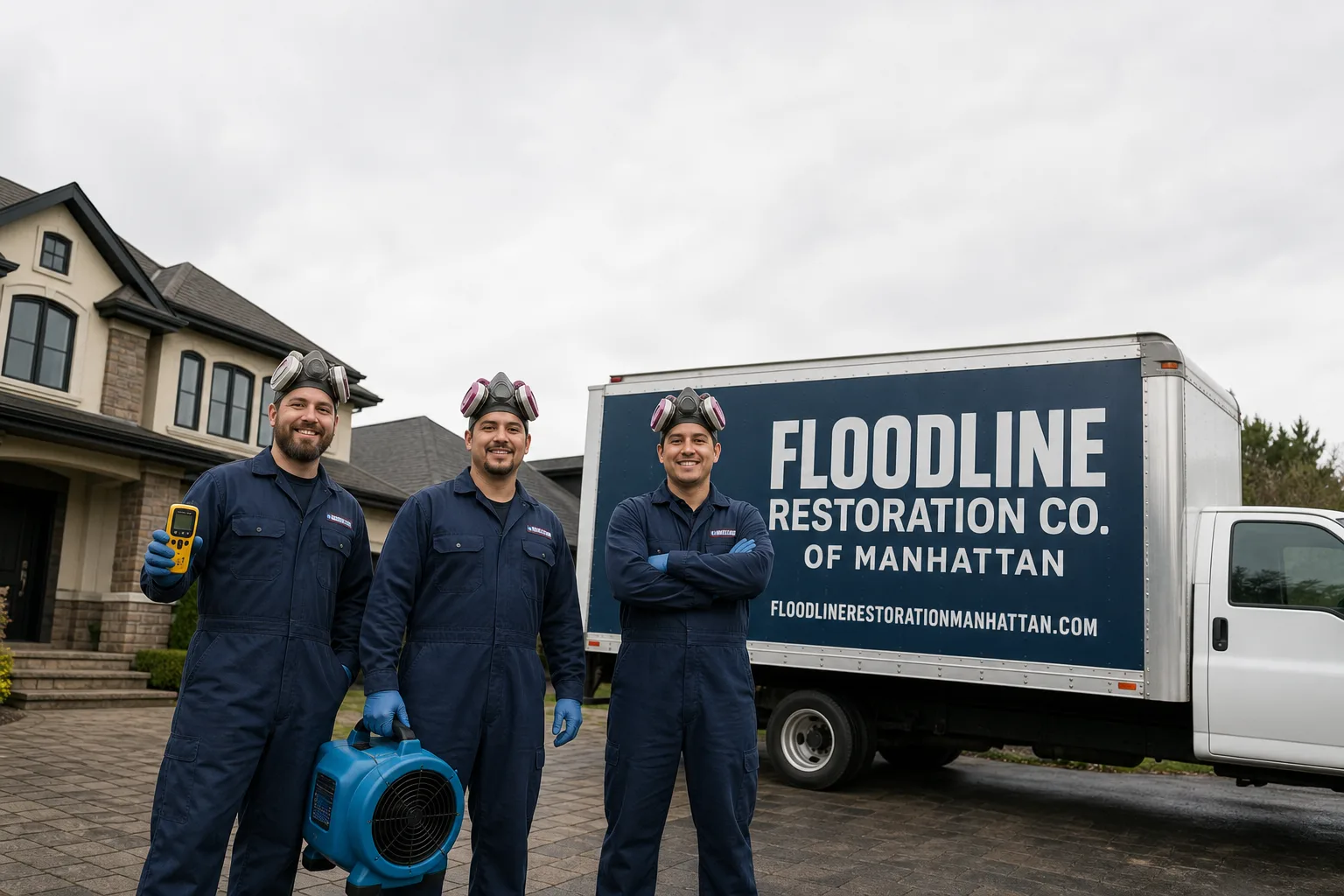
Free visual inspection and a written scope of work before any mitigation begins - photos, moisture readings, and drying logs go in your claim file
The scope we write is the scope we bill. Anything new gets shown to you, in writing, before we touch it.






 Before
 After
After Before
 After
After Before
 After
After24/7 Emergency Storm & Disaster Restoration in Midtown West
Storm and disaster restoration in Midtown West runs on a clock that doesn’t match anywhere else in New York. Call (917) 924-4221 and a live dispatcher answers, not a recording. A certified Floodline Restoration Co. crew is dispatched immediately from our New York City office, and most jobs have extraction running the same visit. The first hour decides whether you’re dealing with a contained cleanup or a month-long rebuild. We do free visual inspections, work directly with your insurance carrier, and put the scope in writing before any work starts.
Understanding Storm & Disaster Restoration Severity in Midtown West Properties
Midtown West doesn’t flood or blow apart the way most of New York does. The neighborhood splits into three building stocks that each fail differently. Hell’s Kitchen’s pre-war tenements and walk-ups, mostly 1900s to 1930s, hide cast-iron plumbing and one-pipe steam systems inside shared wall cavities with no as-built drawings and no unit-level shutoffs. Hudson Yards luxury high-rises fail like engineered systems: sensors trip, building management gets alerts, and water moves through modern chases. The mid-century hotel towers in between fail like both, and under revenue pressure. We categorize water the same way every time: Category 1 is clean supply water, Category 2 carries contaminants from radiators or washing machines, Category 3 is sewer or Hudson River water that requires containment and full disinfection. In older Midtown West buildings, what starts as a Category 2 radiator leak becomes a structural drying job through lath-and-plaster ceilings, often across multiple floors. Moisture mapping with thermal imaging finds what the eye misses behind uncharted wall chases. Without it, crews stop at visible drywall while the real damage feeds hidden cavities for weeks.
Why Midtown West Property Owners Choose Floodline Restoration Co. of Manhattan
- 45-minute response commitment for emergency calls anywhere in the Midtown West area. We dispatch from our Manhattan office and crews know the streets, the building supers, and the loading-dock access points.
- A real person answers 24/7. No phone tree, no call center. A live dispatcher picks up at 2 a.m. during a nor’easter and a certified crew reaches the job the same visit.
- IICRC-certified crews trained to WRT, FSRT, and AMRT standards, plus RIA and IFA protocols. Background-checked, uniformed technicians on every job.
- Free visual inspection with moisture readings and a written scope before work starts. You know the number before we touch a wall.
- Direct insurance billing, so you never play messenger between Floodline and your carrier. We document from the first hour and send adjusters line-item scopes they understand.
- One team from extraction to reconstruction. The same certified crew that reads the moisture map on day one handles daily readings, hands you the drying log, and rebuilds what needs rebuilding. No mid-job handoff, no inherited crew.
Our Storm & Disaster Restoration Process
Inspection & Assessment
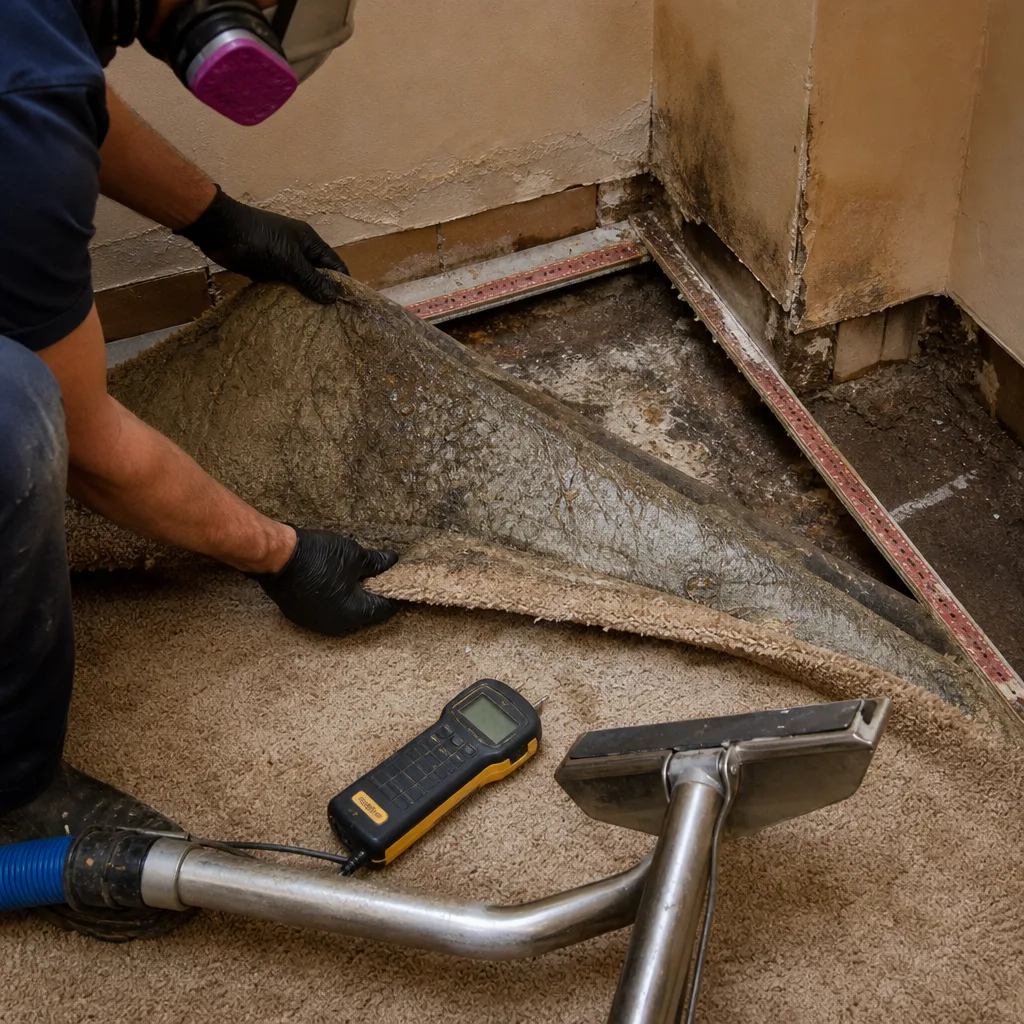
We walk the loss with thermal imaging cameras, hygrometers, and moisture meters. For Midtown West storm work, that means mapping water migration through shared wall cavities in Hell’s Kitchen tenements and checking sub-grade moisture near Hudson River piers. The scope is written, priced, and agreed before work begins.
Extraction & Stabilization
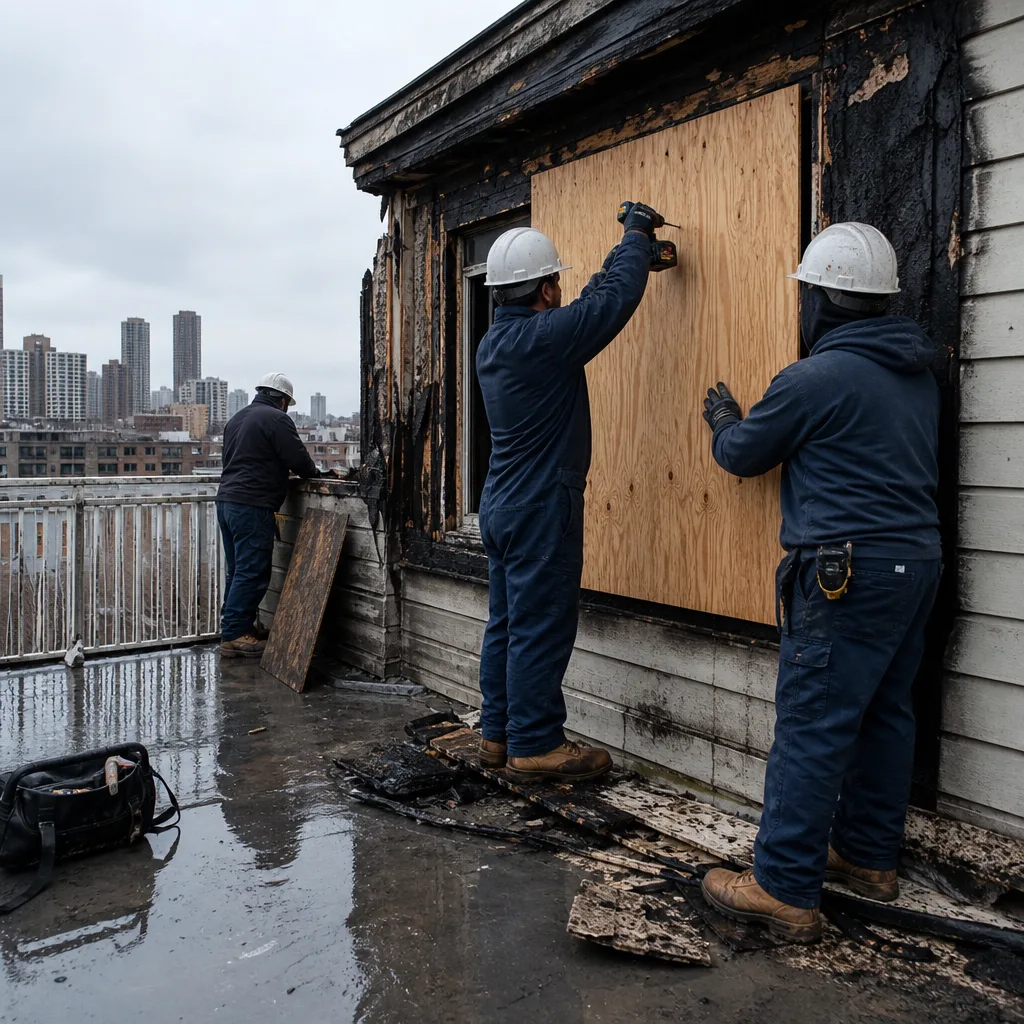
Water comes out first. Dri-Eaz extractors pull standing water while crews contain the affected area to stop cross-contamination. Where wind damage has breached windows or roofing, emergency board-up and roof tarping happen in the same visit so the building envelope holds through the storm.
Drying & Dehumidification
Phoenix and B-Air dehumidifiers and XPOWER air movers go in on a moisture map, not a guess. We take daily readings and log them until the dry standard is met. Pre-war lath-and-plaster dries slowly; we know which cavities need injection drying with Injectidry and which need opening.
Cleaning & Sanitization
Category 2 and Category 3 water both leave contaminants behind. We clean and disinfect affected surfaces, HEPA-vacuum framing and cavities, and run air scrubbers where airborne particulate is a concern. In occupied hotel floors, this happens around guests, not in an empty building.
Storm-Specific Treatment
Wind-driven rain and flooding bring debris, sewage, and materials that standard water jobs don’t. Debris removal, antimicrobial application, and structural drying of exterior wall assemblies are scoped line by line. We log everything for your carrier and keep the moisture log in your hands.
Repairs & Restoration
When the building is dry, the same crew rebuilds. Drywall, plaster, flooring, trim, paint. The 90-Day Done Right Promise covers every phase in writing. If it’s not done right, we make it right, no paper war and no arguing.
Need Emergency Storm & Disaster Restoration in Midtown West Now?
Crews minutes away, answering live 24 hours a day. The sooner we start, the less it costs.
Working With Your Insurance Company
We’ve been in enough Midtown West losses to know that the insurance conversation starts before the first extraction. Floodline Restoration Co. documents from hour one: photos room by room, moisture readings, drying logs, and a detailed line-item scope of work. We use industry-standard estimating so your adjuster recognizes every line. Direct coordination with your carrier means you don’t spend days on hold. We send documentation as we find it, not in one pile at the end. For hotel properties around Times Square, we also provide the loss-of-use documentation carriers need for business-interruption claims.
What We Provide Your Insurer
- Thorough documentation of the loss
- Photos of all damage, room by room
- Moisture readings and drying logs
- A detailed, line-item scope of work
- Direct coordination with your carrier
Built for Midtown West’s Loss Calendar
Storm and disaster work in Midtown West follows a year that New Yorkers know by heart. January deep freezes snap supply lines in Hell’s Kitchen pre-war buildings where original cast-iron risers sit in uninsulated exterior walls. February and March bring freeze-thaw cycles that push water into foundation cracks and test the basement waterproofing of buildings near the Hudson River’s former industrial piers. Spring thaw seeps into sub-grade storage and mechanical rooms, where elevated water tables west of Tenth Avenue turn routine seepage into Category 3 backups. Summer thunderstorms flash-flood low-lying intersections and overwhelm aging combined sewers, sending street water into basement entries. Then comes nor’easter season: wind-driven rain breaches old roof membranes and window flashing, and the hotel corridor between Eighth and Seventh Avenues runs crews around occupied guest floors. Every season has a signature loss. We’re ready for all of them.
Storm & Disaster Restoration Across Midtown West’s Neighborhoods
We work the whole of Midtown West, and the loss patterns change block by block. Hell’s Kitchen, from West 34th to West 59th between Eighth Avenue and the Hudson, is tenement country: one-pipe steam systems, shared wall cavities, and no unit-level shutoffs. A radiator valve failure in a six-story walk-up on West 48th Street isn’t a one-unit job. It’s a four- or five-floor extraction. The Times Square corridor, clustered around Seventh and Broadway, is hotel territory where every hour of downtime is lost revenue and crews work around occupied guests. Hudson Yards, from West 30th to West 34th west of Tenth Avenue, is new construction with engineered drainage and sophisticated building-management systems; failures there are less frequent but move fast through modern ceiling plenums. The Garment District edges, around West 38th and Eighth, mix aging commercial lofts with cast-iron drains and heavy roof equipment. A flooding event near the Javits Center or along the West Side Highway carries Hudson River water-table characteristics that dry slower than inland blocks.
Specialized Storm & Disaster Restoration Services We Offer in Midtown West
Storm Damage Cleanup
After wind, rain, or a nor’easter, Midtown West buildings hold debris and saturated materials that need removal before drying can start. We clear the affected area, remove damaged drywall and insulation, and stabilize what remains. In occupied hotel floors, cleanup happens on a schedule that respects guests and fire-egress rules.
Flood Damage Restoration
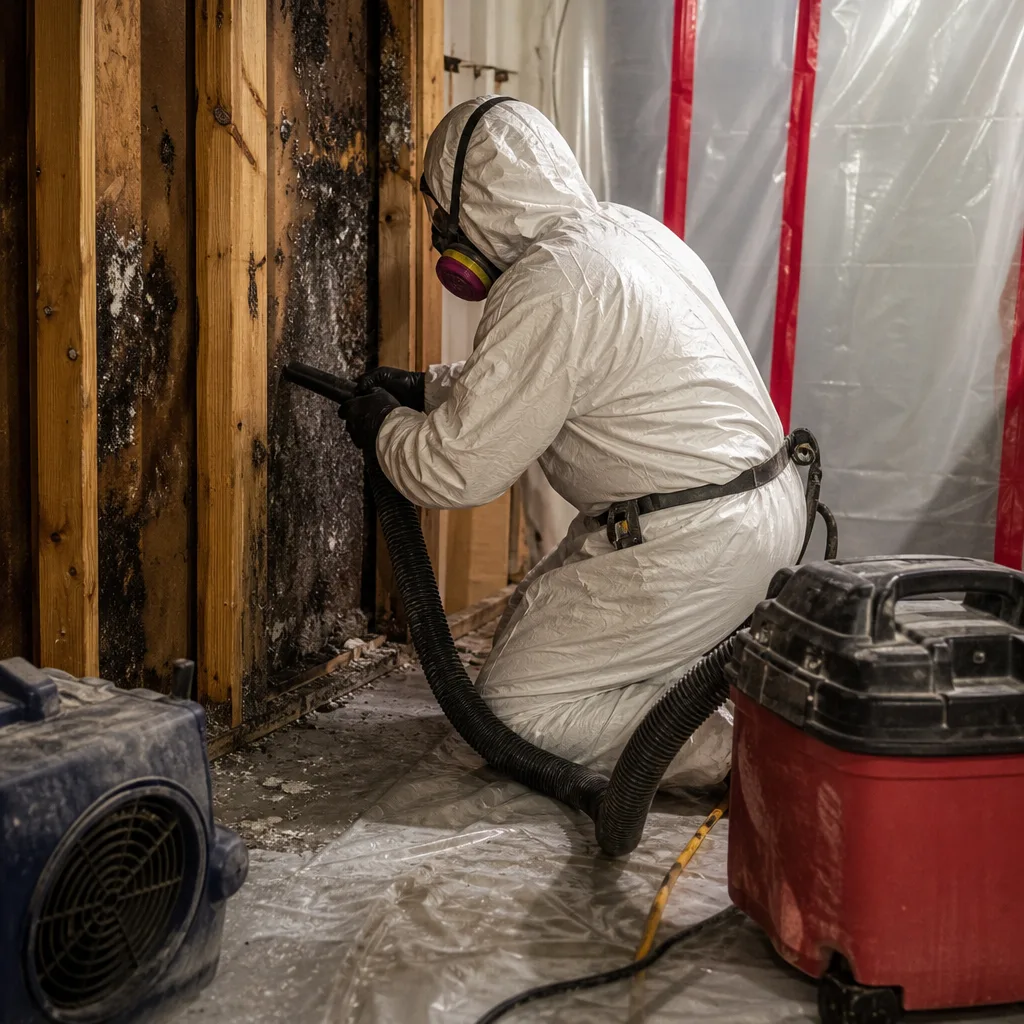
Midtown West floods from two directions: storm water at street level and Hudson River-influenced groundwater below grade. Both need Category 3 handling when sewage or river water is present. We extract, contain, disinfect, and dry, with moisture logs handed to you and your carrier. Dri-Eaz extractors and Phoenix dehumidifiers do the heavy work.
Emergency Board-Up
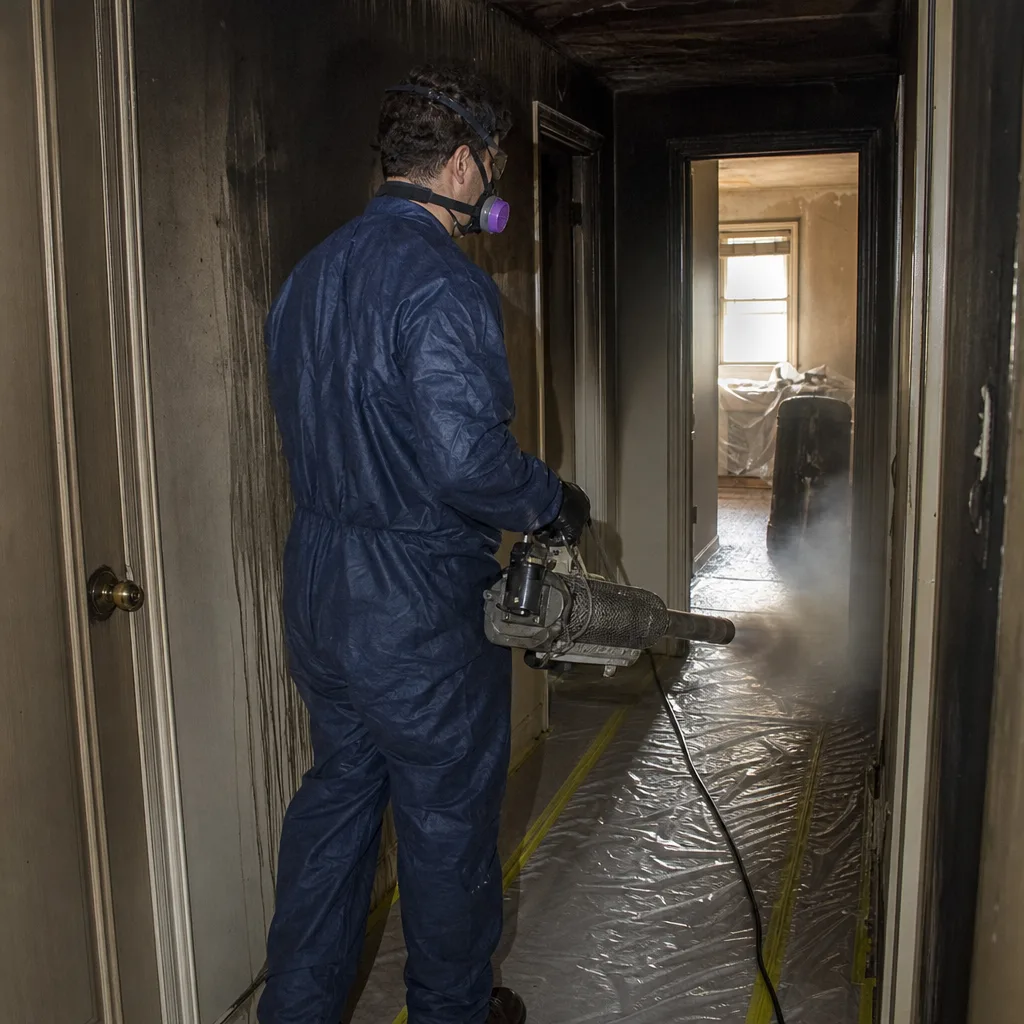
Broken windows and breached doors during a storm leave buildings open to weather and entry. We board up with plywood and seal the openings same-day across Midtown West, from Hell’s Kitchen storefronts to Hudson Yards residential towers. This is stabilization, not a repair; we come back for the finished work after the storm passes.
Roof Tarping
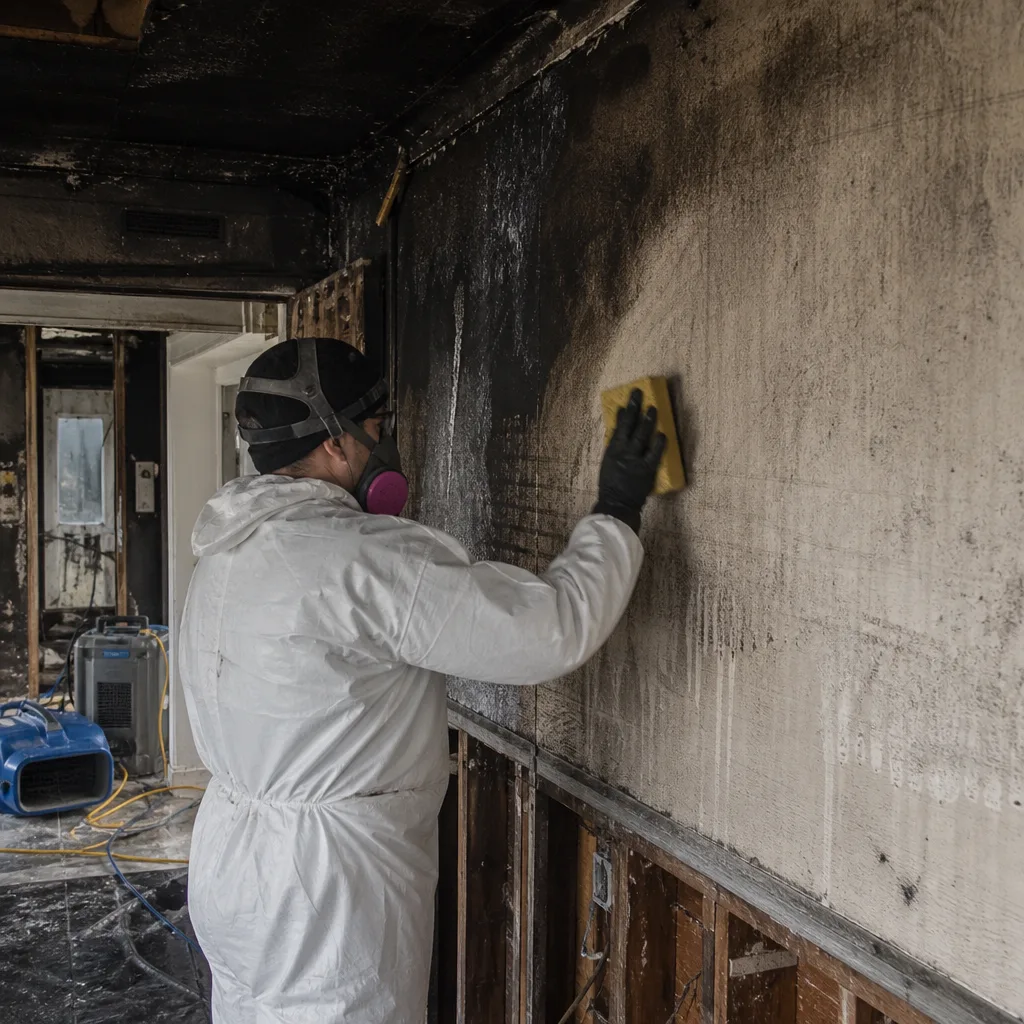
Wind-driven rain gets through old roof membranes fast, especially on mid-century hotel towers and pre-war apartment roofs that haven’t been replaced in decades. We tarp damaged roof sections with heavy-duty material, secured against Manhattan winds. Tarping stops active intrusion so drying can begin inside.
Debris Removal
Storm debris blocks entrances, loading docks, and fire egress. We remove structural debris, fallen building materials, and storm-deposited solid waste. For Midtown West hotel loading docks and Hell’s Kitchen walk-up stoops, fast debris clearing is a safety and insurance requirement, not a nicety.
What happens when you call
- 1
A real person answersNo phone trees - you reach a local pro.
- 2
You get an upfront price rangeHonest numbers before anyone is dispatched.
- 3
A background-checked tech heads outLicensed & insured, dispatched right away.
- 4
You approve before work beginsNothing starts until you say go.
Storm & Disaster Restoration Costs in Midtown West, NY
Honest numbers for Midtown West storm and disaster work. Emergency board-up typically runs $450 to $1,200 depending on the number of openings and the building’s street exposure. Roof tarping on a standard Hell’s Kitchen rowhouse roof runs $800 to $2,000; mid-century hotel towers and larger commercial roofs run $3,000 to $9,000 for a secured tarp job because of height and access requirements. Flood damage restoration on a single apartment in a Hell’s Kitchen tenement typically runs $3,500 to $12,000 depending on how many floors took water and whether wall cavities need opening. Storm cleanup with debris removal in a hotel corridor floor can run $15,000 to $60,000 because crews work around occupied guests and the building’s fire-safety system stays live. The free visual inspection gets you a written scope with exact numbers before you commit. Insurance covers most storm and flood restoration when the cause is sudden and accidental; we bill your carrier directly.
We Also Serve Cities Near Midtown West
Our crews cover Midtown West and the surrounding area daily, including Fairview, Harrison, East Bronx, and Hunts Point. Same dispatch, same live answer, same written scope. If you’re just across the line, call (917) 924-4221 and we’ll route the nearest certified crew.
Serving Midtown West, NY - Our Local Coverage Area
We’re based in the Midtown West area and know this community well. Use the map below to see our service coverage - if you’re nearby, we can almost certainly help.
Midtown West Storm & Disaster Restoration Questions, Answered
Why do Midtown West hotel damage jobs cost so much more than residential water damage in Hell’s Kitchen?
Because hotel restoration around Times Square carries a revenue-per-room-per-hour urgency model. A flooded floor during peak occupancy can cost a property six figures in lost room nights, so crews must execute full extraction and drying around occupied guests on a 24/7 schedule rather than shutting a building down. That means more precision, more coordination with building management, and tighter documentation for business-interruption claims. Residential tenement work is slower and simpler logistically, which shows in the price. Call (917) 924-4221 for a job-specific written scope.
What makes storm damage restoration different in Midtown West’s pre-war tenements versus Hudson Yards high-rises?
Tenements have no as-built drawings, no unit-level shutoffs, and shared wall cavities that hide water migration. One failed radiator on an upper floor becomes a four- or five-floor extraction. Hudson Yards high-rises have engineered drainage, building-management alerts, and modern chases that move water predictably. The work in tenements is investigative and labor-heavy; in high-rises it’s faster but more coordinated with building systems. Both need moisture mapping to avoid missing hidden damage.
How quickly do you respond to a burst steam radiator in a Hell’s Kitchen tenement during a nor’easter?
We commit to a 45-minute response for emergency calls in Midtown West, including nor’easter nights. A live dispatcher answers immediately, and the crew moves while the water is still running. In a pre-war one-pipe steam system, the time between valve failure and building-super shutoff is when most cross-floor damage happens. Faster extraction means less mold risk in wet plaster and lath.
Do you handle category 3 flood water from Midtown West basement backups near the Hudson River?
Yes. Category 3 water from basement backups and Hudson River-influenced groundwater carries sewage and contaminants. We contain, extract, disinfect, and dry under containment with air scrubbers. This is not a mop-up job; it’s a sanitation and structural drying job. We handle it daily in buildings west of Tenth Avenue.
Can you do emergency board-up and roof tarping on Midtown West mid-century hotel towers during a storm?
Yes. We board up and tarp mid-century hotel towers, including height-access work, while the storm is still active. Crews work around occupied guests and building fire systems. Tarping and board-up stop active intrusion so drying can begin immediately, which is the difference between a contained claim and a six-figure loss.
How long does drying and remediation take after a Midtown West storm event?
Most residential drying in Hell’s Kitchen tenements takes 3 to 7 days depending on how many building layers took water and whether lath-and-plaster needs opening. Hotel corridor floors with concrete and modern finishes can dry in 2 to 5 days with the right air movement and dehumidification. Daily moisture readings tell us when the dry standard is met; we don’t leave until the log says done.
Can we stay in the home during storm damage restoration?
It depends on the category of water and the extent of damage. Category 1 clean water from a burst supply line usually allows staying in unaffected rooms. Category 2 or Category 3 water requires containment and may restrict access. We’ll tell you plainly at the free inspection what’s safe, and we write it in the scope.
What should we do in the first 30 minutes after storm damage in Midtown West?
Call (917) 924-4221. Then shut off the water supply if you can do so safely, move valuables out of standing water, and document photos of the damage. Don’t run electrical equipment in wet areas and don’t attempt DIY extraction on Category 3 water. The faster we start, the less they pay and the less gets torn out.
Written by Curt Bowman, Owner at Floodline Restoration Co. of Manhattan, serving Midtown West since our founding in 2010.