
Free visual inspection and a written scope of work before any mitigation begins - photos, moisture readings, and drying logs go in your claim file
The scope we write is the scope we bill. Anything new gets shown to you, in writing, before we touch it.






 Before
 After
After Before
 After
After Before
 After
After24/7 Emergency Storm & Disaster Restoration in Northwest Yonkers
Storm damage in Northwest Yonkers moves fast, and so do we. Floodline Restoration Co. answers live at (917) 924-4221 around the clock, every day of the year. A certified crew can be staged in the Nepperhan Valley within 45 minutes of your call. The first hour after a storm determines whether you’re dealing with a cleanup or a full gut-and-rebuild. We start with a free visual inspection, set containment before contaminated water spreads through a shared building, and get extraction running the same visit. When heavy rain hits Northwest Yonkers, we’re already on the way.
Understanding Storm & Disaster Restoration Severity in Northwest Yonkers Properties
Northwest Yonkers housing stock runs dense and old. Most of the residential buildings along Nepperhan Avenue and the side streets were built between 1910 and 1945. Brick and wood-frame two-to-six family buildings with original cast-iron drain lines and galvanized supply pipes. When stormwater enters those buildings, the work is rarely contained to one unit. A category 2 flood carrying silt and street runoff through a shared basement can wick laterally through a party wall into the adjacent apartment, which means moisture mapping has to extend beyond the visible water line. We use thermal imaging and hygrometers to find moisture inside lath-and-plaster walls, under flooring, and along sill plates. Structural drying in these buildings is slower than in newer construction because the old plaster holds water, and the heavy clay soils around the foundations are slow to release it. Lead paint is common here. If a wall built before 1978 is opened, lead-safe containment and testing happen before drying proceeds. Skip that step and the job gets red-tagged mid-mitigation. We don’t skip it.
Why Northwest Yonkers Property Owners Choose Floodline Restoration Co. of Manhattan
- 45-minute response commitment to any Northwest Yonkers address, with a live dispatcher tracking the crew’s route.
- 24/7 live answer. A person picks up at 2 a.m. Not a recording, not a callback. Call (917) 924-4221 and you’ll talk to someone who can dispatch.
- IICRC-certified crews trained to WRT and ASD standards, background-checked, uniformed, and working under the 90-Day Done Right Promise, in writing.
- Free visual inspection before any work is scoped. We tell you what’s actually needed, with a line-item scope you approve before we start.
- Direct insurance billing. We document everything, send it to your carrier, and talk to the adjuster so you don’t have to play messenger.
- One team from extraction to reconstruction. The same crew that reads the moisture map on day one dries, treats, and rebuilds what needs rebuilding.
Our Storm & Disaster Restoration Process
Inspection & Assessment
We walk the full affected area, including the unit next door when a party wall is in play. Thermal imaging finds hidden saturation. You get a straight read on category of water, affected materials, and the scope that insurance will need to see.
Extraction & Stabilization
Standing water comes out first with truck-mounted and portable extractors. If the storm has opened the building envelope, we board up and tarp before anything else. The goal is stopping active intrusion in the first visit.
Drying & Dehumidification
Dri-Eaz dehumidifiers and Phoenix air movers are placed to a drying plan, not scattered randomly. We log moisture readings daily and don’t call it dry until the numbers meet the IICRC dry standard.
Cleaning & Sanitization
Stormwater is category 3 once it carries street runoff and sewage. We apply antimicrobial treatments to affected framing and flooring, HEPA-vacuum surfaces, and dispose of unsalvageable materials under containment.
Specialty Storm Treatment
In Northwest Yonkers, that means lateral moisture checks through party walls, lead-safe plaster removal on pre-1978 buildings, and assessment of old cast-iron drain stacks that often feed the intrusion.
Repairs & Restoration
We rebuild what the storm took. Drywall, flooring, trim, paint. The same crew that did the drying does the reconstruction. The 90-Day Done Right Promise covers the whole job, in writing.
Need Emergency Storm & Disaster Restoration in Northwest Yonkers Now?
Crews minutes away, answering live 24 hours a day. The sooner we start, the less it costs.
Working With Your Insurance Company
Insurance claims after a Northwest Yonkers storm are won or lost on documentation. We start building the file the day we arrive: photographs of every affected room, moisture readings with dates and equipment placement, and the category of water involved. Our estimates are written in the line-item format carriers expect. We send the file to your adjuster directly and answer their questions so you don’t have to. If the claim requires a second look, our project lead is on the call. The point is a fair settlement, not a fight. We’ve been doing this for over 42 years and we know what a solid claim file looks like.
What We Provide Your Insurer
- Thorough documentation of the loss
- Photos of all damage, room by room
- Moisture readings and drying logs
- A detailed, line-item scope of work
- Direct coordination with your carrier
Built for Northwest Yonkers’s Loss Calendar
Northwest Yonkers floods on a schedule. July and August bring intense afternoon thunderstorms that drop two-plus inches in under an hour. The bowl-shaped Nepperhan Valley funnels runoff from steep hillsides into the partially culverted Saw Mill River system. When that system is overwhelmed, the flooding is rapid and simultaneous across multiple low-elevation addresses. January deep freezes burst galvanized supply lines in uninsulated 1920s basements. Spring thaw saturates the heavy clay soils and seeps through fieldstone foundations. Nor’easters bring wind-driven rain and standing water that takes days to recede. We track the same forecast thresholds you do. After any storm forecast above two inches, our crews pre-stage equipment along Nepperhan Avenue because we know which buildings will call. This isn’t a sales tactic. It’s what forty-two years in this valley teaches you.
Storm & Disaster Restoration Across Northwest Yonkers’s Neighborhoods
The flood risk in Northwest Yonkers isn’t evenly spread. The low ground along Nepperhan Avenue near the old Saw Mill channel floods first and fastest. The 1920s three-families there sit below grade, with basement entries that turn into chutes for runoff. Up the hill toward the Yonkers-Hastings line, the losses shift: more wind damage to roofs and siding, fewer basement floods. The brick row houses around Ashburton Avenue handle wind fine but struggle with roof drainage, especially when flat rubber roofs hold pooled water and find every seam. Over by the Glenwood station, the older wood-frame buildings show damage in the shared attic spaces and around chimney flashings. Each pocket of Northwest Yonkers has its own failure pattern, and our crews know them block by block.
Specialized Storm & Disaster Restoration Services We Offer in Northwest Yonkers
Storm Damage Cleanup
After the water recedes, the work begins. We remove storm debris, wet insulation, damaged drywall, and ruined flooring under containment. Lead-safe protocols apply on any pre-1978 building. We haul the debris so you don’t have to look at it. Cleanup is the first phase, done right.
Flood Damage Restoration
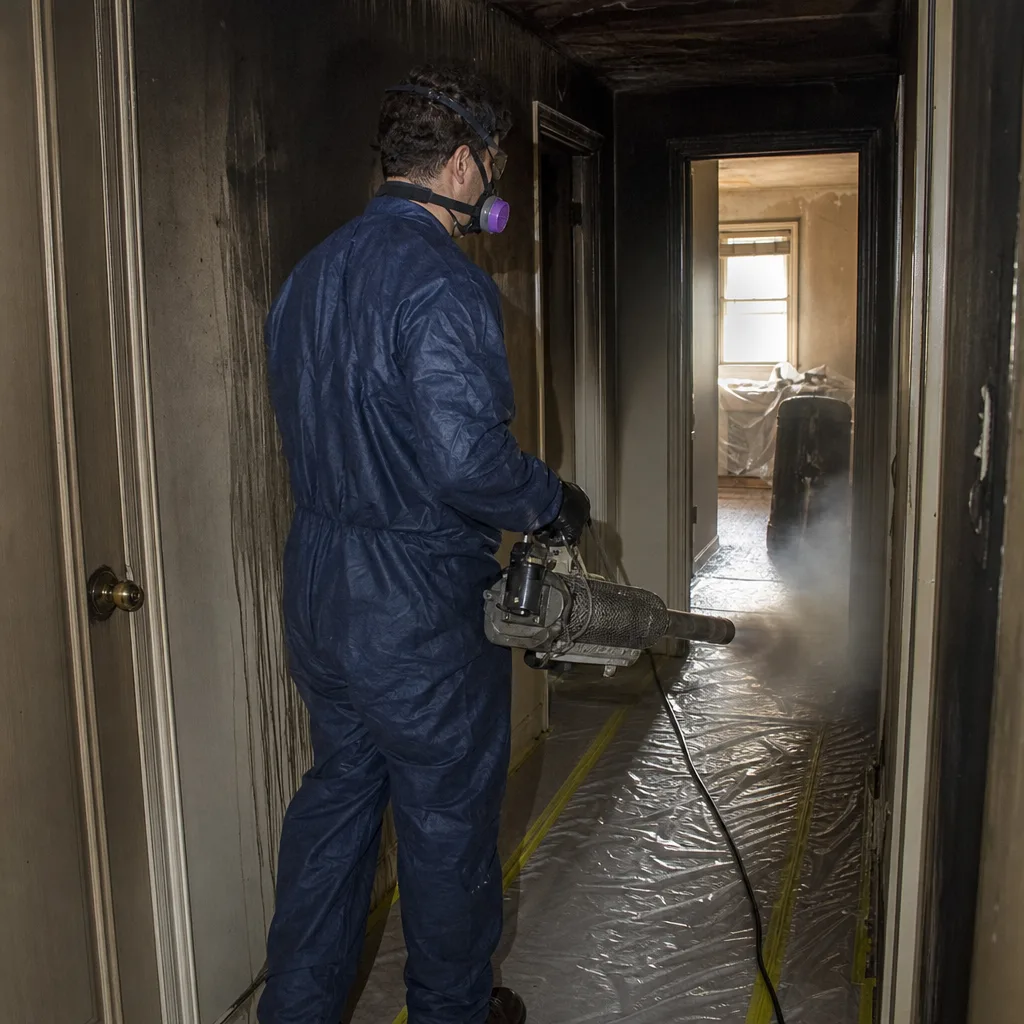
Flood water in Northwest Yonkers is rarely clean. Once it runs down Nepperhan Avenue, it’s carrying whatever was in the street. We treat it as category 3 unless testing says otherwise. Extraction, antimicrobial application, structural drying, and rebuild, all from one crew. The recurring-flood buildings along the old Saw Mill channel get extra attention at the foundation level because the water will come back. We also identify permanent waterproofing upgrades so the next flood doesn’t do the same damage.
Emergency Board-Up
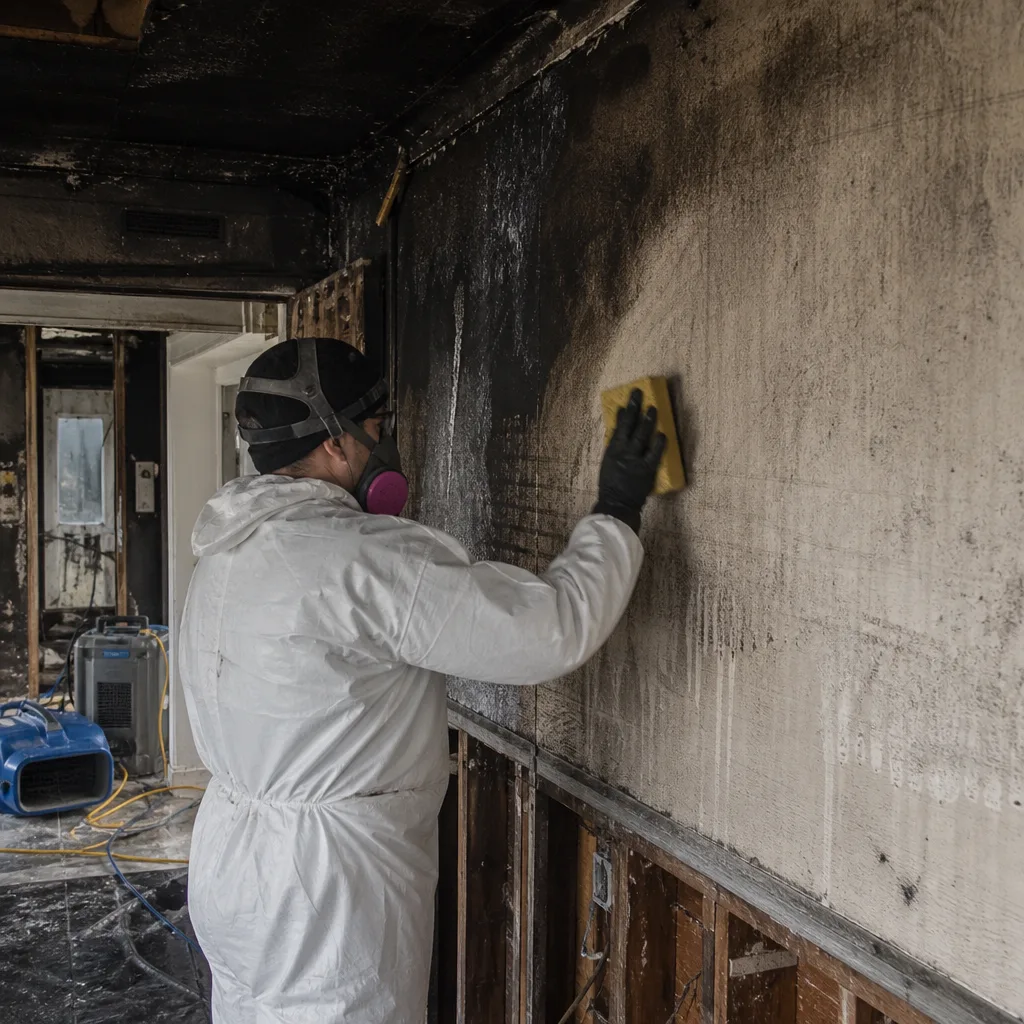
A broken window or torn-off door leaves a Northwest Yonkers building open to looting, rain, and vermin. We board up openings the same day we’re called, using plywood cut to fit and secured properly. For multi-family buildings, we prioritize common entries and first-floor access.
Roof Tarping
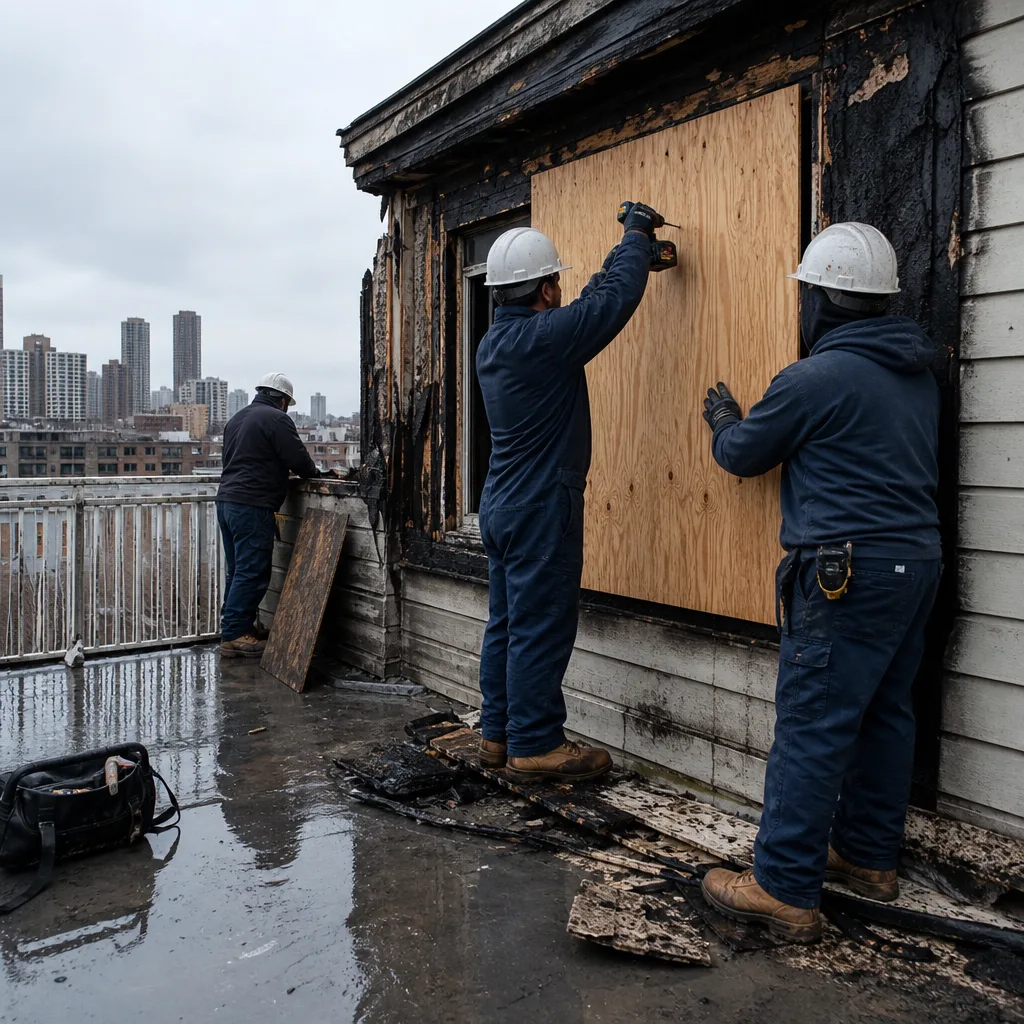
Wind-driven nor’easters tear flat-roof membranes and lift shingles on the older frame houses. A tarp stops the active leak so the interior drying can start. We install tarps that stay put through follow-up storms, not the thin plastic that blows off in a day.
Debris Removal
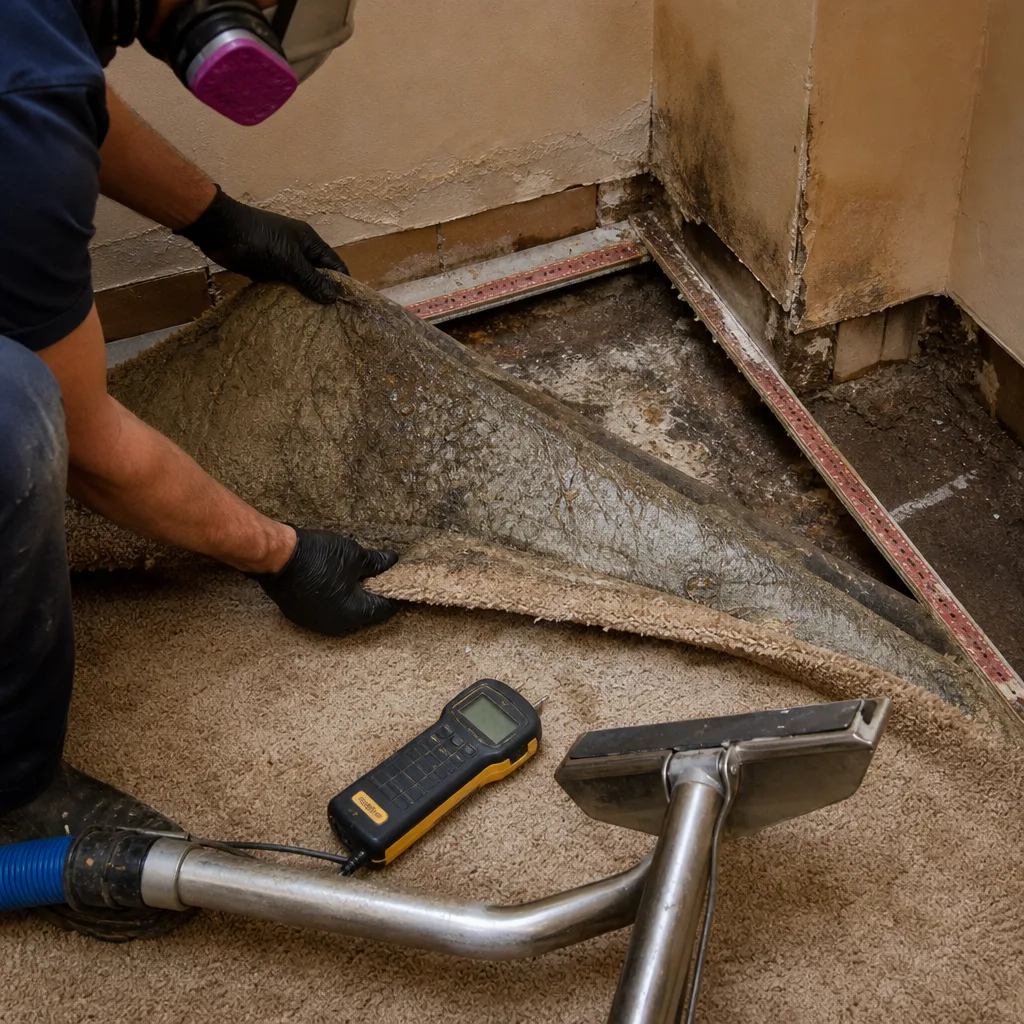
Downed branches, damaged fences, roof tiles, and storm-carried trash. We clear it, haul it, and document it for the claim. If the debris is contaminated with floodwater, it’s handled as category 3 waste, bagged and sealed before it leaves the property.
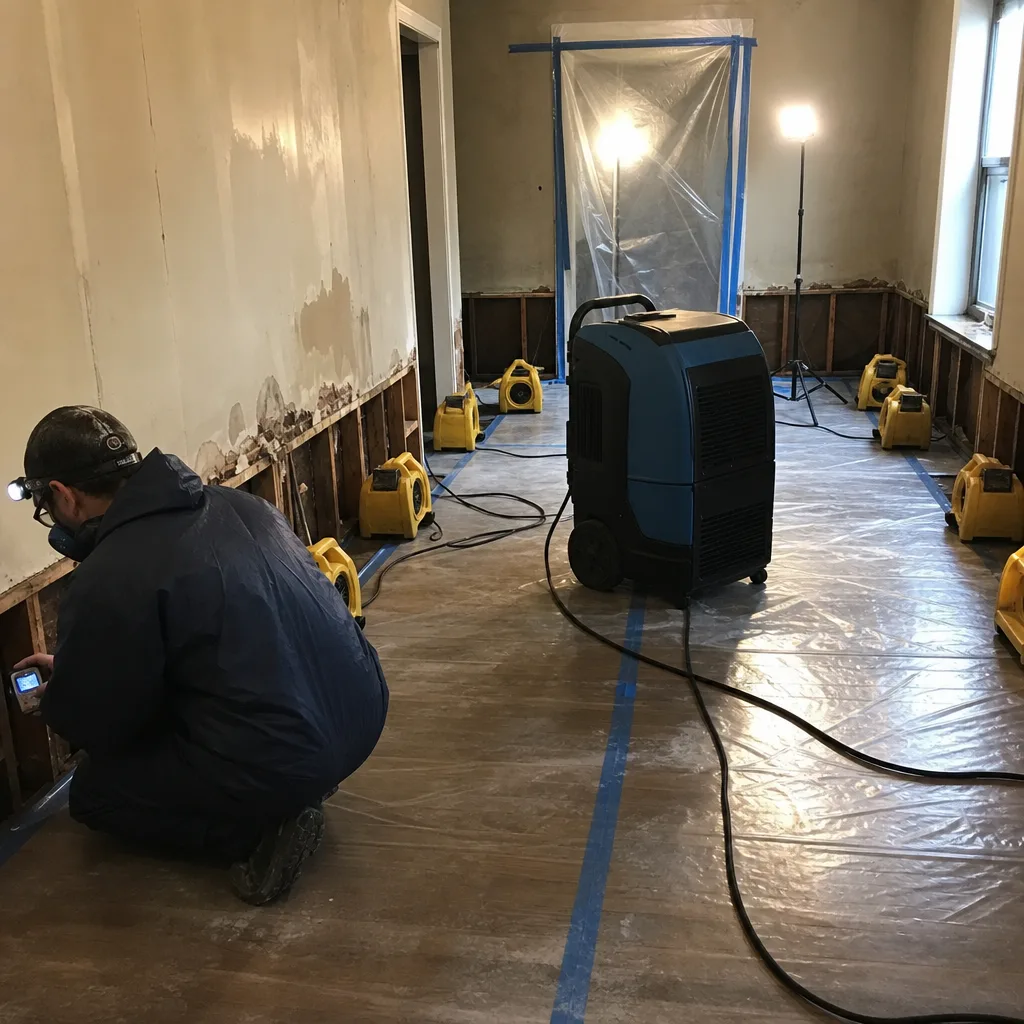
What happens when you call
- 1
A real person answersNo phone trees - you reach a local pro.
- 2
You get an upfront price rangeHonest numbers before anyone is dispatched.
- 3
A background-checked tech heads outLicensed & insured, dispatched right away.
- 4
You approve before work beginsNothing starts until you say go.
Storm & Disaster Restoration Costs in Northwest Yonkers, NY
Straight numbers. A basic storm cleanup with extraction and temporary drying in a Northwest Yonkers basement typically runs $2,800 to $6,500. Full flood damage restoration including removal of saturated drywall, lead-safe containment, drying to standard, and rebuild usually lands between $9,000 and $22,000. Emergency board-up runs $450 to $1,400 depending on openings and access. Roof tarping is $600 to $1,800 for a standard flat roof on these older buildings. A single-unit flood that has wicked into a neighboring party wall will be toward the top of every range, because you’re drying two units, not one. The good news is insurance covers most of this when the documentation is solid. We provide a free visual inspection and a written scope before any work starts. No surprises on the bill.
We Also Serve Cities Near Northwest Yonkers
Our crews cover the surrounding area regularly: Fairview, Harrison, East Bronx, and Hunts Point. If you’re a property owner with buildings in multiple neighborhoods, one call covers all of them.
Northwest Yonkers Storm & Disaster Restoration Questions, Answered
Why does my Nepperhan Avenue basement flood every time it rains more than 2 inches, even when the street drains aren’t visibly backed up?
The street drains don’t matter much when the Saw Mill River system is overwhelmed. Northwest Yonkers sits in a bowl-shaped valley. Runoff from the hillsides funnels into the partially culverted river channel, and when that backs up, groundwater and stormwater find the path of least resistance: your basement. The clay soil holds the water and releases it slowly, so the flooding is both sudden and prolonged. This is a structural fact of the Nepperhan Valley, not a leak you can caulk. Permanent mitigation means waterproofing at the foundation level and, in some buildings, installing backflow prevention on the drain line. Call (917) 924-4221 and we’ll assess what’s actually happening under your building.
How do you handle a category 2 flood in one unit when the water has already seeped into the adjacent unit’s party wall?
We treat it as a multi-unit job from the first inspection. Our crew sets containment in the flooded unit, then moisture-maps the party wall from both sides. If readings show lateral wicking, we open the wall in the adjacent unit under lead-safe protocols, dry both sides, and treat the framing. The carrier needs to know it’s a shared building with a shared loss. We document everything for both unit owners and coordinate directly with insurance. Ignoring the adjacent unit guarantees mold through the common wall in three to four weeks.
My 1930s brick row house flooded and the contractor started tearing out drywall - but now the city stopped work over lead paint. What went wrong?
The contractor skipped lead testing. Most of Northwest Yonkers’s housing stock predates the 1978 lead paint ban. Any disturbance of painted surfaces in those buildings requires lead-safe work practices and, in many cases, clearance testing. When a code inspector finds paint dust on containment-negative surfaces, they can red-tag the site until it’s professionally abated. That’s a mid-mitigation halt, which means the drying stops too. We test before we open walls. It adds a step. It also keeps the job moving.
Why did you pre-stage drying equipment outside our building before the storm even stopped?
Because we knew the water was coming. The same 10 to 12 low-lying multi-family buildings along the old Saw Mill channel flood together after any storm exceeding two inches. Waiting until the rain stops means losing 24 to 48 hours to flooded streets, double-parked side roads, and saturated entrances. Pre-staging equipment at the curb before the water even recedes means we’re extracting within minutes of access, not hours. In this valley, the fastest crew wins. That’s why we track the same two-inch forecast threshold the old-timers do.
What does ‘recurring-flood mitigation’ actually mean for a basement that has flooded three times in two years?
It means addressing the geology, not just the water. We assess how water is entering: through the fieldstone foundation, up through the slab, or back through the floor drain. Then we recommend fixes that have teeth: French drains or interior perimeter drainage tied to a sump pump, backflow prevention valves on the sewer lateral, foundation waterproofing, and in some multi-family buildings, shared-drain-stack replacement. The point is changing the outcome for the next storm. Not the same mop and fan.
How fast can a crew actually get to my Northwest Yonkers address?
Within 45 minutes in normal conditions. A live dispatcher answers the phone 24/7 at (917) 924-4221 and tracks the nearest crew. During active storm events across the Nepperhan Valley, we stage crews along Nepperhan Avenue in advance, so response is often faster than 45 minutes. You will never leave a voicemail and wait for a callback.
Will my homeowner’s insurance cover storm and flood damage in Northwest Yonkers?
Storm damage, wind damage, and water from a burst pipe are typically covered under standard homeowner’s policies. Flooding from a rising Saw Mill River or groundwater intrusion is a separate flood policy, which most homeowners in the Nepperhan Valley have through NFIP or a private carrier. We document the exact source and category of water so your claim is filed under the right coverage. Our team talks directly with your adjuster and sends the evidence they need. Call for a free inspection and we’ll tell you which route applies.
What should I do in the first 30 minutes after stormwater enters my Northwest Yonkers home?
Call (917) 924-4221 first, before moving anything. Then, if it’s safe: shut off power to the affected area, move valuables upstairs, and avoid walking through standing water if there’s any chance it’s carrying sewage or touching live wiring. Do not try to pump the basement yourself. Do not open walls. Do not start ripping up carpet. The water in Northwest Yonkers storm events is usually category 2 or 3, which means it’s not clean. Let a certified crew handle extraction and set containment. We’ll be there within 45 minutes.
Serving Northwest Yonkers, NY - Our Local Coverage Area
We’re based in the Northwest Yonkers area and know this community well. Use the map below to see our service coverage - if you’re nearby, we can almost certainly help.
Storm & Disaster Restoration in Northwest Yonkers: What a Crew Actually Sees
Along Nepperhan Avenue and the adjacent streets, the old Saw Mill River channel runs below ground, culverted and mostly forgotten until it backs up. When a nor’easter or summer storm drops more than two inches on the valley, the same 10 to 12 low-lying multi-family buildings flood together. Water rises from the basement floors and pushes through old cast-iron drain stacks. Because these buildings share party walls, water doesn’t respect unit lines. It wicks through plaster, along joists, and into the common stairwell. The buildings are brick and wood-frame, built from roughly 1910 to 1945, with pre-1978 lead paint on nearly every surface. Every significant mitigation job requires lead testing. Ignore that and a code inspector can stop the work mid-mitigation. Crews that don’t know this valley get caught by all of it: the sloping alley access, the double-parked side streets, the shared drains, the lead compliance. We know it because we work it constantly. Last August, after a nor’easter dumped over three inches on the Nepperhan Valley, we staged a Dri-Eaz LGR 2800i and four Phoenix axial air movers outside a 1920s three-family on Nepperhan Avenue before the basement even stopped filling. Once the water receded enough to enter, our crew set containment to isolate the category 2 floodwater before it hit the shared stairwell, then mapped moisture across all three foundation walls. Readings spiked at 28% on the party wall, confirming the adjacent unit’s old cast-iron drain stack was feeding the intrusion. We cut the wetted lath and plaster, ran drying logs for five days, and applied antimicrobial treatment to the sill plate. But the real win was catching the lateral spread before it became a three-unit pack-out. That’s what Storm & Disaster Restoration means here in practice. Not a generic dry-out. A specific, valley-aware response that accounts for shared walls, old lead paint, a buried river, and the fact that the same addresses call every storm season.
For homeowners across Northwest Yonkers, from the row houses off Ashburton Avenue to the frame buildings near Glenwood, the question isn’t whether the water will come. It’s whether the crew that shows up understands what they’re walking into. We do. Call (917) 924-4221 for a free estimate, any hour.
Written by Curt Bowman, Owner at Floodline Restoration Co., serving Northwest Yonkers with storm and disaster restoration for over 42 years.