

Free visual inspection and a written scope of work before any mitigation begins - photos, moisture readings, and drying logs go in your claim file
The scope we write is the scope we bill. Anything new gets shown to you, in writing, before we touch it.






 Before
 After
After Before
 After
After Before
 After
After24/7 Emergency Storm & Disaster Restoration in Plandome
Storm and disaster restoration in Plandome means responding to saltwater surge, nor’easter wind damage, and tidal flooding that hits this North Shore peninsula harder than almost anywhere else in Nassau County. When a storm pushes Manhasset Bay over its banks or drives rain through a compromised roof, every hour that passes compounds the damage. Call (917) 924-4221 and a live dispatcher answers, not a recording, at any hour. Our crews reach Plandome fast, perform a free visual inspection, and get extraction or stabilization running the same visit.
We run on a simple understanding: the first hour after water enters a 1920s Colonial or a 1950s Tudor in Plandome determines whether the horsehair plaster, old-growth white-oak flooring, and custom millwork survive. Floodline Restoration Co. of Manhattan has built our entire operation around answering the phone with a person and getting certified crews out the door while the damage is still spreading, not after it has set.
Understanding Storm & Disaster Restoration Severity in Plandome Properties
Storm damage in Plandome breaks into categories that matter more here than inland. Category 3 water, the kind that arrives with saltwater storm surge, carries bacteria, sewage, and marine contaminants. That water is not just wet. It is corrosive. The salt in Category 3 water attacks plaster keys, old-growth hardwood fasteners, subfloor connectors, and the custom millwork that gives Plandome homes their value. Freshwater flooding from a burst pipe is a drying problem. Saltwater intrusion is a drying problem plus a long-term corrosion problem, and treating it like the former guarantees hidden failures later.
Homes built between 1920 and 1950 in Plandome respond to storm damage differently than modern construction. Plaster-and-lath walls hold moisture in ways drywall does not, which means moisture mapping and structural drying protocols must account for material density, not just square footage. Soot from fire damage migrates through the cavities behind horsehair plaster far more aggressively than through sealed drywall assemblies. Moisture mapping with thermal imaging is non-negotiable here, because water travels behind plaster keys and along lath strips in patterns that visual inspection misses entirely.
Our technicians train to IICRC, RIA, and IFA standards, and they read the moisture map the same way a surgeon reads an imaging scan. The goal is to dry and restore what is original, not to gut a home that was built with materials you cannot buy off a shelf anymore.
Why Plandome Property Owners Choose Floodline Restoration Co. of Manhattan
- 45-minute response commitment. Live dispatch keeps a crew on the road to Plandome within minutes of your call, not hours. For storm surge and flood damage, that speed is the difference between drying plaster and replacing it.
- 24/7 live answer from a real person. Our dispatchers answer the phone at two in the morning. No automated trees, no voicemail. A human coordinates your crew and your timeline.
- Certified crews, real credentials. Our technicians hold IICRC certifications including WRT, FSRT, and AMRT designations, plus RIA and IFA training. They are background-checked and uniformed.
- Free visual inspection. We assess the damage on site and give you a written scope before any work begins. You know what you are paying for before we touch a wall.
- Direct insurance billing. We coordinate with your carrier, provide line-item documentation, and bill them directly. You are not playing messenger between Floodline and the insurance company.
- One team from extraction to reconstruction. The same certified crew that pumps the water out of your Plandome basement is the crew that rebuilds the wall and reinstalls the millwork. No mid-job handoff to a subcontractor you never met.
Our Storm & Disaster Restoration Process
Inspection & Assessment
We arrive and assess the full scope, using thermal imaging, moisture meters, and hygrometers to map where water or fire residue has traveled. For Plandome flood-zone properties, we also flag NFIP documentation requirements from the start.
Extraction & Stabilization
Standing water comes out first, using truck-mounted extraction units. Then we stabilize the structure: emergency board-up, roof tarping, and shoring where the storm compromised the envelope.
Drying & Dehumidification
Structural drying with Dri-Eaz dehumidifiers, Phoenix air movers, and Injectidry floor mats pulls moisture from plaster, hardwood, and framing. Daily readings are logged until the dry standard is met, and that log goes to you and your carrier.
Cleaning & Sanitization
Antimicrobial treatments, HEPA air scrubbing, and surface cleaning remove contaminants. For saltwater intrusion, this step includes corrosion-mitigation treatments on fasteners and subfloor hardware.
Specialty Treatment for Storm & Disaster Damage
In Plandome’s vintage homes, this is where we match white-oak flooring, repair horsehair plaster rather than replacing it, and treat custom millwork in place. Salt-corrosion addressing happens here, not just drying.
Repairs & Restoration
From baseboards to full wall reconstruction, the same crew completes the rebuild. We leave you with a finished space, a moisture log, and the 90-Day Done Right Promise in writing.
Need Emergency Storm & Disaster Restoration in Plandome Now?
Crews minutes away, answering live 24 hours a day. The sooner we start, the less it costs.
Working With Your Insurance Company
Storm and flood claims in Plandome are not straightforward. Homes in FEMA AE and AO flood zones require documentation that most restoration companies never produce. We handle it as a matter of course. From the first hour on site, we photograph every room, log every moisture reading, and document the loss the way NFIP and private carriers expect. We coordinate directly with your adjuster, and we bill your carrier directly. Our Storm & Disaster Restoration team knows the documentation burden that comes with Manhasset Neck flood-zone properties because we work it routinely.
What We Provide Your Insurer
- Thorough documentation of the loss
- Photos of all damage, room by room
- Moisture readings and drying logs
- A detailed, line-item scope of work
- Direct coordination with your carrier
Built for Plandome’s Loss Calendar
Plandome’s storm damage season runs on a predictable rhythm, and our crews are staged for it. January and February bring deep freezes that burst supply lines in unheated basements and crawl spaces, especially in 1920s and 1930s homes where original copper has been patched for decades. Spring thaw leads to groundwater seepage through fieldstone foundations and older concrete block. July and August bring the summer thunderstorm pattern: intense, short-duration downpours that overwhelm perimeter drainage and send sheet flow toward foundation walls. September through November is nor’easter season, when Manhasset Bay pushes saltwater into the streets and through foundation vents on Plandome Road and lower-lying parcels near the water.
The nor’easter is the event that separates Plandome from inland Nassau County. A slow-moving coastal storm can hold tidal surge against the shoreline for hours, not minutes. That means saltwater sits against foundation walls and works into plaster, flooring, and millwork. The restoration scope is not just drying. It is addressing what salt does to a home over the next five years.
Storm & Disaster Restoration Across Plandome’s Neighborhoods
Plandome is a small village, but the restoration challenges vary block by block. Homes along Plandome Road and the streets that slope toward Manhasset Bay, including the waterfront parcels near the Plandome Country Club and the Village Green, carry the highest storm-surge exposure. These are the properties where tidal flooding enters through foundation vents and garage thresholds, and where saltwater restoration scopes are routine.
Further inland, around South Drive, Colonial Drive, and the quieter lanes off Stonytown Road, the dominant storm risk shifts to wind-driven rain intrusion and tree damage. Mature oaks and maples, many predating the homes themselves, come down in nor’easters and punch through roofs, which means emergency board-up and roof tarping happen before any interior work. Brookside Drive and the streets near Plandome Heights typify the 1930s Colonial construction that makes this restoration work so specialized: horsehair plaster, oak floors, and trim that cannot be ordered from a supplier catalog.
We were called to a 1930s Colonial on Brookside Drive after a nor’easter pushed saltwater through the foundation vents. Our crew used moisture mapping and moisture readings to track salt-laden moisture through horsehair plaster walls and old-growth white-oak floors, then set up containment and ran Dri-Eaz dehumidifiers with Injectidry floor mats to dry the structure without tearing out irreplaceable millwork. Because the home sits in an AE flood zone, we also documented every drying log reading and coordinated with the homeowner’s elevation certificate before clearing the job.
Specialized Storm & Disaster Restoration Services We Offer in Plandome
Storm Damage Cleanup
Fallen trees, blown debris, broken glass, and water-damaged interiors. We clear the immediate hazards, secure the site, and then start the interior restoration. For Plandome’s older homes, the cleanup phase includes protecting original features that can be saved while damaged modern materials are removed.
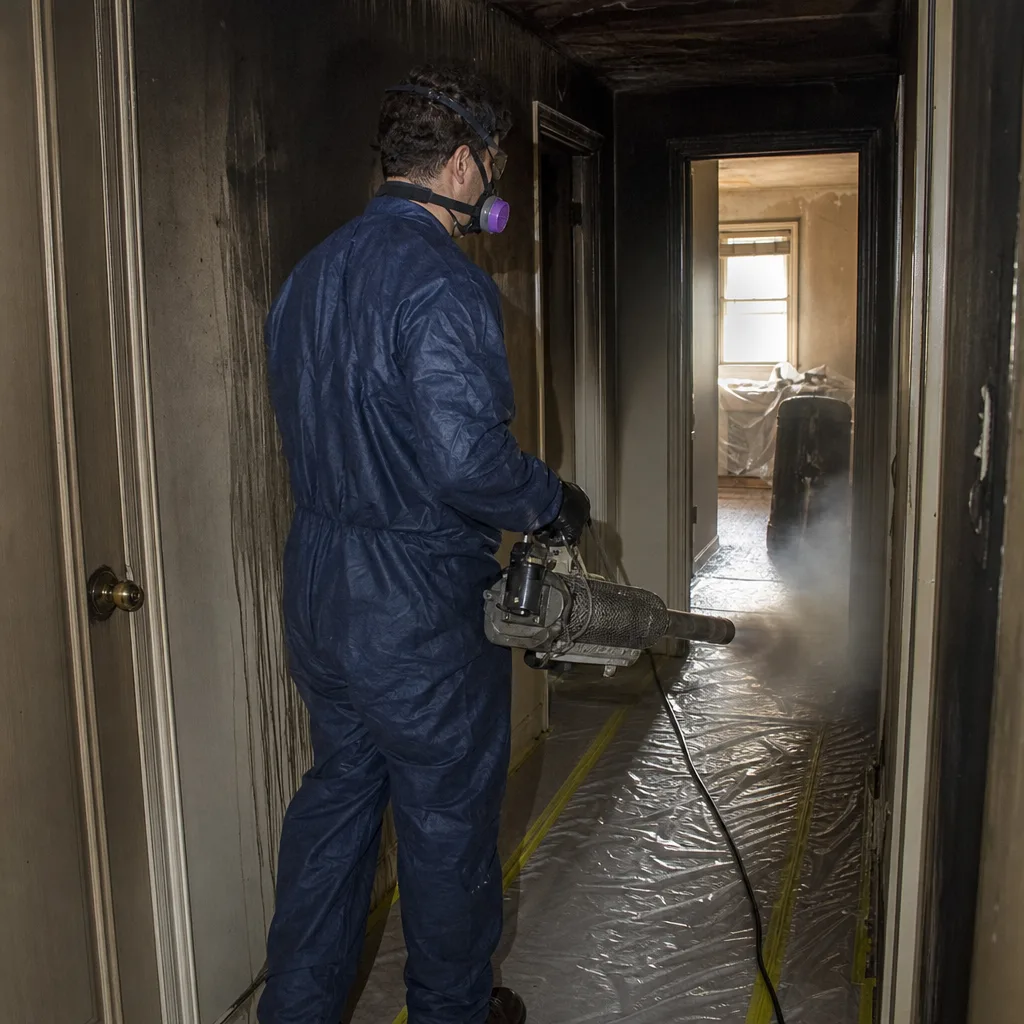
Flood Damage Restoration
This is the core of our Plandome work. Storm surge and tidal flooding demand saltwater-specific protocols: extraction, structural drying, antimicrobial treatment, and corrosion mitigation. We have done this on Manhasset Neck long enough to know that a freshwater approach to a saltwater problem fails quietly and expensively.
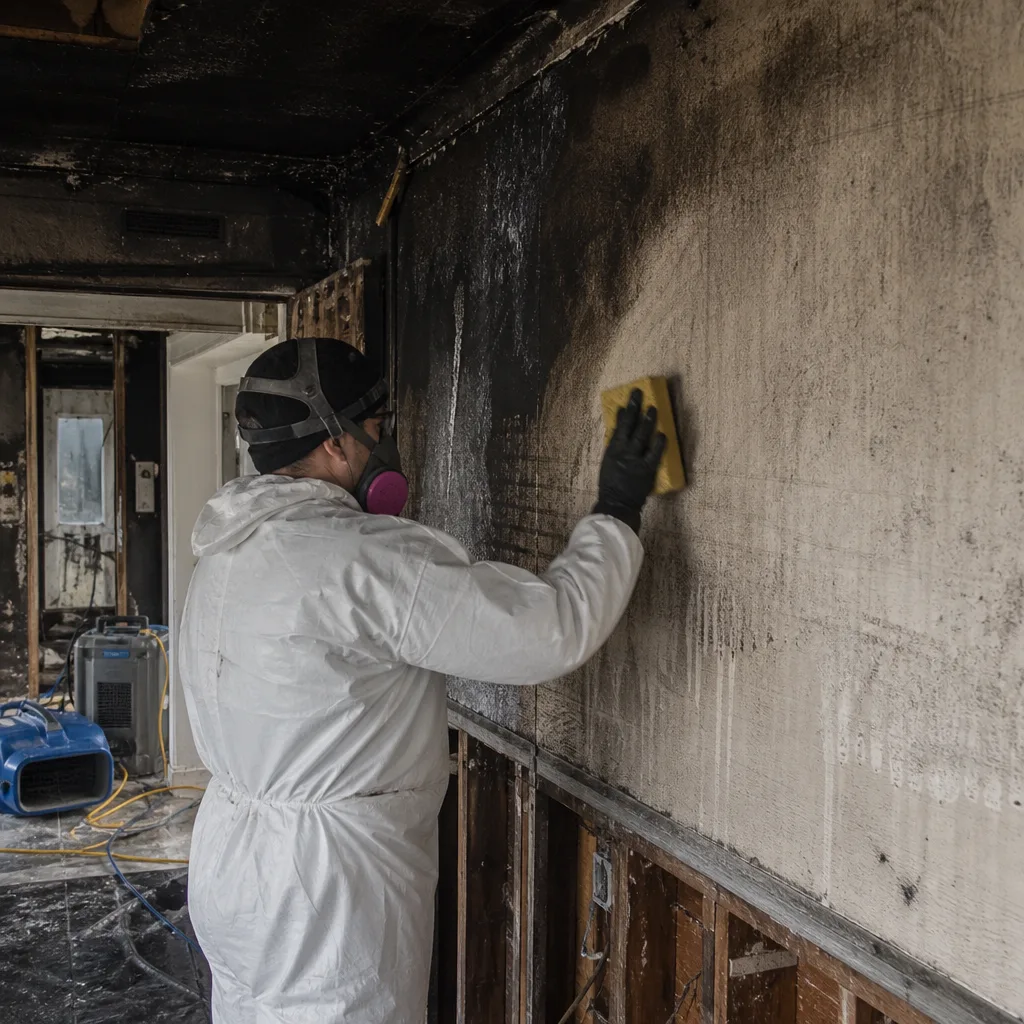
Emergency Board-Up
Broken windows, compromised doors, and storm-damaged entry points get boarded with plywood and secured the same visit. A secure envelope stops further intrusion and gives your insurance claim a clean starting point.
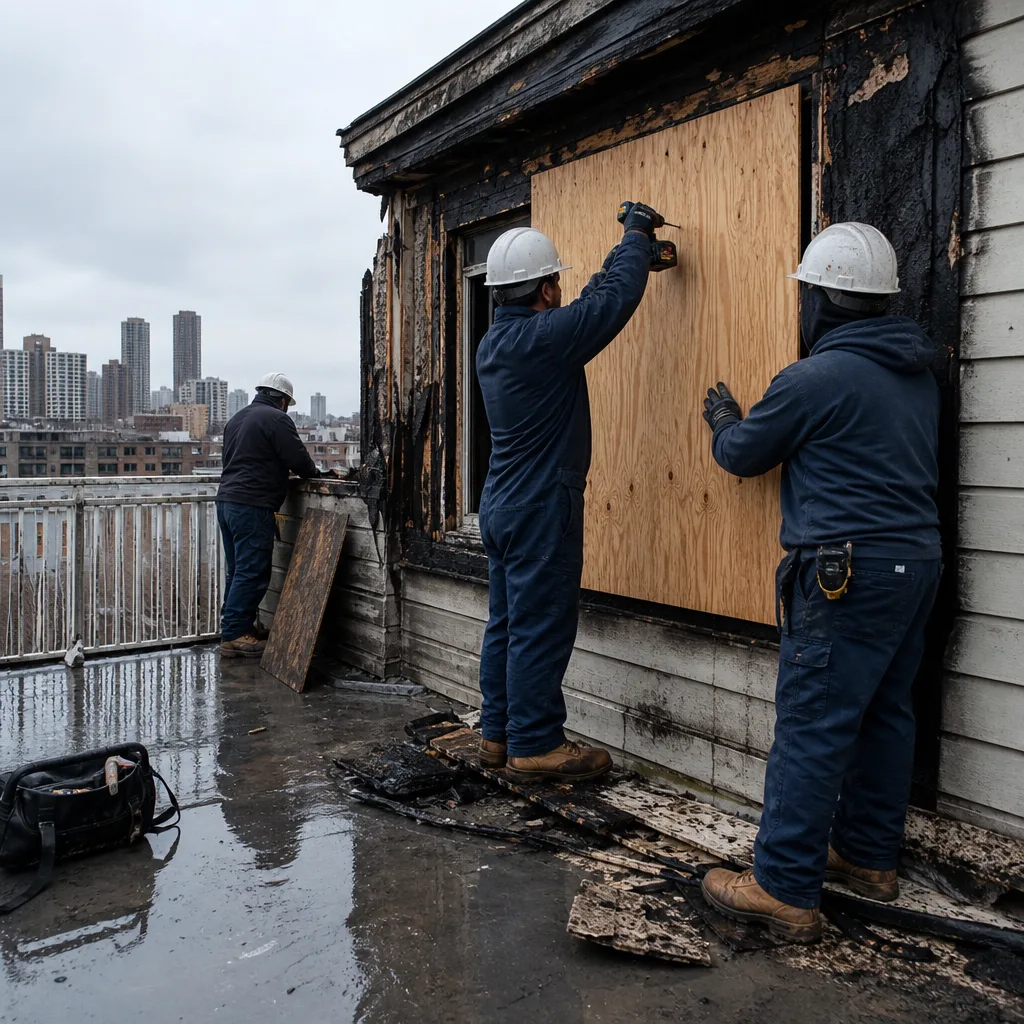
Roof Tarping
Storm-damaged roofs on Plandome’s Colonials and Tudors need tarping fast, before the next rain turns a patchable section into a full tear-off. We install temporary protection within hours of your call, and we document everything for your carrier.
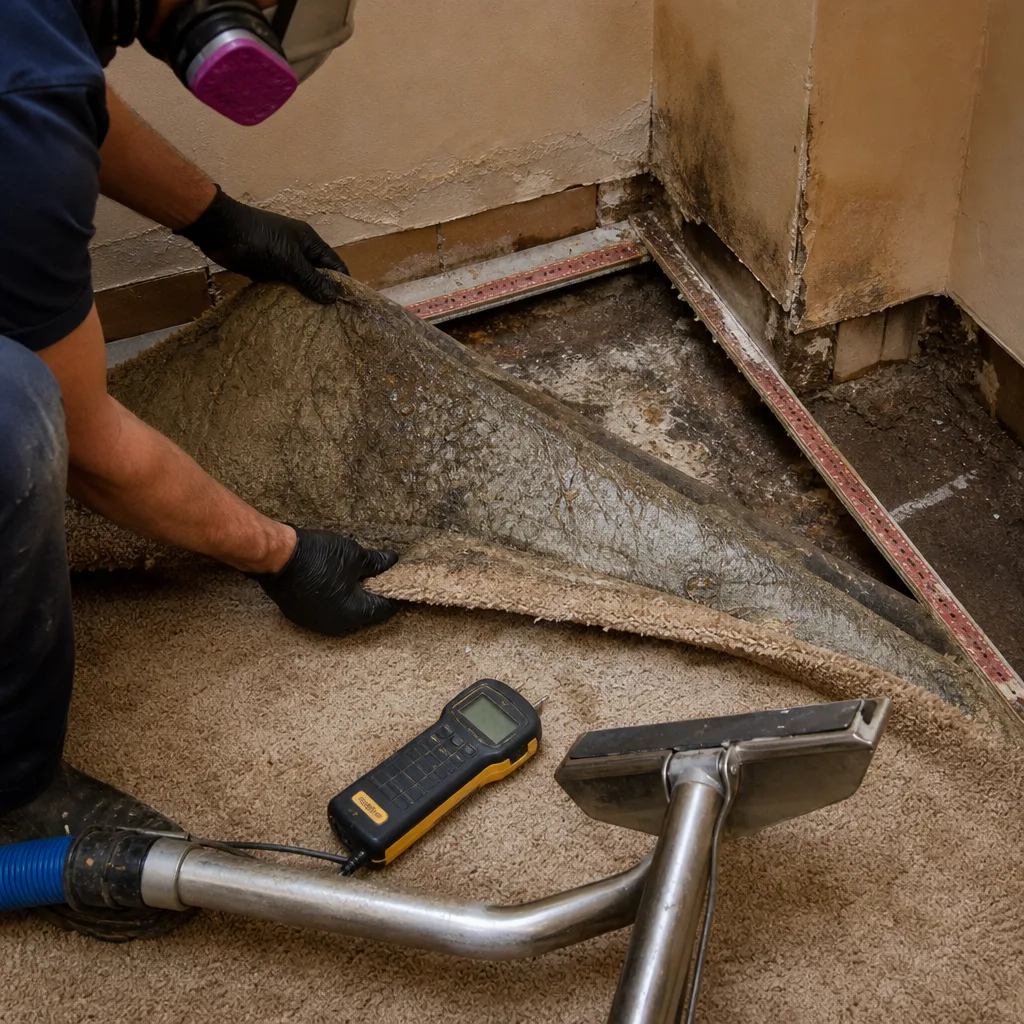
Debris Removal
Nor’easters deposit tree limbs, shingles, and marine debris across Plandome’s yards and driveways. We clear it and haul it, so you are not waiting on a separate vendor while water keeps moving through your house.
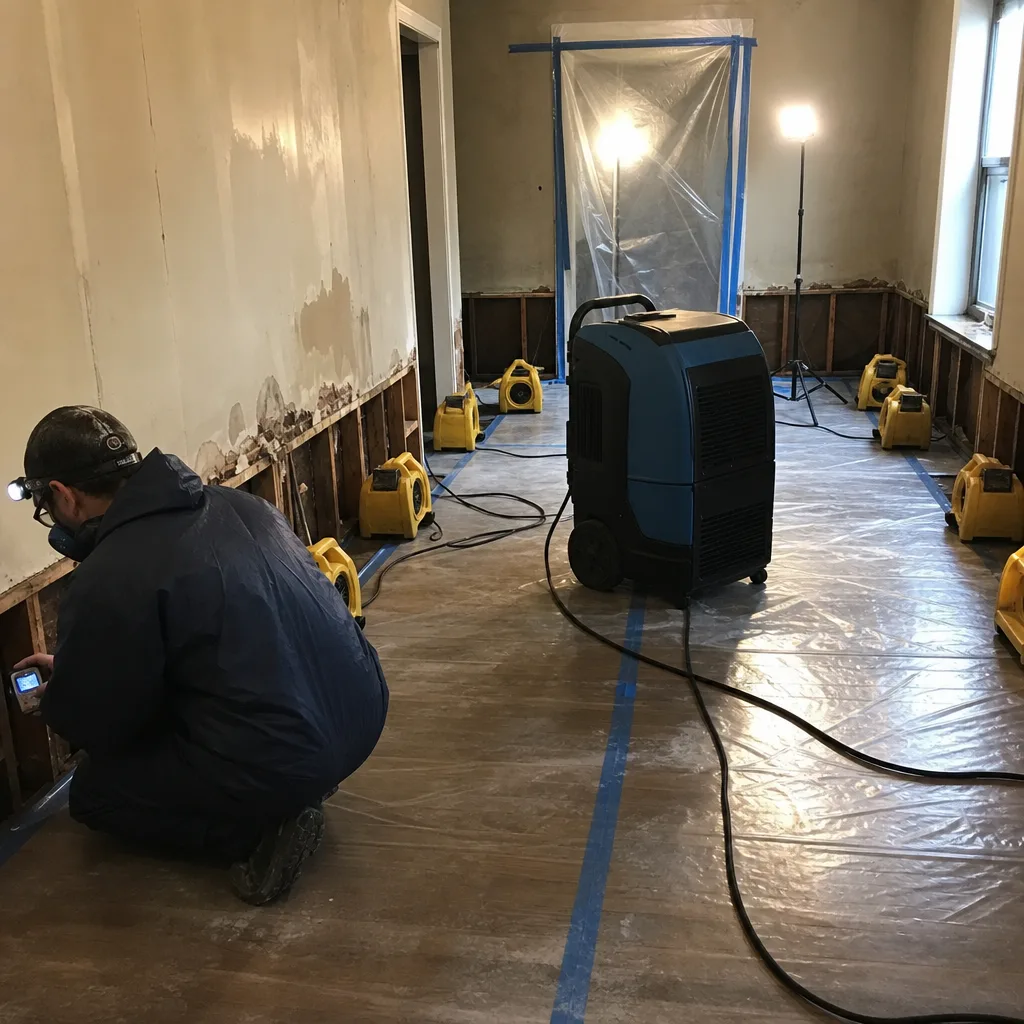
Structural Drying
The step most Plandome homeowners never see but that determines whether their home fully recovers. We run professional-grade equipment and log daily readings until the dry standard is met. In AE and AO flood zones, that log is also your NFIP documentation backbone.
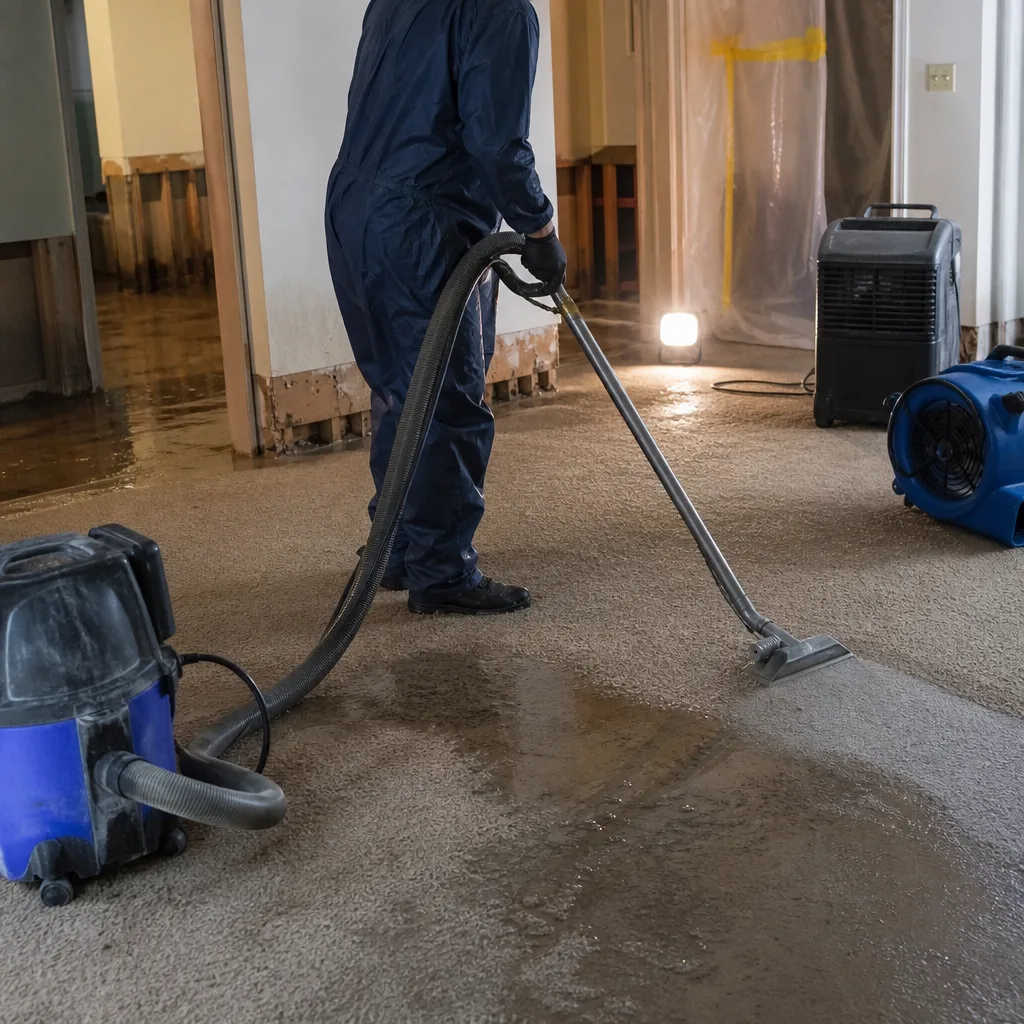
Wind Damage Repair
When wind tears off flashing, lifts shingles, or compromises windows, the damage is often deeper than it looks. We assess the full envelope and repair what the storm actually damaged, not just what is visible from the driveway.
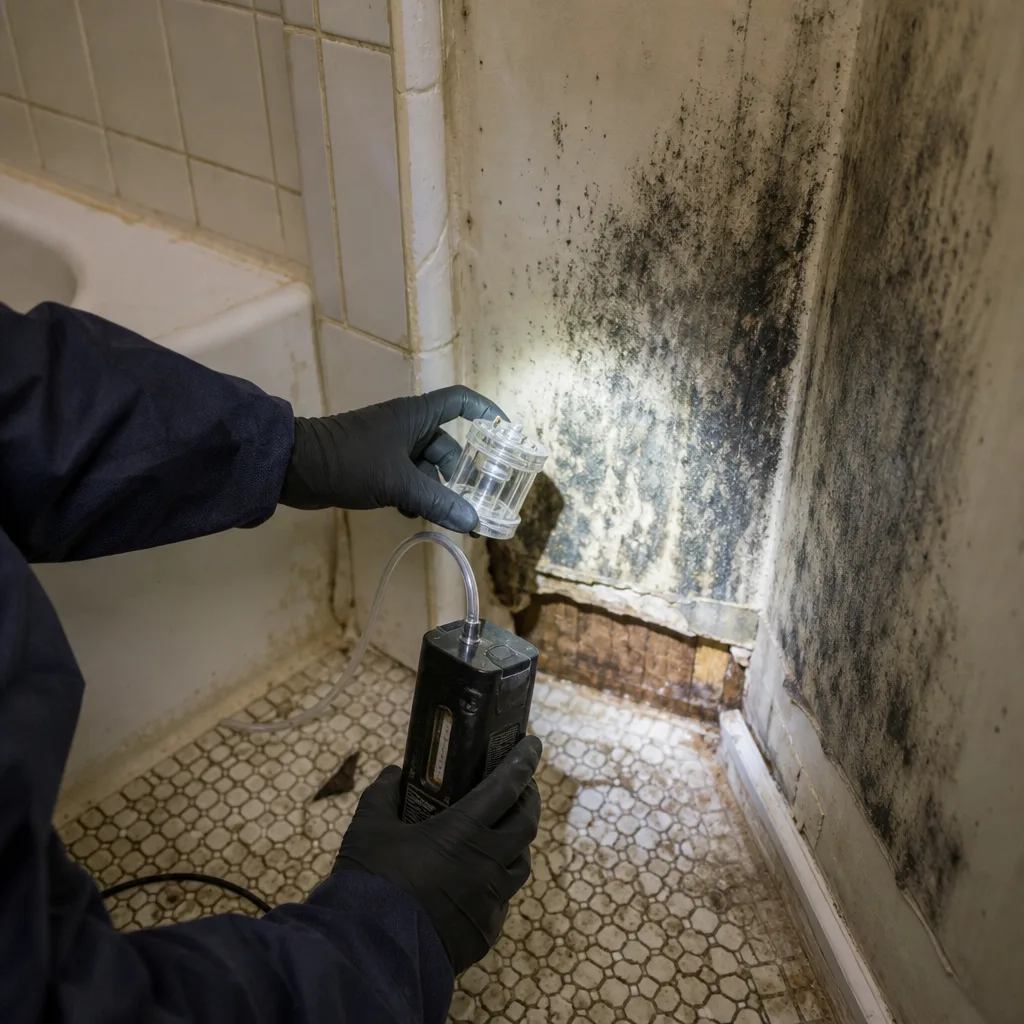
What happens when you call
- 1
A real person answersNo phone trees - you reach a local pro.
- 2
You get an upfront price rangeHonest numbers before anyone is dispatched.
- 3
A background-checked tech heads outLicensed & insured, dispatched right away.
- 4
You approve before work beginsNothing starts until you say go.
Storm & Disaster Restoration Costs in Plandome, NY
Plandome restoration costs run higher than Nassau County averages because the housing stock demands specialty work. A typical storm damage cleanup with debris removal and basic water extraction runs $1,200 to $3,800. Full flood damage restoration in a Plandome basement, including structural drying, antimicrobial treatment, and documentation for insurance, runs $4,500 to $14,000 depending on square footage and saltwater exposure. Roof tarping runs $400 to $1,100 as an emergency stop-gap. Emergency board-up runs $350 to $900 depending on opening count.
What moves the price most is whether original plaster, flooring, and millwork can be saved or must be matched. Salvage and restoration is usually less expensive than demolition and replacement when you are dealing with old-growth white oak and custom trim, but it requires technicians who know how to do it. That is why the free visual inspection matters: you get a written scope with real numbers before any work starts. The Senior & Veteran 5% Discount applies, as does $50 Off Any Repair Over $250. We also offer an $89 Seasonal Tune-Up for homeowners who want a pre-season inspection of drainage and envelope vulnerabilities before nor’easter season arrives.
We Also Serve Cities Near Plandome
Floodline Restoration Co. of Manhattan serves Plandome and surrounding communities including Storm & Disaster Restoration in Plandome neighbors across Manhasset Neck. Our crews also respond to Fairview, Harrison, East Bronx, and Hunts Point with the same 24/7 live dispatch and certified technicians.
Serving Plandome, NY - Our Local Coverage Area
We’re based in the Plandome area and know this community well. Use the map below to see our service coverage - if you’re nearby, we can almost certainly help.
Plandome Storm & Disaster Restoration Questions, Answered
How quickly can you get to Plandome?
Our 45-minute response commitment means a crew is on the road to Plandome within minutes of your call, and usually on site within the hour. For storm surge and flood damage, we prioritize Plandome calls because saltwater damage compounds quickly.
How does saltwater flooding in Plandome affect horsehair plaster walls differently than freshwater flooding?
Saltwater leaves crystalline salt deposits behind as it dries, which corrodes the lime in horsehair plaster and eventually degrades the plaster keys that hold it to the lath. Freshwater damage can often be dried in place, but saltwater requires extraction, antimicrobial treatment, and corrosion mitigation or the plaster starts to crumble months after the visible damage is gone. Call (917) 924-4221 for an assessment before salt has time to set.
Do I need an elevation certificate for storm restoration on my Plandome home?
If your home sits in a FEMA AE or AO flood zone, almost certainly yes. Your flood insurance claim and any future NFIP coverage depend on documentation tied to your elevation certificate. Our team coordinates with your certificate and logs drying data in the format your carrier expects, so you are not left holding a restoration bill and a denied claim.
How quickly should I start water extraction after a nor’easter floods my Plandome basement?
Within the first hour if possible. Saltwater starts corroding fasteners, subfloor hardware, and plaster keys immediately. The longer it sits, the more of your home’s original materials become unsalvageable. Our live dispatch means a crew can be on site in Plandome today, not tomorrow. Call (917) 924-4221 the moment water appears.
Can you save original white-oak floors that have been soaked with saltwater storm surge?
Often yes, if extraction and drying begin quickly. Old-growth white oak is dense and responds well to controlled drying with Injectidry floor mats and Dri-Eaz dehumidifiers. The critical step is pulling the salt-laden water out before it works into the grain and corrodes the subfloor fasteners. We have saved original oak floors in Plandome homes that other contractors would have ripped out.
What is the difference between Category 1, 2, and 3 water in a Plandome storm surge?
Category 1 is clean water from a broken supply line. Category 2 carries contaminants but is not sewage. Category 3 is grossly contaminated: saltwater storm surge, sewage backup, or tidal floodwater. Plandome storm surge is Category 3, which means antimicrobial treatment and full sanitization are mandatory, not optional. Treating Category 3 water like Category 1 leaves a home unsafe to occupy.
Will my insurance cover storm damage restoration in Plandome?
Most Plandome homeowners carry a standard hazard policy for wind and rain damage, plus a separate NFIP flood policy if they are in an AE or AO zone. The separation matters: wind damage is covered by one policy, flood damage by another. Our team documents the loss and coordinates with your carrier so the right claim goes to the right policy. Direct billing means you are not fronting the cost while the adjuster reviews.
Can I stay in my Plandome home during storm damage restoration?
It depends on the extent of the damage and whether containment is required. If water removal and drying are localized, you can often stay. If saltwater has entered the living space or electrical systems are compromised, we will advise you plainly about safety and timeline. We never recommend staying in a home with Category 3 water exposure until sanitization is complete. Call (917) 924-4221 and we will give you a straight answer.
What certifications do your Plandome storm restoration crews hold?
Our technicians hold IICRC certifications including WRT (Water Damage Restoration Technician), FSRT (Fire and Smoke Restoration Technician), and AMRT (Applied Microbial Remediation Technician), plus RIA and IFA training. They are background-checked, uniformed, and experienced in Plandome’s specific vintage housing stock.
What should I do in the first 30 minutes after a storm floods my Plandome home?
Call (917) 924-4221 first, then do not enter the flooded area if it has reached the electrical panel or if sewage is present. Shut off electricity at the main breaker only if you can do so without entering standing water. Take photos from a safe distance for your carrier, and keep kids and pets away from the water. After you call us, we handle the rest, including the documentation your insurer will need.
Storm Damage? Talk to a Live Person Right Now.
Answers at (917) 924-4221, 24 hours a day, every day. Free inspection, written scope, direct insurance billing.
Written by Curt Bowman, Owner at Floodline Restoration Co. of Manhattan, serving Plandome and the North Shore.