
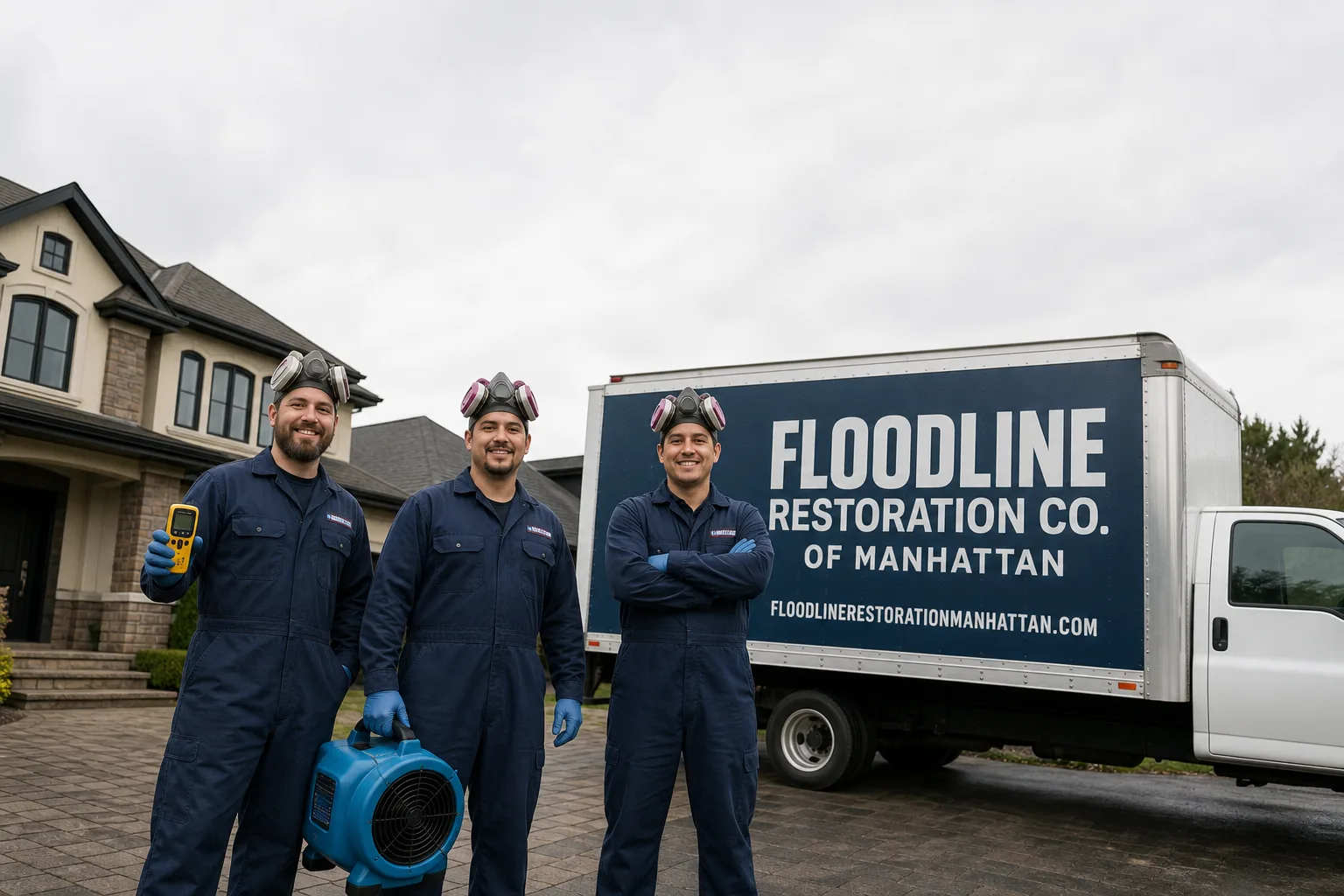
Free visual inspection and a written scope of work before any mitigation begins - photos, moisture readings, and drying logs go in your claim file
The scope we write is the scope we bill. Anything new gets shown to you, in writing, before we touch it.






 Before
 After
After Before
 After
After Before
 After
After24/7 Emergency Storm & Disaster Restoration in Port Washington North
Storm surge doesn’t wait for business hours, and neither do we. When wind and water hit Port Washington North, you need a crew that answers the phone at 2 a.m. and gets extraction running the same visit. Our storm restoration teams are dispatched from our New York City office and reach Port Washington North properties fast, with live dispatch around the clock, every day of the year. Call (917) 924-4221 the moment you see water where it doesn’t belong or wind damage to your roof or windows. The first hour after a nor’easter or tidal surge matters: water is already wicking into drywall, salt is already attacking metal framing, and every hour of delay widens the demolition scope. We start with a free visual inspection, moisture mapping, and a written scope before any work begins. No answering service. No call-back tomorrow. A real person picks up, and a background-checked, uniformed crew is on the way to Port Washington North.
Understanding Storm & Disaster Restoration Severity in Port Washington North Properties
Storm damage in Port Washington North carries a severity profile most inland restoration companies never see. The peninsula’s double-fronted exposure to Manhasset Bay and Hempstead Harbor means surge water often arrives from two directions at once, saturating building assemblies that were never designed for that kind of loading. Once water enters a home here, it’s rarely clean. Surge water that has moved across roads, lawns, and flooded basements is Category 3 water: heavily contaminated, carrying sewage, hydrocarbons, and dissolved road salts. Saltwater specifically does something freshwater never does. It leaves behind crystalline residue inside wall cavities and under flooring that keeps pulling moisture from the air long after the standing water is gone. That residual salt wicks humidity and accelerates corrosion on cast-iron drains, galvanized supply lines, and electrical connections. Moisture mapping with thermal imaging and hygrometers tells us where the water went and where the salt is hiding. In Port Washington North’s 1950s and 1960s ranches and colonials with finished basements at or near grade, that often means cutting walls higher than a freshwater loss would require. Structural drying here is a longer, more aggressive process because the coastal soil itself holds moisture and slows evaporation. We log readings daily until every affected material meets the dry standard, and we don’t hand you back a basement that’s still breathing salt.
Why Port Washington North Property Owners Choose Floodline Restoration Co. of Manhattan
- 45-minute response commitment - when you call with storm damage in Port Washington North, we commit to having a crew on the road within 45 minutes, not next week. Surge damage spreads by the hour.
- 24/7 live answer, every time - a live dispatcher picks up at 2 a.m. on a Sunday during a nor’easter. You never leave a message and wait for a callback while water climbs the foundation wall.
- IICRC-certified crews - our technicians hold WRT and ASD certifications and train to IICRC, RIA, and IFA standards. They know the difference between drying a salt-saturated wall assembly and guessing at it.
- Free visual inspection - before any demolition starts, we walk the property with you, map the moisture, and show you exactly what needs to go and what can be saved.
- Direct insurance billing - we bill your carrier directly and speak with your adjuster ourselves. You don’t play messenger between Floodline and the insurance company.
- One team from extraction to reconstruction - the same certified crew that runs extraction on day one handles daily moisture readings, dries the structure, and rebuilds what needs rebuilding. No mid-job handoff to an unknown subcontractor.
Our Storm & Disaster Restoration Process
Inspection & Assessment
We arrive, walk the full property with you, and map every affected area with thermal imaging and penetrating moisture meters. In Port Washington North we pay special attention to at-grade mechanicals, finished basement framing, and any wall assembly that took surge water from the bay side. You get a written scope before we cut anything.
Extraction & Stabilization
Standing water comes out first with truck-mounted extraction units and submersible pumps. We remove saturated contents, cut damaged drywall and insulation, and stabilize the structure so further damage stops immediately. If the roof or windows are open to weather, we tarp and board up first so no more water gets in while we work.
Drying & Dehumidification
We set Dri-Eaz dehumidifiers, Phoenix air movers, and Injectidry drying systems positioned from our moisture map, not from a generic floor plan. Daily readings go into a log you and your adjuster can see. In coastal soils like Port Washington North’s, drying takes longer, so we run equipment until the dry standard is met, not until the calendar says stop.
Cleaning & Sanitization
Storm surge brings contamination, and salt residue won’t come out with soap and water alone. We clean all affected surfaces with antimicrobial treatments appropriate for the materials, HEPA-vacuum cavities, and run HEPA air scrubbers to capture airborne spores and particulates before reconstruction begins.
Corrosion Control & Salt Mitigation
The step most restoration companies skip on Long Island. We inspect every metal connection, cast-iron drain line, and galvanized fitting the surge touched. Salt that sits in wall cavities keeps corroding for months. We treat or replace affected metal, flush contaminated cavities, and document everything for your carrier.
Repairs & Restoration
The same uniformed crew that did the extraction rebuilds your walls, floors, and mechanical systems to pre-loss condition or better. Everything is backed by our 90-Day Done Right Promise: the Keystone Standard, given in writing. If it’s not done right, we make it right.
Need Emergency Storm & Disaster Restoration in Port Washington North Now?
Crews minutes away, answering live 24 hours a day. The sooner we start, the less it costs.
Working With Your Insurance Company
Storm damage claims on Port Washington North’s waterfront properties are complicated by one persistent fact: saltwater losses look different on paper than they do inside the wall. A freshwater pipe burst dries out, and the claim is straightforward. A nor’easter surge saturates finished basements with Category 3 water, leaves salt in the framing, and creates mold conditions weeks later if the claim adjuster scoped the job too narrowly. That’s why we document from the first hour. Photos of every affected room, moisture readings before and during drying, thermal imaging showing hidden water, and a line-item scope with clear reasoning for every cut. We communicate directly with your adjuster, provide the logs they need, and advocate for the full scope the damage actually requires. Our direct insurance billing means Floodline Restoration Co. of Manhattan deals with the carrier; you deal with getting your home back. That’s how we have handled storm claims for Port Washington North homeowners for years, and it works.
What We Provide Your Insurer
- Thorough documentation of the loss
- Photos of all damage, room by room
- Moisture readings and drying logs
- A detailed, line-item scope of work
- Direct coordination with your carrier
Built for Port Washington North’s Loss Calendar
Port Washington North doesn’t have one storm season; it has four, and each one produces a different failure mode. January deep freezes push temperatures low enough to freeze unprotected supply lines in older ranches and colonials along Shore Road and Beacon Hill, where 1950s construction and original plumbing run through exterior walls. When those lines thaw, the water finds finished basements fast. Spring brings weeks of rain soaking the coastal clay soil, and basements that sat dry all winter start seeping through floor cracks and cove joints. Summer thunderstorms roll in fast from the Sound, dropping inches of rain in an hour, overwhelming the village’s drainage and sending surface water toward at-grade foundations. Autumn is nor’easter season, the threat Port Washington North knows best. When a nor’easter pushes surge in from Manhasset Bay and Hempstead Harbor at the same time, homes near the shoreline take water from two directions. Each season demands a different response, and a company that only knows freshwater pipe bursts can’t handle all four. Our crews work the peninsula’s loss calendar year-round, and we know what’s coming before the storm has a name.
Storm & Disaster Restoration Across Port Washington North’s Neighborhoods
The village of Port Washington North is small but not uniform, and our teams read the differences block by block. Along Shore Road and the bay side, we see the most severe storm surge damage: saltwater intrusion into finished basements, corroded electrical panels, and at-grade mechanical rooms that took on feet of contaminated water. These AE-zone shoreline homes are the ones FEMA flood maps flagged years ago, and the ones that were never elevated now need the most aggressive demo and drying protocols. In the mid-century ranch and colonial neighborhood off Beacon Hill Road, we see wind-driven rain forcing water through original windows and roof flashings, plus freeze-thaw cycles splitting exterior coatings so water gets behind siding. The older waterfront estates near the Hempstead Harbor side tend to have original cast-iron and galvanized plumbing, which saltwater accelerates into failure; a “successful” dry-out can be followed months later by a pinhole leak no one expected. And in the interior streets away from the shoreline, we handle fewer full surges but plenty of storm drainage backups, overwhelmed sump pumps, and roof damage from falling limbs. Port Washington North’s geography shapes every loss we handle here, and our crews know which roads flood first when the tide turns.
Specialized Storm & Disaster Restoration Services We Offer in Port Washington North
Storm Damage Cleanup
After a hurricane, nor’easter, or severe line of thunderstorms moves through Port Washington North, the damage is rarely just water. You get downed trees, broken glass, scattered debris, and contaminated mud pushed in by surge. Our storm damage cleanup teams remove the debris, extract the water, cut out what can’t be saved, and stabilize the property so it’s safe to enter. We work with your insurer from the first photos, so nothing gets thrown away before it’s documented.
Flood Damage Restoration
Flooding in Port Washington North usually means one of two things: surge from the bays, or drainage failures during heavy rain. Both produce contaminated water that needs more than a mop and a fan. Our flood damage restoration starts with extraction and moisture mapping, then moves through daily drying with professional-grade equipment, antimicrobial treatment, and salt-specific inspection on bay-side losses. This is the service where our one-team approach matters most, because flood damage always carries hidden moisture that shows up weeks later if the drying wasn’t thorough.
Emergency Board-Up
When a storm knocks out a window, tears off roof shingles, or puts a tree limb through a wall, your home is open to weather and anyone who might wander by. Our emergency board-up service secures all openings with plywood and heavy-duty fasteners, tarping roof damage so the next rain doesn’t turn a wind loss into a water loss. We usually have a board-up crew on the road to Port Washington North within 45 minutes of your call, because the gap between damage and cover is where losses multiply.
Roof Tarping
Storm winds on the peninsula peel shingles and flashing off roofs, and rain follows. Our roof tarping teams secure heavy-duty tarps over damaged sections, fastened to withstand the next nor’easter rather than just the next hour. The longer you wait on a compromised roof, the more water works its way into the attic, through insulation, and down into ceilings. Tarps are a temporary fix, but a good one buys the time your carrier needs to approve a full repair.
Debris Removal
Post-storm lots in Port Washington North are often filled with limbs, roof material, and whatever the surge carried in. Our debris removal crews haul it off safely, separating what’s reusable from what’s contaminated. We document everything for your claim before removing anything, so your carrier has clear evidence of the loss. Handled right, debris removal is the first step in getting the property back, and we handle it right.
What happens when you call
- 1
A real person answersNo phone trees - you reach a local pro.
- 2
You get an upfront price rangeHonest numbers before anyone is dispatched.
- 3
A background-checked tech heads outLicensed & insured, dispatched right away.
- 4
You approve before work beginsNothing starts until you say go.
Storm & Disaster Restoration Costs in Port Washington North, NY
Storm restoration pricing in Port Washington North runs higher than inland Long Island towns, and the reasons are specific. Saltwater damage demands more aggressive demolition, longer drying times, and corrosion inspection that freshwater losses rarely need. A typical storm damage cleanup with extraction and drying on a finished basement runs $4,500 to $12,000 depending on square footage and contamination level. Flood damage restoration with full pack-out, wall cutting, antimicrobial treatment, and reconstruction averages $12,000 to $35,000 for the basement alone. Emergency board-up and roof tarping are comparatively modest: $500 to $2,500 depending on the number of openings and roof sections involved. Debris removal runs $750 to $3,000 for a typical post-storm lot. The variables that move the price: how much wall cavity took surge water, whether HVAC ductwork was below the waterline, whether original cast-iron plumbing needs replacement, and how quickly you called. What we will never do is give you a vague verbal number and start cutting. After a free inspection and moisture mapping, you get a written scope with line-item pricing before any work begins. That’s the square deal. Call (917) 924-4221 for an exact quote on your property, free.
We Also Serve Cities Near Port Washington North
Our storm and disaster restoration crews also cover the communities around Port Washington North. That includes Fairview, Harrison, East Bronx, and Hunts Point. If your home sits outside the village boundaries but took the same storm, call (917) 924-4221. The same live dispatcher answers, and the same certified crew responds.
Serving Port Washington North, NY - Our Local Coverage Area
We’re based in the Port Washington North area and know this community well. Use the map below to see our service coverage - if you’re nearby, we can almost certainly help.
Port Washington North Storm & Disaster Restoration Questions, Answered
Why does saltwater from Manhasset Bay require a different drying protocol than a freshwater pipe leak in Port Washington North?
Saltwater leaves crystalline residue in wall cavities and under flooring that keeps pulling moisture from the air long after the standing water is extracted. A freshwater pipe leak dries out and stays dry. A saltwater surge leaves behind hygroscopic salt crystals that wick new humidity and accelerate mold growth, so our drying protocol runs longer, uses more aggressive dehumidification, and includes antimicrobial treatment and corrosion inspection that freshwater losses would never need. Skipping that step means that moisture returns to the same wall assembly years later.
What makes AE-zone homes on Port Washington North’s shoreline more expensive to restore after a nor’easter?
AE-zone homes built before FEMA elevation standards usually have furnaces, water heaters, electrical panels, and ductwork at grade level. When surge water reaches those systems, the mechanical equipment often needs total replacement, not just cleaning, and the wall cavities around them require higher cuts and longer drying because salt-saturated materials don’t release moisture the way freshwater materials do. The restoration scope on an AE-zone home commonly runs 30 to 50 percent higher than a similar-size inland loss.
How do you handle pre-loss condition verification in older Port Washington North waterfront homes?
When we walk an older waterfront home after a storm, we document everything we see before we touch it: the condition of original cast-iron and galvanized plumbing, existing corrosion patterns, wall and floor materials, and any prior water staining. That pre-loss record protects you with your insurer, because it draws a clear line between what the storm damaged and what was already aging. We are not there to trap you into paying for old plumbing that failed on its own; we’re there to give your carrier an honest, specific scope.
Is emergency board-up really necessary after a nor’easter on the Port Washington peninsula?
Yes. Nor’easters here don’t come as one clean event. They sit offshore and push surge and wind at the peninsula for hours, sometimes days. If a window, door, or roof section is open, the next tide or rain band keeps adding water to the loss. Board-up and tarping stop the compounding damage the same day. It’s a small cost relative to the additional demolition and drying that a second or third round of water intrusion would require.
Can you dry out a finished basement after a Category 3 storm surge in Port Washington North without removing everything?
Usually not, and we won’t pretend otherwise to save your drywall. Category 3 surge water carries sewage, road runoff, and salt. The drywall, insulation, and often the flooring it touched are contaminated and can’t be effectively sanitized in place. We cut what must be cut and salvage what can truly be saved. The homeowners who try to dry out everything in place end up with mold in the same wall cavities and a much larger bill later. Our honest scope, given in writing before work starts, tells you exactly what has to go and what stays.
How fast can you actually get a crew to Port Washington North?
We commit to having a crew on the road within 45 minutes of your call, and because our dispatchers are local to the metro area and know Port Washington North’s streets, we reach most properties inside the village quickly. In a storm event affecting the whole peninsula, call volume is high, but our live dispatcher will always tell you the truth about when we arrive, and we will be there within the window we give you. We’ll be there when we say.
Will my homeowner’s insurance cover storm and flood damage in Port Washington North?
Wind damage, fallen trees, and rain entering through storm-created openings are typically covered by standard homeowner’s policies. Flood damage from surge is not; that requires a separate flood policy, usually through FEMA’s National Flood Insurance Program. Many AE-zone homeowners here carry flood coverage, but not all. If you’re not sure what your policy covers, call us. We document the loss thoroughly and speak to your carrier directly, so the claim gets submitted with the evidence needed to maximize what’s covered.
What should I do in the first 30 minutes after storm damage in Port Washington North?
Call (917) 924-4221. Then, if it’s safe, shut off electricity at the main breaker if water is anywhere near outlets or the panel. Don’t enter standing water, especially in a finished basement where the power may still be live. Don’t move anything contaminated. Take photos from a safe distance with your phone. Then stay out of the damaged areas and wait for our crew. The first 30 minutes are about safety and getting help on the way; leave the rest to the professionals.
Storm & Disaster Restoration is what we do every day, but our approach is shaped by the specific geography of each community we serve. A nor’easter in Port Washington North is not the same as one inland, because this village sits on a narrow peninsula flanked by Manhasset Bay on one side and Hempstead Harbor on the other. When surge pushes in from both bodies of water simultaneously, the water doesn’t have a single point of entry; it comes around the edges and over the top. That’s why our Storm & Disaster Restoration in Port Washington North work follows a salt-specific protocol built for this shoreline, not a generic template. It’s also why homeowners here keep our number in their phones year-round.
The ongoing risk on this peninsula is not theoretical. FEMA flood-map AE-zone homes along the Port Washington North shoreline that were not elevated after Hurricane Sandy are repeat customers. Their at-grade mechanical systems, ductwork, and wall cavities retain residual salt crystallization that wicks new moisture out of the air, even months after a “successful” dry-out. In a typical inland suburb, that same damage profile would dry and stay dry. Here, the salt keeps working, accelerating mold growth and corroding metal. That means when one of these homes takes on even seemingly minor water from a nor’easter, the correct restoration scope is often more aggressive than the visible damage suggests. Homeowners who understand this get back a dry house. Those who don’t find themselves calling us again a year later. Call (917) 924-4221 when the storm hits. A live person answers, and a certified crew is on the way.
Written by Curt Bowman, Owner at Floodline Restoration Co. of Manhattan, serving Port Washington North and the surrounding communities.