
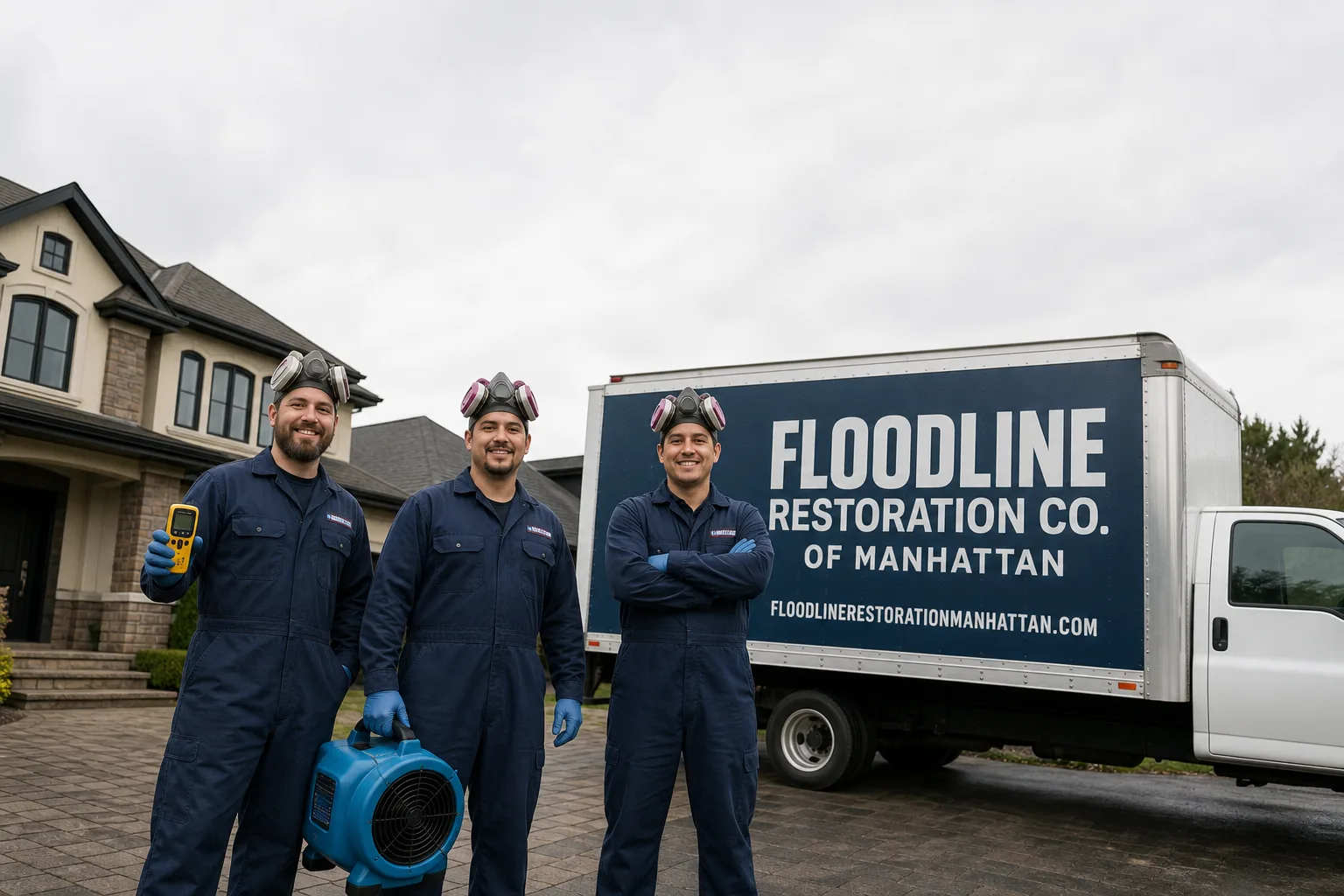
Free visual inspection and a written scope of work before any mitigation begins - photos, moisture readings, and drying logs go in your claim file
The scope we write is the scope we bill. Anything new gets shown to you, in writing, before we touch it.






 Before
 After
After Before
 After
After Before
 After
After24/7 Emergency Storm & Disaster Restoration in Richmond Hill
Storm damage in Richmond Hill moves fast. A nor’easter backs stormwater through the combined sewers into a finished basement on 104th Avenue, and within 48 hours that water is inside the wall cavities. Our crews are on call around the clock, answering live and dispatching from our New York City office into Richmond Hill within 45 minutes on most calls. We run extraction the same visit, not the next morning. Call (917) 924-4221 any hour, any day. The first hour after water enters your home determines whether you have cleanup or reconstruction. We start with a free visual inspection and a written scope before any work begins.
Understanding Storm & Disaster Restoration Severity in Richmond Hill Properties
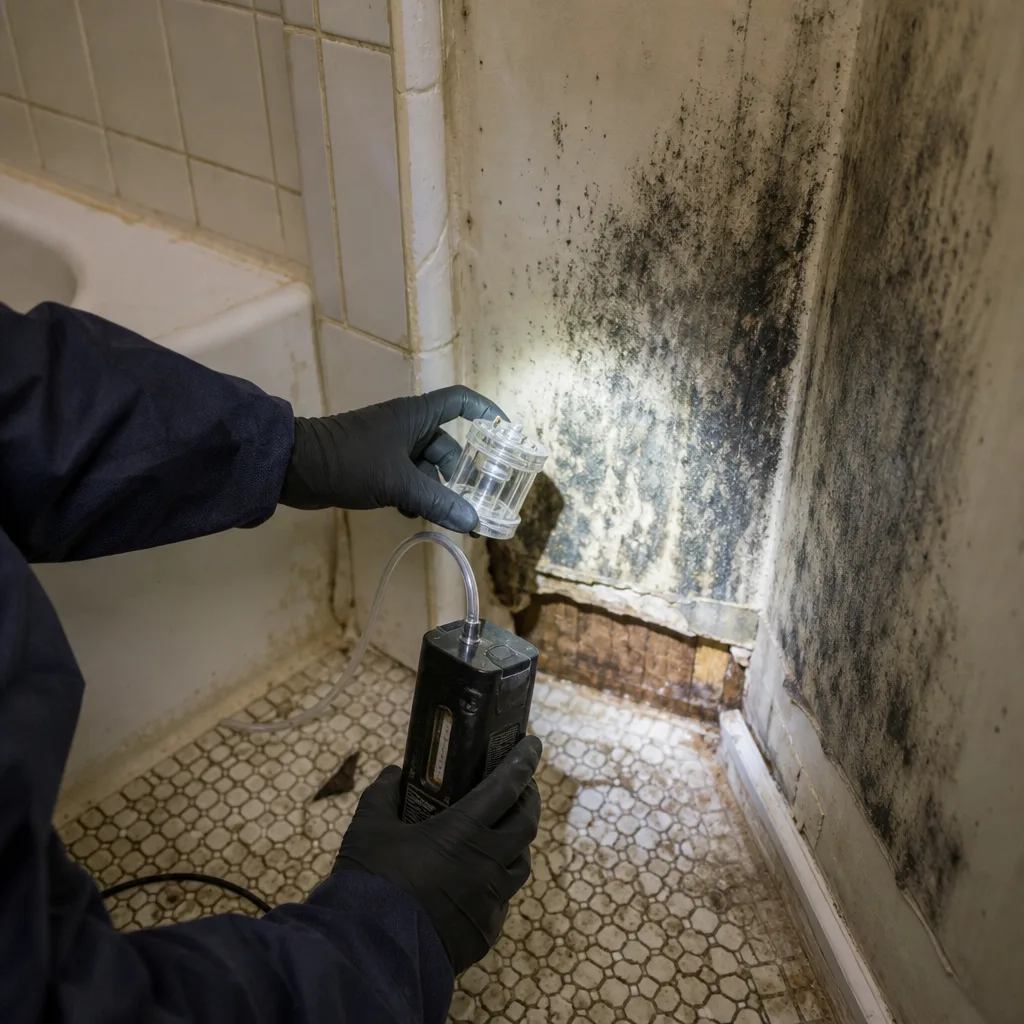
Storm damage in Richmond Hill is rarely clean water. The neighborhood’s position inside southwest Queens’ chronic sewer-backup zone means nor’easter flooding almost always carries Category 3 water, the classification for sewage-contaminated black water. That changes everything about the job. A flooded basement on a 1915 rowhouse off Atlantic Avenue is not a drying problem. It is a contamination problem requiring containment, antimicrobial treatment, and full material removal in finished living spaces. Our technicians carry IICRC WRT and AMRT certifications and test the water class on site, not by guess. We moisture-map every affected wall with thermal imaging and penetrating meters because Richmond Hill’s balloon-frame construction hides water where surface readings cannot see it. The age and density of housing stock here compresses timelines. Pre-1930 plaster walls and rubble-stone foundations hold moisture aggressively, which means mold colonization begins sooner and runs deeper than in newer construction.
Why Richmond Hill Property Owners Choose Floodline Restoration Co. of Manhattan
- 45-minute response commitment: A crew reaches most Richmond Hill addresses within 45 minutes of your call, day or night.
- Live answer, 24/7: A dispatcher picks up at 2 a.m. Not a recording. You talk to a person who can send a crew immediately.
- IICRC-certified crews: Technicians hold water and mold certifications including WRT and AMRT. Background-checked and uniformed every time.
- Free visual inspection: We assess the damage, give you a written scope of work, and agree on the approach before anything starts.
- Direct insurance billing: We bill your carrier directly and coordinate with your adjuster. You never play messenger between us and the insurer.
- One team, start to finish: The same crew handles extraction, drying, remediation, and reconstruction. No mid-job handoff to a stranger.
Our Storm & Disaster Restoration Process
Inspection & Assessment
We trace the water path with thermal imaging and moisture meters. In Richmond Hill’s balloon-frame homes, that means checking wall cavities two and three floors above the visible damage line. We classify the water category and map the full scope before any demolition begins.
Extraction & Stabilization
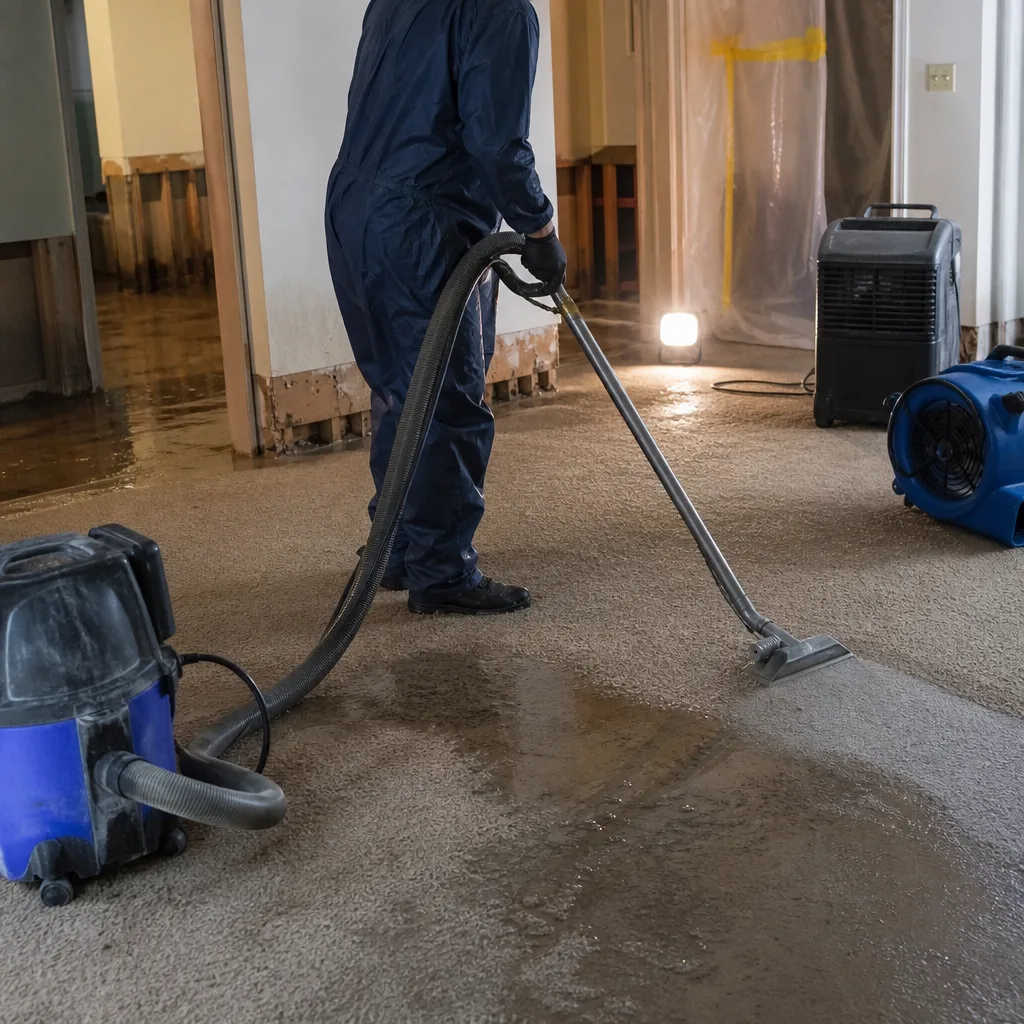
We remove standing water with truck-mounted extraction units, then cut and remove saturated materials that cannot be saved. In converted basement apartments, that often means removing finished walls, flooring, and insulation down to the original framing.
Drying & Dehumidification
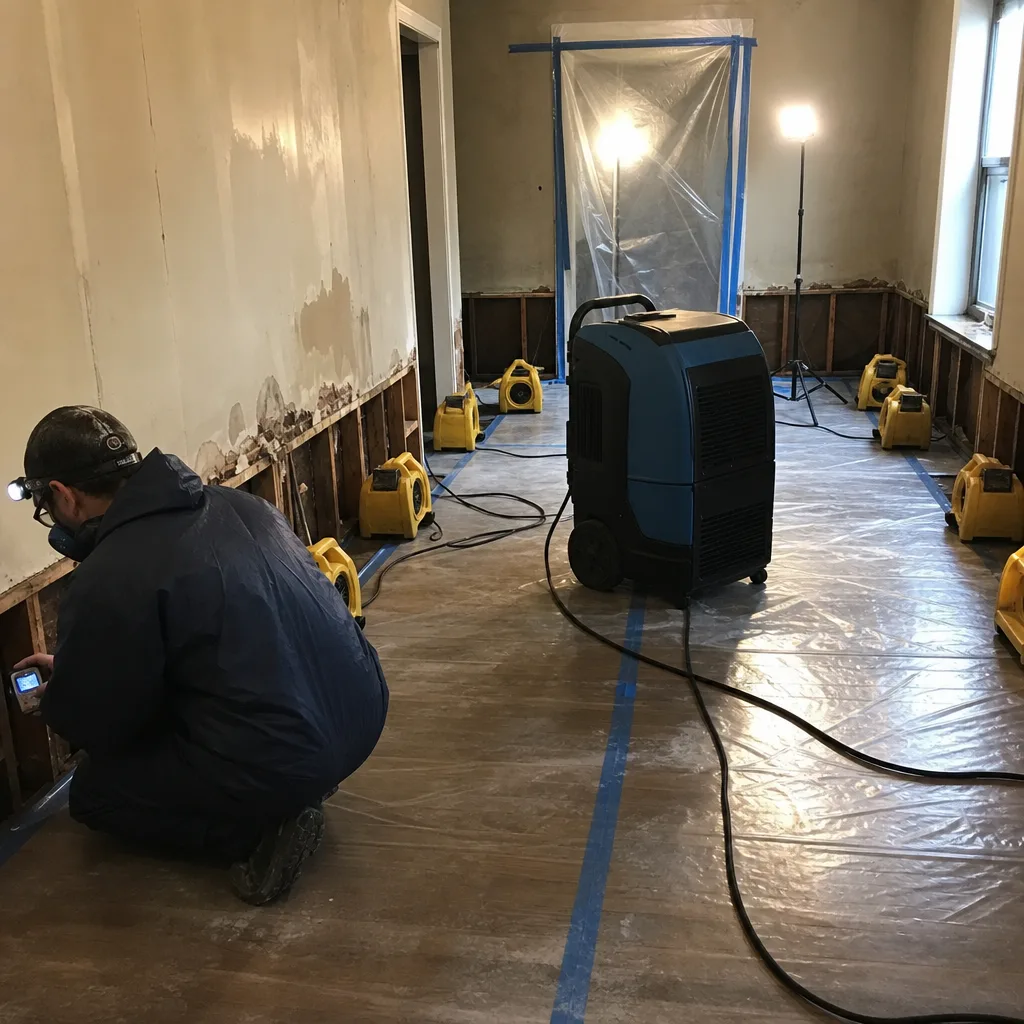
We set Dri-Eaz and Phoenix air movers and low-grain dehumidifiers sized to the cubic footage of the affected space. Daily moisture readings are logged and shared with you and your carrier until the dry standard is met.
Cleaning & Sanitization
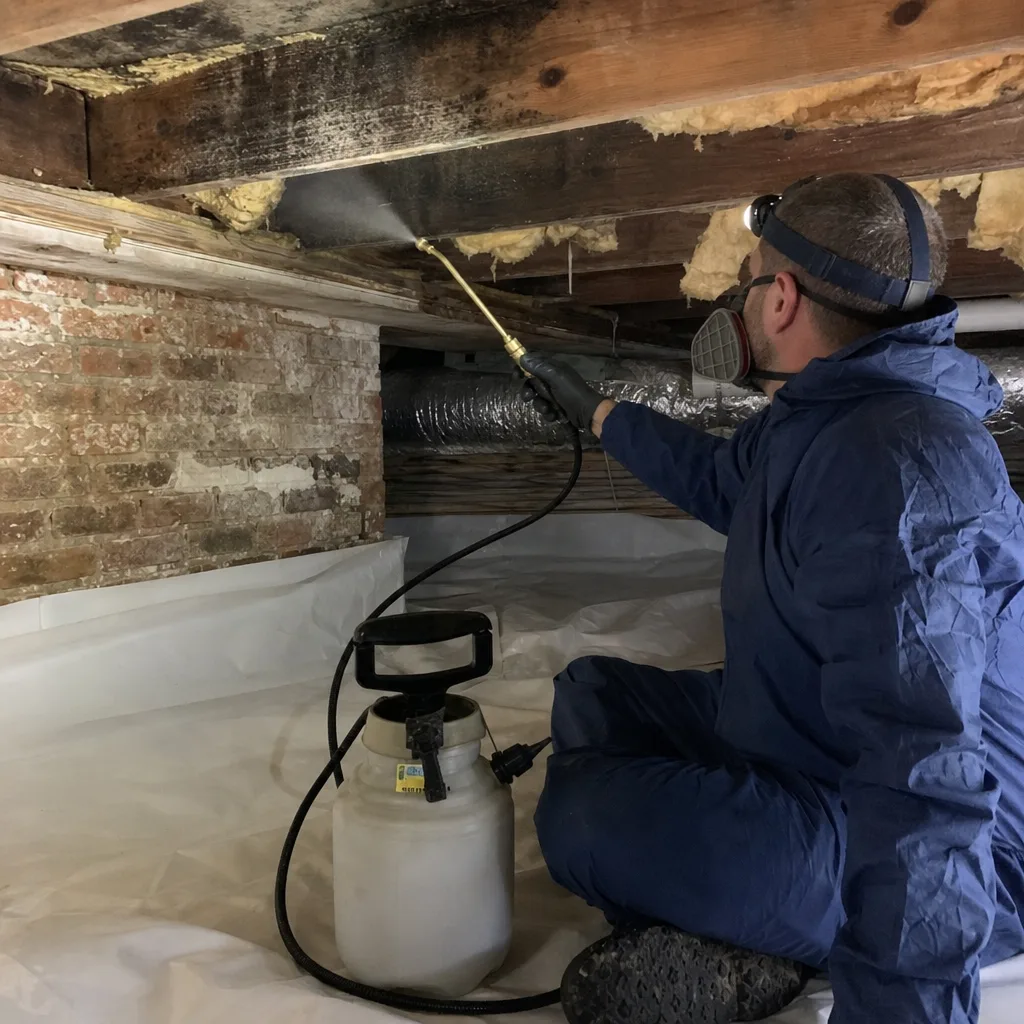
Category 3 water demands antimicrobial treatment on every surface the water touched. We run HEPA air scrubbers during and after demolition to capture airborne spores. This step is non-negotiable in Richmond Hill’s sewer-backup flood zone.
Wind Damage & Structural Stabilization
Storm and disaster work in Richmond Hill includes emergency board-up, roof tarping, and wind-rated door and window replacement. We stabilize first so water and weather cannot keep entering. The structural repair scope follows.
Repairs & Restoration
After drying and remediation, we rebuild. Plaster walls, framing, flooring, cabinetry. The same crew that extracted the water restores your home to its pre-loss condition. Backed by our 90-Day Done Right Promise in writing.
Need Emergency Storm & Disaster Restoration in Richmond Hill Now?
Crews minutes away, answering live 24 hours a day. The sooner we start, the less it costs.
Working With Your Insurance Company
Storm damage claims in Richmond Hill get complicated because sewer backup coverage is separate from standard flood insurance. Many homeowners learn that distinction the hard way. Our office handles the paperwork from the first day. We photograph everything before we touch it, document the water category and contamination level, and produce a line-item scope that matches your policy’s expectations. Our project managers talk directly to your adjuster, so you do not spend hours on hold explaining moisture readings you should not need to understand. We bill the carrier directly where your policy allows. The 90-Day Done Right Promise stays in place regardless of how the claim resolves.
What We Provide Your Insurer
- Thorough documentation of the loss
- Photos of all damage, room by room
- Moisture readings and drying logs
- A detailed, line-item scope of work
- Direct coordination with your carrier
Built for Richmond Hill’s Loss Calendar
Richmond Hill’s storm season has a rhythm. January and February bring deep freezes that burst supply lines in uninsulated balloon-frame walls, flooding basements and first floors while outdoor temperatures stay below freezing. March and April thaw saturated ground and push groundwater through rubble-stone foundations into cellars that have not flooded since the previous spring. Summer brings cloudbursts that overwhelm the combined sewer system, forcing Category 3 water back up through basement drains and floor toilets in converted basement apartments. September through December is nor’easter season, when street-level flooding along Atlantic Avenue and Jamaica Avenue corridors pushes storm surge and sewage into dozens of homes at once. Our teams staff extra crews during every one of these windows. We know the calendar because we have worked it for years.
Storm & Disaster Restoration Across Richmond Hill’s Neighborhoods
Response routes matter. From our New York City dispatch office, our crews reach the homes east of Lefferts Boulevard along 101st through 107th Avenues within a half hour in normal traffic. The blocks west of Woodhaven Boulevard, closer to Forest Park, hold some of the neighborhood’s oldest attached brick rowhouses with finished basements that flood as a group during any significant sewer backup. Homes along the Atlantic Avenue corridor, many with ground-floor commercial space, face different water pathways than residential blocks off Jamaica Avenue. The converted basement apartments around 104th and 105th Avenues near the A train line are particularly vulnerable, because finished living space sits below grade in the sewer overflow zone. South of Liberty Avenue, closer to South Richmond Hill, the homes shift to slightly newer construction but sit even lower in the Jamaica Bay watershed, so stormwater lingers longer after each event. Our crews run these routes every week of the year and know which blocks flood together.
Last October’s nor’easter put our crew on 104th Avenue near Lefferts Boulevard, where a flooded converted basement apartment needed full containment. We set up containment, ran Dri-Eaz air movers and dehumidifiers, and used moisture mapping to find that the Category 3 water had wicked upward through the balloon-frame cavities into the first-floor plaster walls. That job required pack-out, antimicrobial treatment, and structural drying of the original 1920s framing, not just the basement. That is the entire point: Storm & Disaster Restoration in this neighborhood is not a cleaning job. It is a building science job, and the building is a century old.
Specialized Storm & Disaster Restoration Services We Offer in Richmond Hill
Flood Damage Restoration
Floodwater in Richmond Hill is almost always Category 3 black water because of the combined sewer overflows. That means we do not dry out a flooded basement. We contain it, remove contaminated materials, treat every surface with antimicrobial agents, and only then dry the structure. The process is longer and more invasive than a simple clean-water dry-out, which is exactly why homeowners need a crew that knows the difference before a wall is opened.
Storm Damage Cleanup
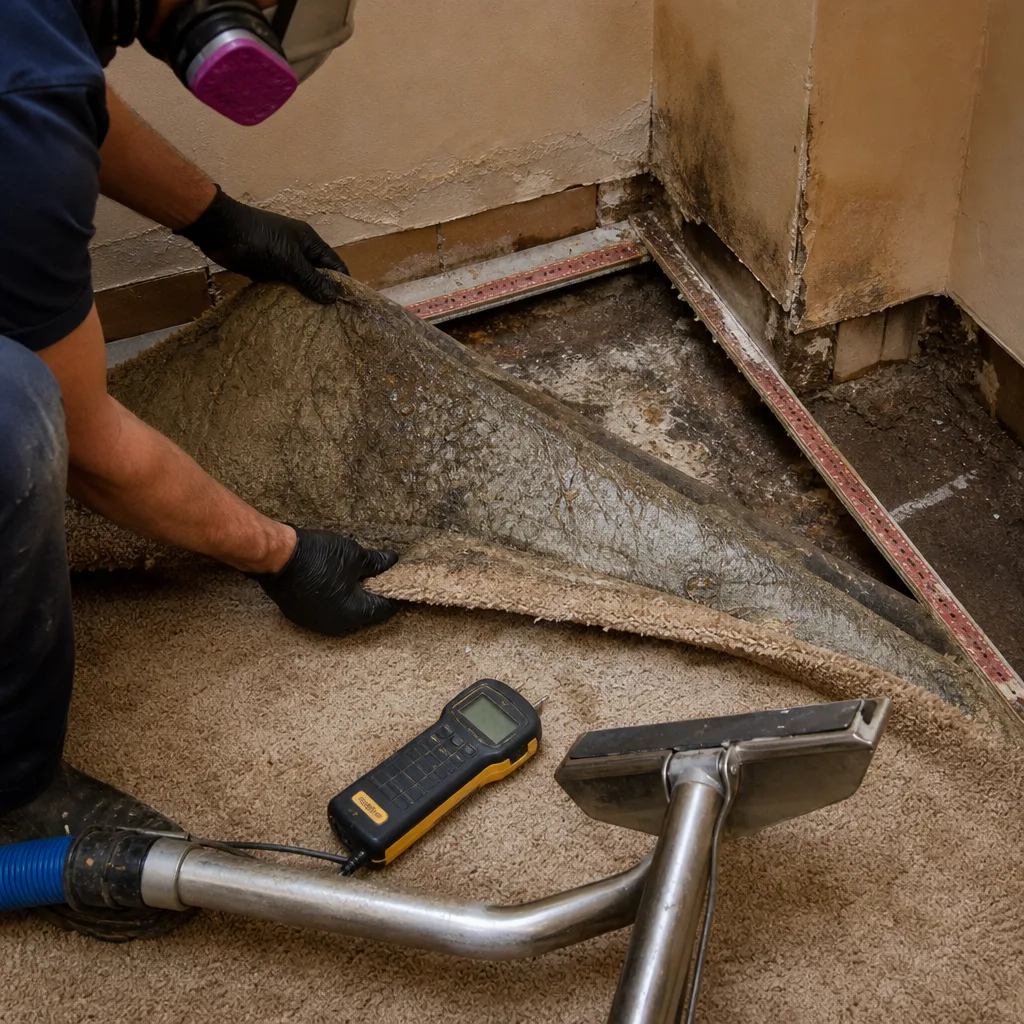
Nor’easter and cloudburst damage leaves debris, contaminated water, and damaged building materials. Our Richmond Hill crews clear debris, extract water, and stabilize the property so the next storm does not compound the first one. We work in the rain with tarps, pumps, and containment as needed.
Wind Damage Repair
Richmond Hill’s row houses take wind on three sides. Nor’easters drive rain horizontally into aging window frames, sills, and roof edges, and the result is water intrusion that looks minor on day one and becomes a wall-cavity mold problem by day five. We repair wind-damaged windows, siding, and roofing, and we reinforce framing where repeated storms have loosened the original 1920s connections.
Emergency Board-Up
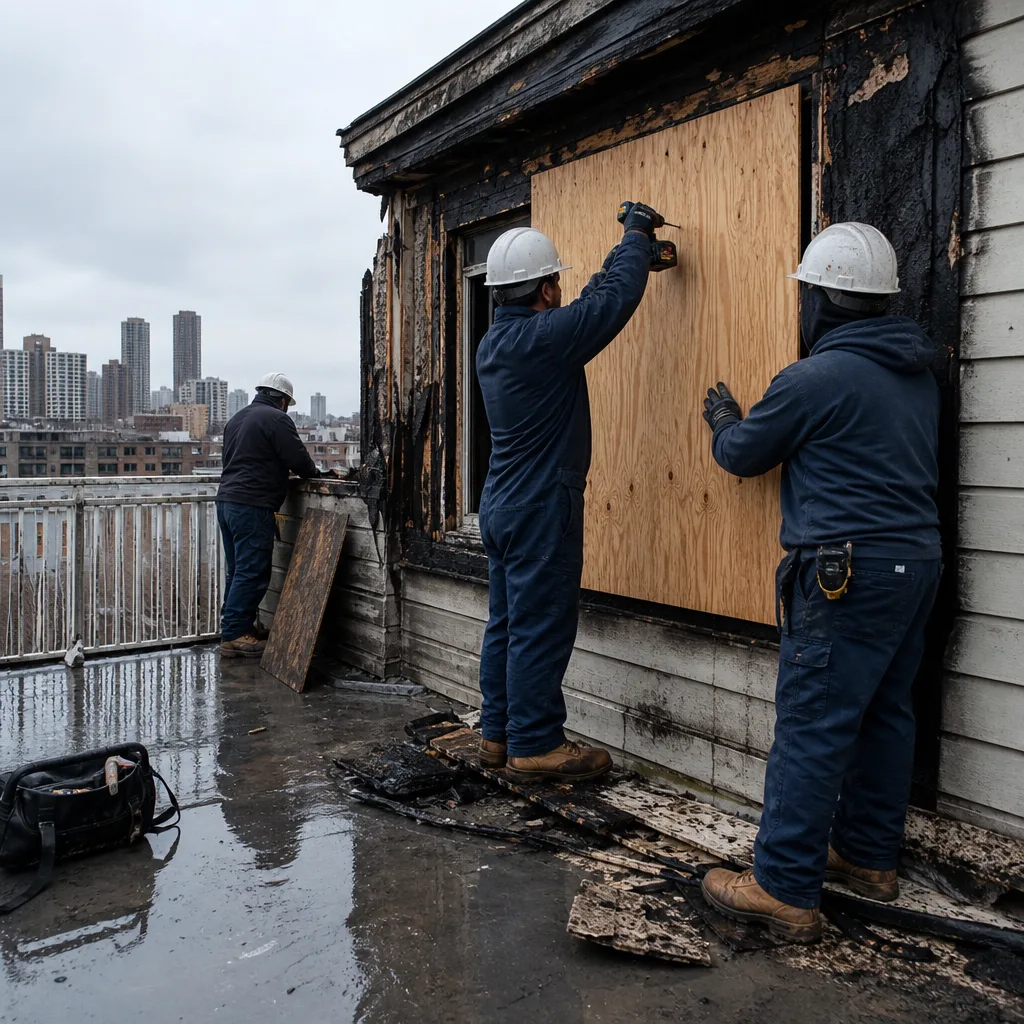
Broken windows, damaged doors, or a compromised roof need immediate boarding to keep weather and anyone passing by out. We board up damage at any hour and tarp roofs where the decking is exposed. The goal is to stop water ingress in the hours before full restoration begins.
Roof Tarping
Storm-blown shingles and flat-roof ponding on older Richmond Hill homes create openings that leak for weeks if left untarped. We place professional-grade tarping over damaged roof sections immediately, then schedule the permanent repair once weather allows.
Debris Removal
Downed branches, blown-in glass, soaked insulation, and contaminated drywall all need to leave the property properly. We haul out storm debris and dispose of it by the book, including sewage-contaminated materials that require special handling.
What happens when you call
- 1
A real person answersNo phone trees - you reach a local pro.
- 2
You get an upfront price rangeHonest numbers before anyone is dispatched.
- 3
A background-checked tech heads outLicensed & insured, dispatched right away.
- 4
You approve before work beginsNothing starts until you say go.
Storm & Disaster Restoration Costs in Richmond Hill, NY
Flood damage restoration in Richmond Hill typically runs $4,500 to $12,000 for a finished basement with Category 3 contamination, depending on square footage and how far the water wicked upward. A simple clean-water extraction with drying for an unfinished basement often runs $1,800 to $3,400. Emergency board-up and tarping usually adds $350 to $900. Wind damage repair runs from $1,200 for minor window and siding work to $15,000 or more when structural reinforcement is required. The variable that moves the price most in Richmond Hill is how long the water sat before we arrived and how much of the original plaster and framing must be removed. Insurance may cover the work under sewer backup coverage or flood insurance, and we bill carriers directly where your policy allows. Call (917) 924-4221 for a free inspection and a written scope before anything starts. The estimate costs you nothing.
We Also Serve Cities Near Richmond Hill
Our crews serve Richmond Hill and the surrounding neighborhoods, including Kew Gardens, South Richmond Hill, Ozone Park, and Woodhaven. If you own property in any of these areas and need storm or flood restoration work, the same live dispatch, certified crews, and written guarantee apply.
Serving Richmond Hill, NY - Our Local Coverage Area
We’re based in the Richmond Hill area and know this community well. Use the map below to see our service coverage - if you’re nearby, we can almost certainly help.
Richmond Hill Storm & Disaster Restoration Questions, Answered
Why does a flooded Richmond Hill basement often mean mold upstairs too?
Richmond Hill’s pre-1930 balloon-frame homes have continuous wall cavities running from the basement sill plate to the roof. When Category 3 floodwater fills a basement, it wicks upward inside those open stud bays, reaching first- and even second-floor walls without any visible water on those floors. Surface moisture meters never detect it. We use penetrating meters and thermal imaging to trace that hidden path, because every flood in this housing stock is a multi-floor investigation. Call (917) 924-4221 for an inspection that checks above the visible damage line.
What makes storm damage restoration in Richmond Hill different from a neighboring suburb like Kew Gardens or Ozone Park?
Three things: the balloon-frame construction of Richmond Hill’s oldest rowhouses, the neighborhood’s position inside the combined sewer overflow zone, and the prevalence of converted basement apartments. Kew Gardens and Ozone Park have different housing stock and drainage patterns. A basement flood in Richmond Hill is more likely to contain black water and more likely to spread upward through wall cavities. That is not a quirk. It is the standard condition our crews work under here.
How long after a nor’easter floods my Richmond Hill basement before mold starts?
In the original plaster and wood lath walls common to Richmond Hill homes built before 1930, mold colonization can begin within 24 to 48 hours of a flood event. The clock starts when the water enters, not when you notice it. That is why we dispatch within 45 minutes and run extraction on the same visit. The longer the water sits, the more material must be cut out and replaced. You can reach us at (917) 924-4221 any hour.
Can you restore a converted basement apartment after storm flooding without displacing the tenant forever?
The reality is that a Category 3 flood in a finished basement apartment usually requires removing drywall, insulation, and flooring down to the framing, then full drying and antimicrobial treatment before rebuilding. Displacement is often unavoidable for two to four weeks. What we can do is move fast enough to keep that timeline from stretching into months, and our reconstruction crew rebuilds the space to code so the tenant gets back into a home that will not mold again.
What should I do immediately after a summer cloudburst floods my Richmond Hill basement?
Do not enter the water. Richmond Hill’s combined sewer systems back up during summer cloudbursts, which means the water is likely Category 3 and contaminated with sewage. Turn off power to the affected area if you can reach the breaker safely without stepping into water. Then call (917) 924-4221. Our crews arrive in protective equipment, set up containment, and handle the contaminated materials safely. The first call is always to us, not to a general handyman.
How fast can someone actually get to my Richmond Hill home?
Most Richmond Hill addresses are within 45 minutes of our crews, day or night. During severe nor’easters when the whole neighborhood floods at once, response times can extend, but our dispatcher will tell you honestly when the crew will arrive. We do not leave you waiting with a recording. Call (917) 924-4221 and a person answers.
Do I really need full remediation, or can I just clean the basement myself?
If the water came from the street, a floor drain, or a toilet, it is Category 3. No amount of household cleaning removes sewage contamination from porous materials. Drywall, insulation, carpet, and wood that absorbed that water must be removed and replaced. The only safe question is how much. Our free inspection tells you that, with a written scope and price before work begins.
What certifications do your Storm & Disaster Restoration technicians hold?
Our technicians are certified to IICRC, RIA, and IFA standards, including WRT for water damage and AMRT for mold remediation. They are background-checked, uniformed, and trained to handle Category 3 water safely. The certifications matter because black-water work is a health and safety trade, not just a construction job.
If your Richmond Hill home has storm damage, a flooded basement, or wind damage that needs attention now, call (917) 924-4221. The inspection is free. The estimate is in writing. The work is backed by our 90-Day Done Right Promise. A live person answers, any hour, every day.
Written by Curt Bowman, Owner at Floodline Restoration Co. of Manhattan, serving Richmond Hill since 2010.