
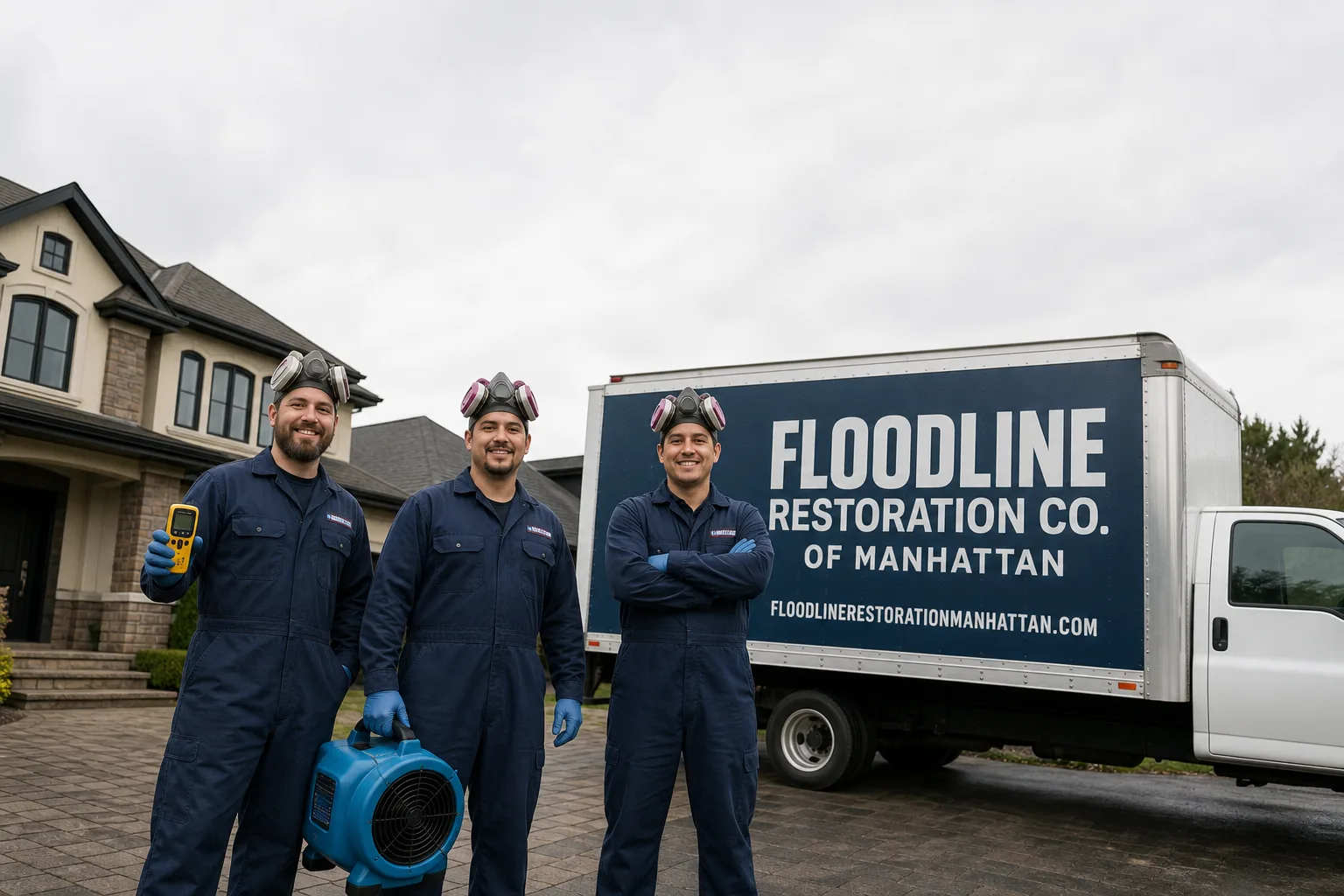
Free visual inspection and a written scope of work before any mitigation begins - photos, moisture readings, and drying logs go in your claim file
The scope we write is the scope we bill. Anything new gets shown to you, in writing, before we touch it.






 Before
 After
After Before
 After
After Before
 After
After24/7 Emergency Storm & Disaster Restoration in Sleepy Hollow
Storm damage in Sleepy Hollow moves fast, and so do we. Call (917) 924-4221 any hour, any day, and a live dispatcher answers. Not a recording. Not a callback queue. We’ll have a certified crew routed to your street from our New York City dispatch office, usually within 45 minutes. The first visual inspection is free. What we’re looking for in that first hour matters: whether water is still moving, whether structural members are compromised, whether the damage is clean or contaminated. In Sleepy Hollow, where the Hudson River is tidal and brackish, that last question changes everything about how we proceed.
Understanding Storm & Disaster Restoration Severity in Sleepy Hollow Properties
Storm restoration starts with classifying the water. Category 1 is clean, fresh supply water, like a cracked supply line. Category 2 is gray water, carrying detergents or biological contaminants. Category 3 is black water, the kind that carries sewage, river silt, and salt. In Sleepy Hollow’s riverside blocks, a storm surge that pushes the Hudson into a basement or first floor is Category 3 from the moment it crosses the sill plate. That means we treat it differently from a standard basement sump failure. We perform antimicrobial application after extraction, log moisture readings with thermal imaging and penetrating meters, and map drying progress daily. The housing stock here makes those protocols non-negotiable. A pre-1940 balloon-frame Victorian with horsehair plaster and original millwork has void paths that newer platform-framed houses simply don’t have. Water travels vertically through wall cavities, wicks into old-growth studs, and hides in blind bays where a moisture meter never gets touched by a novice crew. We’ve been doing this long enough to know where to look.
Why Sleepy Hollow Property Owners Choose Floodline Restoration Co. of Manhattan
- 45-minute response commitment. Our dispatchers keep crews staged near Sleepy Hollow’s access routes, and we’ll be there when we say. Storm damage doesn’t wait, and neither do we.
- A live person answers, 24/7. At 2 a.m. during a nor’easter, you get a dispatcher who knows this work, not a voicemail. The same call starts the crew toward you.
- IICRC-certified crews on every job. Our technicians hold WRT, FSRT, and AMRT certifications where relevant. They’re background-checked, uniformed, and they know pre-war construction.
- Free visual inspection. We assess the scope before anything gets torn out, with a written scope of work agreed before we start. No surprises later.
- Direct insurance billing. We document from the first hour, hold the moisture log, and coordinate with your carrier directly. You never play messenger.
- One team from extraction to reconstruction. The same Floodline crew that pumps out the water is the crew that rebuilds the wall. No mid-job handoff to a subcontractor you’ve never met.
Our Storm & Disaster Restoration Process
Inspection & Assessment
We walk the property with thermal imaging and penetrating moisture meters. In Sleepy Hollow’s older homes, we check balloon-frame cavities, sill plates, and plaster walls for hidden water paths. You get a written scope before any work begins.
Extraction & Stabilization
We set up Dri-Eaz submersible pumps and truck-mounted extraction where access allows. On tight hillside streets near Beekman Avenue, our crews stage equipment efficiently to keep things moving despite narrow access. Board-up and roof tarping happen in this phase when needed.
Drying & Dehumidification
Phoenix axial air movers and B-Air low-grain dehumidifiers run on a calculated drying plan. We seal balloon-frame void paths first in pre-1940 homes, so we’re not pushing moisture deeper into wall cavities. Daily readings get logged and shared with you and your carrier.
Cleaning & Sanitization
Category 3 brackish water requires antimicrobial treatment and controlled disposal of contaminated materials. We run HEPA air scrubbers during debris removal and sanitization to keep airborne particulates from spreading through the home.
Specialty Treatment for Brackish Flood Damage
This is the step generic restoration companies skip. We treat saline residue on framing, stop fastener corrosion before it starts, and address the elevated mold risk that comes with Hudson River intrusion. In Sleepy Hollow, this step matters more than anywhere inland.
Repairs & Restoration
We rebuild what needs rebuilding, from plaster repair to trim replacement to full wall reconstruction. The same crew that did the drying does the finish work. The 90-Day Done Right Promise covers it in writing.
Need Emergency Storm & Disaster Restoration in Sleepy Hollow Now?
Crews minutes away, answering live 24 hours a day. The sooner we start, the less it costs.
Working With Your Insurance Company
Storm and flood claims in Sleepy Hollow get complicated fast, especially when brackish contamination and pre-war construction are involved. We’ve handled enough of them to know what adjusters need. From the first hour, we document everything: photos room by room, moisture readings, material condition, and a line-item scope that matches industry-standard estimating software. If your carrier sends an adjuster out, our project manager meets them on site and walks the loss together. We bill most carriers directly for covered work, so you’re not floating thousands of dollars while you wait for a check. And because we keep the job whole from extraction to reconstruction, there’s no gap where a second contractor’s estimate gets questioned. The written 90-Day Done Right Promise stays in your hands regardless of how the claim plays out. Curt Bowman built this company in 2010 around a dispatch board and a square deal. That square deal includes handling your insurance without passing the burden back to you.
What We Provide Your Insurer
- Thorough documentation of the loss
- Photos of all damage, room by room
- Moisture readings and drying logs
- A detailed, line-item scope of work
- Direct coordination with your carrier
Built for Sleepy Hollow’s Loss Calendar
Sleepy Hollow’s storm damage season is not one season. It runs all year, and it’s shaped by where the village sits. Late summer and early fall bring hurricane remnants and nor’easters that drive the tidal Hudson over bulkheads and into riverside basements along Beekman Avenue and the low-lying blocks near Kingsland Point Park. That’s brackish Category 3 water, and it’s the most challenging water damage class we handle in this village. Winter brings deep freezes that burst supply lines in unheated crawl spaces and behind kitchen cabinets in older homes, sending clean water through walls and ceilings for hours before anyone notices. Spring thaw and heavy rain events channel hillside runoff down the steep streets from Sleepy Hollow’s upper elevations, overwhelming old foundations and flooding basements that were never waterproofed when they were built. Summer thunderstorms with driving rain and wind bring roof damage, downed limbs, and the occasional tree through a porch roof along the tree-lined streets near the village core. Every season has its failure mode here, and we’ve built our dispatch around them. Proudly serving local communities for over 42 years means we plan for the full calendar, not just the dramatic storms.
Storm & Disaster Restoration Across Sleepy Hollow’s Neighborhoods
Sleepy Hollow packs a lot of building types into a small village, and each pocket has its own storm damage profile. The Beekman Avenue corridor near the river is our most frequent call zone. These homes, many pre-1940 Victorians and early 20th-century multi-families, take the brunt of tidal surge flooding. The Edge-on-Hudson development on the former GM Tarrytown Assembly site is newer construction, with better floodplain elevation and modern building envelopes, but storm damage there still requires fast response when windows fail or roof membranes tear in high wind. North Washington Street and the streets climbing the hillside toward Route 9 see rainfall-driven runoff intrusion and wind damage to older slate and asphalt roofs. The residential blocks around Kingsland Point Park and the Philipse Manor area share that same exposure: mature trees, steep lots, and foundation drains that were installed generations ago. Each neighborhood shapes how we stage equipment and route crews. On a narrow street off Beekman Avenue, our crew stabilized a pre-1940 waterfront Victorian after a nor’easter pushed Category 3 tidal water into the first floor. We contained the affected spaces, pumped brackish water with a Dri-Eaz sump, then ran Phoenix axial air movers and a B-Air dehumidifier while logging moisture readings every four hours to dry the old plaster and balloon-frame cavities without over-stressing the horsehair plaster. The owner was back in a pre-loss condition within five days, with no secondary corrosion or mold bloom.
The common thread across all of these neighborhoods is access. Sleepy Hollow’s hillside streets are tight. Parking is scarce near the river. Staging a full drying operation on a street like Devries Avenue or Barnhart Avenue requires planning that a crew rolling in from an industrial park doesn’t bring. We know these blocks. We know where to park the truck, how to run hoses without blocking a neighbor’s driveway, and how to get equipment through a narrow front door without tearing the door frame. That’s local experience, and it shows in how fast the job gets moving. Our Storm & Disaster Restoration team treats Sleepy Hollow’s access constraints as part of the job, not an obstacle to work around.
Specialized Storm & Disaster Restoration Services We Offer in Sleepy Hollow
Flood Damage Restoration
Floodwater in Sleepy Hollow is rarely plain water. Along the Hudson, it’s brackish and saline, which corrodes fasteners and feeds mold faster than freshwater. Our flood restoration includes salt residue treatment on framing, antimicrobial application after extraction, and drying protocols calibrated for balloon-frame construction and plaster walls. We don’t treat a riverside flood like an inland basement seep.
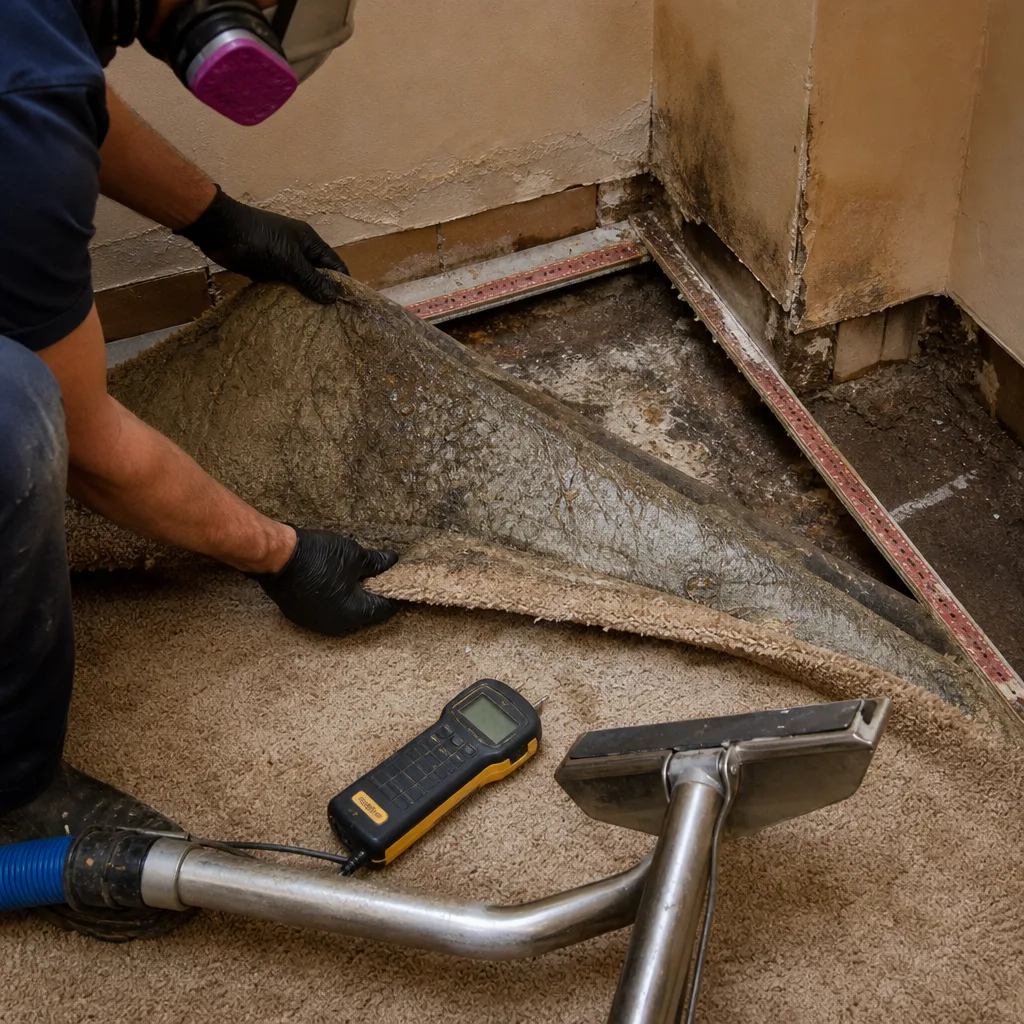
Emergency Board-Up
After a storm blows out a window or tears a door frame, your home is open to weather, animals, and anyone walking by. We board up openings with plywood and structural fasteners, sized and cut on site to fit Sleepy Hollow’s older, non-standard window and door openings. Board-up is temporary stabilization. It keeps the loss from spreading.
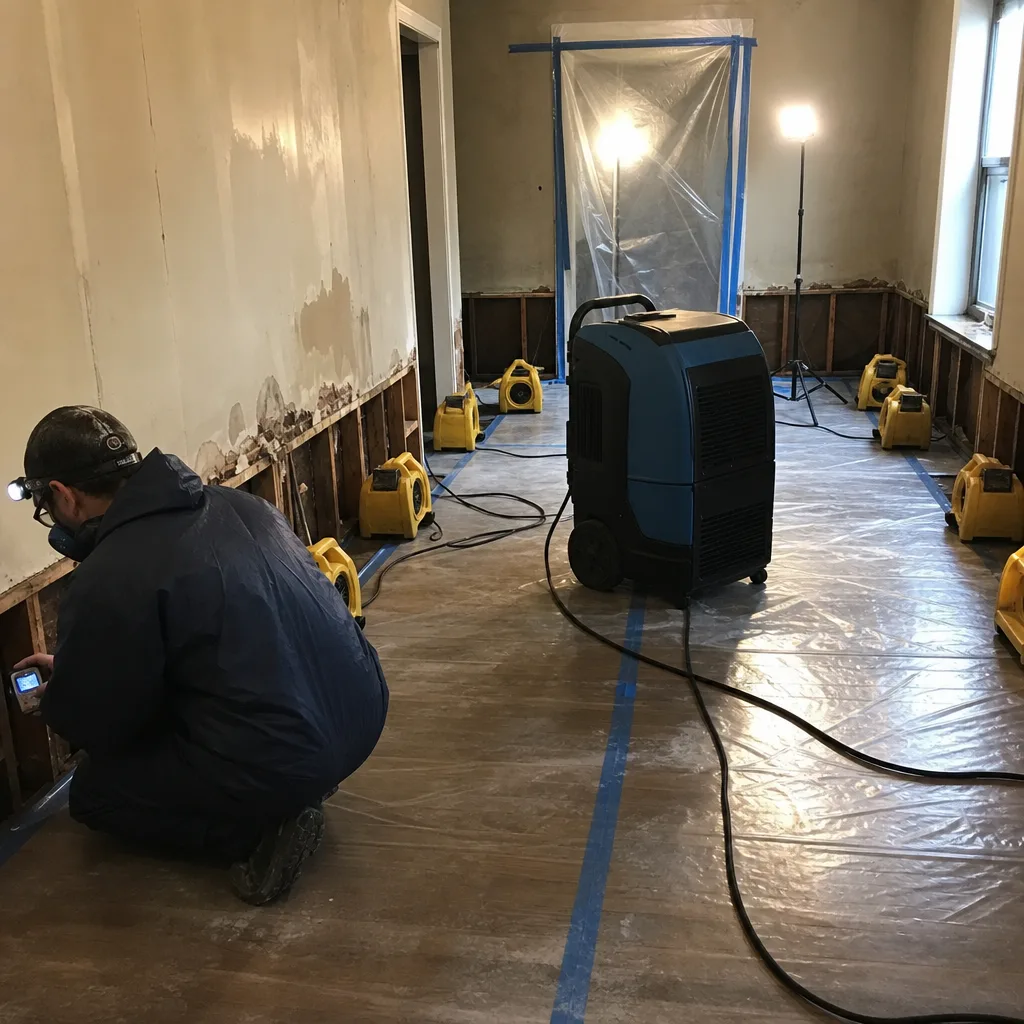
Roof Tarping
Wind-driven rain through a damaged roof puts water into attics and wall cavities fast. We install heavy-duty tarps over damaged roof sections, secured against wind, to stop active water intrusion until a permanent repair is scheduled. On Sleepy Hollow’s steep hillside lots, our crews are trained and equipped for safe roof access, and we never cut corners on fall protection.
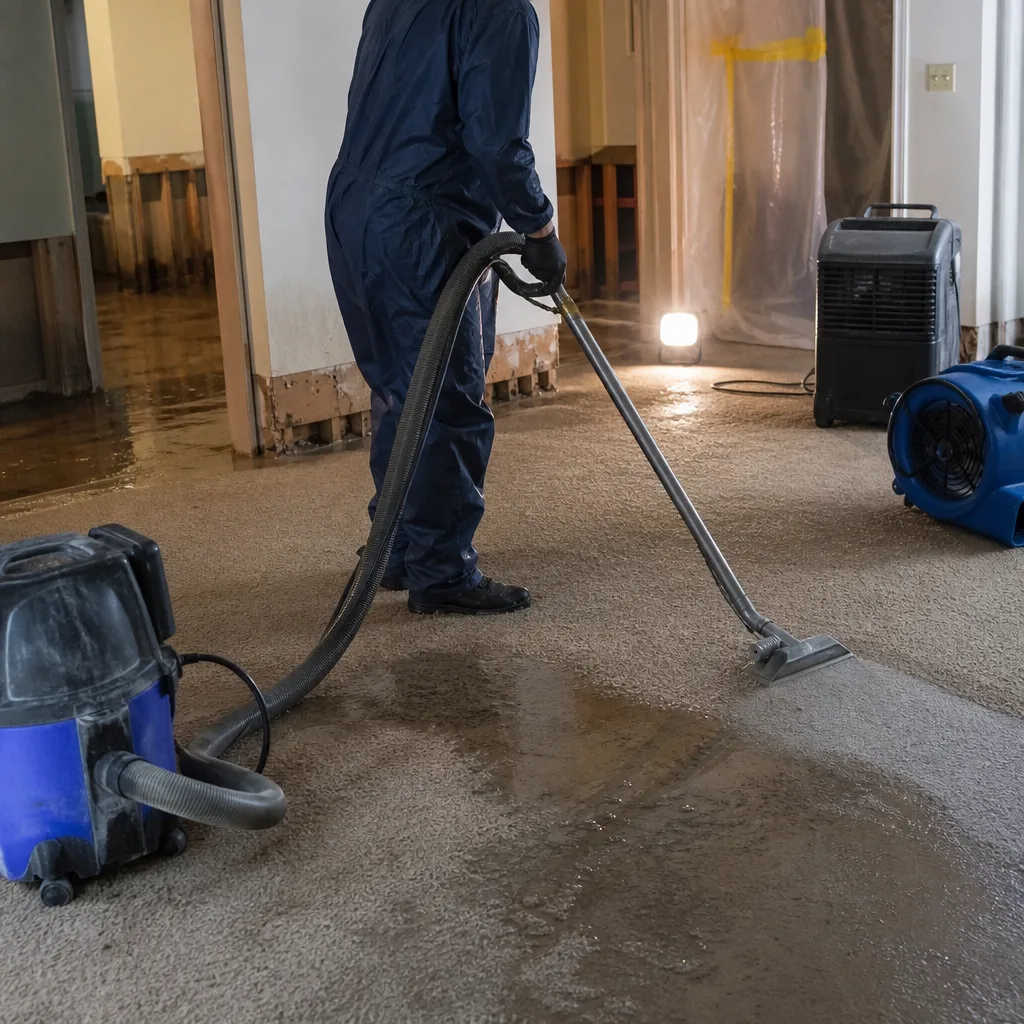
Storm Damage Cleanup
Downed limbs, broken glass, soaked insulation, drywall debris. We remove storm debris and unsalvageable materials, run HEPA air scrubbers during demo to keep particulates contained, and haul everything off. You’re not left with a dumpster in the driveway and a crew that disappeared.
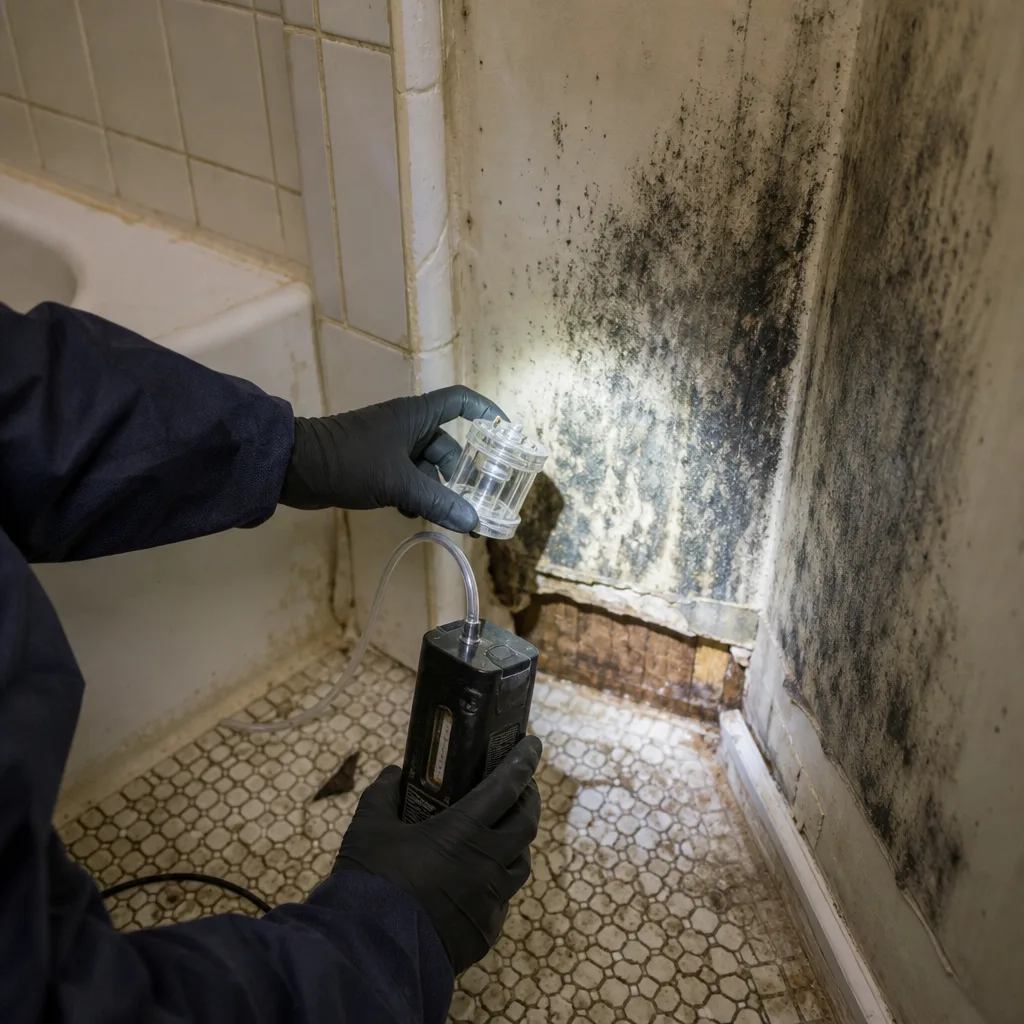
Debris Removal
Sleepy Hollow’s narrow streets and tight driveways make debris removal a logistical challenge. Our crews know how to stage bins and trucks without blocking neighbors. We separate salvageable materials from waste, document everything for your insurance claim, and leave the site clean and secure when we’re done.
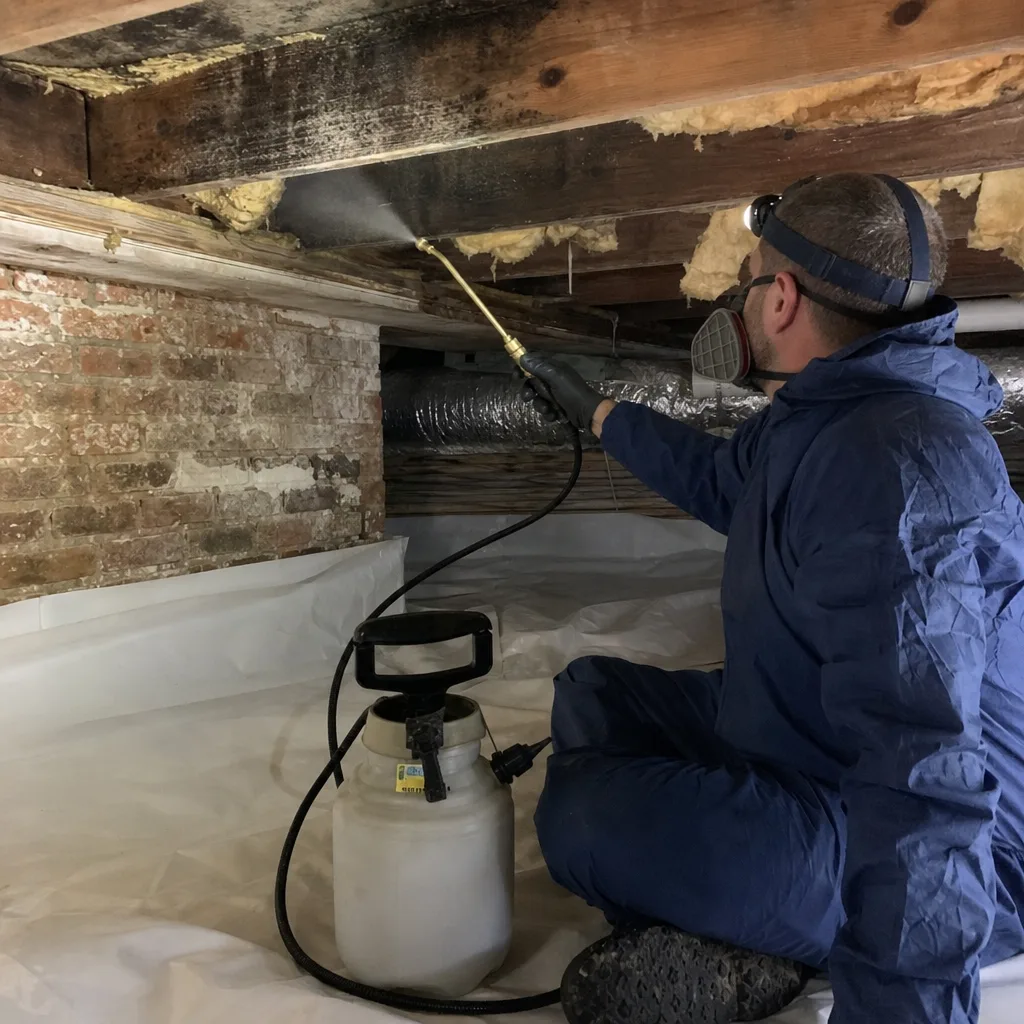
Wind Damage Repair
High winds along the Hudson tear siding, lift roof edges, and send tree limbs through windows. We secure what can be secured, remove what can’t, and bring structural repairs from first framing to finished paint under one crew. No handoff to a second company.
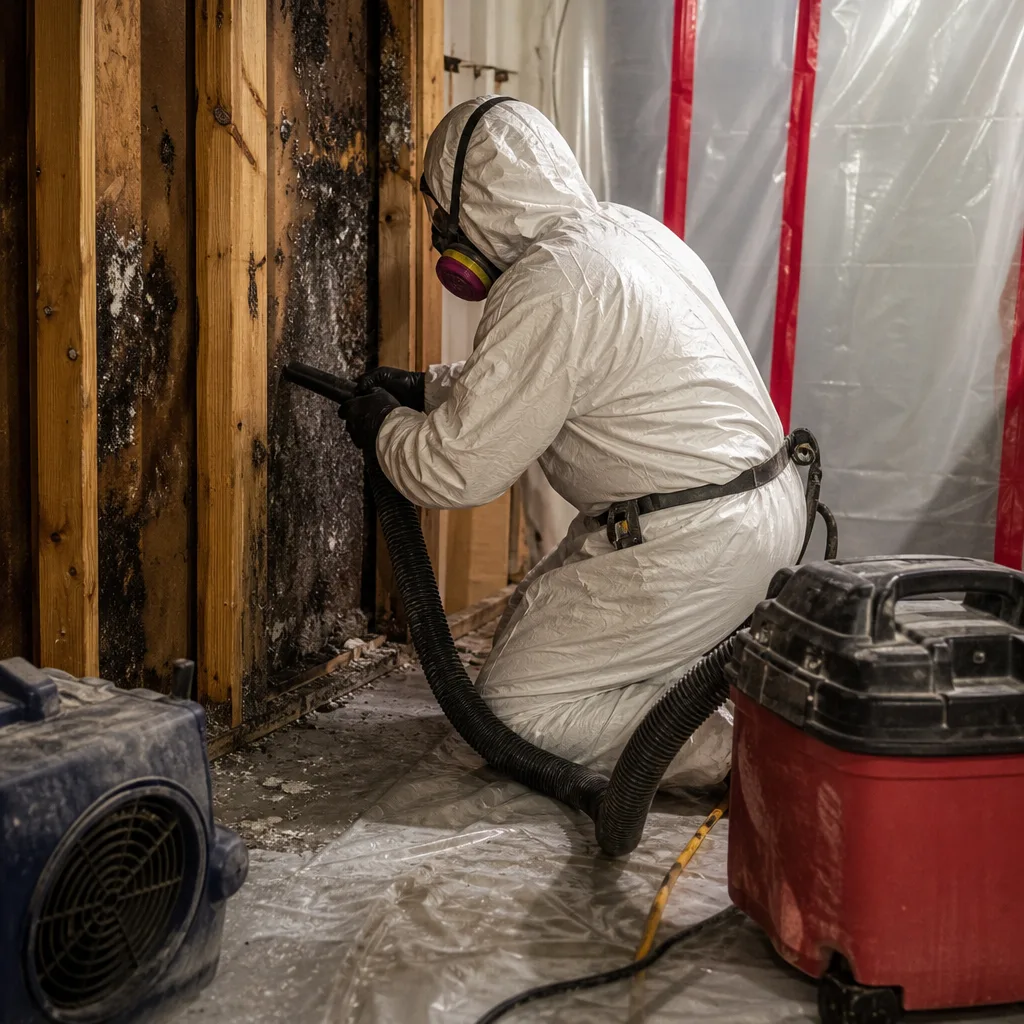
What happens when you call
- 1
A real person answersNo phone trees - you reach a local pro.
- 2
You get an upfront price rangeHonest numbers before anyone is dispatched.
- 3
A background-checked tech heads outLicensed & insured, dispatched right away.
- 4
You approve before work beginsNothing starts until you say go.
Storm & Disaster Restoration Costs in Sleepy Hollow, NY
A typical emergency board-up in Sleepy Hollow runs $400 to $900, depending on how many openings need securing and what size they are. Roof tarping generally falls between $500 and $1,200 for a standard residential roof section, more if it’s a steep pitch with limited access. Flood damage restoration on a riverside basement starts around $3,000 to $7,000 for extraction, drying, and antimicrobial treatment, and climbs when brackish contamination requires full wall cavity treatment, insulation removal, and sill plate repair. Debris removal after a storm typically runs $800 to $2,500 on its own, though it’s often folded into a larger restoration scope. These are Sleepy Hollow market numbers, shaped by the village’s older housing stock and the challenges of working on tight hillside streets. The free visual inspection gets you a firm, written scope before any work starts, and we handle insurance billing directly so out-of-pocket cost is often just your deductible. Call (917) 924-4221 for an exact quote. Estimates are free.
We Also Serve Cities Near Sleepy Hollow
Floodline Restoration Co. of Manhattan runs crews through the whole river corridor. We answer live 24/7 and dispatch to Fairview, Harrison, East Bronx, and Hunts Point the same way we respond to Sleepy Hollow: fast, local, and with a written scope before work starts. If you’re in a neighboring town and have storm damage, the same dispatch line covers you.
Serving Sleepy Hollow, NY - Our Local Coverage Area
We’re based in the Sleepy Hollow area and know this community well. Use the map below to see our service coverage - if you’re nearby, we can almost certainly help.
Sleepy Hollow Storm & Disaster Restoration Questions, Answered
How do you handle brackish tidal water in a Sleepy Hollow waterfront basement?
We treat it as Category 3 contaminated water from the start. That means antimicrobial application after extraction, controlled disposal of saturated materials, and specific drying protocols for saline residue. Salt in the water accelerates corrosion of fasteners, sill plates, and trim nails, and it feeds mold at a faster rate than freshwater. Our crews check framing for salt crystals during drying and treat affected surfaces so you don’t end up with rusted fasteners and hidden corrosion six months later. Call (917) 924-4221 to get a crew on it now.
Do you need to follow EPA RRP rules when restoring a pre-1940 Sleepy Hollow home after storm damage?
The short answer with us is always: yes, and we’re certified for it. Any home built before 1978 may contain lead paint, and any storm restoration work that disturbs painted surfaces falls under EPA RRP rules. In a pre-1940 Sleepy Hollow Victorian, that’s nearly every wall, window frame, and piece of trim we touch. We follow those rules, full stop. If the home is a contributing structure in a historic district, we also coordinate with the appropriate preservation review process before changing exterior features. Call (917) 924-4221 if you’re not sure whether your home falls under these rules. We’ll tell you straight.
How quickly can you start mold mitigation after a storm breach on a hillside street near the river?
Mold colonization starts within 48 to 72 hours of a water event, and in Sleepy Hollow’s humid river climate, it can start faster, especially after brackish intrusion. We can have a certified mold mitigation crew on site within 45 minutes of your call. If you have a storm breach, call (917) 924-4221 immediately. The sooner we start extraction and drying, the less mold remediation is needed.
What does structural drying on an old Sleepy Hollow balloon-frame house actually require that a newer home does not?
Balloon framing has continuous wall cavities running from the foundation to the attic, with no fire stops or horizontal breaks. Water that enters a wall can travel straight up two or three stories. To dry that properly, we seal void paths first, then use penetrating moisture meters to find where water actually went, then place air movers and dehumidifiers based on that map, not on guesswork. Newer platform-framed homes simply don’t have those vertical channels. Call (917) 924-4221 for a free inspection on any pre-war Sleepy Hollow home.
Why can’t I just use portable fans after a Hudson River surge flooded my riverside split-level?
Portable fans move air across surfaces, but they don’t reach moisture inside wall cavities, under floors, or behind plaster. After a brackish surge, you also have salt and organic material in the water, meaning you need antimicrobial treatment and dehumidification to pull moisture out of building materials, not just move air around. Running fans without a moisture map and proper equipment can actually push contaminated moisture deeper into void spaces and make the problem worse. Call (917) 924-4221 and we’ll be there within 45 minutes with the right equipment.
How long does full storm restoration take in Sleepy Hollow?
Most water extraction and drying jobs finish in three to five days. Full restoration that includes plaster repair, trim replacement, or wall reconstruction can run several weeks depending on the scope. The honest answer is you’ll know your timeline within the first visit, because we give you a written scope of work before any demolition starts. The owner in the Beekman Avenue Victorian we stabilized was back to pre-loss condition in five days. A full rebuild is a different calendar. Call (917) 924-4221 for a timeline on your specific damage.
Will my insurance cover storm and flood damage in Sleepy Hollow?
Storm damage, like wind, fallen trees, and rain entering through a damaged roof, is typically covered by standard homeowner’s insurance. Flood damage from the Hudson River rising is generally not covered under a standard policy; it requires a separate flood insurance policy through the NFIP or a private carrier. What happens next depends on your policy. We document everything from the first hour, provide the moisture log and photo documentation your carrier needs, and coordinate directly with your adjuster. Call (917) 924-4221 and we’ll help you sort out what’s covered.
What should I do in the first 30 minutes after storm damage?
If water is entering, shut off electricity to affected areas if you can reach the panel safely, but don’t enter standing water if it may be electrically charged. Move valuables and important papers to a dry space if it’s safe to do so. Take photos of the damage before anything is moved or cleaned. Then call (917) 924-4221. Our live dispatcher takes the call, and a crew is on the way. The first hour sets the cost and the timeline. Don’t wait.
Written by Curt Bowman, Owner at Floodline Restoration Co. of Manhattan, serving Sleepy Hollow since 2010.