

Free visual inspection and a written scope of work before any mitigation begins - photos, moisture readings, and drying logs go in your claim file
The scope we write is the scope we bill. Anything new gets shown to you, in writing, before we touch it.






 Before
 After
After Before
 After
After Before
 After
After24/7 Emergency Storm & Disaster Restoration in Spring Creek
Storm damage in Spring Creek moves fast because the neighborhood sits at sea level next to Jamaica Bay, inside FEMA’s highest-risk Special Flood Hazard Area. When water comes in, you need a crew that answers the phone and gets moving. That’s what we do. Call (917) 924-4221 any hour and a live dispatcher picks up, not a recording. We’ll have background-checked, IICRC-certified technicians heading toward your Spring Creek address within 45 minutes, because the first hour after a nor’easter or sewage backflow event determines how much of your home we can save rather than rebuild. No call center scripts, no answering service runaround. Just a real person who knows Spring Creek and knows what flood water does to a ground-floor unit when it’s been sitting there since the tide came in.
Understanding Storm & Disaster Restoration Severity in Spring Creek Properties
Not all storm water is the same, and in Spring Creek the distinction matters more than in most of the city. Category 1 water comes from a broken supply line or clean rainwater before it touches the ground. Category 2 water carries contaminants: think sump pump overflow or washing machine discharge. Category 3 water is what our crews deal with most often after a nor’easter pushes Jamaica Bay over its banks or a storm sewer backs up into a basement. That’s water loaded with sewage, bacteria, and whatever the tide dragged in from the bay. Category 3 water requires full containment, removal of affected drywall and flooring, and antimicrobial treatment before structural drying even begins. In the Spring Creek Towers buildings along Flatlands Avenue, the aging 1970s plumbing risers complicate this further: a leak on the 15th floor means water travels down through dozens of units before anyone notices it. The visible water on the ceiling of one apartment is often three floors removed from the actual source. That’s why we moisture-map every affected surface, not just the spot where the stain appeared. Behind years of layered paint and vinyl wall covering, hidden saturation can keep feeding mold for months after the visible damage looks dry.
Why Spring Creek Property Owners Choose Floodline Restoration Co. of Manhattan
- 45-minute response commitment. When you call about flooding in Spring Creek, we’re on the road to you within 45 minutes. Ground-floor units at Spring Creek Towers can’t wait until morning.
- Live 24/7 answer, every time. A real dispatcher at our New York City office answers your call at 2 a.m. and starts coordinating your crew. No automated system, no “please hold for the next available representative.”
- IICRC-certified crews, trained for this exact neighborhood. Our technicians hold IICRC Water Damage Restoration (WRT) and Applied Microbial Remediation (AMRT) certification. They know what Category 3 flood water means and what it leaves behind in a 1970s high-rise.
- Free visual inspection, no obligation. Before any work begins, we walk the affected area with you and show you what we’re seeing. No high-pressure sales. A written scope follows.
- Direct insurance billing. We put together the line-item scope, the photos, the moisture logs, and we send them straight to your carrier. You don’t relay messages between us and the adjuster.
- One team, start to finish. The same crew that extracts water on day one handles daily drying readings, demolition, and the eventual reconstruction. No mid-job handoff to strangers.
Our Storm & Disaster Restoration Process
Inspection & Assessment
We inspect the full affected area, including adjacent rooms and the floor cavity. For Spring Creek storm events, this includes checking for sewage backflow and identifying what water category we’re dealing with. We note whether asbestos-containing materials are present before any demolition is planned, especially in Spring Creek Towers units built in the 1970s.
Extraction & Stabilization
Standing water comes out fast using truck-mounted extraction units that pull hundreds of gallons per minute where access allows, or portable XPOWER extraction units in upper-floor units. We remove saturated drywall, carpet, and pad that cannot be economically dried. In a building with 46 towers and shared riser systems, this often means coordinating shut-off valves with property management.
Drying, Dehumidification & Structural Drying
We place Dri-Eaz dehumidifiers and Phoenix air movers based on a moisture map we create with thermal imaging and hygrometers. Daily readings get logged until the dry standard is met. In Spring Creek’s humid bay-adjacent climate, this phase runs longer than in inland neighborhoods, and we account for that in our scope.
Cleaning & Sanitization
Category 3 flood water demands full sanitization of all affected surfaces. We apply EPA-registered antimicrobials, run HEPA air scrubbers, and remove any remaining porous material that absorbed contaminated water. This is where hidden mold colonies behind vinyl wall covering get addressed, not just wiped over.
Specialty Treatment
Storm events in Spring Creek routinely require specialty protocols: asbestos abatement coordination for pre-1978 floor tile and adhesives, mold containment and clearance testing, and sewage backflow decontamination. We handle these in sequence so the rebuild phase starts on a genuinely clean substrate.
Repairs & Restoration
Drywall, insulation, flooring, trim, and paint go back in. If storm wind damaged windows or the roof membrane, we repair that too. We finish the job with the building back to pre-loss condition, and our 90-Day Done Right Promise covers the work in writing.
Need Emergency Storm & Disaster Restoration in Spring Creek Now?
Crews minutes away, answering live 24 hours a day. The sooner we start, the less it costs.
Working With Your Insurance Company
Storm and flood claims get messy, especially when the damage involves sewage backflow or hidden mold that appeared days after the initial event. We document everything from the first hour so your carrier has no reason to question the scope. Our technicians photograph every affected room, take moisture readings before and during drying, and keep a daily log that shows the drying curve. We write the estimate in industry-standard Xactimate line items, which your adjuster recognizes. Our team communicates directly with your carrier, so when the adjuster calls about a line item, we answer. You do not sit on hold with your insurance company explaining why a dehumidifier ran for seven days in a sea-level flood zone. That’s our job.
What We Provide Your Insurer
- Thorough documentation of the loss
- Photos of all damage, room by room
- Moisture readings and drying logs
- A detailed, line-item scope of work
- Direct coordination with your carrier
Built for Spring Creek’s Loss Calendar
Spring Creek’s storm damage season does not look like the rest of Brooklyn’s. January deep freezes burst supply lines in aging riser pipes, sending water cascading down through multiple floors at Spring Creek Towers before residents even notice a pressure drop. Spring thaw and nor’easter season bring the bay up over the bulkheads and into ground-floor mechanical rooms, sump pits, and basements. Summer thunderstorms overwhelm the neighborhood’s flat, nearly impermeable terrain, which means stormwater and tidal water have nowhere to drain. And every year, the same units flood in the same buildings, because the elevation never changes and the infrastructure gets older. That repeated wet-dry cycling is why hidden mold behind 1970s vinyl wall covering is a baseline expectation in Spring Creek, not an exception. We prepare for all of it, which means our drying plans account for the humidity coming off Jamaica Bay and our demolition protocols account for the asbestos under the floor tile.
Storm & Disaster Restoration Across Spring Creek’s Neighborhoods
Most Spring Creek restoration work happens inside the Spring Creek Towers complex, where 46 high-rise buildings along Flatlands Avenue and Vandalia Avenue house thousands of families behind centralized property-management approval chains. Work there means scheduling water shut-offs with management, coordinating freight elevator access for equipment, and submitting scopes through the management office before demolition begins. The good news: we know this process and start it on day one. East of the Towers, the newer residential pockets around the Gateway Center area and the flats near Erskine Street drain toward the bay and see flooding during every major storm event. Along Seaview Avenue and the commercial blocks near the Brooklyn Sports Club, ground-floor retail spaces take water through loading docks and areaways when the storm sewers back up. A flood on Pennsylvania Avenue moves differently than a flood on Vandalia Avenue, and the response plan should reflect that. We route crews through these roads weekly and know which intersections pond first during a downpour.
Specialized Storm & Disaster Restoration Services We Offer in Spring Creek
Storm Damage Cleanup
After a nor’easter or thunderstorm passes, the debris and muck left behind in a sea-level neighborhood is substantial. We remove storm-generated debris, muck, and damaged building materials, then sanitize what remains. In Spring Creek, this usually means dealing with Category 3 water residue, not just leaves and branches.
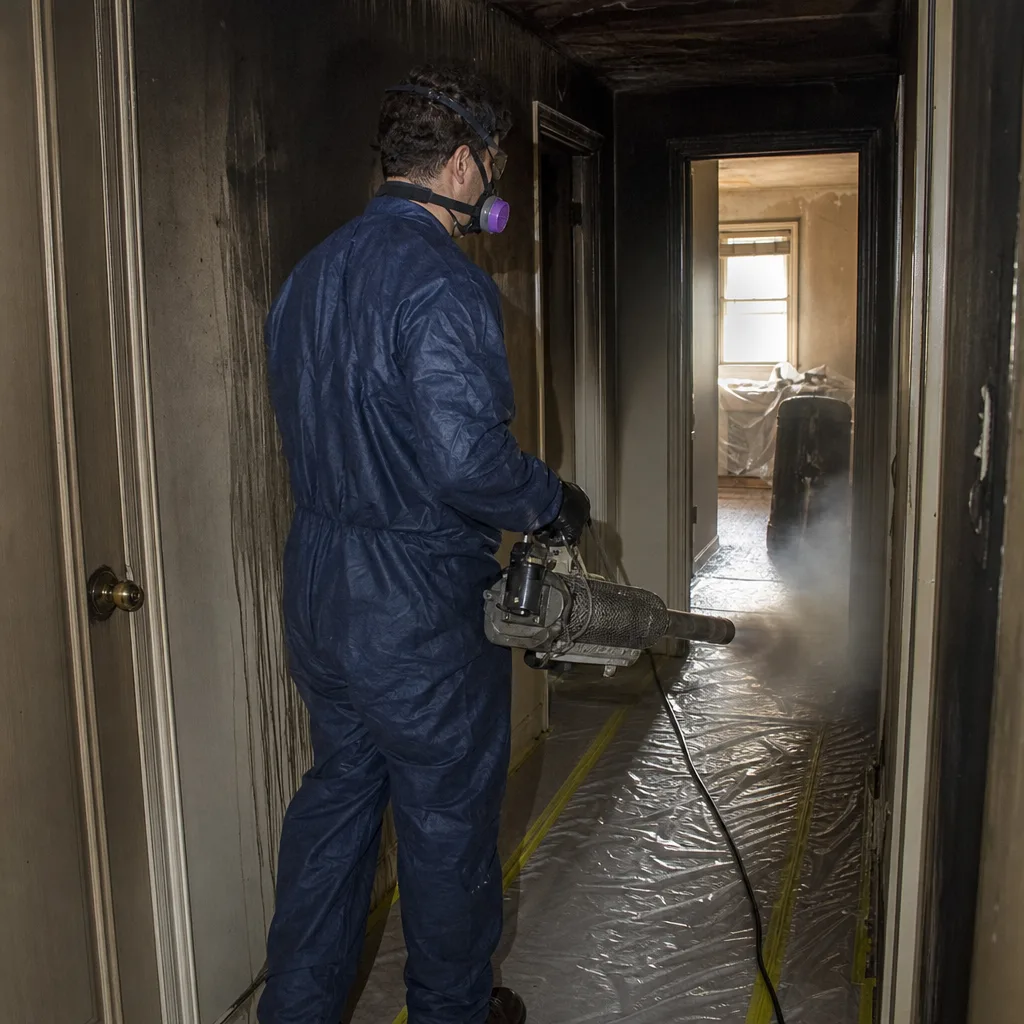
Flood Damage Restoration
Ground-floor and basement flooding from Jamaica Bay surge or storm sewer backup is the defining damage type in Spring Creek. We extract, dry, sanitize, and rebuild. Our crews know what Category 3 water means here, and they plan for mold and asbestos before the first fan goes in.
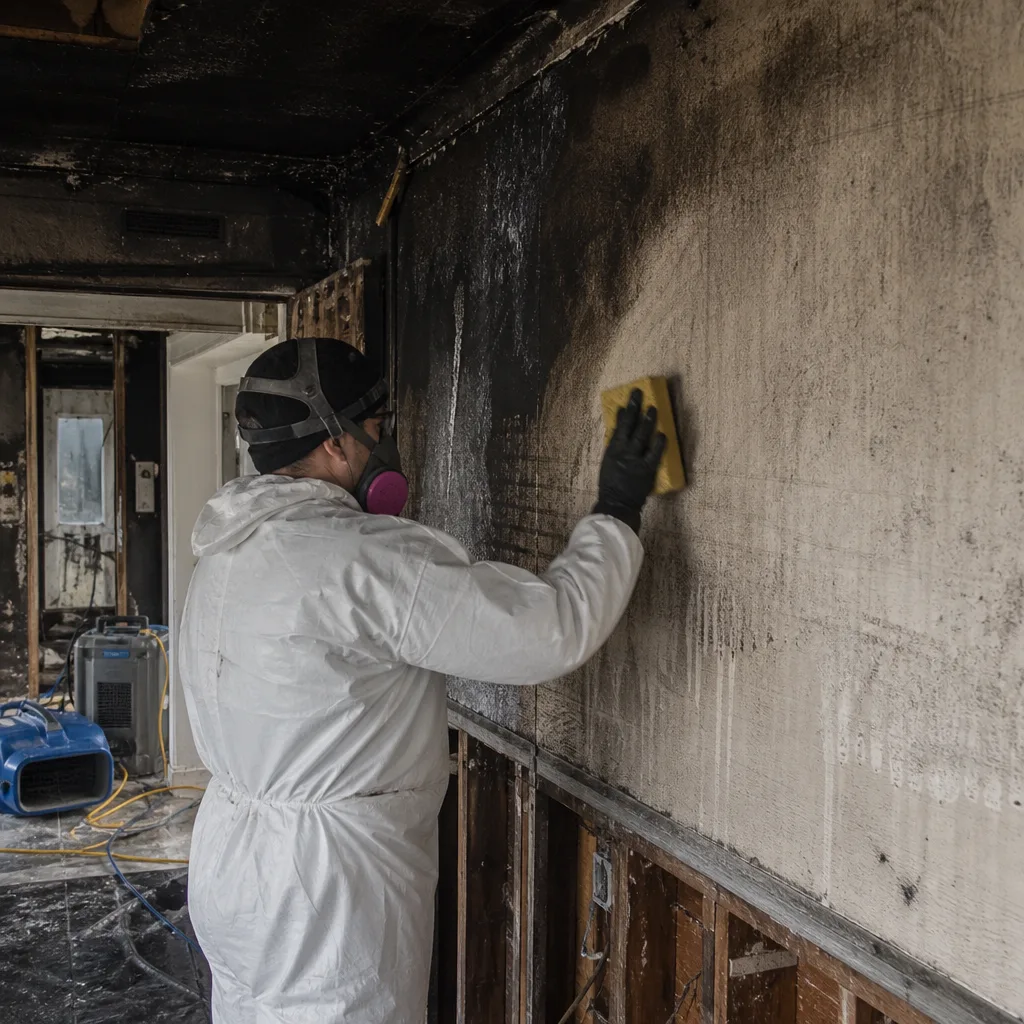
Emergency Board-Up
When wind tears out a window or the roof membrane peels back, the building envelope is open to weather and anyone walking by. We board up fast, usually the same day management approval comes through. In a high-rise, an open window on the 20th floor is just as urgent as a ground-floor breach: wind drives rain sideways, and one broken window can keep the whole stack wet.
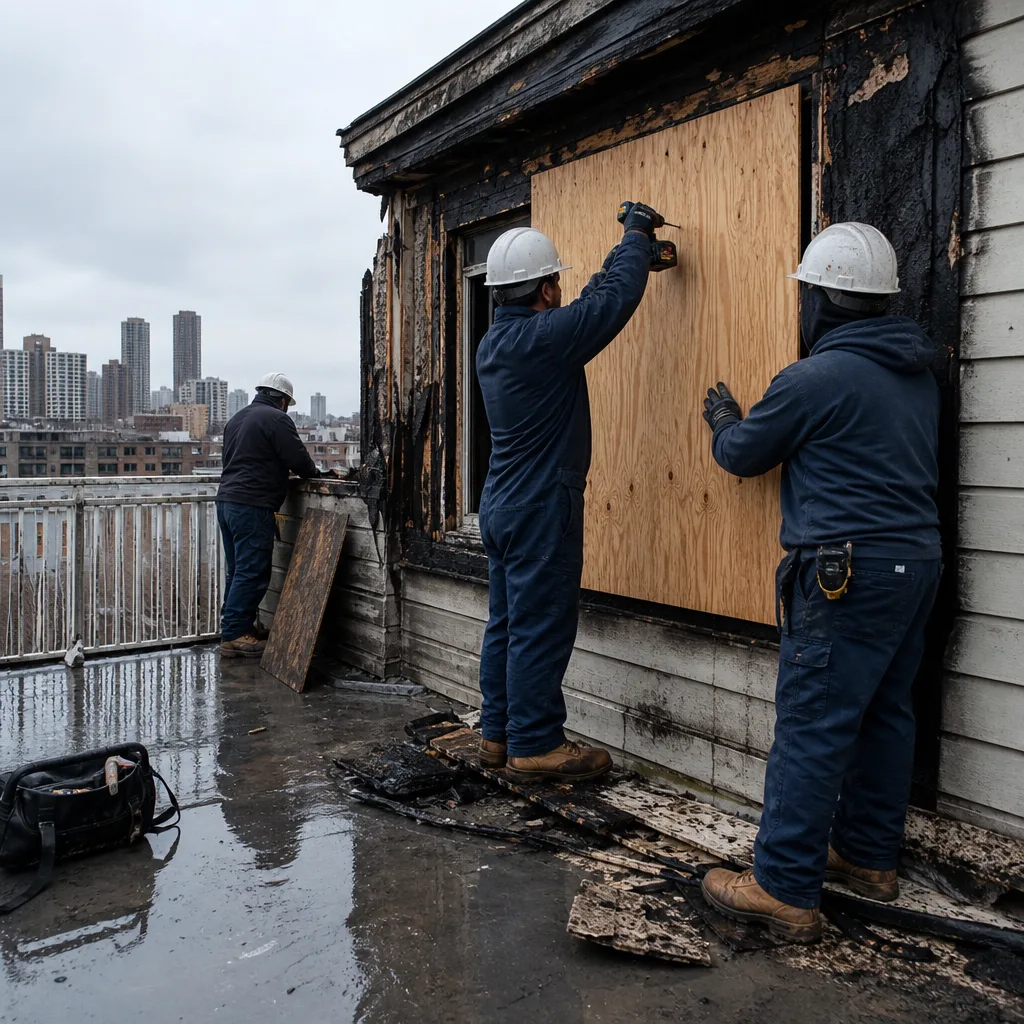
Roof Tarping
Flat roofs on 1970s towers take wind damage at the membrane seams and around rooftop mechanical units. We tarp the affected area to stop further water intrusion while permanent repairs are scheduled. In a building where 400 units share one roof, a single failed section creates leaks in dozens of apartments below.

Debris Removal
Storm debris blocks access, clogs drainage paths, and creates trip hazards in stairwells and common areas. We remove it, document it for the insurance claim, and dispose of it properly. For Spring Creek Towers jobs, we coordinate with management so dumpsters and chutes are used per building protocol.

What happens when you call
- 1
A real person answersNo phone trees - you reach a local pro.
- 2
You get an upfront price rangeHonest numbers before anyone is dispatched.
- 3
A background-checked tech heads outLicensed & insured, dispatched right away.
- 4
You approve before work beginsNothing starts until you say go.
Storm & Disaster Restoration Costs in Spring Creek, NY
Flood damage restoration in Spring Creek typically runs $2,200 to $8,500 for a ground-floor bedroom or living area with Category 3 water, depending on how long the water sat and whether asbestos tile is present. A complete basement or ground-floor unit flood with sewage backflow runs $8,000 to $25,000 or more when demolition, drying, sanitization, and rebuild are included. Emergency board-up for wind damage usually costs $350 to $1,200 per opening in Spring Creek, depending on size and access. Roof tarping on a flat tower roof runs $800 to $2,500 for a standard tarp job. What moves the price most is water category, how long the water sat before we arrived, and whether asbestos abatement coordination is required. Many Spring Creek flood claims involve Category 3 water, which triggers more expensive containment and sanitization than a clean Category 1 supply line break. Insurance generally covers storm-driven flood damage if you have flood coverage through NFIP, but sewage backflow and wind damage follow different policy paths. We walk you through it. The free visual inspection gives you a firm written scope with real numbers before you commit. No guesswork, no vague “price varies” answer. Call (917) 924-4221 and we’ll put numbers on paper.
We Also Serve Cities Near Spring Creek
If you’re in Fairview, Harrison, East Bronx, or Hunts Point and dealing with storm damage, our crews make the trip. The call is live 24/7 and the response commitment applies throughout our service area.
Spring Creek Storm & Disaster Restoration Questions, Answered
How fast can mold start growing in a Spring Creek Towers unit after storm water intrusion?
Mold can begin growing within 24 to 48 hours when building materials stay wet in a warm, humid environment. In a Spring Creek Towers unit with a 1970s vinyl wall covering trapping moisture behind it, the clock starts the moment water stops being visible, because the hidden space behind the vinyl stays wet far longer than the surface. That’s why we start structural drying immediately and inspect behind wall coverings early. Call (917) 924-4221 the same day water appears, even if it looks small.
Do Spring Creek storm restoration jobs require asbestos coordination?
Often, yes. Spring Creek Towers buildings were constructed in the 1970s, and many original units still have asbestos-containing floor tile and adhesives. If storm water damaged those floors and demolition is needed, we coordinate asbestos abatement with a licensed abatement contractor before we cut into affected areas. It adds a step, but it’s the only correct way to do the job.
What water category does a typical Spring Creek flood involve?
Most Spring Creek floods are Category 3 water. When Jamaica Bay storm surge, nor’easter tides, or storm sewer backups enter a home, the water carries sewage, bacteria, and debris from the street and drain system. This is not “clean” floodwater. Category 3 work requires containment, full removal of saturated porous materials, antimicrobial treatment, and careful disposal. Call us at (917) 924-4221 and we’ll tell you honestly what category you’re dealing with.
Why do we need emergency board-up after a storm if the building is high-rise?
Because wind blows rain sideways at 50 or 60 miles per hour, and a broken window on the 20th floor lets water into the wall cavity, the elevator shaft, and the units below. A high-rise opening is a water entry point, just like a blown-out ground-floor storefront. Board-up seals the envelope and stops active water intrusion until permanent glass or framing repair happens.
How do you handle property management approval at Starrett City for storm damage?
We work through the centralized management office at the Spring Creek Towers complex. Our project managers submit scopes, coordinate water shut-off times, schedule freight elevator access, and provide insurance documentation in the format management requires. We’ve done this for years and know the approval chain. That means faster emergency board-up and faster extraction for the resident, not slower.
How fast can you actually get to my Spring Creek address?
Within 45 minutes for emergency water extraction, board-up, or tarping when you call (917) 924-4221. A live dispatcher answers, confirms your address, and routes the nearest available crew. The clock starts when you hang up. If you call at 3 a.m., the same commitment applies.
Will my insurance cover storm restoration in Spring Creek, or is this out of pocket?
It depends on your policy. Flood damage from Jamaica Bay surge typically requires a separate NFIP flood policy. Sewage backup often requires a specific endorsement. Wind damage is usually covered under standard homeowner or building insurance. We help you figure out what applies, document everything properly, and bill the carrier directly.
What should I do in the first 30 minutes after flood water enters my Spring Creek unit?
Call (917) 924-4221 first. Then, if it’s safe, shut off electricity to the affected area at the breaker panel, but do not walk through standing water to reach the panel if you’re unsure whether it’s energized. Move small valuables and electronics to dry ground. Do not run a household fan or your HVAC system to “dry it out” – that sends contaminated air through the whole unit. Take photos for your own records. We’ll handle the rest.
Serving Spring Creek, NY - Our Local Coverage Area
We’re based in the Spring Creek area and know this community well. Use the map below to see our service coverage - if you’re nearby, we can almost certainly help.
Storm & Disaster Restoration, Done Right in Spring Creek
Spring Creek sits inside FEMA’s highest-risk Special Flood Hazard Area, at sea level beside Jamaica Bay. That means storm restoration here revolves almost entirely around repeat flood, sewage backflow, and hidden mold, not the wind or fire claims that dominate inland Brooklyn. It also means the work is more specialized, more regulated, and less forgiving of shortcuts. Superficially patching Sandy-era flood damage without full mold remediation leaves hidden colonies behind vinyl wall covering and under asbestos tile. Skipping moisture mapping because the visible water is gone lets wet drywall feed mold within 48 hours. Bypassing the property-management approval chain at Spring Creek Towers stalls emergency board-up when wind opens the building envelope. We know these failure modes because we’ve corrected them in other units. Our crews start with honest answers, a live phone, and a written scope. If you’re in Spring Creek and water is where it shouldn’t be, call (917) 924-4221. A real person answers. A certified crew arrives. And the same team that extracts on day one finishes the rebuild on day fifteen, with the 90-Day Done Right Promise in writing.
Written by Curt Bowman, Owner at Floodline Restoration Co. of Manhattan, serving Spring Creek and the surrounding city.