
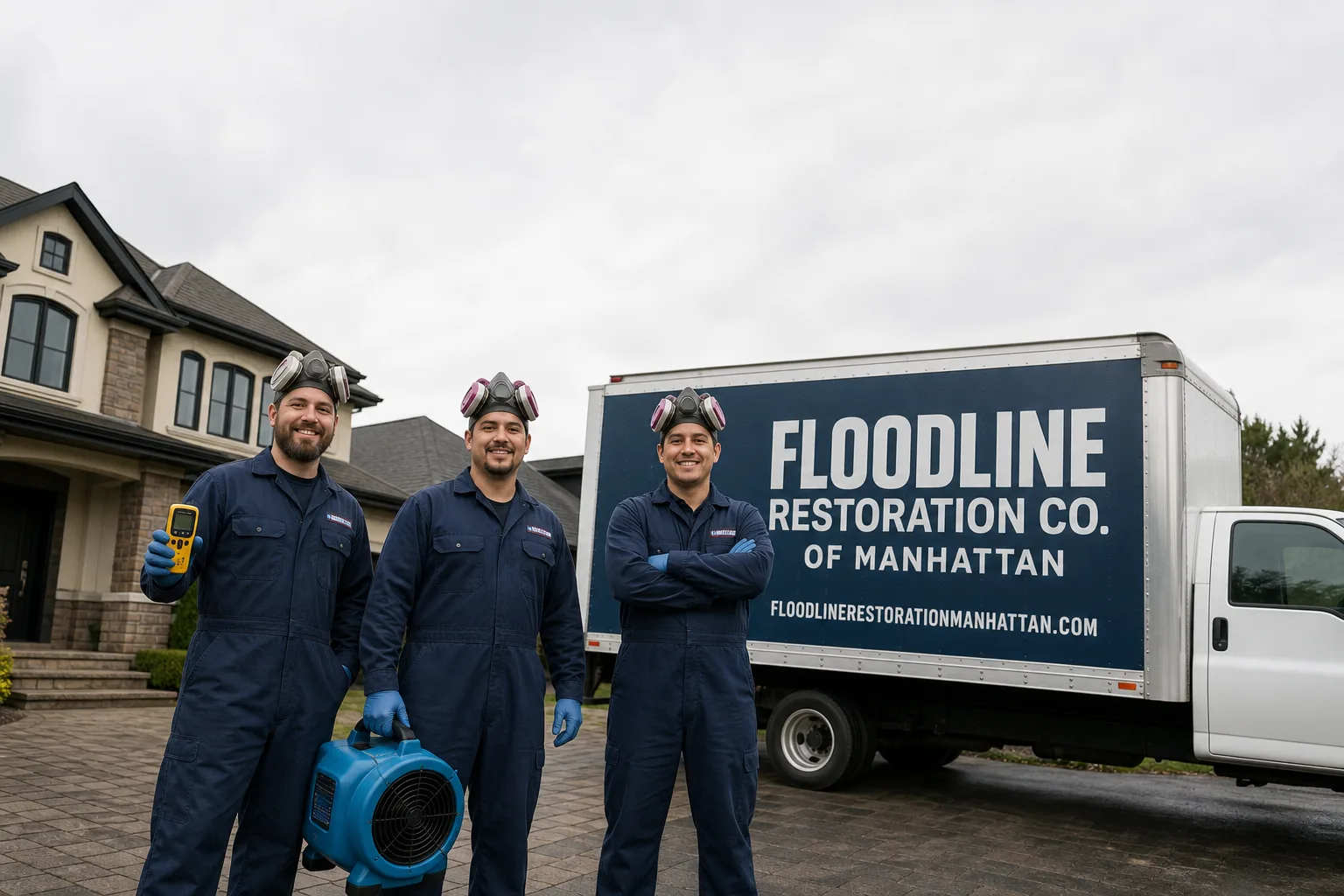
Free visual inspection and a written scope of work before any mitigation begins - photos, moisture readings, and drying logs go in your claim file
The scope we write is the scope we bill. Anything new gets shown to you, in writing, before we touch it.






 Before
 After
After Before
 After
After Before
 After
After24/7 Emergency Storm & Disaster Restoration in Springfield Gardens
When storm surge floods a basement on 145th Road or a nor’easter rips shingles off a two-family on Bedell Street, waiting isn’t an option. A crew from Floodline Restoration Co. of Manhattan can be dispatched into Springfield Gardens within 45 minutes, any hour, any day. Call (917) 924-4221 and a live dispatcher answers. Not a recording, not a call center menu. A person who can put a certified crew on the road immediately. The first hour after flooding matters because Category 3 blackwater from combined sewer overflow is already moving through baseboards, wicking into drywall, and pressing groundwater into foundation cracks while you wait. We start extraction on the same visit, walk the property free, and give you a written scope before any work is authorized.
Understanding Storm & Disaster Restoration Severity in Springfield Gardens Properties
Not every flood is the same, and in Springfield Gardens the difference between a cleaning and a full restoration often comes down to water category and water source. Category 1 water starts clean: a supply line or rainwater. Category 2 carries contaminants like sump-pump discharge or detergent-laced washing machine overflow. Category 3, what we see most often after a storm-surge event here, is blackwater: sewage, tularemia-risk floodwater from Jamaica Bay, and combined sewer backup. Springfield Gardens was built largely between the 1940s and 1960s on filled tidal marsh, and most of those basements were never waterproofed for the hydrostatic pressure now sitting against 60-year-old concrete. A single heavy rain can push groundwater through hairline cracks, saturate the baseplate, and create a Category 2 situation before any visible standing water appears. Our techs map moisture with Dri-Eaz thermal imaging and data-logging hygrometers, not guesswork. We identify what is a storm event and what is a chronic groundwater condition that requires perimeter drainage repair, not just extraction.
Why Springfield Gardens Property Owners Choose Floodline Restoration Co. of Manhattan
- 45-minute response commitment to Springfield Gardens. Dispatch and scheduling are coordinated from our New York City office, with crews stationed to serve southeastern Queens directly.
- A live human answers at 2 a.m. No automated prompts, no “leave a message after the tone.” A dispatcher picks up, every call, every time.
- IICRC-certified technicians. WRT, FSRT, and AMRT credentials plus RIA and IFA training. Background-checked and uniformed on every job.
- Free visual inspection and moisture mapping. Before any work is authorized, you get a clear picture of what happened and what needs to happen.
- Direct insurance billing. We handle adjuster communication, photo documentation, and line-item estimates. You never play messenger.
- One crew from extraction to reconstruction. The same technicians who read the moisture map on day one handle daily readings and rebuild what needs rebuilding. Our Storm & Disaster Restoration team stays with the job.
Our Storm & Disaster Restoration Process
Inspection & Assessment
We walk the entire property, not just the visible water line. Thermal imaging finds moisture behind original 1950s sheetrock, under vinyl tile, and inside wall cavities. We classify the water, check for sewer backup, and write a scope of work based on what the moisture map actually shows.
Extraction or Stabilization
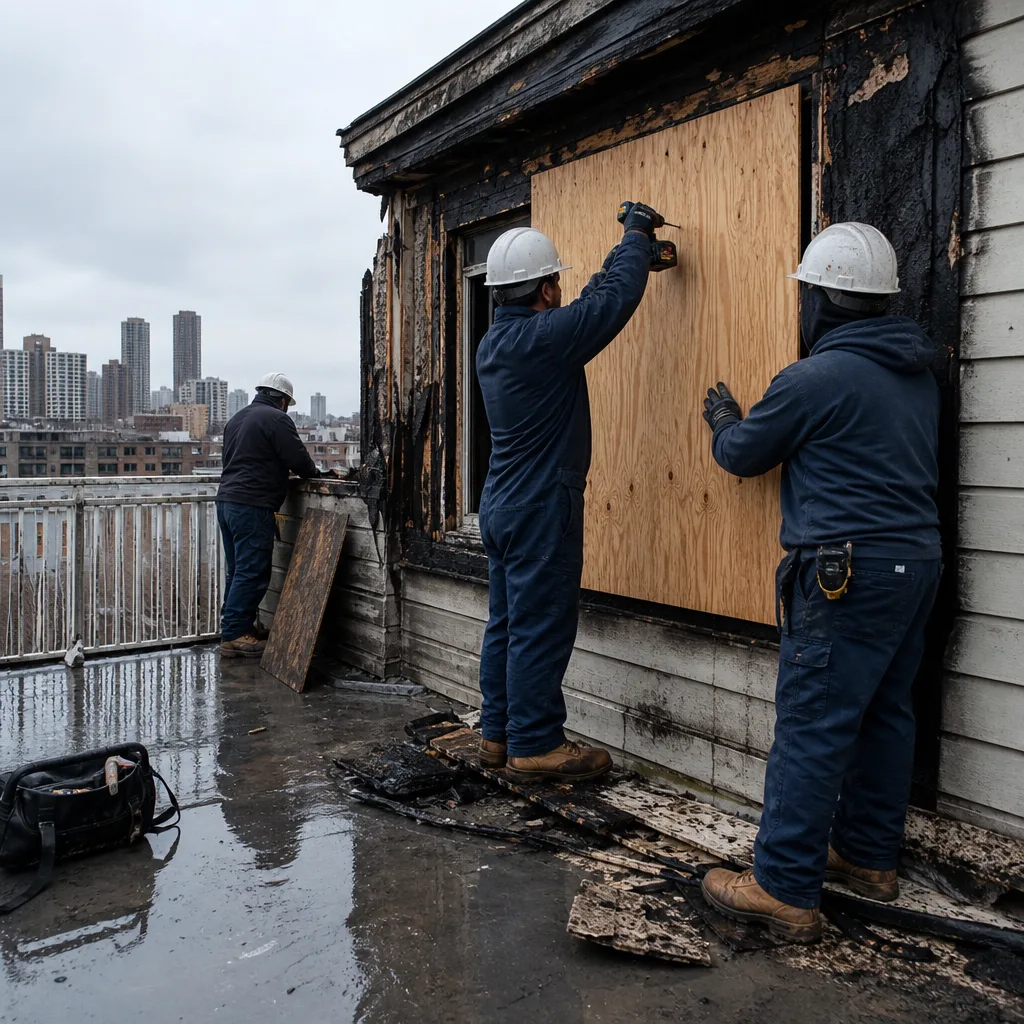
Standing water comes out first, using truck-mounted and portable extraction units. If a storm blew out a window or door, we board up and tarp immediately to stop secondary wind and rain damage before drying begins.
Drying & Dehumidification
Professional-grade Dri-Eaz, Phoenix, XPOWER, and B-Air air movers and dehumidifiers get placed based on a calculated drying chamber, not scattered randomly. Daily moisture readings are logged and shared with you and your insurer until the dry standard is met.
Cleaning & Sanitization
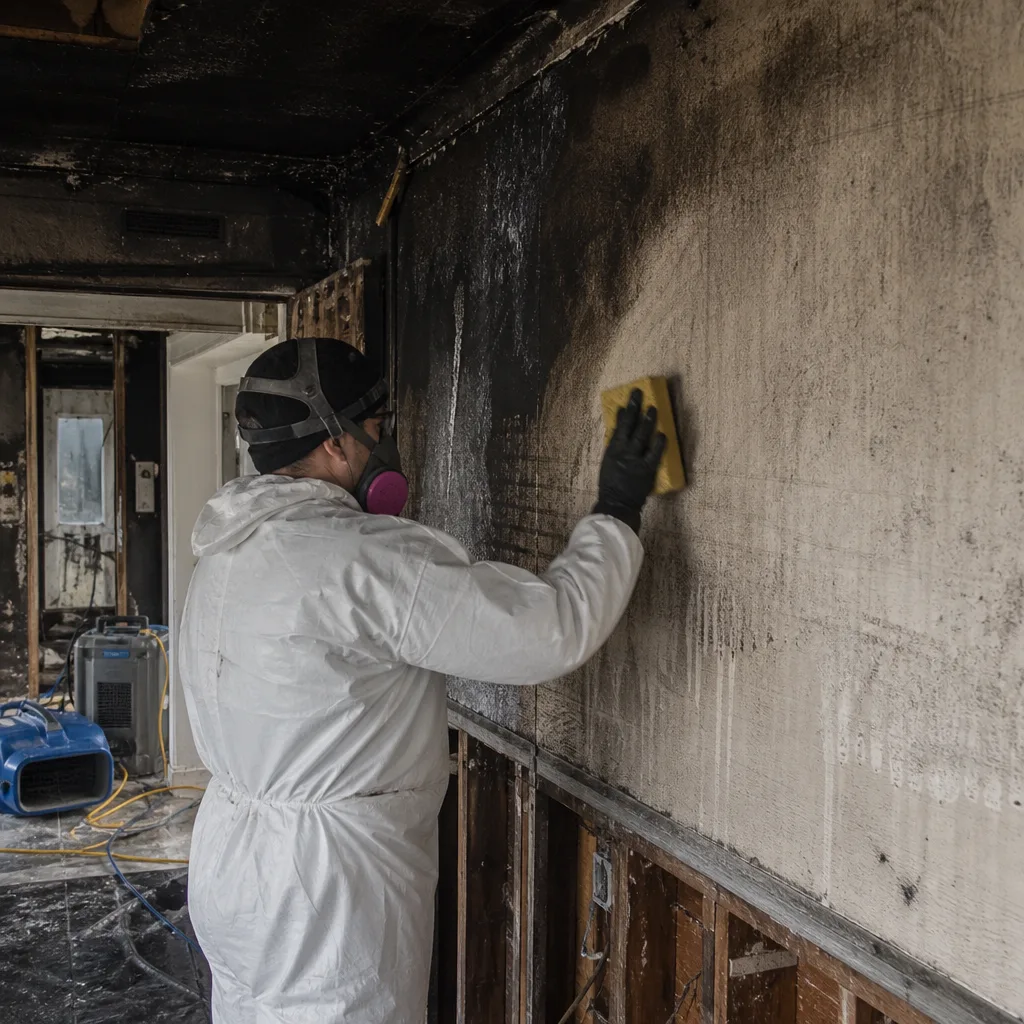
Category 3 water demands antimicrobial treatment on every affected surface. We remove saturated material, treat framing with EPA-registered antimicrobials, and run HEPA air scrubbers where mold spores are present.
Groundwater & Mold Source Treatment
In Springfield Gardens specifically, we check for hydrostatic pressure and chronic moisture intrusion. If groundwater is the real culprit, the scope includes drainage corrections like a sump pump or perimeter waterproofing, not just a one-time dry-out.
Repairs & Restoration
New drywall, framing repair, flooring, and paint. If impact-rated door or window reinforcement is part of the fix, we handle that too. Done right, and backed by our 90-Day Done Right Promise in writing.
Need Emergency Storm & Disaster Restoration in Springfield Gardens Now?
Crews minutes away, answering live 24 hours a day. The sooner we start, the less it costs.
Working With Your Insurance Company
Storm and flood claims in Springfield Gardens get complicated fast. Was the water from surge, sewer backup, or groundwater? Was the wind damage from a covered peril or wear and tear? We document from the first hour, photograph every damaged room before and after materials are removed, and log moisture readings daily. Our estimates use industry-standard pricing, so adjusters recognize every line item. We communicate with your carrier directly, including sending drying logs, scope documents, and photos so you don’t have to translate technical terms over the phone. Curt Bowman built this company on the principle that a homeowner should never be stuck between a restoration crew and an insurance carrier.
What We Provide Your Insurer
- Thorough documentation of the loss
- Photos of all damage, room by room
- Moisture readings and drying logs
- A detailed, line-item scope of work
- Direct coordination with your carrier
Built for Springfield Gardens’s Loss Calendar
Springfield Gardens does not have a single storm season. It has a storm calendar. Late summer and early fall bring Atlantic hurricane threats and the storm surge that follows them up Jamaica Bay. Winter nor’easters push water into the same low-lying streets and against the same basement walls, often while cold ground temperatures slow drying and complicate remediation. Spring thaw raises groundwater levels across the neighborhood’s marsh-fill footprint, turning every foundation crack into a slow seep. Summer thunderstorms dump inches of rain in an hour, overwhelming combined sewers and backing blackwater into floor drains on 145th Avenue, Bedell Street, and throughout the Baisley Pond corridor. That is the real pattern: a Springfield Gardens basement is not just fighting one storm. It’s fighting the water table, the tide, and the sewer system simultaneously. Our crews plan for that.
Storm & Disaster Restoration Across Springfield Gardens’s Neighborhoods
We work the whole neighborhood, and the loss patterns shift block by block. Up along North Conduit Avenue and the blocks near Brookville Park, storm runoff flows downhill toward the low streets, and basement doorways on raised ranches take the first hit. Over by Springfield Boulevard and the commercial corridor, flat roofs on 1950s storefronts let pooled water find every seam, and the wind whips debris against plate-glass storefronts. In the residential blocks between 140th and 150th Avenues, the tightly spaced detached and semi-detached homes sit close enough that wind-driven debris from one roof lands on a neighbor’s porch. Down west near the Rosedale line, the older pre-war housing stock mixed with post-WWII infill means two homes on the same block can have completely different foundation water behavior. We route crews through Merrick Boulevard, Rockaway Boulevard, and Farmers Boulevard depending on which side of the neighborhood the last storm hit hardest. No two calls are the same, but the underlying geography is.
Specialized Storm & Disaster Restoration Services We Offer in Springfield Gardens
Storm Damage Cleanup
Fallen branches, blown-out windows, and wind-thrown debris are the first thing we clear, but the real work in Springfield Gardens is finding what the storm let in. Water behind siding, wet insulation, and saturated porch framing all show up once the visible mess is gone. We clean, dry, and treat every affected surface, then verify with moisture readings before anyone calls it done.
Flood Damage Restoration
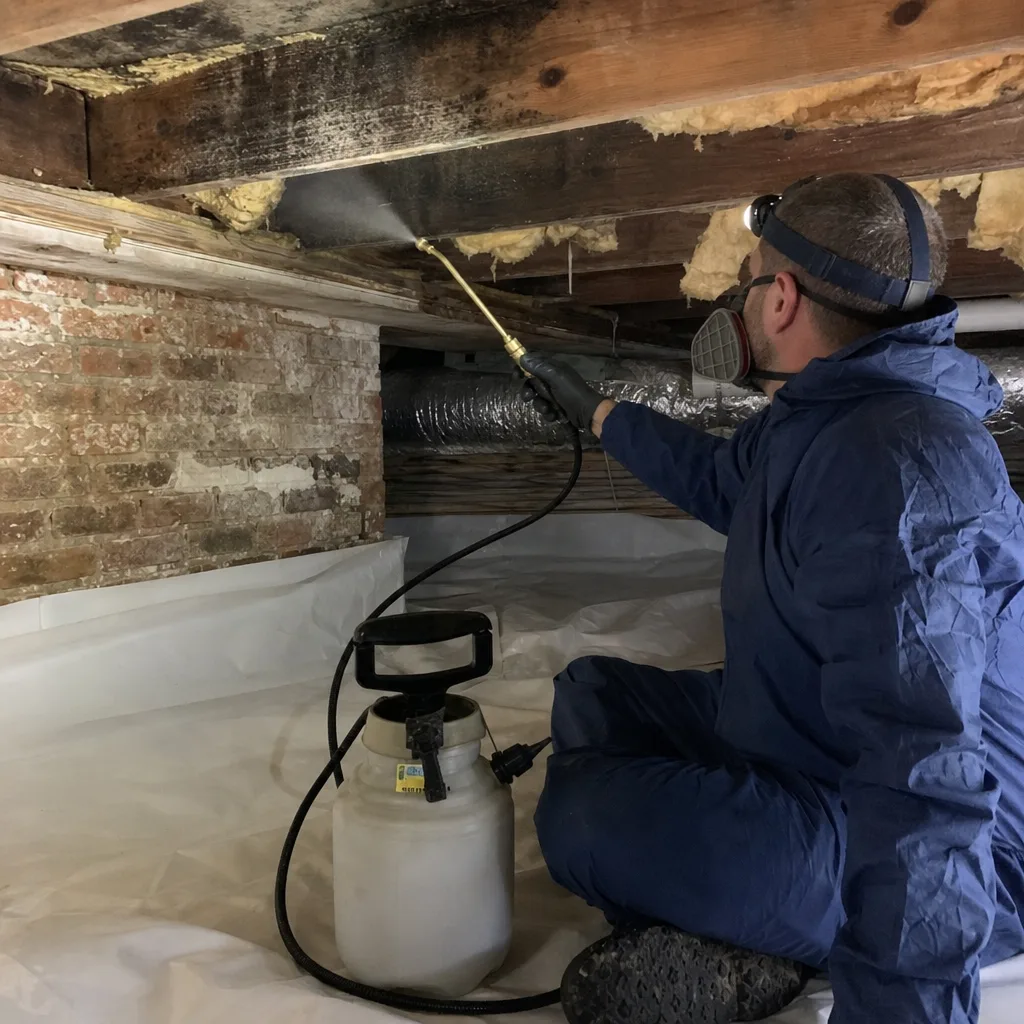
The bulk of our calls in the Baisley Park area involve basement flooding that gets reported as a one-time storm event. Our job is to determine the source. If it is Category 3 blackwater from combined sewer overflow, we extract, remove saturated material, and treat with antimicrobials. If groundwater is wicking through the slab, the scope changes entirely to include drainage correction. The line the water left is where we start, not where we stop.
Emergency Board-Up
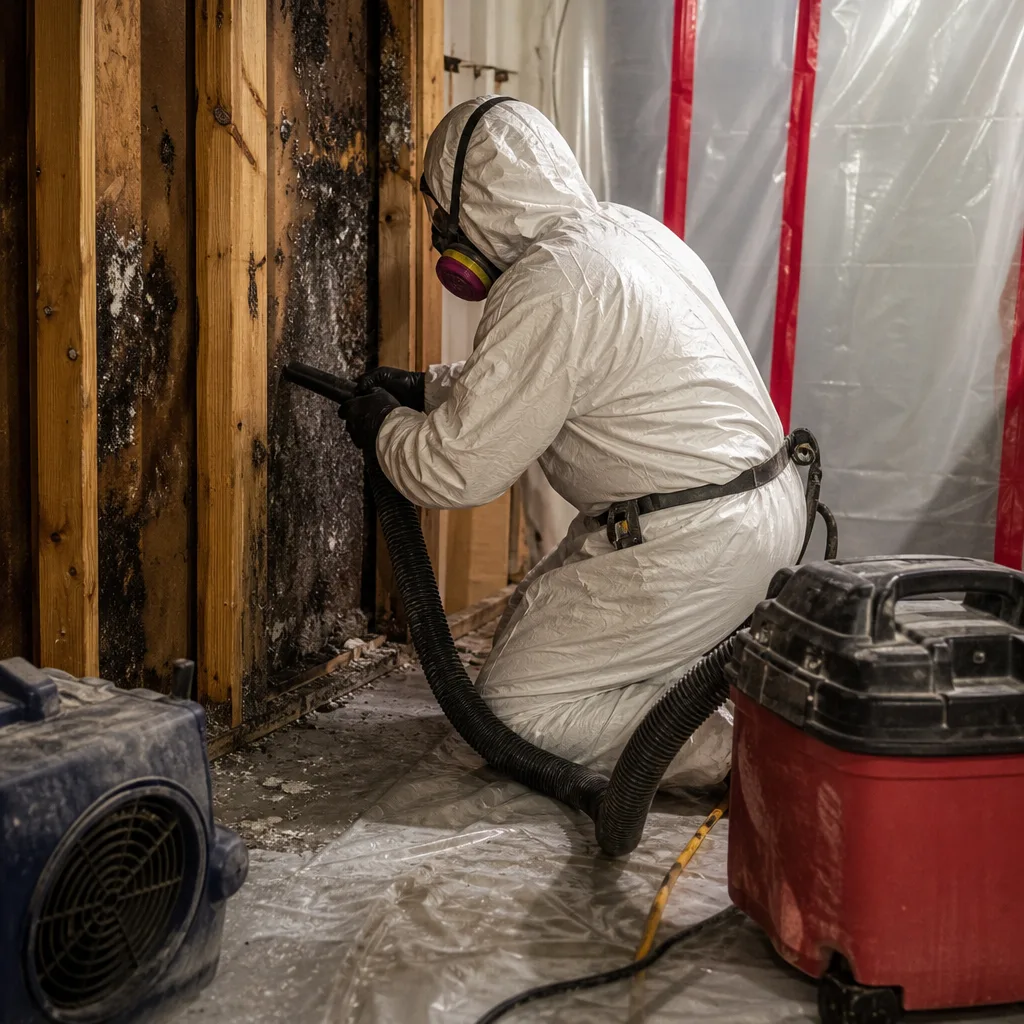
A blown-out window on 145th Road or a door that got kicked in by wind pressure needs plywood and fastening before the next rain front arrives. We board up with fasteners, not just nails, and we make the opening secure enough to keep out both weather and anyone who might see an empty home as an opportunity. If you need impact-rated windows or reinforced doors installed as a permanent fix, we handle that as part of the rebuild.
Roof Tarping
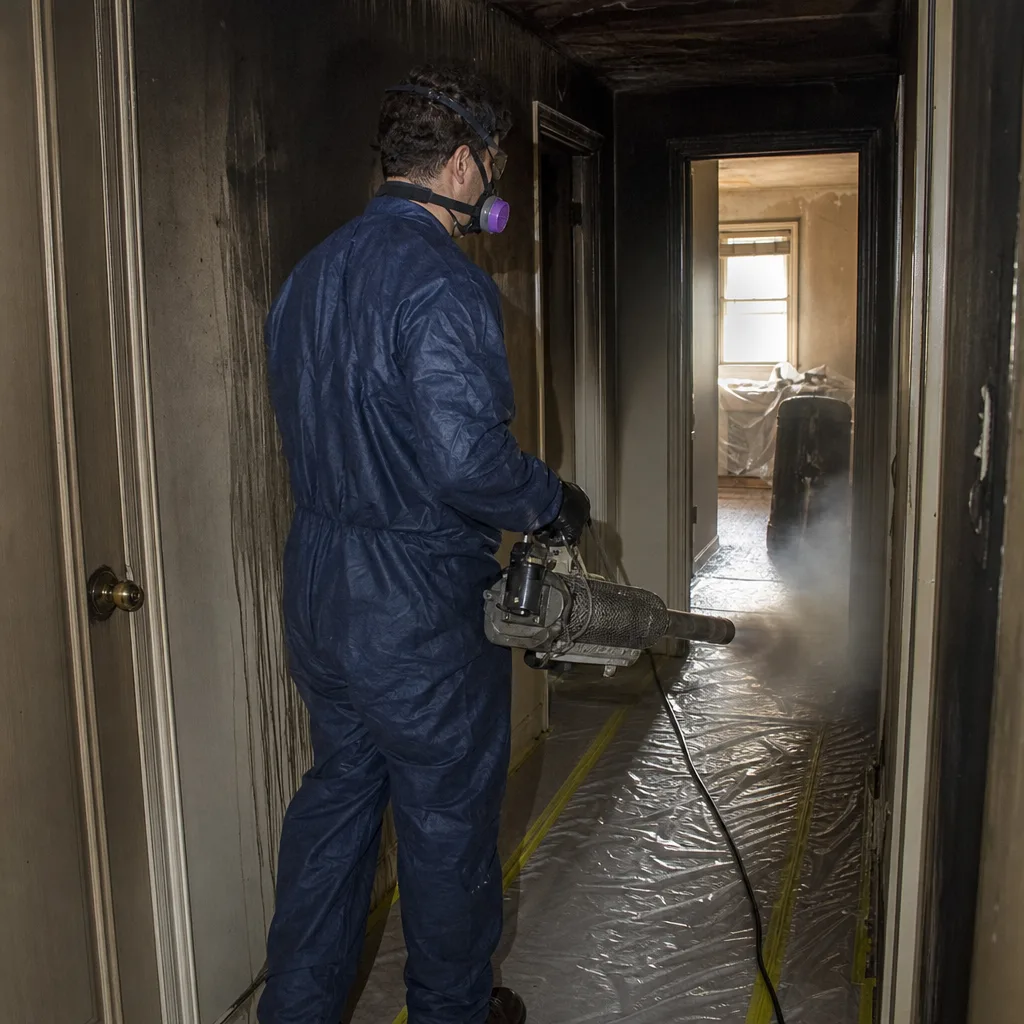
When a nor’easter strips shingles or a falling branch punctures the roof on a 1950s two-family, the gap between the hole and the adjuster’s visit can be days. We tarp with reinforced material and secure it against the wind loads we actually see off Jamaica Bay, not just against a mild drizzle. That keeps interior damage contained while you work through the claim.
Debris Removal
Storm debris in Springfield Gardens is not just yard waste. It’s shingles, siding, broken fence posts, and sometimes structural material from a neighbor’s damaged garage. We separate what can be disposed of, what may be reusable, and what needs to go on the insurance inventory. Everything gets photographed and documented before it leaves the property.
What happens when you call
- 1
A real person answersNo phone trees - you reach a local pro.
- 2
You get an upfront price rangeHonest numbers before anyone is dispatched.
- 3
A background-checked tech heads outLicensed & insured, dispatched right away.
- 4
You approve before work beginsNothing starts until you say go.
Storm & Disaster Restoration Costs in Springfield Gardens, NY
A straightforward basement extraction and dry-out in Springfield Gardens after a moderate rain event typically runs $3,200 to $7,500, depending on square footage, water category, and how far moisture has wicked up the walls. A full Category 3 blackwater remediation with drywall removal, antimicrobial treatment, and rebuild in a standard 800-square-foot basement ranges $12,000 to $35,000, with the high end covering situations where groundwater intrusion means adding a sump pump or perimeter drainage. Emergency board-up runs $450 to $1,800 for a standard single-door or window opening. Roof tarping generally lands between $600 and $2,200 depending on roof pitch and accessibility. Mold remediation behind original sheetrock, which Springfield Gardens basements do hide, adds $2,500 to $8,000 when it is caught early. The free inspection pins down your actual number, in writing, before any work begins.
We Also Serve Cities Near Springfield Gardens
Our crews stay busy across southeastern Queens and the Nassau border: Springfield Gardens itself, plus Rosedale, Cambria Heights, Valley Stream, and Inwood. Same 45-minute response, same live dispatcher, same written 90-Day Done Right Promise.
Serving Springfield Gardens, NY - Our Local Coverage Area
We’re based in the Springfield Gardens area and know this community well. Use the map below to see our service coverage - if you’re nearby, we can almost certainly help.
Springfield Gardens Storm & Disaster Restoration Questions, Answered
How quickly can Floodline Restoration Co. of Manhattan start water extraction after a storm surge hits Springfield Gardens?
Within 45 minutes of your call, a crew is dispatched into Springfield Gardens, and extraction typically begins on the same visit. A live dispatcher answers at (917) 924-4221 at any hour, confirms your address, and routes the nearest certified crew to you. The first hour matters because blackwater and groundwater move fast through porous basement materials.
Do I need a permit for storm door or impact-rated door installation in Springfield Gardens?
For a direct replacement of an existing door with the same rough opening, Springfield Gardens falls under standard New York City Department of Buildings rules, which generally treat like-for-like replacement as exempt from a full permit. Adding or enlarging an opening, or changing structural framing around the door, usually requires a permit. We check the specific condition at your property during the free inspection and tell you in plain English what the job requires.
What is the difference between Category 1, 2, and 3 water in a Springfield Gardens basement flood?
Category 1 is clean water: a supply line, rainwater before it touches the ground. Category 2 contains contamination: sump discharge, washing machine overflow, groundwater that has passed through soil. Category 3 is blackwater: sewage, combined sewer overflow, and Jamaica Bay floodwater carrying pathogens, chemicals, and debris. Springfield Gardens sees more Category 3 events than most Queens neighborhoods because the low elevation and combined sewer system back up together during heavy rain.
How do you know if mold is hiding behind my original 1950s basement walls after a flood?
We use Dri-Eaz thermal imaging to read temperature differentials inside wall cavities, which reveal moisture trapped behind original sheetrock that looks dry on the surface. Then we take moisture readings with hygrometers at multiple depths. By the time visible staining appears on a Springfield Gardens basement wall, the moisture has usually been present for weeks or months. If readings indicate hidden moisture, we open a small inspection area and evaluate from there.
Will my homeowner’s insurance cover storm surge and sewer backup restoration in Springfield Gardens?
Standard homeowner’s policies in New York typically exclude flood and storm surge unless you carry a separate flood policy, often through the National Flood Insurance Program. Sewer backup is usually excluded unless you specifically added a sewer backup endorsement. Wind damage from a named storm is generally covered under the standard policy’s wind peril. We help you sort through exactly what applies to your specific loss and document everything for your carrier. Call (917) 924-4221 and we will walk the property with you before the adjuster arrives.
Can I stay in my home during storm restoration work in Springfield Gardens?
For a moderate Category 1 or 2 water event contained to a basement, yes, most homeowners stay in place with proper containment barriers set up. For Category 3 blackwater situations, HEPA air scrubbers running, or extensive mold remediation, we usually recommend relocating temporarily, especially if you have respiratory conditions or young children in the home. We give you a straight answer during the initial assessment, not after work has already started.
How long does drying and full restoration take after a Springfield Gardens storm flood?
Structural drying typically takes 3 to 7 days with professional-grade Dri-Eaz and Phoenix air movers and dehumidifiers running around the clock. Mold remediation and antimicrobial treatment add 2 to 5 days depending on how much wall cavity is opened. Full rebuild, including drywall, flooring, and trim, often takes 2 to 6 weeks after the structure is dry. In the marsh-fill conditions of southeastern Queens, daily moisture readings determine the real timeline, not a one-size-fits-all schedule.
What should I do in the first 30 minutes after a storm flood hits my Springfield Gardens basement?
Shut off power to the affected area if you can do so safely without stepping into water. Move valuables and documents upstairs. Do not walk through standing floodwater, especially if it came up through a floor drain, because it may be Category 3 blackwater. Take photos of the water line and visible damage. Then call (917) 924-4221. A live dispatcher answers and sends a crew to your street within 45 minutes. If your current standing offers include the $50 Off Any Repair Over $250 or the Senior & Veteran 5% discount, they will apply once the scope is written.
Written by Curt Bowman, Owner at Floodline Restoration Co. of Manhattan, serving Springfield Gardens and southeastern Queens with storm, flood, and disaster restoration since 2010.
Call (917) 924-4221 for a free visual inspection, a written scope of work, and a crew that answers live at any hour. We stand behind it.