
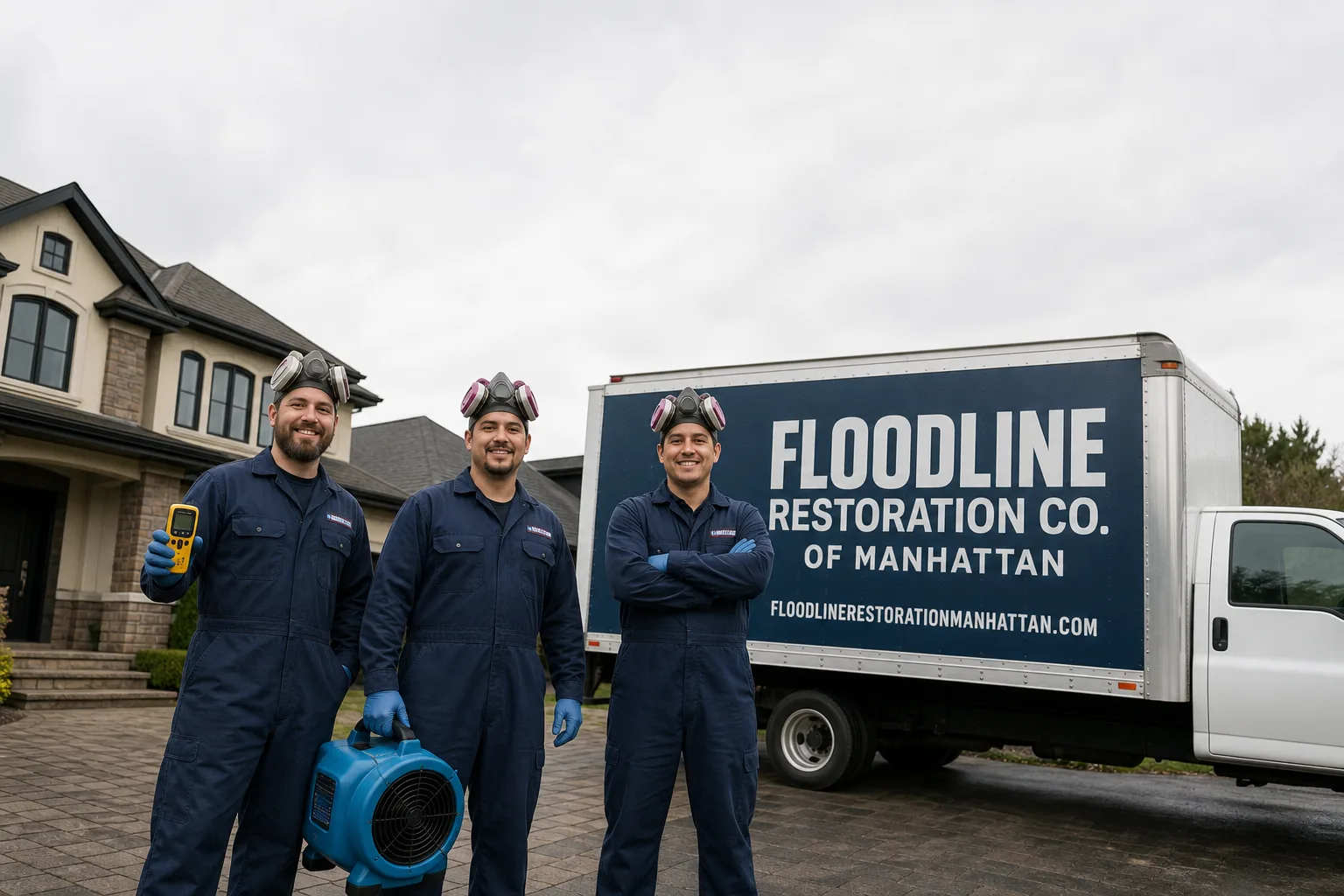
Free visual inspection and a written scope of work before any mitigation begins - photos, moisture readings, and drying logs go in your claim file
The scope we write is the scope we bill. Anything new gets shown to you, in writing, before we touch it.






 Before
 After
After Before
 After
After Before
 After
After24/7 Emergency Storm & Disaster Restoration in Stony Point
Storm and disaster restoration in Stony Point starts with a phone call to (917) 924-4221. A live dispatcher answers at any hour, every day, and a certified crew is dispatched immediately to your street off Route 9W, down toward the river, or up in the Highlands foothills. The first hour after a storm matters because brackish water from Haverstraw Bay keeps moving through wall cavities and under sill plates long after it looks like the flooding has stopped. We arrive, assess what the water touched, and start extraction the same visit. The free visual inspection tells us exactly what we are dealing with before any work is authorized.
Understanding Storm & Disaster Restoration Severity in Stony Point Properties
Stony Point sits directly on Haverstraw Bay, the widest stretch of the tidal Hudson River. When a nor’easter or tropical remnant pushes water inland here, it brings brackish, tidal water, not the freshwater flooding most of inland Rockland County deals with. Under IICRC standards, that is Category 3 water: grossly contaminated, carrying silt, marine bacteria, and salt. Restoration protocols change immediately. Category 3 demands full removal of saturated drywall, insulation, and carpet, followed by antimicrobial application and structural drying with moisture mapping that goes well beyond visible surfaces. The salt residue left behind in framing and masonry extends drying timelines dramatically. A freshwater basement flood in Thiells might dry in three to five days. The same water volume from a Stony Point tidal surge can take seven to fourteen days because salt holds moisture in wood fibers and continues pulling it from the air. Skipping that distinction is the most common and most expensive mistake we see from crews that treat every flood the same way.
Why Stony Point Property Owners Choose Floodline Restoration Co. of Manhattan
- 45-minute response commitment: we dispatch from the metro office to Stony Point immediately, and a live person tracks the crew until they reach your door.
- 24/7 live answer: a real dispatcher picks up at 2 a.m. No automated system, no “press 1 for” maze.
- IICRC-certified crews: technicians carry WRT, FSRT, and AMRT certifications, and they apply the correct standard for the water category they find.
- Free visual inspection: we look, we measure, we explain, and you approve a written scope before any work begins.
- Direct insurance billing: Floodline coordinates with your adjuster and bills the carrier directly. You are not the middleman.
- One team from extraction to reconstruction: the crew that reads the moisture map on day one handles daily readings, drying, and the rebuild. No handoff, no inherited crew.
Our Storm & Disaster Restoration Process
Inspection & Assessment
We walk the property, identify the water source and category, and use thermal imaging and hygrometers to map where moisture has traveled. The pincer pattern on lower Stony Point streets means we check both the bay-side and hillside exposure.
Extraction & Stabilization
Pumps and extractors pull standing water out. If the storm drains uphill are still feeding runoff into the structure, we set containment and divert what we can. Emergency board-up and roof tarping happen here if the envelope is open.
Drying & Dehumidification
Dri-Eaz dehumidifiers and XPOWER air movers run continuously, positioned from the moisture map. Daily readings are logged until the dry standard is met, not just until surfaces feel dry to the hand.
Cleaning & Sanitization
Category 3 floodwater demands antimicrobial application on every surface the water touched. We remove saturated materials, clean what remains, and treat for the marine bacteria and salt residue Haverstraw Bay leaves behind.
Salt & Corrosion Treatment
Brackish water accelerates rust on everything it touches. We inspect garage door springs, hinges, rollers, tracks, and opener chains. Galvanized and coated stainless hardware replaces what the salt has compromised.
Repairs & Restoration
Rebuild happens with the same crew. Drywall, insulation, flooring, trim, and any structural framing come back to pre-loss condition or better, and the 90-Day Done Right Promise goes in writing.
Need Emergency Storm & Disaster Restoration in Stony Point Now?
Crews minutes away, answering live 24 hours a day. The sooner we start, the less it costs.
Working With Your Insurance Company
Insurance claims after a Stony Point storm event move faster when the documentation starts in the first hour. Our crews photograph every affected room before demolition begins, log moisture readings daily, and build a line-item scope that your adjuster can read without asking for clarification. We have handled enough tidal surge claims along Haverstraw Bay to know what the carriers ask for, and we provide it before they have to request it. The homeowner is never asked to translate between Floodline and the insurance company. Direct billing means the carrier pays us for the covered work, and you approve the scope in writing before we start.
What We Provide Your Insurer
- Thorough documentation of the loss
- Photos of all damage, room by room
- Moisture readings and drying logs
- A detailed, line-item scope of work
- Direct coordination with your carrier
Built for Stony Point’s Loss Calendar
The loss calendar here is not the same as inland Rockland. January deep freezes burst supply lines in older riverfront bungalows. Spring snowmelt off the Highlands pours down through Stony Point’s steep streets while high tides on Haverstraw Bay block the outfalls, and basements on River Road and lower Main Street fill from two directions at once. Summer thunderstorms drop inches in an hour, overwhelming storm drains that were sized for a much smaller town. Autumn nor’easters push brackish surge water up into yards, crawl spaces, and foundations. Every season has a signature event, and we see the same homes hit in patterns that repeat. The homeowners on lower streets learn to recognize the pincer: runoff from above, backpressure from below. We learned it the same way.
Storm & Disaster Restoration Across Stony Point’s Neighborhoods
The lower streets near the riverfront, around River Road, Mott Farm Road, and the side lanes running toward Haverstraw Bay, take the tidal surge first. Homes here tend to be converted 1950s bungalows and seasonal cottages with poured-concrete basements and no interior drainage. When the bay rises, these basements flood from below while hillside runoff floods them from above. Up toward Willow Grove Road and the base of the Highlands, fast surface runoff scours downhill and piles against foundations before the drains can catch it. The Stony Point Battlefield area and streets off Park Road get wind damage that inland neighborhoods never see: shingles torn clean off, soffits peeled back, trees dropped across roofs. Further west toward Thiells Road, houses sit higher and drier, but the storm drains still back up during heavy rain because the outfalls are blocked by the same tidal pressure. Each area has a different first point of failure. Our crew knows which one to check first by the address.
Specialized Storm & Disaster Restoration Services We Offer in Stony Point
Flood Damage Restoration
When Haverstraw Bay pushes Category 3 water into a Stony Point basement, the IICRC protocol is full removal of saturated materials, antimicrobial treatment, and moisture-mapped structural drying. We pull the water, strip what the salt and bacteria compromised, and run professional-grade Dri-Eaz, Phoenix, and XPOWER equipment until the dry standard is met. Salt residue in framing gets treated, not just dried, because salt keeps wicking moisture back into the wood for weeks.
Storm Damage Cleanup
Trees, limbs, shingles, siding, and the mess a storm leaves behind all come off the property. We handle debris removal carefully, documenting everything for the insurance claim as we go. On properties where the envelope is breached, cleanup includes boarding up windows and tarping roofs so the next rain does not turn a wind damage claim into a full interior flood restoration.
Emergency Board-Up
A broken window or a tree-limb strike that opens the roof exposes the home to every storm that follows. We board up openings with plywood anchored to code, and we tarp the roof properly, not with an undersized blue sheet that tears off in the next nor’easter. Board-up happens fast because an open envelope in Stony Point means rain, salt air, and bay moisture all moving through the house at once.
Roof Tarping
Roof tarping on a Stony Point home exposed to Haverstraw Bay wind needs different anchoring than an inland repair. The bay is a wind funnel. We secure tarps with furring strips and cap nails in a pattern that holds through a nor’easter, not just a drizzle. A tarp done right buys the time needed for a proper repair estimate and insurance approval.
Debris Removal
Wind, flood, and storm debris gets removed and either disposed of or set aside for adjuster inspection, depending on the claim. We do not haul off evidence before the insurer sees it. What is not reclaimable goes, what is part of the documentation stays until the claim is settled.
What happens when you call
- 1
A real person answersNo phone trees - you reach a local pro.
- 2
You get an upfront price rangeHonest numbers before anyone is dispatched.
- 3
A background-checked tech heads outLicensed & insured, dispatched right away.
- 4
You approve before work beginsNothing starts until you say go.
Storm & Disaster Restoration Costs in Stony Point, NY
A typical Category 3 flood restoration in a Stony Point basement runs $4,500 to $11,000 depending on the square footage, how much drywall and insulation comes out, and how long the drying takes. Emergency board-up and roof tarping on a standard ranch or bungalow runs $800 to $1,800. Debris removal after a wind event lands between $500 and $2,500 depending on the volume and whether trees are involved. Wind damage repair scope varies widely: a simple shingle and soffit repair might be $1,200, while a full roof replacement with decking repair runs $14,000 to $24,000 or more. The free visual inspection we provide gives you a firm written scope before you authorize any work, and we bill your carrier directly on covered claims. The price you see is the price we agreed on. That is the square deal.
We Also Serve Cities Near Stony Point
Our crews serve West Haverstraw, Thiells, Haverstraw, and Verplanck regularly. The same 45-minute response commitment and the same written scope apply across the area. If you live just over the border and the pincer flooding has not spared you either, call (917) 924-4221.
Stony Point Storm & Disaster Restoration Questions, Answered
Why does floodwater in Stony Point require Category 3 treatment when the Hudson looks like a river, not sewage?
Haverstraw Bay water is brackish tidal water, and under IICRC standards that is Category 3: grossly contaminated, carrying marine bacteria, silt, and everything the tide picks up from marinas, boat traffic, and shoreline runoff. It does not need to come from a sewer to be treated as Category 3. The contamination level is what matters, and a tidal surge here meets it. Call (917) 924-4221 and we will explain exactly what that means for your property.
What does the salt in Haverstraw Bay floodwater do to a garage door system?
Salt accelerates rust on springs, hinges, rollers, tracks, fasteners, and opener chains years faster than freshwater does. Seized rollers and snapped springs are the most common callbacks we see weeks after a tidal surge when corrosion inspection was skipped. We inspect every part of the garage door system after a flood event and replace compromised hardware with coated or stainless components.
How is the ‘pincer’ flooding on lower Stony Point streets different from a normal basement flood?
A normal basement flood comes from one direction: a pipe, a sump failure, groundwater. The pincer pattern on lower Stony Point streets traps the structure between hillside runoff overwhelming storm drains from above and tidal backpressure from Haverstraw Bay blocking the outfalls from below. The basement re-floods within hours if only one side is addressed. We check both sources on every lower-street job, and we set containment accordingly.
How long does structural drying take after a tidal surge in Stony Point compared to an inland freshwater flood?
Salt holds moisture in wood fibers, so structural drying after a brackish surge in Stony Point typically runs seven to fourteen days, roughly double or triple what an inland freshwater flood takes. The longer the drying log runs, the better the proof for your carrier. We run Dri-Eaz and Phoenix dehumidifiers with daily moisture readings until the dry standard is met, not until surfaces feel dry.
Do Stony Point’s older riverfront bungalows need different flood restoration tactics than newer inland homes?
Yes. The converted 1950s bungalows and seasonal cottages on the lower riverfront have shallow crawl spaces and poured-concrete basements with no interior drainage. Mold takes root inside those shallow crawls because drying logs stop at visible surfaces. Without moisture mapping the hidden sill plates and floor joists, Category 3 moisture stays trapped for weeks. We map those cavities and treat what is hidden, not just what is visible.
How fast can a crew actually get to a Stony Point home?
Our commitment is 45 minutes from the dispatch call to arrival at your door. Dispatch and scheduling are coordinated from the brand’s New York City office; crews serve Stony Point locally. A live dispatcher answers at (917) 924-4221 and tracks the truck until it reaches you.
Does homeowners insurance cover flood restoration from a river surge in Stony Point?
Standard homeowners policies typically exclude flood damage, which is why many Stony Point homeowners in FEMA flood zones carry separate NFIP or private flood coverage. Storm-driven wind damage, falling trees, and rain entering through a storm-created opening are usually covered differently. We provide the documentation your carrier requires and bill them directly on covered claims. Call (917) 924-4221 for help understanding your specific policy language.
What should I do in the first 30 minutes after floodwater enters my Stony Point home?
If it is safe, turn off power to affected areas, shut the water main if the source is a pipe, and call (917) 924-4221. Do not wade through standing water that may be electrically charged or contaminated with sewage, salt, or marine bacteria. Take photos from a safe distance for your claim. The sooner we start extraction and decontamination, the less damage spreads into wall cavities and framing.
Serving Stony Point, NY - Our Local Coverage Area
We’re based in the Stony Point area and know this community well. Use the map below to see our service coverage - if you’re nearby, we can almost certainly help.
Emergency Storm & Disaster Restoration in Stony Point: The Pincer Problem, Solved
On a converted 1950s bungalow off River Road, our crew arrived to find the poured-concrete basement under 18 inches of Category 3 brackish water from a nor’easter. The IICRC call was immediate demolition of saturated drywall and fiberglass, followed by antimicrobial application and structural drying with Dri-Eaz dehumidifiers and XPOWER air movers. The real pincer problem: storm drains upslope were still feeding fast runoff into the rear foundation while a high tide blocked the street outfall, so we set containment and ran moisture mapping daily until readings stabilized, then replaced all galvanized springs and hinges on the garage door with coated stainless hardware to stop the salt-air rot that had already claimed the opener chain. That is the job. Not just the flood, but the failure pattern behind it and the corrosion that follows.
If your Stony Point home has been hit by a storm or surge, call (917) 924-4221 now. A live person answers, a certified crew responds, and the work is done right, with the 90-Day Done Right Promise in writing before we leave.
Written by Curt Bowman, Owner at Floodline Restoration Co. of Manhattan, serving Stony Point since 2010.