
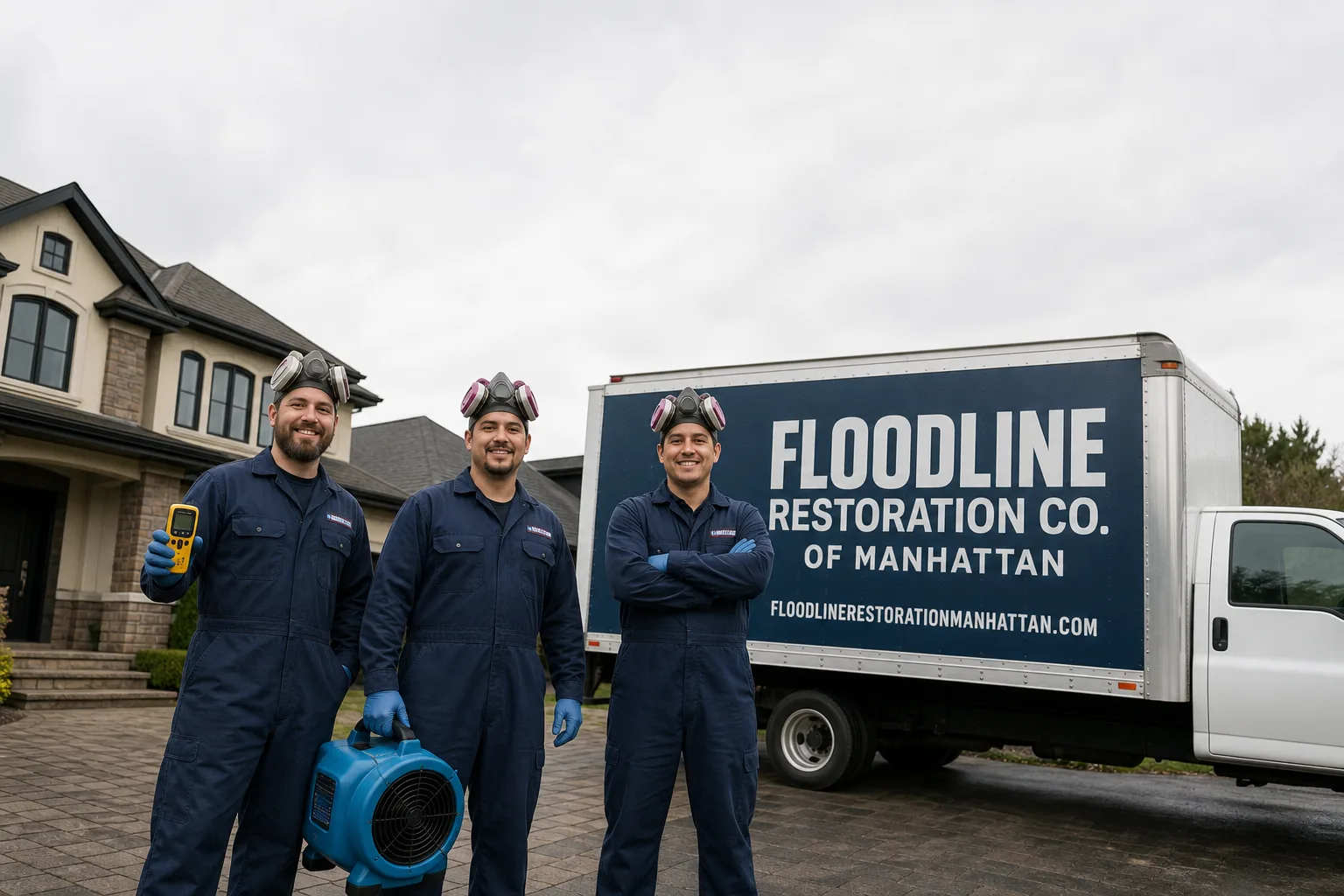
Free visual inspection and a written scope of work before any mitigation begins - photos, moisture readings, and drying logs go in your claim file
The scope we write is the scope we bill. Anything new gets shown to you, in writing, before we touch it.






 Before
 After
After Before
 After
After Before
 After
After24/7 Emergency Storm & Disaster Restoration in Teaneck
Storm damage in Teaneck moves fast, and so do we. A live dispatcher answers (917) 924-4221 at two in the morning, not a recording, and a certified crew is dispatched into Teaneck the same visit. We offer a free visual inspection, a written scope before work starts, and direct insurance billing. The first hour matters because water pushing through a cracked 1950s foundation keeps spreading behind finished walls and under vinyl flooring long after the surface looks dry. Our Storm & Disaster Restoration team handles the whole job, from emergency board-up and extraction through drying and rebuild, so you never inherit a second crew mid-job. Call us the moment you see standing water, a sagging ceiling, or a tree through the roofline.
Understanding Storm & Disaster Restoration Severity in Teaneck Properties
Storm damage in Teaneck splits into two very different jobs. Surface water from roof leaks, burst gutters, or overflowing storm drains behaves one way. Groundwater pushing up through a 1945-to-1965 concrete-block foundation behaves another. That second pattern, what we call hydrostatic infiltration, is the defining water problem in the township’s eastern blocks and parts of the West Englewood area. It moves through cove joints and hairline foundation cracks, saturates the slab, and wicks into drywall and framing. Left unaddressed, it feeds mold inside wall cavities within 48 to 72 hours. We classify water by contamination level, Category 1 being clean rainwater or supply-line water, Category 2 carrying significant contaminants, and Category 3 containing sewage or floodwater from outside. Most Teaneck storm-water losses start as Category 1 or 2, but the longer water sits against old framing and asbestos-era floor tiles, the more complex remediation becomes. We moisture-map every affected surface with thermal imaging and hygrometers before we set a single piece of equipment, because in a 60-year-old Teaneck basement, the water you see is rarely the water you have.
Why Teaneck Property Owners Choose Floodline Restoration Co. of Manhattan
- 45-minute response commitment to Teaneck addresses, with dispatch coordinated from our New York City office and crews stationed throughout Bergen County.
- 24/7 live answer, always a person. No automated tree. A dispatcher picks up at 2 a.m., every day, including Friday afternoons before Shabbat.
- IICRC-certified crews trained to WRT and ASD standards for water restoration, plus AMRT for mold remediation, so one team handles extraction and any microbial containment that follows.
- Free visual inspection with a written scope and line-item estimate before any work begins, so you know exactly what we found and what it costs.
- Direct insurance billing. We document everything from hour one, talk to your adjuster ourselves, and you never play messenger between us and the carrier.
- One team from extraction to reconstruction. The same certified crew that pulls water on day one rebuilds the drywall on day fourteen. No handoff, no inherited contractor, no lost moisture log.
Our Storm & Disaster Restoration Process
Inspection & Assessment
We walk the property with you, map moisture across floors, walls, and ceilings, and identify whether water entered from above, from the storm drain system, or from hydrostatic pressure against the foundation. You get photos, readings, and a written scope before anything is torn out.
Extraction & Stabilization
Standing water comes out with truck-mounted and portable extraction units. If wind damage opened the roofline or windows, we board up and tarp immediately to stop further water entry. Stabilization comes before drying, always.
Drying & Dehumidification
Professional-grade Dri-Eaz and Phoenix air movers and dehumidifiers go in based on the moisture map, not guesswork. We log daily readings and share the drying log with you and your carrier until we hit the dry standard.
Cleaning & Sanitization
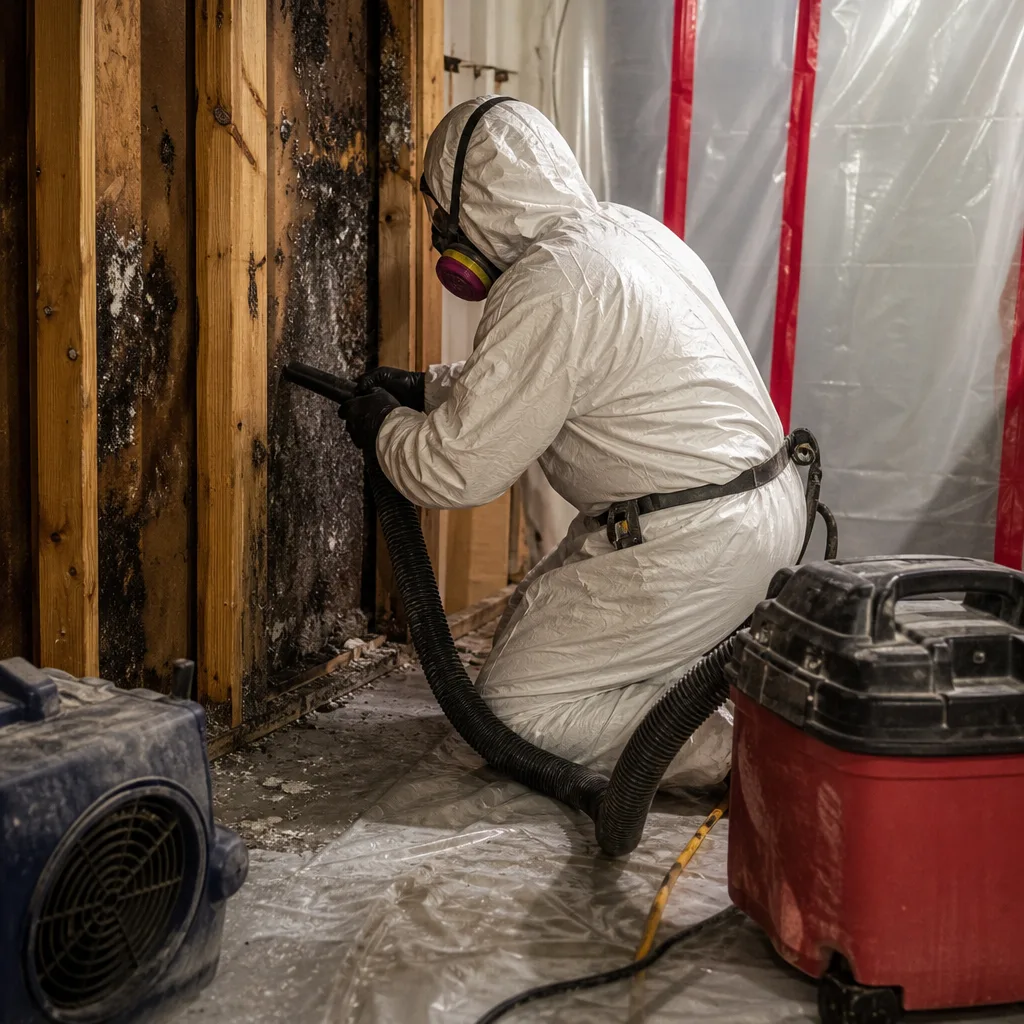
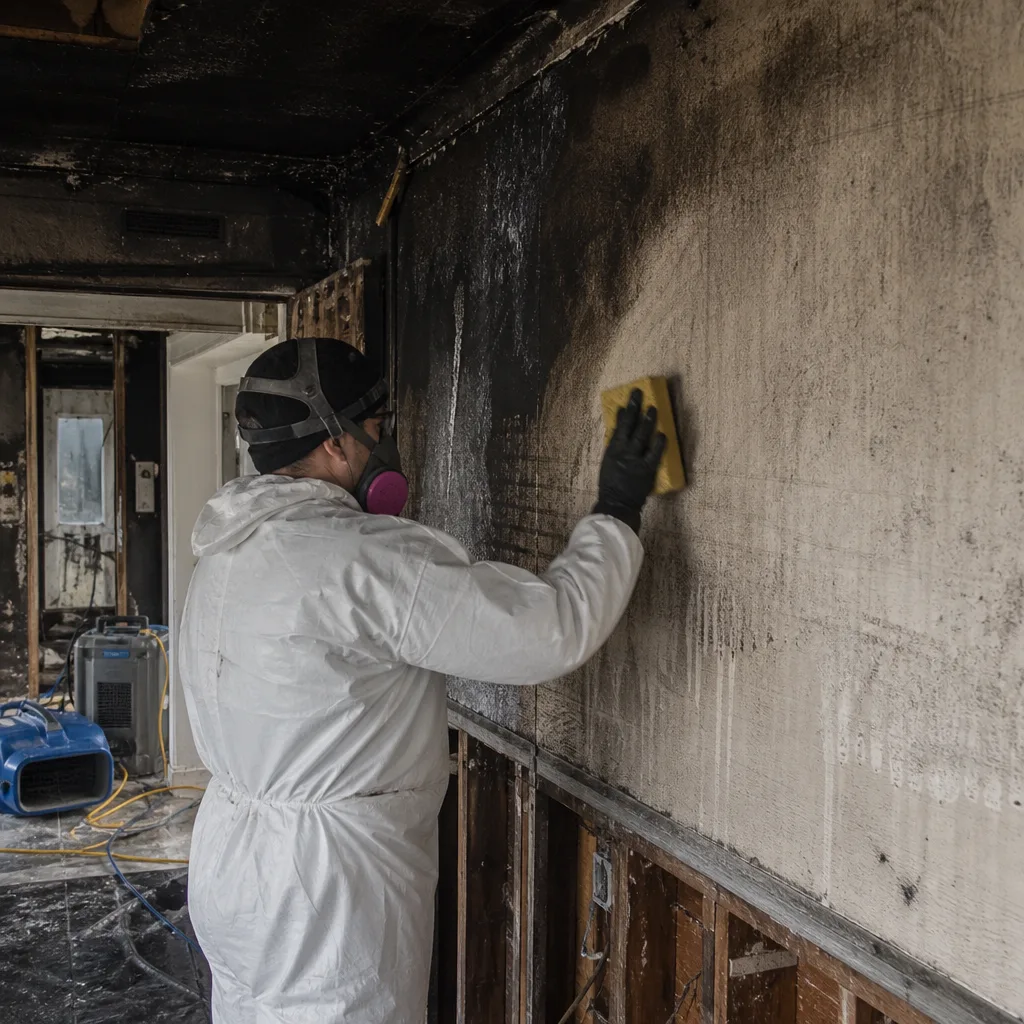
Surfaces that contacted Category 2 water get antimicrobial treatment. We HEPA-vacuum, clean, and sanitize all affected materials before any reconstruction starts.
Abatement & Specialty Treatment
Many Teaneck basements still have original asbestos floor tiles and lead paint. If demolition will disturb those materials, we set environmental containment and bring in licensed abatement before cutting begins. That step is non-negotiable on post-WWII homes here.
Repairs & Restoration
We replace drywall, insulation, flooring, and trim to match the original. If floodwater entered through foundation cracks, we specify below-grade waterproofing and drainage so the same storm does not produce the same basement flood next season.
Need Emergency Storm & Disaster Restoration in Teaneck Now?
Crews minutes away, answering live 24 hours a day. The sooner we start, the less it costs.
Working With Your Insurance Company
Most Teaneck storm losses are covered under homeowner policies, but carriers require proof of cause, extent, and drying progress. We build that file from the first hour. Our technicians photograph every affected room before demo starts, log moisture readings daily, and produce a line-item scope in the format adjusters expect. When your carrier has questions, we answer them directly, so you are not stuck translating mitigation jargon over the phone. We bill the insurer directly for covered work, and you see the same invoice we send them. No side estimates, no surprise line items after approval.
What We Provide Your Insurer
- Thorough documentation of the loss
- Photos of all damage, room by room
- Moisture readings and drying logs
- A detailed, line-item scope of work
- Direct coordination with your carrier
Built for Teaneck’s Loss Calendar
Teaneck’s storm season runs on a schedule, and the job changes with the month. December through March, the freeze-thaw cycle tightens and loosens the township’s aging concrete-block foundations, and supply lines in the less-insulated rim joists and crawl spaces of 1950s Cape Cods and split-levels rupture without warning. Spring brings snowmelt and the first heavy rains, which is when groundwater rises against those eastern blocks near Overpeck Creek and finds every old foundation crack at once. Summer convective storms dump two inches of rain in an hour, overwhelming storm drains along Teaneck Road and leaving basements with standing water inside thirty minutes. Then comes September and October, when nor’easter and tropical remnants, exactly what Ida did in 2021, push water through basements street by street. Each season has a signature, and after 42 years serving Bergen County, we know which equipment and which approach each one needs before we ring the doorbell.
Storm & Disaster Restoration Across Teaneck’s Neighborhoods
Teaneck is not one housing stock, and it is not one flood pattern. The eastern blocks east of Teaneck Road and down toward Overpeck Creek were developed on drained wetlands, and those streets, around Votee Park and beyond, are the ones where groundwater becomes the story every time a nor’easter stalls over Bergen County. We run different extraction and drying plans there, because the water is coming up, not over. The West Englewood section and the blocks near Cedar Lane have a different profile: older split-levels on higher ground, where wind-driven rain and roof damage lead the list and foundation seepage is secondary. Along Queen Anne Road and the neighborhoods west of it, we see more finished basements in colonials and Capes, which means more sheetrock and insulation holding water after a storm drain backup. The dispatch response changes block by block too. A flooded basement off DeGraw Avenue gets a different first-truck setup than a roof-tarping call near the Glenpointe area. That local granularity is the difference between a two-day dry-out and a two-week remediation.
Specialized Storm & Disaster Restoration Services We Offer in Teaneck
Flood Damage Restoration
Teaneck’s eastern blocks flood from below. We treat groundwater intrusion differently than surface runoff, starting with a moisture map that identifies where hydrostatic pressure is pushing water through the slab and cove joints. The drying regimen includes high-capacity axial air movers and trailer-mounted dehumidifiers running on a schedule built around your home’s construction era, and we specify below-grade repairs so the fix outlasts the next storm.
Emergency Board-Up
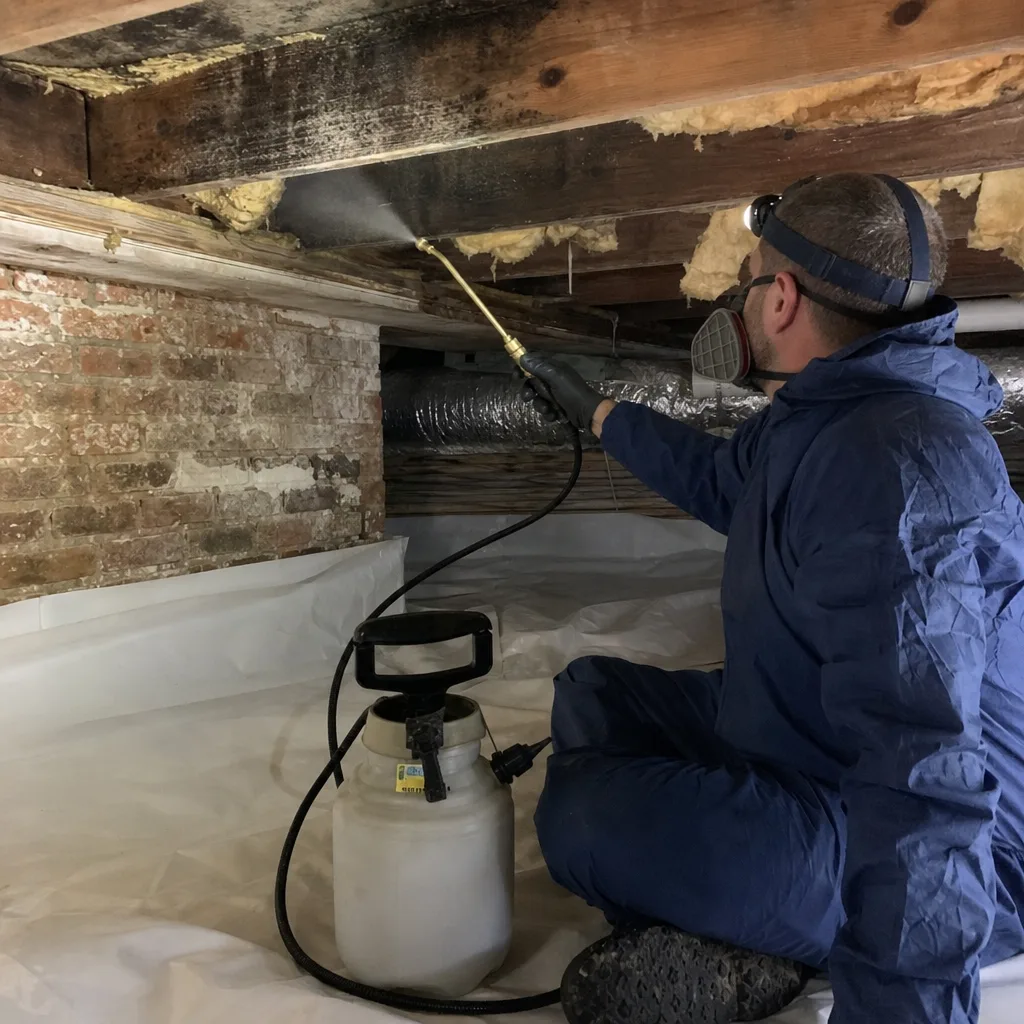
When wind knocks out a window or a tree limb opens a roofline, we board and tarp within hours. Teaneck’s mature trees, oaks and maples planted when these post-WWII neighborhoods were built, come down hard in a nor’easter, and an open house draws water, pests, and worse. Stabilization now keeps the next rain from turning a roofing call into a full interior loss.
Water Extraction
Standing water does not wait, so neither do we. Our XPOWER and B-Air extraction units pull hundreds of gallons per hour from Teaneck basements, and our crews are trained to work around original concrete-block foundations that keep seeping long after the visible puddle is gone. We set containment and drying equipment the same visit, not the next day.
Roof Tarping
A torn roof over a 1958 center-hall colonial needs a tarp that holds through the next Bergen County wind event, not a blue sheet that peels off in 24 hours. We tarp with proper fastening and seals, document everything for your carrier, and get a roofer’s assessment scheduled before the tarp becomes a long-term condition.
Debris Removal
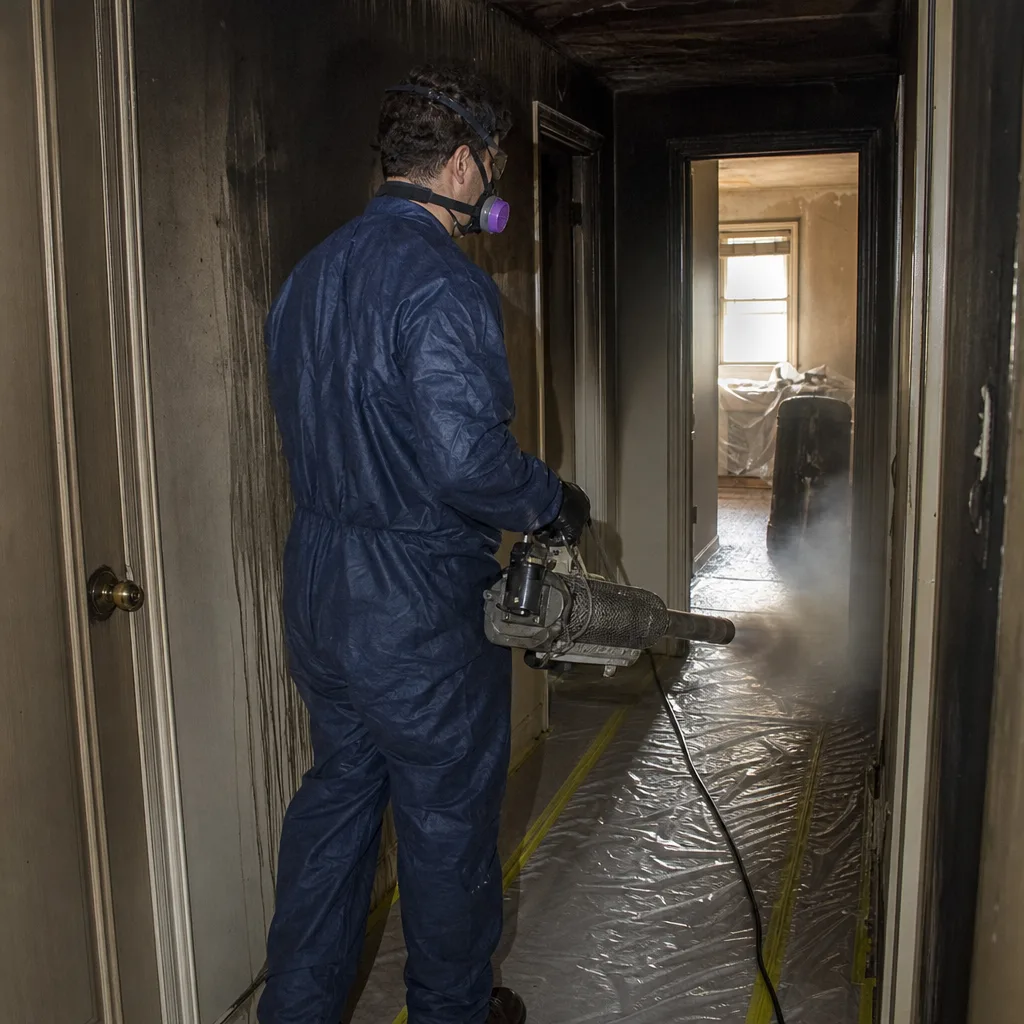
Downed limbs, torn fencing, and wind-scattered material get cleared and hauled. We photograph before, during, and after, so your insurer sees exactly what we removed and why. It is part of the same scope, handled by the same uniformed crew, and it never sits on your curb waiting for a separate contractor.
What happens when you call
- 1
A real person answersNo phone trees - you reach a local pro.
- 2
You get an upfront price rangeHonest numbers before anyone is dispatched.
- 3
A background-checked tech heads outLicensed & insured, dispatched right away.
- 4
You approve before work beginsNothing starts until you say go.
Storm & Disaster Restoration Costs in Teaneck, NJ
Honest numbers for Teaneck’s market. A standard water extraction and dry-out for a 500-to-800-square-foot basement with groundwater seepage runs $2,800 to $5,600, depending on how much flooring and drywall has to come out and whether asbestos tiles trigger abatement. Roof tarping after wind damage typically lands between $450 and $1,200 for a single-pitch emergency tarp, with full repair scoped separately. Emergency board-up for a couple of windows and a damaged door runs $600 to $1,500. Full flood damage restoration including below-grade waterproofing on a 1950s foundation runs $9,000 to $22,000, and that range swings on whether we are replacing finished space, whether the foundation needs exterior excavation, and what the moisture map says about hidden saturation in the rim joists. Most policies cover the mitigation and direct repairs. The free visual inspection turns these ranges into a firm number in writing.
We Also Serve Cities Near Teaneck
Our crews cover Teaneck and the surrounding Bergen County towns, including Teaneck‘s neighbors: Bogota, Englewood, Hackensack, and Bergenfield. Same dispatch board, same live answer, same 45-minute response commitment.
Serving Teaneck, NJ - Our Local Coverage Area
We’re based in the Teaneck area and know this community well. Use the map below to see our service coverage - if you’re nearby, we can almost certainly help.
Teaneck Storm & Disaster Restoration Questions, Answered
Why does my Teaneck basement flood even when the storm drains aren’t overflowing?
Because your water is coming up, not over. The eastern neighborhoods of Teaneck were built on drained wetlands, and the water table sits high year-round. When a heavy storm saturates the ground, hydrostatic pressure pushes groundwater up through cracks and cove joints in the original 1950s concrete-block foundation. The storm drain has nothing to do with it. The fix is not just extraction; it is below-grade waterproofing and drainage on those foundation walls.
Can you dry out a flooded basement if the water came up through the concrete floor, or does all the flooring have to come out?
It depends on what the flooring is and how fast we get there. Vinyl plank, laminate, and carpet over a concrete slab usually trap water underneath, and those come out so the slab can dry properly. Tile over concrete can sometimes be saved if the water is clean and we extract within hours. Solid hardwood almost always has to go if it has absorbed groundwater for more than a day. Our moisture map tells us which is which, and we show you the readings before we remove anything.
How do you handle emergency water extraction in Teaneck on a Friday afternoon when Shabbat starts at sundown?
We know Teaneck’s calendar, and we build our dispatch around it. If a call comes in Friday afternoon, our priority is getting extraction equipment running and the house stabilized before sundown. If entry must end at a certain time, we set containment, document the condition, and schedule the next equipment check for after Shabbat, with the homeowner’s direction on exactly when entry resumes. The crew briefs the homeowner on what to expect over the next 25 hours and leaves the site secured.
Does mold from a Teaneck basement flood need to be handled differently because of the township’s older housing stock and asbestos tiles?
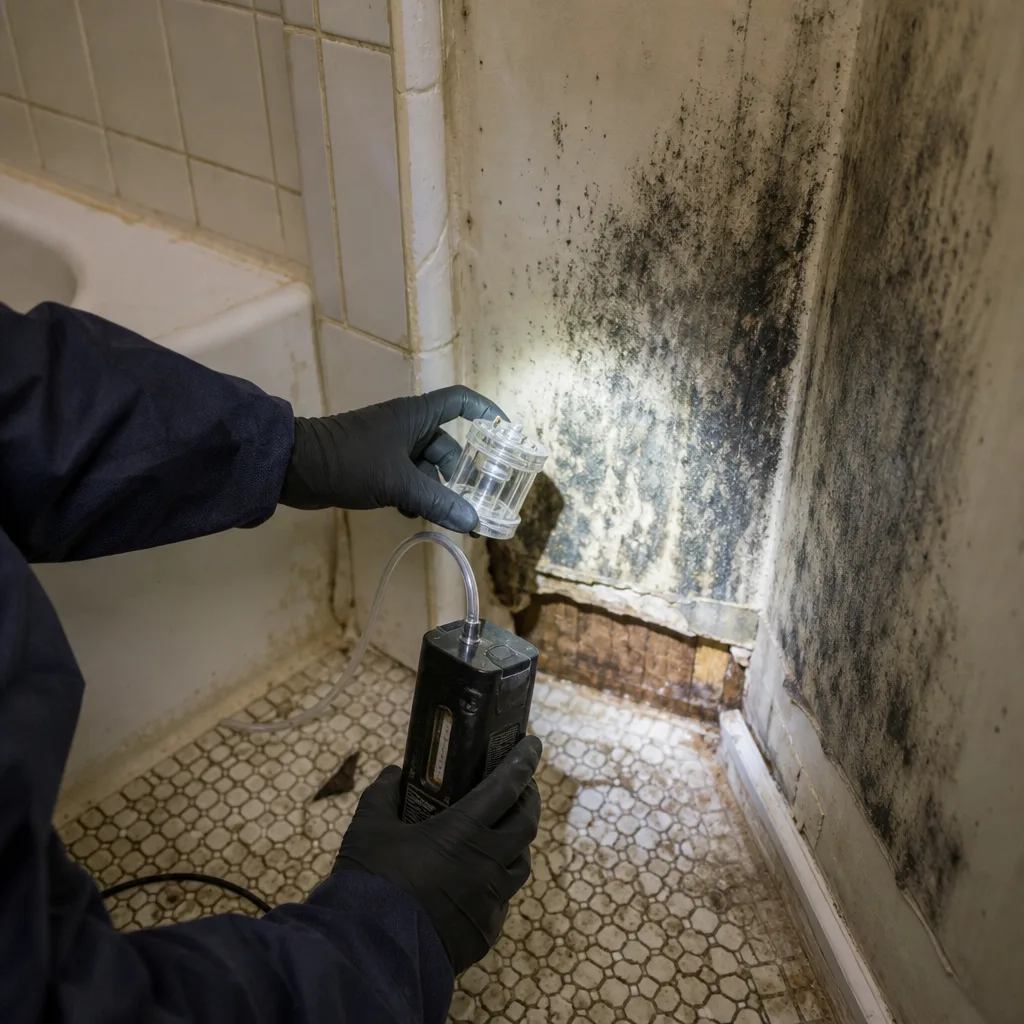
Yes, and often in the same job. Teaneck’s post-WWII basements frequently have original asbestos floor tiles, and mold remediation that disturbs those tiles requires environmental containment and abatement before any cutting starts. Skipping that step creates a regulatory and health hazard. We identify asbestos-era materials during the initial inspection, set containment, and bring in licensed abatement before demolition begins. It adds time and cost, but it keeps the job legal and your family safe.
What’s the difference between storm damage cleanup after a nor’easter in Teaneck versus a town like Ridgewood or Franklin Lakes?
Teaneck’s eastern blocks flood from groundwater, not surface runoff. Ridgewood and Franklin Lakes sit on higher ground with better natural drainage, so their storm losses tend to be roof, tree, and surface-water events. Teaneck’s problem is hydrostatic pressure against 60-year-old concrete-block foundations, which requires a different drying plan and often a below-grade waterproofing retrofit. A crew that treats Teaneck like an upland town will dry the top and miss the water underneath.
How fast can you actually get to my house in Teaneck?
Our response commitment is 45 minutes for Teaneck addresses, and our dispatch is arranged so a certified crew reaches you from the closest staging point in Bergen County. The phone is answered by a live person around the clock, including weekends and holidays, and extraction is running the same visit, not scheduled for the next morning.
Will my homeowner’s insurance cover storm damage restoration in Teaneck?
Most storm-related water and wind damage is covered, but the carrier needs proof of cause and a documented drying log. Groundwater seepage through a foundation is sometimes excluded unless you carry specific coverage, and that is exactly the kind of nuance we clarify with your adjuster before work goes past mitigation. We hand the carrier a complete file: photos, moisture readings, a line-item scope, and direct communication with us.
What should I do in the first 30 minutes after discovering storm damage in my Teaneck home?
Shut off power to affected areas if the panel is safe to reach, move what you can to higher ground, and call us at (917) 924-4221. Do not walk through standing water if there is any chance it contacted electrical outlets or appliances. Do not tear out drywall or flooring before it is documented, because your carrier needs to see the loss as it happened. Photograph what you can, then let us take over. The sooner extraction starts, the less demolition and reconstruction follow.
Written by Curt Bowman, Owner at Floodline Restoration Co. of Manhattan, serving Teaneck, NJ with certified storm and disaster restoration crews.