

Free visual inspection and a written scope of work before any mitigation begins - photos, moisture readings, and drying logs go in your claim file
The scope we write is the scope we bill. Anything new gets shown to you, in writing, before we touch it.






 Before
 After
After Before
 After
After Before
 After
After24/7 Emergency Storm & Disaster Restoration in Throggs Neck
Storm & Disaster Restoration in Throggs Neck means answering the phone when a nor’easter has just peeled a door panel off a Longstreet Avenue split-level and tidewater is running through the track. We answer live, every hour of every day, and a uniformed, background-checked crew reaches Throggs Neck fast, usually within 45 minutes. Call (917) 924-4221 the moment you see water, a damaged door, or a compromised roof line. The first hour decides whether you are drying a mudroom or gutting a finished basement.
Understanding Storm & Disaster Restoration Severity in Throggs Neck Properties
Storm restoration in Throggs Neck is not a single trade. It is wind-load assessment, water mitigation, structural drying, and often rebuilding all handled in sequence. Most homes here were built between the 1940s and 1960s, with full finished basements that sit below the flood elevation of the East River, Throggs Neck Bay, and Eastchester Bay. When storm surge pushes Category 3 water, the kind carrying sewage and tidal debris, into those basements, we are not dealing with a spill. We are dealing with contaminated water that has to be extracted, the envelope sealed, and the structure dried to a moisture standard before any drywall goes back up. Salt air complicates every phase. Fasteners, tracks, anchor bolts, and electrical connections corrode faster here than they do inland, so our Storm & Disaster Restoration crews inspect for corrosion while they dry. The older the home, the more likely the sill plates and subfloor absorbed brackish water in a prior event and were simply covered over. We open walls expecting that.
Why Throggs Neck Property Owners Choose Floodline Restoration Co. of Manhattan
- 45-minute response commitment: A live dispatcher confirms the crew and starts them rolling toward Throggs Neck the moment you hang up. Not a callback. Not a voicemail.
- 24/7 live answer: You will speak to a person at 2 a.m., not an automated system. That person knows the peninsula and can dispatch immediately.
- IICRC-certified crews: Our technicians carry WRT, FSRT, and AMRT certifications and train to RIA and IFA standards. That matters when your claim is being reviewed.
- Free visual inspection: We assess the damage in person, then put the scope in writing before any work begins. No pressure, no guessing.
- Direct insurance billing: We document everything, send the line-item scope to your carrier, and bill them directly. You are not the messenger.
- One team from extraction to reconstruction: The same certified crew that sets the Dri-Eaz dehumidifiers is the crew that hangs the new impact-rated door and rebuilds the wall, backed by the 90-Day Done Right Promise in writing.
Our Storm & Disaster Restoration Process
Inspection & Assessment
We walk the property with thermal imaging and moisture meters. We map every wet surface, check door and window seals for storm flex, and document the loss with photos before anything is moved. You get a written scope and a straight answer.
Extraction & Stabilization
Standing water comes out first. We secure the envelope with emergency board-up and roof tarping when the storm has opened a wall or a roof line. If wind-driven rain is still entering through a failed door, that door is stabilized before drying starts.
Drying & Dehumidification
Professional-grade Dri-Eaz dehumidifiers and XPOWER air movers are placed according to the moisture map, not scattered at random. We take daily readings with hygrometers and log them until the structure hits the dry standard. The log goes to you and your carrier.
Cleaning & Sanitization
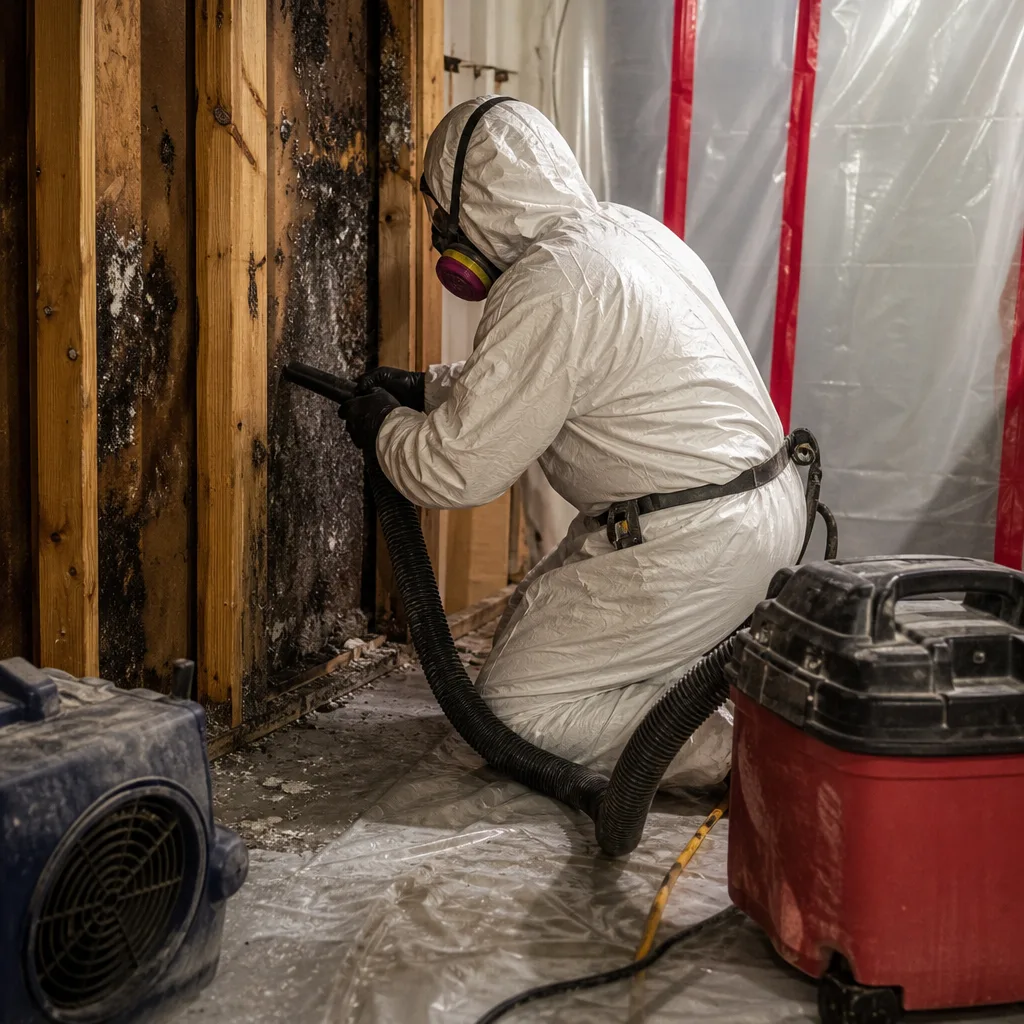
Storm surge water is contaminated. We clean and sanitize every affected surface, treat porous materials according to IICRC standards, and run HEPA air scrubbers where needed. Salt residue gets special attention because it keeps corroding long after the water is gone.
Wind & Structural Mitigation
We repair or replace storm-damaged doors, tracks, panels, and roof components, and we address what failed. In Throggs Neck, that usually means upgrading to wind-rated or impact-rated assemblies with corrosion-resistant hardware so the same storm does not do the same damage next season.
Repairs & Restoration
We rebuild what was removed: drywall, flooring, trim, door assemblies, roof sections. The same crew finishes the job from first extraction to final paint, and you get the 90-Day Done Right Promise, the Keystone Standard, in writing before we leave.
Need Emergency Storm & Disaster Restoration in Throggs Neck Now?
Crews minutes away, answering live 24 hours a day. The sooner we start, the less it costs.
Working With Your Insurance Company
Throggs Neck sits inside FEMA AE and VE flood zones, so almost every storm claim here involves NFIP paperwork, elevation questions, or an adjuster who has not seen the property. We handle that daily. Our team documents the loss from the first hour, generates industry-standard estimates, and communicates directly with your adjuster so you are not translating restoration terms over the phone. You get the full record, and we stand behind the work.
What We Provide Your Insurer
- Thorough documentation of the loss
- Photos of all damage, room by room
- Moisture readings and drying logs
- A detailed, line-item scope of work
- Direct coordination with your carrier
Built for Throggs Neck’s Loss Calendar
January and February bring deep freezes that burst supply lines in uninsulated crawl spaces under 1950s-built split-levels. March nor’easters are the real problem. They funnel storm surge up the East River, Throggs Neck Bay, and Eastchester Bay simultaneously, and that is when wind-rated doors fail, tracks buckle, and finished basements take on Category 3 water. Spring thaw adds basement seepage through aging foundations; the 1930s bungalows in Harding Park are particularly vulnerable because their original drainage was never designed for modern storm levels. Summer brings thunderstorms with flash flooding along low streets near the water. Fall brings hurricane remnants pushing up Long Island Sound. Throughout the year, persistent salt air keeps corroding anything metal that has already been compromised. Throggs Neck never really has an off season for storm damage.
Storm & Disaster Restoration Across Throggs Neck’s Neighborhoods
Throggs Neck is not one housing type. Along Harding Park and the waterfront enclaves, we work on 1920s and 1930s bungalows on low-lying ground. When we pull drywall there after a flood, we often find original wood framing that absorbed brackish water years ago and was never properly dried. Those jobs are studs-out restorations. In Silver Beach and Edgewater Park, the post-WWII brick and wood-frame homes have finished basements that flood through door tracks and window wells when surge water overtopped the street drains. On Longstreet Avenue and the higher streets feeding into the Throgs Neck Bridge approach, wind damage is the bigger issue: peeled door panels, bent tracks, lifted roof edges. Clarence Avenue and cross streets like Wilcox Avenue and Miles Avenue fill with standing water during heavy rain because the storm drains cannot keep up. Our response route comes off the Hutchinson River Parkway or the Bruckner, and we know which blocks flood first.
Specialized Storm & Disaster Restoration Services We Offer in Throggs Neck
Wind Damage Repair
Throggs Neck doors take wind from three directions. A door with no wind rating flexes inward during a nor’easter, popping the frame seal and letting wind-driven rain bypass the sweep straight into the basement. We repair or replace those doors, then address the water that came through. Impact-rated panels and corrosion-resistant hardware are the standard here, not an upsell.
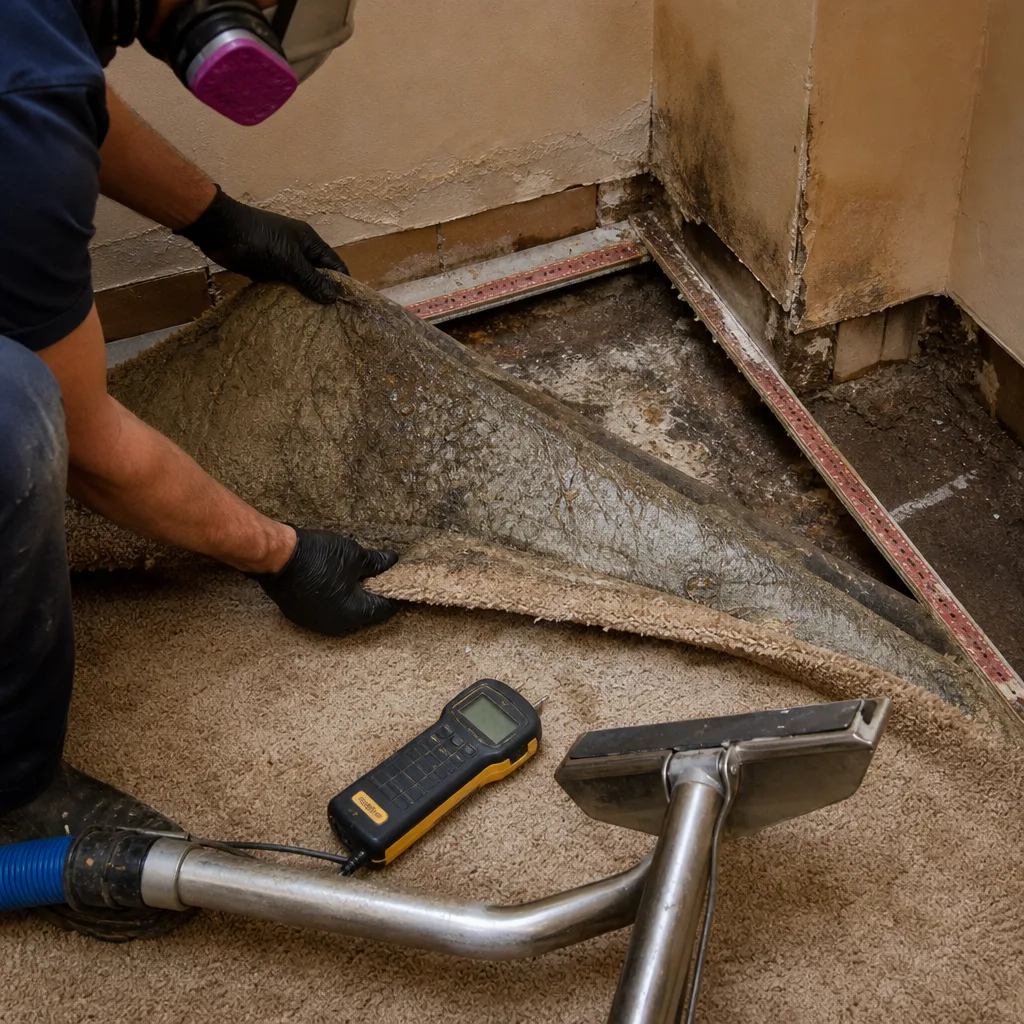
Emergency Board-Up
When a storm opens a wall, door, or roof section on a Throggs Neck home, waiting is not an option. We board up with real structural fastening, not a sheet of plywood and hope. The goal is a dry envelope tonight so extraction and drying can start inside.
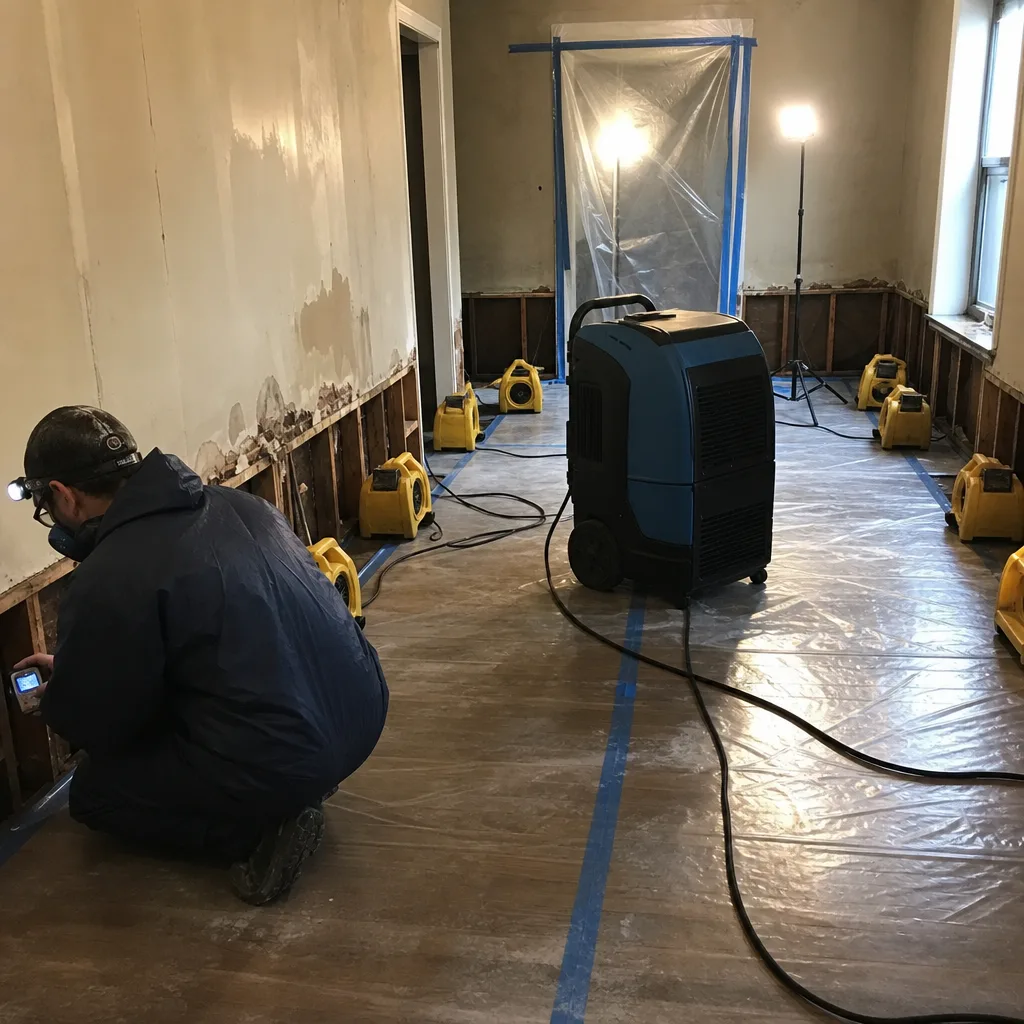
Storm Damage Cleanup
Storm damage cleanup in Throggs Neck means more than moving wet debris. It includes removing salt-contaminated silt, sanitizing surfaces touched by surge water, and clearing anything that could feed mold growth. We clean, we log, and we document for the carrier.
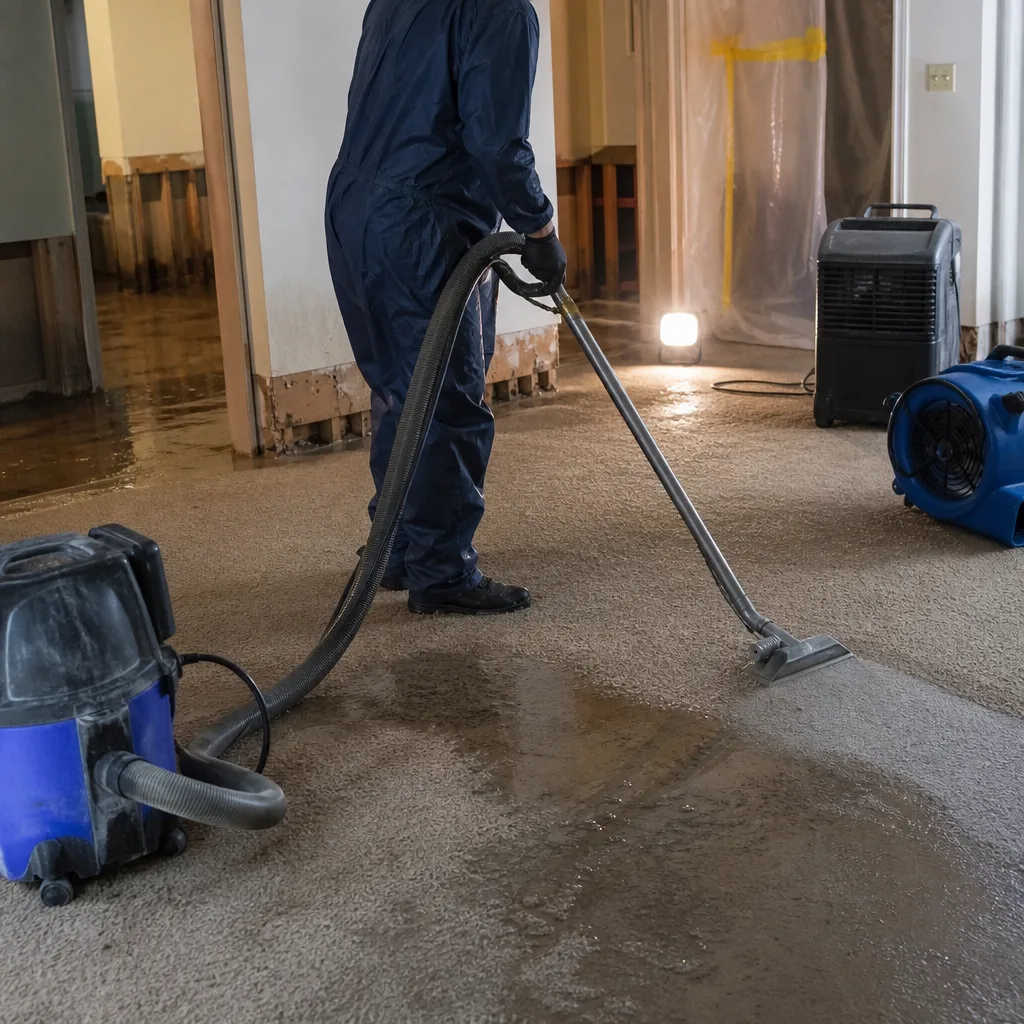
Flood Damage Restoration
Our Storm & Disaster Restoration team treats Throggs Neck floodwater as what it is: contaminated, corrosive, and fast-moving through finished basements. Extraction, structural drying, salt mitigation, and rebuild happen in one sequence, under one crew, with one name accountable.
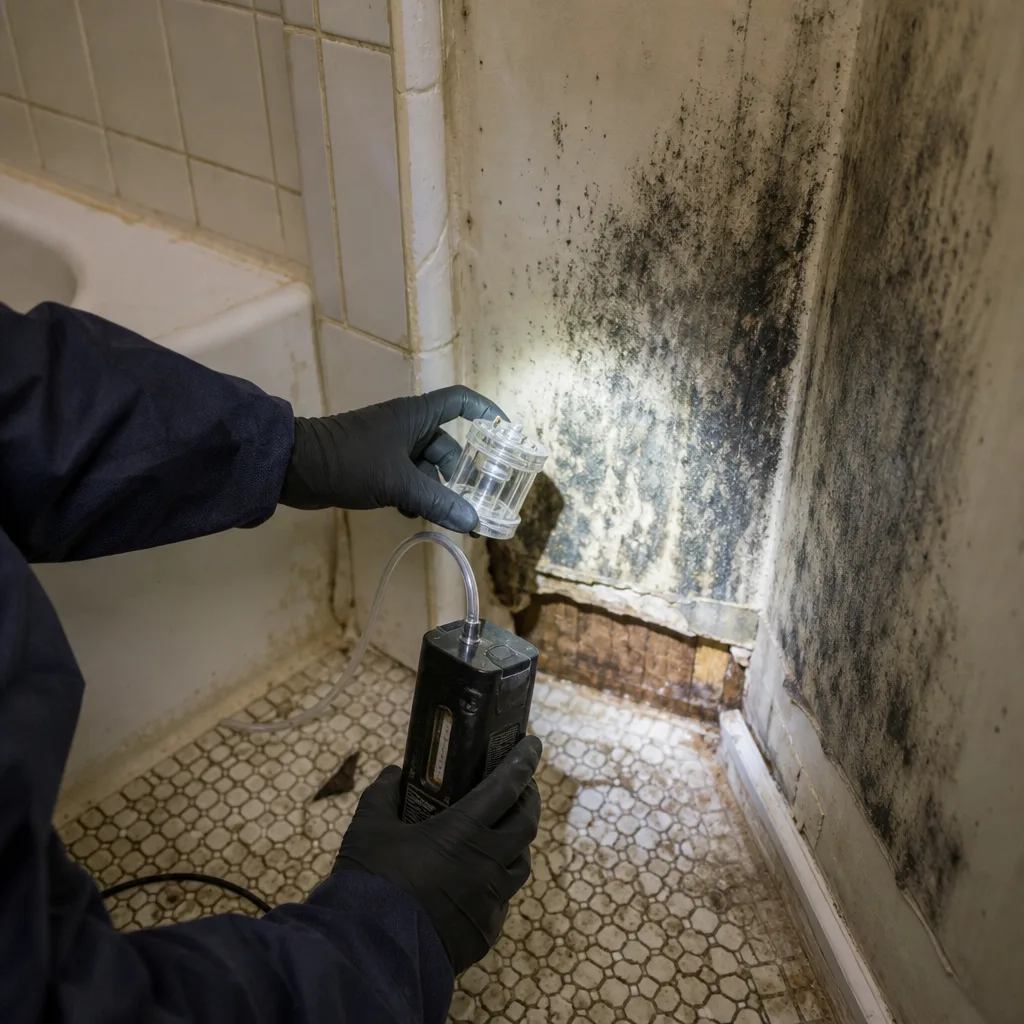
Roof Tarping
A lifted roof edge above a 1960s Throggs Neck home lets water into wall cavities for days before you notice the stain. We tarp roof damage quickly and properly, then include the interior drying in the same scope. You should not have to hire a second company to handle what the storm did inside.
Debris Removal
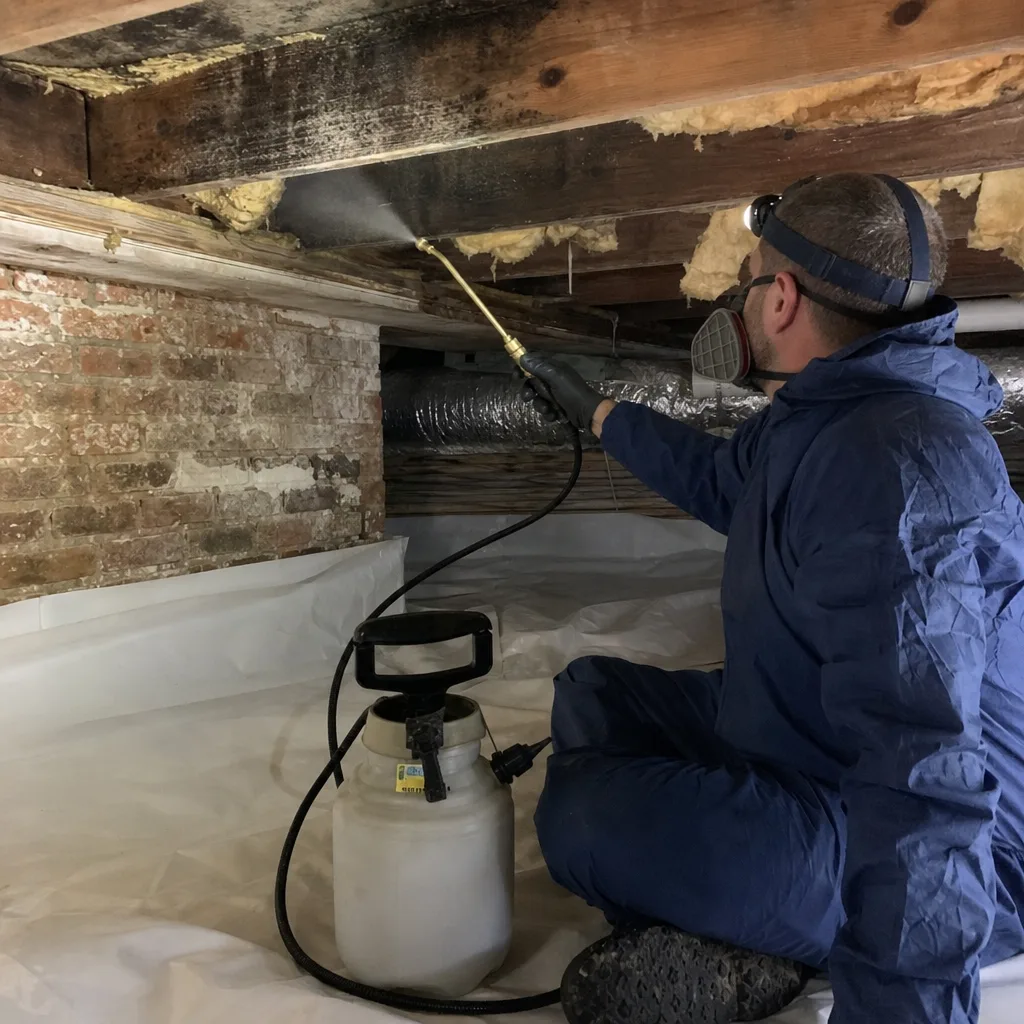
Nor’easters leave more than branches. Shingles, siding fragments, broken door panels, and tidal debris end up against foundations and in window wells around the peninsula. We remove the debris and inspect the structure behind it, because that debris is often what was keeping the water out.
What happens when you call
- 1
A real person answersNo phone trees - you reach a local pro.
- 2
You get an upfront price rangeHonest numbers before anyone is dispatched.
- 3
A background-checked tech heads outLicensed & insured, dispatched right away.
- 4
You approve before work beginsNothing starts until you say go.
Storm & Disaster Restoration Costs in Throggs Neck, NY
What does storm restoration cost in Throggs Neck? A real range helps. Emergency board-up with structural fastening typically runs $400 to $900 depending on openings and exposure. Roof tarping runs $350 to $800 for a standard one-story section. Water extraction and structural drying after a door-leak flood runs $1,800 to $4,500 for a moderate basement event. Full flood restoration with drywall removal, sanitization, and rebuild can run $8,000 to $25,000 or more when framing and finished space are involved. Wind-damaged door replacement with impact-rated panels runs $1,200 to $3,500 installed. What moves the number is the water category, how long it sat, and whether salt corrosion reached framing. We give a free visual inspection and a line-item scope in writing before any work begins. Call (917) 924-4221 and you will know the number, not an estimate phrase.
We Also Serve Cities Near Throggs Neck
Floodline Restoration Co. of Manhattan serves Throggs Neck and the surrounding area including Throggs Neck itself, Fairview, Harrison, East Bronx, and Hunts Point. If storm damage has reached your street, call (917) 924-4221 and a crew will be headed your way.
Serving Throggs Neck, NY - Our Local Coverage Area
We’re based in the Throggs Neck area and know this community well. Use the map below to see our service coverage - if you’re nearby, we can almost certainly help.
Throggs Neck Storm & Disaster Restoration Questions, Answered
Does a wind-rated or impact-rated exterior door really matter in Throggs Neck, or is it just code theater?
In Throggs Neck it matters more than in almost any other Bronx neighborhood because the peninsula takes wind and surge from the East River, Throggs Neck Bay, and Eastchester Bay all at once. A non-rated door flexes under that load, popping the frame seal and letting wind-driven rain pour into the basement. An impact-rated door with proper hardware holds its seal.
My patio door track got salt and sand in it after a storm. Can I just lube it?
No. Salt and sand inside the track abrade the rollers and corrode the fasteners. Lubricant masks the symptom while the corrosion spreads. The track needs to be disassembled, cleaned, and the hardware inspected. If the storm already forced water through the track, there is likely moisture behind it that needs drying. If the door sticks or the rollers are grinding, call (917) 924-4221 for a free inspection.
How fast can mold start in a Throggs Neck basement after a door leaks during a nor’easter?
Mold colonization begins within 24 to 48 hours in a warm, enclosed basement, faster when brackish surge water is involved because it carries organic material. That is why extraction and structural drying need to start the same visit. Our Storm & Disaster Restoration crews in Throggs Neck begin drying the day we arrive, not days later.
Do I need a permit to replace a wind-damaged exterior door in Throggs Neck?
Exterior door replacement in New York City generally requires a Department of Buildings permit when the opening size or structural connection is modified. A like-for-like swap of a door panel may not. We handle the permit coordination as part of the scope, and we will tell you honestly which category your job falls into. Insurance often covers permitted storm repairs.
What is the difference between Category 1, 2, and 3 water in Throggs Neck storm restoration?
Category 1 is clean water, like a supply line break. Category 2 is gray water with some contamination, like washing machine overflow or rainwater that sat. Category 3, which is what Throggs Neck storm surge delivers, is grossly contaminated water carrying sewage, tidal debris, and chemicals. Category 3 requires extraction, disposal of affected porous materials, sanitization, and drying. It is not a mop-and-fan situation.
How long does drying take after a Throggs Neck basement flood?
Typical structural drying runs three to five days with professional Dri-Eaz dehumidifiers and XPOWER air movers running according to a moisture map. Older Throggs Neck homes with 1940s framing can take longer because original lumber absorbs and releases water slowly. We log daily moisture readings and do not call it dry until the numbers say dry.
Can we stay in the home during storm restoration work in Throggs Neck?
Often yes, especially when the damage is confined to a basement or a single room. If we are doing open-wall structural drying or sanitization with air scrubbers, we may recommend you relocate temporarily. We will tell you plainly, in writing, before work starts. There is no scenario where we hide that information.
What should I do in the first 30 minutes after a storm damages my Throggs Neck home?
Call (917) 924-4221 first. Then, if safe, shut off power to wet areas and move valuables up. Do not enter standing water that may be energized or contaminated. Do not open walls to look. Photograph what you can from a safe spot. We arrive, document everything, and start extraction and stabilization the same visit.
Written by Curt Bowman, Owner at Floodline Restoration Co. of Manhattan, serving Throggs Neck with storm and disaster restoration.