
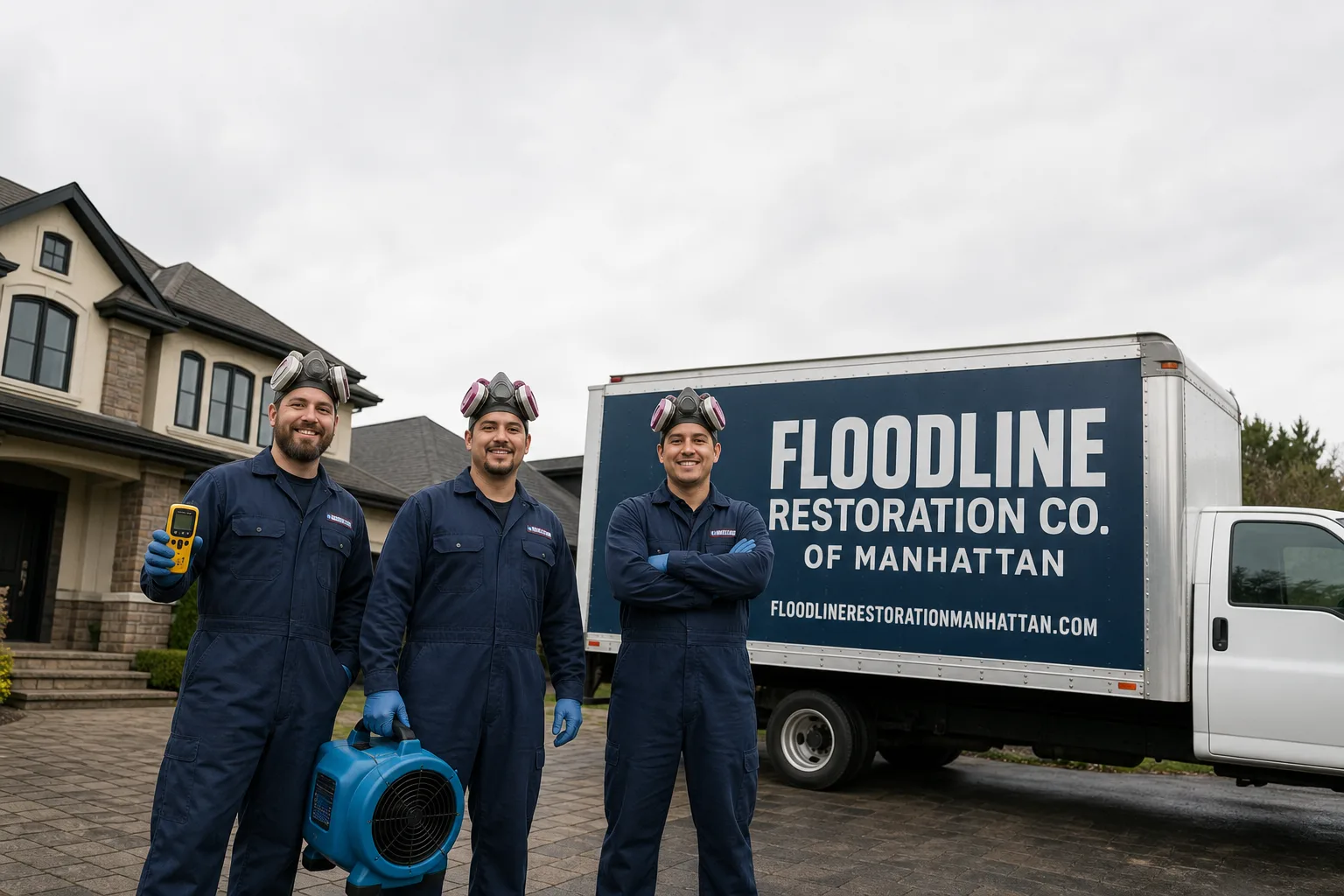
Free visual inspection and a written scope of work before any mitigation begins - photos, moisture readings, and drying logs go in your claim file
The scope we write is the scope we bill. Anything new gets shown to you, in writing, before we touch it.






 Before
 After
After Before
 After
After Before
 After
After24/7 Emergency Storm & Disaster Restoration in Tuckahoe
Storm damage in Tuckahoe rarely announces itself politely. When a nor’easter rips a section of roofing off a 1920s Marbledale Road semi-detached at 2 a.m., or a flash flood backs the Bronx River into a Main Street basement, the first call needs to reach a live person. Ours does. Floodline Restoration Co. of Manhattan answers the phone around the clock, every day of the year, with a dispatcher who can have a certified crew heading toward your Tuckahoe neighborhood within 45 minutes. Call (917) 924-4221 the moment you see water, wind damage, or a compromised opening. The first hour after a storm is when extraction, board-up, and tarping do the most good, and when delay turns a cleanup into a rebuild.
Understanding Storm & Disaster Restoration Severity in Tuckahoe Properties
Tuckahoe’s housing stock doesn’t respond to storm damage the way newer construction does. Most homes here were built between the 1890s and 1940s, with original plaster walls, rubble-stone or brick foundations, and no vapor barriers to speak of. When stormwater enters, those materials don’t shed it. They absorb it. We classify the water we extract on every job: Category 1 is clean, Category 2 carries contaminants, and Category 3, the kind the Bronx River delivers during a flood event, contains sewage, bacteria, and whatever the watershed carried downstream. That distinction changes everything about the restoration. Category 3 water requires containment, antimicrobial treatment, and full removal of affected porous materials, not just drying. In Tuckahoe’s older homes, we routinely find that water has wicked upward through original plaster walls and saturated the lath behind them, which means moisture mapping isn’t a formality on this job. It’s the single most important diagnostic step. Thermal imaging and hygrometer readings tell us where the water actually went, often three or four feet beyond what the eye can see. The goal is a dry standard that holds, documented with daily readings until it’s met.
Why Tuckahoe Property Owners Choose Floodline Restoration Co. of Manhattan
- 45-minute response commitment to Tuckahoe. When we say a crew is on the way, we mean a crew is on the way. Our dispatch board is built around response, not sales calls.
- 24/7 live answer. A real person picks up at 2 a.m., not a recording. You’ll never be asked to leave a message during an emergency.
- IICRC-certified crews. Our technicians hold WRT, FSRT, and RIA certifications, so the person in your basement understands water classification, soot behavior, and structural drying science.
- Free visual inspection. We walk the property, we show you what we see, and we write the scope before any work begins. You approve it, not the other way around.
- Direct insurance billing. We bill your carrier directly and handle adjuster communication, so you’re not playing messenger while your house sits wet.
- One team, start to finish. The same crew that extracts the water on day one handles the drying, the rebuild, and the final walkthrough. No mid-job handoffs, no inherited strangers.
Our Storm & Disaster Restoration Process
Inspection & Assessment
We arrive, we walk the property with you, and we identify every point of entry. Thermal imaging and moisture meters map where water has actually traveled, not just where it pooled. You get a written scope of work before anything moves forward.
Extraction & Stabilization
For flood damage, we run truck-mounted and Dri-Eaz portable extraction pumps to pull standing water fast. For wind damage, we board up openings and tarp roofs immediately so no more weather gets in. Stabilization stops the loss from spreading.
Drying & Dehumidification
Once the structure is stable, we set up air movers, dehumidifiers, and in-wall drying systems where needed. In Tuckahoe’s plaster-walled homes, this often means Injectidry systems pushing air into wall cavities. Daily moisture readings are logged until the dry standard is met.
Cleaning & Sanitization
After Category 2 or 3 water, we spray antimicrobials and clean every affected surface. HEPA air scrubbers run throughout to filter airborne particulates and mold spores. Nothing gets covered up or painted over.
Specialty Treatment for Storm Damage
This is where Tuckahoe’s older homes need more than a generic crew. We stabilize degraded rubble-stone foundation walls with our local mason partners, address wind-rated door replacements, and handle the structural work that storm restoration in this village routinely expands to include.
Repairs & Restoration
We rebuild what needed rebuilding: framing, drywall, flooring, roofing, doors. The same uniformed crew that handled day one handles the finish work. Then we hand you the moisture log and the 90-Day Done Right Promise in writing.
Need Emergency Storm & Disaster Restoration in Tuckahoe Now?
Crews minutes away, answering live 24 hours a day. The sooner we start, the less it costs.
Working With Your Insurance Company
Insurance claims after a Tuckahoe storm live or die on documentation. From the first hour, we photograph every affected room, every moisture reading, every piece of equipment we set. Our estimates use industry-standard line items that your adjuster will recognize, which keeps the claim moving. We communicate directly with your carrier, send over photos, drying logs, and scopes of work, and answer their questions so you don’t have to. The homeowner never becomes the go-between. When the adjuster schedules a site visit, our techs are there to walk the property and show what we found, what we did, and what’s left to rebuild.
What We Provide Your Insurer
- Thorough documentation of the loss
- Photos of all damage, room by room
- Moisture readings and drying logs
- A detailed, line-item scope of work
- Direct coordination with your carrier
Built for Tuckahoe’s Loss Calendar
Tuckahoe’s storm restoration calendar runs year-round, and each season brings its own failure mode. January and February deliver deep freezes that burst cast-iron and galvanized supply lines in unheated basements, the same basements that already run damp in this village. March and April bring snowmelt and spring rain, and because Tuckahoe sits in a low-lying bend of the Bronx River valley, that water funnels straight into our storm drains and often right back into foundations. Summer brings the flash-flood thunderstorms that overwhelm the drainage system completely, backing Category 3 river water into ground floors and basements. Fall is nor’easter season, when wind peels roofing, tears off gutters, and drives rain sideways into pre-war brick siding that was never designed for that kind of wind load. Knowing which season we’re in tells us what to look for before we even arrive, and it tells us what to check after the obvious damage is addressed. The village’s position in the river valley means the water table itself moves against these older foundations during wet weeks, a condition no hilltop community in Westchester deals with.
Storm & Disaster Restoration Across Tuckahoe’s Neighborhoods
The blocks closest to the Bronx River, the streets off Main Street, and the older village core respond to storms differently than the edges of Tuckahoe do. Along Marbledale Road and the low-lying streets that slope toward the river, we return season after season to the same foundations, the ones where decades of flood-and-dry cycles have beaten the mortar out of rubble-stone walls. Up around the Crestwood side of the village, homes sit slightly higher but still catch the full force of nor’easter winds, losing shingles and flashing more often than they take on water. The Columbus Avenue corridor and the attached-brick rows near the train station have their own pattern: shared walls mean shared moisture, and one neighbor’s roof leak can introduce water into the party wall and affect the unit next door. On the hill streets closer to the Eastchester border, wind damage to doors and windows is the more common call, but we always check the foundation for weep lines after heavy rain because the water still finds its way down. Tuckahoe is small but it’s not uniform, and a crew that knows which streets flood, which streets lose roofs, and which basements hold water is a crew that can be on the right corner in under an hour.
Specialized Storm & Disaster Restoration Services We Offer in Tuckahoe
Storm Damage Cleanup
When a storm passes through Tuckahoe, the damage is rarely just one thing. We remove downed limbs, shattered glass, soaked insulation, and storm debris as part of every storm response. We also document everything for the carrier before we start, so cleanup is part of the claim, not something you pay for out of pocket.
Flood Damage Restoration
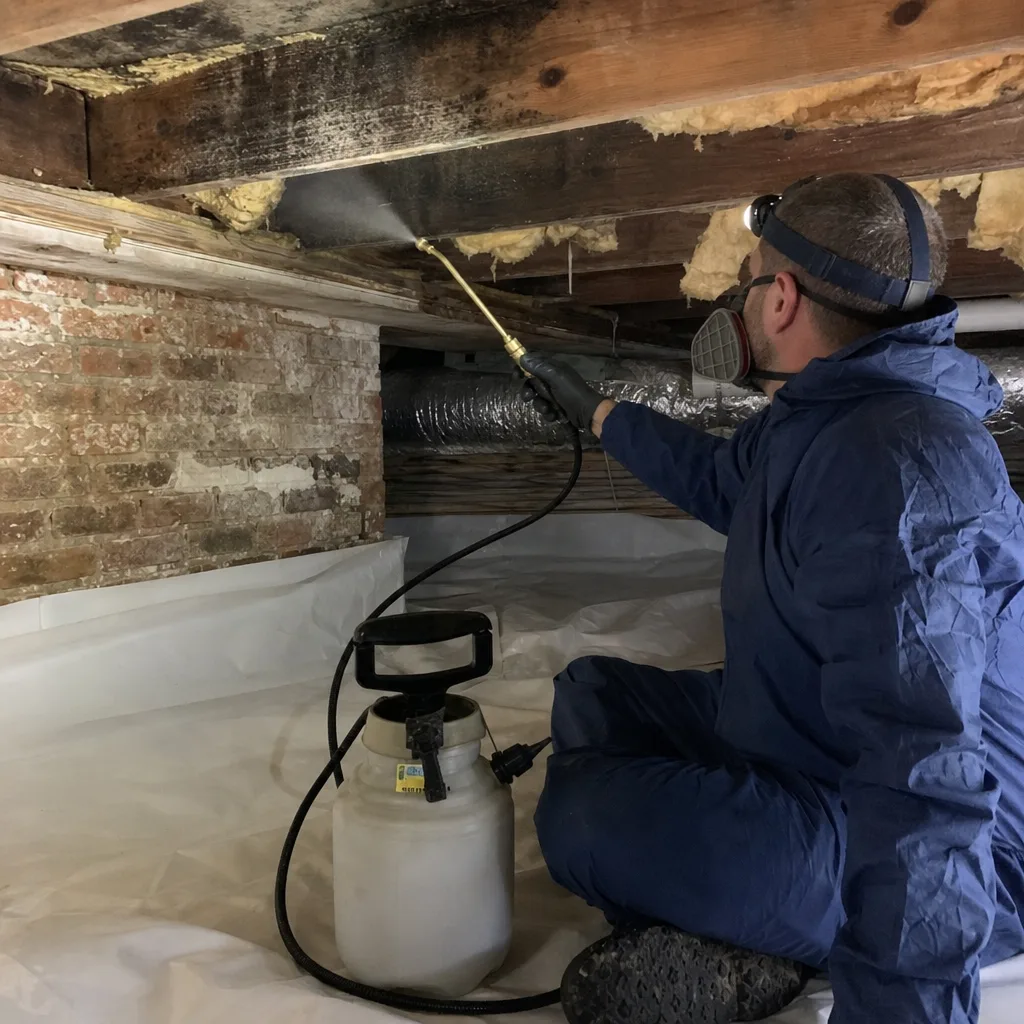
River-driven flooding in Tuckahoe is not the same as a burst pipe. It’s Category 3 water that carries whatever came down the watershed, and it requires containment, full extraction, antimicrobial treatment, and aggressive structural drying. The floodline the water leaves on your basement wall is exactly where we start.
Emergency Board-Up
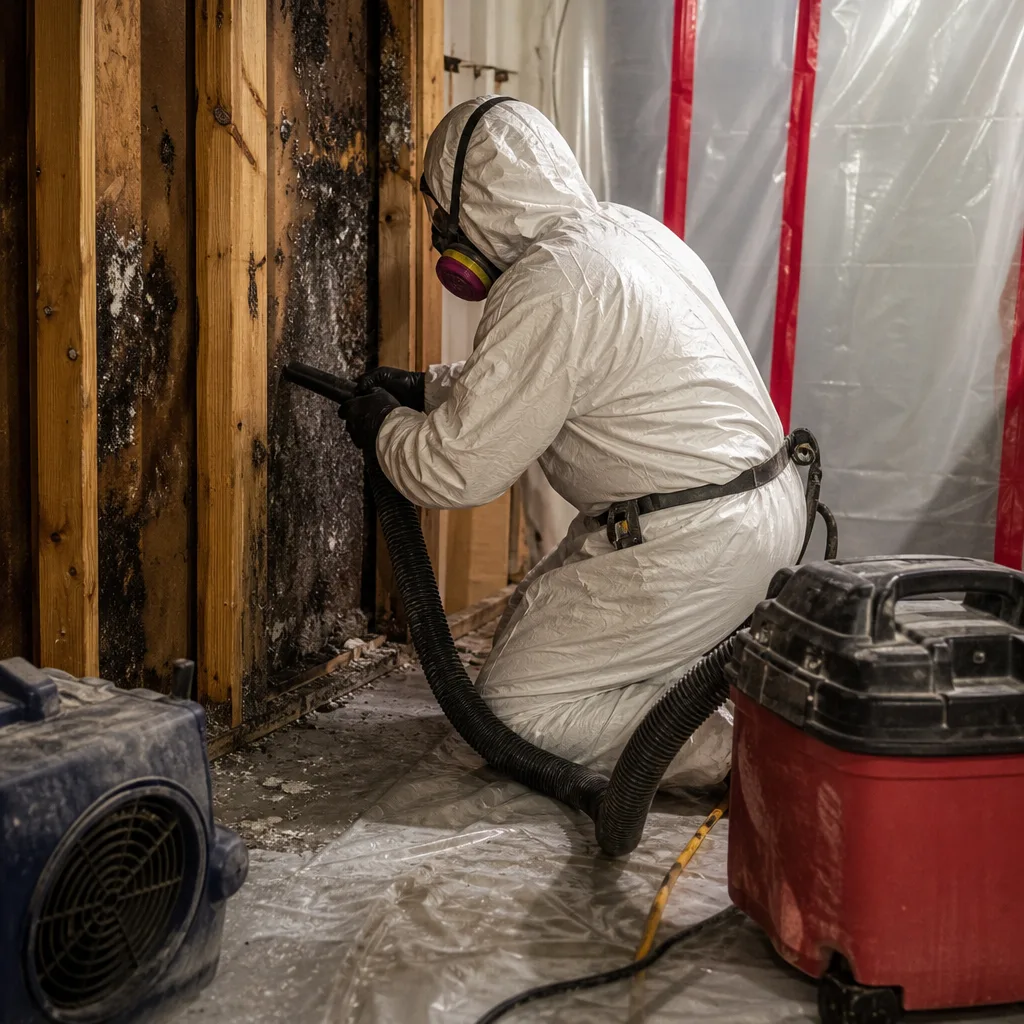
When wind blows out a window or tears a door off its hinges, the opening is an invitation to rain, snow, and anything else the sky sends. We board and secure openings the same visit we’re called, with materials that hold through the next storm, not just through the night.
Roof Tarping
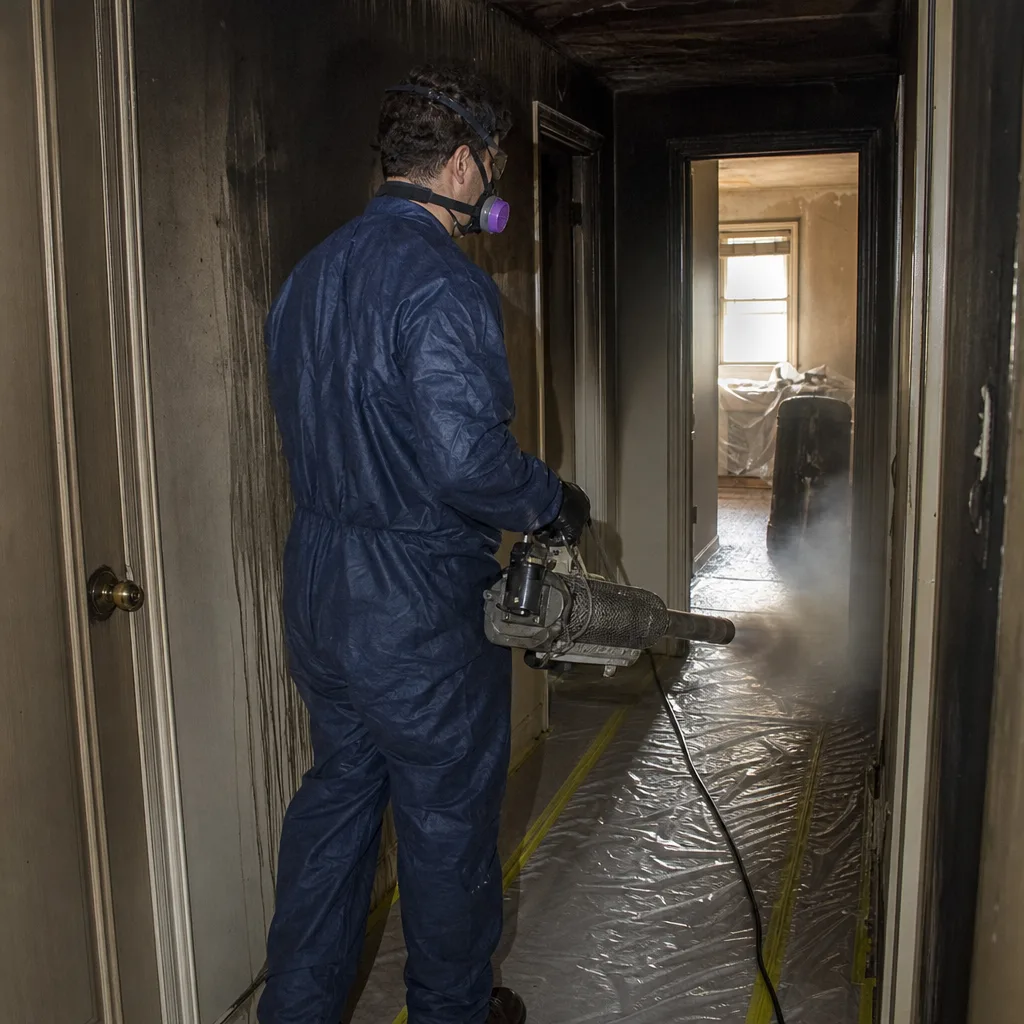
A damaged roof in Tuckahoe can go from a small leak to a full ceiling collapse in the time it takes to schedule a roofer. We tarp the same day, sealing the damaged area against rain until permanent repairs are scoped and scheduled with your carrier.
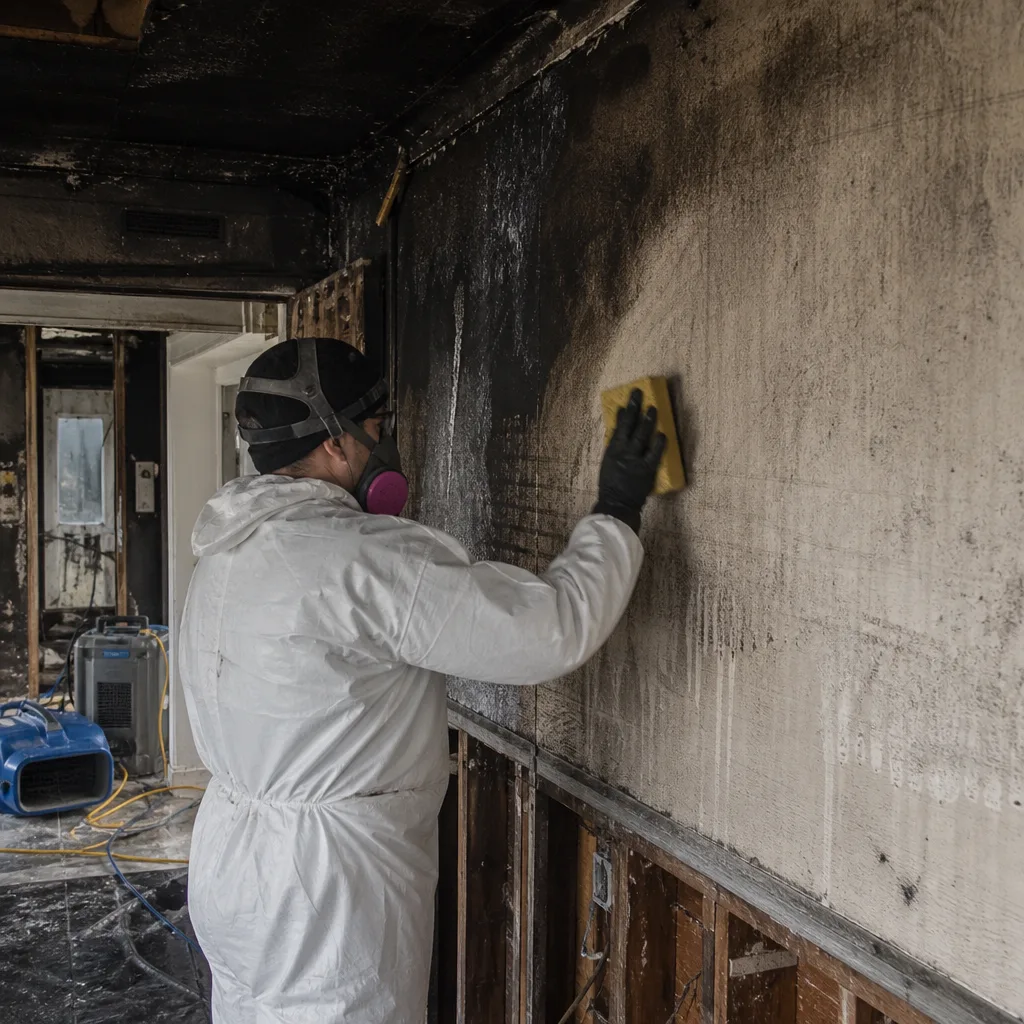
Debris Removal
Fallen trees, broken fencing, and storm-scattered building materials create hazards and block access. Our crew clears the site safely, separates what the insurance company needs to see, and hauls the rest away.
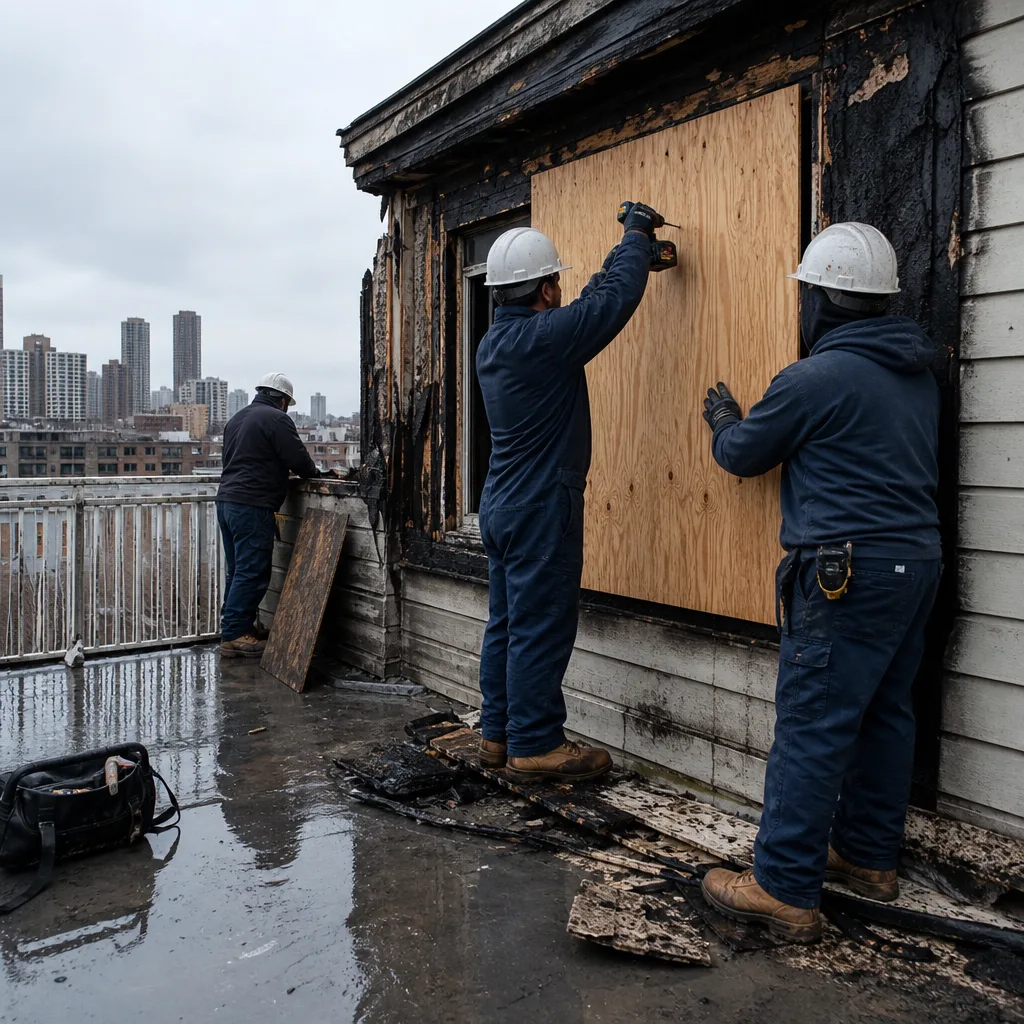
Wind Damage Repair
Tuckahoe’s pre-war homes were built before wind-rated construction standards existed. When a nor’easter strips siding, collapses a chimney, or compromises an exterior wall, we rebuild to current code, including wind-rated doors and impact-resistant materials where the village requires them.
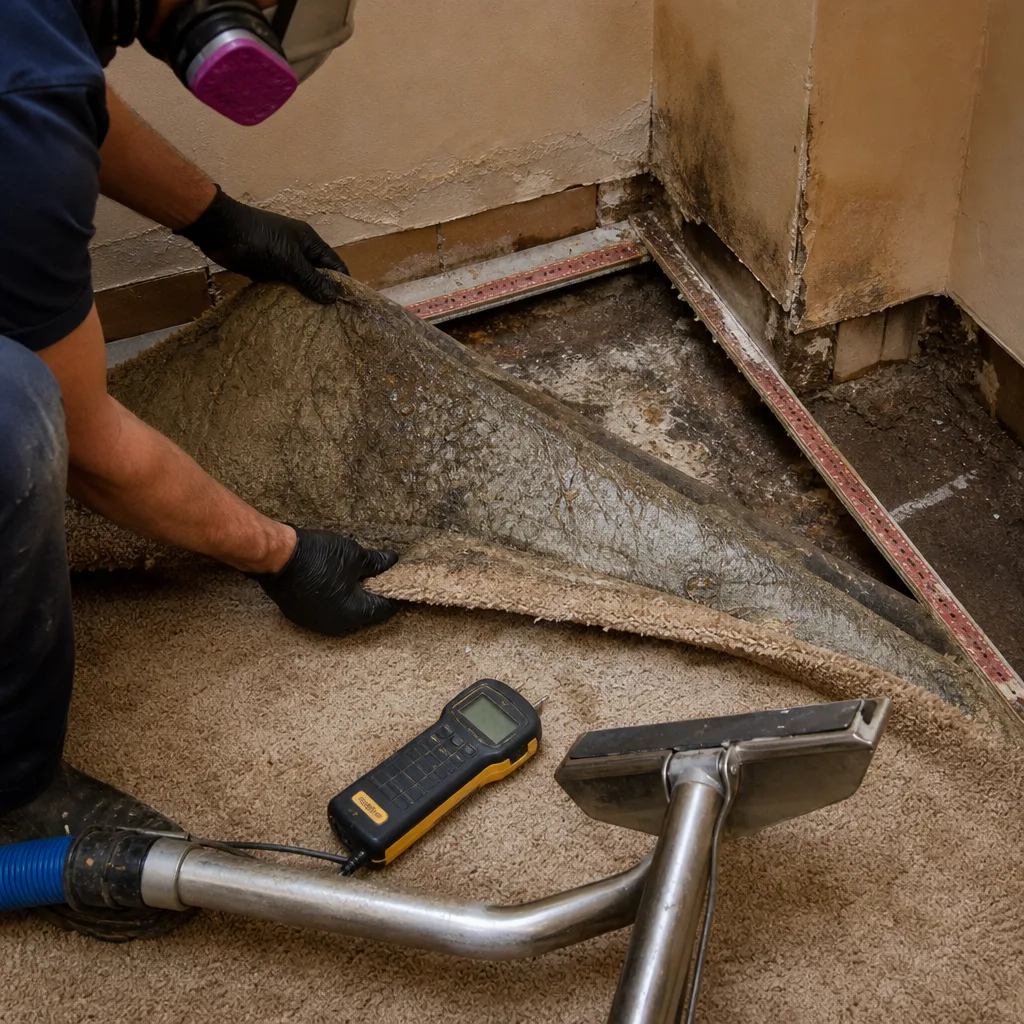
What happens when you call
- 1
A real person answersNo phone trees - you reach a local pro.
- 2
You get an upfront price rangeHonest numbers before anyone is dispatched.
- 3
A background-checked tech heads outLicensed & insured, dispatched right away.
- 4
You approve before work beginsNothing starts until you say go.
Storm & Disaster Restoration Costs in Tuckahoe, NY
Storm restoration pricing in Tuckahoe tracks the age of the structure and the water category involved. Emergency board-up and roof tarping typically runs $350 to $800 for an average storm-damaged opening, while tarping a larger roof section can reach $1,200 to $2,500 depending on pitch and accessibility. Water extraction and structural drying in a typical Tuckahoe basement, the kind with plaster walls and a rubble-stone foundation, usually falls between $2,800 and $6,500 when Category 1 or 2 water is involved. Category 3 floodwater from the Bronx River expands that range to $6,000 to $15,000 or more once containment, antimicrobial work, and removal of soaked plaster and framing are factored in. Masonry stabilization on an older foundation, which Tuckahoe jobs often require, adds another $2,000 to $8,000 depending on the wall area. The good news: most storm losses are covered under standard homeowner policies, and we bill the carrier directly. A free visual inspection is the fastest way to get a firm scope in writing before any money changes hands. Call (917) 924-4221 and we’ll walk the property with you this week.
We Also Serve Cities Near Tuckahoe
Our crews cover the surrounding Westchester communities with the same 45-minute response commitment and 24/7 live dispatch. We’re regularly in Eastchester, Bronxville, Yonkers, and Scarsdale for storm, flood, and wind damage restoration. If you’re in a neighboring village, the same team, same equipment, and same written guarantee apply.
Tuckahoe Storm & Disaster Restoration Questions, Answered
How does Tuckahoe’s Bronx River valley location change the category of water we’re dealing with after a storm?
The Bronx River location changes the water category from Category 1 or 2 to Category 3 in most flood events. Stormwater that backs into Tuckahoe basements has traveled through the upstream Westchester watershed, picking up sewage, road runoff, and biological contaminants along the way. That means full containment, antimicrobial treatment, and removal of porous materials are required, not optional. Call us before anyone tracks it through the house and spreads the contamination.
What should I check on my pre-WWII Tuckahoe home’s door before a nor’easter?
Check the hinges and the strike plate first, but the real question is whether the door itself is rated for the wind loads Tuckahoe catches in the valley. Original wood doors from the 1920s and 1930s were never tested for nor’easter gusts. If the panel flexes under pressure or the frame has any separation from the masonry, water entry during the storm is nearly guaranteed. We can assess the opening and recommend a wind-rated replacement before the next front arrives.
Why do restoration crews in Tuckahoe often bring in masons during a flood job?
Because decades of flood-and-dry cycles in the river valley have degraded the original rubble-stone foundation mortar throughout Tuckahoe’s flood-prone blocks. When we extract water and begin drying, we often find that the foundation itself needs stabilization before structural drying can work properly. We have standing relationships with local masons for exactly this reason. An out-of-area crew misses this step and dries against a wall that keeps wicking moisture from the soil.
How soon can mold start in a Tuckahoe basement after a storm?
Mold colonization begins within 24 to 48 hours in the damp, warm conditions of a Tuckahoe basement, especially in the humid summer months. In pre-war homes with original plaster and no vapor barriers, that timeline can be shorter because the walls themselves hold moisture. The first 24 hours are when extraction and the initial drying setup make the difference between a cleanup and a mold remediation.
What does Tuckahoe’s permit process require for a wind-rated replacement door after storm damage?
Tuckahoe’s building department requires a permit for replacing an exterior door after storm damage, and the replacement must meet current wind-rating standards for the structure. That means impact-rated or wind-rated panels, proper anchoring, and a final inspection. We handle the permit paperwork and the installation, so the new door is code-compliant and actually protects the opening during the next nor’easter.
How fast can you actually get to my Tuckahoe home in an emergency?
We commit to 45 minutes for emergency storm calls within Tuckahoe. Our dispatch is live around the clock, and our crews are stationed to move into the village quickly. Call (917) 924-4221 and a real person will tell you exactly when the truck is rolling.
Will my insurance cover storm damage restoration in Tuckahoe?
Most standard homeowner policies cover sudden storm damage: wind-driven roof loss, fallen trees, and water that enters through a storm-created opening. The nuance is that floodwater from the Bronx River may require separate flood coverage depending on your policy. We work with your adjuster directly, document everything from the first hour, and bill the carrier so you’re not out of pocket while the claim moves.
Can we stay in our Tuckahoe home during storm restoration?
It depends on the water category and the extent of the damage. For Category 1 or 2 water in a contained area, yes, most homeowners stay. For Category 3 floodwater, or when structural work on a foundation or load-bearing wall is required, we’ll recommend temporary relocation and document that recommendation for the carrier. Your safety comes before the schedule, and we’ll tell you straight what we’d do in your shoes.
Serving Tuckahoe, NY - Our Local Coverage Area
We’re based in the Tuckahoe area and know this community well. Use the map below to see our service coverage - if you’re nearby, we can almost certainly help.
Storm & Disaster Restoration in Tuckahoe: What the River Valley Changes
Here’s what we know from working this village that a generic restoration page won’t tell you. Tuckahoe sits in a low-lying bend of the Bronx River valley, and that one fact changes storm restoration work here in ways that simply don’t apply to Bronxville or Scarsdale. Stormwater from a large upstream Westchester watershed funnels directly through the village, overwhelming storm drains and backing into basements even in moderate rain events. The river-shaped geography means the water table itself sits high against these older foundations during wet weeks, and the combination of freeze-thaw cycles in winter and humid summers accelerates the deterioration of original rubble-stone mortar in the blocks closest to the water. We’ve seen repeated flood-and-dry cycles beat the structural integrity out of foundation walls that look fine from the outside. That’s why a water-loss job in this village routinely expands to include masonry stabilization, and why we keep local mason partners on our standing workflow. It’s also why our Storm & Disaster Restoration team approaches every Tuckahoe job as a structure problem first and a cleaning job second.
Last September, we were called to a 1920s brick semi-detached on Marbledale Road after a nor’easter tore off a section of 3-tab shingles and driving rain overwhelmed the rubble-stone foundation. Our techs set containment and began water extraction with Dri-Eaz pumps while moisture mapping showed saturation wicking up the original plaster walls. Because repeated freeze-thaw cycles had degraded the mortar, the scope of work expanded to include masonry stabilization by our local mason partner before structural drying could bring the basement back to pre-loss condition. The homeowner got a written scope, the carrier got daily moisture logs, and the house got dried properly, not just mopped. That’s the standard we bring to every storm job in Tuckahoe.
Curt Bowman founded Floodline Restoration Co. with a simple rule: the line the water left is where we start, and we don’t hand the job off until the rebuild is finished by the same crew. For over 42 years, that’s meant answering the phone with a live person at any hour, sending background-checked, uniformed technicians trained to IICRC, RIA, and IFA standards, and standing behind the work with the 90-Day Done Right Promise in writing. It’s a square deal: no surprises on the bill, no mid-job handoffs, and no homeowner left playing messenger with an adjuster. If the restoration isn’t done right, we make it right. That’s the Keystone Standard, and it’s what your Tuckahoe home deserves.
Call (917) 924-4221 for a free estimate, any hour, any day. A live dispatcher will answer.
Written by Curt Bowman, Owner at Floodline Restoration Co., serving the Tuckahoe area with storm, flood, and disaster restoration.