
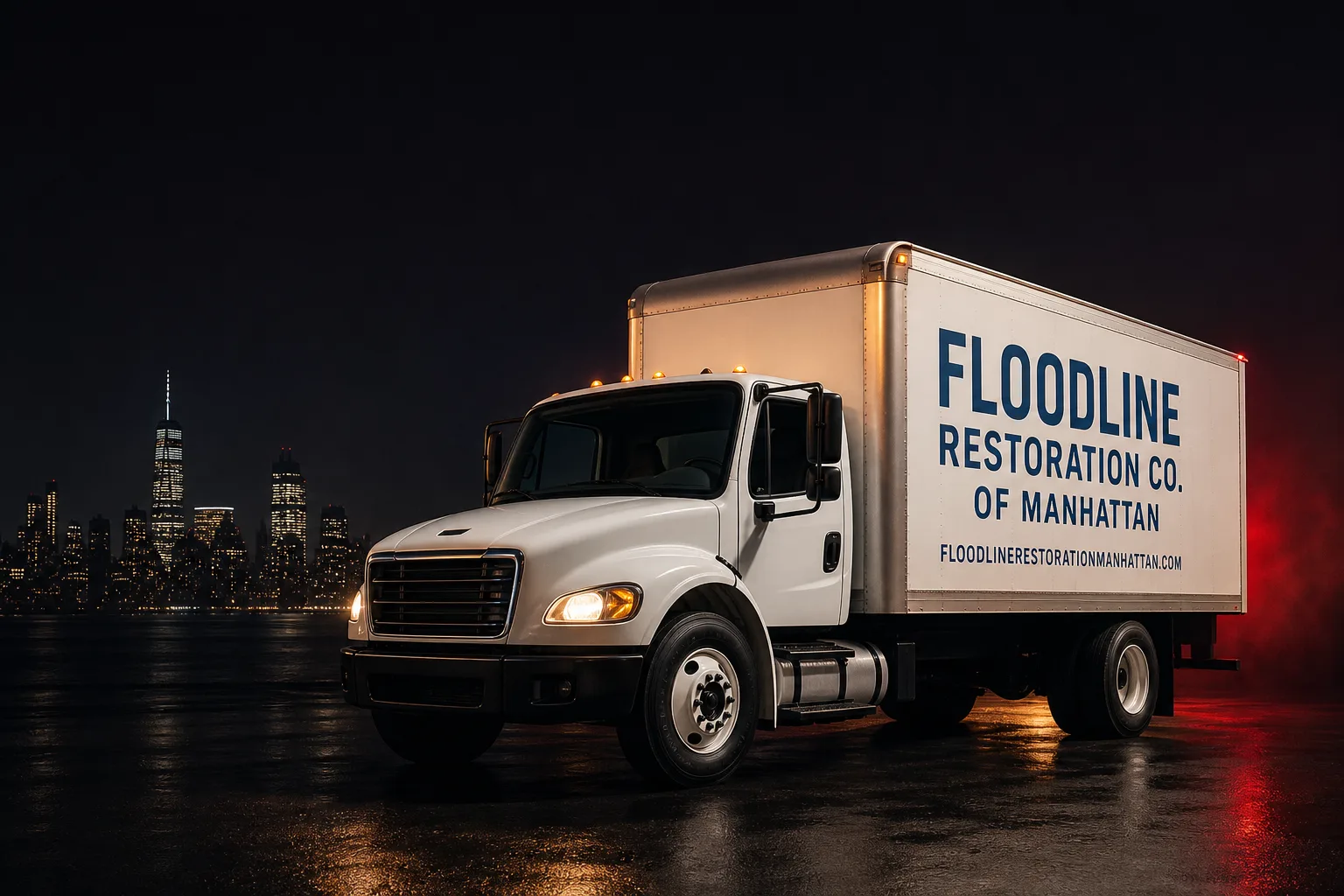
Free visual inspection and a written scope of work before any mitigation begins - photos, moisture readings, and drying logs go in your claim file
The scope we write is the scope we bill. Anything new gets shown to you, in writing, before we touch it.






 Before
 After
After Before
 After
After Before
 After
After24/7 Emergency Storm & Disaster Restoration in Washington Square
Storm damage in Washington Square doesn’t wait for business hours, and neither do we. Floodline Restoration Co. of Manhattan answers live around the clock, every day of the year. When a nor’easter tears roofing off a Washington Square North rowhouse or a frozen supply line bursts inside a 1920s pre-war elevator building, our crews are dispatched immediately from our New York City office and reach the neighborhood fast. Call (917) 924-4221 the moment you see water, wind damage, or a breached roof. The first hour determines whether you’re looking at extraction and drying or a full gut renovation. We start with a free visual inspection and get extraction running the same visit. Most Washington Square jobs are completed in a single visit by the same certified crew that read the moisture map on day one.
Understanding Storm & Disaster Restoration Severity in Washington Square Properties
Storm damage in Washington Square falls into clear categories, and the building stock here makes severity assessment trickier than most of Manhattan. Category 1 water from a burst supply line is clean but still migrates fast through 1830s rubble-stone foundations and shared party walls. Category 2 water, the kind that backs up through the neighborhood’s aging combined sewer lines during a flash flood, carries contaminants and demands antimicrobial treatment, not just drying. Category 3 water from storm surge or sewage overflow requires full containment, disposal of saturated horsehair plaster and wood lath where salvage isn’t possible, and HEPA air scrubbing before anyone reoccupies the space. In Washington Square’s Federal rowhouses and tenement-era walk-ups, we moisture-map every affected room with thermal imaging and hygrometers, because water here doesn’t stay where it started. A roof breach on Washington Square North can run through three adjoining landmarked properties before the source is even visible. That’s why we log daily readings until the dry standard is met, not just until the floor looks dry.
Why Washington Square Property Owners Choose Floodline Restoration Co. of Manhattan
- 45-minute response commitment. When water is moving through a party wall, thirty minutes matters. Our Washington Square crews are dispatched within the hour, every time.
- 24/7 live answer, never a recording. A live dispatcher picks up at 2 a.m. after a nor’easter, not an automated system. You’ll speak to a person who can dispatch a crew immediately.
- IICRC-certified technicians trained to WRT, FSRT, and AMRT standards. Background-checked, uniformed, and experienced with landmarked masonry and pre-war interiors.
- Free visual inspection. We assess storm damage, locate moisture migration, and give you a straight answer about what needs to happen next. No charge, no commitment.
- Direct insurance billing. You never play messenger between us and your carrier. We provide the documentation, the scope, and the communication.
- One team from extraction to reconstruction. The same certified crew that tears out saturated horsehair plaster rebuilds the wall with Landmarks-approved materials and hands you the moisture log.
Our Storm & Disaster Restoration Process
Inspection & Assessment
We arrive, assess the full extent of storm damage, and moisture-map every affected surface. In Washington Square, that means checking party walls, shared drainage lines, and garden-level basements where floodwater hides. You get a written scope before work begins, and the estimate is free.
Extraction & Stabilization
Standing water comes out first, using truck-mounted extraction units sized for narrow Greenwich Village clearances. We stabilize compromised openings with board-up and roof tarping immediately so weather can’t add to the loss. This is where the first hour saves you thousands.
Drying & Dehumidification
Professional-grade Dri-Eaz dehumidifiers and XPOWER air movers go in, positioned for the actual moisture map, not a generic grid. In pre-war buildings with wood lath and horsehair plaster, we run daily readings until the dry standard is met. Drying happens in place where possible; pack-out is a last resort, not a reflex.
Cleaning & Sanitization
Storm water in Washington Square is rarely clean. We treat affected surfaces with appropriate antimicrobial agents, HEPA-vacuum soot and debris where wind damage broke windows, and air-scrub to return indoor air quality to pre-loss condition. No shortcuts, no masking odors.
Landmarks-Compliant Specialty Treatment
This step doesn’t exist on a standard restoration punch list. In the Greenwich Village Historic District, we source period-matched brownstone, brick, and mortar, document compliance, and coordinate with the Landmarks Preservation Commission so your repair doesn’t trigger a stop-work order weeks later.
Repairs & Restoration
Once the structure is dry and clean, rebuild begins. Flashing, roofing, plaster, millwork, flooring. We handle everything from the first extraction to the finished trim, and every job carries the 90-Day Done Right Promise in writing. If it’s not done right, we make it right. No arguing.
Need Emergency Storm & Disaster Restoration in Washington Square Now?
Crews minutes away, answering live 24 hours a day. The sooner we start, the less it costs.
Working With Your Insurance Company
Storm and disaster claims in Washington Square get complicated fast, especially when landmark compliance enters the conversation. We’ve handled hundreds of these claims, and we know what adjusters need to see: documentation from the first hour, line-item scopes that survive scrutiny, and a clear chain of evidence from initial loss to final dry standard. Curt Bowman founded Floodline Restoration Co. in 2010 around a simple rule: the homeowner never plays messenger between the restoration crew and the carrier. We bill your insurer directly, provide photo documentation room by room, and speak to your adjuster in their language. When a Superstorm Sandy-era extraction on Washington Square North showed moisture climbing through a shared party wall, our documentation made the multi-unit claim process straightforward for all three owners. That’s what we do. It’s what the 90-Day Done Right Promise is built on.
What We Provide Your Insurer
- Thorough documentation of the loss
- Photos of all damage, room by room
- Moisture readings and drying logs
- A detailed, line-item scope of work
- Direct coordination with your carrier
Built for Washington Square’s Loss Calendar
Washington Square’s historic building stock has a predictable rhythm of storm and disaster losses, and we plan our response around it. January and February bring deep freezes that burst supply lines in 1830s Federal rowhouses where plumbing was retrofitted a century ago and insulation is minimal. A frozen pipe in a Washington Square North party wall doesn’t just flood one unit; it migrates laterally through the shared rubble-stone foundation before anyone notices. Spring thaw brings basement seepage through aging brick foundations, especially in garden-level units along the neighborhood’s tenement blocks. Summer thunderstorms hit the combined sewer system hard, and low-lying basements back up with Category 2 water through floor drains. Nor’easters, the ones people in Washington Square still talk about, tear copper and lead flashing off pre-war elevator buildings and send roof breaches spreading through connected attic spaces. Superstorm Sandy proved what many residents already knew: the neighborhood’s low-lying garden units are vulnerable to storm-surge flooding even without a hurricane making direct landfall. All of it lands on the same phone line, answered by a live person, at any hour.
Storm & Disaster Restoration Across Washington Square’s Neighborhoods
Washington Square isn’t one kind of street. Washington Square North is the landmark row: 1830s Federal rowhouses with continuous party walls, original horsehair plaster, and front facades under strict Landmarks Preservation Commission jurisdiction. Storm work there means coordinating with multiple owners, documenting every material choice, and drying in place rather than tearing out what can be saved. The tenement-era blocks east of the Square, built between 1880 and 1900, are dense brick walk-ups with narrow stairwells and alley-load entries. Getting a Phoenix air mover into a fifth-floor walk-up on Thompson Street requires planning, not improvisation. The pre-war elevator buildings from the 1920s and 1930s have their own challenges: tight service doors, freight elevators that don’t always run after a storm knocks out power, and original cast-iron details that can’t be replaced with off-the-shelf hardware. Garden-level units throughout the neighborhood, from MacDougal Street to University Place, sit below grade and take the brunt of sewer backflow and storm-surge flooding. Our crews know these blocks the way a local tradesman does, because we’ve worked them for years. That means response routes that account for one-way streets, parking constraints, and Landmarks review timelines built into the schedule from the first visit.
Specialized Storm & Disaster Restoration Services We Offer in Washington Square
Storm Damage Cleanup
Wind-driven rain, fallen limbs, broken windows. We secure the opening, remove debris, and dry the interior before mold gets a foothold. In Washington Square’s pre-war buildings, we’re careful with original window frames and sashes, which often can be repaired rather than replaced when the storm damage is caught early.
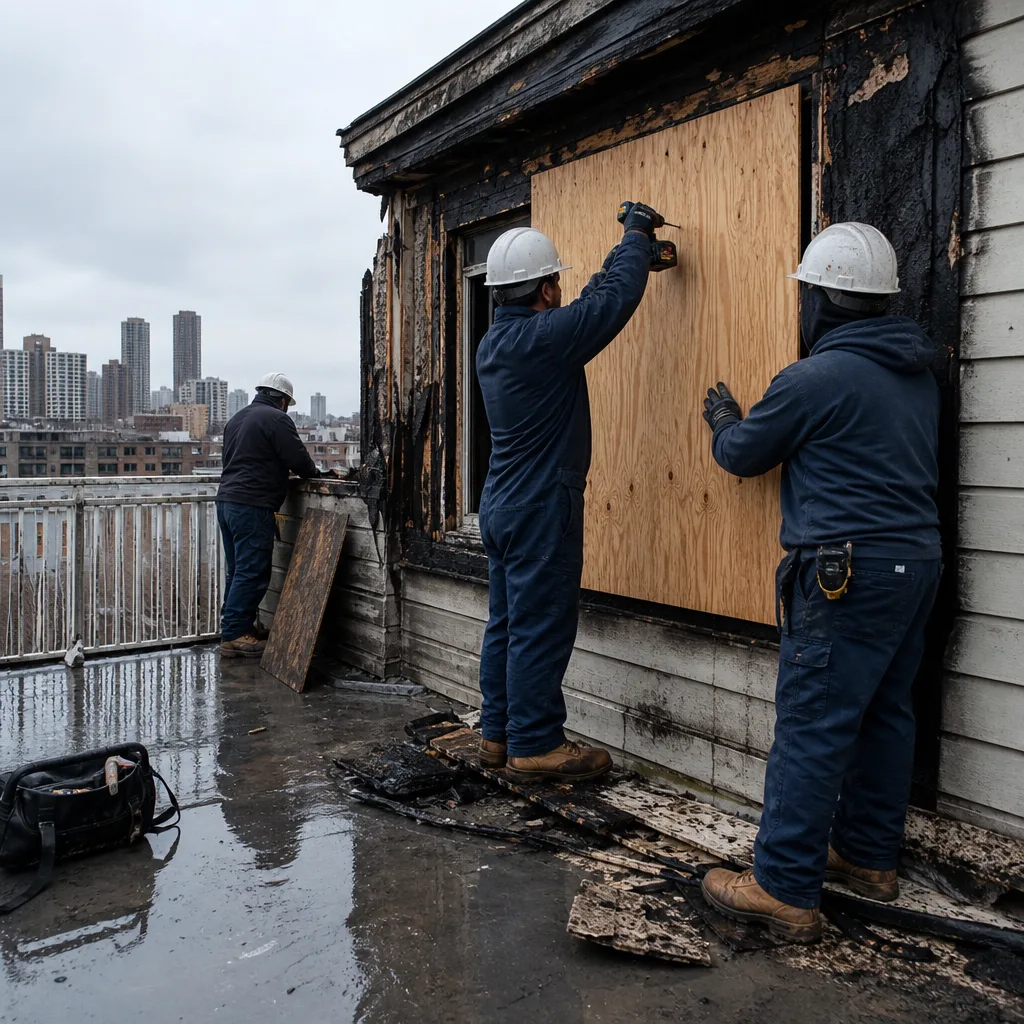
Flood Damage Restoration
Whether it’s a sewer backflow on Bleecker Street or storm-surge water in a garden-level unit, we extract, treat, dry, and rebuild. Our Storm & Disaster Restoration team handles the full cycle, and we bring the moisture log to your adjuster with daily readings until the dry standard is met.
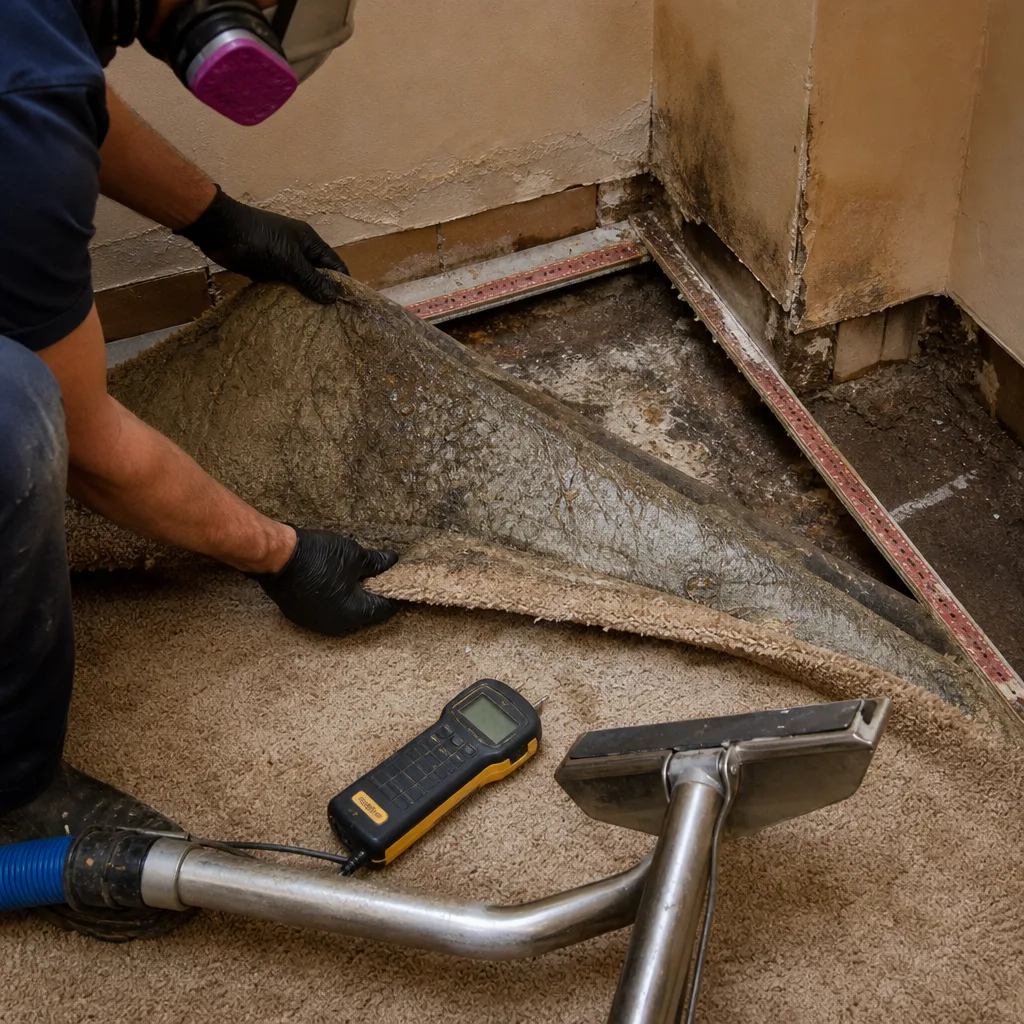
Emergency Board-Up
A breached window or door in a Greenwich Village Historic District property can’t be fixed with a sheet of plywood and a nail gun. We board up securely without damaging brownstone lintels, cast-iron surrounds, or original brickwork. The goal is weather-tight and Landmarks-compliant, both.
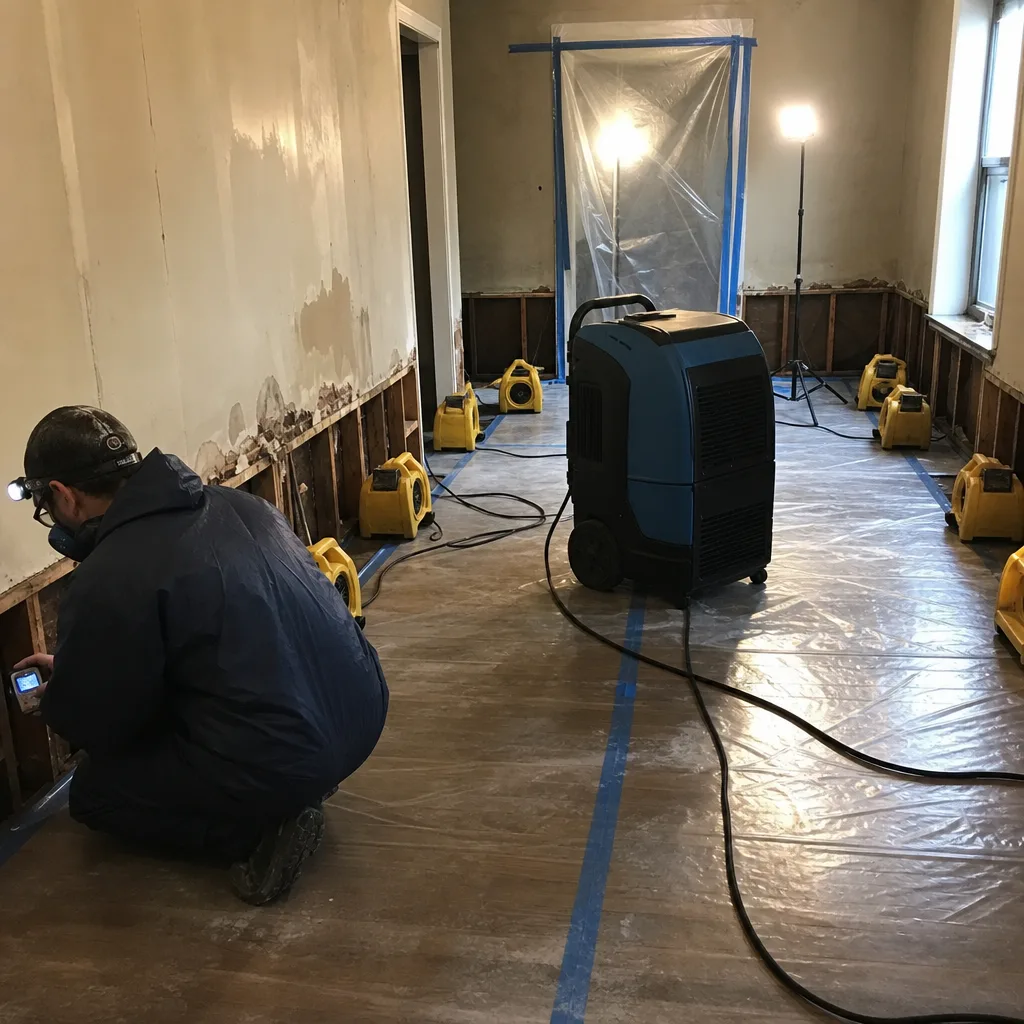
Roof Tarping
Nor’easter damage to Washington Square North rowhouses and pre-war elevator buildings needs immediate temporary protection, followed by proper flashing and roofing repair. We tarp with reinforced materials sized to the roof, then return for the permanent fix. No leaks through the party wall while you wait for an adjuster.
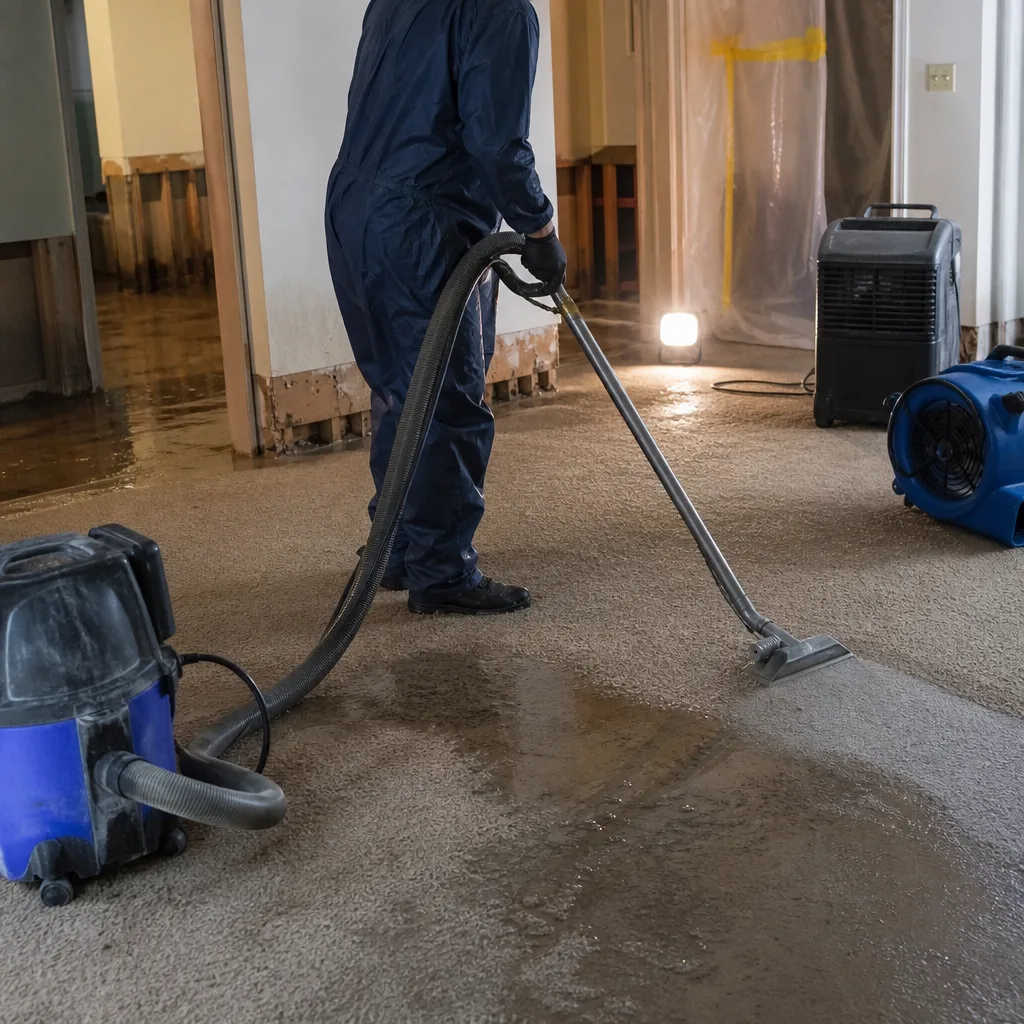
Debris Removal
Storm debris in Washington Square isn’t just branches. It’s slate roof tiles, broken cast-iron, and saturated lath and plaster that can’t be left in place. We remove, document, and dispose properly, including materials that require special handling in historic districts.
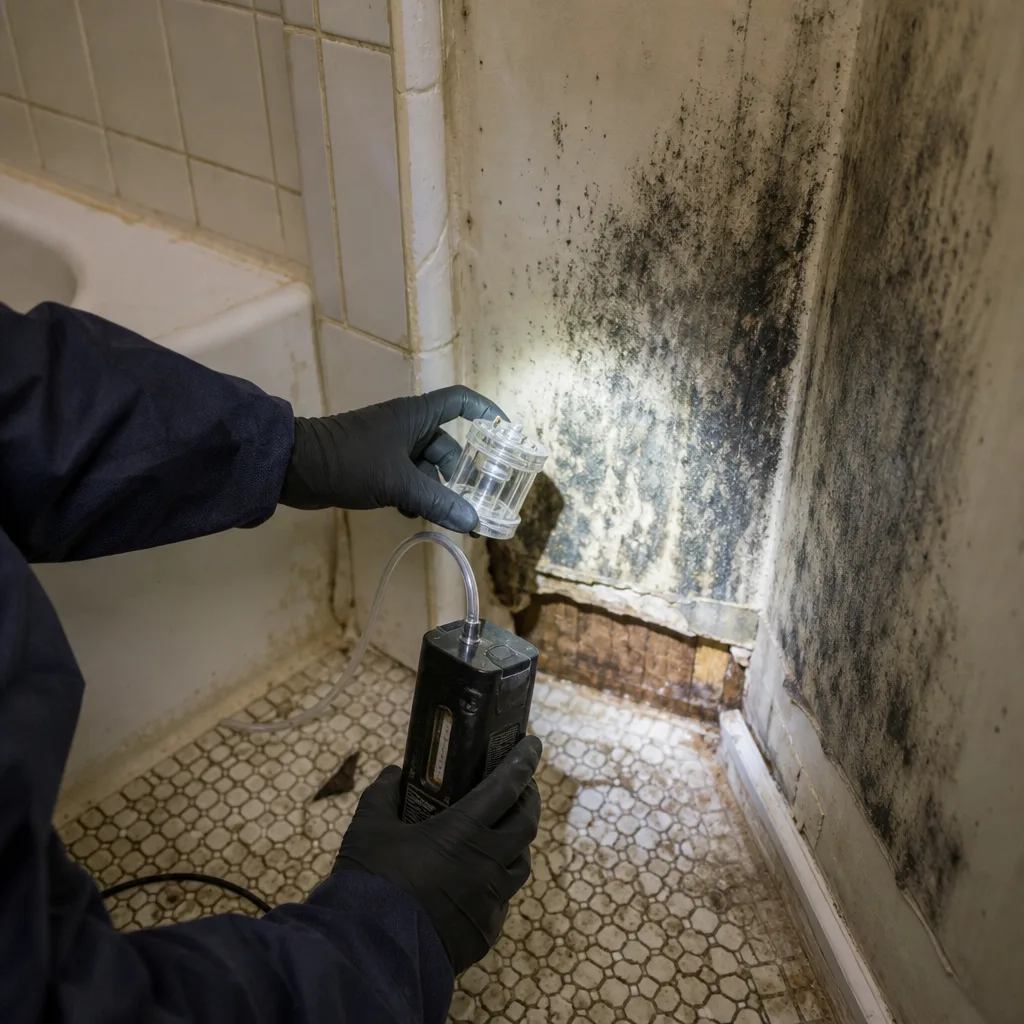
What happens when you call
- 1
A real person answersNo phone trees - you reach a local pro.
- 2
You get an upfront price rangeHonest numbers before anyone is dispatched.
- 3
A background-checked tech heads outLicensed & insured, dispatched right away.
- 4
You approve before work beginsNothing starts until you say go.
Storm & Disaster Restoration Costs in Washington Square, NY
Storm damage restoration in Washington Square runs on a different cost curve than a mile away, and it’s worth understanding why. A standard water extraction and dry-out in a pre-war apartment typically runs $3,200 to $6,800. A flood damage restoration job that reaches a garden-level unit with Category 2 water, antimicrobial treatment, and structural drying runs $6,000 to $14,000. Roof tarping for a Washington Square North rowhouse runs $800 to $2,200 as an emergency service, with full flashing and roofing repair adding $4,000 to $18,000 depending on Landmarks-required materials. Emergency board-up runs $450 to $1,500 for a typical window or door opening. What moves the price in Washington Square specifically: whether the water migrated through a shared party wall, whether horsehair plaster must be removed and replaced with period-appropriate material, and whether Landmarks Preservation Commission documentation adds time to the schedule. Most storm claims are covered by insurance, and we bill your carrier directly. For an exact number, call (917) 924-4221 and we’ll come do a free visual inspection. You’ll get a written scope before any work begins. No surprises, and the Senior & Veteran 5% discount is always in effect.
We Also Serve Cities Near Washington Square
Our crews cover Washington Square and the surrounding area, including Storm & Disaster Restoration in Washington Square as well as Fairview, Harrison, East Bronx, and Hunts Point. Same live dispatch, same 90-Day Done Right Promise, same crews that understand landmarked masonry and pre-war building systems.
Serving Washington Square, NY - Our Local Coverage Area
We’re based in the Washington Square area and know this community well. Use the map below to see our service coverage - if you’re nearby, we can almost certainly help.
Washington Square Storm & Disaster Restoration Questions, Answered
Does Landmarks Preservation Commission review delay Storm & Disaster Restoration in Washington Square?
It can, but it doesn’t have to delay the emergency response. We separate stabilization from restoration. Board-up, tarping, extraction, and drying happen immediately, because those are emergency services. Permanent exterior repairs that require Landmarks Preservation Commission review are documented and scheduled properly so you don’t get a stop-work order. We’ve done this enough times in the Greenwich Village Historic District to know what needs approval and what doesn’t. Call (917) 924-4221 and we’ll walk you through it on the first visit.
Can you dry a 1830s Federal rowhouse without removing the original horsehair plaster?
In many cases, yes. We use Dri-Eaz dehumidifiers and XPOWER air movers positioned specifically for the moisture map, and we run daily readings until the dry standard is met. If the plaster is sound and the water was Category 1, drying in place is often the right call. If the water was contaminated or the plaster is delaminating from the lath, removal may be necessary. We always try salvage first, because original materials are part of what makes Washington Square what it is.
How do you stop a roof breach from spreading through shared party walls on Washington Square North?
We moisture-map the entire rowhouse, not just the unit where the leak was first reported. Water from a roof breach on the north side of Washington Square moves laterally through attic spaces and party walls before it becomes visible in a ceiling. We use thermal imaging to find the full extent of migration, then dry and rebuild each affected unit with the owner’s knowledge and the adjuster’s documentation. We coordinate directly with the other owners when needed; you don’t have to play messenger.
Is a basement unit in Washington Square at risk of storm-surge flooding even without a hurricane?
Yes. Superstorm Sandy demonstrated that the neighborhood’s low-lying garden-level units are vulnerable to storm-surge and sewer-backflow flooding through the older combined sewer infrastructure. A heavy nor’easter or a fast-moving summer thunderstorm can push water up through floor drains. If you live in a garden-level unit in Washington Square, have a plan, and call (917) 924-4221 the moment water appears. The first hour matters.
What kind of board-up works for Washington Square’s pre-war elevator buildings without damaging the facade?
We use padded fasteners and custom-cut panels that don’t drill into brownstone, cast iron, or original brick. Every building is different: a 1920s elevator building on University Place needs a different approach than an 1830s rowhouse on Washington Square North. We assess the opening, the material, and the Landmarks requirements before we touch anything. The board-up keeps the building weather-tight and secure, and it comes off without leaving marks.
How fast can you actually get to Washington Square after a storm?
Typically within 45 minutes to an hour of your call, depending on conditions. Our dispatch coordinates from our New York City office, and we keep crews staged in and around Washington Square during major storm events. A live person answers the phone 24/7, so you’re never leaving a voicemail while water is spreading through a party wall. Call (917) 924-4221 now if you need us.
How long does storm damage drying take in a Washington Square rowhouse?
Usually three to five days for a standard Category 1 water loss, longer if water migrated through multiple rooms or the building has original horsehair plaster and wood lath. We run daily moisture readings and don’t stop until the dry standard is met. You get the log. Your adjuster gets the log. No one guesses. If rebuild is needed after drying, that’s scheduled separately and priced in writing before we start.
What should I do in the first 30 minutes after storm damage in Washington Square?
Call (917) 924-4221. Then, if it’s safe, shut off the water at the main or the affected supply line. Don’t enter standing water if there’s any chance it’s been in contact with sewage. Don’t try to remove saturated horsehair plaster yourself; it’s heavy, and you may be looking at a party wall that isn’t yours to open. Let our crew handle it. That’s what we’re here for, and the estimate is free.
Written by Curt Bowman, Owner at Floodline Restoration Co. of Manhattan, serving Washington Square and the surrounding neighborhoods since 2010.
For immediate storm and disaster restoration in Washington Square, call (917) 924-4221 any hour, any day. We’ll answer live, dispatch a certified crew, and start the work that keeps a bad storm from becoming a worse one. Done right, and backed in writing.