
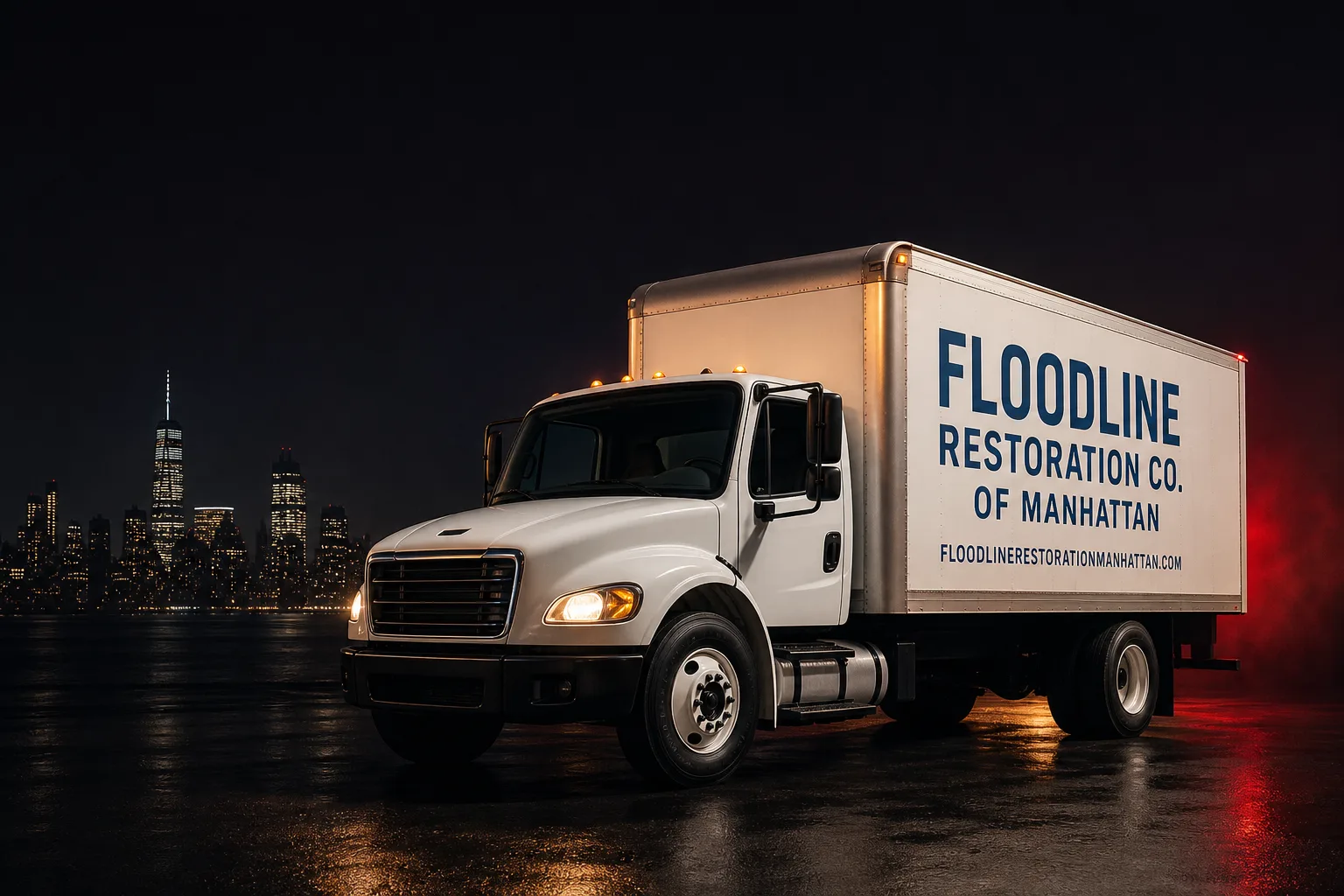
Free visual inspection and a written scope of work before any mitigation begins - photos, moisture readings, and drying logs go in your claim file
The scope we write is the scope we bill. Anything new gets shown to you, in writing, before we touch it.






 Before
 After
After Before
 After
After Before
 After
After24/7 Emergency Storm & Disaster Restoration in West New York
Storm and disaster restoration in West New York typically runs $1,800 to $9,500 depending on whether you’re dealing with a single-unit water loss or a multi-floor event across several stacked apartments, and our crews can be at your door inside 45 minutes for emergency board-up, roof tarping, or extraction. When a nor’easter tears off a roof section on Boulevard East or a frozen supply line lets go on a 4th-floor walk-up, the first hour determines whether you’re drying one unit or rebuilding five. Call (917) 924-4221 right now and a live person answers – not a recording, not a menu tree – and we’ll dispatch a certified crew to your building immediately. We’ve been doing this for over 42 years and we still answer the phone like it’s the only thing that matters. Our Storm & Disaster Restoration team knows West New York’s pre-war brick walk-ups better than any regional franchise ever will.
Understanding Storm & Disaster Restoration Severity in West New York Properties
Most of West New York’s housing stock is 4 to 6 story brick apartment buildings built between the 1920s and 1950s. That means plaster-over-lath walls that hide moisture for weeks, cast-iron drain stacks that crack with age, and galvanized supply lines that corrode from hard water. When storm water enters one of these buildings, it doesn’t just wet the floor – it wicks upward through the plaster mass, follows the lath keys between neighboring units, and travels inside wall cavities you can’t see. We classify the water as Category 1 (clean supply line water), Category 2 (grey water from sump pumps or washing machines), or Category 3 (black water carrying sewage, river water from the Hudson, or street runoff), and each dictates a different containment and demolition protocol. Moisture mapping with thermal imaging and hygrometers shows us what’s actually wet versus what just looks wet. In a building where five units share a single vertical drain stack, one upper-floor loss is always a Category 2 or 3 event by the time it reaches the apartments below – and it requires full antimicrobial treatment, not just drying.
Why West New York Property Owners Choose Floodline Restoration Co. of Manhattan
- 45-minute response commitment to any West New York address. We know the parking restrictions on 60th Street and the tight turns on Boulevard East, and our local crews stage accordingly.
- 24/7 live answer, always. A real dispatcher picks up at 2 a.m. and sends a certified crew, not an answering service that takes a message for “the morning.”
- IICRC-certified crews trained to WRT, FSRT, and AMRT codes. Background-checked, uniformed technicians who know the difference between drying sheetrock and drying 1920s plaster.
- Free visual inspection before any work is scoped. You get a written scope of work and firm pricing before we touch a wall. No surprises on the bill, ever.
- Direct insurance billing. We bill your carrier directly and handle adjuster communication so you never play messenger between us and the insurance company.
- One team from first extraction to finished reconstruction. The same crew that pulls water on day one rebuilds the kitchen wall on day fourteen. No mid-job handoff to a subcontractor you’ve never met.
Our Storm & Disaster Restoration Process
Inspection & Assessment
A certified technician walks the full affected area – including the units above and below if water traveled. We use thermal imaging cameras and moisture meters to map exactly where water went, then produce a written scope before any work begins.
Extraction & Stabilization
We pull standing water with truck-mounted extractors and portable units, then stop further damage – tarping a roof breach, boarding a broken window, or shutting down a compromised electrical circuit.
Drying & Dehumidification
Dri-Eaz and Phoenix dehumidifiers paired with XPOWER air movers run inside sealed containment. In plaster-over-lath walls, we drill small moisture mapping holes at the base of each wall to read the plaster mass itself, not just the surface.
Cleaning & Sanitization
We treat Category 2 and 3 losses with antimicrobial agents applied directly to the structure after cutting away ruined plaster. HEPA air scrubbers run continuously to capture mold spores and particulate kicked up during demolition.
Storm-Specific Specialty Treatment
For wind-driven rain and river flooding, we address the contaminants that came with the water – sewage, fuel oil, salt from the Hudson – before drying finishes. Salt water is corrosive to wiring and cast iron; ignoring it guarantees problems six months later.
Repairs & Restoration
We rebuild what we remove: new plaster or drywall, baseboards, flooring, and paint to match. The 90-Day Done Right Promise – our Keystone Standard – is handed to you in writing when the job finishes. If it’s not done right, we make it right.
Need Emergency Storm & Disaster Restoration in West New York Now?
Crews minutes away, answering live 24 hours a day. The sooner we start, the less it costs.
Working With Your Insurance Company
Most storm and disaster losses in West New York are covered events, but the carrier needs documentation that holds up. We photograph everything before demolition begins – room by room, wall by wall – and we keep daily moisture readings in a drying log that your adjuster receives on request. Our team writes industry-standard scopes using the same estimating software carriers themselves use, which means fewer disputes over line items. We coordinate directly with your adjuster, your landlord’s adjuster if you rent, and the HOA master policy carrier when a common drain stack or roof is involved. You don’t relay messages. You don’t translate between three insurance companies. That’s our job, and we’ve done it for over four decades.
What We Provide Your Insurer
- Thorough documentation of the loss
- Photos of all damage, room by room
- Moisture readings and drying logs
- A detailed, line-item scope of work
- Direct coordination with your carrier
Built for West New York’s Loss Calendar
West New York’s storm damage pattern follows the seasons with a predictability that still catches buildings off guard. January and February bring the deep freezes that burst supply lines in unheated stairwells and top-floor units – a 2nd-floor toilet supply line freeze in West New York is not a one-unit claim. Spring thaw pushes groundwater into basements along the lower-elevation waterfront blocks near the Hudson River, where the water table rises against century-old foundations. Summer thunderstorms overwhelm the town’s combined sewer system, and street runoff carrying everything from the curb enters basement apartments and ground-floor commercial spaces. Then comes hurricane season and the nor’easters, which drive wind-driven rain through old windows, under parapet flashing, and through roof membranes on those flat-roofed pre-war buildings. The lower blocks flooded in Sandy, and portions of those streets remain in flood risk zones. The upper residential streets atop the Palisades cliffs face a quieter enemy: groundwater seepage through the traprock face that keeps basements damp even in dry months.
Storm & Disaster Restoration Across West New York’s Neighborhoods
The blocks along Boulevard East and the Palisades cliffs hold West New York’s larger pre-war co-ops and condos, where 6-story buildings mean equipment staging and debris removal require a stairwell plan before we even park the truck. On 60th Street near Hudson Avenue, our crew extracted Category 3 water from a 4th-floor kitchen drain-stack failure that had already migrated through plaster-over-lath ceilings into three units below. We ran Injectidry panels and Dri-Eaz dehumidifiers inside containment, drilled moisture mapping holes in the century-old lath, and coordinated a stairwell-limited pack-out with the HOA – completing structural drying with moisture readings back to pre-loss condition in five days. Down along Bergenline Avenue and the commercial spine, ground-floor retail spaces take storm water from the street when drains back up, and restoration has to happen overnight so businesses can open the next morning. The residential blocks between Kennedy Boulevard and the river – closer to the waterfront flood zone – see more hydrostatic pressure and seepage than anywhere else in town. And the narrow one-way streets off Park Avenue mean our crews stage equipment blocks away and carry it in, because there’s no room for a box truck without blocking traffic.
Specialized Storm & Disaster Restoration Services We Offer in West New York
Flood Damage Restoration
In a borough among the most densely populated in the entire United States, a single pipe burst on an upper floor routinely triggers simultaneous water damage across 3 to 5 stacked units below. That’s a multi-party restoration job involving multiple tenants, multiple landlords or an HOA, and competing insurance carriers on one loss event. We handle the containment, extraction, drying, and documentation per unit, so each carrier sees exactly what happened in their insured’s space.
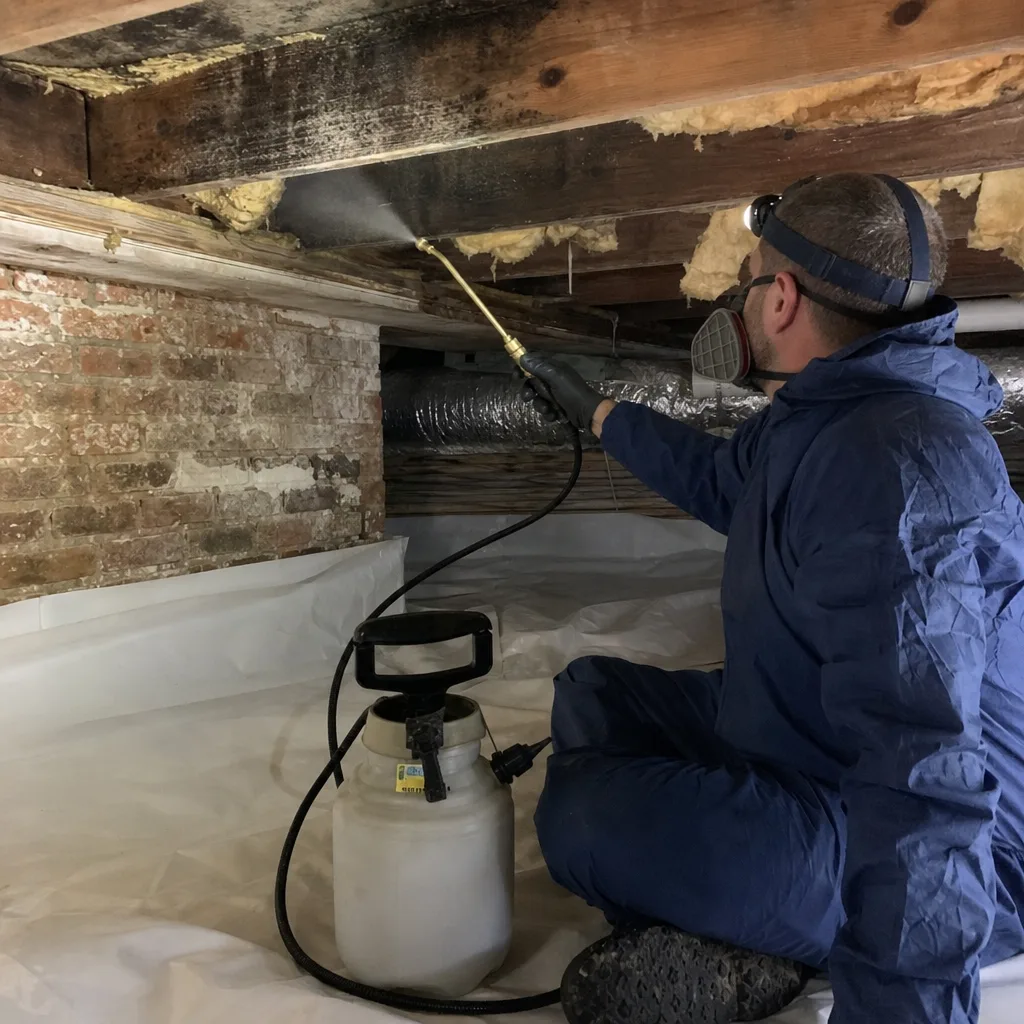
Emergency Board-Up
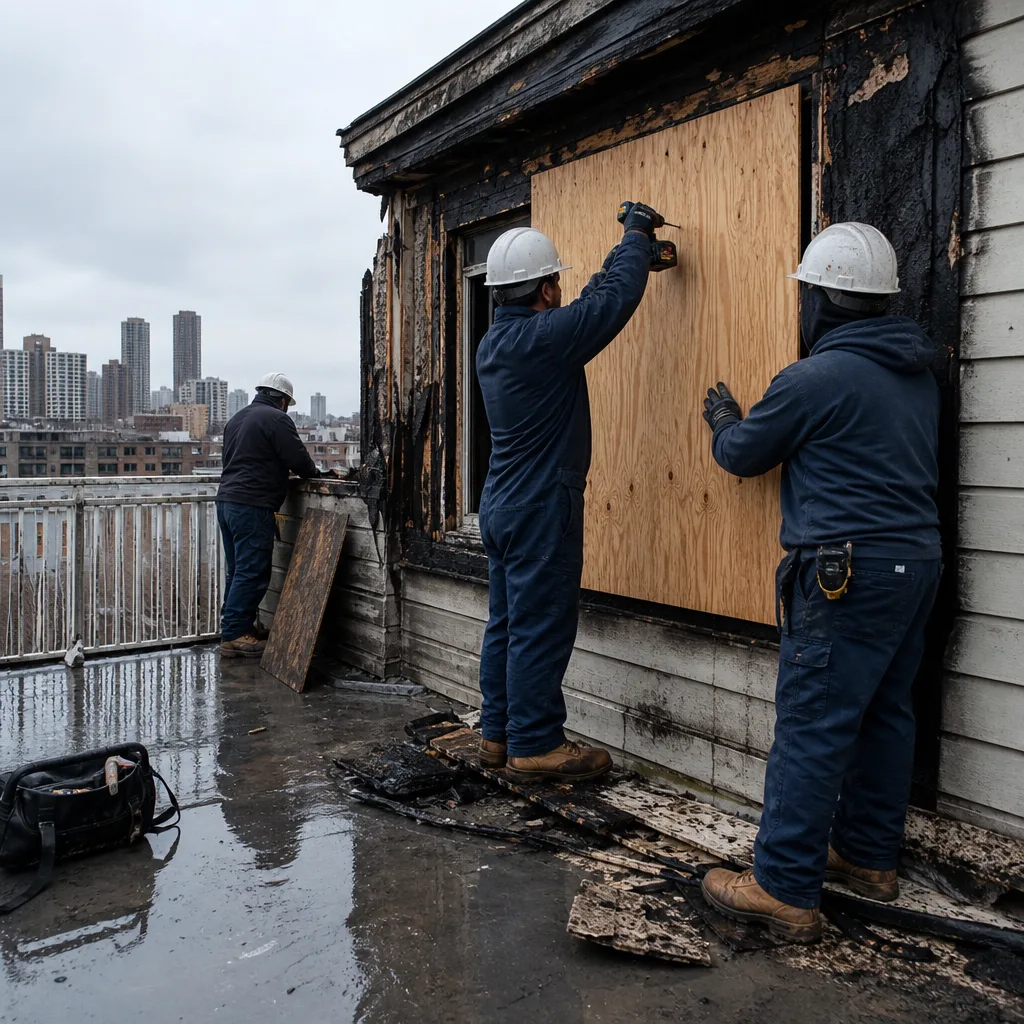
When a storm breaks a window on a ground-floor unit or a tree limb punches through a top-floor wall, the building is immediately exposed to weather, animals, and intruders. We board the opening the same visit we get the call – measured, cut, and secured to the building’s exterior, not jammed into the frame with drywall screws and hope. West New York’s street-facing units mean the board-up has to be solid enough to stand up to foot traffic and weather for weeks if replacement glazing is backlogged after a major storm.
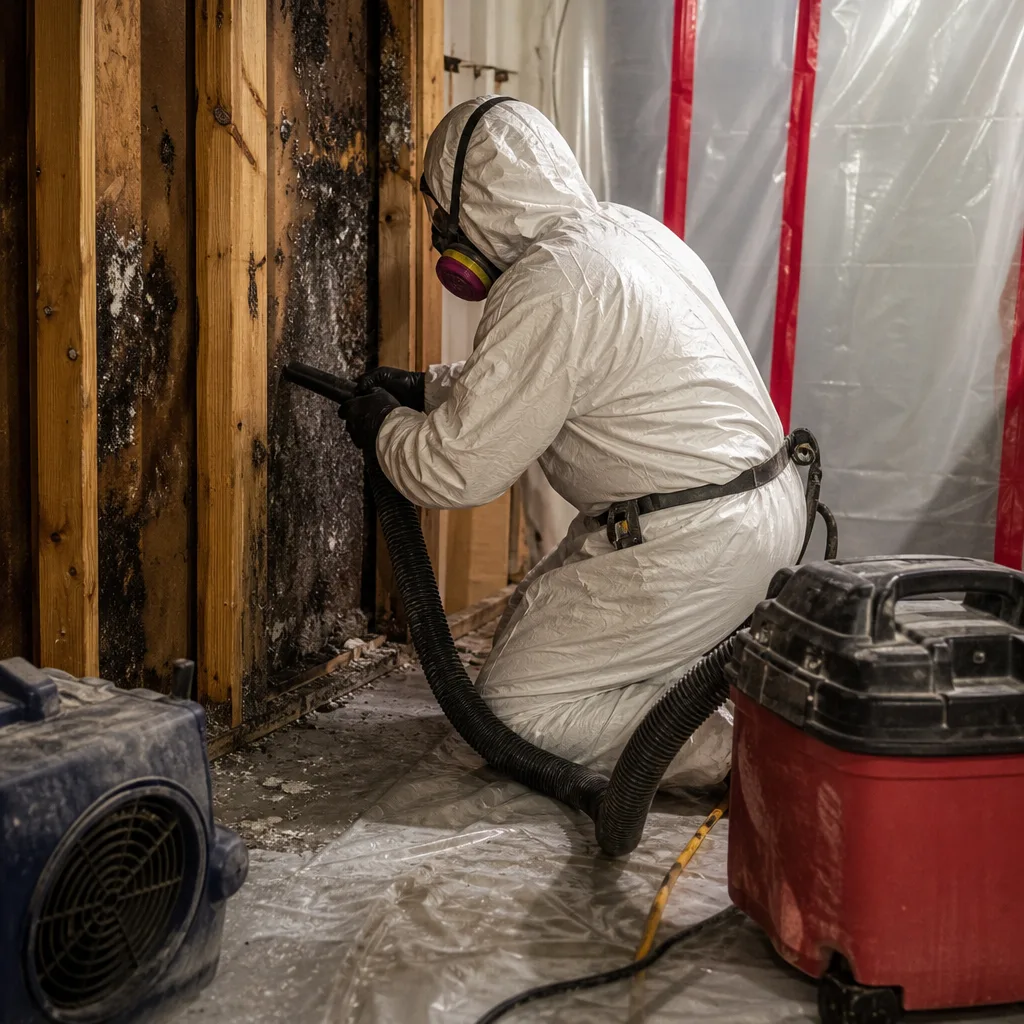
Roof Tarping
Flat roofs on pre-war brick buildings fail at the parapet and around chimney penetrations. When wind tears the membrane, water gets into multiple top-floor units overnight. We tarp the breach immediately – properly lapped and weighted, not just thrown over the hole – then coordinate with your roofer or our own reconstruction team for a permanent fix. A single night of rain through an untarped roof breach in a West New York building can turn a $2,000 roof repair into a $40,000 multi-unit restoration.
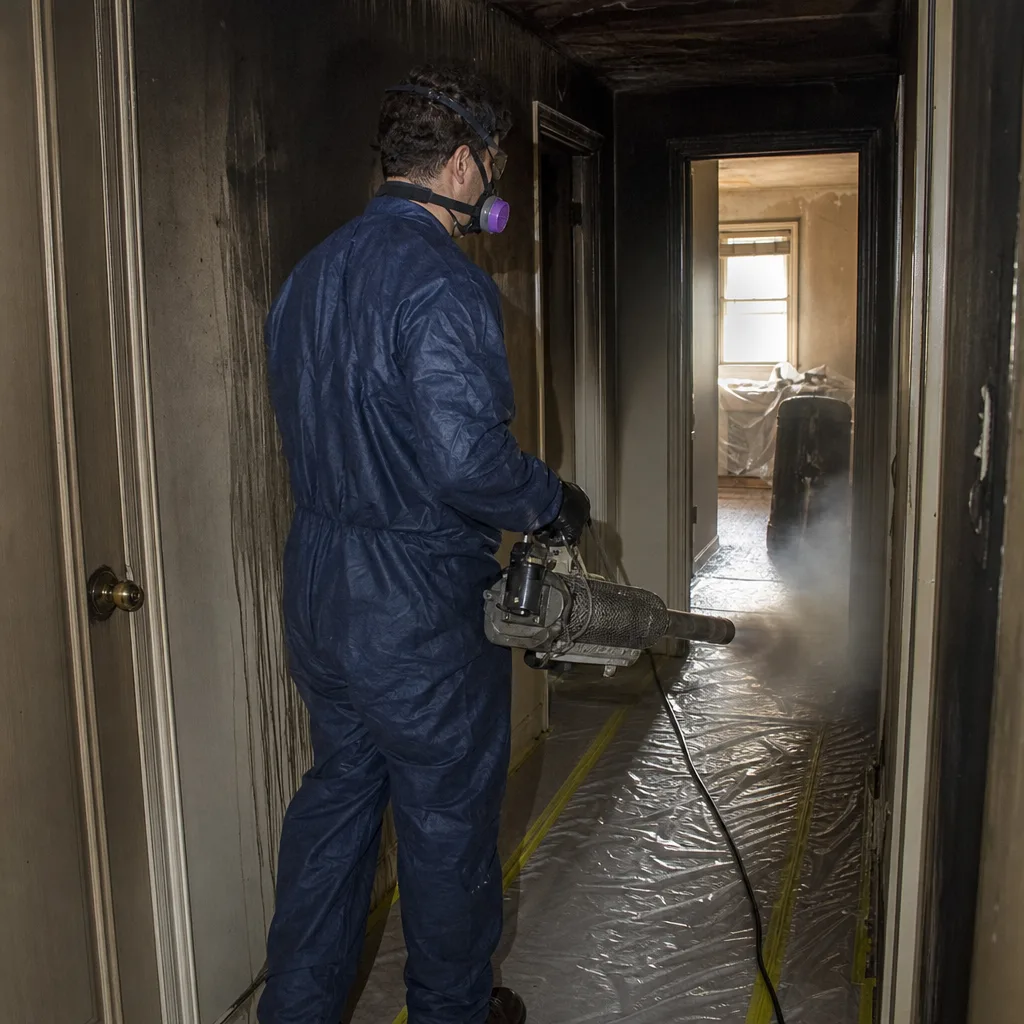
Debris Removal
After a storm, stairwells in walk-up buildings fill with ruined furniture, soaked carpet, and broken plaster. We carry it out – down four flights of narrow stairs, through the lobby, and into our own trucks for disposal. We don’t pile debris on the sidewalk and leave it for someone else. West New York’s street parking and narrow sidewalks mean debris staging requires a plan, and we handle the whole removal as part of the job.
Wind Damage Repair
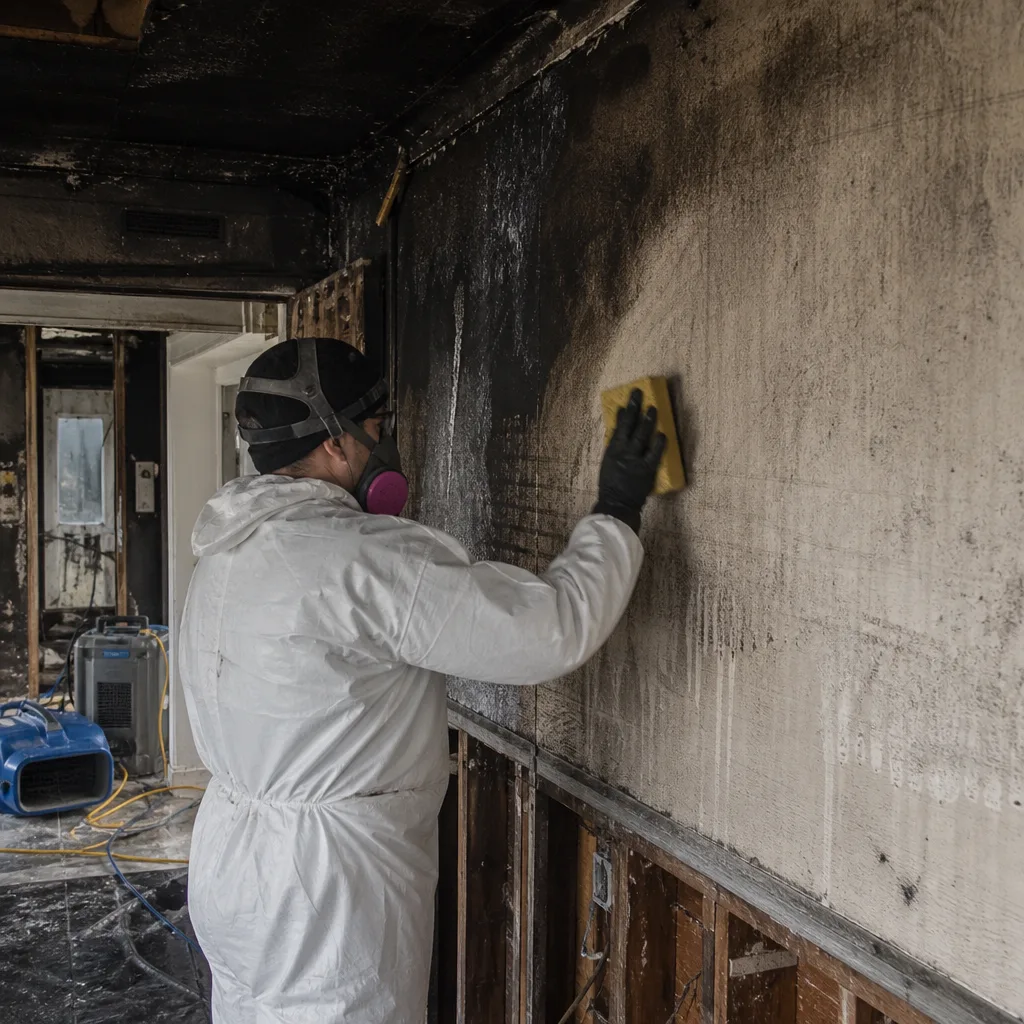
Wind-driven rain forces water under window sills, behind cornices, and through brick mortar joints that looked fine before the storm. The damage shows up days later as water stains on interior walls and bubbling plaster. We trace the entry point, expose the affected cavities, and dry the structure before rebuilding – so the repair addresses the cause, not just the stain.
What happens when you call
- 1
A real person answersNo phone trees - you reach a local pro.
- 2
You get an upfront price rangeHonest numbers before anyone is dispatched.
- 3
A background-checked tech heads outLicensed & insured, dispatched right away.
- 4
You approve before work beginsNothing starts until you say go.
Storm & Disaster Restoration Costs in West New York, NJ
A single-unit water loss from a burst supply line in West New York typically runs $1,800 to $4,200 – that covers extraction, drying, and repair of one room with plaster repair. A multi-unit event where water migrates through stacked apartments can range from $6,500 to $19,000 or more, because each unit requires its own containment, drying, and finish restoration. Emergency board-up in this town runs $450 to $1,100 depending on how many windows and the level of security required. Roof tarping on a flat pre-war roof typically costs $700 to $1,800 on an emergency basis. What moves the price most in West New York is not square footage – it’s vertical unit adjacency and the stairwell-limited access. A 5th-floor walk-up with no elevator costs more in labor for equipment staging and debris removal than a ground-level single-family home in the suburbs ever would. The free visual inspection gives you a written scope and a firm number before we start, so the bill never surprises you. Call (917) 924-4221 and we’ll walk you through it same day.
We Also Serve Cities Near West New York
Floodline Restoration Co. of Manhattan serves the full Hudson County shoreline and the towns just north of the Palisades. Our crews handle storm and disaster restoration in Alpine, Bergenfield, Bogota, and Carlstadt with the same 45-minute response commitment we give our West New York neighbors. If you’re searching for Storm & Disaster Restoration in West New York or the surrounding towns, one call covers it all.
Serving West New York, NJ - Our Local Coverage Area
We’re based in the West New York area and know this community well. Use the map below to see our service coverage - if you’re nearby, we can almost certainly help.
West New York Storm & Disaster Restoration Questions, Answered
How fast can you actually get to my West New York building?
We commit to a 45-minute response to any West New York address, day or night. Our live dispatch knows the parking restrictions and one-way streets, and our local crews stage equipment accordingly so we arrive ready to work, not ready to figure out where to park.
If my upstairs neighbor’s pipe floods my West New York apartment, who handles containment and structural drying – my insurer or theirs?
Both. In a stacked-unit loss, your policy covers your unit’s restoration, while the neighbor’s liability policy or the building’s master policy may cover the source repair. We document each unit separately with its own moisture readings and drying log, so every carrier involved receives the exact scope for their insured’s space. Call (917) 924-4221 and we’ll coordinate the documentation from hour one.
How do you get air movers and dehumidifiers up to a 5th-floor walk-up on 60th Street without an elevator?
We carry them. Our technicians are used to hauling Dri-Eaz and Phoenix equipment up narrow stairwells in West New York walk-ups, and we factor the stair time into our labor estimate so the job is priced honestly from the start.
What does “pre-loss condition” actually mean for a 1920s plaster-over-lath wall in West New York – can you really dry it in place?
In most cases, yes. We drill small moisture-mapping holes at the base of each wall to read the moisture content of the plaster mass itself, not just the surface. Drying in place with Injectidry panels and controlled airflow brings the plaster back to its pre-loss moisture level without unnecessarily demolishing century-old walls.
After a hurricane or major storm, how long do you typically keep dehumidification running in a West New York basement before it’s safe to rebuild?
Three to seven days is typical for a basement in West New York, depending on wall construction, water classification, and how quickly we got extraction running. We take daily readings until the dry standard is met, then hand you and your carrier the complete log – no guessing, no premature rebuild.
Does a HOA in a West New York brick walk-up have to approve your scope of work before you start drying my unit?
Usually yes for common elements – drain stacks, risers, roof penetrations – but not for the inside of your own unit. We coordinate with the HOA or management company on common-area scope while proceeding immediately on your unit’s restoration, so your drying starts the same day.
Will my insurance cover storm and flood damage in West New York?
Storm damage from wind, rain entering through openings, and burst pipes is typically covered under standard homeowners or renters policies. Flood damage from rising river water or street runoff may require a separate flood policy. We bill your carrier directly and handle adjuster communication, so you get answers from your insurer with our documentation behind it. Call (917) 924-4221 for a free inspection and we’ll help you understand what your policy covers.
What should I do in the first 30 minutes after discovering storm damage in my West New York apartment or building?
Shut off the water if a pipe burst, turn off electricity to the affected area if it’s safe to reach the panel, and call (917) 924-4221 immediately. Don’t attempt to extract Category 2 or Category 3 water yourself with a shop vacuum – that spreads contamination and complicates the insurance claim. Move valuables to a dry unit, take photos, and let us handle the rest from the moment we arrive.
Written by Curt Bowman, Owner at Floodline Restoration Co., serving West New York and Hudson County with storm and disaster restoration for over 42 years.