
Free visual inspection and a written scope of work before any mitigation begins - photos, moisture readings, and drying logs go in your claim file
The scope we write is the scope we bill. Anything new gets shown to you, in writing, before we touch it.
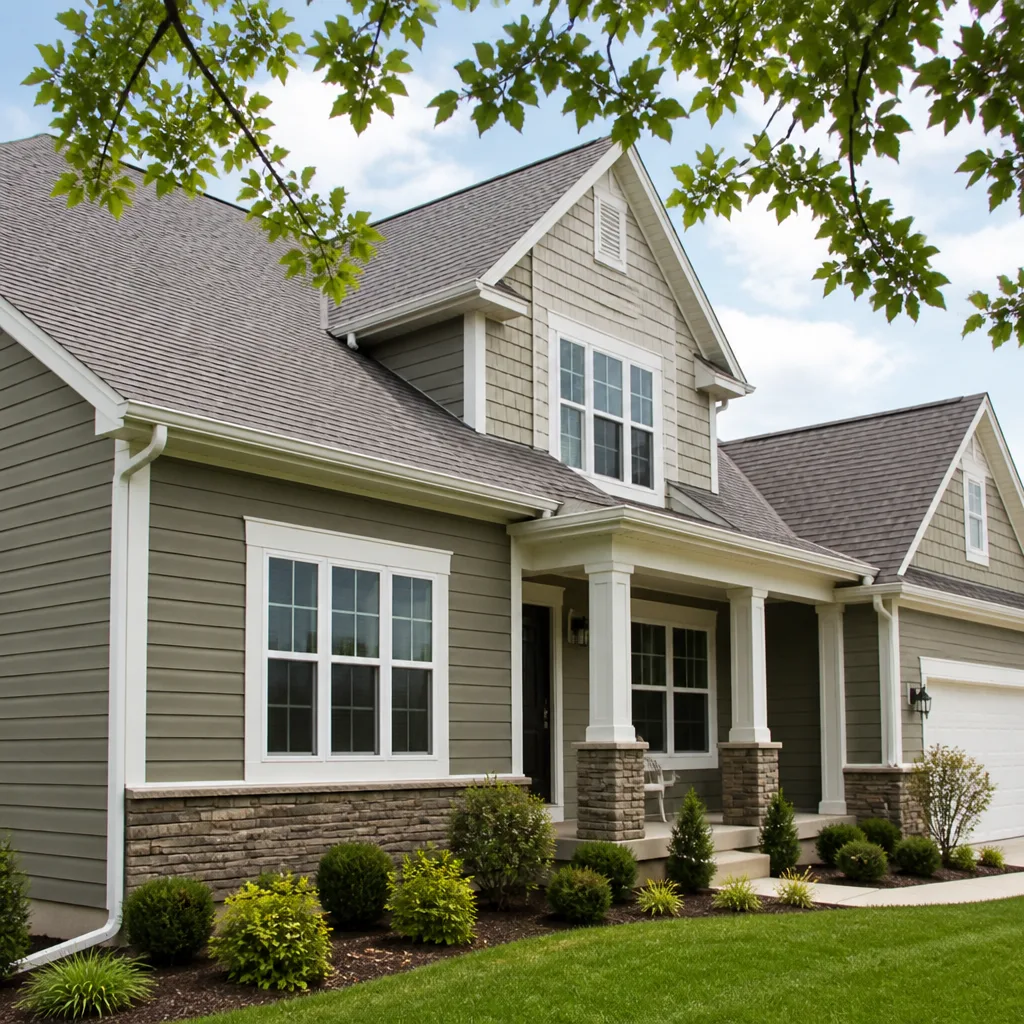
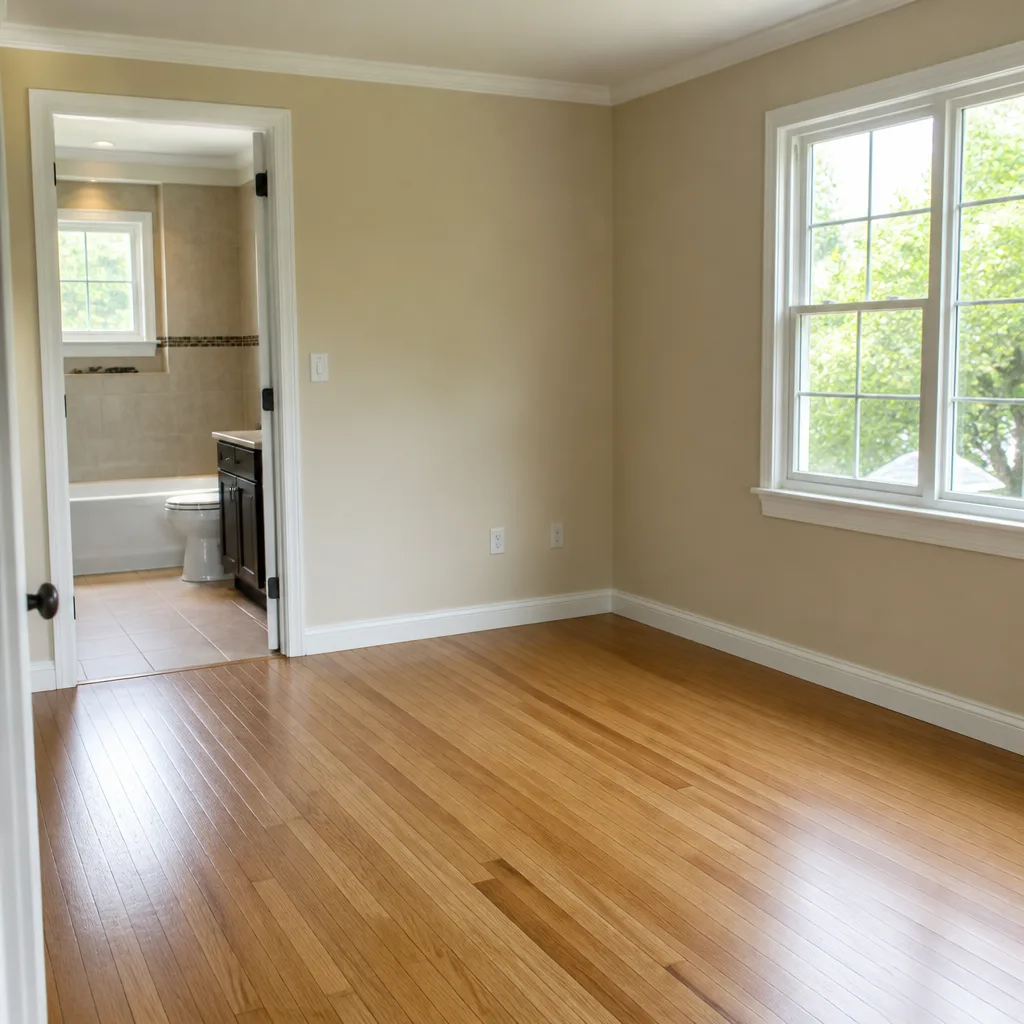
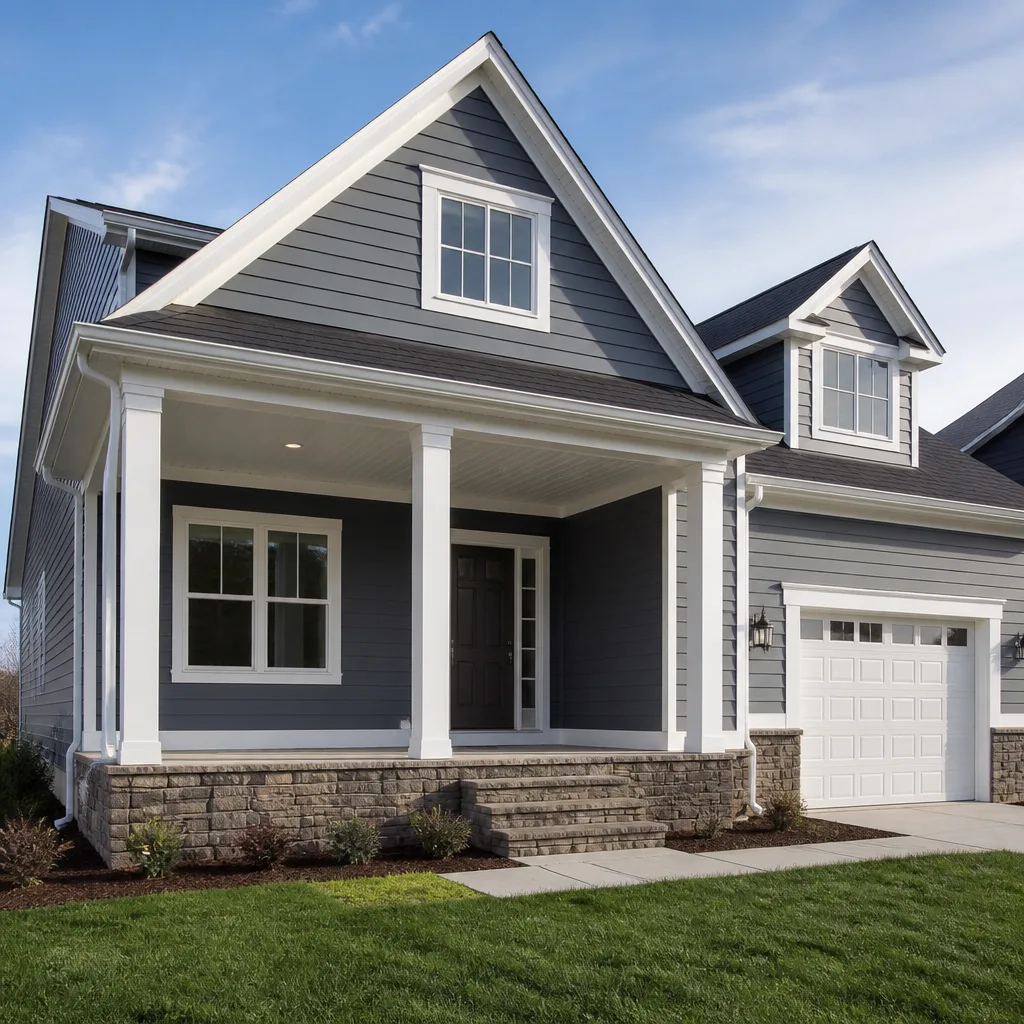
 Before
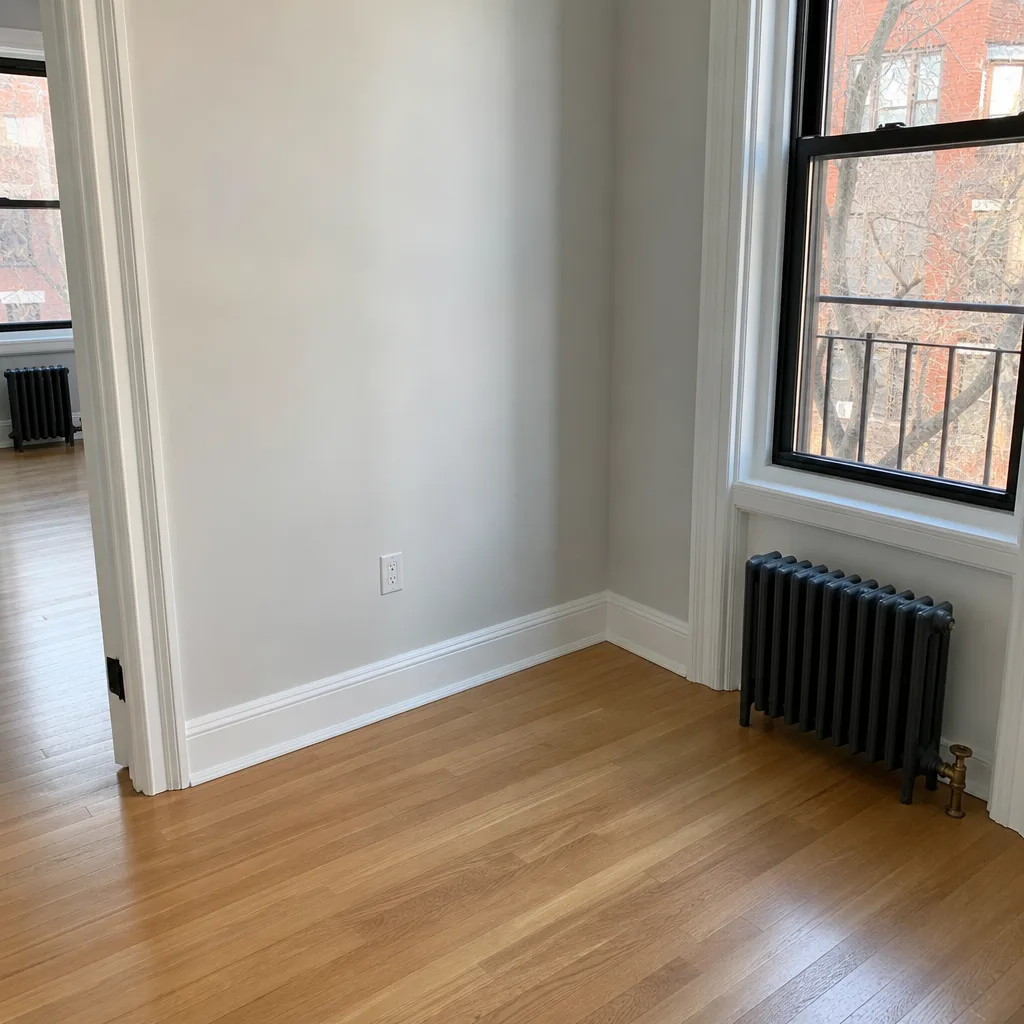 After
After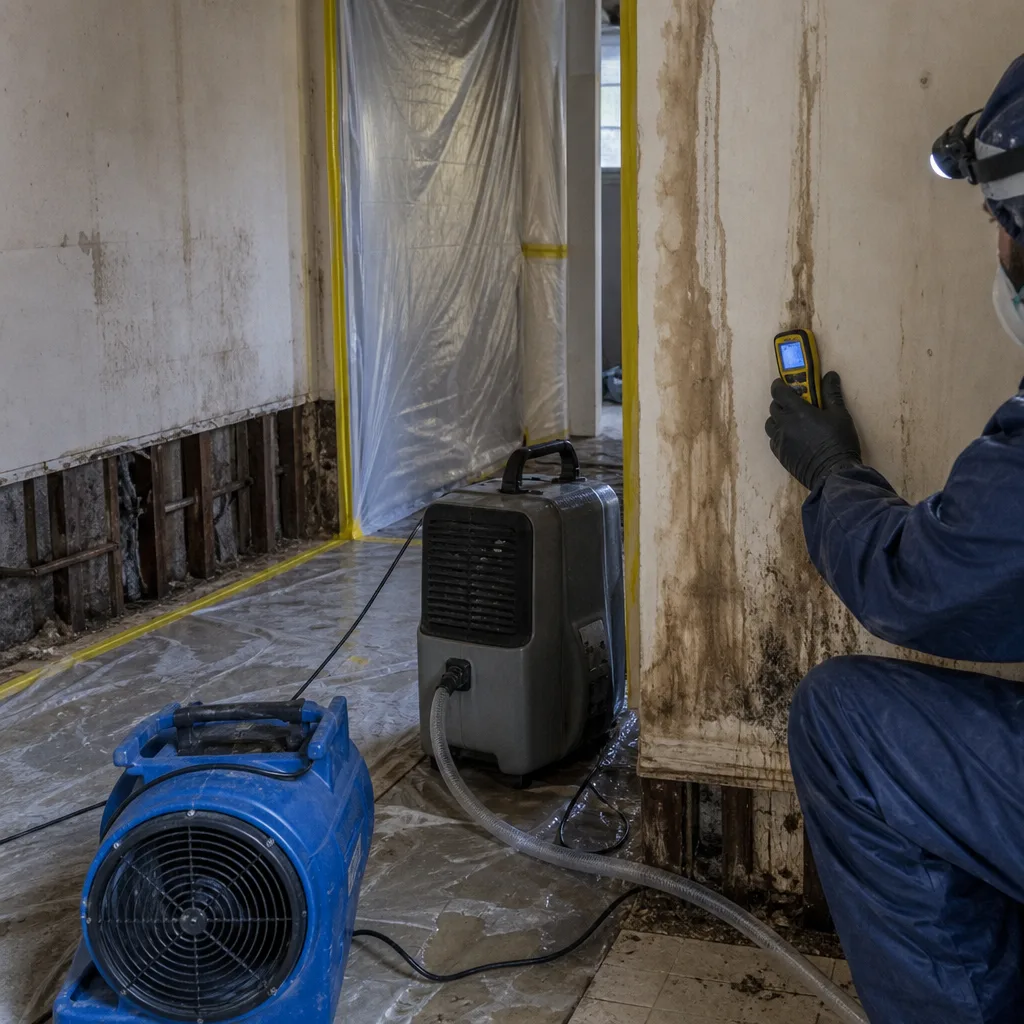 Before
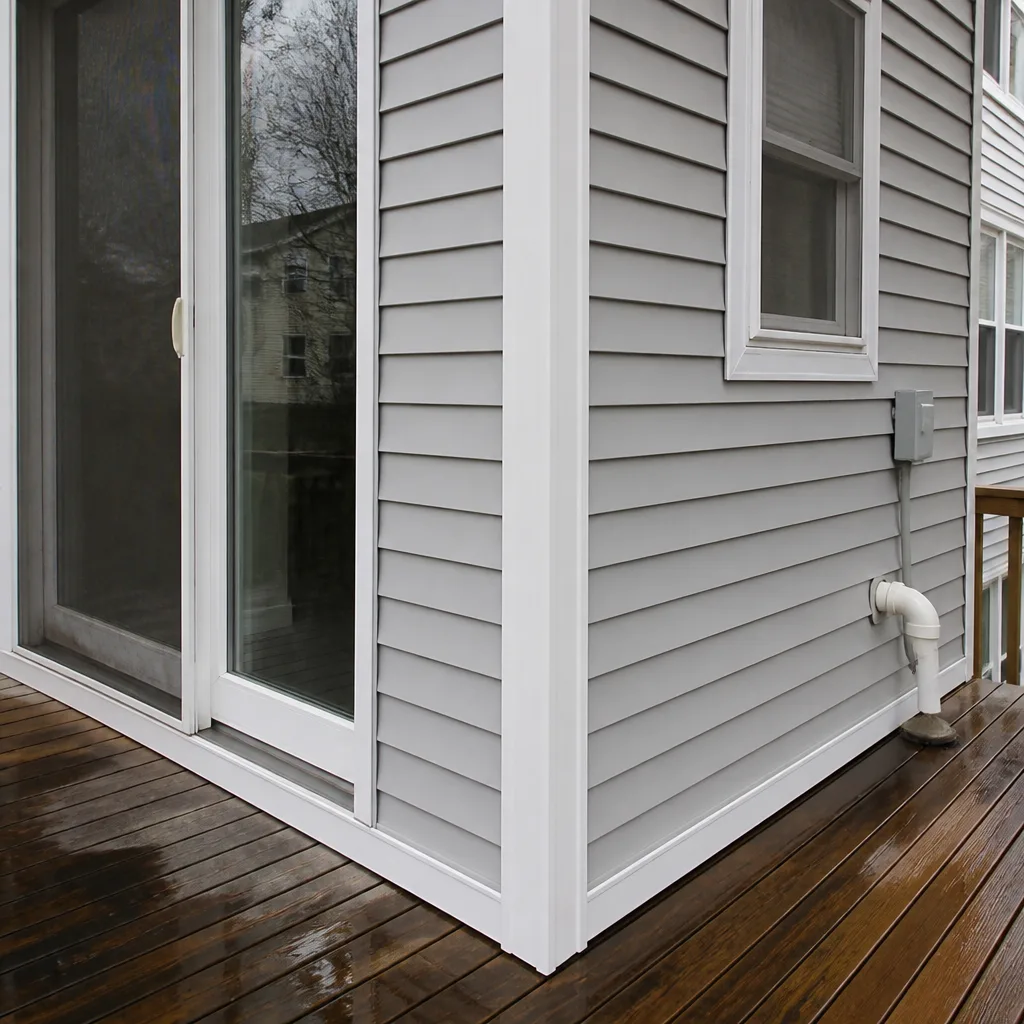 After
After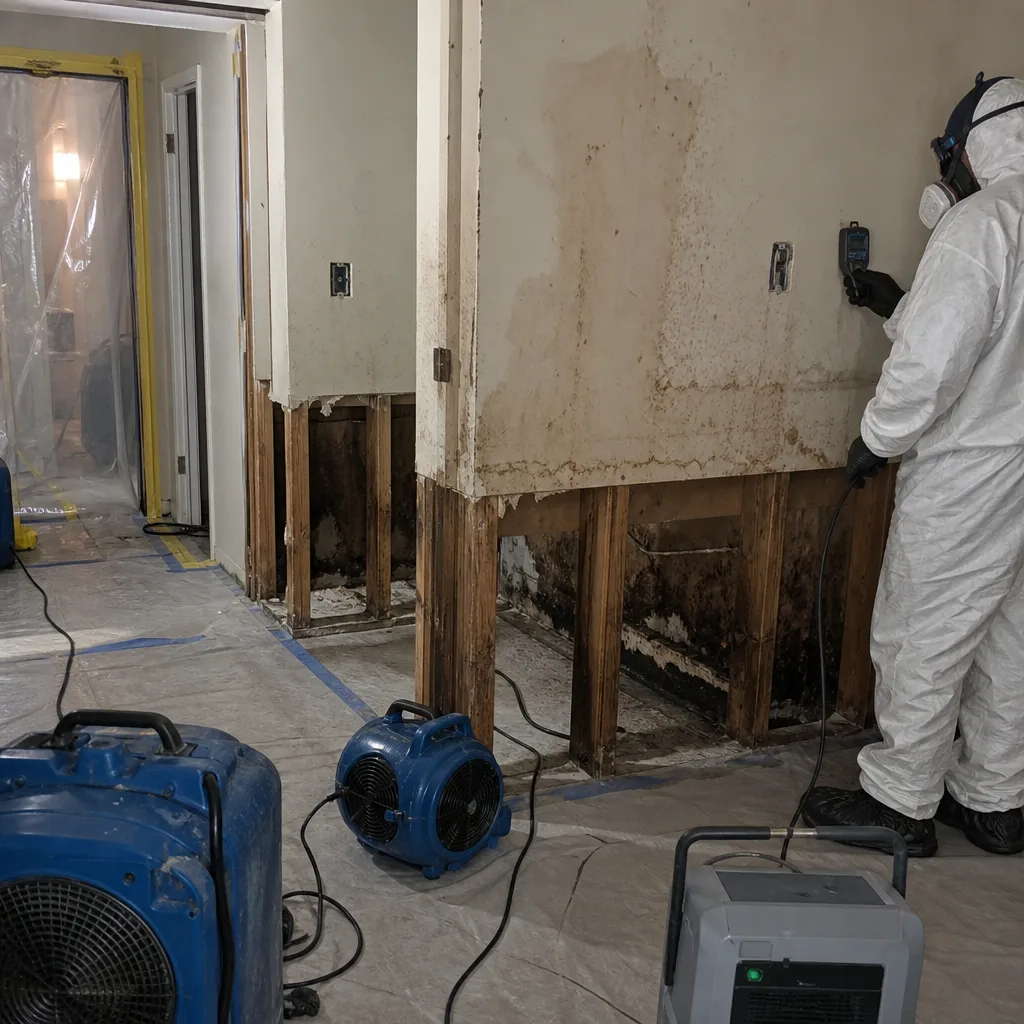 Before
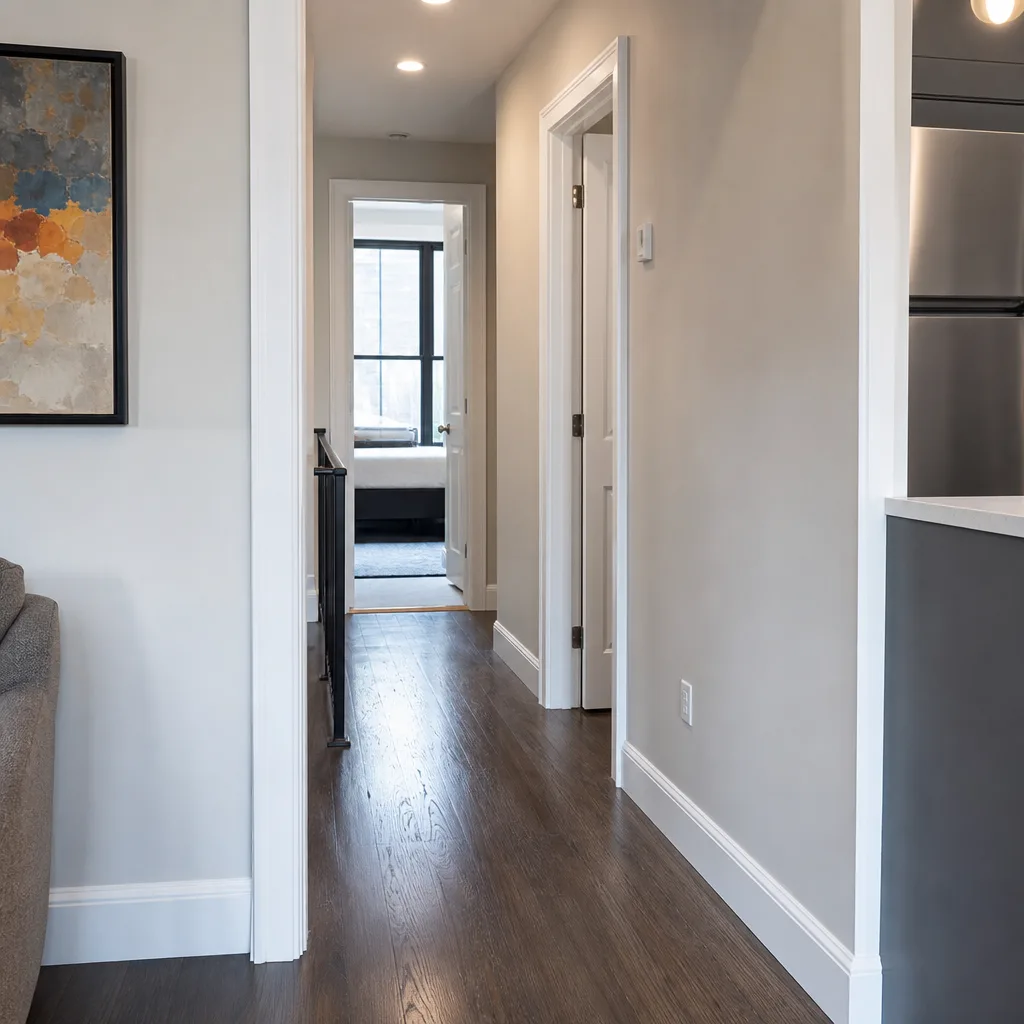 After
After24/7 Emergency Water Damage Restoration in Auburndale
Water damage restoration in Auburndale typically costs between $2,200 and $7,800 depending on how far the water has traveled through attached brick walls and finished basements, and a crew can usually be on site within 45 minutes. If you’re standing in water right now, call (917) 924-4221. A live dispatcher answers at any hour, not a recording, and we’ll get extraction started the same visit. The first hour matters more in Auburndale than in most Queens neighborhoods because so many homes share party walls. Water that sits too long doesn’t just soak your floor joists. It wicks sideways into the neighbor’s wall cavity, and then you’re not dealing with one claim anymore. You’re dealing with two owners, two insurance carriers, and a much bigger scope of work. We start with a free visual inspection, moisture-mapping the full footprint so nothing gets missed before it spreads.
Understanding Water Damage Restoration Severity in Auburndale Properties
Auburndale’s housing stock makes water damage classification more consequential than in a freestanding suburban house. Category 1 water comes from a clean source, a burst supply line or an overflowing tub. Category 2 carries contaminants, and this is what we most often see in Auburndale basements when the combined sewer system backs up during a summer convective storm or a nor’easter. Category 3 is fully unsanitary: sewage, street runoff, anything that sat long enough to support bacterial growth. We classify the water before we touch it, because the classification dictates whether we’re doing simple extraction and drying or full antimicrobial treatment with containment and HEPA air scrubbing. In a 1920s semi-detached brick home with shared masonry, Category 2 water doesn’t need to be black water to migrate through porous mortar into the attached neighbor’s wall cavity. Moisture mapping with thermal imaging and hygrometers tells us where the water actually went, not just where it was standing when you called. Daily readings get logged until the dry standard is met, and that log goes to you and your carrier.
Why Auburndale Property Owners Choose Floodline Restoration Co. of Manhattan
- 45-minute response commitment for water emergencies inside the Auburndale area, with a crew dispatched the moment you hang up.
- 24/7 live answer: a real dispatcher picks up at 2 a.m., never an automated system, and never a voicemail telling you to wait for office hours.
- IICRC-certified crews with WRT and ASD certifications, plus RIA and IFA training, so the people in your home know what they’re reading on the moisture map.
- Free visual inspection before any work is scoped, with a written scope and price agreed to before equipment comes off the truck.
- Direct insurance billing, including adjuster coordination and photo documentation from the first hour of the loss.
- One team from extraction to reconstruction: the same certified crew that pulls the water does the dry-out and the rebuild. No mid-job handoff to an unknown subcontractor.
Our Water Damage Restoration Process
Inspection & Assessment
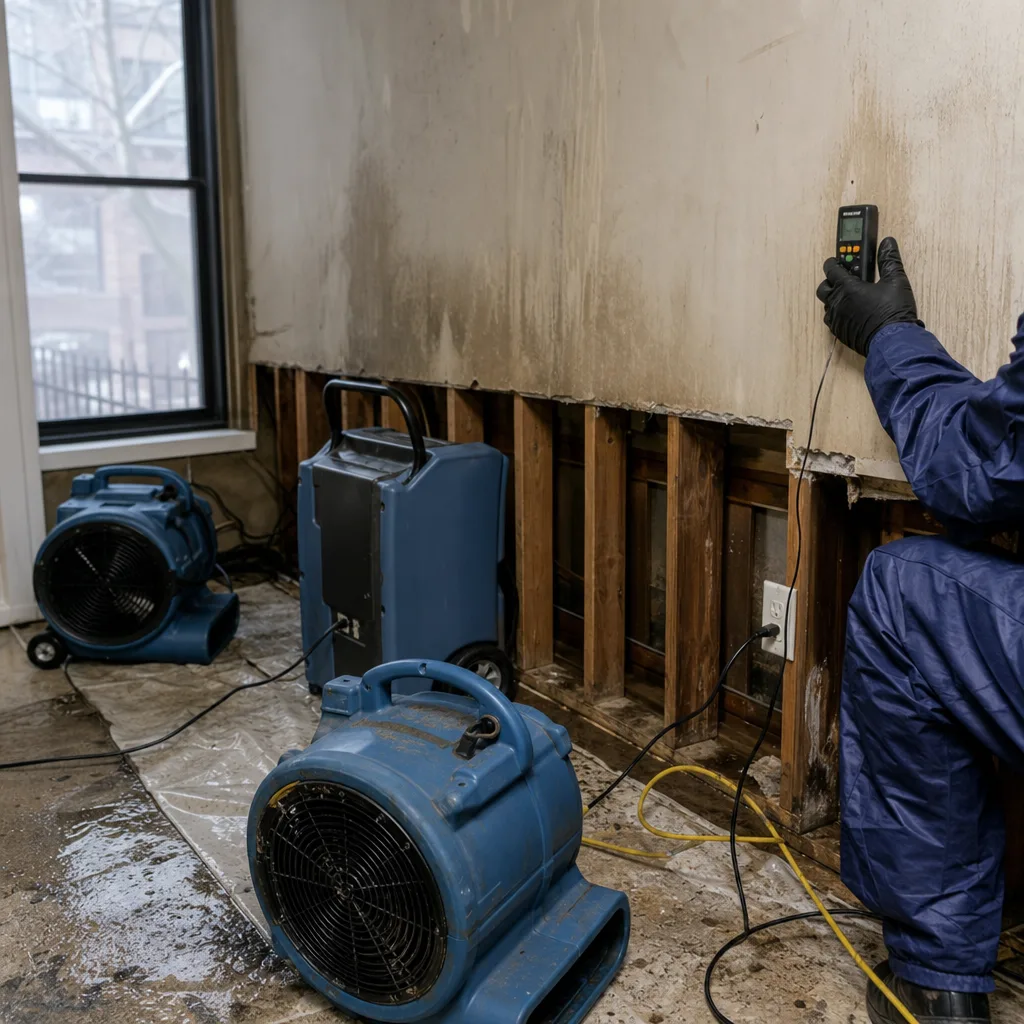
We walk the full property, not just the wet room. Thermal imaging shows us where water has moved into cavities others can’t see. Moisture meters give us baseline readings. We classify the water category, then hand you a written scope of work before anything else happens.
Extraction & Stabilization
Standing water comes out with truck-mounted extraction units and submersible pumps for basements. We move furniture and contents to dry zones, block what can’t be saved, and photograph everything for your claim. In attached Auburndale homes, we map party-wall moisture at this stage so hidden migration gets caught early.
Drying & Dehumidification
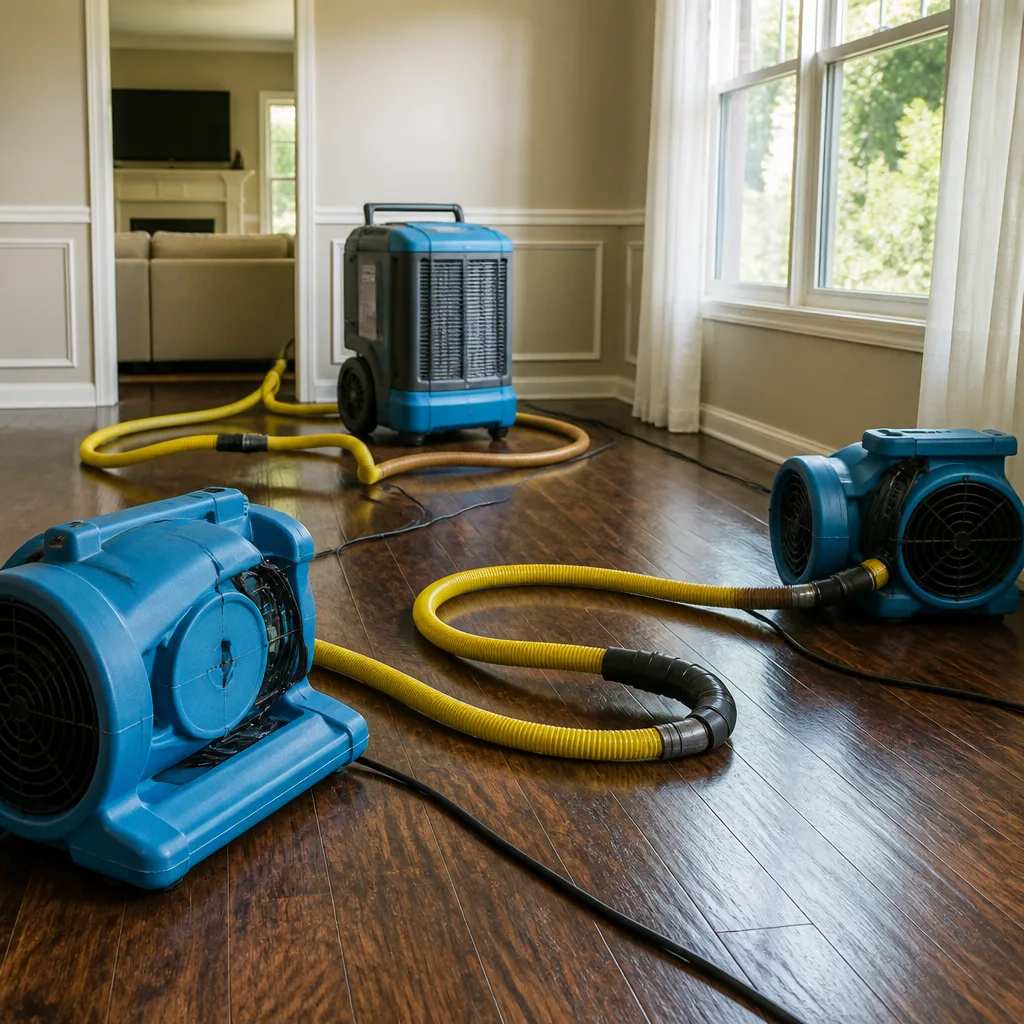
We set Dri-Eaz dehumidifiers and air movers in a calculated layout, not just scattered around. Daily readings track moisture levels in drywall, floor joists, and masonry until everything hits the dry standard. For pre-war brick walls, this takes the time it takes, and we log every day.
Cleaning & Sanitization
Category 2 and 3 water require antimicrobial treatment before drying is done. We clean hard surfaces, treat porous materials where salvageable, and run HEPA air scrubbers when contamination is present. This is where a cheap extraction crew cuts corners and you find out months later.
Steam System & Boiler Coordination
If your basement flood reached the boiler, we don’t call the job dry and walk away. We coordinate with a licensed steam HVAC tech to purge, inspect, and recommission your cast-iron system before the space gets cleared for occupancy. This step surprises out-of-state adjusters. It doesn’t surprise us.
Repairs & Restoration
We rebuild what we removed, from drywall and trim to finished basements and flooring. The same crew that started the job finishes it, and the 90-Day Done Right Promise comes with it in writing. If it’s not done right, we make it right. No arguing.
Need Emergency Water Damage Restoration in Auburndale Now?
Crews minutes away, answering live 24 hours a day. The sooner we start, the less it costs.
Working With Your Insurance Company
Most Auburndale water damage claims are covered, but the claim’s success depends on what gets documented in the first 48 hours. That’s why we photograph everything before we move a single item, and why we build a line-item scope of work your adjuster can read without asking twenty questions. We’ve coordinated claims where a combined sewer backup flooded a finished basement on 192nd Street, and where a nor’easter pushed water through a shared roof plane on a two-family off Francis Lewis Boulevard. In both cases, direct adjuster communication kept the claim moving while the drying was already underway. You don’t play messenger between us and your carrier. The 90-Day Done Right Promise means if the dry-out doesn’t hold or the rebuild isn’t right, we come back and fix it, and the guarantee is in writing.
What We Provide Your Insurer
- Thorough documentation of the loss
- Photos of all damage, room by room
- Moisture readings and drying logs
- A detailed, line-item scope of work
- Direct coordination with your carrier
Built for Auburndale’s Loss Calendar
Auburndale doesn’t get one flood season. It gets several, and each one hits differently. January and February bring deep freezes that burst supply lines in uninsulated exterior walls and crawlspace piping, common in pre-war brick homes with original plumbing layouts. Spring thaw tends to reveal seepage through foundation cracks and floor-wall joints in finished basements, the same basements filled with stored belongings and, in many two-families, a rental unit that can’t be left wet. Summer brings the combined sewer problem: intense convective storms overwhelm street-level drains, backflow pushes Category 2 water up through basement floor drains, and homes on the same block flood the same way every few years. Fall nor’easters repeat the pattern, sometimes heavier. If you own a 1920s or 1930s semi-detached in Auburndale, the question isn’t whether water will find a way in. It’s whether you’ll have a restoration company that knows the neighborhood when it does. Our Water Damage Restoration team tracks these patterns, and we schedule preventive drying evaluations before storm season when you call ahead.
Water Damage Restoration Across Auburndale’s Neighborhoods
Auburndale runs in a compact grid between Francis Lewis Boulevard and the Clearview Expressway, with 46th Avenue and Northern Boulevard marking the rough edges. The blocks off Francis Lewis Boulevard, near St. Kevin’s Church, are dense with 1930s semi-detached brick two-families, the kind of attached construction where a single basement flood rarely stays a single-unit loss. Closer to the LIRR tracks over on 192nd Street, we see more converted basements and below-grade living spaces, which means a sewer backup isn’t just a storage loss, it’s someone’s bedroom or kitchen. Along 46th Avenue toward Utopia Parkway, the homes get slightly more detached, but shared roof planes and common front stoops still carry water across property lines. Over by the Auburndale Playground and the blocks near PS 130, the pre-war brick thickens again, and original cast-iron steam systems are the norm. When a boiler takes on water in that cluster, the entire heating loop needs recommissioning before the job can close. We know these blocks because we’ve worked them, and because Water Damage Restoration in Auburndale means something specific here, attached masonry, aging steam heat, and a sewer district that backs up faster than the pumps can handle.
Specialized Water Damage Restoration Services We Offer in Auburndale
Basement Water Removal
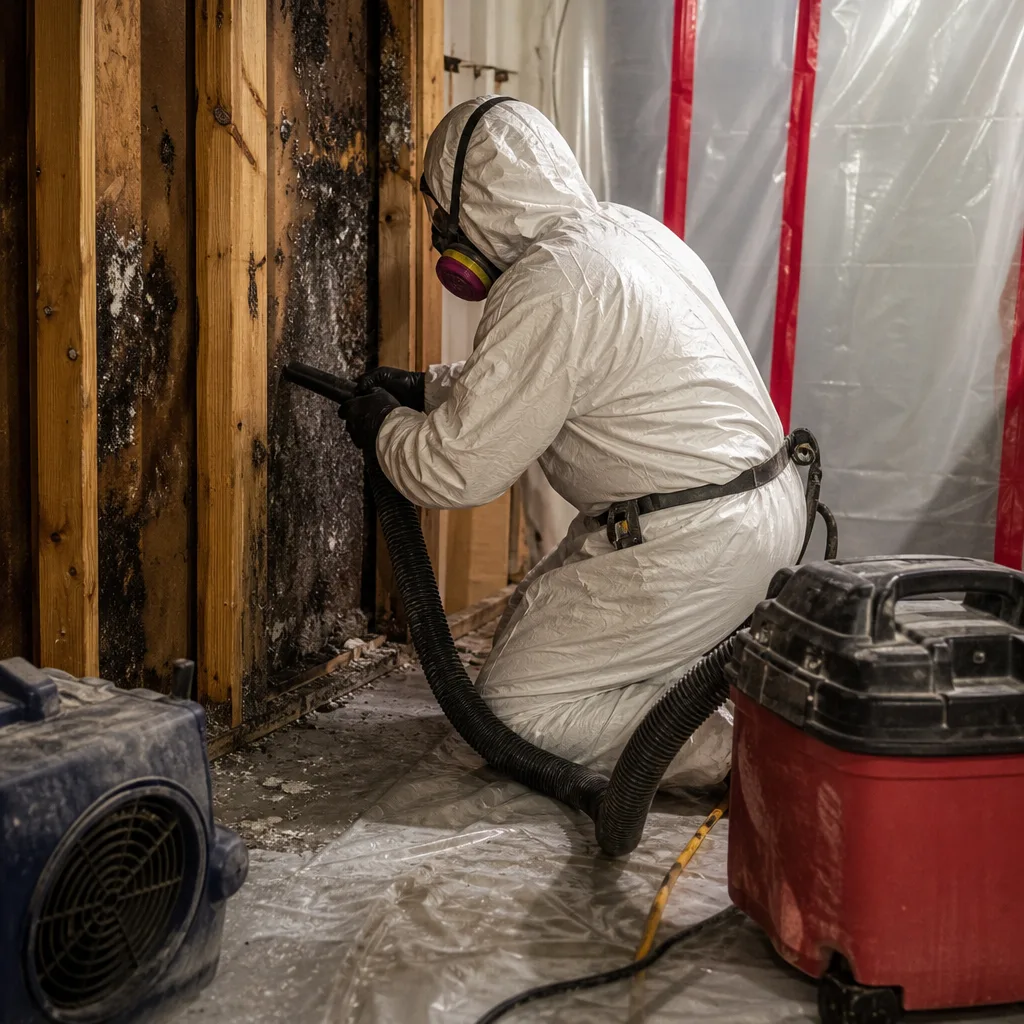
Basement water removal in Auburndale usually starts with a sewage backflow or a foundation seepage event, not a burst pipe. That changes the job. We extract with submersible pumps first, then classify the water, then treat what it touched. If the basement is finished and shares a party wall with a neighbor, we moisture-map that wall before we call the extraction complete. Missing that step is how hidden mold blooms three months later on the other side of the common brick.
Structural Drying & Dehumidification
Drying a pre-war Auburndale basement isn’t like drying a modern freestanding house. Masonry holds moisture longer than gypsum, and original floor joists often sit directly on brick pockets that stay wet after the visible water is gone. We set Phoenix air movers and Dri-Eaz dehumidifiers in a layout that accounts for wall cavities and under-stair dead zones, then log daily readings until the whole assembly, not just the surface, reaches the dry standard. That log goes to your insurer, and it’s your proof the job was done right.
Flood Cleanup
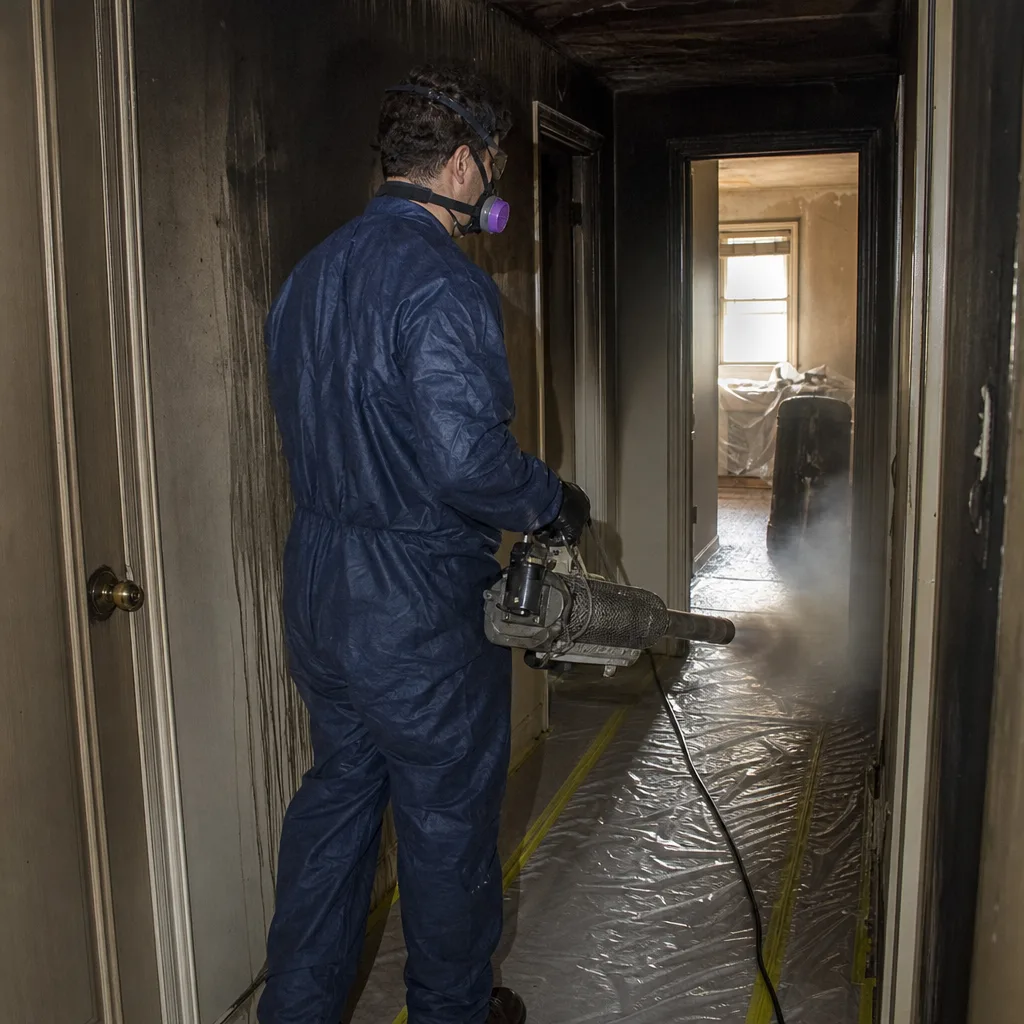
Flood cleanup after a nor’easter or a summer storm in Auburndale usually means Category 2 water at minimum. We remove contaminated contents, cut and discard saturated drywall where it can’t be saved, and treat porous brick and floor joists with antimicrobial agents. Containment goes up when the water classification demands it, keeping spores out of the upstairs and out of the attached neighbor’s unit. Then we dry the full cavity, not just the floor.
Emergency Water Extraction
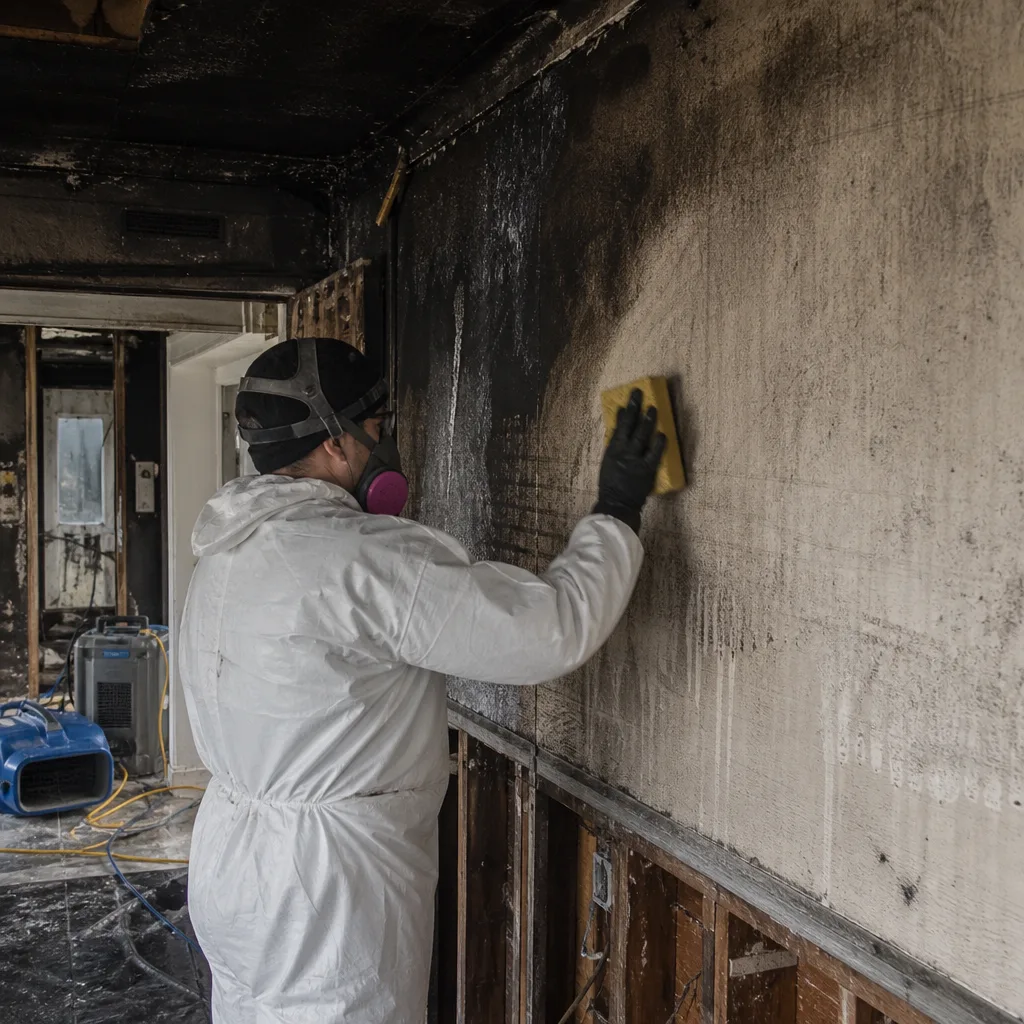
When a supply line lets go at 3 a.m. in a 1920s two-family on 191st Street, every minute matters. We arrive, stop the source, extract the standing water, and start air movement in the first hour. The goal is simple: keep the damage from the initial release from becoming a full gut-job. Because in attached construction, water that migrates into the common wall overnight is water you’ll be litigating with a neighbor’s insurance carrier next month.
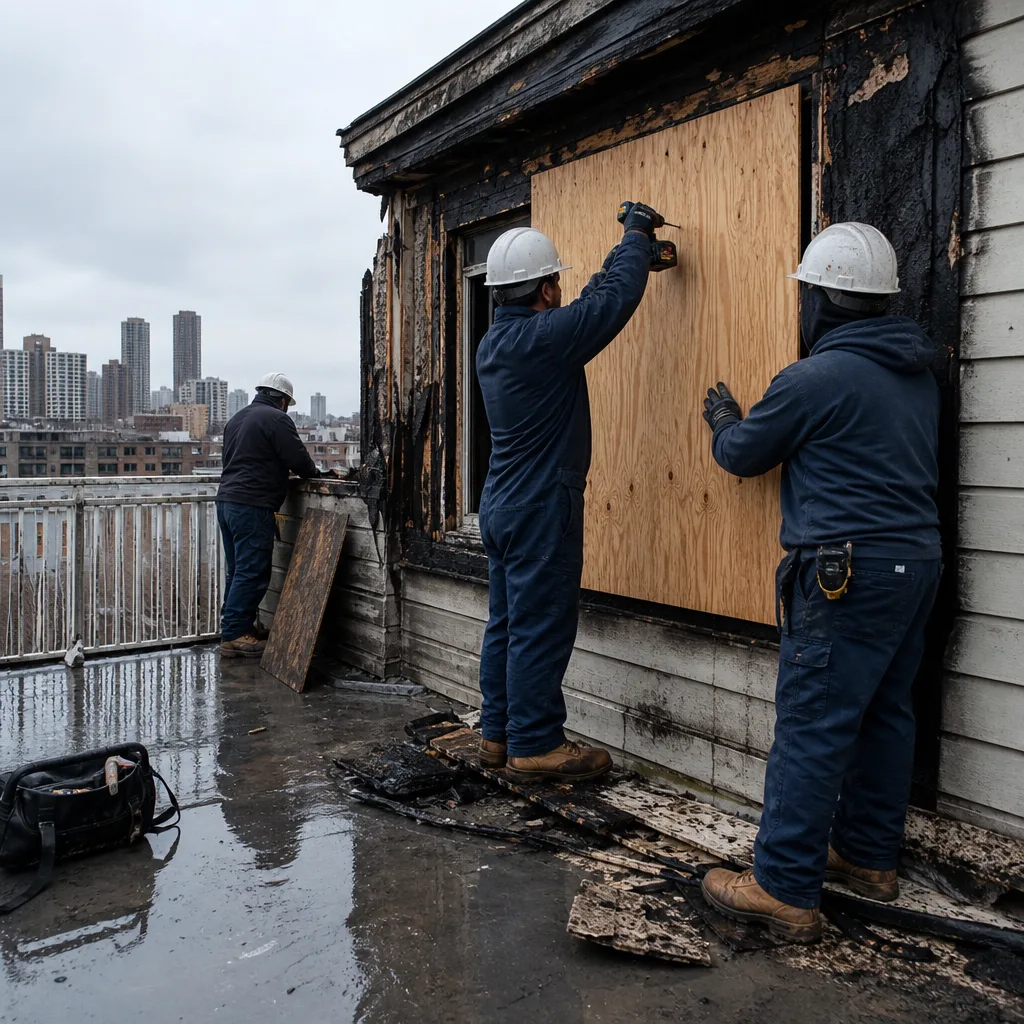
Burst Pipe Restoration
Deep freezes burst pipes in Auburndale every January, usually in exterior walls or unheated crawlspaces. We handle the full restoration: extraction, drying, and the rebuild of whatever the water ruined. But we also check the steam system if the pipe run makes contact, because a burst supply line above a cast-iron boiler can introduce water where it doesn’t belong. That coordination is part of our scope, not an extra surprise.
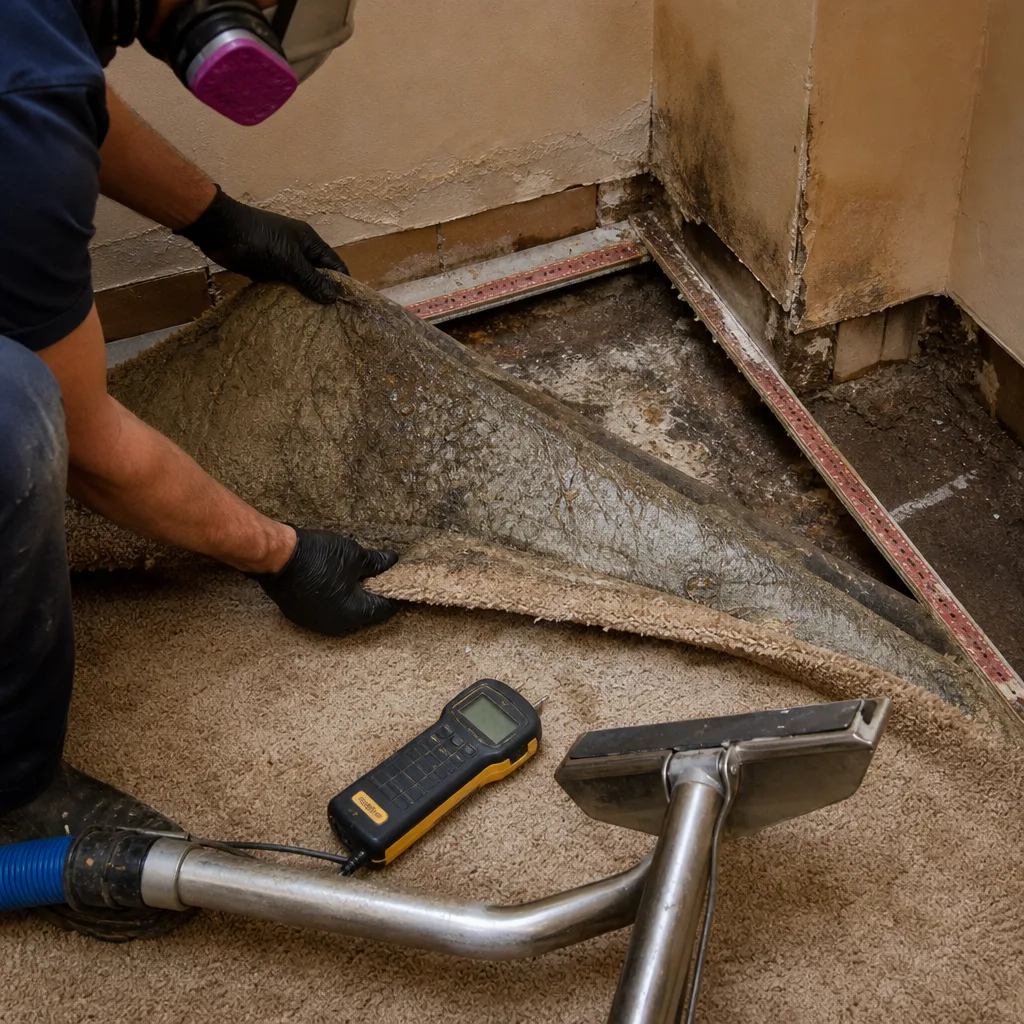
Ceiling & Roof Leak Water Damage
Shared roof planes on attached homes mean a roof leak on your side is often a roof leak on the neighbor’s side too. We dry the ceiling and wall cavities, remove damaged plaster or drywall, and rebuild to the original plane. If the water tracked down through common masonry, we moisture-map that path so the drying plan covers both sides of the property line before reconstruction starts.
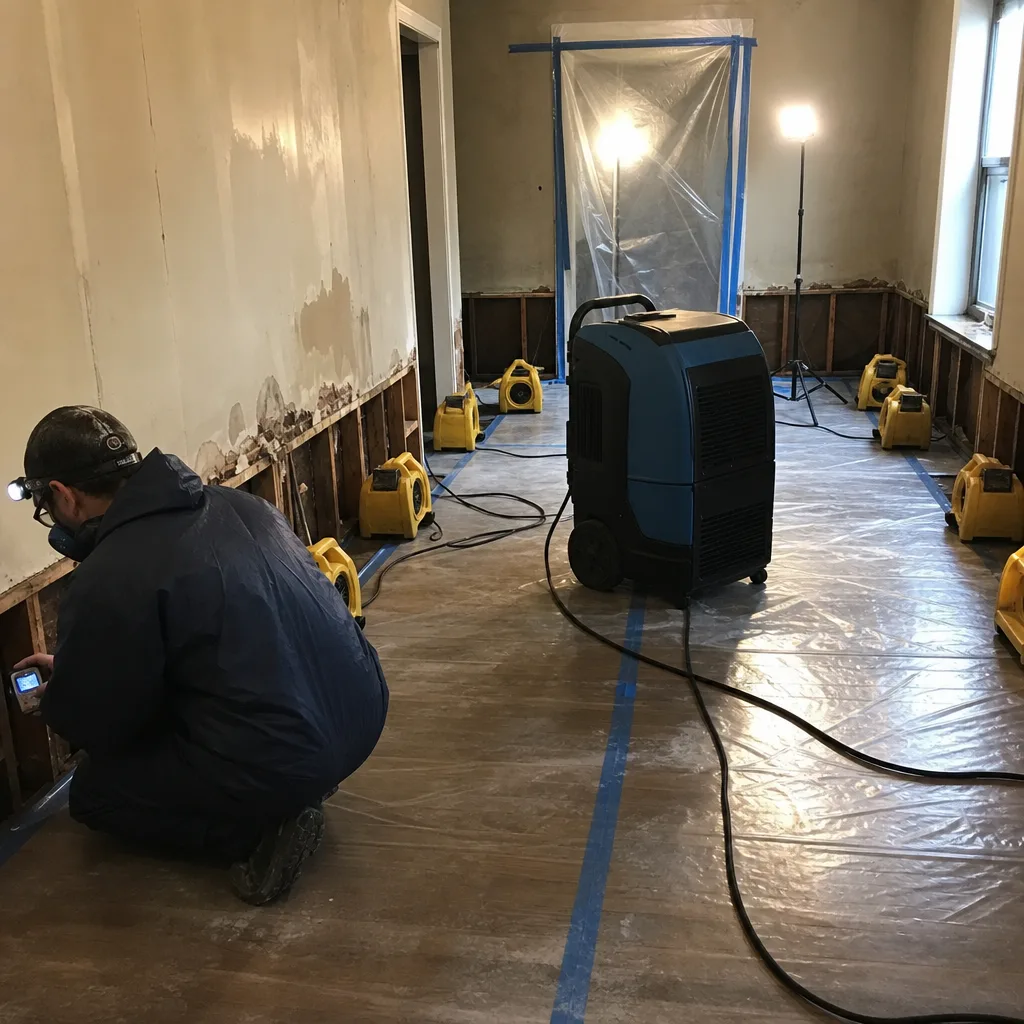
What happens when you call
- 1
A real person answersNo phone trees - you reach a local pro.
- 2
You get an upfront price rangeHonest numbers before anyone is dispatched.
- 3
A background-checked tech heads outLicensed & insured, dispatched right away.
- 4
You approve before work beginsNothing starts until you say go.
Water Damage Restoration Costs in Auburndale, NY
Basement water removal with extraction and drying in an Auburndale semi-detached typically runs $2,200 to $4,600. Structural drying after a Category 2 sewer backup, with containment and antimicrobial treatment, lands between $3,800 and $7,800 depending on whether the party wall is involved. Burst pipe restoration in a finished basement usually falls between $2,800 and $6,500 after drywall, trim, and flooring. Flood cleanup after a nor’easter with contamination and two-unit coordination starts around $5,000 and can reach $9,000 or more when shared brick walls require controlled demolition. What moves the price: water category, square footage, whether finished space must be cut out, and whether the NYC Department of Buildings gets involved because damage crossed a property line. Insurance covers most of these scenarios, and we bill carriers directly so you’re not floating the cost. The free visual inspection gives you a firm scope in writing before any work begins. Call (917) 924-4221 for an exact quote, and ask about the $50 Off Any Repair Over $250 offer, the $89 Seasonal Tune-Up, and the Senior & Veteran 5% discount, all standing offers that never expire.
We Also Serve Cities Near Auburndale
Floodline Restoration Co. of Manhattan runs crews into Fairview, Harrison, East Bronx, and Hunts Point on the same 45-minute response commitment. The same certified technicians, the same professional-grade equipment, and the same written guarantee follow us across the Queens-Bronx line.
Serving Auburndale, NY - Our Local Coverage Area
We’re based in the Auburndale area and know this community well. Use the map below to see our service coverage - if you’re nearby, we can almost certainly help.
Auburndale Water Damage Restoration Questions, Answered
How do Auburndale’s attached brick homes change the water extraction plan compared to a freestanding house?
In a freestanding house, water stops at the foundation and exterior walls. In Auburndale’s semi-detached brick homes, water moves through shared party walls and common roof planes into the attached neighbor’s unit. That means our extraction plan includes moisture mapping the party wall on every job, not just when the water visibly crossed the property line. We dry both sides of the common masonry when readings show migration, and we coordinate with the neighbor’s insurance carrier as a single scope of work instead of two competing jobs.
When a combined sewer backs up into an Auburndale basement, how do you classify the water and what does that change?
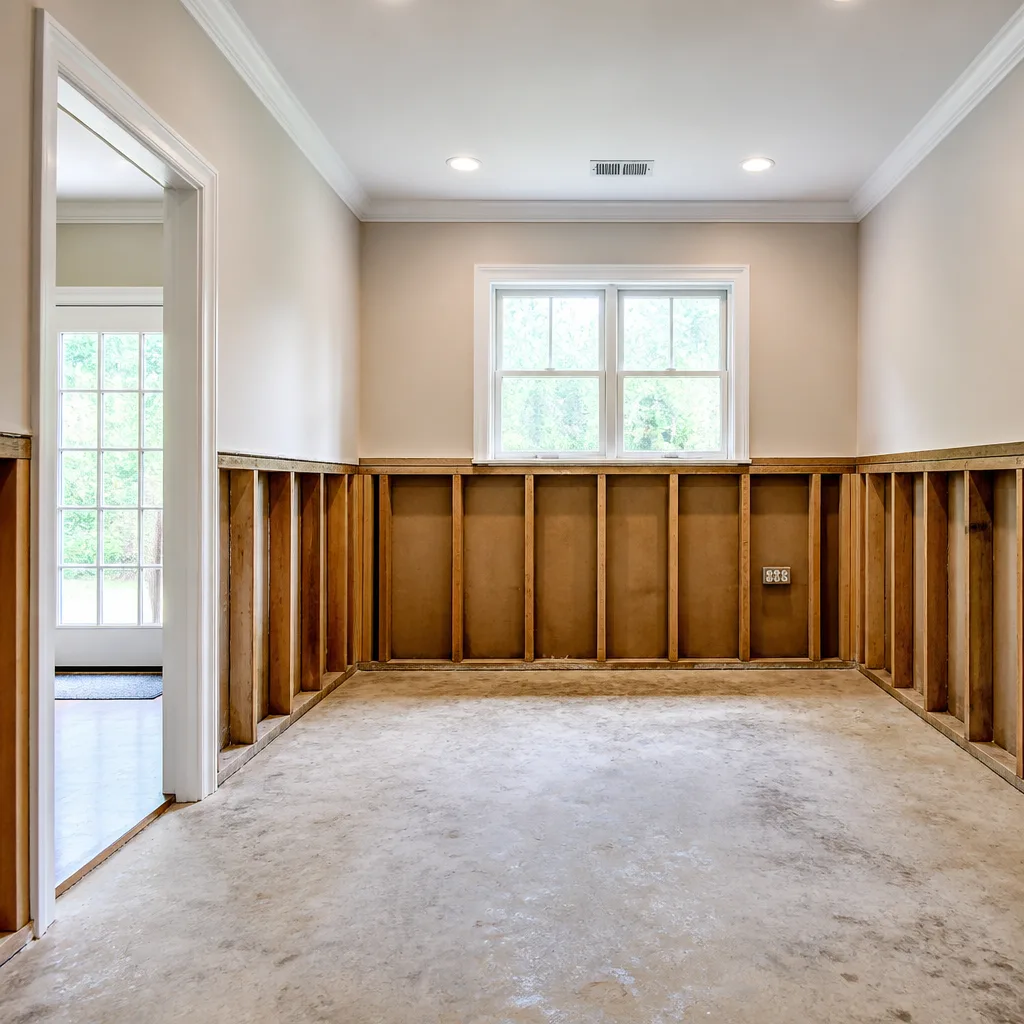
Combined sewer backflow is Category 2 water, sometimes Category 3 depending on what the street runoff carried in. Category 2 means contaminated, not clean, so we don’t just extract and dry. We treat every surface the water touched with antimicrobial agents, remove porous materials that absorbed contamination, and run HEPA air scrubbers when airborne concerns are present. In a finished basement, that often means cutting out the bottom two feet of drywall and treating the floor joists and brick behind it. A crew that skips this step leaves bacterial contamination in your floor system, and you smell it for years.
Why does a basement flood in Auburndale often require coordination with a steam HVAC technician before the job can close?
Many Auburndale homes still run on original cast-iron steam radiators, with the boiler in the basement. When flood water reaches that boiler, the system needs more than a visual once-over. A licensed steam HVAC tech has to purge the system, inspect the cast-iron sections for water intrusion, and recommission the whole loop before the space passes occupancy. Skipping this step means the boiler corrodes internally and fails weeks or months after the restoration job closes, and that failure isn’t covered by the original water claim.
What NYC Department of Buildings steps are triggered when water damage crosses into an attached neighbor’s unit in Auburndale?
When water damage crosses a property line in attached construction, the NYC Department of Buildings (DOB) may require a structural assessment, permits for demolition or rebuild work that touches load-bearing elements, and documentation that the affected assembly was dried to standard before reconstruction. The neighbor’s insurance carrier and yours both need the moisture log and the written scope. We handle DOB coordination and permit filings as part of the restoration, so you don’t have to navigate the bureaucracy on your own while your basement sits open.
Can you dry out a finished basement in an Auburndale two-family without displacing the upstairs tenant?
Usually yes, if we get there early. We set containment around the affected area, run dehumidifiers and air movers on a controlled airflow path, and keep the upstairs separate while we work. The challenge in pre-war two-families is shared air pathways, old chimney chases, open joist bays, so we seal those during drying to prevent cross-contamination. If the water event was Category 3, the containment gets more aggressive, and the upstairs tenant may need to stay out of certain rooms for a few days. Either way, the plan gets explained before equipment goes in.
What should I do in the first 30 minutes after discovering water in my Auburndale basement?
Call (917) 924-4221 first. Then kill the power to the affected area at the breaker panel if you can reach it safely, without stepping into standing water. Don’t use household vacuums to extract water, and don’t open walls yourself, you’ll make the damage worse and complicate the claim. Move what you can that’s dry to higher ground, and take photos for your records. Our crew arrives within 45 minutes and takes over from there.
Does insurance cover water damage from sewer backups and nor’easter flooding in Auburndale?
In most cases, yes, but the policy language matters. Standard homeowners policies typically cover burst pipes and appliance failures, while sewer backup coverage is often an endorsement that some Auburndale homeowners carry and some don’t. Nor’easter flooding from storm surge or street-level water intrusion can fall under flood insurance, which is a separate policy. We read the loss, document everything, and coordinate directly with your adjuster to determine what’s covered before we start major work. You get the written scope, and we bill the carrier directly wherever coverage applies.
Is Floodline Restoration Co. certified, and who exactly shows up at my door?
Our technicians are background-checked, uniformed, and certified to IICRC standards including WRT (Water Damage Restoration Technician) and ASD (Applied Structural Drying), with additional training through RIA and IFA. The person who reads the moisture map on day one is the same person doing daily readings until the dry standard is met. We use Dri-Eaz and Phoenix equipment, plus XPOWER air movers and B-Air dehumidifiers. Every job gets the same Keystone Standard: Krafted right, Every time, Your home first, Standing behind it, and the 90-Day Done Right Promise in writing.
If you’ve got water where it shouldn’t be in Auburndale, call (917) 924-4221 now. A live dispatcher answers, a certified crew gets dispatched, and we’ll walk the property and hand you a written scope before any work starts. Done right and backed in writing, that’s the Floodline standard.
Written by Curt Bowman, Owner at Floodline Restoration Co. of Manhattan, serving Auburndale and the surrounding Queens communities.