
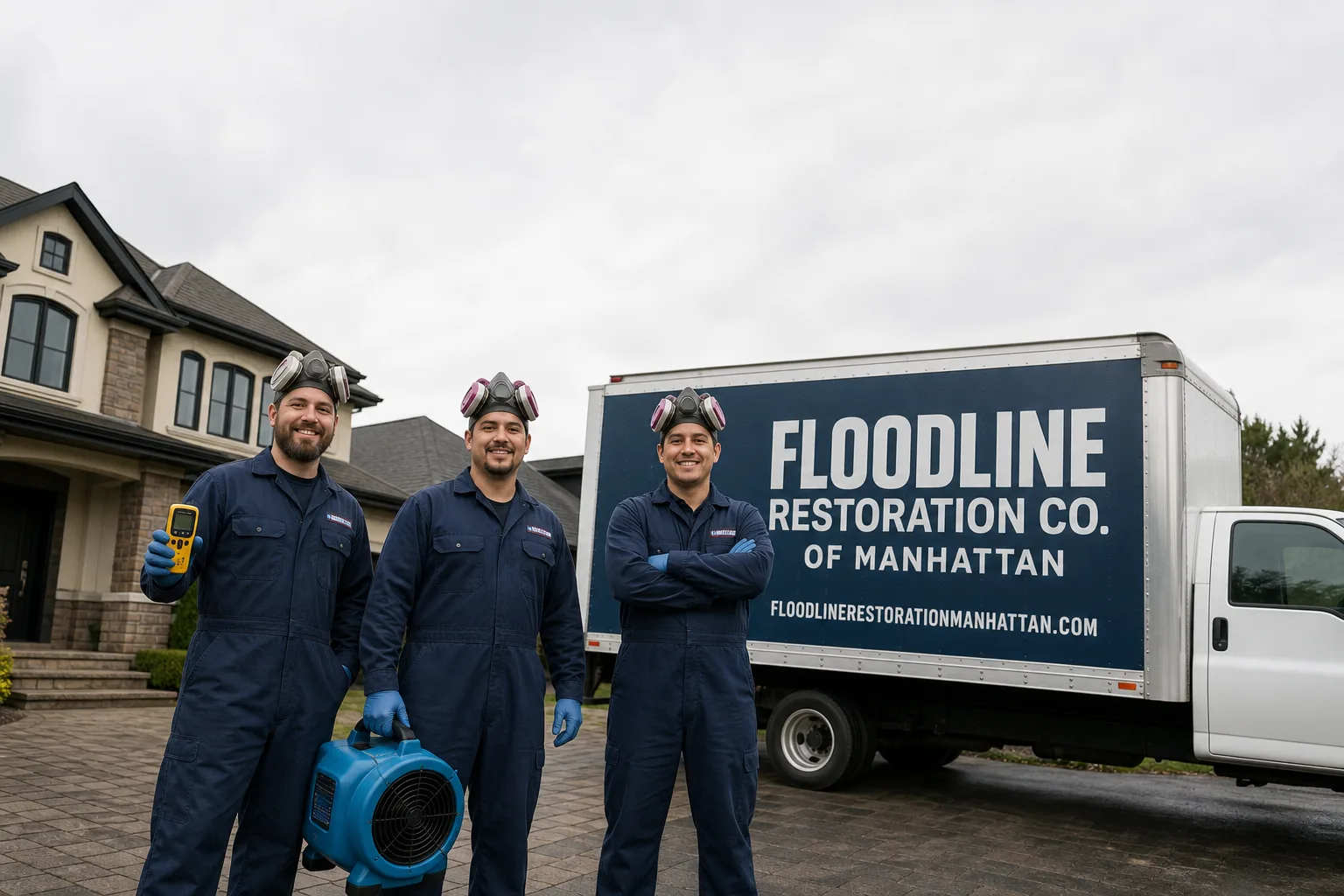
Free visual inspection and a written scope of work before any mitigation begins - photos, moisture readings, and drying logs go in your claim file
The scope we write is the scope we bill. Anything new gets shown to you, in writing, before we touch it.






 Before
 After
After Before
 After
After Before
 After
After24/7 Emergency Water Damage Restoration in East Bronx
When a supply line lets go at two in the morning or a nor’easter pushes Long Island Sound over the seawall in Throggs Neck, waiting isn’t an option. Our crews answer live around the clock and dispatch into East Bronx within 45 minutes. Call (917) 924-4221 and you’ll speak to a real person who can get a certified team moving immediately. The first hour matters because water migrates fast through plaster, subflooring, and wall cavities, and mold starts colonizing wet organic material within 24 to 48 hours. We arrive with professional-grade Dri-Eaz and Phoenix equipment on the truck, perform a free visual inspection, and start extraction the same visit.
Understanding Water Damage Restoration Severity in East Bronx Properties
Water restoration in East Bronx splits into two very different jobs, and we need to know which one we’re dealing with before we write a scope. Category 1 water is clean, coming from a broken supply line or a failed water heater. Category 2 carries some contamination, like the water from a split cast-iron drain stack or an overflowing washing machine. Category 3 is the one coastal East Bronx sees after tidal surge or sewage backup: water carrying pathogens, salt, and sediment from Eastchester Bay or the Long Island Sound. Saltwater is uniquely corrosive, and it forces a different drying protocol because hygroscopic salt residue keeps pulling moisture from the air even after surfaces test dry. In Parkchester’s 1938-1942 brick mid-rises, we’re often dealing with Category 2 events cascading through stacked units, while in a Throggs Neck basement after a storm surge, we’re containing and treating Category 3 water that soaked into original plaster and older framing.
Why East Bronx Property Owners Choose Floodline Restoration Co. of Manhattan
We’re a local company built on a dispatch board, not a sales desk. Curt Bowman founded Floodline Restoration Co. in 2010, and from day one the priority was answering the phone and putting a certified crew on the road. Here’s what East Bronx homeowners get:
- 45-minute response commitment. When you call, we’re honest about how far the nearest crew is. If we commit to 45 minutes, that’s the outside number.
- 24/7 live answer from a real person. No automated phone tree, no “leave a message.” A dispatcher picks up at 2 a.m., every day, including holidays.
- IICRC-certified crews. Our technicians carry WRT (Water Damage Restoration Technician), FSRT (Fire & Smoke), and AMRT (Applied Microbial Remediation) certifications, plus RIA and IFA training.
- Free visual inspection with a written scope. We walk the property, moisture-map the affected areas with thermal imaging and hygrometers, and put a line-item scope in your hand before work starts.
- Direct insurance billing. We document the loss from the first hour, coordinate directly with your adjuster, and bill the carrier. You’re not stuck playing messenger.
- One team from extraction to reconstruction. The same certified crew that reads the moisture map on day one handles daily readings, logs everything for you and your carrier, and rebuilds what needs rebuilding.
Our Water Damage Restoration Process
Inspection & Assessment
We locate the water source, classify the water category, and map moisture migration with thermal imaging cameras and penetrating meters. In East Bronx’s older stock, we check original galvanized supply lines and cast-iron drain stacks for hidden failure. You get a written scope with a firm price before work begins, not a handshake and a surprise later.
Extraction & Stabilization
We pull standing water with truck-mounted and portable extraction units, remove saturated materials that can’t be dried, and stop the migration path. In multi-story Parkchester buildings, this means shutting down riser flow and setting up per-floor containment so water doesn’t keep moving downstairs.
Drying & Dehumidification
Dri-Eaz air movers, Phoenix low-grain refrigerant dehumidifiers, and XPOWER axial fans get placed according to the moisture map, not a guess. We target the dry standard with daily readings, adjusting equipment placement as the building envelope responds. Homeowners and carriers get a copy of every reading.
Cleaning & Sanitization
We clean salvageable surfaces with professional antimicrobial treatments appropriate to the water category. For Category 3 water from Eastchester Bay surge or sewage, that means containment and a different class of biocide than a clean supply-line break requires.
Antimicrobial & Corrosion Treatment
Saltwater intrusion in Throggs Neck, City Island, and Soundview demands additional steps: rinsing chloride residue from framing, treating ferrous metal fasteners and junction boxes for corrosion, and verifying that hygroscopically active salt isn’t driving hidden dampness behind walls.
Repairs & Restoration
We rebuild what we opened: drywall, plaster, trim, flooring, and paint. The 90-Day Done Right Promise covers the work. If it’s not done right, we make it right. In writing. No argument.
Need Emergency Water Damage Restoration in East Bronx Now?
Crews minutes away, answering live 24 hours a day. The sooner we start, the less it costs.
Working With Your Insurance Company
Most Water Damage Restoration work in East Bronx is covered at least in part by homeowner policies, and the single biggest mistake we see is a homeowner starting mitigation without proper documentation and getting a claim reduced or denied. We photograph every loss room by room from the first hour, log moisture readings daily until the structure meets the dry standard, and write a line-item scope in the format adjusters expect. Our team talks directly to your carrier, answers their questions, and sends them the drying log and photo file. You hired us to fix the water damage, not to manage your insurance company.
What We Provide Your Insurer
- Thorough documentation of the loss
- Photos of all damage, room by room
- Moisture readings and drying logs
- A detailed, line-item scope of work
- Direct coordination with your carrier
Built for East Bronx’s Loss Calendar
January and February bring deep freezes that split uninsulated supply lines in the 1940s-1960s attached brick homes of Throggs Neck and City Island, where crawl spaces sit exposed to Long Island Sound off the water. March and April thaw the ground and push groundwater into basements through hairline foundation cracks and failed perimeter drains. Summer thunderstorms dump an inch an hour on flat roofs and clogged scuppers, and the old cast-iron roof drains in Parkchester’s 171 buildings back up under the volume. Fall nor’easters push Category 3 surge over the shoreline in Clason Point and Soundview, contaminating ground-floor spaces and basements. Add in aging galvanized risers and original drain stacks, and East Bronx’s loss calendar has no quiet month. Our crews adjust their equipment loadout seasonally, but the response time and the documentation standard stay the same all year.
Water Damage Restoration Across East Bronx’s Neighborhoods
Parkchester handles differently than anywhere else in the borough. One property management office overlooks all 171 mid-rise buildings and roughly 12,000 apartments, so emergency access, asbestos-tile documentation on original 1940s flooring, and insurance coordination all run through a single bureaucratic channel. That’s not a knock on their management; it’s a scheduling reality. A riser leak at 3 a.m. still needs a management rep to authorize access, and that’s where the clock runs. Our crews know the process and build that lead time into the response. In Pelham Bay and Throggs Neck, we’re working attached one- and two-family brick homes with original galvanized supply lines and cast-iron drain stacks, where a pinhole leak behind a wall can rot framing for weeks before the ceiling below finally sags. City Island and Clason Point add coastal surge risk and saltwater corrosion on top of the usual older-stock issues. Hunts Point and Jerome Park bring dense brick multi-family stock, commercial construction, and a different set of owners with different insurance setups.
Specialized Water Damage Restoration Services We Offer in East Bronx
Emergency Water Extraction
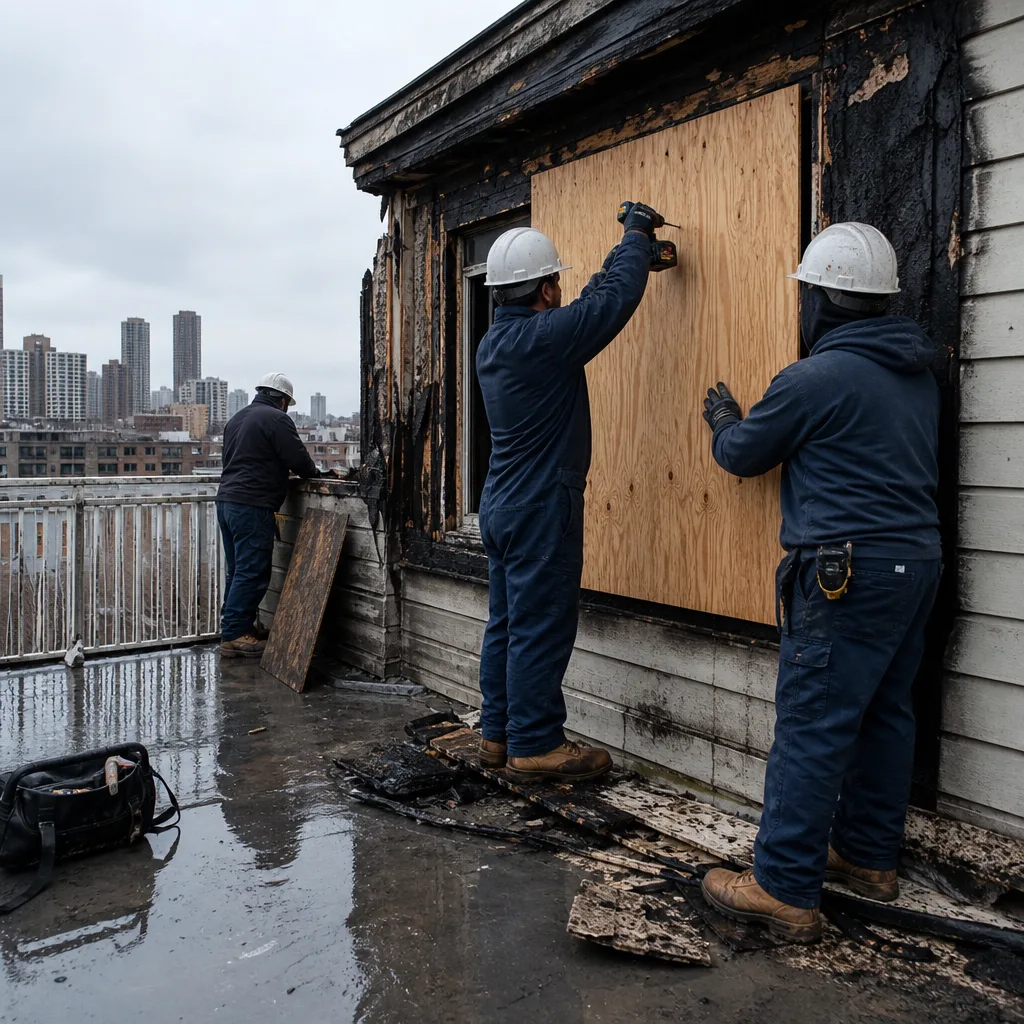
Standing water is moving water. Every hour it sits, it wicks deeper into plaster, framing, and subfloor. We arrive with truck-mounted extraction and portable units, pull the standing water, and stop the migration path the same visit. In a Parkchester unit with a split riser, that means coordinating with building management to shut flow and set up per-floor containment while extracting each affected apartment.
Structural Drying & Dehumidification
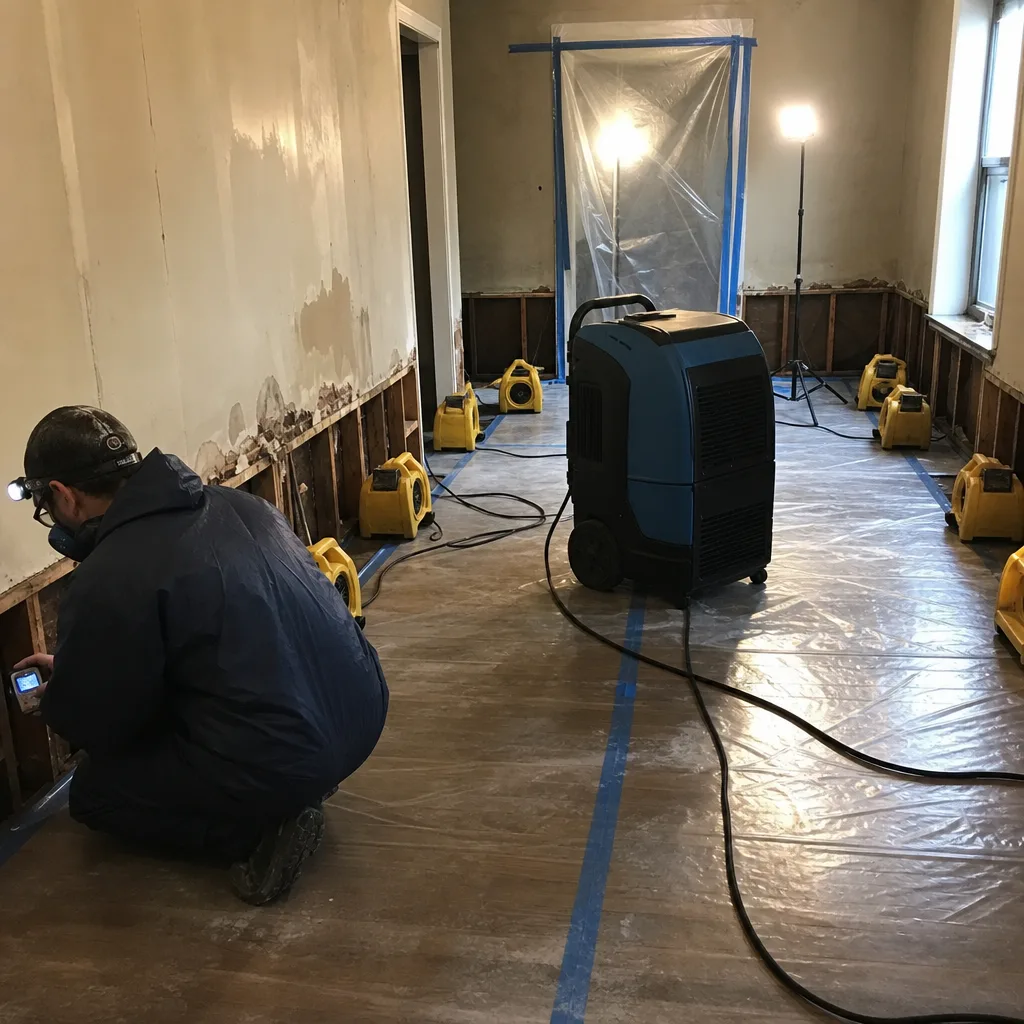
Drying isn’t just about visible surfaces. Moisture hides inside wall cavities, under tile, behind cove base, and under stair stringers. We place Dri-Eaz air movers and Phoenix dehumidifiers according to a moisture map, and we adjust placement daily based on readings. For East Bronx properties near the water, that means accounting for higher ambient humidity and an older envelope that didn’t get built with modern vapor barriers.
Flood Cleanup
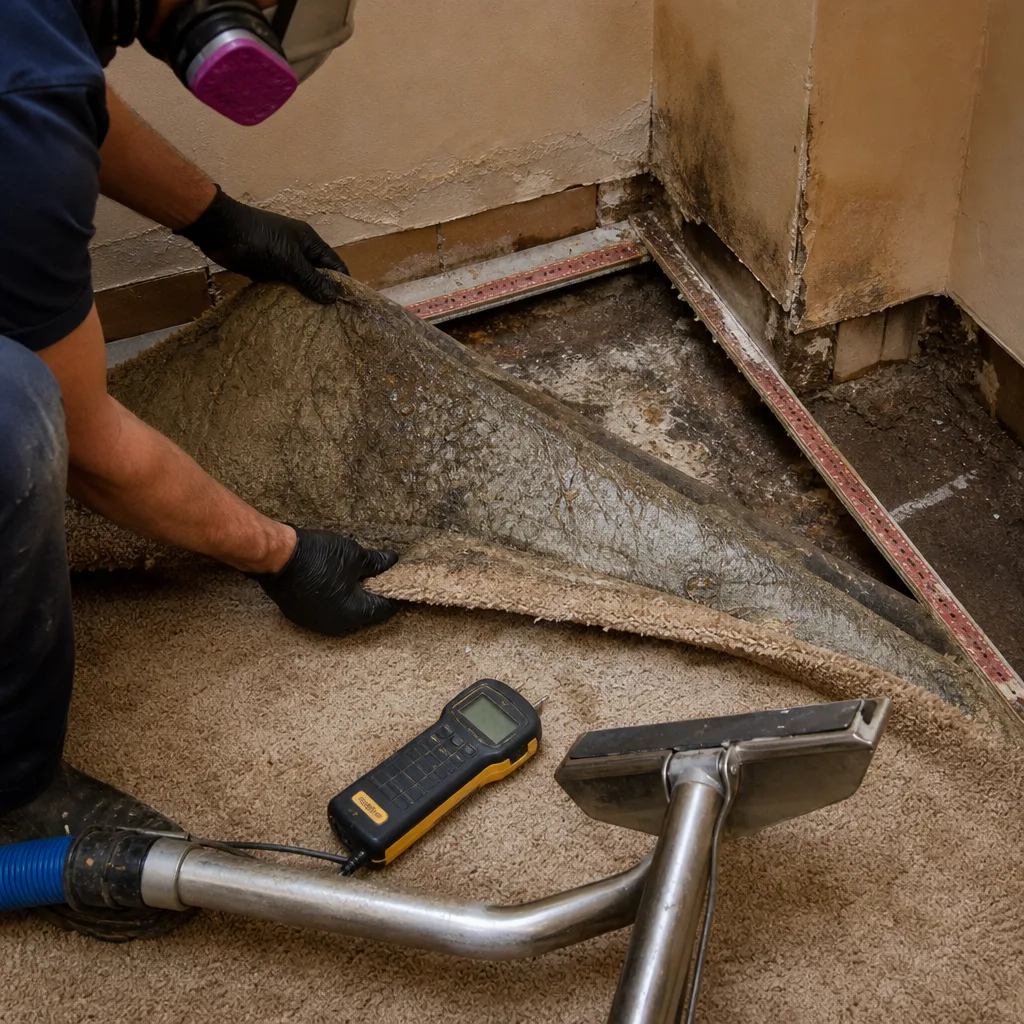
When Long Island Sound pushes into Clason Point and Soundview basements during a nor’easter, that’s not clean water. It’s Category 3 storm surge carrying salt, sediment, and whatever the tide picked up. Flood Cleanup in East Bronx means proper containment, full antimicrobial treatment, removal of saturated drywall and insulation that cannot be economically dried, and corrosion treatment for salt-exposed metal.
Burst Pipe Restoration
A frozen supply line in a Throggs Neck crawl space or a corroded galvanized riser in Pelham Bay can run for hours before anyone notices, and the restoration often goes beyond what’s visibly wet. We trace the migration path with thermal imaging, find the hidden wet insulation, and dry to the standard, not to the eye. Repairs are scoped in writing before any work begins.
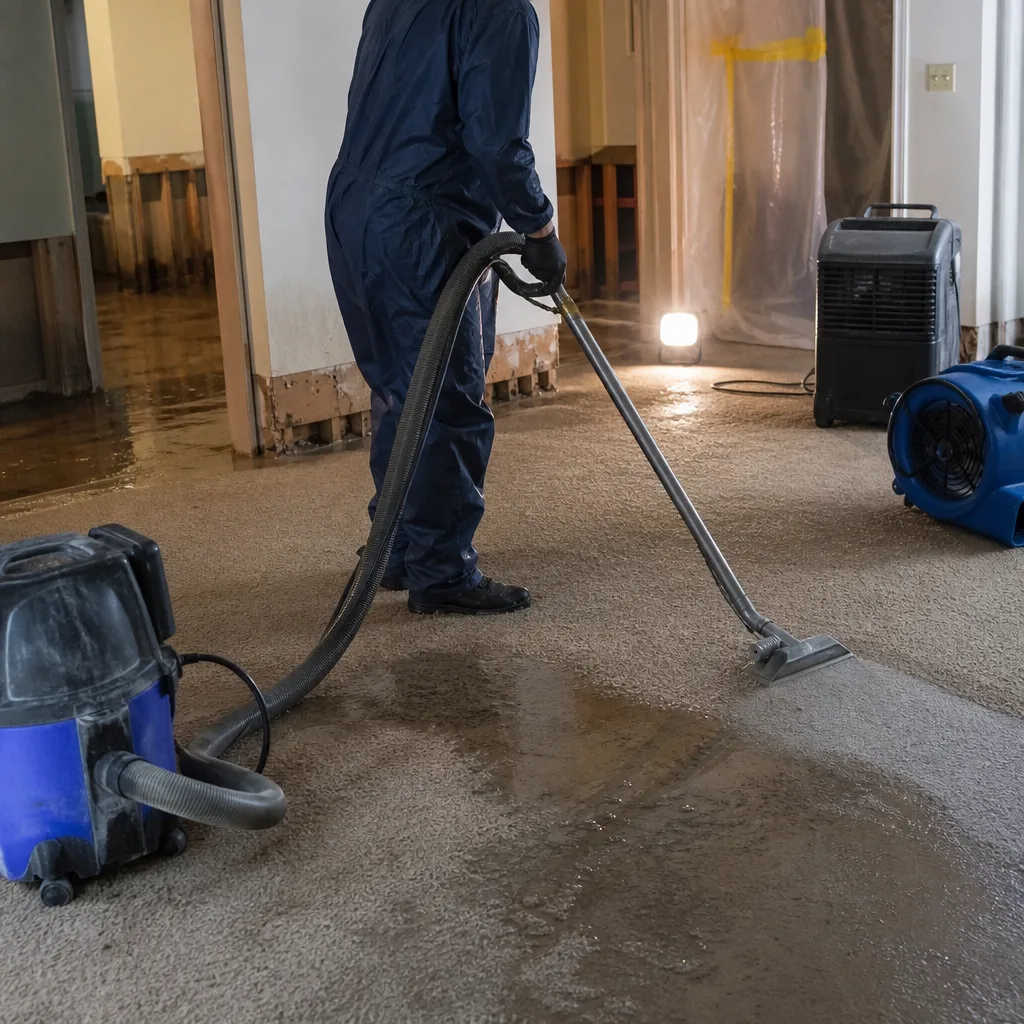
Basement Water Removal
Basements in East Bronx’s older stock take on water from three directions: groundwater through foundation cracks, plumbing failures from aging pipes, and storm surge in the waterfront zones. We extract, dry, treat, and then tell you honestly whether the basement needs a rebuild or a retrofit. No overselling. The scope is in writing, and you approve it before the work continues past mitigation.
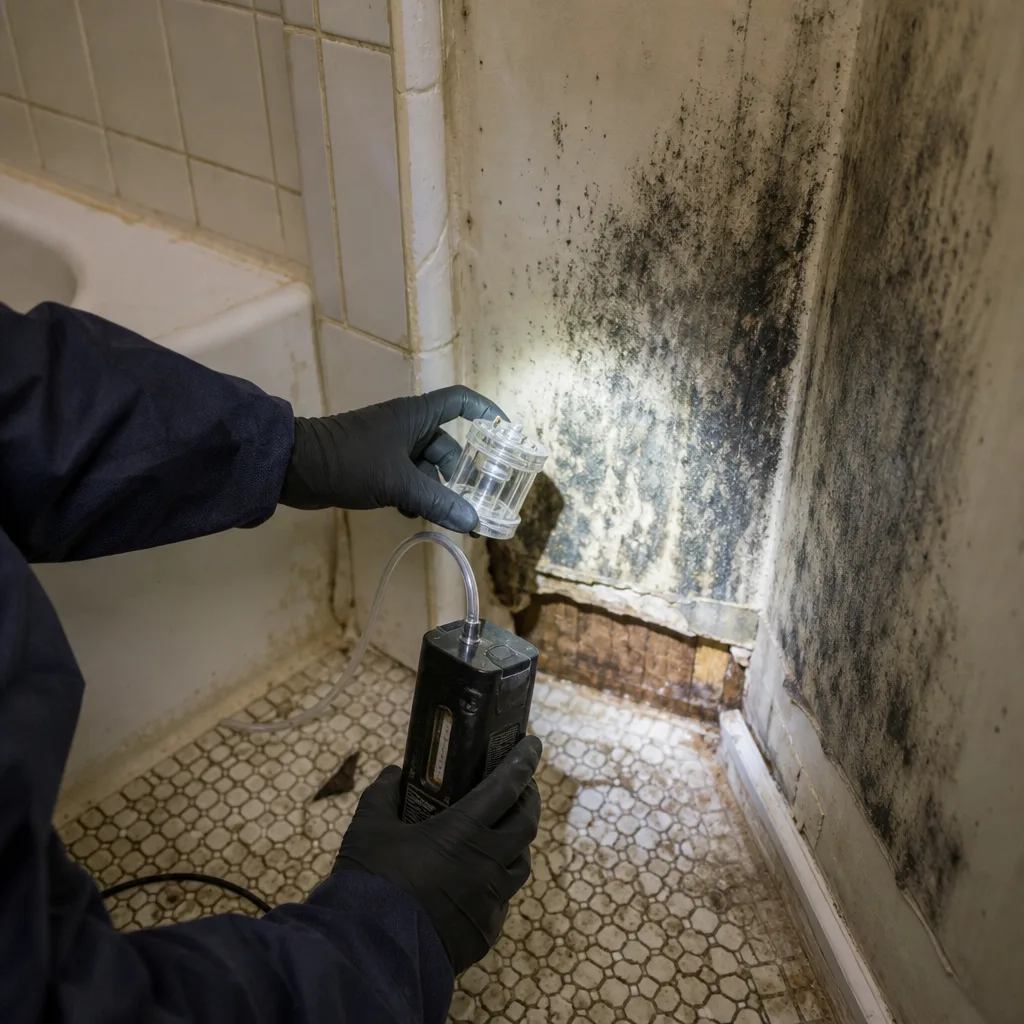
What happens when you call
- 1
A real person answersNo phone trees - you reach a local pro.
- 2
You get an upfront price rangeHonest numbers before anyone is dispatched.
- 3
A background-checked tech heads outLicensed & insured, dispatched right away.
- 4
You approve before work beginsNothing starts until you say go.
Water Damage Restoration Costs in East Bronx, NY
A typical Emergency Water Extraction in East Bronx runs $750 to $1,500 for a single affected room, depending on how far the water migrated and how much equipment the job needs. Structural Drying & Dehumidification typically adds $1,200 to $3,000 for a full floor in a Parkchester unit. A Basement Water Removal job in Pelham Bay or Throggs Neck after a groundwater event usually lands between $2,000 and $5,000 with drying included. Flood Cleanup with Category 3 water runs $2,500 to $7,000 depending on square footage and whether trim and drywall need to go. Burst Pipe Restoration with wall opening, drying, and repair typically runs $3,000 to $8,000. The insurance-covered share depends on your policy, but our free inspection gives you a firm written scope before you spend a dollar. Call (917) 924-4221 for exact numbers.
We Also Serve Cities Near East Bronx
Our crews respond across the northern and eastern Bronx, including Fairview, Harrison, Hunts Point, and Jerome Park, from the same dispatch board and the same East Bronx coverage area. If you’re a few blocks outside East Bronx proper, call (917) 924-4221 and we’ll confirm the nearest crew’s location. When water is moving, a city limit line shouldn’t decide whether you get help tonight.
Serving East Bronx, NY - Our Local Coverage Area
We’re based in the East Bronx area and know this community well. Use the map below to see our service coverage - if you’re nearby, we can almost certainly help.
East Bronx Water Damage Restoration Questions, Answered
How does living in a FEMA AE flood zone in Throggs Neck change the water category during a nor’easter?
Any water that enters from Long Island Sound during a nor’easter or tropical storm event is Category 3 by definition, meaning it carries salt, sediment, and pathogens from Eastchester Bay, and it must be treated with full antimicrobial protocols, not just dried and painted over. Saltwater also leaves hygroscopic chloride residue that keeps drawing moisture after surfaces test dry, so structural drying takes longer and requires corrosion treatment on exposed metal. If your basement flooded from the Sound, don’t let anyone treat it like a clean-water event.
Why does Parkchester’s management structure slow down emergency water extraction compared to a private home in Pelham Bay?
All 171 buildings in Parkchester run through one property management office, so emergency access, asbestos documentation for original 1940s flooring, and insurance coordination all require that office’s sign-off before our crews can open walls or run equipment in a unit. We know the process, we call ahead, and we set expectations honestly. The extraction still starts the same day in almost every case, but the lead time is different from a single-family Pelham Bay home where the homeowner opens the door and we start.
Can you dry out a basement in Clason Point after a tidal surge without removing the drywall?
No. Drywall that has soaked up Category 3 water from tidal surge cannot be economically dried and should be removed and replaced, because salt and contamination stay in the gypsum core and the paper face even after surface drying. Cutting the drywall is fast, the replacement cost is modest, and leaving it in place is how you end up with a musty basement and mold behind the wall six months later. We’ll show you the moisture readings before we cut anything.
What’s the biggest risk of a burst pipe in an uninsulated crawl space of a 1950s single-family home near City Island?
The pipe failure itself is just the first event. The bigger risk is that water from the burst migrates through the crawl space into floor joists, sill plates, and the bottom of the wall cavity before anyone hears it, especially in older homes where the crawl space isn’t conditioned and the freeze-thaw cycle near the water is harsher. Hidden wet insulation and joist ends can rot for weeks while the visible damage looks minor. That’s why we moisture-map the entire lower level after a crawl-space pipe burst, not just the wet spot on the ceiling.
Do we need to worry about asbestos when drying a water-damaged 1940s Parkchester unit?
Yes, and it’s one of the reasons we coordinate with Parkchester’s management before any demolition. Original 1940s flooring in some units tested positive for asbestos, and the tiles and mastic must be handled under applicable regulations when they’re disturbed. Water extraction and drying typically don’t disturb flooring, but any wall opening or tile removal requires documentation and proper handling. We account for that in the scope before work starts.
How fast can you actually get to an East Bronx address?
We commit to a 45-minute response from the time you call (917) 924-4221 and a live dispatcher confirms the nearest crew. In practice, most East Bronx calls see a crew in 30 to 40 minutes depending on traffic and where the nearest unit is working. The 45-minute number is a commitment, not a guess.
Will my insurance cover water damage restoration in East Bronx?
Most standard homeowner policies cover sudden and accidental water damage, like a burst supply line or a failed water heater, and many cover storm surge only if you carry a separate flood policy through the NFIP. The local reality in East Bronx is that FEMA AE flood zones in Throggs Neck, City Island, Soundview, and Clason Point require flood insurance for mortgaged properties, and that coverage handles Category 3 surge events. We document the loss, coordinate directly with your adjuster, and bill the carrier.
What should I do in the first 30 minutes after discovering water damage?
Shut the water source if you can do so safely, turn off electricity to the affected area if water is near outlets or the panel, move valuables and electronics out of the water, and call (917) 924-4221. Don’t try to vacuum standing water with a shop vac if the water could be Category 3, and don’t open walls yourself. Photograph everything with your phone for the claim. Then let us take it from there.
Written by Curt Bowman, Owner at Floodline Restoration Co. of Manhattan, serving East Bronx with certified restoration crews and a live dispatch desk that answers around the clock.