
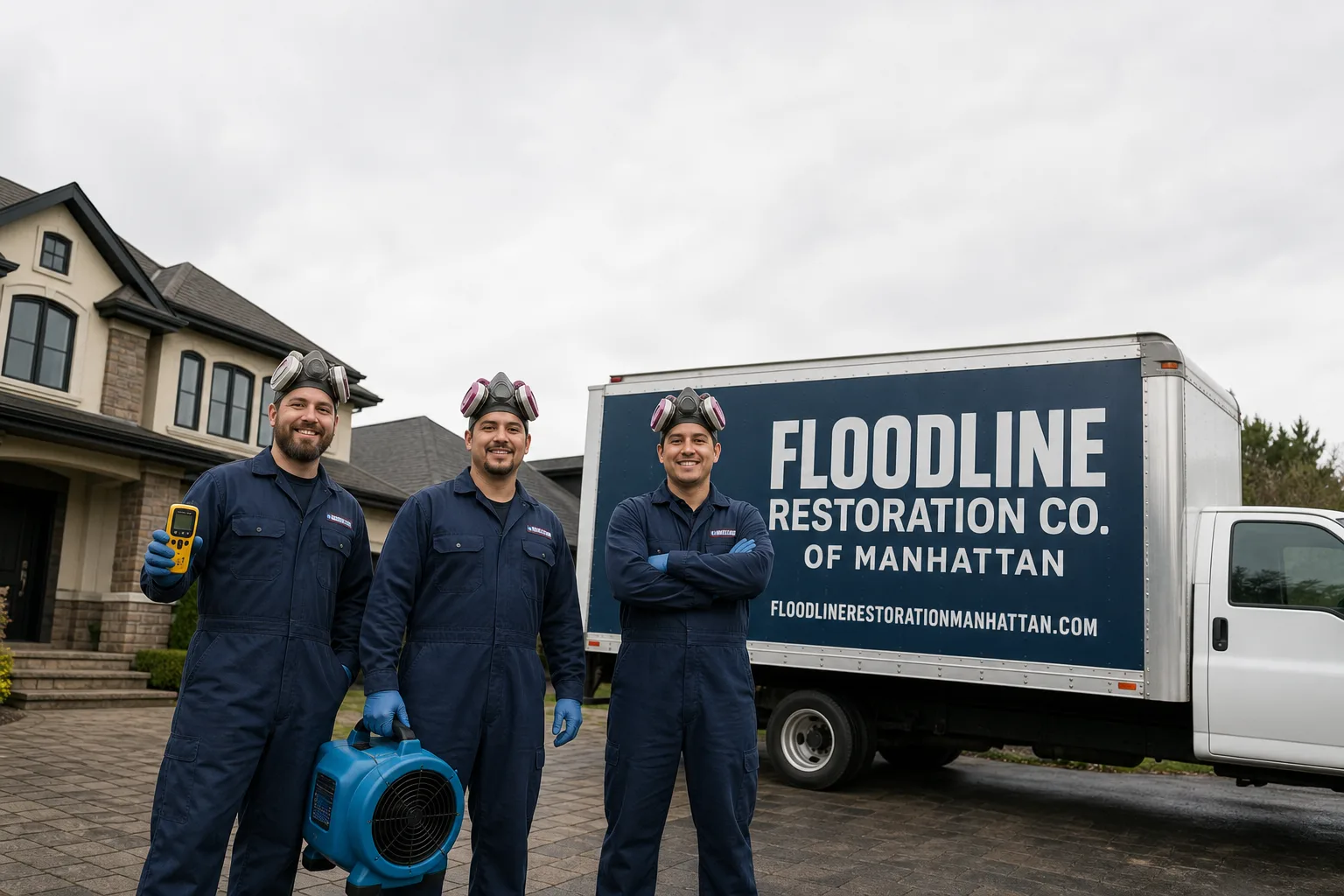
Free visual inspection and a written scope of work before any mitigation begins - photos, moisture readings, and drying logs go in your claim file
The scope we write is the scope we bill. Anything new gets shown to you, in writing, before we touch it.






 Before
 After
After Before
 After
After Before
 After
After24/7 Emergency Water Damage Restoration in Flower Hill
Water damage restoration in Flower Hill typically costs $1,400-$6,800 depending on the water category, square footage affected, and how long materials have been wet. Our crews reach most Flower Hill homes within 45 minutes of your call, and extraction equipment is running the same visit. A live dispatcher answers at 2 a.m., not a recording. When a supply line lets go or a nor’easter drives runoff against your foundation, the first hour determines whether you’re facing a dry-out or a rebuild. Call (917) 924-4221 now for a free visual inspection and an honest read on what you’re actually dealing with.
Understanding Water Damage Restoration Severity in Flower Hill Properties
We classify every water loss by category before we touch anything. Category 1 comes from a clean source: a burst supply line, an overflowing tub, a failed water heater. Category 2 contains significant contamination: a sump failure with groundwater, a washer drain backup. Category 3 is what we see after a Flower Hill nor’easter pushes surface water through foundation walls and into finished basements: it carries silt, soil bacteria, and whatever it picked up crossing a driveway or lawn. The village’s mid-century custom homes complicate this picture. Many finished basements were built with wood paneling and drop ceilings installed directly against concrete block, which means Category 3 water travels invisibly for days behind wall cavities. By the time staining appears on the paneling, we’re often doing moisture mapping across several rooms rather than a simple extraction. The clay-heavy glacial soils around Flower Hill drain slowly, so foundation walls stay saturated longer than you’d expect after a storm, and that saturation keeps pulling moisture back into framing even after standing water is gone. Structural drying here takes longer than in flat, sandy South Shore communities. We plan for it, and our drying logs show it.
Why Flower Hill Property Owners Choose Floodline Restoration Co. of Manhattan
- 45-minute response commitment. A certified crew is dispatched from a staging point near Flower Hill the moment you hang up, and we hold ourselves to it.
- 24/7 live answer. A person picks up the phone every hour of every day. No prompts, no voicemail, no call-back ticket.
- IICRC-certified crews. Our technicians carry WRT and ASD certifications and are trained to RIA and IFA standards, with years of field work across Nassau County basements.
- Free visual inspection. We come out, assess the damage, and tell you truthfully what needs drying, what needs removing, and what can stay.
- Direct insurance billing. We work with your carrier, provide the documentation they require, and bill them directly so you’re not the messenger.
- One team from extraction to reconstruction. The same crew that reads the moisture map on day one handles the daily readings, the rebuild, and hands you the completed log at the end.
Our Water Damage Restoration Process
Inspection & Assessment
We arrive, walk the property, and identify the water source and category. Thermal imaging and moisture meters tell us how far water has traveled behind mid-century finishes and into concrete block. You get a clear scope of work, in writing, before any demolition starts.
Extraction & Stabilization
Truck-mounted or portable extraction units pull standing water from floors, carpet, and wall cavities. If the ceiling is dropping or drywall is sagging, we stabilize it before it collapses. In Flower Hill basements, this often means pulling saturated paneling to expose the block behind it.
Drying & Dehumidification
We set Dri-Eaz dehumidifiers, Phoenix axial air movers, and Injectidry mats into wall cavities and under cabinets. Daily moisture readings go in a log that you and your insurer both receive. We dry to the standard, not to the calendar.
Cleaning & Sanitization
Category 2 and 3 water require antimicrobial treatment on all affected surfaces. We clean, disinfect, and run HEPA air scrubbers when needed. Anything that can’t be sanitized gets removed and documented.
Hidden Water Detection
Flower Hill’s paneling-on-block construction hides water pathways. We check behind baseboards, under drop ceiling tiles, and inside wall cavities with moisture probes. The goal is to find the water before mold does.
Repairs & Restoration
We rebuild what we removed: drywall, framing repair, flooring, painting, and trim. The same certified crew that did the demolition does the finish work. When we’re done, you’re back to pre-loss condition and you have the moisture log in hand.
Need Emergency Water Damage Restoration in Flower Hill Now?
Crews minutes away, answering live 24 hours a day. The sooner we start, the less it costs.
Working With Your Insurance Company
We’ve been handling Flower Hill water claims long enough to know what carriers need, and what adjusters question. The answer is documentation from the first hour: photos of the source, photos of the damage room by room, moisture readings before and after drying, and a line-item scope of work that matches industry-standard pricing for Nassau County. Our team captures all of it and communicates directly with your adjuster. You don’t chase paperwork; you get a copy of everything we send. If your carrier has questions about why a particular finish needed removal, we have the photos and the readings to justify it. Direct billing means we wait for the carrier’s payment, not you. That’s the way it should work, and that’s how we run every claim.
What We Provide Your Insurer
- Thorough documentation of the loss
- Photos of all damage, room by room
- Moisture readings and drying logs
- A detailed, line-item scope of work
- Direct coordination with your carrier
Built for Flower Hill’s Loss Calendar
Flower Hill gets hit a few different ways through the year, and each one leaves a different signature. January and February bring deep freezes that split original copper and galvanized supply lines in uninsulated crawl spaces and exterior walls of 1950s ranch homes. By March and April, snowmelt and early spring rain saturate the clay-heavy moraine soils, and water pushes through foundation cracks and cove joints into finished basements. Summer thunderstorms arrive fast and hard; the village’s rolling grade sends sheet flow toward the lowest foundation perimeter, and sump pumps that haven’t run since spring fail when they’re needed most. Then there’s nor’easter season, from September through December, when sustained rain and wind drive water horizontally against siding and foundation walls. A house on a high point in Flower Hill can flood while a house in a flat South Shore community stays dry, all because of where the water goes when it hits grade. We schedule our equipment inventory and our crews around this calendar, because we’ve been answering these calls in Flower Hill for years enough to know what each storm brings.
Water Damage Restoration Across Flower Hill’s Neighborhoods
Flower Hill spreads across several distinct areas, and the water damage pattern changes block by block. Along Port Washington Boulevard, the village’s main commercial spine, older ranch and split-level homes sit close to the roadway, and storm drains that back up during heavy rain send runoff toward finished lower levels. A burst pipe on a Port Washington Boulevard property is typically a straightforward extraction with cross-drying through the main floor. Over near St. Francis Hospital, the residential streets climb steadily, and we see more sewage backups than surface flooding; the sewer laterals serving those hillside homes are 60-plus years old, and they weren’t sized for today’s flow. Up around the Flower Hill Park area and the winding streets off Country Club Drive, the lots get larger and the grade steeper. Those are the homes where storm runoff hits the uphill foundation wall first and works its way through, and where a finished basement that took a mild Category 1 leak becomes a much bigger job if the water has tracked behind paneling for 72 hours. North of Northern Boulevard, near the settled streets by the village hall, we see a lot of original galvanized supply piping still in service, and a pinhole leak that starts behind a guest room wall in the small hours of the morning is the kind of call that wakes up the whole house. Every neighborhood has its own water fingerprint. We know them all because we drive them every day.
Specialized Water Damage Restoration Services We Offer in Flower Hill
Emergency Water Extraction
When standing water is in a Flower Hill basement or seeping under a main-level floor, extraction is the first and most urgent step. Our crews arrive with truck-mounted or portable extraction units and remove the bulk water before it migrates into drywall, baseboards, and the concrete block behind paneling. The faster the water is out, the less demolition is required. Most Flower Hill extractions start within an hour of your call to (917) 924-4221.
Structural Drying & Dehumidification
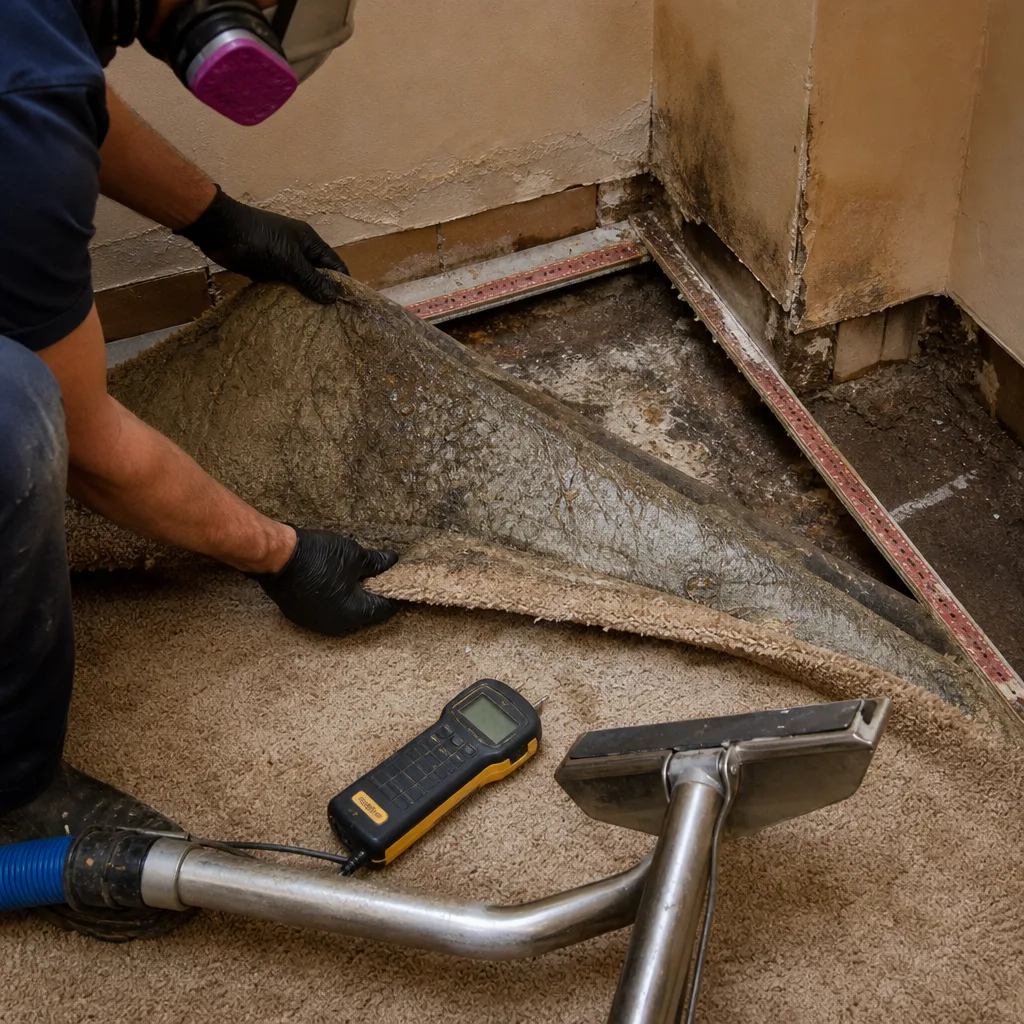
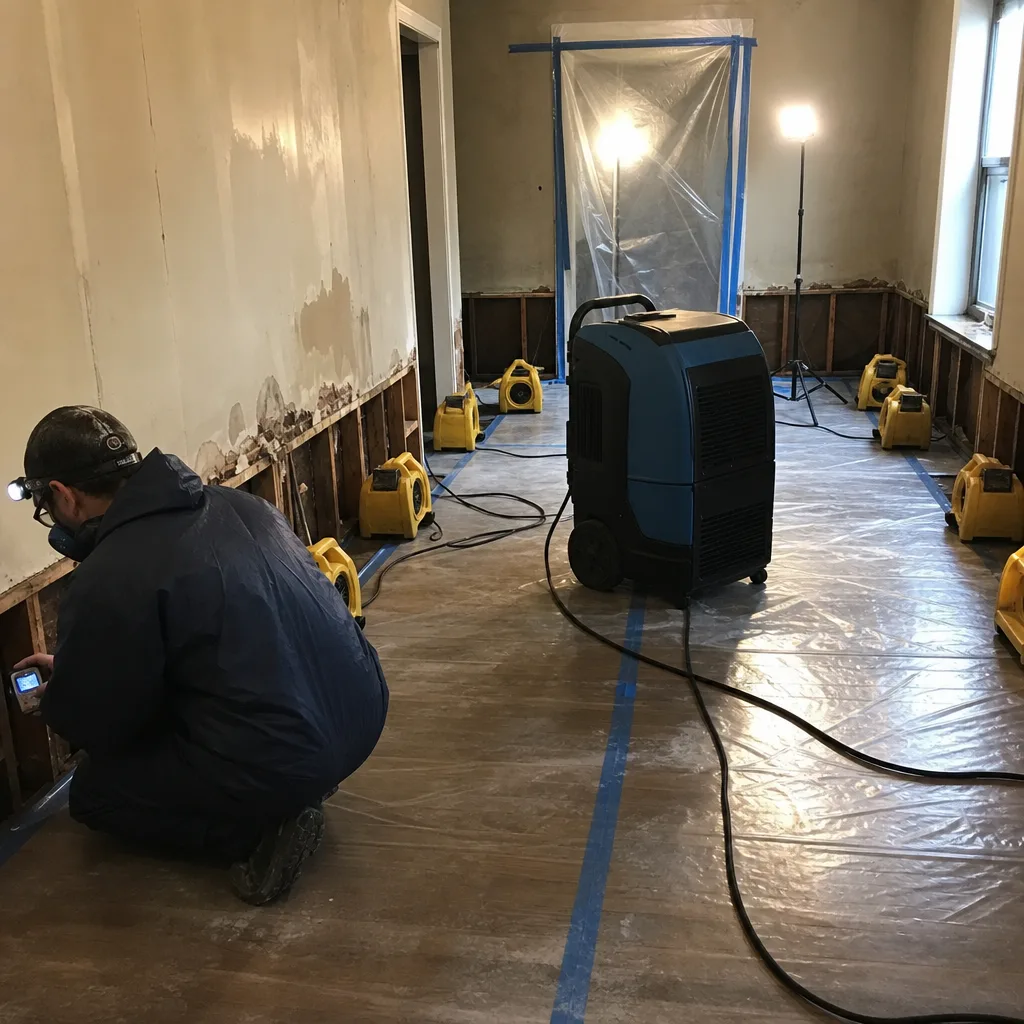
After extraction, the real work is getting the structure dry. Flower Hill’s clay-heavy glacial soils keep foundation walls wet for days, and that means the drying load inside the basement is higher than in a flat, sandy coastal town. We run Dri-Eaz dehumidifiers and Phoenix air movers around the clock, with daily moisture readings against the dry standard. Injectidry mats pull moisture from inside wall cavities that would otherwise stay wet for weeks. The drying log goes to you and your carrier.
Flood Cleanup
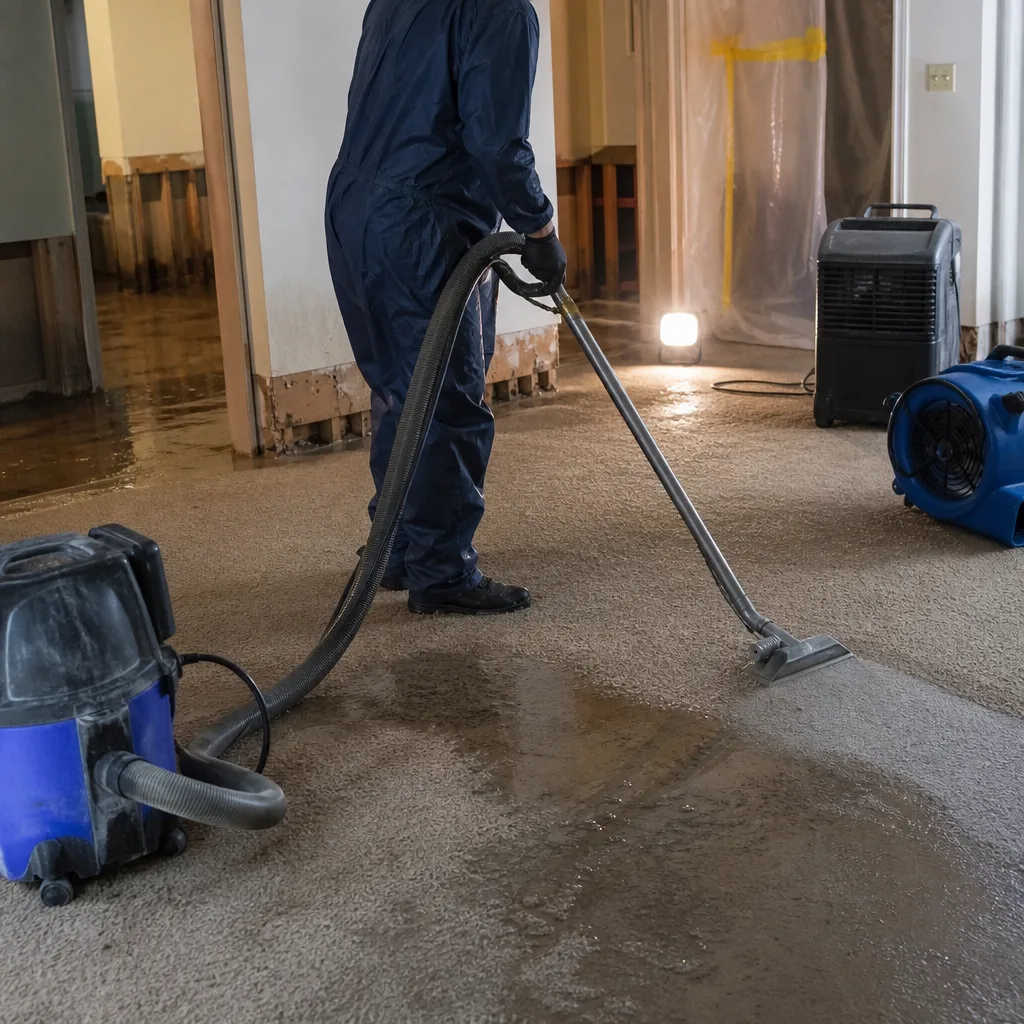
Nor’easter-driven runoff and summer flash flooding bring Category 3 water into Flower Hill basements, and that means contaminated cleanup is a different job than a clean pipe break. We contain the affected area, remove saturated finishes, sanitize what can be saved, and dispose of what cannot. HEPA air scrubbers run to capture airborne particulates. You get a clear line-item list of what was removed and why.
Burst Pipe Restoration
The original cast-iron and galvanized piping in 1950s and 1960s Flower Hill homes has reached or passed its service life. When a pipe lets go, it’s often behind a finished wall, and the water has been running for hours or days before anyone notices. We trace the leak, stop the source, extract the water, dry the structure, and rebuild the wall the same team started with. If it makes sense to repipe a section rather than patch it, we’ll tell you honestly.
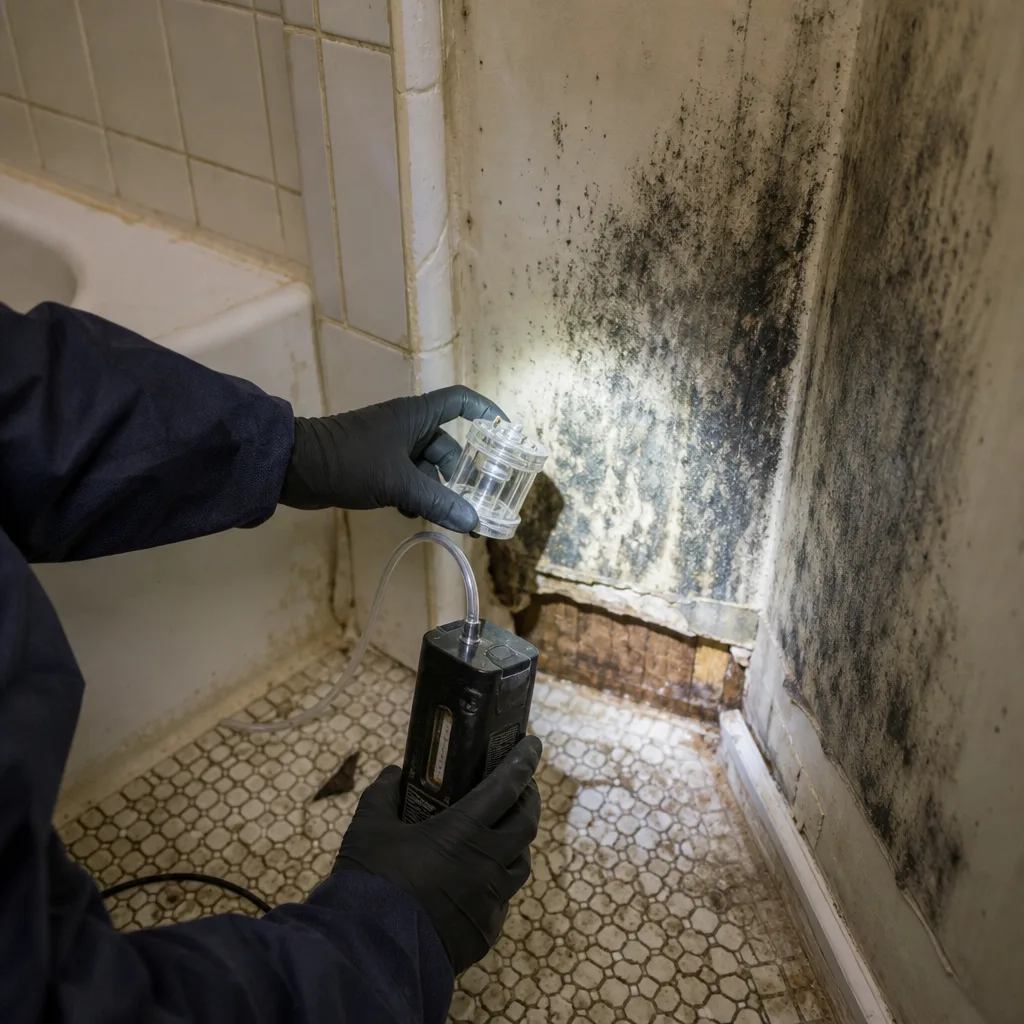
Basement Water Removal
Flower Hill’s finished basements are the most vulnerable spaces in the house. They hold media rooms, home offices, and in-law suites; they also sit below grade where the moraine’s runoff wants to go. We remove standing water, dry the space, address the panels and drop ceilings that hide damage, and coordinate with your insurer on what gets removed versus what gets dried in place. This is the service we run most often in Flower Hill, and we’ve refined the playbook to match the village’s specific construction.
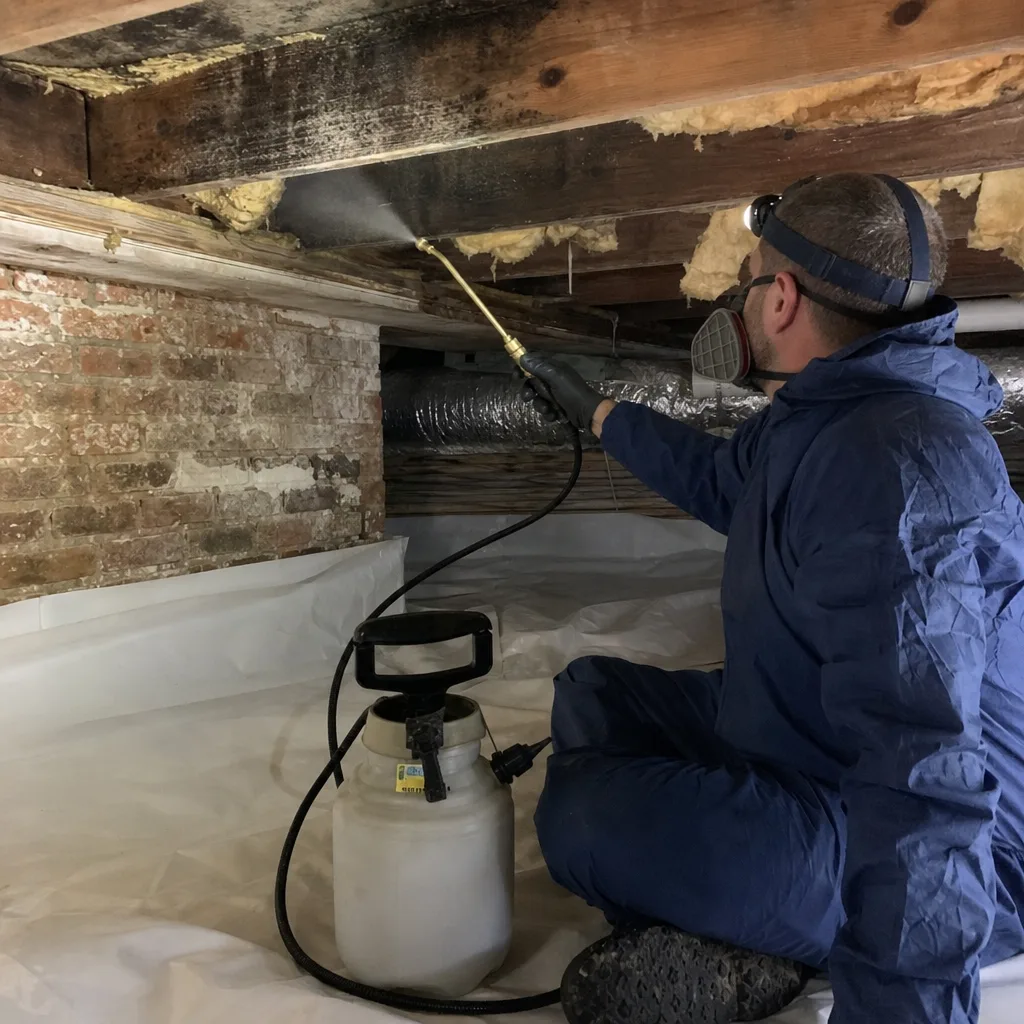
What happens when you call
- 1
A real person answersNo phone trees - you reach a local pro.
- 2
You get an upfront price rangeHonest numbers before anyone is dispatched.
- 3
A background-checked tech heads outLicensed & insured, dispatched right away.
- 4
You approve before work beginsNothing starts until you say go.
Water Damage Restoration Costs in Flower Hill, NY
Here’s what Flower Hill homeowners can expect to pay, based on the work we’ve done in the village and the immediate area. Emergency water extraction alone typically runs $400-$900 for a standard finished basement. Structural drying with equipment placement and daily monitoring adds $1,200-$2,800 depending on square footage and how long materials stay wet. A full Category 3 flood cleanup with paneling removal, sanitization, and HEPA air scrubbing in a 700-square-foot mid-century basement generally lands between $4,500 and $9,000. Burst pipe restoration, including drywall replacement and paint after the dry-out, runs $2,500-$6,500 when the pipe is localized. Ceiling and roof leak damage, with insulation replacement and drywall repair, typically falls between $1,800 and $4,200. What moves the price is the water category, how long it sat before discovery, and whether mid-century finishes need to come out or can be dried in place. The free visual inspection gives you a firm, line-item figure before any work begins. If insurance is involved, we document everything and bill the carrier directly.
We Also Serve Cities Near Flower Hill
Floodline Restoration Co. of Manhattan works throughout the North Shore and into the surrounding boroughs. In addition to Flower Hill, our crews regularly respond to water damage calls in Fairview, Harrison, East Bronx, and Hunts Point. Same live answer, same 45-minute dispatch, same written scope of work no matter the neighborhood.
Serving Flower Hill, NY - Our Local Coverage Area
We’re based in the Flower Hill area and know this community well. Use the map below to see our service coverage - if you’re nearby, we can almost certainly help.
Flower Hill Water Damage Restoration Questions, Answered
How fast can you get to Flower Hill?
Our commitment is 45 minutes or less from your call to a crew arriving at your Flower Hill property. We stage response vehicles near the village so we’re not fighting cross-county traffic during a storm. Call (917) 924-4221 and a live dispatcher will tell you exactly when the team will arrive.
Will my insurance cover water damage restoration in Flower Hill?
Most homeowner policies cover sudden and accidental water damage, like a burst pipe or storm-driven flooding, but many exclude gradual seepage or long-term foundation leaks. We document everything from the first hour and work directly with your adjuster to establish the cause and advocate for your claim. What matters is whether the damage was sudden and accidental, not whether the water was clean or dirty.
How long does structural drying take in Flower Hill?
In Flower Hill, expect drying to take 3 to 7 days. The village’s clay-heavy glacial soils hold moisture against foundation walls longer than sandy coastal soils, which keeps pulling dampness back into the basement. We run daily moisture readings until we hit the dry standard, and you’ll see the log every day. Rushing this step is how mold gets started.
Do I need full restoration or just a cleaning?
If water sat for more than 24 to 48 hours or touched drywall, carpet, or paneling, you need more than a cleaning. Flower Hill’s mid-century basement construction hides water behind finishes, and by the time you see staining, the moisture has often spread farther than the visible damage. Our free inspection tells you honestly what can be dried in place and what must be removed.
Can I stay in my Flower Hill home during the restoration?
For Category 1 water damage affecting a single room or basement, you can usually stay. For Category 3 flood water with contamination, especially if it has soaked carpet and drywall, we may recommend you relocate for a few days while containment and sanitization are underway. We’ll give you a straight answer at the inspection.
How does Flower Hill’s hilly terrain affect basement flooding compared to flat areas of Nassau County?
Flower Hill’s position atop glacial moraine hills means storm runoff follows the grade directly against foundation walls and down into basements, rather than sheeting off across flat ground. Flat South Shore communities see water spread out and recede; Flower Hill sees it concentrate at the lowest point of the foundation and sit there. This makes subsurface intrusion into finished basements the dominant water damage mode in the village, and it means structural drying takes longer because the surrounding soil stays saturated for days.
Why is water damage often worse in Flower Hill mid-century basements than in newer homes?
Mid-century Flower Hill homes were typically finished with wood paneling and drop ceilings attached directly to concrete block foundation walls, with no vapor barrier and no drainage plane. Water seeping through the block is hidden behind those finishes for days or weeks. By the time it’s visible, mold has often established in the wall cavity and the scope of remediation triples compared to a surface-water cleanup. Newer homes have moisture barriers and drainage systems that either prevent the intrusion or reveal it quickly.
What water category is typical for Flower Hill basement flooding after a nor’easter?
Nor’easter-driven basement flooding in Flower Hill is almost always Category 3 water. The runoff that enters through foundation walls or cove joints carries silt, soil bacteria, and lawn or driveway contaminants, making it unsanitary. We treat it as contaminated, which means containment, removal of saturated porous finishes, and antimicrobial treatment on affected surfaces. Clean pipe bursts are usually Category 1, but flood water from the ground is a different job entirely.
How long can I wait before calling for water extraction if I see a small damp spot on my Flower Hill basement wall?
Don’t wait. A small damp spot on a paneled basement wall in Flower Hill usually means water is already traveling behind the finish, and every day it goes untreated expands the affected area and increases the mold risk. Within 24 hours, mold spores begin to colonize damp organic materials. Within 48 to 72 hours, the scope has likely expanded from drying to removal. Call us the day you see it, and we’ll advise you honestly whether it’s a simple dry-out or needs more attention.
Do you need to remove the original mid-century wood paneling in my Flower Hill basement after a leak, or can it be dried in place?
If the paneling is solid wood and exposure was short, we can often dry it in place using Injectidry mats against the wall and targeted airflow behind it. If the paneling is particleboard or fiberboard, which many mid-century installations used, it swells and delaminates on contact with water and usually must be removed. We assess the material and the moisture readings before recommending either path, and we’ll show you the readings that support the recommendation.
Written by Curt Bowman, Owner at Floodline Restoration Co. of Manhattan, serving Flower Hill and the North Shore with 24/7 water damage restoration.