
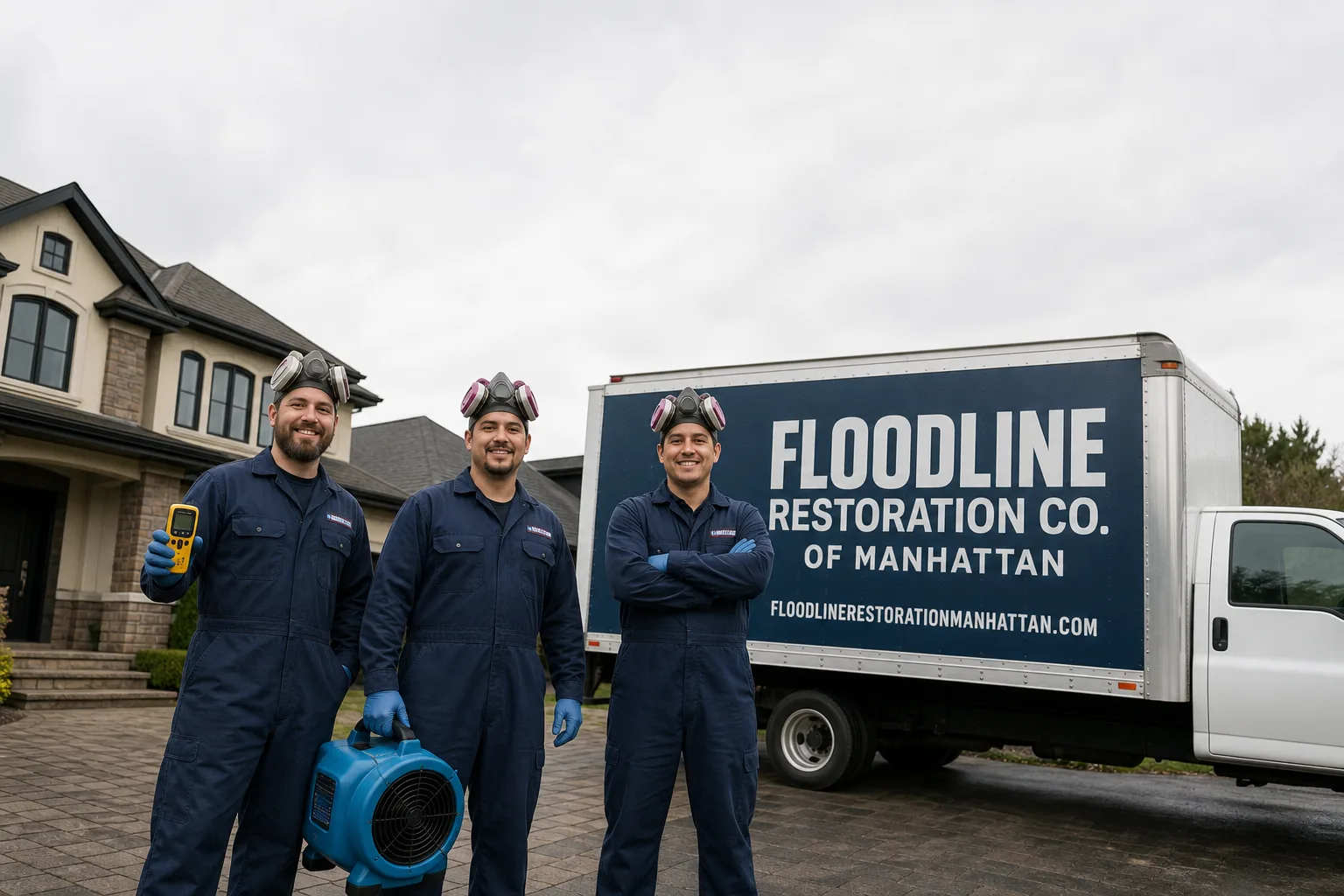
Free visual inspection and a written scope of work before any mitigation begins - photos, moisture readings, and drying logs go in your claim file
The scope we write is the scope we bill. Anything new gets shown to you, in writing, before we touch it.






 Before
 After
After Before
 After
After Before
 After
After24/7 Emergency Water Damage Restoration in Hollis
Water damage in a Hollis attached brick home needs a response now, not when the next shift clocks in. When a sewer backup pushes Category 3 water through a basement floor drain on 205th Street, or a frozen supply line lets go inside a 1930s semi-detached on 104th Avenue, the first hour decides how much of your finished basement survives. Call (917) 924-4221 and a live dispatcher answers. Not a recording, not a call-back service. A person who can have a background-checked, IICRC-certified crew heading toward your block while you’re still on the phone.
We serve Hollis with full-cycle Water Damage Restoration, from first extraction to finished rebuild, handled by one team. Every job gets a free visual inspection and a written scope before any equipment goes in. And every job is backed by the 90-Day Done Right Promise, in writing.
Understanding Water Damage Restoration Severity in Hollis Properties
Water damage is categorized by what’s in the water, not how wet it looks. Category 1 is clean water, a burst supply line or an overflowing sink. Category 2 carries soaps, detergents, or sump-pump discharge. Category 3 is what comes out of the combined sewer, and in Hollis, that’s the category we see most after heavy rain. It carries bacteria, viruses, and whatever the neighbors upstream flushed. Category 3 means containment, antimicrobial treatment, and cutting out materials that can’t be sanitized. Drying it in place is a mistake, and a dangerous one.
Hollis’s 1920s and 1940s brick semis and attached Colonials complicate the work in specific ways. Party walls mean moisture doesn’t stop at the property line. A flooded basement on one side of 191st Street can wick laterally into the neighbor’s finished wall cavity. And the heavy clay subsoil under southeastern Queens holds hydrostatic pressure against basement walls for days after a storm, which routinely extends structural drying timelines past the standard 48-hour mark. Moisture mapping has to be checked at 72 and 96 hours on shared walls, not just when the equipment looks like it did its job.
Why Hollis Property Owners Choose Floodline Restoration Co. of Manhattan
We’ve been answering the phone with a live person since 2010, when Curt Bowman built this company around a dispatch board, not a sales desk. The crews who show up in Hollis are uniformed, background-checked, and trained to IICRC, RIA, and IFA standards. Here’s what that means when you call.
- 45-minute response commitment. Once you’re on the phone with our dispatcher, a certified crew is dispatched to your Hollis block immediately. Extraction equipment runs the same visit.
- 24/7 live answer, every day of the year. A real person picks up at 2 a.m. on a Sunday. You’ll never leave a voicemail and hope someone checks it in the morning.
- IICRC-certified technicians. Our crews hold WRT (Water Damage Restoration Technician) and ASD (Applied Structural Drying) certifications, and we apply AMRT (Applied Microbial Remediation Technician) protocols on every Category 3 job in Hollis.
- Free visual inspection. We assess the damage, map the moisture, and put the scope in writing before you agree to anything.
- Direct insurance billing. We bill your carrier directly and coordinate with the adjuster. You don’t play messenger between us and the insurance company.
- One team from extraction to reconstruction. The same crew that reads the moisture map on day one handles daily readings, runs the equipment, and rebuilds what needs rebuilding. No mid-job handoff to an inherited crew.
Our Water Damage Restoration Process
Inspection and Assessment
We start with thermal imaging and a moisture map of every affected surface, including the shared party wall on attached homes. We identify the water category, the extent of saturation, and any concealed cavities that will need access cuts to dry properly.
Extraction and Stabilization
Standing water comes out first. Truck-mounted and portable extraction units pull water from the floor, and we stop the source, whether that means shutting off a supply valve or staging a containment barrier against a sewer backup that’s still backing up.
Drying and Dehumidification
We set Dri-Eaz dehumidifiers and XPOWER air movers according to the moisture map, not a guess. On Hollis homes with clay-pressured basements, we schedule follow-up hygrometer and moisture-meter readings at 72 and 96 hours, because that’s when slow-moving moisture in brick and block shows itself.
Cleaning and Sanitization
Category 3 jobs require full containment, HEPA air scrubbing, and antimicrobial treatment before any drying equipment touches the room. We remove and bag materials that can’t be sanitized, including drywall, carpet pad, and any organic materials that absorbed sewer water.
Specialty Treatment for Sewage Backups
When the combined sewer releases into a finished Hollis basement, we treat it as Category 3 from the first moment. That means sealed containment, negative air pressure, and clearance testing before the space is released for rebuild. No shortcuts.
Repairs and Restoration
Our carpenters and finishers rebuild what we cut out, matching 1920s plaster profiles and pre-war trim where character matters. The same certified crew that ran the drying now hangs the drywall. The 90-Day Done Right Promise covers it all, in writing.
Need Emergency Water Damage Restoration in Hollis Now?
Crews minutes away, answering live 24 hours a day. The sooner we start, the less it costs.
Working With Your Insurance Company
Insurance claims for water damage in Hollis move faster when the documentation is built from the first hour. We photograph every room, map the moisture before and during drying, and keep a daily log of readings that shows your carrier exactly what happened and what we did about it. When your neighbor’s sewer backup migrated through the party wall into your basement, your policy may cover the lateral migration, but only if the evidence is documented properly. We give your adjuster that evidence, line by line, and we talk to them directly so you don’t have to translate restoration jargon at 11 p.m.
What We Provide Your Insurer
- Thorough documentation of the loss
- Photos of all damage, room by room
- Moisture readings and drying logs
- A detailed, line-item scope of work
- Direct coordination with your carrier
Built for Hollis’s Loss Calendar
Hollis’s water damage season follows the weather. January deep freezes burst uninsulated supply lines in unheated basement stairwells and exterior wall cavities of 1930s Capes. March and April bring spring thaw and the first heavy rain, when saturated clay soil pushes groundwater through cracks in old block foundations. July and August thunderstorms dump two inches in an hour, and the combined sewer system under Hollis Avenue, Jamaica Avenue, and the side streets backs up through floor drains into finished basements. September brings nor’easter remnants with wind-driven rain that finds its way through aging brick pointing and parapet caps. The common thread in every season is this: in an attached brick home, water that sits for 48 hours becomes mold, and mold in a shared wall becomes a neighbor’s problem, too.
Water Damage Restoration Across Hollis’s Neighborhoods
The blocks around Jamaica Avenue and Hollis Avenue are dense commercial-residential mixes from the 1920s, where attached brick storefront apartments and semis share wall cavities and sewer laterals. We’ve worked the 205th Street corridor near the LIRR viaduct and Hollis Avenue, where basements flood in clusters during combined sewer surcharges because every home on the block ties into the same aging main. The residential blocks closer to Hillside Avenue and the Queens Village line are mostly brick semis with driveways too narrow for easy equipment staging, so our crews stage in the front yard and run hoses through the side door. Around Jamaica Avenue near Francis Lewis Boulevard, we see 1940s attached homes with finished basements that were never permitted, meaning concealed framing jobs, strange junctions behind drywall, and occasionally vermiculite or asbestos-containing nine-by-nine floor tiles that have to be tested before we do anything.
What ties these blocks together is party-wall moisture, which is why our moisture mapping on any attached Hollis home includes readings on both sides of the center line when we can access it. We don’t close a basement job in this neighborhood at 48 hours. We schedule follow-up checks. The clay is patient, and so are we.
Specialized Water Damage Restoration Services We Offer in Hollis
Emergency Water Extraction
When water is standing in your Hollis basement, every minute it sits pushes more moisture into the concrete, the wall cavities, and any organic material it touches. Our extraction crews arrive with truck-mounted and portable extraction units and start pulling water immediately, then map the remaining moisture so drying targets are based on data, not guesswork. We don’t hand you a fan and leave.
Structural Drying and Dehumidification
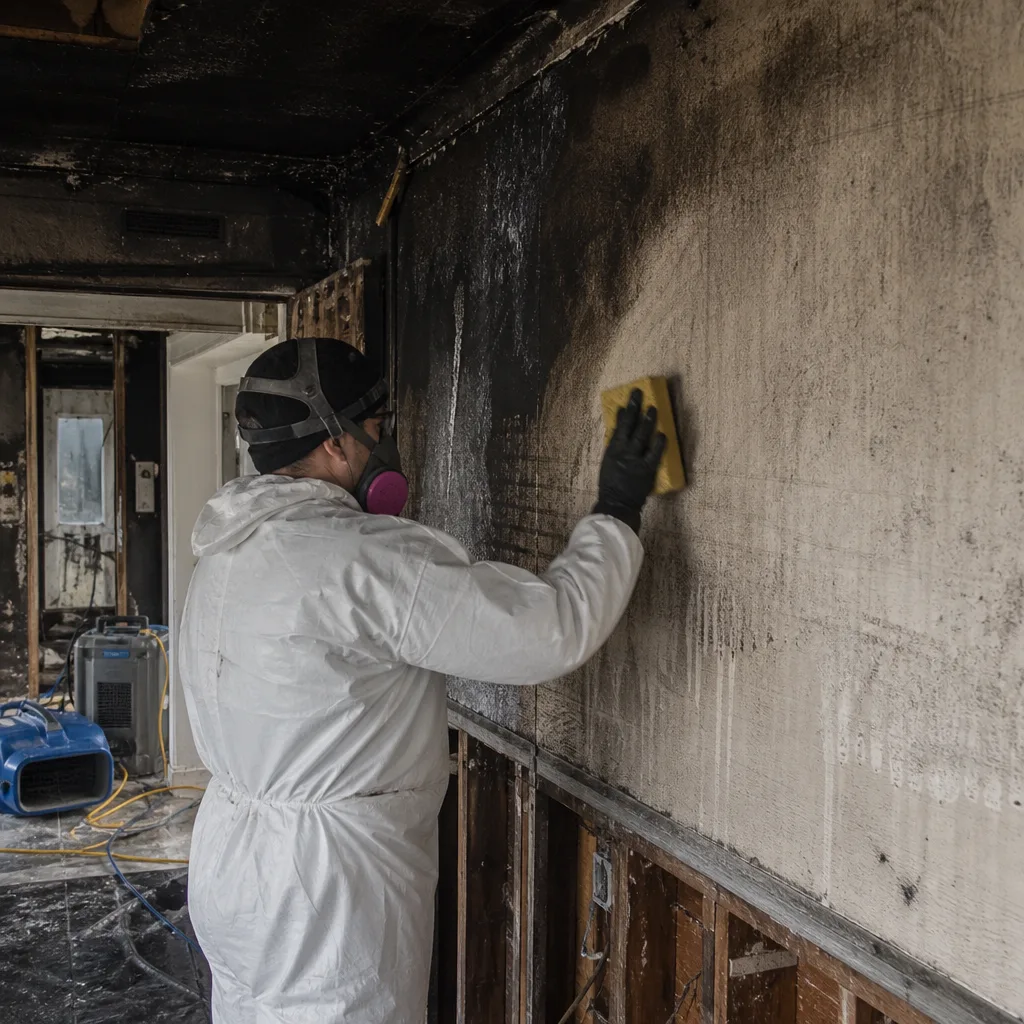
Structural drying in a 1930s brick semi means more than dropping equipment and coming back tomorrow. Clay soil holds hydrostatic pressure against the foundation, and shared walls wick moisture laterally. We use Phoenix dehumidifiers, Dri-Eaz desiccants where conditions call for it, and XPOWER air movers placed according to the moisture map, with hygrometer readings logged on day one, day three, and day four, because that’s when Hollis basements reveal the moisture they were hiding.
Flood Cleanup
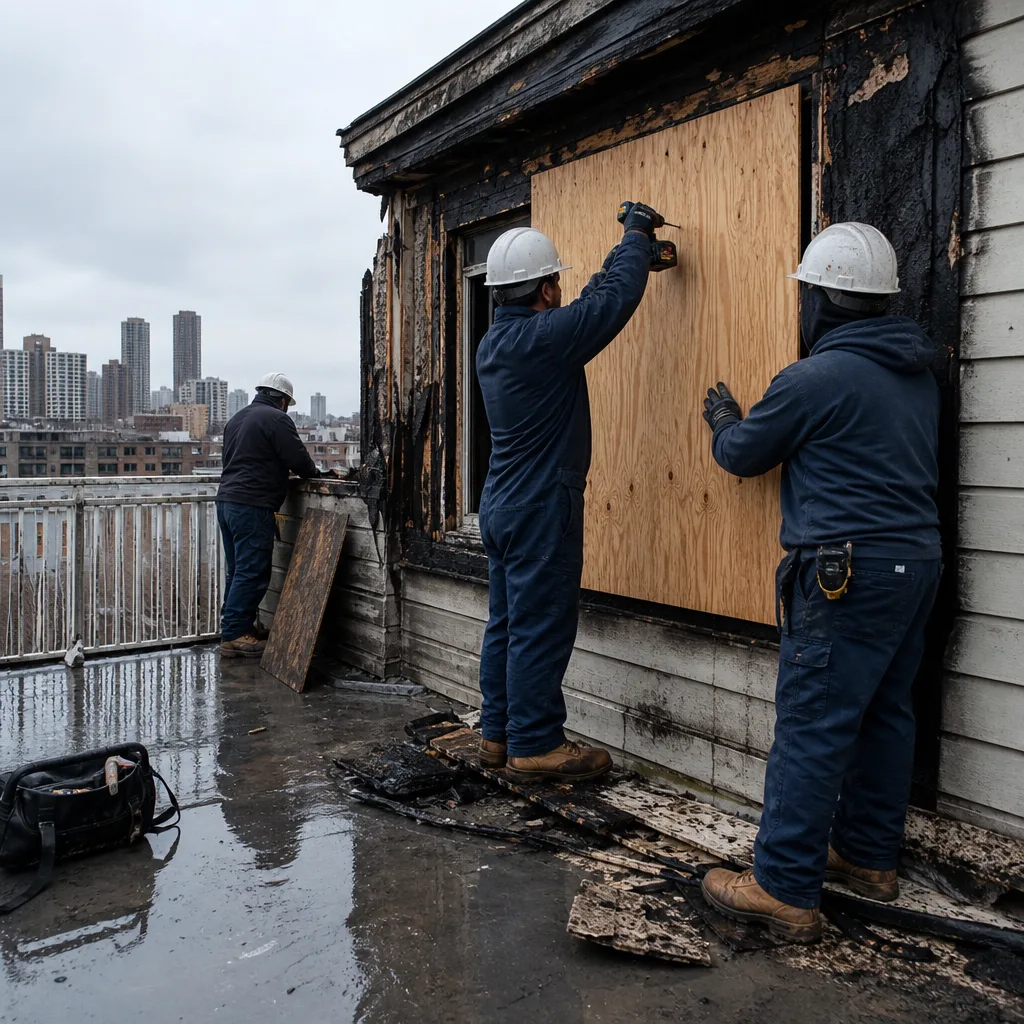
Floodwater in Hollis is usually Category 3, either from the combined sewer or from stormwater that has picked up everything on the street before it comes through your basement window. That means full containment, antimicrobial application, and removal of materials that can’t be sanitized. We don’t treat flood cleanup as a bigger version of a mop job. It’s a contamination event, and we treat it like one.
Burst Pipe Restoration
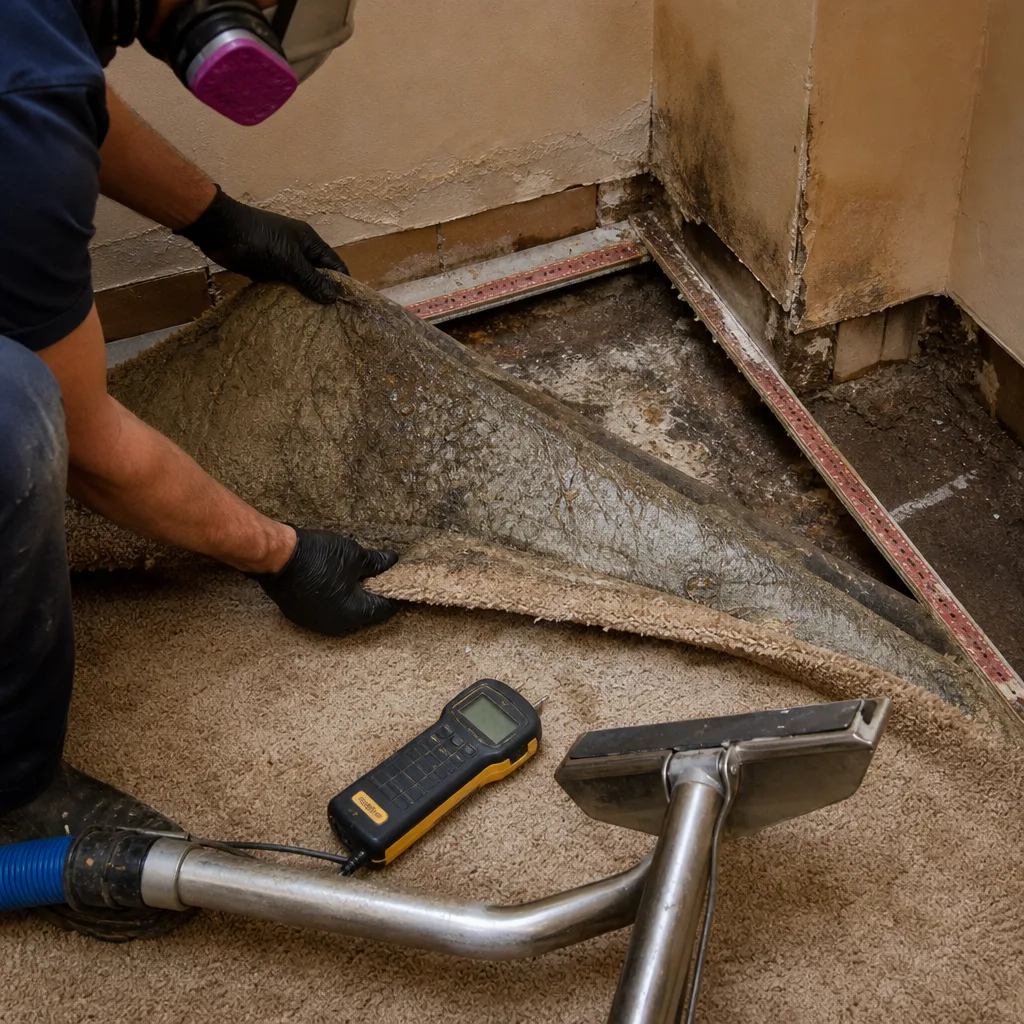
A burst supply line in a Hollis rowhouse can send clean, Category 1 water through three floors in 30 minutes. The water may be clean to start, but as it picks up decades of dust, insulation fibers, and whatever lives in a pre-war wall cavity, it does not stay that way. We cut access, dry the cavities, and rebuild with materials that match your home’s profile. Same crew, start to finish.
Basement Water Removal
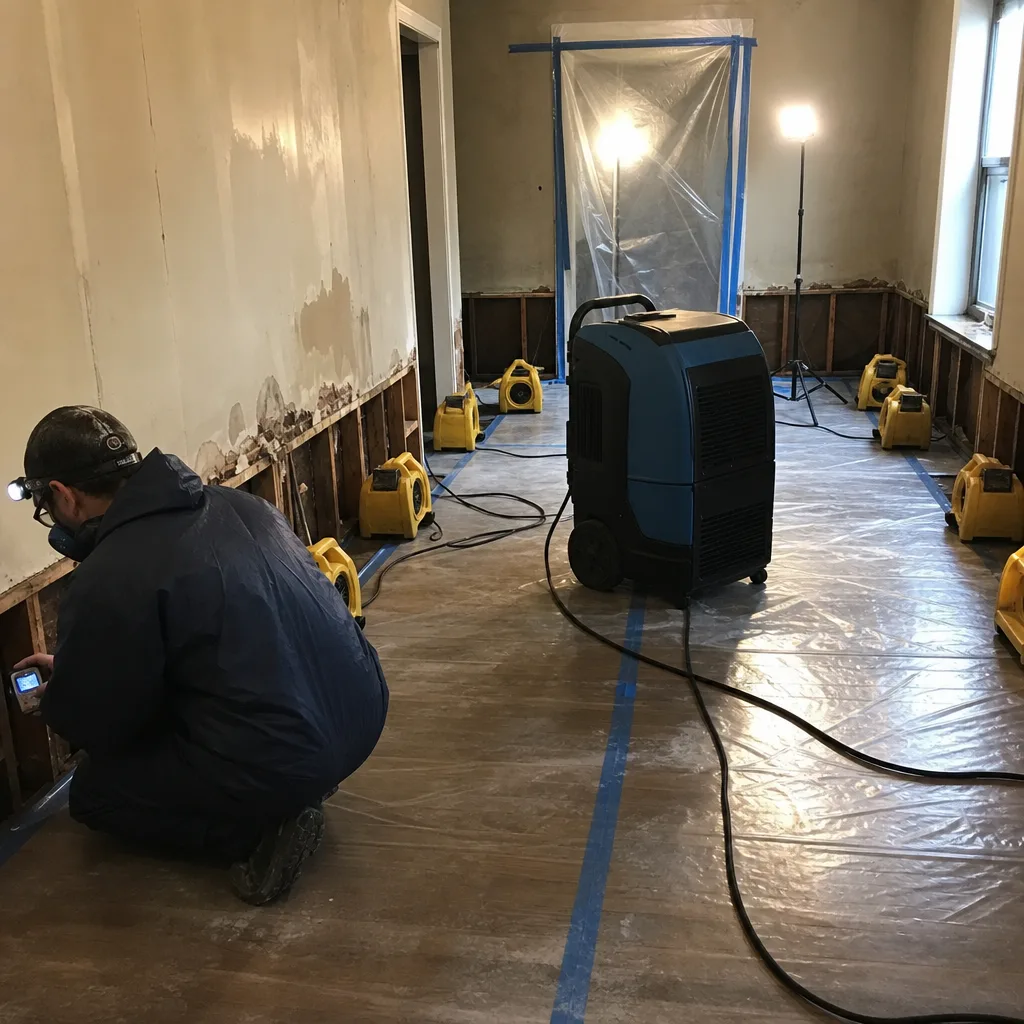
Basement water in Hollis is a structural problem, not a cosmetic one. Hydrostatic pressure from the clay soil pushes water through the cove joint and floor cracks, and once it’s inside, it moves into finished walls and flooring. We remove the standing water, map the moisture through the basement and up the shared wall, and dry to standard. Then we tell you what caused the water and what it will take to keep it from coming back. That’s part of the job.
Ceiling and Roof Leak Water Damage
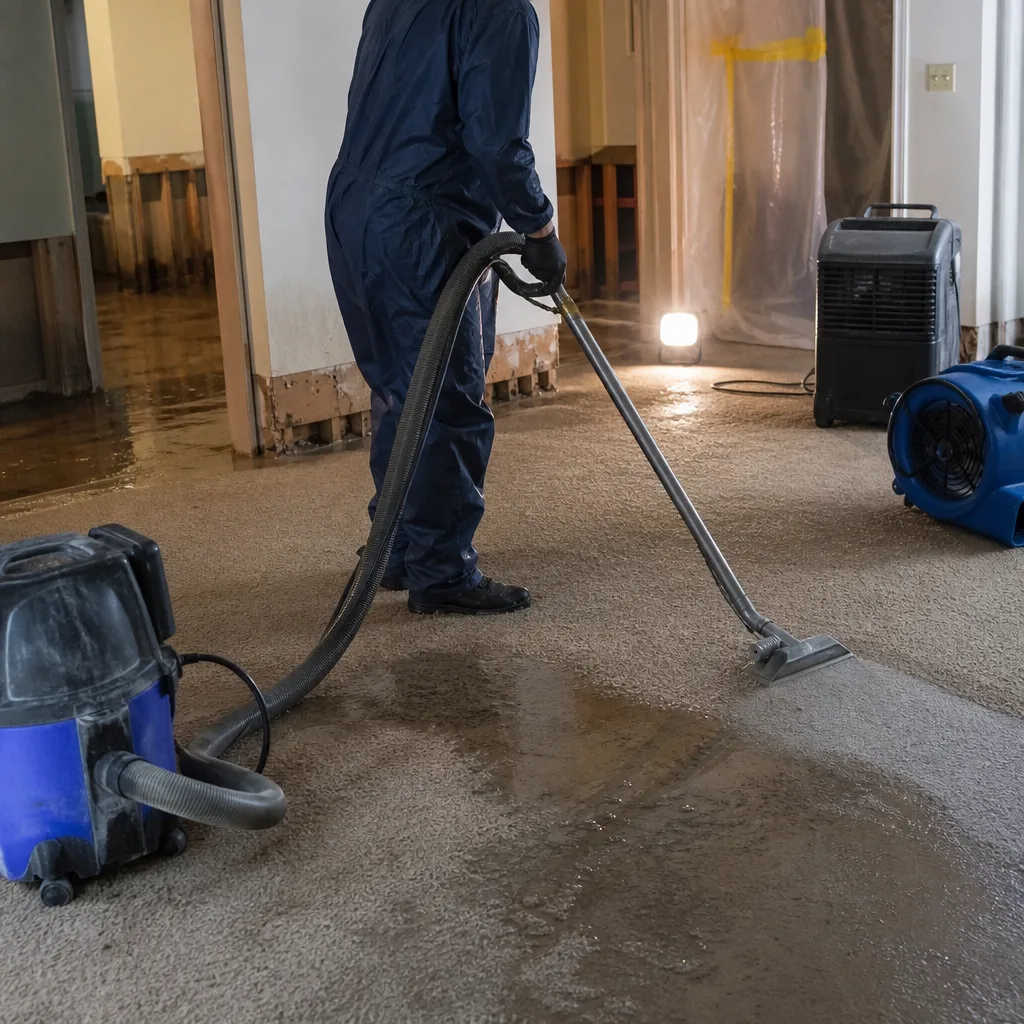
Old brick and aging roofs around Hollis let water in through parapet caps, cracked vents, and failed flashing. The water travels, showing up as a ceiling stain in the living room two floors below the actual leak. We find the source with thermal imaging, dry the ceiling cavities, and coordinate roof or masonry repairs so the fix is complete. Patching the ceiling without fixing the leak is not restoration, and we won’t sell it to you as such.
What happens when you call
- 1
A real person answersNo phone trees - you reach a local pro.
- 2
You get an upfront price rangeHonest numbers before anyone is dispatched.
- 3
A background-checked tech heads outLicensed & insured, dispatched right away.
- 4
You approve before work beginsNothing starts until you say go.
Water Damage Restoration Costs in Hollis, NY
What you’ll pay for water damage restoration in Hollis depends on the category of water, the square footage affected, and how long the water sat before extraction started. A straight emergency water extraction with drying for a small Category 1 pipe leak in a Hollis basement typically runs $1,200 to $2,800. A Category 3 sewer backup that requires containment, antimicrobial treatment, removal of finished materials, and structural drying of a full basement runs $4,500 to $9,500. The cost goes up when asbestos testing is required on pre-1950 floor tiles, when the shared party wall is saturated and needs access from both sides, or when a rebuild follows the drying.
Insurance covers most sudden and accidental water damage, including frozen pipe bursts and sewer backups if the policy endorsement is in place. Homeowners without the endorsement may carry $2,000 to $5,000 of the Category 3 cleanup out of pocket. The free inspection gives you a firm line-item scope before any work starts. That’s the square deal, and it’s the only offer we make. Senior and Veteran customers always receive 5% off, and any repair over $250 qualifies for $50 off. Call (917) 924-4221 for an exact quote.
We Also Serve Cities Near Hollis
Our crews serve homes across southeastern Queens. If you’re in Queens Village, Oakland Gardens, Cambria Heights, or Fresh Meadows, you’ll get the same live dispatch, the same certified team, and the same 90-Day Done Right Promise. We’re local to the whole corridor, and we answer the phone.
Serving Hollis, NY - Our Local Coverage Area
We’re based in the Hollis area and know this community well. Use the map below to see our service coverage - if you’re nearby, we can almost certainly help.
Hollis Water Damage Restoration Questions, Answered
How long does structural drying actually take in a Hollis attached brick home after a sewer backup?
Plan on four to six days, not the 48-hour closeout a single-family home in Suffolk County might see. The clay soil under Hollis holds hydrostatic pressure that keeps moisture migrating into the foundation, and the shared party wall slows evaporation. We run moisture-mapping checks at 72 and 96 hours because that’s when saturated brick and block show their true readings in this neighborhood.
Can a Category 3 sewage backup in my neighbor’s basement enter my side of the shared wall?
Yes. Hollis’s attached and semi-detached brick homes share wall cavities and, in many cases, the same foundation wall. When Category 3 water pools against the common wall on one side, it wicks and migrates laterally through pores in the masonry and into the neighbor’s finished space. That’s why we check both sides of the party wall when access allows and why we don’t release a basement job at 48 hours without follow-up readings.
What should I do if my finished Hollis basement floods from the combined sewer during a heavy rain?
Do not enter the water. Combined sewer backups are Category 3, meaning they carry bacteria and viruses. Stay out. Kill power to the basement if you can do so safely from outside the wet area. Call (917) 924-4221. Then call your insurer. Our crew arrives, sets containment, extracts the water, and documents everything for your claim before any drying begins.
Do I need asbestos testing before you dry out my pre-1950 Hollis basement?
Maybe. Many 1920s and 1940s Hollis basements have nine-by-nine asbestos-containing floor tiles or vermiculite insulation in the walls or ceiling. If we see materials that may contain asbestos and they’ve been disturbed by water, we’ll pause and arrange testing before we cut access or run aggressive air movement. The test adds a day and typically costs $350 to $800, but it’s cheaper than drying a contaminated space and paying for a full abatement later.
Why does my Hollis basement keep wetting out even after the water is extracted?
Because the water you see came out, but the water in the foundation and the shared wall did not. Clay soil around Hollis holds hydrostatic pressure long after the storm passes, and it keeps feeding moisture into the foundation and up into the walls. Our drying methods are designed for this. If a crew extracts the water and leaves after 48 hours without follow-up moisture mapping, the basement will re-wet. That’s the local failure mode we see from crews that don’t know southeastern Queens soil.
How fast can you actually get to my Hollis home?
A live dispatcher answers the phone in seconds, any hour, any day. From there, we aim to have a certified crew at your door within 45 minutes for Hollis addresses. During a major storm event when every basement on the block is backing up, response may stretch, but the dispatcher will tell you honestly when the crew will arrive. We’ll be there when we say.
Will my insurance cover this water damage?
Most sudden and accidental water damage is covered, including burst pipes, water heater failures, and storm-driven water. Sewer backup coverage depends on whether your policy has a specific sewer or water backup endorsement, which many Hollis homeowners don’t realize they need until the combined sewer backs up on 205th Street. We document everything from the first hour and bill your carrier directly, and we’ll walk you through what your policy likely covers before you commit to anything.
Can we stay in the house while you work, or do we need to leave?
For a Category 1 pipe leak in an isolated area, you can usually stay. For a Category 3 sewer backup, we strongly recommend you stay out of the affected area, and depending on the size of the loss and the location of the bedrooms, you may need to stay elsewhere for a few days. The health risk from sewer water is real, especially for older adults and anyone with respiratory issues. We’ll tell you plainly, not dramatically, what makes sense for your specific situation.
Written by Curt Bowman, Owner at Floodline Restoration Co. of Manhattan, serving Hollis, NY.