
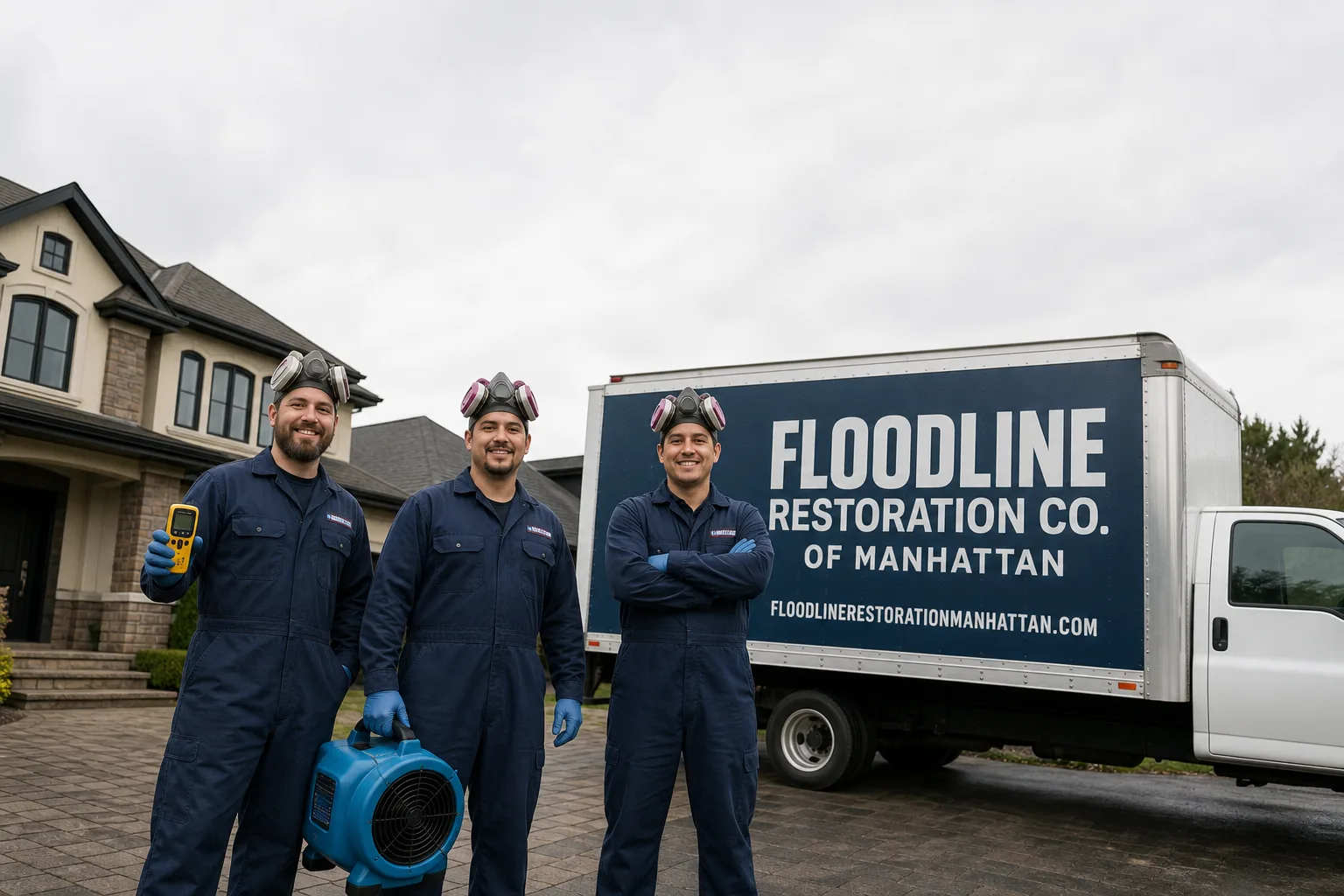
Free visual inspection and a written scope of work before any mitigation begins - photos, moisture readings, and drying logs go in your claim file
The scope we write is the scope we bill. Anything new gets shown to you, in writing, before we touch it.






 Before
 After
After Before
 After
After Before
 After
After24/7 Emergency Water Damage Restoration in Jerome Park
Water damage restoration in Jerome Park typically runs $1,800 to $6,500 for a standard Category 1 or 2 loss in a pre-war apartment unit, with reservoir-adjacent basement and ground-floor jobs landing higher because hydrostatic seepage keeps wall cavities wet long after the visible water is gone. Our crews reach most Jerome Park buildings within 45 minutes of your call, and we answer the phone live at (917) 924-4221 at any hour. The first hour matters more in this neighborhood than in drier parts of the Bronx: plaster-and-lath walls wick water vertically and horizontally, so a small supply-line leak behind a kitchen wall can be working its way through three floors of co-op units before you even see a stain. We start with a free visual inspection, map the moisture with the same Dri-Eaz and Phoenix equipment we’ll use to dry it, and give you a written scope before any work begins.
Understanding Water Damage Restoration Severity in Jerome Park Properties
The Institute of Inspection, Cleaning and Restoration Certification (IICRC) divides water into three categories, and Jerome Park’s aging pre-war stock produces all three with unpleasant regularity. Category 1 comes from a clean supply source: a burst copper riser, a failed supply line under a bathroom sink. Category 2 carries significant contamination: cast-iron drain-line failures, sump overflows, or water that has sat long enough to grow bacteria. Category 3 is grossly contaminated: sewer backups, reservoir-edge groundwater intrusion, or any floodwater that has traveled across a Jerome Park basement slab. Severity also depends on the building’s construction. Plaster over brick and metal lath absorbs water slowly but holds it stubbornly. Moisture mapping with thermal imaging and pin-type meters tells us what’s actually wet behind the surface, because in these buildings a wall can read dry on the outside and be at 25% moisture content inside the cavity. Structural drying in Jerome Park is fundamentally different than in a drywall-framed suburban house: the drying curves are longer, the dew points near the reservoir run higher, and stopping before the cavity reaches equilibrium guarantees mold returns.
Why Jerome Park Property Owners Choose Floodline Restoration Co. of Manhattan
- 45-minute response commitment. We dispatch from the New York City metro office to Jerome Park immediately, and our techs know the reservoir-side streets and building layouts.
- Live answer, 24 hours a day. A real dispatcher picks up at 2 a.m. There’s no phone tree and no “leave a message.” Curt Bowman built the company around a dispatch board in 2010, not a sales desk.
- IICRC-certified crews on every job. Our technicians hold WRT (Water Damage Restoration Technician) and ASD (Applied Structural Drying) certifications, and they’ve seen Jerome Park’s specific damage patterns hundreds of times.
- Free visual inspection. We come out, map the moisture, and tell you what’s actually wrong before any money changes hands.
- Direct insurance billing. We coordinate with your adjuster and carrier directly. You’re not the messenger between us and your claim.
- One team from extraction to reconstruction. The same crew that sets up the air movers on day one hands you the final paint touch-up and the 90-Day Done Right Promise in writing.
Our Water Damage Restoration Process
Inspection & Assessment
We start with a full visual inspection plus thermal imaging and pin-meter moisture mapping. In Jerome Park’s brick buildings, we pay particular attention to wall cavities, floor-ceiling assemblies, and any below-grade surfaces facing the reservoir side.
Extraction / Stabilization
Standing water comes out with truck-mounted and portable extraction units. We also de-laminate any carpet that can be saved and remove unsalvageable plaster or lath sections to expose the wet framing.
Drying & Dehumidification
Air movers and LGR dehumidifiers go in the same day. On reservoir-adjacent jobs we run containment and monitor daily with in-place probes, because the ambient humidity near the water keeps evaporation slower and the equilibrium moisture content higher.
Cleaning & Sanitization
All affected surfaces get cleaned and treated with appropriate antimicrobial agents where needed. Category 2 and 3 losses get more aggressive treatment and material removal per IICRC S500 standards.
Moisture Verification
We do not stop drying because the surface looks dry. We hit a documented dry standard verified by daily moisture logs, which go to you and, where applicable, your carrier. This is a critical step in Jerome Park, where hidden cavities can stall the process.
Repairs & Restoration
From plaster repair to full kitchen rebuild, our own reconstruction team finishes the job. We handle HPD compliance paperwork for landlord clients where the scope triggers it, and we stand behind the completed work with our 90-Day Done Right Promise.
Need Emergency Water Damage Restoration in Jerome Park Now?
Crews minutes away, answering live 24 hours a day. The sooner we start, the less it costs.
Working With Your Insurance Company
Water damage claims in Jerome Park co-ops and rentals get complicated fast because one leak often involves multiple units, multiple policies, and in some buildings an HPD file. We’ve handled enough of these to know what actually moves a claim forward: documentation from hour one, honest scoping, and a restoration company the adjuster trusts will dry it right the first time. We photograph every affected area before, during, and after mitigation. We log moisture readings daily and hand that log to the carrier as a finished document. We write line-item scopes that use Xactimate, the same estimating platform most major carriers use, so there’s no translation gap between our invoice and their review. And we speak to your adjuster directly, so you can go back to running your building or living in your home.
What We Provide Your Insurer
- Thorough documentation of the loss
- Photos of all damage, room by room
- Moisture readings and drying logs
- A detailed, line-item scope of work
- Direct coordination with your carrier
Built for Jerome Park’s Loss Calendar
January and February bring the freeze-thaw cycle that splits the Bronx’s old galvanized supply risers, and we see bursts behind kitchen walls and under bathroom floors in the pre-war co-ops along Sedgwick Avenue and Bailey Avenue. Spring is the reservoir’s season: snowmelt and heavy April rains push the water table up against the embankment, and basements on Reservoir Oval East and West start showing seepage through floor cracks and below-grade wall joints. Summer thunderstorms hit the flat roofs hard, and pooling water on 90-year-old roofing membranes finds every parapet crack and worn flashing point, sending water down through the ceiling cavities of the top-floor units first. Autumn nor’easters drive wind-blown rain against the brick, and any wall with failing pointing or a scaffold-patch leak becomes a Category 3 intrusion. Our Water Damage Restoration crews carry the equipment for all of it, but we schedule based on the actual weather patterns, not a generic national playbook.
Water Damage Restoration Across Jerome Park’s Neighborhoods
The blocks immediately around the Jerome Park Reservoir sit on the steepest grade, and the basement and garden-level units there take the brunt of the hydrostatic pressure from the reservoir’s embankment. Buildings on Reservoir Oval East and West, plus the cross streets like West 191st and West 192nd, are where we see chronic seepage behind paneled basement walls, warped wooden window frames, and recurring mold complaints. The co-op corridor along Sedgwick Avenue runs through the heart of pre-war brick stock, where cast-iron drain lines from the 1930s have reached the end of their service life and a single clogged line can waterfall Category 2 water through multiple floors in an afternoon. On the northern edge toward the Jerome Park Reservoir’s maintenance road, the mid-rise rentals see more flat-roof ice-dam loss in winter, with water tracking down interior stairwell walls and into electrical closets. Across the neighborhood, from the older six-story walk-ups near the reservoir to the 1950s brick buildings closer to Kingsbridge Road, the restoration sequence is consistent: find the real source, expose the real wet, dry the real wet, and verify before you close the wall. That is the part national franchises skip when they rush a three-day dry-out on a building that needed nine.
Specialized Water Damage Restoration Services We Offer in Jerome Park
Emergency Water Extraction
Standing water from a burst riser or a failed drain line gets extracted the same visit. In Jerome Park’s pre-war apartments, quick extraction matters more because the plaster and wood lath below will wick that water into framing within hours.
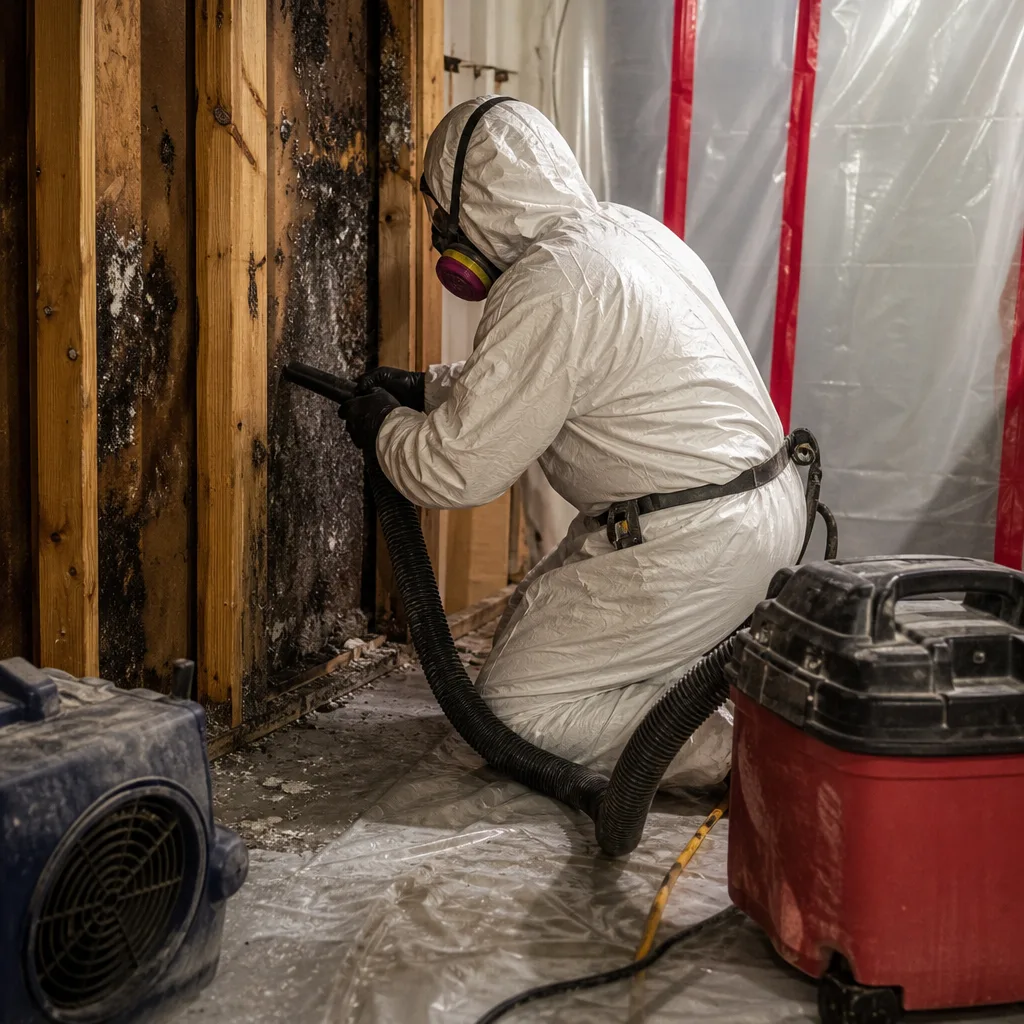
Structural Drying & Dehumidification
We run Dri-Eaz and Phoenix LGR dehumidifiers with XPOWER air movers, and we monitor daily with in-place probes. Around the reservoir’s edge, we run longer drying cycles by design because the ambient humidity near open water keeps material equilibrium high.
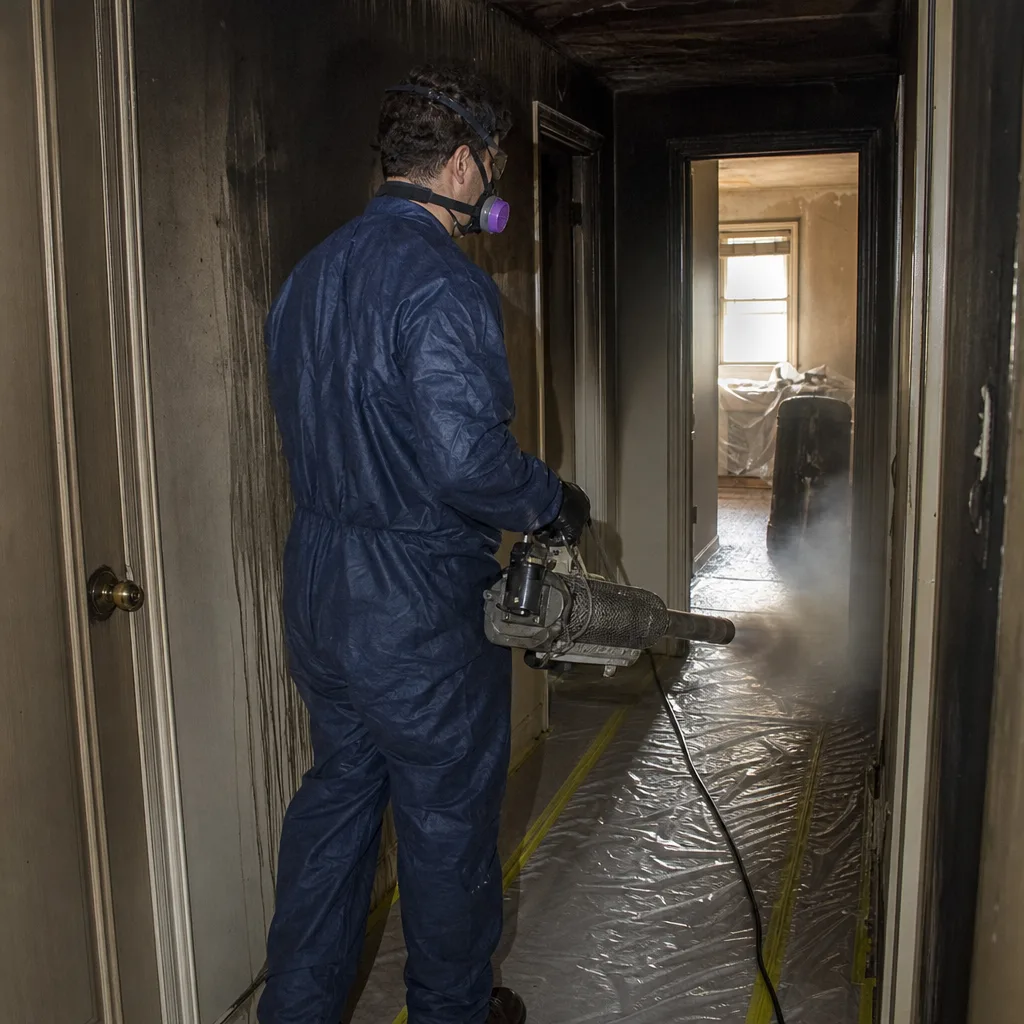
Flood Cleanup
Storm-driven floodwater and reservoir-side groundwater are Category 3 by default. We remove contaminated materials, treat what can be saved, and dry the remaining structure to a documented standard. In Jerome Park, this is not a mop-and-fan job.
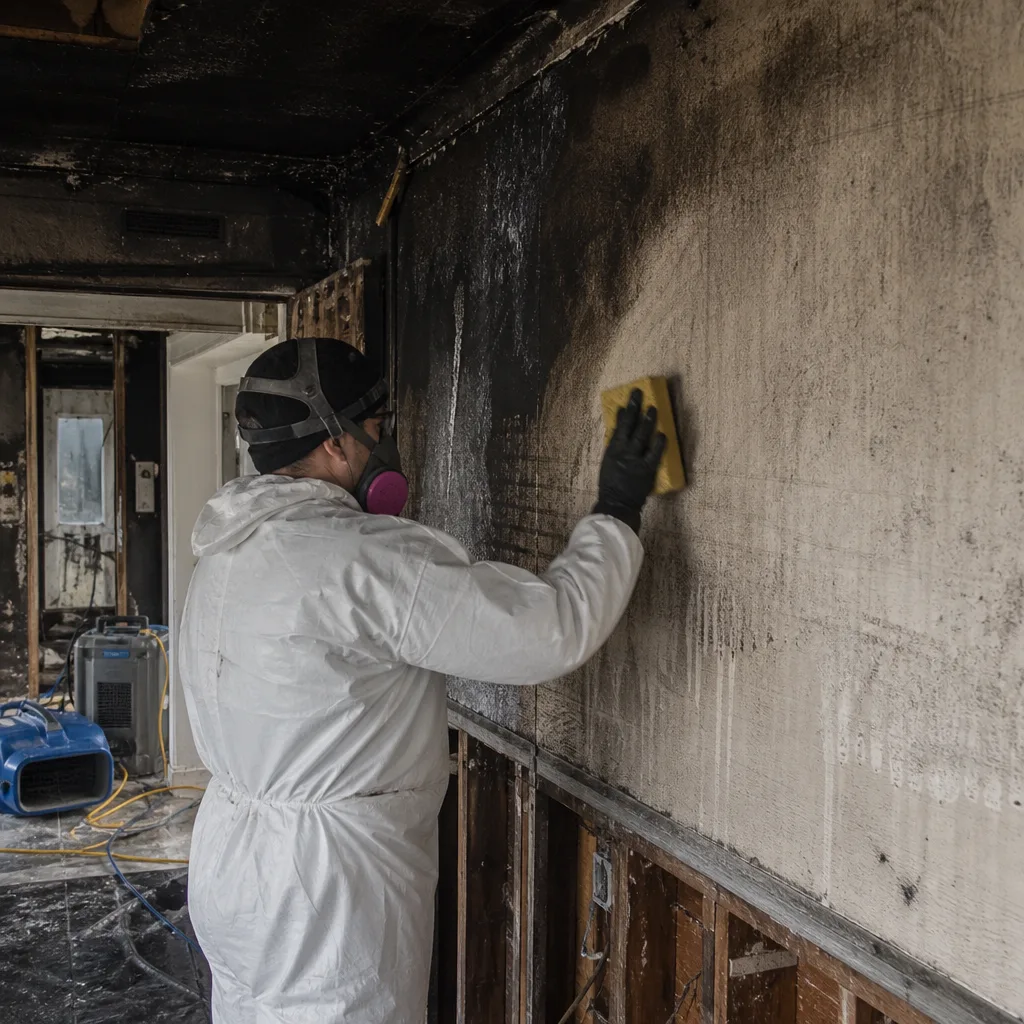
Burst Pipe Restoration
Winter freeze splits galvanized risers and copper supply lines throughout this neighborhood. We extract, dry, and repair the wall or floor, but we also inspect the line’s remaining run so you are not doing the same job again next February.
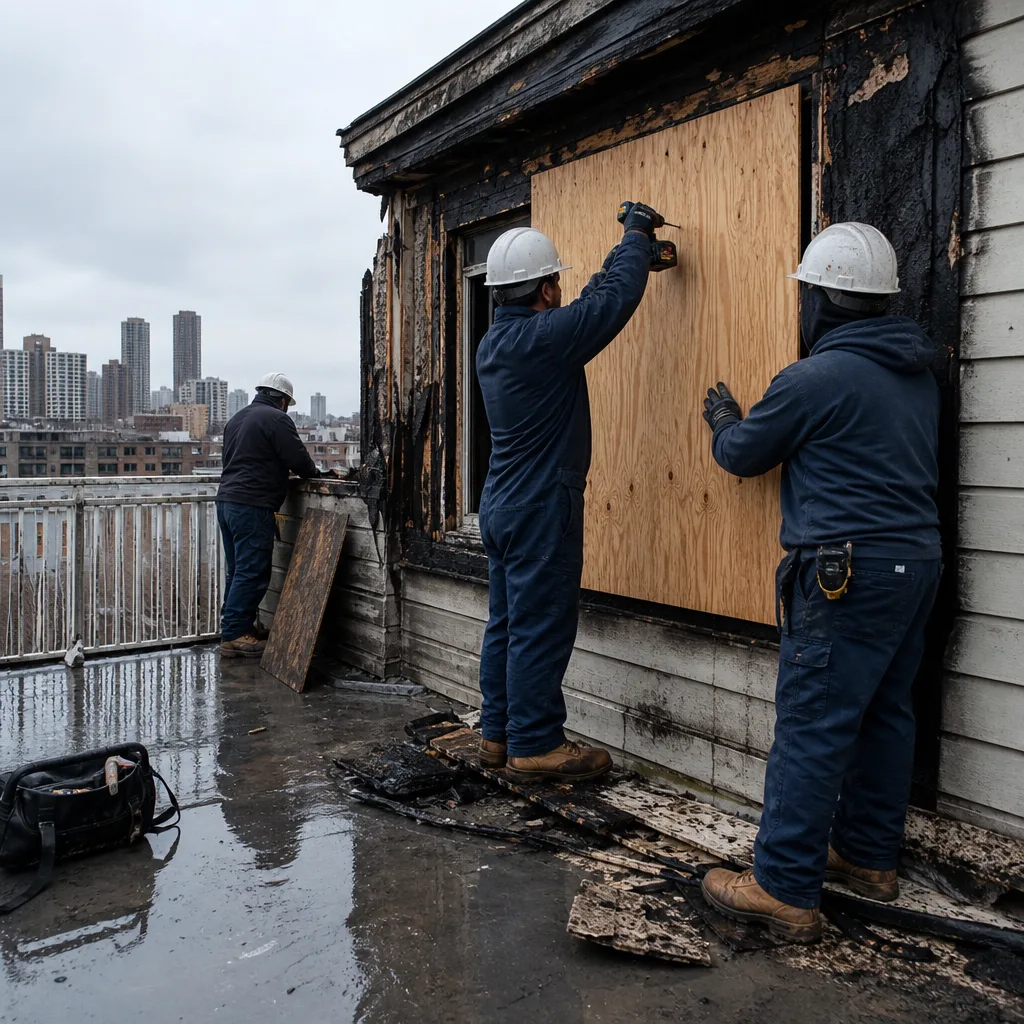
Basement Water Removal
Jerome Park basements near the reservoir are the single most frequent call we take. We remove the water, absolutely, but we also check for the chronic hydrostatic condition that put it there. Waterproofing and drainage recommendations come with our written scope.
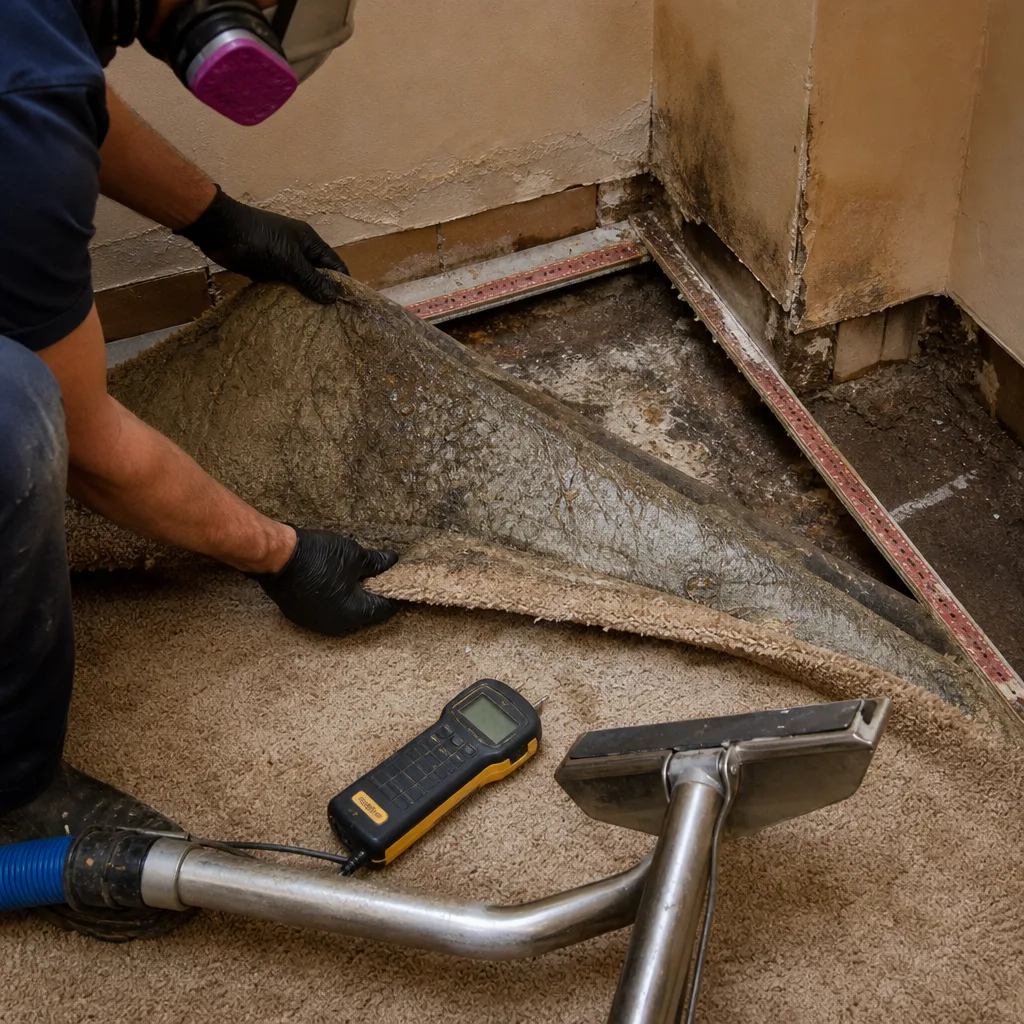
What happens when you call
- 1
A real person answersNo phone trees - you reach a local pro.
- 2
You get an upfront price rangeHonest numbers before anyone is dispatched.
- 3
A background-checked tech heads outLicensed & insured, dispatched right away.
- 4
You approve before work beginsNothing starts until you say go.
Water Damage Restoration Costs in Jerome Park, NY
A standard Category 1 loss in a Jerome Park apartment, like a burst supply line under a sink, typically runs $1,800 to $3,500 including extraction, drying, and minor plaster repair. A Category 2 drain-line failure that wicks through multiple floors of a brick co-op often lands between $4,000 and $8,500 once containment, pack-out, antimicrobial treatment, and reconstruction are counted. Reservoir-side basement jobs with chronic hydrostatic seepage run the widest range, from $3,000 for a straightforward dry-out and antimicrobial treatment to $12,000 or more when finished walls must be removed and the below-grade space gets waterproofing work. What moves the price: the water category, how far it traveled, how long it sat, whether lath and plaster must be opened, and whether the building’s board or HPD requires specific documentation. Insurance covered losses follow the same scope but the carrier pays us directly in most Jerome Park cases. We work from a written, line-item scope agreed before work starts, so there are no surprises on the bill, and we honor a senior and veteran 5% discount always.
We Also Serve Cities Near Jerome Park
Our crews regularly respond to water damage calls in Jerome Park and the surrounding Bronx neighborhoods, including Fairview, Harrison, East Bronx, and Hunts Point. If your building sits in one of those areas, the same 24-hour dispatch and written-scope process applies.
Serving Jerome Park, NY - Our Local Coverage Area
We’re based in the Jerome Park area and know this community well. Use the map below to see our service coverage - if you’re nearby, we can almost certainly help.
Jerome Park Water Damage Restoration Questions, Answered
Why does water damage in Jerome Park apartment buildings so often spread to units above and below the original leak?
Because these pre-war brick buildings are built with plaster-and-lath assemblies over continuous wood framing, and the walls between units are not fire-stopped or moisture-broken the way newer buildings are. Water follows the lath channels and pipe chases vertically, so a leak on the fourth floor can show up as a ceiling stain on the second. In Jerome Park specifically, the dense multi-unit construction means we scout adjacent units as a standard part of every inspection, even when the owner thinks the damage is isolated.
Our basement on Reservoir Oval East always feels damp, but no standing water. Is that a water damage restoration problem?
Yes, and it is one we answer more times in Jerome Park than almost anywhere else we work. The reservoir’s embankment creates sustained hydrostatic pressure against below-grade walls, and even without visible water, those wall cavities can sit at 30%+ moisture content. That is exactly the condition that grows concealed mold colonies behind paneling or drywall. We run a moisture map and can tell you within the inspection whether you need structural drying or if a waterproofing scope is the better long-term fix.
We had a roof leak fixed, but a musty smell remains behind a drop ceiling. Do we need full water damage restoration?
Probably yes. If the roof leak sent water into a ceiling cavity and someone patched the roof without opening the cavity, the trapped moisture has been sitting in the dark, warm, humid space above that drop ceiling. By now it may be a mold problem, not a drying problem. We regularly find this exact condition in Jerome Park buildings where a superintendent painted over a stain rather than opening the cavity. Our inspection will tell you whether we are drying a wet cavity or remediating a mold colony.
We had a burst copper pipe behind a plaster wall in a Jerome Park co-op. The plaster dried, but is there hidden damage we should worry about?
Worry is a strong word, but yes, you should check. Plaster can dry on the surface while the wood lath behind it stays wet for weeks. In this neighborhood’s ambient humidity near the reservoir, that means mold can colonize in the cavity long after you have forgotten about the leak. Thermal imaging and pin-meter probing can tell you in about twenty minutes whether the cavity is actually dry. We would rather spend that time and find nothing than have you find a colony a year from now.
How long does it take to fully dry a Jerome Park basement that floods after a heavy rain near the reservoir?
In most cases, five to nine days. It is longer than a suburban basement because the reservoir keeps the surrounding ambient humidity high and the ground moisture feeding the slab keeps the below-grade materials from releasing water quickly. We set air movers and LGR dehumidifiers, monitor daily, and do not pull the drying equipment until the moisture readings hit a documented dry standard. Rushing that process in this neighborhood is the single most common reason mold comes back.
How fast can someone actually get to my Jerome Park building?
We commit to 45 minutes for emergency calls within Jerome Park. Our dispatch board is live, and the on-call crew is working out of the metro office that covers this part of the Bronx. Call (917) 924-4221 and you’ll speak to a person, not a recording.
Will my insurance cover water damage restoration in Jerome Park?
Most policies cover sudden and accidental water damage, like a burst pipe or an appliance supply line failure. Long-term seepage and reservoir-side hydrostatic intrusion are often classified as maintenance issues, which insurers generally exclude. We work with your adjuster directly, provide the documentation and moisture logs they need, and in co-op or condo losses we coordinate with the building’s master policy as well. We will tell you honestly what your specific policy is likely to cover.
What should I do in the first 30 minutes after discovering water damage in Jerome Park?
Shut off the water at the nearest fixture valve or the building’s main if you can safely reach it. Move electronics and valuables out of the path. Do not use a wet-dry vac on Category 2 or 3 water, and do not attempt to remove plaster or lath yourself, especially in these older buildings where asbestos-containing materials are common in pre-1980s plaster. Call us at (917) 924-4221. We will walk you through the next steps on the phone and dispatch immediately.
If you have water where it should not be in Jerome Park, call (917) 924-4221. We answer live, we arrive fast, and we dry the building the way its construction actually demands. Done right, and backed in writing.
Written by Curt Bowman, Owner at Floodline Restoration Co. of Manhattan, serving Jerome Park and the surrounding Bronx communities.