

Free visual inspection and a written scope of work before any mitigation begins - photos, moisture readings, and drying logs go in your claim file
The scope we write is the scope we bill. Anything new gets shown to you, in writing, before we touch it.






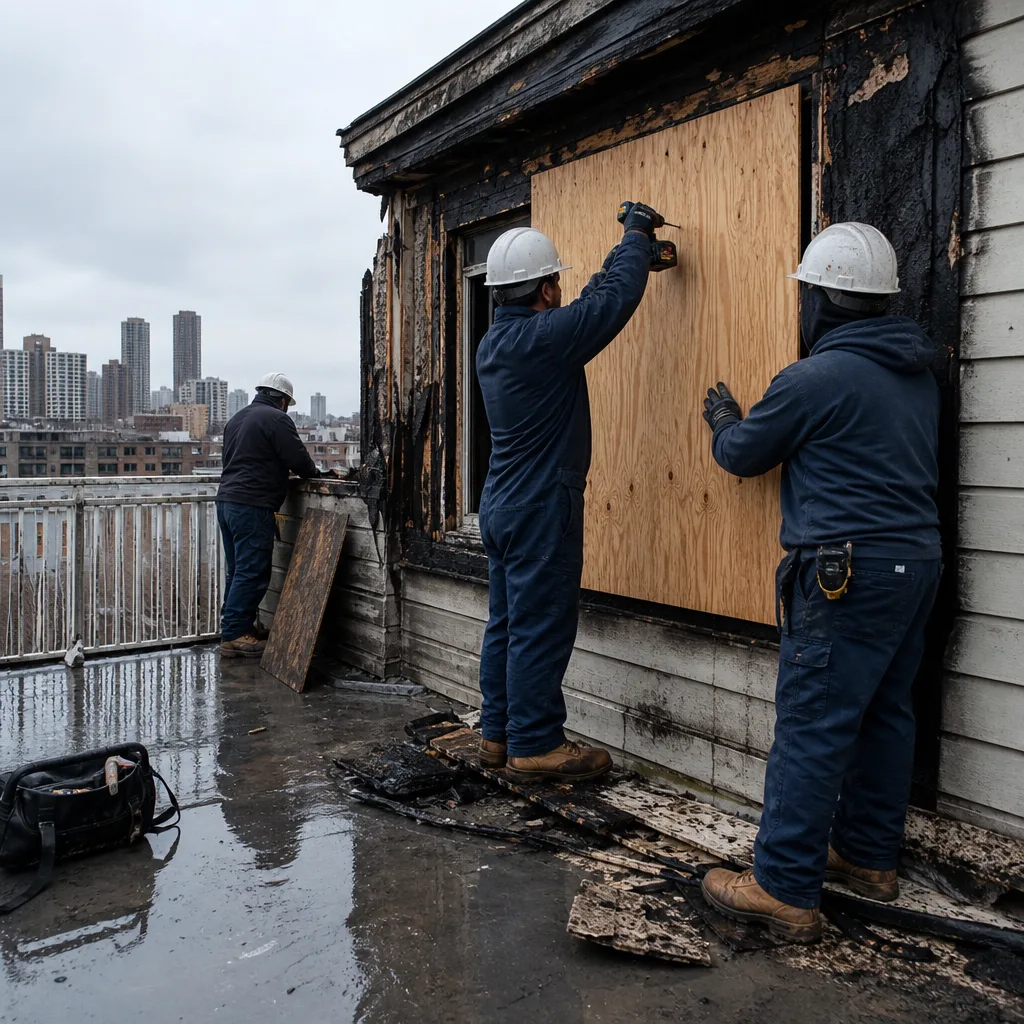
 Before
 After
After Before
 After
After Before
 After
After24/7 Emergency Water Damage Restoration in Kew Gardens Hills
If water is spreading through your Kew Gardens Hills home right now, call (917) 924-4221. Our crews reach most Kew Gardens Hills addresses within 45 minutes, and a live dispatcher answers at 2 a.m., not a recording. The first hour matters more in this neighborhood than almost anywhere else in Queens: attached brick row houses share unlined masonry party walls that wick water laterally, which means a burst supply line or sewage backup in your basement can migrate into your neighbor’s finished space before sunrise. We arrive, stop the source, and start extraction the same visit. The visual inspection is free, and there’s no pressure. Just a square deal and a written scope before any work begins.
Understanding Water Damage Restoration Severity in Kew Gardens Hills Properties
Water damage in Kew Gardens Hills falls into three categories, and the distinction drives everything: equipment choice, drying time, and whether your insurance carrier pays for full remediation or just a mop-up. Category 1 is clean water from a burst supply line or overflowing tub. Category 2 carries significant contamination, like washing machine discharge or sump pump overflow. Category 3 is black water: raw sewage, storm backflow, or groundwater that has picked up bacteria, pathogens, and chemical residue. Here’s the hard truth about this neighborhood: because Kew Gardens Hills sits in central Queens’ flat drainage basin, the city’s combined sewer laterals routinely push Category 3 water up through basement floor drains during heavy rain. We treat basement backups here as Category 3 by default, not as an afterthought. That means containment, antimicrobial treatment, and removal of saturated porous materials, including the plaster-over-lath walls and slab-on-grade floors so common in post-WWII brick row houses built between 1945 and 1965. Moisture mapping tells us where the water actually went, not just where you can see it.
Why Kew Gardens Hills Property Owners Choose Floodline Restoration Co. of Manhattan
- A live person answers, 24/7: Our dispatch board at the New York City office is staffed around the clock. You’ll speak to a person who can route a certified crew to Kew Gardens Hills immediately, not a voicemail tree.
- 45-minute response commitment: When water is moving through party walls or pooling on a slab floor, speed is structural. Most Kew Gardens Hills calls see a crew on scene within the hour.
- IICRC-certified technicians: Our crews hold Water Damage Restoration Technician (WRT), Fire & Smoke Restoration Technician (FSRT), and Applied Microbial Remediation Technician (AMRT) certifications. They’re trained to the standard, not to a sales script.
- Free visual inspection: We assess the loss, map the moisture, and give you a written scope. You decide from there. No obligation, no pressure.
- Direct insurance billing: We bill your carrier directly and send documentation from the first hour. You never play messenger between Floodline and the adjuster.
- One team, extraction to rebuild: The same crew that reads the moisture map on day one handles daily readings, logs the dry standard, and rebuilds what needs rebuilding. No mid-job handoff to a stranger.
Our Water Damage Restoration Process
Inspection & Assessment
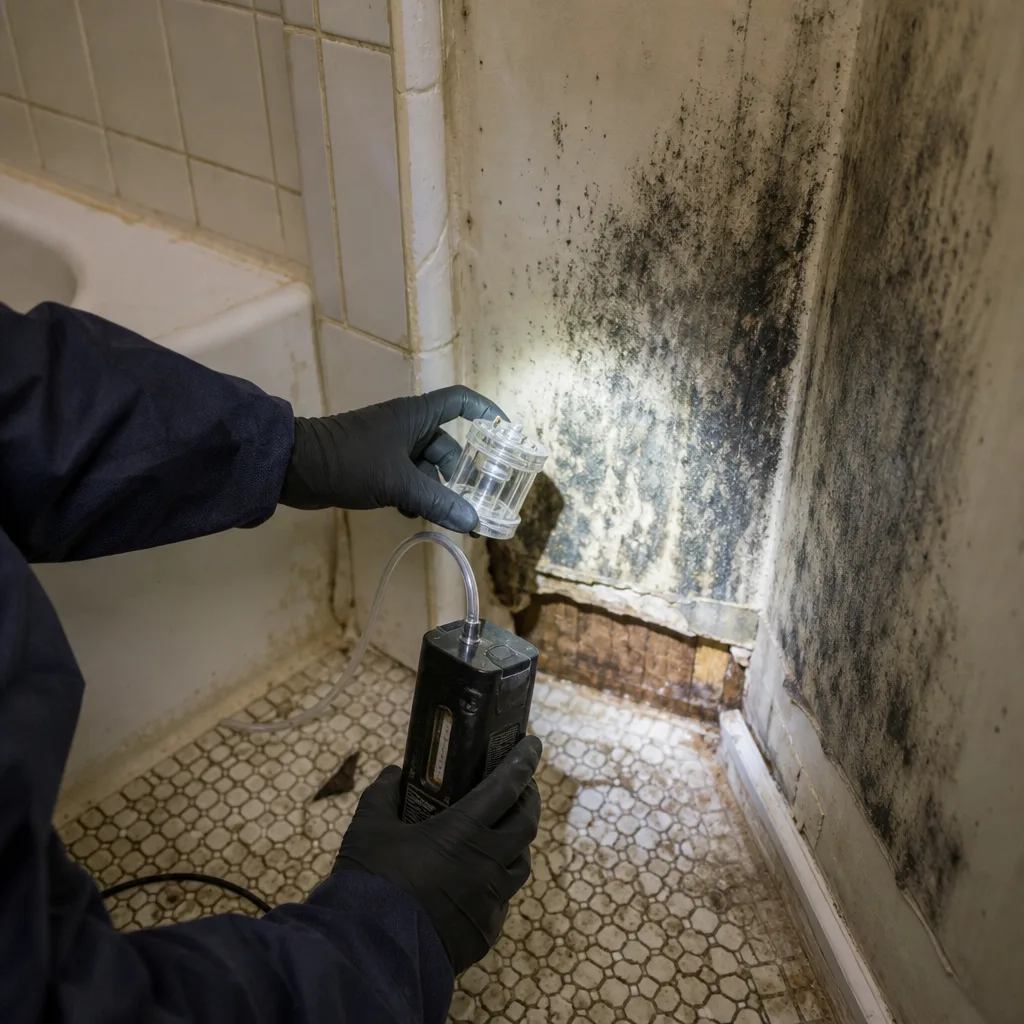
We arrive with thermal imaging cameras, penetrating moisture meters, and hygrometers. In Kew Gardens Hills, we pay special attention to shared party walls and plaster-over-lath finishes, which hold water invisibly for days. You get a written scope and a firm price before anything is touched.
Extraction & Stabilization
Standing water is removed with truck-mounted extraction units and submersible pumps. If the water is Category 3, we set containment barriers and begin pack-out of affected contents the same visit. The goal is to stop lateral migration through unlined masonry before it reaches the attached neighbor’s bay.
Drying & Dehumidification
We deploy professional-grade Dri-Eaz and Phoenix air movers and dehumidifiers, with daily moisture readings logged until the dry standard is met. Plaster walls in 1950s row houses need extended monitoring, because surface readings will read dry while the gypsum base is still saturated.
Cleaning & Sanitization
Antimicrobial treatments are applied to affected surfaces, and HEPA air scrubbers run to control airborne particulates. For Category 3 losses, we remove and dispose of contaminated porous materials, including baseboards, flooring, and drywall or plaster sections that can’t be economically dried.
Structural Drying Verification
After drying, we re-map the affected areas with moisture meters. Drying logs are handed to you and your carrier. We don’t call it done until the numbers say it’s done, because hidden moisture in a Kew Gardens Hills party wall re-wets the space and creates a second claim.
Repairs & Restoration
The same crew that handled extraction rebuilds what was removed: drywall, plaster, baseboards, flooring, and cabinetry. Because we don’t hand off between trades, the job moves faster and the result matches the scope. Every job is backed by our 90-Day Done Right Promise, in writing.
Need Emergency Water Damage Restoration in Kew Gardens Hills Now?
Crews minutes away, answering live 24 hours a day. The sooner we start, the less it costs.
Working With Your Insurance Company
Water damage claims in Kew Gardens Hills get complicated fast, especially when a loss in one attached home migrates through a party wall and opens a second claim on the neighbor’s policy. We handle that. From the first hour, we document everything: photos of the loss room by room, moisture readings, a line-item scope of work, and drying logs with daily numbers. We communicate directly with your adjuster, using industry-standard estimating software so the claim moves without back-and-forth. The 90-Day Done Right Promise applies whether insurance pays or you pay out of pocket. If it’s not done right, we make it right. No arguing, no paperwork battles.
What We Provide Your Insurer
- Thorough documentation of the loss
- Photos of all damage, room by room
- Moisture readings and drying logs
- A detailed, line-item scope of work
- Direct coordination with your carrier
Built for Kew Gardens Hills’s Loss Calendar
Water damage in Kew Gardens Hills follows a predictable rhythm. January and February bring deep freezes that burst supply lines in the cast-iron and galvanized plumbing still common in 1940s and 1950s row houses. When a pipe lets go in an attached home, water pools on the slab and seeps through unlined brick, wicking into the neighbor’s basement within hours. March and April thaw saturates the ground and pushes seepage through foundation cracks and cove joints. Summer cloudbursts overwhelm the local catch basins along 73rd Avenue and Main Street, and the combined sewer laterals serving these tightly-packed 1950s streets back up raw sewage into finished basements. Nor’easters in the fall bring the same pattern with more wind-driven rain intrusion through aging brick facades, where freeze-thaw cycles have opened mortar joints. We keep our equipment inventory staged for these clusters, because a single heavy rain in Kew Gardens Hills can generate multiple Category 3 jobs within a two-block radius at once.
Water Damage Restoration Across Kew Gardens Hills’s Neighborhoods
Kew Gardens Hills is a working map of mid-century Queens housing, and each corridor has its own loss pattern. Around 73rd Terrace and Kissena Boulevard, the semi-detached brick colonials share full-height masonry walls, which means lateral water migration is the rule, not the exception. Along Main Street and 72nd Avenue, the garden apartment complexes have stacked units with common risers, so a supply line failure on the fourth floor shows up as ceiling damage on the third, and so on down. The blocks near Vleigh Place and 141st Street hold long rows of attached brick homes where basement floor drains connect to the same undersized combined sewer laterals, producing the storm-event backup clusters we see every summer. And the homes near Queens College and the 11367 zip code’s southern edge sit on the same flat drainage basin as the rest of the neighborhood: no natural stormwater infiltration, so any heavy rain pushes water back through floor drains rather than into the ground.
Specialized Water Damage Restoration Services We Offer in Kew Gardens Hills
Emergency Water Extraction
Standing water in a Kew Gardens Hills basement demands immediate extraction. We run truck-mounted extractors and submersible pumps the same visit, because every hour of standing water on a slab floor increases the odds of lateral migration through shared masonry and permanent damage to finished space below grade.
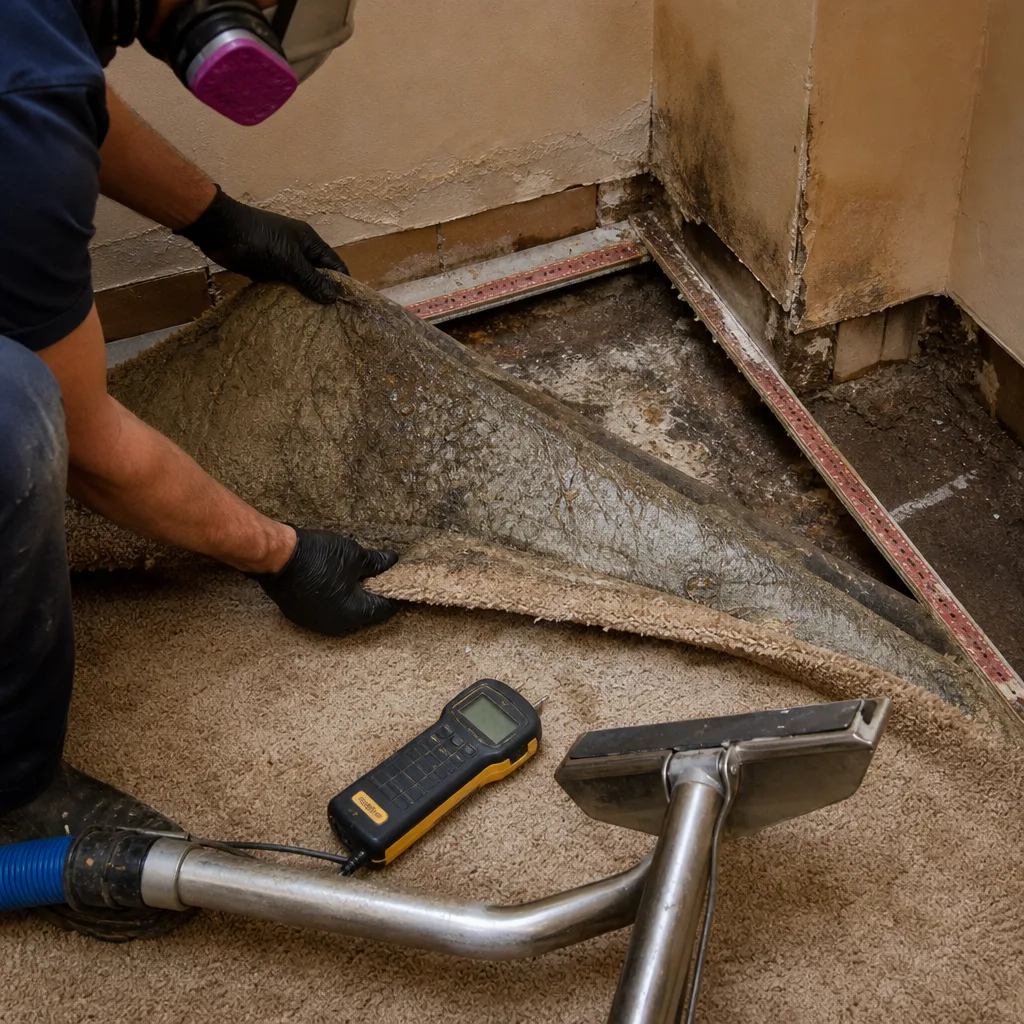
Structural Drying & Dehumidification
Plaster-over-lath walls in 1945-to-1965 row houses dry slower than modern drywall, and the surface will read dry while the gypsum base is still wet. We use Dri-Eaz and Phoenix dehumidifiers with injected-wall drying where needed, and we log daily moisture readings until the numbers prove the structure is dry, not just the paint.
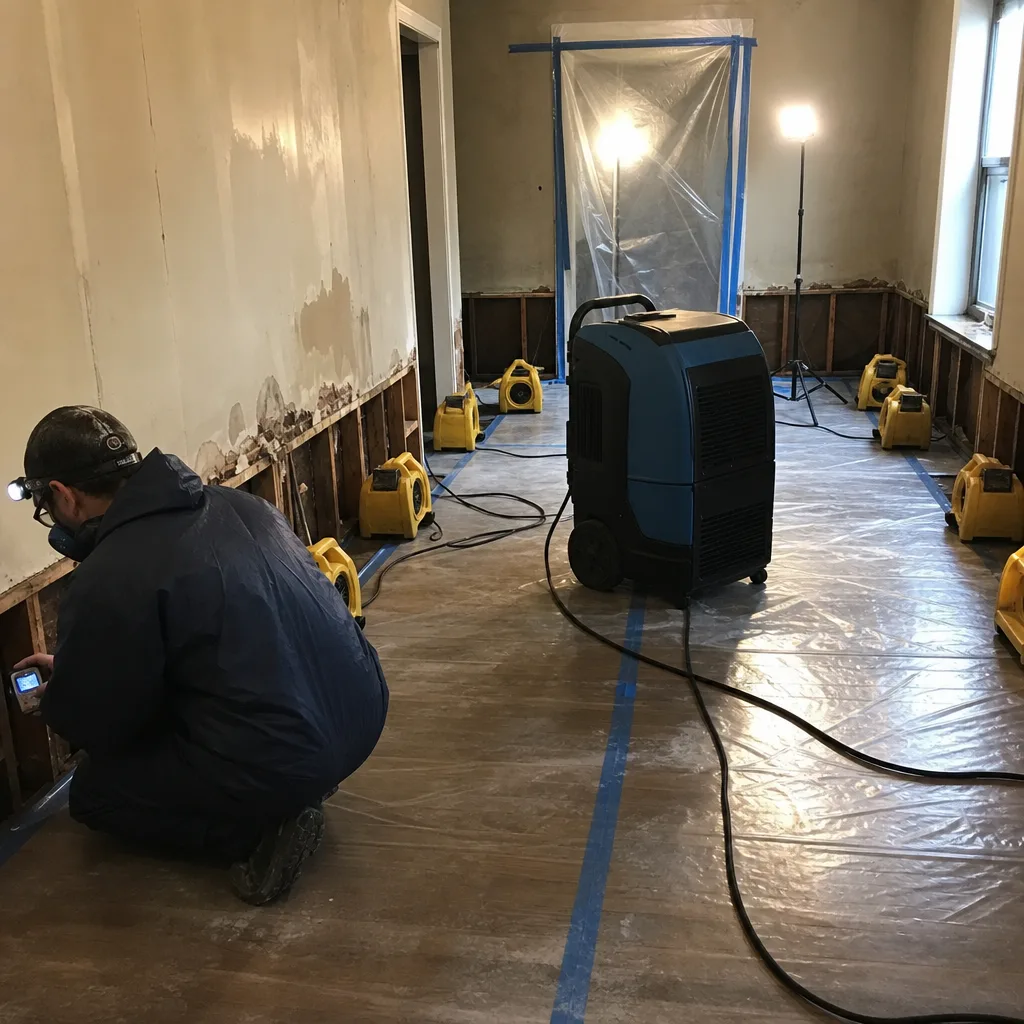
Flood Cleanup
When the combined sewers back up during a Queens cloudburst, the water in your basement isn’t rainwater. It’s Category 3 black water carrying sewage, pathogens, and whatever else the street sent into your drain. We contain, extract, dispose, and treat. Then we dry, with full documentation for your carrier.
Burst Pipe Restoration
A frozen supply line in a 1950s attached brick home is a race against the party wall. We stop the source, extract the clean water, and dry the structure before it migrates into the neighbor’s bay. If the plaster is already saturated, we remove and restore it rather than waiting for hidden mold.
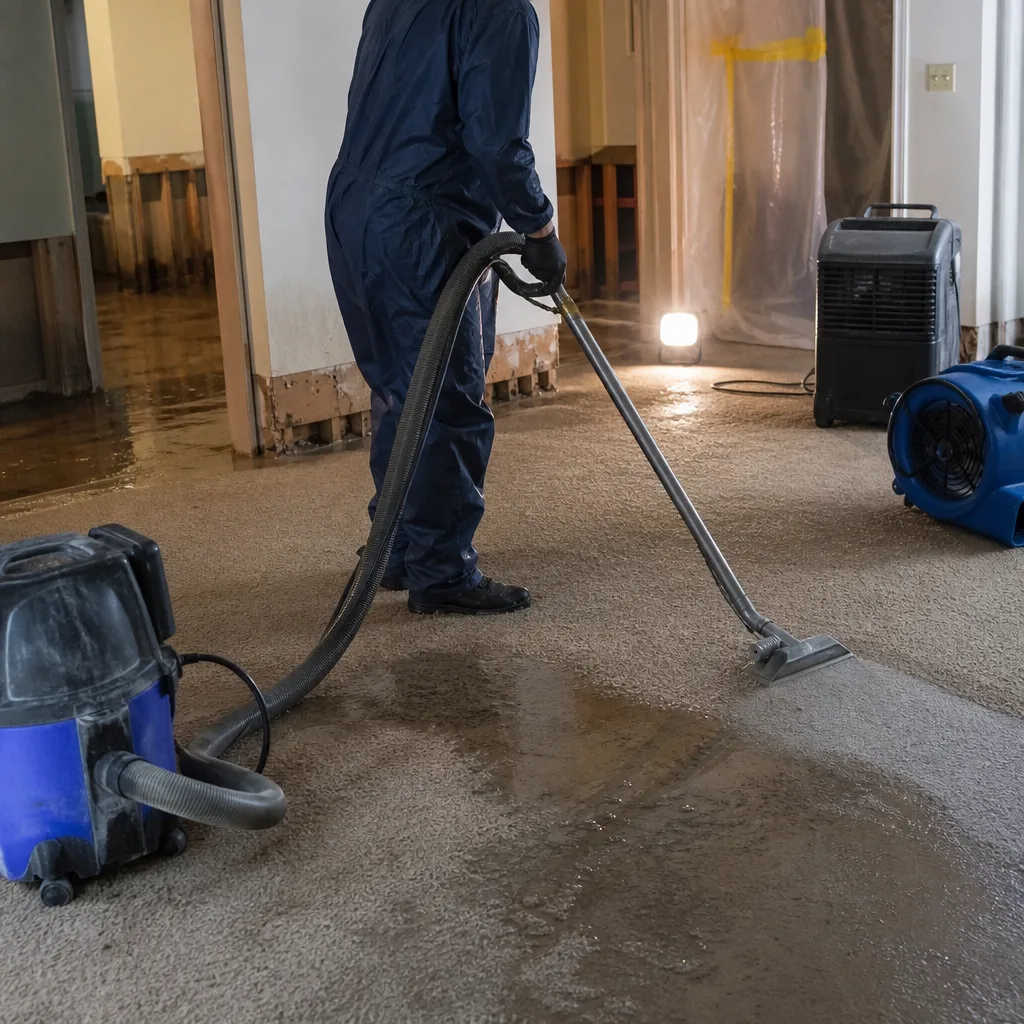
Basement Water Removal
Slab-on-grade basements in Kew Gardens Hills don’t drain. They hold water. We pump and extract, then dry with air movers positioned to move air across the slab and up through the walls. If the basement is finished, we address carpet, pad, baseboards, and drywall decisions early, because wet pad on concrete breeds mold within 48 hours.
What happens when you call
- 1
A real person answersNo phone trees - you reach a local pro.
- 2
You get an upfront price rangeHonest numbers before anyone is dispatched.
- 3
A background-checked tech heads outLicensed & insured, dispatched right away.
- 4
You approve before work beginsNothing starts until you say go.
Water Damage Restoration Costs in Kew Gardens Hills, NY
We give straight numbers, because a Kew Gardens Hills homeowner deserves a square deal without surprises on the bill. Emergency water extraction for a typical basement backup runs $1,200 to $3,800, depending on square footage, water category, and how much pack-out is required. Structural drying with dehumidifiers and air movers for a single finished basement typically adds $900 to $2,400, with daily monitoring included. Burst pipe restoration, including drywall or plaster removal and source repair, lands between $2,500 and $7,500 in this market. A full Category 3 sewage backup remediation with containment, disposal, and rebuild commonly runs $8,000 to $25,000 or more, depending on how far the water traveled and whether the neighbor’s unit is involved. Insurance covers most of these losses when the cause is sudden and accidental, which burst pipes and storm backups usually are. Gradual seepage from a cracked foundation or failed mortar joint often falls outside standard policies, which is why we flag slow leaks early. The free visual inspection gives you a written scope, so you’ll know exactly where the number stands before you commit.
We Also Serve Cities Near Kew Gardens Hills
Floodline Restoration Co. of Manhattan serves the neighborhoods around Kew Gardens Hills as well, including Fairview, Harrison, East Bronx, and Hunts Point. If you’re in any of these communities and water is moving, call (917) 924-4221. A live person answers, and a crew is dispatched the same visit.
Kew Gardens Hills Water Damage Restoration Questions, Answered
Why do basement backups in Kew Gardens Hills so often require Category 3 black water remediation?
Because the neighborhood’s combined sewer laterals carry both stormwater and raw sewage, so when heavy rain overwhelms the system in central Queens’ flat drainage basin, the water pushing up through your floor drain isn’t clean groundwater. It’s sewage. We treat every basement drain backup in Kew Gardens Hills as Category 3 by default, which means containment, antimicrobial treatment, and removal of saturated porous materials. Call (917) 924-4221 for a free assessment.
How does a water loss in an attached brick row house end up damaging my neighbor’s unit?
Attached 1940s-to-1960s brick row houses in Kew Gardens Hills share unlined masonry party walls that wick water laterally. When a supply line bursts in one home or a basement floods, the water travels through the shared wall into the adjoining structure, often within hours. We moisture-map both sides of the party wall on every attached-home loss, and we dry for lateral migration, not just vertical wetting. Call (917) 924-4221 if you suspect water has crossed the property line.
What extra steps does drying plaster-over-lath walls require in Kew Gardens Hills homes?
Plaster-over-lath walls hold water in the gypsum base long after the surface reads dry, so we use penetrating moisture meters and extended drying protocols. That means injected-wall drying where accessible, daily readings for at least three to five days, and documentation proving the structure is dry before we rebuild. Cutting corners on plaster drying in a 1950s row house is how hidden mold takes hold. We don’t cut corners.
Why do restoration crews get multiple basement backup calls from the same two-block radius during one storm?
Kew Gardens Hills’ combined sewer laterals serving these tightly-packed 1950s streets were never sized for today’s rainfall intensity. When a cloudburst hits, the system backs up across a cluster of homes at once. That’s why we stage equipment and crews for storm events in this neighborhood, and why response time matters: the faster we extract, the less water migrates through party walls and the smaller the claim. Call (917) 924-4221 the moment you see water at a floor drain.
Does a slow wet spot on an interior wall of a 1950s brick row house always point to a plumbing leak?
No. In Kew Gardens Hills, slow wet spots on interior walls often come from freeze-thaw cycles driving water through the mortar joints of aging brick facades, or from a neighbor’s undetected leak migrating through the shared party wall. We use thermal imaging and moisture meters to trace the source before opening walls. Guessing at the source is how you buy a repair you don’t need.
How fast can someone actually get here for an emergency in Kew Gardens Hills?
Most calls see a crew within 45 minutes, and a live dispatcher answers at any hour. The sooner we arrive, the less water migrates through shared masonry and the less it costs you. Call (917) 924-4221 now if water is active.
Will insurance cover this, and who deals with my adjuster?
Sudden and accidental losses like a burst pipe or a storm backup are typically covered. Gradual seepage usually isn’t. We bill your carrier directly and send photos, moisture logs, and a line-item scope from the first hour. You won’t play messenger between Floodline and the adjuster.
Do I really need full remediation or just a cleaning after a basement backup?
If the water came up through a floor drain during rain, it’s Category 3 sewage, and cleaning alone leaves pathogens, saturated materials, and hidden moisture behind. That’s not a cost-cutting measure. That’s a second, bigger claim later. We’ll give you an honest read: if cleaning is enough, we’ll say so. If it’s not, we’ll show you the moisture map and the scope.
Serving Kew Gardens Hills, NY - Our Local Coverage Area
We’re based in the Kew Gardens Hills area and know this community well. Use the map below to see our service coverage - if you’re nearby, we can almost certainly help.
Call Floodline Restoration Co. of Manhattan in Kew Gardens Hills
Water doesn’t wait in Kew Gardens Hills, and neither do we. If you’re seeing water in the basement, a wet spot spreading on a wall, or sewage at a floor drain, call (917) 924-4221 right now. A live person answers, a certified crew is dispatched, and you’ll get a written scope before work starts. The line the water left is where we start. We’ll see it through to the finish, done right and backed in writing.
Written by Curt Bowman, Owner at Floodline Restoration Co. of Manhattan, providing Water Damage Restoration and serving Kew Gardens Hills with a 90-Day Done Right Promise on every job.