
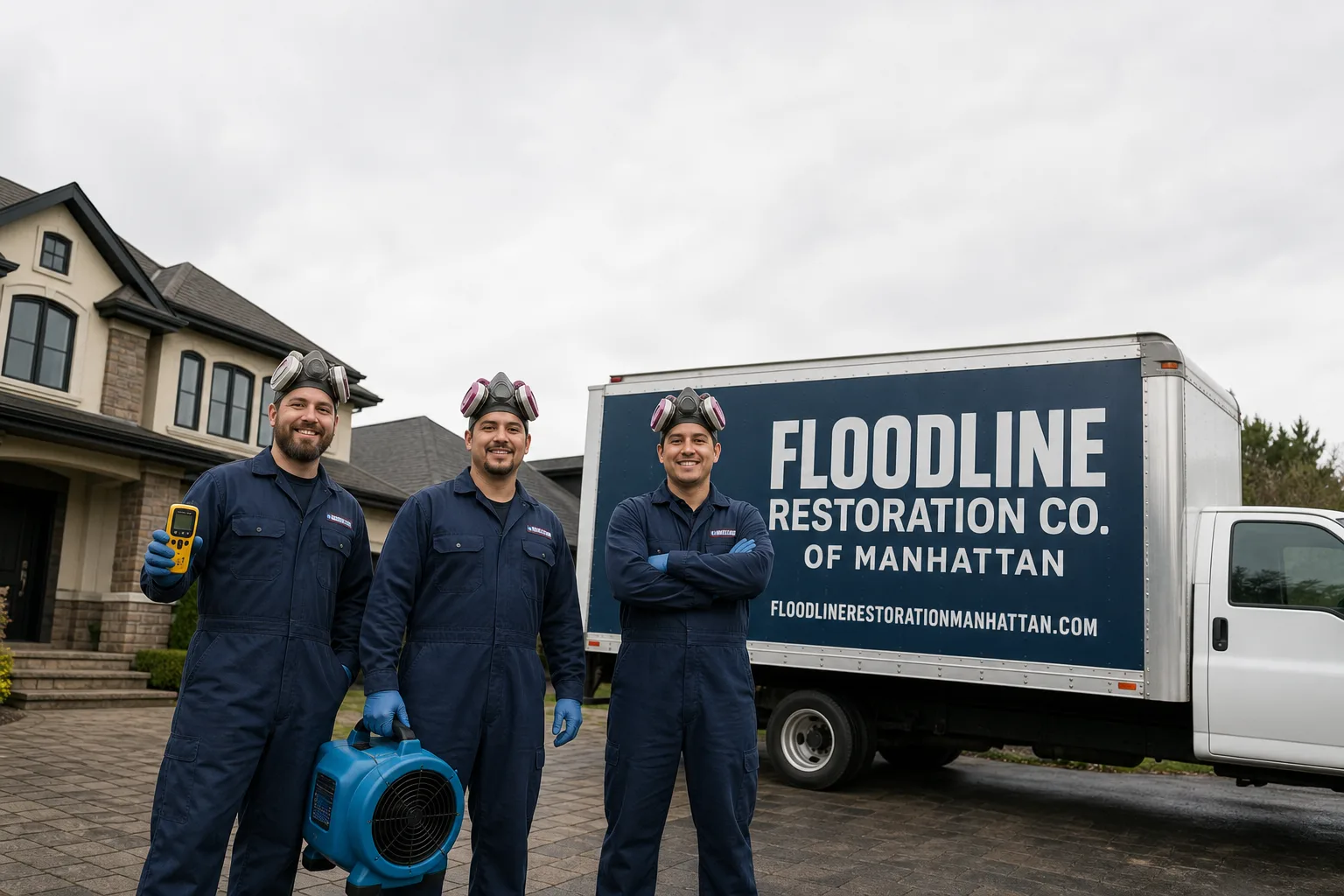
Free visual inspection and a written scope of work before any mitigation begins - photos, moisture readings, and drying logs go in your claim file
The scope we write is the scope we bill. Anything new gets shown to you, in writing, before we touch it.






 Before
 After
After Before
 After
After Before
 After
After24/7 Emergency Water Damage Restoration in Midtown Manhattan
Water damage in Midtown Manhattan moves fast. A burst supply line on the 14th floor of a pre-war co-op will be in the elevator shaft before you finish reading this sentence. Our crews answer live at (917) 924-4221 and we dispatch into Midtown around the clock, not tomorrow morning. The first hour decides whether you’re drying drywall or replacing it, whether the hardwood under that puddle can be saved or goes to the dumpster. We arrive, map the water, start extraction on the same visit, and hand you a written scope before any drying equipment gets plugged in. No answering service. No call center in another state. A live dispatcher picks up at 2 a.m., every day of the year.
Understanding Water Damage Restoration Severity in Midtown Manhattan Properties
Not all water is the same, and Midtown’s building stock makes the distinctions matter more than they do out in the suburbs. Category 1 water comes from a clean source: a supply line, a failed icemaker line, a sink overflow. You have a real but manageable problem if you get air movers on it within hours. Category 2 carries contaminants, like washing machine discharge or sump overflow. Category 3 is grossly contaminated: sewage, street water, elevator pit backup. In Midtown’s pre-war buildings, Category 3 water from century-old combined sewer mains routinely surfaces in sub-basement mechanical rooms and loading docks during summer cloudbursts, and that water carries everything the city’s pipes have collected on the way. Structural drying also behaves differently behind these walls. Terra-cotta block partitions and plaster hold moisture longer than modern gypsum board, and moisture mapping in these assemblies takes thermal imaging and daily hygrometer readings, not a quick poke with a pin meter and a shrug. Building age matters, and in Midtown, most of what we dry predates modern waterproofing standards by decades.
Why Midtown Manhattan Property Owners Choose Floodline Restoration Co. of Manhattan
- 45-minute dispatch commitment to every Midtown job. We’re staged locally and our dispatcher knows the difference between 9th Avenue and 10th Avenue at 3 a.m.
- A live person answers 24/7. Not a recording. Not a call-back promise. Every single call goes to a dispatcher who can put a crew in motion immediately.
- IICRC-certified crews holding WRT, FSRT, and AMRT credentials where the job calls for them. Background-checked, uniformed, and trained to RIA and IFA standards.
- Free visual inspection before any work begins. We tell you what we found and what it will cost, in writing.
- Direct insurance billing. We work from your carrier’s line items and talk to the adjuster so you don’t have to. The homeowner never plays messenger.
- One team from extraction to final paint. The crew that reads the moisture map on day one hands you the drying log and rebuilds the wall. No mid-job handoff, no inherited subcontractors.
Our Water Damage Restoration Process
Inspection & Assessment
We arrive, walk the damage with you, and map every affected surface with thermal imaging and moisture meters. In Midtown pre-war towers, this includes checking wall cavities and the floor below the visible stain. You get a written scope before anything gets unplugged.
Extraction / Stabilization
Commercial extractors pull standing water from floors, wall cavities, and sub-basement mechanical rooms. We remove saturated carpet pad and unsalvageable drywall, tag what can be dried, and stop further migration to lower floors.
Drying & Dehumidification
Dri-Eaz air movers and Phoenix dehumidifiers are placed according to the moisture map, not scattered at random. Daily hygrometer readings are logged until every material hits the dry standard. In high-rises, this means coordinating exhaust through freight elevators and stairwells when windows are fixed or restricted.
Cleaning & Sanitization
Gray and black water jobs get antimicrobial treatment and HEPA air scrubbing. Hard surfaces are cleaned to the water category standard, and any asbestos-containing material encountered is handled under NYC DEP rules by licensed abatement contractors before drying continues.
Steam System & Building Coordination
In Midtown’s pre-war residential hotels and co-ops, steam-trap failures inside partitions require the building’s licensed boiler operator to isolate the riser before we can open the wall. We handle that coordination for you, including freight elevator bookings and building management schedules.
Repairs & Restoration
The same Floodline crew that dried the structure rebuilds it: new drywall, plaster patches, flooring, paint, and trim. We bill insurance directly, document every step with photos, and back the finished work with the 90-Day Done Right Promise in writing.
Need Emergency Water Damage Restoration in Midtown Manhattan Now?
Crews minutes away, answering live 24 hours a day. The sooner we start, the less it costs.
Working With Your Insurance Company
Insurance claims are where restoration companies earn their reputation or lose it. We document from the first hour: photos of every affected room, moisture readings taken before and during drying, and a line-item scope that uses the same estimating software your carrier’s adjuster reads. We speak directly with the adjuster, answer their questions, and provide the drying logs and equipment logs they need to approve the claim. You shouldn’t have to translate restoration terminology into insurance language. That’s our job. If the carrier disputes a line item, we push back with documentation, not phone calls. The 90-Day Done Right Promise means we stand behind the work, and the paperwork to prove it goes to the carrier, not into a drawer.
What We Provide Your Insurer
- Thorough documentation of the loss
- Photos of all damage, room by room
- Moisture readings and drying logs
- A detailed, line-item scope of work
- Direct coordination with your carrier
Built for Midtown Manhattan’s Loss Calendar
Midtown’s water damage year has a rhythm, and we see it repeat every twelve months. January and February bring deep freezes that split supply lines in exterior walls and force water through cracks in aging brick facades on pre-war towers between Fifth and Ninth Avenues. March and April thaw what froze, and basement seepage finds its way into century-old foundations along the avenues, especially where steam service rooms sit below grade. July and August are the cloudburst months: a sudden thunderstorm drops two inches of rain in an hour, the combined sewer mains under the grid can’t keep up, and sewage backs up into elevator pits and sub-basement mechanical rooms from Hell’s Kitchen to Turtle Bay. October and November bring nor’easters that drive wind-driven rain behind limestone and brick cladding on the older towers along Park and West End. Every season has a signature, and every signature has a response plan we’ve already run.
Water Damage Restoration Across Midtown Manhattan’s Neighborhoods
Response routes differ block by block. In Hell’s Kitchen, along 9th and 10th Avenues between 34th and 59th, we’re navigating narrow streets with double-parked delivery trucks while a walk-up tenement’s supply line runs down five floors of stairwell. Around Bryant Park and the Garment District, mid-century commercial towers have mechanical rooms stacked vertically, so a single condenser coil leak travels through multiple floors of offices and tenant space. Over in Turtle Bay, near Second and Third Avenues, the pre-war residential co-ops run original steam heat, and we coordinate with building superintendents who know every riser and shut-off by heart. Up around Columbus Circle, newer glass-curtain towers have modern plumbing but shared drain stacks that turn a kitchen flood on 18 into a ceiling stain on 12 before anyone notices. Each strip of Midtown Manhattan has its own building DNA, and we dispatch crews who know the difference.
Specialized Water Damage Restoration Services We Offer in Midtown Manhattan
Emergency Water Extraction
Standing water in a Midtown high-rise apartment doesn’t wait for the building manager to approve a work order. We run commercial-grade extractors that pull hundreds of gallons per hour from floors, wall cavities, and below-grade spaces. Same-visit extraction stops the water before it reaches the apartment below.
Structural Drying & Dehumidification
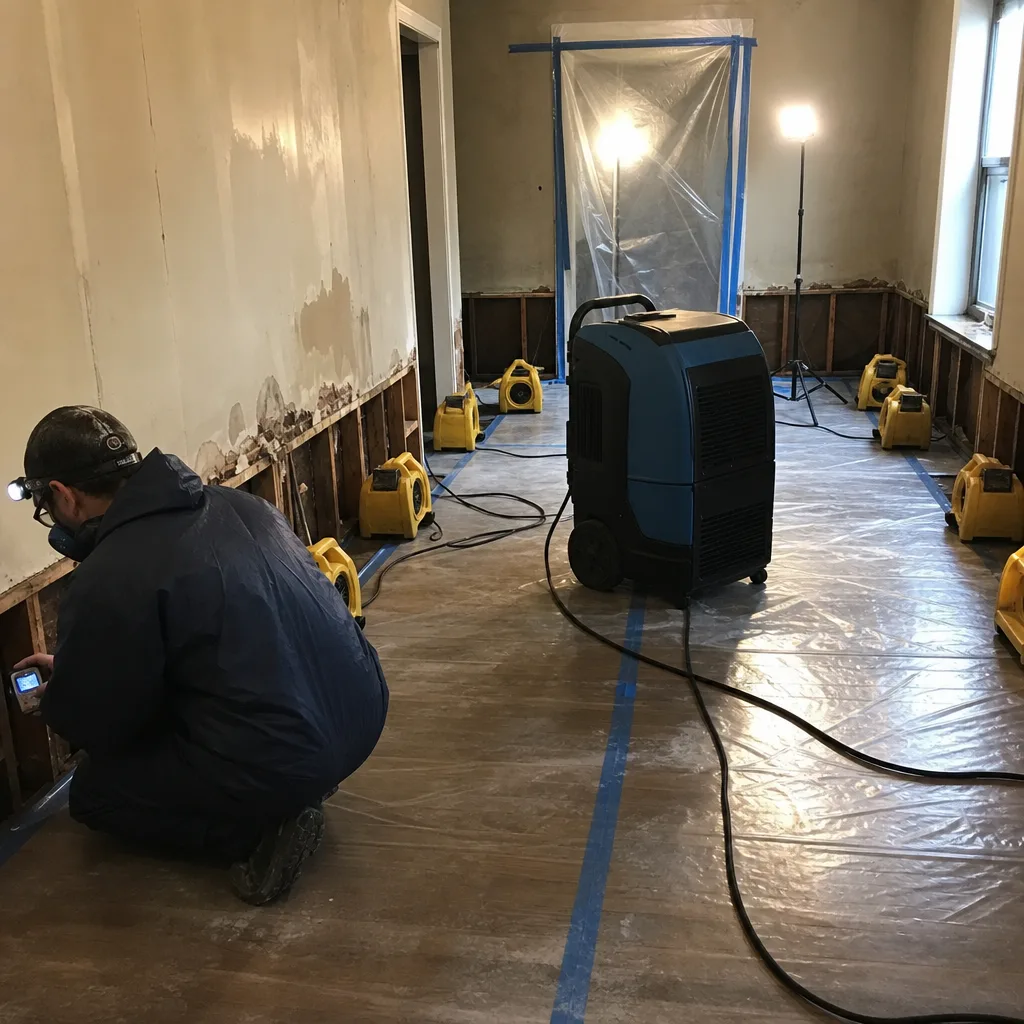
Drying a pre-war plaster wall in a 1920s tower on Central Park South is not the same as drying drywall in a suburban basement. Terra-cotta tile, lime plaster, and original hardwood all release moisture at different rates. We place Dri-Eaz air movers and Phoenix dehumidifiers according to a moisture map, then log daily readings with hygrometers until every surface hits the dry standard. In a high-rise, that means coordinating every piece of equipment through a freight elevator on the building’s schedule.
Flood Cleanup
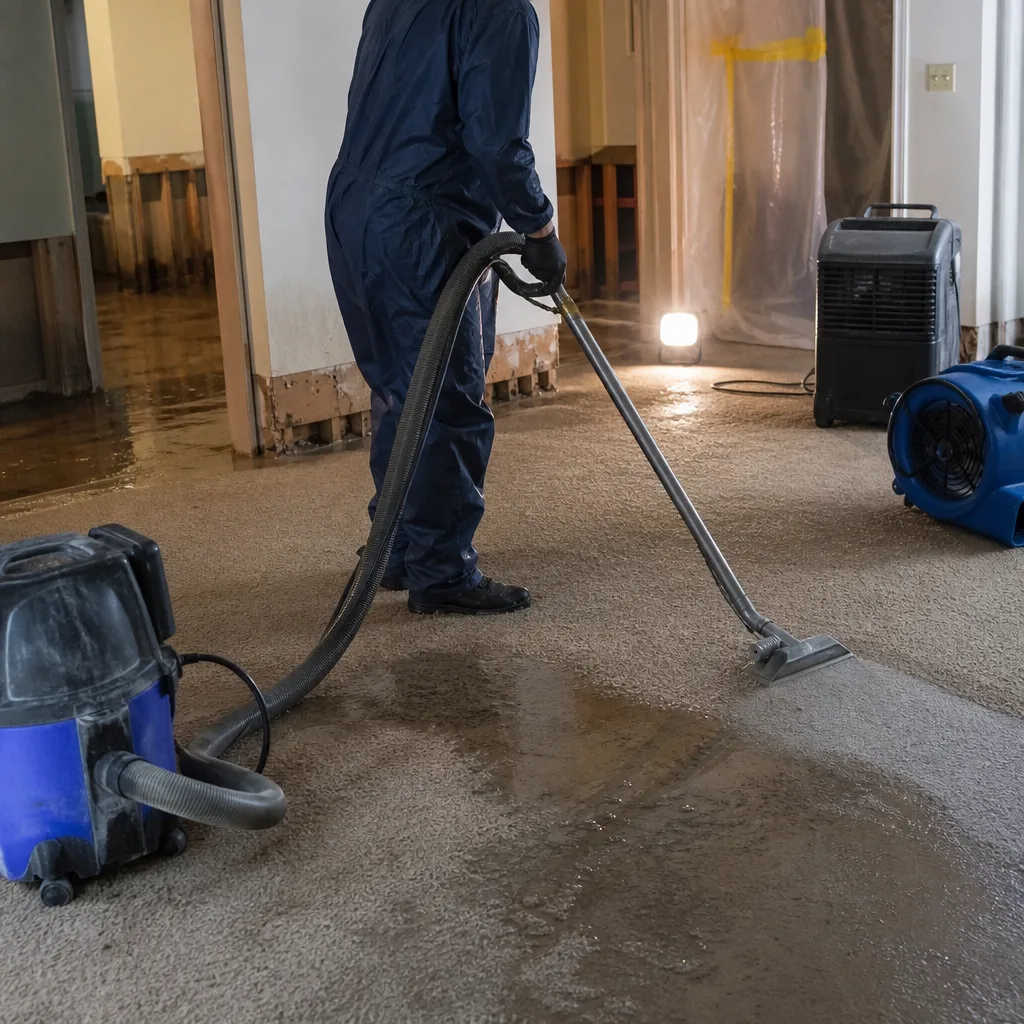
Summer cloudbursts overwhelm Midtown’s combined sewer system, and Category 3 water surfaces in the worst places: elevator pits, loading docks, boiler rooms, and basement storage areas. Flood cleanup here means containment, antimicrobial treatment, and HEPA air scrubbing before structural drying ever starts. We handle the containment setup and the abatement coordination if asbestos-containing materials are present, which they often are in sub-grade spaces built before 1980.
Burst Pipe Restoration
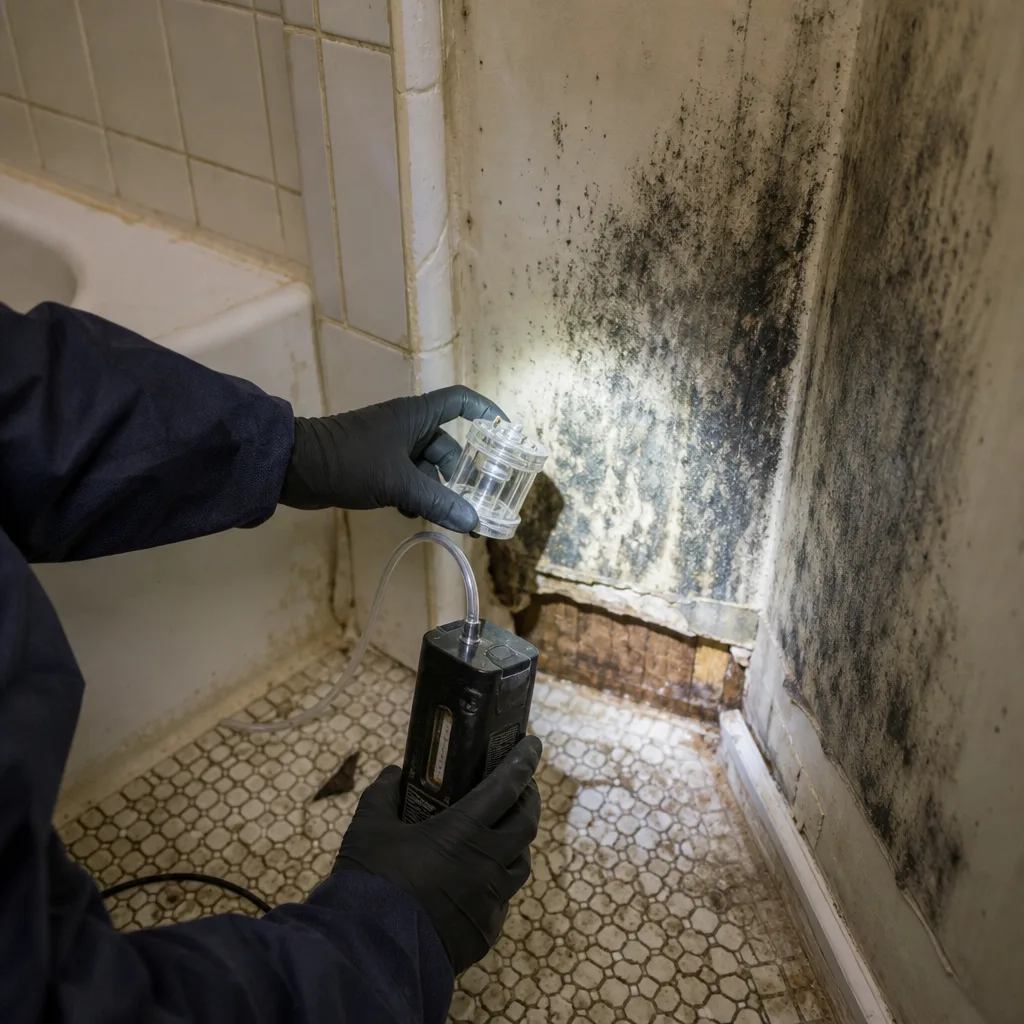
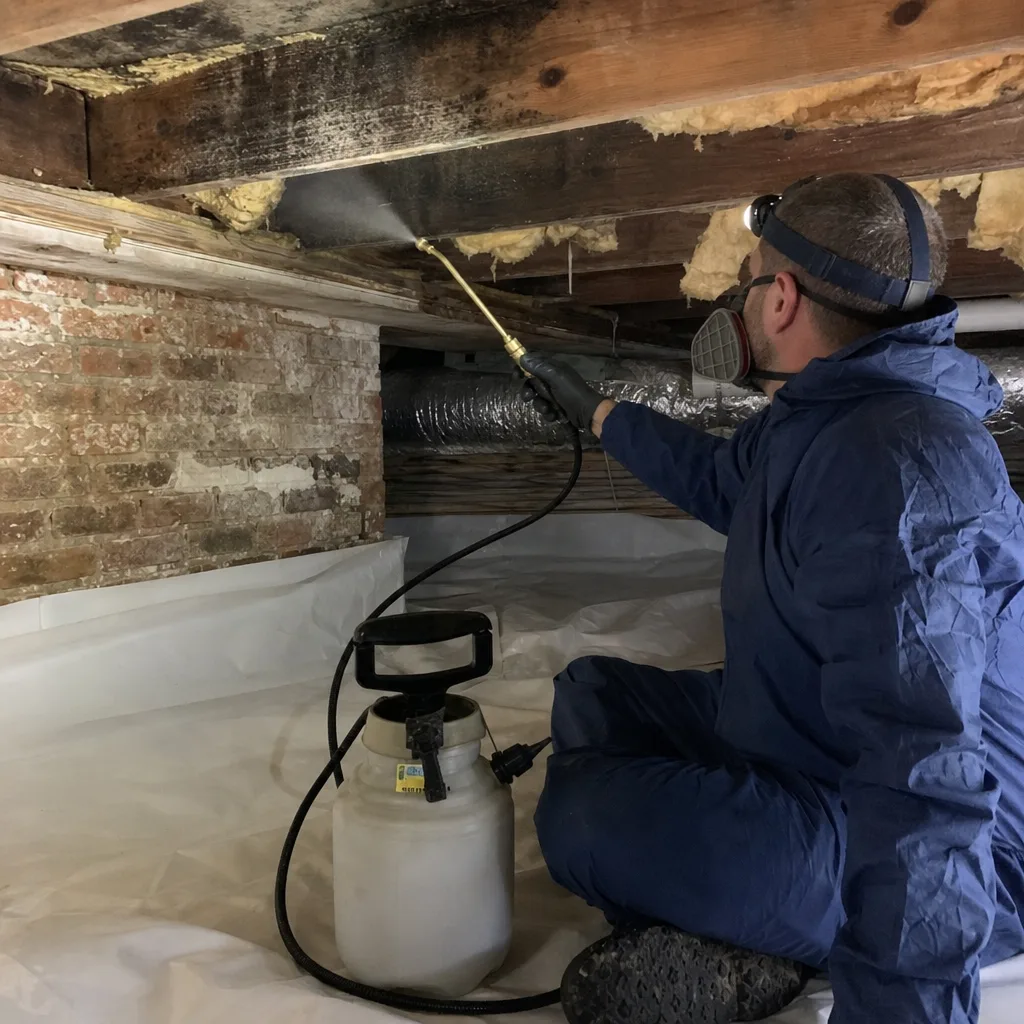
A frozen supply line behind a bathroom wall on the 22nd floor of a high-rise sends water through the floor assembly and into the unit below, the one below that, and the electrical room nobody checks. Burst pipe restoration in Midtown means opening the right walls, not all the walls, and drying the cavity before mold gets a foothold inside a structure you can’t see.
Basement Water Removal
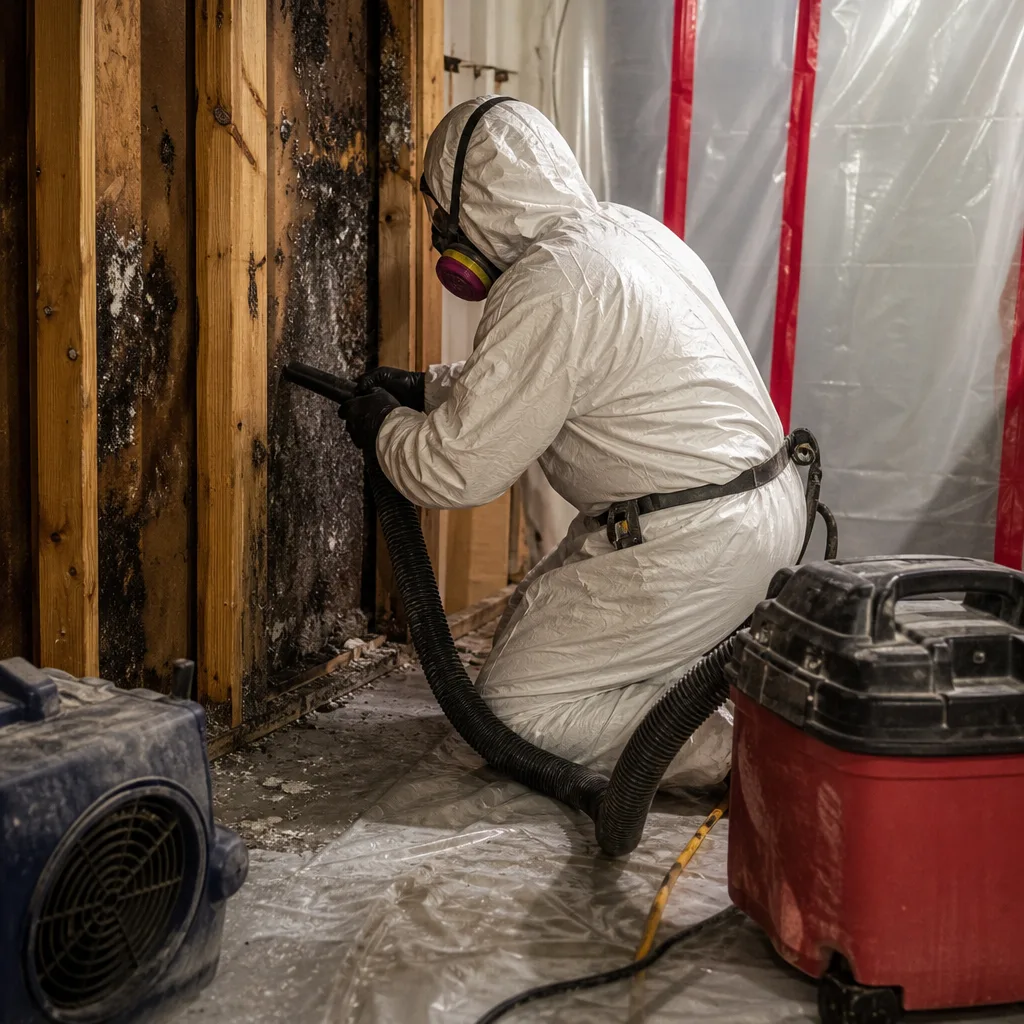
Sub-basement mechanical rooms in Midtown’s pre-war buildings house boilers, steam traps, electrical panels, and decades of accumulated wiring. Water down here isn’t a mop job. We extract, sanitize, and dry these spaces while keeping the building’s heat and power running. Coordination with the building’s licensed boiler operator is a standard part of the process on steam-heat properties.
What happens when you call
- 1
A real person answersNo phone trees - you reach a local pro.
- 2
You get an upfront price rangeHonest numbers before anyone is dispatched.
- 3
A background-checked tech heads outLicensed & insured, dispatched right away.
- 4
You approve before work beginsNothing starts until you say go.
Water Damage Restoration Costs in Midtown Manhattan, NY
A typical water damage restoration job in Midtown Manhattan runs $1,800 to $6,500 for clean-water extraction and structural drying in a single apartment. Sewage-related flood cleanup involving Category 3 water and sub-basement spaces ranges from $4,000 to $12,000, driven by containment setup, antimicrobial treatment, and disposal of contaminated materials. When asbestos abatement is required before drying begins, add $2,000 to $8,000 depending on the area and the DEP filing requirements. Burst pipe restoration in high-rise units, where wall cavities and floor assemblies must be opened and dried across multiple floors, runs $3,500 to $15,000. The variables that move the price: the water category, how many floors are affected, whether freight elevator scheduling adds days, and whether the building requires union crew hours or specific insurance documentation. We give a free visual inspection and a written scope before any work begins, so the number you agree to is the number on the bill. Senior and veteran discounts of 5% always apply, and $50 off any repair over $250 is available on every job.
We Also Serve Cities Near Midtown Manhattan
While this page covers Midtown Manhattan specifically, our crews also respond in Midtown Manhattan‘s neighboring communities, including Fairview, Harrison, East Bronx, and Hunts Point. If your building sits on the edge of the district, call us and we’ll tell you which crew is closest.
Serving Midtown Manhattan, NY - Our Local Coverage Area
We’re based in the Midtown Manhattan area and know this community well. Use the map below to see our service coverage - if you’re nearby, we can almost certainly help.
Midtown Manhattan Water Damage Restoration Questions, Answered
How does Midtown’s multi-floor building construction change water damage restoration compared to a single-family home?
Water in a Midtown high-rise travels vertically through floor assemblies, plumbing chases, and elevator shafts, so a failure on one floor routinely affects the apartments on four or five floors below. Restoration means opening and drying wall cavities and floor-ceiling assemblies across multiple units, coordinating every equipment move through freight elevators on building management’s schedule, and often holding work while the building’s engineer isolates the affected riser. A single-family home in the suburbs has none of those constraints.
Why do some Midtown water damage jobs need asbestos abatement before drying can begin?
Many pre-war Midtown towers contain asbestos in pipe insulation, plaster, floor-leveling compound, and drop-ceiling tiles. When water damage requires cutting into those materials, NYC DEP rules mandate licensed asbestos abatement before restoration crews can stage drying equipment in the affected area. This adds days to the job but it’s non-negotiable, and we coordinate the abatement and the DEP filing so you don’t have to manage a second contractor.
What happens when a steam trap fails inside a Midtown pre-war wall cavity?
Steam traps fail slowly. A failed trap inside a wall cavity can saturate plaster, terra-cotta partitions, and structural wood for weeks before any staining shows on the visible wall surface. By the time you see it, the cavity is fully wet and often growing mold. Restoration means holding work until the building’s licensed boiler operator isolates the riser, then opening the wall, containing the area, and drying the assembly with air movers and dehumidifiers while logging daily moisture readings.
Can water damage in a Midtown sub-basement be more hazardous than a typical residential flood?
Yes. Midtown’s combined sewer system, much of it installed in the late 19th and early 20th century, carries sewage and street runoff in the same pipes. During summer cloudbursts those pipes back up into sub-basement mechanical rooms, elevator pits, and loading docks. That’s Category 3 water: grossly contaminated, carrying pathogens, and requiring full containment, antimicrobial treatment, and respiratory protection before drying can start. The hazard is real and we treat every sewage backup in Midtown’s sub-grade spaces as a biohazard job until proven otherwise.
How do you handle drying in a high-rise where you can’t open windows or use outdoor exhaust?
We use closed-loop drying: Phoenix dehumidifiers pull moisture from the air inside the contained area, and Dri-Eaz air movers circulate dry air across every surface. Exhaust is routed to filtered HEPA scrubbers when needed, not out the windows. In many Midtown residential towers, windows are fixed or restricted by building rules, so every piece of equipment runs on circuits we’ve verified can carry the load without tripping breakers. Daily hygrometer readings prove the dry standard is met.
How fast can a crew actually reach a Midtown Manhattan building?
Our dispatch commitment is 45 minutes to any address in Midtown, day or night. We’re staged locally and our dispatchers know the grid well enough to route around rush hour on the avenues and overnight closures in the garment district. The phone is answered by a person, not a recording, and a crew is moving the moment the address is confirmed. Call (917) 924-4221 and ask for the next available unit.
Will insurance cover water damage restoration in a Midtown high-rise?
Most standard homeowners and co-op policies cover sudden and accidental water damage: burst pipes, supply line failures, and storm-driven flooding. Sewage backup coverage depends on the rider, and we’ll tell you honestly if the carrier is likely to push back. We document everything from the first hour, provide industry-standard estimates, and talk to the adjuster directly. You never have to explain a moisture reading to your insurance company. Estimates are free, and we’ll tell you what your policy will likely cover before you sign anything.
Do I need full remediation or just a cleaning?
If the water was clean and the affected area dried within 24 to 48 hours, a professional extraction and drying job may be all you need. If water sat longer than two days, or if the source was sewage or street water, mold has likely started in the wall cavity and full remediation with containment is the honest call. We’ll tell you which one you have. The free visual inspection gives you a written answer, not a sales pitch. Call (917) 924-4221 and we’ll come look.
Water damage in Midtown Manhattan’s stacked pre-war towers doesn’t respond well to generic advice from a national franchise website. Our Water Damage Restoration team handles sewer backups in Century-old combined lines, steam-trap failures behind terra-cotta partitions, and structural drying in assembly spaces where every equipment move runs through a freight elevator and every wall cavity might contain asbestos. We answer the phone with a person at any hour, show up in uniform, and put the 90-Day Done Right Promise in your hands in writing. Call (917) 924-4221 for a free estimate, or to get a crew rolling right now.
Written by Curt Bowman, Owner at Floodline Restoration Co. of Manhattan, serving Midtown Manhattan since the company’s founding in 2010.