
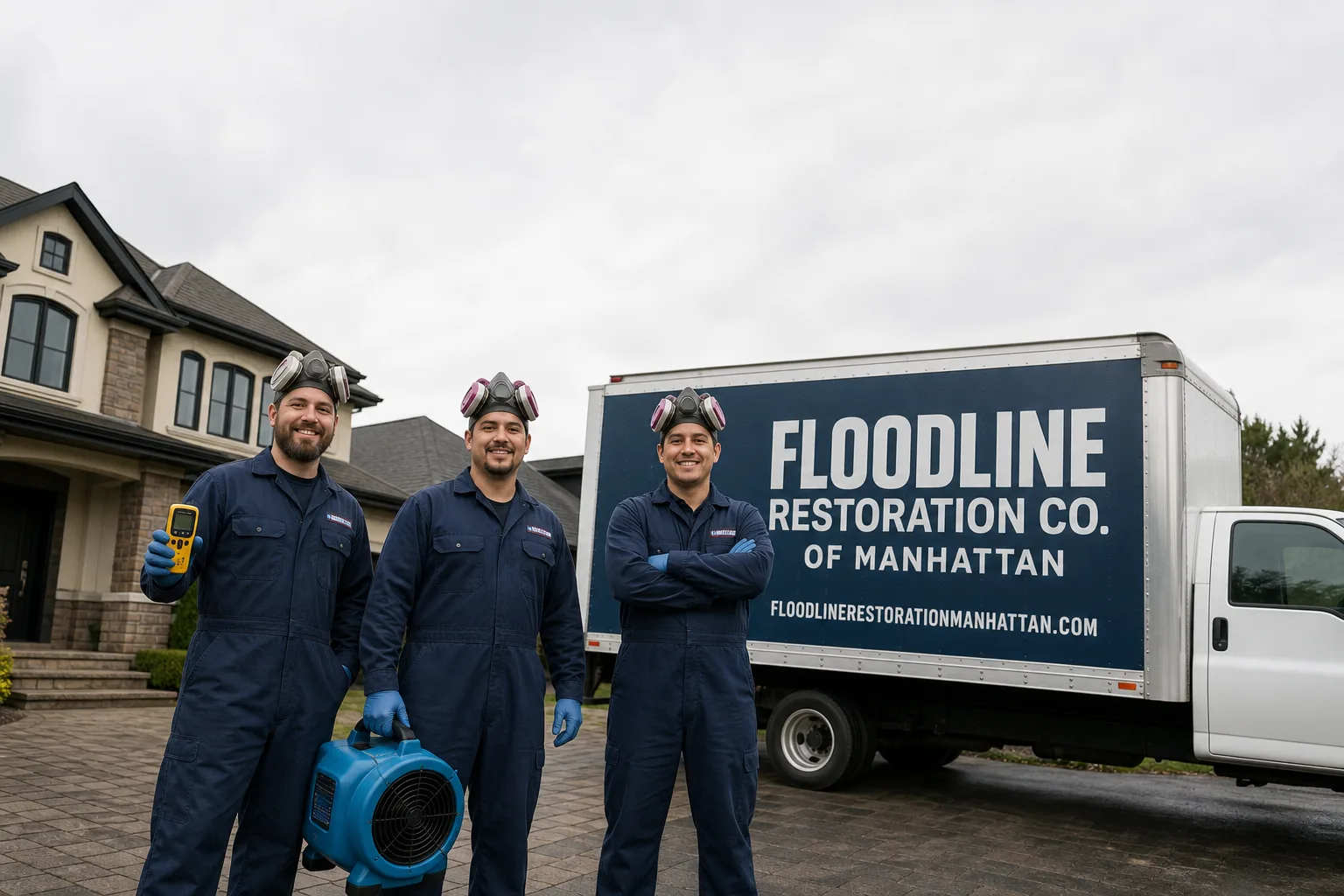
Free visual inspection and a written scope of work before any mitigation begins - photos, moisture readings, and drying logs go in your claim file
The scope we write is the scope we bill. Anything new gets shown to you, in writing, before we touch it.






 Before
 After
After Before
 After
After Before
 After
After24/7 Emergency Water Damage Restoration in Passaic
Water damage restoration in Passaic typically costs between $1,800 and $6,500 depending on how far the water migrated and how many units it touched. We answer the phone live at (917) 924-4221 any hour, any day, and a certified crew reaches most Passaic addresses inside 45 minutes. The first hour decides whether you’re drying plaster or tearing it out. When water from a burst pipe on the third floor of a Howe Avenue tenement reaches the basement, every hour it sits adds cost and complicates the insurance claim. Call now and we start extraction the same visit.
Understanding Water Damage Restoration Severity in Passaic Properties
Water damage in Passaic rarely stays where it started. The city’s housing stock, built largely between 1890 and 1940, includes dense two-to-four-family brick and wood-frame tenements with original plaster walls, cast-iron plumbing, and stacked floor plans. A supply-line break on the top floor becomes a Category 1 clean-water event at the source, but once it passes through original lath-and-plaster ceilings into occupied apartments below, we treat it as a Category 2 exposure until moisture mapping proves otherwise. Contaminants picked up along the way, drywall dust, old pipe scale, decades of surface residue, change how we dry and what we discard.
River flooding is different again. Passaic sits directly along the Passaic River, and when the river backs up into basements on the city’s low-lying blocks, that water is Category 3. It carries sewage, fuel residue, and everything the river picked up. Drying Category 3 water without proper extraction and sanitization leaves contamination under cove bases and inside baseboard cavities where moisture meters read dry but mold blooms within 48 hours. Our crews moisture-map every affected surface and log daily readings until the dry standard is met, not when the floor feels dry.
Why Passaic Property Owners Choose Floodline Restoration Co. of Manhattan
- 45-minute response commitment. Our dispatch board sits in New York City, but crews staged for Passaic reach most callouts inside 45 minutes, often faster on the east side near Main Avenue.
- A real person answers, 24/7. You call at 2 a.m., a live dispatcher picks up. No recording. No answering service reading a script. The crew gets your address and rolls.
- IICRC-certified crews. Our technicians hold WRT and ASD certifications and train to IICRC, RIA, and IFA standards. They know pre-war construction because they’ve worked it for years.
- Free visual inspection. We walk the property, read the moisture, and tell you what you’re facing before any work is authorized. No charge for the visit.
- Direct insurance billing. We send the carrier photos, moisture logs, and a line-item scope. You don’t play messenger between us and your adjuster.
- One team from extraction to rebuild. The same background-checked, uniformed crew that runs the Dri-Eaz air movers on day one handles reconstruction. No mid-job handoff to strangers.
Our Water Damage Restoration Process
Inspection & Assessment
We map every affected surface with thermal imaging and penetrating moisture meters. In a Passaic multi-family, that means checking floors below the source, not just the room where the pipe broke. We give you a written scope before any work starts.
Extraction & Stabilization
We pull standing water with truck-mounted and portable extraction units. Then we set containment at stairwells and common areas to stop aerosolized water from spreading into tenant-occupied floors. Baseboards and cove bases get checked, not assumed dry.
Drying & Dehumidification
Dri-Eaz air movers, Phoenix dehumidifiers, and XPOWER units run continuously, repositioned daily based on hygrometer and moisture readings. In lath-and-plaster walls, we dry in place whenever possible rather than tearing out original material.
Cleaning & Sanitization
We clean and apply antimicrobial treatments to every affected surface. For Category 3 Passaic River water, we remove and discard porous materials that cannot be sanitized and treat all hard surfaces before drying continues.
Moisture Verification
Daily logs record moisture content in wood, plaster, and drywall until every reading meets the dry standard. You and your adjuster get a copy of the log. We don’t call it dry because the air feels fine.
Repairs & Restoration
From patching plaster to replacing ceilings and repainting, the same crew handles it. We coordinate directly with your insurance carrier on the restoration scope. The 90-Day Done Right Promise covers the work in writing.
Need Emergency Water Damage Restoration in Passaic Now?
Crews minutes away, answering live 24 hours a day. The sooner we start, the less it costs.
Working With Your Insurance Company
Insurance companies move faster when the documentation is clean. We photograph every room before and after extraction, log moisture readings, and write a line-item scope that adjusters recognize. Our team communicates directly with your carrier, sends the drying log, and answers the adjuster’s questions so you don’t have to translate restoration-company math into insurance-claim language. Most Passaic water losses, burst pipes, river backflow into basements, ceiling leaks from ice dams, fall under property coverage with some variation. We help you understand what your policy covers and bill the carrier directly where applicable. Curt Bowman built Floodline Restoration Co. of Manhattan on a simple rule: the homeowner never plays messenger between us and the insurance company.
What We Provide Your Insurer
- Thorough documentation of the loss
- Photos of all damage, room by room
- Moisture readings and drying logs
- A detailed, line-item scope of work
- Direct coordination with your carrier
Built for Passaic’s Loss Calendar
January and February bring deep freezes that split supply lines in unheated stairwells and exterior walls of Passaic’s older tenements. Cast-iron and galvanized plumbing from the 1920s doesn’t flex, it fractures. March and April bring thaw and spring rains, and the Passaic River rises. Low-lying blocks near Market Street and the river corridor see basement seepage and surface flooding long before summer storms arrive. July and August thunderstorms dump water faster than the dense hardscape can drain it, sending stormwater into basements and through aging roofs. Nor’easters in fall and early winter test ceilings and roofs on the city’s wood-frame rowhouses. We’ve worked every season on these blocks, and we know what each one brings.
Water Damage Restoration Across Passaic’s Neighborhoods
The response routes matter. Near Main Avenue and the downtown corridor, we navigate dense commercial-residential blocks where a second-floor pipe break above a storefront means protecting inventory below while drying the apartment above. Over by Gregory Avenue and the stretch of pre-war two-families near Monroe Street, the challenge is often cast-iron waste lines failing inside shared walls. In the First Ward and the streets running down toward the river, Passaic River backflow into basements is the recurring loss. Along Howe Avenue and the wood-frame rowhouse blocks, original lath-and-plaster ceilings and balloon framing let water travel fast between floors. We stage equipment for these neighborhoods and know which streets flood first when the river tops its banks.
On a three-family wood-frame rowhouse off Howe Avenue, a ruptured second-floor galvanized pipe sent clean water through original plaster ceilings into two occupied apartments below. Our crew set containment at each stairwell, ran Dri-Eaz air movers and a Phoenix dehumidifier with daily moisture readings, and coordinated pack-out and scope-of-work adjustments with three tenants and two insurance adjusters until every surface returned to pre-loss condition. That’s the Passaic job, a single water event crossing three occupied units, and it’s why we treat every apartment below a break as an active exposure until moisture mapping proves otherwise.
Specialized Water Damage Restoration Services We Offer in Passaic
Emergency Water Extraction
We pull standing water from any Passaic property fast, before it saturates original plaster and migrates through multiple floors. Truck-mounted extraction handles flooded basements; portable units reach upper-floor apartments. Extraction starts the same visit you call.
Structural Drying & Dehumidification
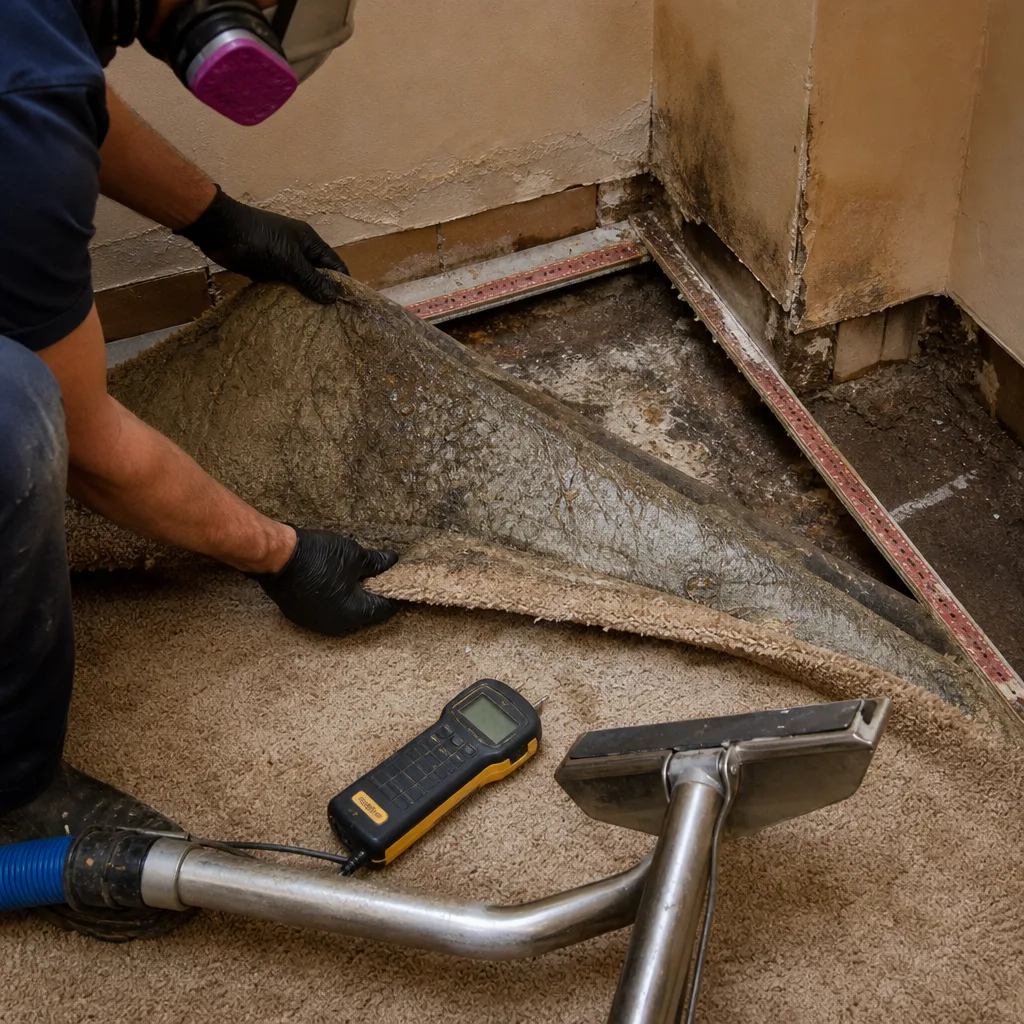
Drying a 1920s brick rowhouse isn’t the same as drying a drywall-walled ranch. We dry lath-and-plaster in place when possible using Dri-Eaz air movers and Phoenix dehumidifiers, with daily moisture readings until the dry standard is met. No unnecessary demolition.
Flood Cleanup
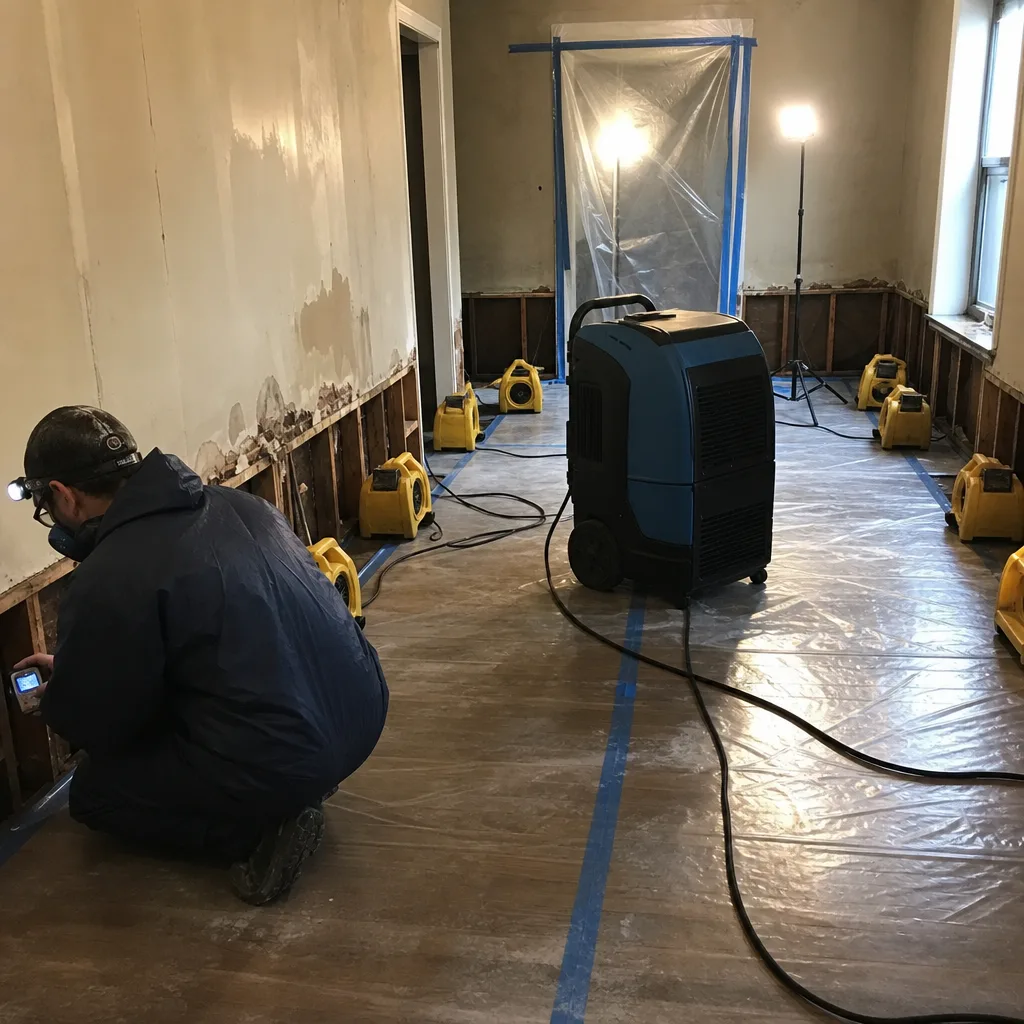
Passaic River flooding brings Category 3 water into basements on the city’s lowest blocks. We treat it as contaminated from the first reading, remove porous material that can’t be sanitized, and run structural drying with antimicrobial treatment. This is not a mop-and-fan job.
Burst Pipe Restoration
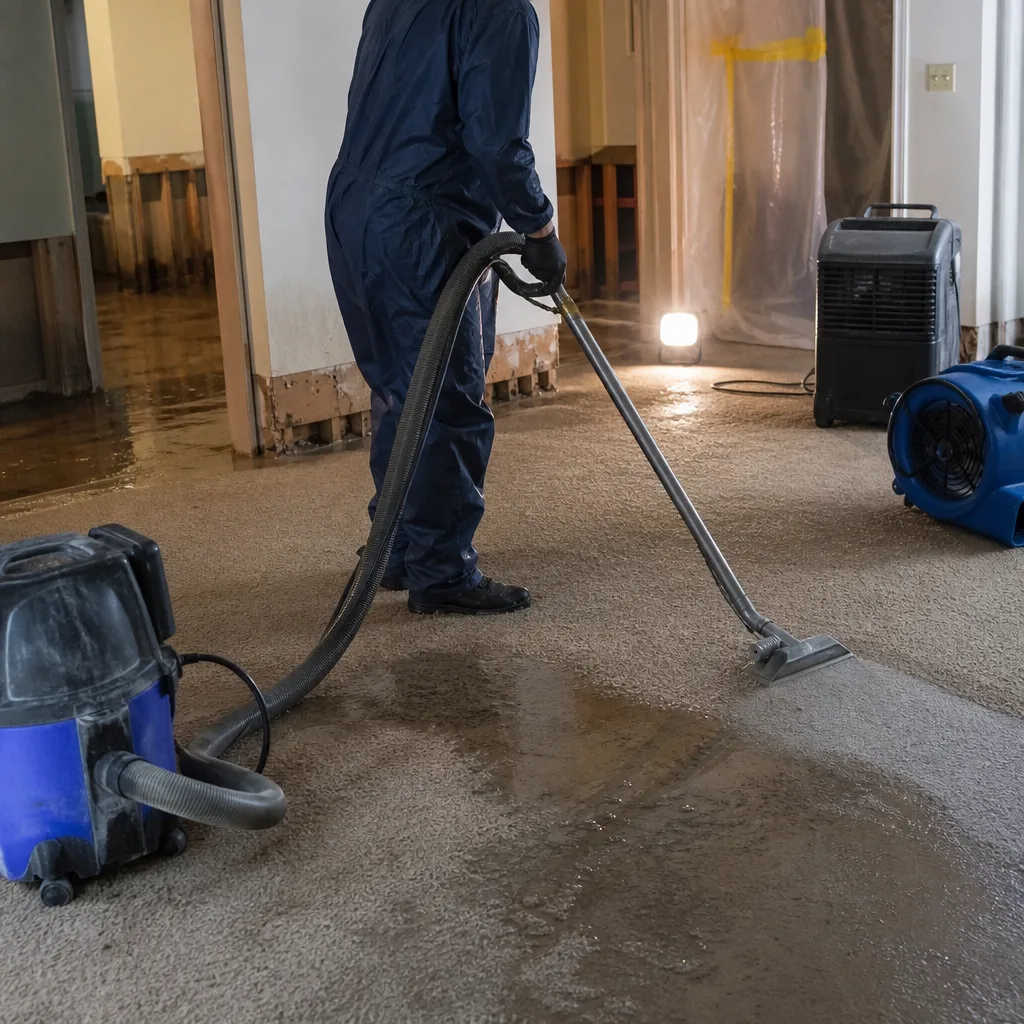
When a supply line fails in a Passaic tenement, water follows gravity through original ceilings and shared walls. We find the full migration path with thermal imaging, extract, dry, and restore with one crew. The 90-Day Done Right Promise covers the work in writing.
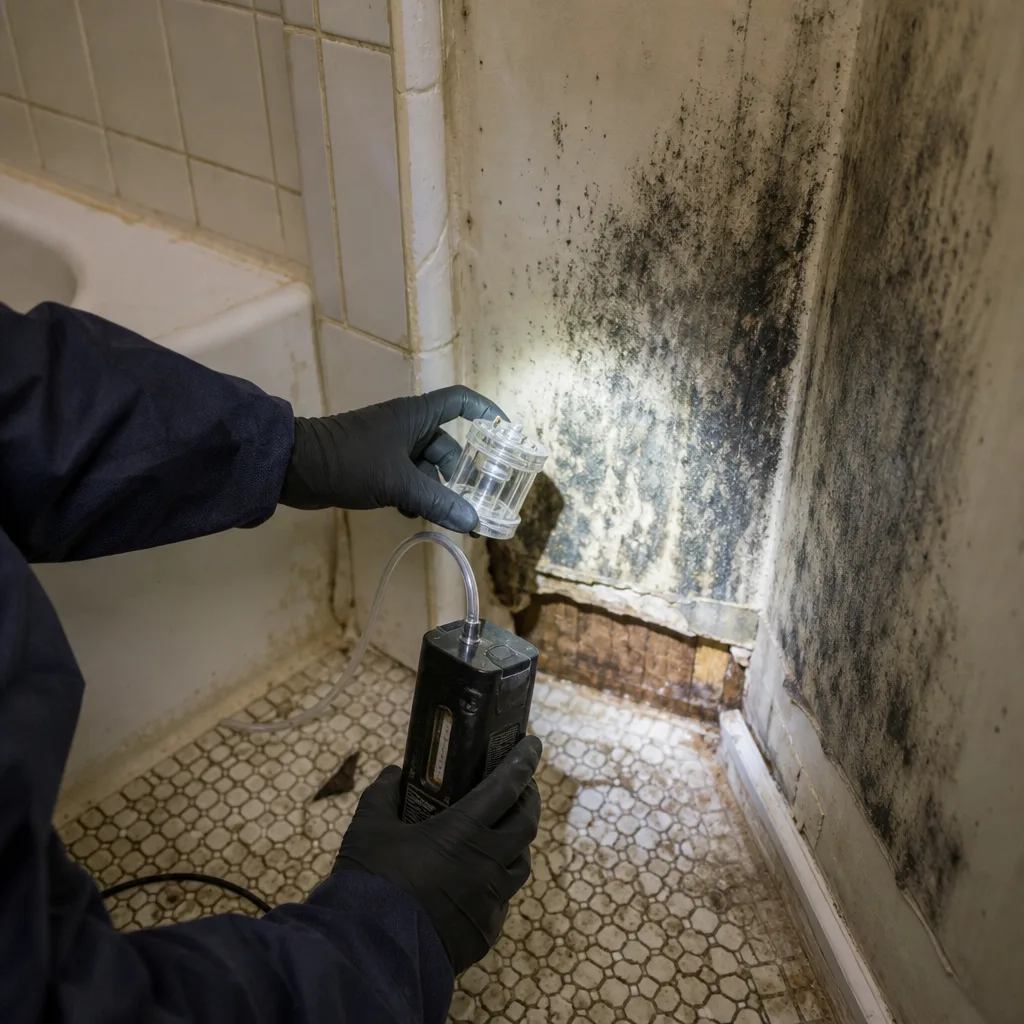
Basement Water Removal
Basements in Passaic take water from three directions: rising river, surface runoff, and plumbing failures from floors above. We remove the water, map the moisture, and dry the structure so your basement doesn’t stay damp for weeks.
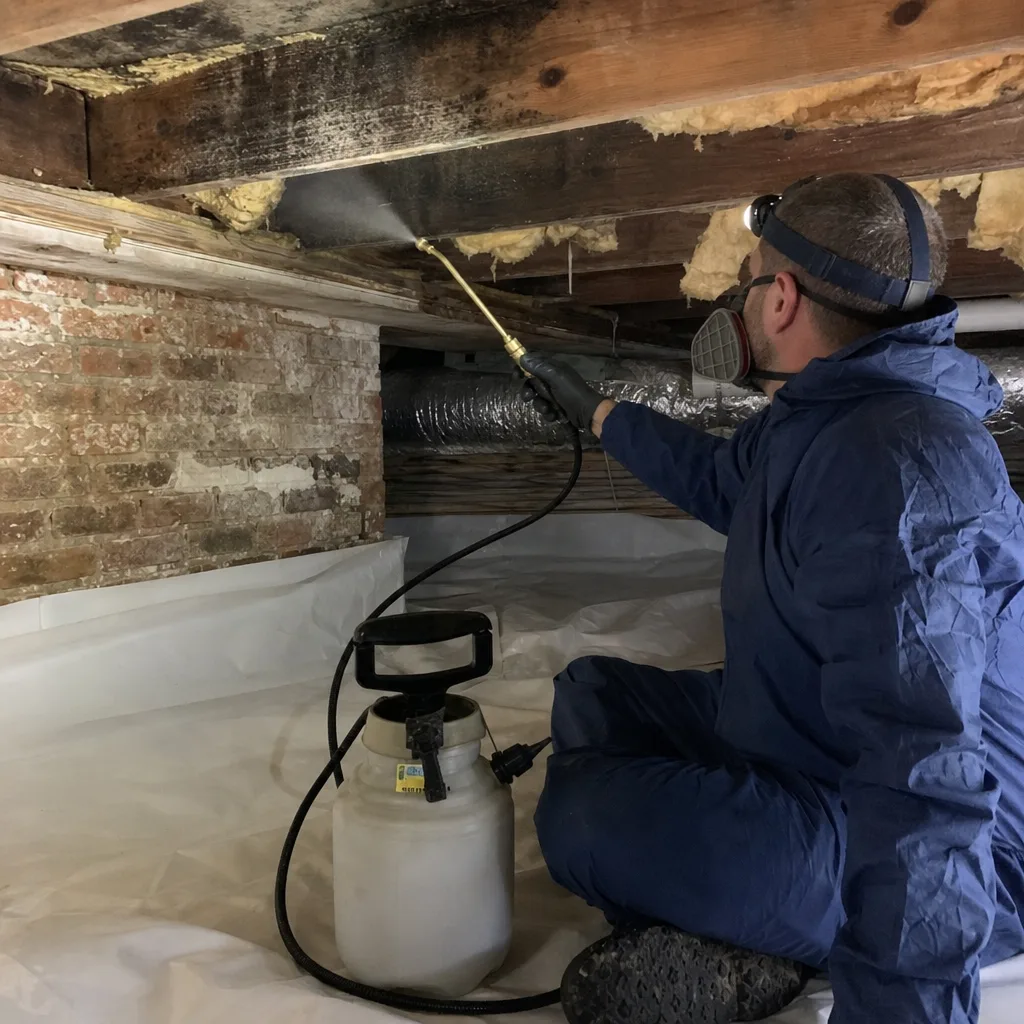
Ceiling & Roof Leak Water Damage
Storms and nor’easters find every weak seam in aging rowhouse roofs. Water that starts in an attic or top-floor ceiling migrates down through plaster and into the units below. We trace the full path, dry each affected surface, and coordinate roofing repairs with restoration.
Every job is handled by our in-house Water Damage Restoration team, the same crew from first extraction to final rebuild. For property owners on every block in Passaic, that means one phone number, one crew, one written guarantee.
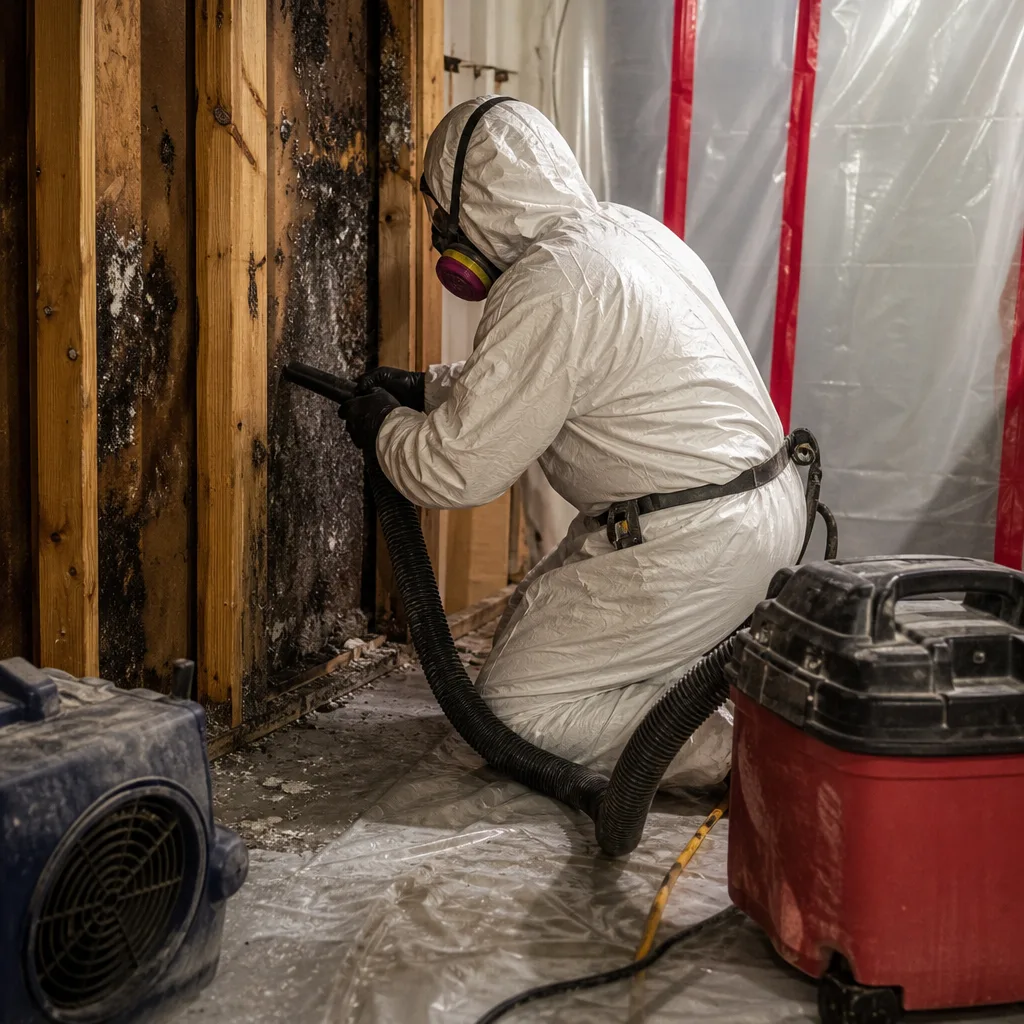
What happens when you call
- 1
A real person answersNo phone trees - you reach a local pro.
- 2
You get an upfront price rangeHonest numbers before anyone is dispatched.
- 3
A background-checked tech heads outLicensed & insured, dispatched right away.
- 4
You approve before work beginsNothing starts until you say go.
Water Damage Restoration Costs in Passaic, NJ
What you pay depends on how far the water traveled and how long it sat. Here are the ranges we see across Passaic:
- Single-room extraction and drying: $1,800 to $3,200
- Multi-floor water migration in a tenement: $4,500 to $9,500
- Passaic River basement backflow cleanup: $3,500 to $12,000 depending on contamination and contents
- Ceiling and roof leak drying plus plaster repair: $2,200 to $5,800
- Full-gut restoration after Category 3 flood: $15,000 to $45,000
Most Passaic water damage claims are covered by property insurance, minus the deductible. The cost moves with how many units got wet, whether Category 3 contamination is present, and how much original plaster and trim can be dried in place instead of removed. The free visual inspection gives you a firm scope before any work is authorized, which means you know the number before the crew starts. We also offer the $50 Off Any Repair Over $250, the $89 Seasonal Tune-Up, and a standing 5% Senior & Veteran discount, always available.
We Also Serve Cities Near Passaic
Our crews regularly cross into Wallington, Garfield, East Rutherford, and Rutherford for the same 45-minute water damage response. Same live dispatch, same certified crew, same written guarantee.
Serving Passaic, NJ - Our Local Coverage Area
We’re based in the Passaic area and know this community well. Use the map below to see our service coverage - if you’re nearby, we can almost certainly help.
Passaic Water Damage Restoration Questions, Answered
How quickly do you need to start drying a Passaic tenement after a pipe break to avoid multi-unit mold?
Within the first 24 hours, and ideally the same visit. Mold colonization begins in 48 to 72 hours in the warm, humid wall cavities of Passaic’s pre-war tenements, so extraction and air movers need to be running before that window closes. Call (917) 924-4221 and we’ll have a crew on site same visit.
Do you handle water damage that starts in one apartment and spreads through floors below?
Yes, that’s the standard Passaic job for us. We set containment at each stairwell to stop aerosolized water from spreading, then moisture-map every unit below the source. We dry each affected apartment and coordinate with each tenant and each adjuster. One crew handles the whole building.
When the Passaic River floods into a basement, is that treated like a normal clean-water loss?
No. River water is Category 3, contaminated with sewage, fuel residue, and everything upstream. We remove and discard porous materials that can’t be sanitized, treat all hard surfaces with antimicrobial agents, and run structural drying with full containment. Treating it as clean water leaves contamination in place and mold follows within days.
How do you dry a 1920s brick rowhouse without pulling lath-and-plaster walls down?
We dry in place whenever possible using Dri-Eaz air movers, Phoenix dehumidifiers, and daily moisture readings. Lath-and-plaster walls hold water differently than modern drywall, but with enough air movement and time, most can be saved. We only remove material that’s structurally compromised or Category 3 contaminated.
Can you keep our tenants in place while you dry a leaking ceiling in our multi-family building?
Often, yes. We contain the affected area, run equipment inside containment, and keep access paths clear for tenants. In some cases, a unit needs to be temporarily vacated for safety or access, and we coordinate that directly with you and your tenants. We’ll tell you straight what’s possible before work starts.
How fast can a crew actually get to my Passaic address?
We commit to 45 minutes for most Passaic callouts. Our dispatch board is live 24 hours a day, and the crews staged for Passaic know the streets. You call, a real person picks up, and the crew rolls. Call (917) 924-4221.
Will my homeowners insurance cover water damage restoration in Passaic?
Most pipe breaks, ceiling leaks, and storm-related water damage are covered under standard property policies. River flooding may require separate flood insurance depending on your policy. We document everything from the first hour and work directly with your adjuster. Bring us the policy and we’ll help you understand the coverage.
What should I do in the first 30 minutes after I find water damage?
Shut off the water at the source if you can reach it safely. Cut power to flooded areas if water is near outlets or appliances. Move small valuables out of the water. Don’t use a shop vac on large volumes, don’t open walls, and don’t try to dry multi-floor migration yourself. Then call us at (917) 924-4221. The first call is the one that limits the damage.
Written by Curt Bowman, Owner at Floodline Restoration Co. of Manhattan, serving Passaic with live dispatch and certified restoration crews.