
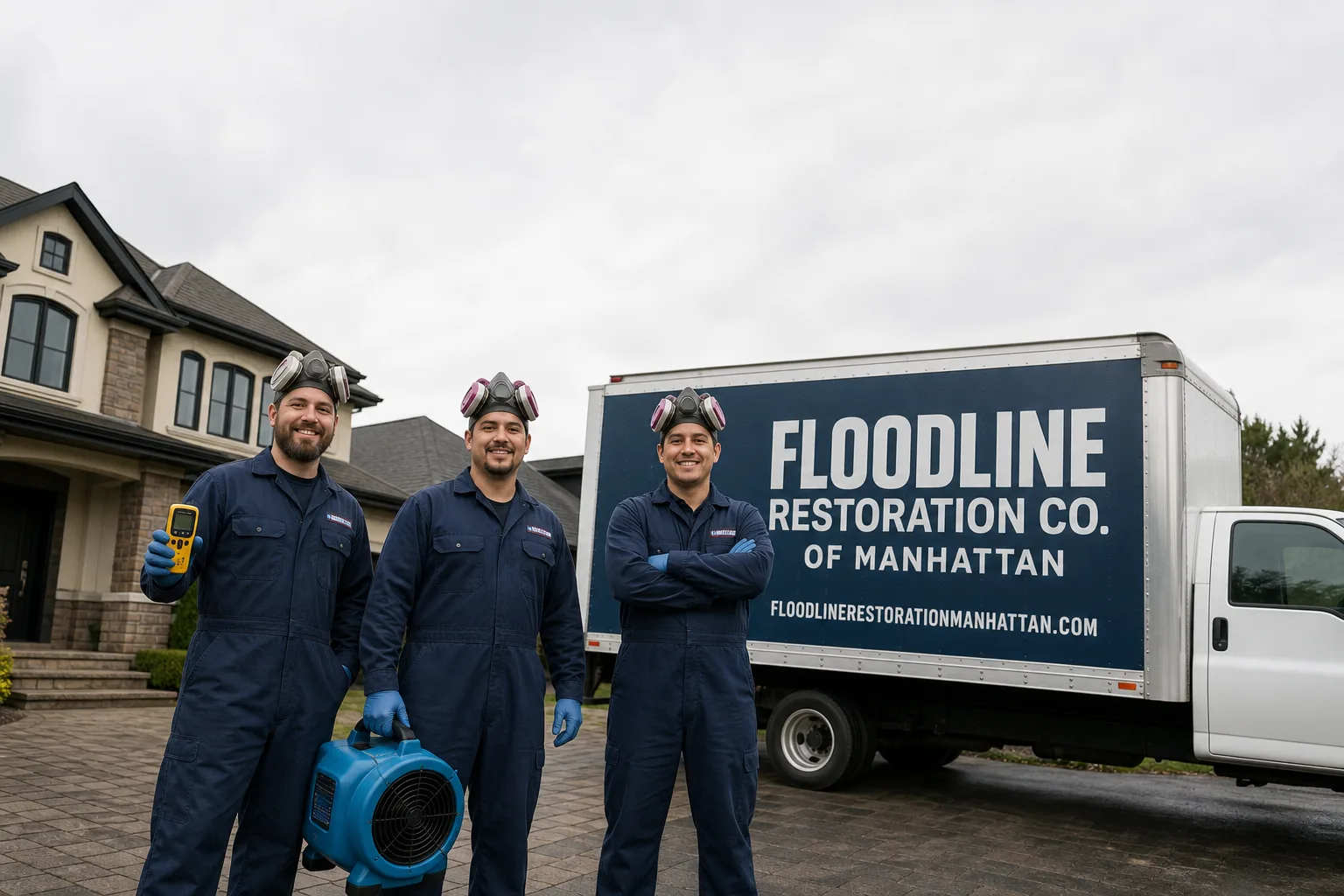
Free visual inspection and a written scope of work before any mitigation begins - photos, moisture readings, and drying logs go in your claim file
The scope we write is the scope we bill. Anything new gets shown to you, in writing, before we touch it.

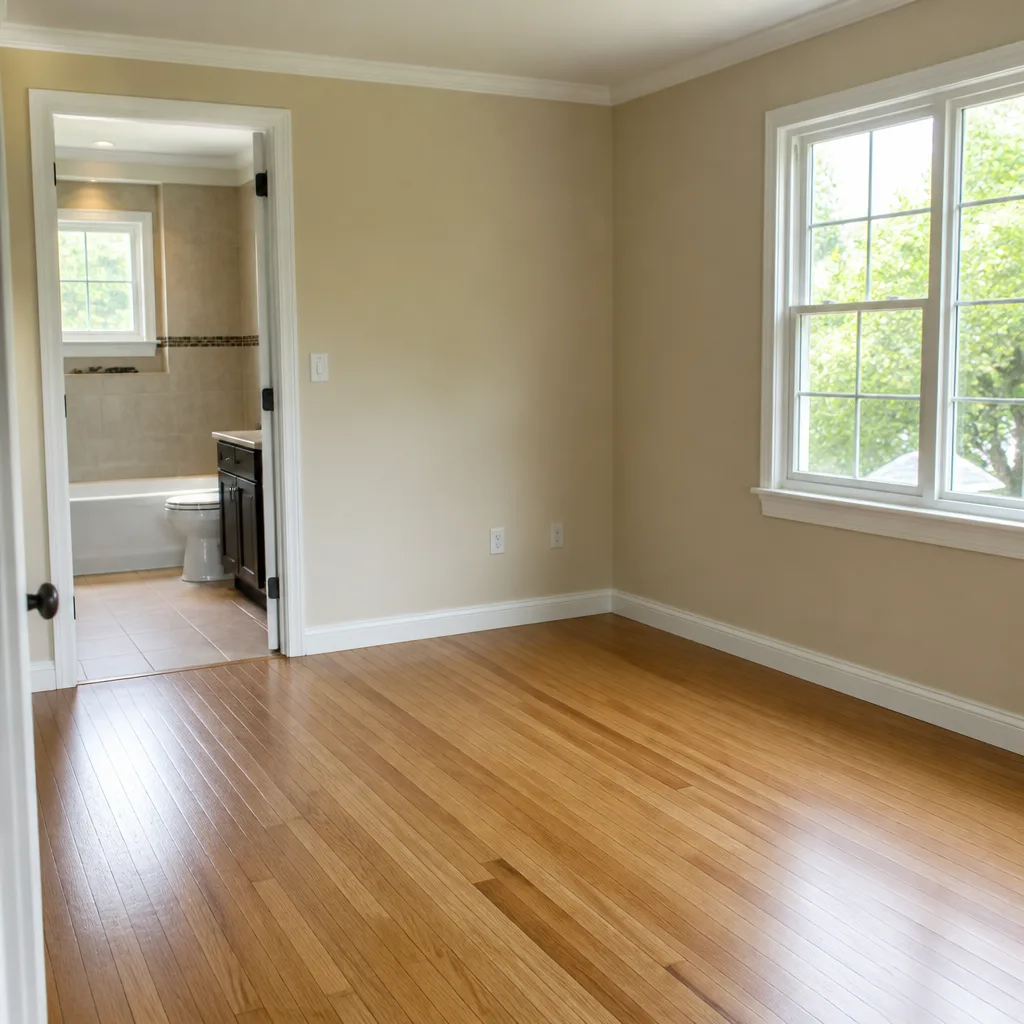
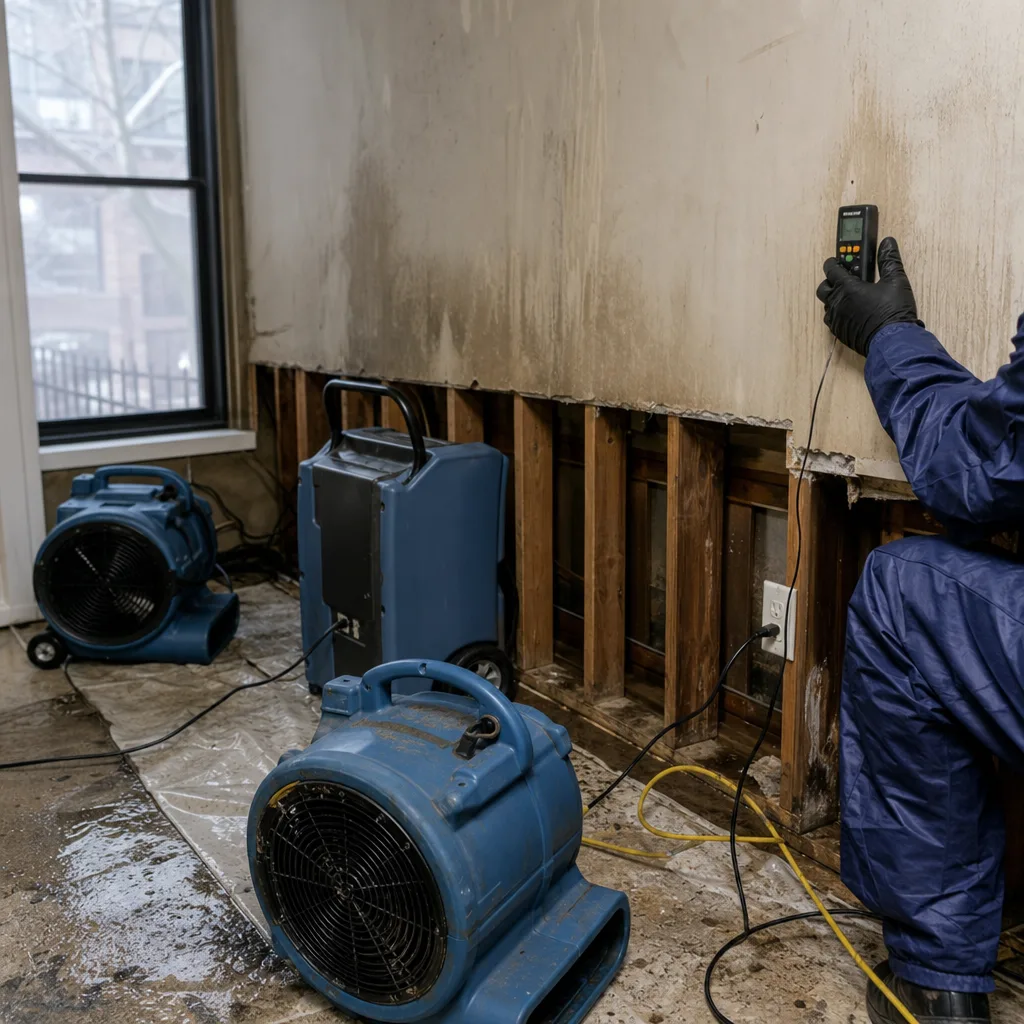 Before
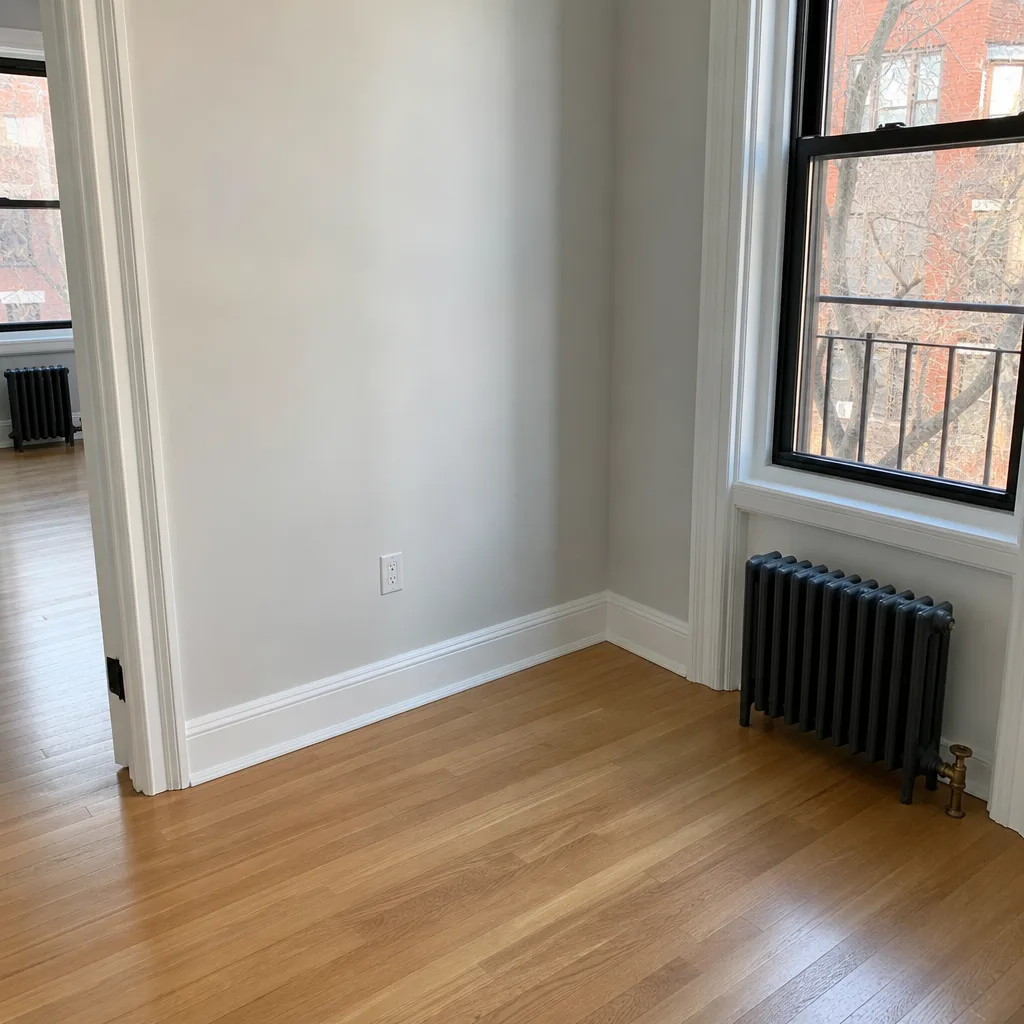 After
After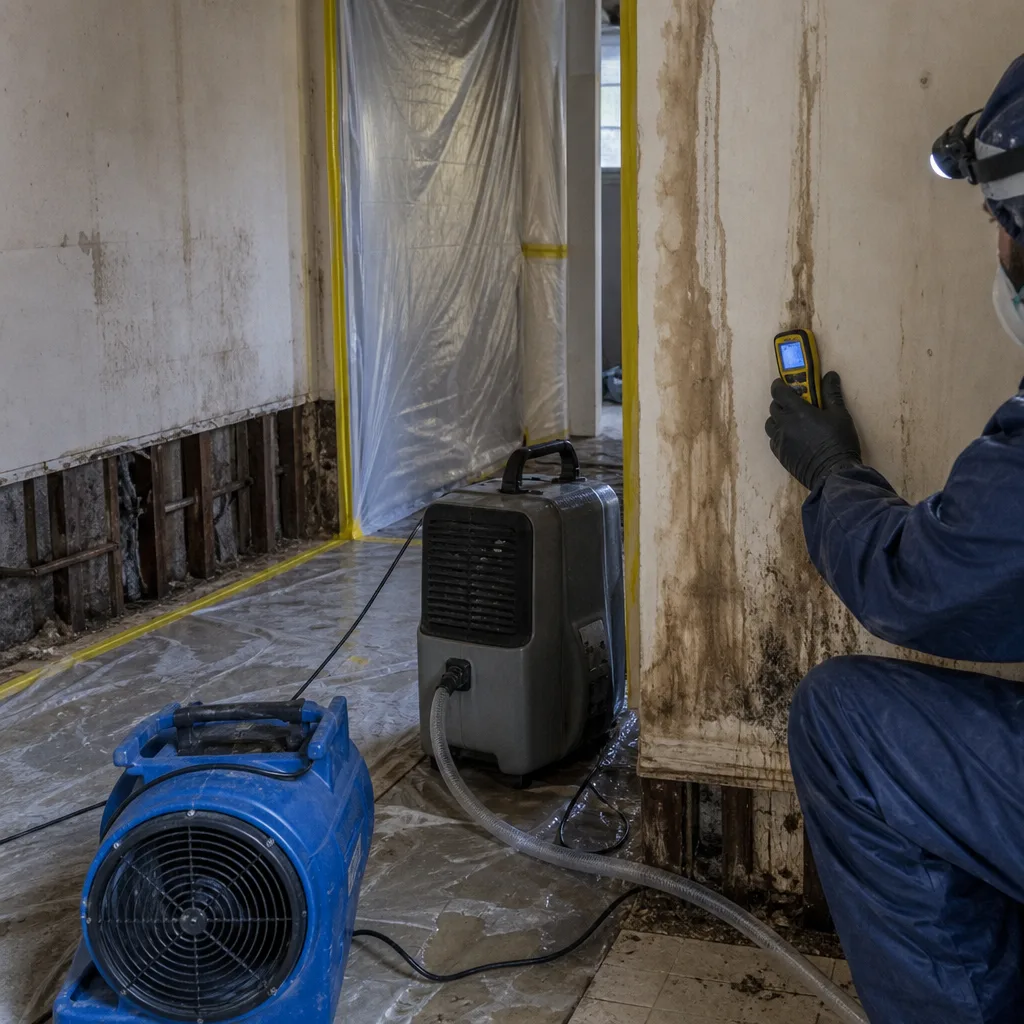 Before
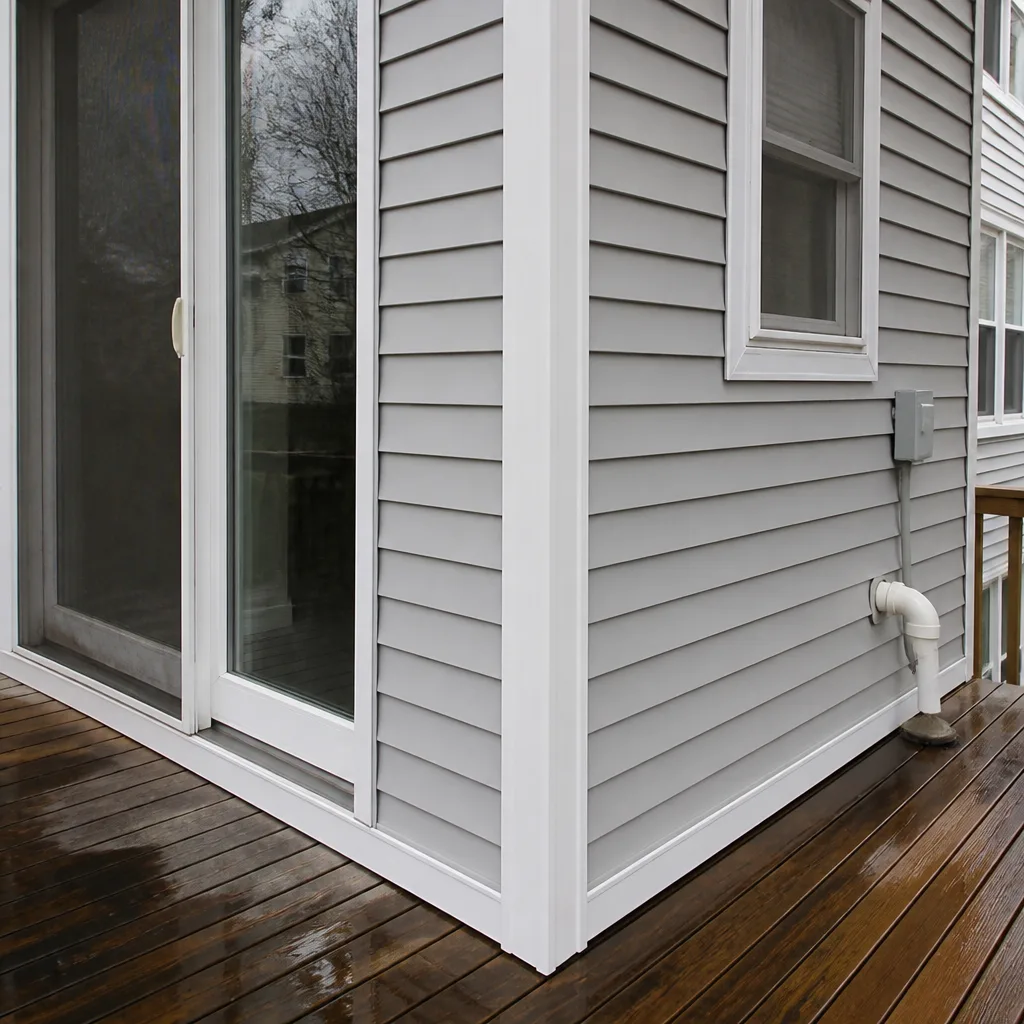 After
After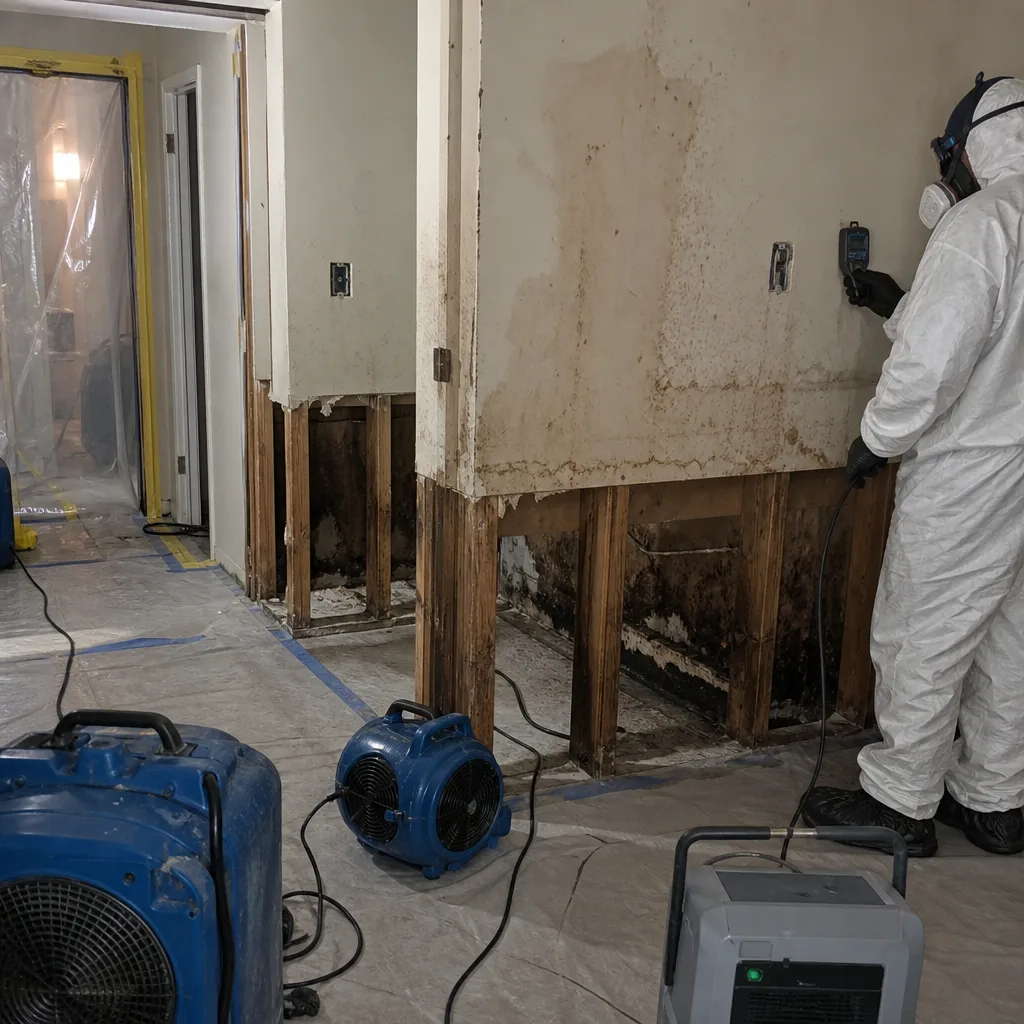 Before
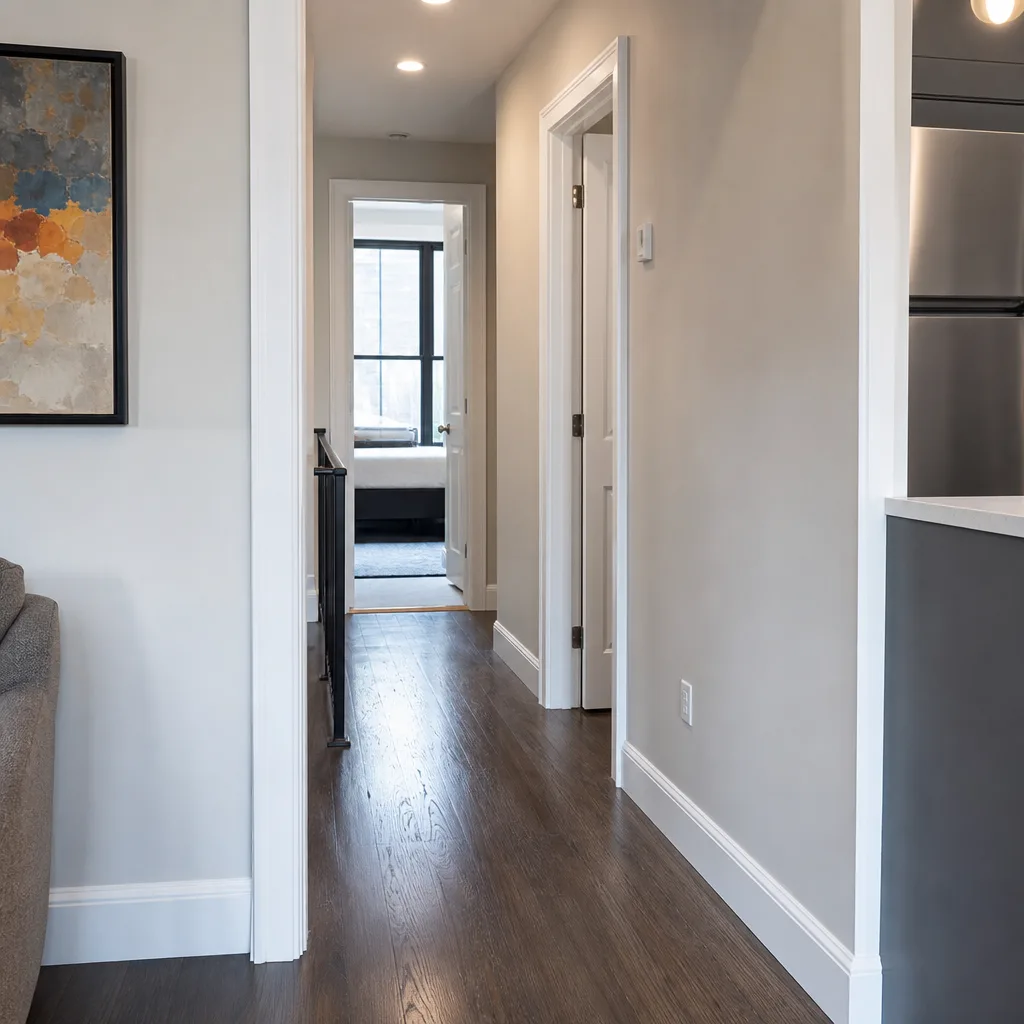 After
After24/7 Emergency Water Damage Restoration in River Edge
When water is rising in a River Edge basement, the first hour decides whether you’re drying drywall or tearing it out. Our crews are dispatched inside River Edge around the clock, every day of the year, and the phone is answered by a live person at 2 a.m., not a recording. Call (917) 924-4221 and a certified technician reaches your home the same visit, extraction pumps running. We give you a free visual inspection, a straight answer on what classification of water you’re dealing with, and a scope of work in writing before we start. If the Hackensack River is backing up toward New Bridge Road or a supply line let go inside a wall, don’t wait for “the water to go down.” It won’t, not by itself, and the mold window is 24 to 48 hours. In River Edge, that window closes faster because the river drains slow and the basements are old block and masonry, built to hold groundwater out imperfectly and to hold moisture in perfectly.
Understanding Water Damage Restoration Severity in River Edge Properties
Water damage is classified by what’s in the water, and that determines everything about how your house gets put back. Category 1 is clean water from a burst supply line or an overflowing sink. Category 2 is “gray” water with some contamination, like a failed sump pump discharging back into the basement. Category 3 is the kind River Edge knows too well: river water, rising groundwater, sewage, or anything from the Hackensack. Category 3 carries bacteria, and it means full extraction, antimicrobial treatment, often removal of porous materials.
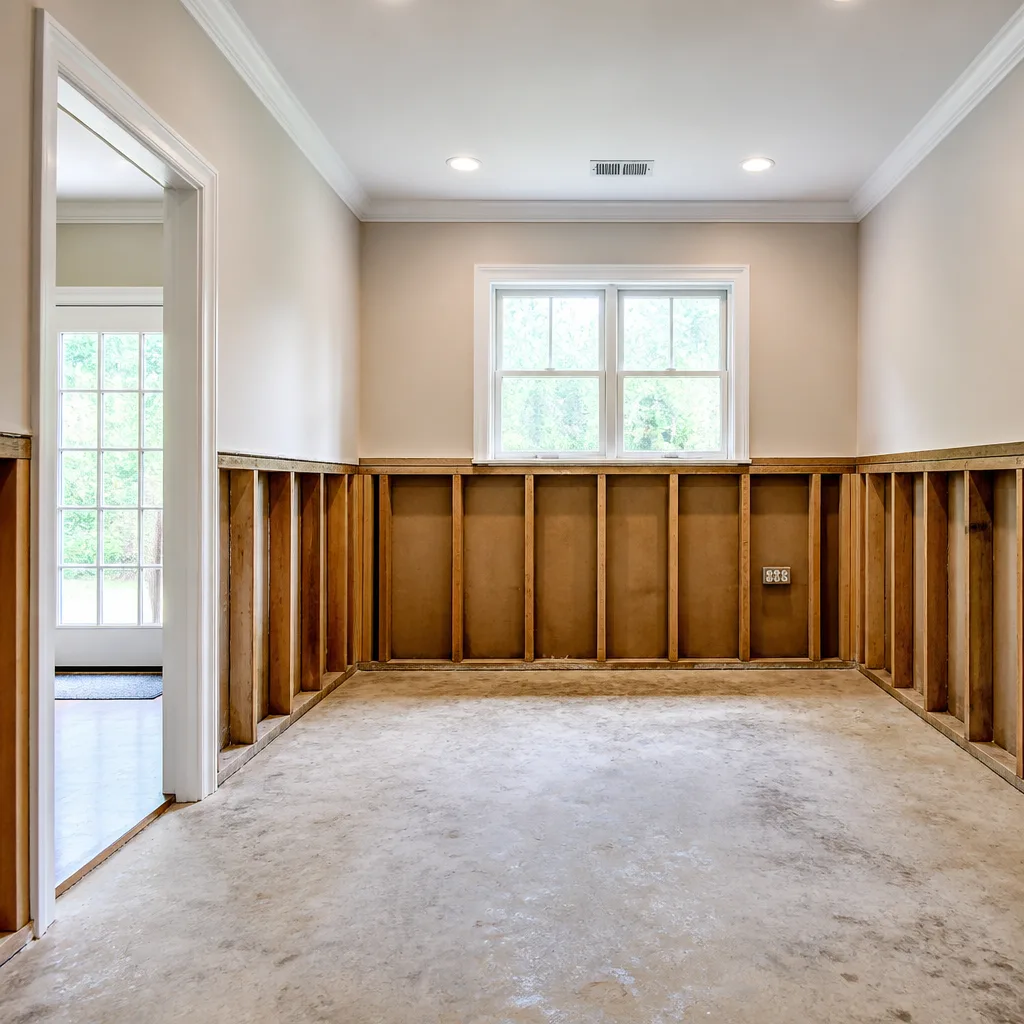
Most of River Edge’s housing stock was built between the late 1940s and the 1960s. Those Cape Cods, center-hall colonials, and split-levels often have block-foundation basements that were never waterproofed. The concrete block wicks groundwater continuously once the water table rises. Later, in the 1970s and 80s, folks finished those lower levels with wood paneling and drop ceilings directly over the block. That traps moisture behind a finish surface. Moisture mapping, done with thermal imaging and penetrating meters, tells us what’s wet behind what you can see. If we’re chasing Category 3 water through a 1970s finished basement on Bogert Road, we’re not taking paneling down unless the readings say there’s saturation behind it, but if the readings say the OSB sheathing is at 27%, leaving it would mean a mold colony framing inside your walls.
Why River Edge Property Owners Choose Floodline Restoration Co. of Manhattan
Our company was founded in 2008 by Curt Bowman. He built the business around a dispatch board, not a sales desk. River Edge homeowners call us for one reason: the same certified crew starts the job and finishes it. No mid-job handoff, no subcontracted strangers, no phone tag with the insurance carrier.
- 45-minute response commitment. When water is moving through your house, we commit to having a certified technician on site in River Edge within 45 minutes of your call.
- 24/7 live answer, every call. A real dispatcher picks up, at any hour. You’ll never argue with a phone tree at three in the morning.
- IICRC-certified technicians. Our crews carry WRT, ASD, and AMRT certifications. That’s Water Damage Restoration Technician, Applied Structural Drying, and Applied Microbial Remediation Technician.
- Free visual inspection. We tell you what’s actually wet, what classification of water it is, and what drying will require before we write a single estimate.
- Direct insurance billing. We work with your carrier, send them the photos, readings, and line items, and you don’t play messenger.
- One team from extraction to reconstruction. We don’t hand the job off after drying. The same background-checked, uniformed crew handles the rebuild.
Our Water Damage Restoration Process
Inspection & Assessment
We walk the basement, check moisture in walls, floors, and floors above, and classify the water. Thermal imaging shows us the migration you can’t see.
Extraction / Stabilization
Standing water is lifted with truck-mounted and portable extraction units. We stop the source if it’s still feeding, and we start the clock on drying.
Drying & Dehumidification
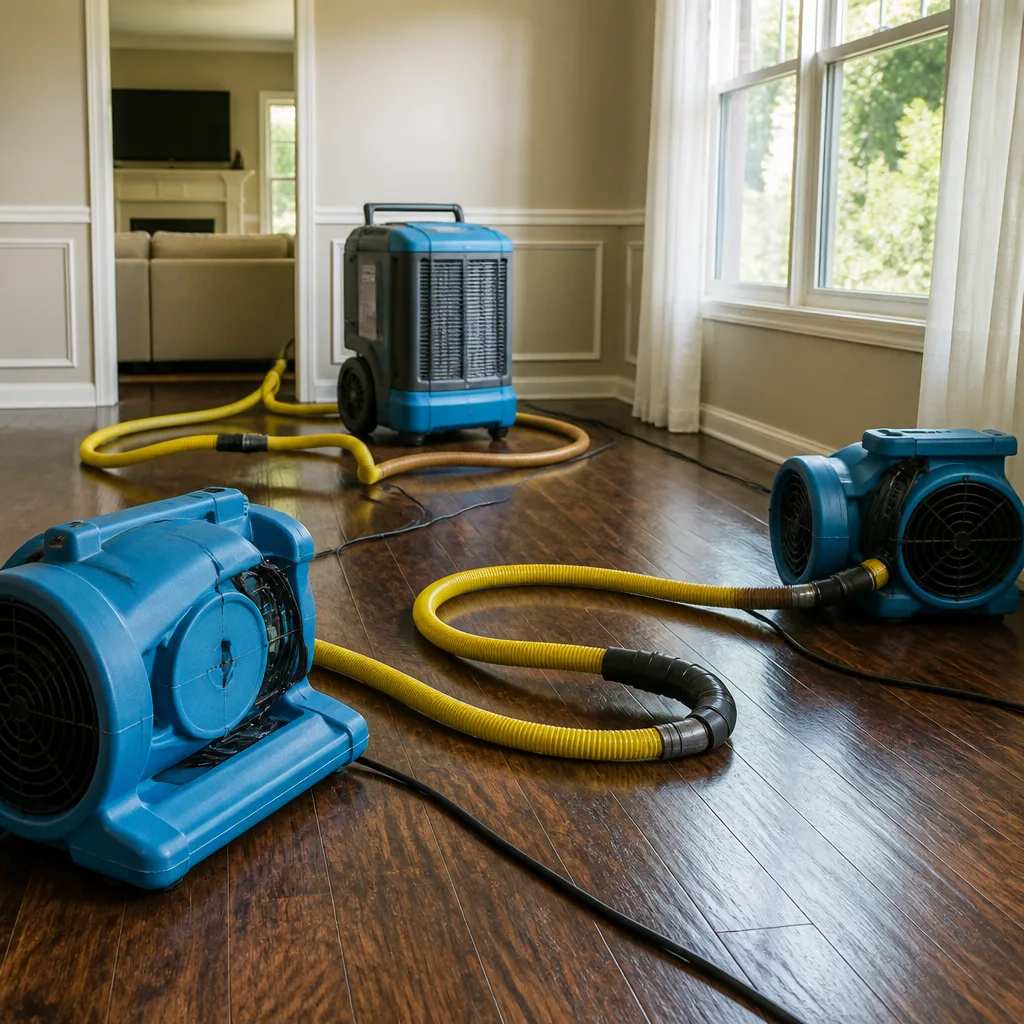
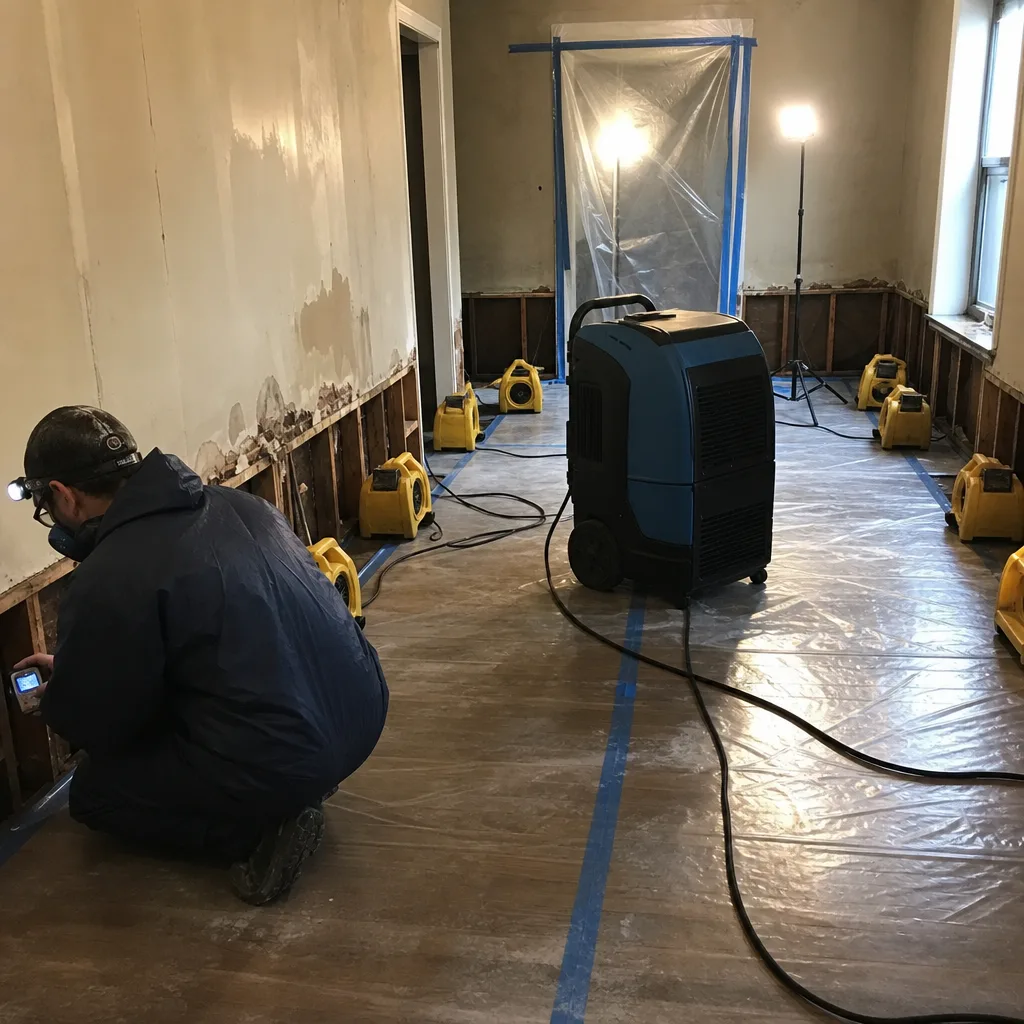
Dri-Eaz LGR dehumidifiers and XPOWER air movers are positioned based on moisture maps. We take daily readings until the structural materials hit the dry standard.
Cleaning & Sanitization
Category 2 and 3 water requires antimicrobial treatment of all affected framing and masonry. We use hospital-grade disinfectants approved for porous surfaces.
Mold & Microbial Control
On riverine losses, we set up containment with negative air pressure and run HEPA air scrubbers during and after demolition, not just as a final step.
Repairs & Restoration
Drywall, insulation, paneling, trim, flooring, whatever came out goes back in. And the same crew that mopped it up is the one swinging the hammer.
Need Emergency Water Damage Restoration in River Edge Now?
Crews minutes away, answering live 24 hours a day. The sooner we start, the less it costs.
Working With Your Insurance Company
Insurance claims for water damage turn on documentation. The carrier wants to see exactly what was wet, how wet it was, and what you did about it. Our Water Damage Restoration team has handled enough flood and burst-pipe claims in River Edge to know what carriers ask for. We photograph every room, log every moisture reading, and write a line-item scope that matches the actual damage, not a padded worst-case scenario. We send all of it directly to your adjuster, and we talk to them on the phone so you don’t have to. There’s no percentage taken, no fee for handling the claim. We bill your carrier directly for covered losses, and you see the same numbers we send them. The 90-Day Done Right Promise stands behind the work: if it’s not done right, we make it right, in writing, with no arguing.
What We Provide Your Insurer
- Thorough documentation of the loss
- Photos of all damage, room by room
- Moisture readings and drying logs
- A detailed, line-item scope of work
- Direct coordination with your carrier
Built for River Edge’s Loss Calendar
River Edge’s water damage calendar has two distinct seasons. January and February bring the deep freezes that split copper supply lines in unheated crawlspaces and exterior-wall chases. When a pipe lets go in a 1950s colonial, water travels down through two floors of framing before anyone notices, and by the time it pools on the basement floor it has already saturated subfloor and ceiling bays. The labor cost to open those cavities and dry them is higher than the base extraction.
The warmer months are worse. Spring snowmelt and heavy spring rains push the water table up under River Edge’s block foundations, and seepage through floor-to-wall joints is common on Bogert Road, Riverside Drive, and the streets running east toward the Hackensack. Summer thunderstorms can dump an inch and a half in an hour on flat ground that drains slowly toward the Meadowlands, overwhelming sumps. And any nor’easter or tropical remnant that pushes the Hackensack over its banks brings Category 3 water into the low-lying eastern parcels along New Bridge Road. Those are the losses we see repeated at the same addresses, decade after decade.
Water Damage Restoration Across River Edge’s Neighborhoods
The blocks immediately east of New Bridge Road, downslope toward the river, are the first to see Category 3 basement flooding after heavy rain. We know the cross streets, the ones where the storm drains back up and the yards hold water for days. Homeowners there don’t call us after the water recedes; they call us when the water is still coming in.
The Riverside Drive corridor runs parallel to the Hackensack and carries a mix of post-war colonials and some of the town’s older homes. Those basements sit closest to the river’s high-water mark, and we’ve returned to the same addresses after multiple nor’easters. Residents there have learned the difference between surface water and groundwater. Groundwater forces itself through the block foundation from below; you don’t see it coming in, you see it appearing across the floor, rising.
Up past Kinderkamack Road, on the west side of town, the homes are somewhat higher and drier, but they have their own pattern. Seventy-year-old galvanized supply lines let go inside walls, and upstairs bath overflows send clean water down through finish ceilings. Those are Category 1 losses, but they’re no less destructive if they sit over a weekend.
The homes around Cherry Hill, north of the school, are a mix of 1960s split-levels and some newer infill. Split-levels hide damage differently: water pools in the lower level, but the step-up foundation walls wick upward, and drywall on the upper side of a half-wall can be saturated from below without any visible water on that floor. Our moisture mapping on those homes goes wall-by-wall and floor-by-floor, not just around the visible puddle.
Specialized Water Damage Restoration Services We Offer in River Edge
Emergency Water Extraction
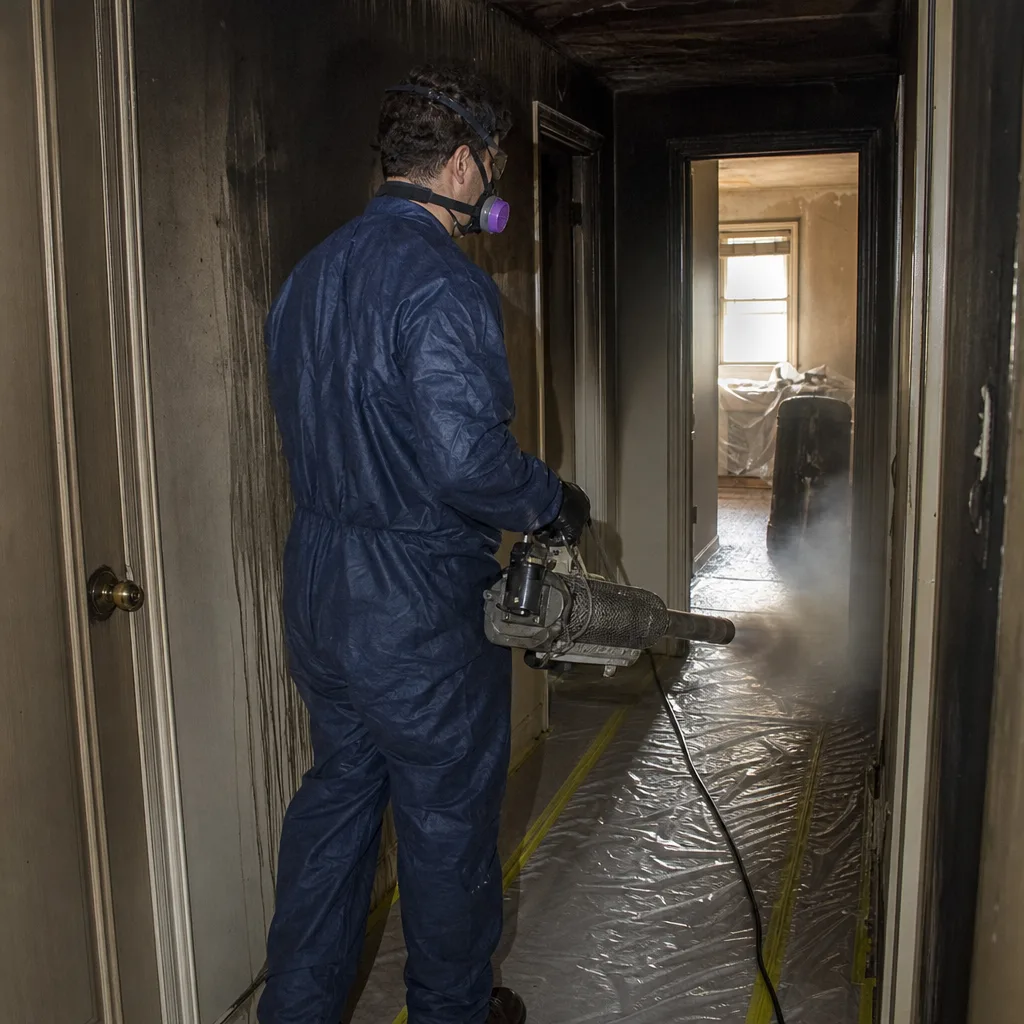
Standing water removed now prevents damage from becoming demolition later. We run truck-mounted extractors and submersible pumps within the first hour of arrival. In River Edge basements with original 1950s slab and block, extraction isn’t just about the floor; water has already begun to wick into the masonry, so we start the drying process simultaneously, not after.
Structural Drying & Dehumidification
Your basement after a flood is a humid box. We position Dri-Eaz LGR 7000XLi dehumidifiers and XPOWER air movers to create airflow across every wet surface, including inside open wall cavities. Daily moisture reads, logged with penetrating and non-penetrating meters, tell us when the framing has actually dried, not just when the surface feels dry. We’ve seen block foundations in River Edge that registered 27% moisture for a week after the visible water was gone.
Flood Cleanup
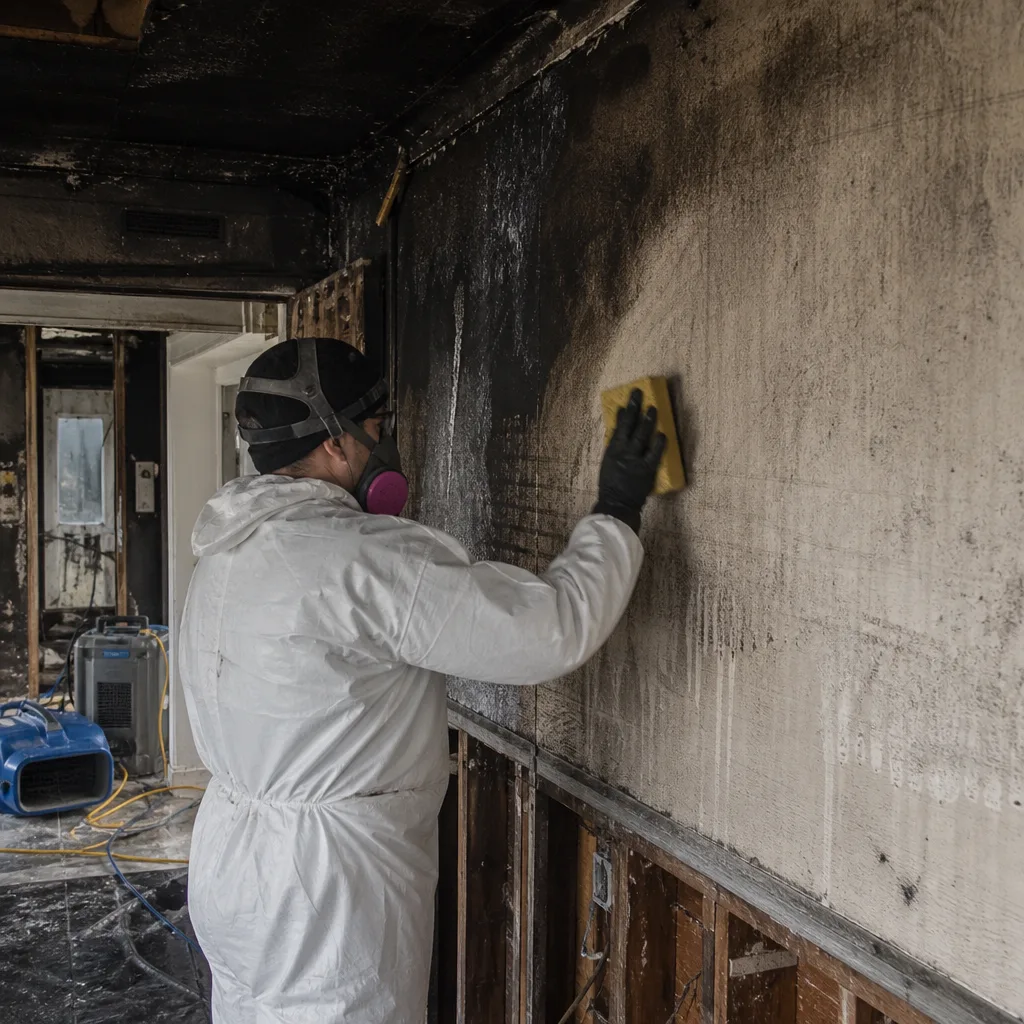
River water is not clean water. It carries silt, bacteria, and whatever the Hackensack picked up upstream. Flood cleanup means extraction, removal of contaminated porous materials like carpet and padding, disposal of saturated drywall, and full antimicrobial treatment of every surface the water touched. We work in containment on Category 3 losses, with HEPA air scrubbers running to keep disturbed spores from moving through the rest of the house.
Burst Pipe Restoration
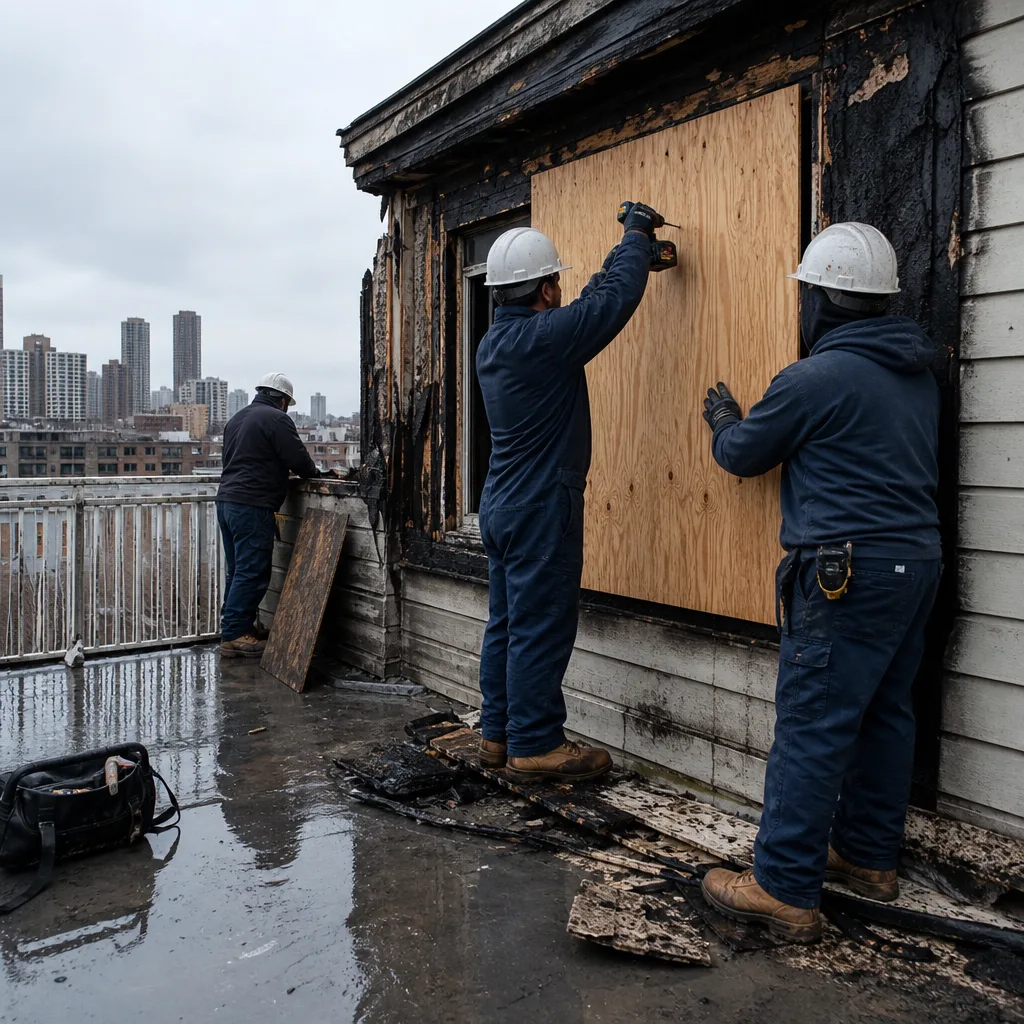
A frozen copper line in a River Edge kitchen wall sends hundreds of gallons through cabinets, flooring, and down into the basement. We trace the water’s path, open the minimum amount of structure needed to dry it, and document the whole thing. Category 1 from a burst pipe usually means less demolition than a flood, but only if drying starts within hours, not days.
Basement Water Removal
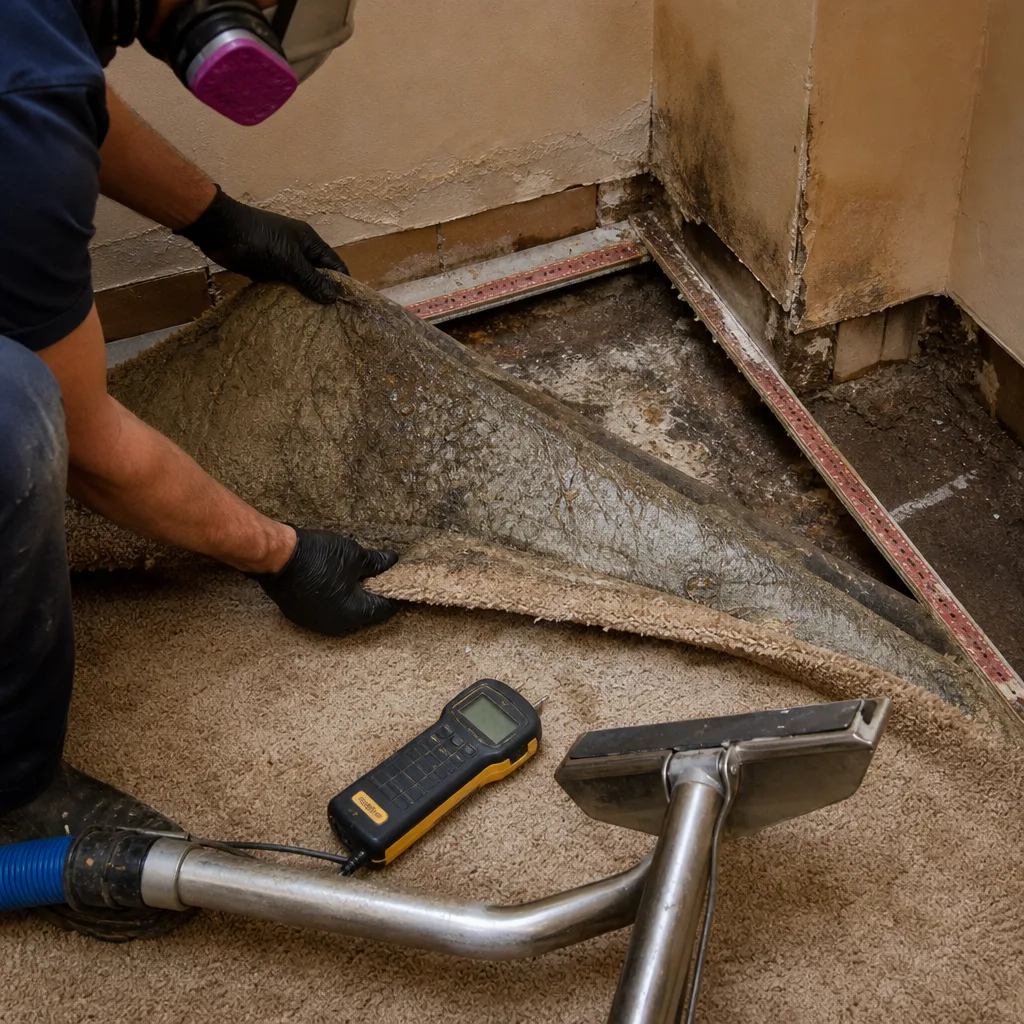
Whether it’s a sump failure on Riverside Drive or river water coming in on New Bridge Road, we get the water out and the drying started in the same visit. Basement-specific considerations matter here: block walls wick, slab floors hold moisture against a vapor barrier that may not exist, and finished lower levels from the 1970s and 80s hide water behind paneling and false ceilings. We build our drying plan around those conditions, not around a generic template.
What happens when you call
- 1
A real person answersNo phone trees - you reach a local pro.
- 2
You get an upfront price rangeHonest numbers before anyone is dispatched.
- 3
A background-checked tech heads outLicensed & insured, dispatched right away.
- 4
You approve before work beginsNothing starts until you say go.
Water Damage Restoration Costs in River Edge, NJ
Honest numbers for River Edge. A basic Category 1 basement extraction with structural drying and no demolition typically runs $2,800 to $4,600. A burst pipe loss that requires opening walls and ceilings on two floors lands between $4,500 and $9,000. Flood cleanup from Hackensack River water, with Category 3 contamination, demolition of finished surfaces, antimicrobial treatment, and full drying runs $7,000 to $15,000, depending on how much finished space has to come out and how long drying takes. These are real ranges based on the work we’ve done in River Edge’s homes, not national averages.
What moves the price: whether supply line damage opened walls and ceilings, how many rooms took water, whether there’s finished space over a wet basement, and how long the water sat before extraction started. Insurance typically covers sudden and accidental discharge, so a burst pipe is usually a covered loss. Flood damage from the Hackensack requires a separate flood policy; standard homeowners policies exclude it. If you’re not sure which situation you’re in, call us. The inspection is free, and we’ll tell you honestly what your claim is likely to cover before anything gets torn out. A square deal: no surprises on the bill.
We Also Serve Cities Near River Edge
Our crews are in New Milford, Oradell, Paramus, and Maywood every week. Some of those towns are higher and drier than River Edge, and the loss patterns there run more toward burst pipes and plumbing failures. But every one of them has older, block-foundation basements that deserve the same careful drying protocol. If you’re in a neighboring Bergen County town and water is making decisions for you, call the same number.
Serving River Edge, NJ - Our Local Coverage Area
We’re based in the River Edge area and know this community well. Use the map below to see our service coverage - if you’re nearby, we can almost certainly help.
River Edge Water Damage Restoration Questions, Answered
After the Hackensack River floods our block on New Bridge Road, how soon must water extraction start to avoid tearing out finished walls?
Within 24 to 48 hours, and sooner is always better. Once river water sits in a finished basement beyond that window, drywall, insulation, and paneling that could have been dried in place become a tear-out. Category 3 water is contamination: it carries bacteria, and it breeds mold. If you call us while the water is still there, we get extraction running the same visit and usually save the framing. If you wait a week, you’re replacing drywall and possibly stud walls. Call (917) 924-4221 the minute water shows up; the estimate is free, and live dispatch will get a crew to your block quickly.
Why do the same basements on Riverside Drive keep showing up in your call logs after every nor’easter?
Because Riverside Drive sits directly alongside the Hackensack River, and its basements sit below the river’s high-water table during flood events. The river drains slowly south toward the Meadowlands, so water on Riverside Drive stays high for days, not hours. Groundwater forces itself through 1950s block foundations, and if the basement was finished in the 1980s with paneling and a drop ceiling, that water gets trapped behind finishes. We keep returning to the same addresses because the properties are built at the river’s edge, not because anyone left the job incomplete. After a riverine flood, structural drying without full containment and moisture mapping simply won’t work.
Can you dry out a 1970s finished basement without removing the wood paneling and drop ceiling?
Sometimes, but not usually after a flood. If the moisture map shows water behind the paneling, it can’t dry in place without airflow into every cavity, and paneling with a vapor barrier behind it traps moisture rather than releasing it. We dry what can be dried, and we cut exactly what must be opened. The alternative, leaving wet paneling in place, creates a mold colony inside your walls that will cost far more to remove later. Call us for a free inspection and we’ll show you the readings.
What does ‘pre-loss condition’ mean for River Edge’s post-WWII Cape Cods after a flood?
Pre-loss condition means your house works the way it did before the water came: dry framing, dry insulation, dry finished surfaces, no lingering odor, no hidden mold. For River Edge’s Cape Cods and colonials, that often means addressing the original block foundation that was never waterproofed. If the flood source was riverine, pre-loss condition doesn’t guarantee the basement stays dry in the next flood; it means we’ve dried and treated everything that was wet, and your house is structurally sound and healthy again.
After Ida, my neighbor waited three weeks to call for help and ended up with black mold behind OSB walls. What should I do differently?
Call immediately, while the water is still there. We don’t wait for the water to recede; we start extracting the moment we arrive. After Ida, our crew pulled flooded drywall from a 1960s split-level on Bogert Road and found OSB sheathing behind a 1980s finished basement already wicking Category 3 river water for 72 hours. We cut containment, ran Dri-Eaz LGR 7000XLi dehumidifiers and XPOWER air movers for five days, and logged moisture readings dropping from 27% to 9% before antimicrobial treatment. The owner had been told by another contractor to just ‘air it out,’ which would have left black mold framing untouched. Extraction and drying on day one is the difference between replacing drywall and replacing structure.
How fast can a certified technician reach my home in River Edge?
Our commitment is 45 minutes from your call to a technician at your door. We dispatch from the Bronx and keep crews positioned around Bergen County through the storm season, so response is typically faster than that. The phone is answered live, 24/7, by a real dispatcher who knows the streets in River Edge, not by an answering machine.
Does my homeowners insurance cover water damage restoration in River Edge?
Most homeowners policies cover sudden and accidental discharge, so a burst supply line, an overflowing tub, or a failed water heater is usually covered. Flood damage from the Hackensack River is a separate flood policy through FEMA’s National Flood Insurance Program or a private carrier. We work with both types of claims. We photograph everything, log the moisture readings, write the scope, and bill your carrier directly for the covered portion.
What should I do in the first 30 minutes after I find water in my River Edge basement?
Call (917) 924-4221 first. Then, if it’s safe to reach the electrical panel, shut off power to the basement. Don’t walk through standing water if there’s any chance wiring or appliances are submerged. Don’t use a shop vac on river water; it won’t keep up with groundwater, and it won’t dry the block walls. Don’t move the water yourself. The first 30 minutes are for shutting off power and getting a certified crew on the way. Every hour of delay adds to the tear-out list.
This is what we do for Water Damage Restoration in River Edge. The line the water left is where we start, and we stay with the job until the last piece of trim is painted and the moisture log is in your hand. Done right, and backed in writing. Call (917) 924-4221 for a free estimate. We’ll be there when we say.
Written by Curt Bowman, Owner at Floodline Restoration Co. of Manhattan, serving River Edge since 2010.