
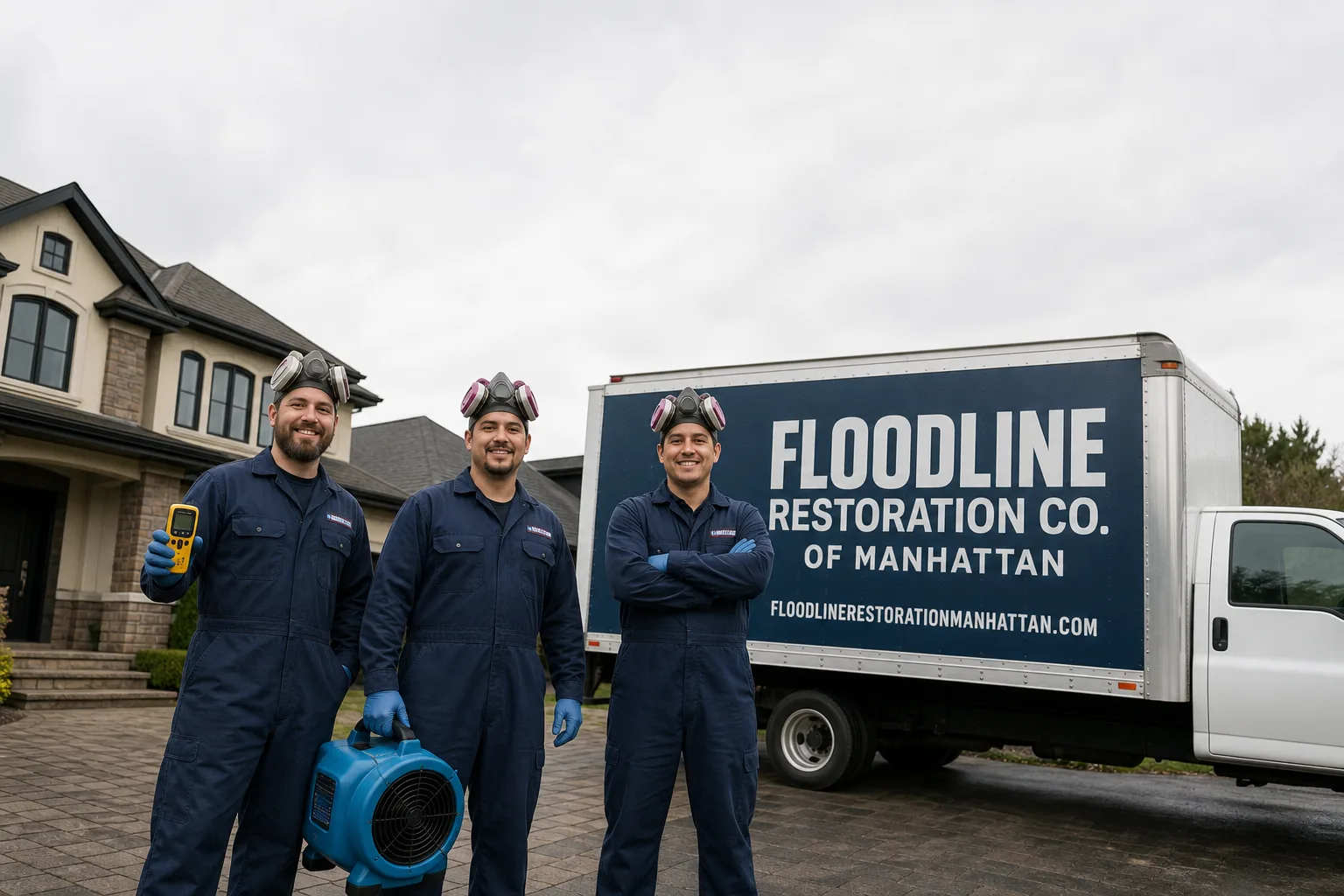
Free visual inspection and a written scope of work before any mitigation begins - photos, moisture readings, and drying logs go in your claim file
The scope we write is the scope we bill. Anything new gets shown to you, in writing, before we touch it.






 Before
 After
After Before
 After
After Before
 After
After24/7 Emergency Water Damage Restoration in Tarrytown
Water damage restoration in Tarrytown typically costs $2,100-$5,800 depending on the water category, the size of the affected area, and whether original plaster walls or fieldstone foundations are involved. A burst supply line in a 1920s colonial usually lands in that range; a Category 3 Hudson River surge into a riverfront basement runs higher. If you’re calling because water is actively moving into the house, do not wait. Call (917) 924-4221 now and a live dispatcher will answer, regardless of the hour.
We crew for Tarrytown specifically because the village throws two very different water problems at homeowners: river surge down at the waterfront and runoff from the hillsides above. Both demand fast extraction, but they’re not treated the same way. Our crews arrive in Tarrytown within 45 minutes, run a free visual inspection, and start extraction the same visit. The first hour matters because standing water in a balloon-framed Victorian wicks up through original plaster and into the framing faster than most homeowners realize. We answer the phone with a person. Always.
Understanding Water Damage Restoration Severity in Tarrytown Properties
Restoration work sorts water into three categories. Category 1 is clean water from a burst supply line or an overflowing sink. Category 2 carries some contamination, gray water from washing machines or dishwashers. Category 3 is grossly contaminated: sewage, river water, or groundwater that has picked up sediment, fertilizer, and microbial load. Tarrytown’s riverfront homes near the Metro-North station flood with Hudson River water that is always Category 3. Brackish, silty, and carrying whatever the tide pushed in. Hillside basements in the upper village typically see Category 1 or 2 seepage, but after heavy rain the same basements can dirty up fast.
The housing stock matters here more than in nearly any other Westchester village we serve. Most Tarrytown homes between Main Street and the river went up between 1870 and 1920. They’re balloon-framed, which means wall cavities run unbroken from sill to attic. Water travels vertically with alarming speed in those cavities. Horsehair plaster, original lath, and fieldstone foundations all behave differently under drying stress. A crew that treats a Tarrytown Victorian like a 1980s split-level will crack the plaster, pop the lath keys, and leave moisture hiding where the meters never looked. This is why we moisture-map before we touch equipment and why we log readings daily until the dry standard holds.
Why Tarrytown Property Owners Choose Floodline Restoration Co. of Manhattan
- 45-minute response to any Tarrytown address. We dispatch from our New York City office to the village immediately, not when a sales rep becomes available.
- A live person answers, 24 hours a day, 365 days a year. No answering service, no recording, no callback. A dispatcher picks up at 2 a.m. and stays on the line until the crew is rolling.
- IICRC-certified crews. Our techs hold WRT and FSRT certifications and train to RIA and IFA standards. Same uniformed, background-checked team from first extraction to final trim.
- Free visual inspection with a written scope. You see what needs doing, in writing, before anything gets demoed. No work starts without your sign-off.
- Direct insurance billing. We bill your carrier directly and coordinate with your adjuster. You don’t play messenger in the middle of a loss.
- One crew from water to rebuild. We extract, dry, clean, and reconstruct. No mid-job handoff to a subcontractor you never picked.
Our Water Damage Restoration Process
Inspection & Assessment
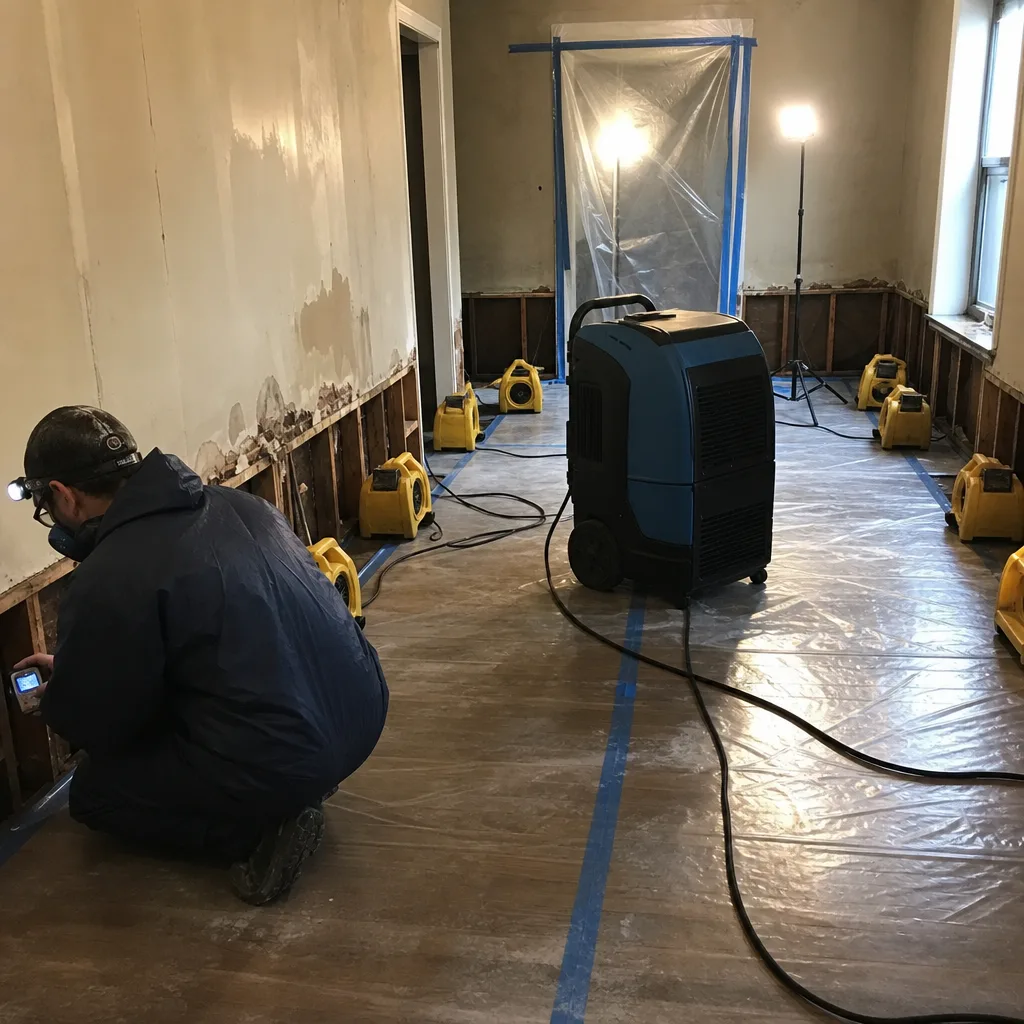
We start with thermal imaging and pin-type moisture meters to find water that isn’t visible. In Tarrytown’s older homes, that often means water behind plaster, inside wall cavities, and soaked into original floor systems. The moisture map drives everything after.
Extraction & Stabilization
Standing water comes out with truck-mounted and portable extraction units. On riverfront jobs we treat Category 3 water with appropriate antimicrobial protocols from the first pass. We remove only what cannot be dried.
Drying & Dehumidification
We set Dri-Eaz low-grain refrigerant dehumidifiers, XPOWER air movers, and Phoenix axial fans in a configuration matched to the building’s construction, not a generic template. Daily moisture readings get logged and shared with you and your carrier.
Cleaning & Sanitization
Affected surfaces get cleaned and sanitized to the appropriate standard for the water category involved. HEPA air scrubbers run where mold or particulate is a concern. We treat the space, not just the visible damage.
Specialty Treatment for Older Construction
Horsehair plaster, balloon framing, and fieldstone foundations each need a different drying approach. We adjust humidity targets downward slowly to avoid cracking original plaster. Where lead paint or asbestos is suspected, we coordinate with licensed abatement before opening walls.
Repairs & Restoration
When the structure hits dry standard, the same crew handles reconstruction. Trim, flooring, drywall or plaster repair, paint. We don’t hand you a drying log and walk away. We finish the job, then back it with the 90-Day Done Right Promise in writing.
Need Emergency Water Damage Restoration in Tarrytown Now?
Crews minutes away, answering live 24 hours a day. The sooner we start, the less it costs.
Working With Your Insurance Company
Most Tarrytown homeowners we serve carry standard homeowners insurance that covers sudden and accidental water damage. That includes burst supply lines, appliance failures, and storm-related intrusion. It usually does not cover slow seepage that has been happening for months, which is another reason to call early. We document everything from the first hour: photos room by room, moisture readings, equipment logs, and a line-item scope of work that matches what adjusters expect to see. Our project managers speak directly to your adjuster. You get copied on everything, but you don’t have to referee. When the carrier has questions, we answer them. When they need documentation, we already have it.
What We Provide Your Insurer
- Thorough documentation of the loss
- Photos of all damage, room by room
- Moisture readings and drying logs
- A detailed, line-item scope of work
- Direct coordination with your carrier
Built for Tarrytown’s Loss Calendar
Tarrytown sees water damage in seasonal waves, and each season favors a different failure mode. January and February bring hard freezes that split aging galvanized supply lines in uninsulated exterior walls, a pattern we see constantly in the Victorians along Grove Street and Hamilton Place. March and April bring spring thaw and the first heavy rains, filling hillside basements with runoff that hasn’t happened since the previous fall. June through August brings thunderstorms that dump an inch of rain in an hour, overwhelming the village’s older storm drains and sending water through fieldstone foundations. September through November is nor’easter season, driving wind-driven rain into aging window frames and rooflines. A Tarrytown homeowner’s most important season is the one currently happening.
Water Damage Restoration Across Tarrytown’s Neighborhoods
The work changes block by block. Down near the Metro-North station and the riverfront, we respond to storm-surge flooding and tidal backup. Homes there sit in FEMA flood zones and often carry flood insurance through the NFIP. The restoration scope includes Category 3 treatment, sediment removal, and careful documentation for flood claims. Up the hill around Broadway and North Washington Street, the losses look different: older colonial-era and Victorian homes with aging plumbing, original roofs, and basements cut into bedrock. Those jobs are typically Category 1 or 2, but the drying is more delicate because of the plaster and balloon framing. The neighborhoods around Sleepy Hollow Road and Benedict Avenue add another layer: steep grades that channel heavy rain into mid-elevation basements with surprising force. We’ve mapped the response routes accordingly. Our crews know that a riverfront basement and a hillside basement in Tarrytown are not the same job.
Specialized Water Damage Restoration Services We Offer in Tarrytown
Emergency Water Extraction
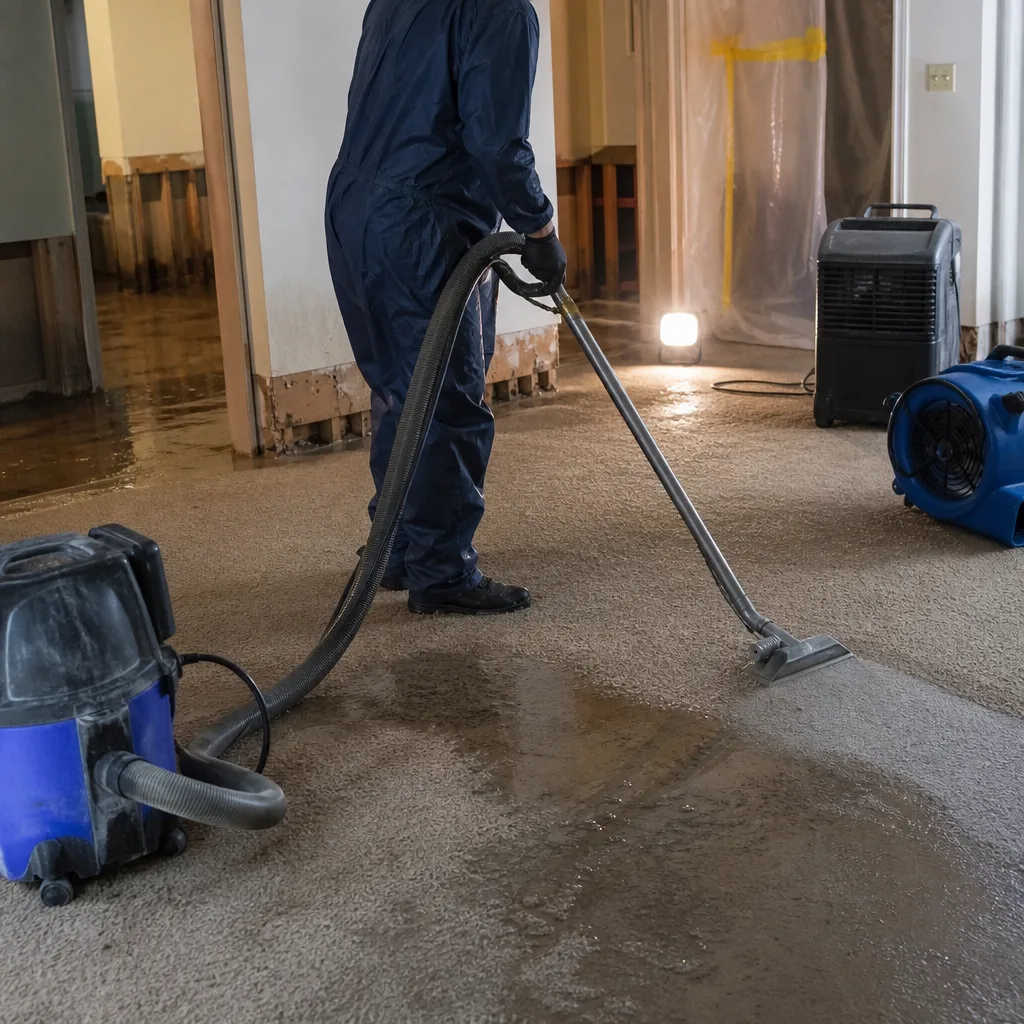
Standing water in a Tarrytown basement or first floor comes out quickly with truck-mounted extraction and portable units. On riverfront properties where the water is Category 3 from the Hudson, we extract and treat the same day. Speed here is not optional.
Structural Drying & Dehumidification
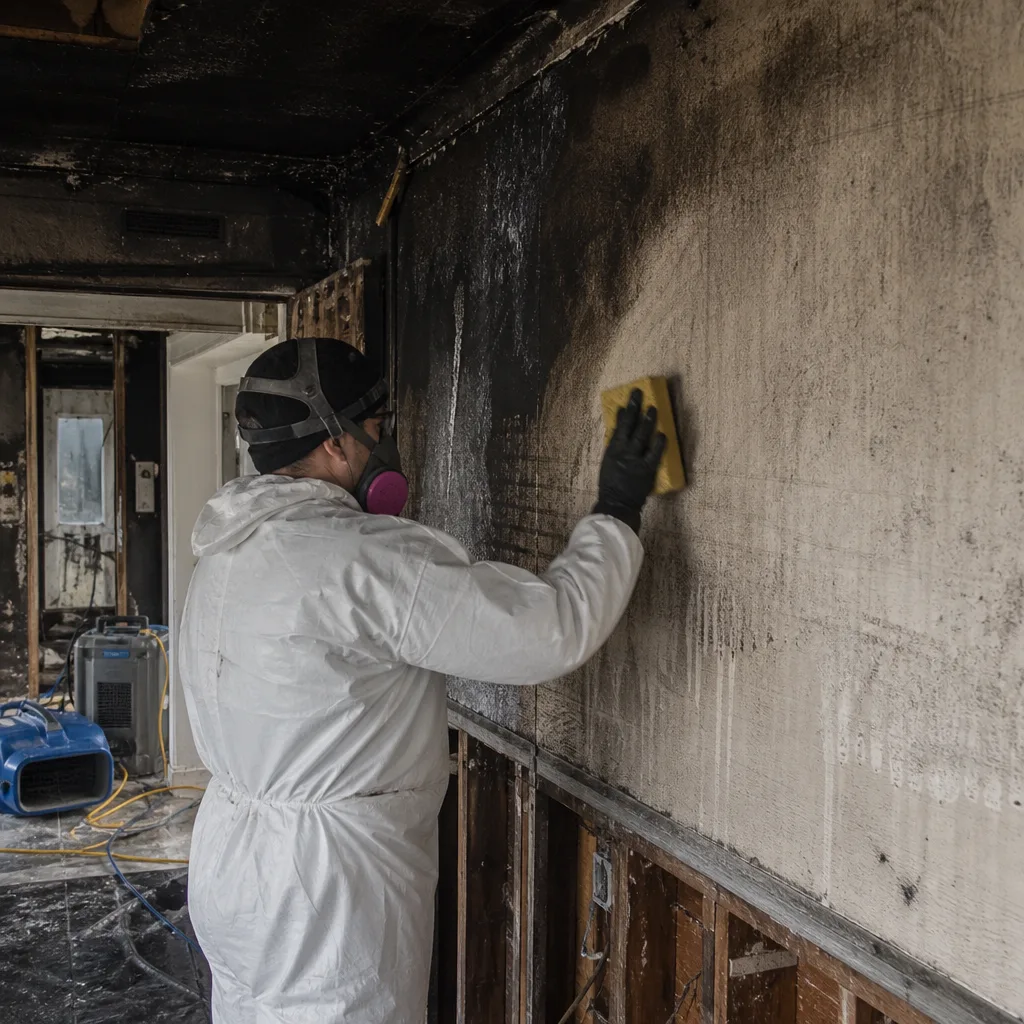
Drying a 1900s Victorian is a balancing act. Dry too quickly and the horsehair plaster cracks and lath keys break. Dry too slowly and mold colonizes the framing. Our techs run Dri-Eaz and Phoenix systems tuned to the wall assembly, not a generic humidity target. Daily logs tell us when the dry standard is actually reached.
Flood Cleanup
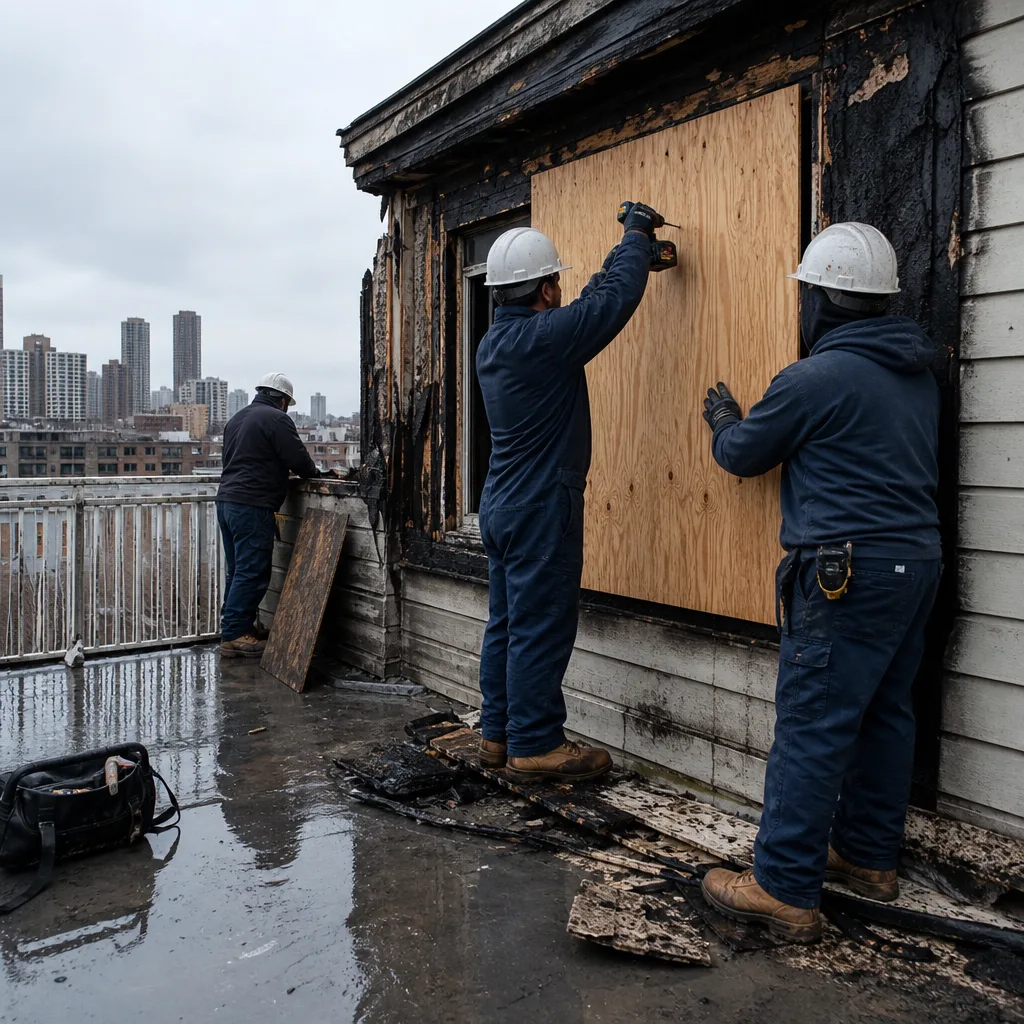
Both river floodwater and hillside runoff leave sediment, microbial contamination, and odor. We remove contaminated materials, treat the structure, and run HEPA air scrubbers where needed. Flood cleanup in Tarrytown’s riverfront zone always includes Category 3 protocol. There is no shortcut on that.
Burst Pipe Restoration
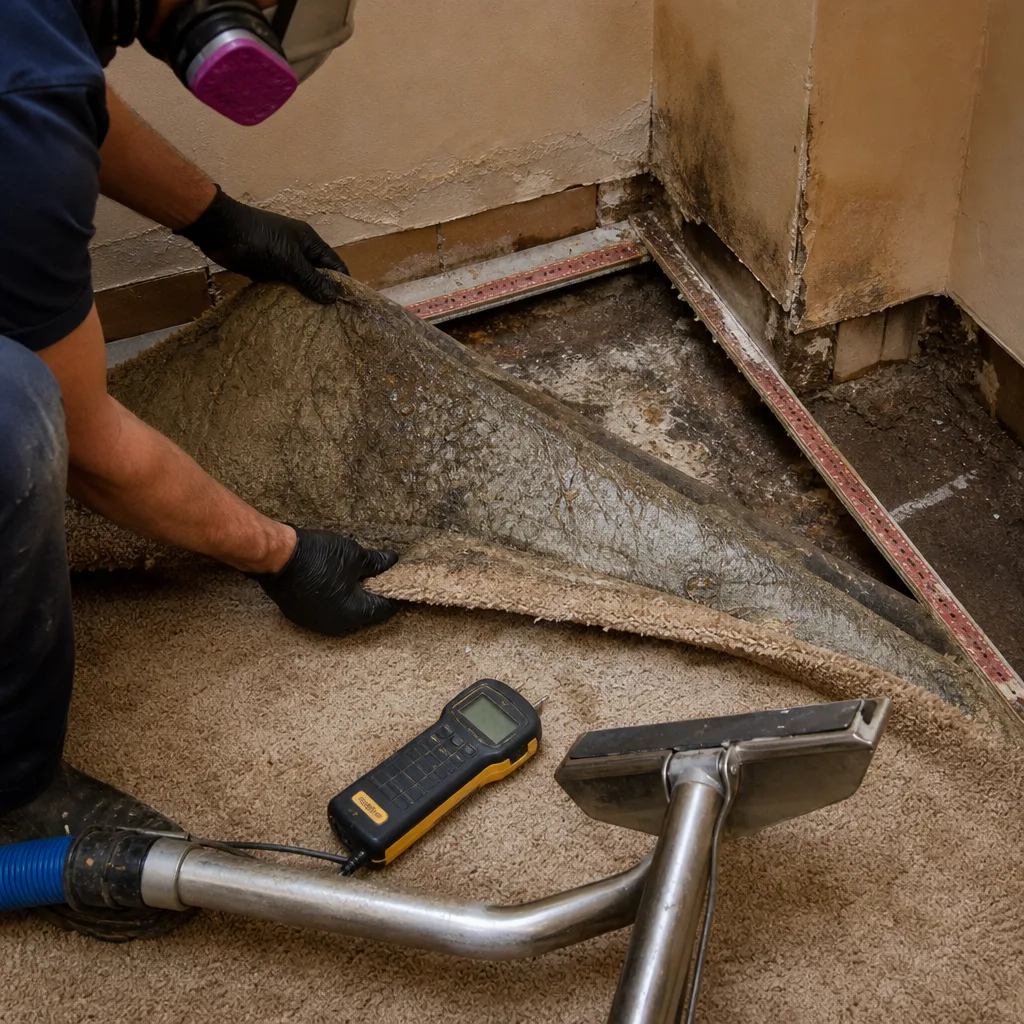
Winter freezes hit Tarrytown’s older supply lines hard. When a pipe lets go, water runs through wall cavities and ceilings before anyone notices. We trace the full migration path, extract what is visible, and dry what is hidden behind plaster and lath.
Basement Water Removal
Basement water in Tarrytown comes from three directions: the river, the hill, and the plumbing. We treat each differently. Fieldstone foundations are notorious for letting groundwater in slowly over time. We remove the water, dry the space, and document the penetration points so you and your carrier know what the actual fix looks like.
What happens when you call
- 1
A real person answersNo phone trees - you reach a local pro.
- 2
You get an upfront price rangeHonest numbers before anyone is dispatched.
- 3
A background-checked tech heads outLicensed & insured, dispatched right away.
- 4
You approve before work beginsNothing starts until you say go.
Water Damage Restoration Costs in Tarrytown, NY
Here are straight numbers for Tarrytown’s market. Emergency water extraction alone typically runs $1,100-$2,400. Structural drying with dehumidification on a single room runs $1,500-$3,500. A full basement flood cleanup where Category 3 river water is involved runs $4,000-$9,000 depending on square footage and how much drywall or plaster has to come out. Burst pipe restoration in a finished first-floor room runs $2,800-$6,500 once you factor in drying, material removal, and rebuild. What moves the price: the water category, the square footage affected, whether walls are original plaster or modern drywall, and whether we have to coordinate lead or asbestos abatement. The free visual inspection locks in a written scope before any work begins. We don’t give ballpark over the phone and then change the number after we start. The scope you sign is the scope we work to. Call (917) 924-4221 and we’ll walk the property with you. Estimates are free.
We Also Serve Cities Near Tarrytown
Our crews work across the surrounding Westchester corridor: Tarrytown itself, plus Elmsford to the northeast, Hawthorne and Valhalla to the north, and Irvington just down the river. If you’re in one of those towns and water is moving, call the same number. Dispatch handles all of them the same way: a live person, a fast crew, and a written scope before work starts.
Serving Tarrytown, NY - Our Local Coverage Area
We’re based in the Tarrytown area and know this community well. Use the map below to see our service coverage - if you’re nearby, we can almost certainly help.
Tarrytown Water Damage Restoration Questions, Answered
How does Category 3 floodwater from the Hudson River differ from hillside runoff in Tarrytown basements, and why does it change the restoration scope?
Category 3 river water carries salt, sediment, and microbial contamination that requires full antimicrobial treatment, removal of affected porous materials, and protective protocols. Hillside runoff is usually Category 1 or 2 and can often be dried in place. The two jobs are not interchangeable, and treating river surge as clean water guarantees recurring mold and odor problems.
What drying window do restoration crews face for mold in Tarrytown’s riverfront humidity compared to inland Westchester towns?
The Hudson River generates persistent valley fog and elevated year-round humidity on Tarrytown’s waterfront. Mold colonization can begin within 24 to 48 hours of water intrusion, which is faster than inland towns just a few miles east. Restoration crews here run a tighter clock and often need additional dehumidification capacity to hit the dry standard.
Why do repeated moisture problems occur in original 1890s fieldstone foundations between Main Street and the Tarrytown waterfront?
Homes we’ve worked in that zone were often flooded during Hurricane Sandy and remediated then, but moisture had already migrated into the original fieldstone foundations and was never fully addressed. A decade later, that trapped moisture and residual contamination resurface. It is a known pattern in that specific area, and it means the scope has to reach deeper than the visible damage.
Are original horsehair plaster walls in Tarrytown Victorians always a loss after water damage, or can they be dried in place?
They can often be dried in place, but not with an aggressive protocol. Plaster has to dry slowly to prevent cracking and lath-key failure. Our crews use low-grain refrigerant dehumidifiers and adjusted airflow to bring moisture content down incrementally. If the plaster is saturated and losing structural integrity, we remove only the damaged sections and match the repair.
What special containment or pack-out procedures do Tarrytown restoration jobs need when working on 1870s-1920s wood-frame homes with balloon construction?
Balloon framing means wall cavities run uninterrupted from sill to attic, so containment has to account for vertical smoke and water migration. We seal affected cavities at both ends, pack out contents that could be damaged, and run negative air where needed. On pre-1978 homes we also check for lead paint and asbestos before opening walls, and coordinate abatement when required under Westchester County rules.
How fast can a crew actually get to a Tarrytown address?
Typically 45 minutes, sometimes less depending on where our nearest crew is running. A live dispatcher answers the phone immediately and starts the closest available unit. We don’t schedule emergency calls for a later window. When you call (917) 924-4221, someone is moving toward you within minutes.
Will my insurance cover this?
Sudden and accidental water damage is covered under most standard homeowners policies. Slow seepage or long-running leaks often are not. That is another reason to call early. We document everything from the first hour and communicate directly with your adjuster, so your claim is built on a complete record, not a summary.
What should I do in the first 30 minutes?
Stop the water at the source if you can do so safely. Turn off power to affected areas if water is near outlets or the panel. Move what you can. Then call (917) 924-4221. Do not use a shop vacuum on contaminated water. Do not open walls yourself. And do not wait to see if it dries on its own. It will not.
Water damage restoration in Tarrytown is a different job than it is in any other Westchester village. The river, the hill, and a housing stock full of original plaster, fieldstone, and balloon framing demand a crew that has done this exact work here before. We have. Our Water Damage Restoration team handles everything from first extraction to finished rebuild, backed by the 90-Day Done Right Promise in writing. The line the water left is where we start. Call (917) 924-4221 for a free estimate, any hour of any day.
Written by Curt Bowman, Owner at Floodline Restoration Co. of Manhattan, serving Tarrytown homeowners with certified crews and the Keystone Standard on every job since 2010.