
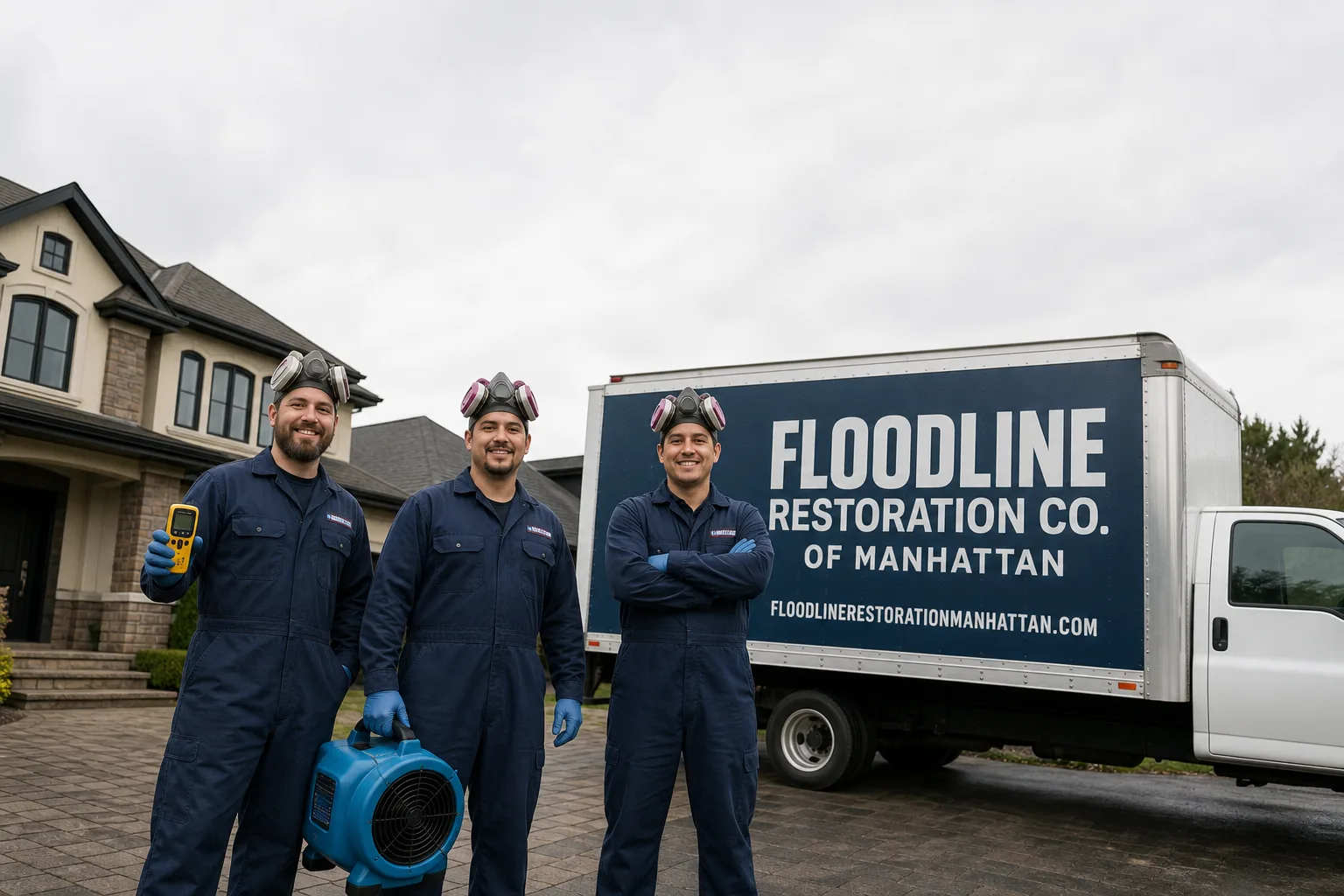
Free visual inspection and a written scope of work before any mitigation begins - photos, moisture readings, and drying logs go in your claim file
The scope we write is the scope we bill. Anything new gets shown to you, in writing, before we touch it.






 Before
 After
After Before
 After
After Before
 After
After24/7 Emergency Biohazard & Crime Scene Cleanup in Mid Island
When a biohazard or crime scene occurs in a Mid Island home, the cleanup needs to start now, not tomorrow. Floodline Restoration Co. of Manhattan answers live at (917) 924-4221 around the clock, every day of the year, and dispatches a certified crew into Mid Island immediately. Whether it’s an unattended death, a traumatic injury, a hoarding situation, or an infectious disease concern, the first hours determine how much of the home can be saved and how much must be removed. Blood and bodily fluids soak into carpet, hardwood, and drywall fast, and in a humid Mid Island basement, that means mold can take hold within 24 to 48 hours. Our team arrives the same day, contains the affected area, and starts the work that protects both the property and the people living in it.
Understanding Biohazard & Crime Scene Cleanup Severity in Mid Island Properties
Biohazard contamination doesn’t sit on a surface, it moves through materials. Blood and bodily fluids penetrate porous surfaces like carpet pad, unsealed concrete, and drywall, and once they’ve soaked in, surface cleaning is not enough. In Mid Island’s housing stock, which is dominated by 1945 to 1970 Cape Cods, ranches, and split-levels, the most severe scenes almost always involve a finished basement. That changes the scope. A trauma scene in a basement with carpet over concrete means the pad and carpet come out, the concrete is scrubbed and treated, and the air is scrubbed with HEPA filtration to capture aerosolized pathogens. Containment is another factor. In a split-level, a basement scene is directly connected to the living space above by open stairwells and shared HVAC returns, so negative air pressure and sealed barriers are required before any cleanup begins. Mid Island’s humid coastal climate shortens the window for remediation. Long Island’s dual coastal exposure, the Atlantic to the south and the Sound to the north, keeps soil moisture high and slows natural drying. That means a scene that sits for even a day in a below-grade Mid Island basement is dealing with both biohazard contamination and elevated humidity, and both must be addressed simultaneously or the job fails.
Why Mid Island Property Owners Choose Floodline Restoration Co. of Manhattan
- 45-minute response commitment: When you call from Mid Island, a certified crew is dispatched immediately, and we arrive ready to start containment and assessment.
- 24/7 live answer, never an automated system: A real person picks up at any hour, not a recording, so you’re never waiting on a callback while a scene sits.
- IICRC-certified crews with biohazard-specific training: Our technicians hold IICRC certifications including WRT, FSRT, and AMRT, and receive ongoing training through IFA standards for trauma and biohazard work.
- Free visual inspection: We assess the scene and provide a written scope of work before any billable work begins, so you know exactly what the job involves.
- Direct insurance billing: We bill your carrier directly and coordinate with adjusters, so you don’t become the messenger between us and the insurance company.
- One team from scene to restoration: The same certified crew that handles extraction and decontamination also manages drying, repairs, and rebuild, with no mid-job handoff to another company.
Our Biohazard & Crime Scene Cleanup Process
Inspection & Assessment
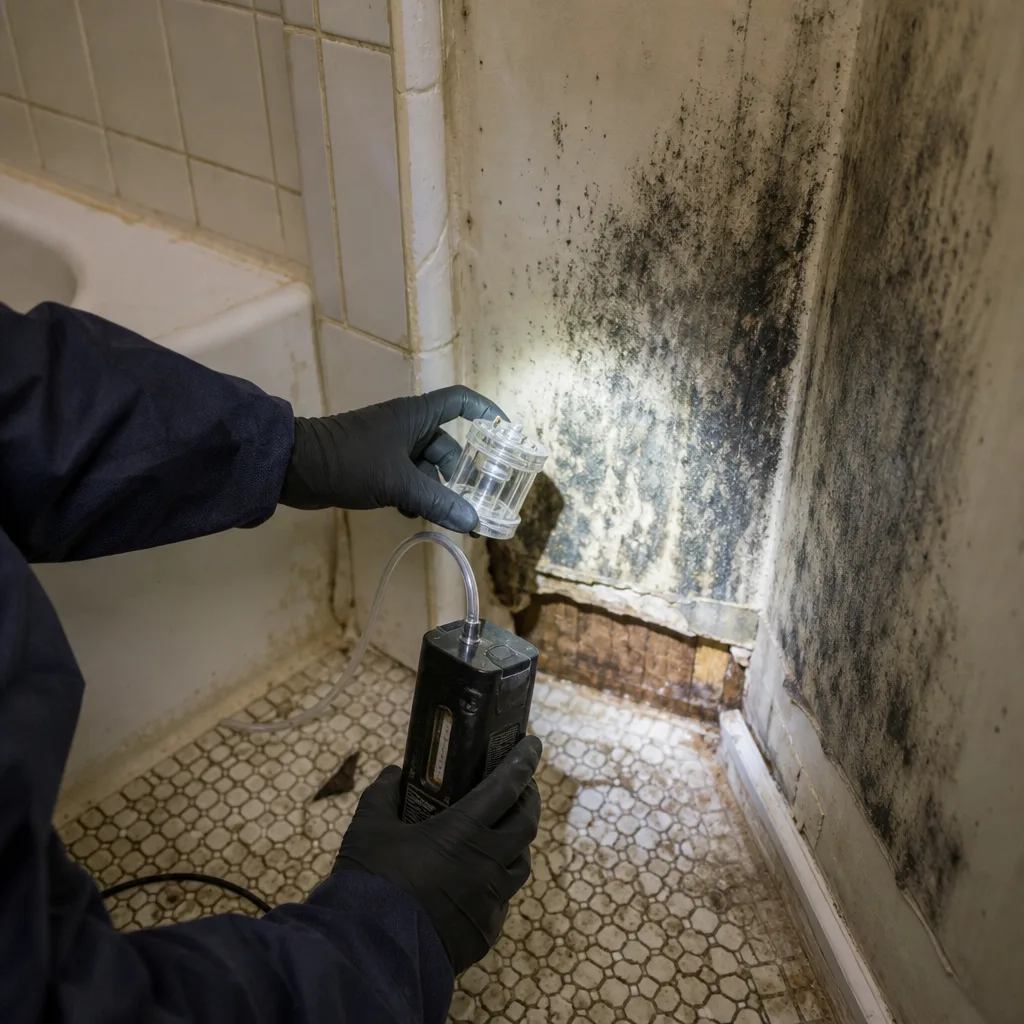
We walk the scene in Mid Island with a thermal imaging camera and moisture meters, mapping exactly where contamination has spread. We identify affected materials, assess structural damage, and document everything with photos for your insurer. Then we give you a written scope of work before anything is disturbed.
Extraction & Stabilization
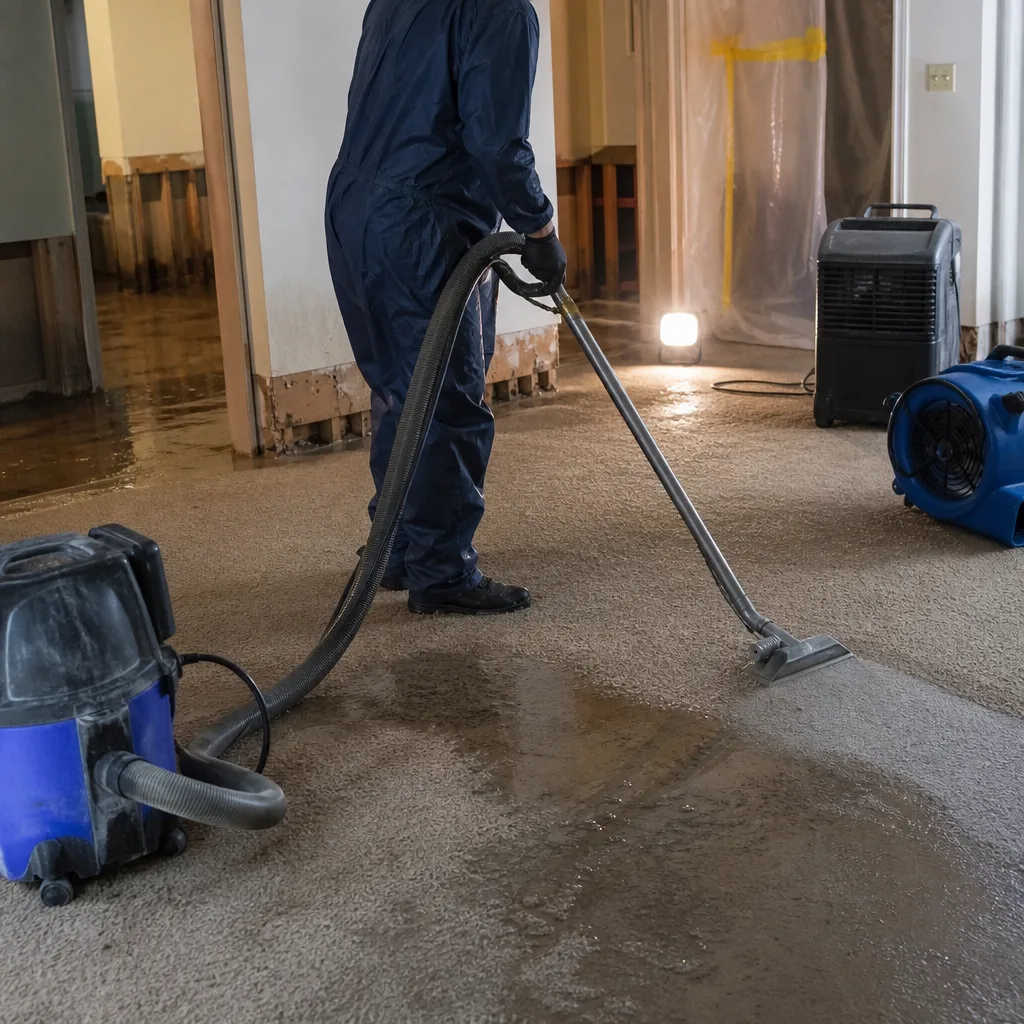
If a burst pipe or failed sump pump has added Category 3 water to the scene, we extract standing water immediately using truck-mounted extraction units and XPOWER submersible pumps. We shut off affected utilities and stabilize any structural hazards before cleanup begins.
Containment & Air Scrubbing
We seal the affected area with 6-mil polyethylene barriers and establish negative air pressure so airborne pathogens can’t move into occupied rooms. HEPA air scrubbers run continuously throughout the job, and we monitor pressure readings to confirm the containment is holding.
Cleaning & Sanitization
Contaminated materials are removed under controlled conditions, bagged, and transported per New York State regulations for biohazardous waste. We clean every remaining surface with hospital-grade disinfectants, then apply an antimicrobial treatment registered for bloodborne pathogen remediation.
Structural Drying
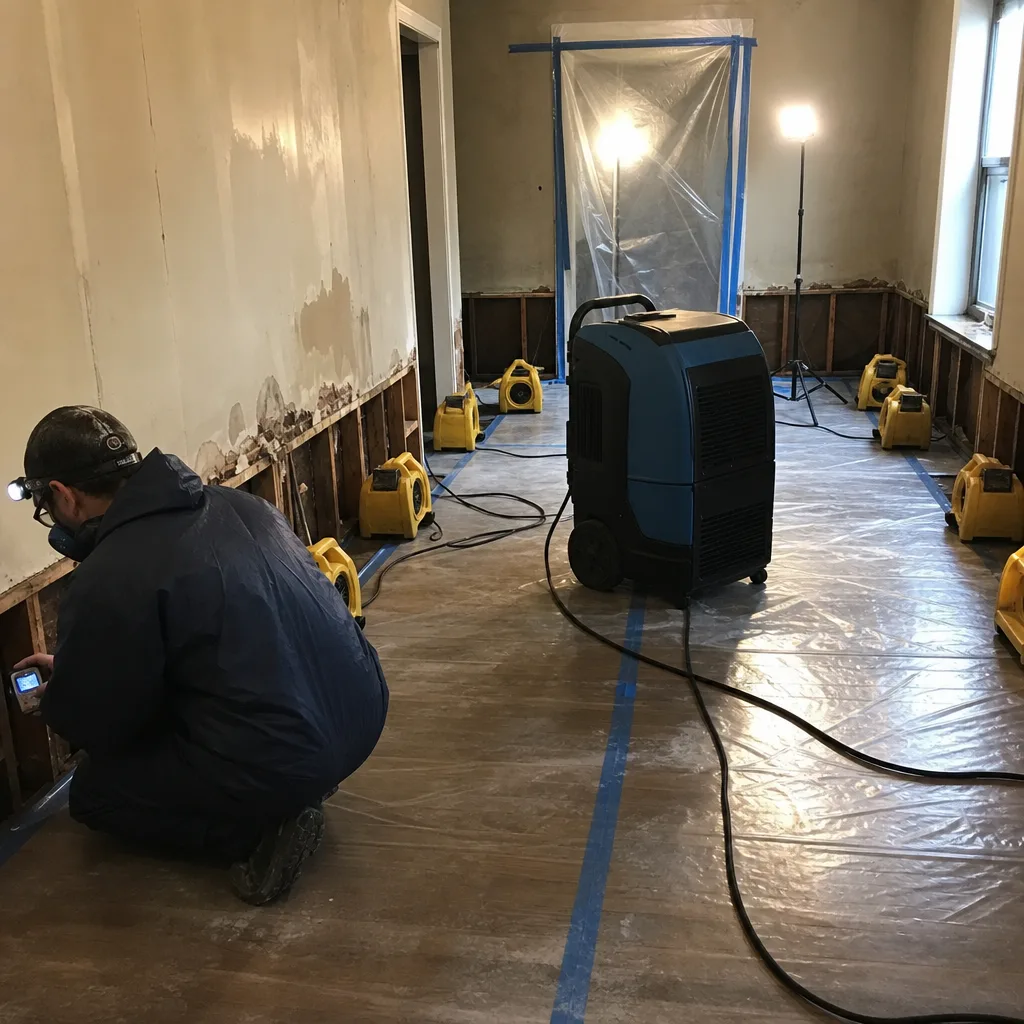
In Mid Island finished basements, moisture is almost always part of the picture. We set Dri-Eaz dehumidifiers and Phoenix air movers, take daily moisture readings, and run the drying plan until the structure hits the dry standard. The homeowner and carrier both receive the moisture log.
Repairs & Restoration
Once the space is clean and dry, we rebuild what was removed. Drywall, flooring, trim, and paint are restored by our own reconstruction crew, so the basement or room is put back to pre-loss condition without bringing in another contractor.
Need Emergency Biohazard & Crime Scene Cleanup in Mid Island Now?
Crews minutes away, answering live 24 hours a day. The sooner we start, the less it costs.
Working With Your Insurance Company
Biohazard and crime scene cleanup claims are different from a standard water or fire loss. The scope often includes categories many adjusters don’t see regularly: biohazardous waste disposal, antimicrobial treatment, containment setup, and specialized cleaning of contents. We document the loss from the first hour with photos, moisture readings, and a line-item scope that matches industry-standard estimating software. Our team communicates directly with your adjuster, answers their questions, and provides the documentation they need to process the claim. You don’t have to translate technical cleanup details into insurance language. That’s our job. Most Mid Island homeowners we work with have never filed a biohazard claim before, and having a company that speaks the carrier’s language on day one makes a hard situation measurably easier.
What We Provide Your Insurer
- Thorough documentation of the loss
- Photos of all damage, room by room
- Moisture readings and drying logs
- A detailed, line-item scope of work
- Direct coordination with your carrier
Built for Mid Island’s Loss Calendar
Mid Island’s losses don’t follow a clean twelve-month pattern. They surge when the weather does, and the weather here comes from two directions at once. Nor’easters tracking up the Atlantic and tropical systems funneling through Long Island Sound bring storm surge and saturated soil, which pushes groundwater into basements through failing 50-year-old drainage tile. January deep freezes burst supply lines in uninsulated crawlspaces, and in Mid Island’s older homes, those supply lines are often original galvanized pipe that was due to fail anyway. Spring thaw brings another round of seepage. Summer thunderstorms can drop two inches of rain in an hour, overwhelming sump pumps in finished basements throughout the area. Every one of these events can create the conditions for a biohazard scene, whether from an unattended death discovered after a flood, contaminated standing water, or a trauma that happens alongside a basement failure. The season doesn’t matter. The scene does.
Biohazard & Crime Scene Cleanup Across Mid Island’s Neighborhoods
Mid Island’s neighborhoods each present a different response profile for our Biohazard & Crime Scene Cleanup team. Near Hempstead Turnpike, the housing is denser, with more split-levels and ranches on smaller lots, which means containment has to be tight because neighboring homes sit close. Along Wantagh Avenue and Jerusalem Avenue, crews navigate the same streets that clog with stormwater during heavy rain, and response times depend on knowing which intersections flood first. In the neighborhoods east of the Wantagh State Parkway, larger lots and more detached Cape Cods mean our equipment can stage closer to the home, but the basement layouts are often the same: finished, occupied, and vulnerable. Off Merrick Road, some of the older 1940s-era homes have shallow crawlspaces and outdated plumbing that make a biohazard scene more complex to access. Our crews carry equipment for every configuration, from tight split-level stairwells to wide-open ranch basements with direct exterior access.
Specialized Biohazard & Crime Scene Cleanup Services We Offer in Mid Island
Crime Scene Cleanup
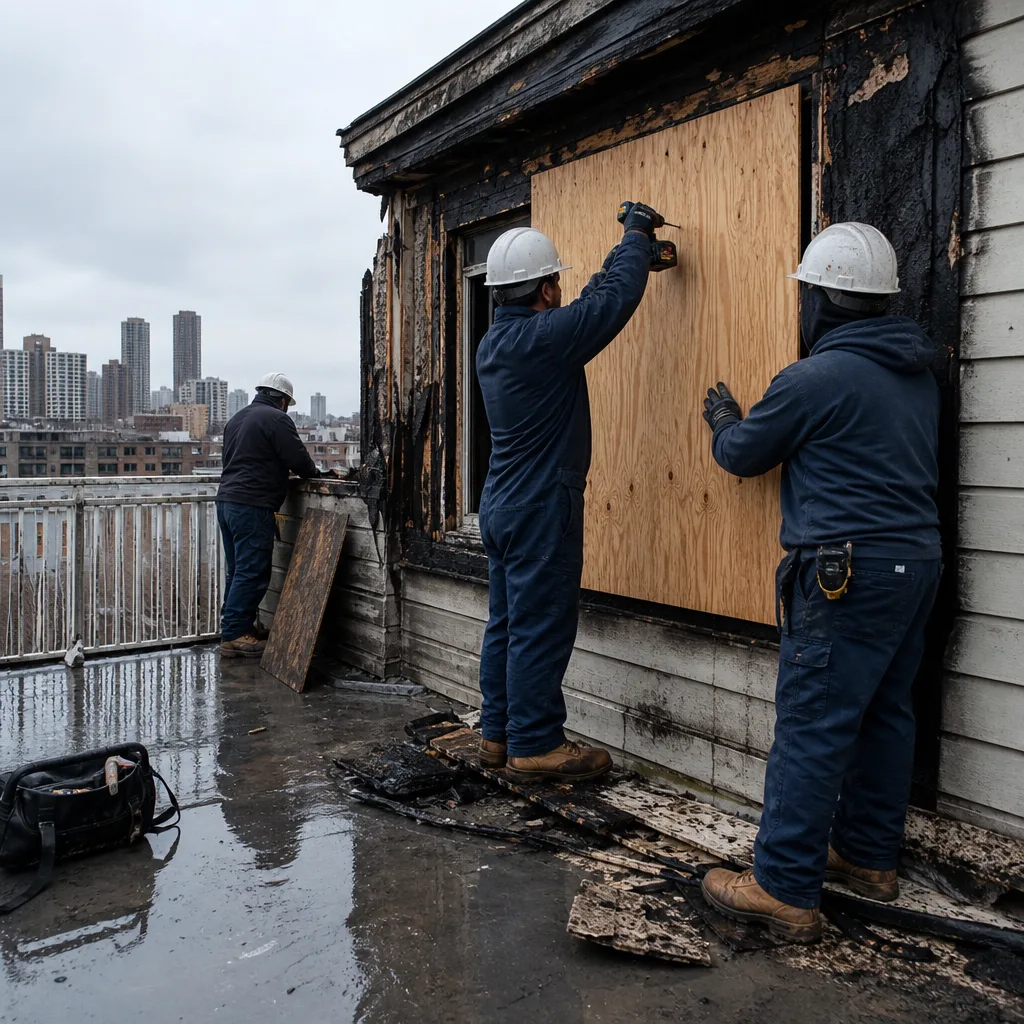
After law enforcement releases the scene, the cleanup is the property owner’s responsibility. In a Mid Island home, that often means blood and bodily fluid contamination in a finished basement, a bedroom, or a hallway. We remove affected materials, treat all surfaces, and restore the space to a condition that doesn’t carry reminders of what happened there.
Trauma & Unattended Death Cleanup
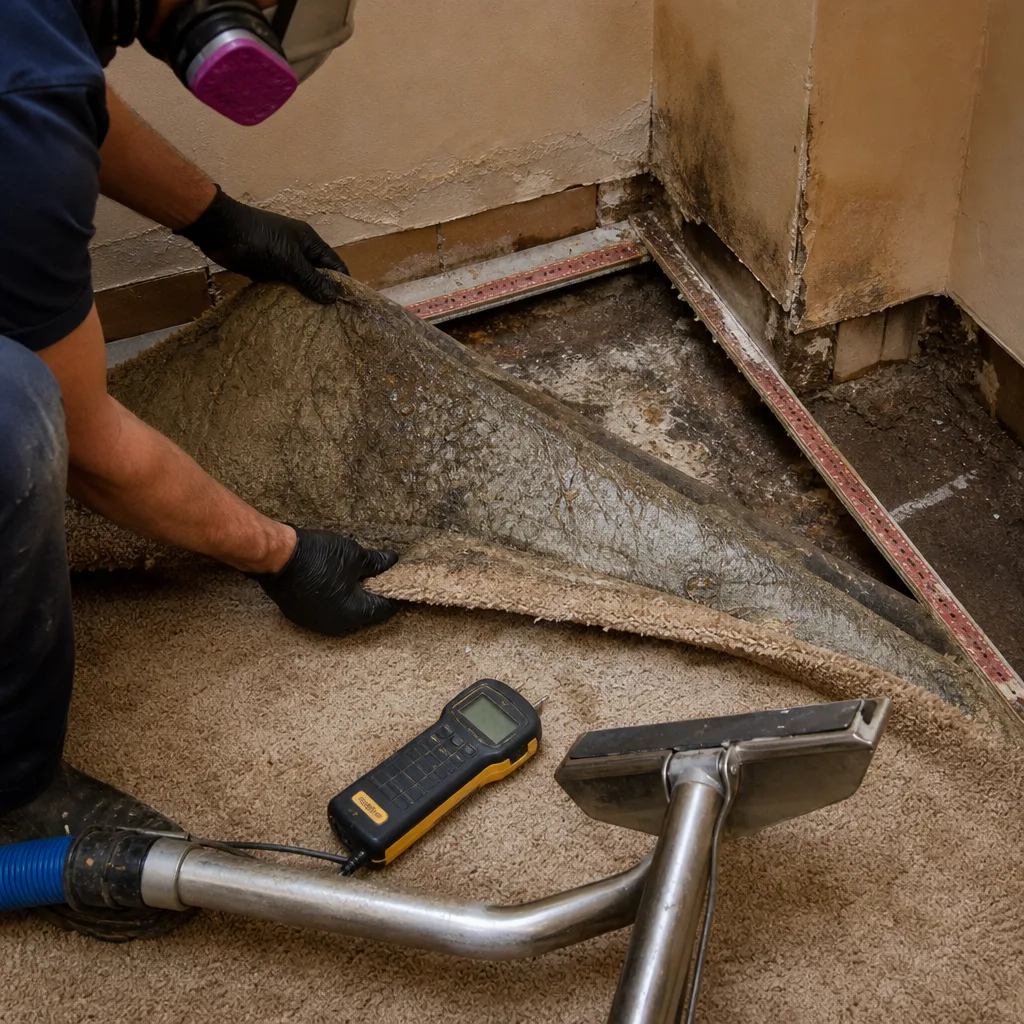
Unattended deaths in Mid Island are frequently discovered in finished basements that doubled as in-law suites or primary living space. The biohazard work is complicated by the fact that these below-grade rooms hold moisture, which accelerates decomposition and makes odor remediation and structural drying equally urgent. We handle both in the same scope, with the same crew.
Hoarding Cleanup
Mid Island’s ranches and Cape Cods often have full basements and attached garages, which are exactly where severe hoarding situations concentrate. We work room by room, separating salvageable items from debris, removing biohazardous material including animal waste and spoiled food, and restoring the structure underneath. The work is done respectfully and without judgment.
Blood & Bodily Fluid Cleanup
Bloodborne pathogen training isn’t a bonus in this work, it’s the baseline. Our technicians follow OSHA bloodborne pathogen protocols, wear full PPE, and treat every scene as if infectious material is present, whether it involves a minor injury in a Mid Island kitchen or a more severe trauma elsewhere in the home.
Infectious Disease Disinfection
When a family member in a Mid Island household has been diagnosed with a serious infectious illness, the home needs more than a standard cleaning. We apply EPA-registered disinfectants across high-touch surfaces, soft goods, and HVAC-adjacent areas, following IFA standards for infection control, and we document the work so there’s a record of what was treated.
What happens when you call
- 1
A real person answersNo phone trees - you reach a local pro.
- 2
You get an upfront price rangeHonest numbers before anyone is dispatched.
- 3
A background-checked tech heads outLicensed & insured, dispatched right away.
- 4
You approve before work beginsNothing starts until you say go.
Biohazard & Crime Scene Cleanup Costs in Mid Island, NY
A typical blood or bodily fluid cleanup in a single room of a Mid Island home runs $1,200 to $3,500, depending on how far the contamination has soaked into flooring and walls. An unattended death cleanup, which almost always involves multiple days of work and significant material removal, typically costs $4,000 to $12,000 in Mid Island, with hoarding situations ranging from $2,500 for a single room to $25,000 or more for a full basement and garage that’s been affected for years. Crime scene cleanup falls within a similar range, $2,000 to $10,000, depending on the size of the affected area and whether structural repairs are needed. What moves the price most in Mid Island is whether water damage accompanies the biohazard. A failed sump pump or split galvanized pipe in a finished basement adds Category 3 water extraction and structural drying on top of the biohazard scope. Insurance typically covers biohazard cleanup when it’s tied to a covered peril, like a burst pipe or storm damage. When it’s not, we provide a written scope and line-item estimate so you know the cost before work begins. Call (917) 924-4221 for a free visual inspection and an exact number.
We Also Serve Cities Near Mid Island
Our crews regularly respond to biohazard and crime scene calls in Mid Island and the surrounding communities of Fairview, Harrison, East Bronx, and Hunts Point. If you’re in one of these areas and need immediate response, the same live dispatch line connects you directly to a certified crew.
Mid Island Biohazard & Crime Scene Cleanup Questions, Answered
When an unattended death happens in a Mid Island finished basement, does the water damage get handled at the same time as the biohazard cleanup?
Yes. In a Mid Island finished basement, an unattended death almost always coincides with water intrusion, whether from a failed sump pump, a split galvanized supply line, or groundwater seeping through failing drainage tile. We run extraction, decontamination, and structural drying as one integrated scope, not two separate jobs. A crew that only handles biohazard and ignores the water leaves behind the exact conditions that cause mold and odor to return. Our team does both at the same time, with the same technicians, and the moisture log is included in the documentation your insurer receives.
How do Long Island’s dual coastal storms change biohazard cleanup in Mid Island compared to inland towns?
Mid Island takes moisture from both the Atlantic and Long Island Sound, which keeps soil saturated longer and raises indoor humidity levels during and after storms. Below-grade rooms dry slower, which means a biohazard scene in a Mid Island basement faces a shorter mold window than the same scene in an inland town. We compensate by setting containment and drying equipment immediately, often on the first visit, and running HEPA air scrubbers continuously. The bi-directional storm threat also means our response calendar in Mid Island is longer than it would be for an inland contractor.
Do Mid Island homes with oil heat tanks create extra steps during a crime scene cleanup?
They can. Many 1950s and 1960s Mid Island homes still have fuel-oil heat systems, and some have in-ground oil tanks. If a crime scene or trauma event involves a flood that breaches an in-ground oil tank, New York State DEC spill reporting requirements kick in, and the oil release must be addressed alongside the biohazard cleanup. We identify these risks during the initial assessment and coordinate the necessary reporting and remediation so the job doesn’t stall mid-scope.
For a hoarding situation in a Mid Island ranch house, does the cleanup include the attached garage and basement?
Yes, if those spaces are affected. Mid Island ranches and Cape Cods typically have full basements and attached garages, and hoarding rarely stops at one room. Our team walks the entire property during the assessment, documents every area that needs work, and includes the garage and basement in a single written scope. We don’t surprise you with additional rooms after the job starts. The scope is agreed to in writing before we begin.
How do you keep a crime scene in a Mid Island split-level from contaminating the upstairs living space?
We seal the affected level with 6-mil polyethylene barriers and run negative air pressure so airborne contaminants can’t travel through the stairwell or shared HVAC returns into the occupied rooms above. We also tape off return vents and, when needed, shut down the HVAC system serving that zone to keep the system from redistributing contaminated air. This is standard protocol on split-levels in Mid Island, where the open stairwell makes cross-contamination a real risk without proper containment.
How fast can a crew actually get to a Mid Island address?
Our target is 45 minutes from the time you call (917) 924-4221, depending on where in Mid Island the property is located and current road conditions. We dispatch from our New York City office, and crews are stationed to serve Mid Island directly. The live dispatcher gives you a real arrival window, not a vague estimate, and we call if anything changes.
Will my insurance cover biohazard or crime scene cleanup in Mid Island?
Most homeowner policies in New York cover biohazard cleanup when it’s tied to a covered peril, such as a burst pipe, storm damage, or a crime that’s covered under the policy. Trauma and unattended death cleanup is sometimes covered as part of a broader claim, sometimes not. We review your policy with you, document the loss thoroughly from the first hour, and bill your carrier directly when coverage applies. If a claim is denied, you’ll have the documentation to appeal.
What should a Mid Island homeowner do in the first 30 minutes after discovering a biohazard scene?
Do not enter the affected area unless it’s absolutely necessary to check on someone’s safety. Blood, bodily fluids, and unattended death scenes carry real health risks, and disturbing the area makes cleanup harder and more expensive. Call 911 first if it’s a crime scene or an unattended death. Then call (917) 924-4221. Our dispatcher will walk you through what to do while you wait, and our crew will arrive ready to begin containment. Don’t attempt to clean it yourself, and don’t use household cleaning products. They spread contamination and often create odors that are harder to remediate.
Serving Mid Island, NY - Our Local Coverage Area
We’re based in the Mid Island area and know this community well. Use the map below to see our service coverage - if you’re nearby, we can almost certainly help.
Mid Island’s Older Homes Need a Different Kind of Biohazard Response
Unlike mainland suburbs where biohazard calls are dominated by apartments and commercial properties, Mid Island’s 1945 to 1970 Cape Cods, ranches, and split-levels mean trauma and unattended death scenes unfold inside finished basements converted to primary living space. Those basements often sit on the original 50-year-old drainage tile, which fails under sustained hydrostatic pressure and lets Category 3 groundwater in during storms. We were dispatched to a 1950s Cape Cod off Hempstead Turnpike where an unattended death in a finished basement required full Category 3 water extraction after the body was removed. The original galvanized supply line had burst, saturating carpet and drywall. Our crew set containment, removed contaminated materials, and ran structural drying with Dri-Eaz dehumidifiers and XPOWER air movers, logging moisture readings every 12 hours until the space hit pre-loss condition, then applied antimicrobial treatment before rebuild. That job is what Mid Island work looks like: the biohazard and the water damage are the same event, and any contractor that treats them separately will leave a homeowner with a basement that smells and a mold problem that returns. Mid Island sits atop Long Island’s shallow glacial outwash aquifer, where the water table rises dramatically during nor’easters and tropical storms, overwhelming the sump pumps found in virtually every post-WWII finished basement. Because the island is flanked by the Atlantic to the south and Long Island Sound to the north, major storm systems flood it from multiple directions simultaneously, meaning restoration contractors here deal almost exclusively with finished, occupied basement living spaces rather than bare crawlspaces. That drives scope and cost far above mainland-suburb norms, and it means the company you call must understand Mid Island’s wet basements as well as its biohazard protocols. Floodline Restoration Co. does both, with one certified crew, on one scope, backed in writing.
If you’re facing a biohazard or crime scene cleanup in Mid Island, call (917) 924-4221 now. A live person answers, a certified crew responds, and you’ll have a written scope before any billable work begins. Done right, and backed in writing.
Written by Curt Bowman, Owner at Floodline Restoration Co. of Manhattan, serving Mid Island with certified biohazard and crime scene cleanup since 2010.