
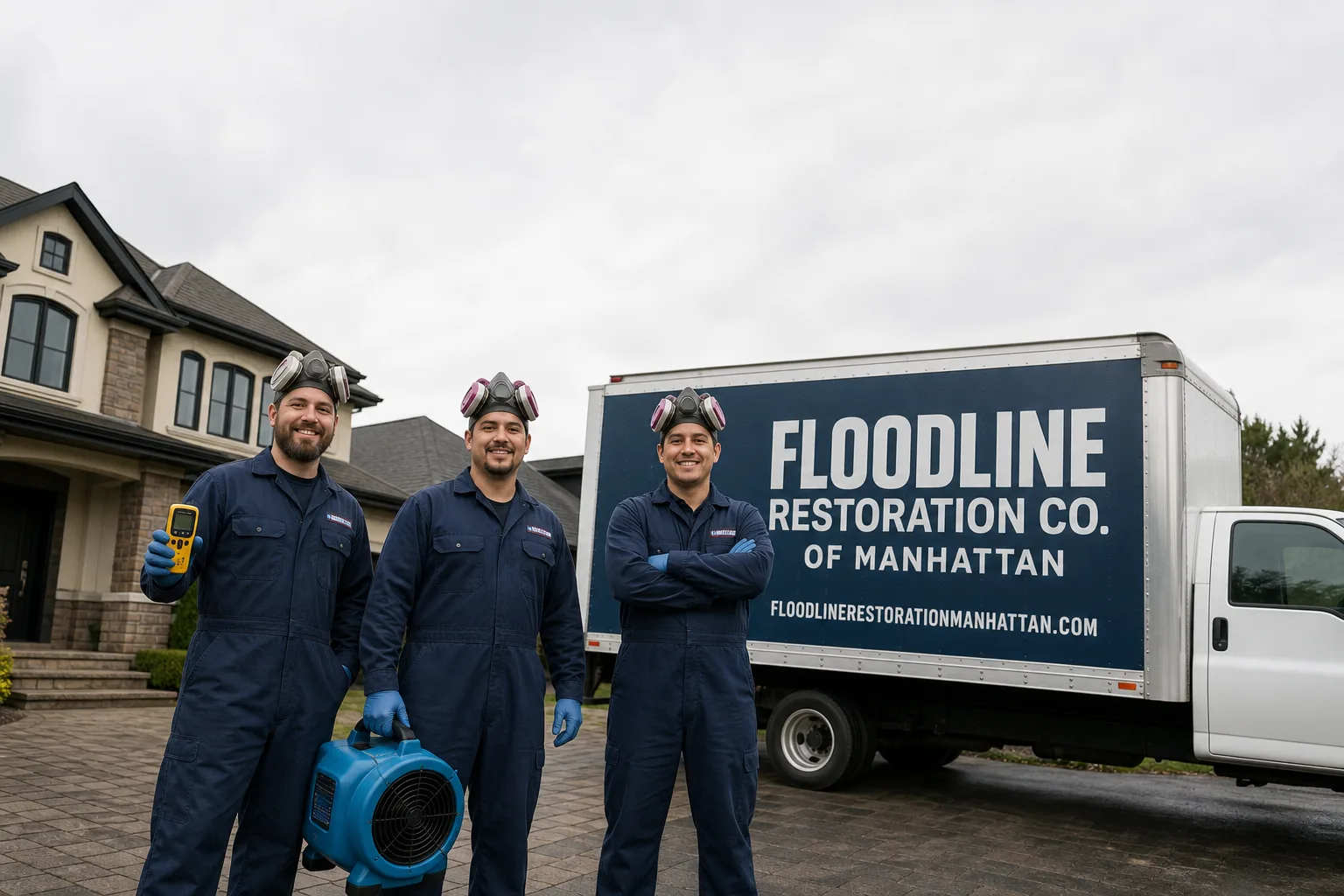
Free visual inspection and a written scope of work before any mitigation begins - photos, moisture readings, and drying logs go in your claim file
The scope we write is the scope we bill. Anything new gets shown to you, in writing, before we touch it.






 Before
 After
After Before
 After
After Before
 After
After24/7 Emergency Commercial Restoration in Pleasantville
Commercial water, fire, or storm damage in Pleasantville needs a response measured in minutes, not days. A rupture in a cast-iron supply line inside a 1930s office building will keep feeding water into plaster walls and hardwood floors until someone physically shuts it off and starts extraction. Floodline Restoration Co. of Manhattan answers the phone live at (917) 924-4221 at any hour, and our first step is a free visual inspection of the loss so you know the scope before you spend a dollar. The first hour determines whether we dry the structure or gut it, and that difference is often tens of thousands of dollars.
We dispatch crews into the Pleasantville area from our New York City office, and team members arrive in uniform and ready to work. No answering service. No sales desk slowing things down. Just a certified crew on the way, with extraction equipment on the truck and a plan already forming based on what you tell dispatch.
Understanding Commercial Restoration Severity in Pleasantville Properties
Pleasantville’s commercial spaces sit inside a housing stock that predates modern building science. The village core is dense with pre-WWII buildings, many on rubble or fieldstone foundations with original horsehair-plaster-on-lath walls and balloon-frame construction. That matters because those materials do not fail the way drywall fails. Moisture moves through plaster slowly, gets absorbed into lath, and can sit behind finish surfaces for weeks without visible staining. By the time a property owner notices a soft ceiling tile or a musty smell near a baseboard, the affected area is typically three to four times larger than the visible patch. Restoration crews unfamiliar with these legacy materials routinely mistake surface drying for structural drying, seal the wall, and leave behind exactly the conditions mold needs to colonize. We do not make that mistake.
Category 1 water from a broken supply line becomes Category 2 within 48 hours if not properly extracted, and Category 3 if it contacts sewage or exterior groundwater. In commercial settings, that timeline compresses when HVAC systems keep air moving. We use moisture mapping and thermal imaging to find the full extent of the loss on day one, then track daily drying logs until the structure meets the dry standard. With Pleasantville’s plaster and balloon-frame construction, that process requires patience and documentation, not shortcuts.
Why Pleasantville Property Owners Choose Floodline Restoration Co. of Manhattan
- A real person answers, day or night. When a pipe lets go at 3 a.m. in a building near Memorial Plaza, you call (917) 924-4221 and a live dispatcher picks up. Not a recording. Not a callback service.
- 45-minute response commitment. Once dispatch confirms the loss, a crew is rolling toward Pleasantville immediately. The faster extraction starts, the less demolition is required.
- IICRC-certified crews. Our technicians carry WRT, FSRT, and AMRT certifications and know how to apply them to 1920s construction, not just modern buildings.
- Free visual inspection. Before any work begins, we walk the loss with you and explain what we see, in plain English, with no obligation.
- Direct insurance billing. We work with your carrier from the first photo to the final invoice. You do not play messenger, and you do not front costs while the claim processes.
- One team, start to finish. The same crew that extracts the water handles daily drying readings, sanitization, and the rebuild. No mid-job handoff to a sub you have never met.
Our Commercial Restoration Process
Inspection & Assessment
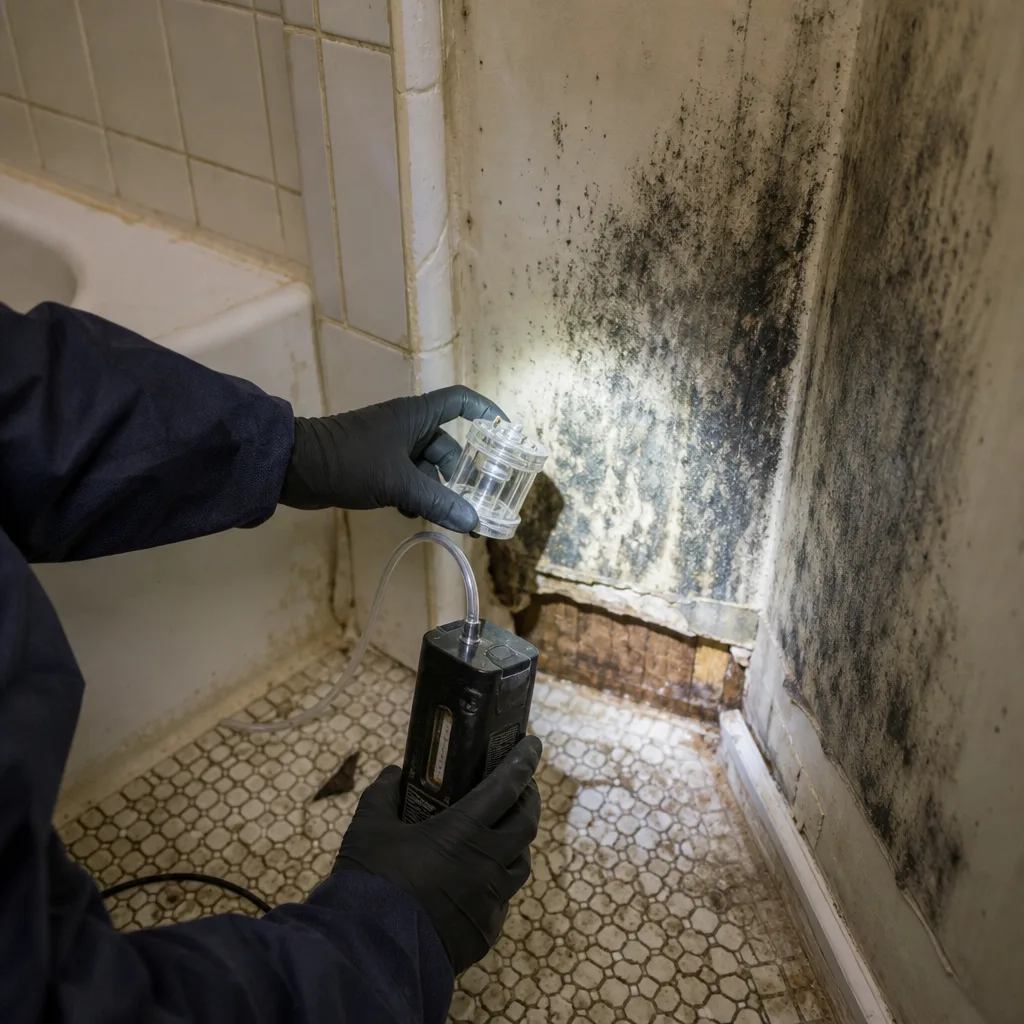
We arrive with thermal imaging cameras and moisture meters, map the full extent of water or fire damage, and document every affected surface. In Pleasantville’s older buildings, this includes checking plaster depth, lath condition, and whether balloon-frame cavities are wicking moisture between floors.
Extraction & Stabilization
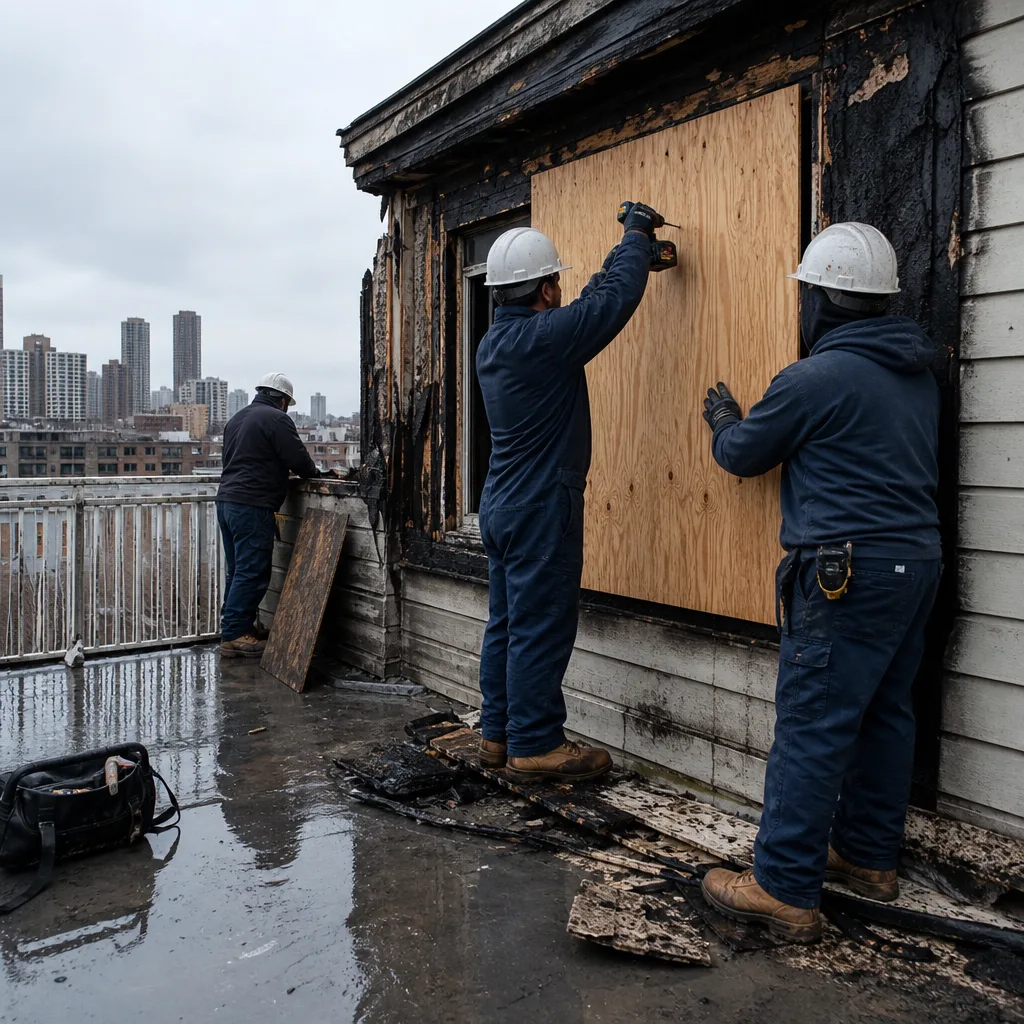
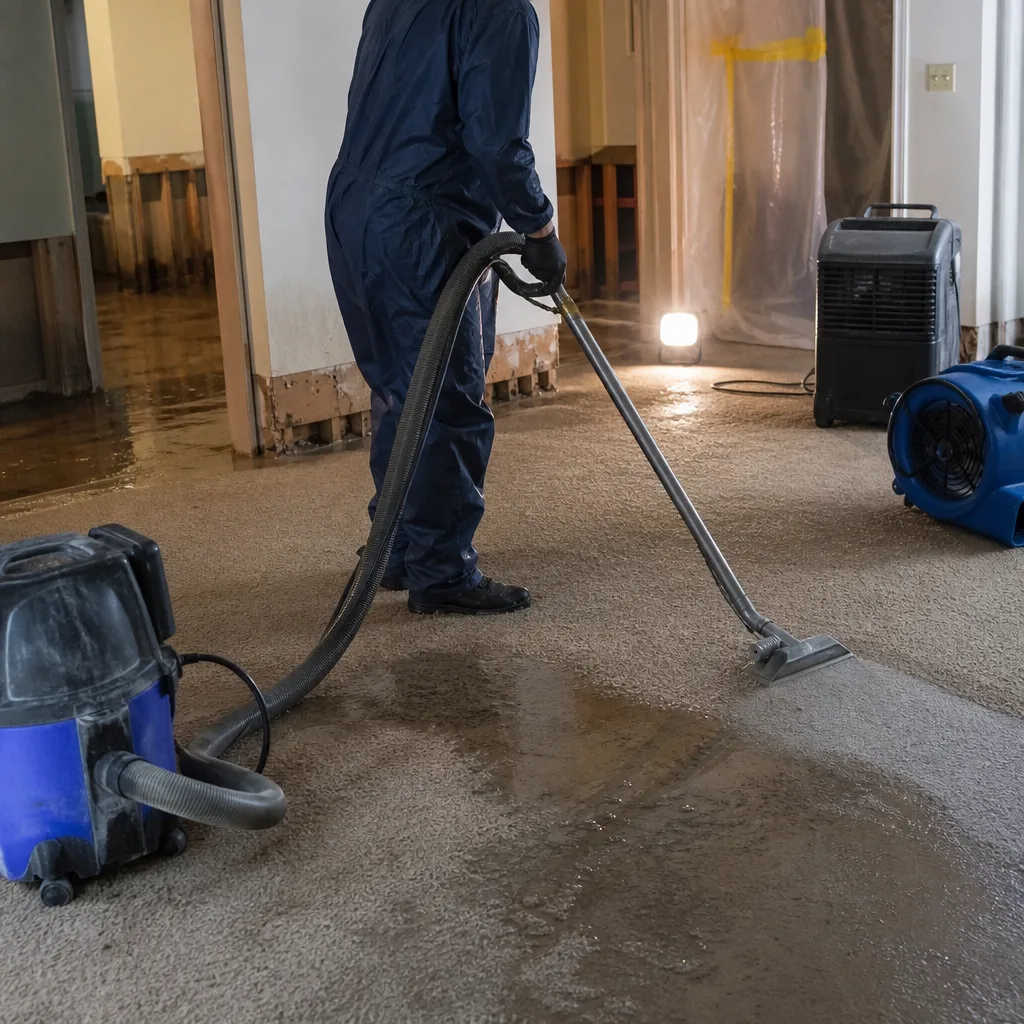
Standing water is removed using truck-mounted and portable extraction units. We also shut down affected electrical circuits, isolate HVAC zones, and board up or tarp openings as needed to prevent further loss.
Drying & Dehumidification
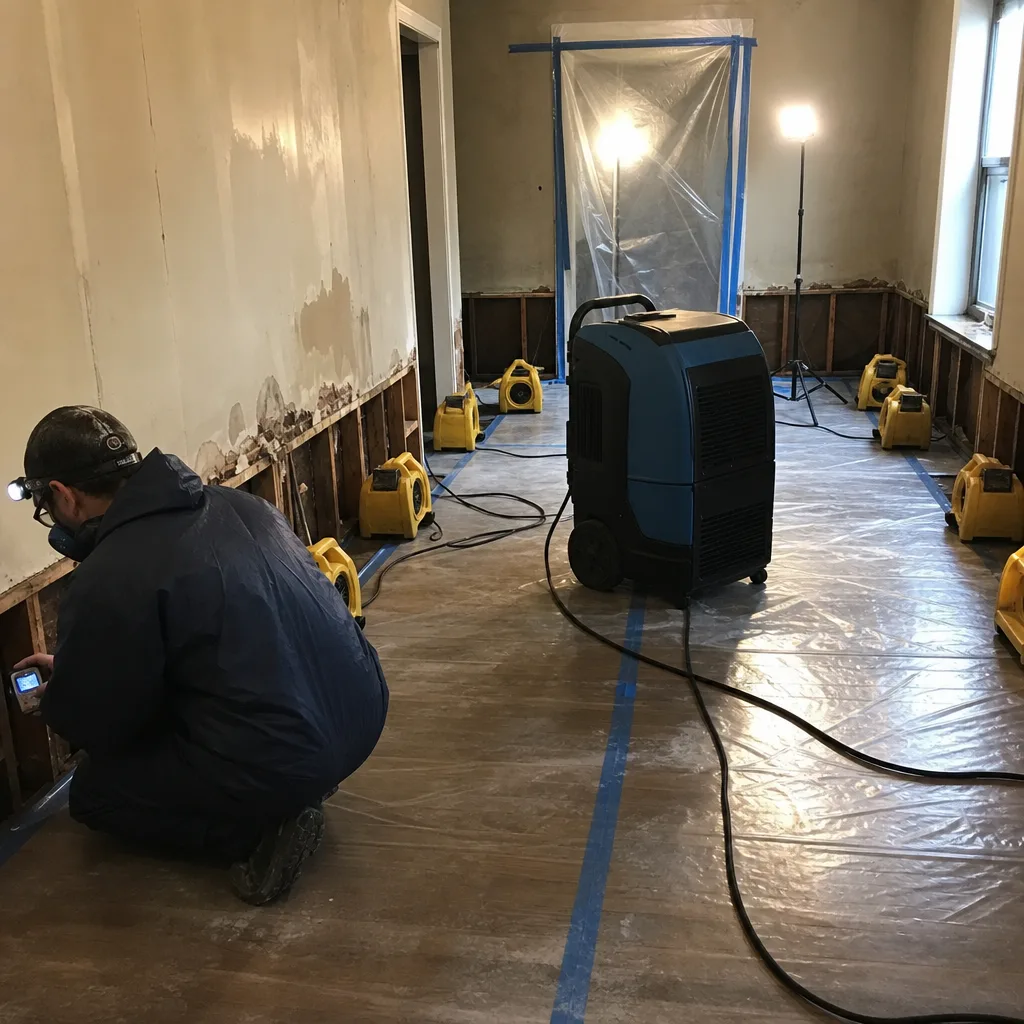
Professional-grade Dri-Eaz and Phoenix air movers and dehumidifiers are placed according to a moisture map, not a guess. Daily readings are logged and shared with you and your carrier until the structure meets the dry standard.
Cleaning & Sanitization
We clean salvageable surfaces, apply antimicrobial treatments where Category 2 or 3 water was present, and HEPA-vacuum affected areas. Contents and inventory are documented, packed out if needed, and restored where possible.
Document & Inventory Recovery
For commercial losses involving paper records, electronics, or stock, we stabilize and coordinate freeze-drying or content cleaning. Business records, client files, and inventory are treated as assets worth saving, not debris.
Repairs & Restoration
The same crew handles the rebuild, from plaster repair to finished trim. Everything is covered by the 90-Day Done Right Promise: if it is not done right, we make it right, in writing, with no paperwork battles.
Need Emergency Commercial Restoration in Pleasantville Now?
Crews minutes away, answering live 24 hours a day. The sooner we start, the less it costs.
Working With Your Insurance Company
Commercial restoration claims in Pleasantville move faster when the documentation is built correctly from hour one. We photograph every room before and after work begins, take atmospheric and moisture-content readings throughout the drying process, and submit a line-item scope of work that your adjuster can read without asking a dozen follow-up questions. When the carrier has questions, our team answers them directly. You do not sit on hold with your own insurance company trying to explain why a plaster wall needs three more days of drying than a drywall wall would.
What We Provide Your Insurer
- Thorough documentation of the loss
- Photos of all damage, room by room
- Moisture readings and drying logs
- A detailed, line-item scope of work
- Direct coordination with your carrier
Built for Pleasantville’s Loss Calendar
Pleasantville’s restoration needs follow the seasons with a predictability that only locals understand. January deep freezes are the leading cause of burst pipes in the village, especially in buildings with original galvanized supply lines that have been in service since the Coolidge administration. Nor’easters bring a different problem: ice dams on lower-pitched older roofs force meltwater under shingles and into plaster ceilings. Spring snowmelt funnels through the Saw Mill River watershed and into lower-lying streets, raising groundwater against rubble-stone foundations that have wicked moisture for a century. Summer brings thunderstorm flash flooding that can overwhelm commercial basements and loading areas near the train station corridor. By the time autumn arrives, property owners who ignored spring seepage discover mold behind baseboards and inside wall cavities. Each season has its own loss signature, and our crews know them all because we have responded to them all.
Commercial Restoration Across Pleasantville’s Neighborhoods
The oldest commercial and mixed-use structures cluster near the Pleasantville train station, along Wheeler Avenue and Bedford Road, and around Memorial Plaza. In that village core, rubble-stone basement walls are nearly universal. They wick groundwater slowly and hide mold colonies behind finish surfaces for months, which is why experienced local restoration crews budget for mold remediation almost automatically when a basement flood call comes in from that part of the village. A loss that looks like a simple extraction on day one often becomes a containment, air scrubbing, and clearance-testing job by day three.
Farther out along Manville Road and in the blocks west of the Saw Mill River Parkway, the building stock shifts to later mid-century construction, but many structures still sit on fieldstone foundations with cast-iron waste lines. Those lines fail from the inside out, corroding until a pinhole becomes a rupture. Buildings in the commercial corridors near Thornwood and along Route 117 see more stormwater runoff from the surrounding hills, especially during heavy spring rains. A property owner near the Jacob Burns Film Center will have a different loss profile than one in a historic storefront near the train station, but both need a response that respects the age of the building.
Specialized Commercial Restoration Services We Offer in Pleasantville
Office & Retail Restoration
A retail space or office suite cannot stay dark for weeks while an adjuster debates line items. We prioritize business continuity: extraction and drying run concurrent with documentation, and we stage repairs so you can reopen sections of the building as soon as they are safe and dry. For Pleasantville storefronts along Wheeler Avenue, that often means reopening within days, not weeks.
Multi-Unit & HOA Restoration
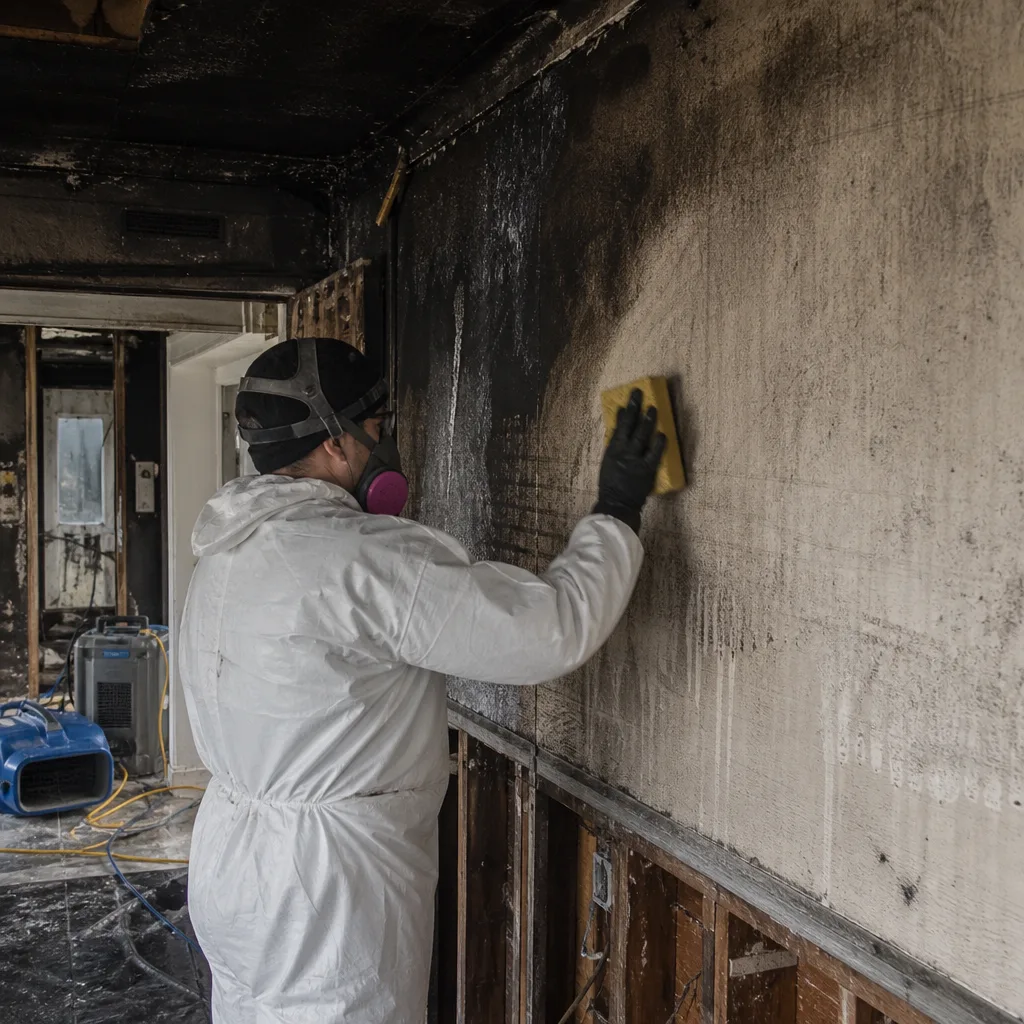
Condo associations and co-op boards in Pleasantville face a different challenge: a water loss in one unit usually involves common elements like hallways, shared walls, and basement mechanicals. We scope the loss across ownership lines and coordinate directly with property managers and boards, so nobody is left fighting over which policy covers the plaster repair between two units.
Industrial Facility Cleanup
Warehouses, light industrial buildings, and maintenance facilities around Pleasantville’s commercial edges need a different equipment package: larger dehumidifiers, more air movement, and often negative-pressure containment. We scale the job to the cubic footage, not the square footage, and document the process for insurance from the first reading to the final clearance.
Large-Loss Response
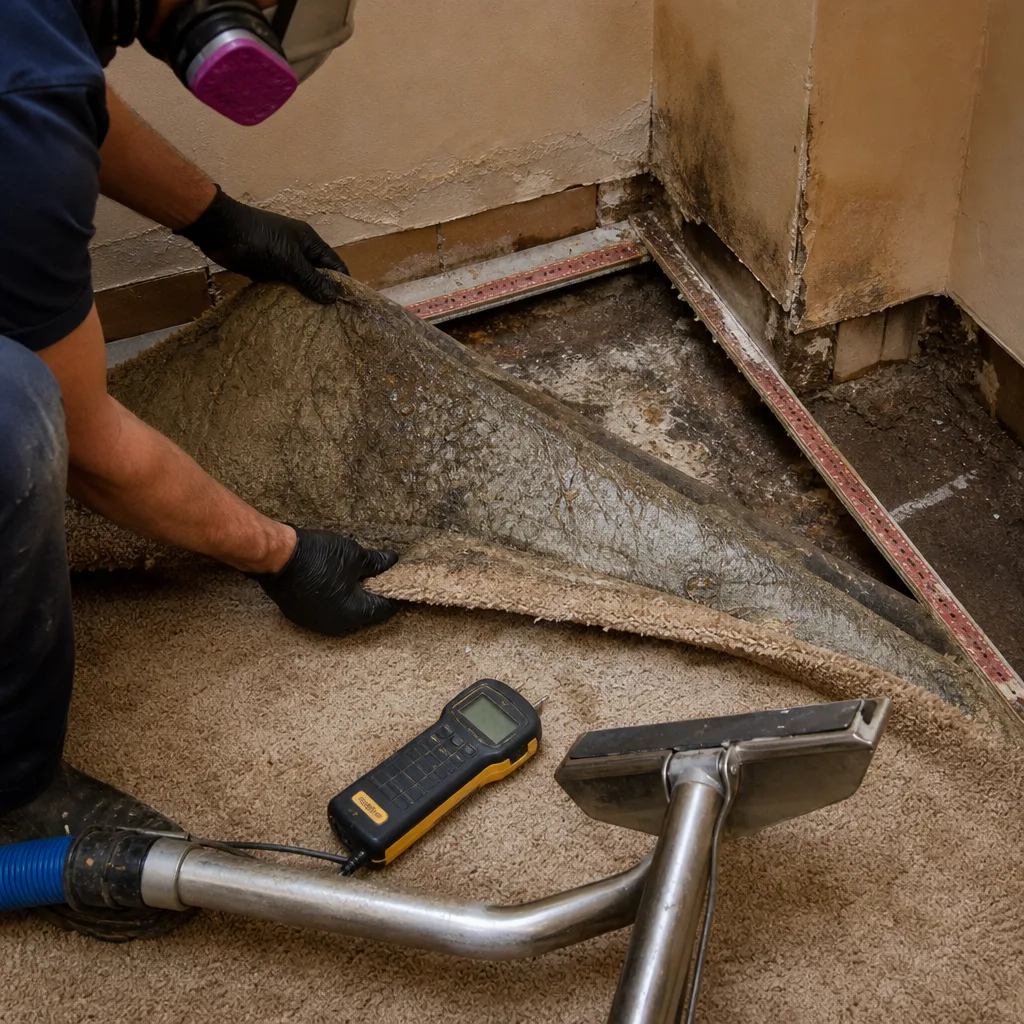
When a roof fails over an office building or a sewer line backs up through a commercial kitchen, the loss is measured in thousands of square feet. Our team coordinates a battalion of air movers and dehumidifiers, maps the affected areas with thermal imaging, and works with your carrier to approve scope fast enough that the building does not sit wet while paperwork catches up.
Business Interruption Minimization
Every day a Pleasantville business is closed costs revenue, and the restoration schedule should reflect that. We sequence the work so the most essential spaces come back online first. For a dental practice near Manville Road, that means the operatory rooms. For a retail shop, it means the sales floor. We plan around your reopening, not just our work order.
Document & Inventory Recovery
Paper records, client files, and inventory caught in a water loss need stabilization within hours. We pack out salvageable documents for freeze-drying, inventory stock for content cleaning, and electronics for assessment. For law offices, medical practices, and accounting firms in Pleasantville, that can mean the difference between losing years of records and keeping them intact.
What happens when you call
- 1
A real person answersNo phone trees - you reach a local pro.
- 2
You get an upfront price rangeHonest numbers before anyone is dispatched.
- 3
A background-checked tech heads outLicensed & insured, dispatched right away.
- 4
You approve before work beginsNothing starts until you say go.
Commercial Restoration Costs in Pleasantville, NY
A commercial water extraction and drying job in Pleasantville typically runs $3,500 to $9,000, depending on the square footage and whether the building has plaster or drywall. Mold remediation on top of that adds $2,500 to $12,000 when containment, HEPA air scrubbing, and clearance testing are required. A full commercial basement flood near the train station, where rubble-stone walls are wicking groundwater, usually lands between $8,000 and $25,000 once drying, antimicrobial treatment, and rebuild are factored in. Fire and smoke restoration in a Pleasantville commercial space runs $15,000 to $60,000 or more, depending on the extent of smoke migration through balloon-frame cavities. Document and inventory recovery is billed as a separate line item, typically $1,500 to $8,000. The free visual inspection gives you a firm scope before work starts, and we bill your carrier directly so you are not financing the claim out of pocket.
We Also Serve Cities Near Pleasantville
Our crews respond to commercial losses in Thornwood, Hawthorne, Chappaqua, and Briarcliff Manor, as well as across the surrounding Saw Mill River corridor. The building stock changes one town over, but the response standard stays the same.
Serving Pleasantville, NY - Our Local Coverage Area
We’re based in the Pleasantville area and know this community well. Use the map below to see our service coverage - if you’re nearby, we can almost certainly help.
Pleasantville Commercial Restoration Questions, Answered
Why do basement floods near the Pleasantville train station almost always require mold remediation?
Rubble-stone foundation walls wick groundwater constantly, and the moisture hides behind finish surfaces for weeks or months before a flood call ever comes in. By the time water is visible on the floor, mold has often already colonized inside wall cavities, which is why our crews treat mold remediation as part of the standard scope for basement floods in that part of the village.
How does balloon-frame construction in Pleasantville’s 1920s colonials change the restoration process?
Balloon framing means wall cavities run continuously from basement to attic, so water from a burst pipe can travel down three floors without ever showing on the surface. Our techs use thermal imaging and moisture meters to trace that hidden path, and drying takes longer because the air has to move through lath and plaster, not just across drywall sheets.
What is the biggest freeze-thaw risk for commercial properties in Pleasantville during nor’easters?
Ice dams on lower-pitched older roofs are the main culprit. Nor’easters cycle between freezing and thawing, and meltwater gets forced under shingles and into plaster ceilings. You see the water stain days after the storm, but the moisture has usually been sitting in the plaster for a week or more by then.
Can you restore documents and inventory after a commercial water loss in Pleasantville?
Yes. We stabilize wet paper records for freeze-drying, pack out salvageable inventory for content cleaning, and document everything for your insurance claim. Speed matters more than anything with paper: mold begins to grow on wet documents within 48 hours, so the pack-out should happen the same day as the extraction.
Why do Pleasantville commercial restoration estimates often end up higher than the initial visual assessment?
Because so much of the village’s building stock hides moisture behind plaster, inside balloon-frame cavities, and within rubble-stone foundations. A visual assessment only sees what is visible. Our moisture mapping usually finds two to three times the affected area that a surface inspection shows, and that expansion is documented for your carrier with photos and readings.
How fast can a crew actually get to a Pleasantville commercial property?
Our dispatch operates 24 hours a day, and we commit to a 45-minute response from the moment your call is confirmed. A live person answers (917) 924-4221 and starts the dispatch immediately. For commercial losses during business hours, that often means extraction is running within two hours of the first call.
Will my insurance cover commercial restoration in Pleasantville?
Most commercial property policies cover sudden and accidental water damage, fire, and storm losses, minus your deductible. We bill the carrier directly, provide the documentation they request, and work with your adjuster from the first day. You are never left holding the phone between us and your insurance company.
Can we stay in the building while restoration is underway?
That depends on the extent of the loss and the category of water involved. Category 1 clean water from a supply line often allows partial occupancy while drying runs. Category 2 or 3 water, fire damage, or active mold remediation usually requires vacating the affected zones until containment comes down and clearance testing passes. We tell you the truth on day one, not after the project is half done.
Commercial damage in Pleasantville does not wait for a convenient time to appear, and neither do we. If you have water, fire, or mold damage in a commercial property anywhere in the village, call Floodline Restoration Co. of Manhattan at (917) 924-4221. A live person answers, a certified crew is dispatched, and the job is documented, dried, and rebuilt by one team that stands behind the work with the 90-Day Done Right Promise. Free visual inspection, direct insurance billing, and no surprises on the scope.
Written by Curt Bowman, Owner at Floodline Restoration Co. of Manhattan, serving Pleasantville and the surrounding Saw Mill River corridor.
For more on how we handle commercial losses from first response to final rebuild, see our Commercial Restoration team’s full service overview. If you are looking for residential work or want to see local response details, read our guide to Commercial Restoration in Pleasantville.