
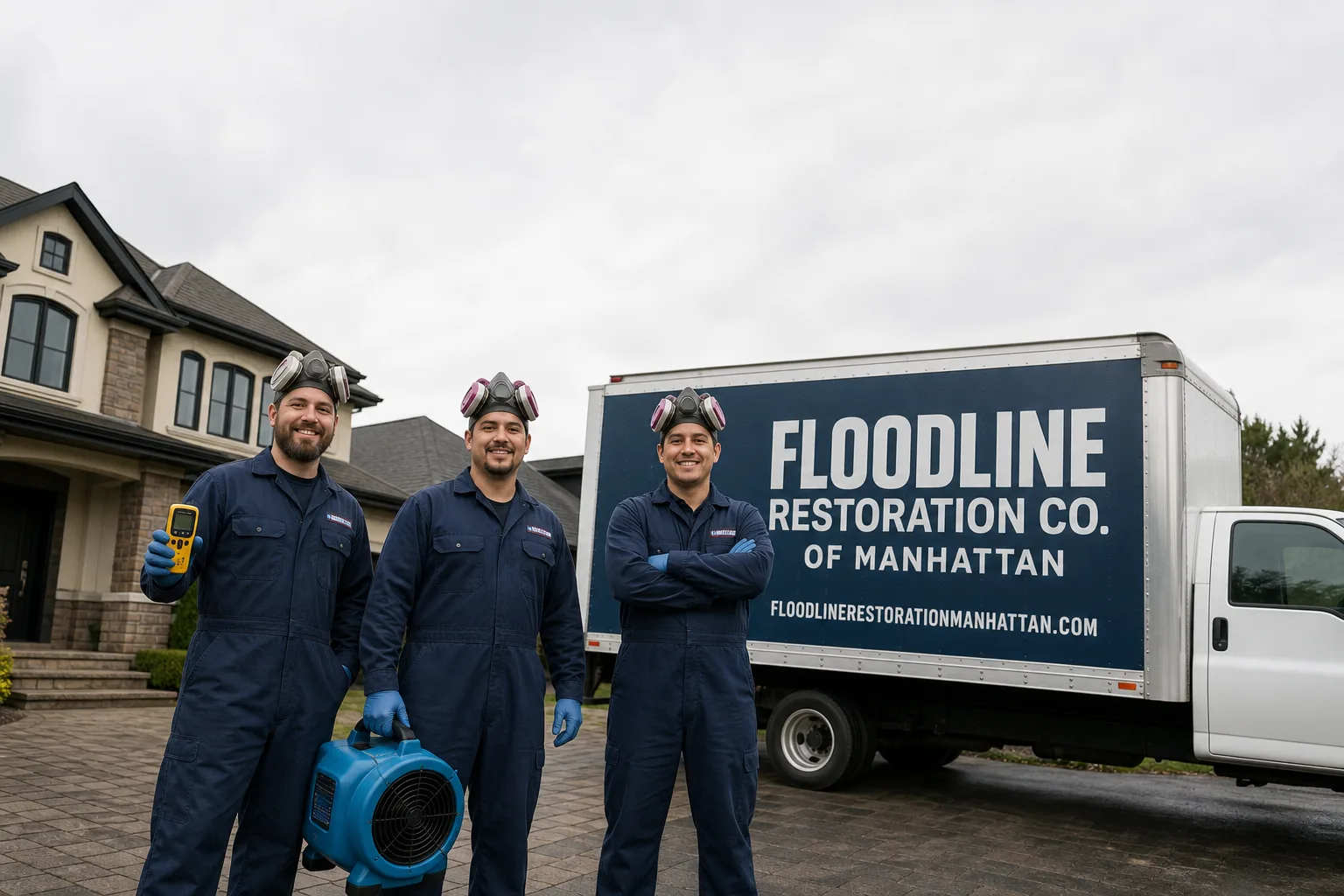
Free visual inspection and a written scope of work before any mitigation begins - photos, moisture readings, and drying logs go in your claim file
The scope we write is the scope we bill. Anything new gets shown to you, in writing, before we touch it.






 Before
 After
After Before
 After
After Before
 After
After24/7 Emergency Fire & Smoke Damage Restoration in Elmsford
Fire and smoke damage in Elmsford gets worse by the hour, not by the day. Soot is acidic and starts etching glass and metal within the first sixty minutes, while smoke odor drives into drywall, insulation, and soft contents the longer it sits. If you’re standing in a burned kitchen off Route 119 or a smoke-filled bedroom in a 1950s Cape Cod, call (917) 924-4221 right now. A live dispatcher answers around the clock, every day of the year, and our crews reach Elmsford properties fast enough to start mitigation the same visit. We provide a free visual inspection, get emergency board-up or tarping in place when openings exist, and stop the damage from spreading while you deal with the fire report. The first hour determines how much of your home can be saved rather than replaced.
Understanding Fire & Smoke Damage Restoration Severity in Elmsford Properties
Not all fire damage is equal, and in Elmsford the severity almost always hinges on the relationship between fire and water. Most homeowners expect soot residue types ranging from light protein soot in kitchen fires to thick, oily hydrocarbon soot in structural burns, and we handle all of them with the appropriate cleaning method and chemistry. But what makes Elmsford different is the water side of the equation. Fire suppression hoses dump hundreds of gallons into the same slab-on-grade ranch homes and Cape Cods that already struggle with elevated water tables near the Saw Mill River. That means a category of water damage officially known as Category 2 or even Category 3, gray or black water contaminated with burned building materials and firefighting chemicals, must be remediated before smoke and soot work can produce lasting results. Coastal and hillside restoration contractors don’t routinely face this, but crews working the Route 119 corridor and adjacent residential streets see it on nearly every structural fire. Soot trapped inside waterlogged drywall becomes a source of recurring odor and hidden microbial growth, which is why professional fire restoration in Elmsford always starts with moisture mapping and structural drying, followed by HEPA air scrubbing and targeted deodorization, and ending with clearance verification that confirms the damage is actually gone, not just painted over.
Why Elmsford Property Owners Choose Floodline Restoration Co. of Manhattan
- 45-minute response commitment: We commit to having a crew en route within 45 minutes of your call, and we’ll be there when we say. Elmsford is a compact area, and our dispatch knows the Route 119, Saw Mill River Parkway, and neighborhood streets well enough to route around traffic and weather.
- 24/7 live answer, always a person: You will never reach a recording or a call service. A live dispatcher picks up at two in the morning and starts coordinating your job immediately.
- IICRC-certified crews, including FSRT and WRT: Our technicians carry Fire & Smoke Restoration Technician and Water Restoration Technician certifications, because in Elmsford every real fire project demands both skill sets. No uncertified subcontract crews show up at your door.
- Free visual inspection: We walk your property, assess the fire, smoke, soot, and any water damage from suppression, and give you a written scope. No charge, no obligation.
- Direct insurance billing: We bill your carrier directly and talk to your adjuster so you don’t have to play messenger. Photo documentation and line-item estimates go straight from our crew to the claim file.
- One team from extraction to reconstruction: The same background-checked, uniformed technicians who extract and dry on day one are the ones who rebuild and finish the job. No mid-project handoff, no inherited crew you’ve never met.
Our Fire & Smoke Damage Restoration Process
Inspection & Assessment
We start with a room-by-room assessment using thermal imaging to find hidden heat and moisture behind walls and under slabs, plus moisture mapping to locate waterlogged cavities from fire suppression. This produces a written scope and a firm line-item estimate before any work begins.
Extraction & Stabilization
Standing water from hoses or burst supply lines comes out first using truck-mounted extraction and submersible pumps. We remove waterlogged materials that cannot be saved, including carpet pad and damaged drywall, and separate salvageable contents for cleaning.
Drying & Dehumidification
Dri-Eaz and Phoenix dehumidifiers run alongside XPOWER air movers to dry structural cavities to a documented standard. Daily moisture readings are logged until the dry standard is met, because Elmsford’s slab and shallow-basement construction keeps wicking moisture long after surfaces look dry.
Cleaning & Sanitization
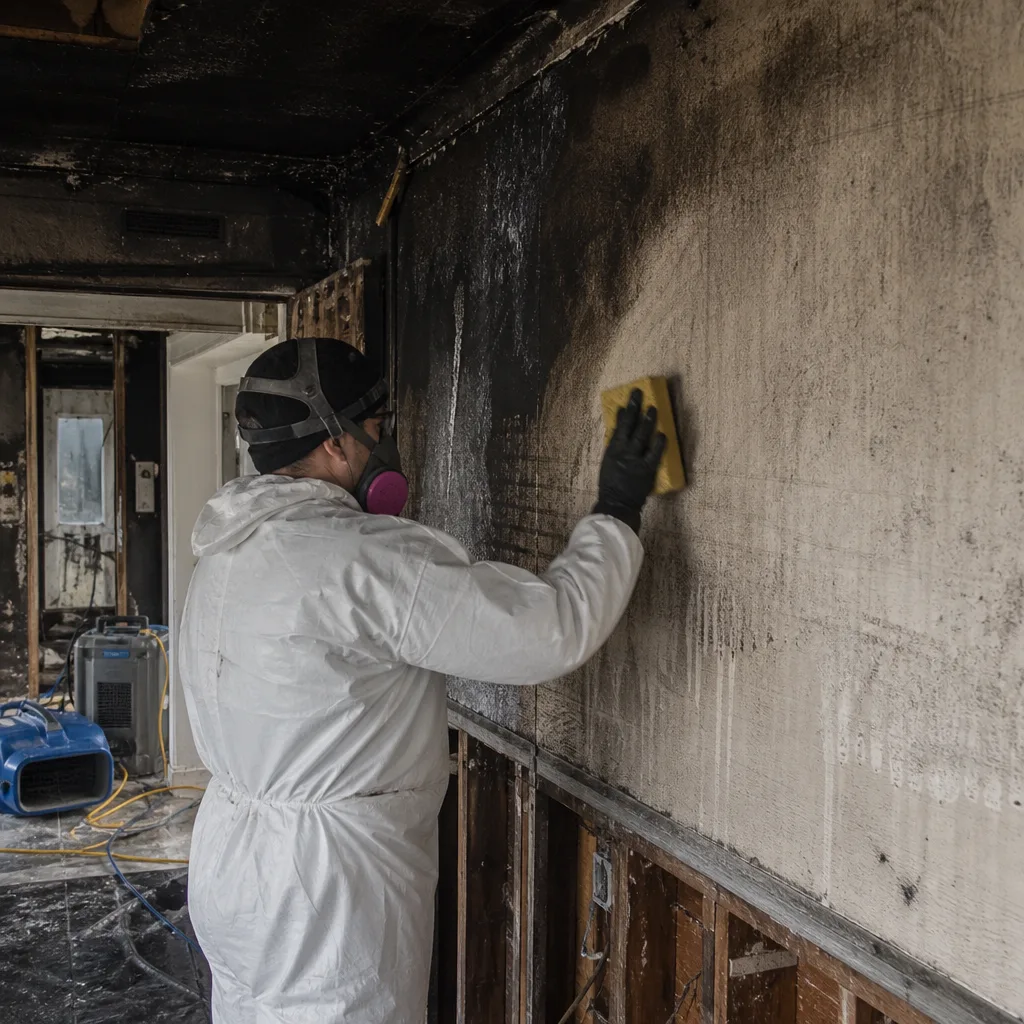
Soot removal uses dry chemical sponges for walls and ceilings, HEPA vacuuming for loose particulate, and appropriate wet cleaning for hard surfaces. We apply antimicrobial treatment to affected cavities to prevent the microbial growth that fire-suppression water invites.
Odor Removal & Deodorization
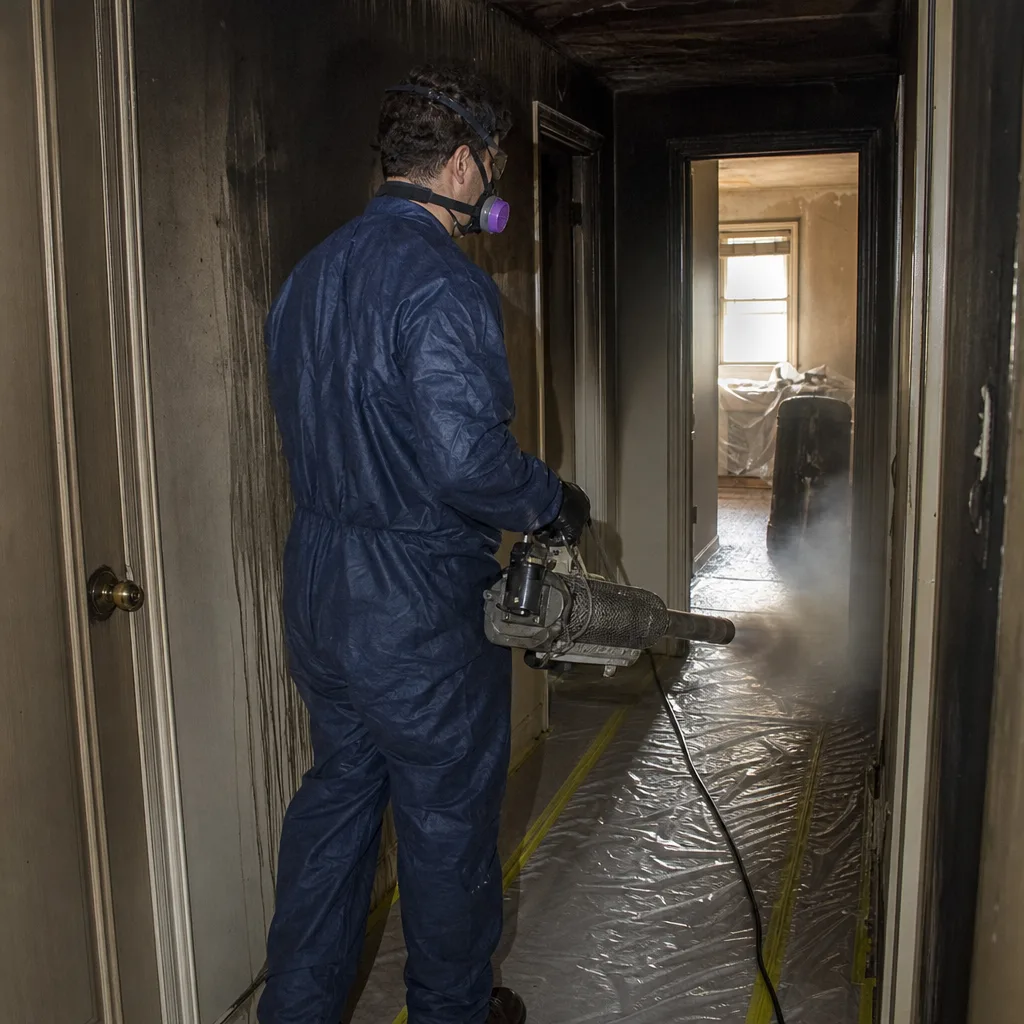
Smoke odor is removed, not masked. We use hydroxyl generators and thermal fogging for deep odor neutralization in wall cavities and ductwork. On stubborn cases in older Elmsford homes, we also seal absorbent surfaces with an odor-locking primer before rebuild.
Repairs & Restoration
Drywall, insulation, flooring, and cabinetry are rebuilt by the same crew that handled the mitigation. The moisture log, photos, and a completion report go to you and your carrier, and every job carries our 90-Day Done Right Promise in writing.
Need Emergency Fire & Smoke Damage Restoration in Elmsford Now?
Crews minutes away, answering live 24 hours a day. The sooner we start, the less it costs.
Working With Your Insurance Company
Fire claims are complex enough without adding paperwork confusion. We document from the first hour on site, with photos of every room, every surface, and every item before anything moves. Our line-item scopes are written to match what your adjuster expects to see, and we communicate with your carrier directly, including the claims examiner, the field adjuster, and the desk adjuster on larger losses. You get a copy of everything we send them. When a claim involves smoke migration into adjoining units or shared walls, we map that movement so the scope covers the full extent, not just the visible damage. Then:
What We Provide Your Insurer
- Thorough documentation of the loss
- Photos of all damage, room by room
- Moisture readings and drying logs
- A detailed, line-item scope of work
- Direct coordination with your carrier
Built for Elmsford’s Loss Calendar
Elmsford’s fire and smoke restoration calendar tracks the same weather patterns that drive its flooding. January and February bring deep freezes that burst supply lines in slab-on-grade ranch homes while space heaters placed too close to combustibles account for a steady share of winter fires. Spring thaw pushes the Saw Mill River over its banks along the parkway corridor, and storm-driven power losses lead to electrical events, cooking accidents during outages, and generator misuse that all produce fire and soot damage. Summer thunderstorm flash floods run through the Route 119 commercial corridor and adjacent residential streets, and with them come water intrusion into electrical panels and sub-slab wiring. Nor’easters in late summer and fall drive wind and rain into under-secured openings after any recent board-up, while wind-rated door and window failures from storm gusts let post-fire weather re-contaminate interiors. Fires from aged knob-and-tube wiring in unrenovated 1950s and 1960s homes happen year-round and are a recurring loss type for the villages along the Saw Mill River Parkway. The pattern in Elmsford is rarely a single isolated event; it’s a sequence of water, wind, and fire that a competent restoration crew must understand as one continuous exposure.
Fire & Smoke Damage Restoration Across Elmsford’s Neighborhoods
Response routes matter when a fire has left your home open to the weather. From the Route 119 commercial corridor, where dense light-industrial buildings and retail storefronts sit on large concrete slabs that wick moisture for weeks after a fire, to the residential streets running east toward the Saw Mill River Parkway, our crews know the drive times and the building types. Off Knollwood Road and along Hayes Avenue, the post-WWII ranch homes have shallow basements that collect fire-suppression runoff against foundation walls and need aggressive structural drying before soot work can begin. The Cape Cod homes off Main Street and Old Country Road hold smoke in knee-wall attics and low-ceiling second floors, which means odor removal has to reach cavities that ladder work alone won’t expose. Up near the Greenburgh border on Saw Mill River Road, older homes with added dormers and multiple roof lines create smoke-migration paths that move contamination diagonally through wall and ceiling cavities. And for commercial tenants along Route 119, the immediate concern is usually contents cleaning and pack-out, inventory recovery, and board-up that meets the wind-load reality of a valley that channels gusts straight down the corridor.
Specialized Fire & Smoke Damage Restoration Services We Offer in Elmsford
Emergency Board-Up & Tarping
Once the fire department clears the scene, your property is vulnerable to weather, trespass, and additional contamination. We secure every opening with plywood board-up, roof tarping, or both, factoring in the Saw Mill River valley’s wind patterns so the work holds through the next nor’easter. For Elmsford’s older commercial buildings on Route 119, we also address wind-rating considerations and secure loose trim, gutters, and roof edges that storm gusts can turn into projectiles.

Fire Damage Cleanup
Fire cleanup in Elmsford means soot removal from every surface, debris removal, and structural triage to determine what’s salvageable. On slab-on-grade ranch homes, we inspect the cavity between slab and subfloor for water migration from suppressions, which is where hidden contamination hides. This is the work that prevents a fire loss from becoming a mold loss three months later.
Smoke & Soot Removal
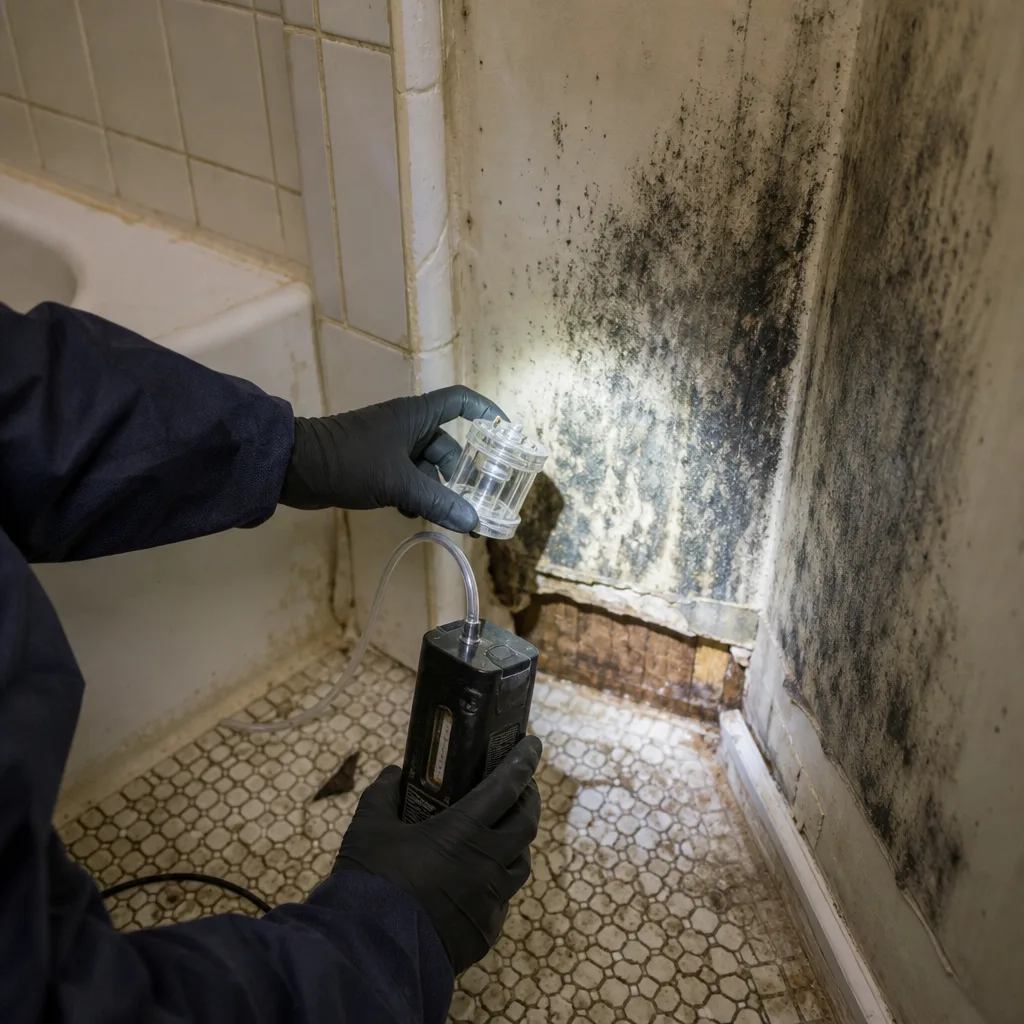
Soot residue is chemically aggressive. Protein soot from a kitchen fire is nearly invisible but bonds to painted surfaces and requires specific cleaning techniques, while oily hydrocarbon soot from burning synthetics needs solvent-based removal on hard surfaces and specialized treatment on porous ones. Leaving soot on HVAC registers, light fixtures, or inside ductwork means the smell and the staining come back.
Odor Removal & Deodorization
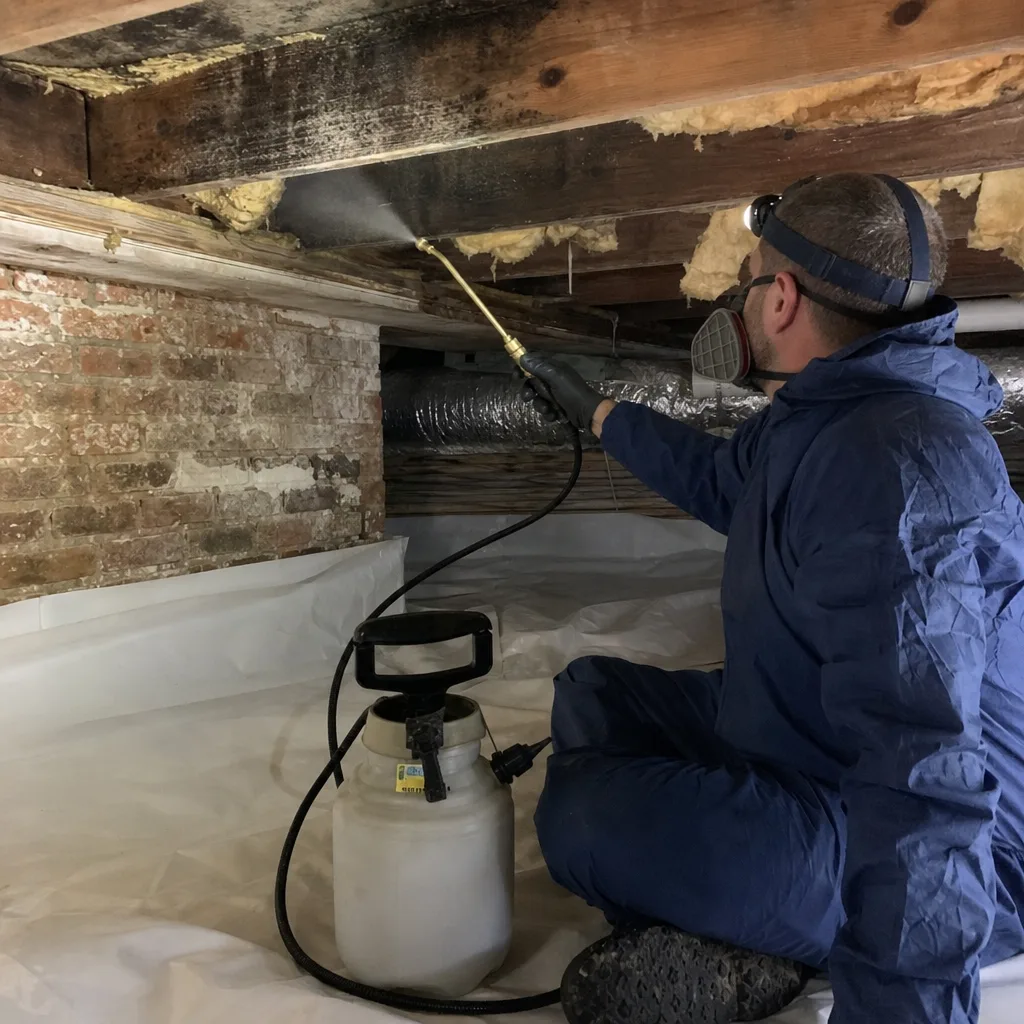
Smoke odor in Elmsford homes settles into the same wall cavities that floodwater saturates, which is why we combine hydroxyl generation and thermal fogging with cavity drying and sealing. On homes along the Route 119 corridor with recurrent moisture cycles, the odor problem doesn’t stay solved unless the moisture source is addressed. Masking agents don’t work here; the odor compound has to be neutralized or sealed.
Contents Cleaning & Pack-Out
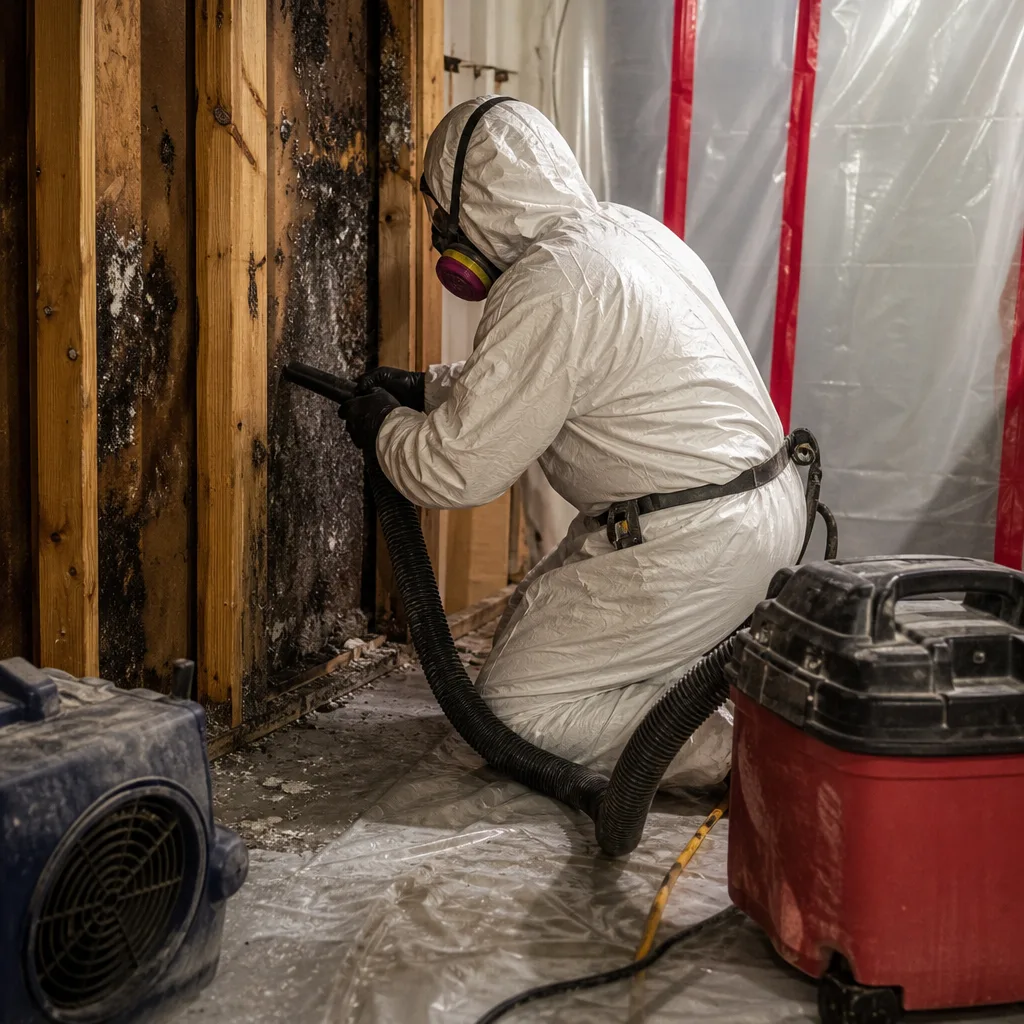
We clean and restore salvageable contents at our facility, including upholstery, clothing, books, and electronics. For Route 119 commercial tenants, we do a full inventory, pack-out, cleaning, and storage, with photo documentation for the insurance claim. You get a written contents list showing what was cleaned, what was discarded, and what was restored.
Structural Fire Repair
Once mitigation is complete, we rebuild. That means framing repairs, drywall, insulation, flooring, cabinetry, paint, and finish work, done by the same crew that handled the mitigation so no detail is lost between phases. Structural repair in Elmsford also means accounting for the valley’s moisture conditions, with materials and assemblies chosen so the repair doesn’t trap moisture and create a new problem.
What happens when you call
- 1
A real person answersNo phone trees - you reach a local pro.
- 2
You get an upfront price rangeHonest numbers before anyone is dispatched.
- 3
A background-checked tech heads outLicensed & insured, dispatched right away.
- 4
You approve before work beginsNothing starts until you say go.
Fire & Smoke Damage Restoration Costs in Elmsford, NY
Pricing for fire and smoke restoration in Elmsford depends on what burned, how long it burned, and how much water the fire department put down. A small kitchen fire with light soot throughout a ranch home off Knollwood Road typically runs $4,000 to $9,000 for cleaning, deodorization, and minor repairs. A contained bedroom fire with smoke migration into attic spaces runs $12,000 to $28,000 when structural drying, insulation replacement, and rebuild are included. Whole-house smoke contamination from a fire in an attached garage on a Route 119-adjacent street often lands between $30,000 and $60,000. Contents cleaning and pack-out adds $2,500 to $12,000 depending on volume. Emergency board-up and tarping runs $500 to $1,800 for a typical single-family home. Most of these costs are covered by standard homeowner’s policies, minus your deductible. The best way to get a firm number is a free visual inspection, which gives you a written scope you can take to your adjuster without any obligation. Call (917) 924-4221 to schedule one.
We Also Serve Cities Near Elmsford
Floodline Restoration Co. provides Fire & Smoke Damage Restoration for homeowners throughout central Westchester, including Elmsford, Hartsdale, Valhalla, Irvington, and Tarrytown. Each of these communities has its own housing stock and loss patterns, and our crews work all of them from the same 24/7 dispatch desk.
Serving Elmsford, NY - Our Local Coverage Area
We’re based in the Elmsford area and know this community well. Use the map below to see our service coverage - if you’re nearby, we can almost certainly help.
Elmsford Fire & Smoke Damage Restoration Questions, Answered
How does Elmsford’s recurring Saw Mill River flooding affect fire and smoke restoration timelines?
Recurring Saw Mill River flooding extends fire and smoke restoration timelines in Elmsford because fire-suppression water and stormwater often occupy the same wall cavities and sub-slab spaces simultaneously. Our crews routinely run structural drying for 10 to 18 days longer on homes near the Route 119 corridor than on comparable homes at higher elevation, simply because the slab and shallow basement keep wicking moisture. When fire-suppression water sits in the same cavities where river water has intruded before, the humidity in those stud bays resists drying, and smoke odor trapped in damp insulation reactivates as the material slowly dries. For a real-world picture, our Fire & Smoke Damage Restoration team has seen these repeated cycles often enough that we build 60 to 90 day follow-up inspections into every Elmsford fire claim as standard practice.
What wind-rating requirements apply to emergency board-up on Elmsford commercial buildings?
Emergency board-up on Elmsford commercial buildings must account for the wind loads that the Saw Mill River valley channels along Route 119 and the parkway corridors. Plywood board-up and tarping that would hold in a sheltered village may not hold here when a nor’easter drives gusts down the valley. Floodline Restoration Co. specifies thicker plywood, closer fastener spacing, and reinforced bracing for commercial openings on exposed, grade-level storefronts, and we coordinate with the property owner’s code official or engineer when the building sits in a flood zone and must also meet NFIP elevation and anchoring expectations.
Why do fire restoration projects in Elmsford need 60-90 day follow-up inspections?
Fire restoration projects in Elmsford require 60 to 90 day follow-up inspections because slab-on-grade and shallow-basement construction conceals moisture that wicks up into stud cavities long after visible surfaces dry. After a kitchen fire in a 1950s ranch off Route 119, our crew used XPOWER air movers and Dri-Eaz dehumidifiers to run structural drying on waterlogged drywall from fire-suppression hoses before starting smoke and soot removal. We packed out salvageable contents, ran antimicrobial treatment on hidden wall cavities, and kept drying logs for the whole 60-day follow-up window because the slab foundation keeps wicking residual moisture back into the stud bays. Without that follow-up, concealed soot in damp cavities re-odorizes, and microbial growth returns after the insurance file is closed.
How do you handle contents cleaning for Route 119 commercial tenants after a fire?
We handle contents cleaning for Route 119 commercial tenants with a full pack-out, inventory, cleaning, and return process designed for business continuity. Every item is photographed and logged before it moves, then transported to our cleaning facility where it gets service-specific treatment: dry-cleaning for textiles, soda blasting or ultrasonic cleaning for hard goods, and HEPA vacuuming plus deodorization for electronics-adjacent paper items. We provide you and your carrier a written contents list showing what was cleaned, what was discarded, and why. Then we coordinate return delivery so you can reopen as quickly as the structure allows.
Can fire suppression water cause more lasting damage than the fire itself in Elmsford ranch homes?
Yes, fire suppression water can absolutely cause more lasting damage than the fire itself in Elmsford ranch homes, particularly where water pools against shallow foundations and slab edges. Fire-suppression runoff is Category 2 water at minimum and often Category 3 when it has mixed with burned building materials, which means it carries contaminants into wall cavities, carpet pad, and sub-slab spaces. In slab-on-grade construction, that contaminated water has nowhere to drain, so it concentrates moisture exactly where it feeds microbial growth and reactivates trapped soot odors. Drying only the surface while leaving concealed saturated cavities is the most common reason fire restoration in this valley fails months after the fire truck leaves. Call (917) 924-4221 for a free inspection, and we’ll map the moisture before we touch the soot.
How fast can you get to my home in Elmsford after I call?
We commit to having a crew en route within 45 minutes of your call, and in most Elmsford neighborhoods that means a technician on site within the hour. Our dispatch desk knows the Route 119 corridor, Knollwood Road, Old Country Road, and the residential streets east of the Saw Mill River Parkway. Night or day, weekend or holiday, you’ll speak to a live person who starts routing a crew while you’re still on the phone.
Do I really need full fire and smoke restoration, or can I just clean the visible soot and repaint?
Visible soot is almost always the smallest part of the problem in an Elmsford fire. Smoke penetrates drywall, insulation, ductwork, and the cavities behind trim and outlets, and if those areas aren’t cleaned, deodorized, or sealed, the smell and staining return within weeks. In Elmsford’s slab and shallow-basement homes, the question is even clearer: hidden moisture from suppression water trapped behind walls will wick soot back through fresh paint and feed microbial growth you can’t see. The honest answer is that a surface clean alone doesn’t work in this valley’s housing stock, and a proper restoration with a written scope and the 90-Day Done Right Promise is the only thing that actually ends the problem.
Who deals with my adjuster? I don’t want to be stuck in the middle.
We deal with your adjuster directly. From the first day, we send your carrier the photos, moisture logs, line-item scope, and every other piece of documentation they request, and we bill them directly for the covered work. You get copies of everything. If the adjuster has questions or wants to schedule an inspection, we’ll be on site to walk them through it. You should never have to argue with your carrier about what a restoration includes; that’s our job, and we’ve done it on Elmsford claims for years.
If you’ve had a fire in Elmsford, the damage is already moving. Soot is etching surfaces, smoke is driving deeper into insulation and drywall, and suppression water is soaking into the slab. Every hour that passes makes more of your home a replacement job instead of a restoration job. Call Floodline Restoration Co. at (917) 924-4221 now. A live person answers, we’ll get a crew to your Elmsford property fast, and we’ll start the mitigation and documentation your insurer needs before you hang up. The first inspection is free, the scope is in writing, and the work is backed by the 90-Day Done Right Promise. Done right, and backed in writing.
Written by Curt Bowman, Owner at Floodline Restoration Co., serving Elmsford and central Westchester since 2010.