
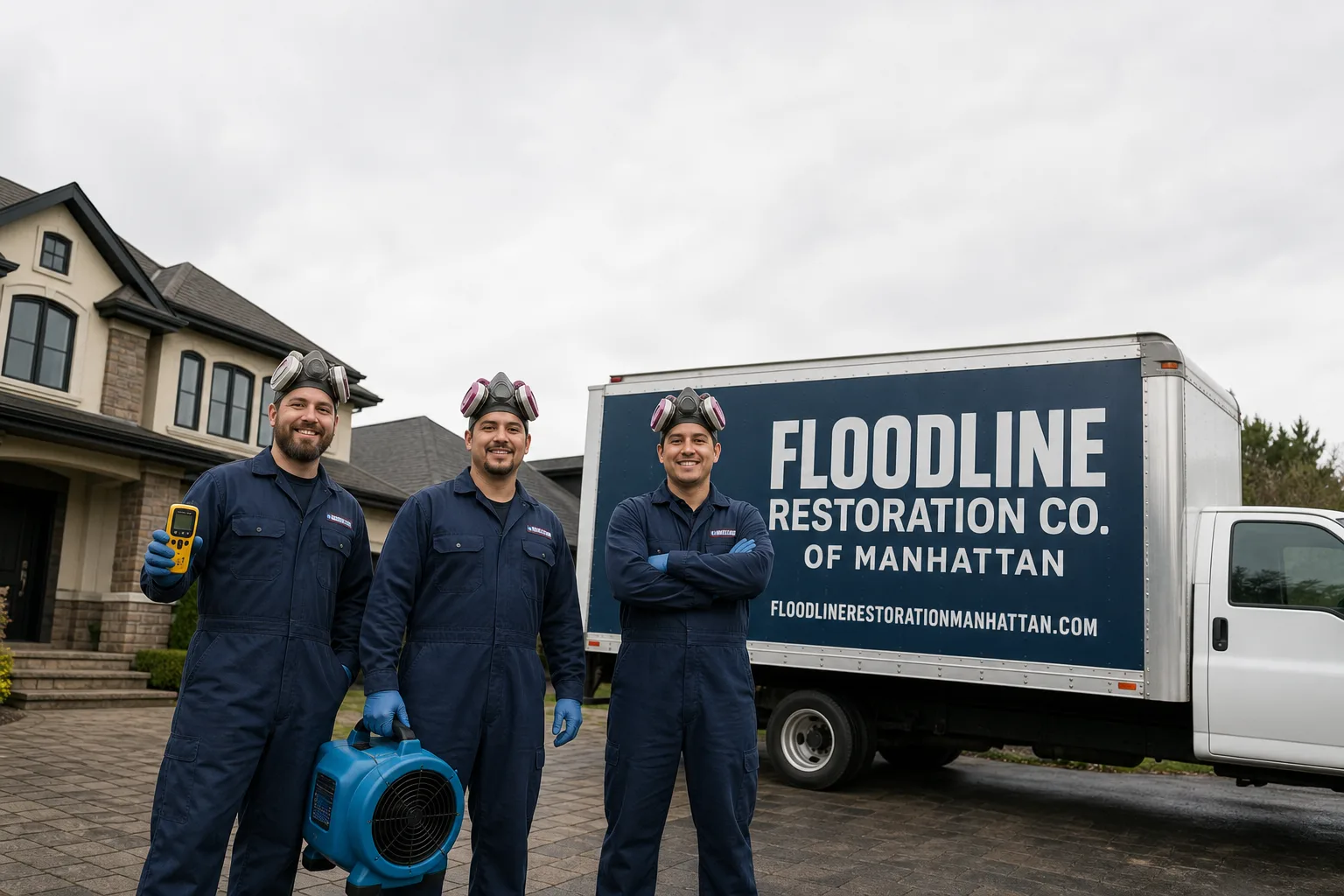
Free visual inspection and a written scope of work before any mitigation begins - photos, moisture readings, and drying logs go in your claim file
The scope we write is the scope we bill. Anything new gets shown to you, in writing, before we touch it.
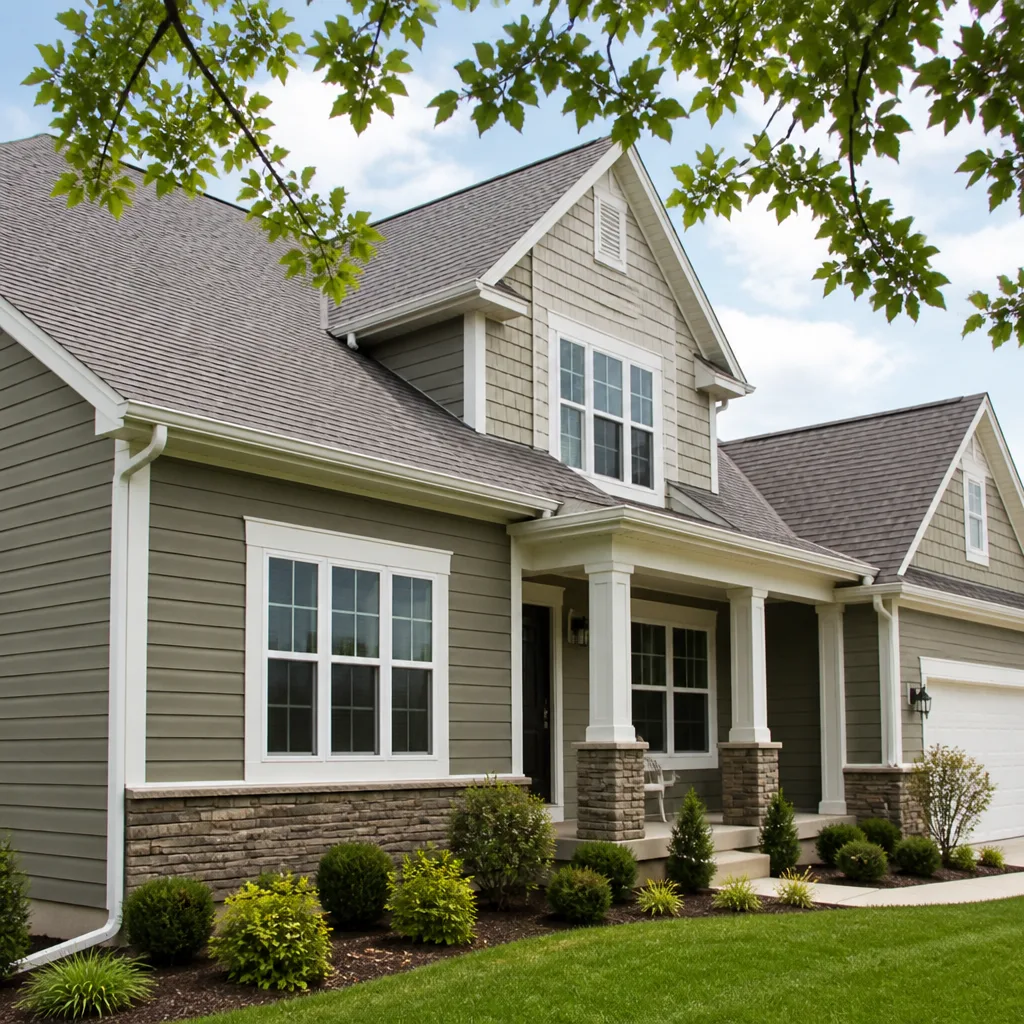
 Before
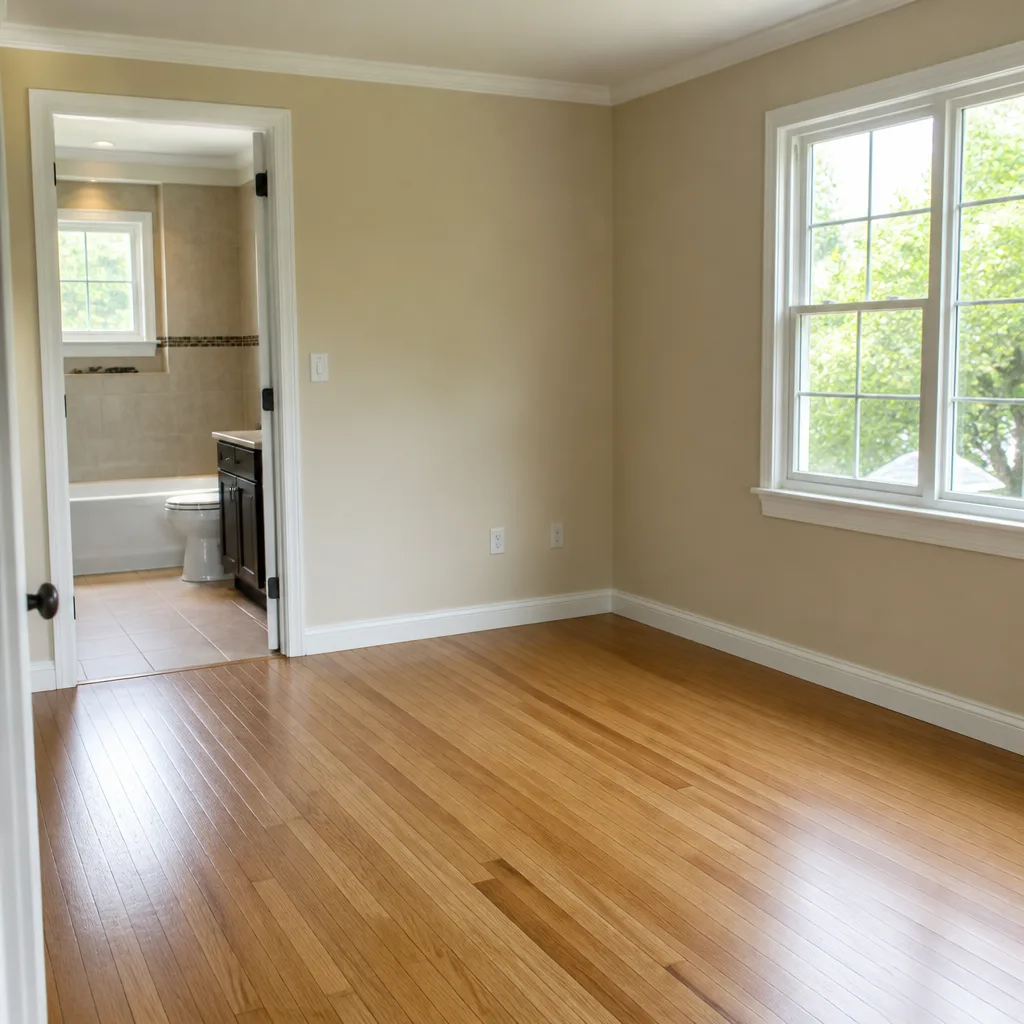
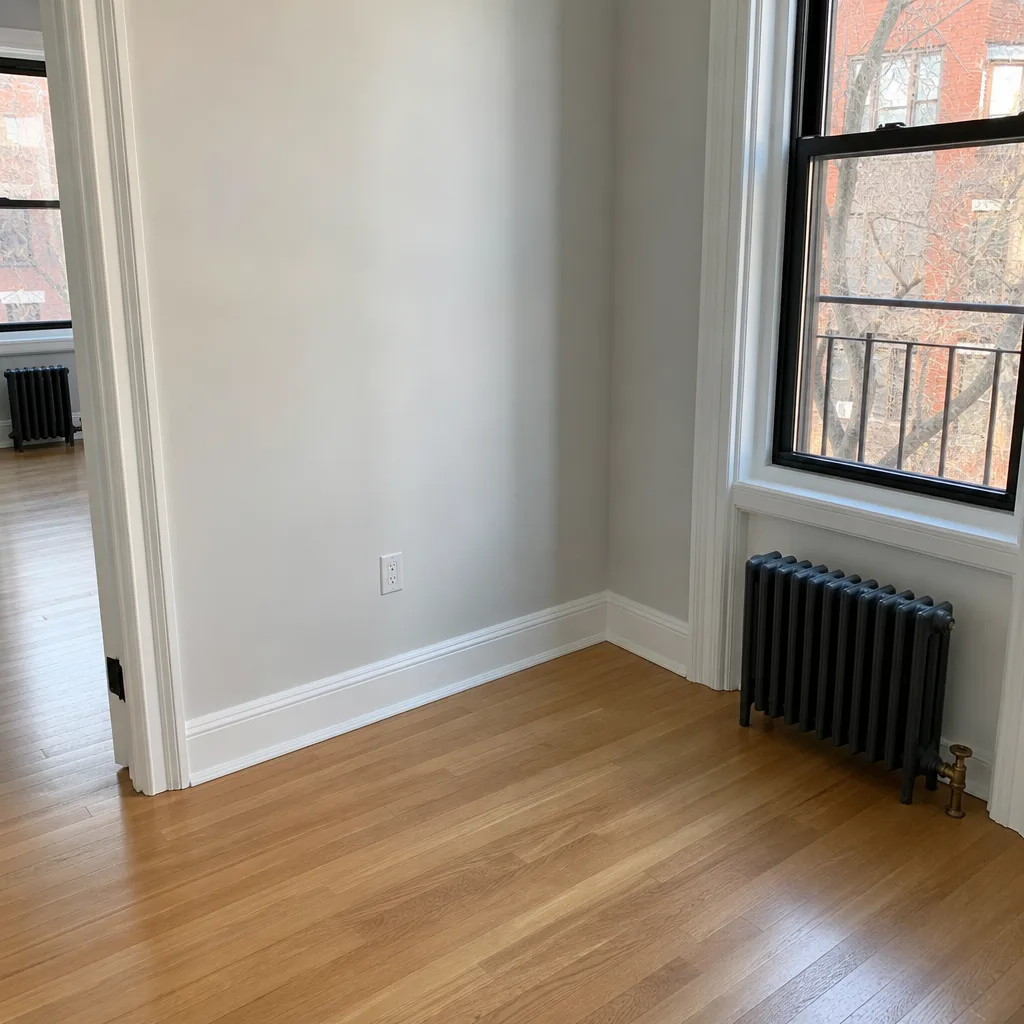 After
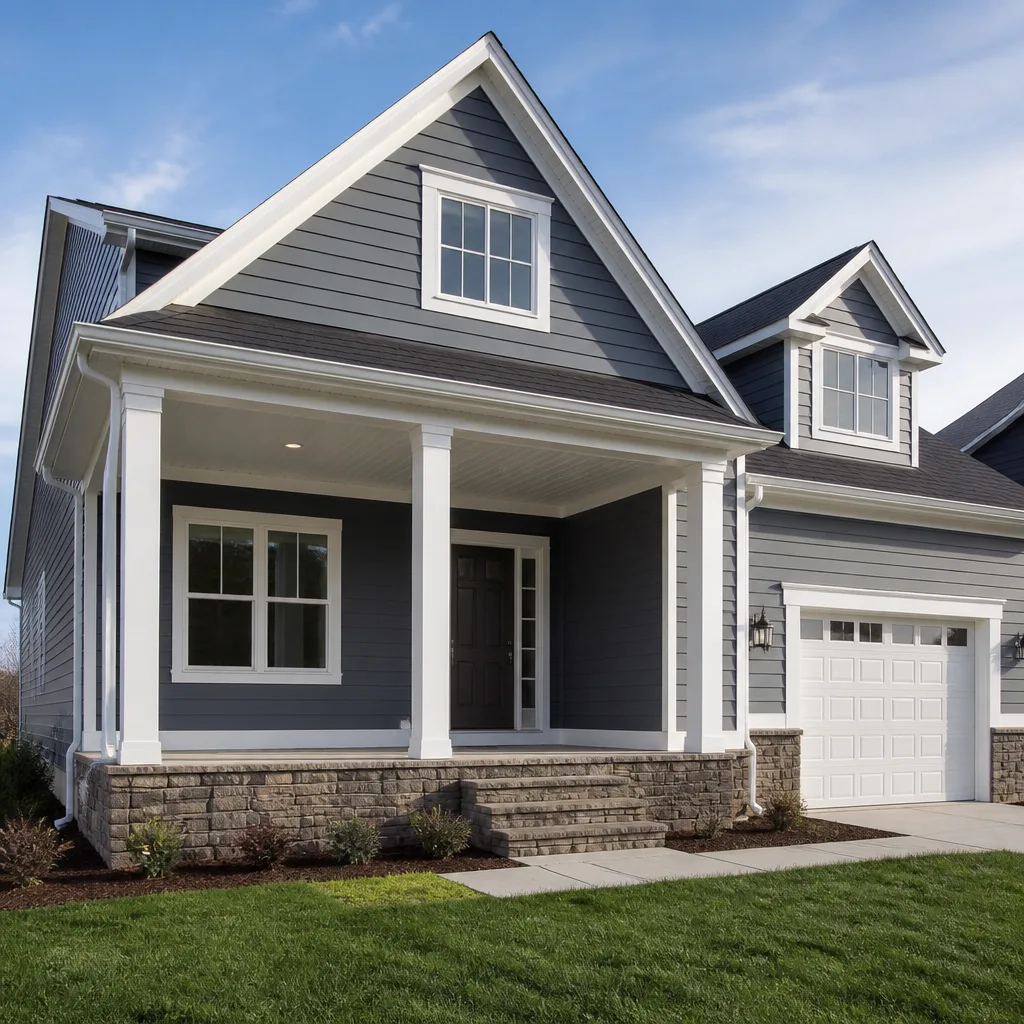
After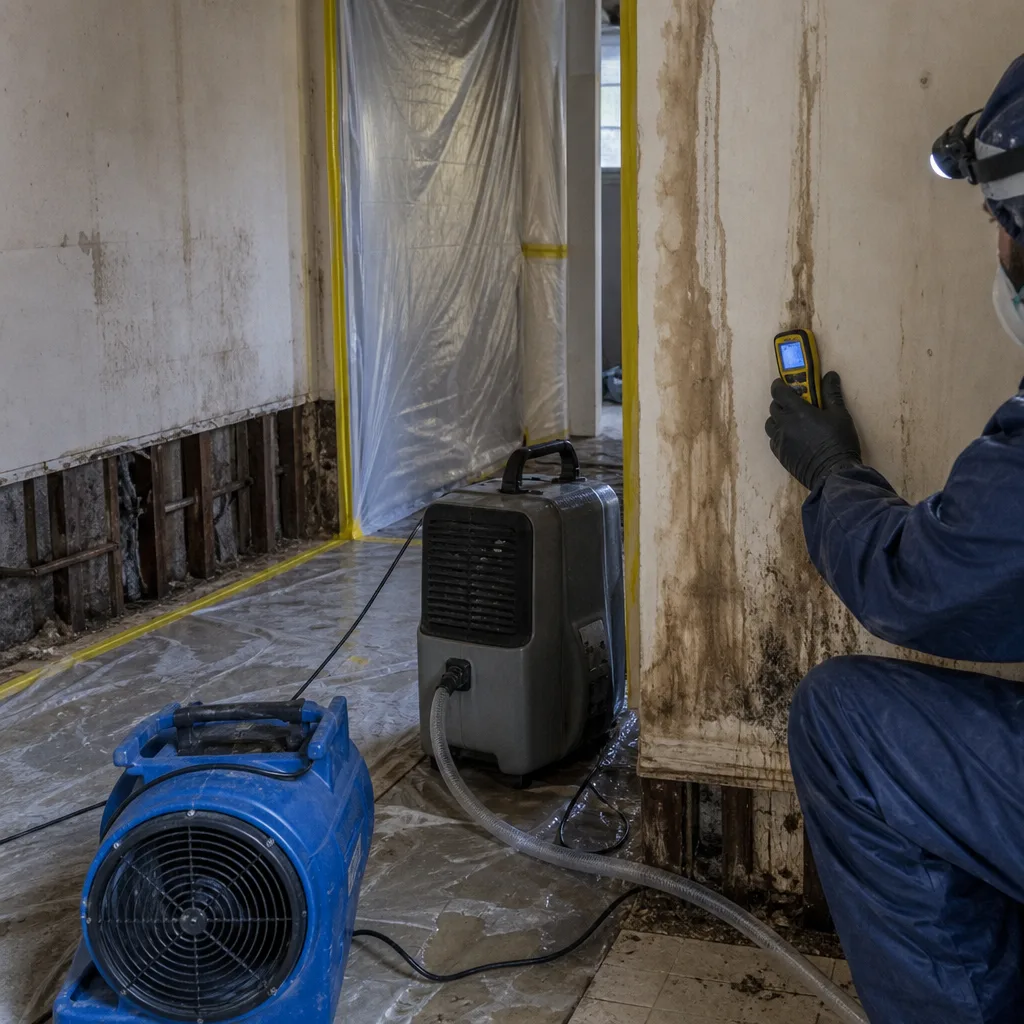 Before
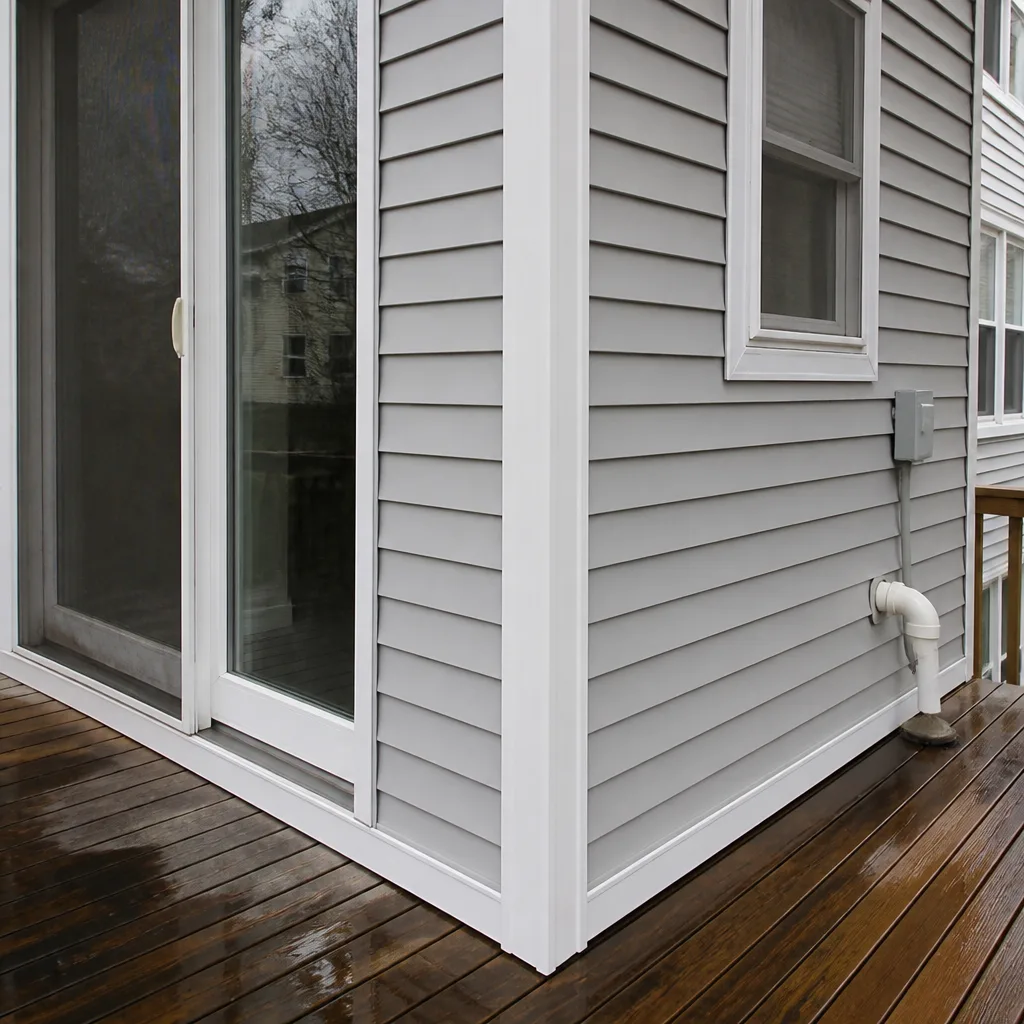 After
After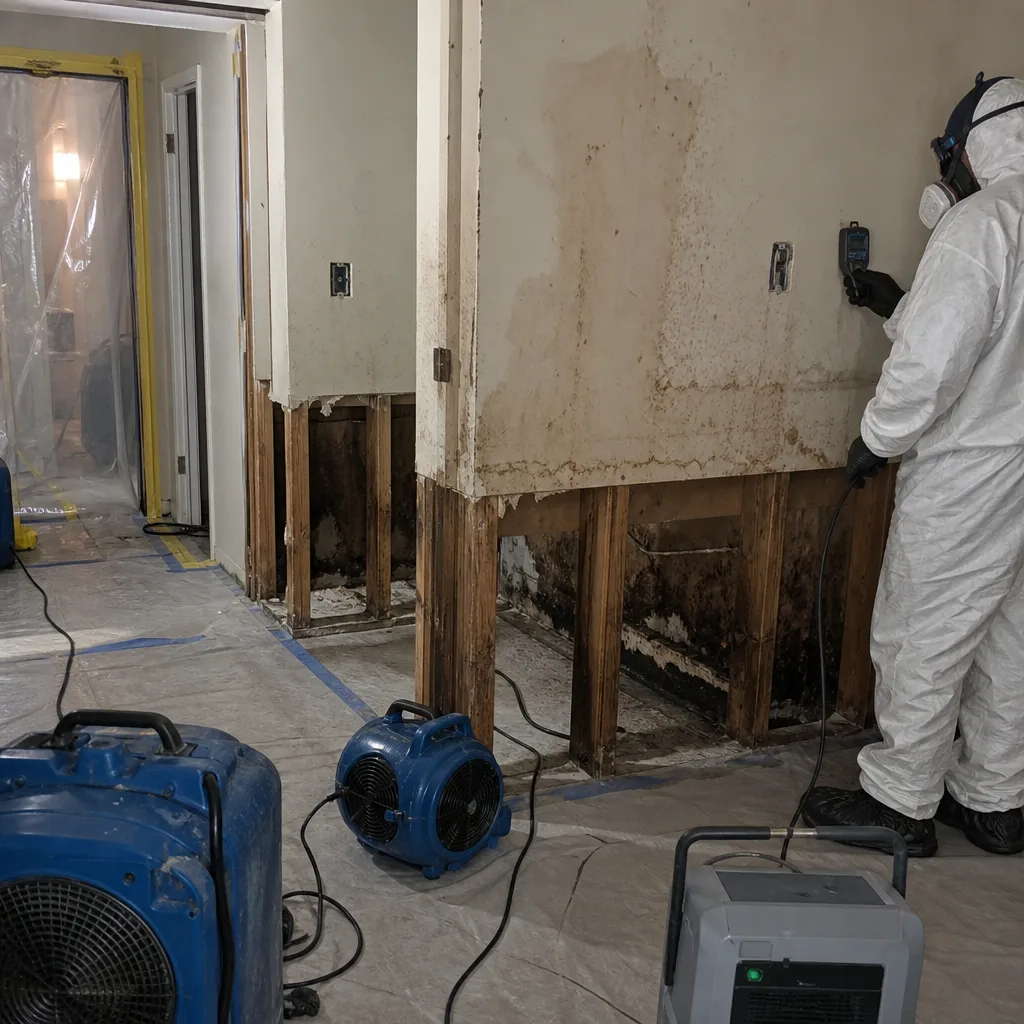 Before
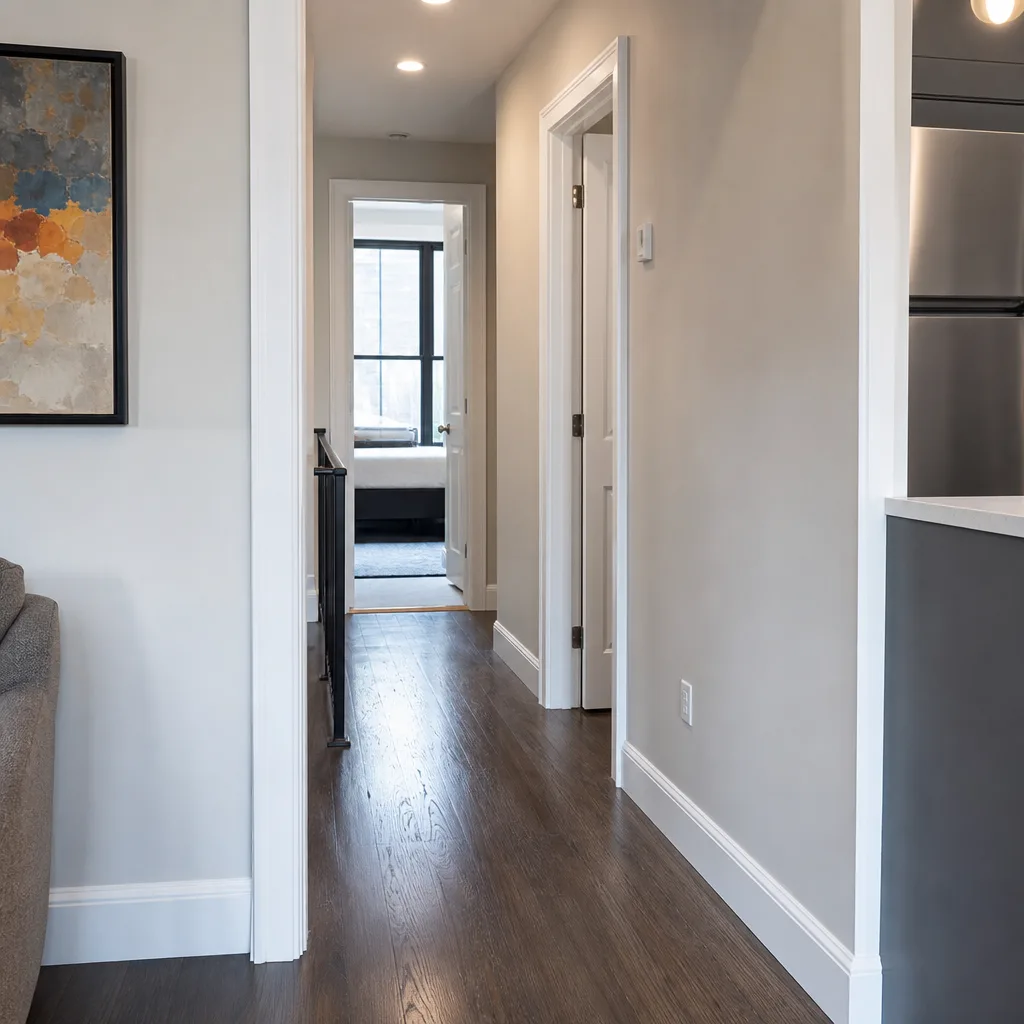 After
After24/7 Emergency Fire & Smoke Damage Restoration in Flatlands
Fire & smoke damage restoration in Flatlands typically runs $2,800-$9,500 for a standard kitchen or electrical fire, with structural repairs and full basement mitigation pushing costs higher. A live dispatcher answers (917) 924-4221 at any hour, and a certified crew reaches most Flatlands addresses within 45 minutes. The first hour matters because smoke residue is acidic. It etches glass, corrodes metal fixtures, and embeds into porous brick and drywall. In Flatlands specifically, the clock moves faster below grade. More on that below.
We’re Floodline Restoration Co. of Manhattan, and we’ve answered fire calls in Flatlands long enough to know this neighborhood’s homes carry a specific risk profile. The fire itself is only part of the job. What happens in the basement afterward is where the real damage accumulates. Call (917) 924-4221 for a free visual inspection. A crew can be at your door before you finish airing out the upstairs.
Understanding Fire & Smoke Damage Restoration Severity in Flatlands Properties
Severity in Flatlands breaks into three practical tiers. Tier one is a contained stovetop or outlet fire: smoke residue on upper floors, light soot deposition, no structural compromise. Tier two involves water from fire suppression soaking into finished basement spaces. Tier three is the one most Flatlands homeowners don’t see coming: a modest fire upstairs, but groundwater-saturated basement walls below that turn smoke-damaged drywall into a mold incubation chamber within 24 to 48 hours.
The technical terms matter here. Fire damage leaves three soot types: dry protein soot from kitchen fires, oily hydrocarbon soot from burning plastics and synthetics, and dry chemical residue from extinguishers. Each requires a different cleaning chemistry. Smoke migration follows pressure differentials, moving from hot zones into cooler spaces, which in Flatlands means it settles into below-grade rooms where air doesn’t circulate. Flatlands’s 1950s-1970s brick homes, with full finished basements built on concrete block, give smoke a natural collection point. The marsh substrate underneath keeps those block walls damp year-round. That moisture doesn’t just sit there. It bonds with soot particles, drives them deeper into the gypsum, and accelerates the acid-etched corrosion on any metal framing.
Our Fire & Smoke Damage Restoration team reads moisture levels before we ever open a wall. Skipping that step is how second-generation mold colonies start.
Why Flatlands Property Owners Choose Floodline Restoration Co. of Manhattan
- 45-minute response commitment - dispatch is coordinated from our New York City office, and crews serving Flatlands arrive fast because we keep local teams staged in Brooklyn and Queens, not an hour away in New Jersey.
- 24/7 live answer - a real person picks up the phone at 2 a.m. Not a recording. Not a call center reading a script. A dispatcher who can send a crew immediately.
- IICRC-certified technicians - our crews hold FSRT (Fire & Smoke Restoration Technician) and WRT (Water Damage Restoration Technician) certifications, and they’re background-checked and uniformed on every job. RIA and IFA standards guide our documentation.
- Free visual inspection - we walk the property, take moisture readings, and give you a written scope before any work begins. That’s how we avoid surprises on the bill.
- Direct insurance billing - we document from the first hour, communicate with your adjuster directly, and you never play messenger between us and the carrier.
- One team, extraction to reconstruction - the same certified crew that extracts water and removes soot handles the rebuild. No mid-job handoff. No inherited crew you’ve never met.
We stand behind the work with the 90-Day Done Right Promise. It’s in writing, tied to our K.E.Y.S. values code: Krafted right, Every time, Your home first, Standing behind it. Led by Curt Bowman, Floodline Restoration Co. has operated since 2010 on a simple principle: a square deal, no surprises.
Our Fire & Smoke Damage Restoration Process
Inspection & Assessment
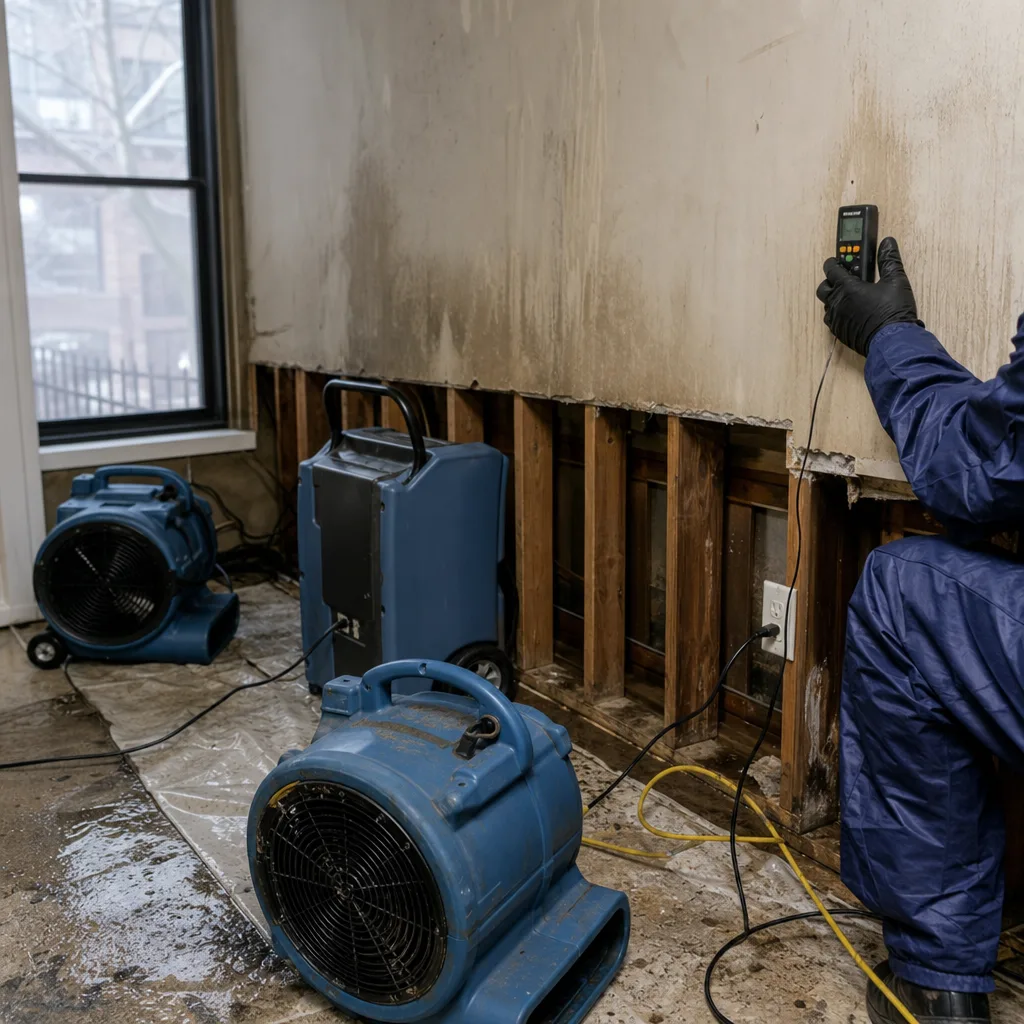
We start with a full walkthrough, thermal imaging, and moisture mapping of every affected room, including below grade. In Flatlands basements, we check foundation walls for pre-existing moisture before we touch any smoke damage. The written scope you receive reflects what we actually find, not a generic template.
Extraction & Stabilization
Fire suppression water gets extracted immediately using truck-mounted and portable units. We remove charred materials, seal off unaffected areas, and set up containment so soot doesn’t migrate through your home during cleanup.
Drying & Dehumidification
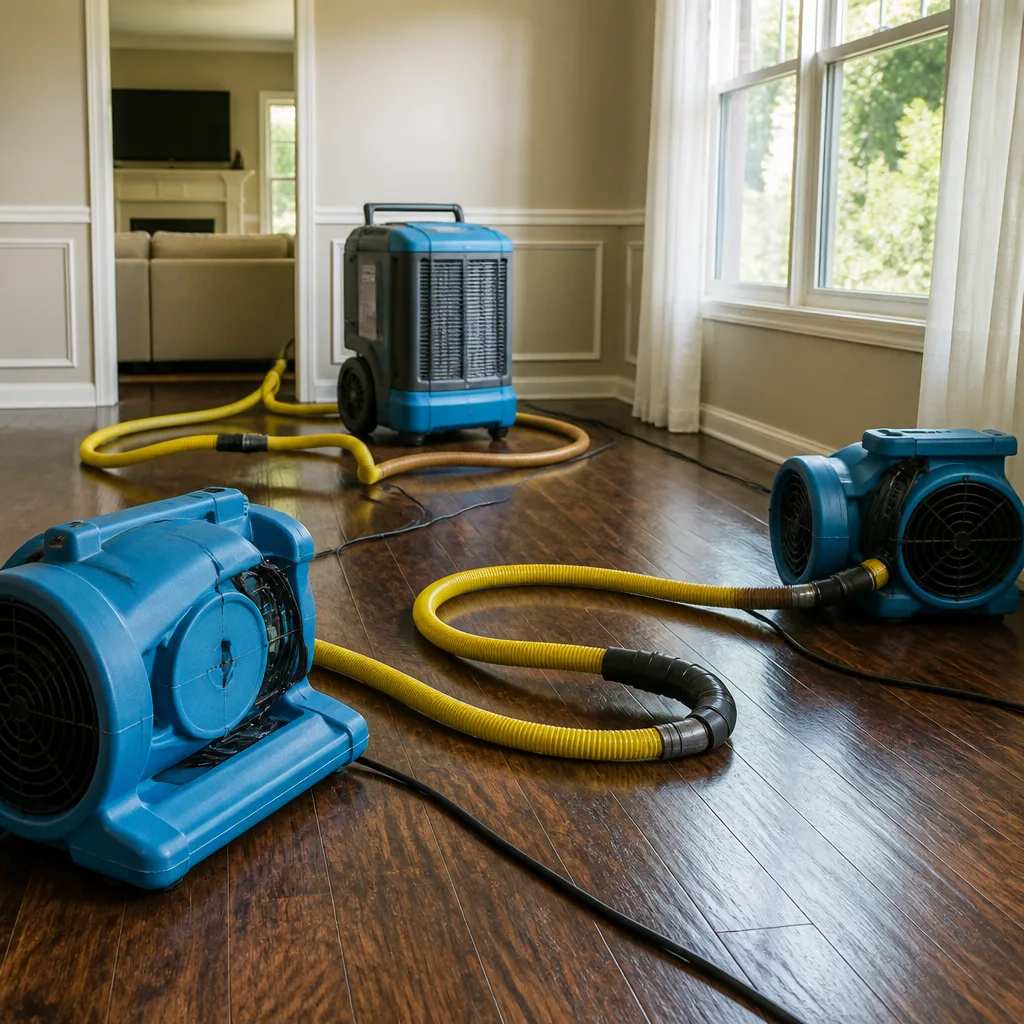
Dri-Eaz and Phoenix dehumidifiers run continuously, with daily moisture readings logged until every surface drops below the dry standard. In Flatlands, this step takes longer because the groundwater baseline is higher. We don’t rush it, and we don’t skip it.
Cleaning & Sanitization
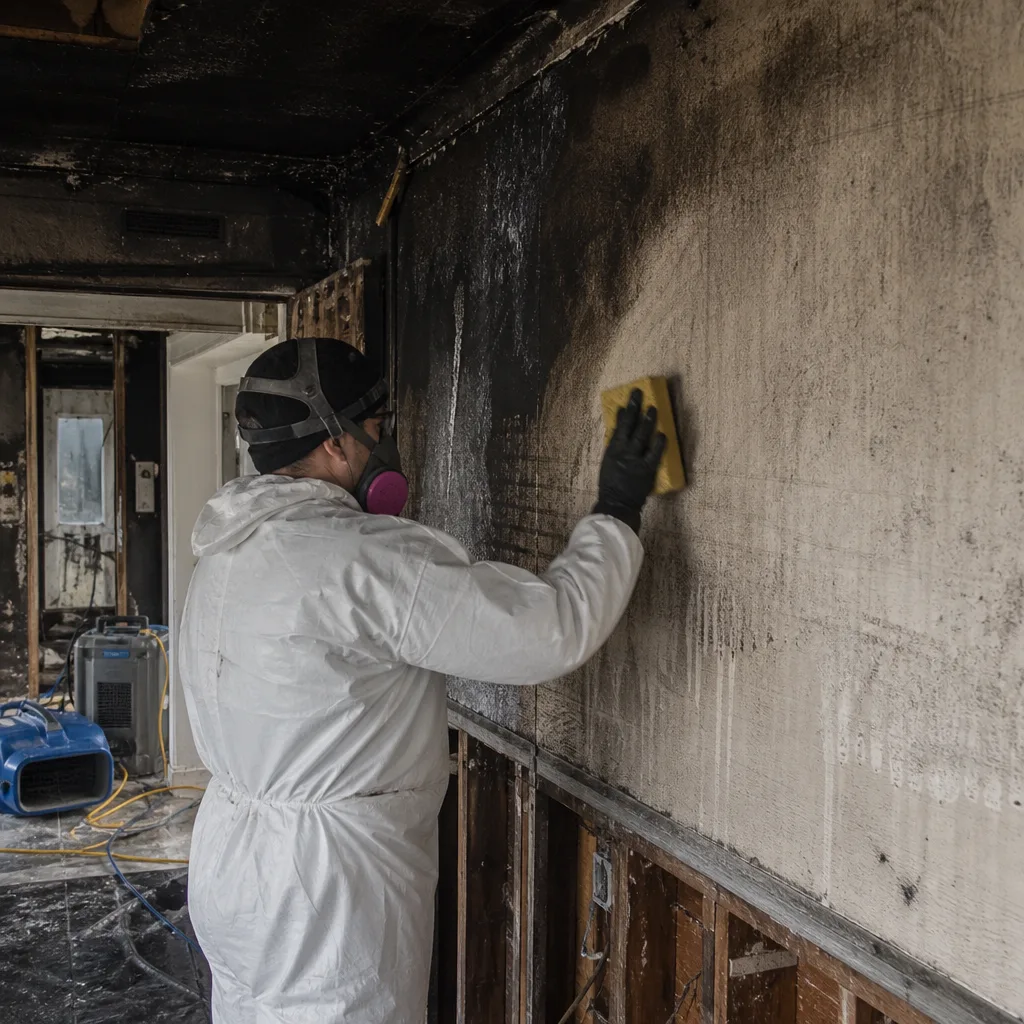
Soot and smoke residue get removed with HEPA air scrubbers, dry-ice blasting on brick, and chemical sponges on painted surfaces. Every room gets treated according to the soot type present, not a one-size-fits-all wipe-down.
Odor Removal & Foundation-Level Deodorization
This is where Flatlands jobs differ from higher-ground neighborhoods. We treat the foundation level with antimicrobial applications and thermal fogging, then seal block walls so smoke odor doesn’t get pulled back through the wall by the same groundwater pressure that carried moisture in. Painting over smoke residue without this step means the smell returns. Every time.
Repairs & Restoration
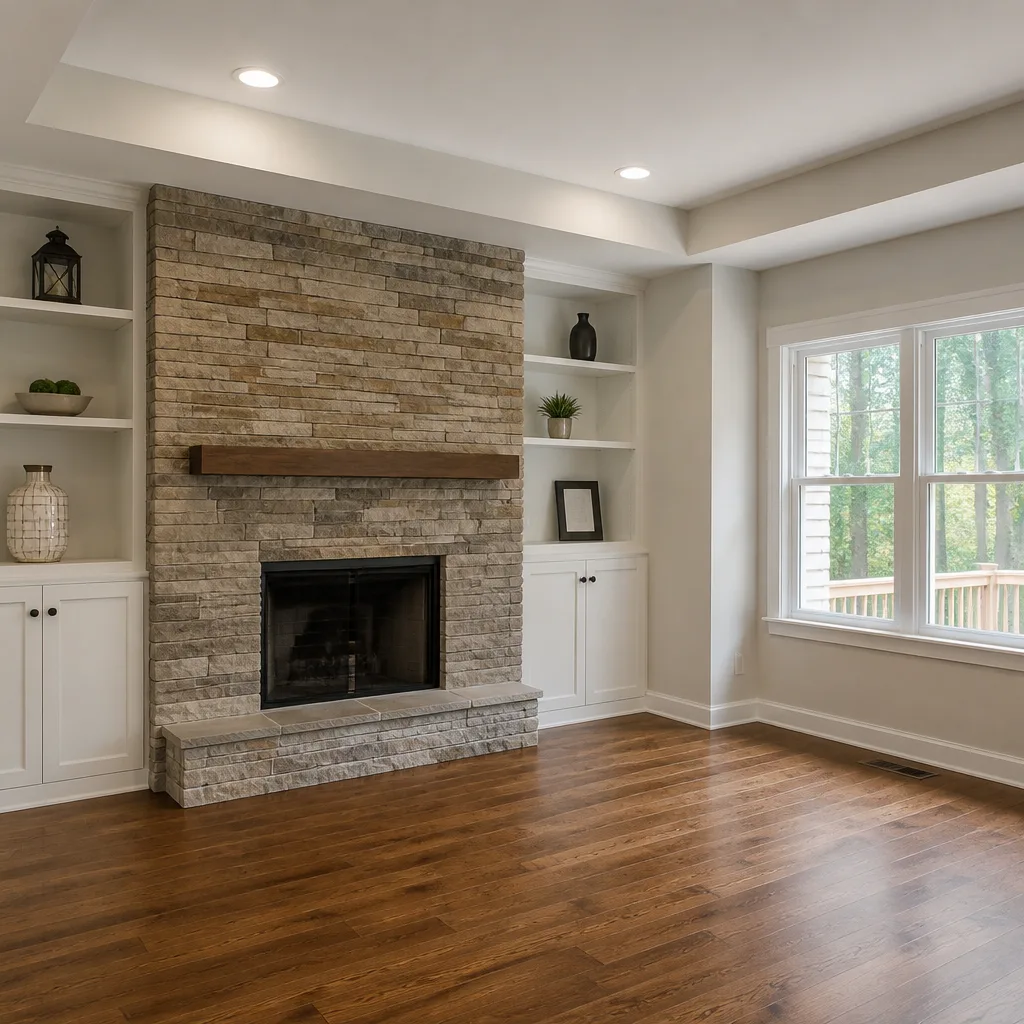
The same Floodline crew rebuilds drywall, refinishes surfaces, replaces damaged framing, and restores your home to its pre-loss condition. The 90-Day Done Right Promise covers the full scope. If it’s not done right, we make it right.
Need Emergency Fire & Smoke Damage Restoration in Flatlands Now?
Crews minutes away, answering live 24 hours a day. The sooner we start, the less it costs.
Working With Your Insurance Company
Most Flatlands fire claims include water damage from suppression, and that’s where documentation wins or loses the claim. We photograph every room before work begins. We log moisture readings daily. We produce line-item scopes that match industry-standard pricing software, so your adjuster recognizes the numbers. Then we communicate with the carrier directly, answer their questions, and push the claim forward while you focus on your family. You’ll get a copy of everything we send. Transparency is the whole job.
If your policy covers fire and smoke damage, most of our scope falls under covered perils. The basement issue changes the math, though. When pre-existing groundwater moisture compounds fire damage, insurers sometimes push back on what’s “new” versus “old.” We document the distinction clearly, with photos and moisture logs from day one. That’s the difference between a denied line item and a paid one.
What We Provide Your Insurer
- Thorough documentation of the loss
- Photos of all damage, room by room
- Moisture readings and drying logs
- A detailed, line-item scope of work
- Direct coordination with your carrier
Built for Flatlands’s Loss Calendar
Flatlands sits on former tidal marshland at near-sea-level elevation directly inland from Jamaica Bay. Large portions map inside FEMA Special Flood Hazard Areas. The neighborhood’s postwar detached homes, built before modern flood mapping, have full below-grade basements sitting in persistently high water-table soil. That means Flatlands is a recurrent-damage market, not a one-time-event market.
Winter kitchen fires follow the holidays: grease, unattended cooking, space heaters on overloaded circuits in old wiring. Spring brings thaw and the same groundwater that’s always been there, now moving after frozen soil releases its hold. Summer thunderstorms dump rain faster than the flat terrain can drain, and basement seepage spikes. Nor’easters, the ones locals have watched for decades, push surge from Jamaica Bay into streets throughout the neighborhood. Hurricane Sandy remains the reference point every homeowner over 50 still talks about. Any fire event in this neighborhood, any time of year, lands on top of an existing moisture condition below grade. That’s the Flatlands factor.
Fire & Smoke Damage Restoration Across Flatlands’s Neighborhoods
Response routes through Flatlands follow the major corridors: Flatbush Avenue, Avenue N, Avenue K, and Ralph Avenue. Homes north of Flatlands Avenue, around the 11234 zip, skew toward 1950s brick capes and colonials with tight lot lines. Fires there spread quickly to neighboring homes, so board-up and containment speed matters. East of Ralph Avenue toward the Paerdegat Basin, ranches and split-levels from the 1960s and early 1970s sit closest to the old marsh line. Basements there run wettest, and fire suppression water finds its way into every crack in the block foundation.
Down near Flatlands Avenue and East 52nd Street, the blocks are dense with one- and two-family brick homes, many with finished basement apartments. A fire in one unit means smoke travels through shared party walls and settles in the other unit’s below-grade space. We’ve worked that exact scenario more than once. The homeowners upstairs had the fire. The neighbor downstairs had the smoke damage and a wet finished basement. Both needed full cleanup, coordinated on the same schedule.
Over by the Georgetown area, south of Avenue K, the lots widen slightly and the homes sit a bit higher. But “higher” in Flatlands is relative. The water table still presses against basement walls. A stovetop fire in one of those colonials routes the same way: smoke upstairs, water downstairs, and a finished basement that was already holding moisture before the first flame.
Specialized Fire & Smoke Damage Restoration Services We Offer in Flatlands
Fire Damage Cleanup
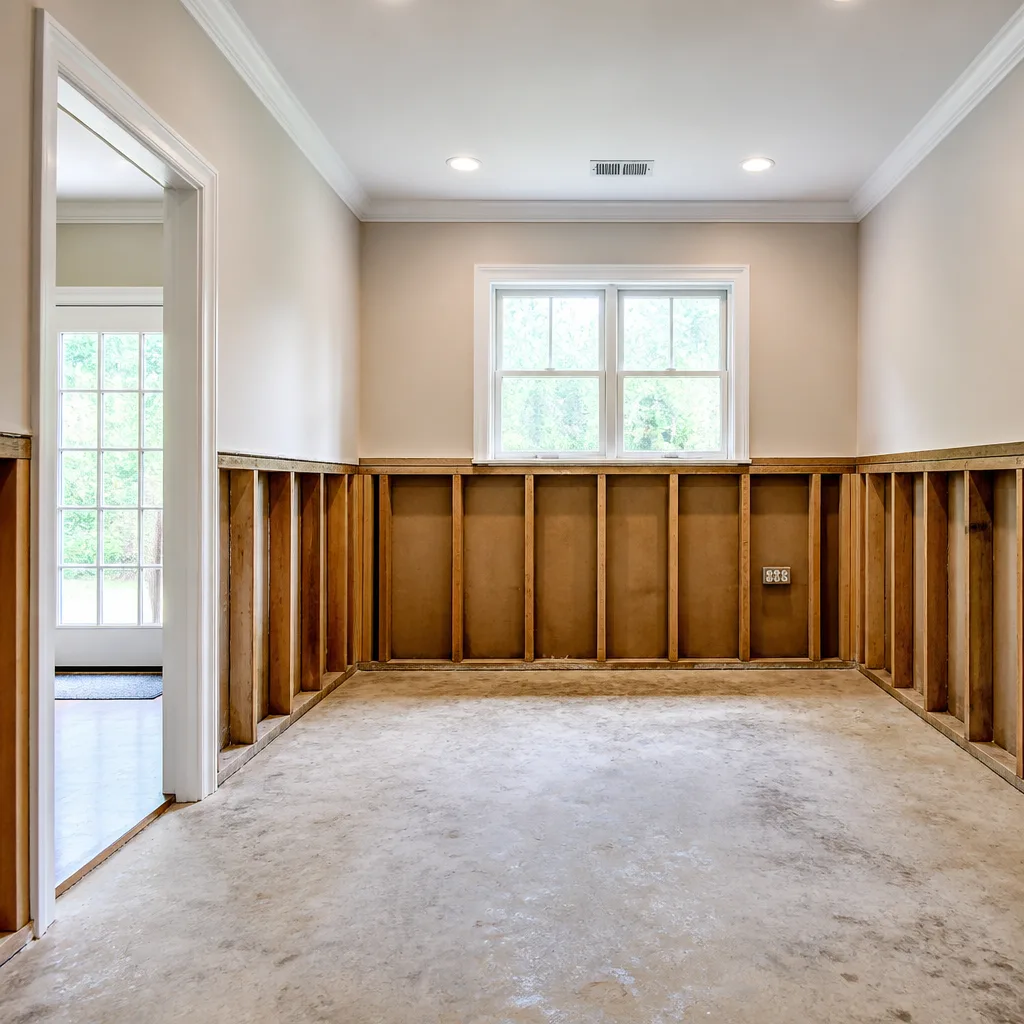
Charred framing, scorched drywall, damaged flooring. We remove and bag debris, cut back compromised materials to solid structure, and create a clean surface for rebuild. In Flatlands basements, we always check what’s behind the finished walls before we declare the cleanup complete. Block foundations with active efflorescence need to be addressed or the next fire suppression event, however minor, reactivates the same problem.
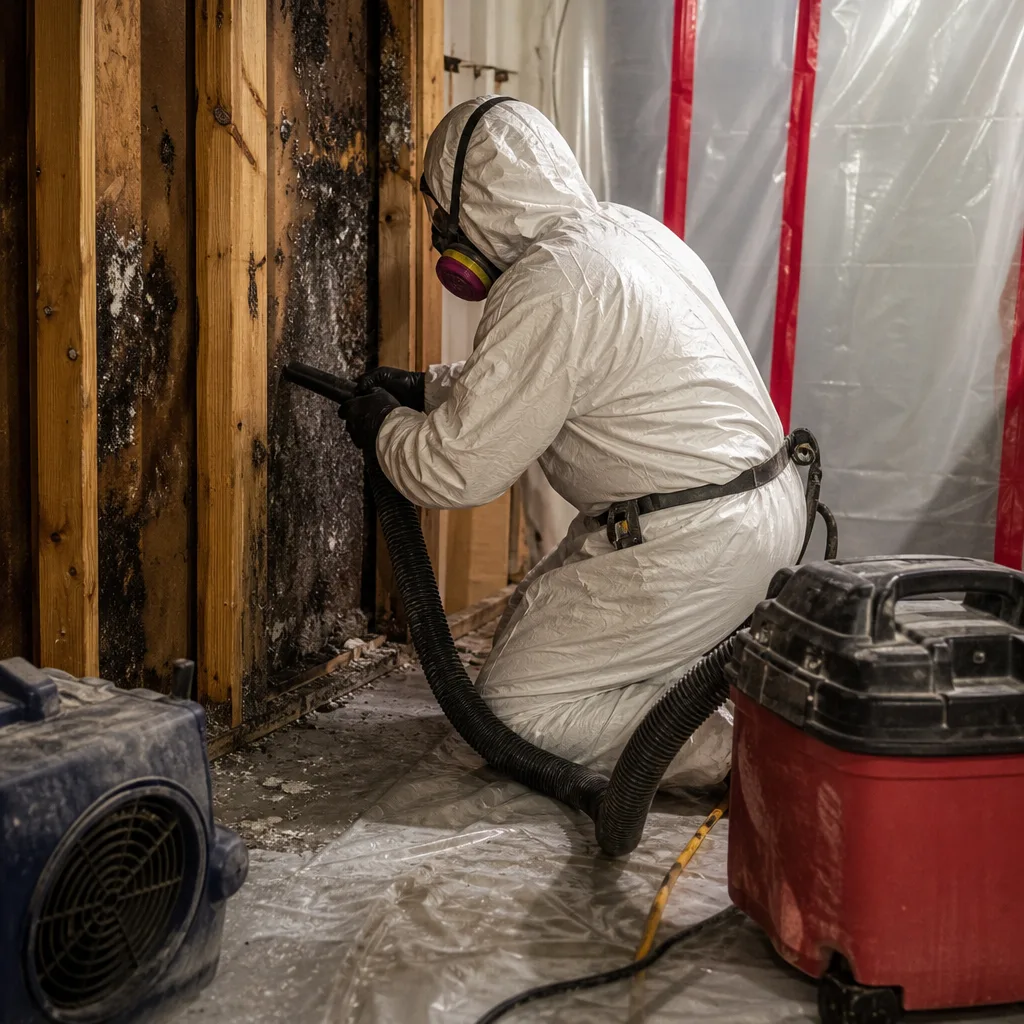
Smoke & Soot Removal
Soot clings to brick, drywall, and ceiling textures. Flatlands homes built in the 1950s through 1970s often have textured plaster and original brick chimney faces. We use dry-ice blasting on masonry, chemical sponges on painted surfaces, and HEPA vacuuming throughout. Smoke migrates downward in these homes, settling in basements where the air stays still. That below-grade space gets the same treatment as the fire floor. Some companies skip it. We can’t afford to. Your lungs can’t either.
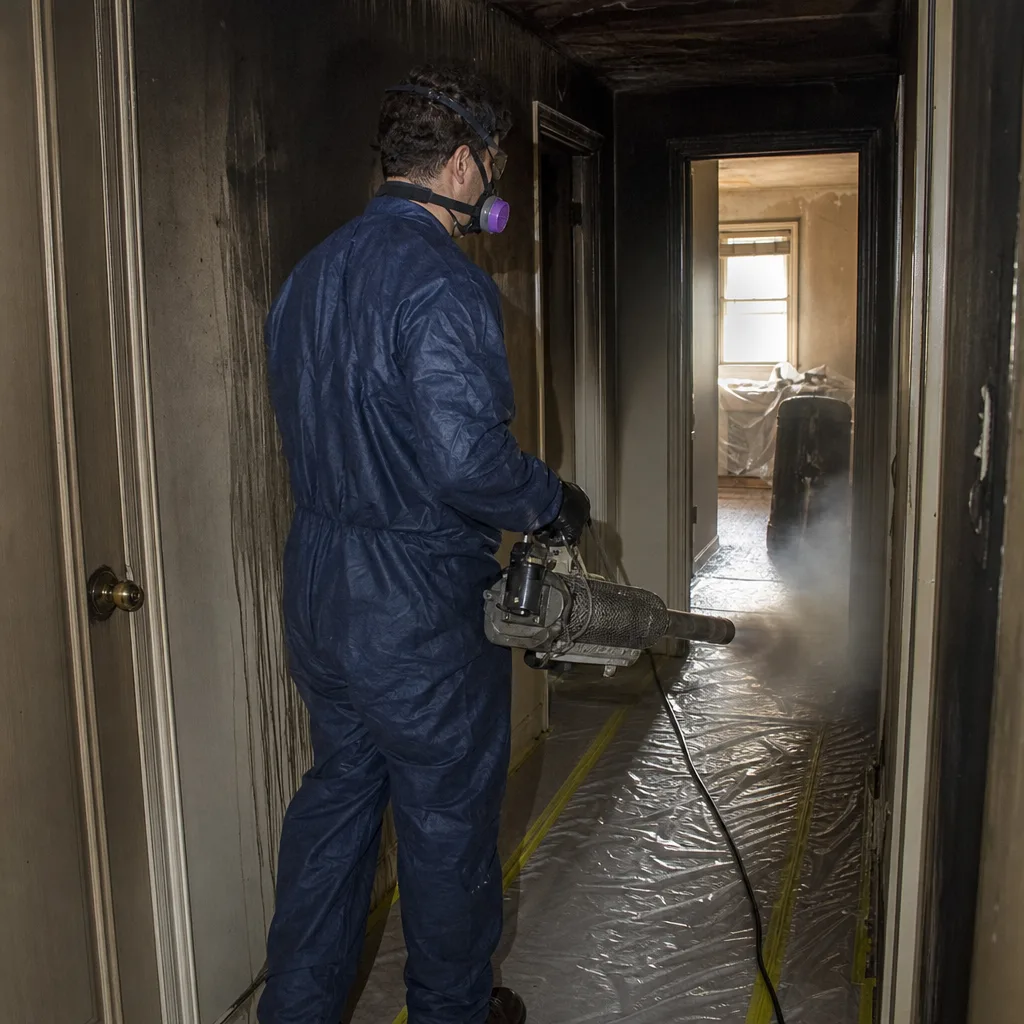
Odor Removal & Deodorization
Smoke odor embeds into porous surfaces and, in Flatlands, into damp block walls. Thermal fogging neutralizes odor particles in the air and on upper-floor surfaces. But the foundation needs sealing and antimicrobial treatment. Otherwise, the odor that left comes back. The marsh substrate keeps pulling moisture through the block, and that moisture carries smoke compounds back to the surface. It looks like staining. It smells like the fire never left. We seal the block, treat the cavity, and run air scrubbers until the air tests clean.
Contents Cleaning & Pack-Out
Furniture, clothing, documents, kitchenware. We inventory, pack, and transport contents to our cleaning facility, where they’re processed according to material type. Upholstery gets ultrasonic cleaning. Clothing gets ozone treatment. Electronics get specialized dry cleaning for soot residue. If the basement is too damp for storage, we coordinate off-site storage and return when the home is dry enough. Your grandmother’s china cabinet survived the fire upstairs, but if we leave it in a 23% moisture basement, mold will destroy it in a week.
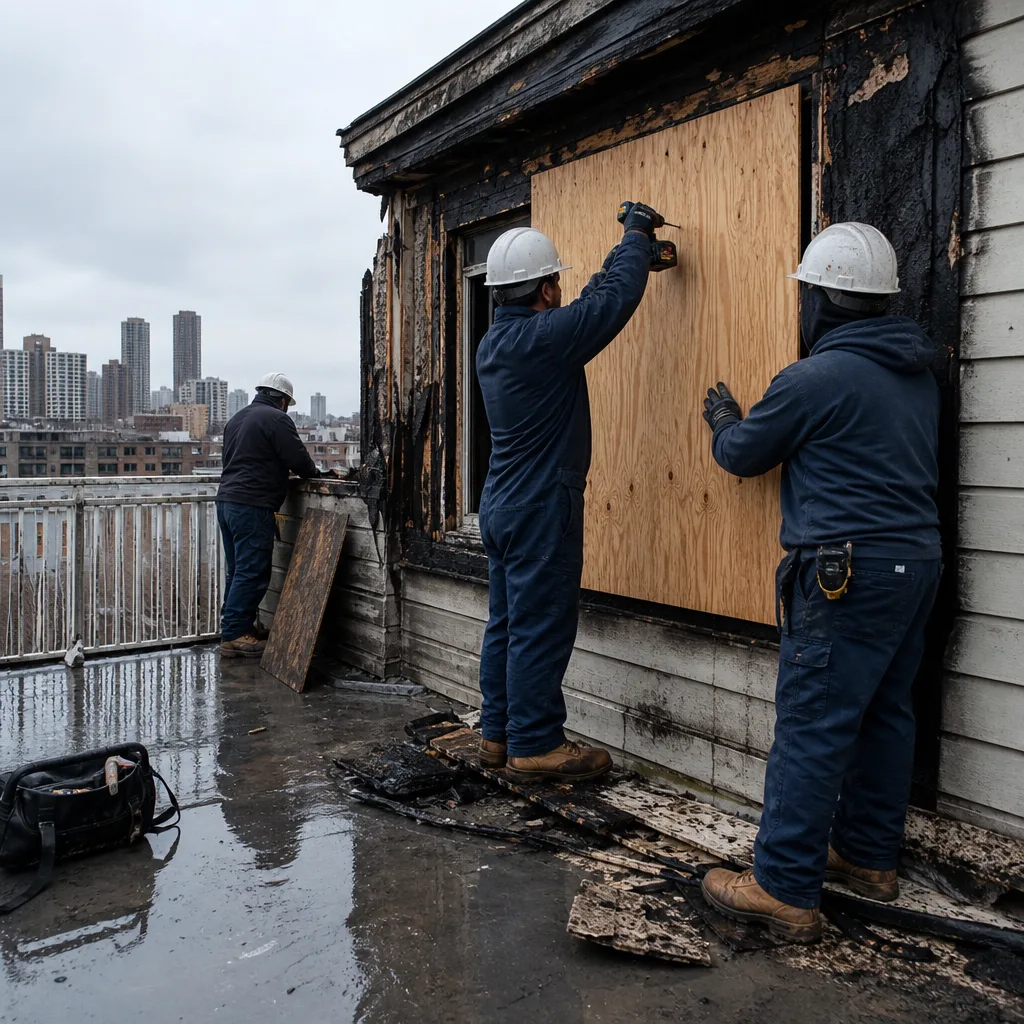
Emergency Board-Up & Tarping
After a fire, broken windows and damaged rooflines leave your home exposed to weather, theft, and animals. We board up openings same-day, tarp damaged roofs, and secure the property before we leave. In Flatlands, where rowhouse-adjacent footprints put neighbors close, board-up also protects their property from any remaining structural instability. It’s the first thing we do, and it’s included in the scope we send to your insurer.
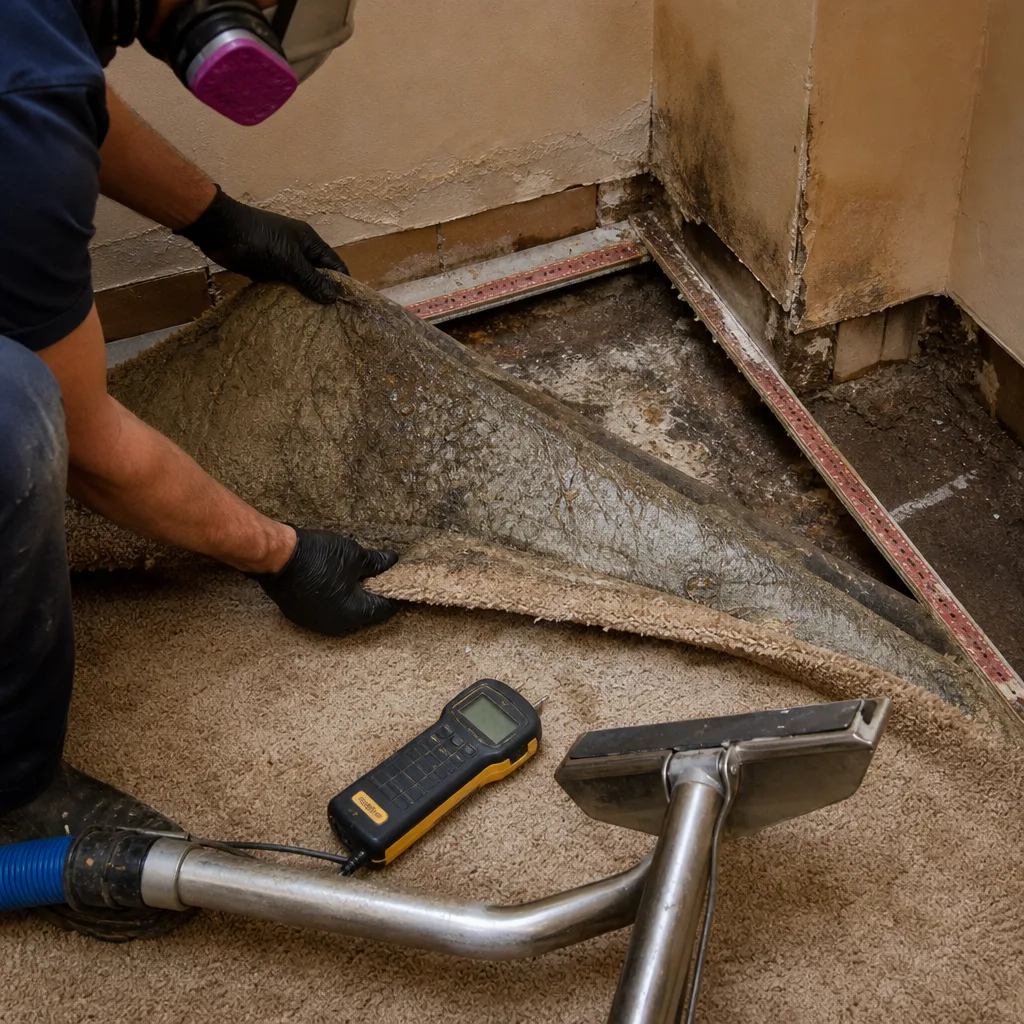
What happens when you call
- 1
A real person answersNo phone trees - you reach a local pro.
- 2
You get an upfront price rangeHonest numbers before anyone is dispatched.
- 3
A background-checked tech heads outLicensed & insured, dispatched right away.
- 4
You approve before work beginsNothing starts until you say go.
Fire & Smoke Damage Restoration Costs in Flatlands, NY
A contained stovetop fire with smoke damage on one floor typically runs $2,800-$5,500 in Flatlands. That covers soot removal, odor treatment, drywall repair, and repainting. A kitchen fire with water suppression into a finished basement runs $5,500-$9,500, including extraction, structural drying, basement drywall replacement, and antimicrobial treatment. Full structural fire repair with rebuild can exceed $15,000, depending on framing damage and square footage.
What moves the price in Flatlands specifically is the basement condition. If the foundation walls were already saturated before the fire, drying takes longer, the scope expands to include waterproofing steps, and contents need more handling. A home with a dry, unfinished basement costs less to restore. Most 1950s-1970s homes here have finished basements, so most jobs fall in the middle or higher range.
Insurance typically covers fire and smoke damage, plus the water from suppression. The groundwater component gets debated, which is why our moisture logs and photos matter. We also offer current standing offers: $50 Off Any Repair Over $250, the $89 Seasonal Tune-Up, and a Senior & Veteran 5% Discount. Call (917) 924-4221 for an exact quote. Estimates are free, and that’s not a teaser. It’s how we’ve operated since day one.
We Also Serve Cities Near Flatlands
Our crews handle fire and smoke restoration in Fairview, Harrison, East Bronx, and Hunts Point. Same 45-minute response commitment, same live dispatch, same one-team process. If you’re in any of these neighborhoods, call (917) 924-4221 and a real person will answer.
Serving Flatlands, NY - Our Local Coverage Area
We’re based in the Flatlands area and know this community well. Use the map below to see our service coverage - if you’re nearby, we can almost certainly help.
Flatlands Fire & Smoke Damage Restoration Questions, Answered
Why does smoke damage spread faster in Flatlands basements than in upstairs rooms?
Smoke migrates downward into cooler, lower-pressure spaces, and Flatlands basements are cooler and damper than upper floors because the groundwater table sits just below the slab. Soot particles bond with moisture in the air and on wall surfaces, embedding deeper into the drywall. The same smoke that wipes off an upstairs wall soaks into a basement wall. That’s why we treat below-grade spaces as aggressively as the fire floor.
Can you restore a finished basement in Flatlands after a fire if the foundation is already damp?
Yes, but the sequence matters. We extract fire suppression water, remove smoke-damaged drywall, treat the block foundation with antimicrobial products, and run structural drying until moisture readings drop below 10%. Then we rebuild. If we skipped the drying step and hung new drywall over a damp block, mold would start within 48 hours and the smoke odor would return through the wall. We document every reading and share the log with you and your insurer.
What is the ‘Sandy sandwich’ and how does it affect fire restoration in Flatlands?
The Sandy sandwich is what our technicians call a specific construction condition in Flatlands: original pre-2012 block foundation walls with active efflorescence, covered by post-Sandy cosmetic drywall that was never properly waterproofed, now hiding second-generation mold colonies. When a fire happens, the water from suppression leaks into those same cavities. Peeling back a finished basement wall often reveals two distinct flood episodes on top of each other, plus fresh fire water. We treat all of it, not just the fire damage, because the history is part of the repair.
How do you handle contents from a Flatlands home after a stovetop fire when the basement is also damp?
We inventory everything, then sort by material and condition. Items from the fire floor get packed out and cleaned at our facility using ultrasonic, ozone, and specialized soot-removal methods. Items from the damp basement get separated. If they’re already wet or growing mold, they go to a separate cleaning track. If the basement isn’t dry enough to store them safely, we keep them off-site until the structure is dry. You see the inventory list and the condition codes before anything leaves your property.
Why do odor removal and deodorization need to be done at the foundation level in Flatlands?
Because the former marsh substrate under Flatlands keeps basement block walls damp, and damp block absorbs smoke odor compounds. Thermal fogging on the upper floors neutralizes airborne odor, but the foundation keeps feeding the smell back unless it’s sealed and treated. We apply antimicrobial treatment to the block, seal it, and then run air scrubbers. Skipping this step is why some homeowners in Flatlands say the smoke smell came back a month after a different company finished the job.
How fast can you actually get to a Flatlands address?
Most Flatlands homes are within 45 minutes of our dispatched crews. We stage teams in Brooklyn and Queens specifically to hit Flatbush Avenue, Avenue K, Avenue N, and Ralph Avenue quickly. A live dispatcher confirms your address and sends the nearest available certified crew. Call (917) 924-4221 and we’ll give you a real ETA, not a window.
Will my insurance cover fire damage in Flatlands if the basement was already damp?
Fire and smoke damage are covered perils under standard homeowners policies. The water from fire suppression is also covered. The groundwater piece is where it gets complicated, because insurers distinguish between new damage from the fire and pre-existing conditions. Our documentation, photo logs, and daily moisture readings are designed to make that distinction clear. We send everything to your adjuster directly and handle the back-and-forth. You don’t negotiate with a carrier while your house is torn apart.
What should I do in the first 30 minutes after a fire in my Flatlands home?
Get everyone out and call 911 first. Once the fire is out, call us at (917) 924-4221. Don’t wipe walls, don’t turn on ceiling fans, don’t touch anything. Soot smears under pressure and fans push smoke particles deeper into the house. If it’s safe, open windows to ventilate, but let our crew handle the rest. The faster we start extraction and drying, especially in the basement, the less the job costs and the less you lose.
On East 52nd Street near Flatlands Avenue, our crew responded to a stovetop fire in a 1965 brick ranch. After water extraction from fire suppression, moisture mapping showed the basement finished walls were already at 23% moisture content from groundwater, not just the fire. We removed the smoke-damaged drywall, applied antimicrobial treatment to the block foundation, and ran structural drying with Dri-Eaz dehumidifiers and air movers for six days until moisture readings dropped below 10%. Then we handled contents pack-out and smoke and soot removal on the upper floor. That’s a Flatlands job, start to finish. One team. No handoff.
Flatlands homes carry a condition most fire restoration companies never look for: groundwater-driven moisture in marsh-substrate basements that compresses the 24 to 48 hour mold clock after any fire. Structural drying and foundation-level smoke and soot removal aren’t optional here. They’re mandatory. We’ve known that since the first job Curt Bowman sent a crew to in this neighborhood. If your house is dealing with fire and smoke damage, call (917) 924-4221. Free visual inspection, written scope, direct insurance billing. Done right, and backed in writing.
Written by Curt Bowman, Owner at Floodline Restoration Co. of Manhattan, serving Flatlands and surrounding communities.