
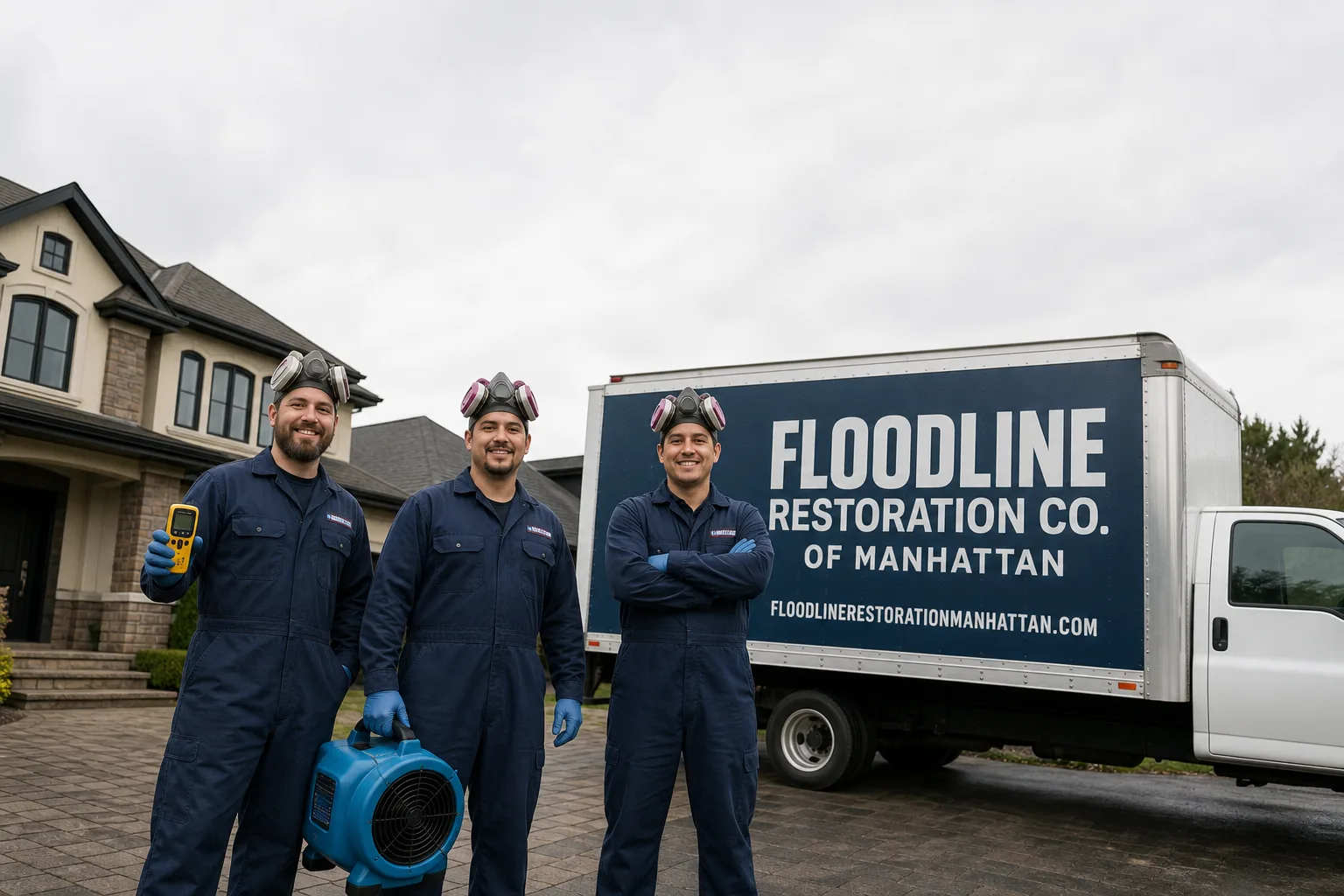
Free visual inspection and a written scope of work before any mitigation begins - photos, moisture readings, and drying logs go in your claim file
The scope we write is the scope we bill. Anything new gets shown to you, in writing, before we touch it.






 Before
 After
After Before
 After
After Before
 After
After24/7 Emergency Fire & Smoke Damage Restoration in Hoboken
Fire and smoke damage in Hoboken needs to be addressed within hours, not days. Smoke residue is acidic. It etches glass, corrodes metal fixtures, and permanently yellows painted plaster within 72 hours. Our crews reach Hoboken neighborhoods quickly, with a live dispatcher answering at (917) 924-4221 around the clock, every day of the year. A certified team arrives for a free visual inspection, sets containment if needed, and gives you a written scope of work before any equipment leaves the truck. We hand you a firm starting point, not a sales pitch.
Understanding Fire & Smoke Damage Restoration Severity in Hoboken Properties
Not every fire in Hoboken behaves the same way, and the damage class matters a great deal for what comes next. We classify soot residue on a spectrum. Light protein soot from a stovetop fire needs a different approach than the heavy, oily petroleum soot left by burning plastics or synthetic furnishings. The latter embeds into porous surfaces, requires aggressive chemical agitation, and can hide inside wall cavities for years. Hoboken’s housing stock complicates this. Four-to-six-story brick row houses and brownstones built between the 1880s and 1920s tend to share party walls and floor joists between adjacent units. Smoke doesn’t respect a property line. It migrates upward through gaps around pipes, electrical penetrations, and decades-old framing. That’s why an apparently small fire in a garden-level unit can leave odor in the apartment two floors up. We map smoke migration the same way we map moisture: room by room, with written documentation. In a Hoboken brownstone, the question is rarely just the fire room. It’s where the smoke went, and whether firefighting water is now sitting in the original hardwood subfloor.
Why Hoboken Property Owners Choose Floodline Restoration Co. of Manhattan
- 45-minute response commitment for Hoboken calls: When you call our live dispatch line, we commit to having a crew on the move and reaching your Hoboken block promptly. We’ll be there when we say.
- 24/7 live answer, never an automated tree: A real person picks up at 2 a.m. That matters when smoke is still moving through your rowhouse. No recordings, no “press 2 for emergencies.”
- IICRC-certified technicians: Our crews carry FSRT (Fire & Smoke Restoration Technician) and WRT (Water Damage Restoration Technician) certifications. We’re trained to IICRC, RIA, and IFA standards, and every technician is background-checked and uniformed.
- Free visual inspection with a written scope: We assess the loss, document what we find, and hand you a line-item scope of work before any charge is discussed. No surprises on the bill.
- Direct insurance billing: We coordinate with your adjuster, submit the documentation they need, and bill the carrier directly. You don’t play messenger between us and the insurance company.
- One team from extraction to reconstruction: The same certified crew that reads the moisture map on day one handles daily readings, completes the odor removal, and rebuilds what needs rebuilding. No mid-job handoff to an inherited crew.
Our Fire & Smoke Damage Restoration Process
Inspection & Assessment
We walk the entire property, not just the burn room. We document soot type, smoke migration paths, water from firefighting, and any sewer backup involvement. In Hoboken, we specifically check garden-level drains and the building’s shared wall cavities. You receive a written scope and a firm plan.
Stabilization: Board-Up, Tarping & Containment
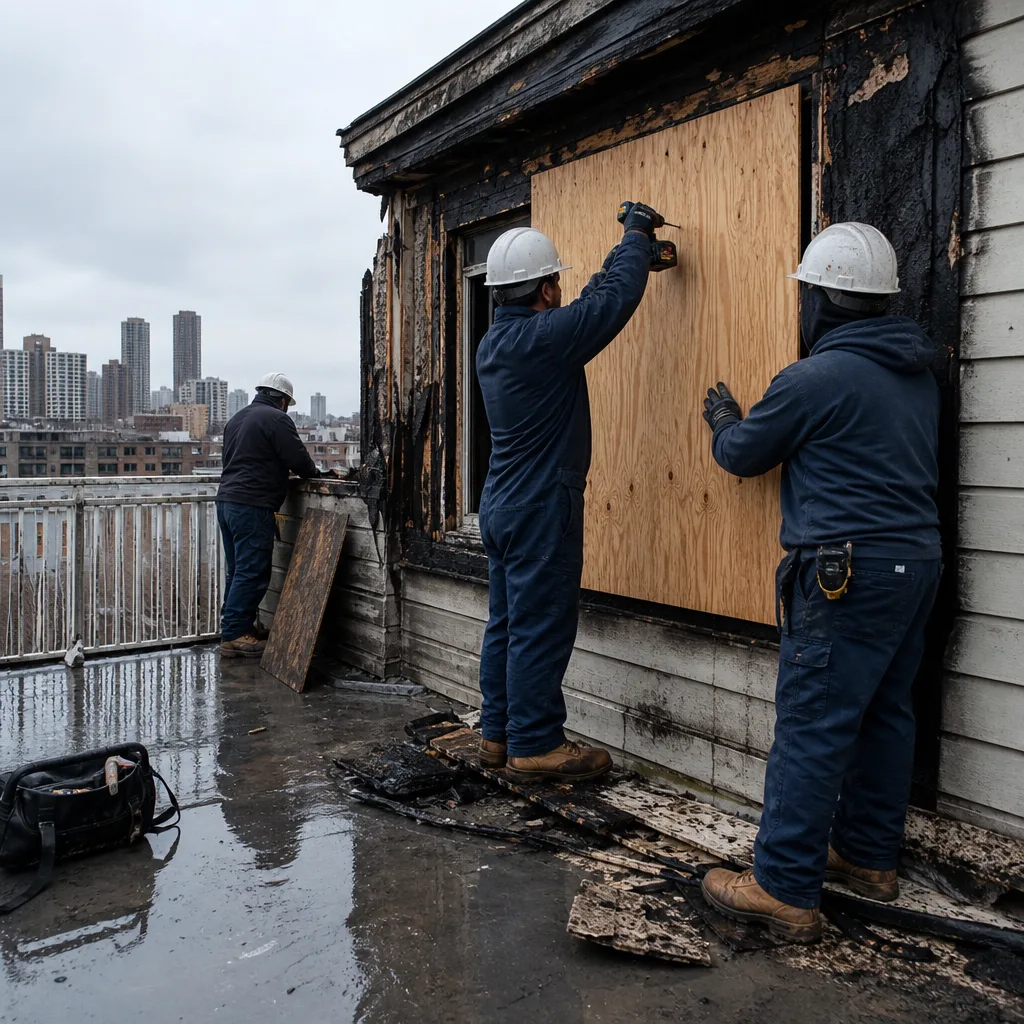
We secure broken windows and damaged roof sections with board-up and tarping so the building doesn’t take on water or unauthorized entry. Then we set negative-air containment with HEPA-scrubbed exhaust to stop soot and odor from spreading into unaffected units.
Water Extraction & Structural Drying
Firefighting water is a second disaster. We extract standing water, then deploy Dri-Eaz and Phoenix air movers, Injectidry panels for hardwood and plaster walls, and LGR dehumidifiers. We log moisture readings daily until the dry standard is met, and we hand that log to you and your carrier.
Soot & Residue Removal
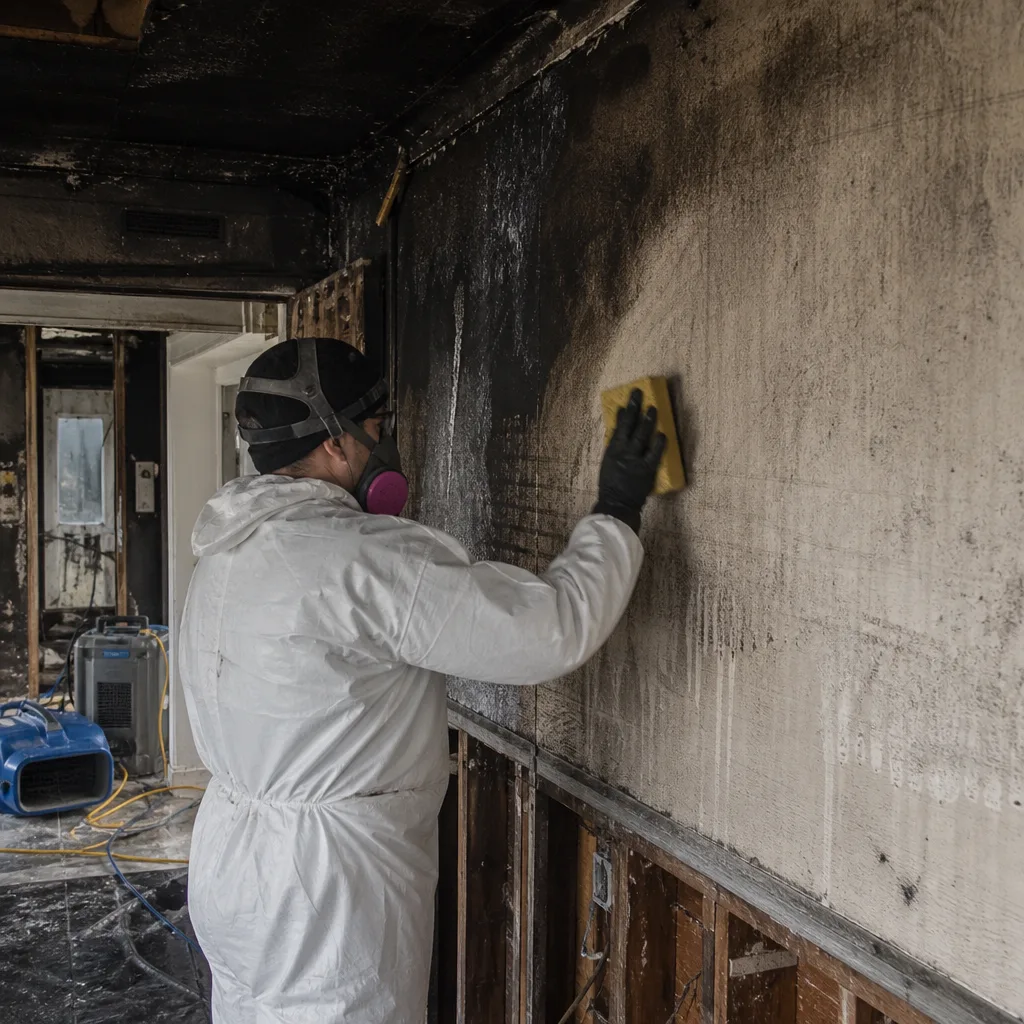
Each surface type gets matched to the right cleaning method: dry chemical sponge on raw plaster, wet cleaning on sealed wood, HEPA vacuuming on fabrics and contents. We remove soot before it permanently etches glass, corrodes metal, or stains painted trim beyond recovery.
Odor Removal & Deodorization
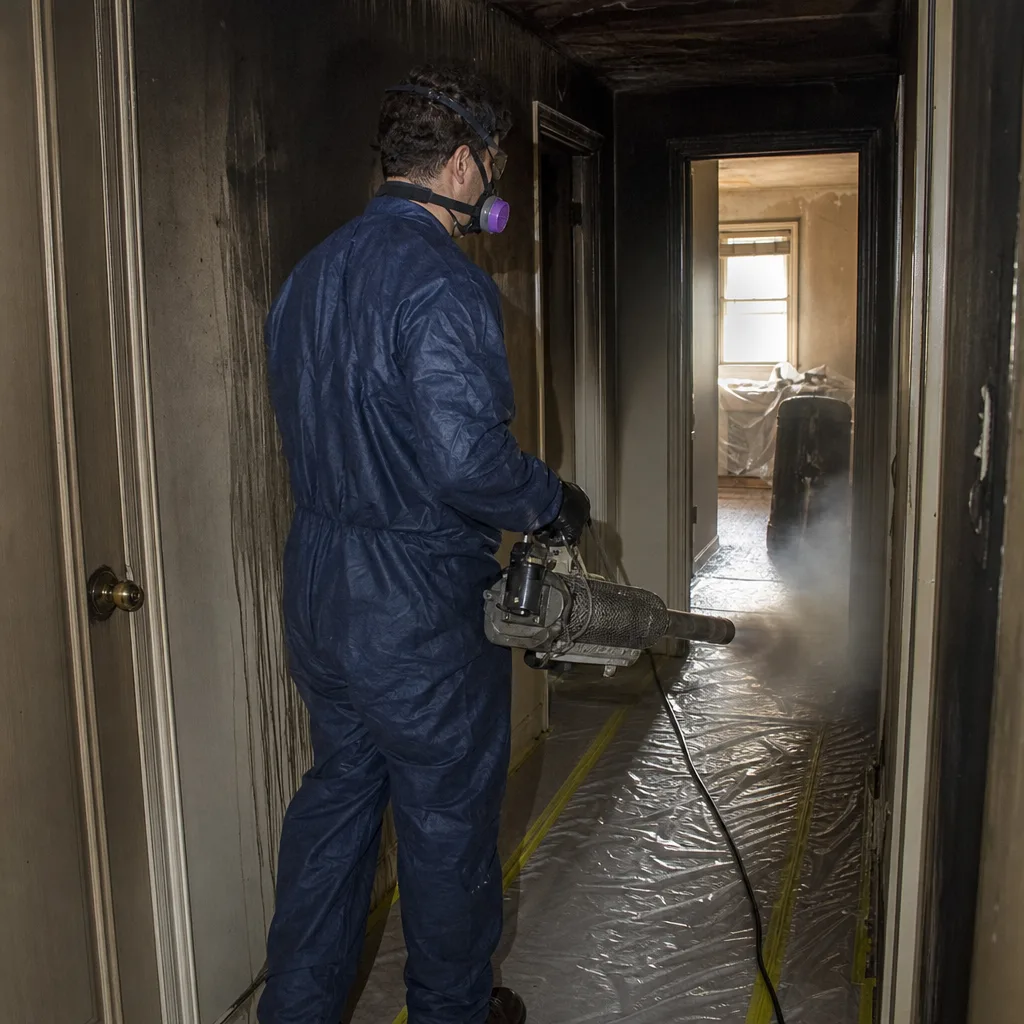
This is where most fire cleanups fail. We use thermal fogging, ozone (in unoccupied spaces, with safety protocols), and hydroxyl generators paired with HEPA air scrubbing. The source must be removed first. Deodorizer alone covers the problem for a few weeks, then the smell returns.
Repairs & Restoration
The same crew that extracted and dried now rebuilds: drywall, plaster repair, trim, flooring, paint. Because we handled the full cycle, nothing gets covered over while still wet or smoke-damaged. The job is done right, and it’s backed in writing by our 90-Day Done Right Promise.
Need Emergency Fire & Smoke Damage Restoration in Hoboken Now?
Crews minutes away, answering live 24 hours a day. The sooner we start, the less it costs.
Working With Your Insurance Company
Fire claims in Hoboken are almost always covered by homeowner or condo association policies, but the way the loss is documented in the first 48 hours determines whether the claim pays out fully. We build the file from the first hour: photos of every room before anything is moved, moisture readings, soot classification notes, and a line-item scope in industry-standard format. Our team communicates directly with your adjuster, answers their questions, and submits the supporting documentation they require. You stay informed, but you don’t become the middleman. We carry the paperwork burden, because a square deal means the bill matches the work and the carrier sees exactly what we saw.
What We Provide Your Insurer
- Thorough documentation of the loss
- Photos of all damage, room by room
- Moisture readings and drying logs
- A detailed, line-item scope of work
- Direct coordination with your carrier
Built for Hoboken’s Loss Calendar
Fire damage in Hoboken doesn’t follow a single season. Kitchen fires peak in the colder months, when people are cooking more indoors, often in older brownstone kitchens with decades-old wiring and gas lines. Winter also brings space heater use in drafty pre-war units, and that’s a leading cause of electrical fires in this city every January and February. Spring and summer bring thunderstorms and heat waves that strain aging window AC units and wall outlets in 1880s-era row houses. And then there’s the part that catches everyone off guard: a fire in any Hoboken building automatically mobilizes the fire department, which means hundreds or thousands of gallons of water moving through upper floors into garden-level units. If the city’s combined sewer system is surcharging during a heavy rain, that same water brings raw sewage up through floor drains. This is not a rare scenario in Hoboken. It’s the normal geometry of a dense, low-lying town with a century-old sewer network. Our restoration team plans for a dual event on every fire call here.
Fire & Smoke Damage Restoration Across Hoboken’s Neighborhoods
Hoboken is dense, and neighborhoods that look homogeneous on a map respond very differently to fire incidents. Around Washington Street, the main commercial corridor, fires often start in restaurant kitchens or attached residential units above storefronts. A board-up here has to account for street-level foot traffic and neighboring businesses that can’t close for days. In the downtown blocks near City Hall and the PATH station, we see mostly 19th-century brick rowhouses with shared walls. Smoke travels vertically through old chimney flues and horizontally through joist pockets, so a fire in one parlor-level unit means odor checks in at least two adjacent homes. Over by Church Square Park and the surrounding brownstones near Bloomfield Street, contents cleaning becomes a focal point: original millwork, built-in cabinetry, and plaster ornament that owners care deeply about. We treat those surfaces by hand, not with generic high-pressure methods. In the garden-level and basement units throughout the city, firefighting water collects the fastest and sits the longest. These spaces are also where Hoboken’s combined sewer backups hit first, so our crews assume Category 3 black-water conditions until proven otherwise. Getting to these units quickly is the difference between drying original joists and replacing them.
Hoboken-Specific Fire Damage Risks: The Shared Wall Problem
There’s a particular failure we see in this city more than almost anywhere else we work. A fire starts in one unit of a Hoboken brownstone. The fire department responds fast, which is a good thing, but the water used to suppress the fire doesn’t evaporate. It runs down through the building, through the original hardwood floors, into the plaster-and-lath ceiling below, and into the garden-level unit. At the same time, the city’s combined sewer system, already overtaxed by rainfall or simply by the volume of water the fire department is pushing, backs up into the lowest drains. The result is a Category 3 biohazard situation sitting underneath a smoke-damaged apartment, all inside one shared party wall. An out-of-town crew that doesn’t know Hoboken’s sewer dynamics will treat the basement as a simple water extraction. They’ll underbid it, under-document it, and leave contaminated water in the slab and the walls. Then mold appears in three weeks and the whole job doubles. Our technicians know to treat almost every basement fire in Hoboken as a potential sewage-contamination job. It’s the only way to restore the property correctly and document it properly for the insurance carrier.
Specialized Fire & Smoke Damage Restoration Services We Offer in Hoboken
Fire Damage Cleanup
We remove charred materials, assess structural framing for heat damage, and clean every affected surface. In older Hoboken buildings, that means careful handling of original lath-and-plaster walls that can’t simply be replaced with modern drywall without changing the character of the home. Our Fire & Smoke Damage Restoration team documents what can be saved and what must go.
Smoke & Soot Removal
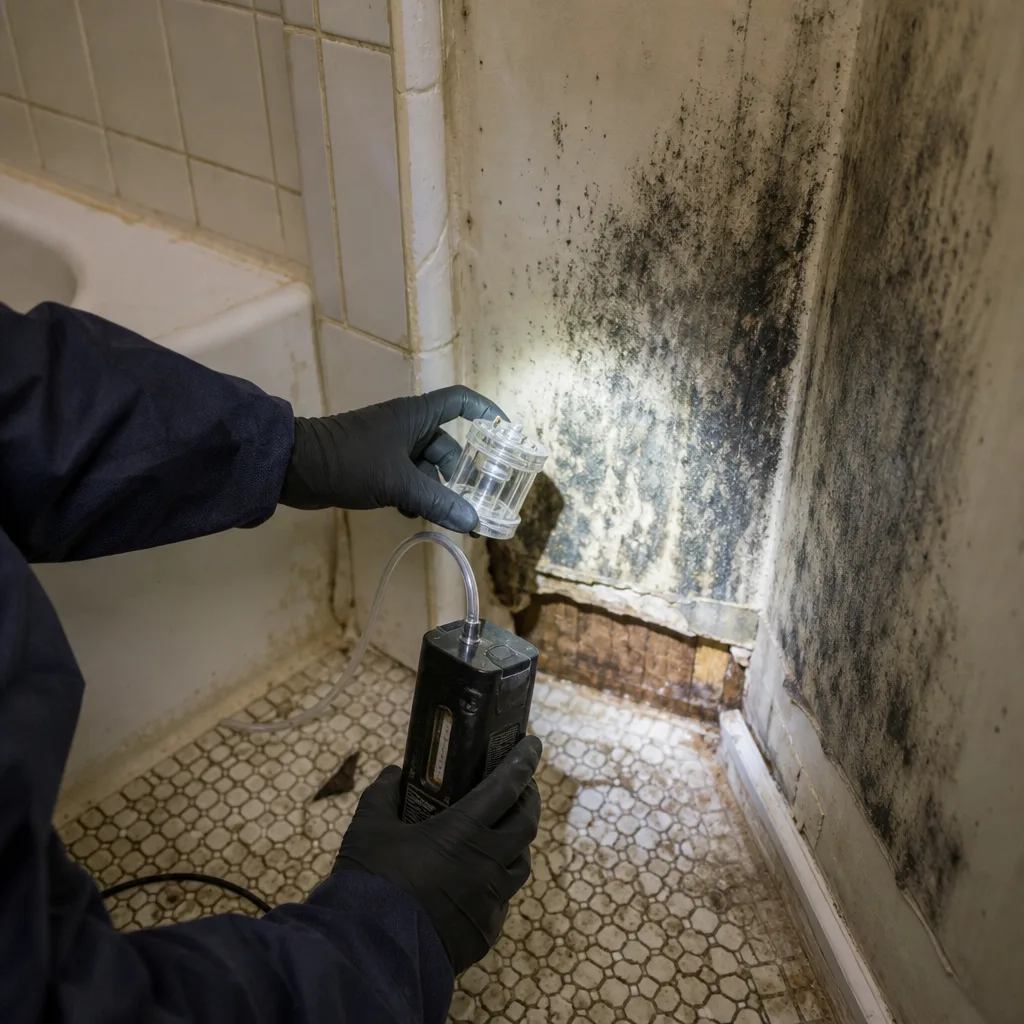
Soot in a Hoboken rowhouse rarely stays in one room. We find it in closets two floors away, inside electrical boxes, and on the back of picture frames in adjacent units. We use HEPA vacuums, chemical sponges, and specialized wet-cleaning methods matched to each surface. The goal is to remove the soot, not just paint over it.
Odor Removal & Deodorization
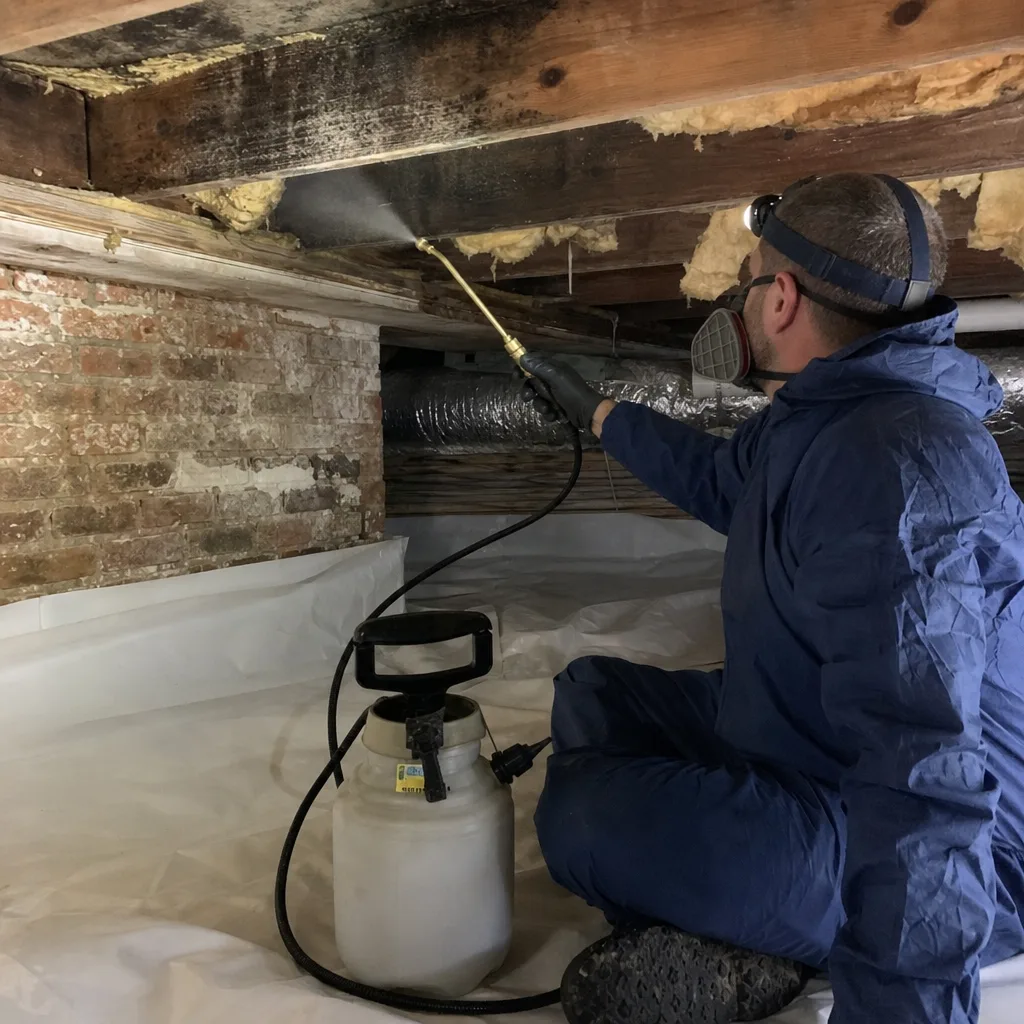
Smoke odor is persistent because it embeds in porous materials. In brick row houses with shared walls and old joist cavities, odor can linger for months if the source isn’t removed. We combine thorough source removal with thermal fogging, hydroxyl generators, and HEPA air scrubbing. Ozone is used only in unoccupied spaces, with strict safety clearance before anyone re-enters. This is a service we emphasize on every Hoboken fire loss, because the shared-wall smoke migration here is more aggressive than in detached single-family homes.
Contents Cleaning & Pack-Out
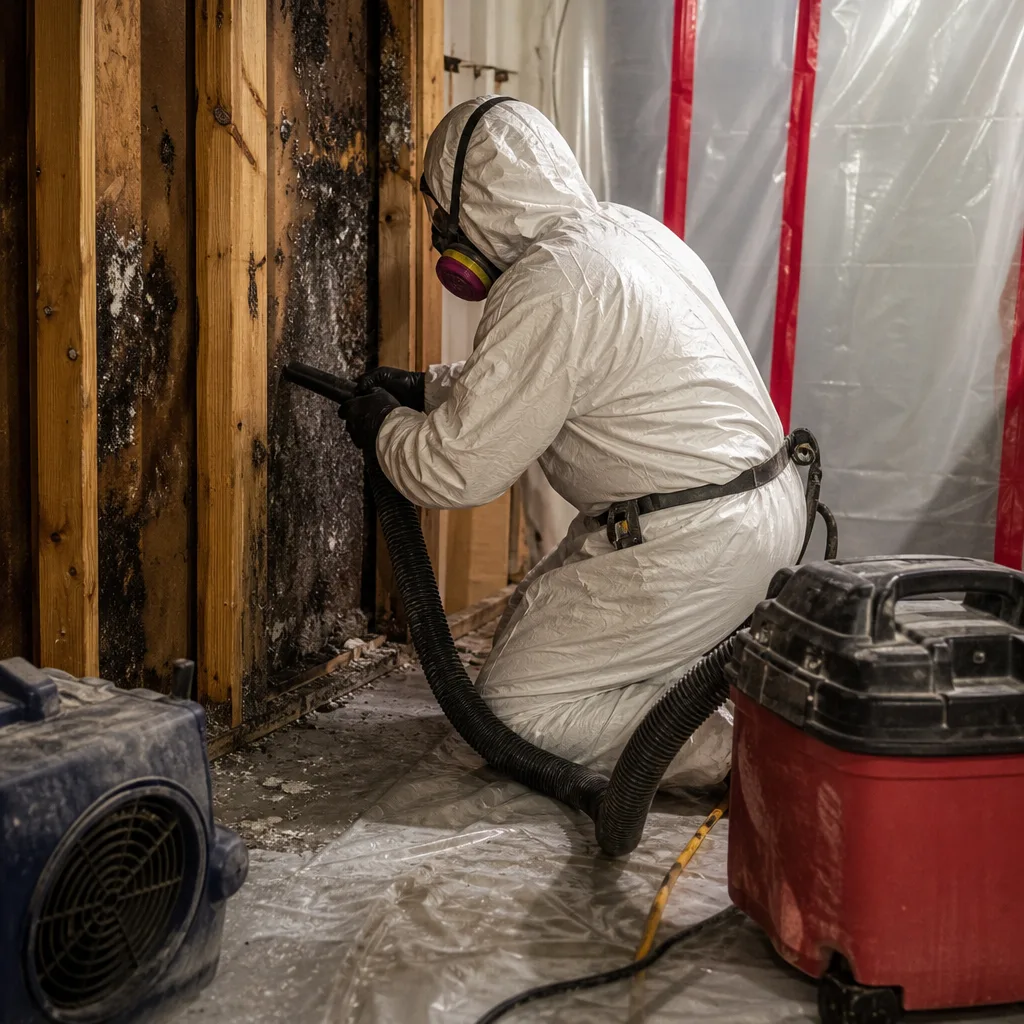
We inventory, photograph, pack, and transport salvageable contents to a secure cleaning facility. We clean textiles, electronics, dishware, and documents using the right method for each material. In Hoboken condos and rentals, this step is critical: the owner’s unit and the neighbor’s unit often both require contents work. We document everything for the insurance claim, with photos before and after.
Emergency Board-Up & Tarping
After a fire, a Hoboken row house with broken windows or a compromised roof is an open invitation to rain, pests, and vandalism. We secure window and door openings with plywood and cover roof penetrations with heavy-duty tarping. We do this quickly, because in this city the next nor’easter or thunderstorm is never far off. A proper board-up also protects the remaining structure while the claim is being worked.
Structural Fire Repair
Once the site is clean and dry, we repair or replace damaged framing, joists, flooring, and finishes. Because we’re the same crew that did the extraction and drying, we know exactly what was saturated, what was smoke-damaged, and what’s safe to leave in place. The line the water left is where we start, and we finish the rebuild without a handoff.
What happens when you call
- 1
A real person answersNo phone trees - you reach a local pro.
- 2
You get an upfront price rangeHonest numbers before anyone is dispatched.
- 3
A background-checked tech heads outLicensed & insured, dispatched right away.
- 4
You approve before work beginsNothing starts until you say go.
Fire & Smoke Damage Restoration Costs in Hoboken, NJ
A typical fire damage cleanup in Hoboken runs between $2,500 and $9,000, depending on the extent of soot spread and the number of affected rooms. Odor removal and deodorization on its own usually falls between $800 and $2,800 for a single unit, and contents cleaning and pack-out typically runs $1,500 to $5,000 depending on volume. Emergency board-up and tarping in Hoboken generally costs $450 to $1,200 for standard rowhouse window and door securing. When firefighting water has saturated original hardwood floors and plaster walls, structural drying typically adds $2,000 to $5,000. The biggest variable in this city is the sewer complication: if a basement has taken on Category 3 black water from the combined system, remediation cost rises to $4,000 to $12,000 or more for a full biohazard scope with containment, disposal, and clearance testing. Insurance covers most of these costs on a covered loss. We provide a free visual inspection, write a firm scope, and bill your carrier directly. Call (917) 924-4221 for an exact quote.
We Also Serve Cities Near Hoboken
Our crews also respond to fire and smoke damage calls in Hoboken‘s neighboring communities, including Union City, Weehawken, Jersey City, and North Bergen. The same live 24/7 dispatch, the same certified technicians, and the same written guarantee.
Hoboken Fire & Smoke Damage Restoration Questions, Answered
Does a fire in our Hoboken condo require treating adjacent units in the same brownstone?
Yes, in most cases it does. Smoke migrates through shared party walls, joist pockets, and old chimney flues in Hoboken’s brick row houses. We regularly find soot residue and odor in adjacent units even when the fire itself was contained to one apartment. We scope the entire affected area, including neighboring units, and coordinate with the condo association and carrier so the claim reflects the true extent of the migration. Skipping this step is the number one cause of a second callback for lingering smell.
How do Hoboken’s combined sewer backups affect a fire damage cleanup?
They change the classification of the water. When a fire in Hoboken brings fire suppression water down through the building, and the city’s combined sewer system is surcharging, raw effluent can back up through floor drains in garden-level units. That means the basement isn’t a clean-water extraction; it’s Category 3 black water requiring full biohazard protocols, containment, and documentation. Out-of-town crews regularly miss this. Our teams assume the worst and document it properly. The price difference is real, and so is the health risk if it’s missed.
Will our 1900s brownstone’s original plaster and wood trim survive a fire?
Often yes, but only if it’s treated correctly and quickly. Original plaster can be cleaned of soot with dry chemical sponges and can often be saved. Wood trim, if sealed before the fire, responds well to careful wet-cleaning and refinishing. The window for saving original materials closes fast as soot acidifies and embeds. We’ve saved significant original millwork in Hoboken brownstones by getting to the work within days, not weeks. If you wait, the soot etches and stains the surface permanently.
What does a board-up and tarping job look like for a Hoboken row house after a fire?
We secure every compromised opening with plywood cut to fit the actual window or door frame, not just a generic sheet nailed over the front. We tarp roof penetrations with heavy-duty material and seal edges to keep rain out. For a Hoboken rowhouse, we also secure any shared-wall access points that could allow weather or unauthorized entry from an adjacent property. A good board-up here has to survive Hudson River wind gusts and the next storm. We build it to hold.
Can we stay in our Hoboken apartment during fire odor removal?
It depends on the scope. Light smoke odor in a single room may allow you to remain in the home while we run HEPA air scrubbers and thermal fogging in a contained area. But in a dense Hoboken walk-up where smoke has migrated through multiple units and into shared hallways, it’s usually safer to relocate temporarily, especially if ozone is required. We’ll tell you honestly in the first walkthrough, and we’ll document what the carrier needs for temporary housing if it’s covered under your loss-of-use coverage.
How fast can your crew get to a fire in Hoboken?
We commit to a 45-minute response to Hoboken. Our live dispatcher takes your call at any hour, confirms the address and the scope, and routes the nearest certified crew. In practice, calls from downtown Hoboken or near Washington Street are often under 30 minutes. Our team coordinates with the fire department’s clearance before entering the structure. We’ll be there when we say.
Do you bill the insurance carrier directly for fire damage restoration in Hoboken?
Yes. We prepare the full claim package: photos, moisture logs, soot classification notes, equipment logs, and a line-item scope of work. We communicate directly with your adjuster and bill the carrier for covered work. You’re responsible for your deductible and any uncovered items, and we’ll tell you exactly what those are before work starts. No surprises on the bill, and you don’t play messenger.
What should I do in the first 30 minutes after a fire in my Hoboken home?
Call your insurance company, then call us at (917) 924-4221. Don’t attempt to clean soot yourself with household cleaners; you’ll set the stain. Don’t run your HVAC system, because it will spread smoke throughout the building. Don’t wipe walls or touch electronic equipment. Close doors to unaffected rooms if it’s safe to do so. And if there’s any standing water in a basement or garden-level unit, stay out of it until it’s assessed for sewer contamination. The first hour sets the course for the whole claim.
Serving Hoboken, NJ - Our Local Coverage Area
We’re based in the Hoboken area and know this community well. Use the map below to see our service coverage - if you’re nearby, we can almost certainly help.
The Hoboken Dual-Response Problem: Fire and Sewer in One Job
Here’s the information that live only on this page and won’t be found on any generic fire restoration site. Hoboken is almost entirely within FEMA-designated flood zones. It sits at or below 8 to 10 feet of elevation on the Hudson’s west bank. Superstorm Sandy inundated roughly 80 percent of the city at once, and the city’s combined sewer system still backs up into basements during moderate rainfall and heavy fire-suppression flows. That means a fire in a Hoboken brownstone is not just a fire. It’s a fire plus hundreds of gallons of water moving down through 19th-century framing, plus a live risk of raw sewage in the lowest drains. We’ve worked jobs on Washington Street where a kitchen fire in a fourth-floor unit ended with Category 3 black water in the garden-level unit of the same building. It’s not an edge case here. It’s the standard geometry of a dense, low-lying, pre-war city. When we write a scope for a Hoboken fire, we write it for a dual event. That’s why our crews carry both FSRT and WRT certifications, and why we document every drain, every shared wall, and every moisture reading. Other companies may be able to clean soot. Few are prepared for what happens underneath it. We are.
Written by Curt Bowman, Owner at Floodline Restoration Co. of Manhattan, serving Hoboken with fire and smoke restoration and reconstruction since 2010.
If you’re dealing with fire or smoke damage in Hoboken, call (917) 924-4221 for a free visual inspection and a written scope. We answer live, 24 hours a day. Done right, and backed in writing.