
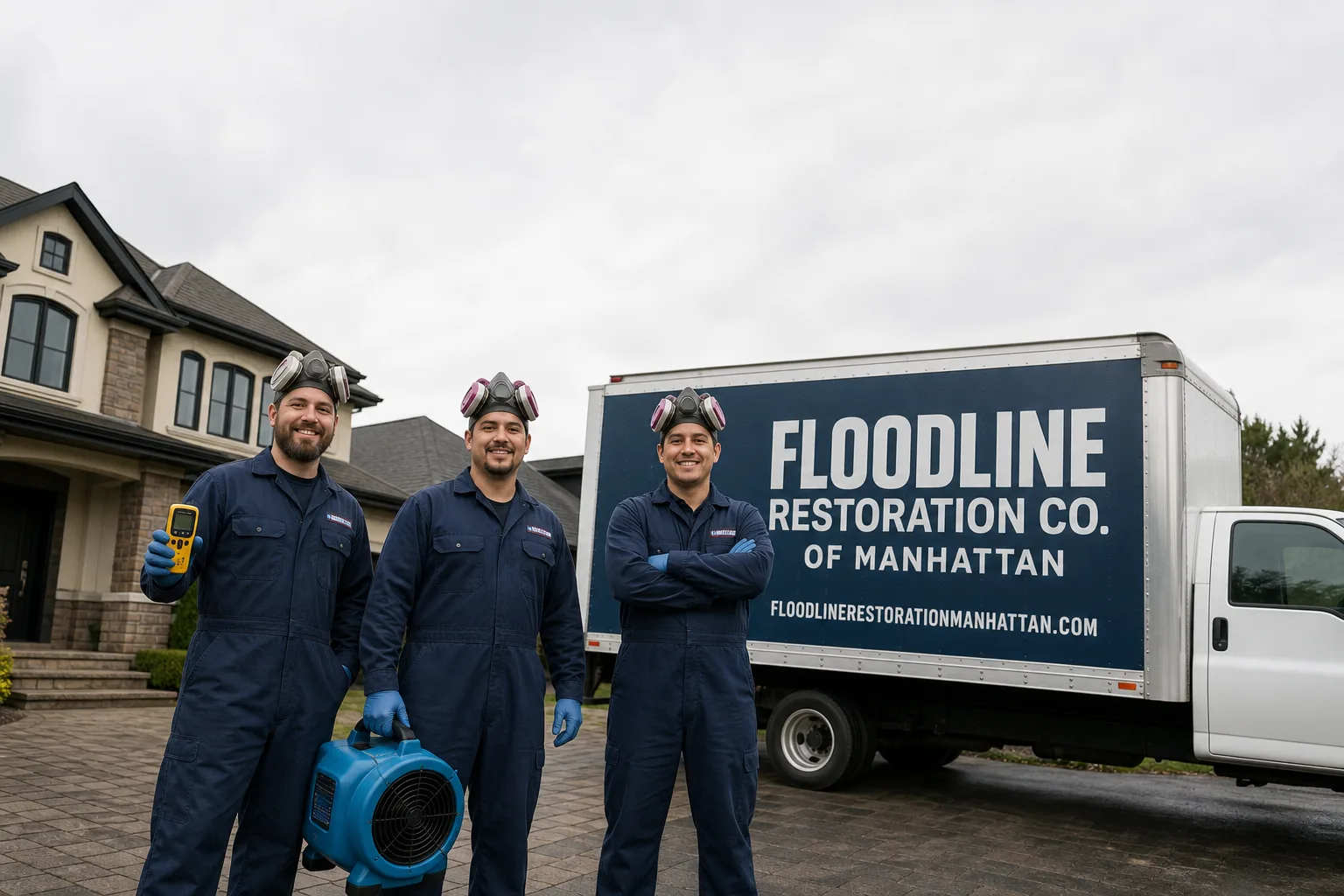
Free visual inspection and a written scope of work before any mitigation begins - photos, moisture readings, and drying logs go in your claim file
The scope we write is the scope we bill. Anything new gets shown to you, in writing, before we touch it.






 Before
 After
After Before
 After
After Before
 After
After24/7 Emergency Fire & Smoke Damage Restoration in Little Neck
Fire and smoke damage in Little Neck needs a fast, steady hand. Call (917) 924-4221 any hour, any day. A live dispatcher answers, never a recording, and we dispatch a crew into Little Neck right away. The first hour after a fire matters because soot bonds to plaster and wood surfaces as it cools. The longer it sits, the deeper it migrates into Little Neck’s original 1920s-1950s wall systems. We arrive for a free visual inspection, explain exactly what we see in plain language, and start the containment that stops smoke from spreading through the rest of the house. That first visit is where the scope gets defined, not sold.
Understanding Fire & Smoke Damage Restoration Severity in Little Neck Properties
Not all fire damage is equal. Soot is categorized by what burned: dry soot from paper and wood, oily soot from plastics and synthetics, and protein soot from kitchen fires that looks light but etches lacquer and paint quickly. Little Neck’s housing stock complicates things further. Most homes here are detached Colonials, Tudors, and Cape Cods from the 1920s through the 1950s, built with full basements and original plaster-over-lath walls. Plaster is porous in ways modern drywall is not. It absorbs smoke at the surface, then lets it migrate into the lath behind. Smoke also chases the electric and plumbing chases that run through these older frames. In a 1940s Colonial near Northern Boulevard, we regularly find smoke residue in closed wall cavities three rooms away from the fire source. Severity here is rarely a single visible stain. It is a migration pattern through a house that has been standing for eighty years.
Then there is the part most restoration companies miss: the water. Fire suppression in a Little Neck fire usually means hundreds of gallons of water dumped into a basement or wall system. If those walls have been holding moisture since Hurricane Sandy, the water activates it. What starts as smoke becomes a combined smoke, soot, and hidden-moisture problem. That is the exact thing this page was written to address, because you will not find it on a generic restoration template.
Why Little Neck Property Owners Choose Floodline Restoration Co. of Manhattan
- 45-minute response commitment. When you call our Fire & Smoke Damage Restoration team, a crew is rolling toward Little Neck immediately, not after a call-back from a sales rep.
- 24/7 live answer. A real person picks up at 2 a.m. We don’t route to voicemail and we don’t use answering services that read a script. The dispatcher knows the job board.
- IICRC-certified crews. Our techs carry FSRT and WRT certifications. That means fire and smoke restoration combined with water damage training, which matters in a place where both arrive together.
- Free visual inspection. We walk the property with you, point to what we see, and write a scope before any work starts. No pressure. No surprise line items.
- Direct insurance billing. We document from the first hour, photograph every room, and talk to your adjuster directly so you don’t play messenger.
- One team, first extraction to final rebuild. Curt Bowman built Floodline Restoration Co. so the crew that tears out the damage is the same crew that rebuilds it. No handoffs, no new faces mid-job.
Our Fire & Smoke Damage Restoration Process
Inspection & Assessment
We map the full migration path of smoke and soot, not just the visible burn. In Little Neck, that includes checking original plaster walls for moisture from fire suppression and any older moisture from bay flooding. Thermal imaging and hygrometers tell us what the eye can’t.
Stabilization & Board-Up
We secure every opening with wind-rated fastening. Near Little Neck Bay, a north wind off the water will take a cheap tarp off in one gust. Our board-up holds. We also cut off utilities that pose risk and set containment to stop soot from spreading to clean rooms during pack-out.
Water Extraction & Structural Drying
Fire suppression water gets extracted first, because wet soot and wet plaster are harder to treat than dry ones. We run Dri-Eaz air movers and dehumidifiers, taking daily moisture readings and logging them until the structure hits dry standard. Those logs go to you and your carrier.
Smoke & Soot Removal
We clean surfaces based on soot type. Dry soot gets dry-sponged. Oily soot gets wet-cleaned with the right chemical agents. Protein soot from kitchen fires gets a different treatment entirely. We don’t paint over soot. We remove it.
Odor Removal & Deodorization
HEPA air scrubbers run throughout to pull airborne particles. Thermal fogging and hydroxyl generators get into the wall cavities and plaster pores where smell hides. In Little Neck, that often means treating the same wall cavities where Sandy moisture is still present.
Structural Repair & Restoration
This is where Floodline differs from the chains. We rebuild what needs rebuilding, from baseboards to stud sections to finished walls, with our own carpenters and the same crew that has been on site since day one.
Need Emergency Fire & Smoke Damage Restoration in Little Neck Now?
Crews minutes away, answering live 24 hours a day. The sooner we start, the less it costs.
Working With Your Insurance Company
Insurance claims for fire and smoke live and die by documentation. That starts the first hour, before anything is moved. We photograph every room, including the rooms with no visible damage. Soot travels. Your adjuster needs to see that. We produce line-item scopes using industry-standard estimating software so your carrier sees a scope they recognize, not a contractor’s vague letter. We talk to the adjuster directly, send photos and readings, and bill the carrier on the covered portions. You get a copy of everything. When the estimate is agreed, the work starts against a written scope, not a handshake. Curt Bowman has run Floodline this way since 2010 for a reason: it ends arguments before they start.
What We Provide Your Insurer
- Thorough documentation of the loss
- Photos of all damage, room by room
- Moisture readings and drying logs
- A detailed, line-item scope of work
- Direct coordination with your carrier
Built for Little Neck’s Loss Calendar
Little Neck’s fire and smoke losses hit in patterns. January and February bring house fires from heating systems and space heaters in these older homes, and frozen pipes that burst and short electrical panels. The fire itself may be small, but the water from suppression travels through uninsulated 1920s wall cavities and pools in the basement. Spring is mixed: sump pump failures and thaw seepage, plus the occasional electrical fire from old wiring that has been wet all winter. Summer brings thunderstorm flash flooding, and with it the electrical fires and appliance shorts that come from water hitting old panels. Then there is nor’easter season, September through March, when Little Neck Bay pushes water up onto the low blocks near Northern Boulevard and creates the kind of wet, salty conditions that make any existing smoke damage harder to dry and treat. Every season here has a signature. We plan for all of them.
Fire & Smoke Damage Restoration Across Little Neck’s Neighborhoods
Little Neck’s response routes follow the geography. The bay-side blocks along Little Neck Bay, east of Little Neck Parkway, are where the wind and flood exposure live. Homes there, mostly pre-war Colonials on small lots, have tighter access and unvented crawl spaces that complicate containment during pack-out. Near Marathon Parkway and the area around P.S. 94, the housing turns to mid-century Capes and Tudors with converted attics. Smoke travels upward through those knee walls fast. Over by West End and the Glenwood Village shops, the houses are 1940s and 1950s, many with original oil tanks in the basement and boilers that have been there since construction. A kitchen fire there means soot in the same floor plan we see repeatedly, because the houses were built by the same developers in the same decade. Along Northern Boulevard, the mix is commercial on the corridor with residential behind it. Response time there is about getting through the boulevard traffic quickly, which our dispatchers know. And in the blocks off 251st Street and Horace Harding Expressway, the houses are newer but the basements still flood, and smoke from a fire finds its way into the same unvented spaces. We know the routes, the building types, and what to expect before we arrive.
Specialized Fire & Smoke Damage Restoration Services We Offer in Little Neck
Emergency Board-Up & Tarping
After a fire, Little Neck homes near the bay cannot sit open overnight. Wind-rated fastening matters here. A nor’easter will strip a poorly secured tarp and re-expose the fire-damaged structure to rain and salt spray. We use steel fasteners and measured panels cut to your window and door openings. The board-up is the first step in a restoration scope, but it has to hold against local conditions. On bay-facing windows, we use storm-rated anchoring. We have seen too many tarps fail on Little Neck Bay blocks to use anything less.
Smoke & Soot Removal
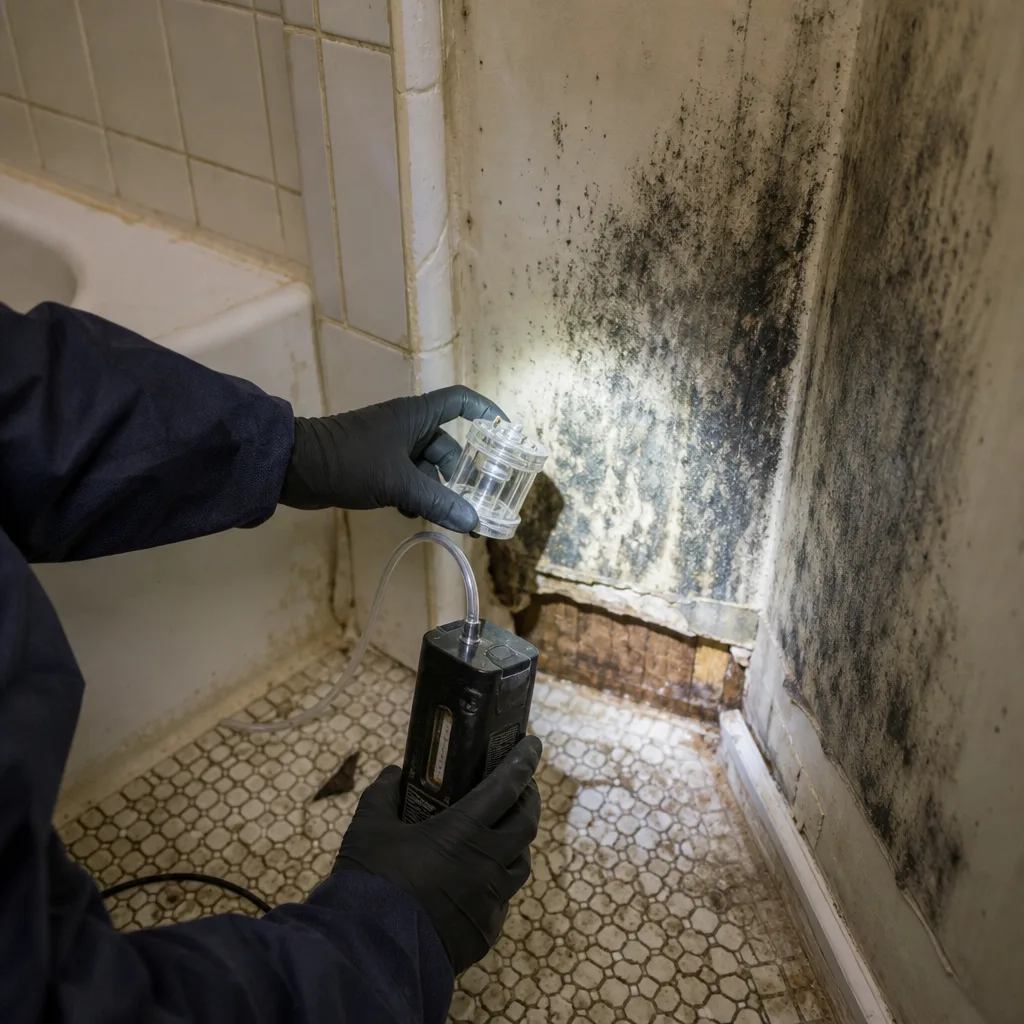
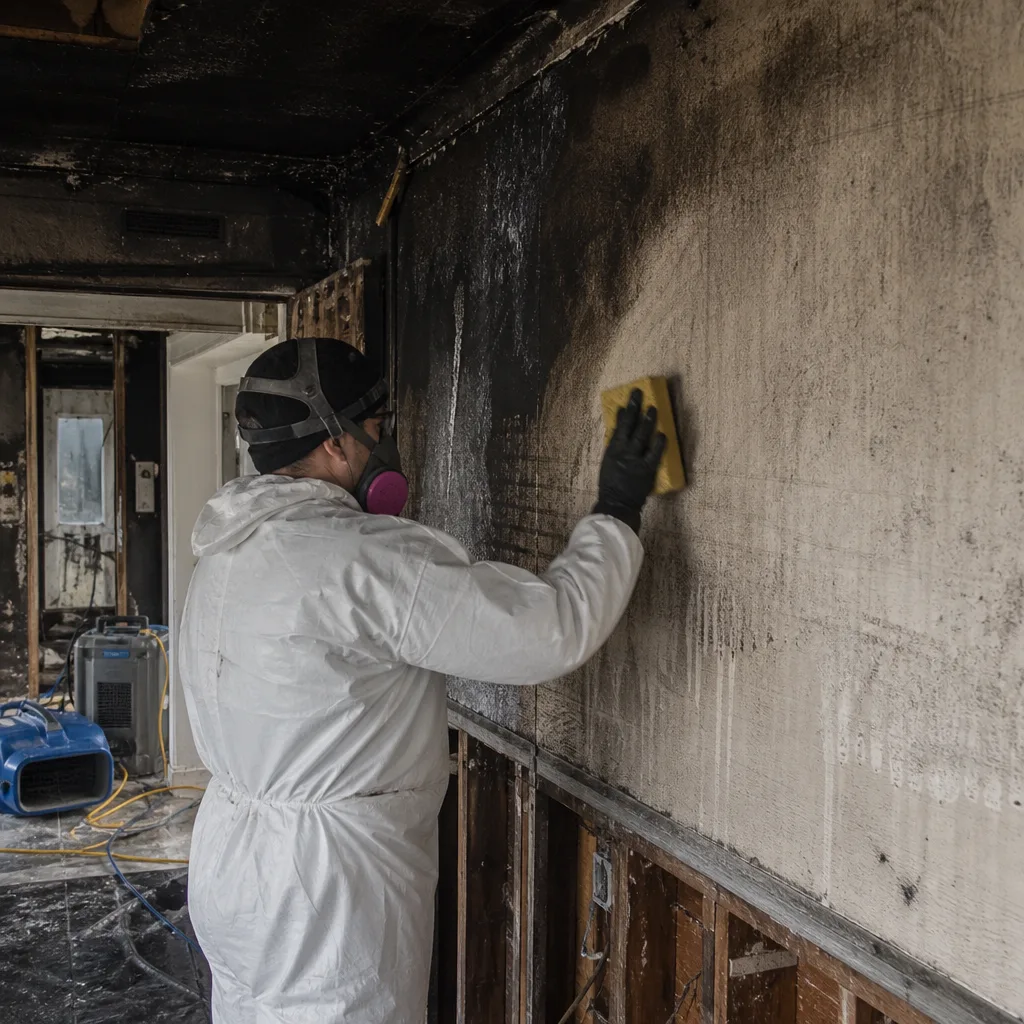
Soot on Little Neck’s original plaster is different from soot on sheetrock. Plaster is alkaline and porous. It accepts soot at the surface, then holds it in the pores. We clean by soot type, not by guess. Dry soot from a wood or paper fire gets chemical-sponged. Oily soot from burning synthetics needs wet cleaning with degreasing agents. Protein soot from a kitchen fire is invisible and acidic: it etches paint, brass, and lacquer within hours. We know what burned and treat accordingly. We don’t just wipe the visible dark marks and call it done.
Contents Cleaning & Pack-Out
Little Neck’s basements are full, and they are often tight. Pack-out in a 1920s Colonial means moving contents through narrow stairwells and out through side doors, then cleaning and storing them in a controlled environment. We photograph everything, inventory by room, and clean items based on material. Upholstery and soft goods get HEPA vacuuming and appropriate deodorization. Hard goods get cleaned and packed. If the basement still holds moisture from a past flood, we deal with that before contents go back in. Nothing returns to a wet room.
Odor Removal & Deodorization
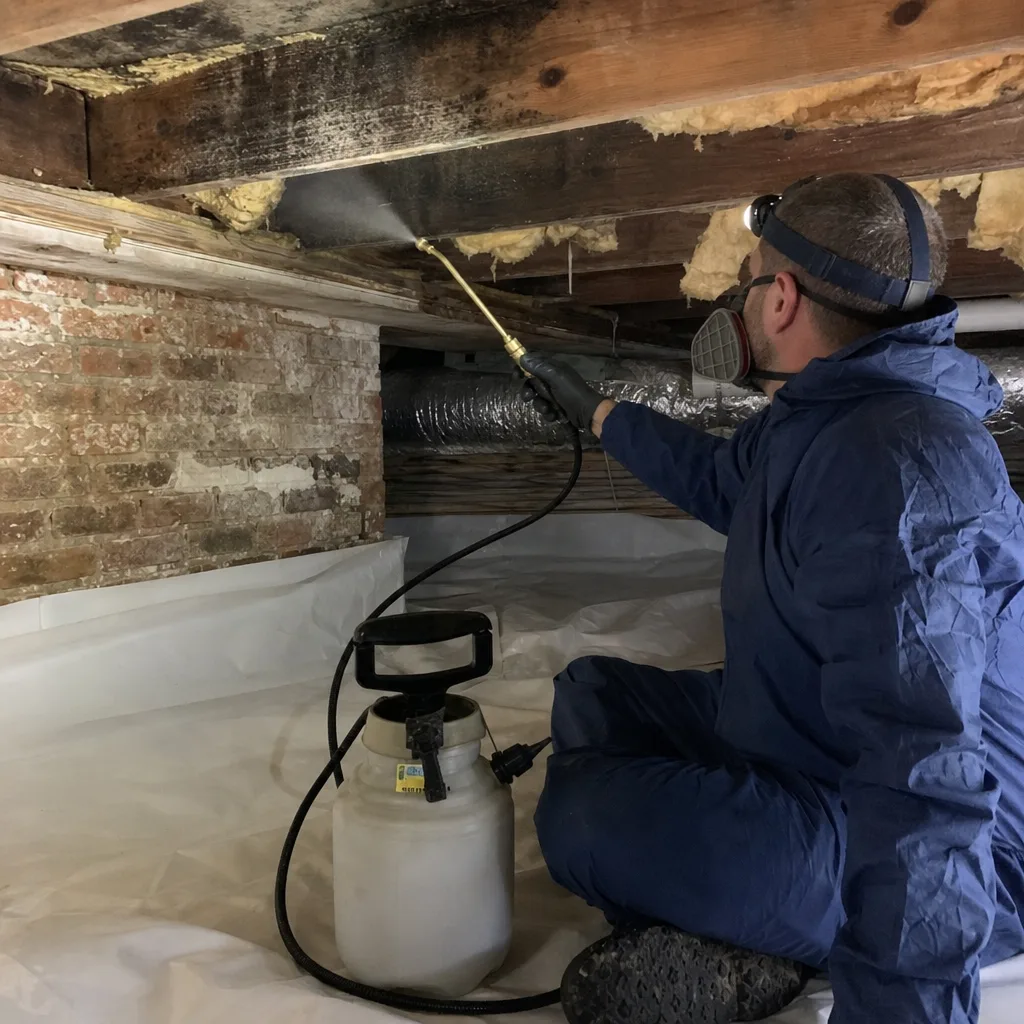
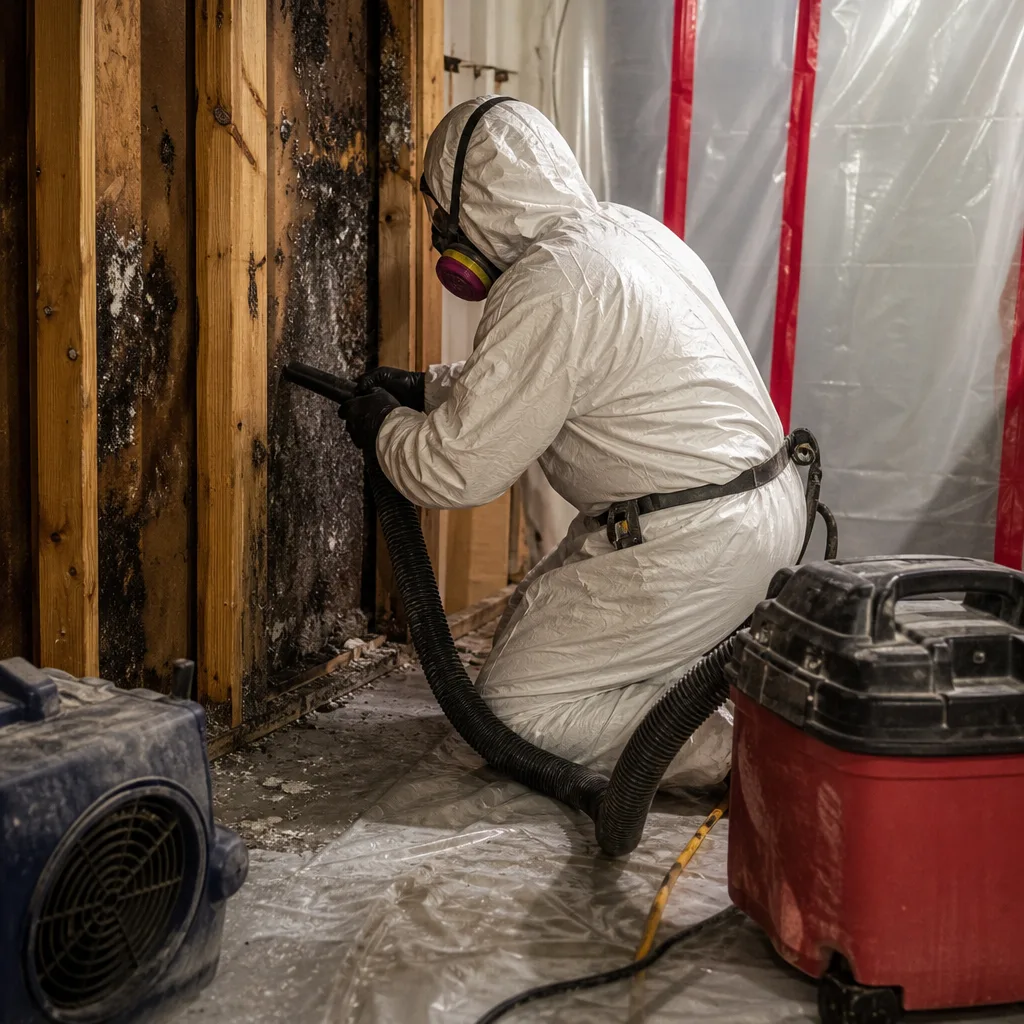
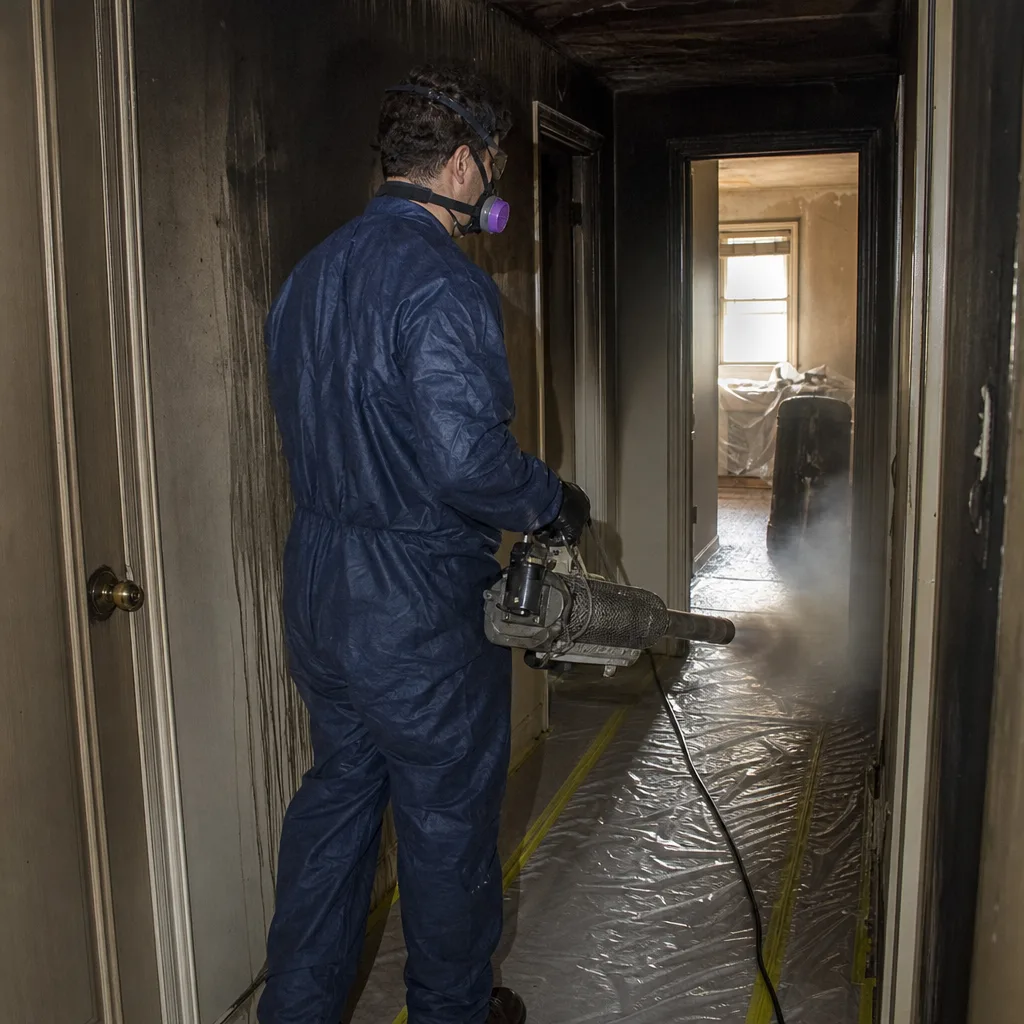
Smoke odor hides in Little Neck’s material and in the air it holds. Thermal fogging pushes a deodorizing fog into the same wall cavities where smoke traveled. Hydroxyl generators run while the house is occupied, breaking down odor molecules without the ozone risk. HEPA air scrubbers run throughout the project to pull airborne soot and odor. In homes with original plaster over lath, we often have to treat the wall cavities directly, because that is where the smell is, not in the room air. A house that still smells like fire a month later almost always has untreated cavities or hidden soot.
Structural Fire Repair
Fire weakens framing, charring studs and joists where it burns hottest. In Little Neck’s older homes, that means sistering joists, replacing charred sections of balloon framing, and rebuilding the plaster walls that were opened for cleaning. Since Floodline carries the rebuild ourselves, we do not stop at cleaning and hand you a list of contractors. The same crew that pulled the soot out can sister the joists, re-lath, and plaster. The job ends finished, not just cleaned.
What happens when you call
- 1
A real person answersNo phone trees - you reach a local pro.
- 2
You get an upfront price rangeHonest numbers before anyone is dispatched.
- 3
A background-checked tech heads outLicensed & insured, dispatched right away.
- 4
You approve before work beginsNothing starts until you say go.
Fire & Smoke Damage Restoration Costs in Little Neck, NY
Straight numbers for Little Neck. A light kitchen fire with smoke odor in two or three rooms typically runs $2,800 to $5,500 when it is mostly cleaning and deodorization. A more involved fire with structural damage, pack-out, and rebuild work lands between $8,000 and $30,000 depending on square footage and framing involvement. Emergency board-up and tarping is $650 to $1,800 depending on openings and wind exposure on the bay side. Contents cleaning by itself, including pack-out and storage, is $1,500 to $6,000 depending on volume and material type. These are real ranges from jobs in this market, not national averages. What moves the price: how far smoke migrated, whether plaster walls need opening, whether the basement held water from suppression or a past flood, and how much structural framing is involved. Insurance covers most fire and smoke loss on standard HO-3 policies. We write the scope to the carrier’s estimating standard and bill directly on approved amounts. The free inspection gives you a written number before any work starts, and that number does not change unless the carrier’s adjuster finds hidden damage we both agree on.
We Also Serve Cities Near Little Neck
Our crews regularly work in Great Neck, Glen Oaks, Bellerose, and Oakland Gardens. The housing stock and response routes differ, but the standard is the same: live answer any hour, written scope before work starts, one team to the end.
Little Neck Fire & Smoke Damage Restoration Questions, Answered
Why does fire restoration in Little Neck take longer near Little Neck Bay than in inland Queens?
Because bay-side homes often carry moisture from past flooding behind their original plaster walls, and that moisture must be dried before smoke and soot work can fully take. Fire suppression water reactivates it. We dry the structure first, log the readings, then treat the smoke. Inland Queens homes on newer drywall do not have that hidden reservoir, so their timeline is shorter. Call (917) 924-4221 and we’ll give you an honest timeline for your block.
Do I need a special board-up after a fire if my Little Neck house sits in the FEMA flood zone?
Yes. FEMA flood zone homes near Little Neck Bay need wind-rated fastening on any board-up or tarping. A standard nailing job can fail in a nor’easter, and then salt spray and rain get into the fire-damaged structure. We use storm-rated anchors on bay-facing openings. Our Emergency Board-Up & Tarping crews carry the right fasteners for this exact condition.
Can smoke odor get trapped in Little Neck’s original plaster walls?
It can and it does. Plaster is porous, and the lath behind it leaves cavities where smoke travels. Surface cleaning alone doesn’t touch it. We use hydroxyl generators and thermal fogging to treat wall cavities directly. In older Little Neck homes, that often means drilling small access points and fogging the bays. If the plaster has held moisture since Sandy, we dry that cavity first, because odor clings to damp material far longer.
What happens to my contents during fire restoration if my basement is still drying from a past flood?
Nothing goes back into a wet basement. We pack out contents, clean them in a controlled environment, and hold them until the basement hits dry standard with documented moisture readings. In Little Neck basements that have sat wet for years, that drying may take several extra days. We log it, your carrier sees it, and nobody gets a moldy box of belongings returned to a damp room.
How do you handle fire damage in a Little Neck home with unvented crawl spaces?
Crawl spaces near the bay are a known problem. Soot and antimicrobial overspray from careless pack-out can settle in them and never leave. We set containment that isolates crawl spaces before any cleaning starts. Then we run drying and air scrubbing specific to that space. The goal is that the crawl space is cleaner after the job than before, not a place where soot went to hide.
How fast can you actually get to a house in Little Neck?
We commit to 45 minutes from your call. The dispatcher knows the routes: Northern Boulevard when it’s moving, Little Neck Parkway for the interior blocks, and the bayside streets off Marathon Parkway. A live person answers the phone and a crew starts rolling. Call (917) 924-4221 and note the time. We’ll be there when we say.
Will my insurance cover fire and smoke restoration in Little Neck?
Most standard HO-3 homeowners policies cover fire, smoke, and the water from fire suppression. What varies is whether hidden pre-existing moisture gets covered, which is where good documentation matters. We photograph from the first hour, log moisture readings, and write line-item scopes that speak your carrier’s language. We talk to your adjuster directly, so you don’t spend your week on hold. The 90-Day Done Right Promise still applies whether insurance pays or you do.
What should I do in the first 30 minutes after a fire in my Little Neck home?
Get everyone out. Call 911 if it’s still active. Then call (917) 924-4221. Do not walk through heavy soot areas or turn on the HVAC system, because that pushes soot into every room. Do not try to clean walls yourself. Wet soot spreads. The first hours decide whether smoke odor becomes a weeks-long problem or a contained one. We’ll walk you through exactly what to do while the crew is on the way.
Serving Little Neck, NY - Our Local Coverage Area
We’re based in the Little Neck area and know this community well. Use the map below to see our service coverage - if you’re nearby, we can almost certainly help.
Contact Floodline Restoration Co. of Manhattan in Little Neck
If you’re looking at soot on plaster in Little Neck, or you smell smoke in a room that was never near the fire, call us. We’ll come out, look at the full picture, and tell you straight what the job needs. Free inspection. Written scope before work starts. A live person on the phone at any hour. Call (917) 924-4221 for a free estimate.
Written by Curt Bowman, Owner at Floodline Restoration Co. of Manhattan, serving Little Neck and the surrounding Queens and Nassau communities since 2010.