
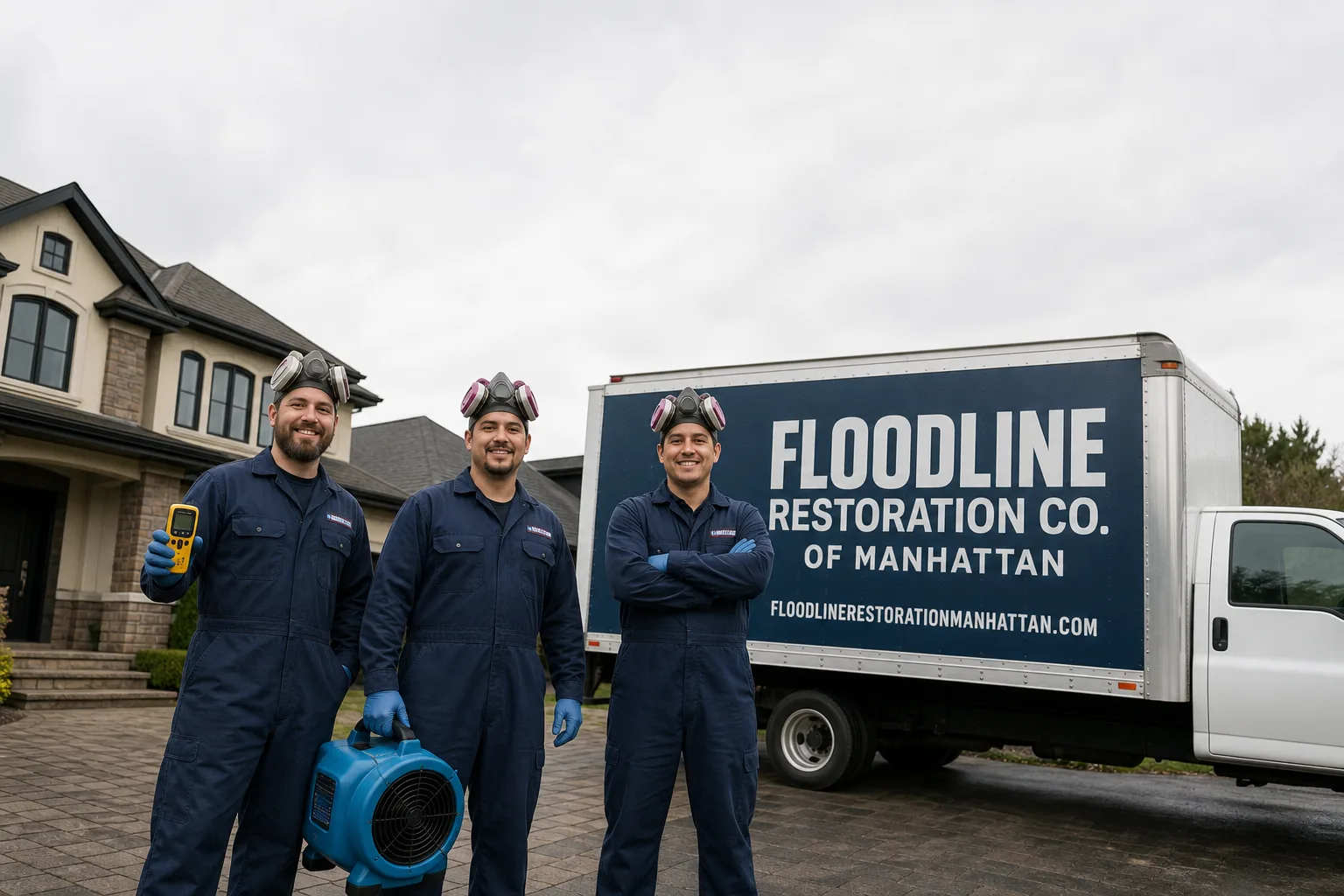
Free visual inspection and a written scope of work before any mitigation begins - photos, moisture readings, and drying logs go in your claim file
The scope we write is the scope we bill. Anything new gets shown to you, in writing, before we touch it.
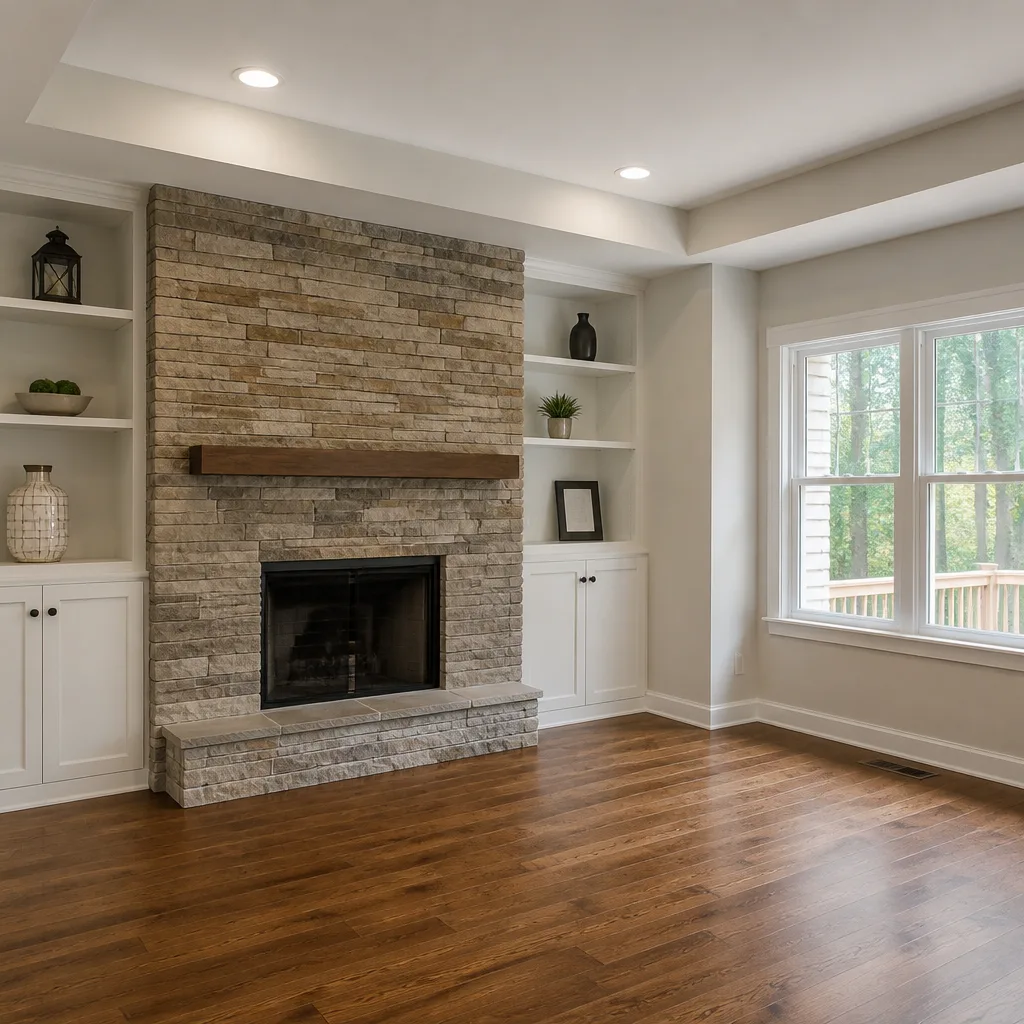
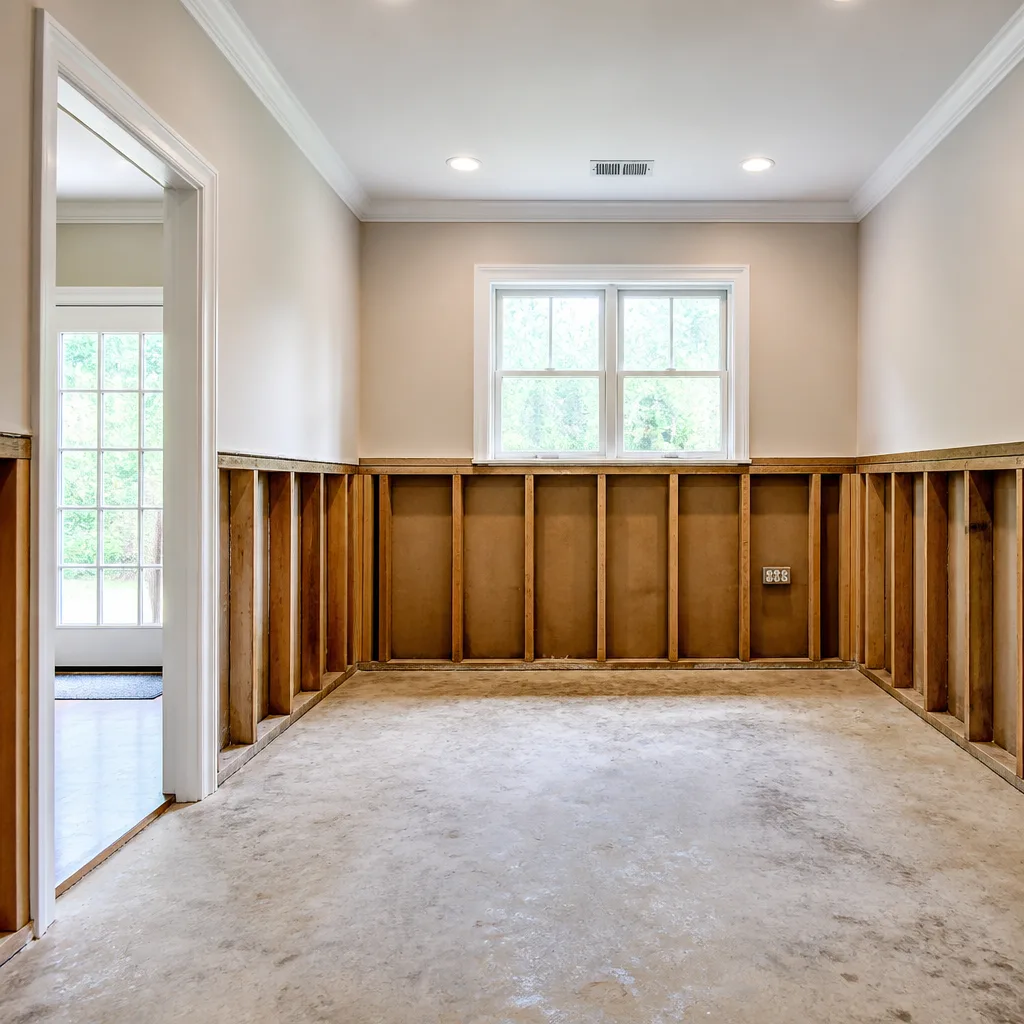
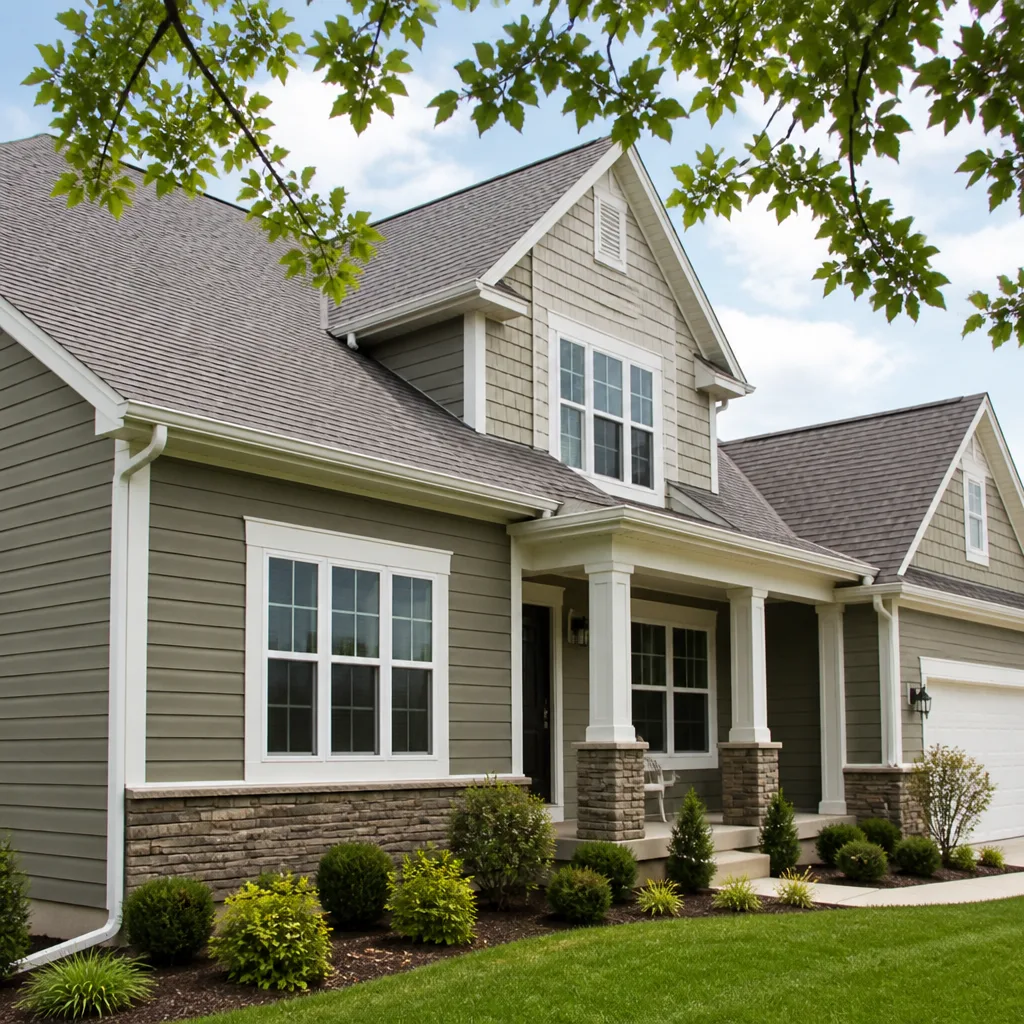
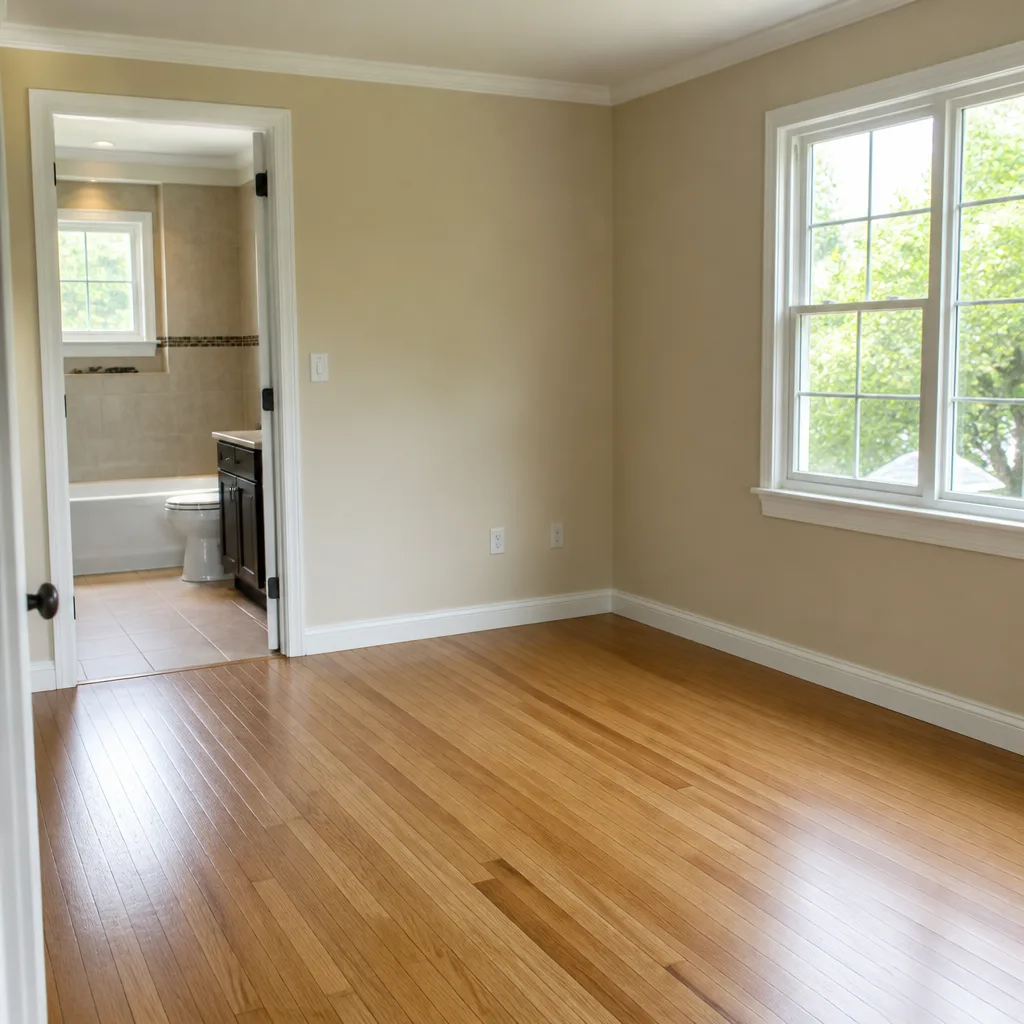
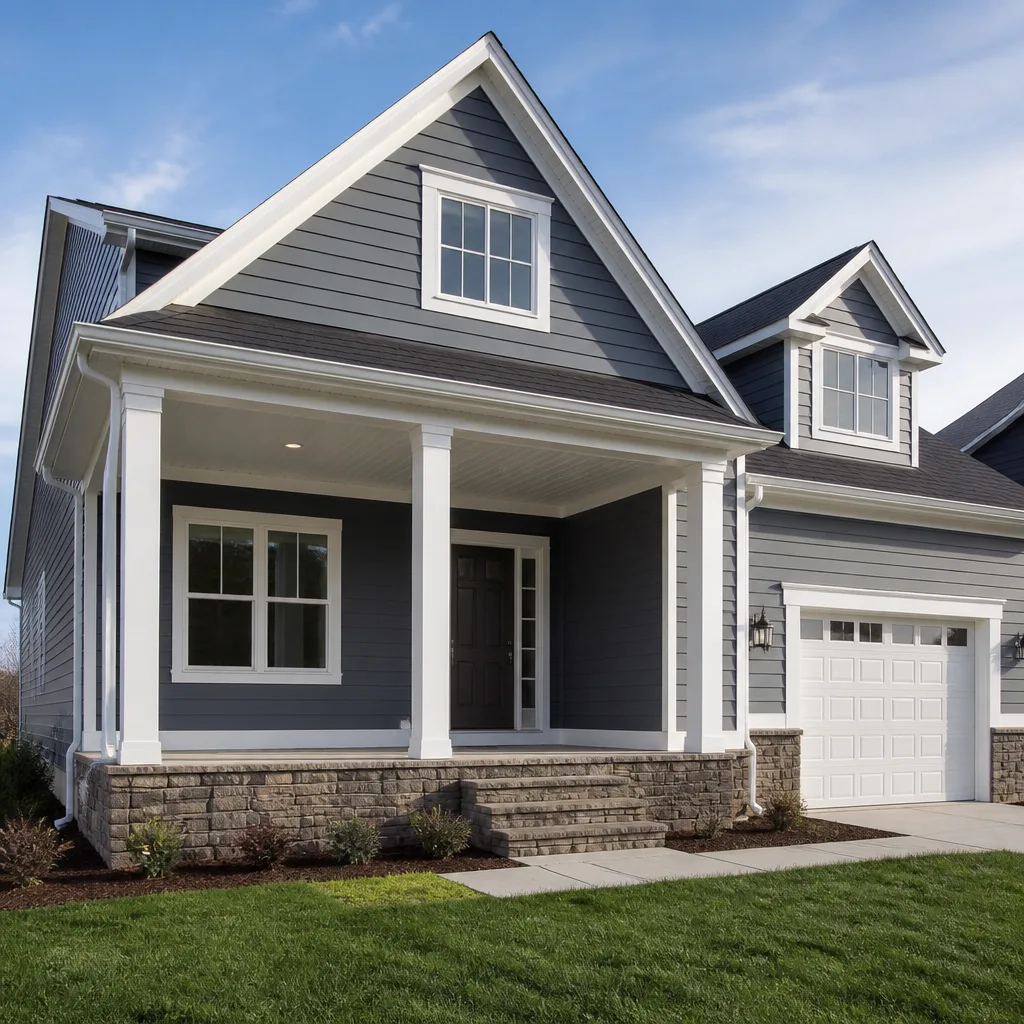
 Before
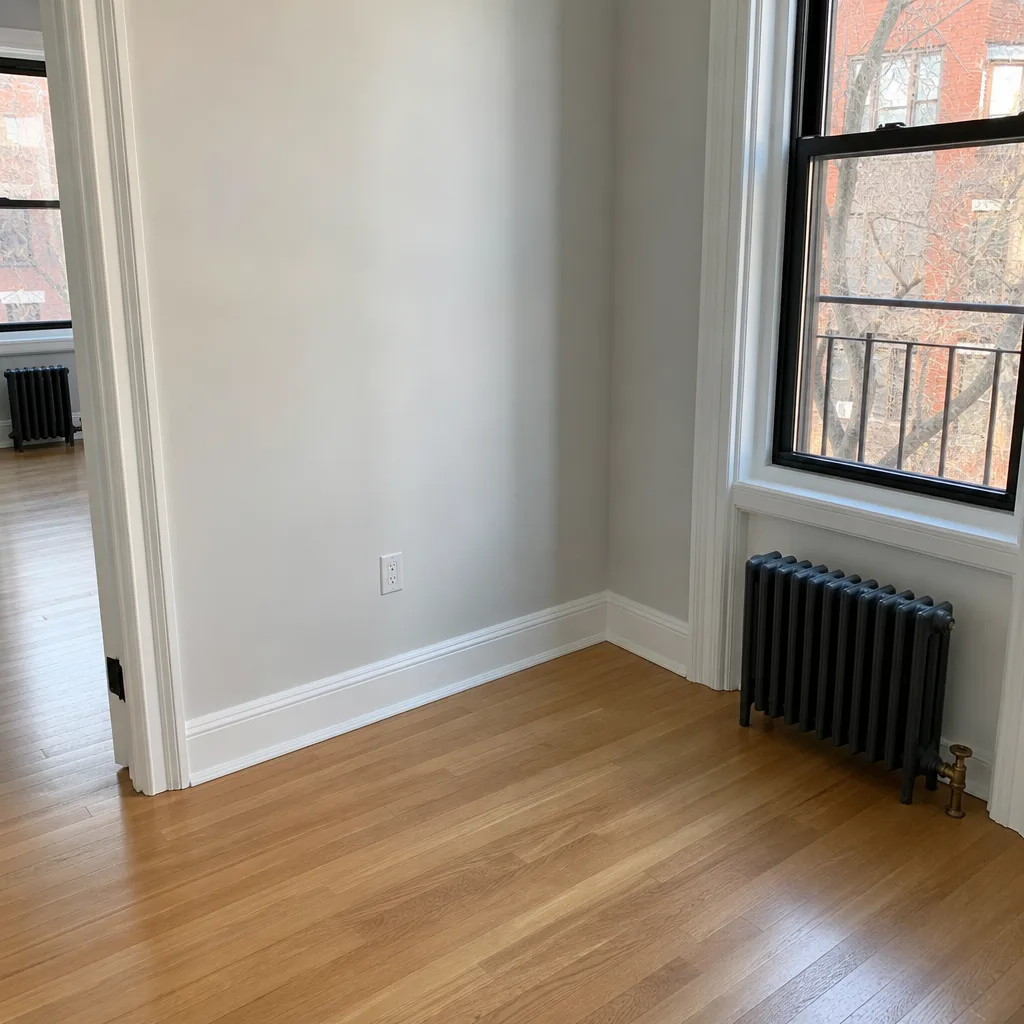 After
After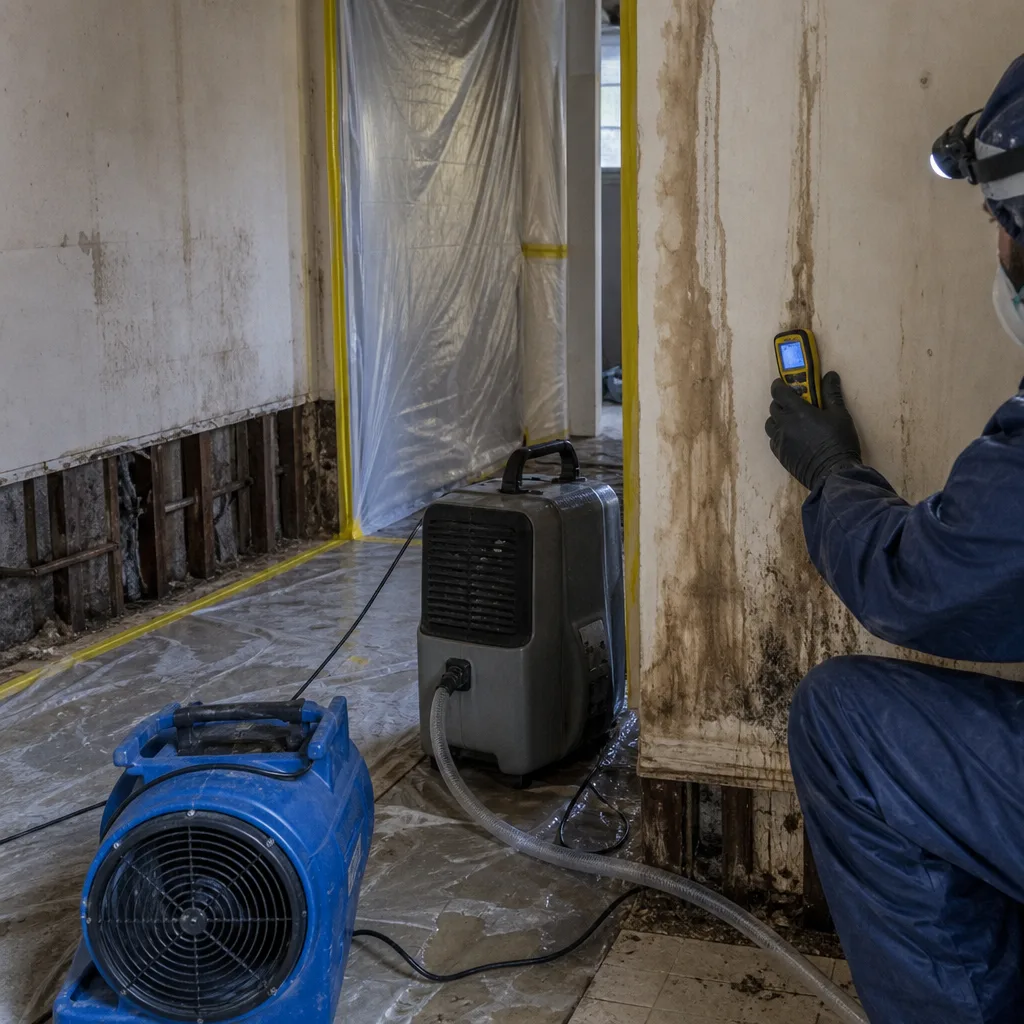 Before
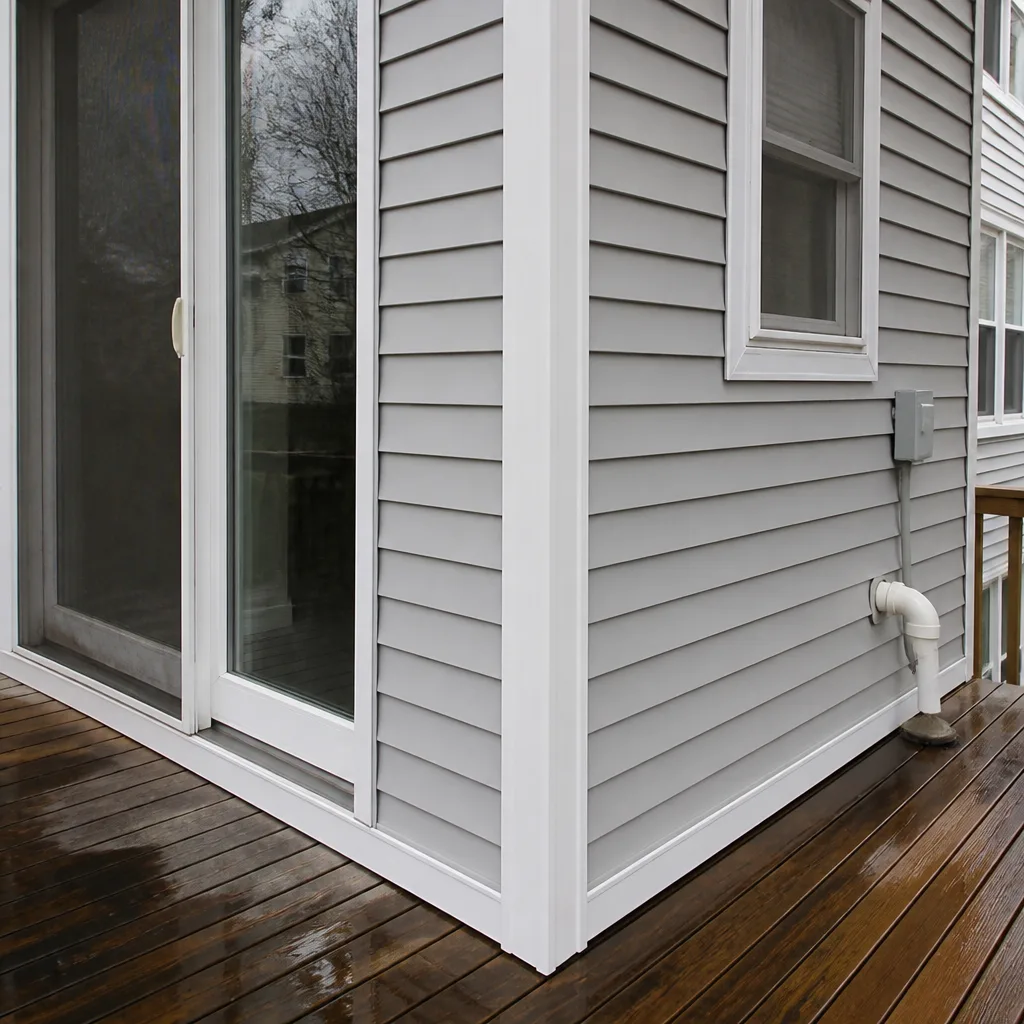 After
After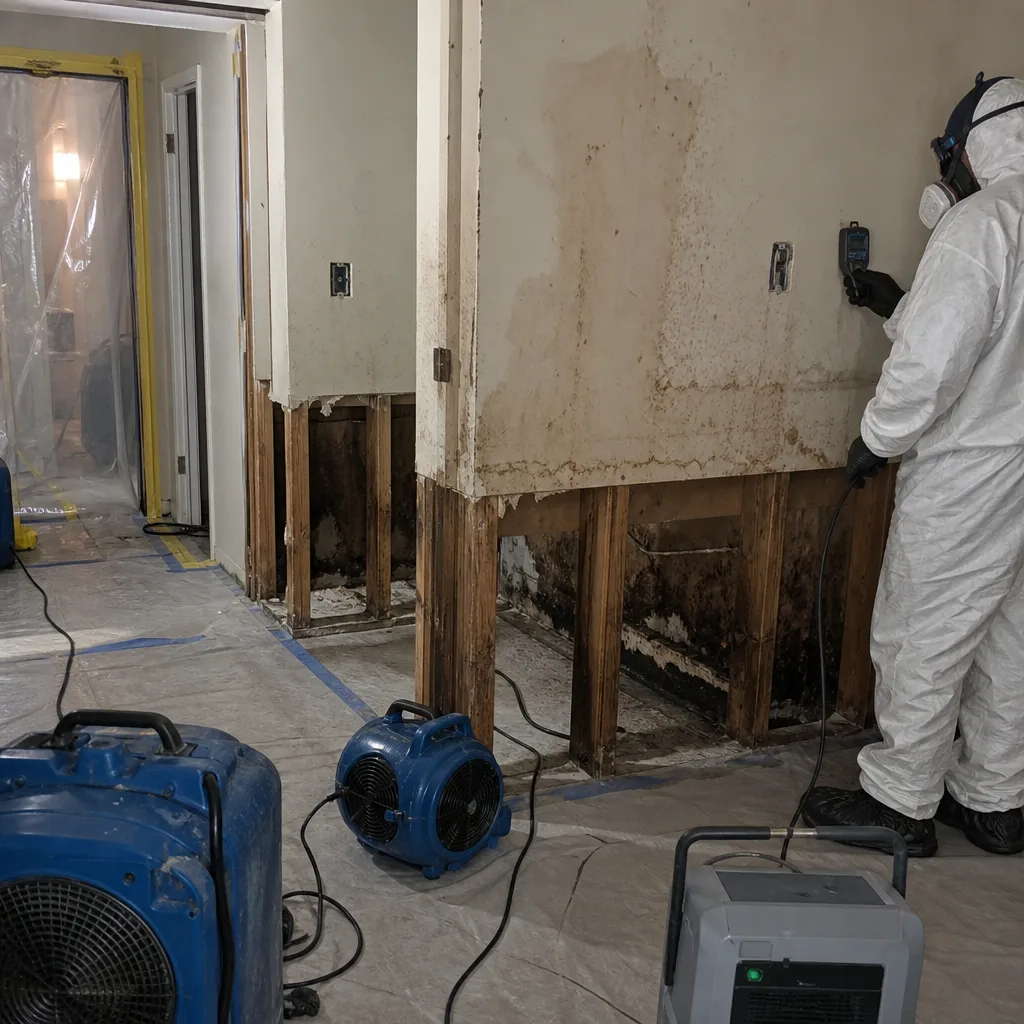 Before
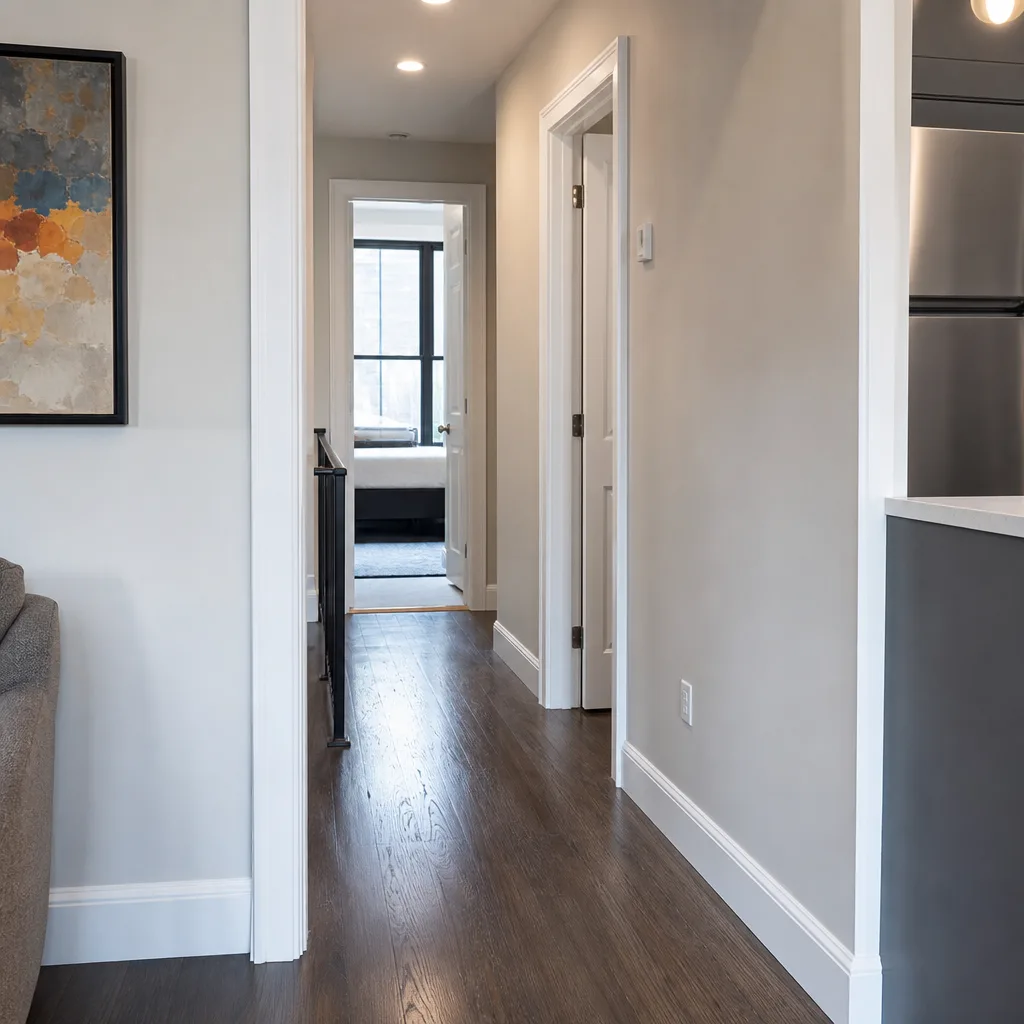 After
After24/7 Emergency Fire & Smoke Damage Restoration in Yonkers
If a fire has just torn through your kitchen on Warburton Avenue or left smoke residue throughout a third-floor walk-up off McLean Avenue, here’s what you need to know: our crews reach most Yonkers properties within 45 minutes, the first hour determines how much of your contents and structure can actually be saved, and we answer the phone live at (917) 924-4221 at any hour. Fire damage compounds quickly. Soot is acidic. It etches glass, corrodes metal fixtures, and sets into painted plaster within days. Smoke odor migrates into every porous surface it touches. The faster we contain and start removing, the less you lose. The first visual inspection is free, and we’ll walk you through what we’re seeing before any work is authorized.
Understanding Fire & Smoke Damage Restoration Severity in Yonkers Properties
Not all fire damage is the same, and the pre-1940 housing stock that dominates Yonkers changes the math. We classify soot residue in three ways: dry soot from paper and wood fires, oily soot from kitchen grease fires, and protein-based residue from food fires that is nearly invisible but carries an aggressive, lasting odor. Each requires different chemistry and different agitation methods. Smoke migration matters more than flame contact in many of these buildings. In a row house or attached tenement, smoke travels through shared wall cavities, around cast-iron drain stacks, and into original lath-and-plaster assemblies. What looks like a contained fire in one unit is often a smoke-damaged party wall in the next unit. Those pre-war plaster walls are porous. They hold smoke like a sponge. And the Hudson River Valley’s moisture-heavy air means any water used by the fire department is slow to dry in those assemblies, which accelerates secondary damage if not managed with active drying equipment from day one.
Why Yonkers Property Owners Choose Floodline Restoration Co. of Manhattan
- 45-minute response commitment for Yonkers properties: our dispatch board routes the nearest certified crew, not the next available salesperson.
- 24/7 live answer: a real person picks up at two in the morning. No voicemail, no answering service, no call-back later.
- IICRC-certified crews trained to WRT, FSRT, and AMRT standards. Same certification you’d demand from a national firm, but with one crew that stays on the job.
- Free visual inspection before you commit to anything. We show you the scope, explain the reasoning, and put it in writing.
- Direct insurance billing: we document, photograph, and coordinate with your adjuster so you never play messenger between us and the carrier.
- One team from extraction to reconstruction: the crew that reads the moisture map on day one handles daily readings, dries the structure, and rebuilds what needs rebuilding.
Our Fire & Smoke Damage Restoration Process
Inspection & Assessment
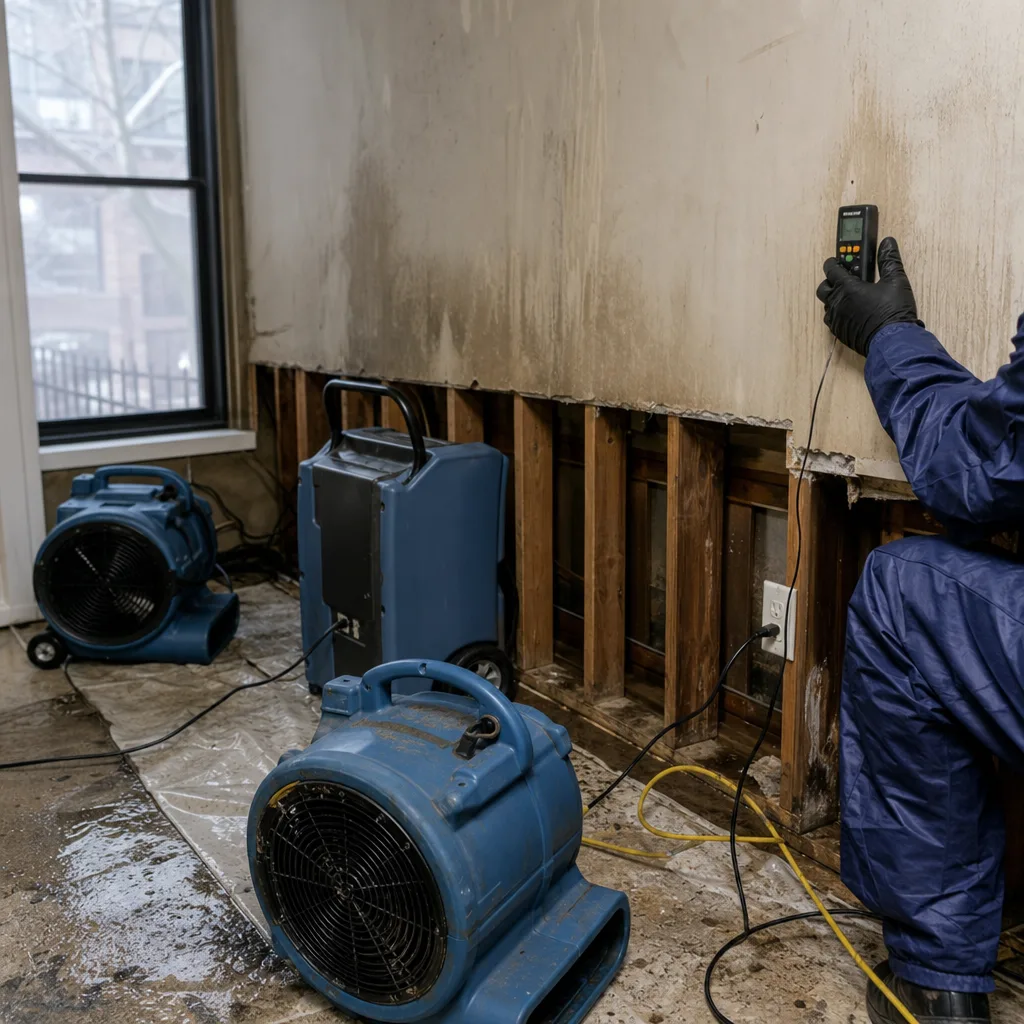
We start with a room-by-room walkthrough using thermal imaging and moisture meters to map what the fire touched, what the smoke reached, and what the fire department’s water soaked into. In Yonkers’s older multi-family buildings, we specifically check party walls and shared floor assemblies, because smoke travels laterally in ways a visual inspection misses.
Extraction & Stabilization
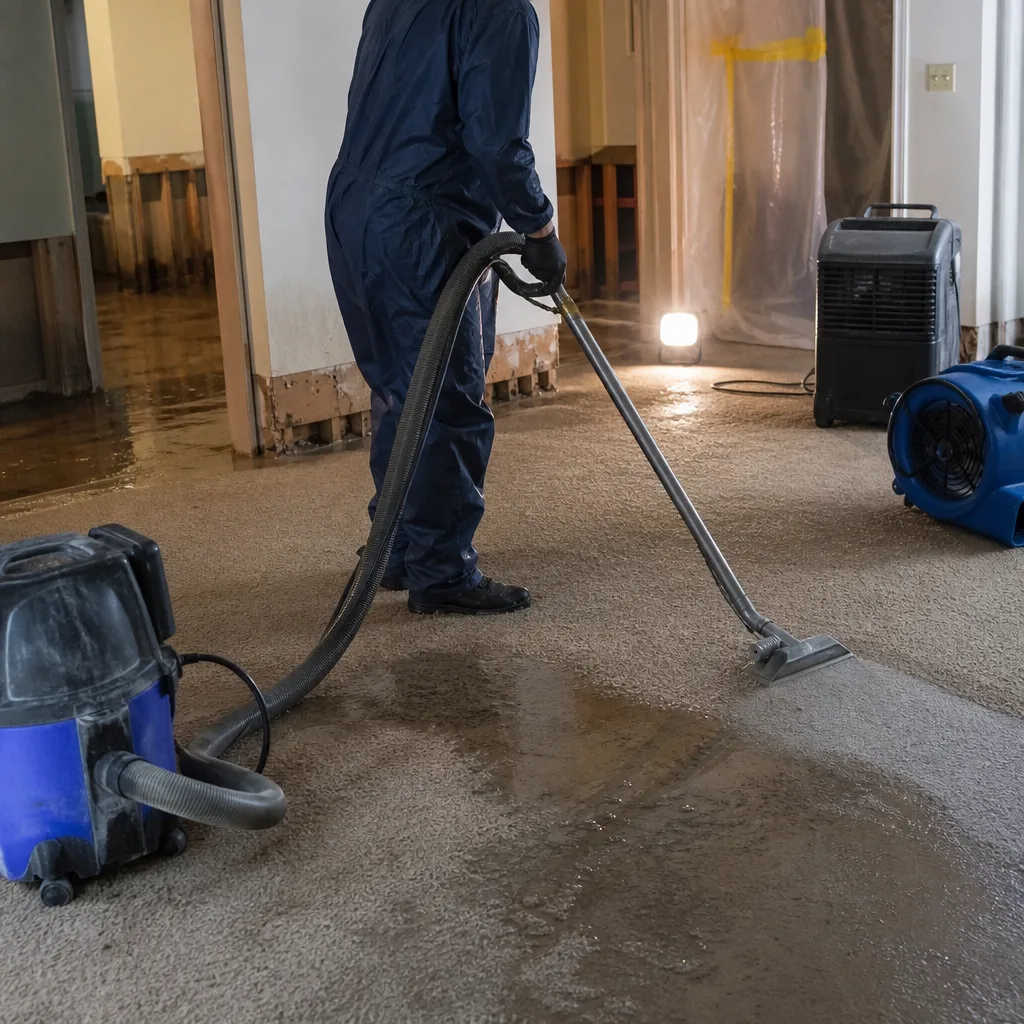
Fire suppression water is Category 3 water: it has picked up ash, soot, and whatever the fire consumed. We extract standing water immediately, secure the structure, and board up openings if the fire department left any exposed. Stabilization is what prevents a bad loss from becoming a total loss.
Drying & Dehumidification
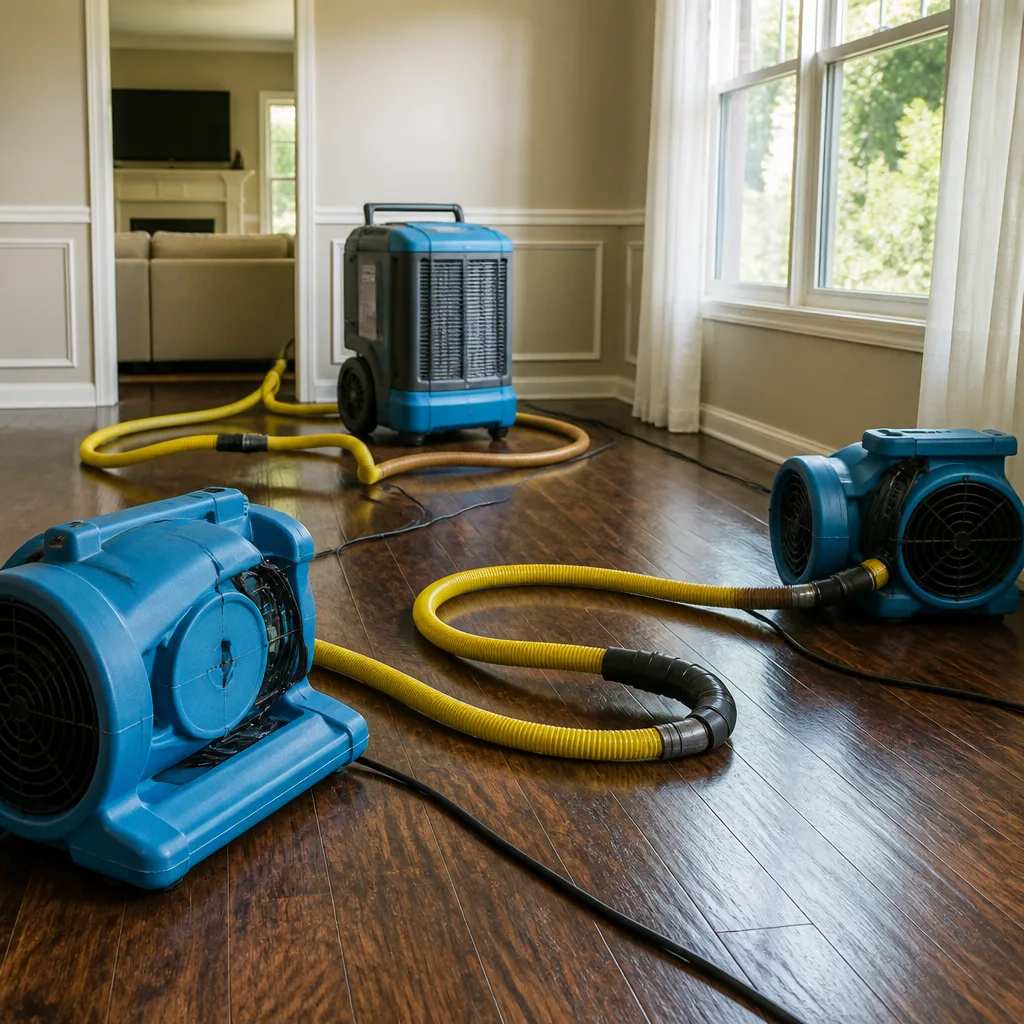
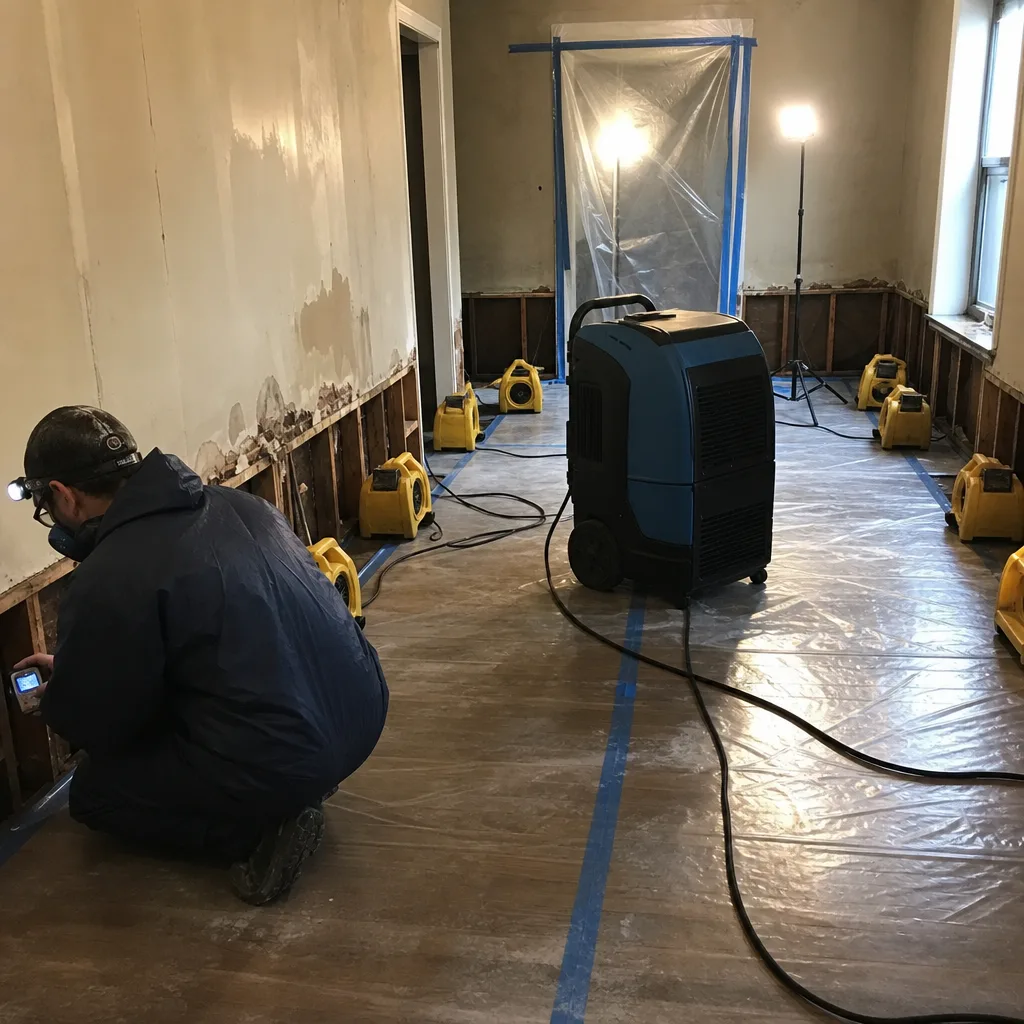
We run professional-grade Dri-Eaz and Phoenix air movers and dehumidifiers, with daily moisture readings logged until the dry standard is met. On original plaster-and-lath walls, this phase takes longer than in modern drywall, and we plan for that rather than rushing it.
Cleaning & Sanitization
Soot is acidic and it keeps working after the fire is out. We use HEPA-filtered air scrubbers throughout cleaning to prevent cross-contamination, then apply the appropriate chemistry for the residue type: dry soot, oily soot, or protein-based residue.
Odor Removal & Deodorization
Smoke molecules embedded in plaster, wood, and textiles keep off-gassing for weeks if untreated. We combine hydroxyl generation, ozone treatment where appropriate, and thermal fogging to neutralize odor at the source rather than masking it. Contents that can be saved get cleaned off-site; the rest are documented and inventoried for your claim.
Repairs & Restoration
The same crew that dried the frame rebuilds it. That means new studs where fire compromised structure, new plaster or drywall, paint, trim, flooring, and any electrical or plumbing repairs the loss requires. We pull permits where Yonkers requires them and handle the inspection process.
Need Emergency Fire & Smoke Damage Restoration in Yonkers Now?
Crews minutes away, answering live 24 hours a day. The sooner we start, the less it costs.
Working With Your Insurance Company
Fire losses are almost always insurance claims, and the documentation you produce in the first 48 hours dictates how that claim resolves. We photograph everything, room by room, before any demolition starts. We log moisture readings daily. We photograph the damage after each layer is removed so nothing gets disputed later. And we talk directly with your adjuster, in their language, so you don’t have to interpret drying curves or question soot removal chemistry on a three-way call. This matters most in Yonkers, where pre-existing conditions are common and a poorly documented job can leave you arguing with the carrier about what was fire damage versus what was already there.
What We Provide Your Insurer
- Thorough documentation of the loss
- Photos of all damage, room by room
- Moisture readings and drying logs
- A detailed, line-item scope of work
- Direct coordination with your carrier
Built for Yonkers’s Loss Calendar
Fire losses in Yonkers follow the seasons, and so does our readiness. January and February send deep freezes through the Hudson Valley that crack aging masonry and burst supply lines in exterior walls of pre-war buildings, and the electrical overload that follows a burst pipe in a tenement with original wiring is a common ignition source. Spring thaw brings water into basements off Saw Mill River Road and around Getty Square, where old wiring and junction boxes sitting in damp for decades become a fire hazard. Summer thunderstorms hit the low-lying blocks hard, and the window units and overloaded circuits in older apartments run hot. Nor’easters in fall and early winter knock branches onto services and overhead lines. When you add it up, the Yonkers fire restoration call that starts as “a small kitchen fire” is usually the visible edge of a building with fifty or ninety years of layered history behind the plaster. We plan for that. Most national franchises don’t, and they find out mid-job.
Fire & Smoke Damage Restoration Across Yonkers’s Neighborhoods
The building stock changes as you move through Yonkers, and the fire restoration approach changes with it. Along South Broadway and in the Getty Square area, we work in attached brick tenements and early apartment blocks where fire in one unit becomes smoke in the party wall of the next. Crews on Park Hill and in the neighborhoods rising toward the eastern plateau encounter the same pre-war masonry but with more single-family detached homes, which makes containment simpler but still demands lead-safe practices on original painted surfaces. Along McLean Avenue and the Bronxville-adjacent blocks, we see a mix of wood-frame and brick construction where smoke moves through balloon-framed wall cavities that run from basement to attic with no fire stops. And near the Saw Mill River Parkway corridor and Larkin Plaza, the flood history adds a layer we’ll get into below: buildings with prior water damage hidden behind walls that a current fire loss exposes. That’s a Yonkers-specific problem, and it changes how we scope, document, and defend a claim.
Specialized Fire & Smoke Damage Restoration Services We Offer in Yonkers
Fire Damage Cleanup
Full fire damage cleanup starts with controlled demolition: removing charred material, failed drywall or plaster, and any structural elements the fire compromised. We handle the code-required protocols for the older Yonkers buildings where asbestos floor tiles and knob-and-tube wiring sit behind finished walls. You don’t get a fine, and you don’t get cross-contamination. That’s the standard.
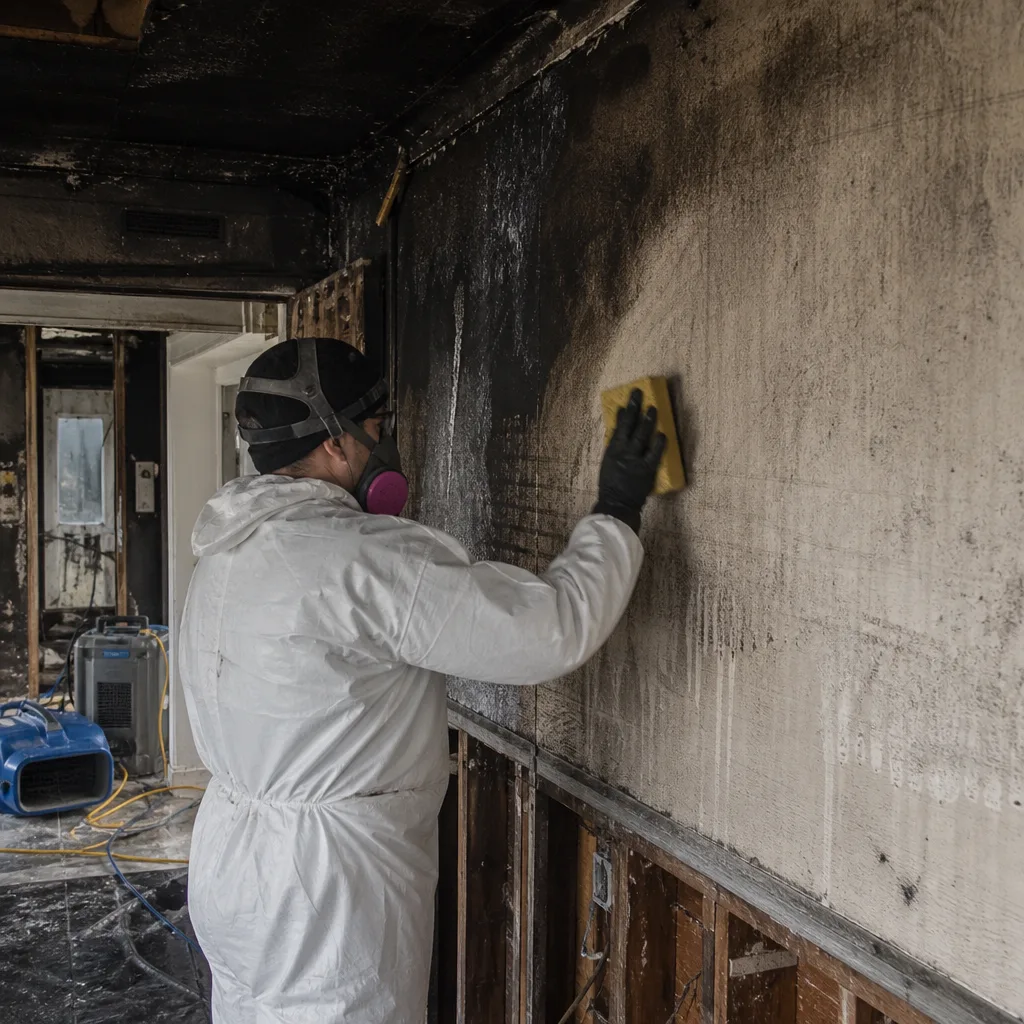
Smoke & Soot Removal
Soot removal is chemistry as much as it is labor. In Yonkers’s older tenements and row houses, we’re working on original plaster with decades of paint layers, which means the residue type dictates the cleaning method. Aggressive wet-cleaning on the wrong surface drives soot deeper into the plaster. Our crews are trained to identify what they’re looking at before they touch it.
Odor Removal & Deodorization
Smoke odor in a pre-war Yonkers building behaves differently than in a modern home. Original plaster, horsehair insulation, and old growth wood framing absorb odor at depth. We use hydroxyl generators and thermal fogging to neutralize odor at the source, and we’ll tell you honestly when original plaster can be saved versus when it needs to come out. No masking. Done right and backed in writing.
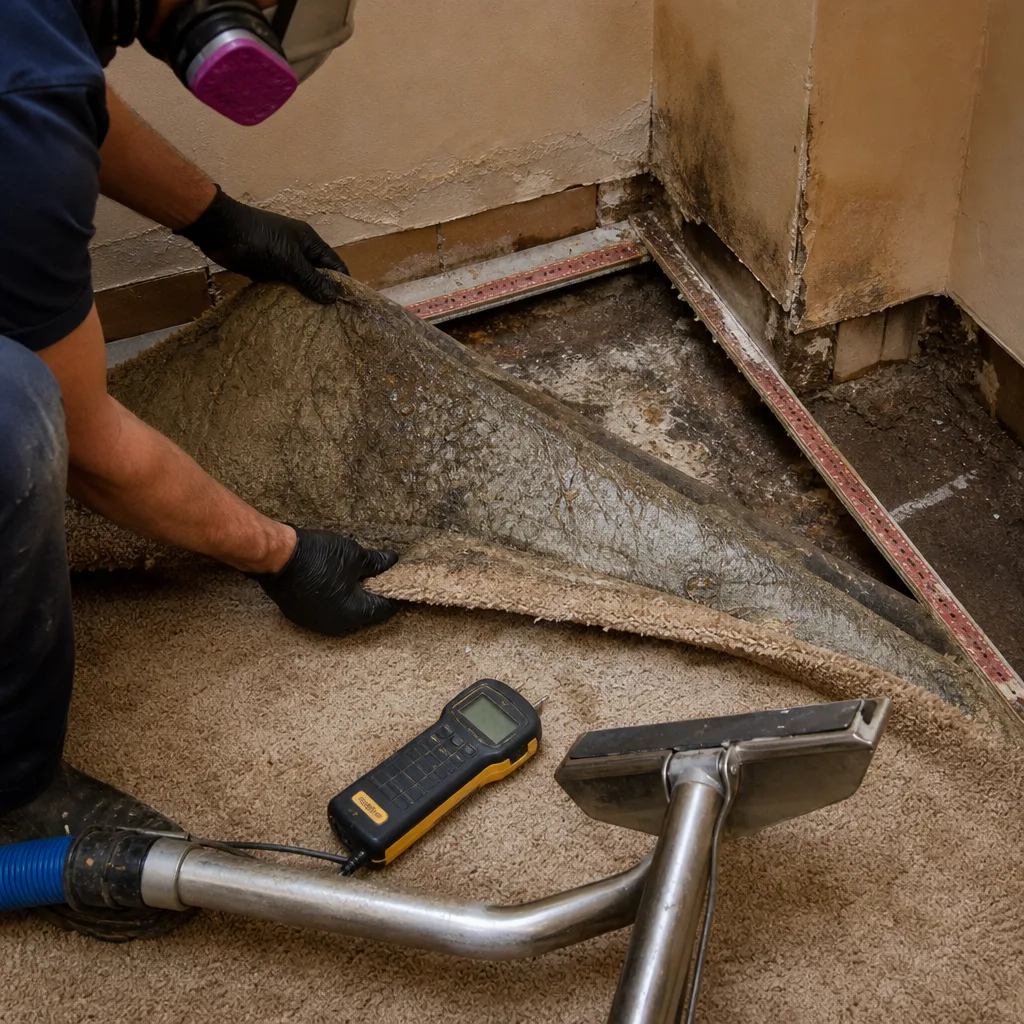
Contents Cleaning & Pack-Out
Your contents are usually more salvageable than you think, but only if they’re handled correctly in the first days. We offer full pack-out services: an inventory of everything, photo documentation for your claim, professional cleaning at our secure facility, and storage until the structure is ready. For Yonkers apartments and smaller homes, we also do on-site contents cleaning where logistics make a pack-out impractical.
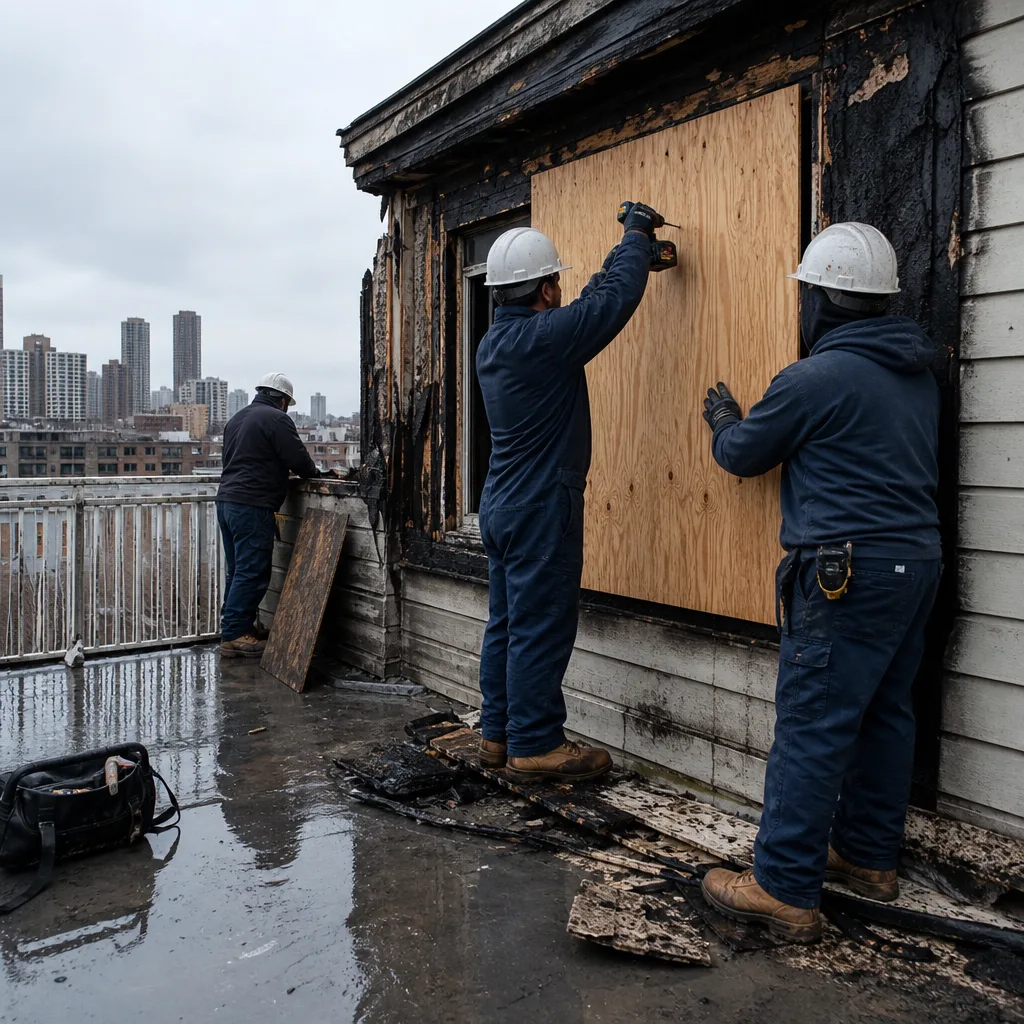
Emergency Board-Up & Tarping
The fire department will often break windows, cut holes in the roof, or force doors. That leaves your property open. We provide emergency board-up and tarping services within hours, not days, and we’ll pull any permits Yonkers requires for the temporary work. The goal is simple: secure the property so no further damage happens while restoration gets underway.
What happens when you call
- 1
A real person answersNo phone trees - you reach a local pro.
- 2
You get an upfront price rangeHonest numbers before anyone is dispatched.
- 3
A background-checked tech heads outLicensed & insured, dispatched right away.
- 4
You approve before work beginsNothing starts until you say go.
Fire & Smoke Damage Restoration Costs in Yonkers, NY
Yonkers fire restoration costs reflect the city’s building stock and the scope of the loss. A small kitchen fire with moderate smoke damage in a single apartment typically runs $4,000 to $11,000. A full-contents pack-out with odor removal in a two-bedroom unit adds $3,000 to $8,000 depending on volume. Structural fire repair that involves reframing, new plumbing or electrical, and full finish work in a pre-war tenement commonly lands between $25,000 and $75,000. The variables that move the price are the age of the building, whether asbestos or lead abatement becomes necessary, how far smoke migrated into shared wall cavities, and whether the fire department’s water soaked into flooring and framing. Most homeowner policies cover the restoration less your deductible, and we bill your insurer directly. The free visual inspection gives you a firm line-item scope in writing, so you know your number before you commit to anything.
We Also Serve Cities Near Yonkers
Our Yonkers crews handle fire and smoke restoration in the surrounding communities as well, including Bronxville, Tuckahoe, Mount Vernon, and Eastchester. The same 45-minute response commitment and direct insurance billing apply.
Serving Yonkers, NY - Our Local Coverage Area
We’re based in the Yonkers area and know this community well. Use the map below to see our service coverage - if you’re nearby, we can almost certainly help.
Yonkers Fire & Smoke Damage Restoration Questions, Answered
How does the buried Saw Mill River under downtown Yonkers affect fire damage restoration in buildings near Getty Square?
Buildings in the Getty Square and Larkin Plaza blocks sit directly over the buried Saw Mill River culvert, and many have a history of recurring basement and ground-floor flooding that was never fully documented. When a fire loss opens walls in these buildings, we routinely find old tide lines, improperly dried framing, and failed prior remediations that weren’t on any record. That changes the scope: what looked like a single-event fire loss is often a layered damage history that must be documented separately so the current claim isn’t tangled up with pre-existing conditions.
Why do fire restoration jobs in Yonkers’s pre-war tenements take longer than in newer houses?
Pre-war tenements built before 1940 use original lath-and-plaster assemblies, cast-iron drain stacks, and sometimes knob-and-tube wiring or asbestos floor tiles behind finished surfaces. Plaster holds water and smoke deeper than modern drywall, which extends the drying and odor removal phases. And when demolition reveals hazardous materials, code-required containment and abatement protocols add days to the schedule. We’d rather take the time and do it right than rush a dry-out that leaves the building with secondary mold or a deodorization that fails in three weeks.
Can you deodorize smoke from an old Yonkers row house without removing the original plaster?
In many cases, yes. We use hydroxyl generation, thermal fogging, and surface-specific cleaning methods that can neutralize smoke odor in original plaster without demolition. But some plaster assemblies absorb smoke so deeply that the odor returns after treatment, especially where the plaster was already porous from decades of moisture exposure. We’ll tell you honestly before we start if we think the plaster can be saved, and we’ll put that assessment in writing.
What does a typical fire damage cleanup in a Larkin Plaza apartment involve regarding category 3 water from the fire department?
Fire suppression water is classified as Category 3: it contains soot, ash, and whatever the fire consumed, plus whatever was already in the building. In a Larkin Plaza apartment, that water often pushes into flooring and wall cavities that have seen prior flood events from the Saw Mill River, which means the water is moving through material that was already compromised. We extract it immediately, run structural drying with professional-grade equipment, and log moisture readings daily until the dry standard is met. Then we clean and sanitize the affected surfaces before any rebuild starts.
Do Yonkers building inspectors require anything special for post-fire board-up or structural repair?
Yes. Yonkers requires permits for most structural repair work, and board-up or tarping on a fire-damaged structure generally needs a temporary certificate or permit depending on the scope. For pre-war buildings, inspectors often require lead-safe work practices and asbestos testing before demolition, especially where original materials are disturbed. We pull the permits ourselves and schedule the inspections, so you’re not standing between the building department and the job.
How fast can you actually get to a Yonkers property after a fire?
Our commitment is 45 minutes for most Yonkers properties. Dispatch is coordinated from our New York City office, and crews are stationed across the Yonkers service area. A live person answers the phone at (917) 924-4221 at any hour, and the crew that shows up is the crew that handles the job from first extraction to final rebuild.
Will insurance cover fire and smoke restoration in Yonkers, and who deals with my adjuster?
Most homeowner and building policies cover fire and smoke restoration less your deductible. We photograph everything, document the loss room by room, and communicate directly with your adjuster. If pre-existing conditions from a prior Yonkers flood event complicate the claim, our documentation shows clearly what the fire damaged versus what was already there, which protects you from a carrier trying to deny coverage based on undocumented pre-existing conditions.
What should I do in the first 30 minutes after a fire in my Yonkers home?
Get everyone out and call 911 if the fire department isn’t already on site. Don’t re-enter the property until it’s cleared. Don’t turn on any electrical switches or light fixtures, and don’t wipe or wash soot from walls, because the wrong cleaning method can drive it deeper. Call us at (917) 924-4221 for a free visual inspection. The sooner we start containment and cleaning, the more of your contents and structure we can save.
The buried Saw Mill River, the pre-war building stock, and the wind-load code requirements all interact on a Yonkers fire-and-smoke job in ways that a generic restoration guide never covers. A fire in a tenement off South Broadway isn’t the same job as a fire in a suburban colonial. The walls hold different histories. The water moves differently. The building department looks at different things. If you’re facing fire or smoke damage in Yonkers, you need a crew that knows the difference before they open the first wall. Fire & Smoke Damage Restoration is what we do, every phase of it, and we do it across Yonkers with one team from first response to finished rebuild. Call (917) 924-4221 for a free estimate, and we’ll walk you through what you’re looking at, in plain language, before you sign anything.
Written by Curt Bowman, Owner at Floodline Restoration Co. of Manhattan, serving Yonkers since 2010.