
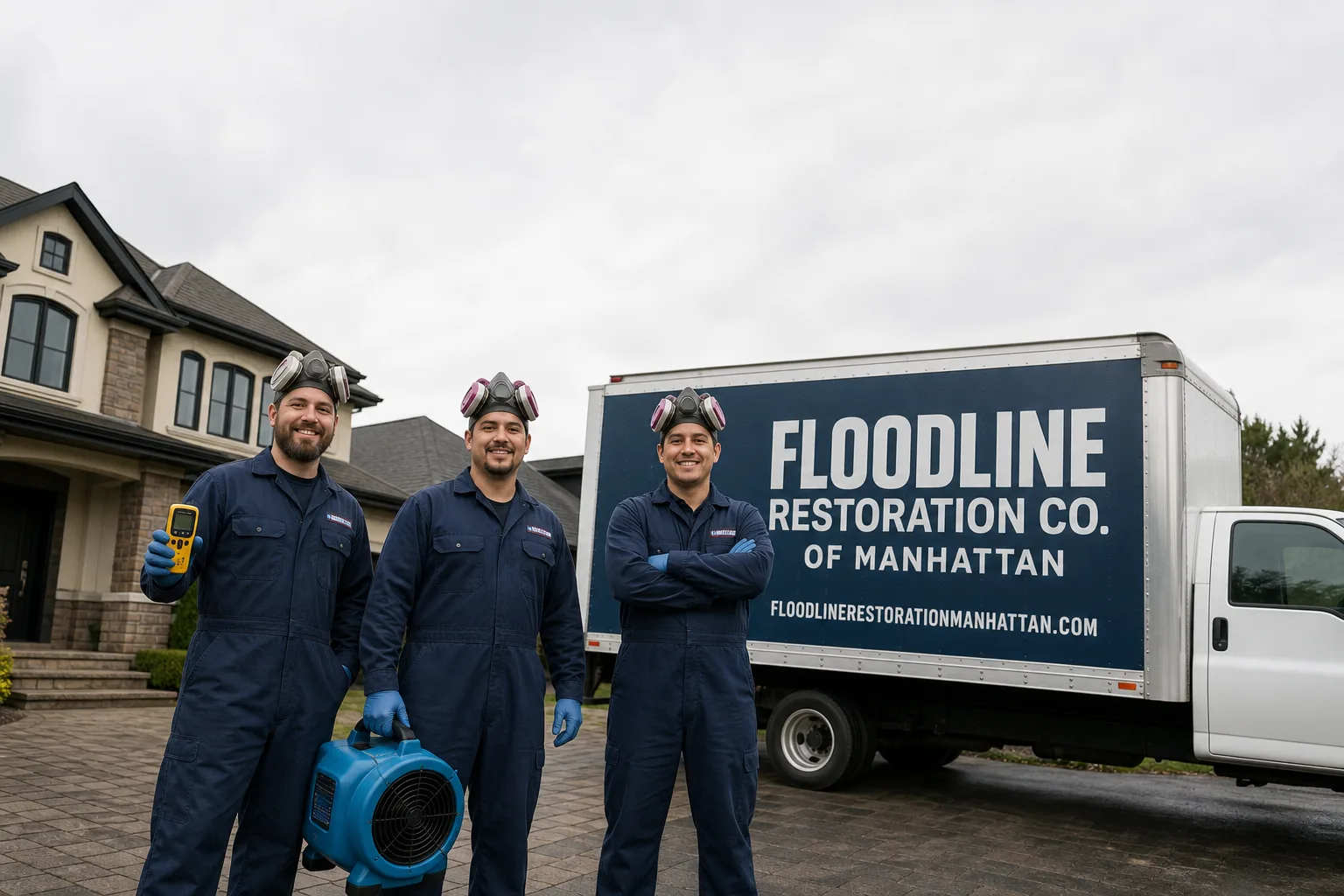
Free visual inspection and a written scope of work before any mitigation begins - photos, moisture readings, and drying logs go in your claim file
The scope we write is the scope we bill. Anything new gets shown to you, in writing, before we touch it.






 Before
 After
After Before
 After
After Before
 After
After24/7 Emergency Fire & Smoke Damage Restoration in Yorktown Heights
A fire in a Yorktown Heights home is a compounding emergency. The smoke has already moved through the ductwork, into closets, behind paneling, up into the attic before the trucks roll away. Smoke residue becomes more corrosive by the hour, synthetic materials off-gas, and the water used to knock down the fire is now soaking into drywall and subfloor. The clock starts before the fire’s fully out. We answer live, around the clock, and can have a crew to your home in the Yorktown Heights area within about 45 minutes. Call (917) 924-4221 for a free visual inspection and a written scope before any work begins.
What most homeowners don’t realize is that the first hour dictates how much of your contents can be saved, how far the odor travels, and whether you end up replacing drywall or just cleaning it. Soot chemistry varies by what burned: greasy kitchen fires produce a protein soot that barely oxidizes, while synthetic carpets and vinyl windows produce a sulfated lignite residue that etches metal fixtures and appliances within days. The faster we get air scrubbers running and acids neutralized, the more of your home we preserve instead of replacing.
Understanding Fire & Smoke Damage Restoration Severity in Yorktown Heights Properties
Fire damage leaves behind three separate problems that each need targeted treatment: structural charring, smoke residue and soot migration, and the water damage from suppression. Soot itself comes in a few forms that behave very differently in a Yorktown Heights raised ranch or split-level. Wet smoke from a smoldering fire is oily, sticky, and clings to every painted surface. Dry smoke from a fast-burning furnace or chimney fire is powdery and fine enough to work into wall cavities and electrical outlets. Protein smoke, common to kitchen fires, is nearly invisible but coats sealers, lacquers, and cabinet hardware with a residue that causes permanent discoloration if it lacks immediate chemical neutralization.
Yorktown Heights brings one more variable into every fire we handle: the roofline. The hamlet’s 600 to 800 feet of elevation and northern Westchester ice patterns mean a fire in January often happens in a house that already has ice loading on the ridge. The same run of roof that channels smoke into the attic can be compromised by ice expansion at the truss plates, so our structural assessment always pairs thermal imaging of the roof deck with the smoke inspection. A home on a wooded lot gains protection from wind but also carries more fuel load and more potential for combustible clearance issues at the tree line. We read both the burn and the building.
Why Yorktown Heights Property Owners Choose Floodline Restoration Co. of Manhattan
- 45-minute response commitment: Live dispatch sends a Yorktown-area crew immediately; emergency board-up and tarping starts the same visit before the fire department clears the scene.
- 24/7 live answer: A real person picks up at two in the morning. You never leave a message on a fire call, and the dispatcher stays on the line while the crew is routed. Call (917) 924-4221.
- IICRC-certified crews: Our technicians hold FSRT fire and smoke restoration certification, with additional training in odor control and contents cleaning protocols.
- Free visual inspection: A certified tech walks the property with you, explains what’s recoverable and what’s not, and leaves you with a written line-item scope before you approve anything.
- Direct insurance billing: We coordinate with your adjuster from the first hour, submit photos and moisture logs, and bill the carrier directly so you’re not out of pocket up front.
- One team, whole job: From emergency board-up to final trim paint, the same uniformed, background-checked crew handles every phase. No handoff, no inherited subcontractors.
Our Fire & Smoke Damage Restoration Process
Inspection & Assessment
We map the full burn path with thermal imaging and hygrometers, checking not only the fire room but where smoke traveled: wall cavities, joist bays, duct runs. In a Yorktown Heights colonial, that often means tracing from the kitchen up an open stairwell into all three upper bedrooms and the attic storage.
Emergency Stabilization
Board-up and tarping happen before containment. We secure openings against the weather, address any roofing punctured by the fire or fire department ventilation cuts, and shore anything structurally unstable. On ice-storm season calls, we also clear the gutters and ridge so the tarp won’t fail.
Water Extraction & Drying
Suppression water is extracted with truck-mounted units, then we set Dri-Eaz air movers and Phoenix dehumidifiers. Moisture readings are taken daily and logged until framing and subfloor hit the dry standard. That log goes to you and your carrier.
Cleaning & Sanitization
Soot is dry-sponged where possible, then HEPA-vacuumed. Surfaces get chemical neutralization specific to the soot type; we don’t use a one-spray-fits-all approach. HVAC supply and return grills, fan blades, and boots get scoped and inspected.
Smoke & Odor Treatment
Odor is a contaminant, not a smell. We set up negative air with HEPA air scrubbers in containment, run thermal fogging where appropriate, and treat porous materials with a hydroxyl or ozone process depending on occupancy. In paneled 1960s and 1970s Yorktown homes, we often open panel cavities and fog behind them; surface spraying won’t reach what the smoke reached.
Repairs & Restoration
The same crew rebuilds. Drywall, insulation, trim, paint, flooring, framing repair, roofing if fire or ventilation cuts compromised the deck. We pull permits where Yorktown’s code requires it and hand you the final scope with the 90-Day Done Right Promise in writing.
Need Emergency Fire & Smoke Damage Restoration in Yorktown Heights Now?
Crews minutes away, answering live 24 hours a day. The sooner we start, the less it costs.
Working With Your Insurance Company
Fire claims are the biggest check most homeowners will ever see from their carrier, and the documentation decides what gets covered. The first-hour record matters: what burned, what it was, what condition it was in before, what protection was in place. We document every room, every surface, every contents item before anything gets moved or cleaned. Our project managers speak insurance and deal with the adjuster directly, line by line, using industry-standard estimating software your carrier already recognizes. You stay out of the middle. We submit daily drying logs, photo logs, and our moisture map, then bill the carrier directly. What we provide your insurer:
What We Provide Your Insurer
- Thorough documentation of the loss from the first hour
- Photos of all damage, room by room, before mitigation begins
- Moisture readings, drying logs, and equipment placement records
- A detailed, line-item scope of work with trade-specific categories
- Direct, ongoing coordination with your assigned adjuster
Built for Yorktown Heights’s Loss Calendar
January and February are the cruelest months in Yorktown Heights, and the fire risk tracks the ice risk. Ice accumulates on the low-pitch roofs of mid-century ranch houses, gutters freeze solid, and ice dams lift shingles and force water into the soffit and wall cavities. When a chimney fire or furnace malfunction happens during one of those stretches, we are not working on a dry house. The suppression water freezes in the gutters, the roof deck is slick, and the same ridge vent that let smoke into the attic is now an inlet for meltwater.
Spring brings snowmelt and the first of the basement water events, many of which go unnoticed until a homeowner smells something burning from an overworked sump pump and calls us. Summer thunderstorm season can knock branches through power lines and start transformer fires or cause surge damage to appliances, leaving a charred smell from burned motor windings. Autumn is cleaner, but we still see chimney fires as homeowners fire up a fireplace after a long summer and discover the flue has creosote buildup or an animal nest. Our Yorktown crews keep a weather eye on the ten-day forecast, and we stock extra sheeting and tarps from October through April.
Fire & Smoke Damage Restoration Across Yorktown Heights’s Neighborhoods
Yorktown Heights spreads across a large, hilly area, and the neighborhoods each carry their own fire restoration profile. The homes east of Underhill Avenue, many on tall, wooded lots near Sylvan Drive and Niles Road, tend to be sprawling raised ranches with long drives and detached garages. Fires here often mean contents spread across a garage, a deep basement workshop, and a walkout lower level, and smoke migrates along the beams from one end to the other. We’ve worked homes in this corridor where smoke from a basement laundry fire rode the joist bays and surfaced in the upper-floor closets, thirty feet from the source.
North of Route 129 and toward Crompond Road, the stock shifts toward split-level and colonial homes from the 1970s and 1980s. These houses have more finished interior framing per square foot, more hollow wall cavity space, and more recessed can lights that pull air and smoke up into the attic. Closer to the hamlet center near East Main Street and Kear Street, we see older homes with plaster walls rather than drywall. Plaster holds smoke differently. It’s less absorbent but the cracks and gaps around windows and baseboards let soot into places a drywall home would not. Near the reservoir and Teatown Lake Reservation land, homes face a different pressure: they sit inside the Croton Watershed, and every fire job includes a compliance layer that never appears on a restoration invoice but governs how we handle wash water, biocides, and everything that leaves the property.
Specialized Fire & Smoke Damage Restoration Services We Offer in Yorktown Heights
Emergency Board-Up & Tarping
In Yorktown Heights, after a chimney or attic fire, the roofline is often already compromised by ice load or fallen limbs. Board-up goes up fast, but it goes up right: we sheathe all openings, run a ridge-to-drip tarp when the decking is compromised, and make sure the tarp will hold through the next ice storm rather than peeling off at 3 a.m. Same-visit service, every time.
Smoke & Soot Removal
Soot in a Yorktown home is never just on the surfaces you can see. It’s inside the original ductwork of a 1970s colonial, behind the heavy wood paneling, in the gaps around baseboard radiators. We remove it mechanically first (dry sponges, HEPA vacuums, agitation), then chemically neutralize the residue based on the soot type. The goal is recovery, not replacement, wherever the material allows.
Odor Removal & Deodorization
Smoke odor is a physical contaminant, and it doesn’t leave on its own. We set up containment and negative air pressure with HEPA scrubbers, then treat affected areas with graduated methods from thermal fogging to hydroxyl generation. In Yorktown Heights’s raised ranches with original ductwork, we scope and clean the HVAC return and supply runs, because the ductwork distributes odor to every room even after the fire room is clean.
Contents Cleaning & Pack-Out
Yorktown homeowners keep more than people think, especially on homes with full basements, detached garages, and storage built into every spare corner of a raised ranch. We inventory everything, document it for the carrier, and pack out the salvageable contents to our cleaning facility. This is the sub-service that makes or breaks a claim: if we miss a box of garments in a basement closet, the odor travels back the week after reconstruction. We inspect every bay, every cabinet, every crawl space.
What happens when you call
- 1
A real person answersNo phone trees - you reach a local pro.
- 2
You get an upfront price rangeHonest numbers before anyone is dispatched.
- 3
A background-checked tech heads outLicensed & insured, dispatched right away.
- 4
You approve before work beginsNothing starts until you say go.
Fire & Smoke Damage Restoration Costs in Yorktown Heights, NY
What you actually pay for fire and smoke restoration in Yorktown Heights depends on how much of the house the smoke found. A contained kitchen fire with light smoke throughout a ranch home, needing HEPA scrubbing, soot removal, paint, and some cabinet replacement, typically runs $8,000 to $18,000 in this market. A chimney fire that sends smoke through the full length of a colonial, requires attic insulation replacement and odor treatment behind paneling, will usually fall between $18,000 and $40,000. Board-up and tarping, the first call after a fire, runs $1,500 to $3,500 depending on roof complexity and the amount of sheathing the fire department cut. Contents pack-out and cleaning starts around $2,500 for a single room and rises with volume. If the fire involved an attached garage with workshop contents, add $5,000 to $15,000 depending on what’s in there.
Most of this is insurance-covered damage, and we bill the carrier directly. The free visual inspection gets you a written scope with those numbers before you sign anything. Call (917) 924-4221 to schedule it.
We Also Serve Cities Near Yorktown Heights
Our crews respond to fire and smoke damage throughout upper Westchester. We regularly work in Shrub Oak, Shenorock, Crompond, and Katonah, running the same watershed-compliant, ice-aware restoration process. If you’re in one of those communities and need help, call (917) 924-4221.
Working Inside the Croton Watershed
Yorktown Heights sits inside the Croton Watershed protection zone, the drinking water system serving New York City. That means every fire & smoke restoration job here must follow NYC DEP watershed rules on wash water discharge and biocide use; a compliance hurdle crews 15 miles south in White Plains simply don’t face. When we clean soot from siding or decking, the rinse water cannot simply run into the yard. It has to be contained, captured, and disposed of properly. Biocides used for sanitizing after a kitchen fire must be selected for watershed compatibility. It’s real overhead, it matters for your drinking water and your legal exposure, and it’s work that crews outside the watershed often skip.
We responded to a late-night chimney fire off Underhill Avenue where the roofline ice load had pulled a section of truss into the attic, forcing us to run emergency board-up and tarping before any smoke work could begin. Our crew set up containment and negative air on the split-level’s upper floor, then used Dri-Eaz air movers and a Phoenix dehumidifier to drop moisture readings to pre-loss condition after the fire department’s water extraction. Because the home is on a wooded, sloped lot, we also mapped the driveway’s drainage to keep our wash water from flowing toward a storm culvert that feeds the watershed. That’s the standard for every job here, not just the big ones.
Yorktown Heights Fire & Smoke Damage Restoration Questions, Answered
Does fire damage restoration in Yorktown Heights have to follow extra rules because of the Croton Watershed?
Yes. Yorktown Heights sits inside the Croton Watershed protection zone, so restoration contractors must comply with NYC DEP watershed regulations governing discharge of wash water and use of biocidal chemicals. Any rinse water from soot or chemical cleaning must be contained, not allowed to run into the yard or storm system. We’ve built our process around it. Call (917) 924-4221 if you want to know exactly how this applies to your property.
After a winter kitchen fire, do I need to check for ice dams before smoke cleanup starts?
Yes, you should. In Yorktown Heights’s elevation and ice belt, a winter fire often starts in a house that already has ice loading on the ridge and gutter lines. If the ice dam isn’t addressed, the same roof that let smoke into the attic keeps feeding meltwater back into the dried framing. Our assessment includes a thermal scan of the roofline so we fix both problems together.
What’s the best way to handle smoke odor in a 1970s raised ranch with heavy paneling and original ductwork?
You have to treat the panel cavities and the ductwork, not just the room surfaces. Smoke travels along the joist bays behind the paneling and circulates through the original HVAC runs. We open panel cavities where needed, fog behind them, clean the ducts and boots, and run air scrubbers under negative pressure. Spraying the panel faces alone won’t do it.
Can I stay home during fire and smoke restoration if my house is on a wooded lot near Teatown Lake Reservation?
It depends on the extent of the damage and which treatment methods we need to run. For light soot and odor work in a contained area, you can often stay. For full-scale pack-out, ozone treatment, or structural work, the house is better left unoccupied. We’ll tell you plainly after the first inspection, and we’ll give you the timeline in writing.
How fast can you get emergency board-up to a Yorktown Heights home after a chimney fire?
We answer live around the clock and dispatch from within the area, so a board-up crew can typically be at your door within 45 minutes of your call. Same visit as the inspection, unless the fire department still has the scene. Call (917) 924-4221 and a dispatcher stays on the line while the truck rolls.
How long does fire and smoke restoration take on a typical Yorktown Heights ranch?
Mitigation, meaning emergency board-up, water extraction, and structural drying, runs three to five days. Full contents cleaning and smoke work across a raised ranch typically adds one to two weeks. Structural repairs and rebuild depend on the burn, but a kitchen fire with smoke throughout the house usually lands around four to six weeks total. Your scope gives you dates.
Is the fire damage restoration work in Yorktown Heights more expensive than in southern Westchester?
Slightly, because the requirements are broader. Watershed compliance adds overhead, ice-dam inspection adds a structural variable, and the large, wooded lots mean more distance between the truck and the house. But the largest cost factor is always the smoke footprint. Same house, same fire, in White Plains and in Yorktown, will price within a reasonable band. Call (917) 924-4221 for a free scope on your specific home.
What should I do in the first 30 minutes after a fire in Yorktown Heights?
Get everyone out and don’t re-enter until the fire department clears it. Do not wipe soot off any surface. Wiping smears protein and oil-based soot into the paint and makes recovery harder. Do not run the HVAC system if the fire was structural. Then call us at (917) 924-4221. The faster our air scrubbers are running and our board-up is up, the less the smoke spreads and the fewer contents you lose.
Serving Yorktown Heights, NY - Our Local Coverage Area
We’re based in the Yorktown Heights area and know this community well. Use the map below to see our service coverage - if you’re nearby, we can almost certainly help.
Call Floodline Restoration Co. of Manhattan for Fire & Smoke Damage Restoration in Yorktown Heights
If your Yorktown Heights home has had a fire, the smoke is already working against you. Call (917) 924-4221 at any hour. A live dispatcher answers, a certified crew is dispatched to your address, and the full process, board-up to final trim, is handled by the same team, backed by the 90-Day Done Right Promise in writing. Proudly serving Yorktown Heights with watershed-compliant, ice-aware fire restoration for over 42 years, led by Curt Bowman and a team that answers the phone with a person, not a recording.
Written by Curt Bowman, Owner at Floodline Restoration Co. of Manhattan.