
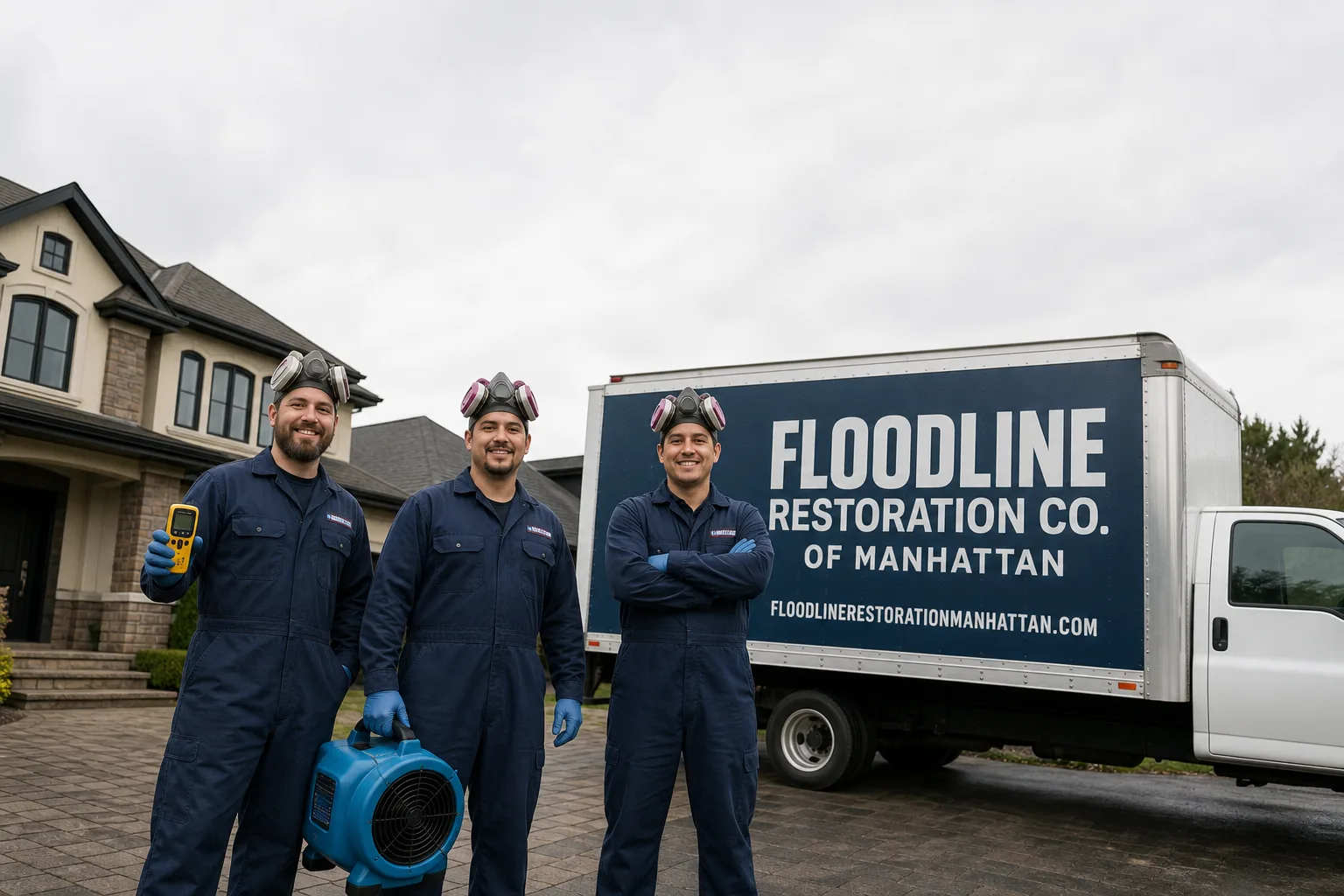
Free visual inspection and a written scope of work before any mitigation begins - photos, moisture readings, and drying logs go in your claim file
The scope we write is the scope we bill. Anything new gets shown to you, in writing, before we touch it.






 Before
 After
After Before
 After
After Before
 After
After24/7 Emergency Mold Remediation in Crown Heights
Mold remediation in Crown Heights typically runs $1,800-$6,500 depending on how far the growth has spread through a rowhouse’s original plaster and lath, and whether containment must extend into attached neighboring properties. Our crews reach most Crown Heights addresses within 45 minutes of your call to (917) 924-4221, and the first visual assessment is free. When you see water staining on a horsehair-plaster ceiling or smell that musty odor in a garden-level apartment, time matters more than most homeowners realize. In attached brick rowhouses, mold doesn’t stay put. It moves through shared wall cavities, follows moisture behind plaster, and colonizes wood framing before you ever see a speck on your side of the wall.
We answer the phone live, 24 hours a day. Not a recording, not a callback service, not a national call center. A dispatcher who knows Crown Heights and can send a certified crew from the New York City office to your block. If you’re standing in a wet basement on St. Johns Place at 2 a.m., you’ll talk to a person who can put a truck in motion. That’s how we’ve operated since Curt Bowman founded Floodline Restoration Co. in 2010, and it’s not changing.
Understanding Mold Remediation Severity in Crown Heights Properties
Not every mold job is an emergency, but in Crown Heights the building stock makes severity harder to judge from what’s visible. The neighborhood’s 1890s-1920s attached brick rowhouses share something that detached homes don’t: rubble-stone party-wall foundations with original lime mortar. That mortar wicks moisture laterally. When one basement floods or one flat-roof membrane fails, the damp doesn’t respect the property line. It bleeds into the wall cavities of the two or three attached houses beside it. A mold problem that looks contained to one garden-level apartment on Lincoln Place is frequently already established inside the neighboring building’s stud bays.
We classify remediation work by the extent of fungal growth, the moisture source, and the building materials involved. Level one covers localized surface growth on non-porous materials, under roughly 10 square feet, with a known and stopped water source. Level two involves porous materials like original plaster, lath, or wood framing over a larger area, requiring full containment and HEPA air scrubbing. Level three means the mold has spread behind walls or into structural cavities, which is the pattern we see most often in Crown Heights rowhouses with unpermitted plumbing runs and cast-iron drain stacks that have been slowly weeping for years. At that level, remediation means opening walls, removing saturated material, treating the structure, and verifying with post-clearance testing. Skipping containment at any level on a party-wall building is how you get a callback three months later.
Why Crown Heights Property Owners Choose Floodline Restoration Co. of Manhattan
- 45-minute response commitment across Crown Heights. Our dispatch board tracks crews by location, and we commit to having someone at your door within 45 minutes for emergency calls. Live dispatch means no sitting on hold while water keeps climbing.
- 24/7 live answer, always a person. Call (917) 924-4221 at any hour and a real dispatcher picks up. Curt Bowman built this company around a dispatch board, not a sales desk. That was true in 2010 and it’s true tonight.
- IICRC-certified crews trained to AMRT and WRT standards. Mold remediation and water damage restoration certifications are specific. Our technicians carry the Applied Microbial Remediation Technician and Water Restoration Technician credentials, plus RIA and IFA training.
- Free visual inspection with a written scope. We assess what’s visible, map moisture where it’s hidden, and give you a line-item scope before any work starts. No open-ended “we’ll see when we open the wall” pricing.
- Direct insurance billing and adjuster coordination. We document from the first hour, bill your carrier directly, and talk to the adjuster so you don’t have to translate moisture maps into insurance language.
- One crew from containment to rebuild. The same background-checked, uniformed technicians who set the containment and run the HEPA scrubbers are the ones who rebuild the wall. No handoff to a third-party contractor who never saw the moisture map.
Our Mold Remediation Process
Inspection & Assessment
We start with a visual inspection and moisture mapping using thermal imaging and hygrometers. In Crown Heights rowhouses, this always includes checking the party-wall cavities on both sides of the affected unit. If the neighbor’s basement is wet, that changes the entire scope.
Containment & Stabilization
Full containment with 6-mil poly sheeting and negative air pressure, with HEPA air scrubbers running before any contaminated material is disturbed. For attached rowhouses, containment often extends into adjacent stairwells and shared entryways to prevent cross-contamination while we work.
Drying & Dehumidification
We deploy Dri-Eaz LGR dehumidifiers and XPOWER air movers sized to the cubic footage of the affected space. Daily moisture readings are logged until the dry standard is met, and the homeowner and carrier both get that log. On rubble-stone foundations, drying takes longer because the walls keep giving up moisture.
Removal & Sanitization
Contaminated plaster, lath, and insulation are removed under containment. The exposed structure is HEPA-vacuumed and treated with an EPA-registered antimicrobial. Cast-iron stacks and original framing get specific attention, because they hold moisture and spores in ways modern materials don’t.
Moisture & Humidity Control
This is the step that matters in Crown Heights. We identify the ongoing moisture source whether that’s a flat-roof membrane breach, a weeping drain stack, or lateral wicking from the attached neighbor and address it. Without this, mold returns. That’s the reason we emphasize Moisture & Humidity Control on every job.
Repairs & Restoration
The same crew rebuilds the affected area to pre-loss condition, including new plaster or drywall, paint, and trim. We don’t hand the job off to a restoration subcontractor who never saw the wet structure. The 90-Day Done Right Promise covers the entire scope, in writing.
Need Emergency Mold Remediation in Crown Heights Now?
Crews minutes away, answering live 24 hours a day. The sooner we start, the less it costs.
Working With Your Insurance Company
Mold claims in Crown Heights are rarely straightforward, because the shared rowhouse construction means two or three policies can be involved in what looks like a single loss. We handle that. Our team documents the loss from the first hour, with photos of every affected room, moisture readings, and drying logs that show exactly what was wet, how wet it was, and when it reached dry standard. We write a line-item scope in the format carriers expect, and we talk to your adjuster directly. You don’t play messenger between us and your insurance company, and you never have to argue with a paper trail you didn’t create. If the mold originated from a covered water loss, like a flat-roof failure or a burst pipe, the remediation is often covered. We’ll tell you straight before any work starts what we think your carrier will accept, and we bill them directly whenever they’re on the hook.
What We Provide Your Insurer
- Thorough documentation of the loss
- Photos of all damage, room by room
- Moisture readings and drying logs
- A detailed, line-item scope of work
- Direct coordination with your carrier
Built for Crown Heights’s Loss Calendar
Crown Heights mold calls follow the weather, and the weather here is unkind to old brick. January and February bring deep freezes that crack aging supply lines and push water through already-failing mortar joints. Every late winter, our dispatch board lights up with ceiling collapses on original horsehair-plaster and lath, because the flat built-up roofs over these rowhouses have been patched too many times. Spring means nor’easters and freeze-thaw cycling, which tear open roof membranes and drive water through the same walls that got wet in January. Summer brings cloudbursts that overwhelm Brooklyn’s combined sewer system, sending Category 3 sewage into garden-level and basement apartments on blocks from Nostrand to Utica. And fall is when homeowners finally notice the mold that’s been growing behind the walls since March. The pattern doesn’t change much year to year. What changes is how much damage you prevent by calling (917) 924-4221 the first time you smell must or see a water stain.
Mold Remediation Across Crown Heights’s Neighborhoods
Crown Heights runs from Washington Avenue to Ralph Avenue, and the building stock changes block to block, but the mold patterns hold consistent. Around St. Johns Place and Kingston Avenue, the rowhouses are dense attached brick with shared parapets, and one failed roof membrane will send water through three connected attics before anyone notices the stain on a top-floor ceiling. On Eastern Parkway, the grander facades hide the same original cast-iron drain stacks, and we regularly find wall-cavity mold behind unrenovated plaster in buildings where the exterior looks flawless. The Nostrand Avenue corridor has a high concentration of garden-level rentals, and those below-grade units catch every sewage backup and every summer cloudburst. Up toward Franklin Avenue, the block associations are active and the buildings vary more, but the shared party-wall foundations don’t care how well-maintained the facade is. And in the blocks around Prospect Place and Bedford Avenue, where the rowhouses run deep and narrow, moisture travels from the cellar to the parlor floor faster than most owners expect. The zip codes 11213, 11216, and 11225 cover most of these blocks, and we work all of them.
Specialized Mold Remediation Services We Offer in Crown Heights
Mold Inspection & Testing
Most Crown Heights homeowners call us because they smell something or saw a stain, not because they know where the mold is. Our inspection starts with a moisture map of the affected room and the party walls on both sides, because the source is often behind a wall that looks dry. We can collect air and surface samples for third-party lab analysis when a landlord, co-op board, or insurance carrier requires documentation. The written report is yours to keep, and it tells you exactly what we found, where we found it, and what we’d do next.
Containment & Air Quality Restoration
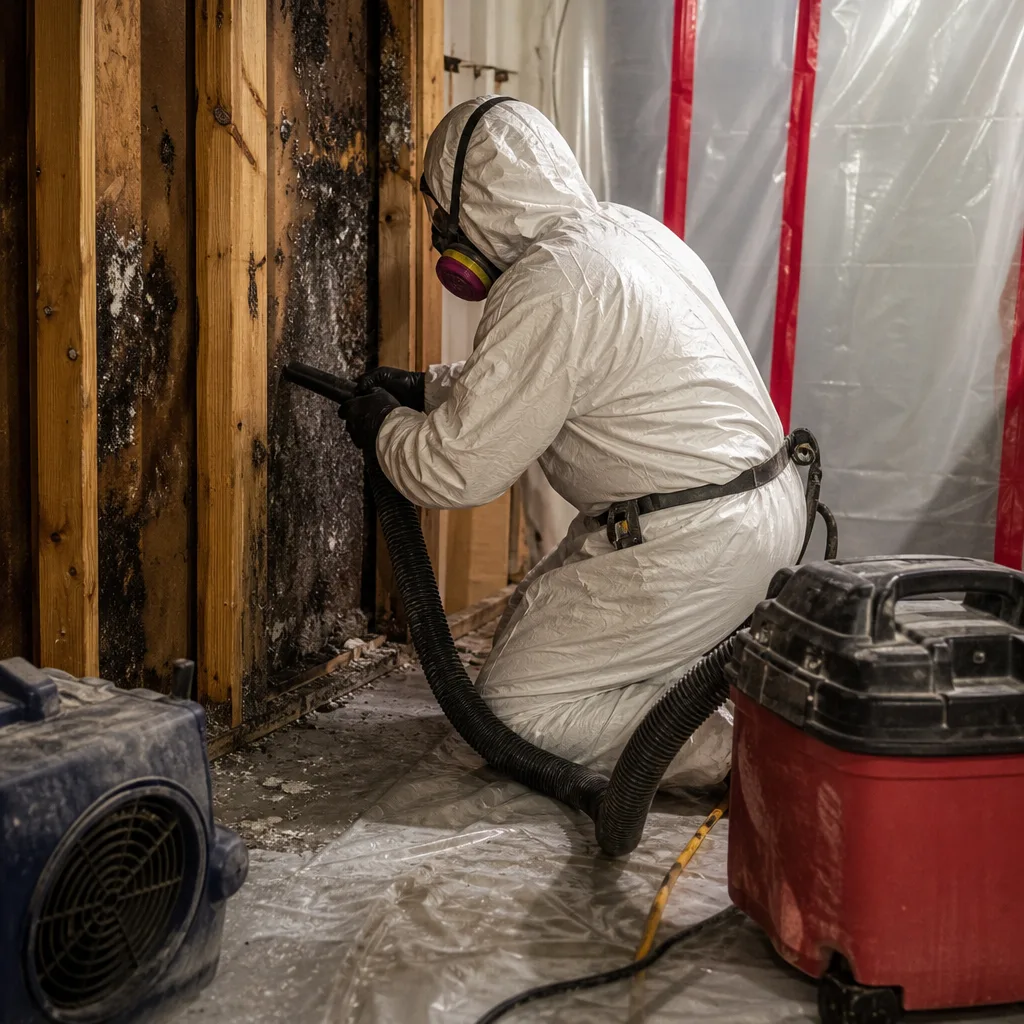
In attached Crown Heights rowhouses, air quality in one unit is tied to air quality in the units on either side. We run HEPA air scrubbers under full containment during every open-wall mold job, and we check the shared stairwells and entry halls for spore migration before we break containment. The goal isn’t just to clean the affected room. It’s to make sure the air you’re breathing a week after we leave is measurably cleaner than the air we found.
Mold Removal
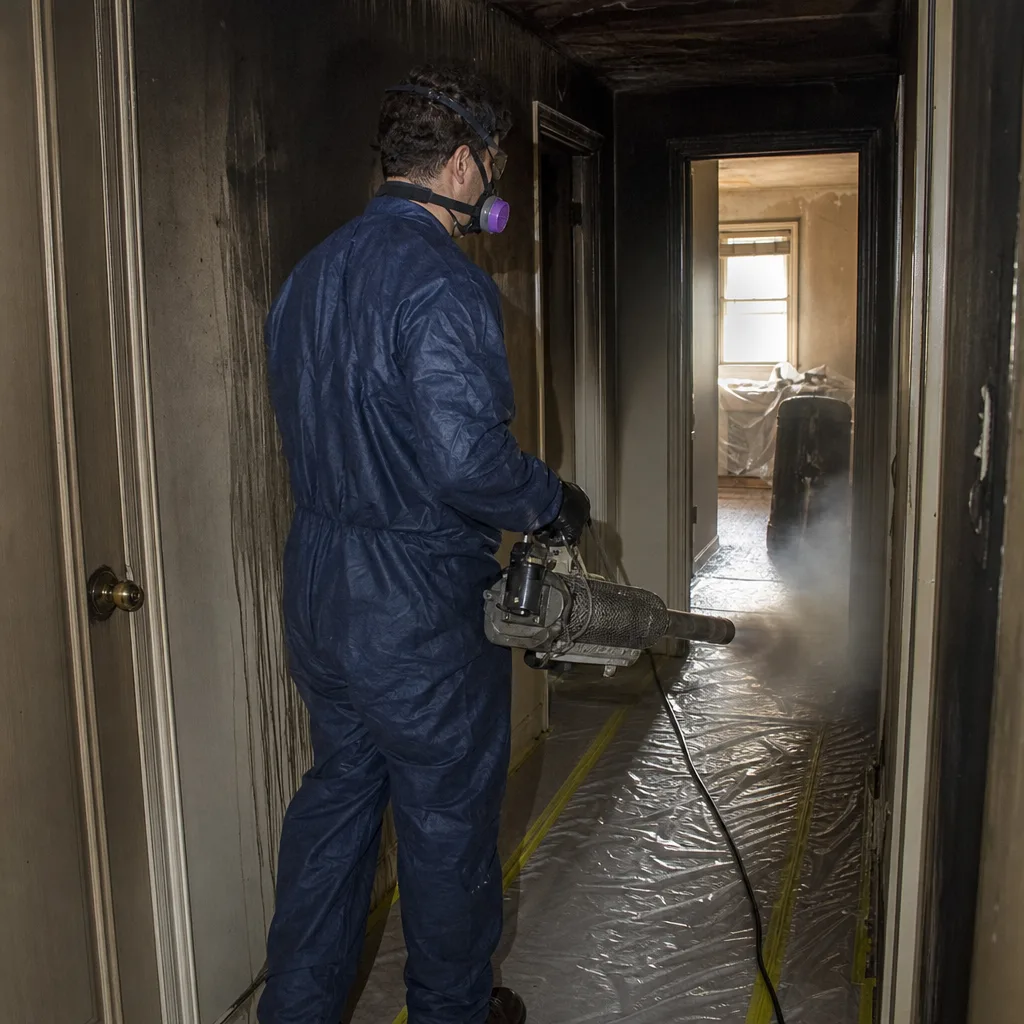
Removal in a rowhouse means removing the colonized material, not just spraying bleach on the surface. Horsehair plaster and original lath hold spores deep in the fibers, and painting over them just gives the mold a fresh food source the next time humidity climbs. We cut out affected plaster and lath, HEPA-vacuum the framing, and treat the exposed masonry with an EPA-registered antimicrobial. This is the step that separates a done-right job from a repaint-and-hope job.
Black Mold Remediation
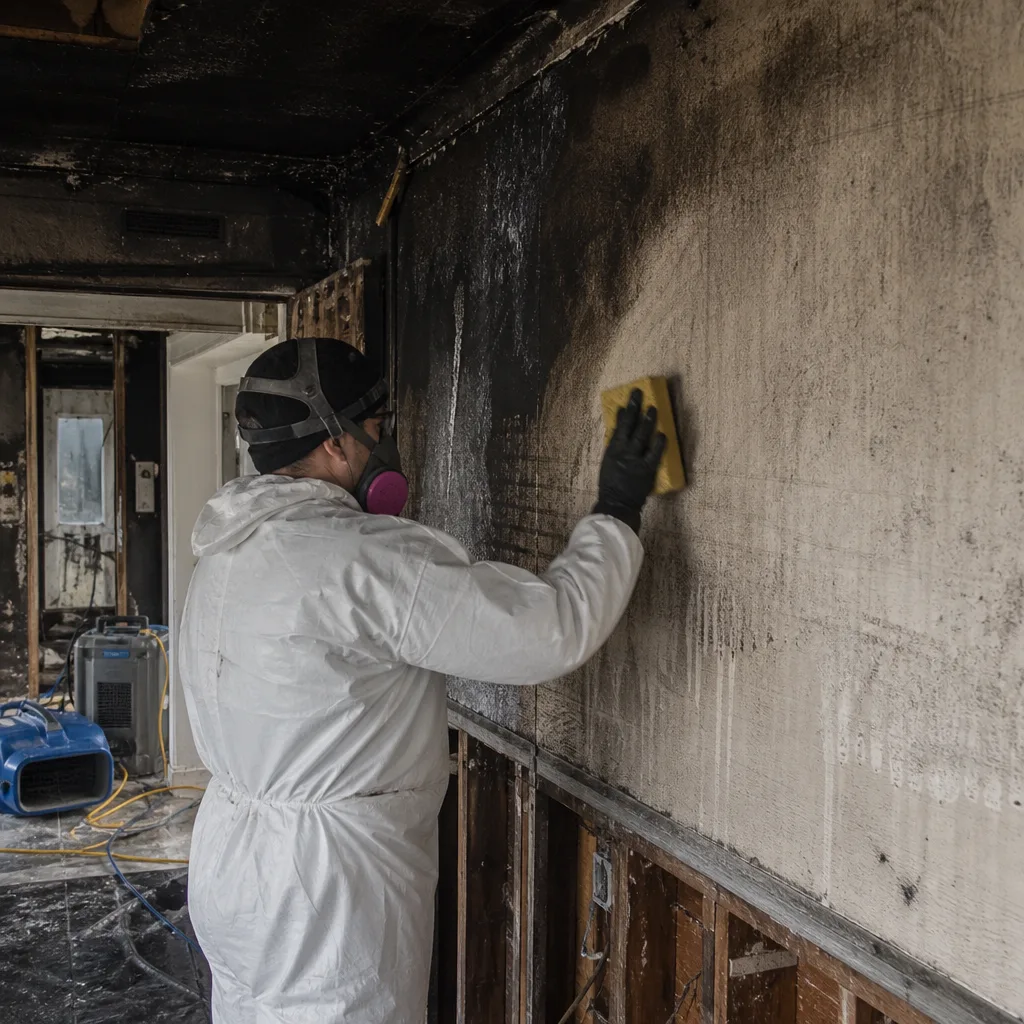
What homeowners call black mold is usually Stachybotrys chartarum, and it grows in the Crown Heights conditions that never dry: garden-level walls fed by weeping drain stacks, cellar joists under leaking tubs, the back side of attic sheathing under a flat roof that’s been patched since the 1990s. The remediation approach is the same as any porous-surface mold job, but the containment standards matter more, and post-remediation clearance testing is non-negotiable. We treat black mold with full containment, HEPA filtration, and verification before anyone moves back into the room.
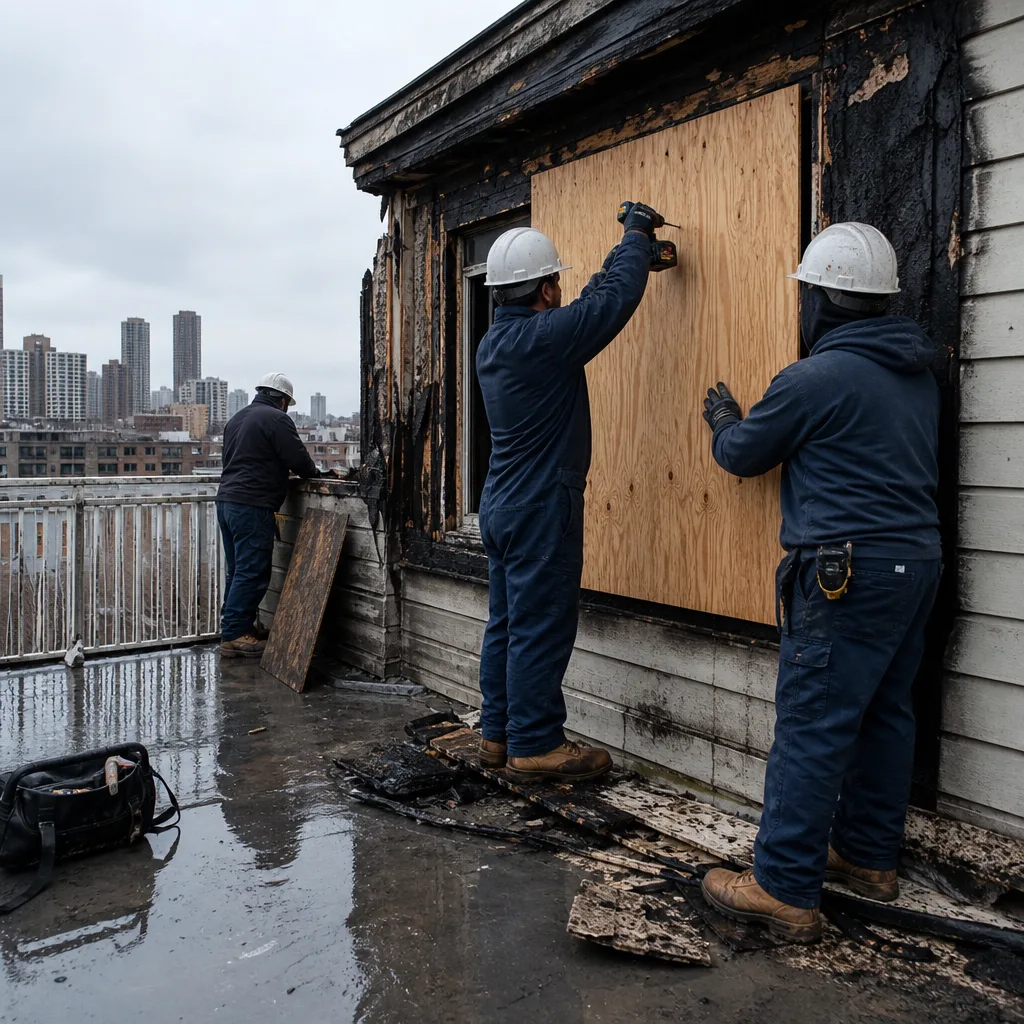
Crawl Space Treatment
Some older Crown Heights buildings have shallow crawl spaces under the rear extension, and they’re almost always damp. Open earth, no vapor barrier, no cross-ventilation, and years of cast-iron pipe condensation. We dry the space, remove the colonized insulation, treat the exposed joists and subfloor, and install a vapor barrier where the structure allows. For garden-level apartments that sit over a crawl space, this is often the difference between a mold problem that’s solved and one that returns every August.
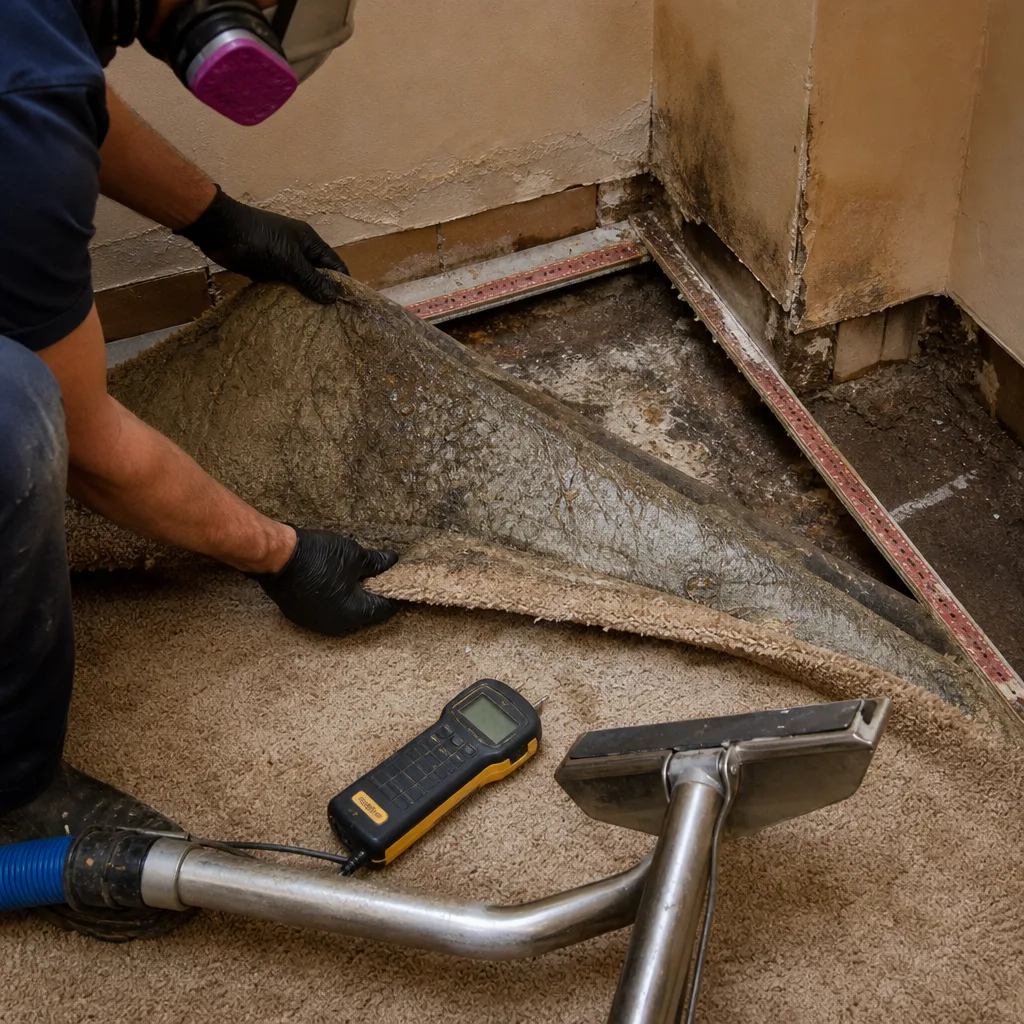
Moisture & Humidity Control
This is the service that matters most in Crown Heights’s attached rowhouses. Mold is a moisture problem before it’s a mold problem, and the moisture here comes from shared foundations, aging drain stacks, flat-roof failures, and a sewer system that backs up every summer. We identify the active moisture source, dry the structure to standard, and then give you a humidity control plan, which may mean a dehumidifier sized to the basement, a crawl space vapor barrier, or a conversation with your neighbor about their leaking roof. Without this step, even the best mold removal in Crown Heights is temporary.
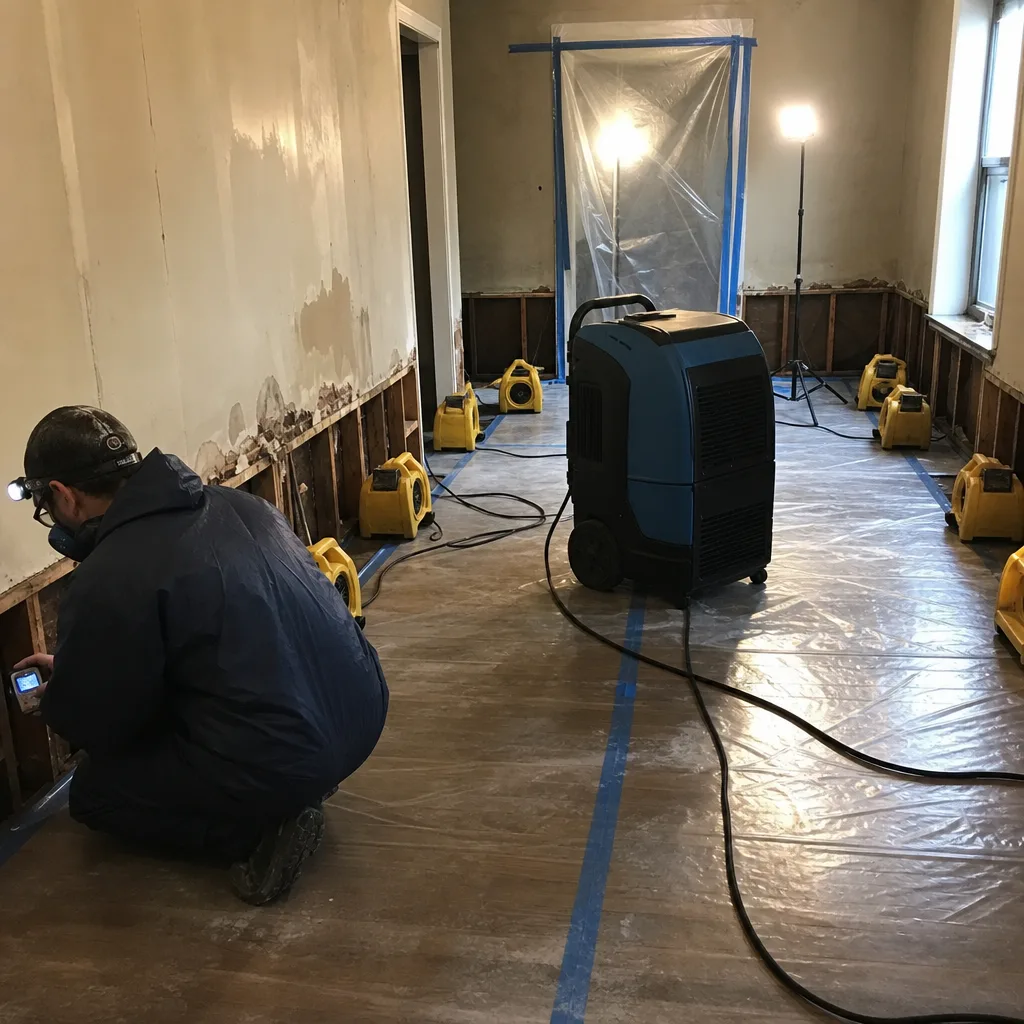
What happens when you call
- 1
A real person answersNo phone trees - you reach a local pro.
- 2
You get an upfront price rangeHonest numbers before anyone is dispatched.
- 3
A background-checked tech heads outLicensed & insured, dispatched right away.
- 4
You approve before work beginsNothing starts until you say go.
Mold Remediation Costs in Crown Heights, NY
Crown Heights pricing is shaped by the rowhouse construction and the shared-wall problem. A small, localized mold job in a single bathroom, where the water source is already fixed, typically runs $1,800-$3,200. A mid-sized garden-level or basement remediation with full containment, including removal of saturated plaster and lath across one room, usually lands between $3,500-$6,500. Full-scale remediation that requires opening multiple rooms, treating party-wall cavities, and rebuilding original plaster ceilings can run $7,000-$15,000 or more, depending on how far the mold traveled and what the insurance carrier approves. What moves the price is the square footage of affected porous material, whether we have to contain attached neighboring units, and whether the moisture source is still active. The free visual inspection we offer includes a written line-item scope, so you’ll know the number before anything is opened. Call (917) 924-4221 and we’ll tell you straight what you’re looking at.
Mold Remediation in Crown Heights
We’ve worked Crown Heights blocks from the park to Ralph Avenue, and the jobs that stick with us are the ones where a small leak became a big mold problem because nobody connected the dots. Our crew responded to a garden-level apartment on St. Johns Place after a spring nor’easter pushed water through a failed flat-roof membrane on the attached rowhouse above. Using Dri-Eaz LGR dehumidifiers and XPOWER air movers behind full containment, we mapped moisture across the horsehair-plaster walls and found dampness bleeding through the shared party wall into the neighboring building’s stud cavities. We opened the affected plaster, removed the saturated lath, and treated the exposed rubble-stone foundation with an EPA-registered antimicrobial before rebuilding to pre-loss condition, halting a category 2 intrusion that had already begun blooming on the original ceiling joists. That’s the standard we bring to every Mold Remediation job in this neighborhood: figure out where the water went, not just where the mold is.
When you call Floodline Restoration Co. of Manhattan for mold work in Crown Heights, you’re calling a company that’s done this here before. The Crown Heights rowhouse stock doesn’t surprise us. The 90-Day Done Right Promise is in your hands in writing, and it means what it says: if it’s not done right, we make it right. No paperwork battles, no arguing, no chasing a contractor who’s suddenly hard to reach. We stand behind it.
We Also Serve Cities Near Crown Heights
Our dispatch covers Crown Heights and the surrounding area, including Fairview, Harrison, East Bronx, and Hunts Point. If you’re nearby and you’re dealing with mold, water, or storm damage, call the same number: (917) 924-4221. Same live answer, same crew, same guarantee.
Serving Crown Heights, NY - Our Local Coverage Area
We’re based in the Crown Heights area and know this community well. Use the map below to see our service coverage - if you’re nearby, we can almost certainly help.
Crown Heights Mold Remediation Questions, Answered
Why does mold keep coming back in my Crown Heights rowhouse even after I repaint the ceiling?
Because repainting seals the mold behind the finish instead of removing it, and the moisture source keeps feeding it. In Crown Heights rowhouses, that source is usually a flat-roof membrane that’s still leaking, a cast-iron drain stack weeping inside the wall, or lateral moisture wicking from an attached neighbor’s wet basement. Until the moisture source is fixed and the colonized plaster and lath are removed, mold will regrow behind every fresh coat of paint. Call (917) 924-4221 for a free inspection and we’ll find the actual source.
Can my neighbor’s basement flood actually cause mold in my attached Crown Heights home?
Yes, and it happens more than any national remediation company would tell you. The 1890s-1920s rowhouses in Crown Heights share rubble-stone party-wall foundations with porous lime mortar. That mortar wicks water sideways. A flooded basement next door can saturate your wall cavities and start mold growth in your stud bays before you see anything on your side. If your neighbor had a flood, get your shared wall inspected.
What does the water category have to do with mold cleanup in a garden-level apartment?
The water category tells us what we’re dealing with before we touch anything. Category 1 is clean water from a supply pipe. Category 2 is gray water with some contamination, like a washing machine overflow. Category 3 is sewage, which is what floods into Crown Heights garden-level apartments when the combined sewer system backs up during summer cloudbursts. Category 3 water carries bacteria and fungi that accelerate mold growth and require different containment and sanitization protocols. The category guides the entire remediation plan.
How do I know if mold is hidden behind my Crown Heights rowhouse’s old plaster walls?
Look for water stains on ceilings, bubbling or efflorescent plaster, a persistent musty odor, or a wall that feels cool and damp to the touch. None of those prove mold is present, but they’re all signs moisture is trapped behind the plaster. The only way to confirm hidden mold in a rowhouse is with a moisture map and, if needed, a small inspection opening. Our free visual inspection includes thermal imaging and hygrometer readings that show what’s behind the wall without ripping it all open.
Can you treat mold in a Crown Heights basement without demolishing the whole room?
Often, yes. We remove only the affected plaster, lath, or drywall sections, not the entire room. The scope is driven by how far the mold actually spread, which we determine with moisture mapping before we open anything. In many Crown Heights basements, the growth is concentrated around the perimeter walls, the base of the drain stack, and the areas where the party walls meet the floor. We cut out what’s colonized, treat the exposed masonry and framing, and leave the rest in place.
How fast can someone actually get to my Crown Heights address?
We commit to a 45-minute response for emergency mold and water calls in Crown Heights. Our dispatch is live around the clock, and our crews are staged in the borough. Call (917) 924-4221 and you’ll get a dispatcher, then a crew. Not a call center that promises a callback within 48 hours.
Will my insurance cover mold remediation in Crown Heights?
It depends on the source. If the mold resulted from a covered water loss, like a sudden pipe burst or a roof failure from a named storm, remediation is typically covered. If the mold built up over years from a slow leak or chronic humidity, most carriers won’t cover it. We document everything from the first hour, bill your carrier directly when coverage applies, and tell you straight what to expect before we start. You don’t play messenger with your adjuster.
What should I do in the first 30 minutes after I find mold in my Crown Heights home?
Stop the water source if you can find it and it’s safe to do so. Shut off the supply to a leaking pipe or fixture. Don’t run fans or blow air across visible mold, because that spreads spores through the rest of the house. Don’t paint over it. Don’t try to scrub it off porous materials yourself. Call (917) 924-4221 and we’ll have a crew on the way. The first 30 minutes don’t fix the problem, but the decisions you make in them determine whether a $3,000 job becomes a $12,000 job.
If you’re dealing with mold in a Crown Heights rowhouse, garden-level apartment, or basement, call (917) 924-4221 for a free visual inspection and a straight answer. We answer live, we arrive fast, and we put the scope in writing before work starts. The line the water left is where we start.
Written by Curt Bowman, Owner at Floodline Restoration Co. of Manhattan, serving Crown Heights with 45-minute emergency response and the 90-Day Done Right Promise.