

Free visual inspection and a written scope of work before any mitigation begins - photos, moisture readings, and drying logs go in your claim file
The scope we write is the scope we bill. Anything new gets shown to you, in writing, before we touch it.






 Before
 After
After Before
 After
After Before
 After
After24/7 Emergency Mold Remediation in Grand View-on-Hudson
Mold remediation in Grand View-on-Hudson typically starts between $1,200 and $4,500 depending on containment needs and square footage, and our crews reach riverfront properties the same day you call. A live dispatcher answers (917) 924-4221 around the clock, every day of the year. If you’ve spotted dark staining on a basement wall, smelled must in a closed-up room, or noticed paint bubbling near the floor in a Grand View-on-Hudson home, the first 48 hours determine whether a contained cleanup stays contained or a hidden colony spreads behind finished walls. We send a background-checked, uniformed technician for a free visual inspection. We show up when we say, we take moisture readings where other crews don’t, and we tell you straight what you’re dealing with before any work gets approved. No pressure, no scare tactics, no upselling. Just a square deal and a written scope.
Understanding Mold Remediation Severity in Grand View-on-Hudson Properties
Mold severity breaks into three practical tiers, and Grand View-on-Hudson’s housing stock lands in the most complicated one. Tier one is surface growth: visible colonies on drywall, framing, or trim, usually under 10 square feet, with no evidence of moisture inside wall cavities. Tier two is cavity colonization: mold feeding inside finished walls, behind baseboards, or under flooring, where the moisture source isn’t visible from the room. Tier three is structural contamination: growth extending into framing, subfloor, or insulation, typically driven by a continuous water source, not a one-time leak. The late-19th and early-20th century Victorians and custom homes along River Road and the riverbank lots of Grand View-on-Hudson sit on rubble-stone and brick foundations that wick groundwater year-round. That means what looks like tier one surface mold near the baseboard is often tier two or three hiding behind the drywall. Our crews run moisture mapping before containment, because on this village’s riverfront properties, surface readings lie. We’ve opened walls that read 8% on the outside and 40% six inches in. That’s the difference between scrubbing a spot and rebuilding a wall.
Why Grand View-on-Hudson Property Owners Choose Floodline Restoration Co. of Manhattan
- 45-minute response commitment. We dispatch crews to Grand View-on-Hudson from the nearest available team, and we tell you over the phone exactly when to expect us. Every job starts with a free visual inspection.
- A real person answers, 24/7. You will never reach a recording when you call (917) 924-4221. A live dispatcher picks up at 2 a.m. the same way they do at 2 p.m., and a certified crew gets moving on that same call.
- IICRC-certified crews. Our technicians hold IICRC certifications including AMRT for mold remediation and WRT for water damage restoration. They’re background-checked, uniformed, and they leave a job site the way they’d want their own home left.
- Free visual inspection. You get a straight assessment before any work is approved. No charge, no obligation, and no pressure to commit on the spot.
- Direct insurance billing. We bill your carrier directly and handle the adjuster communication. You don’t play messenger between Floodline and the insurance company.
- One team, start to finish. The same crew that sets containment and removes colonized drywall also handles the drying, the antimicrobial treatment, and the rebuild. No mid-job handoff to a crew you’ve never met.
Our Mold Remediation Process
Inspection & Assessment
We start with moisture mapping, not just a visual once-over. On Grand View-on-Hudson properties near the Hudson, we check behind finished walls, at the base of rubble-stone foundations, and along sill plates. If testing is warranted, we sample and send to a certified lab. You get a written scope before anything is removed.
Containment & Stabilization
Full containment comes before demolition. We set negative air pressure with HEPA-filtered scrubbers, seal doorways and vents, and isolate the work zone so spores don’t migrate through the rest of the house. On riverfront homes, we also stop active water intrusion where it’s accessible.
Drying & Dehumidification
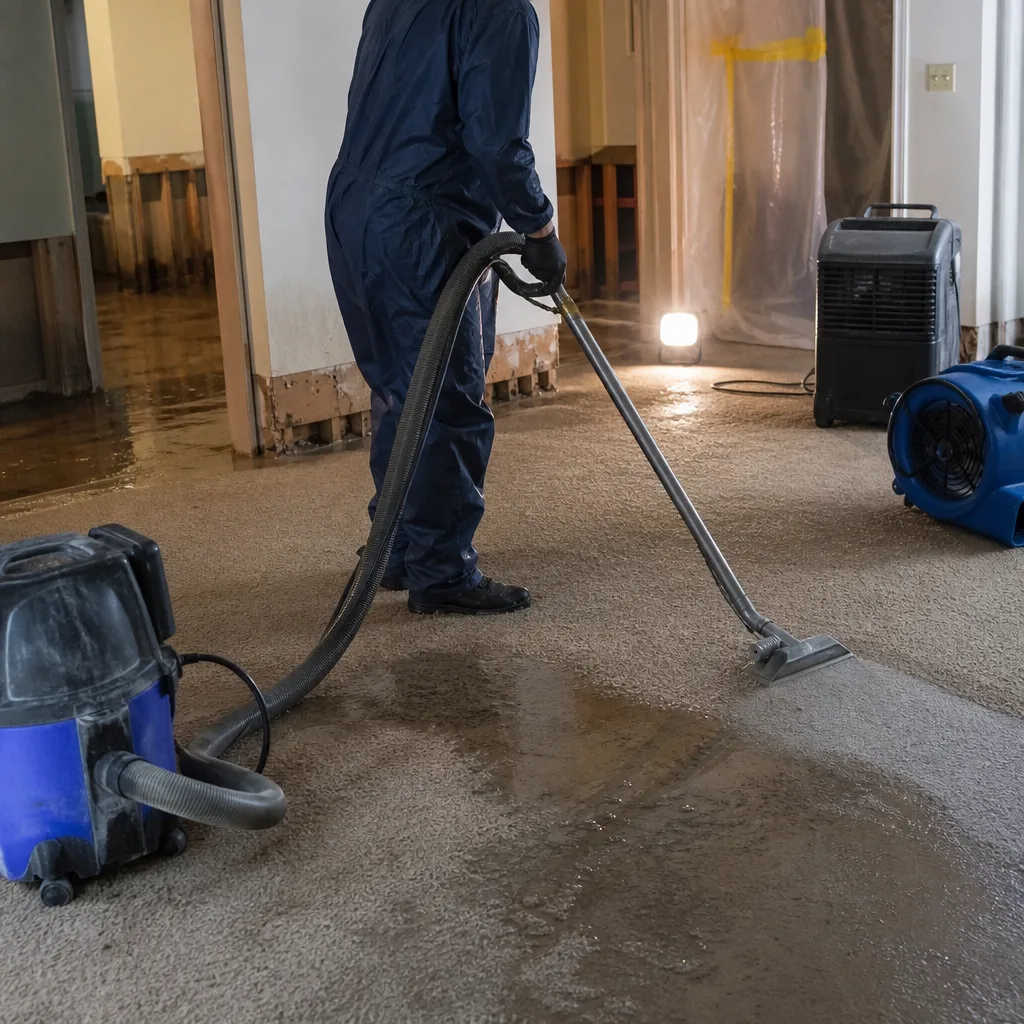
We run professional-grade Dri-Eaz dehumidifiers and Phoenix air movers with Injectidry drying logs until the dry standard is met. For Grand View-on-Hudson basements with wicking stone foundations, this phase often takes longer than inland homes, and we log daily moisture readings the whole time.
Cleaning & Sanitization
Colonized material is removed and bagged under containment. Remaining surfaces get HEPA vacuuming and antimicrobial treatment. Air scrubbers run throughout, and we test the air before clearance.
Specialty Treatment: Moisture & Humidity Control
This is the step generic crews skip. On Grand View-on-Hudson’s riverfront lots, we treat the foundation itself: antimicrobial application on saturated masonry, vapor barrier where appropriate, and humidity control planning so the stone doesn’t keep feeding mold after we leave.
Repairs & Restoration
We rebuild what came out: drywall, insulation, trim, flooring, and any structural repairs the scope called for. The same crew finishes the job, and you get the 90-Day Done Right Promise in writing before we pack up.
Need Emergency Mold Remediation in Grand View-on-Hudson Now?
Crews minutes away, answering live 24 hours a day. The sooner we start, the less it costs.
Working With Your Insurance Company
Mold claims in Grand View-on-Hudson are more complicated than most homeowners expect. Standard homeowners policies cover mold remediation when it results from a covered water loss: a burst pipe, storm intrusion, or a covered sewer backup. They generally do not cover mold from long-term humidity, groundwater seepage, or deferred maintenance. That distinction matters on the riverfront, where a basement that never flooded can still grow mold from continuous foundation wicking. We document everything from the first hour: moisture readings before and after, photos of every affected surface, containment boundaries, drying logs, and a line-item scope. We communicate directly with your adjuster so you’re not transcribing our reports over the phone at 9 p.m. And when your carrier disputes a line item, we send the documentation that answers it.
What We Provide Your Insurer
- Thorough documentation of the loss
- Photos of all damage, room by room
- Moisture readings and drying logs
- A detailed, line-item scope of work
- Direct coordination with your carrier
Built for Grand View-on-Hudson’s Loss Calendar
Grand View-on-Hudson’s mold season doesn’t follow the inland calendar. Spring and fall nor’easters are the headline events, when Atlantic storm surge combines with tidal pressure and pushes Hudson water into the lowest-lying homes. Hurricane Sandy in 2012 demonstrated exactly what that looks like: river water in basements, in ground-floor living spaces, and in every cavity behind finished walls. But the quieter pattern matters just as much. Summer humidity sits heavy in this river valley, and basement temperatures stay low enough for condensation on exposed masonry. Winter brings the odd deep freeze that bursts pipes in unheated crawl spaces. And through all of it, the tidal Hudson keeps steady hydrological pressure against stone foundations, wicking moisture upward through the masonry and into framing. What that means for Grand View-on-Hudson homeowners: mold here is rarely a one-time event. It’s a slow, continuous process that flared after a storm, and it needs a remediation approach that accounts for the river, not just the leak.
Mold Remediation Across Grand View-on-Hudson’s Neighborhoods
Grand View-on-Hudson is small, but its mold patterns vary sharply by location. Along River Road, the homes sit close enough to the Hudson that foundation wicking is a constant, and basements read elevated moisture even in dry weeks. These properties need tide-specific moisture mapping and foundation treatment, not a standard dry-out. Up the slope toward the 10960 corridor, homes sit on slightly higher ground but carry the same porous brick and rubble-stone construction, and crawl spaces under older cottages stay humid through summer. Near the village center, where many of the late-Victorian houses share dense lots, we see mold traveling through party-wall cavities between attached structures. Homes along the Tweed Boulevard hillside face a different issue: runoff from higher ground collects against uphill foundation walls, and lateral pressure pushes moisture through the masonry. Every one of these patterns is predictable to a crew that works Grand View-on-Hudson regularly, and each one changes where we map moisture, where we set containment, and how we treat the foundation after the colonized material comes out.
Specialized Mold Remediation Services We Offer in Grand View-on-Hudson
Mold Inspection & Testing
A proper mold inspection in Grand View-on-Hudson means checking what’s behind the drywall, not just what’s on it. We run moisture mapping on foundation walls, take air and surface samples where growth is suspected, and send samples to a certified lab for species identification. Black mold concerns get priority, but we test for the whole range. You get a written report with lab results and a straight recommendation.
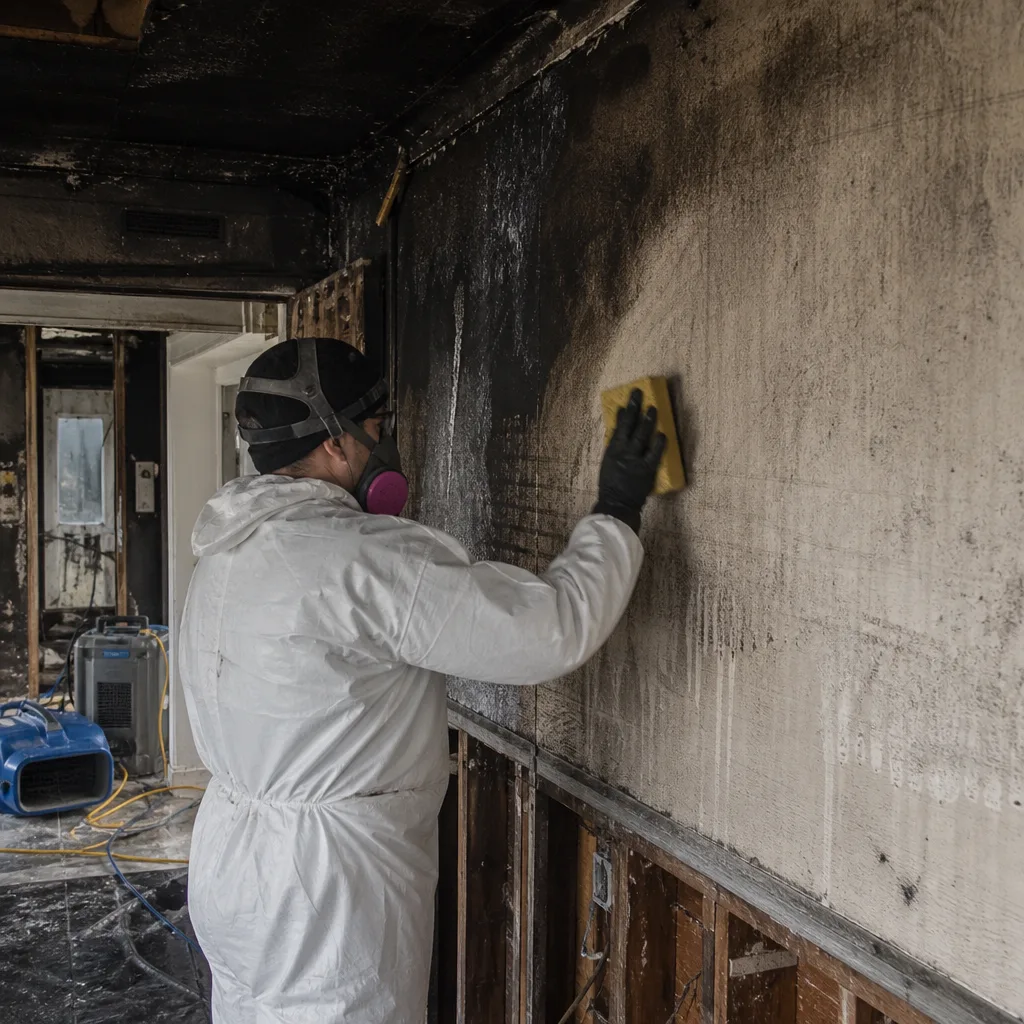
Mold Removal
Removal means containment first, then physical removal of colonized drywall, insulation, carpet, or trim. We run HEPA air scrubbers throughout, so spores don’t migrate through the house during demolition. On Grand View-on-Hudson riverfront basements, we also address the foundation moisture that fed the growth, because removing mold without breaking the moisture chain just sets up the next outbreak.
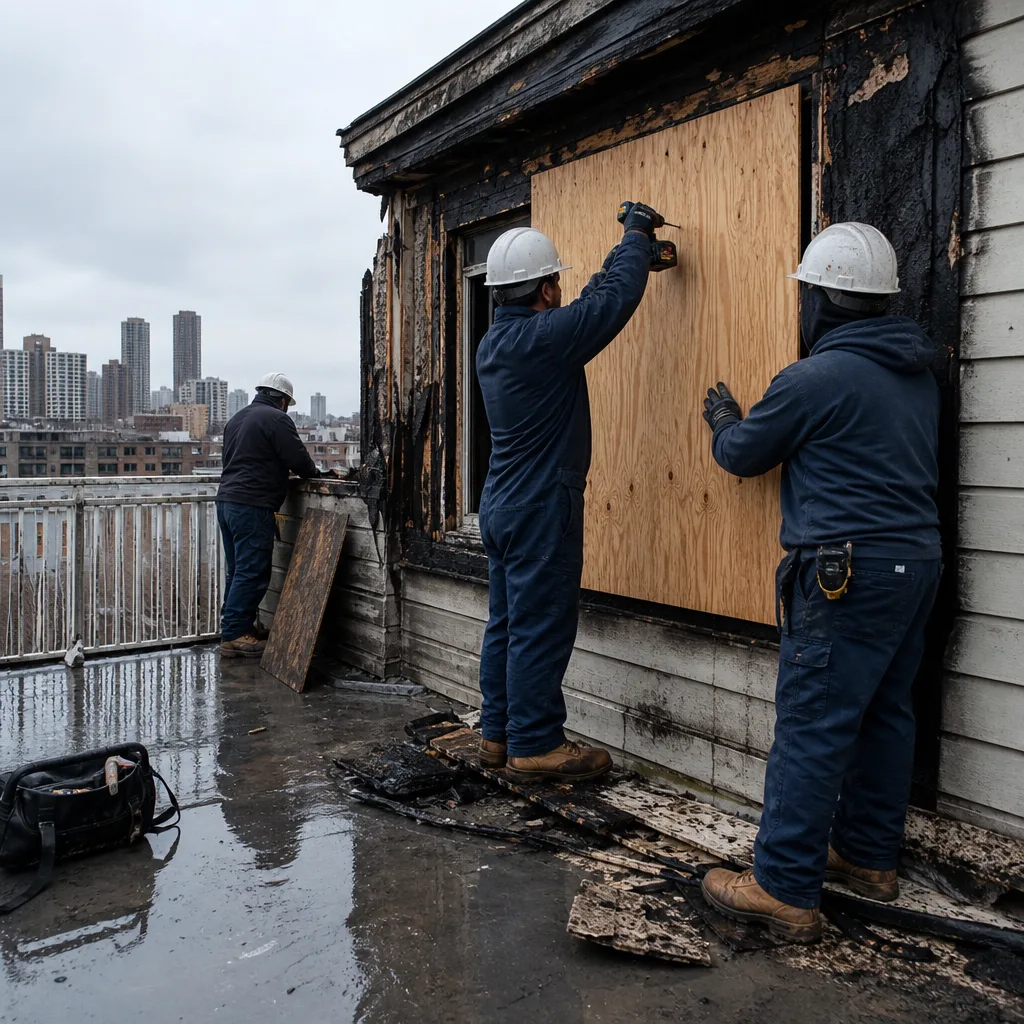
Black Mold Remediation
Black mold gets the attention it deserves on this page because Grand View-on-Hudson’s riverfront basements genuinely create the conditions for it. Continuous foundation wicking, trapped humidity behind finished walls, and organic material on old framing give Stachybotrys exactly what it needs. We treat black mold with full containment, HEPA air scrubbing, physical removal of colonized material, antimicrobial treatment on the masonry, and clearance testing before anyone re-enters the work zone without protection.
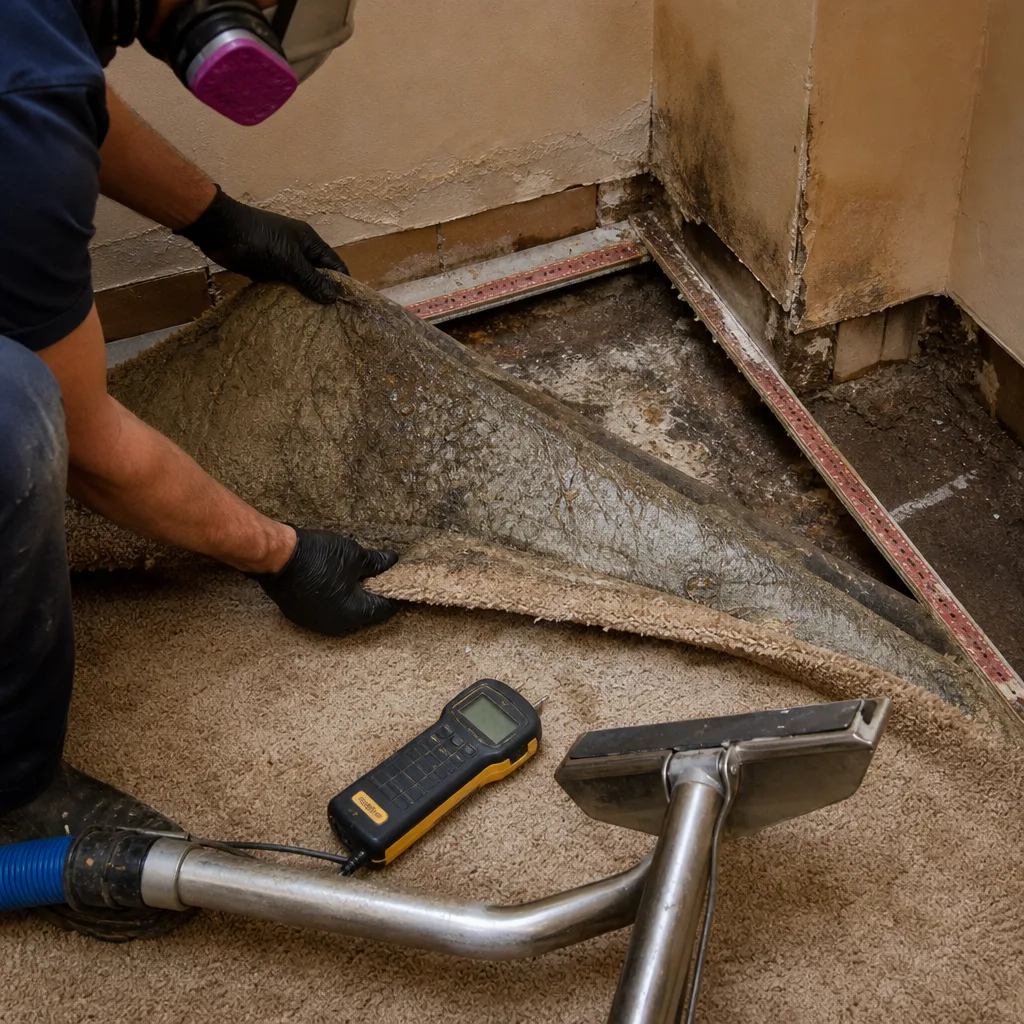
Air Quality Restoration
After remediation, the air in the house has to be right. We run HEPA air scrubbers during and after the work, replace contaminated HVAC filters, and test airborne spore counts before we clear the area. For Grand View-on-Hudson homes with older ductwork, we check duct interiors for spore deposition, because mold that colonized a basement wall can send spores through the heating system in the winter.
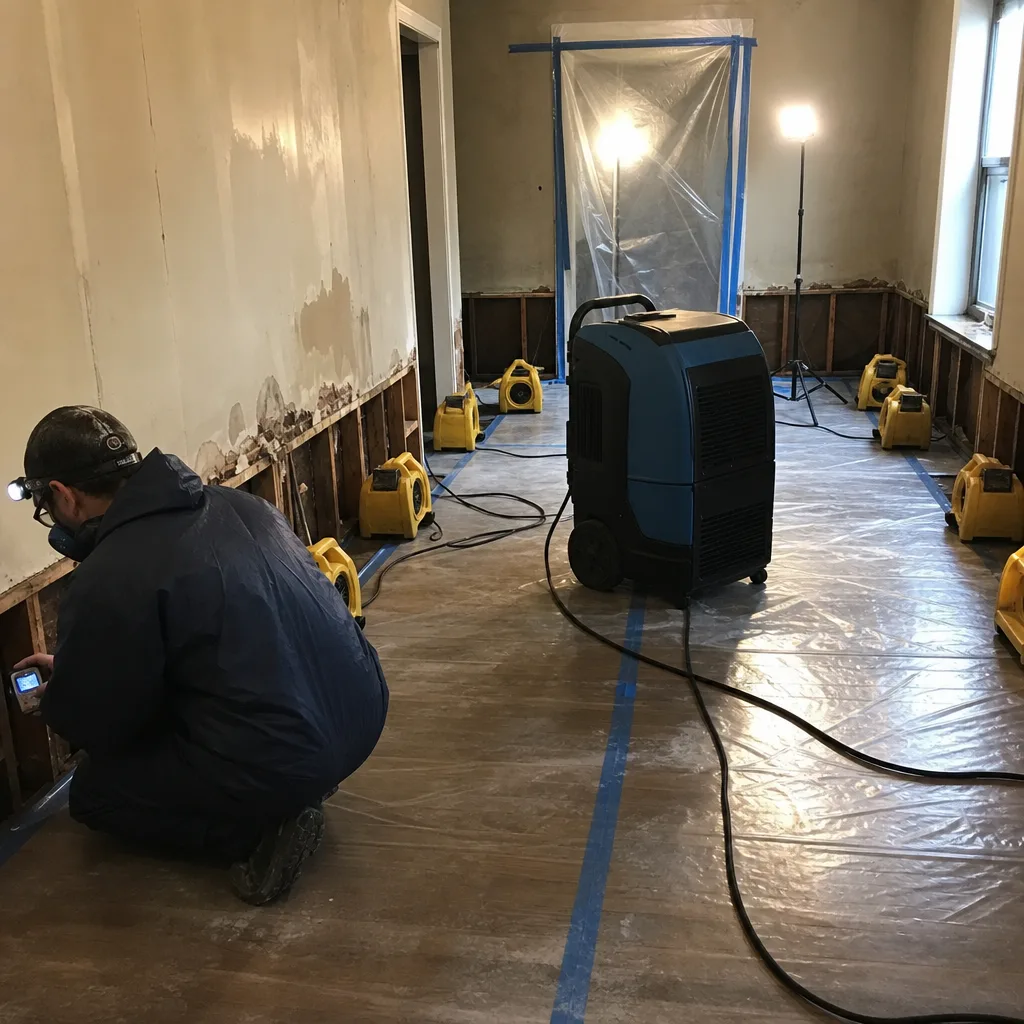
Crawl Space Treatment
Many of the older cottages in Grand View-on-Hudson sit on shallow crawl spaces with dirt floors and rubble-stone foundation walls. Those spaces stay damp through every season, and mold grows on joists and subfloor from the underside. We remove colonized insulation, treat the framing, install vapor barrier where the scope calls for it, and set humidity control so the crawl space stops feeding mold into the living space above.
What happens when you call
- 1
A real person answersNo phone trees - you reach a local pro.
- 2
You get an upfront price rangeHonest numbers before anyone is dispatched.
- 3
A background-checked tech heads outLicensed & insured, dispatched right away.
- 4
You approve before work beginsNothing starts until you say go.
Mold Remediation Costs in Grand View-on-Hudson, NY
Here’s what you’re looking at in this village, straight. A contained surface mold cleanup on a small bathroom or closet runs $1,200 to $2,500. Full basement mold remediation with containment, drywall removal, and drying equipment runs $3,500 to $7,000 for a typical Grand View-on-Hudson basement of 600 to 1,000 square feet. When we add foundation treatment and moisture control systems for riverfront wicking, the scope carries an additional $1,800 to $4,500 depending on the foundation’s condition. A full crawl space treatment with encapsulation runs $4,000 to $9,000.
What moves the price: how much colonized material must come out, whether the foundation needs specialty treatment, and whether you’re dealing with black mold that requires full containment. Insurance covers the remediation when a covered water loss caused the mold; you’ll be out of pocket when the cause was groundwater seepage, chronic humidity, or deferred maintenance.
We Also Serve Cities Near Grand View-on-Hudson
Our mold remediation crews serve Grand View-on-Hudson and the surrounding communities of Fairview, Harrison, East Bronx, and Hunts Point. Same live dispatch, same free visual inspection, and the same written 90-Day Done Right Promise on every job.
Serving Grand View-on-Hudson, NY - Our Local Coverage Area
We’re based in the Grand View-on-Hudson area and know this community well. Use the map below to see our service coverage - if you’re nearby, we can almost certainly help.
Grand View-on-Hudson Mold Remediation Questions, Answered
Why do mold problems in Grand View-on-Hudson recur even after professional remediation?
Because the water source wasn’t broken. On Grand View-on-Hudson’s riverfront properties, stone foundations wick groundwater from the tidal Hudson continuously. A crew that removes colonized drywall without treating the saturated masonry leaves the moisture chain intact, and the mold returns within months.
Do I need a permit for mold remediation on a riverfront home in Grand View-on-Hudson?
Permits typically apply when the work includes structural repairs or changes to drainage, not for mold removal itself. For a riverfront home, any work that affects the foundation, sill plate, or load-bearing framing may require local permits, and the village may require wind and water load compliance on exterior openings. We check the local requirements on every job before work starts, so you don’t face a stop-work order mid-project.
How does Hurricane Sandy still affect mold risk in Grand View-on-Hudson basements?
Sandy pushed Hudson water directly into the lowest-lying homes in Grand View-on-Hudson, and not every basement was fully remediated afterward. Some homeowners had the visible mold cleaned but never addressed the saturated masonry foundations behind the finished walls. Those foundations are still wicking groundwater, and hidden mold colonies from 2012 are still growing in some of those walls.
Can I use a standard dehumidifier to dry out a riverfront basement after flooding?
A store-bought dehumidifier will pull visible moisture from the room air, but it won’t dry saturated rubble-stone or brick. Those foundations hold water in the masonry itself, and household units simply don’t have the capacity. We run professional-grade Dri-Eaz and Phoenix dehumidifiers with daily moisture logs until the dry standard is met, and on Grand View-on-Hudson riverfront foundations, that takes longer than a weekend.
What does a mold inspection in Grand View-on-Hudson include that other areas don’t need?
It includes tide-specific moisture mapping behind finished basement walls. On most properties, a surface moisture reading under 10% means the wall is dry. On Grand View-on-Hudson’s riverfront lots, a surface reading of 8% can sit six inches from a foundation wall reading 40%. We check behind the drywall, at the sill plate, and along the masonry because that’s where this village’s mold hides. Our Mold Remediation team is trained to read this exact condition.
How fast can someone actually get here for mold remediation in Grand View-on-Hudson?
We commit to a 45-minute response for emergency calls, and a live dispatcher confirms the exact arrival window when you call (917) 924-4221. For non-emergency inspections, we schedule at your convenience, including evenings and weekends.
Will insurance cover mold remediation in Grand View-on-Hudson?
It depends on what caused the mold. If a covered water loss caused it, like a burst pipe or storm intrusion, your homeowners policy likely covers remediation under that claim. If the mold came from groundwater seepage, long-term humidity, or deferred maintenance, your carrier will typically deny it. We document everything and bill your carrier directly, so you get a straight answer from your adjuster without playing phone tag with us.
Can we stay in the home during mold remediation in Grand View-on-Hudson?
For contained surface work in a single room, yes, in most cases. For black mold remediation, full basement containment, or anything that involves air scrubbers and negative pressure across your living space, we recommend temporary relocation until containment comes down and air clearance testing comes back clean. We’ll tell you at the first inspection which scenario you’re in. Our Grand View-on-Hudson clients get a straight answer on this before work starts.
On River Road, we opened a Victorian-era basement where standard moisture readings showed dry drywall, but our moisture mapping behind the finished walls revealed a saturated rubble-stone foundation. The continuous wicking from the tidal Hudson had fed a hidden black mold colony. We set containment, removed the colonized drywall, treated the stone with antimicrobial, and ran Dri-Eaz dehumidifiers with Injectidry drying logs until pre-loss conditions were restored. That’s the difference between a crew that reads the room and a crew that reads the wall. Call (917) 924-4221 for a free estimate, and a live person will answer.
Written by Curt Bowman, Owner at Floodline Restoration Co. of Manhattan, serving Grand View-on-Hudson and the surrounding communities.