

Free visual inspection and a written scope of work before any mitigation begins - photos, moisture readings, and drying logs go in your claim file
The scope we write is the scope we bill. Anything new gets shown to you, in writing, before we touch it.






 Before
 After
After Before
 After
After Before
 After
After24/7 Emergency Mold Remediation in Little Italy
Mold remediation in Little Italy typically runs $1,800-$6,500 for a contained removal in a pre-war tenement, and we answer the phone at (917) 924-4221 around the clock. The first call gets a live dispatcher, not a recording, and a certified crew reaches the neighborhood the same visit. On Mulberry, Mott, or Elizabeth Streets, a ceiling stain that looks minor often traces back to a corroded soil stack or a ponding roof, and the clock starts the moment moisture hits horsehair plaster and old lath. We set containment, log moisture readings, and stop the spread before it moves through a masonry party wall into the adjacent landlord’s unit.
Mold in these buildings doesn’t wait for business hours, and neither do we. A live person answers 24/7, every day, because a delayed response inside a 5-6 story tenement can turn a $2,500 cavity dry-out into a full abatement with pack-out and landmark oversight. We arrive fast, inspect free, and give you a written scope before any work starts.
Understanding Mold Remediation Severity in Little Italy Properties
Mold work here falls into three practical tiers, and the tier is determined by what we find behind the wall, not what’s visible on the ceiling. A surface-level issue on painted plaster, under 10 square feet, with dry framing behind it, is usually a cleaning and sanitization job with a HEPA scrubber running for containment. A mid-range loss involves saturated lath and plaster, active moisture from a plumbing failure or roof leak, and colonization extending toward a neighboring unit’s masonry. That requires full containment, negative air pressure, and removal of affected material back to sound substrate.
The third tier is what makes Little Italy different from a newer drywall building: mold associated with Category 3 water from a cast-iron soil stack or sewage backup. That water carries pathogens, and any porous material it touches, including old plaster, lath, and insulation, typically comes out. We run moisture mapping with thermal imaging and hygrometers to confirm the boundary between salvageable and sacrificial material. Near-universal lead paint and asbestos presence in these pre-1978 structures means the removal itself has to follow abatement protocols, and we coordinate that from the first day.
Why Little Italy Property Owners Choose Floodline Restoration Co. of Manhattan
- 45-minute response commitment: We’re minutes away from Little Italy, and a live dispatcher confirms the crew’s ETA on the first call. Most emergency mold calls get a technician on site the same visit, not three days later.
- 24/7 live answer: You talk to a person at 2 a.m., not a voicemail. Dispatch is local to New York City, and crews are staged to reach Mulberry, Mott, and Elizabeth Streets fast.
- IICRC-certified crews: Our technicians hold WRT, FSRT, and AMRT certifications and have worked pre-war tenement mold projects for years. They read moisture maps, not guesses.
- Free visual inspection: We inspect, assess, and give you a written scope before any charge. If it’s a minor surface issue, we’ll tell you honestly.
- Direct insurance billing: We bill your carrier directly and coordinate with adjusters, which matters in Little Italy where multiple insurers and landlords often share one party wall. Homeowners never carry paperwork between us and the carrier.
- One team from containment to reconstruction: The same Floodline crew that sets containment and removes damaged plaster handles the drying and rebuild. No handoff, no inherited subcontractor, no finger-pointing.
Our Mold Remediation Process
Inspection & Assessment
We start with a visual inspection, thermal imaging, and moisture readings throughout the affected area and adjacent party walls. In Little Italy tenements, we check the shared masonry line and the ceiling chase for hidden plumbing stacks before we touch anything.
Containment & Stabilization
We seal the work area with 6-mil poly and establish negative air pressure using HEPA-filtered air scrubbers. This prevents spores from migrating through baseboards, chase ways, or party wall penetrations into neighboring units while the mold is disturbed.
Drying & Dehumidification
Professional-grade Dri-Eaz and Phoenix dehumidifiers plus XPOWER air movers run continuously, with daily moisture readings logged until the dry standard is met. Horsehair plaster takes longer than drywall, and we don’t rush it.
Cleaning & Sanitization
All affected surfaces are HEPA-vacuumed and cleaned with antimicrobial treatments appropriate for the material. Salvageable plaster stays; saturated lath and contaminated insulation come out and get bagged on site before crossing your threshold.
Specialty Treatment for Pre-war Materials
Pre-1978 buildings in Little Italy nearly always contain lead paint and asbestos. Our abatement-certified procedures cover safe removal, waste-stream separation, and clearance testing so the rebuild doesn’t introduce new problems.
Repairs & Restoration
Once clearance testing passes, the same crew rebuilds the wall, ceiling, or floor with materials matched to the building’s character. For landmark-designated structures, we coordinate finishes with the Landmarks Preservation Commission as needed.
Need Emergency Mold Remediation in Little Italy Now?
Crews minutes away, answering live 24 hours a day. The sooner we start, the less it costs.
Working With Your Insurance Company
Mold claims in Little Italy are different from most of the country because the buildings share walls and the losses often involve multiple carriers. A leak in one landlord’s soil stack can damage three floors below and the adjacent unit, and the adjuster needs documentation that holds up to scrutiny. Floodline Restoration Co. of Manhattan handles that from the first hour. We photograph every step, log daily moisture readings, and write a line-item scope using insurance industry standards. Our team communicates directly with your adjuster, the adjacent landlord’s carrier, and any third-party administrators so you aren’t the messenger. On this block, where one water event can mean four stakeholders around a table, that direct coordination is what keeps a mold claim from stalling for months. The 90-Day Done Right Promise stands behind the cleanup and the paperwork, in writing, no arguing.
What We Provide Your Insurer
- Thorough documentation of the loss
- Photos of all damage, room by room
- Moisture readings and drying logs
- A detailed, line-item scope of work
- Direct coordination with your carrier
Built for Little Italy’s Loss Calendar
Mold losses in Little Italy follow a pattern that anyone who’s owned a tenement here for twenty years recognizes. January deep freezes split supply lines inside uninsulated exterior chases along Mott and Elizabeth Streets. The leak runs down the interior of a brick party wall for weeks before a tenant reports a stain. Spring thaw turns aging tar-and-gravel roofs into slow-drip systems, and the water ponding over a rusted roof drain soaks the top-floor ceiling and every cavity below it. Summer thunderstorms overwhelm cast-iron downspouts and drive water through hairline mortar cracks, feeding mold behind plaster in a matter of days. Nor’easters in the fall exploit deteriorating brownstone parapets on Mulberry Street, and wind-blown rain enters wall cavities from the top down. By the time you see the stain, the colony behind it often spans two floors. Our crews know the building types, the failure points, and the seasonal rhythm of this neighborhood cold.
Every job is backed by the 90-Day Done Right Promise, and we put that in writing before we start. Not as a sales pitch, but as the standard a restoration company should have to meet. We stand behind it.
Mold Remediation Across Little Italy’s Neighborhoods
Mulberry Street between Broome and Canal is dominated by old-law tenements with continuous masonry party walls and cast-iron soil stacks that have been patched for generations. Our crews respond to mold along these blocks expecting to set containment on two sides, because the neighbor’s side of the wall is almost always involved. On Mott Street, the walk-ups are steeper, the chases are tighter, and equipment staging means carrying Dri-Eaz dehumidifiers and HEPA scrubbers up five or six flights, sometimes around restaurant supply deliveries. Elizabeth Street mixes residential tenements with street-level commercial kitchens, and the humidity load from vented range hoods and steam tables pushes into upper-floor apartments through the same chases. Over near the intersection of Hester and Mulberry, a cluster of buildings with tin ceilings and horsehair plaster over wood lath requires a slower removal process, because lath keys pull away from masonry and the material needs to be bagged carefully to control dust. We also work the blocks closest to the old parish boundary near Baxter Street, where building layouts shift and shared shafts create vertical mold travel paths that can surprise even experienced landlords.
Specialized Mold Remediation Services We Offer in Little Italy
Our Mold Remediation team handles the full scope of this work, from first inspection to finished rebuild, but here are the services we run most often in these tenements.
Mold Inspection & Testing
Most Little Italy owners reach out because a tenant reported a smell or a stain, not because they know the extent. We inspect with thermal imaging and moisture meters to find the water source, map the affected area behind plaster, and test air and surface samples when clearance or litigation demands it. The inspection is free, and the written scope tells you exactly what we found and what it costs before you commit to anything.
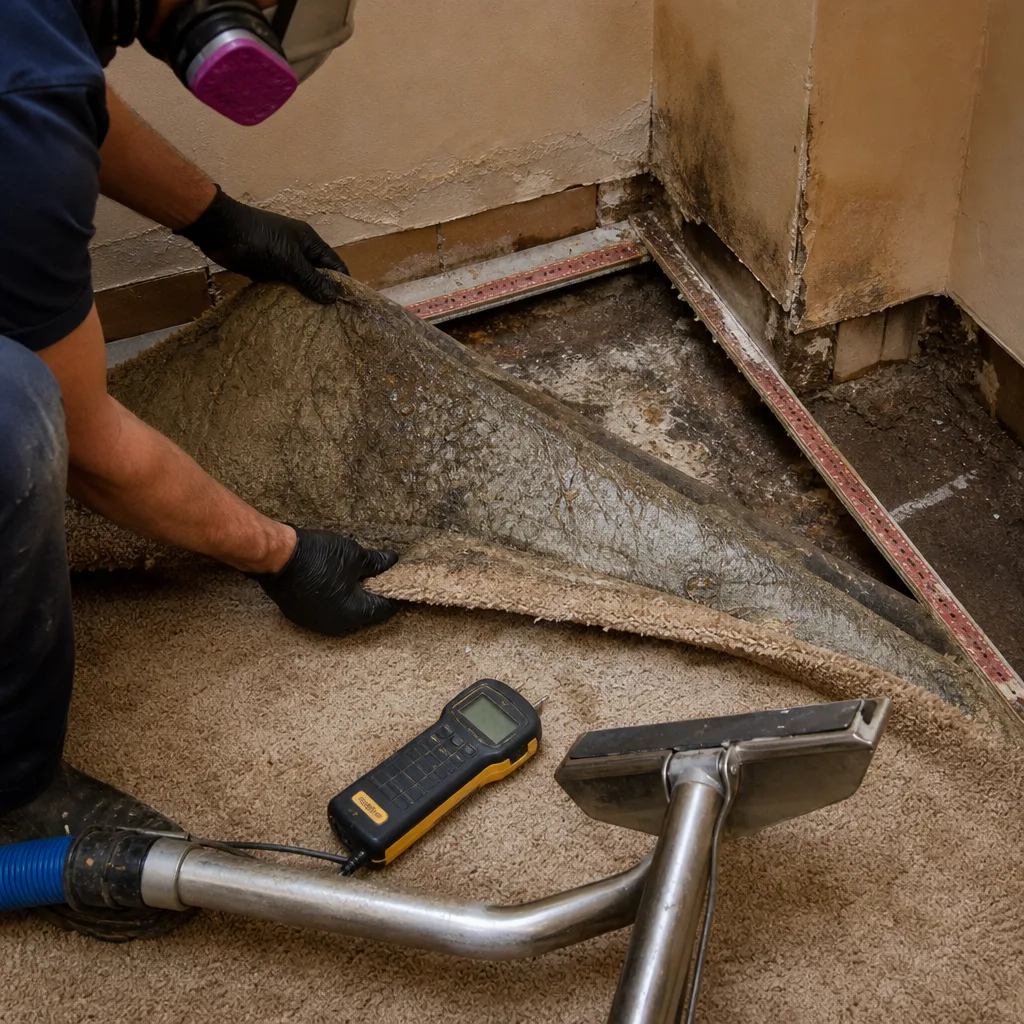
Mold Removal
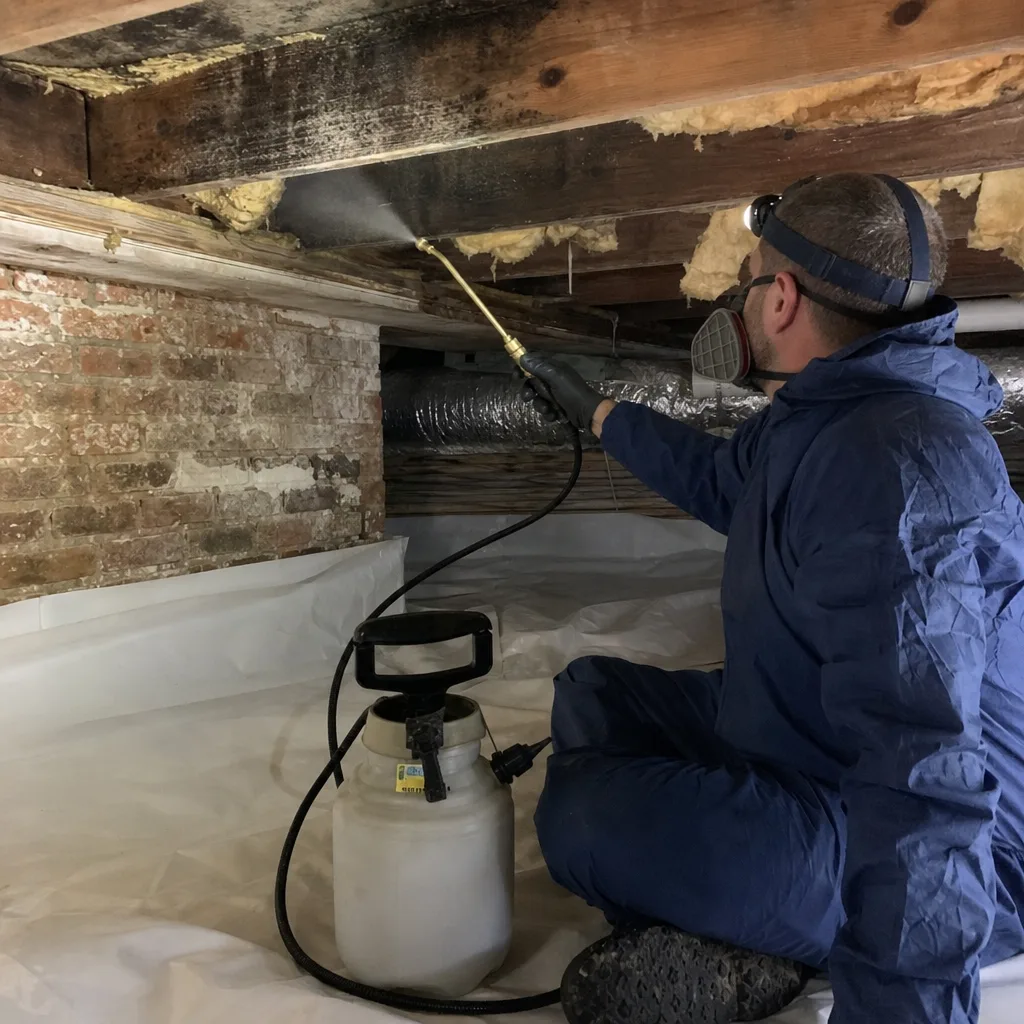
Removal in pre-war tenements means cutting out saturated lath and plaster back to solid substrate, bagging contaminated material, and running air scrubbers throughout. It’s not a chemical wipe-down. On a sixth-floor Mott Street walk-up, our crew traced a ceiling stain to a corroded cast-iron soil stack behind horsehair plaster. We set containment along the party wall, logged moisture readings throughout the chase, and removed the saturated lath after confirming Category 3 water. With air movers and a Phoenix dehumidifier running for five days, we brought the cavity to pre-loss condition, coordinated with the adjacent landlord’s insurer, and scheduled pack-out around the San Gennaro street-use permit blackout. That’s the standard.
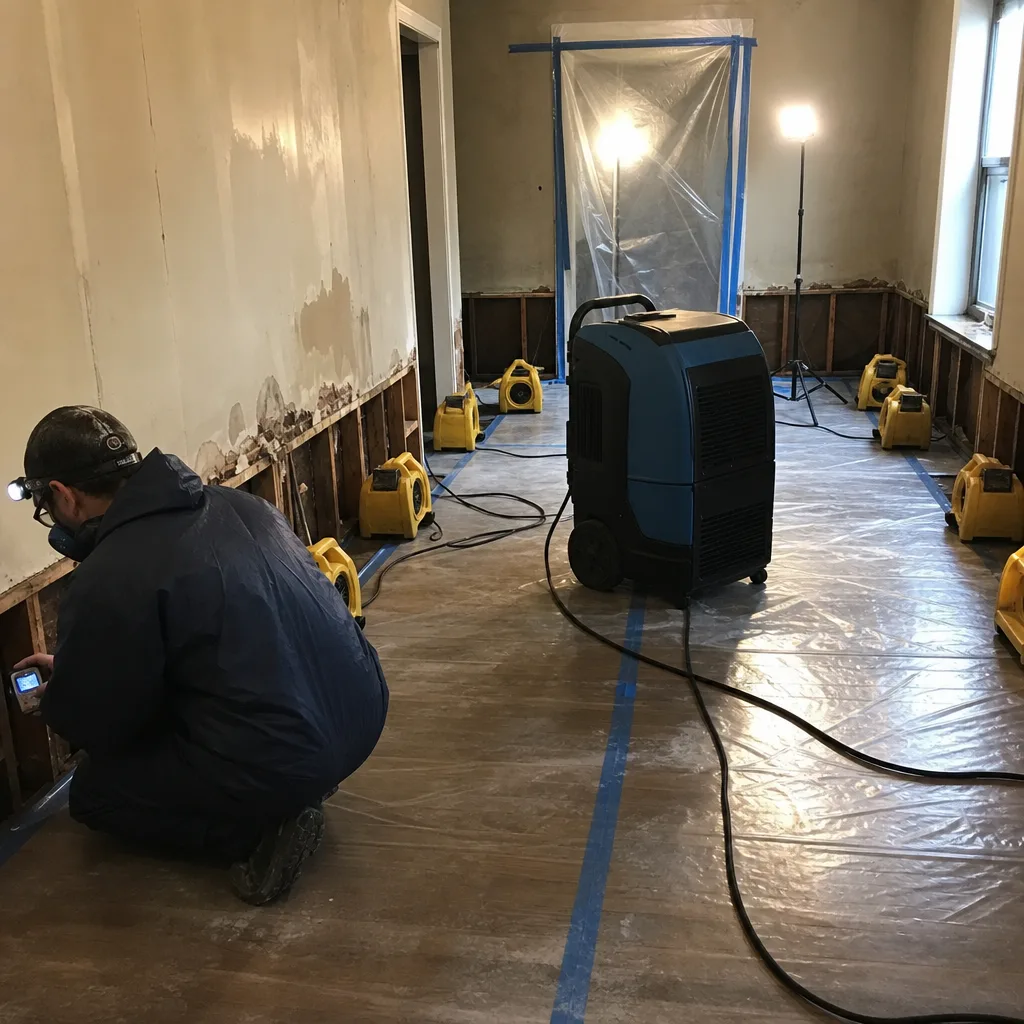
Black Mold Remediation
Black mold, or Stachybotrys, shows up in these buildings wherever there’s been prolonged damp: behind a leaking parapet, under a ponding roof drain, inside a shared wall cavity. It needs full containment and material removal, not just cleaning. The continuous masonry party walls on Mulberry and Elizabeth Streets mean the colony may have crossed onto the neighbor’s side, and we document that boundary carefully for insurance and liability reasons.
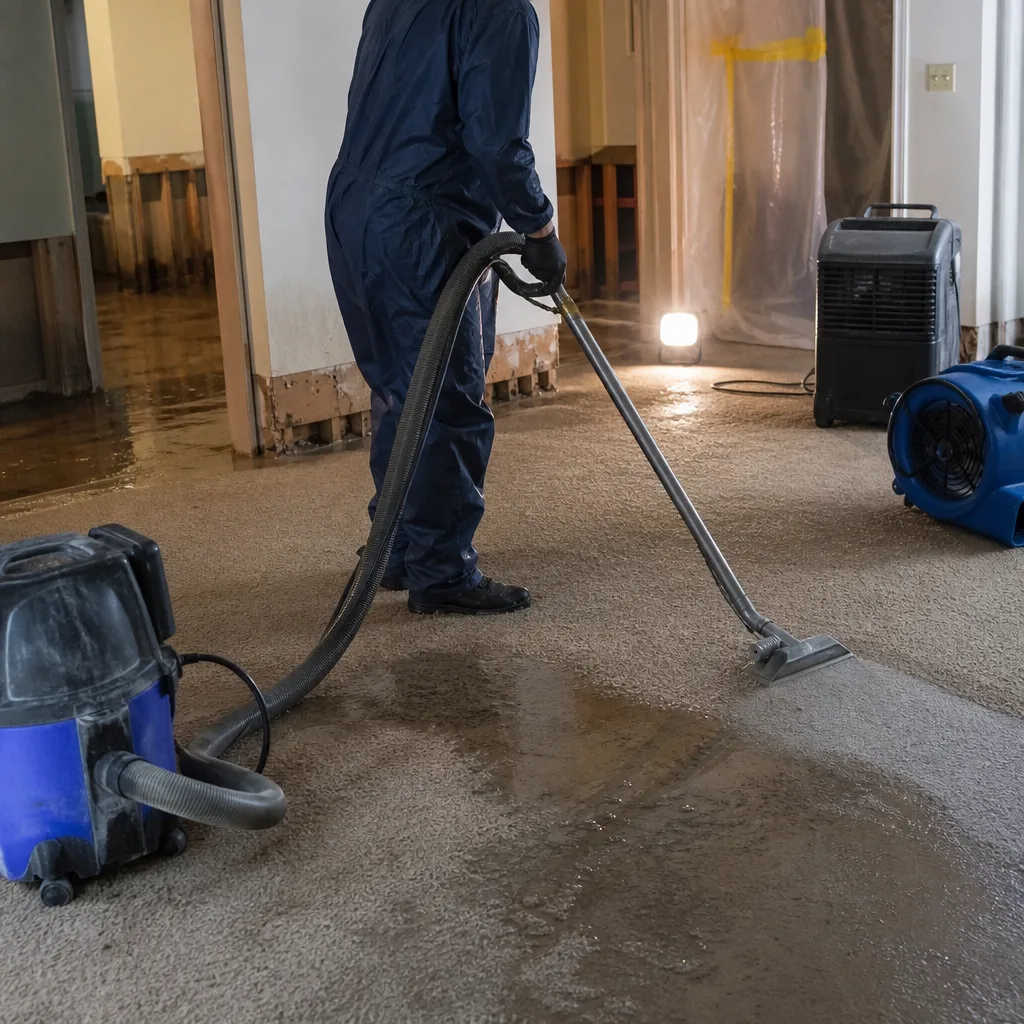
Air Quality Restoration
After removal and drying, we run HEPA air scrubbers and, depending on the clearance results, thermal fogging or hydroxyl treatment to bring the indoor environment back to baseline. In a 100-year-old building, baseline doesn’t mean sterile; it means the spore count matches the outside air and the musty smell is gone. We also address the humidity source, because mold returns if the building’s moisture load doesn’t change. B-Air and Phoenix equipment handles the drying, and we leave you the moisture log.
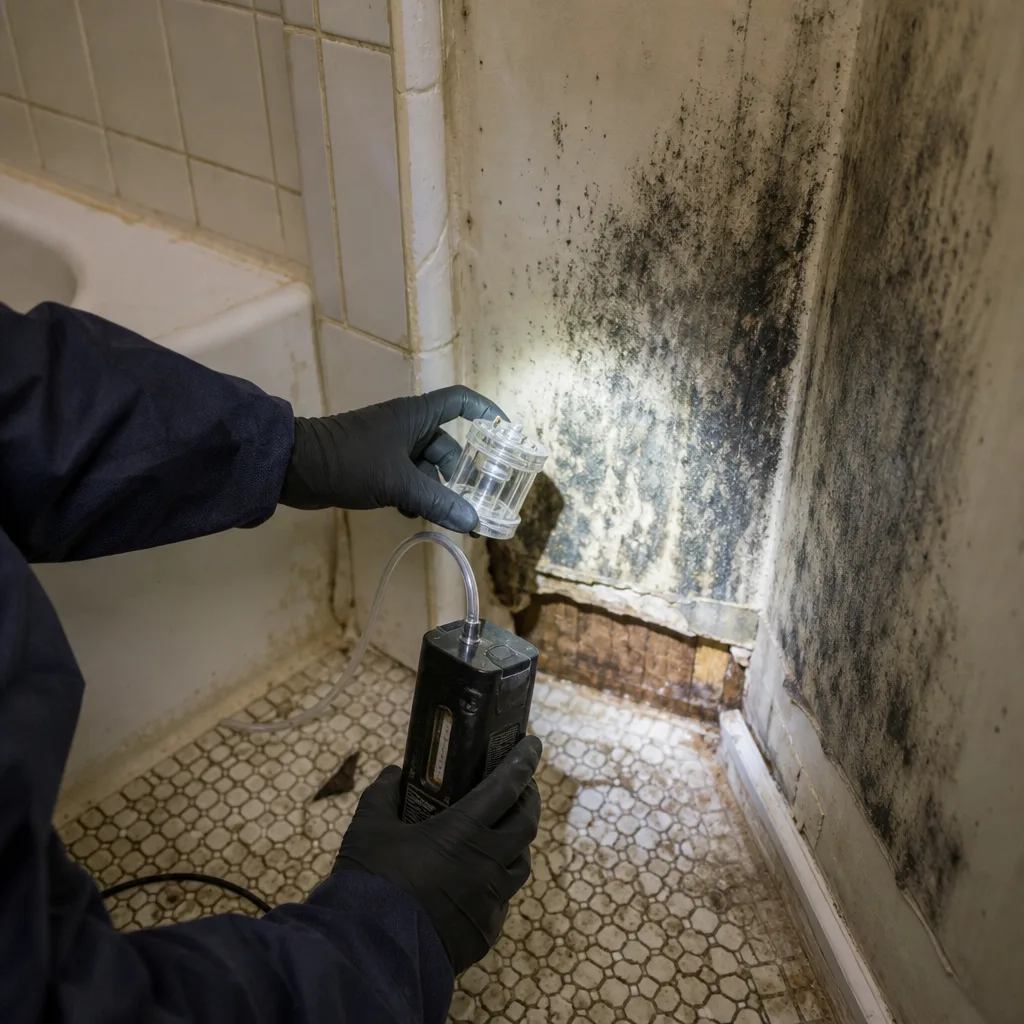
Moisture & Humidity Control
Many Little Italy basements and first-floor retail spaces run humid year-round because the masonry walls wick groundwater and the buildings predate vapor barriers. We install and calibrate dehumidification solutions sized for the actual cubic footage, and we repair the drainage, pointing, and roof issues that keep feeding water into the equation. Controlling moisture at the source is the only lasting mold strategy in this housing stock.
What happens when you call
- 1
A real person answersNo phone trees - you reach a local pro.
- 2
You get an upfront price rangeHonest numbers before anyone is dispatched.
- 3
A background-checked tech heads outLicensed & insured, dispatched right away.
- 4
You approve before work beginsNothing starts until you say go.
Mold Remediation Costs in Little Italy, NY
A contained mold remediation in Little Italy typically runs $1,800-$6,500, with whole-floor abatements in larger tenements reaching $10,000 or more depending on scope. A mold inspection with testing runs $350-$750, and most of our clients apply that toward remediation if we do the work. Here’s how the pricing breaks down in this market:
- Surface cleaning and sanitization (under 10 sq ft): $800-$2,000
- Contained removal with drying (single room, pre-war plaster): $2,500-$6,500
- Full abatement involving party wall and adjacent unit coordination: $6,000-$14,000
- Mold inspection and clearance testing: $350-$750
- Moisture control system installation (basement or crawl space): $1,500-$4,800
What moves the price in Little Italy is the presence of lead paint or asbestos, which adds abatement steps and waste-stream costs; the need to coordinate with a neighboring landlord’s insurer on a shared wall; and whether the San Gennaro street-use blackout forces a staging adjustment. Insurance often covers mold when the cause is a sudden, covered water event, but every policy is different. The free inspection gets you a firm, written scope, and we bill your carrier directly. Senior and veteran homeowners get a 5% discount, always.
We Also Serve Cities Near Little Italy
Floodline Restoration Co. of Manhattan serves Little Italy and the surrounding neighborhoods with the same live dispatch and certified crews. If you’re in Fairview, Harrison, East Bronx, or Hunts Point, we’re minutes away and answer the phone 24/7 at (917) 924-4221.
Little Italy Mold Remediation Questions, Answered
How does a shared masonry party wall affect the scope of work for mold remediation in a Little Italy tenement?
A shared masonry party wall means the mold boundary isn’t just your side of the plaster; the continuous brick allows moisture and spores to travel laterally into the adjacent landlord’s unit. We set containment along the wall, log moisture readings on both sides, and document the cavity before removal so the scope accounts for cross-contamination risk. The adjacent landlord’s insurer often needs to be brought in, which we handle directly.
What role does the San Gennaro festival play in scheduling mold remediation on Mulberry Street?
The Feast of San Gennaro shuts down Mulberry Street for roughly eleven days each September, and NYC DOT street-use permits make staging dumpsters, drying trailers, or scaffolding on or near the block nearly impossible during that window. Experienced crews build that blackout period into late-summer timelines, ordering pack-outs and planning equipment staging around it. If your mold loss hits in August, get the scope started early so structural drying isn’t stalled by permit restrictions.
Why is lead paint and asbestos such a concern during mold remediation in Little Italy’s pre-1978 buildings?
Nearly every tenement on Mulberry, Mott, and Elizabeth Streets predates the 1978 lead paint ban and many contain asbestos in plaster, pipe wrap, and floor tile. Cutting into saturated plaster without proper abatement procedures releases lead dust and asbestos fibers, which is why remediation here requires certified handling, bagging, and waste-stream separation. We handle that as part of the scope, and it’s one reason mold work in this neighborhood costs more than in a newer drywall building.
How do you determine whether to remove or dry mold-affected horsehair plaster in these old tenements?
We test the plaster’s structural integrity and moisture content. If the lath keys are intact and the moisture reading is below the threshold where fungal growth stays active, we can dry it in place with dehumidifiers and air movement. If the plaster is saturated, crumbling, or the mold has colonized the lath behind it, that material comes out. Horsehair plaster takes longer to dry than modern drywall, and we’d rather tell you that up front than rush a job and get a callback.
What makes mold remediation in Little Italy different from a standard drywall repair in a newer Manhattan building?
Little Italy’s surviving old-law and new-law tenements share continuous masonry walls, cast-iron soil stacks, tin ceilings, and horsehair plaster over wood lath. A mold loss here routinely crosses property lines and implicates multiple landlords, insurance carriers, and sometimes the Landmarks Preservation Commission simultaneously. Standard drywall repair doesn’t have to account for a neighbor’s wall cavity, lead paint, asbestos, or a street fair that freezes your staging window. That’s the difference, and it’s why you want a crew that’s worked this block before.
How fast can a mold remediation crew actually reach Little Italy?
We commit to a 45-minute response for emergency mold calls in Little Italy. A live dispatcher confirms the ETA while you’re on the phone, and the crew arrives the same visit. Most mold work gets scheduled within the same day or the next morning, because we know the mold is spreading while you wait. Call (917) 924-4221 and you’ll talk to a person, not an automated system.
Can we stay in the home during mold remediation in a Little Italy tenement?
It depends on the scope. For contained single-room work with negative air pressure and HEPA scrubbing, you can often stay in another part of the apartment. If the removal involves Category 3 water, significant asbestos, or if the unit is small and the containment zone blocks access to the kitchen or bathroom, we recommend temporary relocation. We’ll tell you the honest answer during the free inspection, before any work starts.
What should we do in the first 30 minutes after discovering mold in our Little Italy apartment or building?
Stop the water source if you can do so safely, turn off any fans or HVAC that might spread spores, and don’t disturb the area, opening walls or scrubbing at it makes the problem worse. Photograph the visible damage for your records and for your insurer. Then call us at (917) 924-4221. A live dispatcher answers, and we’ll have a certified technician on site the same visit with a free inspection.
Serving Little Italy, NY - Our Local Coverage Area
We’re based in the Little Italy area and know this community well. Use the map below to see our service coverage - if you’re nearby, we can almost certainly help.
Contact Floodline Restoration Co. of Manhattan
If you’ve got a mold problem in Little Italy, call (917) 924-4221 now. A live person answers, day or night, and a certified crew reaches the neighborhood fast. The inspection is free, the scope is written before work starts, and the 90-Day Done Right Promise stands behind every job we do. We bill your insurance carrier directly, so you’re never the one chasing paperwork between landlords and adjusters. One call starts the whole process: containment, drying, removal, and rebuild by the same crew, done right and backed in writing.
Written by Curt Bowman, Owner at Floodline Restoration Co. of Manhattan, serving Little Italy, NY.