

Free visual inspection and a written scope of work before any mitigation begins - photos, moisture readings, and drying logs go in your claim file
The scope we write is the scope we bill. Anything new gets shown to you, in writing, before we touch it.






 Before
 After
After Before
 After
After Before
 After
After24/7 Emergency Mold Remediation in Manhasset Hills
Mold remediation in Manhasset Hills typically costs $1,800-$6,500 depending on containment scope, hidden moisture, and whether asbestos abatement enters the picture. We answer live at (917) 924-4221 around the clock and can have a certified crew at your door inside 45 minutes for a free visual inspection. The first hour matters because mold that is still contained behind a finished basement wall is a far smaller job than mold that has spread into a drop-ceiling cavity and forced a full pack-out of finished living space.
Manhasset Hills homes don’t give you much warning. A nor’easter pushes water through a foundation seam, the sump pump keeps up for a few hours, and then the power flickers and the finished basement takes on two inches. By the time the floor tile looks only damp, the real problem is already overhead. We know this because we have mapped it with Dri-Eaz sensors in basements throughout the hamlet. Call us now, and we’ll start with the same invasive moisture reading before anything gets torn out.
Understanding Mold Remediation Severity in Manhasset Hills Properties
Mold severity in Manhasset Hills runs on a different scale than most of Nassau County. The housing stock here is overwhelmingly mid-century: 1950s through early 1970s Cape Cods, ranches, and split-levels with plaster-over-lath interior walls and finished basements. Plaster is a sponge. When it gets wet, it holds moisture far longer than modern drywall, and the visible surface often dries to the touch while the back side stays saturated against the lath. That hidden reservoir feeds mold growth behind baseboards within 48 hours if the tech skips invasive moisture readings.
Containment is the first severity lever. A small isolated patch behind a baseboard needs a simple negative-air enclosure and a few days of HEPA air scrubbing. A finished basement with hidden saturation above a drop ceiling needs full containment, cavity drying with Injectidry systems, antimicrobial treatment on framing, and clearance testing before the family moves back in. The second lever is construction-era hazards. Asbestos-containing floor tiles and pipe insulation are common in 1950s-70s Manhasset Hills basements, and if tearout hits them without early testing, the job stops while abatement coordination begins. The third lever is the Town of North Hempstead permit layer. Any structural repair tied to water damage must clear that permit before reconstruction can close out.
Why Manhasset Hills Property Owners Choose Floodline Restoration Co. of Manhattan
- 45-minute response commitment - a live dispatcher takes your call, and a crew rolls toward Manhasset Hills immediately, not after a callback.
- 24/7 live answer, never an automated system - at 2 a.m. you get a person who can actually dispatch, not a recording that takes a message.
- IICRC-certified crews - our technicians hold WRT and AMRT certifications and train to RIA and IFA standards, so the containment and clearance testing are done to code on day one.
- Free visual inspection - we walk the basement, map the moisture, and hand you a written scope before any tearout starts, no charge.
- Direct insurance billing - we deal with your carrier and your adjuster; you don’t play messenger between three different parties.
- One team from extraction to reconstruction - the crew that sets containment is the crew that rebuilds the wall, no mid-job handoff to a subcontractor you never chose.
Our Mold Remediation Process
Inspection & Assessment
We start with thermal imaging and Dri-Eaz moisture sensors placed into wall cavities, not just against the surface. In Manhasset Hills, that means reading overhead above drop ceilings and behind plaster walls before any drying protocol is set. You get a written scope with clear line items and a photo log.
Containment & Stabilization
Negative-air containment goes up before demolition starts, with HEPA air scrubbers running continuously. We coordinate with the Town of North Hempstead on permit timing so the job isn’t stalled mid-scope while your basement sits open.
Drying & Dehumidification
Professional-grade Dri-Eaz, Phoenix, and XPOWER equipment runs on a moisture map that accounts for hidden cavities above drop ceilings and behind plaster. Daily readings are logged until the structure meets the dry standard, not until the surface feels dry.
Cleaning & Sanitization
All affected drywall, plaster, and insulation are removed to the containment line. Framing and remaining structure are treated with antimicrobial solution. HEPA vacuuming and air scrubbing bring airborne spore counts down before clearance testing.
Mold Remediation Specialty Treatment
For the mid-century Manhasset Hills basements, this includes asbestos testing before tearout when materials date to the 1950s-70s, and Injectidry cavity drying for the overhead spaces that drop ceilings hide. We also treat crawl spaces with heavy-duty vapor barriers and sealed dehumidification.
Repairs & Restoration
We replace what was removed, rebuild to the permit-approved scope, and handle the final inspection with North Hempstead. You get the 90-Day Done Right Promise in writing: if it’s not done right, we make it right, no arguing, no paperwork battles.
Need Emergency Mold Remediation in Manhasset Hills Now?
Crews minutes away, answering live 24 hours a day. The sooner we start, the less it costs.
Working With Your Insurance Company
We’ve handled mold claims in Manhasset Hills long enough to know that carriers respond to documentation, not adjectives. From the first hour on site, we photograph every affected surface room by room, log moisture readings with date and time stamps, and write a line-item scope of work that adjusters can actually read. We talk directly to your carrier and your adjuster, so you’re not relaying details between three phone calls after a long day.
When hidden mold above a drop ceiling is discovered mid-mitigation, the documentation trail is what turns a denied supplement into an approved one. We’ve been through that exact conversation on Shelter Rock Road and on the side streets off Searingtown Road. The photo of saturated plaster above a ceiling, the moisture map from the Dri-Eaz sensors, the daily drying log: that’s the evidence that wins the supplement. You don’t argue. We don’t argue. The record does the talking.
What We Provide Your Insurer
- Thorough documentation of the loss
- Photos of all damage, room by room
- Moisture readings and drying logs
- A detailed, line-item scope of work
- Direct coordination with your carrier
Built for Manhasset Hills’s Loss Calendar
Mold in Manhasset Hills follows a seasonal rhythm, and it’s not subtle. December through March brings the freeze-thaw cycle that bursts original galvanized supply lines in exterior walls and crawl spaces that were never insulated to modern standards. When a pipe lets go at 3 a.m. in a 1962 split-level, the water travels down through the wall cavity and pools in the finished basement before anyone notices. That’s a Category 3 water event by morning, and mold follows within 48 hours.
Nor’easters are the other big driver. Manhasset Hills sits on the North Shore of Long Island, squarely in the path of storm systems that track up the Atlantic and push wind-driven rain and surge-influenced flooding from the Long Island Sound side of Nassau County. When heavy rain overwhelms the local stormwater infrastructure, finished basements take the hit. Summer thunderstorms are lower volume but flashy: a downburst over the hamlet can overwhelm drains in minutes and leave a finished basement with standing water before the storm has passed.
Mold Remediation Across Manhasset Hills’s Neighborhoods
We work every side of Manhasset Hills, and each corridor has its own pattern. The streets off Shelter Rock Road, where the nor’easter claim with the hidden drop-ceiling saturation comes from, tend toward larger mid-century homes with deeper finished basements. Water travels down from window wells and foundation seams, and the overhead cavity above the drop ceiling is where mold colonizes first. We set containment and run Injectidry systems overhead for days, not hours.
Over near Searingtown Road, the original 1950s ranches sit on tighter lots with shallower basements, and the typical call is a sump-pump failure after a heavy rain event. The water rises fast, and because the finished space is often a family room with carpet and drywall, the pack-out and drying scope is smaller but the mold risk is still real behind baseboards. Along the northern edge toward the Long Island Expressway corridor, crawl spaces and foundations take the brunt of the groundwater seepage, so crawl space treatment and moisture control become the primary mold prevention play.
Specialized Mold Remediation Services We Offer in Manhasset Hills
Mold Inspection & Testing
We don’t test for mold until we’ve mapped moisture. In Manhasset Hills, that means invasive probes into plaster walls and overhead cavities, because the visible surface lies. Our inspection includes air sampling and surface sampling as needed, with lab results read against a baseline outside the home. You get the numbers, not a scare tactic.
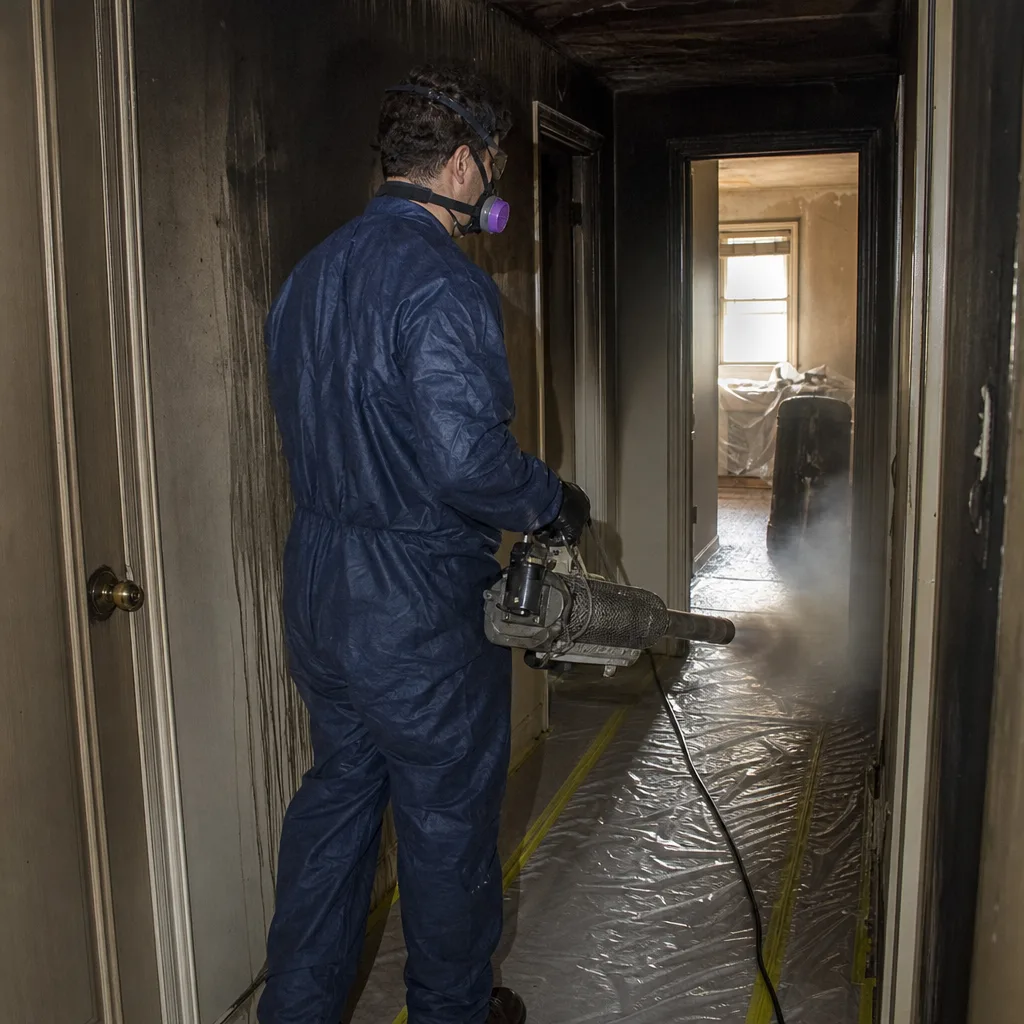
Moisture & Humidity Control
The finished basements in this hamlet run humid from April through October, and humidity alone can feed mold even without a water event. We install sealed dehumidification and monitor relative humidity with data loggers. For homeowners staying in these houses another twenty years, the humidity control is the prevention that matters.
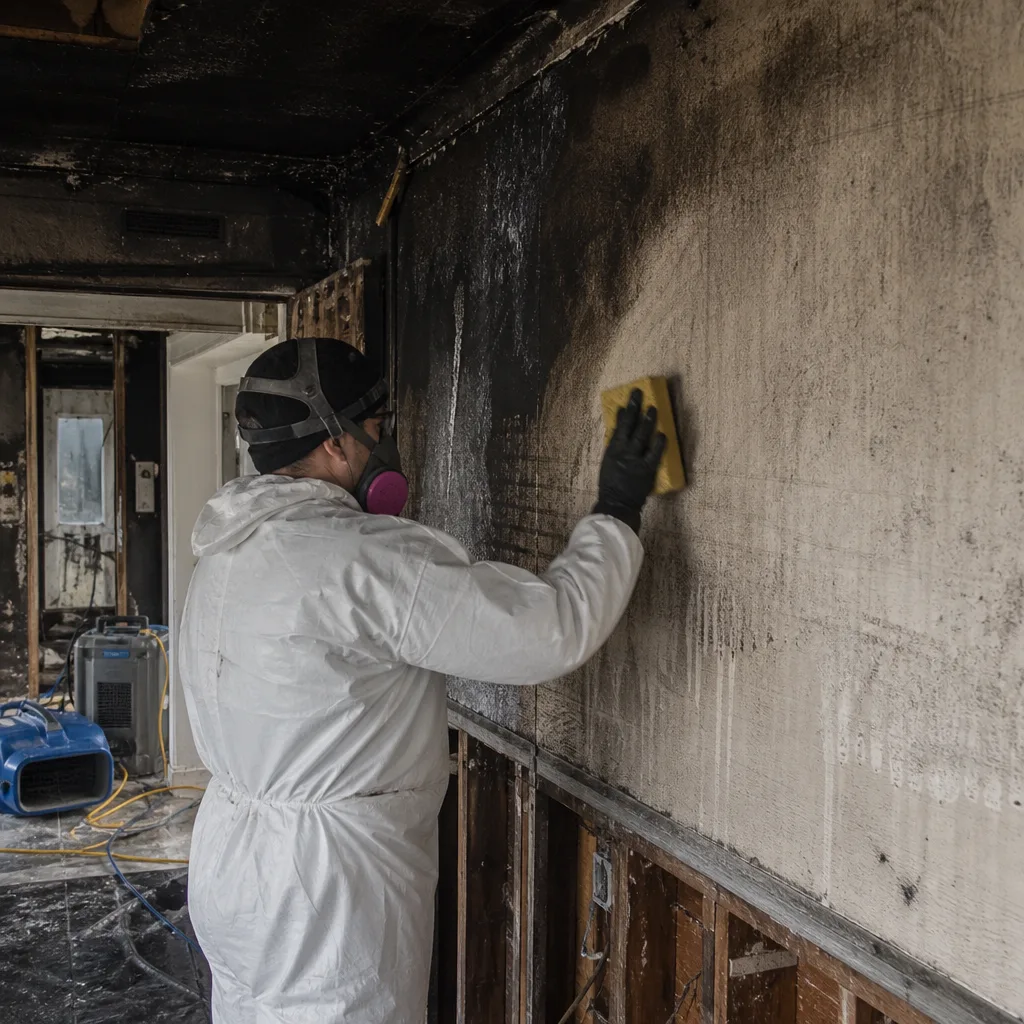
Crawl Space Treatment
Crawl spaces in Manhasset Hills’s 1950s-70s homes are rarely insulated to modern standards, and groundwater seepage makes them a standing invitation to mold. We treat the entire space: vapor barrier, sealed vents where appropriate, structural drying, and antimicrobial treatment on floor joists. This is where the original galvanized supply lines run, and a pinhole leak in a crawl space becomes a mold problem long before it becomes a plumbing bill.
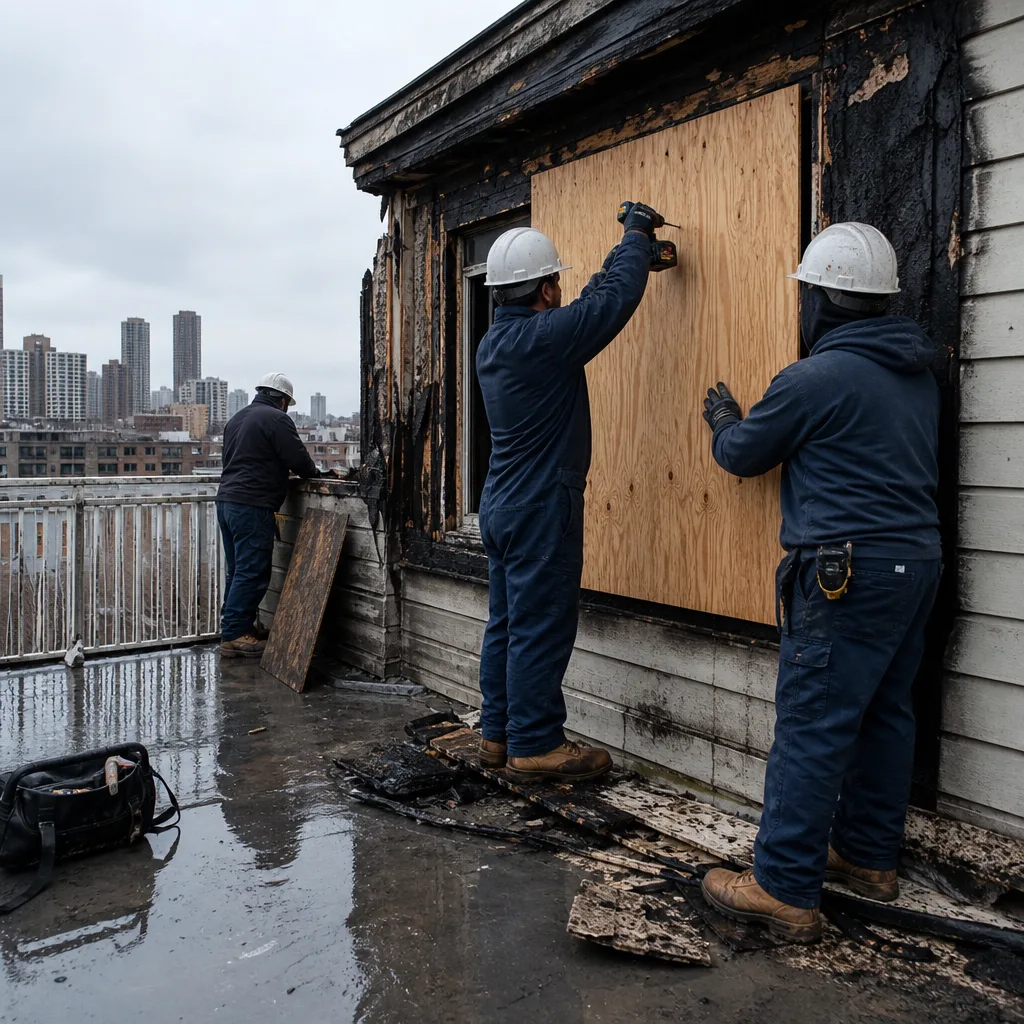
Mold Removal
Mold removal in Manhasset Hills means cutting out affected drywall, plaster, and insulation to the containment line, treating the framing, and running HEPA air scrubbers until the spore count drops. We don’t spray and paint; we cut and replace. The goal is clearance testing that passes, not a surface that looks clean for six months.

Black Mold Remediation
Black mold, Stachybotrys, thrives on the cellulose in drywall and the paper backing of insulation. In Manhasset Hills basements with plaster-over-lath and old insulation, black mold often establishes in hidden cavities before it is ever visible. Full containment is non-negotiable, and clearance testing is the only measure of success. We treat it as a structural job, not a cleaning call.

Air Quality Restoration
After the structural work is done, the air in the house still carries what the demolition released. We run HEPA air scrubbers, replace HVAC filters, and sometimes clean the ductwork if mold traveled through the system. Air quality restoration is the difference between a basement that passes clearance testing and a house that still smells musty in August.

What happens when you call
- 1
A real person answersNo phone trees - you reach a local pro.
- 2
You get an upfront price rangeHonest numbers before anyone is dispatched.
- 3
A background-checked tech heads outLicensed & insured, dispatched right away.
- 4
You approve before work beginsNothing starts until you say go.
Mold Remediation Costs in Manhasset Hills, NY
A straightforward mold removal job with a small containment area in Manhasset Hills runs $1,800-$3,500. Add hidden moisture above a drop ceiling or behind plaster walls, and the drying scope pushes the job to $4,000-$6,500. Asbestos abatement coordination, which is common in these 1950s-70s basements, adds another layer of cost and timeline. The free visual inspection is how you get a firm number instead of a range: we map the moisture, write the scope, and price it line by line.
Insurance coverage depends on the source of the water and the wording in your policy. A sudden pipe burst is usually covered. Gradual seepage or long-standing humidity issues often are not. We work with your carrier either way, and direct billing means you’re not fronting cash for a covered claim while waiting on reimbursement. Call (917) 924-4221, and we’ll tell you what we see before anyone starts cutting.
We Also Serve Cities Near Manhasset Hills
From our dispatch desk, our crews reach Fairview and Harrison within the same 45-minute window, and East Bronx and Hunts Point are on the board as well. The same certified team, the same Dri-Eaz and Phoenix equipment, the same 90-Day Done Right Promise. If you’re in a neighboring community and the basement is wet, call (917) 924-4221.
Serving Manhasset Hills, NY - Our Local Coverage Area
We’re based in the Manhasset Hills area and know this community well. Use the map below to see our service coverage - if you’re nearby, we can almost certainly help.
Manhasset Hills Mold Remediation Questions, Answered
Why do Manhasset Hills basements need overhead moisture mapping after a nor’easter when only the floor looks wet?
Because the finished basements in Manhasset Hills often have drop ceilings hiding decades-old plaster or drywall above, and water from a nor’easter travels upward through wall cavities and across the floor joists before it ever shows at floor level. We map overhead with Dri-Eaz moisture sensors because the visible damage dramatically understates the hidden saturation in the cavity above the drop ceiling. Call (917) 924-4221 and we’ll check the overhead before any drying protocol is set.
How does the Town of North Hempstead permit process change how mold remediation gets scheduled in Manhasset Hills?
The permit process adds a timeline layer that neighboring unincorporated areas skip: every structural repair tied to water damage must clear a North Hempstead building permit before reconstruction closes out. We pre-coordinate permit applications and inspection timing while containment is still up, so the job doesn’t stall mid-scope with your basement sitting open. If tearout runs into permit delays, mold keeps spreading, so we front-load the paperwork.
What category of water typically triggers mold remediation in Manhasset Hills finished basements?
Category 3 water, which carries sewage, storm runoff, or other grossly contaminated material, is the typical trigger for mold remediation in Manhasset Hills basements after a nor’easter overwhelms the stormwater infrastructure or a sewer line backs up. Category 3 water requires full containment, antimicrobial treatment, and reconstruction of affected materials, not just drying and cleaning. The water’s category is determined on site, and it drives the entire scope.
Are the original galvanized supply lines in 1950s-70s Manhasset Hills homes a mold risk even without a flood?
Yes. The original galvanized supply lines in these mid-century homes corrode slowly from the inside, and Nassau County’s hard water accelerates the process. A pinhole leak inside a crawl space or exterior wall can run for weeks before it is discovered, feeding mold behind drywall and above drop ceilings long before any standing water appears. A slow leak is often a bigger mold problem than a sudden flood because it has more time to colonize hidden cavities.
Why do techs in Manhasset Hills check for asbestos before pulling wet drywall or floor tile?
Because the 1950s through early 1970s construction in Manhasset Hills commonly used asbestos-containing floor tiles and pipe insulation, and cutting into those materials without testing spreads asbestos fibers through the containment area. Early testing lets us coordinate abatement before tearout begins, so the job doesn’t stop mid-mitigation with containment open and mold spreading while the permit clock runs. It’s a sequencing decision, not a shortcut.
How fast can a mold remediation crew really get to Manhasset Hills?
Within 45 minutes in most cases, from the moment you talk to a live dispatcher at (917) 924-4221. We answer around the clock, the dispatcher sends the crew immediately, and the first step on site is the free visual inspection with moisture mapping. In a hamlet the size of Manhasset Hills, we’re never far from the address.
Will my insurance cover mold remediation in Manhasset Hills?
It depends on the source of the water and the policy language. Sudden events like a burst pipe or a nor’easter-driven flood are often covered; gradual seepage or long-standing humidity issues usually are not. We document everything from the first hour and bill directly to your carrier, so we can tell you early what the policy is likely to accept. Call (917) 924-4221 and we’ll walk you through it.
Can my family stay in the house during mold remediation?
Usually the affected area is sealed under negative air pressure, and if the containment holds and the HVAC is isolated, the rest of the house remains liveable. But in Manhasset Hills basements where mold has spread into overhead cavities or the crawl space connects to the HVAC return, we may recommend staying elsewhere until clearance testing passes. The decision comes down to the scope, and we make it honestly before work starts.
Considering mold remediation in Manhasset Hills? Our team has the local know-how to do the job right. Call (917) 924-4221 now for a free estimate, and we’ll get to work.
Written by Curt Bowman, Owner at Floodline Restoration Co., serving Manhasset Hills since 2010.