
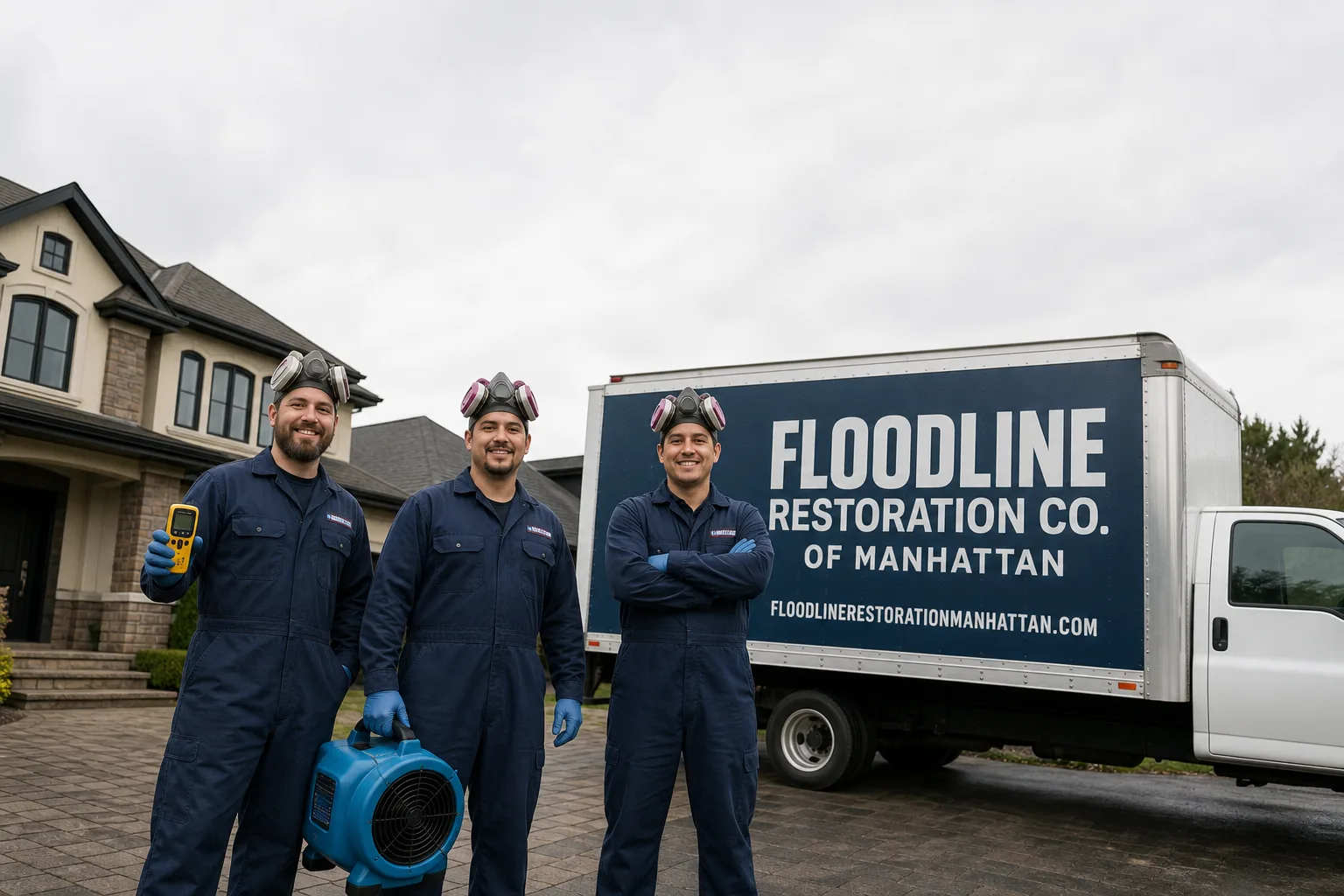
Free visual inspection and a written scope of work before any mitigation begins - photos, moisture readings, and drying logs go in your claim file
The scope we write is the scope we bill. Anything new gets shown to you, in writing, before we touch it.






 Before
 After
After Before
 After
After Before
 After
After24/7 Emergency Mold Remediation in New City
Mold remediation in New City typically runs $1,800 to $6,500 for a contained basement or split-level family room job, and the work usually starts within 24 hours of your call. A live dispatcher answers at (917) 924-4221 around the clock, every day of the year. We dispatch crews into New City neighborhoods within 45 minutes of your call, and the visual inspection is free. After a sump pump failure or ice-dam leak, the first 48 hours decide whether you’re dealing with a small containment job or a full wall-cavity remediation. Mold doesn’t wait, and neither do we.
If you’re reading this on a Sunday night in February with water still standing in your lower level, call now. We’ll be there when we say.
Understanding Mold Remediation Severity in New City Properties
Not all mold jobs are equal, and New City’s housing stock makes severity calls more complicated than in newer suburban towns. The colonials and split-levels built from the 1950s through the 1980s here have full basements and below-grade family rooms with finished drywall and carpet. That finished surface hides moisture behind it. By the time you see staining, the colony has usually been active for days or weeks.
We classify every job during the initial inspection. A Category 1 water loss means clean water from a burst supply line; if we contain and dry it within 48 hours, mold growth typically never starts. Category 2 water carries contaminants, and Category 3 water from sewage or groundwater intrusion demands full containment, air scrubbing, and antimicrobial application. In New City’s split-levels, the below-grade family room tier is the most common Category 3 site, because sump pump failures pull groundwater and clay-laden silt directly into that space. Containment is non-negotiable there: without it, mold spores migrate up the stairwell into the upper living areas. Moisture mapping with thermal imaging tells us exactly how far into wall cavities the water traveled. HEPA air scrubbers run throughout containment, and we do not remove them until clearance testing confirms spore counts returned to normal background levels for the area.
Why New City Property Owners Choose Floodline Restoration Co. of Manhattan
- 45-minute response commitment to New City. We dispatch from a metro office with crews staged for Rockland County routes, so a certified technician reaches most New City addresses within the hour.
- A live person answers, 24/7. No automated phone tree, no answering service script. You get a dispatcher who knows the local roads and can tell you exactly when the crew arrives.
- IICRC-certified crews trained to WRT and AMRT standards. Every technician carries background checks, wears a uniform, and follows the same containment and drying protocols on every job.
- Free visual inspection with moisture mapping. We read the moisture levels in walls and flooring before we quote, so you’re paying for actual work, not guesswork.
- Direct insurance billing. We document from hour one and bill your carrier directly. You never play messenger between Floodline and the adjuster.
- One crew from containment to reconstruction. No mid-job handoff to a sub you’ve never met. The same certified team that contains the mold rebuilds the drywall and trim when it’s done.
Our Mold Remediation Process
Inspection & Assessment
We map the moisture throughout the affected space using thermal imaging and hygrometers. For New City split-levels, we check the family room tier first, then trace upward through wall cavities and ductwork.
Extraction & Stabilization
Standing water comes out immediately with truck-mounted extraction units. Saturated drywall and carpet are removed inside containment, and the affected area is stabilized within hours, not days.
Containment & Air Scrubbing
We seal off the work area with 6-mil poly barriers and negative air pressure. HEPA air scrubbers run continuously so mold spores never migrate into clean rooms.
Cleaning & Antimicrobial Treatment
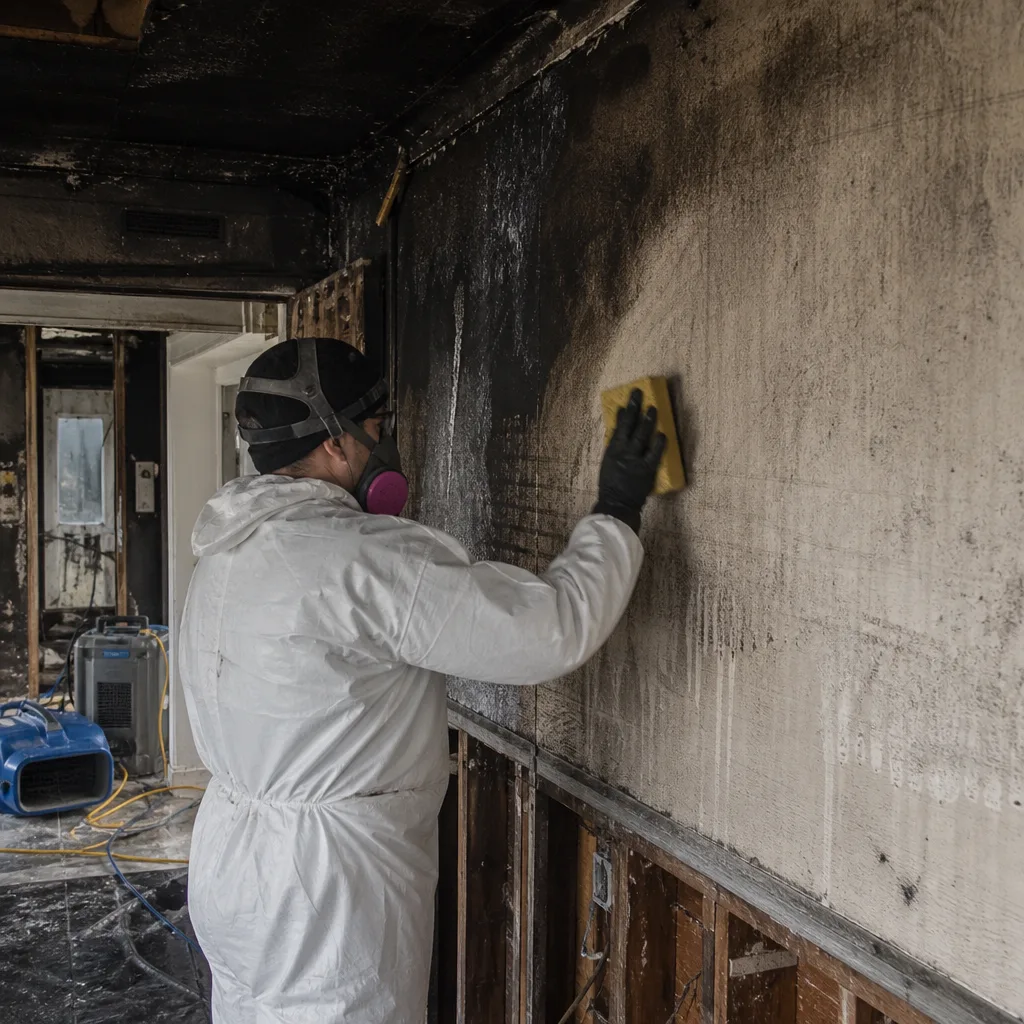
All affected surfaces receive professional-grade antimicrobial application after mechanical removal of visible mold. This kills remaining spores and prevents regrowth in the treated area.
Structural Drying
Dri-Eaz dehumidifiers, Phoenix air movers, and Injectidry systems run until the dry standard is met. Daily moisture readings go into a log your adjuster receives directly.
Repairs & Restoration
We rebuild what needed removal: drywall, insulation, baseboards, and flooring. The same crew that contained the mold finishes the job, and the 90-Day Done Right Promise covers every piece of it in writing.
Need Emergency Mold Remediation in New City Now?
Crews minutes away, answering live 24 hours a day. The sooner we start, the less it costs.
Working With Your Insurance Company
Most New City homeowners have mold coverage tied to a covered water event, like a sump pump failure during a nor’easter or a burst supply line during a January deep freeze. The key is proving the mold resulted from that covered loss, not long-term neglect. That’s where documentation decides the outcome. We photograph every inch before removal, log moisture readings daily, and write a line-item scope that matches industry-standard estimating software. Your adjuster receives the documentation directly from us, and we handle the back-and-forth so you don’t spend three weeks fighting over a claims line. The Keystone Standard applies here too: if the remediation fails within 90 days, we make it right. No arguing, no paperwork battles.
What We Provide Your Insurer
- Thorough documentation of the loss
- Photos of all damage, room by room
- Moisture readings and drying logs
- A detailed, line-item scope of work
- Direct coordination with your carrier
Built for New City’s Loss Calendar
New City takes its hardest hits during the months when most people aren’t thinking about mold at all. January brings deep freezes that burst supply lines in unheated basement utility rooms. The pipes crack, water runs for hours while the house sits empty, and by the time someone notices, drywall is saturated and mold spores are already colonizing in the dark. Spring snowmelt is the other big one. Rockland County’s clay-heavy glacial soils hold water against foundation walls, sump pits fail or overflow, and the below-grade family room of a split-level becomes a wicking box. The partially finished tier traps moisture between drywall and concrete block, and that musty smell gets written off as “normal basement.” It’s not. Summer thunderstorms rarely cause the deep saturation we see from ice dams and snowmelt, but they do push water into crawl spaces and expose roof leaks that have been quietly feeding attic mold since winter. The pattern across New City is clear: most mold problems trace back to one bad storm or one cold snap, not years of high humidity. That’s why we stage drying equipment for Rockland County routes from November through April and schedule inspections quickly after every major storm event.
Mold Remediation Across New City’s Neighborhoods
We work throughout New City, and the housing patterns shift depending on which roads you travel. Around Ridge Road and the western slopes, mature oaks crowd close to the rooflines of 1960s colonials. Ice dams form along those shaded eaves every winter, and meltwater works into attics and wall cavities. The mold doesn’t show up for months, usually as staining along ceiling corners in upstairs bedrooms. Near Little Tor Road and the central corridor, split-levels and raised ranches dominate, and the below-grade family room tier is the consistent trouble spot. Sump pump failures there mean water that sits for days before anyone sees it, and by then the drywall wicks moisture a foot above the baseboard. Down toward Route 304 and the commercial strips, older ranches with shallow crawl spaces hold moisture and feed mold colonies that spread into floor joists and subflooring. We know the failure modes in each of these areas because we’ve remediated them repeatedly. The local pattern matters more than any generic checklist.
Specialized Mold Remediation Services We Offer in New City
Mold Inspection & Testing
We start with a visual inspection and moisture mapping, then collect air and surface samples when the scope calls for it. For New City split-levels, we inspect the family room tier, the main basement, and the attic in the same visit. You get a clear scope with written findings before any remediation begins.
Mold Removal
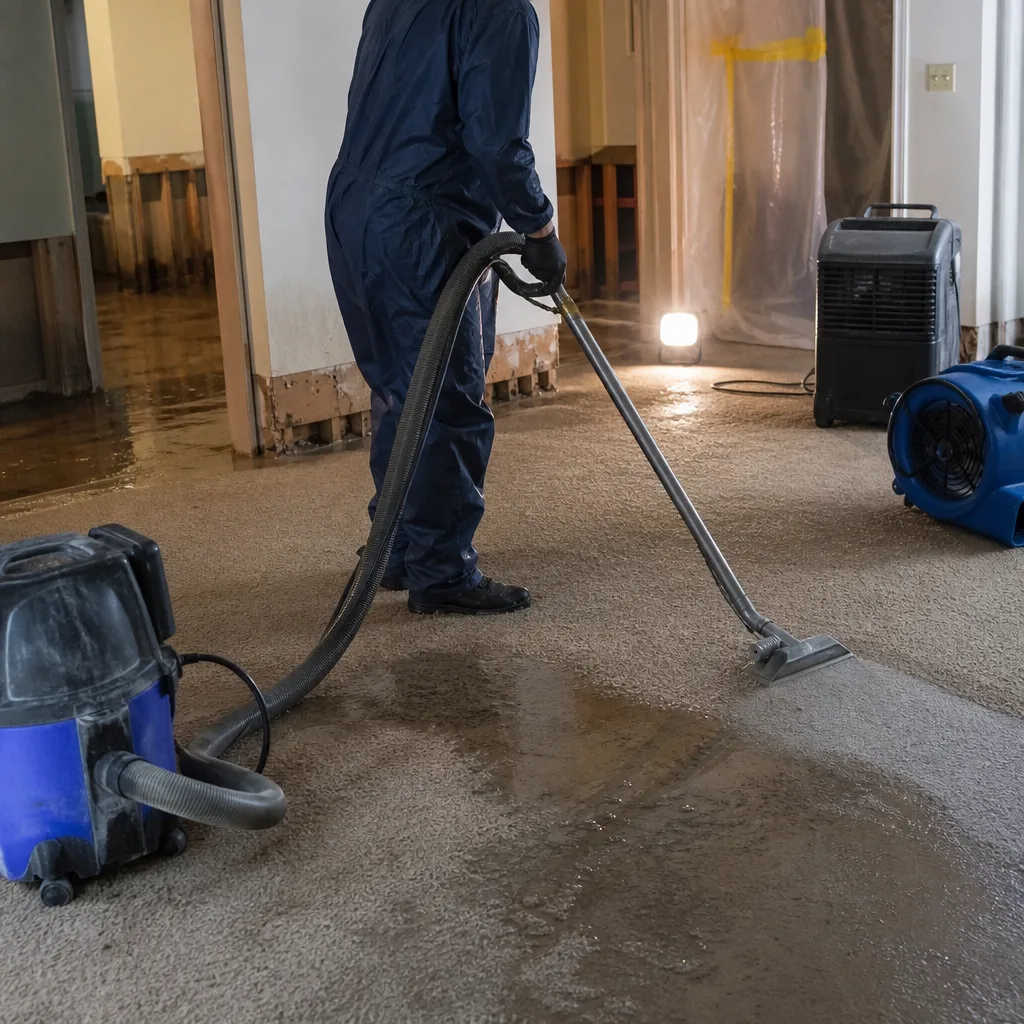
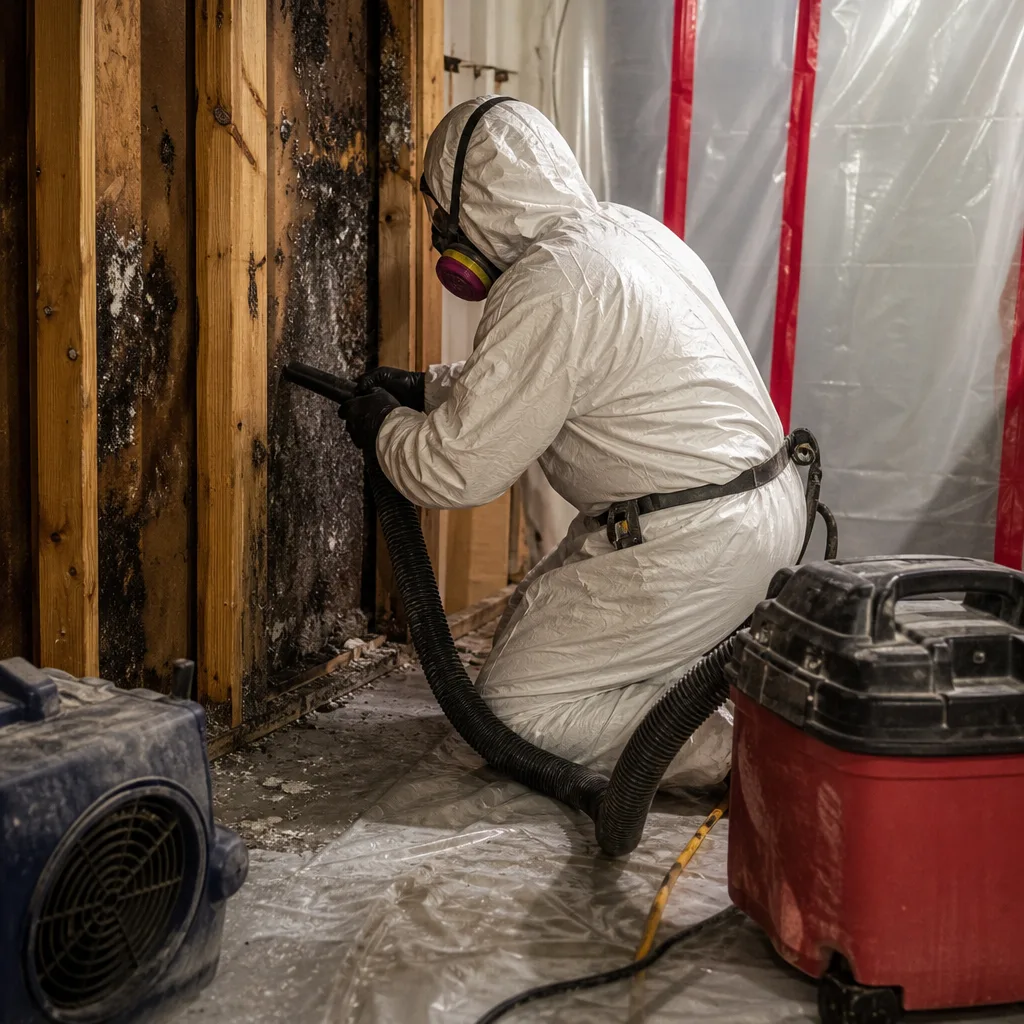
Mechanical removal of visible mold, full containment, and air scrubbing. In New City homes with ductwork running between the family room and upper floors, we check the returns and supply lines for spore spread and include HVAC cleaning in the scope when readings warrant it.
Black Mold Remediation
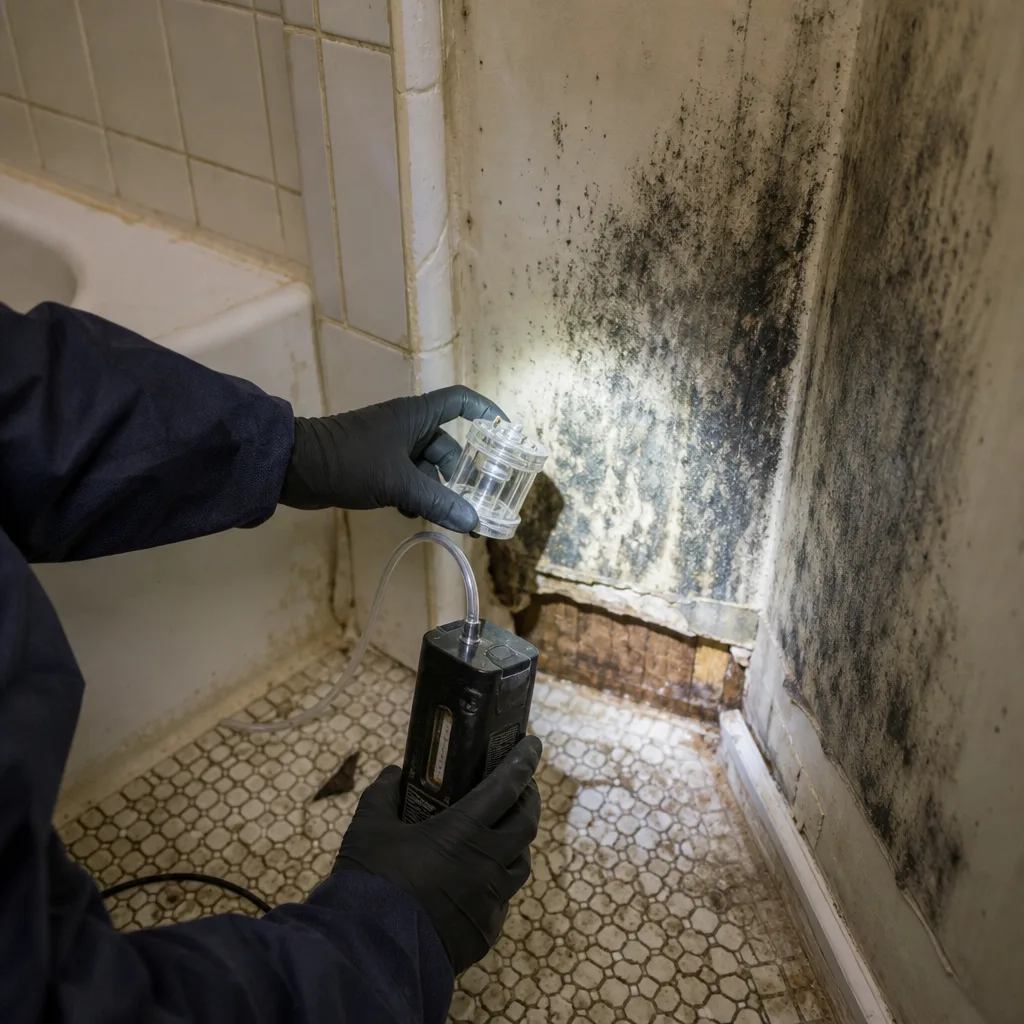
Stachybotrys chartarum is the one people worry about, and rightly. It thrives on cellulose-rich materials like drywall and ceiling tile after prolonged water exposure. The below-grade family room tier of a New City split-level is a textbook growing environment after a sump failure. We treat black mold jobs with the same containment and clearance protocols, but with additional PPE and more aggressive demolition in affected wall cavities.
Air Quality Restoration
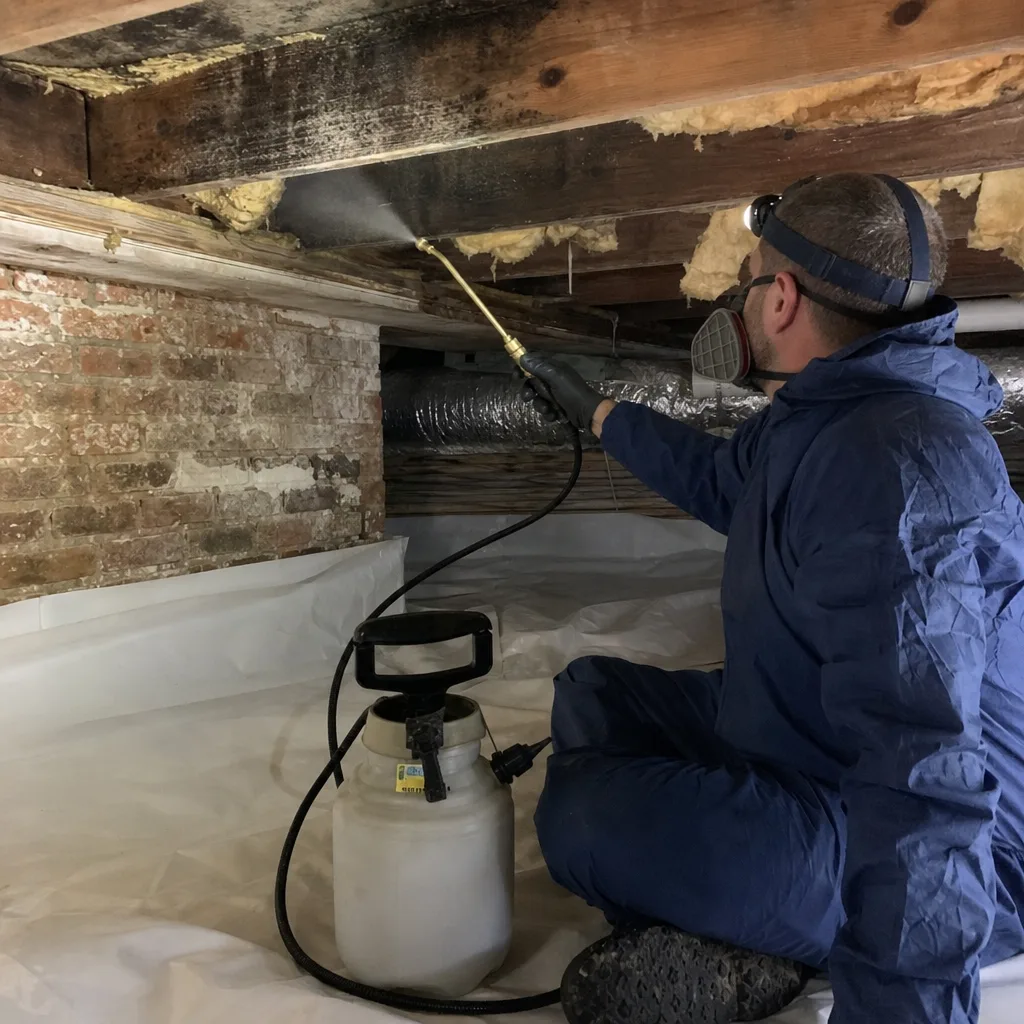
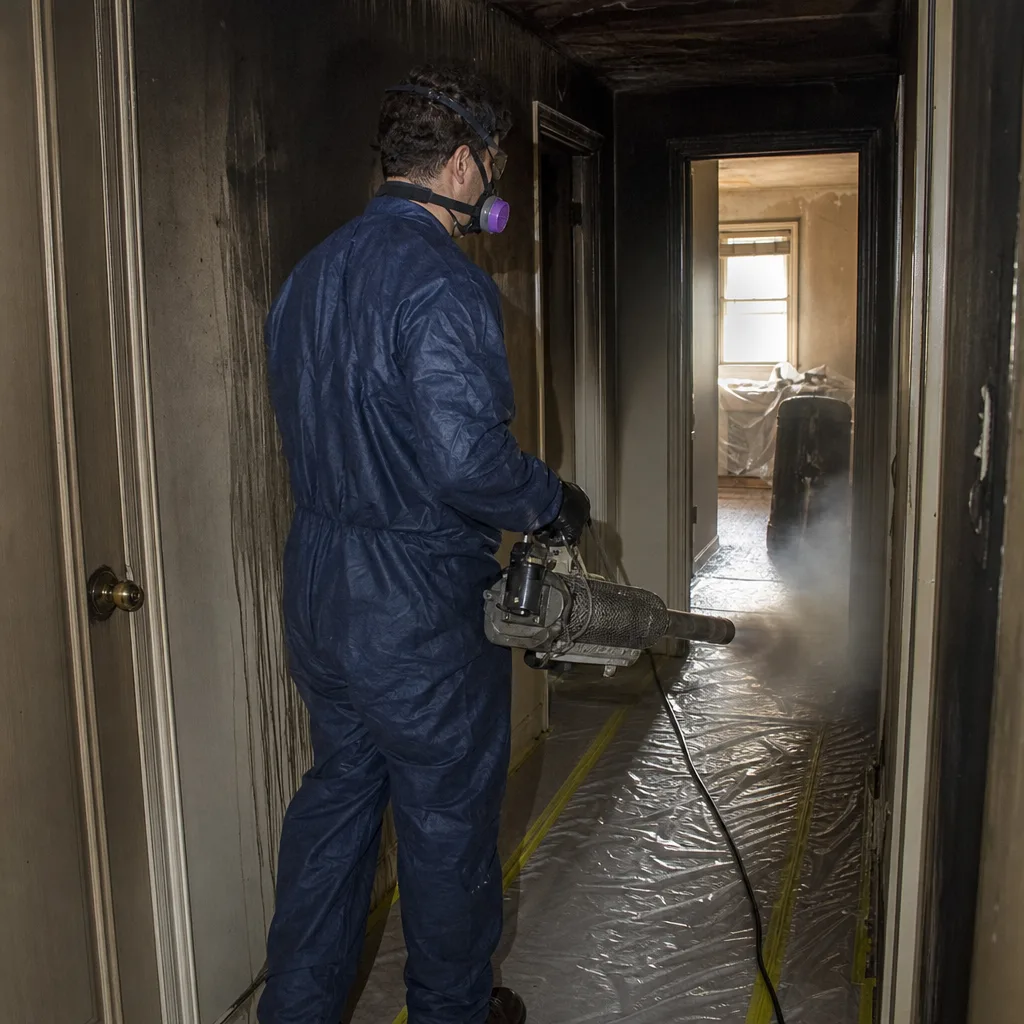
After containment comes the air. We run HEPA air scrubbers during remediation, then collect post-remediation air samples to confirm spore counts returned to normal background levels for Rockland County. That clearance report matters, especially if you’re selling a New City home where a prior mold issue shows up on a disclosure.
Crawl Space Treatment
Many of the older ranches along Route 304 and the southern reaches of New City have shallow crawl spaces with dirt floors. Moisture rises, condenses on floor joists, and quietly feeds mold that homeowners never see. We install vapor barriers, treat affected framing, and address humidity control so the problem stays gone.
Moisture & Humidity Control
The long-term fix is controlling the water. We recommend and install dehumidification systems, sump pump upgrades, and drainage improvements specific to New City’s clay-heavy soil and high water table. If the moisture source isn’t corrected, remediation is just a temporary bandage.
What happens when you call
- 1
A real person answersNo phone trees - you reach a local pro.
- 2
You get an upfront price rangeHonest numbers before anyone is dispatched.
- 3
A background-checked tech heads outLicensed & insured, dispatched right away.
- 4
You approve before work beginsNothing starts until you say go.
Mold Remediation Costs in New City, NY
So what does this actually cost in New City? A contained mold removal job in a single room or below-grade family room tier typically runs $1,800 to $3,500. A full split-level remediation involving the family room, stairwell containment, and HVAC cleaning lands between $4,000 and $6,500. Crawl space treatment with vapor barrier installation ranges $2,200 to $5,000 depending on square footage and access. Mold inspection and air quality testing alone runs $400 to $900 when no remediation is needed. The variables that move the price: how far moisture traveled into wall cavities, whether ductwork requires cleaning, and whether any reconstruction (drywall, insulation, flooring) is needed. Insurance covers most mold remediation in New City when it’s tied to a covered water event. The free visual inspection gives you a firm scope before any work begins, and the price we quote is the price you pay. No surprises on the bill.
We Also Serve Cities Near New City
Our crews handle mold remediation across Rockland County, including Mold Remediation work in Congers, Valley Cottage, Spring Valley, and Nanuet. If you’re in any of those towns and have water where it shouldn’t be, call before the 48-hour clock runs out.
Serving New City, NY - Our Local Coverage Area
We’re based in the New City area and know this community well. Use the map below to see our service coverage - if you’re nearby, we can almost certainly help.
New City Mold Remediation Questions, Answered
How quickly can mold start growing after a sump pump failure floods my New City split-level’s family room?
Mold can begin colonizing within 24 to 48 hours in a flooded New City split-level family room, and faster in summer when humidity is higher. The below-grade tier is dark, warm, and filled with drywall and carpet, which are exactly what mold spores need. If water sat for more than 48 hours, assume visible mold is present even if you don’t see it yet. Call (917) 924-4221 for a free inspection.
Does New City’s clay-heavy soil make basement mold problems worse than in flatter Bergen County suburbs?
Yes. Rockland County’s glacial clay drains poorly, so groundwater presses against foundation walls for days after a storm instead of soaking away. That sustained moisture saturates concrete block and feeds mold colonies behind finished drywall in New City basements and family rooms. In flatter Bergen County towns where soils drain faster, the same storm typically produces less wall-cavity saturation. Clay soil means longer drying windows and more aggressive initial containment.
Why should I check the lower-level ‘family room’ tier of my New City split-level for mold before the main basement?
Because the family room tier in a New City split-level sits below grade and is usually finished with drywall and carpet over concrete. When a sump pump fails, water collects there first and often goes unnoticed because the space is partially finished and rarely entered daily. The moisture wicks up through drywall into wall cavities, and mold establishes behind the surface before any staining appears. The main basement, with exposed concrete walls, typically drains faster and shows water immediately. Check the family room first.
Can ice dams on my New City colonial’s steep roof lead to mold inside walls even if the attic looks dry?
Yes. Ice dams form on New City colonials when snow melts at the warmer upper roofline and refreezes at the cold eaves. Meltwater backs up under shingles and runs down into wall cavities and insulation, far from the attic space itself. The attic can look completely dry while the wall cavities are saturated. By the time staining appears on interior ceilings or walls, the mold has often been active for weeks. If you saw ice dams this winter, schedule a moisture inspection even without visible water.
What is the difference between water categories, and why does it matter for mold remediation in New City?
Category 1 is clean water from a supply line or faucet. Category 2 is contaminated water that can carry bacteria, like sump pump discharge. Category 3 is grossly contaminated water from sewage backups or groundwater flooding. The category determines how aggressive the remediation must be. In New City, sump pump failures during nor’easters usually bring Category 3 water into the family room tier, which means full containment, antimicrobial treatment, and more extensive demolition are required. Category misclassification leads to incomplete remediation and regrowth.
How long does mold remediation take in a typical New City split-level?
Most single-room or family room tier remediations in New City finish in 2 to 4 days. That includes containment, removal, antimicrobial treatment, structural drying, and clearance testing. Larger jobs involving multiple rooms, ductwork cleaning, or full basement remediation run 5 to 7 days. Reconstruction adds time depending on scope. We’ll give you a written timeline after the inspection.
Can I stay in my New City home during mold remediation?
In most cases, yes. Containment isolates the work area with 6-mil poly barriers and negative air pressure, so spores don’t migrate to living spaces. For black mold jobs or when a family member has respiratory issues or immune concerns, we recommend staying elsewhere until clearance testing confirms the air is safe. We’ll advise you honestly after the initial assessment.
What should I do in the first 30 minutes after discovering mold in my New City home?
Don’t disturb the mold or attempt to clean it yourself. Scrubbing or spraying can release spores into the air and spread the colony into ductwork. Close doors to the affected area if possible. Call (917) 924-4221 and a live dispatcher will guide you through the next steps and get a certified crew to your New City address, usually within the hour.
Written by Curt Bowman, Owner at Floodline Restoration Co. of Manhattan, serving New City and Rockland County with certified mold remediation since 2010.