
Free visual inspection and a written scope of work before any mitigation begins - photos, moisture readings, and drying logs go in your claim file
The scope we write is the scope we bill. Anything new gets shown to you, in writing, before we touch it.






 Before
 After
After Before
 After
After Before
 After
After24/7 Emergency Mold Remediation in New Hempstead
Mold remediation in New Hempstead typically runs $900-$2,800 for a contained removal in a finished basement, and $2,500-$6,500 when a mikveh leak has driven moisture through subfloor assemblies and wall cavities. We answer the phone live at (917) 924-4221, every hour of every day, and we can have a certified crew on-site in New Hempstead within 45 minutes of your call. The sooner we find the moisture source and set containment, the less drywall, tile, and framing you’ll have to replace.
Most New Hempstead homes we’re called to are 1960s-1980s colonials and split-levels with additions stacked on additions. Those layered builds hide water beautifully. A small leak behind a basement conversion or a mikveh drain fitting can feed mold for weeks before you smell it. That’s why our first visit always includes thermal imaging and a full moisture map, not just a visual walkthrough.
Understanding Mold Remediation Severity in New Hempstead Properties
Mold in New Hempstead rarely starts where you find it. It starts at a water source: a failed mikveh fitting, a weeping block wall after a Nor’easter, a corroded galvanized supply line inside a 1970s wall cavity. By the time staining shows on drywall or paneling, the colony has usually spread behind the finished surface. That’s why we classify every job by moisture category and affected area, not just by what’s visible.
Category 1 water (clean supply-line leaks) becomes Category 2 or 3 within 48-72 hours as it picks up contaminants from building materials. In New Hempstead’s clay-heavy glacial soils, basement seepage is almost never Category 1. The water pushing through block foundations carries soil bacteria and minerals with it. When that water sits behind carpet, under vinyl plank, or inside a wall cavity, mold growth typically begins within 24-48 hours. In a house with multiple generations of construction, the affected area can be much larger than the visible stain suggests.
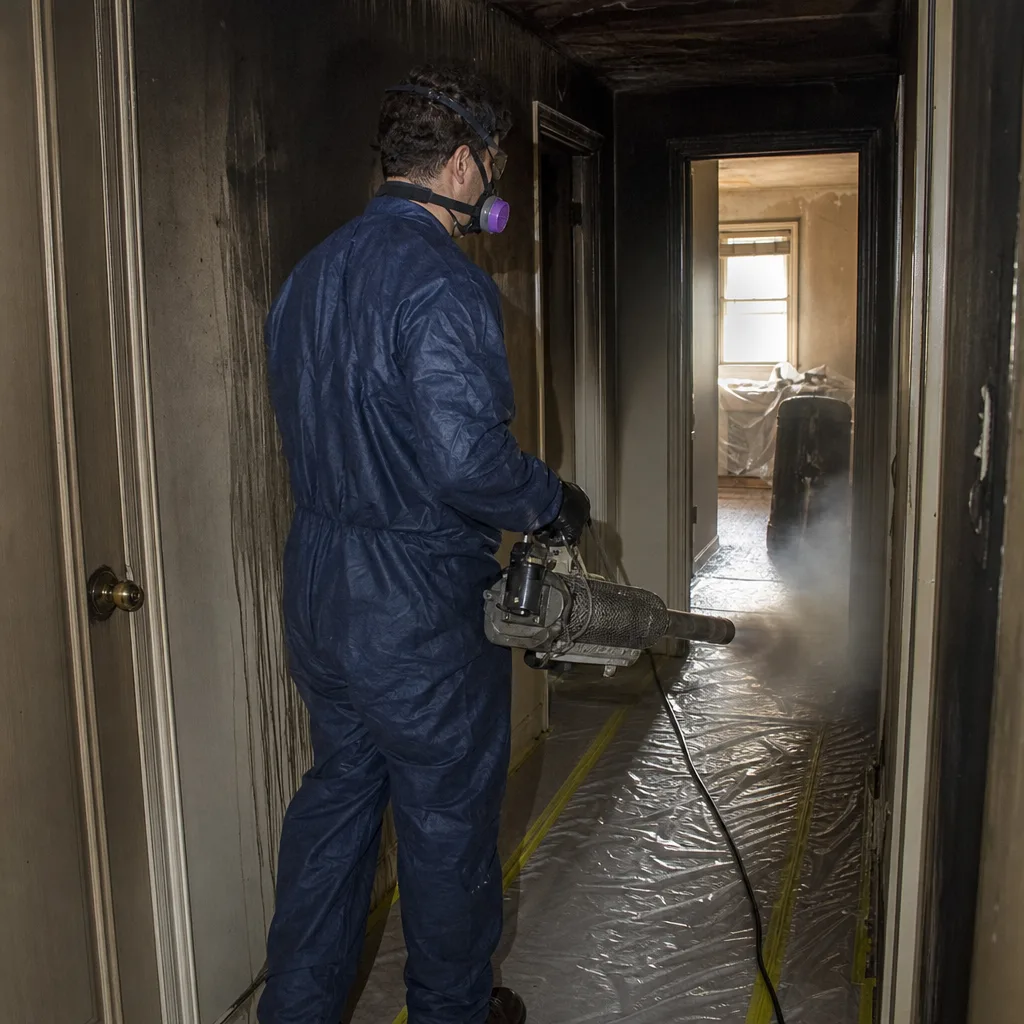
We use IICRC standards for containment, air scrubbing, and clearance. HEPA-filtered negative air machines keep spores from migrating into living space while we remove affected materials. Every job ends with a written clearance report and drying log, not a handshake.
Why New Hempstead Property Owners Choose Floodline Restoration Co. of Manhattan
- 45-minute response commitment. We dispatch from our New York City office to New Hempstead immediately. A live person confirms your address and we’re rolling.
- 24/7 live answer, every call. You’ll never get a recording at (917) 924-4221. A dispatcher picks up, takes your information, and puts a crew in motion.
- IICRC-certified crews. Our technicians carry current IICRC certifications in mold remediation (AMRT) and water damage restoration (WRT). Background-checked, uniformed, on time.
- Free visual inspection with every emergency call. You’ll know what you’re dealing with before you commit to anything. We write the scope before we start work.
- Direct insurance billing. We document everything from the first hour, send our line-item scope directly to your adjuster, and handle the carrier communication ourselves.
- One team from first assessment to finished rebuild. No mid-job handoff. The crew that finds the mold is the crew that removes it and rebuilds what was torn out.
Our Mold Remediation Process
Inspection & Assessment
We walk the property with thermal imaging and moisture meters. In New Hempstead homes with mikvehs or multiple additions, we pay special attention to plumbing chases, subfloor access points, and the seam where original 1960s framing meets newer work.
Containment & Source Control
We stop the water at its source first, whether that’s a failed fitting, a foundation crack, or a supply line. Then we set HEPA negative-air containment so spores don’t move through the house during removal.
Drying & Dehumidification
Dri-Eaz and Phoenix dehumidifiers run continuously until every affected material hits dry standard. We log moisture readings daily and give those logs to you and your carrier.
Cleaning & Sanitization
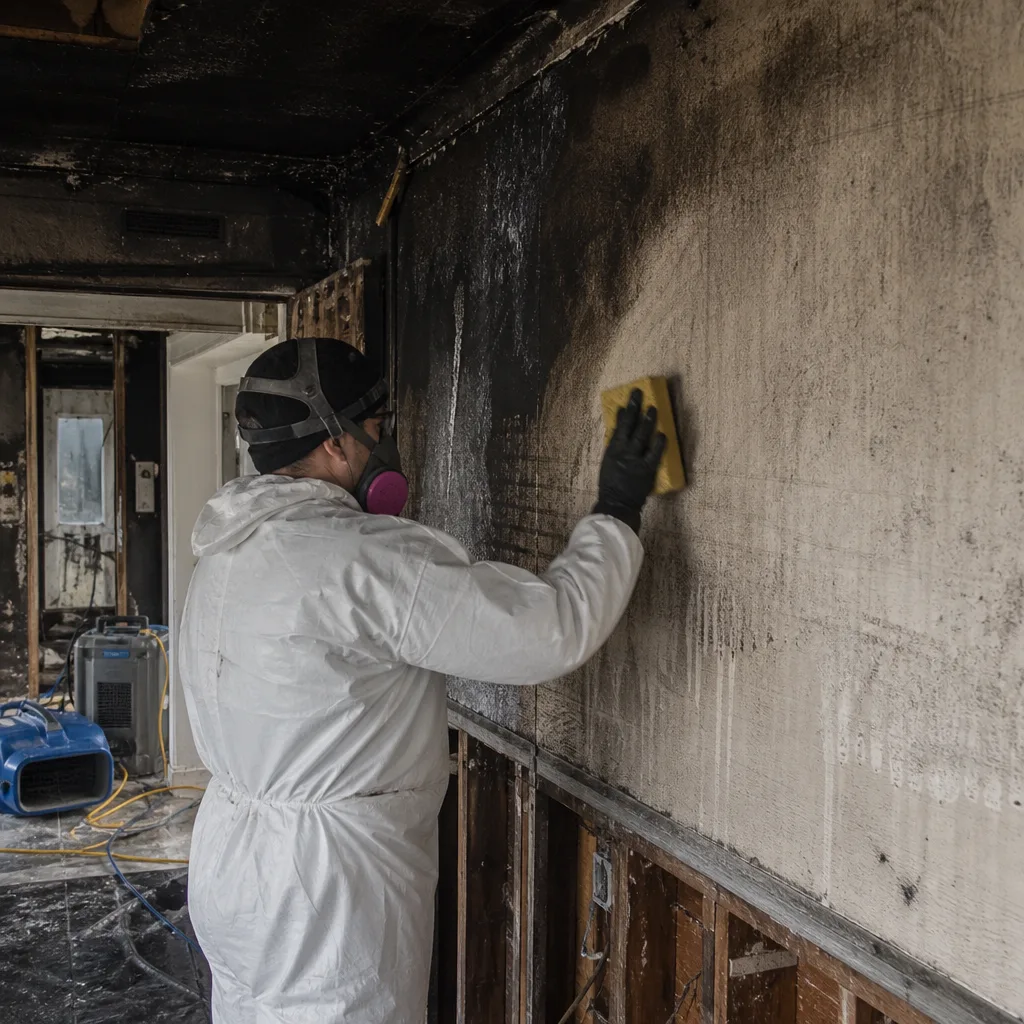
HEPA air scrubbers run throughout the job. We clean exposed framing, treat remaining surfaces with antimicrobial solutions, and remove any material that can’t be salvaged.
Mold-Specific Treatment
For New Hempstead’s finished basements and mikveh-adjacent rooms, this often means tile removal, subfloor drying with Injectidry mats, and cavity treatment behind greenboard before reconstruction begins.
Repairs & Restoration
We rebuild what we removed. Drywall, tile, trim, paint, insulation. The goal is to leave your New Hempstead home looking like the mold never happened, with documentation proving it didn’t just get covered up.
Need Emergency Mold Remediation in New Hempstead Now?
Crews minutes away, answering live 24 hours a day. The sooner we start, the less it costs.
Working With Your Insurance Company
Mold coverage in New Hempstead depends on the source of the water and the language in your policy. Sudden pipe failures and storm-driven seepage are often covered, while long-term seepage from foundation issues may not be. We’ve handled enough claims in Rockland County to know how carriers respond to each scenario.
From the first hour on-site, we photograph every affected room, log moisture readings, and document the full scope of what we remove and why. Our estimators write line-item scopes using industry-standard pricing software that adjusters recognize. We talk to your adjuster directly, send them the drying logs, and keep you out of the middle. Curt Bowman built Floodline Restoration Co. of Manhattan on that principle in 2010: the homeowner should never have to play messenger between a contractor and an insurance carrier.
What We Provide Your Insurer
- Thorough documentation of the loss
- Photos of all damage, room by room
- Moisture readings and drying logs
- A detailed, line-item scope of work
- Direct coordination with your carrier
Built for New Hempstead’s Loss Calendar
New Hempstead’s mold season doesn’t follow a simple spring-to-fall curve. It spikes after every major rain event, and it runs all year because so much of the village’s water intrusion happens inside the house, not outside it.
January and February bring deep freezes that crack supply lines in unheated crawl spaces and exterior walls. Those leaks run behind drywall for days before anyone notices, and by then mold has begun to colonize insulation and framing. March and April thaw the ground and raise the water table. New Hempstead’s clay-heavy glacial soils drain slowly, so hydrostatic pressure builds against block foundations. Finished basements take on water through cove joints and wall cracks, and mold follows within 48 hours.
Summer thunderstorms dump inches of rain in an hour. The village’s rolling terrain channels runoff toward lower-grade foundations. Homes on the downslope side of streets see basement seepage that never fully dries before the next storm. Fall brings Nor’easters, which combine extended rain with saturated soil. Every one of these events sends a surge of calls to our dispatch desk, and every one of them leaves behind the same hidden problem: moisture trapped behind finishes, feeding mold the homeowner can’t see.
Add to that the year-round reality of private mikveh plumbing. A slow leak at a fill fitting or drain connection doesn’t wait for a storm. It weeps continuously into the subfloor, creating the kind of concealed mold problem that only shows up as a musty odor months later. We schedule around Shabbat and Yom Tov restrictions when we need to, but the mold itself doesn’t rest.
Mold Remediation Across New Hempstead’s Neighborhoods
New Hempstead’s housing stock is remarkably consistent: large single-family colonials and split-levels built between the 1960s and 1980s, many of them expanded two or three times. The differences show up block by block.
Along N. Main Street, we see split-levels with finished lower levels that sit at or below grade. Those lower levels take on water every time the soil saturates, and mold hides behind wood paneling and under carpet. In the streets running east toward the Palisades Parkway corridor, homes with walkout basements and side additions tend to have complex roof drainage patterns. A single clogged gutter can direct water against a foundation wall for an entire season before anyone climbs up to check.
The neighborhoods around Route 306 have some of the oldest homes in the village. Original 1960s galvanized supply lines are reaching the end of their service life, and when they fail, they typically leak inside wall cavities. We’ve pulled drywall in these homes and found mold colonies extending eight to ten feet from the leak point. Near the village’s eastern edge, where properties back up against wooded drainage areas, basement humidity runs high year-round. Crawl space treatment and dehumidification are standard recommendations in those homes.
Specialized Mold Remediation Services We Offer in New Hempstead
Mold Inspection & Testing
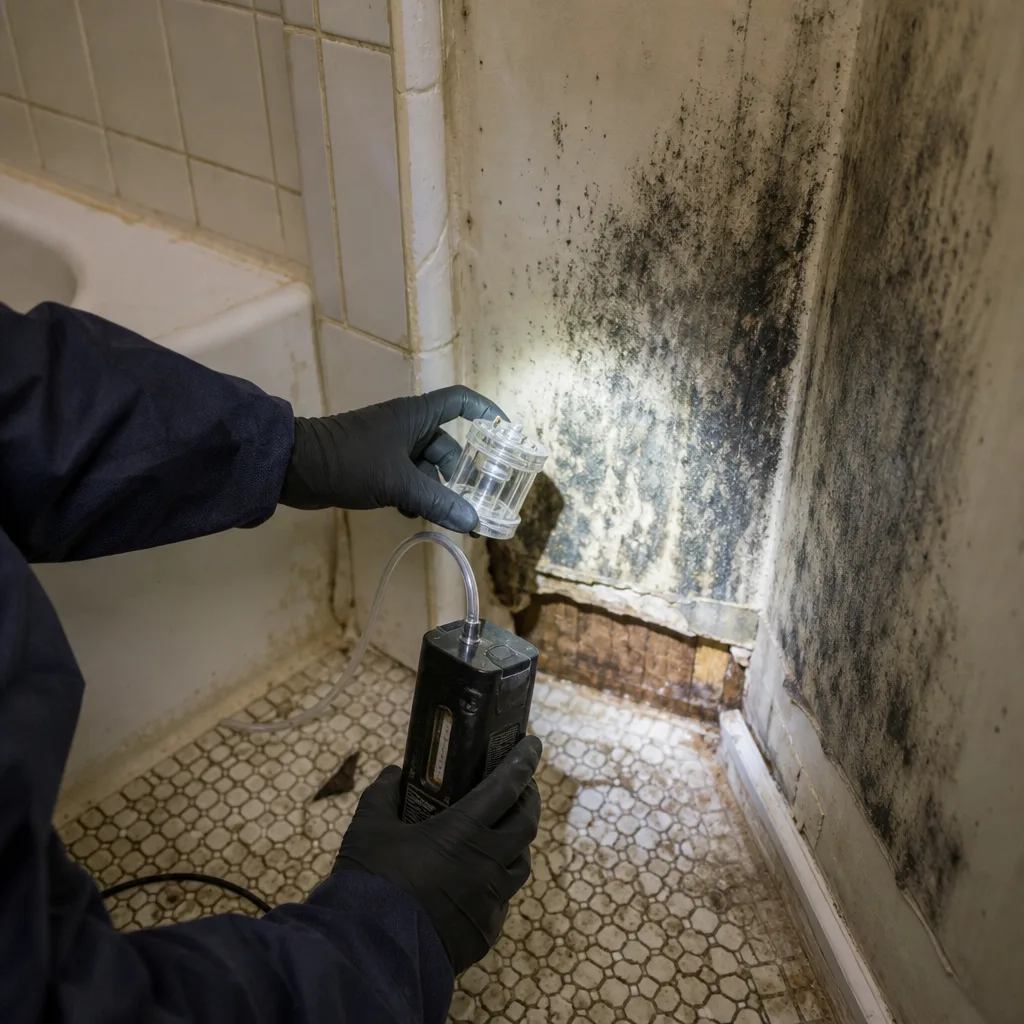
We start every inspection with thermal imaging and moisture mapping, not a clipboard. For New Hempstead homes with mikvehs, we specifically examine the fill and drain plumbing, the subfloor around the bath, and the wall cavities behind tile. Air sampling and surface testing confirm what we find, and we give you the results in writing.
Mold Removal
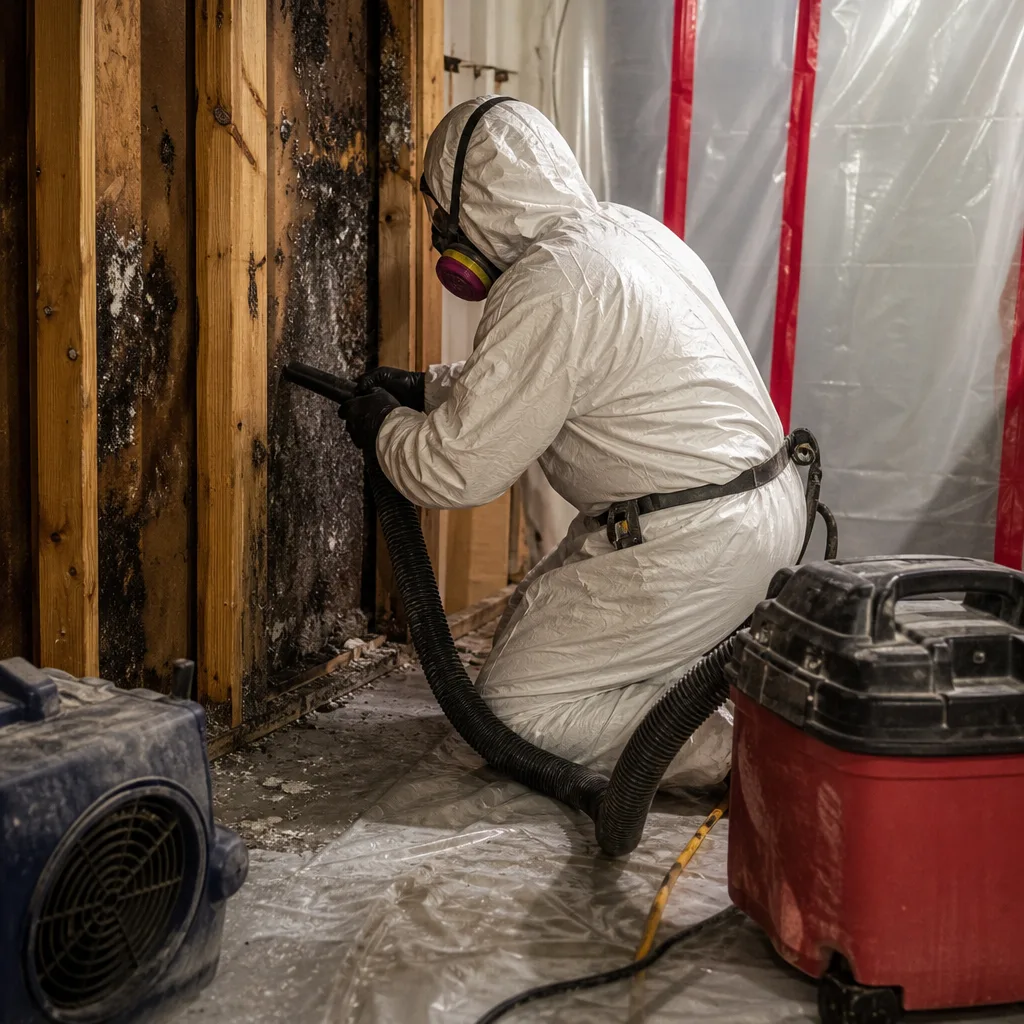
Containment first, removal second. We isolate affected areas with HEPA negative-air pressure, remove saturated or colonized drywall, insulation, and carpet, and clean exposed framing. Every piece of removed material gets bagged and disposed of properly, not piled in the driveway.
Black Mold Remediation
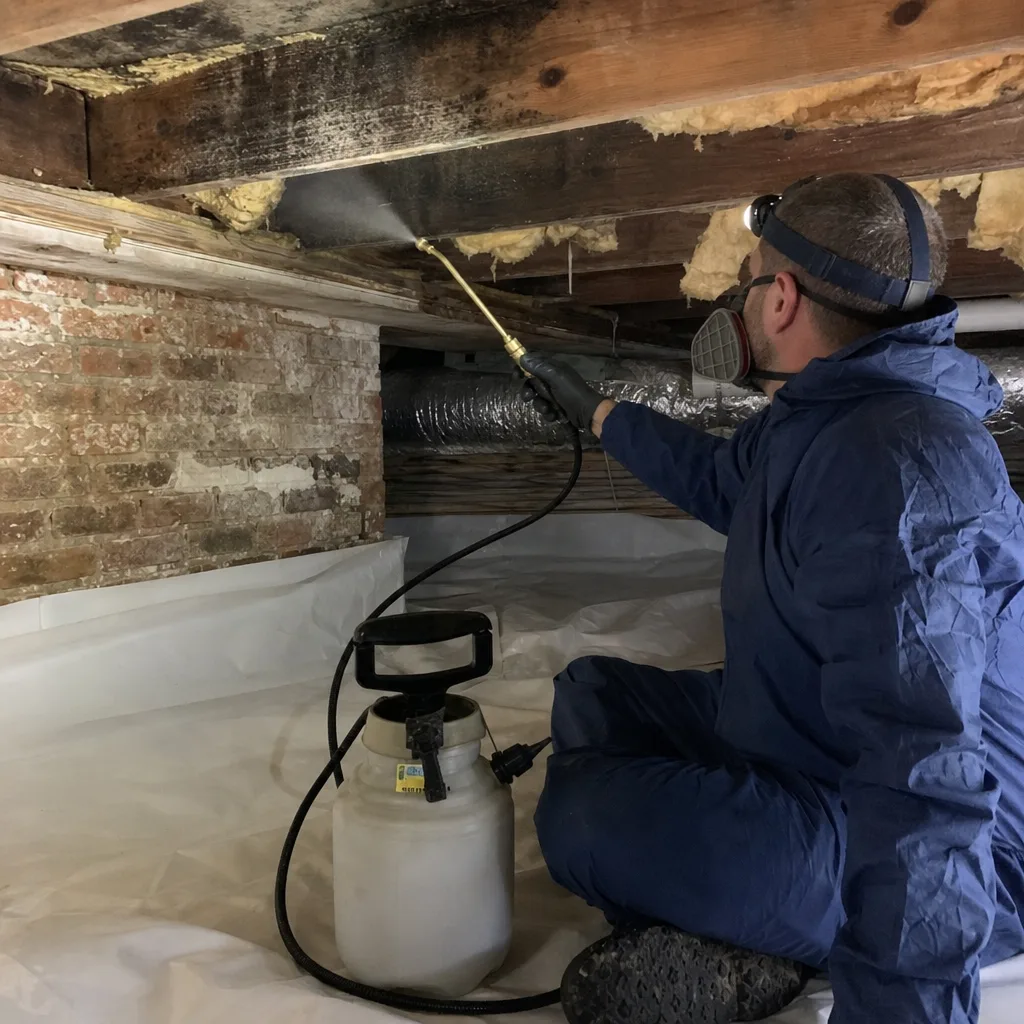
Stachybotrys, the species most people mean when they say “black mold,” needs constant moisture to thrive. In New Hempstead, that usually means a hidden leak, not just high humidity. We find the water source, fix it, remove every affected material, and verify clearance with post-remediation testing.
Air Quality Restoration
After removal, we run HEPA air scrubbers until airborne spore counts return to background levels. For homes with respiratory sensitivities, which matters in multigenerational households with young children and elderly residents, we can provide before-and-after air sampling documentation.
Crawl Space Treatment
Many New Hempstead split-levels have partial crawl spaces under additions. Those spaces stay damp for months after any rain event. We install vapor barriers, seal foundation vents where appropriate, and set dehumidifiers sized for the actual cubic footage. The goal is to break the moisture cycle that keeps feeding mold above the crawl space.
What happens when you call
- 1
A real person answersNo phone trees - you reach a local pro.
- 2
You get an upfront price rangeHonest numbers before anyone is dispatched.
- 3
A background-checked tech heads outLicensed & insured, dispatched right away.
- 4
You approve before work beginsNothing starts until you say go.
Mold Remediation Costs in New Hempstead, NY
A contained mold removal in a single finished basement room in New Hempstead typically runs $900-$2,800. A full basement remediation with subfloor drying after a mikveh leak usually lands between $2,500 and $6,500. Crawl space treatment with vapor barrier and dehumidification runs $1,200-$3,200 depending on square footage and access.
What moves the price: the square footage of affected material, whether tile or hardwood needs removal, whether subfloor joists need Injectidry mat drying, and how much reconstruction is required afterward. Insurance-covered jobs where a sudden leak caused the mold generally fall under your water damage coverage, minus your deductible. Long-term seepage from foundation issues is less likely to be covered, which is why we give you a written scope and an honest conversation about what the carrier will and won’t pay before we start demolition.
The free visual inspection is the fastest way to get a firm number. We’ll tell you what we found, what it will cost to fix, and what can wait. Written scope, signed before work starts. No surprises.
We Also Serve Cities Near New Hempstead
Our crews regularly handle mold remediation in Fairview, Harrison, East Bronx, and Hunts Point. We know the housing stock, the soil conditions, and the building departments. If you’re outside New Hempstead but close, call the same number, (917) 924-4221, and we’ll route a crew to you.
Serving New Hempstead, NY - Our Local Coverage Area
We’re based in the New Hempstead area and know this community well. Use the map below to see our service coverage - if you’re nearby, we can almost certainly help.
New Hempstead Mold Remediation Questions, Answered
Why do mikveh leaks in New Hempstead homes often turn into mold problems before anyone sees water?
Mikveh leaks in New Hempstead homes usually happen at drain fittings and fill connections below the tile line, so the water migrates through subfloor assemblies and wall cavities before it ever surfaces on finished flooring. By the time you see staining, the mold has typically been growing for weeks. Call (917) 924-4221 and we’ll trace the leak with thermal imaging before it spreads further.
How do you handle mold remediation in a New Hempstead house with multiple additions and mixed 1960s drywall and modern greenboard?
We map moisture across every transition point between old and new construction, because water moves differently through original 1960s drywall and newer greenboard. The removal scope accounts for both materials, and we match reconstruction to the existing finishes. Each addition gets its own drying plan.
Can you schedule mold removal around Shabbat and Jewish holidays in New Hempstead?
Yes. We coordinate scheduling around Shabbat and Yom Tov restrictions, and we understand that authorization may need to wait until after nightfall on certain days. Emergency containment can often begin before full authorization, so we can keep the mold from spreading while you observe.
What is the biggest difference between mold remediation in a New Hempstead basement versus a neighboring town like Spring Valley or Monsey?
New Hempstead’s private mikvehs and multigenerational expansions create moisture sources and concealed water paths that generic mold crews in neighboring towns rarely encounter. The housing stock is similar in age, but the plumbing configurations and the volume of added square footage are different, which changes how we scope containment and drying.
How fast can mold start growing after a mikveh overflow in a New Hempstead split-level?
Mold can begin colonizing wet drywall, carpet, and subfloor within 24 to 48 hours of a mikveh overflow, especially in a split-level where the water moves downward through floor assemblies. If you’ve had an overflow, call (917) 924-4221 the same day. The faster we start drying, the less material we have to remove.
How fast can you get to New Hempstead for emergency mold remediation?
We commit to 45 minutes from dispatch. Our crews stage from the New York City office and know the routes through Rockland County. A live person answers at (917) 924-4221 and puts a crew in motion immediately.
Will my insurance cover mold remediation in New Hempstead?
It depends on the water source. Sudden pipe failures, mikveh fitting failures, and storm-driven seepage are often covered. Long-term foundation seepage usually isn’t. We document everything, send our scope directly to your adjuster, and give you an honest read on what to expect before demolition starts.
What should I do in the first 30 minutes after I find mold in my New Hempstead home?
Don’t disturb it. Don’t spray bleach on it. Don’t tear out drywall yourself, because that releases spores into the air you’re breathing. Call (917) 924-4221. We’ll walk you through shutting off the water source if you can identify it, and we’ll have a crew on the way.
Written by Curt Bowman, Owner at Floodline Restoration Co. of Manhattan, providing mold remediation throughout New Hempstead and Rockland County since 2010.