

Free visual inspection and a written scope of work before any mitigation begins - photos, moisture readings, and drying logs go in your claim file
The scope we write is the scope we bill. Anything new gets shown to you, in writing, before we touch it.






 Before
 After
After Before
 After
After Before
 After
After24/7 Emergency Mold Remediation in Nolita
Mold remediation in Nolita typically costs between $1,800 and $6,500 depending on how far the colony has spread and whether landmark-protected materials are involved. Most jobs in the neighborhood are completed within 3 to 5 days, with containment set up the same day you call. If you’re seeing mold on plaster walls, behind baseboards, or catching a musty smell near the old brick party walls, call (917) 924-4221 right now. We answer live, 24 hours a day, and a certified crew from our Mold Remediation team can be at your building within the hour.
Mold in a Nolita tenement doesn’t wait for business hours. Original timber joists from the 1890s, shared party walls, and the constant humidity that works its way through porous brick mean a small patch of visible mold is usually only the leading edge of a much larger colony. The first hour matters. Every day mold stays active, it spreads deeper into plaster keys, subflooring, and the spaces between joist bays. Call (917) 924-4221 and we’ll start with a free visual inspection. Then we’ll tell you exactly what we found, what it’ll cost, and what we’ll do about it. In writing.
Understanding Mold Remediation Severity in Nolita Properties
Mold remediation in Nolita almost always involves what we call Category 2 or Category 3 water damage. Category 2 means the water that fed the mold was contaminated, often from a failed cast-iron waste line or a water tower overflow that picked up decades of roof debris. Category 3 means sewage, and Lower Manhattan’s combined sewer system sends that into cellar-level spaces during nor’easters and summer convective storms. Those two categories require full containment, HEPA air scrubbing, and disposal of saturated materials under biohazard protocols. A simple pipe leak that sat unnoticed behind a party wall for weeks? That’s Category 1 water that’s grown a Category 3 biological problem.
The severity of a Nolita mold job depends on three things: how long the moisture has been present, what materials are wet, and whether the building is landmark-adjacent. Lime-plaster walls from the 1880s hold moisture differently than modern gypsum board. They’re thicker, more alkaline, and they dry slower. Wide-plank reclaimed floors, often original to the building, can cup and warp if dried too aggressively or with the wrong equipment. Our crews read the moisture map before we touch anything. Then we decide with you and your landmark consultant, if one’s involved, what gets dried in place and what genuinely has to come out.
Why Nolita Property Owners Choose Floodline Restoration Co. of Manhattan
- 45-minute response commitment. We dispatch from the Manhattan office and crews reach Nolita addresses fast. Most calls get a live technician on site within the hour, not the next day.
- A real person answers, 24/7. No automated phone tree. No “press 2 for emergencies.” A live dispatcher picks up at 2 a.m. and starts moving a crew toward your building.
- IICRC-certified crews. Our technicians hold WRT, FSRT, and AMRT certifications. They understand the biology of mold, not just the cleanup. And they’re background-checked and uniformed.
- Free visual inspection. Before you spend a dollar, we’ll walk the space with you, show you where the moisture is, and explain what we’d do. No pressure, no scare tactics.
- Direct insurance billing. We work with your carrier from the first hour. You won’t be the one emailing photos and estimates back and forth at midnight.
- One team from start to finish. The crew that sets containment is the crew that runs the HEPA scrubbers, takes the daily moisture readings, and rebuilds what needed to be removed. No mid-job handoff, no inherited strangers.
Floodline Restoration Co. of Manhattan was founded in 2010 by Curt Bowman. Curt built the company around a dispatch board, not a sales desk. Every job we do in Nolita carries the 90-Day Done Right Promise, our written guarantee that if it’s not done right, we make it right. No arguing, no paperwork battles. That’s the Keystone Standard, and we put it in writing on every scope we hand you.
Our Mold Remediation Process
Inspection & Assessment
We start with a full walkthrough, using thermal imaging cameras and moisture meters to find water you can’t see. In Nolita’s old tenements, that means checking behind party walls, under wide-plank floors, and around original window lintels. We’ll also test for mold species if the situation calls for it, so the remediation plan targets the actual biology in your walls.
Extraction & Stabilization
If there’s standing water or saturated materials, we remove the water and stabilize the structure first. For a water tower failure or sewer backup, that means extraction equipment running the same visit. We also set up negative air containment before any demolition begins, so mold spores don’t migrate into neighboring units through shared air shafts.
Drying & Dehumidification
Drying a 1905 brick tenement is different from drying a sheetrock condo in Queens. We use Dri-Eaz LGR dehumidifiers and Phoenix air movers sized to the actual moisture load, not a generic square-footage formula. Daily readings are logged and shared with you and your carrier until the dry standard is met. Dense brick party walls take patience. We don’t rush them.
Cleaning & Sanitization
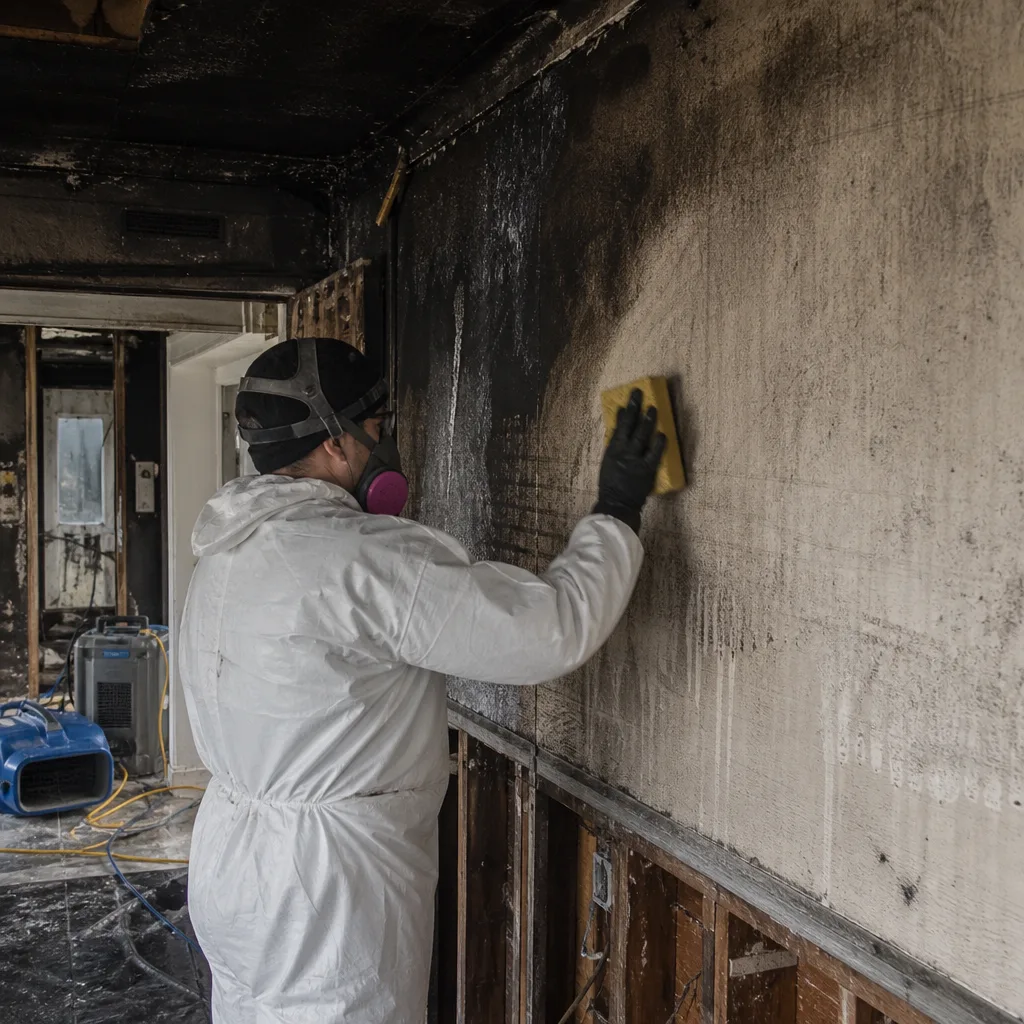
Every surface in the contained area gets HEPA-vacuumed and anti-microbially treated. The air scrubbers run continuously during this phase. If you’ve got mold in cellar retail space, we bring the air exchanges up to IICRC standards before we call the job clean.
Materials Salvage & Selective Removal
This is where Nolita work diverges from everywhere else. Original lime-plaster walls and wide-plank floors can’t just be ripped out and replaced without triggering NYC Landmarks Preservation Commission review. We use Injectidry vacuum panels to pull moisture through plaster without opening walls, and we selectively remove only what’s actually unsalvageable. Your landmark consultant, if one’s on the job, gets documentation of everything we did before we do it.
Repairs & Restoration
Once the moisture map shows every zone at pre-loss condition, we repair what was removed. That could mean lime-plaster-compatible patching, matching reclaimed floor boards, or rebuilding a cellar partition. The same Floodline crew does the work, so the hand holding the moisture meter day one is the hand holding the trowel at the end.
Need Emergency Mold Remediation in Nolita Now?
Crews minutes away, answering live 24 hours a day. The sooner we start, the less it costs.
Working With Your Insurance Company
Mold claims are among the most scrutinized in the insurance industry. Carriers frequently deny mold coverage if they decide the moisture source was “long-term” or “negligent.” That’s why documentation from the first hour matters more in a Nolita tenement than almost anywhere else. We photograph every wall cavity before we open it, log moisture readings daily, and produce a line-item scope of work that uses industry-standard language your adjuster recognizes. You won’t be playing messenger between our crew and your carrier. Floodline talks to the adjuster directly. If the insurer pushes back, Curt Bowman himself will explain the technical case. We’ve been doing that since 2010, and we’ve won more of those arguments than we’ve lost.
What We Provide Your Insurer
- Thorough documentation of the loss
- Photos of all damage, room by room
- Moisture readings and drying logs
- A detailed, line-item scope of work
- Direct coordination with your carrier
Built for Nolita’s Loss Calendar
Nolita’s mold season isn’t one season. It runs twelve months, because the building stock is old enough that something is always failing. Late January and February bring the deep-freeze pipe bursts: supply lines running through uninsulated exterior walls behind original plaster snap, and the water runs down through five floors before anyone notices. Spring thaw pushes groundwater into old basement foundations, and the freeze-thaw cycle has spent four months driving moisture deeper into the porous brick facades. Summer convective storms overwhelm the combined sewer system, sending sewage back through floor drains into cellar restaurants and retail spaces. That’s Category 3, full stop, with all the biohazard containment and disposal costs that come with it. Nor’easters in the fall do the same thing, only slower and over a wider area. And year-round, the rooftop wooden water towers on Mott and Elizabeth Streets fail at the stave joints or float valves, draining thousands of gallons through roof decks and down every floor. We plan our equipment staging around this calendar. That’s what 42 years of company history buys you: we know what’s coming before the phone rings.
Mold Remediation Across Nolita’s Neighborhoods
Nolita is small, maybe eight square blocks, but the buildings tell different stories from street to street. Along Mott Street between Houston and Broome, you’ve got the oldest tenements, most of them 1880s construction with shared party walls and original lime plaster still on the lath. Mold here runs horizontally through joist bays and laterally through the brick itself. On Elizabeth Street, the buildings run slightly newer, 1905 to 1915, with more cast-iron storefronts at grade and residential above. Water tower failures hit these buildings hardest when they happen, because the roof decks were never engineered for modern waterproofing systems. Mulberry Street has the highest concentration of cellar-level restaurants in the district. When those cellars flood with sewage during a July storm, the mold problem upstairs starts within 48 hours, even if the water never touches a residential unit. The spores move through shared air shafts and stairwells. Spring Street, the district’s northern boundary, sees more street-level water intrusion from the curb line during heavy rain, because the street predates the modern catch basin system. Each of these blocks demands a slightly different containment and drying strategy. Our crews know the difference because we’ve worked all of them.
Specialized Mold Remediation Services We Offer in Nolita
Mold Inspection & Testing
In a landmark-adjacent building, guessing is expensive. We run surface and air sampling before we write a remediation plan, so we know exactly what species we’re dealing with and where it’s concentrated. For Nolita’s converted tenements, we also test behind party walls using borescope access through small, patchable openings. You get a written report that tells you what’s there, what it means, and what actually needs to be done. Not what’s easy to sell you.
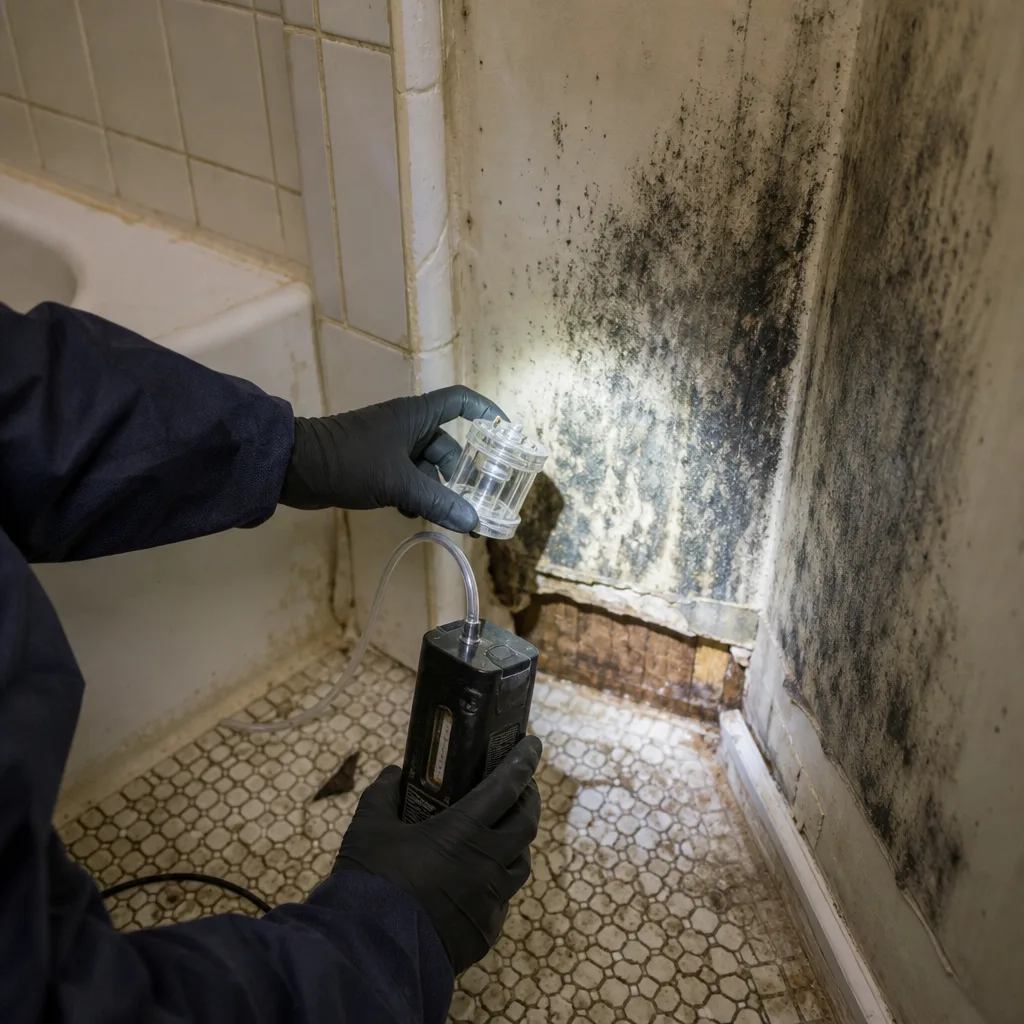
Mold Removal
Removal in a 1905 brick building means selective demolition guided by a moisture map and a landmark-aware material plan. When the LPC has jurisdiction over your building’s interior, we work with your preservation consultant to document every linear foot of plaster we remove and every floor board we cut. We dry what can be dried, remove what can’t, and never open a wall the LPC hasn’t already signed off on.
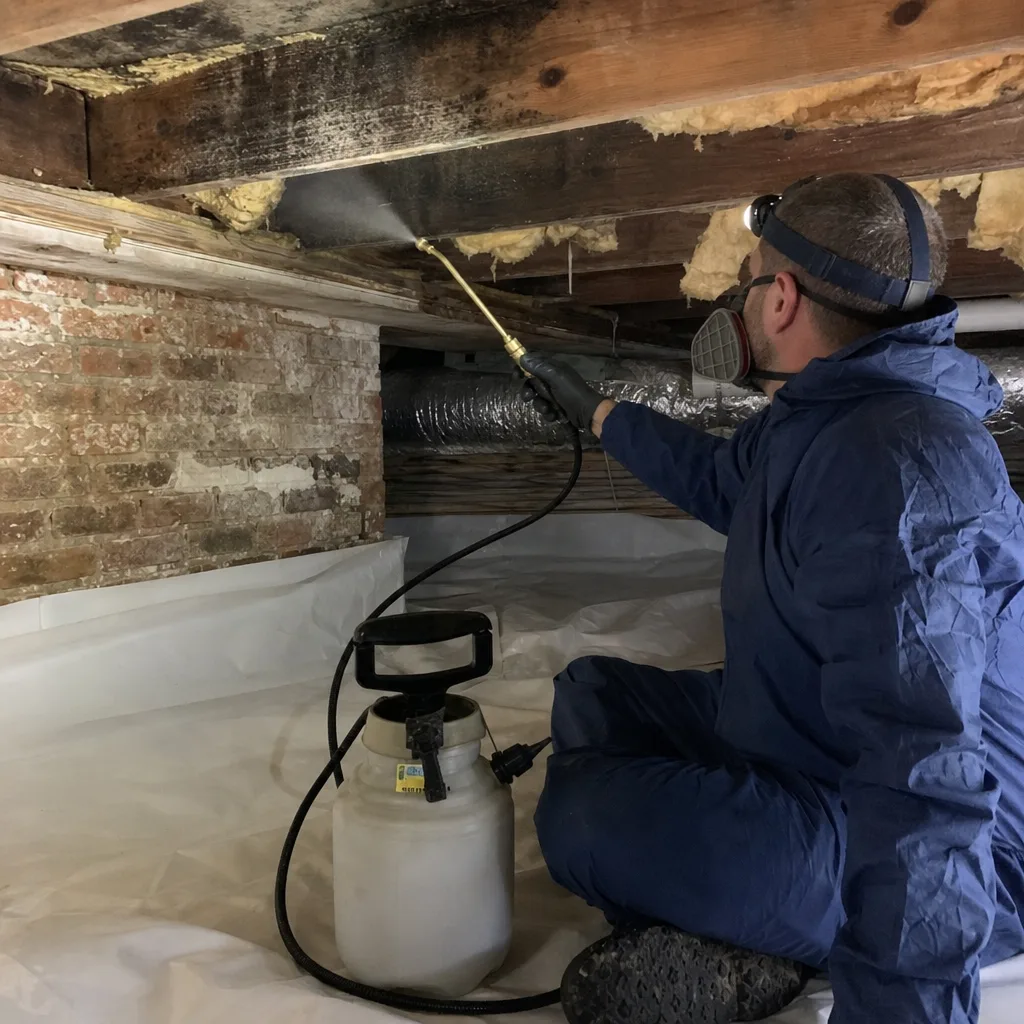
Black Mold Remediation
Stachybotrys, the black mold most people worry about, thrives on cellulose-rich materials that have been wet for extended periods. In Nolita, that’s original wood lath, joist ends embedded in brick pockets, and the backside of wide-plank flooring. Black mold remediation here almost always involves full containment, HEPA air scrubbing at 4 to 6 air changes per hour, and disposal of the affected wood under controlled conditions. We treat it as a biohazard job from the first hour, not a cleaning job.
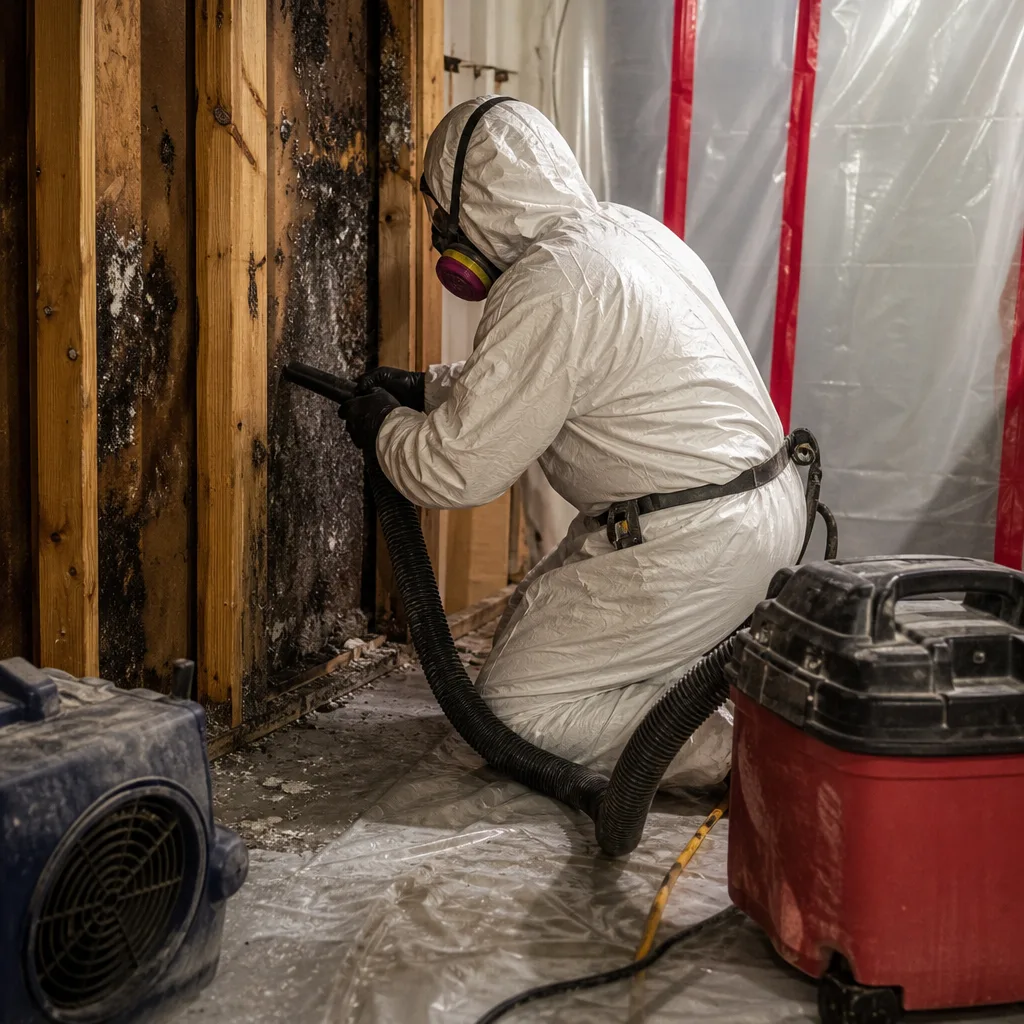
Air Quality Restoration
After the visible mold is removed, the invisible problem remains: airborne spore counts elevated enough to make your apartment smell like a flooded basement and your sinuses feel like a barometer. We run HEPA air scrubbers throughout the remediation, then post-remediation air sampling to confirm the indoor environment is cleaner than the Nolita air outside. You get a clearance report, not a promise.
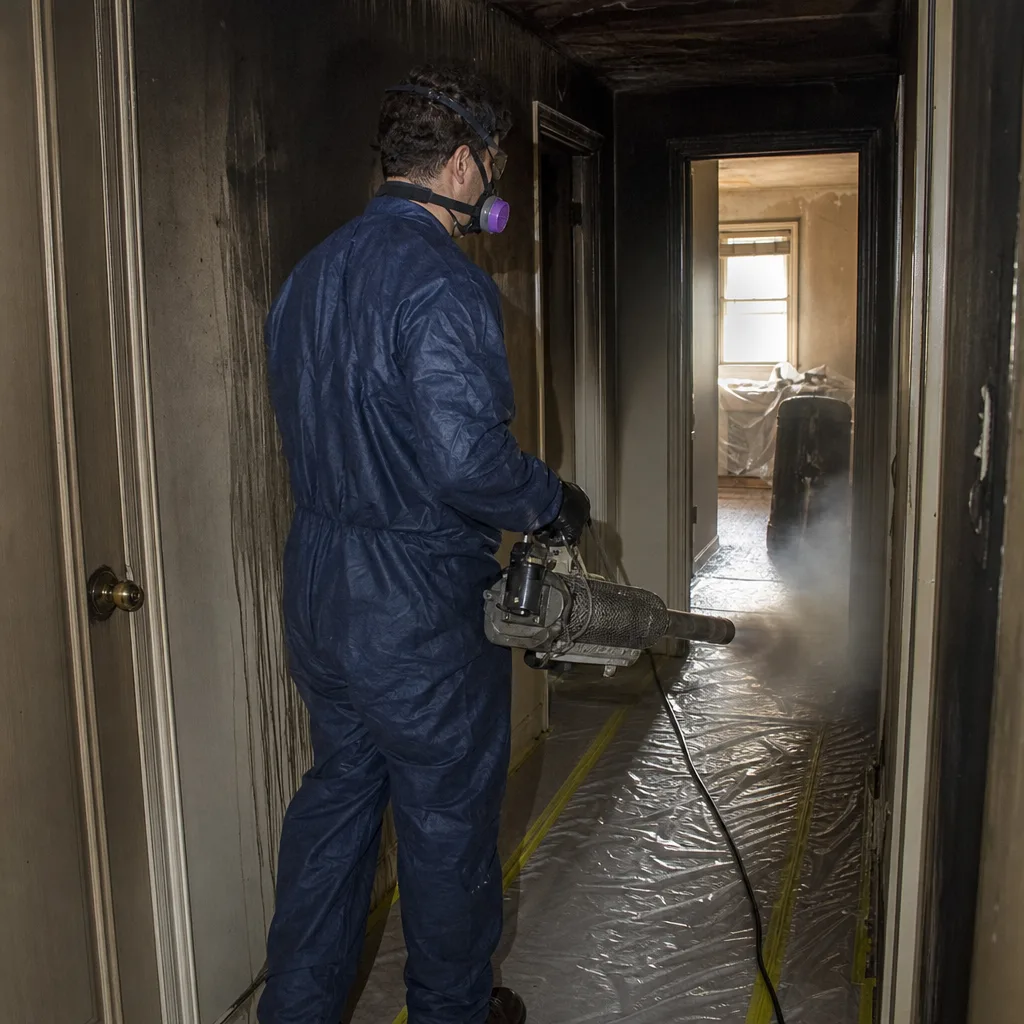
Moisture & Humidity Control
Mold doesn’t return if the moisture doesn’t return. In these old brick buildings, that means managing humidity at the source: cellar-level dehumidification, bathrooms that vent properly, and pointing up interior brick that’s wicking groundwater. We’ll give you a humidity control plan sized to your building’s actual envelope, not a one-size-fits-all dehumidifier recommendation.
Crawl Space Treatment
Some Nolita buildings have shallow crawl spaces under first-floor retail or in the subcellar. These spaces sit below the sewer line, which means they flood first when the combined system surcharges. We encapsulate where we can, install drainage where we can’t, and treat the framing with anti-microbial coatings rated for Category 3 exposure. The goal is to make the crawl space a place moisture can’t hide.
What happens when you call
- 1
A real person answersNo phone trees - you reach a local pro.
- 2
You get an upfront price rangeHonest numbers before anyone is dispatched.
- 3
A background-checked tech heads outLicensed & insured, dispatched right away.
- 4
You approve before work beginsNothing starts until you say go.
Mold Remediation Costs in Nolita, NY
A straightforward mold removal job in Nolita, contained to a single bathroom or closet with no landmark materials involved, runs $1,800 to $3,400. A mid-size job, the kind we see after a water tower failure where mold has spread behind plaster on one full floor, typically lands between $3,500 and $6,500. Full-floor remediations with landmark-preservation documentation, custom plaster patching, and reclaimed-floor drying can exceed $8,000 depending on square footage and the condition of the original materials. What moves the price most is whether the LPC has jurisdiction. Lime-plaster patching costs more than drywall repair, and selective floor board replacement costs more than laying new oak. The free visual inspection is genuinely free. We use it to build a firm line-item scope, so the number we hand you is the number you’ll pay. Insurance covers a significant portion of many Nolita mold claims, especially when the moisture source was sudden and accidental. Call (917) 924-4221 and we’ll walk you through what your policy language actually means.
We Also Serve Cities Near Nolita
Our crews work throughout Lower Manhattan and into the surrounding area. If you own a property in Fairview, Harrison, East Bronx, or Hunts Point, we bring the same 24/7 live dispatch, the same certified crews, and the same 90-Day Done Right Promise to your door. Distance doesn’t change the standard.
Serving Nolita, NY - Our Local Coverage Area
We’re based in the Nolita area and know this community well. Use the map below to see our service coverage - if you’re nearby, we can almost certainly help.
Nolita Mold Remediation Questions, Answered
How does Nolita’s landmark status change mold remediation inside a converted tenement?
If your building is under NYC Landmarks Preservation Commission review, any material removal inside the walls or floors may need LPC approval. That means remediation has to be planned around preservation first. We prioritize non-destructive drying using Injectidry vacuum panels and targeted dehumidification, so we can often dry lime plaster and wide-plank floors in place without opening a single landmark-protected wall. When selective removal is genuinely necessary, we document everything photographically and coordinate with your preservation consultant before any material comes out. Call (917) 924-4221 if you’re facing this situation and want a crew that’s done it before.
Can mold behind a Nolita brick party wall spread to my neighbor’s unit?
Yes, and it does, more often than anyone wants to admit. In these 1880s-to-1915 tenements, party walls were built with continuous timber floor joists that span from your building into the building next door. The brick is porous, the mortar joints leak air, and mold spores move through both routes. If you see mold on your side of a party wall, there’s a real chance the neighbor’s side has its own problem. Remediation usually requires coordinated containment on both sides. We’ve managed dozens of these cross-property claims and we can talk to your neighbor’s insurance carrier directly if needed.
What makes mold from a water tower leak different than a typical pipe burst in Nolita?
Volume and trajectory. A pipe burst usually wets a single floor or a section of a wall. A failed rooftop water tower on Mott Street can drain thousands of gallons straight down through five floors of a building before anyone notices. That means water saturates roof decking, every ceiling, every wall cavity, and every floor along the way. By the time mold becomes visible, it’s already established in multiple vertical channels. The remediation has to account for gravity-fed moisture that’s still moving through the structure weeks after the tower was repaired. We’ve seen exactly this scenario, and we dry every affected floor, not just the one where mold showed up.
Why do Nolita cellars flood with sewage during summer storms, and how does that affect mold?
Nolita sits on Lower Manhattan’s combined sewer system, where stormwater and sewage share the same pipes. During heavy summer convective storms, the system surcharges and sends sewage-contaminated water back through floor drains into cellar-level spaces. That’s Category 3 water, and it carries pathogens as well as mold spores. Once the water recedes, the residual organic matter left on cellar walls and framing becomes an ideal mold growth medium within 48 hours. A sewage flood demands full containment, HEPA air scrubbing, and disposal of saturated materials under biohazard protocol. This is not a job for bleach and a box fan.
How do you dry wide-plank reclaimed floors without damaging them?
Slowly and from both sides. Wide-plank floors from the 1890s were cut from old-growth timber and they cup and warp if dried too fast. We use Injectidry vacuum panels laid on the surface that pull moisture out through the wood without the aggressive heat or airflow that damages the fibers. When access from below is possible, we set up Dri-Eaz LGR dehumidifiers in the joist bays and run them at controlled humidity levels. Daily moisture readings tell us when the floor has returned to its pre-loss moisture content, not an arbitrary “dry enough” number. Done wrong, a reclaimed floor becomes a replacement job and a landmark fight. Done right, the floor you’ve been walking on for twenty years stays exactly where it is.
How fast can you actually get to Nolita for a mold emergency?
Most calls get a live technician on site within 45 to 60 minutes. We dispatch from the Manhattan office and our crews know the Nolita blocks, the loading zones, and the building access quirks. If you call (917) 924-4221 at 2 a.m., you’ll talk to a live dispatcher who starts moving a crew immediately. Same-day containment is standard for active mold jobs, because every hour the colony spreads, the remediation grows.
Will my insurance cover mold remediation in a Nolita building?
It depends on your policy language and the moisture source. Most homeowners policies cover mold remediation when it results from a sudden and accidental water event, like a burst pipe or a failed water tower valve. They often exclude mold from long-term seepage or “gradual” moisture. Nolita’s older buildings complicate this because insurers often try to argue that leaks in a 1905 tenement are inherently gradual. That’s why our documentation matters: we photograph the failure point, log moisture readings from hour one, and write scopes that connect the mold directly to the covered event. We’ve successfully pushed claims through for dozens of Nolita clients. Call (917) 924-4221 and we’ll review your policy language with you, honestly.
What should I do in the first 30 minutes after I find mold in Nolita?
Stop running fans or opening windows, which can spread spores into unaffected rooms. Don’t try to scrub the mold with bleach, which on porous plaster and wood surfaces just pushes spores deeper. Shut the door to the affected area if you can. Then call us at (917) 924-4221. We’ll talk you through the next steps over the phone, and have a crew on the way before you hang up.
Written by Curt Bowman, Owner at Floodline Restoration Co. of Manhattan, serving Nolita and the surrounding neighborhoods since 2010.