

Free visual inspection and a written scope of work before any mitigation begins - photos, moisture readings, and drying logs go in your claim file
The scope we write is the scope we bill. Anything new gets shown to you, in writing, before we touch it.






 Before
 After
After Before
 After
After Before
 After
After24/7 Emergency Mold Remediation in North Hills
Mold remediation in North Hills typically runs $1,800 to $6,500 depending on how far moisture has wicked into finished lower levels, and our crews reach most village addresses within 45 minutes of your call. Floodline Restoration Co. of Manhattan answers live at (917) 924-4221, every hour of every day. When groundwater pushes through collapsed 1950s drain tile into a finished basement, mold starts colonizing porous materials within 24 to 48 hours, and every hour after that spreads the affected square footage. We dispatch background-checked, IICRC-certified technicians from our New York City office directly into North Hills with containment, air scrubbers, and professional-grade drying equipment on the truck.
The first call matters. A free visual inspection tells us whether you’re looking at surface growth on plaster or a hidden colony behind wood paneling and custom millwork, and we document everything from minute one. That’s the difference between a cleaning and a full Mold Remediation scope, and it’s the reason our 90-Day Done Right Promise starts with honest assessment, not a sales pitch.
Understanding Mold Remediation Severity in North Hills Properties
Mold severity in North Hills follows a pattern we’ve learned over hundreds of village jobs. Surface growth on basement drywall is one thing. Mold that’s established behind original plaster-and-lath walls, inside wall cavities, or beneath imported stone flooring is another thing entirely, because those materials wick and hold moisture differently than modern gypsum board.
We classify every job by water category, moisture mapping data, and the materials affected. Category 1 water, clean supply-line leaks, typically produces localized mold when caught within days. Category 2 water, which carries contaminants and often enters through failed perimeter drain tile during heavy rain, requires antimicrobial treatment and a much stricter containment protocol. The estates built here from the late 1940s through the 1970s present a specific challenge: finished basements with wood paneling, custom millwork, and plaster that hide moisture for weeks before visible mold appears. In North Hills specifically, we run hygrometer and thermal imaging readings behind paneling and trim because visual inspection alone misses what’s growing in the cavities. That’s the difference between mold remediation that holds and mold that returns with the next wet season.
Why North Hills Property Owners Choose Floodline Restoration Co. of Manhattan
- 45-minute response commitment to North Hills: Our dispatch board tracks the nearest certified crew, and we commit to a 45-minute arrival window for emergency mold calls in the village. We’ll be there when we say.
- Live answer, 24/7, from a real person: When you call (917) 924-4221 at 2 a.m., a live dispatcher picks up. Not a recording. Not a callback queue. A person who can route a crew to your street.
- IICRC-certified crews trained to WRT and AMRT standards: Our technicians hold IICRC Water Restoration and Applied Microbial Remediation certifications, plus RIA and IFA training. They know how a 1960s perimeter drain failure behaves, and they know what it means for the plaster above it.
- Free visual inspection with photo documentation: Before any work begins, we walk the affected area, document moisture levels, and explain what we found. You get the photos. No obligation, no pressure.
- Direct insurance billing: We bill your carrier directly and handle adjuster communication on your behalf. You shouldn’t spend your evenings playing messenger between a restoration crew and an insurance desk.
- One team from first inspection to finished rebuild: The crew that contains the mold is the crew that dries the space and rebuilds what came out. No handoff, no inherited strangers, no lost context between phases.
Our Mold Remediation Process
Inspection & Assessment
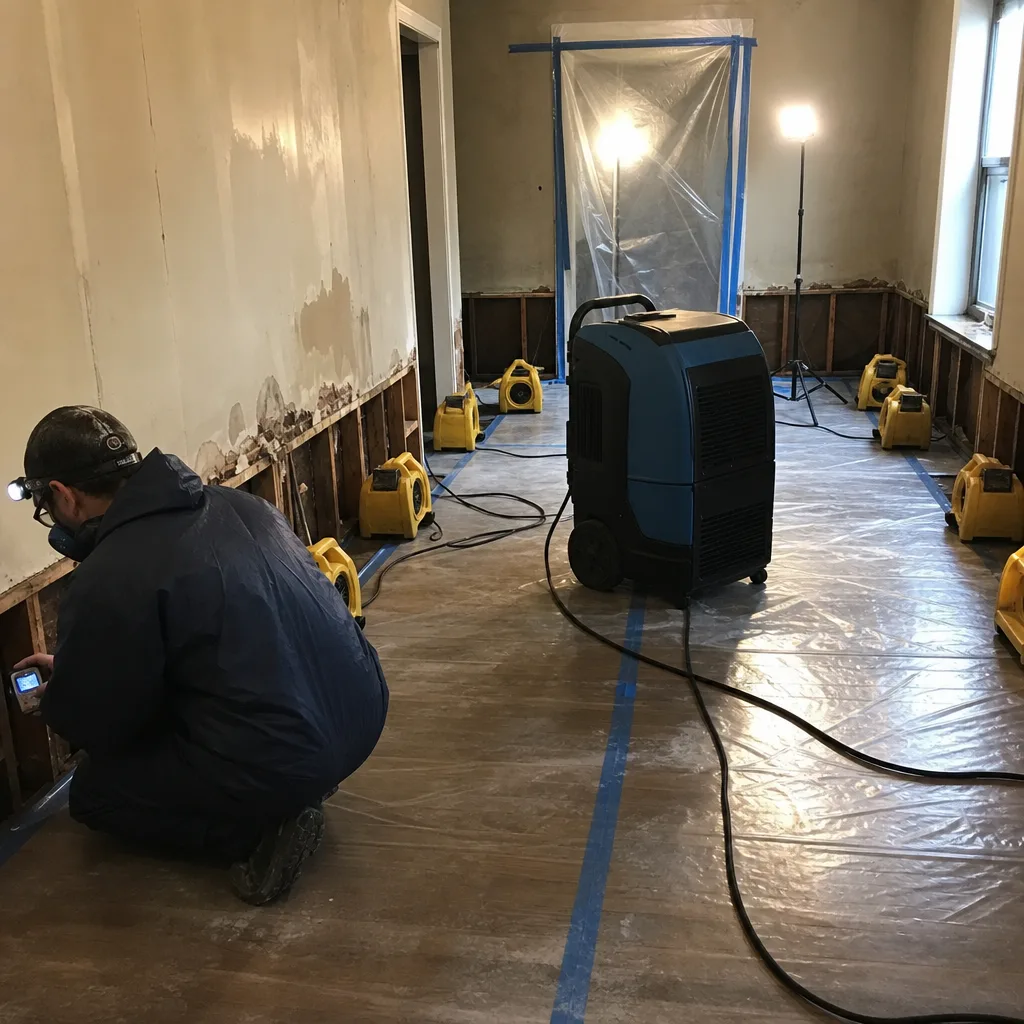
We moisture-map every affected area using thermal imaging and hygrometers, taking readings behind wood paneling and inside wall cavities. In North Hills estate homes, hidden moisture is the rule, not the exception. You get a documented scope with photos and a firm plan before we touch anything.
Containment & Stabilization
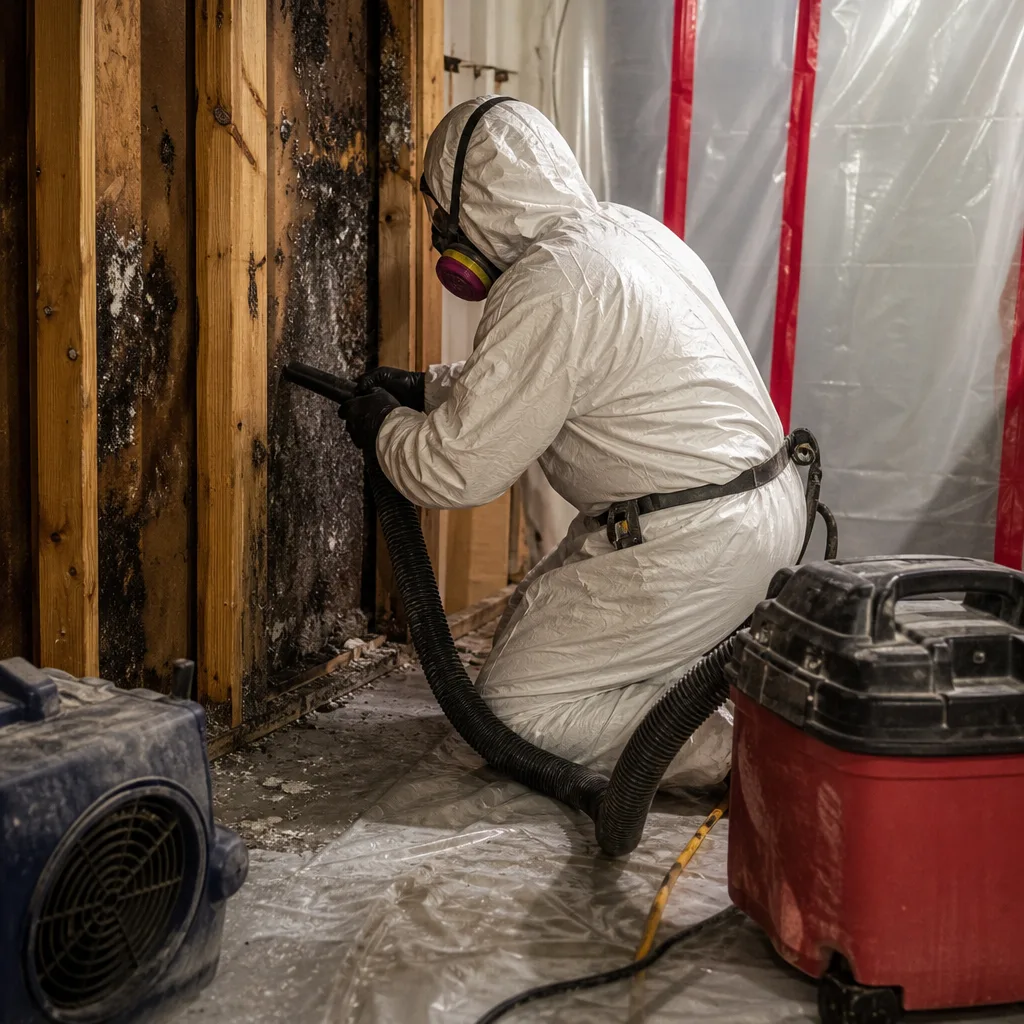
We seal the affected area with negative air pressure and HEPA-filtered air scrubbers so mold spores don’t migrate through the rest of the house during removal. For Category 2 water in finished lower levels, we treat any standing groundwater as a contaminant source from the start.
Drying & Dehumidification
Dri-Eaz dehumidifiers and Phoenix air movers are placed according to the moisture map, not by guesswork. Daily readings are logged until the dry standard is met, and that log goes to you and your carrier. In high-water-table areas like North Hills, this phase runs longer than inland jobs.
Cleaning & Sanitization
Affected surfaces get antimicrobial treatment appropriate to the material, whether that’s plaster, millwork, stone, or framing. We don’t spray-and-pray. We treat what the moisture map told us to treat, and nothing is sealed back up until readings confirm it’s dry.
Specialty Treatment: Moisture & Humidity Control
In North Hills, this is where long-term protection happens. We assess your perimeter drain condition, recommend crawl space encapsulation or humidity controls where the geology demands it, and set up a seasonal inspection plan. Because the water table here doesn’t go away, and neither should your protection.
Repairs & Restoration
We rebuild what we removed. Drywall, plaster, trim, millwork, flooring. The same crew handles it, using the same documentation trail. This is where most restoration companies hand off to a contractor you didn’t hire. We don’t do that.
Need Emergency Mold Remediation in North Hills Now?
Crews minutes away, answering live 24 hours a day. The sooner we start, the less it costs.
Working With Your Insurance Company
Mold claims in Nassau County carry extra scrutiny, especially post-Sandy, when FEMA remapping tightened documentation requirements across the region. Insurers want proof of causation, proof of scope, and proof of dry standard. We provide all three from the first hour. Our technicians photograph every affected room before work starts, log moisture readings daily, and produce a line-item scope that matches industry-standard estimating software. When your adjuster calls, we answer. When they need clarification, we have the documentation.
What We Provide Your Insurer
- Thorough documentation of the loss
- Photos of all damage, room by room
- Moisture readings and drying logs
- A detailed, line-item scope of work
- Direct coordination with your carrier
Built for North Hills’s Loss Calendar
North Hills gets hit from multiple directions through the year. January and February bring deep freezes that burst supply lines in unheated crawl spaces and garage walls, sending clean water into finished basements where it sits against plaster and millwork until someone notices the smell. March through May, snowmelt and spring rain saturate the outwash plain, and the high water table pushes groundwater into basements through original 1950s and 60s perimeter drain tile that’s collapsed or clogged. June through August, Long Island thunderstorm lines dump two inches in an hour, overwhelming grading and window wells on estate lots.
September through November is nor’easter season. Wind-driven rain exploits aging rooflines and flashings on mid-century homes, and when water runs down inside a wall cavity, mold starts behind the plaster where no one sees it. A house with finished lower levels and original drain tile will see seepage return seasonally, which is why successful mold remediation in North Hills means moisture management, not just removal. We build that into every plan because we know what the village’s geology does year after year.
Mold Remediation Across North Hills’s Neighborhoods
North Hills is small but not uniform. The estates along Shelter Rock Road and the roads branching toward the Long Island Expressway tend to be larger, older parcels with deeper basements and the original perimeter drain systems. Those jobs run bigger in scope because the square footage is bigger, and the materials, plaster, custom trim, imported stone, are more expensive to restore than standard drywall. The homes tucked near the Deepdale area and toward the western edge of the village often sit closer to natural drainage swales, which means groundwater reaches them faster after heavy rain.
Response time changes by location too. A crew coming from our New York City dispatch can be on Shelter Rock Road in under 40 minutes on a normal day, but a nor’easter clogs the Northern State Parkway approaches and we route through surface streets instead. We know those routes. We know which basements flood first in a heavy storm, and which need a containment discussion rather than a simple wipe-down. That’s the local knowledge no national franchise template can fake.
Specialized Mold Remediation Services We Offer in North Hills
Mold Inspection & Testing
In North Hills, a visual inspection isn’t enough. We run moisture readings behind paneling, inside wall cavities, and under finished flooring because the village’s high water table means hidden moisture survives long after the surface looks dry. You get a documented report with photos and readings, not a verbal assurance.
Mold Removal
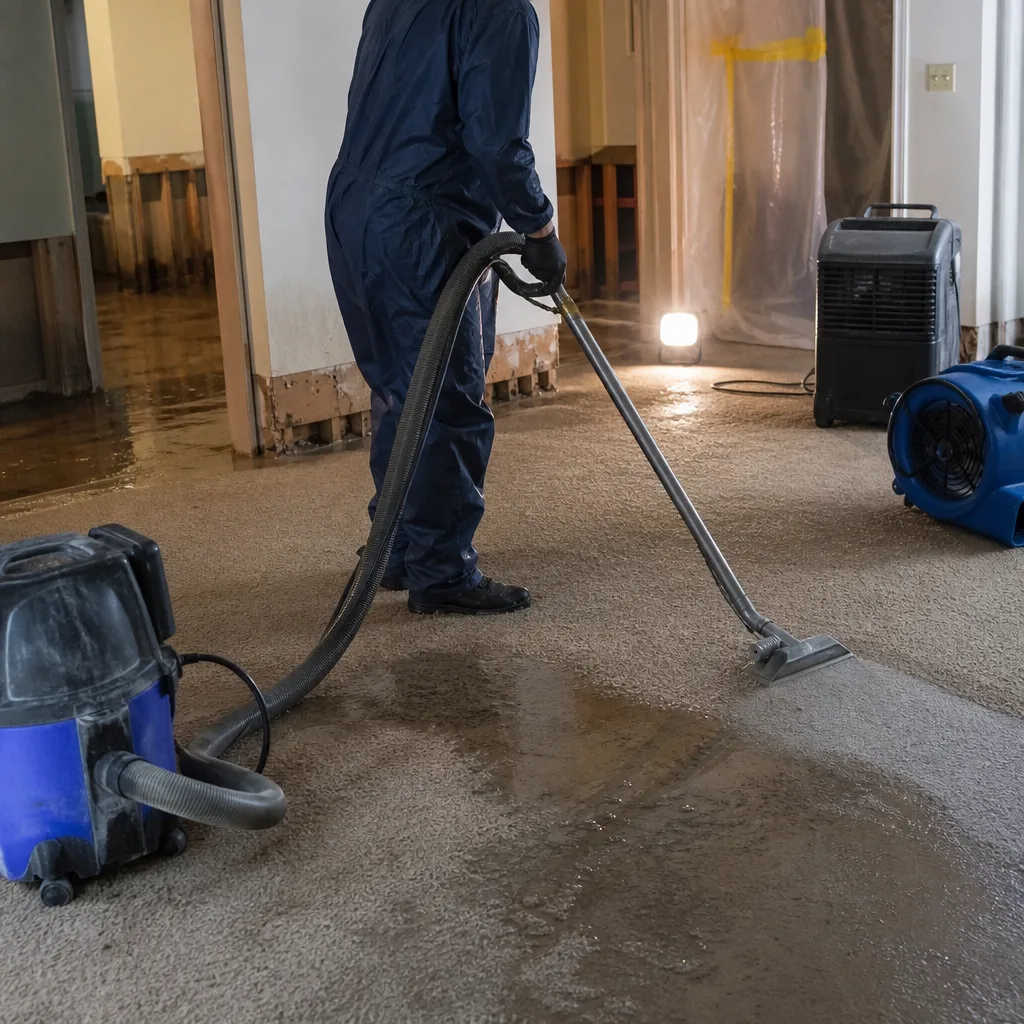
Removal in estate homes means preserving what’s worth preserving. We cut out affected drywall and plaster cleanly, protect custom millwork and hardwood where possible, and treat framing with antimicrobials. When trim or paneling must come out, we label and document it so restoration matches the original profile.
Black Mold Remediation
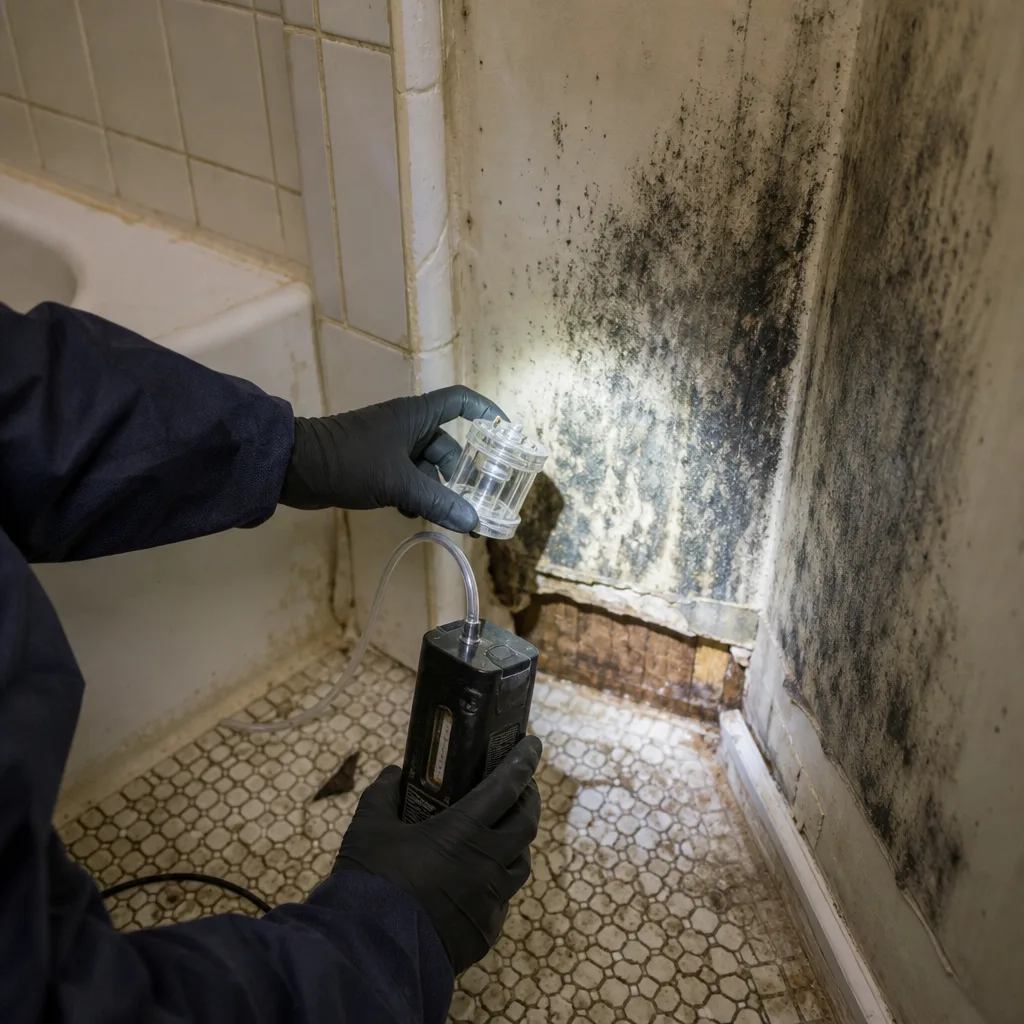
Black mold, Stachybotrys, loves the consistently damp conditions behind wood paneling in high-water-table basements. We contain the space with negative air pressure, remove affected materials, treat surrounding surfaces, and run clearance testing before anyone works without protective gear. This isn’t a bleach-and-paint job. We treat it as a health and safety project from the first reading.
Air Quality Restoration
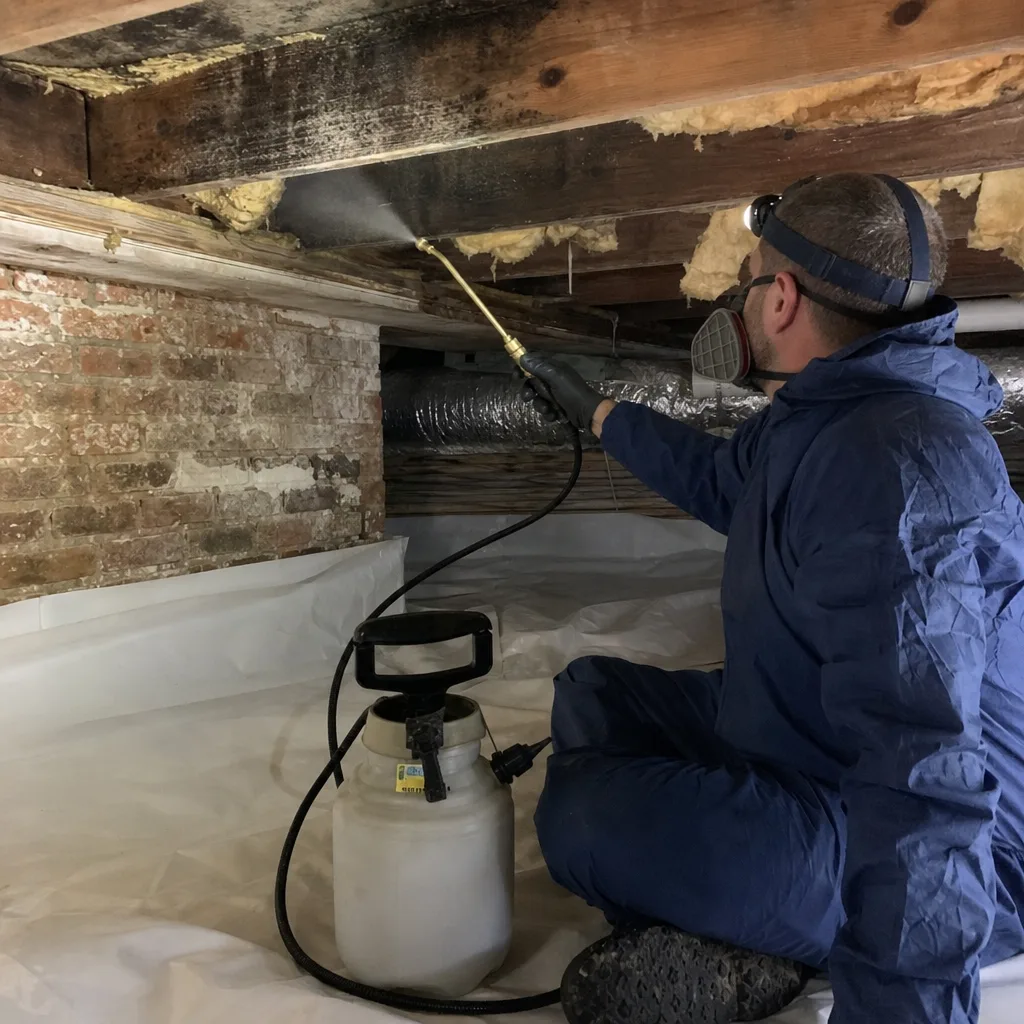
After remediation, we run HEPA air scrubbers long enough to pull residual spores from the air, then verify with post-remediation air sampling. In finished lower levels where HVAC returns draw basement air into the living spaces above, this step matters more than most North Hills homeowners realize until they notice the difference.
Crawl Space Treatment
The village’s high water table turns crawl spaces into humidity reservoirs. We encapsulate, install vapor barriers, add dehumidification where the moisture map calls for it, and treat any framing that’s showing early mold colonization. A dry crawl space protects everything above it, including finished basements that share the same air.
What happens when you call
- 1
A real person answersNo phone trees - you reach a local pro.
- 2
You get an upfront price rangeHonest numbers before anyone is dispatched.
- 3
A background-checked tech heads outLicensed & insured, dispatched right away.
- 4
You approve before work beginsNothing starts until you say go.
Mold Remediation Costs in North Hills, NY
Mold remediation in North Hills runs $1,800 to $6,500 for most jobs. A contained surface cleaning on a small finished-basement wall starts around $1,800. A full Category 2 water remediation with containment, material removal from plaster and millwork, structural drying, and rebuild work reaches $4,000 to $6,500. Black mold behind wood paneling across a large lower level can push higher when multiple rooms require full containment and material replacement.
What moves the price: square footage of the affected area, whether plaster or drywall, whether trim and millwork need removal and restoration, and how long structural drying runs before the dry standard is met. In North Hills, drying runs longer than inland because the water table keeps reintroducing moisture through the slab and foundation walls. Insurance typically covers mold remediation when the causation is sudden and accidental, like a burst supply line or a storm-driven roof leak. Seasonal seepage from failed perimeter drain tile may not be covered, which is why we give you a firm written scope before work begins, so you know exactly what insurance will likely pay and what falls to you. Call (917) 924-4221 for a free inspection and a real number.
We Also Serve Cities Near North Hills
Our crews regularly work in Fairview, Harrison, East Bronx, and Hunts Point, and we know the building stock and response routes across this corner of Nassau and the Bronx border. If you’re near North Hills and need a live answer, call the same number: (917) 924-4221.
Serving North Hills, NY - Our Local Coverage Area
We’re based in the North Hills area and know this community well. Use the map below to see our service coverage - if you’re nearby, we can almost certainly help.
North Hills Mold Remediation Questions, Answered
Why does mold keep coming back in North Hills finished basements even after remediation?
In North Hills, mold returns because the high water table and original 1950s-to-60s perimeter drain tile reintroduce groundwater into the basement every wet season, and hidden moisture behind wood paneling or plaster never fully dries without a moisture management plan. Surface mold removal without addressing the water source and the hidden cavity moisture is a temporary fix. Our approach includes drying to standard, treating the drainage and humidity conditions that caused it, and setting up seasonal inspections. Call (917) 924-4221 for an assessment that looks past the visible mold.
How quickly can mold start growing after a water intrusion in a North Hills estate home?
Mold colonization on porous materials like drywall, plaster, and wood paneling typically begins within 24 to 48 hours of water intrusion in North Hills, and the village’s high ambient humidity during summer months can accelerate that timeline. Category 2 groundwater carries organic material that feeds mold faster than clean water. Call us the day you notice water, not the week after. Early response keeps a $1,800 scoped cleaning from becoming a $5,000 demolition and rebuild.
What does Category 2 water mean for mold remediation in North Hills?
Category 2 water is contaminated water, typically groundwater that has entered through failed drain tile, sump overflow, or foundation cracks, and it carries bacteria, soil organics, and whatever it passed through. In North Hills, where high water tables push groundwater into finished basements regularly, Category 2 events require antimicrobial treatment and stricter containment because the contamination spreads beyond the visible stain. We treat every basement seepage call in this village as a potential Category 2 event until moisture mapping and testing say otherwise.
Do North Hills homes with finished lower levels need different mold testing than standard homes?
Yes. Standard mold testing focuses on visible surfaces and room air. North Hills finished lower levels hide moisture behind wood paneling, under plaster, inside wall cavities, and beneath imported stone, so our testing includes thermal imaging, cavity probes, and hygrometer readings in places a standard air sample never reaches. If we only tested what was visible, we’d miss the moisture that guarantees the mold comes back.
Why do North Hills mold jobs require more detailed documentation than typical Nassau County suburbs?
North Hills homes are built with materials that cost more to restore and harder to dry than standard drywall construction, and insurance carriers know it. Plaster walls, custom millwork, and imported stone demand line-item documentation that proves each material was affected, each treatment was appropriate, and each drying log entry is real. Post-Sandy FEMA remapping also tightened claim scrutiny in this part of Nassau County. We document every phase with photos, readings, and a scope that matches carrier software. We’ve been through this with local adjusters enough times to know what gets a claim approved and what gets it delayed.
How fast can you actually get to a North Hills address?
We commit to a 45-minute arrival window for emergency mold calls in North Hills, and most days we beat it. Live dispatch routes the nearest certified crew from our New York City office. During nor’easters or heavy storm events, surface street routing gets us there when highways jam. Call (917) 924-4221 and a dispatcher gives you a real ETA from a crew that’s already moving.
Can we stay in our home during mold remediation in North Hills?
It depends on the scope and the affected areas. For contained jobs affecting a basement or lower level, most North Hills homeowners stay in place while we work, as long as the containment barrier holds and the HVAC system isn’t pulling air from the work zone. For extensive black mold remediation spanning multiple rooms, especially when family members have respiratory conditions, we recommend temporary relocation during the removal phase. We’ll give you a straight answer during the free inspection, not after the work starts.
What should I do in the first 30 minutes after discovering mold or water in my North Hills home?
Shut off the water source if it’s a plumbing leak, move valuables off the damp floor, and call (917) 924-4221. Don’t disturb the visible mold. Don’t run box fans or open windows, because you’ll spread spores through the house. Don’t wipe it down to see how bad it is underneath. Take photos where you can, keep children and pets out of the area, and let our technicians assess it with proper testing and containment. The first 30 minutes of the response decide how small this job stays.
Written by Curt Bowman, Owner at Floodline Restoration Co. of Manhattan, serving North Hills and surrounding communities since 2010.