
Free visual inspection and a written scope of work before any mitigation begins - photos, moisture readings, and drying logs go in your claim file
The scope we write is the scope we bill. Anything new gets shown to you, in writing, before we touch it.






 Before
 After
After Before
 After
After Before
 After
After24/7 Emergency Mold Remediation in Palisades Park
Mold remediation in Palisades Park typically costs $1,800-$4,600 for a contained removal in a single unit, and $4,000-$12,000 when growth has migrated through shared wall cavities of a garden apartment building. We answer live at (917) 924-4221 around the clock, and a certified crew can be on site in Palisades Park within 45 minutes for an emergency assessment. The first hour matters because mold colonies in this borough’s plaster-heavy housing double roughly every 24 to 48 hours once moisture is present. If you’ve had a slow leak behind a wall, a washing machine supply-line failure, or water pushing up through a basement floor, call now. We’ll give you a straight answer about what you’re dealing with, a free visual inspection, and a written scope before any work begins.
Understanding Mold Remediation Severity in Palisades Park Properties
Mold in Palisades Park rarely announces itself the way a burst pipe does. It grows behind original plaster-and-lath walls, under vinyl tile on garden-apartment lower floors, and inside the shared wall cavities between the borough’s tightly packed two-family homes. By the time a homeowner sees staining on a Broad Avenue or 9th Street wall, the colony often extends several feet beyond the visible patch. Our Mold Remediation team classifies each job by moisture category and containment level. We use thermal imaging and penetrating moisture meters to trace the actual water path, not just the stain. Then we establish negative-air containment with HEPA air scrubbers before any disturbed material moves through occupied space. IICRC-certified techs handle Category 1 and Category 2 water losses differently than Category 3 sewage or stormwater intrusion. In Palisades Park, we regularly see Category 2-adjacent conditions in aging cast-iron drain stacks, where slow seepage behind walls has gone unnoticed for weeks. That’s when you need containment, not just cleaning.
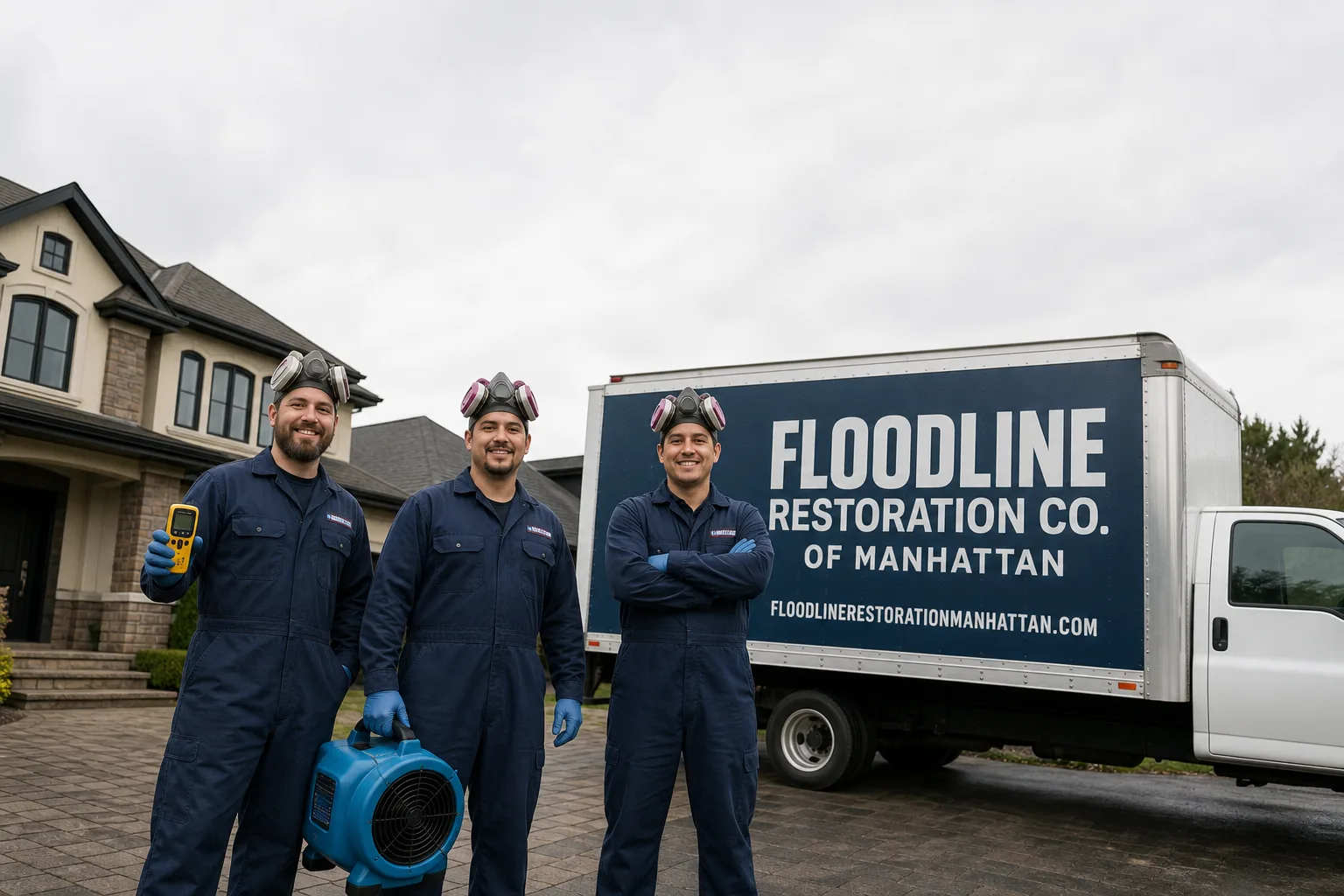
Why Palisades Park Property Owners Choose Floodline Restoration Co. of Manhattan
- 45-minute response commitment - We dispatch crews from the metro area directly into Palisades Park, and our live dispatcher confirms arrival time while you’re still on the phone.
- 24/7 live answer, never a recording - A real person picks up at 2 a.m. on a Sunday. That’s how we’ve run the board since Curt Bowman founded the company in 2010.
- IICRC-certified crews with WRT and AMRT credentials - Water, mold, and applied structural drying certifications mean the team reading your moisture map is trained to interpret it correctly.
- Free visual inspection - We walk the property, identify what’s wet and what’s growing, and give you a plain-language assessment. No charge for the look.
- Direct insurance billing - We document from hour one, communicate with your adjuster, and bill the carrier where coverage applies. You’re not the messenger.
- One team from extraction to reconstruction - The same background-checked, uniformed crew that sets containment handles the rebuild. No handoff to strangers.
Our Mold Remediation Process
Inspection & Assessment
We map moisture throughout the affected unit and adjoining spaces using thermal imaging and hygrometers. In Palisades Park’s shared-wall buildings, we check the units on either side of the loss because cast-iron stacks and plaster cavities don’t respect property lines.
Containment & Stabilization
We seal the work area with polyethylene sheeting and establish negative air pressure using HEPA-filtered air scrubbers. This keeps disturbed spores from moving into living space or adjacent units. Containing before disturbing is the single most important mold protocol.
Drying & Dehumidification
We run Dri-Eaz LGR dehumidifiers and Phoenix air movers continuously, taking daily moisture readings until the structural dry standard is met. Plaster-and-lath walls dry slower than modern drywall, so our logs reflect the longer curves this borough’s housing requires.
Cleaning & Sanitization
We HEPA-vacuum all exposed surfaces, remove damaged porous material that cannot be adequately cleaned, and treat hard surfaces with EPA-registered antimicrobial solutions. Carpeting with mold growth is removed and disposed of following IICRC guidelines.
Air Quality Restoration
After source removal and cleaning, we run HEPA air scrubbers for the duration of the job and then take clearance air samples if requested. For Palisades Park’s tightly sealed apartment buildings, post-remediation air quality verification matters as much as the visible work.
Repairs & Restoration
We rebuild what we removed: drywall, plaster repair, insulation, trim, and paint. The same crew that did the remediation handles the reconstruction, so there’s no gap between “mold’s gone” and “the room looks right again.” The 90-Day Done Right Promise covers the finished result in writing.
Need Emergency Mold Remediation in Palisades Park Now?
Crews minutes away, answering live 24 hours a day. The sooner we start, the less it costs.
Working With Your Insurance Company
Mold claims in Palisades Park hinge on two questions: what caused the moisture, and when did you discover it. Covered perils like a burst supply line or a failed water heater typically include remediation when mold is a direct result. Long-term seepage or neglected maintenance is more complicated. We document from the first hour precisely because adjusters make decisions based on evidence, not assertion. Our crew photographs every affected surface, logs daily moisture readings, and writes a line-item scope that uses industry-standard estimating software your carrier recognizes.
What We Provide Your Insurer
- Thorough documentation of the loss
- Photos of all damage, room by room
- Moisture readings and drying logs
- A detailed, line-item scope of work
- Direct coordination with your carrier
Built for Palisades Park’s Loss Calendar
Palisades Park sits atop the Hudson Palisades escarpment, which sounds like it should keep basements dry. It doesn’t. The borough’s nearly impermeable surface sheds nor’easter rains and summer convective storms fast, and that water finds its way into below-grade entries, window wells, and foundation cracks. January deep freezes do the quiet damage: galvanized supply lines in late-1940s through 1970s garden apartments let go behind walls, and the water can wick through plaster for days before anyone notices. Spring brings thaw, rising groundwater, and the first visible mold blooms in basement units. Summer thunderstorms that track up the Hudson corridor overwhelm the drainage capacity of shared courtyard areas along Broad Avenue and 12th Street, and when severe weather causes widespread damage, our Storm & Disaster Restoration in Palisades Park team responds. We schedule more mold inspections in Palisades Park between April and July than any other stretch of the year. Every one of those inspections starts with knowing the building type and the likely water path before we walk through the door.
Mold Remediation Across Palisades Park’s Neighborhoods
Response routes in Palisades Park run straight through dense residential blocks off Broad Avenue, and our crews know the parking and access constraints better than a GPS. Around B. Ecceles Park and the streets east of the Palisades, three-story garden apartments built in the 1950s often share drain stacks and wall cavities, which means genuine cross-unit moisture migration. Up along the commercial stretch of Broad Avenue between Columbia and Brinkerhoff, we work around restaurant hours and health-department timelines. The mixed-use buildings near 9th and 10th Streets combine retail on the ground floor with residential above, so a single kitchen line break creates both commercial and living-space losses in one structure. West of the borough, toward the edge of the escarpment, the older two-family homes on streets like Maple and Oakdene have basement window wells that collect storm runoff and feed hidden mold under floor tile. Each of these pockets has a distinct damage profile, and our remediation plans account for the differences.
Specialized Mold Remediation Services We Offer in Palisades Park
Mold Inspection & Testing
We inspect for mold using thermal imaging and moisture meters to find growth that isn’t visible. In Palisades Park’s plaster-heavy construction, we specifically check the wall cavities behind baseboards, under window sills, and around cast-iron drain stacks. We can take air and surface samples and work with an independent lab when you need documented results for a sale, a dispute, or a medical concern.
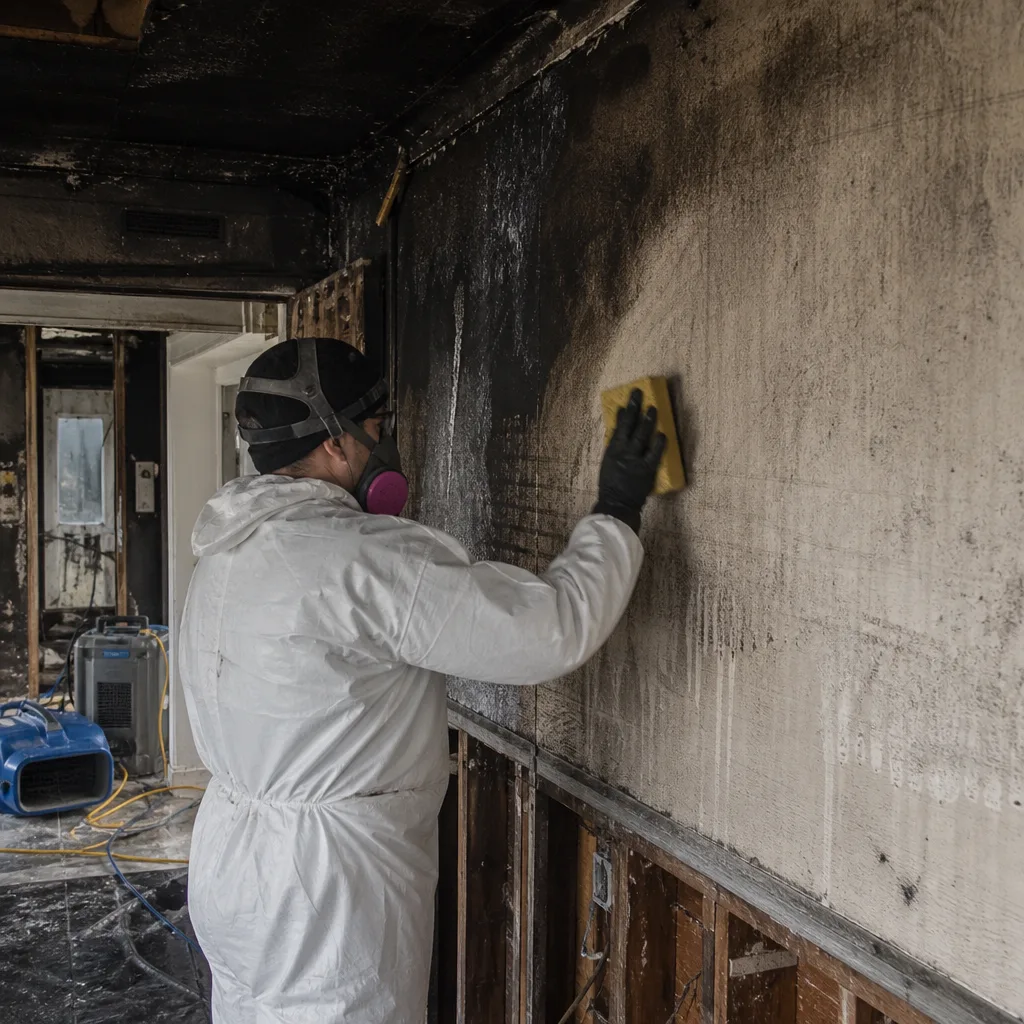
Mold Removal
Source removal means cutting out the material that holds mold when it can’t be adequately cleaned. In a Palisades Park garden apartment, that often means baseboards, lower plaster sections, and vinyl flooring in ground-level units. We contain the area before we disturb it and use HEPA air scrubbers throughout.
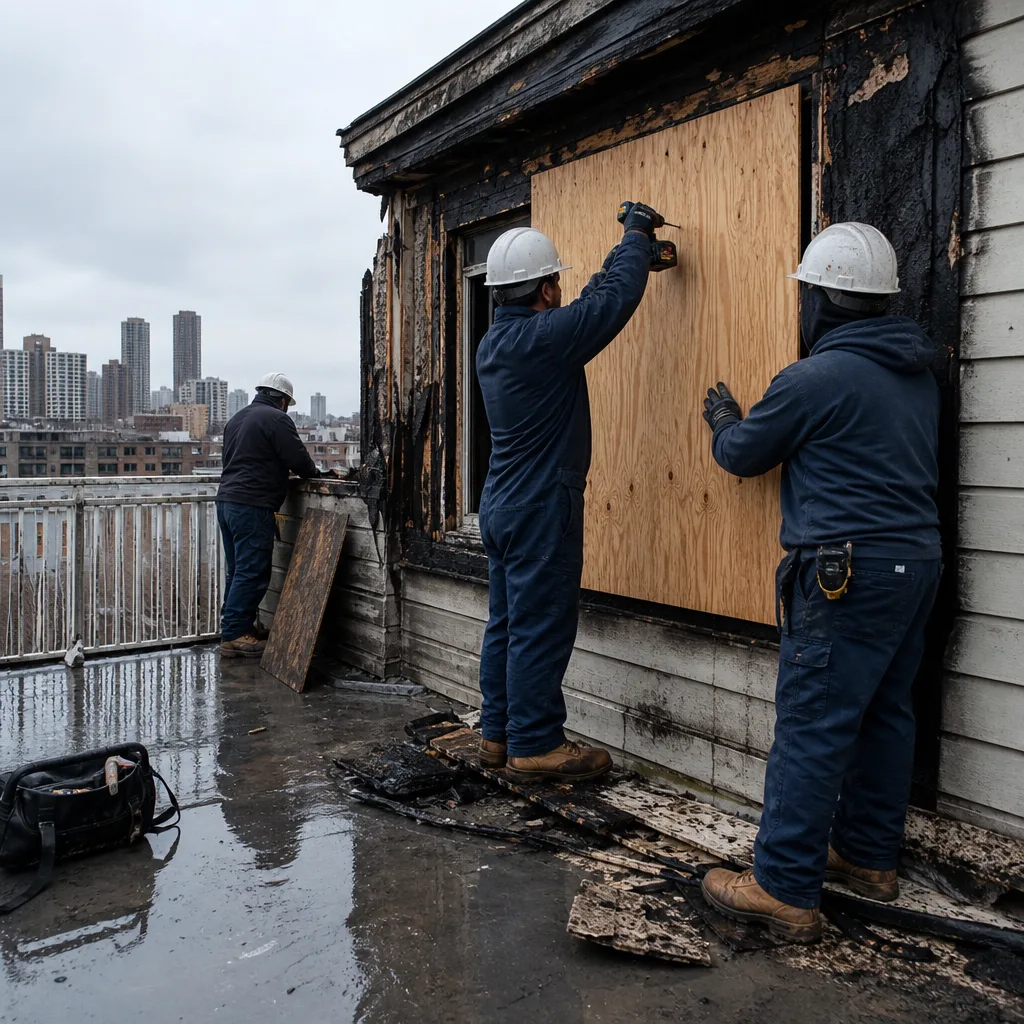
Black Mold Remediation
Stachybotrys chartarum, the mold commonly called black mold, needs persistent moisture to grow, which is why we find it behind plaster walls in this older housing stock. The color doesn’t change the protocol: contain, remove the source, dry the structure, clean surfaces, and verify the air. We treat every mold job to the same containment standard.
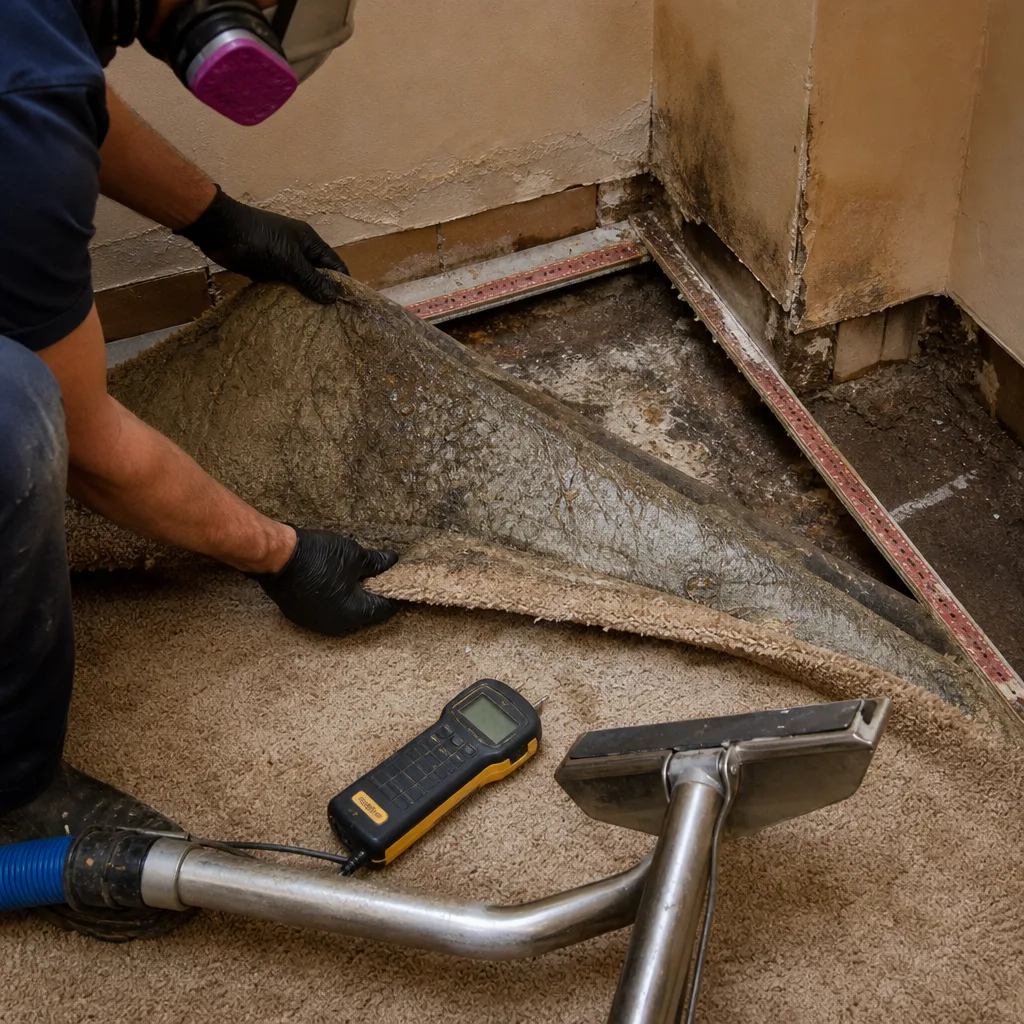
Air Quality Restoration
After any mold remediation in a tightly built Palisades Park apartment, air quality matters. Shared ventilation and the inherent tightness of the borough’s multi-family buildings mean spores from an unfinished job will recirculate. We run HEPA scrubbers throughout remediation, then leave the space measurably cleaner than we found it.
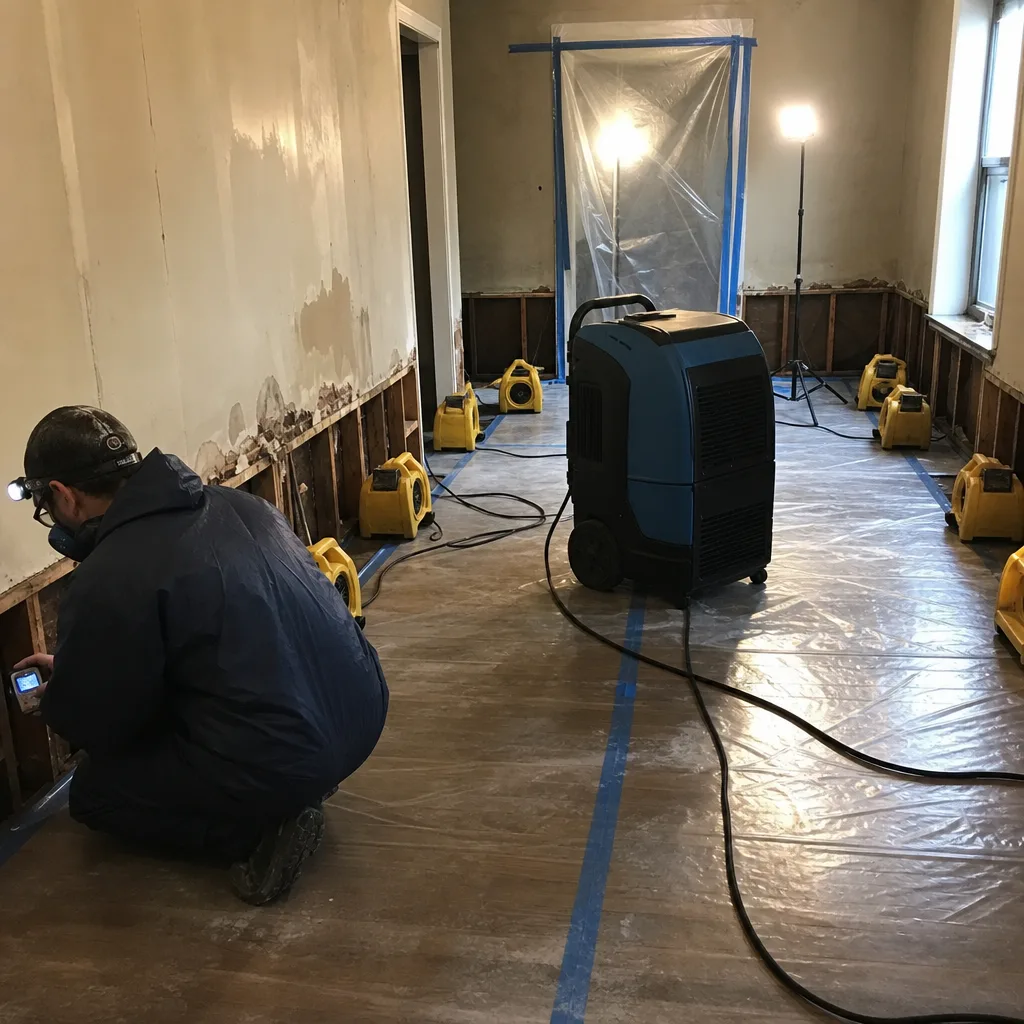
Crawl Space Treatment
Crawl spaces in Palisades Park’s older two-families often have exposed soil and poor drainage from escarpment runoff. We treat these spaces as a controlled microclimate: remove contaminated insulation, treat structural wood, install vapor barriers where the access allows, and dry the space to prevent recurrence.
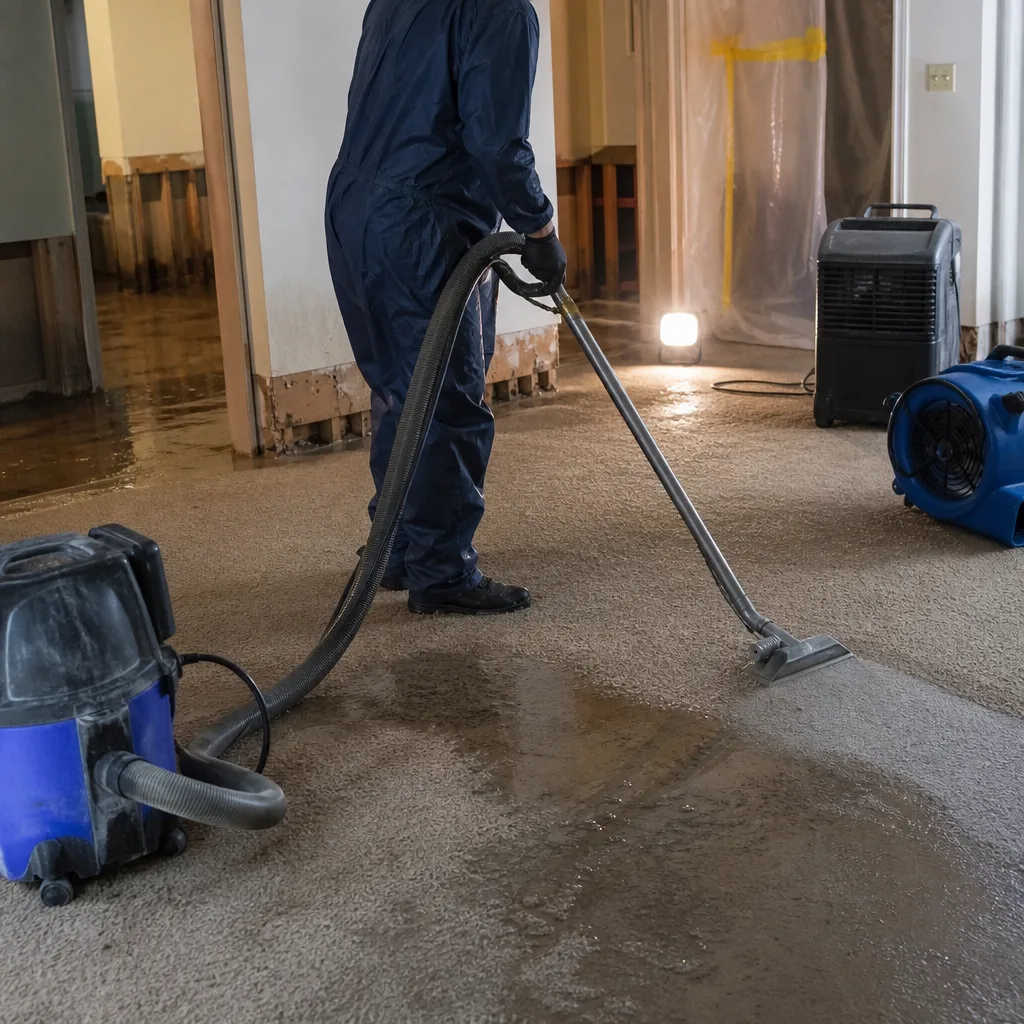
Moisture & Humidity Control
Mold can’t grow without water. We trace the moisture source, whether it’s a leaky cast-iron stack, a failed window well drain, or poor ventilation in a below-grade unit. Then we recommend and install the right dehumidification, drainage correction, or ventilation upgrade to keep it from coming back. This is the part most crews skip and homeowners regret.
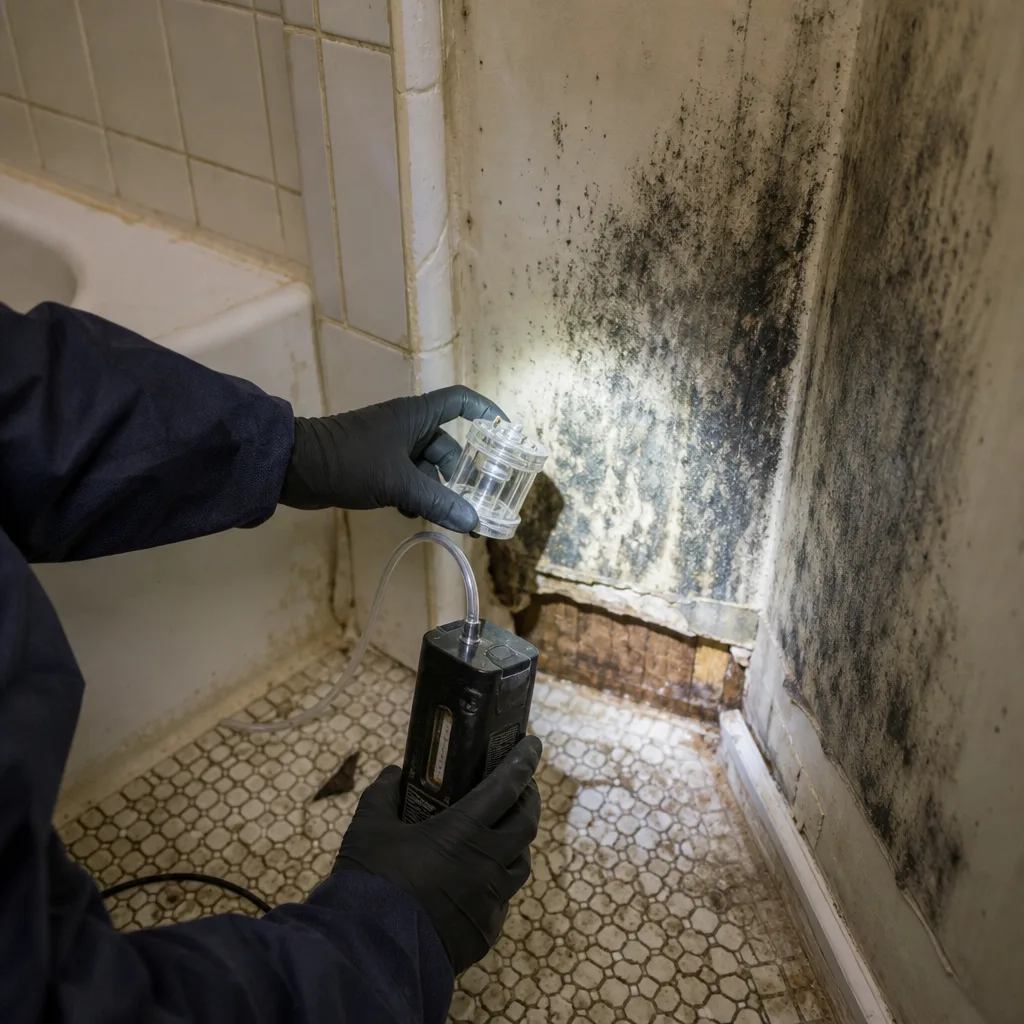
What happens when you call
- 1
A real person answersNo phone trees - you reach a local pro.
- 2
You get an upfront price rangeHonest numbers before anyone is dispatched.
- 3
A background-checked tech heads outLicensed & insured, dispatched right away.
- 4
You approve before work beginsNothing starts until you say go.
Mold Remediation Costs in Palisades Park, NJ
A contained single-room mold removal in Palisades Park typically runs $1,800 to $3,500, including containment, source removal, cleaning, and drying. Whole-unit remediation with air quality restoration in a garden apartment, where wall cavities must be opened and rebuilt, commonly lands between $4,000 and $9,000. Full-building jobs with multiple affected units and insulation replacement can reach $12,000 to $25,000. What moves the price: how far the mold has migrated through shared walls, whether plaster needs demolition or can be saved, how many days drying takes, and whether crawl space or basement treatment is required. Insurance-covered losses generally leave the homeowner responsible for the deductible only. A free visual inspection with our crew gives you a firm scope before any money leaves your hands. Call (917) 924-4221 for an exact quote, and ask about the $50 off any repair over $250.
We Also Serve Cities Near Palisades Park
Our crews work throughout Bergen County beyond Palisades Park, including mold remediation in Ridgefield, Fort Lee, Leonia, and Edgewater. We know the older housing stock and dense multi-family patterns across these neighboring boroughs, and the same live-dispatch system covers all of them.
Serving Palisades Park, NJ - Our Local Coverage Area
We’re based in the Palisades Park area and know this community well. Use the map below to see our service coverage - if you’re nearby, we can almost certainly help.
Palisades Park Mold Remediation Questions, Answered
How fast can mold grow in a Palisades Park garden apartment after a burst cast-iron pipe?
Mold colonies can establish within 24 to 48 hours of water contact on porous surfaces like plaster, drywall paper, and insulation. In a Palisades Park garden apartment with original plaster-and-lath walls, the material holds moisture longer than modern drywall, which extends the growth window. If a cast-iron drain stack or supply line has been leaking or burst, call (917) 924-4221 the same day. The faster we can map the moisture and begin drying, the less material gets removed.
Do you inspect mold behind walls in Palisades Park townhomes without tearing them open?
Yes. We use thermal imaging cameras and penetrating moisture meters to identify elevated moisture and probable mold locations behind walls, under floors, and around plumbing chases without destructive demolition. When visuals suggest active growth, we’ll open a small inspection port and use a borescope to confirm. That approach keeps the damage to your finishes minimal while giving us an honest answer about what’s behind the plaster.
What is Category 3 water and why is it a big concern in Palisades Park basement window wells?
Category 3 water is grossly contaminated with sewage, storm runoff, or other biological matter. In Palisades Park, stormwater that runs off the impermeable surface and collects in basement window wells during heavy rain is almost always Category 3 by the time it enters the structure, which is why we also offer Sewage Cleanup in Palisades Park. If that water sits under vinyl flooring or wicks into baseboards, the mold that follows is fed by contaminated moisture. We treat these losses as Category 3 from the start: full containment, removal of affected porous material, and sanitization before drying.
Why do you recommend air quality restoration after mold removal in a Palisades Park apartment building?
Shared wall cavities and aging ventilation mean spores from one unit can move into another without the occupant knowing. After we remove the mold source, we run HEPA air scrubbers continuously during the job and perform clearance air testing where requested. In tightly sealed multi-family buildings, this step is the difference between a clean end and a call-back six months later. It’s included as part of our standard remediation approach for occupied Palisades Park buildings.
Can you handle mold remediation in a Broad Avenue restaurant that had an Ansul fire suppression discharge?
Yes. The Ansul wet-chemical system used in Broad Avenue’s commercial kitchens discharges a thick alkaline foam-and-char slurry that requires Biohazard & Crime Scene Cleanup in Palisades Park-level protocols to handle safely. That material must be neutralized before standard extraction or drying equipment touches the space, or it will leave a residue that feeds mold growth in hidden corners, under equipment, and behind stainless panels. We handle the neutralization, containment, extraction, and drying as a single sequence, and we can coordinate with your health-dept inspection timeline. Call (917) 924-4221 and we’ll walk the kitchen the same day.
How fast can someone actually get to my Palisades Park home?
We commit to a 45-minute response for emergency mold and water calls in Palisades Park from the time you reach our live dispatcher. No phone tree, no callback later. A real person answers at (917) 924-4221, confirms your address, and dispatches the nearest certified crew. Once on site, we’ll assess the situation and, if it’s an active water source, begin extraction immediately.
Will my insurance cover mold remediation in Palisades Park?
If the mold resulted from a covered peril such as a sudden pipe break, water heater failure, or storm intrusion, your policy likely includes remediation coverage. Long-term seepage or deferred maintenance is often excluded or limited. We document everything from the first hour, communicate directly with your adjuster, and write scopes in the format carriers expect. You’ll know where you stand before the bill arrives. Ask us for a direct insurance billing review during the free inspection.
What should I do in the first 30 minutes after discovering mold in my Palisades Park home?
Stop the water source if you can safely reach a shutoff valve. Do not disturb the visible mold. Don’t spray bleach or household cleaners on it, and don’t run fans across it, both of which can spread spores or drive moisture deeper into wall cavities. Close the door to the affected room if possible. Then call (917) 924-4221. We’ll tell you over the phone what to do next and get a certified crew to your Palisades Park address fast.
If you’re seeing mold, smelling it, or just suspecting it after a leak, call Floodline Restoration Co. at (917) 924-4221 for a free visual inspection of your Palisades Park property. We’ll tell you exactly what we find, what it will cost, and how we’ll fix it. Done right, and backed in writing with the 90-Day Done Right Promise.
Written by the team at Floodline Restoration Co., led by Curt Bowman, serving Palisades Park and surrounding Bergen County with certified mold remediation, water damage restoration, and full reconstruction.